
166: Building Record-Breaking GT-Rs & Lamborghinis | AMS Performance
About this episode
AMS Performance’s Martin Murcio walks through how record-chasing EVO and GT-R builds evolved into extreme drag and roll-race tuning, and why the shop’s approach is as much about process as power. They cover dyno-time waste from unprepared cars, the shift to rebuildable transmission options, and the engineering details behind turbo sizing, fuel choice, and DCT/TCU coordination. Along the way, they get into drivetrain failures, detonation risk, and the costly R&D behind reliable “build blocks,” plus AMS’s in-house machining and future platform strategy.
When Martin designed his first camshaft for the Ford Merkur XR4Ti, he probably never imagined that one day he'd be building some of the fastest GT-Rs and Lamborghinis in the world—but that's exactly what he has done. Martin Musial's journey with AMS Performance has been nothing short of extraordinary.
👉 Use the code ‘PODCAST500’ to get $500 OFF HPA's VIP Package: https://hpcdmy.co/podvip
In this episode of Tuned In, Martin shares how growing up around machinery and studying mechanical engineering laid the foundations for his career. After working in his father’s machine shop, he discovered a passion for designing and manufacturing performance parts that solved real problems, eventually helping shape AMS into one of the world's most respected performance companies.
We follow AMS’s evolution from Mitsubishi Evos to the R35 GT-R, where relentless testing pushed the team to develop stronger engines, turbo systems, and drivetrain solutions. Martin explains how repeated failures lead to innovations, proving that successful product development is built on continuous refinement.
The conversation also explores AMS’s move into the Audi R8 and Lamborghini Huracán platforms, the challenges of modern ECUs and dual-clutch transmissions, and why the biggest dyno number doesn't always make the best street car. Martin also shares the realities of growing a specialist workshop into a global engineering and manufacturing business.
This episode is packed with insight into engine development, product design, and building a successful performance business. Whether you're chasing horsepower or creating better parts, Martin's experience shows that the best results come from understanding the engineering and never stopping the development process.
👉 Use the code ‘PODCAST500’ to get $500 OFF HPA's VIP Package: https://hpcdmy.co/podvip
Follow Martin here:
Instagram: AMS Performance
Facebook: AMS Performance
Youtube: AMS Performance
WWW: amsperformance.com
Timestamps:
0:00 Building Record-Breaking GT-Rs & Lamborghinis | AMS Performance
3:54 How did you become interested in cars?
9:35 The story of starting AMS?
13:49 Is old school mechanical knowledge being lost?
17:57 The start of AMS continued
26:41 What was the change like from Talon, Eclipse to Evo 8?
35:15 How did you develop your skills with EFI tuning?
37:15 How do you navigate uncharted territory with customer builds?
44:37 The transition from the 4g63 to the R35 GTR
48:25 Designing a stock placement turbo kit for the R35 GTR
57:26 How did the billet block for the R35 come about?
1:05:42 When things go wrong, who pays for it?
1:06:42 The million dollar mistake
1:15:30 What sort of head gasket are you using?
1:17:06 Do we have full control and understanding of the DCT transmissions?
1:24:58 What ECU’s are you using to control these cars?
1:27:12 Moving from the R35 platform to the Lamborghini Huracan/Audi R8
1:32:04 What’s a street level turbo Huracan’s happy power level?
1:36:52 What makes and models are you looking to support in the future?
1:42:09 What does AMS look like today?
1:50:57 What’s your current role at AMS look like?
1:59:52 Final 3 questions

Mitsubishi Evo
"They at the time were deep in development on the Mitsubishi EVO platform and their EVO 8 I believe it was held the world record on the quarter mile within 8.42"
EVO 8 is the Mitsubishi Lancer Evolution VIII. It’s a turbo AWD car that a lot of tuners use as a starting point for making big drag-race power.
The Mitsubishi Lancer Evolution VIII (EVO 8) is a turbocharged AWD performance car that became a tuning benchmark. It’s especially famous in drag-racing circles because it’s capable of very low quarter-mile times with the right engine and drivetrain setup.
quarter mile
"their EVO 8 I believe it was held the world record on the quarter mile within 8.42 and I had a customer come to me"
A quarter mile is a standard drag-race distance—about 400 meters. People measure how fast the car gets through that distance and often compare times and top speed.
The quarter mile is a drag-racing distance of 1/4 mile (about 402 meters). When tuners talk about “world records” in the quarter mile, they’re usually referring to elapsed time (ET) and trap speed over that straight-line run.

Nissan R35 Gtr
"...are probably now best known for their work on the R35 GTR and more recently the Lamborghini Huracan and Aud..."
The Nissan GT-R (R35) is a fast, high-performance sports car. The podcast mentions it because it’s a well-known platform for engineering and performance work. People often talk about it when discussing tuning and upgrades.
The Nissan GT-R (R35) is a high-performance sports car that became widely known for its engineering and tuning potential. The podcast specifically points to the R35 as a major work focus, which makes sense because it’s a platform that attracts attention from performance developers and enthusiasts. It’s also mentioned as a stepping stone to more recent work on other performance cars.

Lamborghini Huracan
"and more recently the Lamborghini Huracan and Audi R8 platform."
The Huracán is Lamborghini’s mid-engine supercar. Tuners like it because it’s powerful and there’s a lot of performance parts and tuning knowledge available for it.
The Lamborghini Huracán is a mid-engine supercar built around a high-revving V10 (in most trims) and known for sharp handling and big aftermarket support. It’s become a common platform for tuning shops chasing drag-strip and roll-race records.
drag strip
"some of the intricacies when it comes to setting these very powerful 2000 plus horsepower Lamborghinis and R8s up for performance on the drag strip and roll race half mile events."
A drag strip is the straight track where cars race to see who accelerates faster. Tuning for it focuses on getting off the line hard and keeping the power consistent.
The drag strip is the straight-line racing track used for acceleration-focused runs, typically timed over a set distance like the quarter mile. Tuning for drag strips emphasizes launch, traction, and repeatable power delivery.
roll race half mile events
"setting these very powerful 2000 plus horsepower Lamborghinis and R8s up for performance on the drag strip and roll race half mile events."
Roll racing is like drag racing, but you’re already rolling when the race starts. A half-mile event is longer than a quarter mile, so the car has to keep accelerating hard for longer.
Roll racing is a drag-style race where cars start moving (rather than from a dead stop), and the goal is to measure acceleration over a set distance. A “half mile” event is commonly timed over 0.5 mile (about 804 meters), which stresses sustained power and stability at higher speeds.
EFI
"We specialize in teaching people how to build performance engines, how to tune EFI, how to construct wiring harnesses."
EFI means the car uses electronics to control how much fuel goes into the engine. Tuning EFI is how shops adjust the fuel delivery so the engine makes power safely.
EFI stands for electronic fuel injection, where the engine computer controls fuel delivery using sensors. In tuning, EFI calibration is crucial because it determines how much fuel (and timing) the engine uses under different loads and boost levels.
wiring harnesses
"We specialize in teaching people how to build performance engines, how to tune EFI, how to construct wiring harnesses."
A wiring harness is the car’s organized bundle of wires that connects all the electronics together. When you add performance parts, you often need correct wiring so everything talks to the engine computer properly.
A wiring harness is the bundled set of wires and connectors that routes power and signals between the car’s sensors, ECU, and actuators. In performance builds, harness work matters for reliability and for integrating aftermarket ECUs, sensors, and custom engine management.

Peugeot 505
"“Oh, I mean, I think I was probably like six or seven years old... Then of course, once I got my license, my parents had the worst cars... A Peugeot 505.”"
A Peugeot 505 is an older Peugeot family car. Here it’s mentioned because it was slow and kind of boring, but it still got the speaker interested in driving and cars.
The Peugeot 505 is a mid-size family car from Peugeot, known for being a simple, durable “workhorse” platform in many markets. In this segment, it’s used as an example of a slow, basic car the speaker learned to drive in.
four cylinder manual
"“Yeah, a little four cylinder manual, super slow, still got me into trouble...”"
This means the car has a four-cylinder engine and you shift gears yourself. It’s often a simpler, slower setup compared with bigger engines or automatic performance cars.
A “four cylinder manual” describes an engine with four cylinders paired to a manual transmission. Four-cylinder engines are typically smaller and less powerful than larger multi-cylinder setups, and a manual gearbox puts more of the driving control in the driver’s hands.
doorknob
"“...the big three OEMs and people I talked to like, oh, you'll be designing a doorknob for something.”"
A doorknob is just the handle you grab to open a door. The point here is that some jobs in car manufacturing might be about small parts instead of exciting performance work.
A doorknob (or door handle) is the exterior control used to open a car door. The speaker mentions it to illustrate the idea that some engineering roles in mass-market car manufacturing can be focused on small, non-exciting parts.
tail lights
"“...I can't see it being too exciting, spending three years of your life designing a tail light, for example...”"
A tail light is the rear lighting unit on a car that turns on when you’re braking and helps other drivers see the vehicle. The speaker uses it as an example of how car design work can feel repetitive if you’re only focused on one small component.

Ford F150
"spending three years of your life designing a tail light, for example, for the latest Ford F-150 or whatever it might be. That's not going to spin my wheels. Yeah, exactly. So, but I was graduating and my father at the time, he started a machine"
The Ford F-150 is a large pickup truck made by Ford. People talk about it a lot because it’s a big, important vehicle that gets lots of engineering work, including parts like lights. That kind of work can take years to design and test.
The Ford F-150 is a full-size pickup truck known for being a major platform for engineering and design work, from exterior components to interior systems. It comes up in discussions about product development because even small parts—like lighting—require extensive design, testing, and validation. That’s why it’s a common example when talking about how long and detailed automotive engineering can be.
AutoCAD
"It was AutoCAD and then it literally had to make all this stuff on a manual mill."
AutoCAD is a computer program used to draw engineering parts. You can design shapes on a screen, then use those drawings to build the real parts.
AutoCAD is a widely used computer-aided design (CAD) software for creating 2D drawings and technical geometry. In the transcript, it’s contrasted with older, more manual workflows—showing how the shop used CAD output but still relied on manual machining.
four slides
"No, not even CNC. No, it was, we had these machines called four slides where they made the like wire forms and linkages"
“Four slides” is the name of a machine setup with multiple moving parts that help shape metal wire into consistent forms. It’s used to make mechanical pieces like linkages in a repeatable way.
“Four slides” refers to a specific type of machine tool setup with four controlled slides used to form wire shapes and linkages. In a tooling shop, it’s the kind of specialized equipment that can produce repeatable shapes for mechanical components.
2D CAD
"it was all, it was like two, it was 2D CAD back then."
2D CAD is designing parts on a computer in flat drawings (like a blueprint). It’s simpler than 3D CAD and can still be used to make accurate parts.
2D CAD means computer-aided design done in two dimensions (length and width) rather than 3D modeling. For tooling and fabrication, 2D drawings can still be enough to define profiles and dimensions, especially when the shop workflow is heavily manual.
manual mill
"It was AutoCAD and then it literally had to make all this stuff on a manual mill."
A manual mill is a metal-cutting machine you operate by hand. It’s more hands-on than computer-controlled machining, so it takes skill and patience to get the dimensions right.
A manual mill is a machine tool where the operator controls the cutting motion by hand (typically via handwheels or manual feeds). In a tooling shop context, it emphasizes hands-on machining skills and slower, more deliberate work compared with CNC machining.
wire EDM
"So, we get stuff sent out to get, you know, maybe wire EDM or stuff like that for dies, but it was all, you know, no CNC work back then."
Wire EDM is a super-precise way to cut metal. Instead of a traditional cutting tool, it uses electrical sparks to shape parts, which is great for making detailed tooling and dies.
Wire EDM (electrical discharge machining) is a precision process that cuts metal using a thin electrically charged wire. It’s commonly used to make intricate die and tooling shapes when you need very accurate contours without stressing the part mechanically.
four-cylinder turbo
"Arnie, he had a Miracur XR4 Ti, which is a 2.3-liter four-cylinder turbo, single road cam, pretty rudimentary car."
This means the car has a 4-cylinder engine and a turbocharger. The turbo helps the engine burn more fuel/air mix, which usually makes it faster.
A “four-cylinder turbo” describes an engine with four cylinders that uses a turbocharger to force more air into the engine. That typically allows more power than the same engine without boost, because the turbo increases the amount of oxygen available for combustion.
single road cam
"Arnie, he had a Miracur XR4 Ti, which is a 2.3-liter four-cylinder turbo, single road cam, pretty rudimentary car."
This is describing how the engine controls its valves. A “single cam” setup uses one camshaft to time the valve openings, which is usually a simpler design than engines with two camshafts.
“Single road cam” appears to refer to a single camshaft layout (often described as a single overhead cam, or SOHC). The camshaft controls the opening timing of the intake and exhaust valves, and a single-cam design is generally simpler than dual-cam setups.
cam shaft
"So, we kind of hit it off, and we're talking like, hey, this car really needs this 2.3-liter turbo Ford, really needs a camshaft."
A camshaft is the part that controls when the engine’s valves open and close. Swapping to a different cam can help the engine breathe better and make more power.
A camshaft is the rotating shaft that opens and closes the engine’s intake and exhaust valves via lobes and timing. Changing a camshaft is a common performance modification because it alters valve timing and lift, which can improve power—especially when paired with turbo boost.
comp cams manufacturers
"But is this back in the day before there were catalogs where you could just go to Calford or any of the other comp cams manufacturers and just choose from a catalog of cams for that vehicle?"
This refers to aftermarket companies that sell performance camshafts. The point here is that back then you couldn’t just buy a cam from a catalog for that exact car.
“Comp Cams” is a well-known aftermarket manufacturer of performance camshafts and related valvetrain components. The speaker contrasts today’s catalog availability with the earlier era when there were no off-the-shelf cam options for that specific car.

Ford Mustang
"...worked real well. It was fast forwards and muscle mustangs. I think it was the first magazine and someone te..."
The Ford Mustang is a sports car made by Ford. It’s known for being fast and for its classic muscle-car style. It often shows up in conversations about performance and car tuning.
The Ford Mustang is a performance-focused sports car that’s closely associated with American “muscle” styling and driving. It’s often referenced in automotive history because it helped popularize a fast, affordable performance formula for everyday drivers. In a podcast context, it may be mentioned as part of a broader story about engines, tuning, and enthusiast culture.
DSM
"And we just started playing around with DSM's Mitsubishi, the Eclipse, the Eagle Talon, Plymouth Laser, turbo four cylinders."
DSM is an enthusiast nickname for a group of related cars made together by Mitsubishi and partners. In this case, it refers to the Eclipse, Talon, and Laser that share similar turbo-four technology.
DSM stands for Diamond-Star Motors, the joint venture that produced the Mitsubishi Eclipse, Eagle Talon, and Plymouth Laser. Enthusiasts use “DSM” as shorthand for that whole turbo-four platform and its modding community.

Mitsubishi Eclipse
"And we just started playing around with DSM's Mitsubishi, the Eclipse, the Eagle Talon, Plymouth Laser, turbo four cylinders."
The Mitsubishi Eclipse is a popular car that enthusiasts modify a lot. In this story, it’s grouped with other similar cars that share the same basic turbo four-cylinder setup.
The Mitsubishi Eclipse is a turbocharged “DSM” (Diamond-Star Motors) era platform that became popular for engine and drivetrain upgrades. In this segment, it’s mentioned as part of the Eclipse/Talon/Laser family that shared a common turbo “four-cylinder” recipe.

Eagle Talon
"And we just started playing around with DSM's Mitsubishi, the Eclipse, the Eagle Talon, Plymouth Laser, turbo four cylinders."
The Eagle Talon is a car that was popular with modders because it shared a similar turbo engine setup with other DSM cars. Here it’s mentioned as part of the group they started working on.
The Eagle Talon is one of the “DSM” cars (Diamond-Star Motors) that shared a common turbocharged four-cylinder architecture with the Mitsubishi Eclipse. It’s referenced here as an early, mod-friendly platform for learning tuning and wrenching.
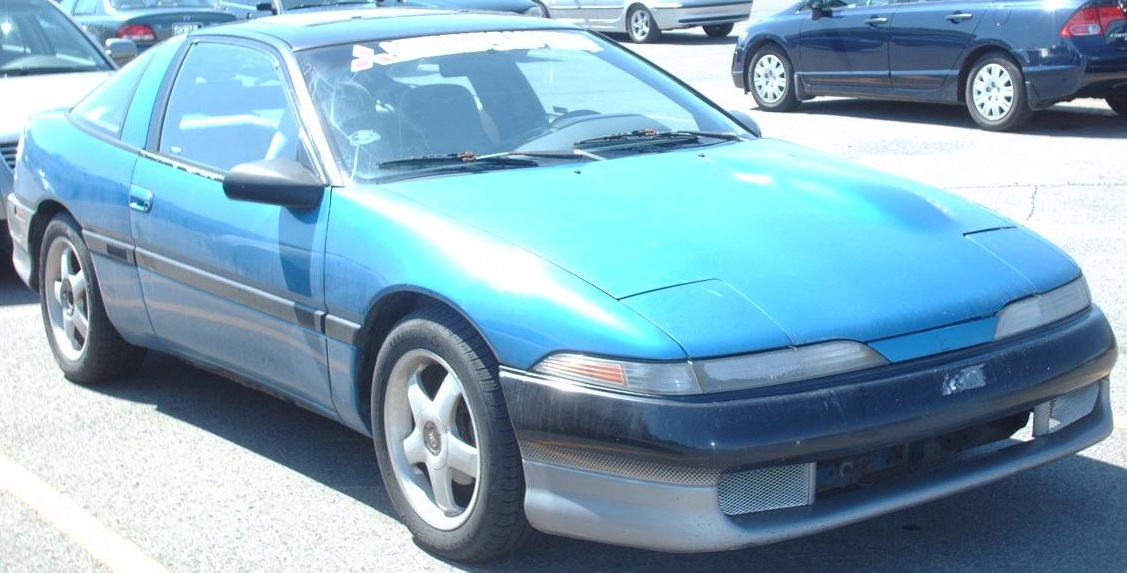
Plymouth Laser
"And we just started playing around with DSM's Mitsubishi, the Eclipse, the Eagle Talon, Plymouth Laser, turbo four cylinders."
The Plymouth Laser is part of the same family of cars as the Eclipse and Talon. In this segment, it’s mentioned because they were all good starting points for turbo-four modifications.
The Plymouth Laser is another “DSM” twin of the Mitsubishi Eclipse, using the same general turbo four-cylinder concept. It’s brought up as part of the early lineup the speaker and their dad worked on while learning performance tuning.

Gallant VR4
"But I mean, you've got a platform there that, and I still to this day, do not understand why it was so over engineered... Let's start with the Gallant VR4, which is what we had."
The Galant VR-4 is a turbocharged Mitsubishi from Japan that’s known for being a strong base for upgrades. The speaker mentions it because it uses the same famous turbo engine family as other popular mod cars.
The Mitsubishi Galant VR-4 is a JDM rally-bred variant known for its turbocharged 4G63 engine and all-wheel-drive setup. Here it’s used as the speaker’s specific “starting platform,” and they call out that the engine family is the same 4G63 used across the DSM/Evo world.
4G63
"It was like 1500 square feet... We had the JDM models, but essentially, let's call it an Evo 1234 et cetera. Same 4G63. Well, actually, no, let's start with the Gallant VR4, which is what we had."
The 4G63 is a Mitsubishi turbo engine that a lot of enthusiasts know because it’s been used in several famous performance cars. In this segment, it’s the common engine they’re talking about across different models.
The 4G63 is Mitsubishi’s famous turbocharged inline-four engine family, widely used in DSM cars and later in the Evo lineup. It’s referenced here as the shared engine foundation that made these platforms so popular for tuning.
serviceable transmission
"DL 800 transmission is not technically a serviceable transmission. So when the dealer gets a car that has a transmission, they just pull the whole thing out."
A “serviceable transmission” means a transmission can be taken apart and fixed with parts, instead of being replaced as a whole. If it’s not serviceable, repairs get much more expensive and harder to do quickly.
A “serviceable transmission” is one designed to be repaired and rebuilt with replacement internal parts (clutches, bearings, etc.). When a transmission isn’t serviceable, dealers typically swap the entire unit, which drives up cost and slows down tuning progress.
DL 800 transmission
"how that transmission works that DL 800 transmission is not technically a serviceable transmission. So when the dealer gets a car that has a transmission, they just pull the whole thing out."
A “DL 800 transmission” is a particular type of gearbox used in some performance cars. The key point here is that it’s treated like a sealed unit—shops often replace the entire transmission instead of repairing individual internal parts.
The “DL 800” is a specific transmission model used in high-power Audi/Lamborghini-style applications. The host is saying it’s “not technically a serviceable transmission,” meaning the manufacturer/dealer approach is to replace the whole unit rather than rebuild internal parts.
3,000 horsepower
"Dodson's are actually making replacements parts because obviously all of the internal components are not up to 2.5, 3,000 horsepower."
That “2.5 to 3,000 horsepower” range is about extremely high power. The more power you make, the harder you stress the transmission, so parts may need to be upgraded or replaced more often.
“2.5, 3,000 horsepower” refers to extremely high engine output levels that stress transmission internals. The host’s point is that many internal components aren’t designed to survive at those power levels, which is why replacement parts and servicing options matter.
clutches
"Dodson's are actually making replacements parts because obviously all of the internal components are not up to 2.5, 3,000 horsepower. So now you actually have options to service, even at a lower power level, you know, clutches, baskets, et cetera."
Clutches are the parts inside a transmission that help it connect to the engine and change gears. If you can replace clutches instead of the whole transmission, repairs become more affordable.
In a high-power transmission, “clutches” are friction elements that engage and disengage gear sets. The host notes that replacement clutch parts (along with other internals) can be made available for lower power levels, enabling more practical servicing.
baskets
"options to service, even at a lower power level, you know, clutches, baskets, et cetera. So has that kind of changed the game a little bit..."
“Baskets” are internal parts inside the transmission that support other moving components. The important idea is that if these parts can be replaced, you can rebuild the transmission instead of swapping it.
“Baskets” are internal transmission components that help hold and support rotating clutch/gear assemblies. In the context of high-horsepower builds, the host is saying these internals can be replaced as part of servicing rather than replacing the entire transmission.
take it, check it on a pallet, throw it in the rubbish
"So has that kind of changed the game a little bit into what was previously like take it, check it on a pallet, throw it in the rubbish, and order a new one from Audi Lamborghini? 100%"
The host is describing the old approach where a transmission problem meant replacing the whole unit and discarding the old one. The newer approach is to repair internal parts instead, which can save money and help people build faster cars.
This describes a “replace-not-repair” workflow for transmissions: diagnose, swap the unit, and discard the failed one. The host contrasts that with the newer availability of replacement internal parts that enables rebuilding and faster progress.

Audi 100
"...bbish, and order a new one from Audi Lamborghini? 100% and that's, that would stop progress because you..."
The Audi 100 is a sedan made by Audi. The podcast mentions it while talking about how decisions and development can affect progress. It’s used as an example in the conversation rather than a specific performance topic.
The Audi 100 is a mid-size luxury sedan that represents an older era of Audi’s engineering and design evolution. In the podcast, it’s referenced in a way that highlights how certain choices—like sourcing or developing parts—can affect progress and practicality. That makes it a contextual example rather than a performance focus.
dyno cell
"And as soon as you rolled it into the dyno, dyno cell, you're like, yeah, [1299.9s] okay, this thing needs like 10 to 20 hours of workshop labor..."
A dyno cell is the dedicated room/area where the car is strapped down and tested on the dyno. It’s where tuning time is expensive, so surprises hurt both the shop and the customer.
A dyno cell is the enclosed test area around the dynamometer, typically with safety systems, ventilation, and controlled access. The speaker mentions it to emphasize that once the car is on the dyno, problems become immediately obvious and can waste paid dyno time.
fuel pressure
"first pull, there's no fuel pressure. And it's like, okay, well, now we just, [1361.5s] the customer's like, oh, I paid for a tune, I get a tune..."
Fuel pressure is how hard the fuel system pushes gas to the engine. If it’s not right, the engine may not run properly on the dyno, and the tuner can’t safely dial in the tune.
Fuel pressure is how strongly fuel is delivered to the engine’s fuel system, usually controlled by a pump and regulator. If fuel pressure is too low during a dyno pull, the engine can’t run correctly (often leading to lean conditions), so tuning results become invalid.
pre-dyno inspections
"we had with pre-dyno inspections and we've gone through all these things and eventually got to [1378.72s] "
Pre-dyno inspections are a quick “make sure it’s ready” checklist before the car goes on the dyno. The goal is to avoid surprises that waste expensive testing time.
Pre-dyno inspections are checks done before the car is strapped to the dynamometer to catch issues that would prevent a successful tuning session. The speaker says they learned this process after repeated cases where cars arrived unprepared and wasted dyno time.
Tony Palo
"I'd say even today, especially today, we only work on cars that we make parts for and only cars [1391.8s] that we've built. Yeah, that's an interesting start. And I mean, I've had this basically [1398.2s] reiterated to me by a number of the high end tuners that I've had on this podcast. Tony [1404.4s] Palo would be another classic example."
Tony Palo is mentioned as an example of a top car tuner. The point is that tuners earn trust by proving they can consistently get good results.
Tony Palo is referenced as a “classic example” of a high-end tuner. In this context, he’s used to illustrate how top tuners build credibility by delivering results before expanding their customer base.
engine tuning
"If you're a fan of the podcast and you're interested in topics like engine tuning, [1511.7s] automotive wiring, performance engine building, 3D modelling in CAD, or anything else in the"
Engine tuning means changing how the engine is controlled so it runs better. For enthusiasts, it’s often done to make more power or improve how the car feels when you drive it.
Engine tuning is the process of adjusting an engine’s settings—often including fuel/air delivery and ignition timing—to improve how it runs and performs. In performance circles, it usually means tailoring the engine to specific goals like power, throttle response, or drivability.
performance engine building
"If you're a fan of the podcast and you're interested in topics like engine tuning, [1511.7s] automotive wiring, performance engine building, 3D modelling in CAD, or anything else in the"
Performance engine building means putting together an engine with upgraded or carefully chosen parts for stronger performance. The goal is usually more power and better reliability when you drive it hard.
Performance engine building is the process of assembling and modifying an engine to handle higher output and specific performance targets. It can include selecting internal components, balancing, and matching parts so the engine is durable under stress.
automotive wiring
"If you're a fan of the podcast and you're interested in topics like engine tuning, [1511.7s] automotive wiring, performance engine building, 3D modelling in CAD, or anything else in the"
Automotive wiring refers to the vehicle’s electrical wiring and how circuits are connected for sensors, actuators, and control modules. In tuning and fabrication, wiring work is often needed for standalone engine management, sensor integration, and reliable signal routing.
3D modelling in CAD
"If you're a fan of the podcast and you're interested in topics like engine tuning, [1511.7s] automotive wiring, performance engine building, 3D modelling in CAD, or anything else in the"
3D modelling in CAD is using a computer program to design parts in 3D. It helps engineers plan and test how parts will fit before they’re made.
3D modelling in CAD means using computer-aided design software to create precise 3D geometry. In automotive tuning and fabrication, CAD helps design parts, check fitment, and iterate quickly before manufacturing.
reflashing
"These courses cover everything from tuning and reflashing, petrol and diesel engines, through to motorsport wiring, engine building, fabrication, design,"
Reflashing means updating the car’s computer tune. Tuners do it so the engine runs correctly with performance changes or a custom setup.
Reflashing is the process of updating a car’s engine control unit (ECU) software so it can run different fueling, ignition timing, and boost targets. In tuning contexts, it’s often used to support mods like intake/exhaust changes or to correct behavior for a new calibration.
WinOLS
"Want to define maps or tune with WinOLS, curious about Canbus devices, or how CAD can help make your dream build a reality?"
WinOLS is a computer program tuners use to change the engine’s settings. It helps them adjust things like how much fuel and timing the engine uses.
WinOLS is a widely used PC software tool for editing ECU calibration files. Tuners use it to define and adjust maps (like fuel and ignition tables) when creating custom engine tunes.
Canbus devices
"Want to define maps or tune with WinOLS, curious about Canbus devices, or how CAD can help make your dream build a reality?"
CAN bus is the car’s internal communication network. “CAN bus devices” are gadgets that plug into that network so tuners can read data or control functions.
CAN bus (spoken here as “Canbus”) is the vehicle network that lets ECUs and sensors communicate over shared wiring. “CAN bus devices” in tuning typically refers to tools or modules that interface with that network for data, control, or compatibility.
time attack car
"We built a car for drag racing. We actually used that same car. We'd convert it to time attack and then eventually built a time attack car instead of trying to do two things at once."
A time attack car is built to go as fast as possible on a track. Instead of racing in a straight line, it’s tuned for quick laps and strong handling.
A time attack car is set up to post the fastest lap or run time on a track. It’s usually tuned for repeatable grip and consistent performance over short bursts rather than drag-race acceleration.
drag racing
"We built a car for drag racing. We actually used that same car. We'd convert it to time attack and then eventually built a time attack car instead of trying to do two things at once."
Drag racing is racing in a straight line to see which car accelerates fastest. It’s mostly about getting traction and making power quickly.
Drag racing is a motorsport where two cars accelerate in a straight line over a short distance, racing for the quickest elapsed time. It strongly emphasizes traction off the line and power delivery rather than cornering balance.
suspension
"No. Yeah, suspension and all that stuff. So yeah, that car was, it did great things for us."
Suspension is what connects the wheels to the car and controls how the wheels move. On a race car, it’s a big part of how well the car grips and handles.
Suspension is the system that connects the wheels to the car’s body and controls ride height, wheel movement, and grip. In motorsport, changing suspension setup can dramatically affect traction and handling balance.
turbo kit
"And I stayed up like me and a weather fabricator, stayed up like three days in a row building some turbo kit, trying to hobble some turbo on there with a header and all the stuff."
A turbo kit is an aftermarket package that adds forced induction to an engine, typically including the turbocharger, piping, and key supporting components. The goal is to make the turbo system work as a matched set rather than piecing together incompatible parts.
headers
"And I stayed up like me and a weather fabricator, stayed up like three days in a row building some turbo kit, trying to hobble some turbo on there with a header and all the stuff."
A header is part of the exhaust system that collects exhaust gases from the engine. On turbo cars, it helps feed the turbo correctly.
An exhaust header is a manifold that routes exhaust gases from the engine into the turbo or exhaust system. On turbo builds, the header’s shape and fit can affect how well the turbo spools and how smoothly exhaust flows.
drag meet
"I distinctly remember with that thing, every single time we took it to a drag meet, we'd do 8-10 pulls."
A drag meet is a racing event where cars make repeated timed runs. They do several attempts so they can improve traction and tune the car. In this story, they’re saying it took many tries to get it right.
A drag meet is an organized event where cars run timed acceleration passes, typically in multiple “pulls” to dial in traction and tuning. The speaker notes they made 8–10 pulls at each drag meet, emphasizing how much testing it took to get consistent results.
Q16
"We ran it on Q16 so that on paper, to keep the internet worry as happy, we were comparable because I think you guys were running on a pump gas."
Q16 is a high-octane racing fuel. Higher octane helps the engine tolerate more boost and timing without pinging/knocking. They’re using it to explain why their results were “comparable” to cars running pump gas.
Q16 (often written as “C16” or “Q16” in racing circles) refers to a high-octane race fuel blend used to resist knock under high boost. The hosts say they ran Q16 so their car would be comparable to others using different fuel types (like pump gas).
pump gas
"we were comparable because I think you guys were running on a pump gas."
Pump gas is the regular gasoline you buy at the gas station. It usually has a lower octane rating than race fuel. They’re comparing it to Q16 to show why the cars might not be directly comparable.
Pump gas is regular gasoline sold at public fueling stations, typically lower octane than dedicated racing fuels. The speaker contrasts pump gas with Q16/C16 to explain differences in how much boost and ignition timing the engine can safely run.
GT4202
"And it made a thousand-run wheel horsepower, 42 psi of boost on a GT4202."
GT4202 is the name of a specific turbocharger used to make boost. Different turbo models spool differently and support different power levels. Here, it’s part of the recipe for their high-boost drag-racing results.
GT4202 is a turbocharger model designation (a specific turbo size/variant) used in performance builds. The speaker ties it directly to the measured output—thousand-rwhp and 42 psi—so it’s a key part of the car’s high-boost drag setup.
boost
"And it made a thousand-run wheel horsepower, 42 psi of boost on a GT4202."
Boost is the extra pressure a turbo adds to the engine. More boost usually means more air (and potentially more power), but it also increases stress on the engine. They’re quoting their boost level to show how aggressive the setup was.
Boost is the extra pressure forced into an engine by a turbocharger or supercharger. In this segment, they mention “42 psi of boost,” which indicates how hard the turbo system was pushing to make power for drag racing.
transfer case
"But every 10 passes, we'd have to pull the transfer case apart in the crown wheel. We'd crack through the base of every single tooth."
A transfer case is a part that helps send engine power to the wheels—usually both front and rear. If it’s getting damaged after hard launches, it means the gears inside are taking more stress than they can handle.
A transfer case is the gearbox that splits power to the front and rear axles on all-wheel-drive (AWD) vehicles. In drag racing, repeated launches can stress its gears, so cracking teeth can become a recurring failure point.
crown wheel
"But every 10 passes, we'd have to pull the transfer case apart in the crown wheel. We'd crack through the base of every single tooth."
The crown wheel is a gear that works with another gear to transfer power. If its teeth are cracking, it usually means the car is putting too much force on that gear during launches.
The crown wheel is a ring gear in a differential/gearset that meshes with a pinion. When the crown wheel’s teeth crack at the base, it often points to high torque loading, shock loads from launches, or insufficient strength for the application.
launch
"Like, is this going to do 11 passes? Or is it going to do 25 or maybe 50? ... he got one launch in and then the thing got rained out."
A launch is how the car gets going at the start of a drag race. It’s the moment where the drivetrain gets hit with the biggest stress, so failures often show up right after launches.
In drag racing, a launch is the initial acceleration from a standstill, where drivetrain torque spikes and traction limits are most critical. Those shock loads can quickly expose weak points in gearsets like the transfer case.
crack testing
"Yeah, yeah, sometimes crack testing is kind of, you know, it's a blessing to curse. So sorry, I just had to rub that in there, Martin."
Crack testing is a way to check metal parts for hidden cracks without destroying them. It helps you spot damage early, but it can also be frustrating if it keeps turning up serious issues.
Crack testing is a nondestructive inspection method used to find hidden cracks in metal parts. In this context, it’s being described as a way to catch gear damage early—though it can also feel like a curse because it reveals expensive problems.
detonation time
"reading books about it, taking my time, understanding how everything worked, like what's, you know, from fueling to ignition time to detonation time."
Detonation is engine knock—when combustion happens in an uncontrolled way. Tuning helps prevent it because knock can damage the engine.
Detonation time refers to the timing/conditions around engine knock (detonation), where the air-fuel mixture ignites too aggressively or too early. Tuning aims to prevent detonation by managing ignition timing and fueling so combustion stays controlled.
fueling
"reading books about it, taking my time, understanding how everything worked, like what's, you know, from fueling to ignition time to detonation time."
Fueling is how much fuel the engine puts in. Tuning fueling helps the car run smoothly and prevents it from being too rich or too lean.
In tuning, fueling refers to how much fuel the engine injects for a given amount of air and operating condition. Adjusting fueling is central to achieving the correct air-fuel ratio for power, drivability, and safe combustion.
ignition time
"reading books about it, taking my time, understanding how everything worked, like what's, you know, from fueling to ignition time to detonation time."
Ignition timing is when the spark happens inside the engine. Changing it can help the engine make more power and also helps avoid damaging knock.
Ignition time (ignition timing) is when the spark plug fires relative to the engine’s crankshaft position. Tuning ignition timing is critical for power and efficiency, and it also affects knock risk.
wideband lambda
"Back then, even getting a wideband lambda was not an easy feat. You had to go to a dyno. No. I remember, so it wasn't like you could get a, oh, let me get a wideband for 200 bucks."
A wideband lambda is a sensor that tells you the air-fuel ratio. Tuners use it to make sure the engine isn’t running too rich or too lean, which affects power and engine safety.
A wideband lambda sensor measures air-fuel ratio (how much fuel vs. air is in the mixture) with much higher resolution than older narrowband sensors. Tuners use it on the road and especially on a dyno to dial in fueling for safe combustion and strong power.

Lancia Lambda
"...tonation time. Back then, even getting a wideband lambda was not an easy feat. You had to go to a dyno."
The Lancia Lambda is an older car from Lancia’s history. The podcast mentions it while talking about how engineers measured the air-fuel mixture using tools like wideband lambda sensors. That helps explain how tuning methods developed over time.
The Lancia Lambda is a historic car known for early engineering innovations, including its approach to measuring and controlling combustion-related parameters. In the podcast, it’s referenced in the context of “wideband lambda” and dyno testing, which ties it to the broader story of how fuel-air mixture measurement evolved. That makes it a relevant historical anchor for discussions about tuning technology.
cam timing
"You've had to have played with cam timing on an engine. You've had to have to see how stuff breaks, how stuff works, understand it all."
Cam timing is when the engine’s valve-opening events happen during each engine cycle. Tuners adjust it to help the engine make more power or run better.
Cam timing is the precise relationship between the camshaft and the engine’s crankshaft. Changing it alters when the engine’s valves open and close, which can shift power, torque, and how the engine responds.
daily driver
"with this engine, these parts in our package, this should be reliable as far as like a daily driver up to this parlor."
A “daily driver” is a car you use normally—commuting, errands, and everyday driving. They’re saying the goal is reliability for that use, not just short bursts of extreme performance.
A “daily driver” is a vehicle intended for regular everyday use rather than track-only operation. The segment contrasts reliability expectations for daily driving versus the higher failure risk when power levels rise.
waiver
"we have actually even like, we have a waiver where we kind of, the tuners go to a certain level of the vehicle and the customer's like, hey, I want more power."
A waiver is a document the customer signs to say they understand there’s risk. If they want more power than the safe range, the waiver helps clarify that failures may not be covered.
A waiver is a signed agreement where the customer acknowledges risk and accepts responsibility for outcomes. In high-power tuning, it’s used to set expectations that pushing beyond safe limits can lead to engine or component failure.
oiling system
"the blocks still stock, the headstock, the oiling system, the camshafts, the rocker, where all this stuff is still stock"
The oiling system is how the engine sends oil to the moving parts. It keeps things lubricated and helps prevent overheating.
The oiling system is how an engine pumps and distributes oil to lubricate moving parts and manage heat. When you increase power, oil flow and oil pressure become critical because stressed components need consistent lubrication.
headstock
"the blocks still stock, the headstock, the oiling system, the camshafts, the rocker, where all this stuff is still stock"
The headstock is part of the top of the engine where the valve system is. It helps control when the engine’s valves open and close.
In an engine context, the headstock is the engine’s cylinder head assembly area where the valvetrain components live. It’s where you’ll find parts like camshafts and rocker arms that control valve opening and closing.
rockers
"the blocks still stock, the headstock, the oiling system, the camshafts, the rocker, where all this stuff is still stock"
A rocker arm is a small lever in the top of the engine. It helps turn the camshaft’s motion into valve movement.
A rocker (rocker arm) is part of the valvetrain that transfers motion from the camshaft to the valve. Under high power, the rocker and its contact surfaces can see higher loads, so wear and failure points matter.
life limit
"there is a life limit to that. It's not just, oh, go drive for next 20,000 miles and beat the hell out of it"
A life limit means parts can only handle so much stress for so long. If you make more power than stock, the engine parts wear out faster.
A life limit is the idea that heavily stressed engine components have a finite service life before wear or fatigue becomes likely. When you push beyond stock power, the stress cycles increase, so the “safe” mileage or time before failure can drop dramatically.
two step
"rev it and two-step it and launch control and all that stuff. I mean, there's a limit to it."
Two-step is a way to hold the engine at a set RPM for launches. It helps you get consistent starts, but it can be hard on the engine and transmission if overused.
Two-step is a launch-control-style technique where the engine is held at a specific RPM using the throttle and engine management. It’s used to control boost and traction at the start of a run, but it can also increase stress on the drivetrain and engine internals.
OEM
"That's why OEMs have warranties. It's not just, oh, go drive for next 20,000 miles and beat the hell out of it"
OEMs are the carmakers themselves. Their warranties are based on normal use, and they can refuse coverage if the car is abused.
OEMs (Original Equipment Manufacturers) are the companies that build the cars as sold new. They include warranties because they assume a certain usage level; if owners abuse the car, warranty coverage can be denied.
billet blocks
"And I don't, I would have almost thought now, obviously you move to billet blocks and other things which we'll get into."
A billet block is an engine block made by cutting it out of a solid chunk of metal. People choose it because it can be stronger and more consistent than a cast block when the engine is heavily modified.
Billet blocks are engine blocks machined from a solid billet of metal instead of being cast. The idea is to improve strength and consistency, which can help when you’re running high cylinder pressures or extreme boost levels.
engine blocks
"But I've almost found that in a lot of ways, some of the OE engine blocks and even transmissions to a degree have almost become more and more over-engineered..."
OE engine blocks are the factory-made engine blocks that came in the car. When people build engines for big power, they often compare those stock parts to stronger aftermarket options.
OE engine blocks means original-equipment (factory) engine blocks. In tuning discussions, the point is that stock castings can be more limited under extreme stress compared with aftermarket solutions like billet or reinforced blocks.
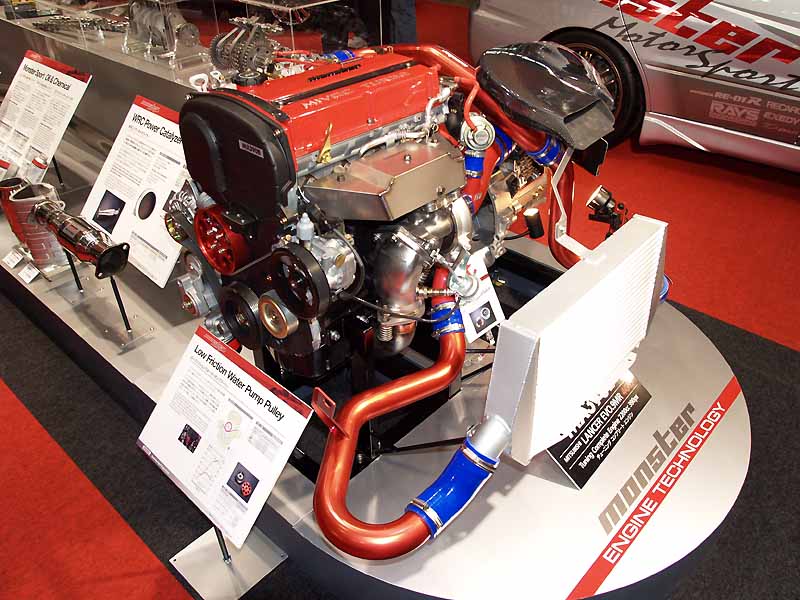
4G63
"And just to add a little anecdote back from my 4G63 days, and this was fortunately something I found on my own vehicle, I'm sure you would have seen it back in your 4G63 days."
The 4G63 is a Mitsubishi engine people often modify for big power. Because it’s so popular with tuners, the way the engine block and main bearings are built can make a big difference when you’re making lots of boost.
The 4G63 is Mitsubishi’s famous 2.0-liter inline-four engine, best known in the enthusiast world for its turbocharged variants. It’s widely built for high power, so details like block reinforcement and main-bearing hardware matter a lot when you’re pushing it hard.
cast full girdle
"For those who aren't aware of that engine, it runs a cast full girdle as opposed to individual bearing caps for the main bearings."
A cast full girdle is a strong, continuous piece that supports the main bearings at the bottom of the engine. It’s meant to keep the crankshaft supported more rigidly, especially when the engine is making a lot of power.
A cast full girdle is a one-piece (or full-length) main-bearing support structure integrated into the engine’s bottom end. Instead of using separate main bearing caps, it spreads load across a larger area, which can improve stiffness and reduce flex under high power.
main bearings
"For those who aren't aware of that engine, it runs a cast full girdle as opposed to individual bearing caps for the main bearings. And what we would always see on a tear down is that that was fretting between the mating surface of the girdle and the block."
Main bearings are the bearings that hold up the crankshaft inside the engine. If they’re not supported well, the crankshaft can move around and the engine can start wearing out or losing oil pressure.
Main bearings are the bearings that support the crankshaft in the engine block. In high-power builds, the condition and stability of the main bearing support (caps or girdle) is critical because crankshaft movement can lead to wear or loss of oil pressure.
fretting
"And what we would always see on a tear down is that that was fretting between the mating surface of the girdle and the block."
Fretting is tiny back-and-forth movement between two metal parts. Even though it’s small, it can slowly wear the surfaces and cause problems over the life of the engine.
Fretting is small-scale rubbing or micro-motion between two metal surfaces under load. Over time it can wear mating surfaces, loosen clamping, and contribute to reliability issues—especially in high-stress engine bottom-end setups.
ARP 2000 stud
"And at the time, I mean, the best we had available was a 10mm ARP 2000 stud, that was the best that was available."
An ARP 2000 stud is a high-strength aftermarket threaded fastener used to clamp engine components. ARP’s “2000” is a specific stud material/grade commonly chosen for its strength and heat/torque resistance in performance engines.
ARP 716th
"So I had this brilliant idea of machining out those original studs and replacing them with an ARP 716th, which is essentially in metric, about a millimeter larger in diameter."
ARP 716th is a type of stronger aftermarket engine stud. The speaker tried swapping to a slightly different size/diameter, and it caused a problem—showing that fitment and clamping behavior matter, not just “stronger parts.”
An ARP 716th refers to an ARP stud size/material grade (the speaker describes it as essentially metric and about a millimeter larger in diameter). The key point is that changing stud diameter/fit can affect how the clamping load and fitment behave, which can lead to unexpected issues.
tire pressure warning light
"And of course, as usual, because I'm a drag racer, the oil pressure warning light came on, but the thing's still pulling like crazy."
That light tells you the engine oil pressure isn’t where it should be. If oil pressure is too low, the engine parts that need lubrication can start wearing or failing fast.
This is the dashboard indicator that the engine’s oil pressure has dropped below a safe threshold. Low oil pressure can mean the bearings aren’t getting enough lubrication, which can quickly lead to severe engine damage.
custom dry sump
"and you jack it up, and it had a custom dry sump fabricated sump, and you could kind of see a witness mark where something's tried to come out from the inside."
A dry-sump is a performance oil system that helps keep oil where it needs to be, even under hard acceleration or unusual engine motion. It’s designed to prevent oil starvation.
A dry-sump system uses an external oil reservoir and scavenge pumps to keep oil from pooling in the crankcase. Drag racing and high-G cornering can uncover oiling issues in wet-sump setups, so dry-sump systems are often used for sustained hard use.
witness mark
"and you could kind of see a witness mark where something's tried to come out from the inside."
A witness mark is a clue left behind by a failure—like a scratch or scrape that shows what touched what. Mechanics use it to figure out the failure path.
A witness mark is a visible scratch, smear, or contact pattern that shows where and how something failed or moved. In engine teardown, witness marks help pinpoint the exact contact point between damaged parts.
balance shafts
"it had cracked through the balance shaft, we don't run balance shafts in those engines, it had cracked through the balance shaft, and one of the bearings that we used to block the balance shaft oil feed had just fallen out"
Balance shafts are extra moving parts inside some engines that help smooth out vibrations. If they break or lose oil supply, they can lead to serious internal damage.
Balance shafts are rotating shafts used to reduce engine vibration by counteracting uneven forces. Some engines omit them for simplicity or durability, and if a balance-shaft-related oil feed or component fails, it can cause lubrication problems and internal damage.
balance shaft oil feed
"and one of the bearings that we used to block the balance shaft oil feed had just fallen out, got munched up by the crankshaft, and that was the witness mark."
That oil feed is the path that sends oil to the balance shaft parts. If something meant to block or redirect that oil comes loose, it can fall into the moving parts and get destroyed.
The balance shaft oil feed is the oil passage that supplies lubrication to the balance shaft system. Blocking or modifying that feed changes how oil is routed, and if a blocking bearing or plug fails, it can drop into the crank area and be crushed.
Custom Age 625+
"Maybe go to ARP, Custom Age 625+, that didn't exist back then."
Custom Age 625+ is a special strong metal used for performance bolts. The idea is that it holds up better when the engine is under a lot more heat and pressure than stock.
Custom Age 625+ is a high-strength alloy used for certain performance fasteners. It’s chosen because it can better resist stretching and fatigue under the heat and stress of high-boost engines.
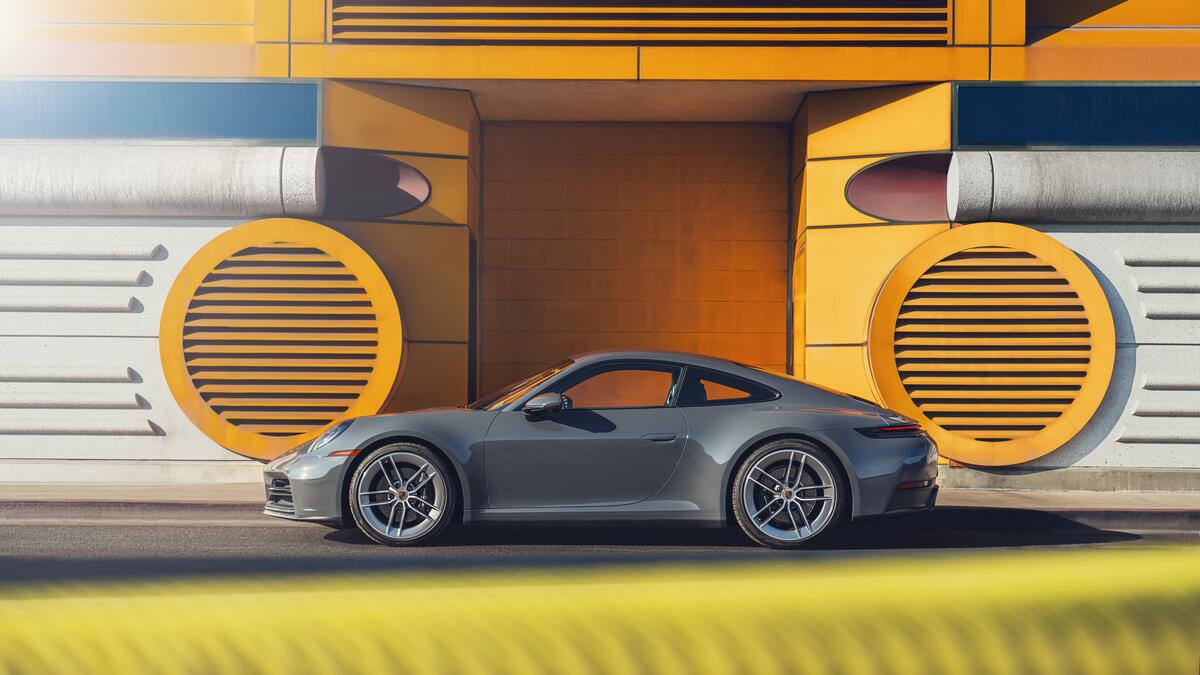
Porsche 911
"There would have obviously been other products out there, maybe some European vehicles, maybe Porsche 911, etc. Why was it the R35 that piqued your interest?"
The Porsche 911 is one of the most famous performance cars ever made, and it has a huge tuning community. They mention it as a possible alternative, but explain why they were more interested in the GT-R instead.
The Porsche 911 is a rear-engine sports car platform with a long history of aftermarket support and high-performance tuning. Here it’s mentioned as an example of other possible directions for AMS, before the conversation narrows to why the R35 GT-R became the focus.
turbocharged engine
"I mean, one turbocharged, I loved anything turbocharged, the potential you could have with turbocharged engine"
A turbocharged engine uses a turbo to cram more air into the engine. More air usually means more power, but it also makes the engine work harder, so builders have to make it reliable under that extra stress.
A turbocharged engine uses a turbocharger to force more air into the cylinders, allowing more power from the same displacement. In performance builds, turbocharging also increases heat and cylinder pressure, which is why engine “holding” reliability becomes a major development goal.

GTR
"and same with the GTR, that was kind of the next hey, now it's going to be available in the US, ... No, I mean, we did dabble in some other platforms, but that was really for us, and it's kind of the next natural thing was the GTR."
GTR is Nissan’s high-performance car, the GT-R. It’s known for being fast and having a big tuning community. The speaker is saying it became the next logical platform for them.
Nissan GTR (often called the GT-R) is Nissan’s flagship all-wheel-drive performance coupe, famous for strong factory power and a huge aftermarket. Here, the speaker frames it as the next “natural step” for their shop once it became available in the US.

Chevrolet Corvette
"... also part of it, like instead of us jumping to a Corvette or something along those lines. So that USDM, tha..."
The Chevrolet Corvette is a sports car from Chevrolet. It’s designed to be fast and fun to drive. The podcast mentions it as an example of a performance-focused U.S. model.
The Chevrolet Corvette is a U.S.-made sports car built for performance and driver engagement. It often appears in conversations about performance development because it’s a flagship model that attracts significant engineering and tuning attention. In the podcast, it’s referenced as a potential example of a U.S. performance car platform.
fuel system
"keep trying to improve the turbo kit, how do we get this working, how to get the fuel system, whatever it was,"
The fuel system is how the car supplies gasoline to the engine. On high-power turbo builds, the stock system may not be able to deliver enough fuel, so it needs upgrades. The speaker is linking fuel-system work to making the turbo setup work.
The fuel system is the set of components that delivers fuel from the tank to the engine under all operating conditions. When chasing “big power” on a turbocharged GT-R, the fuel system often becomes a limiting factor, so tuners upgrade it to maintain the right fuel pressure and flow.
stock placement turbocharger
"I think that stock placement turbocharger, that must also be a limitation, obviously, with anything GTR now that is really serious big power. You've got front-mounted turbochargers, but as I understand it, there is a class now for stock location turbochargers."
A stock placement turbocharger keeps the turbo in the same general spot as the factory design. That’s harder to engineer for big power because you can’t freely change the layout. The speaker is saying there’s a competition class built around that constraint.
A stock placement turbocharger means the turbo is mounted in the factory location rather than using a custom manifold and piping layout. The speaker notes there’s now a class for this approach, which creates engineering constraints because packaging, airflow, and heat management are harder than with front-mounted setups.
turbo turbine housing and manifold all as one piece
"So we do the typical hybrid stuff, it was a turbo fold, so turbo, turbine housing and manifold all as one piece. We found someone to machine them out, modify them to put larger exhaust wheels, larger center cartridge in there, and that's kind of where that started."
Some turbo setups are built as one combined piece with the exhaust manifold. That can make it harder to swap parts or fit bigger turbo parts, so people sometimes have to machine or redesign parts to make it work.
This describes an integrated turbocharger setup where the turbine housing and exhaust manifold are cast/assembled as one unit. That packaging can limit how easily you change turbo components, so builders often modify or replace parts to fit larger turbo hardware.
larger exhaust wheels
"We found someone to machine them out, modify them to put larger exhaust wheels, larger center cartridge in there, and that's kind of where that started. But there's limitations to that."
Inside a turbo there’s a spinning wheel that the exhaust gas pushes. A bigger wheel can move more air and help make more boost, but it also requires the rest of the turbo and exhaust parts to be matched and fitted correctly.
The exhaust wheel (turbine wheel) is the rotating part inside a turbocharger that the exhaust gas spins. Using a larger wheel can improve airflow and boost potential, but it also changes fitment, spool characteristics, and how much power you can reliably make with the rest of the housing and exhaust path.
larger center cartridge
"We found someone to machine them out, modify them to put larger exhaust wheels, larger center cartridge in there, and that's kind of where that started. But there's limitations to that."
A turbo has an internal ‘core’ section that spins and supports the shaft. Upgrading that core (the cartridge) can help the turbo handle more airflow, but it has to match the rest of the turbo and the way it’s mounted.
A turbocharger cartridge is the rotating core assembly (commonly including the shaft and bearing system) that sits between the compressor and turbine sides. Swapping to a larger cartridge is a way to change the turbo’s internal flow capacity and performance, but it must be compatible with the housings and exhaust/compressor components.
stock turbine housings
"But there's limitations to that. When you're working with stock turbine housings, you have to machine them out, there's limitations to how much power you make."
The turbine housing is the part on the exhaust side of the turbo that shapes how exhaust flows through the turbine. If you keep the factory housing, it can limit how much power the turbo upgrade can actually deliver.
Stock turbine housings are the original turbocharger exhaust-side housings that come from the factory. When builders keep them, they’re often constrained in how much exhaust flow and power the turbo can support, because the housing geometry and flow path limit the upgraded wheel’s potential.
stock location
"And these days, where it's gone in stock locations, it's not streetable, you're trying to shove a turbo that doesn't belong there. So you're cutting frame rails, you're doing really, I'd say, stupid stuff."
“Stock locations” means using the factory spots where the original turbo/exhaust parts would go. With a big turbo, those factory spaces can be too tight, so you may need heavy fabrication or accept that it won’t be street-friendly.
“Stock locations” means installing a turbocharger and exhaust components in the factory mounting positions. Keeping to stock locations is difficult with large turbochargers because the required downpipe, clearance, and heat management can force major fabrication or compromise drivability.
Request an Explanation
Heard something you'd like explained? We'll add it to this episode.
Sign in to request explanations for terms you heard.
Want to learn more?
Browse our glossary for plain-English explanations of automotive terms, jargon, and concepts.
Help improve this episode
See something that's not quite right? Our annotations are AI-generated and can sometimes miss the mark. Click the flag icon on any annotation to suggest a correction.