A quarter mile is a standard drag-race distance—about 400 meters. People measure how fast the car gets through that distance and often compare times and top speed.
The Nissan GT-R (R35) is a fast, high-performance sports car. The podcast mentions it because it’s a well-known platform for engineering and performance work. People often talk about it when discussing tuning and upgrades.
Car
Lamborghini Huracan
The Huracán is Lamborghini’s mid-engine supercar. Tuners like it because it’s powerful and there’s a lot of performance parts and tuning knowledge available for it.
A drag strip is the straight track where cars race to see who accelerates faster. Tuning for it focuses on getting off the line hard and keeping the power consistent.
Roll racing is like drag racing, but you’re already rolling when the race starts. A half-mile event is longer than a quarter mile, so the car has to keep accelerating hard for longer.
EFI means the car uses electronics to control how much fuel goes into the engine. Tuning EFI is how shops adjust the fuel delivery so the engine makes power safely.
A wiring harness is the car’s organized bundle of wires that connects all the electronics together. When you add performance parts, you often need correct wiring so everything talks to the engine computer properly.
A Peugeot 505 is an older Peugeot family car. Here it’s mentioned because it was slow and kind of boring, but it still got the speaker interested in driving and cars.
This means the car has a four-cylinder engine and you shift gears yourself. It’s often a simpler, slower setup compared with bigger engines or automatic performance cars.
A doorknob is just the handle you grab to open a door. The point here is that some jobs in car manufacturing might be about small parts instead of exciting performance work.
A tail light is the rear lighting unit on a car that turns on when you’re braking and helps other drivers see the vehicle. The speaker uses it as an example of how car design work can feel repetitive if you’re only focused on one small component.
The Ford F-150 is a large pickup truck made by Ford. People talk about it a lot because it’s a big, important vehicle that gets lots of engineering work, including parts like lights. That kind of work can take years to design and test.
AutoCAD is a computer program used to draw engineering parts. You can design shapes on a screen, then use those drawings to build the real parts.
Term
four slides
“Four slides” is the name of a machine setup with multiple moving parts that help shape metal wire into consistent forms. It’s used to make mechanical pieces like linkages in a repeatable way.
A manual mill is a metal-cutting machine you operate by hand. It’s more hands-on than computer-controlled machining, so it takes skill and patience to get the dimensions right.
Wire EDM is a super-precise way to cut metal. Instead of a traditional cutting tool, it uses electrical sparks to shape parts, which is great for making detailed tooling and dies.
This means the car has a 4-cylinder engine and a turbocharger. The turbo helps the engine burn more fuel/air mix, which usually makes it faster.
Term
single road cam
This is describing how the engine controls its valves. A “single cam” setup uses one camshaft to time the valve openings, which is usually a simpler design than engines with two camshafts.
A camshaft is the part that controls when the engine’s valves open and close. Swapping to a different cam can help the engine breathe better and make more power.
Term
comp cams manufacturers
This refers to aftermarket companies that sell performance camshafts. The point here is that back then you couldn’t just buy a cam from a catalog for that exact car.
The Ford Mustang is a sports car made by Ford. It’s known for being fast and for its classic muscle-car style. It often shows up in conversations about performance and car tuning.
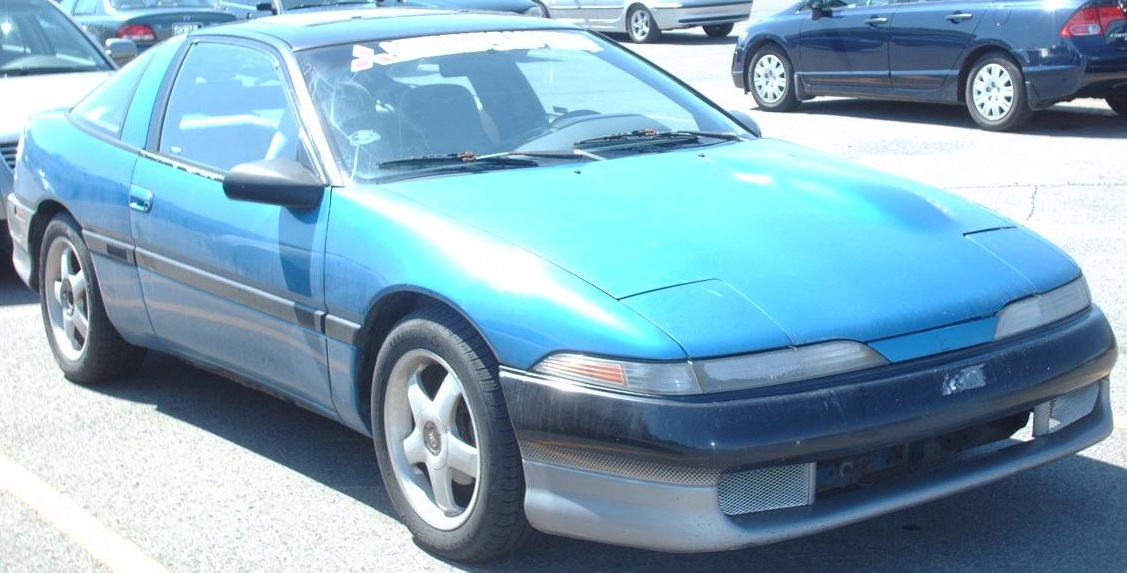
DSM is an enthusiast nickname for a group of related cars made together by Mitsubishi and partners. In this case, it refers to the Eclipse, Talon, and Laser that share similar turbo-four technology.
The Mitsubishi Eclipse is a popular car that enthusiasts modify a lot. In this story, it’s grouped with other similar cars that share the same basic turbo four-cylinder setup.
The Eagle Talon is a car that was popular with modders because it shared a similar turbo engine setup with other DSM cars. Here it’s mentioned as part of the group they started working on.
The Plymouth Laser is part of the same family of cars as the Eclipse and Talon. In this segment, it’s mentioned because they were all good starting points for turbo-four modifications.
The Galant VR-4 is a turbocharged Mitsubishi from Japan that’s known for being a strong base for upgrades. The speaker mentions it because it uses the same famous turbo engine family as other popular mod cars.
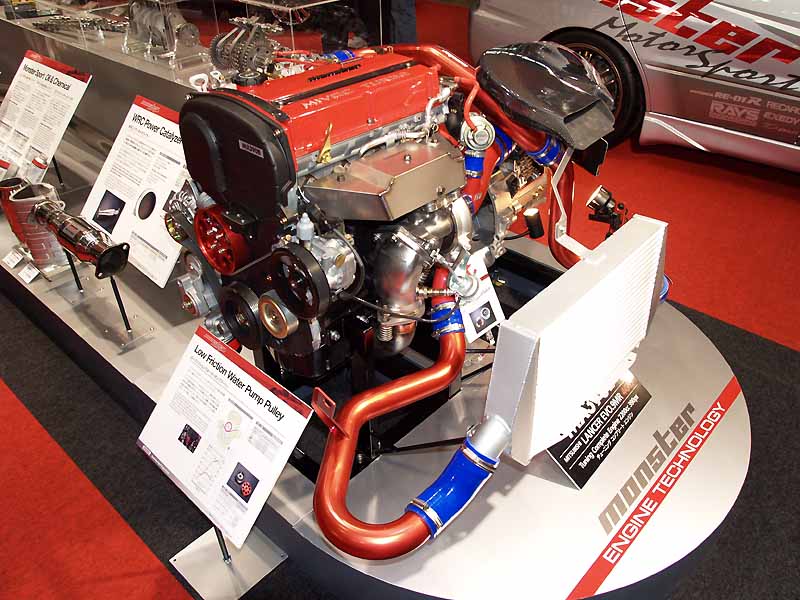
The 4G63 is a Mitsubishi turbo engine that a lot of enthusiasts know because it’s been used in several famous performance cars. In this segment, it’s the common engine they’re talking about across different models.
A “serviceable transmission” means a transmission can be taken apart and fixed with parts, instead of being replaced as a whole. If it’s not serviceable, repairs get much more expensive and harder to do quickly.
A “DL 800 transmission” is a particular type of gearbox used in some performance cars. The key point here is that it’s treated like a sealed unit—shops often replace the entire transmission instead of repairing individual internal parts.
That “2.5 to 3,000 horsepower” range is about extremely high power. The more power you make, the harder you stress the transmission, so parts may need to be upgraded or replaced more often.
Clutches are the parts inside a transmission that help it connect to the engine and change gears. If you can replace clutches instead of the whole transmission, repairs become more affordable.
Term
baskets
“Baskets” are internal parts inside the transmission that support other moving components. The important idea is that if these parts can be replaced, you can rebuild the transmission instead of swapping it.
Concept
take it, check it on a pallet, throw it in the rubbish
The host is describing the old approach where a transmission problem meant replacing the whole unit and discarding the old one. The newer approach is to repair internal parts instead, which can save money and help people build faster cars.
The Audi 100 is a sedan made by Audi. The podcast mentions it while talking about how decisions and development can affect progress. It’s used as an example in the conversation rather than a specific performance topic.
A dyno cell is the dedicated room/area where the car is strapped down and tested on the dyno. It’s where tuning time is expensive, so surprises hurt both the shop and the customer.
Fuel pressure is how hard the fuel system pushes gas to the engine. If it’s not right, the engine may not run properly on the dyno, and the tuner can’t safely dial in the tune.
Pre-dyno inspections are a quick “make sure it’s ready” checklist before the car goes on the dyno. The goal is to avoid surprises that waste expensive testing time.
Engine tuning means changing how the engine is controlled so it runs better. For enthusiasts, it’s often done to make more power or improve how the car feels when you drive it.
Performance engine building means putting together an engine with upgraded or carefully chosen parts for stronger performance. The goal is usually more power and better reliability when you drive it hard.
Automotive wiring refers to the vehicle’s electrical wiring and how circuits are connected for sensors, actuators, and control modules. In tuning and fabrication, wiring work is often needed for standalone engine management, sensor integration, and reliable signal routing.
CAN bus is the car’s internal communication network. “CAN bus devices” are gadgets that plug into that network so tuners can read data or control functions.
Suspension is what connects the wheels to the car and controls how the wheels move. On a race car, it’s a big part of how well the car grips and handles.
A turbo kit is an aftermarket package that adds forced induction to an engine, typically including the turbocharger, piping, and key supporting components. The goal is to make the turbo system work as a matched set rather than piecing together incompatible parts.
A drag meet is a racing event where cars make repeated timed runs. They do several attempts so they can improve traction and tune the car. In this story, they’re saying it took many tries to get it right.
Term
Q16
Q16 is a high-octane racing fuel. Higher octane helps the engine tolerate more boost and timing without pinging/knocking. They’re using it to explain why their results were “comparable” to cars running pump gas.
Pump gas is the regular gasoline you buy at the gas station. It usually has a lower octane rating than race fuel. They’re comparing it to Q16 to show why the cars might not be directly comparable.
GT4202 is the name of a specific turbocharger used to make boost. Different turbo models spool differently and support different power levels. Here, it’s part of the recipe for their high-boost drag-racing results.
Boost is the extra pressure a turbo adds to the engine. More boost usually means more air (and potentially more power), but it also increases stress on the engine. They’re quoting their boost level to show how aggressive the setup was.
A transfer case is a part that helps send engine power to the wheels—usually both front and rear. If it’s getting damaged after hard launches, it means the gears inside are taking more stress than they can handle.
The crown wheel is a gear that works with another gear to transfer power. If its teeth are cracking, it usually means the car is putting too much force on that gear during launches.
A launch is how the car gets going at the start of a drag race. It’s the moment where the drivetrain gets hit with the biggest stress, so failures often show up right after launches.
Crack testing is a way to check metal parts for hidden cracks without destroying them. It helps you spot damage early, but it can also be frustrating if it keeps turning up serious issues.
Term
detonation time
Detonation is engine knock—when combustion happens in an uncontrolled way. Tuning helps prevent it because knock can damage the engine.
A wideband lambda is a sensor that tells you the air-fuel ratio. Tuners use it to make sure the engine isn’t running too rich or too lean, which affects power and engine safety.
The Lancia Lambda is an older car from Lancia’s history. The podcast mentions it while talking about how engineers measured the air-fuel mixture using tools like wideband lambda sensors. That helps explain how tuning methods developed over time.
Cam timing is when the engine’s valve-opening events happen during each engine cycle. Tuners adjust it to help the engine make more power or run better.
A “daily driver” is a car you use normally—commuting, errands, and everyday driving. They’re saying the goal is reliability for that use, not just short bursts of extreme performance.
A waiver is a document the customer signs to say they understand there’s risk. If they want more power than the safe range, the waiver helps clarify that failures may not be covered.
Two-step is a way to hold the engine at a set RPM for launches. It helps you get consistent starts, but it can be hard on the engine and transmission if overused.
A billet block is an engine block made by cutting it out of a solid chunk of metal. People choose it because it can be stronger and more consistent than a cast block when the engine is heavily modified.
OE engine blocks are the factory-made engine blocks that came in the car. When people build engines for big power, they often compare those stock parts to stronger aftermarket options.
Car
4G63
The 4G63 is a Mitsubishi engine people often modify for big power. Because it’s so popular with tuners, the way the engine block and main bearings are built can make a big difference when you’re making lots of boost.
A cast full girdle is a strong, continuous piece that supports the main bearings at the bottom of the engine. It’s meant to keep the crankshaft supported more rigidly, especially when the engine is making a lot of power.
Main bearings are the bearings that hold up the crankshaft inside the engine. If they’re not supported well, the crankshaft can move around and the engine can start wearing out or losing oil pressure.
Fretting is tiny back-and-forth movement between two metal parts. Even though it’s small, it can slowly wear the surfaces and cause problems over the life of the engine.
An ARP 2000 stud is a high-strength aftermarket threaded fastener used to clamp engine components. ARP’s “2000” is a specific stud material/grade commonly chosen for its strength and heat/torque resistance in performance engines.
ARP 716th is a type of stronger aftermarket engine stud. The speaker tried swapping to a slightly different size/diameter, and it caused a problem—showing that fitment and clamping behavior matter, not just “stronger parts.”
That light tells you the engine oil pressure isn’t where it should be. If oil pressure is too low, the engine parts that need lubrication can start wearing or failing fast.
A dry-sump is a performance oil system that helps keep oil where it needs to be, even under hard acceleration or unusual engine motion. It’s designed to prevent oil starvation.
A witness mark is a clue left behind by a failure—like a scratch or scrape that shows what touched what. Mechanics use it to figure out the failure path.
Balance shafts are extra moving parts inside some engines that help smooth out vibrations. If they break or lose oil supply, they can lead to serious internal damage.
That oil feed is the path that sends oil to the balance shaft parts. If something meant to block or redirect that oil comes loose, it can fall into the moving parts and get destroyed.
Term
Custom Age 625+
Custom Age 625+ is a special strong metal used for performance bolts. The idea is that it holds up better when the engine is under a lot more heat and pressure than stock.
The Porsche 911 is one of the most famous performance cars ever made, and it has a huge tuning community. They mention it as a possible alternative, but explain why they were more interested in the GT-R instead.
A turbocharged engine uses a turbo to cram more air into the engine. More air usually means more power, but it also makes the engine work harder, so builders have to make it reliable under that extra stress.
GTR is Nissan’s high-performance car, the GT-R. It’s known for being fast and having a big tuning community. The speaker is saying it became the next logical platform for them.
The Chevrolet Corvette is a sports car from Chevrolet. It’s designed to be fast and fun to drive. The podcast mentions it as an example of a performance-focused U.S. model.
The fuel system is how the car supplies gasoline to the engine. On high-power turbo builds, the stock system may not be able to deliver enough fuel, so it needs upgrades. The speaker is linking fuel-system work to making the turbo setup work.
A stock placement turbocharger keeps the turbo in the same general spot as the factory design. That’s harder to engineer for big power because you can’t freely change the layout. The speaker is saying there’s a competition class built around that constraint.
Term
turbo turbine housing and manifold all as one piece
Some turbo setups are built as one combined piece with the exhaust manifold. That can make it harder to swap parts or fit bigger turbo parts, so people sometimes have to machine or redesign parts to make it work.
Inside a turbo there’s a spinning wheel that the exhaust gas pushes. A bigger wheel can move more air and help make more boost, but it also requires the rest of the turbo and exhaust parts to be matched and fitted correctly.
A turbo has an internal ‘core’ section that spins and supports the shaft. Upgrading that core (the cartridge) can help the turbo handle more airflow, but it has to match the rest of the turbo and the way it’s mounted.
The turbine housing is the part on the exhaust side of the turbo that shapes how exhaust flows through the turbine. If you keep the factory housing, it can limit how much power the turbo upgrade can actually deliver.
“Stock locations” means using the factory spots where the original turbo/exhaust parts would go. With a big turbo, those factory spaces can be too tight, so you may need heavy fabrication or accept that it won’t be street-friendly.
LIVE
If it's on us, if we did something wrong in assembly, it's a labor thing, we eat it and it's
been some really tough lessons. I will tell you, at one point in the V10 engine building experience,
we probably had a million dollar mistake, which almost ruined us.
Welcome to the HPA TuneIn podcast, I'm Andre your host and in this episode we're joined by
Martin Murcio from AMS Performance in the US. Now AMS is, I'm assuming here in name that almost
everyone is familiar with, they're probably one of the most prominent performance workshops
building, high quality reliable packages at different stages for a huge range of popular
performance vehicles. Now interestingly, Martin and AMS actually were one of the companies
that we looked up to in the early days of my old business STM. They at the time were deep in
development on the Mitsubishi EVO platform and their EVO 8 I believe it was held the world
record on the quarter mile within 8.42 and I had a customer come to me and said, I want to beat
that car. And that seemed like a tall task at the time but long story short we actually did
manage to do that. So there was some friendly rivalry I think between AMS and STM, we got that
car to beat the world record within 8.34 at 169mph. These days AMS has moved on from the old EVO
platform and are probably now best known for their work on the R35 GTR and more recently the
Lamborghini Huracan and Audi R8 platform. So we talked to Martin about his background,
how AMS was formed, how they developed these products and how they choose what vehicles
are going to be supported. We also get deep into the world of tuning on some of these late
model cars and some of the intricacies when it comes to setting these very powerful 2000 plus
horsepower Lamborghinis and R8s up for performance on the drag strip and roll race half mile
events. Before we jump into our chat, for those who are new to the TuneIn podcast, High
Performance Academy is an online training school. We specialize in teaching people how to build
performance engines, how to tune EFI, how to construct wiring harnesses. We also cover topics
on fabrication, 3D modelling and CAD, race driver education and data logging just to name a few.
You can find all of our courses at hpecammy.com forward slash courses. All of these courses are
delivered in high definition video modules that you can watch from anywhere in the world
provided you've got an internet connection. This means you can learn from the comfort of
your own place and you can learn at your own pace. All of our courses also come with a 60 day
no questions asked, money back guarantee. So if you purchase them for any reason at all, decide
it wasn't quite what you expected, no problem, let us know, we'll give you a full refund.
And for podcast listeners, you can also use the coupon code podcast75 that will get you
$75 off the purchase of your very first HPA course. We'll put the coupon code in the
show notes to make it nice and easy for you to find. Lastly, if you like free stuff, then
I've got a great deal for you. We are constantly partnering with some of the biggest names in
the aftermarket performance industry to give away some great prizes. You can always find
our latest prize at hpecammy.com forward slash giveaway. It might be an aftermarket
ECU or dash, it could be some engine components or engine building tools or just about anything
in between. They are great prizes and we will ship them free of charge to your door if
you're the winner. There's no tricks here, no purchase required to get your name into
the draw. Alright enough with our introduction, let's get into our interview now.
Alright Martin, this is one that I have been very excited to have you on board. Let's start
as we always do. Let's find out about your background and how you got interested in cars.
Well, to go way back, my dad was always into cars. He's a mechanical engineer, he's Polish,
old school European guy, but he was always trying to make some money, he'd buy old cars, fix them
up and at one point he traveled actually to Germany with his buddies, he'd buy cars in Europe,
bring them back here, like one-year-old used cars, bring them back here, convert them,
and sell them, make money. So I remember just seeing these cool cars that they'd have,
they'd bring them back to Conversatis or Porsche, you know, but then some laws changed,
that kind of ended. I was kind of, let's see, that probably started my really passion for cars,
but I was always into mechanical things, always taking things apart.
And what sort of age are we talking here? Like teens or pre-teen?
Oh, I mean, I think I was probably like six or seven years old, I was taking apart my
parents' thermostat and like iron, you know, my mom's iron taken apart and putting back together,
so that mechanical tinkering started super, super early. But yeah, like the car stuff was probably,
you know, I was in middle school, so, you know, like little pre-teen early teens,
that's when I started. Then of course, once I got my license, my parents had the worst cars,
I won't say the worst cars, but yeah, they're pretty bad. A Peugeot 505.
Interesting choice.
Yeah, a little four cylinder manual, super slow, still got me into trouble, but you know,
so I was like, oh man, I can't wait to get my license, but they had all these cool cars and
now those are all gone by then. He just had boring cars.
I think the difference between what, I mean, my daughter is coming up in another couple of years
time to get her license, which scares the absolute shit out of me, if I'm honest.
And I look back at what I had access to when I was learning to drive. And the cars were so slow
that if you got yourself into trouble, you'd probably take your seatbelt off, open the door,
get out and walk away before it hits the tree. And then now that that's not the case. So, you
know, things have moved on sometimes for the better, mostly but sometimes
for the worse as well. Sorry, carry on.
My son's going to be driving in two and a half years, so it's pretty scary.
But yeah, that's what kind of got me into cars. And I went to school for mechanical engineering,
graduated, and I wanted to work for something, car manufacturer, race team or something. And I
looked at the car manufacturing, you know, the big three OEMs and people I talked to like,
oh, you'll be designing a doorknob for something. I can't see it being too exciting,
spending three years of your life designing a tail light, for example,
for the latest Ford F-150 or whatever it might be. That's not going to spin my wheels.
Yeah, exactly. So, but I was graduating and my father at the time, he started a machine
shop, a tool and die shop a few years when I was in college. And it was just him and his business
partner and his business partner quit, basically, who walked out. My dad said he went crazy, but
I think my dad maybe drove him crazy. So, he was by himself and he's like, hey, I need your help.
You know, when you graduate, can you come, you know, work for me? And I couldn't say no,
because my dad helped me out of college paying for stuff there. So, I could not say no. So,
I worked for my dad for a few years, lived at home, you know, learned a lot of hands-on stuff,
like I had to, you know, design and machine parts. So, I designed this tooling that had to make it
myself and I quickly learned, you know, as an engineer, you can design some really cool shit,
but can you make it? So, are we talking here CAD and CNC or is this a bit more old-school?
No, not even CNC. No, it was, we had these machines called four slides where they made
the like wire forms and linkages and no, it was all, it was like two, it was 2D CAD back then.
It was AutoCAD and then it literally had to make all this stuff on a manual mill. So, I learned,
you know, manual mill, lathe tooling, we get stuff sent out to get, you know, maybe wire EDM
or stuff like that for dies, but it was all, you know, no CNC work back then. So, it was pretty
simple. My dad and I had very different business mindset. My dad is very old-school, you know,
the harder you work, the better. It was his philosophy and I was a little bit like, well,
let's focus our hard work on maybe things that can be better for us. So, we had some differences
there, working with families, not always easy, but, you know, I learned a lot. I'm grateful for that.
I think the old working hard is not always the way to get ahead. It's about working smarter,
but sometimes, particularly if you've been in it for a long time and I obviously don't know much
about your dad's business, but maybe sounding like that was what it was, you sort of can't see the
wood for the trees and sort of getting to work smarter rather than just working harder is the
way to get forward. Yeah, it's a combination of both. And I remember like, we bought some like
clapped out machine for like 10 grand, and we spent a whole summer rebuilding it. And then once
he's like, once we rebuild it and things get to go, then we can go look for a job. Like,
how about we find the job, and then we could just buy a machine that's not clapped out,
save us the four or five months of agony. Yeah. So, you know, but again, it all worked out because,
always loved cars. So, kind of on the side, I was playing with cars a little bit. And I had a,
well, a friend, childhood friend, Arnie, he had a Miracur XR4 Ti, which is a 2.3-liter
four-cylinder turbo, single road cam, pretty rudimentary car. I had one in high school for
a little bit, and he bought one after, you know, graduate college. And, you know, we started tinkering
with it. I started the business technically with a NASA scientist, believe it or not. It was back
in the day, you know, online like forums. And we knew we were talking about as far as like,
mechanic-wise and car-wise. So, we kind of hit it off, and we're talking like, hey, this car
really needs this 2.3-liter turbo Ford, really needs a camshaft. So, we took a camshaft design
class. I actually did my senior project in college was designing a camshaft, industrial camshaft,
not an engine camshaft, but still gave me some fundamental knowledge. And it was not computers,
all like, you know, hand equations to design like a cam with all the take-up ramps and all
this stuff was pretty crazy, pretty wild. But is this back in the day before there were catalogs
where you could just go to Calford or any of the other comp cams manufacturers and just
choose from a catalog of cams for that vehicle? You're kind of breaking ground on this?
There was nothing, there was nothing for that vehicle at all. So, yeah, we designed a cam.
It worked real well. It was fast forwards and muscle mustangs. I think it was the first magazine
and someone tested it and they posted the results. It was like a great cam. Kind of all around it
more power wasn't, you know, too aggressive. And that was kind of our first product as a company.
And my partner at the time, he was, again, working for NASA the full time in California.
And I'm like, Hey, I want to do more. He's like, I see this is a business you want to go after.
So, we kind of like, he's like, Hey, just let's split that, you know, you take this further,
because I'm just, you know, I got a full time job and everything. So,
Hey, he's putting, he's putting shit into spice. You're making camshafts. I get it.
Yeah, yeah, yeah. You know, he's saving lives and burning rubber. So,
yeah, that's kind of how I started. It was our kind of first technically a first product camshaft.
And then from there, my dad had a, we're supposed to get a job to fill through. So,
he had a space we rented next door. It was like 1500 square feet. We had a six month or a year
lease. We had a sign on it. It was empty. I'm like, Hey, I want to start working on some cars. So,
business was kind of slow. I wasn't, again, I was living at home, not making any money.
I was just helping him out. And we just started playing around with DSM's Mitsubishi,
the Eclipse, the Eagle Talon, Plymouth Laser, turbo four cylinders.
That was arguably an amazing platform to start with modification. It's just,
it's still to this day, I look at that platform. Obviously, we didn't get DSM Eclipse in New Zealand.
We had the JDM models, but essentially, let's call it an Evo 1234 et cetera.
Same 4G63. Well, actually, no, let's start with the Gallant VR4, which is what we had.
But I mean, you've got a platform there that, and I still to this day, do not understand why it was
so over engineered for what was, I think at the time, maybe, what are we talking,
250, 300 horsepower off the showroom floor? I think 220 or 240.
Maybe 220, yeah. Yeah, yeah. It was an awesome platform. I've, you know, I love turbocharged
whole concept of that. And, you know, that kind of, you know, I learned a lot there from anywhere,
from tuning to to wrenching on the car. So I was like, you know, in the beginning, I was the mechanic.
I was the tuner. And then. So you've got, you've got no formal qualifications as a mechanic.
Everything you're doing here, despite your mechanical engineering degree, the actual
wrenching on the cars, this is all self-taught. Yeah, I mean, I did, I did formula SC in college,
which we built a little like mini formula car around a motorcycle engine. But that was,
that was the extent of, I mean, I've always thinkered, you know, like self, you know,
working on stuff here and there. But yeah, completely self-taught.
So I'd quest here though, and I'm interested to get your take on it because my pathway was
similar, although frustrated to this day in New Zealand, being such a small country, we didn't
have, at the time, university that I went through at least, didn't have a Formula SAE team.
And I've said this on the podcast before, I imagine more than 50% of the guests that I have on board
have gone through Formula SAE. So to me, it's still something that I wish I'd had access to,
but didn't. Anyway, where I'm going with this is, and this is probably going to piss off a lot of
qualified mechanics out there. I think the process you go through to become a qualified mechanic
doesn't perhaps set you up that well for the performance side of automotive. In these days,
I think it's actually becoming worse because I've seen now a lot of mechanics coming through,
servicing vehicles has become less other than doing your usual oil and filter changes.
There's not a lot of diagnostics of deep mechanical issues, and if it is a deep mechanical
issue, it's usually like, oh we're going to take the engine and put a replacement in.
So I think a lot of the skills that maybe you and I learned back in the day through
hard one sort of time and effort has to a degree being lost. I don't know, what's your take on that?
I would agree. We've, you know, we hire, sorry here, like so we had to figure out the hard way.
No one showed me how to do all this stuff. I had to do it the wrong way and figure out why it was
wrong and then do it the right way, or I had to figure out how stuff worked. And that's one thing
that, you know, I've always been good at. I can't say I'm like, I'm not crazy intelligent. I don't
get things like, I see something. Oh, I just know how that works. No, but I can figure it out, you
know, and I have that drive to, I have to learn this. I can figure it out. I'll get good at it.
And that's, that goes along with like debugging, you know, we hire mechanics, I would say from like,
I'd say a dealership or more of like a technical or like a program like school taught mechanics,
that debugging or that kind of thought process, I would say is not there because a lot of it is,
you understand the mechanical stuff, how it works, how to change parts out. But then a lot of it is
referring to, you know, a guided, you know, it was published, okay, changes part out, then changes
part out, then changes part out. And so we've like, for example, in the V10s, we've had to figure out
how that transmission works that DL 800 transmission is not technically a serviceable transmission.
So when the dealer gets a car that has a transmission, they just pull the whole thing out.
Here's a $50,000 new trans, right? We had to figure out how the whole thing works.
And we've actually had dealers send us cars, hey, this thing has this issue, like the customers
want to buy your trans, can you guys do this? We take it apart, we figure out what's wrong with
it. And you know, it's instead of a $50,000 trans, it's maybe $4,000. Is that, is that different?
I think we're going on a side quest here, but let's continue. I think that whole landscape
has changed now. And I'd say probably Dodson's here in New Zealand are probably a big driver in
this, because obviously these transmissions now have become so popular for, you know, going 200
plus mile an hour in the quarter mile, half mile. And as you say, not non serviceable,
but now Dodson's are actually making replacements parts because obviously all of the internal
components are not up to 2.5, 3,000 horsepower. So now you actually have options to service,
even at a lower power level, you know, clutches, baskets, et cetera. So has that kind of changed
the game a little bit into what was previously like take it, check it on a pallet, throw it
in the rubbish, and order a new one from Audi Lamborghini? 100% and that's, that would stop
progress because you couldn't make parts, you couldn't go faster, you're afraid to push a faster
because when it breaks and you got a pissed off customer and like, oh, you know, and so
you couldn't make more parts, because that was holding it back. So that definitely
the transmission was always the limiting factor. Yeah, it was, but you know, we did go out on
a little side quest there, but you know, kind of summarize like the, the bit that my beginning is
like, you know, I would do a lot of the job myself first, I learned how to weld, I learned how to
wrench on the cars, learn how to tune, and that would kind of hire for each position and replace
myself with someone or find someone that was ideally better, yeah, better than me.
I think that's the entrepreneurial outlook as well. Like, I think you need to have an
understanding of every part of the business and I think it's beneficial if you work in every part
of the business, but you also do not have to be expert level at each part of the business.
What you need to find is, what does that part of the business require? And then if you're doing
your job properly, what you're gonna do is hire someone that is superior to you for that part
of the business. And I think if you do it right, that's how it should go. Doesn't always work that
way. No, you have to know enough to know if you're being bamboozled, right? You know,
I found frustrating times because like, I don't want to learn this, right? Well, each of those
individual parts is, you know, if you, if you want to become expert level at tuning at fabrication
at whatever it may be, you know, the old story, 10,000 hours to become expert at any of those
parts. And I mean, whereas an entrepreneur do not have the ability to do that in every single facet
of the business, but enough to know what that job entails. That's that's how I see it at least.
Yeah, I agree. And I think one of the challenges in this business is obviously for certain skills,
you have to pay, right? So if you want to find someone who's, for example, a really good
machine or someone who's, you know, a high level accountant or, you know, a financial analyst,
those people who typically are really good, they in the business world, they can demand a lot of
money in this business, especially in the beginning, it was so difficult to find, find good people for
what we're able to afford. And that was a hard part, right? Like finding a really top notch
fabricator, you could if your budget, if you have $150,000 to spend, right? But when you don't have
that money, how do you find someone good, right? Because I've gone through it where I've hired
people, they've worked here, they've gotten really good. And then they're good for them. I never
try to hold anyone back. And they've gotten jobs, you know, working in aerospace or medical welding
or doing, you know, even union work, and they're making really good money. And they're like,
they're coworkers like, where did you learn how to weld? This is amazing. And, you know,
like, oh, this is the cool stuff I did. But, you know, this industry, that's the challenge
of people too. It just doesn't make sense for your, your particular industry. Yeah. So do you
also find though, I mean, just coming back full circle, you started with, as you mentioned, their
DSM. And I kind of find just looking at my trajectory, which in a lot of ways, my old business
STM marriage, a little bit of the early days, I guess of AMS, you're dealing with a car back then.
And my customer, my clientele was probably a little different to yours.
We were dealing with cars that were probably at that point, five to 10 years old.
They'd swapped hands a few times. And they were in the hands of young enthusiasts who had spent
every cent and then some to purchase the vehicle. They had no money left to service it and keep it
maintained. And then they'd bring it to us for tuning and modification work. And we were dealing with
a Gallant VR4, call it a Talon Eclipse, same, same, pretty much. And you'd get it in for what was
supposed to be a tune. And as soon as you rolled it into the dyno, dyno cell, you're like, yeah,
okay, this thing needs like 10 to 20 hours of workshop labor to remove all the fricking zip
ties and race tape that's literally holding the thing in pieces before I could even remotely
consider putting it on the dyno. But there was no budget available to do that. So that kind of
defines what you can pay a tech, because there's a limit to how much you can charge.
And then what I've seen from your trajectory, and I mean, only looking from the outside,
you sort of stepped up from the Talon Eclipse to the Evo to the GTR and now the Lambo
RDR8 market. And each step along the way, you're dealing with like a higher level of clientele.
Am I sort of getting a good read on this? Yeah, that's true. We've definitely learned,
like you said, that we've gone through the same issues. We've bring cars in that just needed
a tune. You spend all this time, you put it on the dyno, get a strap, the tuners block off time,
they get in the dyno, first pull, there's no fuel pressure. And it's like, okay, well, now we just,
the customer's like, oh, I paid for a tune, I get a tune, so you don't charge anything,
you've wasted two or three hours of time, and now the tuners have three hours of nothing to do
because the next car's not coming in. It's terrible. So we've kind of learned, you know,
we had with pre-dyno inspections and we've gone through all these things and eventually got to
the point where we stopped taking in cars that we didn't build because it got so bad.
I'd say even today, especially today, we only work on cars that we make parts for and only cars
that we've built. Yeah, that's an interesting start. And I mean, I've had this basically
reiterated to me by a number of the high end tuners that I've had on this podcast. Tony
Palo would be another classic example. Hummer is exactly what you're saying here. However,
you can't start like that. You've got to build up that reputation, you've got to get the results
before people know, okay, I take my car to AMS, I can guarantee I'm going to get the results. So
what was that sort of journey, how long did that take and what was the sort of process along the
way? Too long. I didn't have any business since I had a mechanical engineering degree. They don't
teach you shit about business in school. I wish they really would because that was lacking. So I
was driven by passion for cars and engineering. So, you know, we learned the hard way and probably
took four times longer than it should. But yeah, like you said, we couldn't do that in the beginning.
So we worked on whatever we can get in. Because you could have put a fade on the table, right?
Yeah. And that is the hard decision to make. And you think like, we can't do this. Well,
we'll piss off customers. But you have to. And yes, you'll piss some customers off.
Those probably also ultimately aren't the correct clientele for the business. And that's a bit of
pill to swallow. Yeah, it is. But like I said, it takes time to build that up, right? You have to
prove yourself. You have to, you know, people have to know they can go to you for good work. You
know, that's, that's, there was a magic formula that you can say, hey, this is when you can make
those transitions. That'd be, that'd be great. But, you know, if you do it too early, you can,
you can, you can snuff it out. You can kill it, you'll kill the business, you know, but then if
you take too long, it's the whole thing takes so, so long to grow and unravel. But it is,
that's exactly right. You have to, you have to make that transition and it does take a long time.
If you're a fan of the podcast and you're interested in topics like engine tuning,
automotive wiring, performance engine building, 3D modelling in CAD, or anything else in the
high performance industry, I have something that you might be interested in. Introducing the High
Performance Academy VIP package. This package of courses gives you lifetime access to all of
HPA's online training for one price. These courses cover everything from tuning and reflashing,
petrol and diesel engines, through to motorsport wiring, engine building, fabrication, design,
car setup, and plenty more. Right now, you can get $500 off High Performance Academy's VIP package
using the code podcast500 at checkout. Becoming a VIP means you'll never pay for another course
again. You'll get instant access to all 40 plus courses we currently offer, plus every new course
we ever release in the future. Want to define maps or tune with WinOLS, curious about Canbus
devices, or how CAD can help make your dream build a reality? These in-depth topics, as well as
many others, each have their own dedicated course that are going to help you master whatever it is
you want to learn. And as a VIP member, you're not just getting the courses, you'll also join
HPA's online community with lifetime access to our member forums and member's webinar lessons.
Again, the code is podcast500 for that $500 discount. Just head over to hpacademy.com to check
out the full VIP package and everything it contains. Alright, let's get back to the episode.
So I see your kind of natural trajectory here was from the Talon Eclipse DSM days. Obviously
the US ended up embracing the Mitsubishi EVO platform. I think you started with the eight,
was it? Or did you get the seven as well? No, no, we got the EVO eight. So 8910
So I think we in New Zealand and Australia probably had a bit of a head start, given we've
got no local manufacturing base. So I mean, we basically had free access to every JDM model,
starting with the Gallant VR4, then EVO 1234 before being a complete disaster,
then 56789 And what did you see that change from Talon Eclipse to EVO eight
slash EVO nine look like for you? I would say there's a lot of similarities mechanically,
but like you said, the clientele, it was a new car. The people who were buying that car,
they had more money to spend. And for us, we learned a lot and we definitely built their
reputation with the Gallant VR4 and the DSMs, but I think the EVO is really
the first platform for us that really hit it big. And we put a ton of work into that car.
We built a car for drag racing. We actually used that same car. We'd convert it to time
attack and then eventually built a time attack car instead of trying to do two things at once.
They don't. If you're going to try and do both, like just all you're going to do is compromise
both. Yeah, we're like transitioning. We'd like take stuff off the car, do this and it's like,
this is stupid. No one wants to be swapping a turbo for one weekend and swapping it back for another.
No. Yeah, suspension and all that stuff. So yeah, that car was, it did great things for us.
We spent a lot of time, I think when we first got that car, it was a DSM shootout. I don't
always call it the DSM EVO shootout at that point in Ohio. And we got the car, we didn't have a very
long, I think some, some basic tuning came out for it. I forgot what EVO was even called.
And I stayed up like me and a weather fabricator, stayed up like three days in a row building
some turbo kit, trying to hobble some turbo on there with a header and all the stuff. And
we got it working barely. And then we drove it to Ohio on no sleep. That was stupid. But
that was kind of, you know, it was, it was like you're driving a pure passion at that point,
trying to make cool stuff for it. You do what you got to do. You got, yeah. And, you know,
one of the things why we're making our own parts. Well, one, I wanted to, you know,
create, innovate, make my own products. But, you know, and whereas we're, we're
wrenching on the DSMs, a lot of it was using other appeals parts. And that was like a terrible
experience because customers bring in other appeals parts or you'd buy someone else's parts
and you go to put it on, like this shit doesn't fit. Now these holes line up. I have to cut this,
re-weld this, grind this. So it's like, well, it's why to take eight hours to put this on,
it should only take two. Well, no, we would if it fit, but it didn't fit.
I think that's the other thing though that separates the likes of a company like yours,
AMS, from, you know, the hundreds of other companies across the US in the world that
will modify an Evo. You've got your own parts that you know are engineered to work together
and no one else has access to them. So that is why people will bring a car to you because
you've got an engineered solution which is going to give you a guaranteed result. It does fit,
it does work. There's not some weird shit where you can't get to the bolts that hold
the exhaust manifold onto the head because no one's thought that shit through. And that is
way more common that I'd like to admit. But it's just those small things that,
and I mean unfortunately the owners often if they're not wrenching on the cars themselves,
they will just never get to see that level of frustration.
Yeah, that's completely true, completely true. And that's what differentiated us from other
companies, making our own parts. And then they worked, they fit, and they worked. And back then,
like I said, people were sending the cars to us to build. We really didn't have a distribution
network. We didn't have no F&ID about costs and bill of materials. We just kind of built it and
sold it. Like, oh, we made, okay, 20, oh, we made 100 bucks on this, made 300 bucks on that.
Like, oh, we're making some money, maybe, maybe not. And you know.
Is that really not? Yeah, at that point, you're just kind of running and gone in.
Again, no one had really any background as far as, hey, let's, there's a proper way to do this.
Like, there's a, you know, what's margin mean back then? We had no idea.
Give us a sense at this point in time of the scale of the business.
How many, how many stuff we're talking here?
So if we're, we're roughly around 50 people.
Oh, even back at that point.
Oh, about back then. Oh, no, back then it was probably,
we're doing the EVO, working the EVO, maybe 10 people roughly.
Yeah, okay.
Roughly 10 to 12, not too soon after the EVO, the GTR landed.
So I think back then, or yeah, roughly between like, I'd say somewhere in the teens.
But before we move on from the EVO to the natural progression onto the R35 GTR platform,
I'd be remiss to not add in here that we beat you.
You held the world record, I think, at the time on the quarter mile
with the EVO with, if I want to remember, I think it was like an 842.
Yeah, I thought that sounded like, yeah.
And I had my own EVO 3, which was irrelevant because you guys never had them.
And that went 8-2 at 180 mile an hour.
But you know, it's not comparable, no one really cared.
So we had a customer, fortunately, who was pretty well funded,
who came to us with an EVO 9.
And he said to me at the time, I want to beat AMS.
And we're like, well, shit, we don't even have a clue what's necessary to do that.
But hey, we're up for a challenge.
And I think, to be fair, you guys had probably pretty much given up on that platform
at the time, you transferred to GTR.
Let's call it a hollow victory, but I'm going to call it what it was.
And we did, we got that thing down to an 834 at 169.7 mile an hour.
And god damn, that was a learning curve.
I distinctly remember with that thing, every single time we took it to a drag
meet, we'd do 8-10 pulls.
The thing was, it wasn't making crazy power.
We ran it on Q16 so that on paper, to keep the internet worry as happy,
we were comparable because I think you guys were running on a pump gas.
So we were on VP racing C16 or Q16.
And it made a thousand-run wheel horsepower, 42 psi of boost on a GT4202.
So like, oh, old school technology now.
And yeah, it ran that time.
But every 10 passes, we'd have to pull the transfer case apart in the crown wheel.
We'd crack through the base of every single tooth.
And we'd just replace it.
So that was fine.
And it's one of those things you kind of like, you never really knew.
Like, is this going to do 11 passes?
Or is it going to do 25 or maybe 50?
And I remember one particular drag meet, we'd taken it to,
and he got one launch in and then the thing got rained out.
So that was on a brand new transfer case.
And we pulled that thing apart just for an inspection.
And sure enough, it had cracked through the base of every tooth again.
So we were like, what do you even do with this information?
What do you do?
Because it obviously gets really expensive when it actually does launch itself in grenade.
Just pause your eyes, put it back in.
Yeah, yeah, sometimes crack testing is kind of, you know, it's a blessing to curse.
So sorry, I just had to rub that in there, Martin.
Thanks, thanks.
Nice job, yes.
It's a lot of effort to get the car to go back, you know, fast back then.
Mail trams with a clutch and it was just, yeah, it was...
I mean, obviously that whole Evo drag racing world record has just moved on.
I mean, we talk about low weights now and it's just nothing.
Street cars are doing that shit, but not back then.
Well, even like stand-alones, they've come so far back then.
There was no really launch control and like, what the stuff you can do with Motek today,
or any really good stand-alone, even launch control is, I mean, that makes a world of difference.
So...
Well, let's talk about your sort of learning curve with the tuning.
Because as I said, you kind of had your hand in every facet of the business,
like we were talking earlier.
So how did you kind of develop your skills with EFI tuning?
Just on the job, you know, with my own vehicle back then.
I mean, there was no really, there's no internet per se to learn all this stuff.
So it was reading books.
There was forums, but, you know, as we all know, the forums, it's kind of
filtering through the fact from bullshit.
That's just so hard, particularly when you don't know what you don't know.
Yeah, it's learning all my own.
It was reading books about it, taking my time, understanding how everything worked,
like what's, you know, from fueling to ignition time to detonation time.
Back then, even getting a wideband lambda was not an easy feat.
You had to go to a dyno.
No.
I remember, so it wasn't like you could get a, oh, let me get a wideband for 200 bucks.
It was, you know, that didn't exist.
Oh, yeah.
So even getting that was a huge feat in itself, and then using that.
So it was all just learning.
I guess the lucky part for me, I think a good tuner, you can't just know the software.
You have to know the hardware.
You have to have, you've had to have an engine apart.
You've had to have played with cam timing on an engine.
You've had to see how stuff breaks, how stuff works, understand it all.
I think when those two things, when you understand the mechanical, you know,
concepts and how everything works in an engine, and you understand the tuning,
that really does make a big difference.
So it was really just learning that.
It's tuning, how do I make more power, but also I didn't have the money to break stuff.
So how do you, I had to learn as much as possible before I made changes, and then
you make changes, you analyze, I'm always about data too.
So how do we gather, what information, what sensors, what can we look at
to see if I'm going in the right direction, or if I've gone too far?
So it was pretty methodical.
On that note as well, when you're dealing with customers, which you still are,
where they're trying to break world records.
And I feel like my stance has always been that if you're treating a street car
where you're taking, let's go back to the 4G63 example,
you're taking a 300 horsepower base engine and you're making 500, 600, 700 horsepower.
These days that recipe is just set in stone, like it's not hard, anyone can do it.
And realistically if you keep that engine away from detonation,
you're running in a good quality fuel and you've got the right parts in the engine,
there is absolutely no reason why that engine should break.
Take that to the next level though, now you're at 12, 14, 1600 horsepower on the drag strip
and you're trying to beat the best in the world.
Now you're walking into a somewhat unknown territory.
There isn't a playbook that you can pick up and read as to how to do that.
So how did you go about sort of navigating that with the customer in terms of like,
hey, yep, we can do this, but understand there is a risk that this engine
is going to be a complete loss and that's not going to be on us.
How's that conversation go?
And I mean, it must be the same now with the GTRs and again the R8.
Is it having that upfront conversation saying, hey, we have enough experience
with this platform to know that, hey, with this engine, these parts in our package,
this should be reliable as far as like a daily driver up to this parlor.
Once you start making more power, then there is a time limit on parts and you know,
some of the customers that are really pushing, pushing limits, we have actually even like,
we have a waiver where we kind of, the tuners go to a certain level of the vehicle
and the customer's like, hey, I want more power.
So we actually make them sign a waiver just so they understand like,
because they can, on the phone, like, oh yeah, yeah, okay, good, push, push, push harder.
And we're like, no, no, this is what's going to happen, right?
It's all good until it's not.
Yeah, so we'll do the best we can.
We'll make sure, you know, from a tuning perspective, we're not just like,
half-hazardly throwing timing at it.
We know like, but again, there's so many other limitations and like stock parts,
the blocks still stock, the headstock, the oiling system, the camshafts, the rocker,
where all this stuff is still stock, you know, we're not re-engineering everything
from scratch because otherwise it would cost a million dollars for an engine.
And until you find the failure point of each of those individual components,
you literally just do not know where that is.
You do don't know.
And then even when it fails one time, it's like, oh yeah, we know exactly what happened here.
Sometimes we've had a scene, we have to see something break 56
ten times in a row to see a pattern go, okay, ah, this is kind of what's happening.
Let's try this, you know, and it's an expensive process.
And a lot of people don't understand it.
They think, oh, these parts are on here.
This thing should make this power and live.
Well, no, you know, there's still many stock components and you're still asking so much
out of an engine and you have to understand there is a life limit to that.
It's not just, oh, go drive for next 20,000 miles and beat the hell out of it and rev it
and two-step it and launch control and all that stuff.
I mean, there's a limit to it.
That's why OEMs have warranties.
That's, you know, and they're explicit when they abuse the car, they'll avoid it.
You know, it's funny that we've had some interesting, you know,
customers like they wanted warranties.
I'm like, we're making triple the power of the stock engine and drivetrain.
Like what?
Yeah, I think that that stuff's almost getting easier though.
And I don't, I would have almost thought now, obviously you move to billet blocks
and other things which we'll get into.
But I've almost found that in a lot of ways, some of the OE engine blocks
and even transmissions to a degree have almost become more and more over-engineered,
which I struggle to see with the technology they have available,
why the safety factor they built in is so high.
And just to add a little anecdote back from my 4G63 days,
and this was fortunately something I found on my own vehicle,
I'm sure you would have seen it back in your 4G63 days.
For those who aren't aware of that engine, it runs a cast full girdle
as opposed to individual bearing caps for the main bearings.
And what we would always see on a tear down is that that was fretting
between the mating surface of the girdle and the block.
And at the time, I mean, the best we had available was a 10mm ARP 2000 stud,
that was the best that was available.
And it didn't necessarily do any damage, but over the course of the life expectancy of the block,
that fretting just gets worse and worse, and it's not going to be something that's
sustainable long term.
So I had this brilliant idea of machining out those original studs
and replacing them with an ARP 716th, which is essentially in metric,
about a millimeter larger in diameter.
And that doesn't work as it turns out.
And I found that out about the 330 foot mark,
or maybe the 660 foot mark down the drag strip,
and I had an oil pressure warning light come on.
And of course, as usual, because I'm a drag racer,
the oil pressure warning light came on,
but the thing's still pulling like crazy.
So I'm on a pass, I'm beating the guy in the other lane,
I'm staying in the throttle, it does not matter.
And that worked really well until about the 1000 foot mark when it didn't anymore,
and I lost all power.
And as in the shutdown area, the engine's actually still running,
but it's making some pretty ugly sound.
So we drag it back to the pits and try and figure out what's happened,
and you jack it up, and it had a custom dry sump fabricated sump,
and you could kind of see a witness mark where something's tried to come out from the inside.
And long story short, we pulled this thing apart,
and it had literally split the block right through the main bearing cap.
Obviously what we'd done is we'd added strength with the larger fasteners,
but at the same time we'd removed strength because we'd machined it out,
and everything just failed.
And it had cracked through the balance shaft,
we don't run balance shafts in those engines,
it had cracked through the balance shaft,
and one of the bearings that we used to block the balance shaft oil feed had just fallen out,
got munched up by the crankshaft, and that was the witness mark.
So these are the hard one lessons that no one's really telling you about,
except for now I'm telling you about it.
For those listening, don't put 716 to main studs in your 4G63.
Maybe go to ARP, Custom Age 625+, that didn't exist back then.
Yeah, I mean I've read a book on those lessons,
you just mentioned, we could talk about an hour later, but the GTR,
oh my god, that engine, to get that engine to hold, and where we started,
and where we wound up was a journey, man, of those kind of, hey let's try this,
oh that doesn't work, that you made it work, this is better, but this worse.
Let's talk about that transition from the 4G63 to the R35 GTR.
I mean there's plenty of them here in New Zealand,
but their uptake for the drag racing here definitely was nothing like what we saw in
New Zealand, am I right in assuming here you're sort of seeing like a, without trying to sound
disrespectful, a higher class of customer with more disposable income to pour into modifying
their GTRs compared to the EVO?
Yeah, I mean the stigma or that vehicle absolutely attracted customers that had more
disposal income, and that brings about, hey they want to go faster, and that kind of opens
up the door for the resources needed to develop that, because we try not to do R&D on customers'
cars, but at some point someone's got to pay for it, right? It's either the customers, the tip of
the speariness understands that, or we are doing it on our own, but that's got to get spread across,
you know, the parts or the engine, so people go why is it so expensive? Well because we spent
$300, $400,000 learning these lessons, so I got to get that back somehow, so yeah.
To come back one step, at that time that the R35 GTR market was coming online worldwide,
how was it that you looked at, that's the next direction for AMS to take?
There would have obviously been other products out there, maybe some European vehicles, maybe
Porsche 911, etc. Why was it the R35 that piqued your interest?
I mean, one turbocharged, I loved anything turbocharged, the potential you could have with
turbocharged engine, and we had a good experience with Mitsubishi and Japanese cars. I kind of like
that challenge of small displacement engine, well engineered, what could we do with it, and
like the EVO, we didn't have it, we weren't able to get an EVO here until the EVO 8,
and same with the GTR, that was kind of the next hey, now it's going to be available in the US,
so it's kind of a natural next step, and because we've kind of already had that
reputation maybe with the Japanese cars, small displacement turbocharged stuff,
I think maybe that was also part of it, like instead of us jumping to a Corvette or something
along those lines. So that USDM, that side of things, that really never even sort of came
across your mindset as an option? No, I mean, we did dabble in some other
platforms, but that was really for us, and it's kind of the next natural thing was the GTR.
So what did that learning curve look like? Because there were a few of you who were at
that cutting edge of developing it, being the first in the 10s, the 9s, the 8s, the 7s,
the 6s, etc. Did you find that having that competition sped up the development process
rather than if you were just on your own doing your own thing?
Yes, for sure, 100%. And that was a good thing, I would say it was a really good thing until we
got to the race of the 6s, and that's a whole separate thing we could talk about.
Because we probably could have cured some, all the shops chasing 6s, pulled all the money together
they put in these vehicles, they could have solved some real world problems, probably.
The competition definitely was a good thing and made us innovate and stay one step ahead and,
hey, we got to, hey, someone's getting close, we got to keep innovating, keep trying to improve
the turbo kit, how do we get this working, how to get the fuel system, whatever it was,
the next best thing, it was always driving us to do that, for sure.
I think that stock placement turbocharger, that must also be a limitation, obviously,
with anything GTR now that is really serious big power. You've got front-mounted turbochargers,
but as I understand it, there is a class now for stock location turbochargers. So
what engineering challenges did that come up with in terms of engineering a sizable turbo
that's still going to fit within the realms of the chassis rails and the block?
I mean, that's evolved over time, because originally that's what you had to work with.
So we do the typical hybrid stuff, it was a turbo fold, so turbo,
turbine housing and manifold all as one piece. We found someone to machine them out,
modify them to put larger exhaust wheels, larger center cartridge in there, and that's kind of
where that started. But there's limitations to that. When you're working with stock
turbine housings, you have to machine them out, there's limitations to how much power you make.
So then it became into making a header, and how do you make all that fit? That's really
the challenge. And these days, where it's gone in stock locations, it's not streetable,
you're trying to shove a turbo that doesn't belong there. So you're cutting frame rails,
Yeah, you're putting a squeak of pig in a round home.
Yeah, it doesn't belong there. And it's so difficult to make it fit in there, and there's a
lot of work required to make it a stock location. It's a lot of challenges. It's not something,
once I got to that point, I kind of stopped really, let's make a viable kit out of it,
because if we do something, we make a product, it's not just kind of, it's got to go through
proper channels, means we have to have good instructions, it's got to fit, it has to be
repeatable, the quality, all this stuff has to go into it. So the resources to make a product
like that, and then to sell 10 of them a year, it doesn't make sense. So all this stuff was kind
of, once I got to that point where people are shoving these massive turbochargers in that
stock location, and it was kind of just, okay, we'll do some, but really just for some clientele
here, one off, just kind of show what we can do, but we're not really chasing that.
As I see it, the drag world is a marketing tool, and everyone wants to see who's gone
fastest on the drag strip. But I mean, I've owned drag cars that don't make full power until 7,000
RPM, and you'd probably get dusted by a stock Hyundai Excel on the motorway, the freeway.
So I mean, just from your perspective, if you're building a fast all-round street car,
and road race and drag racing, they're not even on the agenda, where's the sweet spot for an R35?
Probably on 1200 horsepower, you can get...
It's not even ridiculous at all. Okay, so 1200 horsepower is actually a streetable combination.
It is, because the side, yeah, 1200 horsepower, which is like, I don't know, 1100 at the wheels,
but you can get a turbo in there, like the Garrett G25 series turbo, which actually spooled
reasonably well. Two of those in the stock version, which we engineered and had a cast,
it's a two-part manifold, it's a manifold, and it's separate turbine housing,
and it uses, let's say, a Garrett G25, and it spools reasonably well on the street,
it'll make 1100 horsepower. What sort of turbo response in terms of boost threshold or spoolers,
people would call it, would you be giving away over a stock of the showroom floor R35
with that combination? Oh man, it's been so long since I think they gave you exact numbers.
You can ballpark it. Oh, I mean, you're probably talking quick.
Let's say close to 1000 RPM, maybe 800 RPM, somewhere around there.
We do have a one size smaller, which is good for about 900 wheel horsepower,
which really gives up maybe 500 RPM over stock. That's a pretty good compromise.
Yeah, it does really work well. For me, like a street car, I'd rather keep it a little more
conservative and have it more responsive and fun than something where I can make another 200
horsepower, but this is kind of, it kills the low end, kills the fun. I've kind of gone full circle
in my own journey and I think the internet really is responsible for a lot of evils here
because every car, YouTube video or back in the days of magazines, if you didn't have an Evo,
a Evo 9 with 1000 wheel horsepower, then you're nobody. So I think what that has done,
therefore, has driven the current generation of up and coming enthusiasts, well that's the
Holy Grail, that's the number. And it's not until you've actually lived with a car like that
that you realise, like, I mean, yeah, get it up at 6, 7000 RPM and that thing is going to be rapid.
But as a daily driver, I'm going to prefer an Evo and we're building this at the moment with an
Evo 9 with the 2.2 litre stroker kit. I've toyed with turbo sizing. The engine's built to handle
1000 horse and I've pulled it back and all I want is something that'll make 600 to the tire
and that's going to be a more fun package on the street. Yeah, hey, it's going to be slower on the
drag strip but I don't care, I don't even have a local drag strip anymore. So I think it's really
important to actually, rather than go for those glory numbers, have a really hard, long hard
think about what do I actually want to achieve from this vehicle and what is going to give me the
most smiles per gallon. Yeah, I agree. It's one thing when we talk to a customer,
us building cars is now a pretty small portion of business. I'd say it's maybe
it's under 20% of our business. So hard parts are the bigger? Oh yeah, 100% hard parts for us
is making product and selling it. That's where revenue comes from. But we talk to customers,
we definitely don't talk to them. They're definitely like, oh, we've got to make 2000
horsepower, we've got to make 3000. I think the sad fact of that is you can't tell someone until
they've experienced it though. You can try and explain it and they're still going to want 2000
horsepower or whatever that may be. Like you said, because the internet and social media
make it seem easy and people like, oh, you don't have, yeah, everyone's making 2000 horsepower,
whatever it is. And it's kind of like back in day when people were claiming all this power
numbers of pump gas, like you're an idiot. Yeah, could you make that? Sure. But repeatable,
everything's got to be right. The weather's got to be right. You got to get the right gas
and the right gas station and one pull, it'll make that power on the dyno. But
the glory runs on the dyno have never really been what I've been about. It has to be
repeatable. And also a lot of it comes down to even how to put it, drag racing versus road race,
they're so different. And then if you take road race to extremes and instead of a 15 minute,
like 7, 8 lap race, and now you're taking it to a 3, 6, 12 hour enduro, these are all very,
very different targets and the tuning is also going to be very, very different.
Yeah, I agree. And drag race is really pushing stuff to the edge. We did time attack
with an Evo 8 and we got time attack Evo 10 and that was again, it's very different. It's like
from the parts you select, from the response of the engine and turbocharger to how you tune it.
It's got another 150, 200 horsepower left in it, but it's not a good idea. With time attack,
you got to run 3, 4 laps. Yeah, you could make it, but it's a good chance you're going to break.
Even if we look at what I would consider at least on this side of the world, the kind of
the upper echelon of time attack racing, which is World Time Attack Challenge in Eastern Creek,
Sydney Motorsport Park, and those cars cannot do, for a variety of reasons, they cannot do
back-to-back flying laps. Now, to be fair, part of that might be engine tune. The other part is
actually holding the tyre together, back when they were on the control tyre, particularly
before they went to slicks. It was a case of nursing the thing on the out lap, trying to manage
the energy that you're putting into the tyre, hitting it hard for the beginning of the flying
lap, and then two thirds of the way through the flying lap, the tyre is just toast, and then
they're just trying to nurse it through, and then we're starting to see delaminations, because
these things are making stupid amounts of downforce as well. So it's a different thing, but I do feel
those enthusiasts who are just on the edge of their knowledge don't really understand the nuances
that come into how you tune for different disciplines, and it's so critical obviously.
Yeah, I agree, until you do it, or have been part of it, you really don't understand, you don't.
No. Coming back to the R35 platform, I just want to talk a little bit about the engine itself,
because obviously get to a point where that becomes the limiting factor, and then if you
want to add capacity and go for 4.1 litre or whatever, that's not maybe necessarily as easy
to do with a stock cast block, and if my memory serves correct, you've actually gone about and
made your own billet block, so can we talk a little bit about how that project came about?
Sure, yeah. So the stock block worked pretty well, we're making 1000 plus horsepower on a factory
block with no sleeves, nothing, and then I think, I don't know if we actually broke something,
or if it was kind of the notion of, well, bigger is better.
Of course it is. I guess as well, when you start moving up to these larger and larger turbo
charges to support more and more power, then it's not a case of bigger is better with the
capacity of the engine, it also becomes almost a necessity to get these things to actually spool
on the line. Yeah, so we're like, hey, we should probably sleeve these things, because if we start
making more torque, more power, cylinder pressure, we're going to have issues,
and you'd see some delamination, because that was a spray-on liner on the GTR,
and you see some delamination, so I think it was Dart and came out with MID sleeves,
so we put these sleeves in, and that process, you'll see where I'm going real quick here,
you machine out everything, and you put these sleeves in, and then you start making some torque,
and this thing pushes coolant. Take it apart, and oh, the sleeves sink. Yeah, how about that?
Well, we start looking to like, oh, shit, the sleeves are not sinking, the block's pulling up
around the sleeves. Well, yeah, you got rid of all the paramaterial, and it started pulling up
around the sleeves. So you fixed one problem and then created another knock-on problem?
Yeah, so we actually put this thing in a bandsaw, and we sectioned the block,
cut into pieces, we looked at everything, and actually I found there's where the head studs,
or the head bolts or head studs went in, there's actually a parting line in the casting, because
this was not a die cast, the sand cast block, so some of the Nissan engines we saw were die cast,
this is actually a sand cast block, I'm going to say imagine because it's lower volume.
I assume sand cast would be an inferior quality product versus die cast these days?
Yeah, yeah, it would be typically. So I found like a parting line right at the base of where the
bottom of the head stud was, and actually you can see in some of the blocks there's like some
inclusion. So the parting line of the mold, some sand would get in there, and it was actually like
a weak point. So that was like a stress riser right there, and the blocks would actually crack
there also. So we started doing like making, you know, going deeper into the block, making longer
head studs. We eventually moved away from those sleeves, but because then you just you just killed
so much parent material that you know you weakened everything. So then we started doing a thin wall
dry sleeve and these extended studs, and the engines would support more cylinder pressure,
more torque, more horsepower. That would also, I'm just going out of a limb here, that's still
going to limit the bore that you can go to, correct? If you're going to go a bit bigger
capacity, sure you could fit a stroker crank, but the bore is still limited by those dry sleeves.
Yeah, and you're kind of limited to a 4.1 liter at that point with the stroker
and the stock bore. The heads were another issue. So I think at this point we're probably making like
back then like 15, 1600 horsepower on the factory block, and you know pushing, there's always one
part of the head which would push. The chamber, we figured out the chamber is kind of flexing,
we call it the pork chop area. This is a little like cool passage and there's not much support
there for the chamber and the chamber would flex away. So we tried doing everything from like
machining inserts and pushing it in to someone said, oh you got a machine that's like, oh we'll
weld it, weld it and support it. Well yeah, when you weld it, you heat everything up, it made things
worse. So finally we figured out, we literally came from the backside of the chamber, we machined a
passageway from the top of the head, we machined a little flat on the chamber and had a set screw,
a big giant set screw and put like preload on it, and that fixed everything.
Wow. We were like the first ones to figure that out, and we had the edge and no one else figured
out until someone of course got our engine and then all of a sudden these other people had to see
the same solution. Oh yeah, off to the races. Yeah, which is fine. I mean these things only
remain secret for so long of course. Exactly, so it was a long road figuring all this stuff out
and eventually I think we're making probably close to 2000, then it's probably you know upper
over 1500 horsepower for sure, we're like we're gonna have to go to a to build block.
And at this point, so to give us a bit of a line in the sand, at that sort of power, 1600 plus
horsepower, what are we talking in terms of ET mile an hour at this stage? And I guess also at
the same time, where did that have you in the world GTR picking order? I mean we're always,
we had the fact, you know, we had, we called it Omega, which is kind of our shop car,
which we pushed. I mean, we're probably in that point, we're, we're into sevens at that point,
I'm a factory block. We've always held the record at that point, but we're still like people were
chasing, right? They're trying to go faster, so of course. I'm guessing also at that point,
your stock block has a pretty limited life cycle when you're running seven second passes.
Yeah, 100%. And so making a build block in itself, as it was a journey, we approached a company in
Michigan, which, you know, they said they make a build block for us, we brought them all on a block,
stock parts, we worked with them, went through many revisions. And again, so many issues or,
you know, a thing was overheating, all this stuff. And finally, like, they're not producing
the issues we had with them was like, you know, we suggest these changes, they wouldn't do them,
and they were kind of got the point, they're reluctant to kind of work together. And then we
found out they tried selling back during this block to other people. Yeah, we're done with you.
We put all this time and effort in our money, R&Ding and testing this thing.
And someone else is benefiting from your, your research and development.
Yeah. So this, and of course, we, in the beginning of lesson learned, like, hey,
we sign it, we want to sign the NDA with you guys. So like, oh, no, we don't do lawyers and
all this stuff. And that should be my first warning to walk away. So that's a red flag.
Yeah. So they tried back during and selling to people. And it never worked as though,
funny, some people bought them and it never worked. So we found another company and she
closed us, local to us, that we worked together. And we've had many iterations, but they got it.
It worked. And we've evolved over the years, probably on revision five or six of the bill
block with many changes and just kind of trying to make it better. But that was an expensive,
expensive journey. I remember one time, we also tried to make bill at heads, which is
about a $100,000 lesson of what not to do. But I do remember actually having our bill
up block, we put it, we put a car together, sorry, built an engine, we rented an engine
dyno up in Wisconsin, you know, we spent built a bill block, did all this stuff, censored it up,
so we can put it on a standalone, sent it up to Wisconsin, we put it on this company's engine dyno.
And they're running the dyno, first pole just destroys the motor, they forgot to turn the
valve and the thing wasn't getting coolant and just melted the whole thing down. So literally just
cheap experiment, obviously. I just wanted to quit at that point. I'm like, oh, this is terrible.
And you know, they're like, oh, sorry. Sorry, sorry, sorry, doesn't really cut it. Cut us a
chick. That'll probably help. Yeah. And that's, that's my experience in this industry is a lot of
outside service in general. If they screwed up, they're like, sorry, you know, and like,
this costs me $30,000. Sorry. That's one thing I've actually always found in this industry.
Maybe, you know, present company, not withstanding, you find so many companies out there who it's a
one way street, they're more than happy to take the money off the customer. But as soon as something
goes wrong, where they're at fault, and there's no real argument about it, they walk away and
wash their hands of it. And I think to a degree, that's also what gives our industry just such a
checkered reputation. I mean, there are obviously solid players out there yourself. You know,
there's a number of them, but you're far and away outnumbered by companies who are more than happy
to take the money. And when things go wrong, they just look the other way. And that's just so
frustrating for me. Yeah, it is. It's pretty rampant. And I don't, at one point, we started
looking at how much warranty work we've covered, and I wanted to throw up. Because if it's on us,
if we did something wrong in assembly, it's a labor thing, we eat it. And it's been some
really tough lessons. I will tell you, at one point in the V10 engine building experience,
we probably had a million dollar mistake, which almost ruined us. Oh, yeah. Oh, yeah. So
it's a bit of a pill to swallow. Oh, yeah. And that's kind of like when you said,
you know, we had some people running our engine department, which just, they didn't know any
better. And we ruined four blocks, probably five blocks, and put us behind a year. I mean, so not
only that cost me out of pocket on these vehicles, probably $300,000, $400,000, but then the law's
business, the reputation, you'll talk, it was that was a million dollar mistake. Of course,
it's the intangibles that just stack up. And you know what it came down to?
Torque procedure on a head stud. One, a torque procedure on a head stud cost me a million dollars.
Okay, expand on that. Yeah, yeah. So this is actually, at this point, we had someone running
our engine department, we trusted, and we started doing these V10s. And I think we
started using a new head stud, a CA-25ARP head stud. We're getting ready for races. We have
three cars we're building. And we put these engines in these cars, and they start running. And
all of a sudden, you know, we run them, I warm them up, idle them, we check the oil. Oh, why is
the oil getting milky? Yeah, all three cars. And this isn't methanol inclusion in the oil,
we're talking water. Oh, no, no, this is, this isn't, no. And like, oh, why is the oil level
going up by 23 quarts? The oil level is going down by two and three quarts, and the
water level is going up by the same. Or the coolant was going, I forget, it was like, it was a
disaster. Yeah. And we're trying to figure out what is going on. I remember, like, you know,
we're trying to get these cars ready for a race. The race is like a month out. And we wanted to
debug it, we pulled the block out. We actually pressurized, we made block off plates and pressurized,
like the coolant and oil passages. And it was, we found out the block cracked and all three blocks
cracked. And like, what is going on? And then so I got involved in engines there. I'm like,
let's see what's going on here. And then I kind of witnessed how some stuff was being done,
maybe not with great attention to detail, but also it's like, ARP says, okay, torque this stud to
120 foot pounds. Well, that's their recommended torque for that stud. So it doesn't go into yield,
right? Not necessary, meaning that that's where you need it to be for an application.
That's exactly, exactly. So, and then I saw how the torque procedures were being done,
you know, and I saw that there was, you know, lubricant being put under the washer. And I was
like, let me understand this, what's going on here. And that's really where I got involved.
Fortunately, also, we caught some shenanigans happening that thing, we actually fired everyone
from the entire engine team. Because there's some shenanigans going on, some unethical shenanigans,
theft, let's put it that way. So I was getting hurt in that way. And me and another guy,
basically, took over the engine department and rebuilt it from scratch. And so one thing,
I'm like, I have to understand this whole like what this block cracked, obviously,
is too much stress on that stud. So we bought this equipment, Torxel. So it's like a washer.
They use it for bridges or whatever else is used for where they have to monitor the
clamp load over time. So it's hooked up to a network, and it monitors clamp load over time to
see if something's happening, if the clamp load is going down. So we started, actually, instead of
all torque tells you is the resistance to turning, right? Which is inferring stretch as well,
indirectly. Yeah, if you get to that point, right, if you get the point where you're getting
stretched, you know, at the yield of the hardware, but you have no idea what the clamp load is. So
that was a whole thing where I came up with the process, we built a rig, took the factory
bolts in this load cell, and measured how much clamp load there were. And one thing we learned
is factory, like a lot of people will say, oh, you got to get rid of factory hardware and get,
you know, ARP or whatever, you know, race hardware. Some factory shit is really good.
Torque to yield hardware is incredibly, I'd say, repeatable. So I tested it went through like
20 factory head bolts that all torque to yield, you know, so you torque it to a certain value,
then you turn it, you know, degrees. So just for also for those who are maybe not picking up what
we're putting down here, a lot of factory head bolts like this, the torque to yield, as you say,
you're actually talking the part, the fastener beyond this yield point. So it's deformed and you
cannot reuse it. Correct. It's deformed and it's living in this area where it's, what's it called,
plastic deformation? Yeah, so you're living this area where no matter if it heats up, expands,
the clamp load stays consistent. And obviously if you go, if you go past, there's a good range,
right? And this material is engineered to live in that area, right? Vaguely, vaguely recalling
a university paper on this, but there was a few haircuts back. Yeah. But it's good and very repeatable
stuff. So, you know, when I took that same, the ARP hardware, the CH25 plus or 625 plus hardware,
and I torqued it to 120 foot-pounds, I mean, we're getting like, I think the factory stuff was like
12 or 13,000 pounds of clamp load. And we're like 19 or 20,000 pounds of clamp load. So like way,
way, way higher, you know, than OEM. But then also I found inconsistency. So I played around with like,
you know, where you apply the lube, if the washer span, I mean, I learned so much about just
torquing and fasteners at that point. And I spent probably a week coming up with a process where
I can set up a torque procedure where I can get the clamp load very consistent and things you
don't think about. If you reuse the same stud, for example, or fastener over and over again,
the threads burnish. And now if you torque it to the same torque, your clamp load let you
goes up because now there's less resistance to the thread. So there's a whole bunch of things
that come into play. But you know, that was a week long process of coming up with a torque
procedure to get an increased clamp load. But that was consistent across, you know, all the studs.
So one thing just to interrupt there, and this is sort of again, I'm just going back to my 4G63
days. This was simpler times. And I think if I was building a high end 4G63 drag engine these days,
I think it's going to be easier for me to make more power than I ever did.
But back then, the fuse was always head gasket integrity. And yeah, I played around with a
few things, but we'd sort of settled on and ultimately, I don't think now it's even close
to the best option. But we were running a stainless steel O-ring that was in the block.
If my memory serves correct, we're running about a 6th or 7th hour protrusion on that.
And we were just mating that with an HKS stopper type head gasket. And that got us through to about
55 psi of boost. But you know, that was kind of it. But back to the torque on the fasteners,
and I think we'd gone to, should it must have been like a half inch ARP stud,
customer age 625 plus didn't exist. I think we might have had L19 material back then.
And you look at the torque spec, you're like, this is wild. And I always wondered,
because we were not on a billet block, this is all factory cast stuff,
none of that billet stuff existed back when I was racing. And I was sort of thinking, yeah,
okay, well sure, we're well and truly above the factory torque spec. But are we now starting
to just bow the cylinder head between the studs, and kind of fix one problem and create another?
And I'm pretty confident that's exactly what was happening. Is that sort of whole
true to your experience as well? Yeah, it definitely does. And you'll see stuff happening
in the bore, for example, you'll see the bore. Or bore distortion for sure.
Bore distortion, because you'll see it sometimes in engines, where the stud is,
you can see where the stud boss is in the bore, and you'll see patterns of wear there. So
it all comes into play. There's limitations to it all. We've gone
sixes on a stock head gasket in the V10. Right. We've gone 690s on a completely stock head gasket.
But part of that was building out that torque procedure, which got consistent clamp load
across the whole cylinder head. It's not too crazy. We're not breaking stuff,
but it's high enough and consistent where it was able to hold. So there's too much also.
You can definitely, we've had on GTRs, if you go too high of a clamp load on those,
you'll crack the head. You can definitely crack the head.
In terms of head gasket sealing, regardless of the platform, it looks to me like the current
go to is still sort of the aluminium bronze sealing ring. Is that your experience as well?
Or are you going a different direction? Yeah, that's what we're using. It's called the L ring.
It's basically a ring that sits in the block and interfaces with the head. You got a kind of a
concentrated pressure point around the whole chamber, as opposed to a multi-layer where,
if we do start compromising the gasket there, the layers start shifting and moving and walking,
and it kind of goes to hell. With this, it's not a perfect seal all the time. You start
making a lot of cylinder pressures. You do have some seepage here and there. It does happen,
but it does seal back up. It's not perfect. And we're still chasing the perfect seal when you're
making 2200 foot-pounds of torque on a 6 cylinder, which is insane. The cylinder pressure
at that torque has to be crazy. So I'm interested as well. Can I only assume you are purposely
controlling peak cylinder pressure through that peak torque area and then ramping boost and timing
back in so that you're actually controlling and limiting peak cylinder pressure, but also
ramping the power and higher up? Depends on the platform. On GTR, when you're turbo limited,
for example, in the class, you're giving it all you can, right? You want everything. Yeah,
you want everything. But when you're not, obviously, you go with a bigger turbo,
you go with something where you can ramp in the boost with RPM of 100%. That's what we do on the
V10s. Yeah, because it'd be stupid not to because... I feel like we've scratched the
surfaces so much more I want to talk about. Let's just stick to the, I mean this probably covers
the GTR and the Audi Lambo platform, the DCT. And I've been to TX2K and you watch an R35 GTR
go and do its burn out. And then it'll sort of park itself out, sort of pass the 60 foot mark and
nothing will happen for a minute while the driver sort of does the old control out,
delete. Because you sort of, as I understand it's still limited to maybe something like
an Ecutech reflash of the DCT, despite it having every Dodson aftermarket part under the sun.
Are we still battling a limitation on the understanding of these DCTs or I mean,
I'll admit that was, that was shit, that was 2019, I was at TX2K. So there's a few things
that moved on since then. Have we got full understanding of these things, absolutely
bulletproof? Yeah, I think that's all been sorted out. And yeah, I remember like back then,
you had to turn the car after and on, hold some of the switches, R mode, this and that,
you know, up down, left, right, up down. But no, that's been all sorted out.
Yeah, hold your tongue to the side and hope. Yeah, no, that's all been sorted out. So the
transmissions and the GTRs are, as far as electronic side, they're pretty good. And even
hardware side, I mean, there's been Dave Rorschner's GTR, he's gone sixes so many times and
those stuff was still break, but it's so much better than it used to be. It really is. And
part of that's a strategy too, like, you know, how you do your cuts on the shift, how you do
launch control, how do you slip the clutch, you just drop it, you know, you'll see sometimes GTRs
launch and then you'll see this hop and there's all this crazy porpoising, you know, and we were
there at some point and we figured stuff out. And now it's like, how do you get a thing to kind
of engage smoothly and if you transmit that power just a little bit longer and take that
giant power torque spike out of it and let it, you know, get in there, that it's easier on parts,
it's better for the car, it's smoother. Sure. You must be, that must be a tight rope to walk,
though, when you're talking, you know, even an aftermarket multi-plate wet clutch inside of those
DCTs, like the clutch material, these clutches are so thin, you want them to slip so that the
tire stays hooked up, but that slip creates heat. So how do you kind of balance clutch life versus
keeping the tire hooked up and 60-footing? Yeah, you're absolutely right, though, that those
things are so thin and we've been there where you slip a little too much and it warps the clutches,
right? It warps the steels. Yeah. So you just learn from experience. You learn from experience
how much you can slip it and how tight of a line you can walk because it is, it's, you don't have
much room to play with there. You have, you know, 10, 11, 12 clutches in there, all super thin,
and you have to slip it just enough. So it is, it is tough to figure that out.
Is that problematic as well once you're off the line? Obviously that's the big one is 60-footing,
but yeah, you've got a bunch of other shifts down the track as well. Those ones less problematic
with slip because you don't need so much. Although I'll sort of temper that with, obviously if you've
got a very harsh shift, 1, 2, 2, 3, that's also in and of itself likely to upset the car and you're
going to lose traction. Yeah, and that's again part of the tuning strategy, is how do you bring
torque in and out during a shift, right? If you abruptly take it out and abruptly bring it back
in. Nothing good's going to happen. Yeah, nothing exactly. Nothing good's going to happen. You're
going to traction wise, parts breakage wise, clutch engagement. I mean, even the clutch,
you know, going from the one clutch to the other clutch takes some time, especially when, when
you're drag racing a really, really fast car. The other clutch is supposed to be engaged already,
but sometimes the shifts happen so fast, it's timing for everything. Yeah, absolutely.
Am I right in saying the TCU side of things, is this still, is Ecutec still the go-to for that
solution? Oh yeah, from everything I know. Again, I haven't been part of that portion of it for a
while, but as far as I know the tuner's the other day, I could take stuff still. It's got it well
sorted, all works really well. Is there advantage down the line in terms of someone coming out with
a complete standalone controller? I mean, I know at one point Motec were developing an M1. I think
that thing completely stalled and that would be probably a good decade ago now. Or if Ecutec
just got it so dialed that yet that's the go-to gold standard, everyone's using it, it just works.
No need to look further. Again, I'm not speaking from a direct experience, but from what I know,
yeah, there's, there's, I don't think there's a need for that at this point. I think it's,
it works well enough to where it would make sense to invest all the time. And I mean,
there's so much going on in the trends, you get one thing wrong, really bad things can happen,
right? So again, having the whole building out of strategy and testing it, I think it's,
I don't know if it makes sense anymore, especially when it does work well. Yeah, yeah.
That's what are those sort of, if it isn't broken, don't fix it. I mean, along those same lines,
is there any kind of advantage towards creating a conventional sequential dog engagement style
six or seven speed gearbox for the R35 platform that gets you completely away from DCT control,
more something that we would see in conventional motorsport? Or then does it become so fickle?
I mean, I know all of these drag records are so, you know, I've got the fastest white R35 GTR
with a pink gear knob, you know, as soon as you no longer have a DCT, no one's going to recognize
that record because it isn't an R35. Yeah. And the same thing goes for, you know,
I think what make more sense, even though I'm not a fan of automatic transmissions,
I mean, putting automatic trans in there makes, makes a lot of sense. You know,
you've got torque converter, you can control the slip. It's easier. It's easier on all the parts,
but you know, I know people have done the automatic route, it's worked well,
but I don't think anyone's done anything to sequentialize it.
Well, when we were seeing that, that was the unlock with the R32, R33, R34 platform,
which I mean, I consider completely separate to the R35, you know, RB26. It's just,
it's not the same car despite maybe a little bit of the DNA passing across.
You know, I mean, back when I worked for Heat Treatments Racing in New Zealand who had,
at the time, the fastest R32 GTR four wheel drive record with a 741 or whatever the hell
that happened to be, I mean, you'd watch Reese run it past and that thing. And I mean, he was just
about pinballing between one wall and the other on every gear shift. And then I think it was
another drag racer here in New Zealand might have paved the way with the auto conversion.
All of a sudden, that's when all of the Australians started going sixes,
using that same combination. Do you call it a GTR? Do you not? I don't know,
that's a personal thing. But I mean, you can't argue these cars go fast. Just having some
experience recently, not that it would be comparable or compatible with the R35, but I mean,
the control that these 8HP automatics give, they're just walking this razor edge between
what I'd consider a conventional automatic and a proper motorsport, almost sequential gearbox,
they're absolutely insane. But I think we're probably getting a little bit off track here.
Just coming back one step to ECU control, I mean, as I see it in the R35 world, I mean,
street car, you could reflash the factory ECU, there's a few options there. But once you're
starting to get serious, to me, as I see it, you've got two players, which is Motec and Cyvex.
Am I right? Am I missing anything there? No, that's pretty much it. I mean, the stock ECU
doesn't get you pretty far on the GTR. And for street cars, I don't think it features like custom
maps you can do for trash control, things like that. So that does work well. But once you start
making big power there, there's some with Cyvex or Motec, there's some really cool things. I mean,
obviously, you can introduce GPS based traction control, because you don't have a good ground
reference with an all drive car. No, of course not. Everything's wheel spinning. Yeah, everything's
wheel spinning. So, you know, and I mean, like the V10s, we use laser ride height sensors to control
wheelies. Because those things make enough torque and traction, it'll do a wheelie on you.
I'm interested on that basis. We've had Obsidian Group on here as well with his
INS initial navigation system using gyros for wheelie control. Your opinion, that versus laser
ride height? We haven't tried the gyro or the yacht you'd use there. We haven't tried that. We do use
his stuff for the GPS based ground speed reference, and it works really, really, really well. But,
you know, we've just kind of stuck with the laser as far as it works. Well, it gives us a good,
you know, a good reference and Motec is a pretty good feedback loop in there. You still have to
dial and you can't just throw, let's say, all the torque at it, let the wheelie control your stuff
to kind of have like an initial, initial, you know, common sense. Yeah, you have to use common
sense, obviously. And that was the fun part where we were dialing on the wheelie control when it
was still kind of an early stage, is that we got some pretty wild, we got some good pictures
underneath the car, you know, going down the track. Yeah, normally nothing real good happens
when the front wheels come back down though. No, I mean, the crowd loves it. Yeah, the crowd aren't
paying for the repair bill though. Alright, let's move on. I'm guessing kind of just like you saw
that transition from the Evo platform to the R35 GTR platform. As I see it, over time people
moved on again to the Lamborghini Huracan slash Audi R8 platform. Is that just a case of you're
starting to deal with clientele with a little bit more money, you've got 5.2 litres, you've got 10
cylinders, it's just simply easier to make more power? It is easier to make more power but this
car went against what we've done in the past, we always started with a car that was turbocharged
and in this case the car starts off an A. Does it seem incredibly easy to fit a pair of turbos
in a location that Lamborghini almost made available for turbos though, right? Yes, yeah,
definitely. As far as the hardware wise, I'd say you had the room there and you had the space
to make it all work, it was really getting the software, right? It's how do you tune this thing
how do you get the trans to play ball with everything? That was really the hard part of
this thing and tuning was before Motec was out or Cybex was out for these things, that was
you had to use the OEM Bosch EC which didn't have a strategy for boost control at all in there.
Hard to believe. It didn't have a strategy as far as how to handle the airflow and the tie,
you had to really do a lot of things and a thing to work in. Essentially, you're so far beyond
what the factory ECU was envisaged to cope with that you're in no man's land.
Yeah, yeah, it was a challenge. What was the sort of the gap in timing between these platforms
becoming popular for turbo modification and the likes of Cybex and Motec saying,
maybe there's a gap here we need to fill? The generation of that engine, so I think that was
2017 or 16th for the RA, I think 17th for the Huracan and it probably took them, I'd say,
three, a good three years, probably four years to... I mean those are complicated vehicles as well,
particularly when you're starting to develop torque based ECUs which are so critical when
you're dealing with a DCT. You can't just put a speed density platform onto the ECU, call it good
and hope the DCT is still going to shift gears because that's going to be a hot mess.
Yeah, yeah, the stuff they had to figure out with that, the CAN bus, for example, I mean just,
you know, like I said, the torque based control, you know, it's got to listen to trans, the trans
is sending you a request, right? Because it's not going to shift or it's not the good things are
going to happen, like I said, if it doesn't listen to that. So just to figure it out, I can't imagine
the time it took and we're part of that really developed process. Remember getting a whole CAN
stiffened cable from Motek and, you know, logging the vehicle on the dyno and setting
himself back and forth. Because this isn't also a vehicle that there's like five parameters being
transmitted via CAN, there's going to be hundreds as well and then you've got to figure out what each
of those messages actually is coming from, then decode them, figure out what the scaling is,
like this is, this is, it's maybe not rocket science but it's also, yeah, it ain't easy.
It's not for the average. And we thought about it, I think when Motek, you know, like, oh,
you can do your own packages, right? Use build. And I'm like, I don't, I have no idea what I'm
doing there. You need to be a software engineer. You got it. I mean, that's, you know, decode all
the CAN, you know, and a lot of this stuff, you have to have some, I mean, if you have some factory
reference, you know, factory material, which, you know, that's a whole another Cloak and Dagger
game as far as OEM information. But if you have even having that information, there's still so
much to know and learn to figure all this stuff out. It's pretty wild. Yeah. I mean, I think
John Reed from John Reed Racing, who we've had in the podcast before, I mean, he develops packages
for underground racing, who are obviously one of the premier Lambo and Audi drag races. I mean,
I think he was pretty early to market with his solution. Motek then came out with their own,
and I could be speaking out of turn here. I'm pretty sure the Motek solution is definitely
torque based and it's very integrated, as Motek normally would do. I think John Reed has come
up with a simpler solution in terms of it isn't torque based, I don't quite know how that interaction
works. Hey, the cars go fast, it's obviously working. But yeah, different way of coming about
that and I can only imagine that John's put in a few hundred hours to get that package where it is.
Yeah, I know, I think that early stuff was, I think piggyback, so they're going to slide the
stock you see used and have a Motek on top. Now I don't know what they're using, I don't know if
they're using the Motek package, maybe I don't know. So where do you sort of see the limitations
on that Huracan package? And I'm being selfish here because in time, I'm going to add a couple
of turbos to our Huracan. So if you're talking street level and you don't want to go billet
block and maybe you don't even want to open the engine up and you want to retain stock DCT,
be it with a flash to upgrade line pressures, et cetera, where can you get to in a street
level package? What sort of power levels are we talking? So you're saying you're not opening up
the trans at all or keeping the stock trans, right? Let's start at that level, nothing's getting
opened, we're just literally bolting intercoolers, two turbos and upgrading the fuel system.
Yeah, you're talking roughly about 1000 horsepower, let's say, and then you're doing things to
obviously limit the torque on the trans in certain gears or especially how the torque comes on
between shifts, things like that. So we've got trans tuning pretty well sorted and there's no
ecutech for that, that's all done through the OEM TCU so we can increase line pressure, we can
control how the clutch is coming in and out a little bit. But yeah, that's definitely a weak
link to trans, the engine will take more and the trans is the weak link plus. So you can make about
1000 but you've got to still, you can't go crazy, you've got to be able to control it well.
And as I understand it, first gear becomes sort of the initial weak point as well within
that stock DCT, is that correct? Yeah, first gear, second gear, those two for sure.
Okay, alright, alright, 1000 horsepower is not enough to keep me happy so we want to go up to,
let's say I want 1200, that's a nice round number I think, what am I going to need to do
to get that reliable? You can see here I'm using this podcast purely as a learning curve so I make
no apologies, I'm big selfish. There are certain things like the clutches, you do want to have
clutches, the clutch basket, there's this drive gear on the clutch cover that that breaks sometimes.
So there's really the clutch components and clutch cover that you just start upgrading
at that point and you're still, I guess, limited. That gear set I'm guessing is still
becoming a weak point too. 100%, people say, I make 1200 and my gear is from Mickey.
Okay, same guys, same guys that make, I make whatever I'm pumped gas. Like yes, you can,
but it is something you can do over and over again, it's going to be limited.
Yeah, I don't really want the thing on the end of a flatbed tow truck every sort of second weekend
either. So it's one of those things. So yeah, okay, good to know. But engine at that point 1200,
that is still going to be sound if you're on a good quality fuel. Yep, yep, 100%.
Good to know. All right, I won't push you further. Oh actually no, one further point.
At what point does the engine become the limiting factor in terms of, I'm not talking here,
billet block, I'm talking piston and rods cry enough and want to exit stage left?
We haven't, we haven't reached that limit. I didn't want to.
No, that's going to be a fun limit to find. Oh yeah, well, I've pushed it, not a V10.
I've pushed another engine to the point where it ran a record pass. It still ran, but
sound a little weird. We took it apart and all the rods were just a little like
little bend. That's like the perfect time to stop, obviously. Absolutely. Don't do another pass.
Yeah, do another pass. But no, with a V10, we have not found that limit. You do see,
you'll see like stock pistons will crack. If you're making a lot of cylinder pressure,
you'll get detonation, you'll crack a piston. I think on that note as well,
when you're talking about cracking pistons, it does come down to obviously at some point,
cylinder pressure exceeds the limit of a factory cast piston and it is what it is.
More often than not, I see issues around failed pistons as tuning related problems.
As you just mentioned, detonation, all bets are off at that point. Maybe the engine will
last through it, but the piston is going to get hurt. Oh yeah, yeah. The tune makes a huge difference.
We built an engine for someone and we'll build engines a lot, we'll send them out.
We built an engine for someone and like, oh, something happened. We got the engine back and
pistons melted. Can we get a log of this thing and we get a log of this thing? It wasn't making that
much power, but it was detonating so hard the whole time, like what is happening here? No
matter what parts you put in it, it's not going to live. If you're detonating that hard and long
enough, you're going to break no matter what part you put in there. Yeah, run it on a poor quality
fuel and again, all bets are off. Alright so let's park the GTR, the Huracan. How do you look at
what's the next model to support? Obviously both of those cars we've talked about,
Huracan R8 maybe more so than R35 GTR, these are expensive cars to get started with.
There's pros and cons with that. Obviously you're dealing with customers who probably
have a little bit more disposable income so when you say to them, okay, your build's $100,000,
$150,000, maybe they're not going to bat an eye at that when they've just dropped half a million
dollars on the car to start with. What's next in the future in terms of supported models that you've
got on your radar? So all the cars we've talked about up to this point are all called halo platforms
and many years ago we kind of went down a different path I'd say. So we have these cars like the GTR
and like the V10 that are incredibly resource-heavy meaning it takes a lot of knowledge and a lot of
money to figure this all out and how to make all this power and you're not just making a few parts,
you're making a turbo kit, not a fuel system, not a ignition system, not figure out how to
build an engine, how to make, you know, so you're going on a rabbit hole of parts and knowledge
but there's a customer base to support that. So I'd say diverged where making parts for vehicles
that are more bolt-on and we've chosen other vehicles that are, you won't see them going on a drag
strip, you know, setting records are going seven seconds but, you know, for us as a business,
like the GTR, you know, the V10, that was cool, we do sell a lot of parts for that but there's,
it consumes a lot of resources and you can't do that and I've made the mistake where people like,
oh, I want to do this car, can you guys do this car for me? And I'm like, oh yeah, it's on school,
let's do this and, you know, we'll kind of partner up and work with them and like, oh,
shit, this is going to take a lot of resources because people, I mean, to figure this stuff out,
if I could clone my tuners, myself, my engineers, the good taxes, you know,
clone a whole bunch of those people but there's limited resources and it takes so much time to
figure this stuff out that we're only going to focus on one of those platforms at a time and,
you know, I can't tell you what's next as far as which platform we're going to take that level
where it takes the time and effort to debug all this stuff, I can't tell you because, again,
it is so intensive, it takes up so much time to figure this out, it's got to have a payoff,
obviously in the end. I guess you have to sort of figure out what the platform is going to look
like in terms of uptake from the tuner market and what I mean by that is what is going to be popular
for the mainstream enthusiast and they're going to want to modify it but at the same time,
it also has to be at that point where they are going to be prepared to throw XYZ dollars at it
because otherwise it's just not going to make sense, is it?
Yeah, no, I mean, to give you an example, the Infinity Q50 Q60, it's a Nissan V6 twin turbo
sedan and coupe, we sell, I think we sell more parts for that than we do for the GTR
because they make so many of those, you know, at the peak they're making probably,
you know, 60,000 between the coupe and the tuner, they're making probably 80,000 vehicles a year,
you know, whereas GTR, near the end, you're talking a couple hundred cars a year,
so there's just so many more of those vehicles out there and that's kind of what we've been
focusing on is creating these packages where we have, you know, bolt-on parts that will get you
another, you know, 500 horsepower more of your vehicle but the average user can
enjoy it and it's reliable and you don't have to really worry about it and it will create, you
know, it will create the parts, it will create the package, the tuning platform, form for it,
wherever it were, someone can hang it, I want an alpha five or six, someone 1300
horsepower out of this vehicle and it's, you know, we can, we can repeat it and sell it and
I'll give you a quick example here for the Subaru WRX, the VB model which is a F824F motor,
we made it intercooler for that and I think last year we sold, I don't say 300 intercoolers for it.
You know how many customer support questions we got for those?
700
No, like a couple, right?
Overall, okay, so just out the door you never hear from them again?
Yeah, you never hear from them again, whereas we've made a fuel system, a complex fuel system to
support all this horsepower, whenever you sell it, it's like the instructions are 100,
I think for the GTR, 100 pages long, there's always questions and it's like, yeah, so there's like...
So you have to balance the, you have to balance the human resources that are going to go into tech
support on a product as opposed to just cashing the bank your margin on the sale of the product,
it's actually ongoing.
Yeah, so yeah, we've got to make and sell the products that are going to let us spend that
money on racing, basically.
All right, so let's sort of move this around a little bit now.
So what does AMS look like today?
You kind of alluded to earlier sort of 50-odd staff, is that kind of where you are at the
moment, size of the facility and I guess even just whereabouts in the US are you located?
We're outside of Chicago, we're on the west suburb, it's probably an hour outside of Chicago.
You go 50 minutes west of us in its cornfield, so it's pretty low-key around here.
So you can just make your own ethanol?
Yeah, yeah, I wish, with the gas prices these days, yeah.
We're in a third location now, this is about the double the space we had at the last location,
now it's going to be three years, we've got almost, we're just under 60,000 square feet
in our facility, we can probably do, I don't ever want to move again.
Moving is such a time suck, not to mention the absolute cost.
Oh yeah, I never want to do it again, but yeah, so we could probably do, I don't know,
close to triple the business we do out of this location as we're doing now, we have to have
room to grow. As far as people, we've got 50 obviously room for more,
but it's not about adding people, it's about what makes sense.
But for us, years ago, myself and this guy Lance, who's incredibly talented and meticulous,
we stepped in and kind of rebuilt our engine program from the ground up.
Fundamentals from how we clean parts to bringing our own machining in-house, all this stuff,
and since then, he's taken over, he's done an amazing job, built out of team, and our warranty
rate has gone down to almost nothing. As far as engines go, we've got a really good program there.
So just to touch on that, you're doing all of the machine work in-house, you're not reliant on
any external suppliers for boring honing, balancing, et cetera?
Yeah, we're all balancing, we don't do head work here yet, that's maybe the next thing,
but as far as that, we have a CNC block machine, which is for all our common machine operations,
from decking the block to boring. We have a CNC hone, we've got a balancer here,
we've got all the tools and equipment to do all the machine work ourselves,
so putting your own sleeves in. As I learned over the time, if I sell someone an engine,
it doesn't matter who had machined it, if something happens to it, I'm eating the shit sandwich,
right? Because no one else is. I've dealt with places where it's like,
oh yeah, here's a bare block, it's machined, cleaned, everything's ready to go,
we put it together, send it overseas, and the customer sends a picture of them doing oil change,
and there's a spiral aluminum machined piece in the oil filter, like Jesus Christ.
No one's infallible, obviously. My own experience through building probably
0.01% of the engines that you have through your business is that 99% of the problems
that I had were always as a result of outwork. The other issue that comes along with that is
you are there for at the whim of the external supplier and what their time frame is,
and that doesn't really work that well when you have a race meeting coming up in a week's time,
and you've got a block that needs to be board and honed and then assembled.
And I won't name names, but we were in a rush to get an SR20 block back together for an endurance
race here, this was a few years ago, and the SR20 main bearing caps are hopeless, so obviously
you fit a set of billet caps, and I think the ones that we had were from maybe platinum racing
products in Australia. I can't remember, it doesn't even matter, and it was an early version where
they hadn't actually gone to the point of CNC marking the location 1, 2, 3, 4, 5. No worries,
send it out for machining. It comes back, I put the bearings in, I put the crankshaft in,
I put the thrust washers in, torque everything in place, I turn the engine up the other way,
I rotate the crankshaft to start installing the pistons, and I hear tink tink, like that just
can't be good, and there are the thrust washers on the floor because what they had failed to notice
is that the center main is actually wider than the other four main caps, so they'd machined the
damn thing in the wrong place, and at this point it's been line honed, so I'm screwed, there's no
coming back from that, and those are the sort of problems, hey maybe that could have happened in
house as well. Like I say, no one is infallible, but at least if I'm the one who's fucked it up,
that's on me. 100%. If I mess it up, I want to learn from it and not let it happen again, but if
I'm relying on someone else and I can't control it, and I'm liable for it all, I try to bring it
all in house, and don't get me wrong, we've had some good partners, but we've had a lot of hard
lessons, we've learned along the way of what we have to really bring in house, so I mean we've
got a clean room, it's a separate large room with its own HVAC, and it's 73 degrees Fahrenheit,
around the clock, seven days a week in there. That's actually something that's easy to overlook
is the controlling of the temperature, because when you're dealing with a product like a,
I'm going to call it aluminium, you can call it aluminum, whatever, same same, but obviously
it has a thermal expansion coefficient, and if you're in the middle of summer and I'm going to
talk degrees C here, let's say you're sweating your ass off and it's 35 degrees C in your engine room,
that's very different to the middle of winter where there might be ice and snow on the ground,
which there currently is outside now, and hey your engine room might be a very uncomfortable
10 degrees C, and yeah just controlling those things, controlling what you can control is
so critical. I think that whole engine building side of a business is so fickle, because these
engines are so expensive, yet the margins are tight, and it only takes one thing to go wrong,
and all of a sudden you're completely underwater on the whole deal, and of course you have to make
it right for the customer if it's something that you've done wrong. Yeah, and I've been there,
I've been there, I've learned the hard lessons, and it's like we cannot afford to make that mistake
again, so what do you do to avoid that? It's how you learn from those mistakes, it's what to look
out for, what to be aware of when you're trying something new, for example. It is difficult,
it's not a, I don't know how how machine shops in general, like if you're a general machine shop
just machining any engine, no thank you, that is not something I'd ever want to undertake,
because for us to even learn, and I'll go a step further and call it engine development.
That is exactly what it is. We're figuring stuff out, how do you improve things, so
that's like people like, oh can you start building this engine? Sure, but we still have to figure
out this, and then once we get that engine, if we really want something that's going to, we can sell
the customer and be confident it's going to hold this power level, this torque, it's going to take
time to figure out, it takes time. Again, just some anecdotes from my past, and I mean these are
all pretty historic by current standards, but back when I was running my 4G63 drag race program,
there was the old well-known problem with the DSM crank walk situation, and a lot of people
couldn't figure that out, for those who have never heard that term crank walk is when essentially
the thrust bearing inside of the engine block, which is there to support the crankshaft when
you apply clutch pressure to it, so it's trying to essentially force the crankshaft through the
front of the engine block, and those thrust bearings would fail, and then over time they
would fail to the point where the crankshafts were against the block, and then you've essentially
got a total loss. The blocks ruined, the crankshafts ruined, throw it all the way and start again,
and we developed over the course of probably two seasons, a couple of solutions in terms of
modifications to the bearings, and also aligning the oil gallery holes to the hole in the bearing
to actually solve that problem, but I mean that doesn't happen overnight, and you're also not
just going to look at the first iteration of failure and go, oh I can fix that, I can see
all of the issues. You may think that you can, but it takes time and you have to actually prove
that that works, and just like it sounds like you guys do, I don't want to be
cuddly using my customers as guinea pigs, I wanted to solve that in-house and make sure that I was
confident in that solution, and then we could roll that out. Moving on, so I'm interested,
what does a day in the life of Martin look like now? What's your sort of role within AMS and what
are you doing? So I took over actually the engineering and R&D department about two years ago.
It's like with cars, I love making cars faster, I love making parts better,
and what I've learned is I just like improving things, right? I look at something like finding
the issues with it and how do I make things better, so a lot of that is like with the business, how
do I make the business better, and one thing like in the R&D department, when I came in,
we're making good products, but it's taking a very long time to make them, so
the goal is to cut that from let's say two to three years for product to come out,
let's cut it down to one year, let's bring process. So for me, it was managing a department,
managing the people, but also building out a process so we can make products in a quick,
efficient manner right the first time. So a typical day for me now, it used to be,
it's still pretty hectic, but we've got anywhere from 25 to 30 projects in engineering going at
one time, so it's a lot. Yeah, it's a lot and we had to implement a project management software
and we customized it, put a lot of automation into it, we're using AI for a lot of things too,
but we've got Toyota products, we've got Ford products in development, we've got some Subaru
stuff in development, we've got more V10 stuff coming out, so we've got a lot of things happening
at once in an engineering team where they're scanning, they're designing, we have a joke,
we do have a lot of meetings here, but it's a lot of touch points, there are a lot of quick touch
points of when we create a product, is working with our sales and marketing team, make sure what
we're coming up with is viable product, what's what the customer's going to want, we're looking at
manufacturing risks, we're looking at, we have a department that test fits our products, make sure
that the 3D prints or samples fit correctly, we get feedback from that, so it's a lot of just
kind of guiding the path of getting a product from start to finish, that is a lot of my time,
I'm still involved in a lot of development and product testing, so just today I was on our Subaru
WRX, we're doing, we're testing Bolt-on-Turbo, so we have a MoTeC dash that basically travels from
car to car, it goes on to our flow bench also, we just load up different calibrations, so on
the flow bench it's measuring a mass airflow sensor, pressure drops, we pull it out, goes in the
Subaru, I built a whole configuration for all the sensors we put in the Subaru, so we're doing
product testing for a Subaru or the Raptor or whatever, we can just move the dash from vehicle
to vehicle, so I built all that out, but I was tuning on the dyno this morning, testing turbos
on the Subaru, so my day is a mix of things, so it's from project management to actually doing
some of the testing myself. Just looking at your face and listening to how you've explained that,
it would seem to me that your every bit is passionate now as perhaps you were when you
started the company, is that true? I mean I'm sure just like any business, they're not every day's
sunshine and unicorns, but still passionate? I am, it's different, it's more focused,
I'd say before I was, it was more driven about making the cars fast possible at whatever cost,
making the product the best possible at whatever cost, and it's much more focused, which I'd say
sometimes it takes a fun out of it a little bit, but there's still a ton of passion, how to make the
product better, but how do we still make money without getting out of control? Yeah, I guess that
must be a tough one where I think probably my mindset would be similar to you, what I want to do
is just make the best irrespective of everything else, but there's also no point making a $20,000
widget when the market will accept $1,000. Oh, so I'll tell you a really funny story here,
though, so this is years, years ago, the engineering team at that point and the engineering manager
who was an engineer who just moved up into the position of manager, they were making a
strut tower bar for I think a CLA, a Mercedes CLA who was at 40 AMGs, well I forget what's called,
but the four-cylinder turbo one, and they're making a strut tower bar and at that point,
like our teams were, the engineering team wasn't communicating with sales and marketing,
we just told them, oh, they're making a strut tower bar, so I think the engineering team decided
that this thing should cost $950, and then they said, oh, our engineering manager's like, oh,
our cost should be like $600, and I remember sitting in a meeting where they're presenting
this product, okay, like this thing has titanium hardware, titanium, I'm like, what the fuck?
I'm like, yeah, I'm like, why? I'm like, why is this all happening? Oh, well, we're designing it,
and our target bill of materials cost was $600, and we were nowhere near there, we had plenty of
room left in a bomb, so we decided to use titanium, I'm like, oh my god. Just because you can doesn't
mean you should. Yeah, so they're filling the bill of materials with more features when the
thing, no one bought that thing, we couldn't sell it, we couldn't give it away, I think we
wound up giving it away with some other products, because people were willing to pay maybe 400 bucks
for it, and our cost was $600, but that was some of the dumb shit we did. But I mean, I think the
old saying is you learn more from your failures than you do from your successes, so we're all
guilty of exactly that as well. I have a lot of lessons I've learned that way, a lot.
I actually just wanted to also bring back, we briefly touched on this before we started
recording, but we'll always sit in my mind from earlier days back when I was running my
old STM business, and we've seen a very thankful level of success with HPA, and I'm very, very
thankful for how this business has gone, and that also was born out of my previous business,
STM, where probably if I'm completely honest for two thirds of my 13 years owning and running
that business, I was probably paying myself barely above minimum wage so that I could pour
every single cent into my Evo3 drag car. At the time, that looked like a completely stupid idea,
but I built a lot of international recognition across that, and anyway, the anecdote I wanted
to share was the very first time that my business partner Ben, his partner G, and I went to SEMA,
we had no idea what to expect, and you'd reached out to me, and I can't even remember why now,
and I got invited along to an AMS dinner at a place I'd never heard of called Tau,
and we turned up not knowing what to expect, and I quickly realised that we were so far out of our
league, it wasn't funny, and Tau's sort of, I don't know what it is now, probably still the same,
it's kind of like a B slash C list celeb hangout, and I got seated next to, I think Ivan at the
time was your engine guy, great guy, now works for Cannonball Garage, and I actually want to get
him on the pod as well. Great chats, maybe you had like three or four tables, there must have been
like 30 odd people there. Again, still not really understanding how I managed to get on the list
for an invite, and anyway, we pick up the menu, and as soon as I see a bottle of champagne at
9000 USD, I'm like, oh shit, we're in some serious trouble here, maybe, maybe I could scrape together
enough money for a starter, and unfortunately, and I am very appreciative to this day, you picked up
the tab, but that was a hell of an experience, and it will, it sits with me through this day,
so thank you for that, Martin. You're welcome, I remember that vividly,
we invited, it was like, we're displaying at SEMA, I think it was our first year,
and we invited some of our dealers out to dinner, and yeah, I didn't know what to expect, we'll go
to Tau, we made reservations, I remember sitting down and opening the menu, I'm like, holy shit,
like how are we going to pay for all this? I guess it wasn't just me. No, at all, I was super
stressed, like oh my god, we better get some good sales out of this, these meetings of dealers,
yeah, it was, it was stressful for me too, back then.
All right, good, well, like I say, it's just certain, certain things that will always stick
in your mind, and that is definitely, Martin, it's been great to chat, I think we're sort of
coming up around the two hour mark, so we will move towards wrapping this up, and as usually,
we've got the same three questions, we ask all of our guests. The first of those is,
what's next in the future for AMS? I feel like maybe we've touched on some of it,
but yeah, what have you got for us? Yeah, we're still looking kind of the next
platform to kind of sink teeth into, and kind of take it at the next level, we really haven't
decided yet, but for us, more of the picking some higher volume cars that could be trucks or cars,
and bringing enthusiasts the kind of known quality, or the quality that we're known for,
and the performance, where we're bringing parts in at a reasonable cost, we're not the highest out
there, we want to be, you know, bring good value, good price, the best product, and, you know,
a package of let's say five or six parts where someone can, you know, take their,
you know, Ford Raptor and get another 500 horsepower out of it reliably,
for an affordable price. So that's kind of, we're looking at a lot of those vehicles now,
and expanding to a lot of other cars and trucks in that way.
I think that probably makes sense. I can't actually remember the guest we had on,
I want to say Matthew Bernasconi from N26 Engineering, but I think I might be wrong,
but that F150 third hand information could be completely out of the ballpark,
they're producing something stupid, like 900,000 of those a year, it's just outrageous.
I think it was a million a year, yeah.
A million, okay, well that's pretty close to 900,000, let's split hairs, yeah.
I mean, if you can capture a small percentage of that, you'd be probably pretty happy.
All right, next question, is there any advice you'd give to a younger version of yourself to
help reach where you are today quicker or sooner in your career?
Yes, and it's kind of, so I wish I had a mentor or sought out a mentor,
as far as like business goes, when I was younger, actually this last year I did a,
there's a local high school program where these students start a business or scratch,
and I've been doing that the past year, where I'm one of the four mentors in this class kind of,
you know, guiding them, and that's been a rewarding experience to me,
because I wish I had someone like that, and that's, if I can go back and know what I know now
about business and things that apply to any business, not just our industry,
that would have saved me many years. I would have, you know, been so much further ahead,
I would have had less gray hairs that I have a ton, but I would have definitely less gray hairs,
but just, you know, common sense, business advice, because I had to learn it the hard way,
which takes, it's a good lesson, it takes a long time, but I wish I would have sought out a mentor
for business in general, for everything from finances, how to hire all the kind of the,
you know, the building, the foundation of a business.
Yeah, yeah, that's totally fair. Before I speak to that, I just want to correct myself,
it wasn't Matthew Bernasconi, it was Jeff Racer from Full Race Engineering,
who told me about the 40, 150 development level. Anyway, you couldn't be more correct there.
This has been spoken about numerous times on the podcast, but it's the classic entrepreneurial trap
where you're good at a thing, you start a business doing the thing, quickly realise that while you
can do the thing, that only accounts to about half of the time that you need to spend, and the
rest of it's all the business stuff that initially you probably don't have a clue about.
So yeah, I think a mentor's a great idea. Courses around business development and business
operation also are going to set you off a success. The way I kind of approached it,
essentially was partnering with someone who kind of filled in the gaps in my own personal
skill set. There's not sort of, yeah, more than one way to skin the proverbial cat,
I think in that respect, but understanding that there's going to be things that you don't even
know you don't know. 100%. I was lucky enough, someone introduced me to this,
like a business program. It's other business owners who get together and is like a,
a guy who runs it, who's owned a business and sold it. And luckily enough, I was able to join
that group. And I remember, this is, I don't even know, maybe 67 years ago. I think our
first meeting we had, I couldn't even sleep. There's so much that I was like, I was drinking
from a firehouse at this meeting, like, oh my God, like, I'm a disaster. What am I doing in business?
I think it's important not to beat yourself up too hard on this stuff as well.
It's a process to learn all this stuff and it's just not going to happen overnight. I mean,
you could liken it to building an engine or tuning a car. No one hits the dyno for the first time
and cracks out a perfect calibration. It takes time. All right, last question for today. If people
want to follow you, see your products, reach out, see what you're up to, how they're best to do so.
Well it's pretty easy. You can just go to amsperformance.com. It's our website.
Also on YouTube, it's AMS Performance or any of our social medias on Facebook.
Just look up AMS Performance and it's pretty easy to find. Perfect. Well as usual, those
links will all be in the show notes to make it easy for people to find. Look Martin, it's been great
to get a bit more insight into the background. You're definitely a company that I looked up to
when I was starting STM and you guys have just continued to excel, exceed and break records
left, right and centre. So long mate, continue. Thanks for your time today.
Well thank you and thank you for everything you do too, I appreciate it.
I hope you've enjoyed this episode of Tune In and don't forget by using the code
podcast500 at checkout, podcast listeners can get a huge $500 off our VIP package which includes
over 40 current courses as well as a long list of courses to be released in the future.
As a VIP, you'll also get lifetime access to our members only webinars and our community forum.
Lastly, we'd love it if you could leave a review or comment on your preferred podcast platform.
Your feedback really helps us to reach a wider audience which in turn allows us to continue
bringing you more high quality guests. As a thank you, each week we'll randomly select a review
or comment from Spotify, Apple Podcasts or YouTube and send the winner a free HPA t-shirt shipped
anywhere in the world. It's also a great place to ask any questions you might have too and if
your review or comment is chosen, I'll do my best to answer them directly.
So this week a big shout out to Beaches to Mountains from Spotify who said I could
listen to these tuning talks every day for the rest of my life happily.
Well I am pleased to hear that you're getting so much happiness out of listening to our podcast
and we're gonna just keep on producing them. If you wanna reach out with your t-shirt size
and shipping details, we'll get a fresh t-shirt shipped straight out to you.
Alright that concludes our interview and before we sign off, I just wanted to mention for anyone
who's been perhaps hiding under a rock and hasn't heard of High Performance Academy before,
we are an online training school and we specialise in teaching a range of performance
automotive topics, everything from engine tuning and engine building through to wiring,
car suspension and wheel alignment, data analysis and race driver education.
Now remember you've got that coupon code, you can use podcast75 at the checkout to get $75
off the purchase of your first course. You'll find our full course list at hpacademy.com
forward slash courses. Important to mention that when you purchase a course from us,
that course is yours for life as well. It never expires, you can rewatch the course
as many times as you like, whenever you like. The purchase of a course will also give you
three months of access to our Gold membership. That gives you access to our Private Members Only
Forum which is the perfect place to get answers to your specific questions. You'll also get access
to our regular weekly members webinars which is where we touch on a particular topic in the
performance automotive realm. We dive into that topic for about an hour. If you can watch live,
you can ask questions and get answers in real time. If the time zones don't work for you,
that's fine too. You're going to get access as a Gold member to our previous webinar archive.
We've got close to 300 hours of existing content in that archive. It is an absolute Gold mine.
So remember that coupon code podcast75, check out our course list at hpacademy.com forward slash courses.
About this episode
AMS Performance’s Martin Murcio walks through how record-chasing EVO and GT-R builds evolved into extreme drag and roll-race tuning, and why the shop’s approach is as much about process as power. They cover dyno-time waste from unprepared cars, the shift to rebuildable transmission options, and the engineering details behind turbo sizing, fuel choice, and DCT/TCU coordination. Along the way, they get into drivetrain failures, detonation risk, and the costly R&D behind reliable “build blocks,” plus AMS’s in-house machining and future platform strategy.
When Martin designed his first camshaft for the Ford Merkur XR4Ti, he probably never imagined that one day he'd be building some of the fastest GT-Rs and Lamborghinis in the world—but that's exactly what he has done. Martin Musial's journey with AMS Performance has been nothing short of extraordinary.
In this episode of Tuned In, Martin shares how growing up around machinery and studying mechanical engineering laid the foundations for his career. After working in his father’s machine shop, he discovered a passion for designing and manufacturing performance parts that solved real problems, eventually helping shape AMS into one of the world's most respected performance companies.
We follow AMS’s evolution from Mitsubishi Evos to the R35 GT-R, where relentless testing pushed the team to develop stronger engines, turbo systems, and drivetrain solutions. Martin explains how repeated failures lead to innovations, proving that successful product development is built on continuous refinement.
The conversation also explores AMS’s move into the Audi R8 and Lamborghini Huracán platforms, the challenges of modern ECUs and dual-clutch transmissions, and why the biggest dyno number doesn't always make the best street car. Martin also shares the realities of growing a specialist workshop into a global engineering and manufacturing business.
This episode is packed with insight into engine development, product design, and building a successful performance business. Whether you're chasing horsepower or creating better parts, Martin's experience shows that the best results come from understanding the engineering and never stopping the development process.
0:00 Building Record-Breaking GT-Rs & Lamborghinis | AMS Performance 3:54 How did you become interested in cars? 9:35 The story of starting AMS? 13:49 Is old school mechanical knowledge being lost? 17:57 The start of AMS continued 26:41 What was the change like from Talon, Eclipse to Evo 8? 35:15 How did you develop your skills with EFI tuning? 37:15 How do you navigate uncharted territory with customer builds? 44:37 The transition from the 4g63 to the R35 GTR 48:25 Designing a stock placement turbo kit for the R35 GTR 57:26 How did the billet block for the R35 come about? 1:05:42 When things go wrong, who pays for it? 1:06:42 The million dollar mistake 1:15:30 What sort of head gasket are you using? 1:17:06 Do we have full control and understanding of the DCT transmissions? 1:24:58 What ECU’s are you using to control these cars? 1:27:12 Moving from the R35 platform to the Lamborghini Huracan/Audi R8 1:32:04 What’s a street level turbo Huracan’s happy power level? 1:36:52 What makes and models are you looking to support in the future? 1:42:09 What does AMS look like today? 1:50:57 What’s your current role at AMS look like? 1:59:52 Final 3 questions