The Volkswagen ID. Buzz is an electric van. It’s built for people who want extra space for passengers or cargo, but with an electric drivetrain. The podcast brings it up as part of Volkswagen’s newer electric vehicles.
The Volkswagen ID.Cross is an electric crossover model in Volkswagen’s ID lineup. A crossover is typically built to feel more like an SUV, with a higher driving position. The podcast mentions it because Volkswagen is introducing it to the world.
Lucid is a company that makes electric cars. Here, they’re being discussed because there’s a rumor about financial trouble, which can matter if you’re thinking about buying one of their cars.
California’s EV incentive program is money support from the state to help people afford electric cars. If it’s signed into law, it can change how much discounts or credits you can get when you buy an EV.
DC fast charging graphs show how an EV’s charging speed changes over time when using direct-current fast chargers. They’re useful because EVs often charge quickly at first, then slow down as the battery fills up.
“10 to 80” is a way to compare charging speed. It means how long it takes to go from a low battery level to 80%, which is a common target before you stop charging.
MEB plus is Volkswagen’s electric-car “underbody design” that helps them build EVs efficiently. It affects things like space, drivetrain layout, and how the battery fits.
105 kilowatts is the peak charging power the host says the car can accept for fast charging (in the “10 to 80” window). Higher kilowatt numbers generally mean faster charging, though real-world results also depend on battery temperature and state of charge.
The APP 290 motor is the specific electric motor version this car uses. It determines how much power the car can make and how it matches the battery and charging setup.
Vehicle to load means the car can act like a power source for things outside the car—like tools or appliances—using its battery. It’s a useful feature for camping or emergencies.
The Renault 5 E-Tech Electric is a small electric car. It’s designed for city-friendly driving and easier parking while still being fully electric. In the podcast, it’s mentioned as a smaller option compared with other similar EVs.
The Renault 4 CV (called the Renault 4 e-tech in the discussion) is an electric car that takes inspiration from an older, classic model name. It’s designed to be a smaller, modern EV while keeping a familiar look. The podcast mentions it as a rival to other compact electric cars.
The Skoda Epiq is an electric car from Skoda. It’s meant to be a practical, everyday EV in the smaller-car category. The podcast includes it when listing other compact electric models people might compare.
The Chevrolet Bolt EV is mentioned as a tough U.S. competitor in the same general price bracket. The host is basically saying the VW will have a hard time winning customers.
WLTP range is an official test number for how far an EV can go on a full charge. It’s measured in a standardized way, so it’s useful for comparing cars, but your real range may be different in everyday driving.
They’re talking about the Ford Puma Gen E as a small EV competitor. The conversation focuses on how efficient it is and how it’s aimed at everyday, city-style driving rather than long trips.
Miles per kilowatt-hour is a way to measure how efficiently an EV uses its battery. More miles per kWh usually means the car can go farther on the same amount of charging energy.
Term
city EVs
“City EVs” means EVs meant mostly for driving around town. They’re typically optimized for short trips, not long-distance travel.
EPA range rating is the official US test estimate for how far an EV can go on one charge. It helps you compare cars, but your actual range in daily life can be different.
The Chevrolet Bolt is an EV that’s built to be a practical, more affordable electric car. Here they’re comparing battery size, because a bigger battery usually means more range.
The Volkswagen ID.3 is an electric hatchback from Volkswagen’s ID lineup. Here it’s mentioned mainly for comparison, because the host thinks the other car looks better.
Term
flat top and the flat bottom
The host is talking about a steering wheel shape that’s not perfectly round. They think that design makes the car look and feel a certain way.
Here, “heritage” means a brand’s history and reputation over many years. The host is saying older European brands can use that history to make their cars feel more authentic.
The Renault 4 is a small car model. The host is using it as an example of a design that looks better and feels more “right,” especially compared to the Volkswagen’s EV look.
The Renault 5 is a smaller car that the host says costs less than the Renault 4. It’s brought up to compare pricing and how “cute” the design feels.
Car
Renault 4
Renault 4 is a famous French car name. In this segment, they’re talking about an EV version and saying that even if some parts feel a bit cheap, it can still be a really nice car to drive.
Car
Renault 5
Renault 5 is another well-known French car name. They mention it alongside the Renault 4 to make the point that people in France often prefer buying French cars.
A fast-charging system is the equipment and setup that lets an EV add a lot of battery energy quickly. If charging is faster, more people are willing to switch to EVs.
Company
Electric-Vic
Electric-Vic is a website the hosts say they saw a story on. They’re using it as a source for news about EV companies.
A cease and desist order is a legal message saying “stop doing that.” In this context, it’s likely meant to stop a website or person from spreading claims the company says are wrong.
Going private means the company stops being publicly traded and is owned more privately. That can reduce some public-market pressure and reporting.
Term
Cosmos
“Cosmos” sounds like a name Lucid is using for something they’re preparing to release—either a car or a major software/feature update. The point is that it’s part of their near-future plans.
Stock price is what people pay for shares of a company. If scary news hits, the price can fall quickly, and if the company responds convincingly, it can rise again.
Investors are people who put money into a company’s stock. The hosts are saying the company’s response helped some investors feel more confident again.
“Leaks” are unofficial rumors or photos that show up online before a company officially reveals something. The hosts are basically saying they’re not sure whether what they saw was real or accurate.
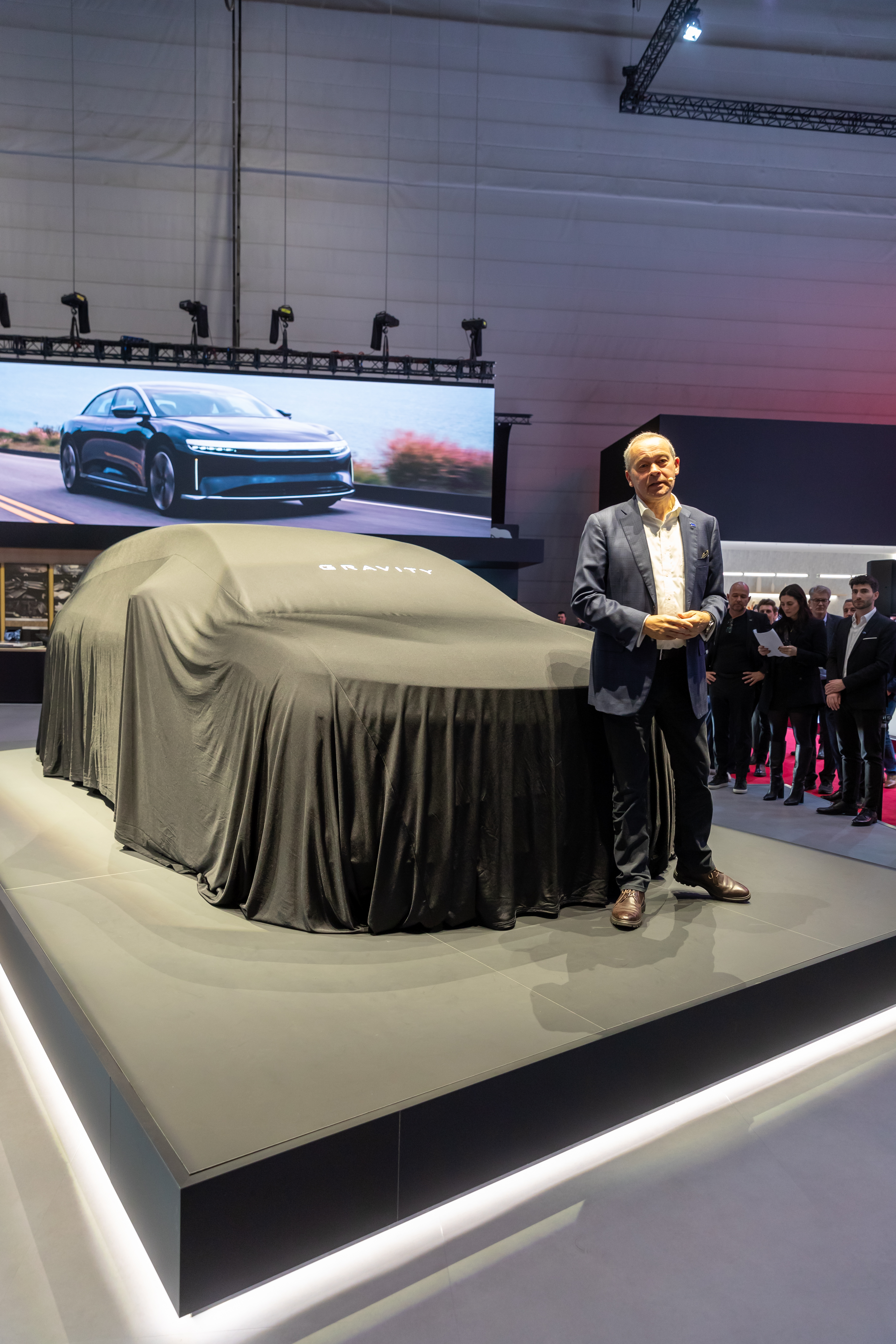
Lucid Cosmos is discussed as a Lucid model with more styling “pizzazz” than Lucid Gravity, while still balancing efficiency and aerodynamics. The host contrasts the design philosophy: Gravity emphasizes streamlined efficiency, while Cosmos is said to prioritize personality/style even if it slightly sacrifices aero.
The Lucid Air is an electric car (a sedan). It’s designed to be sleek and efficient. The podcast compares it to the Lucid Gravity to explain how the SUV version differs in style and feel.
Aero (short for aerodynamics) refers to how air flows around the vehicle’s body. The host says aerodynamics were the top priority for efficiency, and that Cosmos may have sacrificed a bit of aero to add more styling and personality.
Lucid Gravity is Lucid’s electric SUV, and the segment focuses on its real-world software/infotainment and electronics teething issues. The host describes a key-fob wake-up problem and ties it to negative press about electronics, user interface, and software problems.
User interface (UI) is the way a car’s screens, menus, and controls present information and let you interact with functions like navigation, media, and settings. In this segment, the host says Gravity faced negative press due to UI problems alongside electronics and software issues.
ADAS is the set of driver-assist safety features in a car, like keeping you in your lane or braking to avoid a crash. If it’s not complete, some of those safety features aren’t working right.
“Launch” here means when the car first goes on sale to real customers. The host is saying it has to work perfectly from the start, not after months of fixes.
Term
lease or a finance agreement
A lease is like renting the car for a period, then you give it back. A finance agreement is more like a loan where you pay over time to own the car. Either way, the company can sometimes take the car back if the deal ends.
SB 168 is a California law that sets up the EV rebate program being discussed. It’s what allows the discounts to be offered to buyers in the first place.
This kind of discount happens right when you buy the car. Instead of waiting for a tax refund later, the price is lowered immediately at the dealership or purchase moment.
A tax credit reduces your tax bill, but it typically happens through your tax return rather than at the moment of purchase. The host contrasts this with California’s instant discount, which avoids the “claw back” risk and the need to claim the benefit later. In practice, tax-credit programs can be less straightforward for some buyers.
Price caps are limits on how expensive a vehicle can be to qualify for an incentive. In this program, certain EVs are exempt from the caps if they’re headquartered in California, while others (like Tesla, per the host’s description) miss out. Price caps are used to target incentives toward lower-priced vehicles.
Rivian is an EV manufacturer best known for electric trucks and SUVs. In this segment, Rivian is mentioned as being headquartered in California, which the host says makes it exempt from the EV incentive price caps. That affects which vehicles qualify for SB 168’s rebate structure.
Tesla is an EV manufacturer known for mass-market electric cars and large-scale charging and software features. In this segment, Tesla is mentioned because the host says it moved its headquarters out of California to Texas, which (per the host) causes Tesla to miss the SB 168 price-cap exemption. That’s used to explain how the rebate eligibility rules differ by manufacturer.
“Cash on the hood” means the deal gives you money off the car right away. It’s meant to make buying an EV easier and encourage more people to switch.
Term
California buyers
This is about EV incentives that apply to people buying cars in California. The rules can determine which EVs qualify and what kind of discount you get.
“Monthly payment” is what you pay each month for a car loan or lease. The point here is that people often look at that number first, not the total cost later.
Term
$50,000 cap
A $50,000 cap is a maximum car price for the incentive to apply. If the car costs more than that, you may not get the full benefit.
Term
waived
“Waived” means the rule or requirement doesn’t apply in that case. Here, the speaker says some California-based companies get an exception.
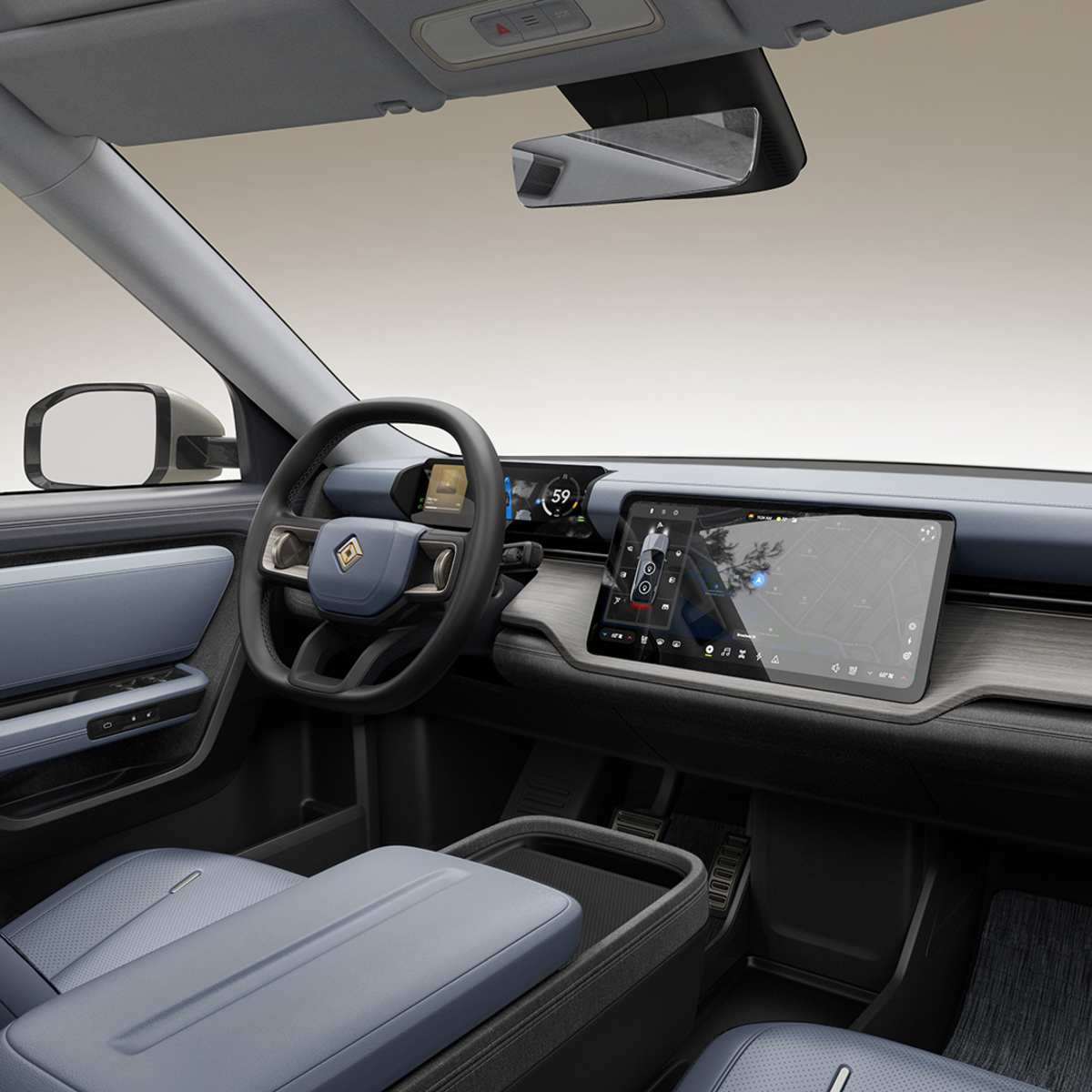
The Rivian R2 is Rivian’s next electric SUV. Here they’re talking about reserving one and when it might be delivered, plus how pricing/incentives affect the monthly cost.
A reservation is basically a way to get in line for a car before it’s available. Here, they’re saying that if you reserved an R2, you’ll get contacted when it’s time to pick it up.
The Rivian R1S is an electric SUV with room for a bigger family. Here, the speaker is talking about selling theirs and thinks the used prices will fall soon because more of them will be available.
LiDAR is a type of sensor that uses lasers to “see” the world in 3D. Here, they’re debating whether LiDAR is required for the car to drive itself from one place to another, and what it could unlock later.
“Point A to point B” just means driving from one destination to another. Here, they’re talking about the car being able to handle the trip itself, not just steering in a single lane.
EV means electric vehicle. It’s a car that runs mainly on electricity from a battery, not gasoline. The host is saying charging EV drivers could discourage people from buying them.
A plug-in hybrid is a car that uses both electricity and gasoline. You can charge it like an EV, but it also has an engine for when you need it. The host thinks cheaper plug-in hybrids will make people use the electric part more often.
Battery power means the car is running on electricity stored in its battery. The host is saying some plug-in hybrids can go a long way on battery alone, so drivers might not use the gas engine much.
Business tax incentives are tax discounts the government offers to encourage certain purchases. The host says these incentives can lead people to buy plug-in hybrids, but not necessarily plug them in as much as the policy expects.
A company car is a car your employer gives you to use. The host is saying that when the tax rules made plug-in hybrids cheaper as a company perk, people bought them but didn’t always plug them in.
Battery range is the distance an electric car can go before the battery runs low. It’s like the EV’s “fuel tank size,” but measured in miles per charge.
A gas tax is money the government charges on each gallon/liter of gasoline. Since EVs don’t use gas, people debate whether EV drivers should pay something similar to help maintain roads.
They’re discussing a proposed government fee for electric cars. The idea is that EVs still use the roads, but they don’t buy gasoline, so the government wants another way to collect money.
An EV road tax is a yearly fee the state charges electric-car owners. In this story, it’s based on owning the EV, not on how many miles you drive.
Term
weight cat classes
This is the idea of charging different amounts based on how heavy the vehicle is. Heavier cars tend to do more damage to roads, so the proposal would charge them more.
Here, redundancy means the car uses more than one way to verify the same information. So it’s harder to cheat the system by messing with one sensor or display.
The speedometer shows how fast the car is going. The speaker is saying older cars were easier to trick about mileage, while newer cars are harder to tamper with.
An odometer is the gauge that shows how many miles a car has driven. They’re talking about whether mileage readings could be used to calculate what you owe for road use.
A fuel tax is money the government charges per gallon or liter of gas/diesel. The hosts are discussing replacing it with another way to charge drivers, especially as cars move away from burning fuel.
Number plate recognition is technology that uses cameras to automatically read license plates. The concern is that it can track people’s driving routes, which some people don’t like.
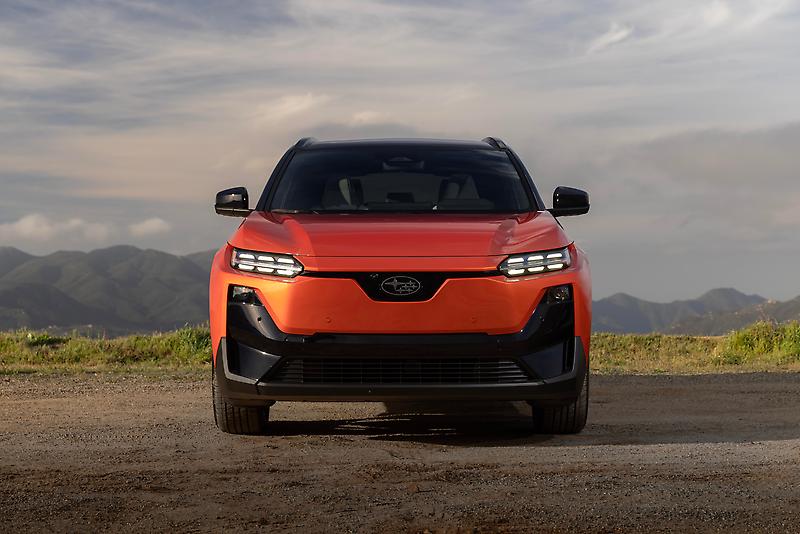
The Subaru Uncharted is a Subaru vehicle that’s being talked about as a special or concept-style model. The podcast mentions it alongside a reference to a specific driving detail. It’s mainly included because it’s part of what Subaru is presenting or experimenting with.
A range test checks how many miles an EV can go on one battery charge. Doing it at a set speed (like 70 mph) helps make the results fair and comparable.
A CCS adapter helps an EV plug into a CCS fast-charging setup. The host is warning that some adapters can’t handle the high power levels, and they can overheat if they’re not rated for it.
“600 amps” is how much electrical current the car is pulling while charging. Higher current makes cables and adapters run hotter, so the adapter has to be built to handle it safely.
DC fast charging is the fast way to charge an EV using direct current. It can refill the battery much quicker than regular charging, but it requires the right equipment to handle the high power.
LIVE
Hello and welcome to the Batteries Included podcast for Friday, July 17th, episode 148.
If you keep in count today, we're talking about the Volkswagen ID Cross making its worldwide
debut. Lucid got pummeled this week by a bankruptcy rumour. Did they deny it? We'll tell you what
they said. California's EV incentive program is signed into law. So what does it mean for
drivers? We'll tell you. Of course, much, much more. I'm your host, Martin Lee from
EV News Daily Podcast. Joining us today is the Indefatigable, Mr. Tom Malogany, host
of YouTube, State of Charge and EVChargingStations.com, and Dominic Ioni, long-time EV journalist
and YouTube's drive electric with Dominic. Let's get into it.
The Batteries Included podcast is sponsored by EVChargingStations.com. If you drive an
electric vehicle or you're planning to, this site is packed with comprehensive charger
reviews, detailed DC fast charging graphs, and the latest news from all of the fast charging
networks, you'll find real world testing easy to understand comparison and deep dives
into how different electric vehicles actually charge. Before you buy an EV charger or plan
your next road trip, make sure to bookmark EVChargingStations.com and make smarter charging
decisions.
All right, welcome to the show. So long time viewers and boy, we had some long time viewers
to this podcast when we started at the old place at Inside EVs, and then when we started
the Batteries Included podcast here, we always did it. And Kyle is still very much part
of what we do here. He's just so busy. He can't always be here. But the four of us have
been on a wild journey over the last few years. And one of the changes we made recently, because
we thought it was the right thing to do, was to pre-record on a Thursday and put it out
on a Friday. It would allow us to do more pre-recorded guests, more production values
and editing and tightening up. And it turns out that it was a terrible idea that we didn't
have a lot of edits to do. We didn't book a ton of big CEO guests that wanted to come
on a recorded show. And the really big thing that we missed, the huge thing was you in
the comments live, which was such a big part of the old show, way that we're
doing. It's still the current show, but just the old way. So Tom, I think it's fair to
say, maybe we'll take it on the chin, maybe a slight bloody nose. We'll chalk it down
to experience. Tom, I think we got that wrong and we're going back to live. It's exciting,
but we should probably apologize to the listeners because we tried something new and we'll admit
maybe we got it wrong.
Yeah. The thing is we just wanted to try something new. And I knew going into it, we knew. We
discussed this, how we were going to miss the interaction, which was always such a big
part of the show. It's one of the things that I really love about the show is we have such
a good loyal audience. We'd see the same names every week that would show up live.
We'd also see live names that industry people that were just chiming in that week. You're
Emma Berg used to stop by all the time from Ford. I don't know if we get those people
anymore because we don't see them. It's not live. So yeah, we had a discussion about this
and we really, that's the biggest thing that we miss. And as you mentioned, the advantages
that come when you prerecord, we weren't taking advantage of the advantages. So it just makes
sense to go back to the old format and just do it live and hopefully the audience will
forgive us and our regulars will come back and we could do some interaction. We actually
talked about this a lot off camera and we want that to be maybe even a bigger part of
the show, the interaction with the followers. So starting in a couple of weeks, I guess
the August 31st show is when we're looking at starting this. We're going to be live again
on Friday morning, same time. And we hope you guys come along and interact with us again.
Yeah, we missed that. And Tom, you know, you always keep an eye on the comments on YouTube
particularly, you know, people weren't shy about saying, you guys have made a mistake.
Like we love the live element. I'll still watch the recorded show, but it won't be,
you know, why sometimes tune in for. We saw those comments. We didn't ignore them, by
the way. We want to give it a good few weeks of trying a different schedule. But I think
I think we need to go back and do what the audience are asking us to do.
Yeah, we had some, we had some people that did like it just because it could never quite get
there live. But, you know, if you can't quite make it live, you can still listen to it. The
recorded versions is kind of the same thing. Because even when we record it, we record it
like we're doing it live, you know, we don't stop and edit. Mostly we don't stop and edit.
Every once in a while, a catastrophe happens where we can edit a little piece out where
when you're doing it live, you just got to keep rolling, you know, he's just doing it live,
right? But yeah, so I'm looking very much forward to doing that again. And
Tom mentioned that we're going to be at the regular time. That's the new regular time,
9am Eastern. I think previously, back in the day, we did at 9.30. So if you live in California,
sorry. Sorry. It's going to be that much earlier in the morning.
Another half hour. But no one drives EVs in California anyway, right? So apparently not.
No, they're new there. Sorry. Yeah, sorry, West Coast. However, yeah, it's a nine o'clock note.
So that's an, you know, we could sometimes run on two hours before. And that's a big,
that's a big chunk of your time. And we want to be really respectful of that. So we're going to
try and always hit an hour and just go through the stories. Maybe we'll do like an after show
on Patreon or YouTube membership. So if there's, you know, 20 people that want to
tune into a discussion afterwards, we chew through the fat a bit more, but we're going to try and
keep the main show tight to an hour as well to really respect your time. It's big change coming.
So we won't be here next week. And we're going to, we're all going to take our summer break next
week. We'll be off. Tom's traveling. Tom's working for his summer break. And I'm going to take some
time off as well next week. And then we'll be back in two weeks after our break. And then we'll
be live. Okay, let's get to it, right? The world premiere of the all electric ID cross.
Paul Spargon pulled the wraps off. It's newest, all electric compact SUV, the ID cross. But
VW says it's their pure positive design language. Interesting flying roof silhouette. We'll say
that we get the pictures on screen and a pretty sharp looking package. So this sits beneath an ID
for in case you're wondering, you can't tell from the pics entry price starts at 28,000 euros. So
this is the $25,000 vehicle that we took a lot about the $25,000 vehicle in America. But this
is of course in Germany, same as here with VAT. That's the price that you pay. But it's the price
that you walk out the showroom with on a small pack that is the step 37 kilowatt hour pack.
The big one is 52 net, a 37 52 net pack, 427 kilometers, 265 miles, of course, on WLTP,
three different motor sizes and DC fast charging as well in 23 minutes, but it's quite a small pack.
But the 10 to 80 is gets buying just over 23 minutes DC charging at 105 kilowatts, which I think
is interesting because this is the MEB plus platform, front wheel drive architecture,
like we've seen from those VW cars recently. In terms of the exact measurements, 4.153 meters long
and 1.794 meters wide didn't do an inch. I don't normally ask AI to do it in America measurements
as well. But yeah, it's a proper five seater, proper a decent size boot 22 liter front as well.
This is the APP 290 motor, up to 155 kilowatts motor and that DC fast charging either 90 or 105
kilowatts, depending on the battery pack size. And so yeah, lacy charge at 11 kilowatts, important
here in Europe as well. And it will vehicle to load a 3.6 kilowatts, which is interesting. We've
seen that on commercial vehicles and a lot of passenger cars as well. But now just standard
on a cheap, small European family car, which is good. So this is going to be up against things like
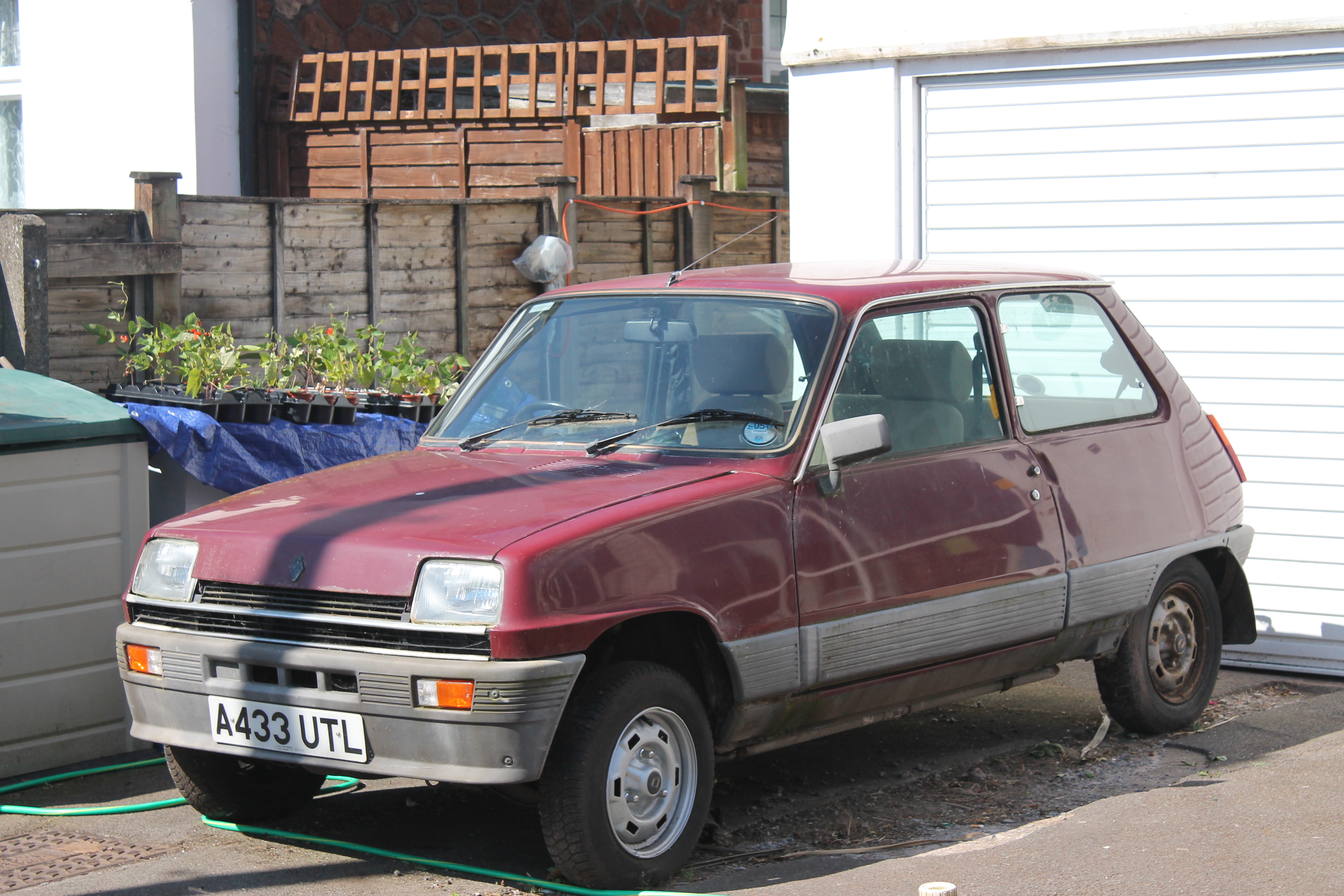
the Renault 4 e-tech. The Renault 5 is a little bit smaller, I think, but yeah, the Renault 4
e-tech, even the Skoda Epic as part of the family too. This of course is not coming to the US,
Tom, but should it be? What do you think? Definitely not. 36. Well, even with the larger
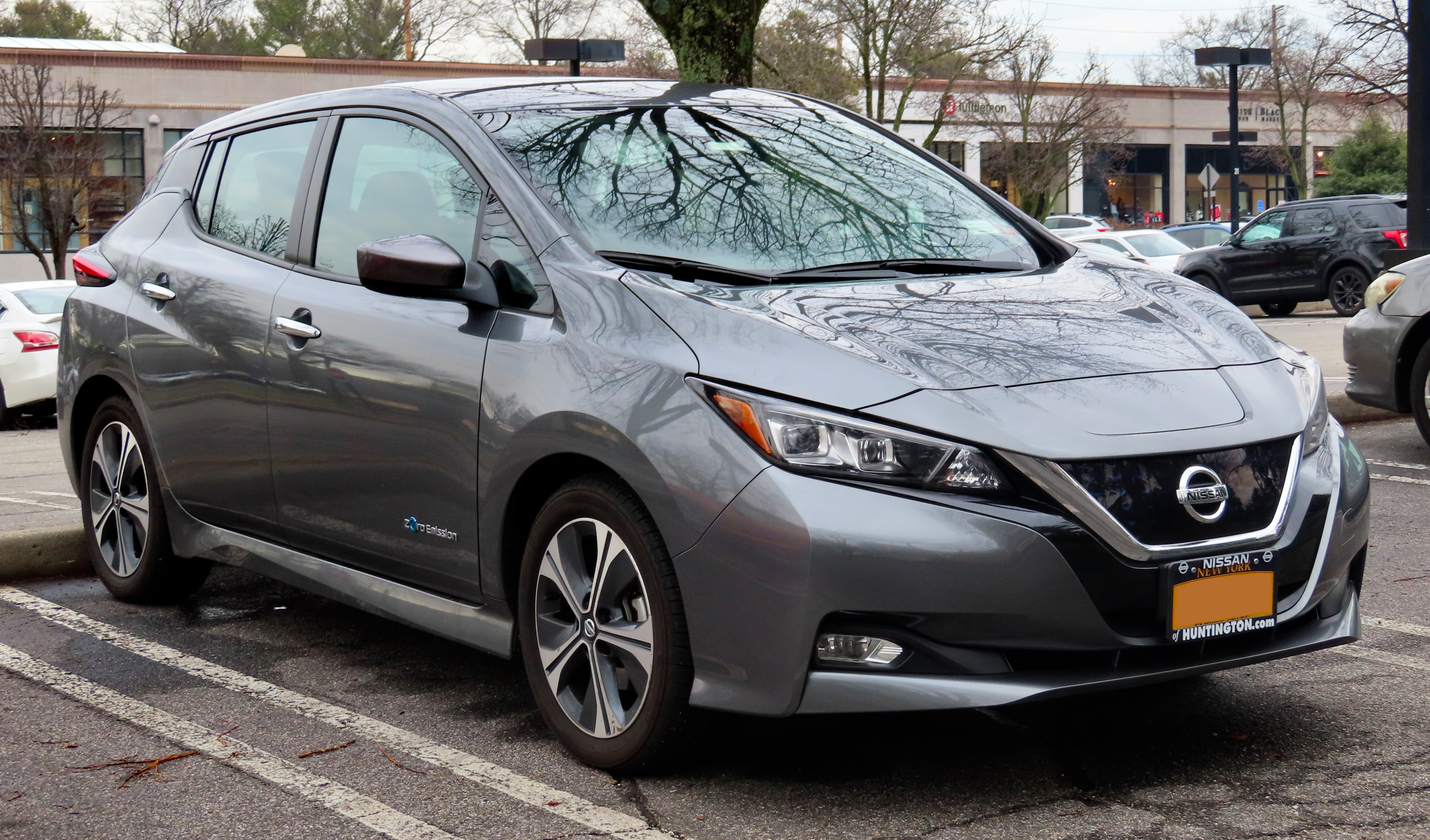
battery, it's going to be up against some tough competition. Look at the Bolt EV, even the Nissan
Leaf. That would be price wise in the same category. If Volkswagen can't seem to sell many ID
Force here, I don't know if they're going to sell many of these. This is going to have,
even with the larger pack, I don't think it's going to have great range. The numbers that you
had, what was the WLTP range? Oh, I gave you the map. That was for the big pack I gave you.
I'm doing the map from the head, and I'm like, it's impossible.
I mean, we have got a little bit more sense. We have got really efficient vehicles over here.
There's a reason why you don't get the Ford Puma Gen E. Again, this is a direct competitor,
exactly the same size, same segment, 25 grand. And that will do five and a half miles per kilowatt
hour. That thing is a little hidden gem. No one ever talks about it. It's so efficient,
but yeah. It's probably smaller than this also, I would think. A bit smaller, yeah. Yeah. Yeah.
I mean, the weight and the arrow makes a big, big, big thing. This probably weighs more and it
doesn't look like it's tremendously aerodynamic. It's a little family mover meant for, you know,
not long distance traveling. I don't know. I don't think it would do well here.
Volkswagen's got like an uphill battle in the US. I mean, the sales are terrible here. I mean,
little company like Tesla selling basically two different two cars outsold Volkswagen by like
200,000 cars in the US last year, the whole Volkswagen brand. So it's, you know, I was
always a fan of Volkswagen Vegas, but America has kind of turned off on Volkswagen completely.
If you ask me, they're just not selling well here. I think this wouldn't, I think with
language at dealers, I really do. I don't think it would sell well. I think it's probably
a good idea not to bring it here. I mean, that's terrible for me to say because I always say the
more the merrier, you know, give people choice. And in that light, I would say, yeah, bring it here.
But as a business move, if I was in charge, I probably wouldn't either. I don't think America
is looking for small, short range, you know, city EVs that much. Even the,
you know, even the bolt and the leaf are going to suffer a little bit by their EPA range rating,
even though people don't need the range that they perceive they do. You know, I've had people tell
me when I when they're asked me, I want to get affordable electric vehicle. I tell me the new
bolts and awesome deal. I'm like, yeah, 250, 260 miles. I don't know if that's enough. And I'm
like, what do you, what do you do with it? You know, you haul your kids around town basically
a couple of times a year, you make you might drive down to Virginia or North Carolina,
you know, maybe once, but it's that perception. And I think that that's something that Americans
can't get over as well as Europeans do with what they actually really need versus what they perceive
they need. So that's why you see us here. We want those long range EVs. So yeah, I think it probably
wouldn't do well here. It looks like a nice little package. Can you get, when you get a chance,
Dom, the external pictures, comment on the starting in a second. Of course,
Dom, you come back to Europe very soon. So you're going to see some more European cars.
So I think this should come to America, but with a $20,000 price tag, which they can't do, I don't
think. So it can't come to America. But if they could, you know, that's like, that's the only way
I could see it, you know, be in a success. You just really have to get the price down to match
the range. The range is 265 WLTP, but 225, 230 or something in EPA, maybe.
Like the, you know, the battery is just 52 kilowatt hours. I think the new Chevy Bolt is
like 65 kilowatt hours. And that's still not like a big range car. It's enough,
but it's not like, you know, it doesn't have like the long legs, like so many of the other new cars
now. But I mean, I kind of like this thing. Did you see that one picture with the underfloor
storage in the back? They had a whole like case full of like, like Coke bottles and stuff,
like the, yeah, like square, like an old milk carton, like way down in the truck, the whole thing.
It looked pretty impressive. I liked it. And the dashes on this reminds me, what's the other
electric, small electric, one they make evokes by again, is it a Polo? ID Polo? No.
And they've intentionally given you the option to go retro dials if you want. You're going to
turn. You can go digital if you want to, but they are digital dials, obviously, but they've,
they're just having fun with it. I think it's interesting. So the styling is you put the
external shots on screen. Now, I think this is way more acceptable to look at than the ID
three and the ID four, which did look different. They very much weren't golfs. And they've said
that, you know, this, they're not going to make an ID golf for it for a period of time.
But I think the external styling of this is show people will love or hate the steering wheel
with the flat top and the flat bottom. But I think this looks way more straight up.
Volkswagen, like Volkswagen combustion car or just just Volkswagen styling. I think it's really
important because the ID four and a lot of people bought them, but I can never get fully on board
with how they look. And that's just the, just my take, my opinion. I think ID four looks better
in darker colors. And the wheel choice seems to make a really big difference because I see
some ID fours and it's just kind of flabby and just horrible. And I see something,
oh, it looks, it kind of looks okay. But I think the styling of this is much more straight ahead.
Volkswagen, what you'd expect, not quite there with their pure combustion playbook.
I just think really smart to stop trying to do different things because this is what
the established brands have got to lean on is that it feels and looks like a Volkswagen. You
go to your Volkswagen dealer and it looks like all the other cars there because this is 28,000
euros going to be more expensive than a no-name Chinese car. And lots of people are taking a punt
on those. How far does that VW badge get you? I bet you there's people inside Volkswagen that
still think it gets you further than it really does these days. I think it's plenty of smart
people in Volkswagen that get the fight they have on their hands, but it doesn't go as far as they
used to. The thing that these older European brands have that the Chinese brands don't have
is heritage, right? And some companies have been more successful in taking advantage of that than
others. I would say this does not really, this doesn't do that for me. When I look at that,
I don't really see Volkswagen, but if you go back and look at say like the Renault
4 that you mentioned earlier, that thing looks amazing. I mean, it's not, I think it's in the
same price category as this, right? Yeah, the Renault 5 is cheaper. That's a 21,000, 22,000
for the Renault 5, which is, again, cute as you like, really nice. But the Renault 4,
the bigger car, it doesn't go up in numbers. The Renault 4 is the same size as this, and that is
about this price. Renault, before Luca D'Amato left, absolutely hit their stride on EVs.
Right. So I think people will forgive some of its shortcomings, like the cheaper plastics,
like the Renault 4, I think it's got some failings a bit, but I think a lot of them can be overlooked
because you walk out and you see this thing in your driveway. It looks good. Apparently,
it drives really well too. I watched a little review of it this weekend, and the reviewer
just loved the way it drove, and it was pretty cool. Actually, somebody actually who drives
electric cars, usually they're in China driving EVs. I can't remember the gentleman's channel
right off the top of my head, but usually he reviews Chinese EVs, so this is him back in England
and then taking the Renault 4 for a spin. Yeah, and it was really enthusiastic about it. I was
so much that I found it just surprising. You might see when you're back over here in Europe
soon. You might see some of those. They're doing really well, particularly in France. I know you're
not going to France, but you won't be too far away. Yeah, Renault 4, Renault 5, some of the best-selling
EVs, French people like to buy French cars. Right. Yeah, but that might not stay that way forever.
No, no, no, no. The advantage is that heritage advantage is just, man, it can be overcome by
technical advantages so quickly. The key of fast-charging system to me is, I'm so excited to
see what that does to the whole conversation around EVs in the places where they put them in.
So that's a great segue to the next story. Good to look at the ID Cross, unfortunately not coming
to the US, but maybe it's just easier. Maybe it's easier to be a startup these days. Don't have all
the baggage and the debts and the unions. Of course, the unions do have a big say in the
governance of Volkswagen, and they recently knocked back some job cuts there. And so,
Volkswagen is struggling not just outside of the US as well. Maybe it's easier to be a startup.
Blank slate. Nothing to do with slate. Clean sheet of paper. Not so easy if you're lucid. I'm trying
to think of the last time we talked about lucid in positive terms on this podcast. I'm very sorry
if you haven't played them enough compliments lately, but there was a story that came out this week
by a website, which I find I've used it a few times. They talk a lot about the corporate side
of EVs, whether they've got some contacts or whatnot. It's called Electric-Vic or Electric-Vicles.
And they're pretty strong on the kind of financial and corporate style, which is not my wheelhouse,
but I find it a curiosity. They put a story out titled Exclusive. Lucid, ways going private or
Chapter 11 as advisor reports to board. I mean, if you are going to suggest that a company is
about to go bankrupt, it will be a Chapter 11. You better be well-sourced because they've got
some money and some decent lawyers to shut you down or tie you up in litigation for a very long
time. So you better be well-sourced and you better know what you're talking about and prove
your story. If you're going to publish that, which the Financial Times and Reuters and many
more picked up on, claiming that they are considering Chapter 11 bankruptcy protection
as a way out of the situation they find themselves. Rumor did spread.
So much so, the stock fell by around 50%. The Chief Communications Officer and the new CEO,
Sylvia Napoli, put out statements. He's not been particularly chatty on social media or
anywhere really, but he felt the need. Yeah. So if you're going to do that to a company,
you better be well-sourced. I'm not a journalist. I'm an idiot podcaster, but I work with a lot
of great journalists in my time. So if it's a true story and you feel that it's got merit,
well, that's brave because that's a big financial hit they took. They said it's completely
untrue. They're not considering bankruptcy or going private, taking the company private.
Like, you know, that is where they ended the statement. They said, as disclosed in our most
recent quarterly filing, Lucid has sufficient liquidity to fund its operations well into next
year. We work with outside advisors to improve operational performance and execution. They
are not advising Lucid on a take private or a bankruptcy, and any suggestion that they have
recommended either course of action to the management is false. Wow. Big claims, but it does
underline the fact that investors are aware that the company does have big challenges.
Tom, what do you think Lucid has to do to get their house? You may not say sell more cars.
That's the easy way out. What's Lucid going to do? They can't catch a break.
Yeah, no. I hope for the sake of electric-vehicles.com that the sources, I think they said they had
two sources, that this is legitimate. And if it's not, I really do hope that, and Lucid's already
initiated or sent them cease and desist order, I think. Yeah, I read that. Yeah. If it's not,
I really hope that Lucid goes after them and potentially even shuts down the damn site.
Because, as you said, the damage that this caused the company is tremendous. So I hope
he had legitimate sources in the company that provided him information that said we have had
some discussions. Lucid's denying it. I have no reason to either believe they're being truthful
or untruthful. Lucid's always been truthful to me. I have many sources inside the company
that I've talked to recently that has never come up, that we're struggling here,
we're considering going private or whatever. Not that they would in our normal conversations,
but everything was working. Everything that I've discussed with anybody from Lucid has been towards.
We're getting the software in order. We're getting Cosmos out. We'll communicate with you
when you can come down and drive Cosmos. We're planning that in the coming months.
We're going to have some media come and get a better, closer look at our new mid. So
everything that I had spoken with anybody at Lucid has all been towards the future,
not towards any type of bankruptcy or this. But again, that would be high-level boardroom stuff
that I would be privy to. Yeah, yeah. And evidently, electric-vehicles.com is, you know,
and you know, little websites on occasion get big news, you know, get exclusive things. So I'm
not saying that it's not possible. I'm just very skeptical of it, that they got something that
none of the big boys got or that because we all have contacts in the companies.
And, you know, it seems odd to me that a very small outfit like that
gets not one, but two reliable sources. But in any event, I hope it's true. Otherwise,
I hope Lucid really goes after them. Yeah. I've always been very careful. I work from a country
that has, you know, a pretty aggressive press. And, you know, there are different rules of
broadcast media and what the press can say or not. And I've always, if I've ever taken
any view of something, I've always ensured that it's an honestly-held view that I would be prepared
to defend. But, you know, so I could say, I think Lucid should do this and this and that,
and I make sure I don't just say stuff for clicks, and I would make sure it's defensible,
and it's an honestly-held view if it's an opinion. And I can do that. But I don't know.
Because I started my career, like my first radio job was 96 before the Internet,
I had a good long run of sitting in legal meetings, you know, at the back of the room,
with all the journos up front. And so I actually used to, you know, because I was a radio presenter,
I used to have to have some training. So I worked in a world before the Internet,
and I worked through some particularly spicy cases when I ended up running radio stations and
in the management there of things that our presenters had said that got us in trouble.
And we worked those things out and whatnot. So the Internet can be a wild west. This wasn't just
someone shooting from the hip on social media on an X account. It was, you know,
it's a website that's been around a while and publishes a lot of news. So as Tom says, I hope
it's well-sourced. Maybe it's only because the story was half believable that people thought,
oh, I bet that's true and ran with it. But hey, slow down. It might not be true.
It sounds feasible, which is why maybe people believed it.
Look at some of the recent moves by Lucid, you know, some of their long-term,
long-time, high-profile employees have left. I mean, that's kind of what you see sometimes before
a bankruptcy, you know, trimming fat and trying to save the sinking ship, let's say,
and then you realize you just can't. Certainly not insinuating that's the case with Lucid.
People leave companies all the time, particularly when their CEO changes. That's very frequently
the CEO puts his or her people in the positions, the ranking positions. He knows that he trusts,
you know, the old guard sometimes gets swept out and new leadership comes in.
So that could be the case. But yeah, there's been some instability in the company, which
leads you to believe it's feasible that they could have more serious financial issues.
Yeah, dumb.
Man, a lot of people lost a bunch of money on this. I was reading some
Lucid Facebook groups today and some people who lost some money are pretty angry about it,
because they didn't even see the one the person I read about. They didn't even see the report.
They just saw the price going down. So they said, oh, it's on sale. It's a good time to buy, right?
So then they buy and then they see the article and then they sell everything in it. So they lost
even more money. They just threw away just a ton of money. That was a big spike. We had the
up on the screen a little bit earlier. You can see that's from the week and it just
dives down, loses over half of it. I think it was like 56%. And then it's back up. So it's
recovered. The statement from the CEO and from Nick, the head of communications seems to have
done the job to regain the confidence of investors somewhat. But I would argue though,
if it's that unstable, if it's just like a rumor can send it,
I mean, there's obviously some issues with the company. People don't have a ton
of confidence that everything's going to work out all right. People are investing,
hoping fingers were crossed, but man, I don't know. Tom, you've seen the Cosmo,
you can't talk about that. And I've seen some, there were some, well, you can't talk about what
it looks like. I saw some leaks. I think there were some pictures online, Tom. Yeah, there were
some pictures online, but I haven't seen it. So I don't know how accurate those are. If there were
actual leaks, I didn't really see any, you know, claim that I didn't see anything that told me
this yet for real, this is like the, you know, anyway, I saw it and I wasn't really impressed.
So I was like, I don't know. I mean, you saw it with Camo and everything, right? Being driven?
Is that what you're talking about? No, no, no. There was a, I'm not sure if I can find it real
quick. Was it at the event that Tom and Kyle went to? Was it that one? People took some pictures?
No, no, no. Nobody took pictures of that. We had to take, we had to give our cameras and
everything. I could talk about it. I can't take pictures of it and, you know, I mean, I could
talk about what I thought of it. You know, I actually thought it looked really good.
It definitely was lucid, but it wasn't just what I liked about it was it wasn't just like a small
gravity. Like, you know, you look at R2, Rivian R2 compared to Rivian R1S, like
most people think it's the same vehicle when two of them drive by. That's how, you know, it's one
smaller, but if you really can't account for the size, you'll think it's the same vehicle.
It's like 95% the same, but Cosmos is definitely not a small gravity. It has, in my opinion,
more pizzazz, more styling than gravity. But you could tell it's a lucid by the lucid styling
cues, but I think they went a little bit outside of their comfort zone and gave it a little bit
more pizzazz rather than you look at air and gravity and they're just like streamlined. It was like
completely like, like form following function. It was aero was job one to make it efficient as
possible. And I think we're gravity there. I mean, Cosmos, they're like, okay, it kind of has to
have a personality too. So even if we sacrifice, you know, tiny bit of aero, let's give it a little
bit more style. So that's my take of it. Nice. All right. I mean, gravity is the big, yeah,
gravity is the big thing for them. And I think they said that this week just lays a focus on
getting the vehicle out. So Cosmos, you mean you said gravity? No, I think gravity, I think
gravity is real. It's the here and now, like just let's get some, some
cars out the door that we're making. So but yeah, Cosmos is by the end of the year. So they're on a,
they're on a roll. They have to get that out. Yeah, they're on a roll. The gravity is here
now, Martin, but it's, it's just, it's been a dud sales wise. It's a great vehicle. But it got
such negative press with with that and deservedly so with the electronics and the user interface
and the software problems that it had. I mean, I love the gravity, but for crying out loud,
I got a shake to keep fob to get it to turn on. And you know, I'm in this race down the eastern
coast. Now I know most people don't race with it. So it doesn't matter. But it was costing us time at
every stop because I had to shake the key fob to wake the vehicle up. How about the mom that is,
got the two kiddos in the back and is going to daycare and she stopped for a coffee or something.
And now she gets back in the car and it won't turn on and daycare starts in five minutes and she's
already 10 minutes away. She's going to get the key fob out of her purse and kind of shake it in
front of the steering wheel. Like it's a tech, it's a technology company. It's a tech focused
vehicle. So while the vehicle drives great, it's got great efficiency. It feels drives like a sedan
this big, you know, seven passenger SUV drives like a car like a sports car almost. It's amazing
what they did. Those little things that the user interface, the lack of having their ADAS complete,
the key fob not working. That's got to get solved. I know we've been saying that for months now. I
think that's the biggest problem that's holding gravity back. People are willing to spend the
big bucks on it because it's such a good vehicle if everything worked. But you know, it didn't. I
almost think that's not going to be the vehicle that helps them. They've got to get cosmos out.
It's got to get out on time towards the end of this year, if not the earliest, the latest,
early next year. And it's got to be a winner. Everything has to work from launch. Lucid,
everything has to work. The key fob has to work, the software, the ADAS. So it's a toll,
it's a toll order to ask. It's, you know, they're bringing this vehicle to market in a very short
compressed timeline, but to do or die for them.
They fixed the key fob situation though, right? They fixed that problem. I mean,
I know they fixed a bunch of the software issues that happened. They didn't all go away because
I think Fenske from engineer and explain put another video. He was kind of done with them. He
was, you know, even after they fixed whatever problems and he put another video out and
you know, and that and that was a damning video. Yeah, yeah, there they was. You know,
all these videos. Yeah, I know you can't blame content creator per se because they speak the
truth. Well, you hope that they're speaking the truth, but just look at how important and how
damaging a big content creator, bigger than, you know, me, bigger than Kyle, like a really big,
like a Fenske and Marquez Brownlee when he trashed Fisker, you know, so I mean, this is
where we're at right now. These very large channel influencers can really, really hurt small
companies that are just trying to make it. They could be what pushes them over. And that was a
Lucid took a huge hit when he, you know, had them, he sell his card, he had them buy it back,
I forget one of the two. Yeah, he never bought it. It was on a lease or a finance agreement
and they took it back or ended it. I forget now, but yeah, like those three videos and
yeah, it's yeah, interesting. But I trust that he's talking the truth. Oh, I do because
they're not trying to hurt anybody. No, reporting on what they experience. That was the least
click baity video on YouTube. It was, it was just him, just pure frustration from someone who
wants to love a product and it just didn't work. But yeah, all right, let's move on. This is,
this is going to be interesting because obviously, Tom in New Jersey, you've been used to cash on the
hood for a while for a new EV and if you're in California, plenty of our viewers and listeners
are making your move to EV for the first time. Very welcome news. Governor Gavin Newsom officially
signed SB 168 into law, a new rebate program launching later this summer. So how does it work?
Well, it's an instant point of sale discount in California, not a tax credit that you have
to claw back later or get a credit on your own personal taxes. First time EV buyers,
$3,500 off a new EV with an MSRP of $50,000 or less and $1750 off a used EV if the EV cost
less than $25,000. So the states putting up $135 million being matched dollar for dollar
by the automakers, creating a total funding pool of $270 million and a nice nod to the local
industry as well. EV manufacturers headquartered in California, so Lucid and Rivian are exempt
from the price caps. Tesla, of course, famously moved their headquarters out of California to
Texas, so they miss out. Cash on the hood, Tom, good or bad way of getting EV sales kickstarted.
I think it's good. And I have to do a shout out to Mike Murphy from the American EV Jobs Alliance.
Mike, I believe, is the one that brought the basic outline bones of this to the governor's office
and lobbied him to do something like this. So props to Mike. I think him and his organization
was the impetus to start this, to get the governor moving in this direction. So good on Mike for
doing this. And I like the fact that the manufacturers have to have some skin in the game.
So not all EVs are going to qualify for this. If Ford, for instance, says, you know what,
yeah, we're not going to give an additional $1750 off Mustang Mach-E to our California buyers.
We've already cut the price down to the bone. We can't discount it anymore. Then the Mach-E's
not going to be in this program. So the manufacturers have to agree to be part of it in order for
those vehicles to be included. Now the state's going to have a list of the vehicles that are
included on the website. So don't think every EV automatically is going to qualify. The manufacturers
got to kick in half, which I like. They should have some skin in the game. This whole transition
to electric vehicles for the industry is going to be painful. Right now, we're still in a place
where the vehicles cost more than comparable combustion vehicles, and they have to be
subsidized in many instances to make it an economically viable purchasing decision for
many customers. Now, if you look at the long-term costs of the vehicles, it paints a more rosy
picture, but the consumers, many consumers, almost all of them that I know of, can't figure long-term
costs. They don't want to. They just look at, what's my monthly payment? And they won't bundle in
their monthly gas payment, their monthly maintenance payment. They just want to know what the car costs.
And right now, without any type of subsidies, the EVs are at an economic disadvantage. They will
cost more. And so I think this is a great way to get people into their first EV. And that's an
important part of this subsidy. The people that already own an EV, they know that they're better.
We don't need to convince them. They have an EV. They'll probably buy another EV, even if it costs
them a little bit more at the dealership. This is a great way to get people that were on the fence,
that were considering an electric vehicle. Maybe they couldn't afford one before to get into their
first electric vehicle. And before I wrap it up, the last part with the $50,000 cap and it being
waived for the companies that are headquartered in California, there's no way to look at this other
than saying it was a big, you know, middle thing. There's no other way to look at it because,
I mean, Tesla manufactures their cars in California. So they most likely have more employees working
for the company in California than either Rivian or Lucid does. I don't know that for fact. I'm
guessing that they have more employees there. Maybe the other companies do. But we don't have head
accounts done. So I don't want to make that a definitive statement. But I would imagine Tesla
employs more Californians. So carving out the whole headquartered in the state that could very
easily have said headquartered or manufacture the electric vehicle in the state. I don't know if any
other car companies manufacture their EVs in California. I know there's EV plants in California,
but I don't know if the other car companies have facilities in California. But I don't think anybody
manufactures electric vehicles. So they could have said that and then it would have included Tesla's.
Maybe the state also figures that Tesla's at a point right now where it has achieved
like a level of success that it doesn't need subsidies anymore. That could have been part
of it too. And said, look, you know, everyone's buying Model Y's and Model 3's hand over fist
here. We don't even need to help them sell them. They sell themselves. So let's help the companies
that are headquartered here that need help. I don't know what the reasoning is, but it seems like it
was it seems like it was the big middle finger. Yeah, it does to me. Yeah, I concur. Yeah.
But you could just say that, you know, Tesla really doesn't need it. I mean, they sell a ton
of cars. They sell a ton of cars in California. You know, their sales like they went down last
year quite a bit. They're back, right? Pretty much to where they were, pre-controversy levels
basically. And yeah, you could argue that maybe they don't need it. And Elon has said, we don't
need it. But himself, of course, he wasn't thinking about, oh, give the other car companies an
advantage and his company the advantage. But I mean, but it's still only for vehicles above
50,000 too. So I don't think it's a whole lot of, you know, I don't think it'll keep
Elon up at night basically. Well, you never know. No, I won't. No, he doesn't care. He doesn't care.
But it'll help R2 for sure. And it'll help Cosmos when Lucid gets Cosmos out. So yeah,
true. I don't think it'll make a big difference on air, gravity, the Rivian R1S and R1T.
They're so expensive as it is. I mean, the 3,500 helps no matter what because you kind of use it
as a down payment. So it's a nice chunk of change, but it's not going to make that big of a difference
in your monthly payments as much as it will on the small, I mean, it's the same dollar value
on the monthly payments. But as a percentage of your monthly payment, it won't make nearly as
big a deal as it will for R2, potential R2 buyers and Cosmos buyers, you know. So yeah. The interesting
thing is, and I haven't seen the details, when is this, do you know when is this effective immediately?
No, before the end of the year. So how about you have an R2 reservation now and Rivian calls you
and says, hey, cars ready, come get it. You know, what do you do? So here in California,
I wonder if it's retro, active. You wait. I mean, yeah. You wait, yes, three and a half.
I like the used, money off used EVs. I always did like it before, and I love that.
As the percentage of a sticker price as a proportion on a 20 grand, 18 grand, 16 grand car,
that is, it really helps people get into an EV that's, you know, two or three,
four or five years old, and it's a really big deal. So that's great. The used market is where a
car is all the time, especially now because we're a decade into this EV evolution. And now we're,
there are a ton of used, great electric vehicles out there that are super deals. As a matter of
fact, I was talking about used EVs. I sold my Rivian R1S. So yeah, I sold it. I still have it
the driveway, but it sold. I've signed up my title and everything to ever. Do you know what?
Yes, ever is Andrew that comes on battery bargains. Yes. Work forever. They buy it's like a used car.
You know, they buy and sell used cars and I use the EVs. I mean, so I, you know, I have my R2
on order. I got the email from Rivian like two weeks ago saying you're two to four weeks from
ordering. So I said, okay, and then two to four weeks or then four to eight weeks from getting it.
So I'll probably get it sometime in October ish somewhere around there. Wow. But I filled out
the forms with Rivian and they, they offered me 50, I forget what it was, 59, nine or something
like that, just about 60,000. So just about what the R2 is going to cost. And then I, I checked
a couple of their car buying services and they were all right around what Rivian was.
And then I was talking to Andrew about a different topic and I mentioned to him and he goes,
why don't you give us a shot? I said, sure, you know, you want to, you want to
send me your VIN, take, take a bunch of pictures. So that's what I did. I just put brand new
Hancock Ion HTs on it just literally two weeks ago. They have like 300 miles on it. So it was
$1,600. The tires were shot. I needed to, I couldn't sell it with those tires. And so I told them
that he goes, oh, we'll tack that right on. He goes, if you've got brand new tires, that's,
that's, that's one of the things that really do add value to the vehicle if they're brand new
and they are, they have less than 300 miles on it. So they came back with 61 seven. Wow. And, and
which was, you know, almost $2,000 more than what Rivian or Carvana was going to offer me.
So I said, you know, in my mind, I said, I need to sell this now because I think a lot of people
are going to do what I'm doing. I think there's a lot of R1S owners that are going to say, you know
what, I don't need a seven passenger Rivian. I bought it because I liked the brand. I wanted
a Rivian. I wanted an SUV, but it really is, is bigger than what we need. So why don't we go for
the new one, the tech, let's trade it in. So my thought process, my guess is in the next two
or three months, I think R1S used prices are going to plummet because I think there's going to be
thousands of them on the market. So I said, let me get a, kind of get ahead of this and, and,
and sell it before there's a glut of R1S's. And so yeah, sign the papers and they're coming to
get it. I just cleaned it, waxed it and everything, given, given a nice brand new car. I'm not going
to drive it anymore. And then I'll, I'll wait on my R1, my R2 to come. Brilliant. Congratulations.
Thanks. And I'm not holding out for the LiDAR version. Yeah, I was, I originally said that on
the podcast I was going to, you know what, after talking to RJ about it and the team at the first
drive event, it's not a biggest deal as I had thought it was. And really the, with the hardware
that they have, it will do point to point navigation, point A to point B, hands off.
So what Rivian is telling me at least, and hopefully this comes to fruition,
with, without the LiDAR, it will do that they're, they're saying that the R2 will perform as the,
as Tesla's supervised FSD performs today. Hands off, point A to point B supervised. Okay. Yeah.
What the LiDAR will eventually do, maybe a couple of years later, who knows,
will give you the ability to be eyes off. But to be honest with you, I don't see that happening
for many years. And I don't, even with legislation and, and approvals and, and even Rivian getting it
to the point where they can say you can take eyes off, I think I'll be on my next, my next vehicle.
But that happens anyway. So I said, why wait, get a launch edition and, and then rock with the new R2.
Yeah. All the content you can have if your channel and just what you can make with it. I, yeah,
looking forward to that. From, from EVs becoming cheaper to EVs becoming more expensive,
some news from this side of the Atlantic this week, the BBC reported that the government
are settling on three pence per mile for electric vehicles and 1.5 pence per mile for plug-in
hybrids from April 2028. As EV adoption rises, fuel duty income is falling. Now we have very,
very expensive fuel here because nearly all of what we pay is fuel duty. I won't call it tax,
but it is, isn't it? It's a tax fuel duty. So we have congestion charging in some cities
in, in over here. It's not that it's a general mileage charge. And so aiming at getting EV
drivers to pay more. So this appears to be all EV miles driven. So bad luck if you drive over on
the continent because there's no location based exemptions planned because they don't care where
you are. They're not going to monitor where you are. But they, it does still appear even now.
We have a new prime minister starting in a few days time because we elected the old one overwhelmingly
and what that is the nature of the electorate decided he wasn't making changes quick enough.
So we have a new prime minister. This is a little bit of a mess because it's going to rely on estimates
and then reconciliation down the line. So they'll probably ask you, how many miles will you drive
this year? And then you have to pay on account. And then if you do fewer, I'm guessing they'll
give you a refund. If they ask me, I'm predicting I'll drive zero miles this year. And then in a
year's time, if I've done pick a number, 8,000, then I'll pay the bill. I'm not going to give the
government an interest free loan. What? That's utterly maddening. There's no black box. There's
no surveillance. They're not going to be, but they are going to be monitoring how far you drive.
And that's now going to be a matter of record that the government will know. But then again,
with older cars here, we have an annual roadworthiness test anyway, and that gets logged once per year.
So it's not the end of the world. It's not state surveillance. But if you drive maybe
two or 8,000 miles a year, that would be 240 pounds. But I tell you what, two reactions from me
on this one. First of all, it's going to put people off buying an EV
irrationally, because it shouldn't, because you should pay your fair share, because you're using
the roads and we want the roads to be built and pothole free. So you should pay your fair share.
I'm happy to pay my fair share. It's maddening for a few reasons. Firstly, because it's so
ill-conceived. So if you're going to charge people to drive three pence per mile, that should be all
cars. So you should remove all of the duty from fuel. So our gas would cost probably what you guys
would pay, which is a fraction. And then if you are retired and go to the shop once per week
to go collect your pension or whatnot and do your shopping and you do 1,000 miles a year,
you're not using the roads, are you? Whether you've got a little three cylinder Kia
Pecanto or a brand new EV, right? That would be fair. It's fair. So just charging EV drivers is
bonkers. They should do it for all drivers. And if you do 20,000 miles a year with your business
and you are just churning up and down the motorways, using up the asphalt, then you should pay.
That's fair, regardless of combustion. I hate it when EVs get singled out, but they have. Also,
halving the price for plug-in hybrids. I tell you what, there's so many long-distance plug-in
hybrids coming. Some of the Chinese stuff, German stuff, 100 miles, 100 miles on battery power.
I'll just buy a plug-in hybrid and I will never turn the engine on. I won't. I'm being facetious.
But I tell you, people will. People will because there'll be it's half the price,
which is crazy. They'll only ever drive on electric power, but stop buying engines. And yet
the government, which say, oh, you know, we are in car GVs and we're green and whatnot.
Once again, they did this with a bunch of business tax incentives with plug-in hybrids.
And people never plug the damn things in because it was cheaper to get a company car that was
plug-in hybrid. They didn't get out of battery. And once again, people will go buy a plug-in
hybrid. We'll carry on making engines and you'll carry that thing around. It'll never,
because you've got 100 miles of battery range in the future, which I think will be the norm.
And you'll never, it's just stupid. It's all stupid. It should be the same for everyone. And
it should be if you're driving a car on the roads. And the reason they gave this charge was
you're using up the roads. We've got to build new ones and fix them. That should be everyone.
So I'm not sure it would fly in America, but it would. I'm not sure it's going to fly over here
anyway. I mean, if you could, if you could take off, if that would cancel like the gas tax,
then people will definitely go for it. But personally, I think the gas tax should stay or
be increased, at least in the UK. And then those monies be put towards the NIH to help offset
the health, you know, clearing up the mess of running combustion engines. Basically, you know,
like people should pay for the damage they cause. That's a basic kind of fairness principle, right?
The fossil fuel industry don't believe they should clean up their mess. They should make the money
and let somebody else clean it up. So you're right. Actually, yes, keep the gas tax and put it to
healthcare, but they won't. So interesting. But I also noticed, note, we don't have road tolls
over here. And when I watch Tom's videos and whatnot, and you're on the turnpike and you're
stopping every so often or you're paying toll, we don't have road tolls. So the government
build the road. There's a couple of bridges and a couple of new bypasses, but it's not a thing here,
like it is on mainland. That's how it starts. starts in three or four years,
everywhere. I hope not. But you got to pay, you know, these things aren't free.
I think it's ill-conceived. It's coming. I think it'll put people off irrationally. I think it
shouldn't, because it's a couple of hundred pounds a year for the average person, which is fine.
I thought it was, I mean, I like the idea of like doing it based on mileage and then,
and, you know, once a year, like going to very inspection and having that, you know,
checked out or going for your, you know, renew your registration or whatever it is that you do.
But I don't know if that's the right price level. You know, I haven't, I don't know,
because we drive a lot more in America. Maybe that's too expensive. I don't know. But honestly,
it feels right. I do. The idea is there's no black box involved. So privacy is protected. So,
you know, that's all great. So yeah, I like it.
We have in the States, the government's considering a federal gas EV tax, like $130.
It's just like a flat annual fee. I think it was $130. And here in the state of New Jersey,
about a year and a half ago, two years ago, we started an EV mileage or not mileage,
an EV road tax, which is incredibly punitive. We have the worst, the most harsh one in the country.
Right now, I pay $270 a year per vehicle. I have four EVs. So I have to pay over $1,000 a year.
Next year, it goes up to $280 a year. So it's like $1,100 a year for the vehicles. Doesn't matter
how much I drive. That is punitive. And I don't drive much because with four vehicles and two
drivers, we only drive as much as two drivers would drive. My wife doesn't drive much at all
because she works from home and she goes to the city on some days. And on those days, she drives
three miles to the train station. So, you know, a combined between me and my wife, 25 to 30,000
miles a year. So, you know, if you do the math, I mean, it's the equivalent of us driving like a
seven mile per gallon gas vehicle. Like if you want to figure out how much gasoline tax we would
have to pay. You know, so it's like three times more expensive than if we just drove an average
gas car and paid the fuel tax. And if the federal thing ever goes through, you know,
now be it like $16 or $1,700 a year in road tax. It's just nuts. So the pendulum swung the other
way. I have always said, and I've written about this on Insight EVs, that I do, I agree with Martin
saying it should be mileage based. And everybody pays the same thing. You know, combustion vehicles,
hydrogen fuel cell vehicles, electric vehicles, maybe have two categories, maybe have weight
cat classes. Yeah, you know, you know, and do like under 8,000 pounds, yeah, you pay whatever per
mile and over 8,000 pounds, you pay a little bit more. But other than that, it would just be so fair
to just make everybody pay the same amount and you pay per mile. And it's not the cars aren't
like they were years ago, where you could like unplug your speedometer and cheat on it. Everything
is computerized now and there's redundancy. So, you know, it's still possible, but you've got to
be really technically savvy to, to, to, you know, have your speedometer not continue to rack up the
mile, your odometer, I mean, not to rack up the mile. So that's the fairest way. But the reason
why we won't do that is because it's hard because we're talking about, you know, scrapping the fuel
tax in the state and creating a whole division to collect the revenue and how do we record the
mileage? You know, you know, I know Dom said, you know, we have to renew our registration every year
and you do so you could just report what your mile is. But like, who's doing the calculating then?
Like, you know, how you get like, you'd need a whole department to report your mileage and pay.
So that in itself, I think is the biggest hurdle that a lot of work would have to be done to create
an entity to monitor it and charge it. And then what do you get an annual bill that you had to
write a check for? And then you have to reconcile when you sell your vehicle, like, okay, a couple
years, not up. I drove 6000 miles and I just sold it like so. It's hard. It's obviously can be done.
But I think that's going to be the biggest impediment to a switching over. Because I think
most people would view it as fair. I mean, how do you not say we should all pay the same road tax
other than Dom's argument with the fact that, you know, the combustion vehicles create more
problems. But then you'll have advocates on the other side saying, Yeah, but your electricity is
coming from plants, you know, you've got a coal power plants, you're also creating harm. So I don't
think we could go down that road. Yep. So I think Singapore do some road, road charging, I think
maybe Norway and Sweden do some electronic stuff. When you cross border, there's got to be a high
tech solution to this. But the more high tech it gets, number plate recognition, things like that,
it becomes more invasive. And there's always going to be pushback on that. I feel a little bit
like that. I don't really care if people know where I go and like, but there is some pushback on that.
So, but there has to be a fair way we have to pay for stuff. But there we go. Hey, look, we're
somehow out of time already. And so much for doing a, you know, a focused hour. We didn't even get to
some stuff we're going to talk about this week, like the Subaru Uncharted, but you can go to Tom's
channel and see 70 mile an hour range test on that. And we might come back to that in a future
week. And also we've talked about electric snow blowers, but what about a different kind of electric
yards machine? Well, again, check out Tom's state of charge for that. And of course,
EVchargingstations.com too. It's actually mowing my lawn right now. Is it mowing right now? The green
is the lawn and the white, you see it moving? See it moving? It's now, and the light green is what
it already mowed. So it's going back and forth. I actually have it. it on right
now. I love it. It's the new Luba three. I already reviewed the YARBO lawn mode. Yeah. And that was
a couple of weeks ago. Now I just posted the video about the different company, the Memotion Luba
three. This thing is super high tech. It's got LiDAR radar. You don't even have to, you don't even
have to map out your yard, like walk it around the perimeter. It just does it. It just finds
all itself really cool. So I just posted that video yesterday. And I mean, since we're going
to be gone a couple of weeks, I'll tell you guys a little bit of what we're up, what I'm up to.
I'm going to be posting an adapter video in the next day or two. Because as I mentioned, when I was
doing the R2 charge recording, one of my CCS adapters melted. And that's because the R2 draws
over 600 amps. There are plenty of adapters on the market now that can't handle that. So I'm
putting a video up in a day or two to explain this also. People don't have a problem charging and
they use the right adapter for their vehicle. I also have the Subaru Uncharted DC fast charge
recording. I posted the range test that you mentioned and a bunch of other stuff coming up.
And you know, that's just over the next couple of weeks. Brilliant. All right.
That's our hour. Can I ask a quick question about this lawnmower? Because I'm really
interested in this actually. So it's all wheel drive. How good, how steep a hill can it go up?
That's what I want. This thing, this thing can go up 80% grades, which is like shoot 40 degrees,
I guess, or 45 degrees. I forget what the translation is. I have very steep, a very steep
front lawn. To the point where there's some areas where the grass won't even grow,
because the water just rushes down too, too fast. And at the bottom, it just keeps washing it out
no matter what I do. So this can handle it. I'm actually very surprised with how well it handles
the steep areas on my front property. You know, I mean, you can see what the charging Pintock is.
It's starting to slope. It goes way and then it just falls off on the other side of the house.
It goes up and down it. It really amazing on steep inclines.
Right. Go and check out Tom's content. I got a dash done. I hate to leave you wanting more,
but there we go. Thank you so much. If you missed the news at the beginning of the podcast,
I'm sure if you scrolled through for whatever reason, skip through. We're taking next week off.
We won't be here next week. We're doing some other things. As Tom mentioned, he's traveling and
Tom's traveling. I'm going to have a week off. And then when we're back, we're live. We're back
on Fridays and you in the comments. We can't wait. It's going to be awesome. Thank you so much
for watching. So make sure you like and subscribe on the YouTube channel and leave a comment if
you would. Thanks for joining us. We'll see you in two weeks. Hey, Tom, say ciao. Ciao. Okay, stop.
About this episode
Volkswagen’s ID Cross gets a spotlight, with the hosts breaking down pricing, charging speed, platform details, and why WLTP vs EPA range numbers don’t translate cleanly. They also pivot to California’s SB 168 EV rebate—an instant point-of-sale discount with eligibility rules—and debate how incentives and road-charging policies could reshape EV adoption. Lucid takes center stage after a bankruptcy rumor sent its stock down about 50%, before the company’s liquidity denial and legal response helped it rebound.