The Datsun 1200 is a small Japanese truck. The hosts bring it up as an example of the “tiny truck” idea they’re talking about.
Term
Floating hubs.
“Floating hubs” are a hub design where the hub assembly can move slightly relative to other components, often to help with durability and serviceability. The hosts mention it while discussing truck build details, implying a mechanical design choice rather than a general “truck” feature.
The “Big Three” means the big American car companies. The hosts are saying that policy and demand helped drive those companies to build more small trucks.
The “chicken tax” is a government tax on certain imported trucks. The hosts use it to explain why importing trucks got more expensive and why people tried to get around it.
A tariff is a tax on things brought into the country. The episode says there was a 25% tax on imported light-duty trucks, which made them harder to sell.
“Passenger vehicle” means a vehicle classified for carrying people. The episode explains that importers tried to label vans as passenger vehicles to dodge the truck tax, then changed them later.
The Volkswagen Rabbit is a small car made for everyday driving. It’s known mainly as a model name people recognize. The podcast mentioned it while talking about cars in a more general, “rabbit hole” way.
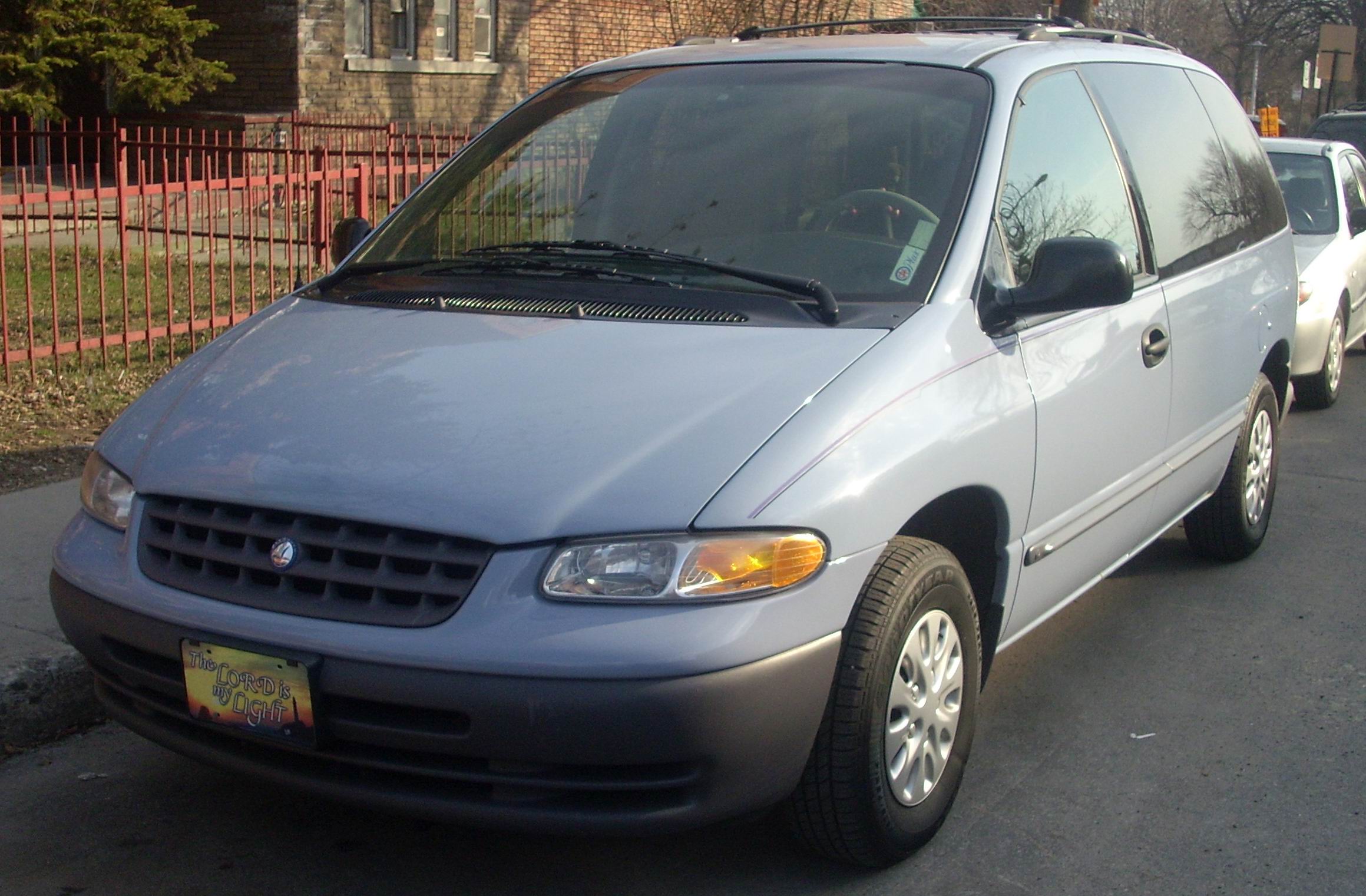
The Plymouth Voyager is a minivan, which is a family vehicle with sliding doors and lots of seats. It’s meant for carrying people comfortably, especially on trips. The podcast brought it up because it was one of the popular minivans people compared to others.
The Chrysler Town & Country is a minivan made to carry people, especially families. It’s designed for comfort and practicality, like lots of seating and easy access. The podcast mentioned it because it was a popular minivan people compared to others.
The Dodge Spirit is a passenger car (a sedan) made by Dodge. It’s the kind of vehicle you’d use for regular driving and commuting. The podcast mentioned it as part of a story or example rather than a detailed review.
The Subaru Brat is a small vehicle that’s like a pickup, but it’s based on a compact car. It has a short bed for carrying things, and it’s known for being unusual compared to normal trucks. The podcast talked about it because of a specific bed setup.
A wheel cylinder is a brake part that helps squeeze the brake pads/shoes using brake fluid. If it leaks or stops working, that wheel may not slow down properly.
The caliper is the part that squeezes the brake pads against the rotor. If it gets stuck from rust, the brakes can fail on that wheel or behave unevenly.
CAFE standards are government rules in the U.S. that push car companies to make cars that use less fuel. If a vehicle doesn’t meet the rules, selling it in the U.S. gets harder.
The Toyota 4Runner is a midsize SUV made for driving on tougher roads and off-road trails. It’s known for being a larger, more rugged vehicle than many everyday cars. The podcast likely mentioned it because it’s gotten bigger over the years.
The AMC Eagle is an older AMC car that’s known for being able to drive with all-wheel drive. The host is talking about spotting one in excellent condition.
GVW means the total weight of the truck or vehicle. It matters because governments and rules often use weight categories to decide what a vehicle is allowed to do or how it’s regulated.
The Ford Ranger is a pickup truck, meaning it has an open cargo bed in the back. It’s often used for everyday hauling and work. The podcast mentioned it because someone thought a truck was one thing, but it turned out to be a Ranger.
A shared platform means different cars are built on the same basic “bones.” So even if the badges look different, the underlying design can be very similar.
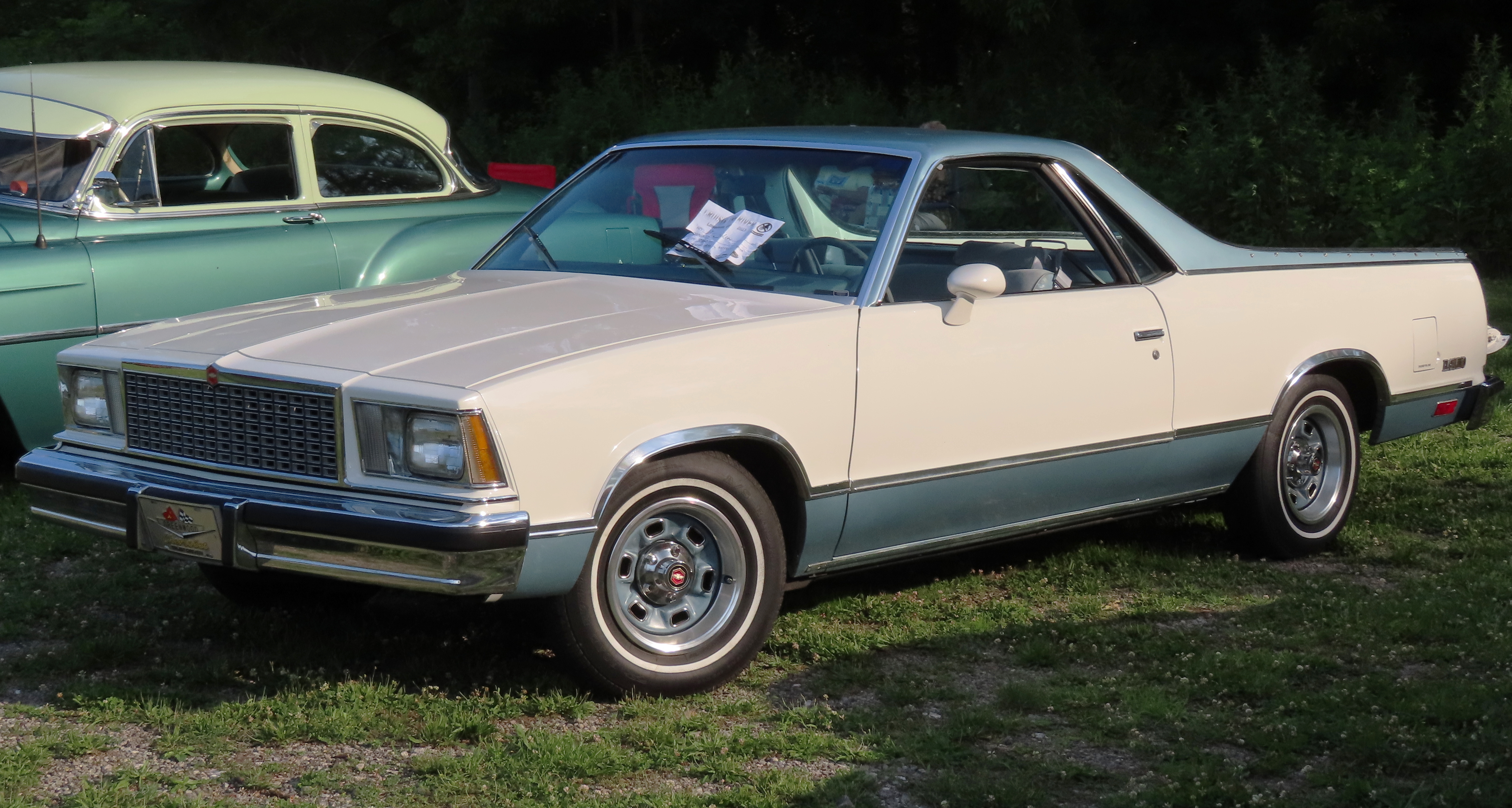
The Chevrolet El Camino is an older vehicle that’s part car and part pickup. It has a regular passenger-car front, but it also has a bed in the back for hauling. The podcast mentioned it because it’s one of the well-known examples of this style.
The Ford Ranchero is an older type of vehicle that looks like a car but has a truck bed. It was made to carry cargo without being a full-size pickup. The podcast mentioned it alongside other similar “car with a bed” vehicles.
LIVE
Emily EP51: Hey, guess what? Oh, is it, what, Wednesday?
Rose EP51: Up. Pileup. The only show that will measure the length of your bed against the knob of your tire, divided by the girth of your dick. The Pileup.
Emily EP51: Yeah. Little Datsun 1200
Rose EP51: Uh, you know, when I think of trucks, because we're building a C-cab pickup here in the shop, maybe you've heard about it, I always think of the potato chips that my grandparents ate, the Mike Sells brand, which they would get at the Tandy IGA. Okay.
Emily EP51: Some roughly cut
Yeah. Yeah,
Emily EP51: I don't like numbers and letters. I don't have the... I can't retain that information. It's very hard for me to. I can retain names
Rose EP51: It's funny to think of that now because America, uh, like trucks are like the number one selling car. And I mean, Ford at one point a few years back was gonna stop making all of their cars aside from the Mustang and only make trucks.
Rose EP51: Yeah. Well, I, yeah, I worked for a guy that he had a truck. He had worked at the Kentucky truck plant of Ford, but he had a truck that was the size of two trucks. Yeah. It was like the long bed, long cab
Rose EP51: Floating hubs.
Rose EP51: Anyway
Emily EP51: 22, 2200 pounds for a tiny truck to be
The Datsun 1200. And some of these other trucks. We'll- just check the show notes. There's gonna be a lot of cool links in this episode, in this episode. So anyway, that was a one-two, that was the second punch, uh, in the face that Detroit got about, um, maybe making a tiny truck, but they still ignored it. And then the oil crisis came along, and it birthed the light-duty truck from the Big Three.
Emily EP51: When you need an ear to talk to about needing some?
Rose EP51: 'cause I knew about the smaller, like the R motors. I knew they existed in some s- weird, you know, like before I've connected more of the dots.
Emily EP51: But I don't think in the '70s, I think this- 'cause this was a real scramble, like pull your pants up situation. Like, they really got caught,
Emily EP51: Exactly. Yeah, so we were, they were really late to the game, and, um, then came along... Well, this was actually before. There was this thing called the chicken tax. So this is why-
Emily EP51: Okay. Yeah, I believe you. I believe you. Um, so it was a 25% tariff on imported light duty trucks
Rose EP51: We're beating the shit out of people for, for where they come from, and isn't that fucking embarrassing? It's like that Modest Mouse song, Look How Far We Haven't Come, which is a new song, and an apt title, 'cause we're all fucking living it right now, and it, it is quite a fucking bummer. So LBJ says, "Listen, if you'll get on the wagon here and stop being a dickhead,
Emily EP51: passenger vehicles? What, what am I tripping on here? On what? The 164?
I just wasn't as privy to... I wasn't listening to politics like I listen to p- you know, politics radio every day now, and I'm, I like- Right ... it affects my life directly, so I listen now. I didn't before because I didn't think it mattered. I was wrong. So he was like, "Oh yeah, because of the chicken tax, we will put windows and seats in a van, import them as a passenger vehicle to get around the 25% tax on this like on a van, on a light-duty truck, and then we scrap the seats, scrap the windows, and we put all new panel sides back on it," because they build some of their Econolines in Europe and bring them over.
He had another friend who worked in the factory body shop, and one day I met that guy. And I said, " There's a body shop at the factory?" And he goes, "Yeah." And I was like, "You mean, like, stuff goes out on the lot with like... It's torn up and, like, gets Bondo in it?" And he goes That's what I was like. That's like that time I told you I was at the junkyard and I was like, "There's dog poop in this one."
Rose EP51: that's like another guy I knew that had worked there for 40 years. Uh, and he was like, you know, he said that one time they put all the wrong engines in these trucks and they were like, "Oh, you can get unlimited overtime." And then his friend would get there at, like, midnight and he'd be like, "Clock me in.
I mean, Rouge Plant, they go from fucking pig iron to a car by the end of the line. I think they're just like, again, they're just like unlimited overtime, just get it done so we can sell these fucking things.
Emily EP51: You want another example? Well, I'm just saying... Never mind. It doesn't- Another example. I'm going, I'm going down a rabbit hole
They'll make a car that is just like, they make it for three or four years. It's a shitty car. It never changes, and then it just disappears." And he goes, "You know, if a certain make is dominating the market and everybody knows they're never gonna get ahold of it in that segment," he's like, "Let's take the minivan." He's like, " You know, the Plymouth was it for a long time, and y- you just weren't gonna beat it." I mean, it's be- be- it's between the Plymouth and the Town & Country, like they're so similar. Uh, I'm sorry, the F- the Ford Town & Country versus the Plymouth, uh, the Voyager, right? Those are like the two most popular minivans back and forth kind of battling, I feel like.
Emily EP51: Well, but people like, like what the people with Ford did with the Econoline- Yeah ... um, Toyota would just sneak it past by not putting the, the bed on the truck. They would just ship it as a cab and a chassis, and like a cab and a frame. And then they had 15 different places across the US that they would then get the, um, bed put
Rose EP51: that island, things rust out, so they know a thing or two about rust. They know whether it's... Again, they know ahead of time. Um, Howard Furtak told, uh, taught me that much in the spirit of the Brain Buster. I learned that one from Howard just, like, writing it up on Facebook, like, 10, 15 years ago.
Like, why didn't they have their technology over
It's like a triangle shape, uh, and it is three-wheeled, and then you, like, wiggle it, and the wiggling action moves it.
Rose EP51: Okay. My coworker Ryan, uh, Ryan is friends with somebody that writes for Autopian, so he has directed me to that website to some very funny articles. And I was like, "Hey, Ryan, we're, we're gonna do light trucks on the show this week. Uh, did you have a light truck?" And he's like, "Hmm?" Like, I just kinda, like, caught him off guard.
Rose EP51: So he said, he said he was, he was... He said it's, like, out past Madras and beyond from there. Wow. And he said that I forget where he said it, uh, like what city it, like, dumped out in, but he's like, he got, got off on this road and was, like, going through this sort of like wilderness-esque road 'cause he's like, "I was just, like, looking at the map.
Rose EP51: Yeah. Yeah, that's just... Love it. He's like, "I don't need four-wheel drive." Um
The rules at the time were that you could have a commercial vehicle and it would cost a lot less money to register and drive, and the Finnish are crazy about highest value possible on cars. They want the cheapest car they can get, and if they can be taxed for less, they will. They don't really give a fuck.
Rose EP51: There'd be truck nuts for the whole family They would be all over. And they'd have these like centen- like, you know, like these centennial like, um, you know, uh, bicentennial, but they're this 1976 one with like a, um- Yeah
Emily EP51: Oh,
Rose EP51: Not in Finland. So this, people are literally driving the balls off of the, the 1000,
Like, you can skirt it a little bit, but like you, they don't, they'll... You can't be flagrant, so they moved it. They changed the rule, right? It was f- it was 51 inches was the bed length, right? A touch over, you know, four feet. Four and a quarter feet.
Rose EP51: on the C Camp quite late. So, uh, there's this Russian IZH which got the nickname with this extended butt, the banana truck.
Rose EP51: And the star of this story is about the Subaru BRAT getting this six-foot bed on it. Yeah. Only in Finland. Yeah. Uh, and other people kind of... There were a couple other, you know, models that had to be imported and played around these rules, and this, this BRAT, I actually kind of It looked kind of insane.
Rose EP51: does. Um, it's at least sleek, whereas that Russian truck is just flat sides.
Emily EP51: Stereotypical cars, yeah. Yeah, yeah.
Rose EP51: Uh, no, tell me
Rose EP51: I looked up some, like, current Ford trim packages, like the, the King Ranch. And, uh, I, like, I, I wanted to look it up because I felt like there were so many that are like the Wyoming, you know?
Emily EP51: Mm.
Rose EP51: Um, and then it had the aluminum running boards and the crew ca- It was bucket seats, though, but we would often ride three abreast, like somebody sitting down in
Rose EP51: to relive his S10 glory days. Oh.
The brakes were completely rusted. The front calipers weren't moving at all. One wheel cylinder was leaking. It h- One wheel cylinder was all this truck had. One was leaking. The other one was working. So out of three corners, one was braking.
Yeah. It was a 3.8, like what, what was it gonna do? Um, I, I don't even remember. I just, I think I'd like fixed the brakes and gave it back to him, and just sort of like we always hated it
had an extra high trim package even though GMC's already a higher truck trim package brand.
And then they're like, "Oh, pretty little thing like you can drive whatever she wants." 'Cause, like, Homer doesn't get that the, like, the lighter has a lipstick holder and stuff instead of a lighter, and he doesn't realize he's bought the female package. Like the F model, I guess. I think that's what it's called.
Rose EP51: All right. So the CAFE standards change, and if your vehicle doesn't meet it, then you're not gonna be able to sell your car in America. And that is why trucks have gotten so big, is that, uh, uh, there was a exec at Ford that, like, he was just like, "We'll just make the truck bigger and outclass it." And so that's where these weird classifications come from, is like, they used to sell a, uh, a 5/8 ton Econoline.
Emily EP51: Some are enormous. Well, so are, like, 4Runners and stuff. Theirs are getting bigger and bigger, too. Same thing, yeah. Um, and it started, they did it because, uh, at the time, right, people were mostly driving passenger cars, and so they were like, "This is who should get taxed," or, "This is who we should be the most concerned about."
I w- I got passed in, on the highway not too long ago by a fucking mint condition, uh, like Aztec Gold AMC Eagle, stock hubcaps, stock wheels and tires. tires They're so cool oh, it was pristine and I was like, thought it was gonna be somebody that knew what was cool, and it was just like some old guy. Yeah, he
Rose EP51: Maybe it's related to the GVW. I think it's- The gross vehicle weight and, like, what it can haul. I don't
Emily EP51: gonna- They just want the cash and they don't- Yeah, yeah. He was just like- Yeah ... "You aren't gonna be able to own this car." Like, he knew. He didn't even really try to explain to you. I think he was just like, "It's gonna be too hard for you to own this car."
Yeah. And so like I was trying to tell somebody, they were looking, somebody I knew recently was like looking at a Mazda in an auction, and I was like, "Yeah, it's a Ranger." And they were like, "It's a Mazda." And I was like, "I don't mean to be rude, but have you ever heard of a shared platform?" And then had to like send the definition.
Rose EP51: but it's like, it was only, you know, that was only with government incentives
Emily EP51: Yeah, it is a very- Um, but one of the things, the reason why a bunch of the manufacturers kind of, like, started shying away from the trucks even though they had plenty of people to buy them, is because, like, I remember, I- you probably remember this in the video too, but because it costs, like, the amount to make...
Emily EP51: That's what I- an El Camino and the, uh, El Camino and what's the Ford one? The, um, Ranchero, they weren't in any of these videos that I
Emily EP51: I don't even think hipsters are a thing anymore. I think vaping, that's all. It's all watered down. Oh, no. Oh, no
Rose EP51: mean, there's part of me that would wanna get it running, but the... Like, when, when some of those, those era Chevys, like again, like that 3.8, like I know better than to go work on some shit like that anymore. 'Cause you're just like, yeah, you're gonna make it run again, but like, it's probably gonna run like cr- crap.
Emily EP51: Yep. Hey, and thanks for listening
About this episode
Tiny trucks kick things off, with a “Little Datsun 1200” setting the tone before the conversation shifts to how U.S. policy and fuel rules reshaped light-duty trucks. The hosts break down “the chicken tax” as a 25% tariff and even describe a workaround involving importing a van as a passenger vehicle. From there, they connect CAFE standards and GVW classification to why trucks got bigger, then add Finland-specific examples like the Subaru BRAT’s long bed and a rusted, failing brake system.