
About this episode
Tiny trucks kick things off, with a “Little Datsun 1200” setting the tone before the conversation shifts to how U.S. policy and fuel rules reshaped light-duty trucks. The hosts break down “the chicken tax” as a 25% tariff and even describe a workaround involving importing a van as a passenger vehicle. From there, they connect CAFE standards and GVW classification to why trucks got bigger, then add Finland-specific examples like the Subaru BRAT’s long bed and a rusted, failing brake system.
This week the girls talk light duty trucks, they're cute, mighty and maybe you've had one…
Recorded @iapdx
Recorded & mixed by Emdognightmare & Queen of the Vans
Editor: Emdognightmare
Production & research Queen of the Vans & Emdognightmare
Find us: Car Krush
Stay updated w/ our newsletter
Hugs, thank you & high fives to Greg Meleney for the killer tunez!

Little Datsun 1200
"[120.0s] Emily EP51: Yeah. Little Datsun 1200 [180.0s] Rose EP51: Uh, you know, when I think of trucks, because we're building a C-cab pickup here in the shop, maybe you've heard about it, I always think of the potato chips..."
The Datsun 1200 is a small Japanese truck. The hosts bring it up as an example of the “tiny truck” idea they’re talking about.
The Datsun 1200 is a small Japanese truck/utility vehicle line associated with Datsun (Nissan’s earlier brand). It matters here because the hosts are discussing “tiny trucks” and how early small-displacement trucks fit into the U.S. market story.
Floating hubs.
"[480.0s] Rose EP51: Yeah. Well, I, yeah, I worked for a guy that he had a truck... [540.0s] Rose EP51: Floating hubs. [600.0s] Rose EP51: Anyway"
“Floating hubs” are a hub design where the hub assembly can move slightly relative to other components, often to help with durability and serviceability. The hosts mention it while discussing truck build details, implying a mechanical design choice rather than a general “truck” feature.
birthed the light-duty truck from the Big Three
"[600.0s] Rose EP51: Anyway [660.0s] Emily EP51: 22, 2200 pounds for a tiny truck to be [720.0s] The Datsun 1200. And some of these other trucks. We'll- just check the show notes... [720.0s] ...And then the oil crisis came along, and it birthed the light-duty truck from the Big Three."
The “Big Three” means the big American car companies. The hosts are saying that policy and demand helped drive those companies to build more small trucks.
The “Big Three” refers to the dominant U.S. automakers (historically Ford, General Motors, and Chrysler). The hosts are framing how tariff/policy pressure and market demand pushed these companies to focus on light-duty trucks.
oil crisis
"[720.0s] ...And then the oil crisis came along, and it birthed the light-duty truck from the Big Three. [780.0s] Emily EP51: When you need an ear to talk to about needing some?"
An “oil crisis” is when oil becomes scarce or expensive. When that happens, people tend to want vehicles that use less fuel.
An “oil crisis” refers to major disruptions in oil supply and pricing that caused fuel to become more expensive and less available. In automotive history, that kind of shock strongly influences consumer demand toward smaller, more fuel-efficient vehicles and trucks.
chicken tax
"[900.0s] Emily EP51: But I don't think in the '70s, I think this- this was a real scramble... [960.0s] Emily EP51: Exactly. Yeah, so we were, they were really late to the game, and, um, then came along... Well, this was actually before. There was this thing called the chicken tax. So this is why- [1020.0s] Emily EP51: Okay. Yeah, I believe you."
The “chicken tax” is a government tax on certain imported trucks. The hosts use it to explain why importing trucks got more expensive and why people tried to get around it.
The “chicken tax” is a nickname for U.S. tariffs that were imposed on certain imported vehicles, especially light-duty trucks. In this episode it’s used to explain why automakers and importers found workarounds to avoid the higher tax on trucks.
25% tariff on imported light duty trucks
"[960.0s] Emily EP51: ...There was this thing called the chicken tax. So this is why- [1020.0s] Emily EP51: Okay. Yeah, I believe you. I believe you. Um, so it was a 25% tariff on imported light duty trucks [1080.0s] Rose EP51: We're beating the shit out of people for, for where they come from..."
A tariff is a tax on things brought into the country. The episode says there was a 25% tax on imported light-duty trucks, which made them harder to sell.
A tariff is a tax the government charges on imported goods. Here, the hosts specify a 25% tariff on imported light-duty trucks, which directly shaped what could be profitably imported into the U.S. and pushed companies toward alternative strategies.
passenger vehicle
"[1140.0s] Emily EP51: passenger vehicles? What, what am I tripping on here? On what? The 164? [1200.0s] I just wasn't as privy to... [1200.0s] Emily EP51: ...because of the chicken tax, we will put windows and seats in a van, import them as a passenger vehicle to get around the 25% tax on this like on a van, on a light-duty truck..."
“Passenger vehicle” means a vehicle classified for carrying people. The episode explains that importers tried to label vans as passenger vehicles to dodge the truck tax, then changed them later.
“Passenger vehicle” is a classification used for vehicle taxation and import rules. The hosts describe a workaround where vans were imported as passenger vehicles to avoid the higher truck tariff, then modified afterward.

Volkswagen Rabbit
"...n't- Another example. I'm going, I'm going down a rabbit hole They'll make a car that is just like, they m..."
The Volkswagen Rabbit is a small car made for everyday driving. It’s known mainly as a model name people recognize. The podcast mentioned it while talking about cars in a more general, “rabbit hole” way.
The Volkswagen Rabbit is a compact car that’s often discussed as part of Volkswagen’s lineup of smaller, practical vehicles. In the episode, it was referenced while the host was “going down a rabbit hole,” using the name as a jumping-off point for a broader discussion. That’s why it appears here more as a recognizable model name than for technical details.
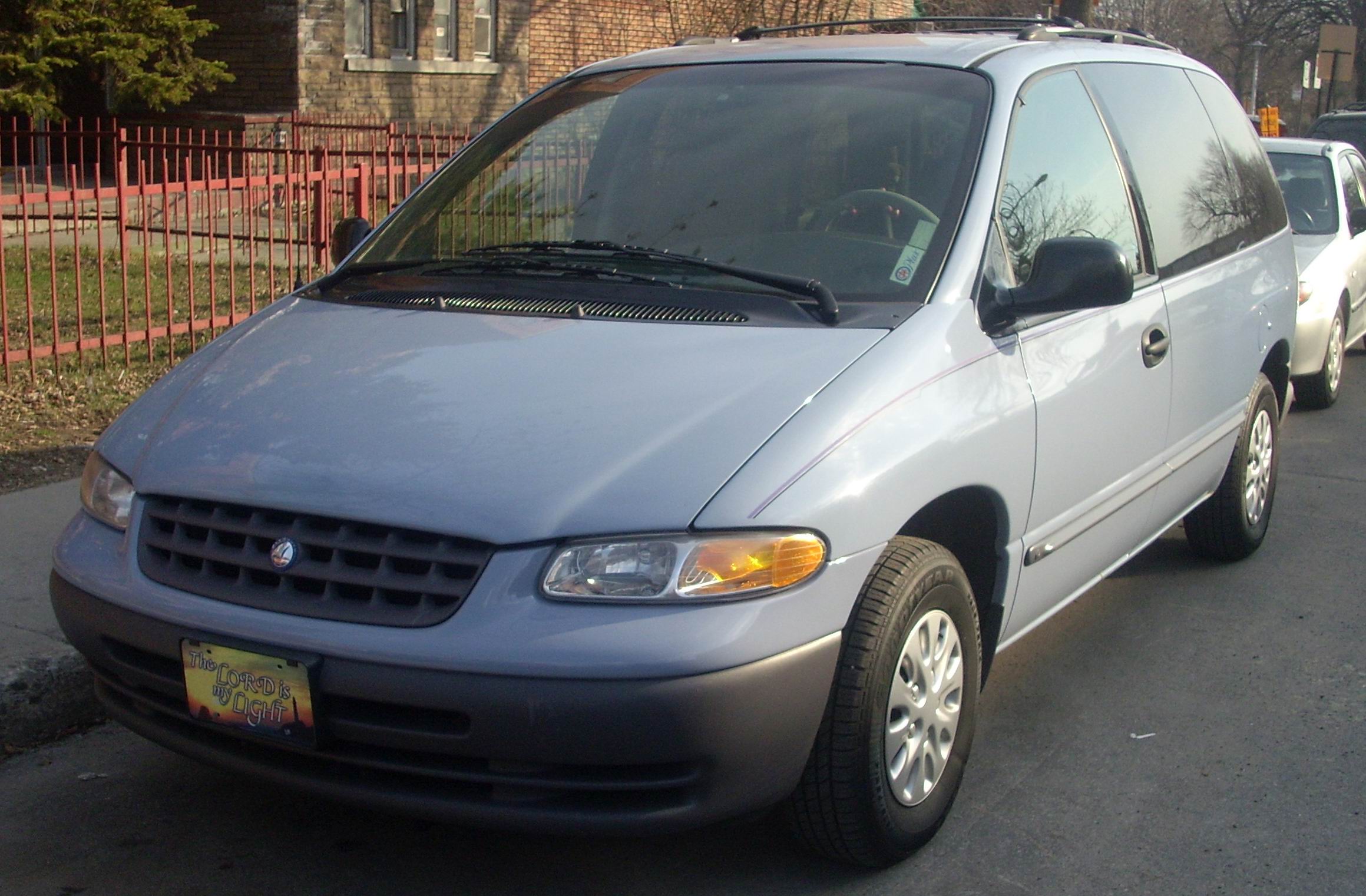
Plymouth Voyager
"...Ford Town & Country versus the Plymouth, uh, the Voyager, right? Those are like the two most popular miniv..."
The Plymouth Voyager is a minivan, which is a family vehicle with sliding doors and lots of seats. It’s meant for carrying people comfortably, especially on trips. The podcast brought it up because it was one of the popular minivans people compared to others.
The Plymouth Voyager is a minivan that was designed to carry families and passengers efficiently. In the episode, it was mentioned as one of the most popular minivans, positioned alongside the Ford Town & Country in a comparison. That makes it relevant to discussions about how minivans became mainstream family vehicles.

Chrysler Town Country
"Emily EP51: You want another example? Well, I'm just saying... Never mind. It doesn't- Another example. I'm going, I'm going down a rabbit hole They'll make a car that is just like, they make it for three or four years. It's a shitty car. It never changes, and then it just disappears." And he goes, "You know, if a certain make is dominating the market and everybody knows they're never gonna get ahold of it in that segment," he's like, "Let's take the minivan." He's like, " You know, the Plymouth was it for a long time, and y- you just weren't gonna beat it." I mean, it's be- be- it's between the Plymouth and the Town & Country, like they're so similar. Uh, I'm sorry, the F- the Ford Town & Country versus the Plymouth, uh, the Voyager, right? Those are like the two most popular minivans back and forth kind of battling, I feel like. Emily EP51: Well, but people like, like what the people with Ford did with the Econoline- Yeah ... um, Toyota would just sneak it past by not putting the, the bed on the truck. They would just ship it as a cab and a chassis, and like a cab and a frame. And then they had 15 different places across the US that they would then get the, um, bed put"
The Chrysler Town & Country is a minivan made to carry people, especially families. It’s designed for comfort and practicality, like lots of seating and easy access. The podcast mentioned it because it was a popular minivan people compared to others.
The Chrysler Town & Country is a minivan built for family transportation, emphasizing passenger space and practicality. In the episode, it was mentioned alongside the Plymouth Voyager as one of the most popular minivans, suggesting a comparison between two well-known family haulers. That makes it relevant to discussions about how minivans dominated the family-vehicle market.

Dodge Spirit
"...oward Furtak told, uh, taught me that much in the spirit of the Brain Buster. I learned that one from Howa..."
The Dodge Spirit is a passenger car (a sedan) made by Dodge. It’s the kind of vehicle you’d use for regular driving and commuting. The podcast mentioned it as part of a story or example rather than a detailed review.
The Dodge Spirit is a compact-to-mid-size sedan that was produced as part of Dodge’s passenger-car lineup. It came up in the episode in a context that sounded like a trivia or story reference, tying the name to a specific lesson or memory. That kind of mention usually points to the car as a recognizable model from the past.

Subaru Brat
"...1: And the star of this story is about the Subaru BRAT getting this six-foot bed on it. Yeah. Only in Fi..."
The Subaru Brat is a small vehicle that’s like a pickup, but it’s based on a compact car. It has a short bed for carrying things, and it’s known for being unusual compared to normal trucks. The podcast talked about it because of a specific bed setup.
The Subaru Brat is a small, quirky pickup-style vehicle built on a compact platform, known for its unusual “mini truck” concept. The episode specifically mentioned giving it a six-foot bed, which highlights how distinctive and customizable the Brat’s layout could be. It’s a notable model because it stands out from typical pickups and minitrucks.
wheel cylinder
"The brakes were completely rusted. The front calipers weren't moving at all. One wheel cylinder was leaking. It h- One wheel cylinder was all this truck had. One was leaking. The other one was working. So out of three corners, one was braking."
A wheel cylinder is a brake part that helps squeeze the brake pads/shoes using brake fluid. If it leaks or stops working, that wheel may not slow down properly.
A wheel cylinder is part of a hydraulic drum-brake system; it converts brake fluid pressure into mechanical force to push the brake shoes against the drum. If a wheel cylinder leaks or fails to move, that corner may brake weakly or not at all, which is exactly what the host describes.
calipers weren't moving
"The brakes were completely rusted. The front calipers weren't moving at all. One wheel cylinder was leaking."
The caliper is the part that squeezes the brake pads against the rotor. If it gets stuck from rust, the brakes can fail on that wheel or behave unevenly.
Brake calipers contain pistons and slide hardware that clamp the brake pads onto the rotor. When the calipers “aren’t moving,” it often points to seized slide pins or rusted caliper hardware, which can cause uneven braking or dragging.
CAFE standards
"Rose EP51: All right. So the CAFE standards change, and if your vehicle doesn't meet it, then you're not gonna be able to sell your car in America."
CAFE standards are government rules in the U.S. that push car companies to make cars that use less fuel. If a vehicle doesn’t meet the rules, selling it in the U.S. gets harder.
CAFE standards are U.S. rules that require automakers to hit minimum fuel-economy targets across their fleets. If a vehicle class doesn’t meet the requirement, it can affect how easily the manufacturer can sell that vehicle in America.

Toyota 4Runner
"...mily EP51: Some are enormous. Well, so are, like, 4Runners and stuff. Theirs are getting bigger and bigger, ..."
The Toyota 4Runner is a midsize SUV made for driving on tougher roads and off-road trails. It’s known for being a larger, more rugged vehicle than many everyday cars. The podcast likely mentioned it because it’s gotten bigger over the years.
The Toyota 4Runner is a midsize SUV known for being rugged and capable, especially for off-road and rough-road use. It often comes up in discussions about how some vehicles have grown larger over time, since the 4Runner is a big, body-on-frame-style SUV. That “enormous” size is likely why it was mentioned in the episode.

AMC Eagle
"I w- I got passed in, on the highway not too long ago by a fucking mint condition, uh, like Aztec Gold AMC Eagle, stock hubcaps, stock wheels and tires."
The AMC Eagle is an older AMC car that’s known for being able to drive with all-wheel drive. The host is talking about spotting one in excellent condition.
The AMC Eagle is a notable American compact car line from AMC that’s remembered for offering an all-wheel-drive setup at a time when that wasn’t common. In the segment, the host describes an “Aztec Gold” AMC Eagle as a mint-condition example they saw on the highway.
GVW
"Rose EP51: Maybe it's related to the GVW. I think it's- The gross vehicle weight and, like, what it can haul."
GVW means the total weight of the truck or vehicle. It matters because governments and rules often use weight categories to decide what a vehicle is allowed to do or how it’s regulated.
GVW (gross vehicle weight) is the total weight of a vehicle, often used to determine how it’s classified for regulations and taxes. In this discussion, it’s tied to how much a vehicle can haul and how it may be treated under rules like CAFE.

Ford Ranger
"...azda in an auction, and I was like, "Yeah, it's a Ranger." And they were like, "It's a Mazda." And I was l..."
The Ford Ranger is a pickup truck, meaning it has an open cargo bed in the back. It’s often used for everyday hauling and work. The podcast mentioned it because someone thought a truck was one thing, but it turned out to be a Ranger.
The Ford Ranger is a pickup truck that’s commonly associated with being a practical, smaller alternative to full-size trucks. In the episode, it was mentioned in an auction-story context, likely highlighting how the Ranger can be mistaken for other vehicles or brands. That kind of anecdote fits when discussing vehicle identification and naming.
shared platform
"Emily EP51: ...I was like, "I don't mean to be rude, but have you ever heard of a shared platform?" and then had to like send the definition."
A shared platform means different cars are built on the same basic “bones.” So even if the badges look different, the underlying design can be very similar.
A shared platform is when multiple vehicle models (sometimes from the same brand, sometimes across brands) use the same underlying chassis, major components, and engineering architecture. That can make it easier and cheaper to build different models while keeping costs down.
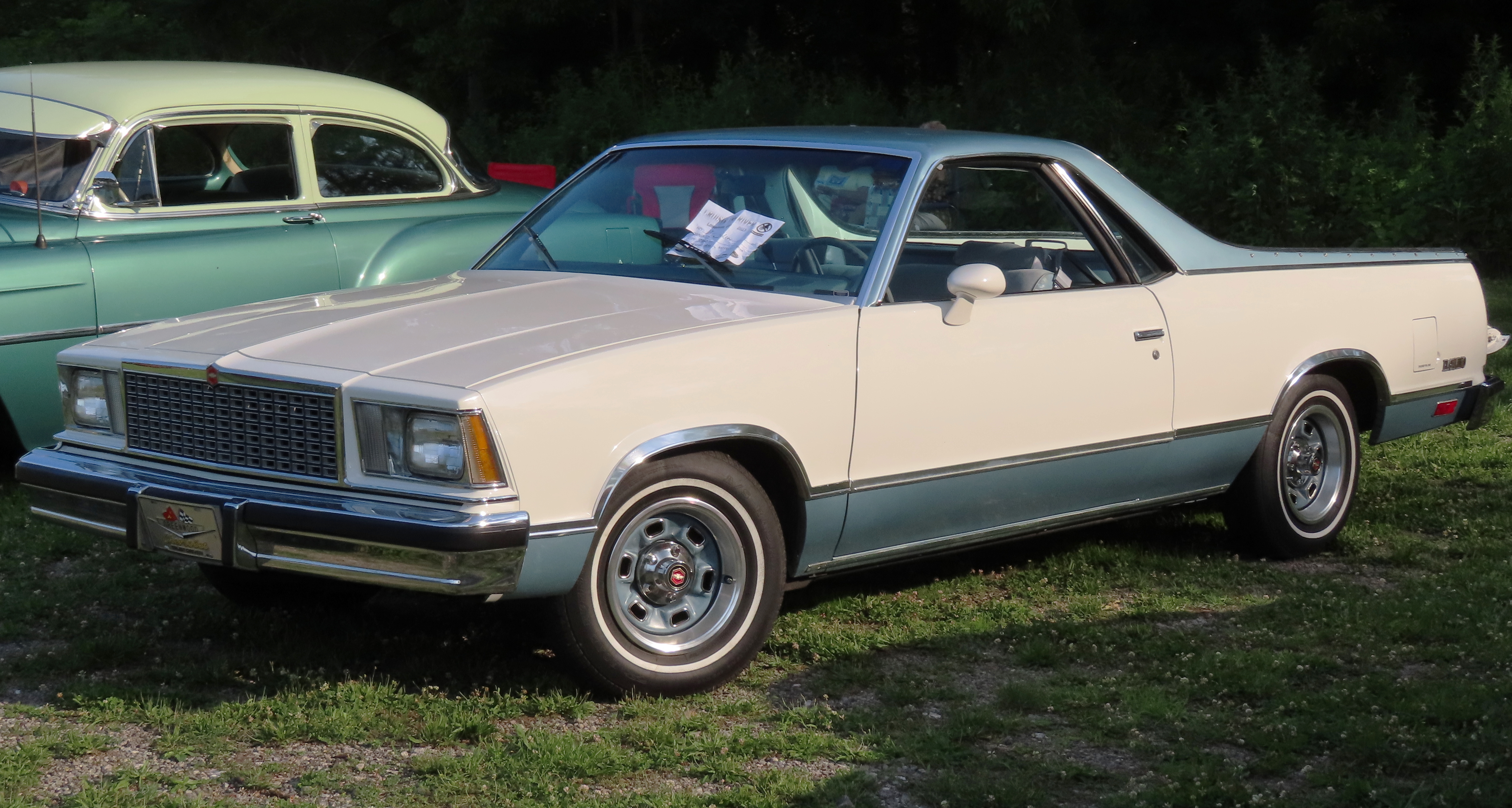
Chevrolet El Camino
"...e amount to make... Emily EP51: That's what I- an El Camino and the, uh, El Camino and what's the Ford one? T..."
The Chevrolet El Camino is an older vehicle that’s part car and part pickup. It has a regular passenger-car front, but it also has a bed in the back for hauling. The podcast mentioned it because it’s one of the well-known examples of this style.
The Chevrolet El Camino is a classic car-based pickup that combines the look and comfort of a coupe with a rear cargo bed. It’s often discussed because it’s a distinctive example of American “two-in-one” vehicle design, similar to other car-and-bed models. The episode referenced it in a comparison-style context with the Ranchero.

Ford Ranchero
"... uh, El Camino and what's the Ford one? The, um, Ranchero, they weren't in any of these videos that I Emily..."
The Ford Ranchero is an older type of vehicle that looks like a car but has a truck bed. It was made to carry cargo without being a full-size pickup. The podcast mentioned it alongside other similar “car with a bed” vehicles.
The Ford Ranchero is a classic “car-based pickup” (often called a coupe utility) that blends passenger-car comfort with a truck-style bed. It’s frequently brought up when people discuss older, unusual American vehicle concepts like the El Camino. The episode likely mentioned it as part of that same set of similar models.
Request an Explanation
Heard something you'd like explained? We'll add it to this episode.
Sign in to request explanations for terms you heard.
Want to learn more?
Browse our glossary for plain-English explanations of automotive terms, jargon, and concepts.
Help improve this episode
See something that's not quite right? Our annotations are AI-generated and can sometimes miss the mark. Click the flag icon on any annotation to suggest a correction.