
About this episode
GM vs Ford rivalry and concept-car styling set the stage, with the hosts bouncing between Motorama-era influence and a “Stingray 3” concept that gets compared to 1993 Camaros and late-’90s Cavaliers. The conversation turns practical and a bit risky as they debate lug-nut counts and how to verify lug size via the GM Heritage Center. They then pivot into engine theory—torque vs horsepower, the horsepower equation, and why dual-plane intakes help low-end pull—before teasing next week’s electric starter motor trivia.
Rose talks Chevy Caviler, Emily explores the difference between horse power and torque.
Chevy Caviler born from the Stingray III
Recorded @iapdx
Recorded & mixed by Emdognightmare & Queen of the Vans
Editor: Emdognightmare
Production & research Queen of the Vans & Emdognightmare
Find us: Car Krush
Stay updated w/ our newsletter
Hugs, thank you & high fives to Greg Meleney for the killer tunez!

Pontiac Firebird
"...ley Earl's Motorama cars? Like your favorite, the Firebird one. I just don't think you need to mix a fighter..."
The Pontiac Firebird is a classic American muscle car. In the podcast, they mention it in the context of favorite show-style cars from the past. That’s why it comes up—people remember it for its design and character.
The Pontiac Firebird is a classic American muscle car that shares the era’s focus on bold styling and strong engine performance. The podcast references “Motorama” cars and specifically brings up the Firebird as a favorite, suggesting a connection to show-car or concept-car design heritage. It’s discussed because the Firebird name is tied to iconic design moments and enthusiast nostalgia.
GMC Cyclone
"Eye roll from Rose. She the PDX Cyclone. No, it's not a GMC truck."
The GMC Cyclone is a performance version of a truck-like vehicle. The podcast is correcting someone’s assumption about what it is. It’s mentioned because it’s known for being unusually quick compared with normal trucks.
The GMC Cyclone is a high-performance variant of a pickup truck, known for being unusually fast for a truck. The podcast clarifies that it’s “not a GMC truck,” which is likely a correction about what the Cyclone is and how it’s being categorized in the conversation. It comes up because the Cyclone is a rare, performance-oriented model rather than a typical truck.
turbo
"[276.8s] Turbo. [277.4s] Yep."
“Turbo” means the engine has a turbocharger. It uses the exhaust to push more air into the engine, which helps it make more power.
A “turbo” refers to a turbocharger: an engine add-on that uses exhaust gas to spin a turbine, forcing more air into the engine. That extra air lets the engine make more power without increasing engine size.
cubic inch motor
"“it was actually a notable car in the sense that it had a 299 cubic inch motor…”"
“299 cubic inch” is how big the engine is, based on the total volume inside the cylinders. Bigger displacement often means the engine can make more power, especially in older American cars.
“299 cubic inch” is the engine displacement, measured in cubic inches. It’s a way of describing how much total volume the engine’s cylinders can move, which historically mattered a lot for power and classing in the U.S.
straight six
"“I think it was a straight six, but it basically until the V8, the 265.”"
A “straight six” is an engine with six cylinders lined up in a row. It’s often described as smooth because the engine’s operation is naturally balanced.
A “straight six” is an inline-six engine layout where all six cylinders are arranged in one line. This design is known for smoothness because the firing order and piston motion can balance out well.
V8
"“I think it was a straight six, but it basically until the V8, the 265.”"
A “V8” is an engine with eight cylinders arranged in a V pattern. It’s a classic layout people associate with strong power.
A “V8” is an engine with eight cylinders arranged in a V shape (two banks of four). It became a hallmark of American performance because it can produce strong power and torque.
F-body
"Very raked back windshield reminiscent of the 93 Camaro, the F body. [395.3s] Also under Chuck Jordan."
“F body” is a nickname for a Camaro/Firebird generation that shared the same basic platform. So when the host says “the F body,” they mean that particular Camaro/Firebird look and design era.
“F body” is an enthusiast term for the Chevrolet Camaro and Pontiac Firebird platform sold in the late 1960s through the early 2000s. When someone says “F body,” they’re usually referring to that specific Camaro/Firebird generation and its shared architecture.
300 horsepower
"And the concept that debuted at Detroit auto show had a 300 horsepower VA. [409.1s] But the concept really sported a v6."
Horsepower is a number that tells you how strong the engine is. Here, the host is mentioning a “300 horsepower” claim for the concept.
“Horsepower” is a measure of engine power—how much work the engine can do over time. The host is using the “300 horsepower” figure to describe the concept’s claimed output (though they later say it “really sported a v6”).
Detroit Auto Show
"And the concept that debuted at Detroit auto show had a 300 horsepower VA. [409.1s] But the concept really sported a v6."
The Detroit auto show is a big car event where companies unveil new cars and concept designs. The host is saying this concept was first shown at that event.
The Detroit auto show is a major North American event where automakers debut concepts and new designs. In this segment, the host says the concept they’re discussing debuted there, tying the styling and powertrain talk to a specific public reveal.
high output
"And even though it was like a high output v6, people were like, come on. [416.1s] What are you guys doing here?"
A “high output V6” is a V6 engine that’s been tuned to make more power. The host is saying people weren’t fully impressed and questioned the choices.
A “high output V6” means a V6 engine tuned to produce more power than a typical version of that same basic engine family. The host is framing it as a point of contention—people expected something else or felt the spec didn’t match the hype.
fixed headlight
"So what they said was the headlights were like fixed headlights. [428.4s] Those did make it eventually to the C6."
“Fixed headlights” means the lights are mounted in one position and don’t move. The host is saying this headlight style eventually made it onto the C6.
“Fixed headlights” are headlamp units that don’t move or pivot; they’re mounted rigidly in place. The host says the concept used fixed headlights, and that this design feature later showed up on the C6 generation.

Chevrolet C6
"...d headlights. Those did make it eventually to the C6. And that's really it."
The Chevrolet Corvette is a high-performance sports car from Chevrolet. The podcast is saying that a headlight design idea showed up later on the C6 generation. That matters because different Corvette generations look and feel different.
The Chevrolet Corvette is Chevrolet’s long-running performance sports car, built to deliver serious speed and handling. The podcast mentions that certain front-end headlight designs “made it eventually to the C6,” tying the conversation to how styling and features evolved across Corvette generations. It’s discussed because each Corvette generation has distinct visual and engineering changes.
three bolt pattern
"The wheels had a three bolt pattern. [435.5s] Oh my, that seems weird and dangerous. [439.5s] And the wheels are kind of like that. [440.9s] Three bolts?"
The “three bolt pattern” means the wheel is held on by three bolts. The host thinks it’s weird because most cars use more bolts than that.
A “three bolt pattern” refers to a wheel bolt pattern with three lug bolts securing the wheel to the hub. It’s unusual on modern cars (most use 4, 5, or more lugs), so the host reacts as if it’s strange or risky.
lugs
"I've been whittled down to three lugs before I've had lugs break and found myself driving with three."
“Lugs” here are the nuts that hold your wheel onto the car. If you don’t have enough of them tightened, the wheel can loosen, which can be really dangerous.
In this context, “lugs” means the lug nuts (and studs) that clamp a wheel to the vehicle’s hub. If you’re down to only a few lug nuts, the wheel can loosen or shift, which is why it feels dangerously unsafe.
lug nuts
"I've been whittled down to three lugs before I've had lugs break and found myself driving with three."
Lug nuts are the hardware that keeps the wheel attached to the car. If you have too few, the wheel can come loose.
Lug nuts are the fasteners that clamp the wheel to the hub so it can’t move under braking, cornering, or bumps. Running with too few lug nuts increases the risk of wheel loosening and loss of the wheel.

Dodge Viper
"The Chevy Cavalier compared to the Dodge Viper."
The Dodge Viper is a very aggressive, high-performance sports car. The hosts mention it to make the point that the “Cavalier convertible” comparison is kind of a stretch compared to something truly extreme like a Viper.
The Dodge Viper is a performance sports car known for its big-displacement V10 engine and raw, track-focused character. Here it’s used as a contrast against the Chevrolet Cavalier, highlighting how wildly different the mainstream “convertible” comparison is from a hardcore supercar.

Ford Mustang
"Wow. [602.8s] Looks like a Fox body Mustang kind of. [604.9s] Let me see."
A “Fox body Mustang” is a Ford Mustang from a specific generation (mostly late ’70s to early ’90s). People use it to describe that classic, boxy Mustang styling.
“Fox body Mustang” refers to the Ford Mustang built on the Fox platform, produced roughly from the late 1970s through the early 1990s. It’s a very recognizable design era, often used as a shorthand for that boxy, early-90s muscle-car look.
three-spoke Mustang wheel
"It's like a three-spoke Mustang wheel. Yeah, yeah, because where are they going to put the other bolts at? There's only..."
A “three-spoke” wheel is a wheel design where the rim has three main spokes, creating a very open, minimal look. The hosts connect it to a “Mustang wheel,” implying a recognizable styling motif associated with certain Mustang wheel designs.
concept car
"Whatever. It's a concept car. Shut up."
A “concept car” is a one-off or prototype vehicle made to show off ideas. It usually isn’t something you can buy, and it may include design choices that are mainly for show.
A “concept car” is a prototype vehicle built to showcase new styling, technology, or design directions. It’s often not intended for mass production, so details like wheels and trim may be more about visual impact than real-world practicality.

Ford Probe
"[682.8s] This looks like a squished Ford probe to me. [685.7s] Is this..."
The Ford Probe is a Ford sports coupe. The host is saying the other car’s shape looks like a smaller, squished version of that style.
The Ford Probe (often confused in casual speech with the Ford Probe model name) is a compact sports coupe from Ford’s lineup. The host is using it as a visual reference point, saying the car in question looks like a “squished” version of that design.

Cadillac Cimarron
"[710.5s] Looking back to the first gen Cavalier, it's brutal, which pairs up with the Cadillac [717.5s] Cimarron and the Pontiac Sunbird, some real piece of shit cars."
The Cadillac Cimarron is a Cadillac from the late 1900s that many people didn’t think lived up to the Cadillac name. The hosts mention it as part of a list of cars they consider especially bad.
The Cadillac Cimarron is a late-1970s/early-1980s compact-luxury model that’s often remembered for being an awkward mismatch between Cadillac branding and its smaller, more budget-oriented underpinnings. The hosts group it with other “ugly” or disliked cars from the same era.

Sunbird Pontiac Sunbird
"...which pairs up with the Cadillac Cimarron and the Pontiac Sunbird, some real piece of shit cars. The second generat..."
The Pontiac Sunbird is a compact car made by Pontiac. The podcast mentions it along with other cars they didn’t think were very good. It’s included because it’s part of that list of disliked models.
The Pontiac Sunbird is a compact car that the podcast mentions alongside the Cadillac Cimarron as part of a set of vehicles they consider poor choices. The context suggests the discussion is about how certain models didn’t perform well in reputation or overall appeal. It’s brought up because it’s part of that broader “not good” lineup being referenced.
chin spoiler
"I see some of these have like spoilers on them, like a chin spoiler and like a side."
A chin spoiler is a small lip at the very bottom of the front bumper. It can help the airflow under the car and also makes the front look sportier.
A chin spoiler is a low front lip (often on the lower bumper) designed to improve airflow under the car. It can also change the car’s appearance by making the front end look lower and more aggressive.
side rocker spoiler
"Like a rocker spoiler. And I think those... I think that makes it look better."
A rocker spoiler is a trim piece along the lower side of the car. It’s usually added to help airflow and to make the car look lower and more sporty.
A rocker spoiler is an aerodynamic add-on along the lower sides of the car near the rocker panels. It’s meant to manage airflow around the body and reduce unwanted turbulence, while also giving a more “ground-hugging” look.
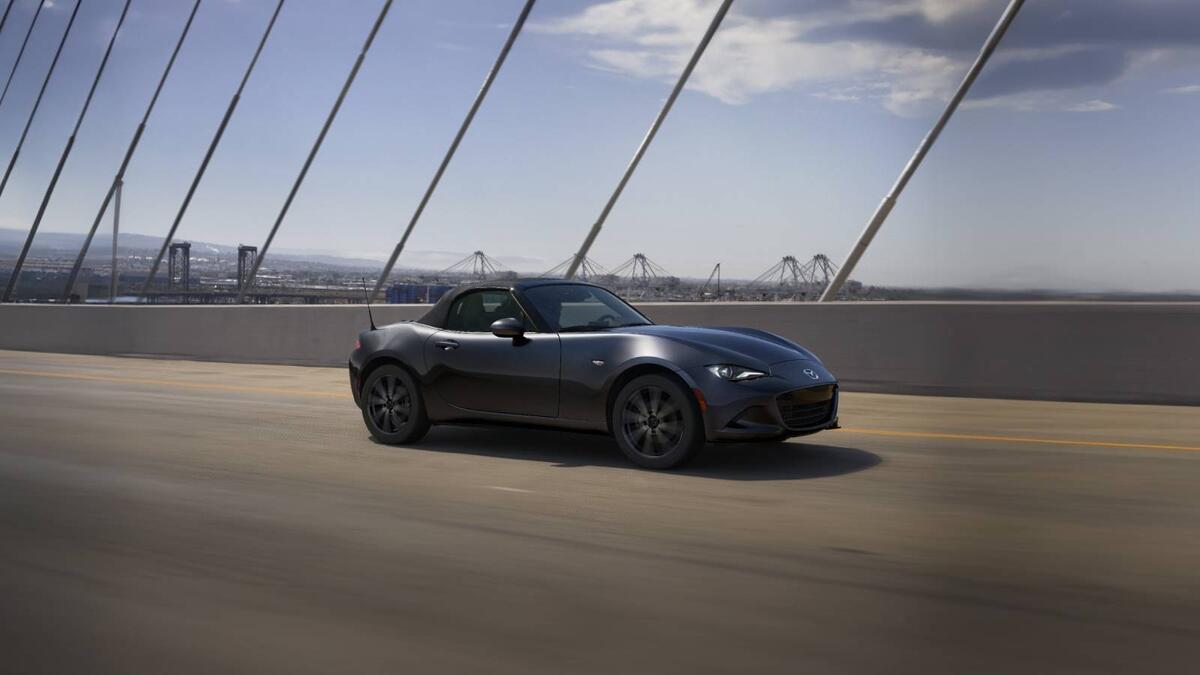
Mazda MX-5 / Miata
"...e that it looks like it's got almost like a Mazda Miata. It's a 1994 one."
The Mazda MX-5, or Miata, is a small two-seat roadster designed to be fun and easy to drive. The podcast is comparing the look of a 1994 car to the Miata’s shape. That’s why the Miata comes up as a visual reference.
The Mazda MX-5, commonly called the Miata, is a lightweight, driver-focused roadster known for its simple, fun-to-drive character. The podcast references a 1994 example and notes how it visually resembles a Miata. It’s a common reference point because the MX-5’s proportions and styling are distinctive and widely recognized.
tear drop
"Here's a cute teardrop. Yeah."
“Teardrop” here is just a way of describing a rounded, tapering shape. They’re saying the car has a cute, droplet-like look.
“Teardrop” is a styling description often used for a rounded, tapering body shape or light/trim element that resembles a droplet. Here it’s part of the hosts’ visual critique of the car’s proportions and design.
hatchback
"And the hatchback of the second gen, there's some... There's some Cavalier..."
A hatchback is a car where the back opens like a door, and the trunk is part of that same opening. They’re comparing that shape to the two-door coupe.
A hatchback is a body style where the rear door opens upward and the trunk area is integrated into that door. In this segment, they’re contrasting the Cavalier’s hatchback version with the two-door coupe.

Infiniti M45
"But yeah. A GM Eaton M45 Supercharger Kit was also offered for the Z24 tri..."
The Infiniti M45 is a luxury sedan made by Infiniti. The podcast is bringing it up in a performance context, connected to supercharger ideas. That means it’s being discussed as a car that can be made to feel faster.
The Infiniti M45 is a performance-oriented luxury sedan from Infiniti, known for offering strong power in a more comfort-focused package. The podcast’s mention is tied to a supercharger kit discussion, indicating the M45 is part of a conversation about forced-induction options and performance upgrades. It’s discussed because it represents a factory performance direction within Infiniti’s lineup.
GM Eaton M45 Supercharger Kit
"A GM Eaton M45 Supercharger Kit was also offered for the Z24 trim."
This is a supercharger kit made by GM using an Eaton supercharger (the M45). It forces extra air into the engine so the car can make more power.
An Eaton M45 supercharger kit is a factory-style forced-induction upgrade that uses an Eaton supercharger (model M45) to push more air into the engine. More air generally means more fuel can be burned, which is why the kit boosts horsepower and torque.
GM dealer
"The Supercharger Kit was developed and tested by GM, and could only be installed at a GM dealer."
A GM dealer is an official Chevrolet/GMC service and sales location. The point here is that the supercharger kit wasn’t just a random aftermarket install—it was meant to be installed through GM’s own dealer network.
A GM dealer is an authorized dealership network where GM-approved parts and installations could be performed. The segment notes the supercharger kit could only be installed at a GM dealer, which implies a controlled, factory-backed installation process.
4.7 PSI
"This upgrade increased performance considerably due to the 4.7 PSI, which turn added approximately 40 horsepower."
4.7 PSI is how much extra pressure the supercharger adds to the engine. More boost usually means more power, but it also means the engine is working harder.
4.7 PSI is the boost pressure produced by the supercharger, measured in pounds per square inch. Higher boost typically increases engine power, but it also raises stress on components and can affect how the engine needs to be tuned.

Cavalier
"You know, eventually the Cavalier came close to 200 horse. ...Anyway, it's just kind of funny to link the Corvette to a Cavalier."
The Cavalier was GM’s smaller, more affordable car. Here they’re talking about how a supercharger could make it surprisingly powerful—close to 200 horsepower.
The Chevrolet Cavalier was GM’s compact, value-focused model line, and it’s notable here because the segment discusses how a supercharger kit could push it close to 200 horsepower. That’s why the hosts find it “funny” to connect Cavalier numbers to Corvette-level expectations.
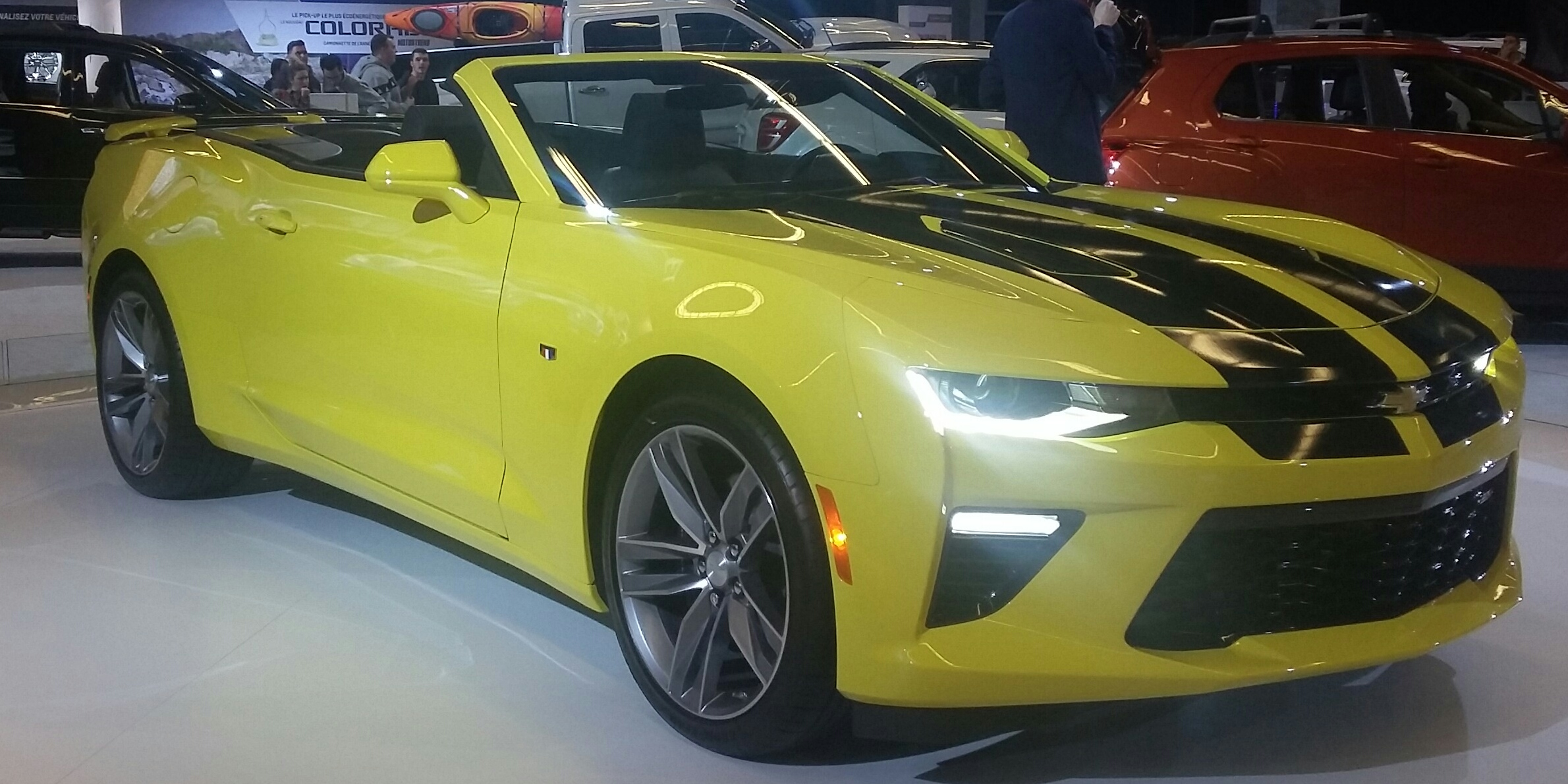
Camaro
"He pushed forward that really lean back windshield on the Camaro that you don't like."
The Camaro is a classic American muscle car. They’re talking about a specific design look—how the windshield angles back—which changes how the car looks from the side and front.
The Chevrolet Camaro is a long-running American muscle car line. In this segment, they’re specifically talking about a “lean back windshield” design cue on a Camaro generation, which affects the car’s greenhouse shape and overall stance.

Chevrolet Caprice
"...Camaro that you don't like. And the really bubbly Caprice Chuck Jordan pushed through, which did not do wel..."
The Chevrolet Caprice is a large, comfortable car from Chevrolet. The podcast is saying the design they tried was “bubbly,” and that it didn’t go over well with buyers. It comes up as an example of a model that didn’t perform as expected.
The Chevrolet Caprice is a full-size American car that’s often associated with comfort and traditional styling rather than modern sports-car behavior. In the podcast context, it’s mentioned as a “bubbly” design that Chuck Jordan pushed through, and it “did not do well,” implying it was unpopular or unsuccessful. It’s discussed because it’s an example of a design/market decision that didn’t land as intended.
rake
"Probably that has that real rake."
“Rake” is how tilted the car looks—whether the front sits higher or lower compared to the back. More rake usually makes a car look more aggressive.
In car design, “rake” describes the angle of the vehicle’s body relative to the ground—often how much the nose sits higher or lower than the rear. A “real rake” usually makes the car look more aggressive or sporty, but it can also affect perceived proportions and visibility.
torque
"So to make more power, an engine needs to generate more torque, operate a higher RPM or both. ... Cause they do converge at one point and then your torque goes up and your horsepower goes down, right?"
Torque is the engine’s “twist” that helps the car get moving. Higher torque usually means stronger pull, especially at lower speeds.
Torque is the twisting force an engine produces, and it strongly influences how quickly a car can accelerate, especially at lower speeds. In many discussions, torque is contrasted with horsepower to explain why some engines feel strong off the line even if their peak horsepower isn’t the highest.
RPM
"So to make more power, an engine needs to generate more torque, operate a higher RPM or both."
RPM tells you how fast the engine is spinning. Higher RPM can help an engine make more power because it’s working faster.
RPM (revolutions per minute) is how fast the engine spins. Since horsepower is affected by both torque and RPM, raising RPM can increase horsepower even if torque doesn’t rise the same way.
converge
"It's a, it's a, it's a point at which they converge. Okay. Cause they do converge at one point and then your torque goes up and your horsepower goes down, right?"
They’re talking about how torque and horsepower numbers can meet at one engine speed and then behave differently as RPM changes. That’s why some cars feel strongest in one part of the rev range.
The speaker is describing the relationship between torque and horsepower curves as engine speed changes—how they can intersect at a particular RPM and then diverge. This is a common way to explain why an engine’s “feel” (torque) and its top-end power (horsepower) don’t always peak at the same time.
diesels
"I mean, diesels are known for having loads of torque and more torque than horsepower. But then like, you know, drag racing, you typically have a lot of horse and you're"
Diesel engines are known for strong pulling power at lower engine speeds. That’s why they often feel torquey even without revving very high.
Diesel engines are often associated with producing high torque at lower RPM compared with many gasoline engines. That’s why they’re commonly described as having “loads of torque,” even if their horsepower numbers may not always be as high at the top end.
drag racing
"But then like, you know, drag racing, you typically have a lot of horse and you're going to have a lot of torque too, but probably on something that's designed for high winding, you're probably going to have more horsepower than torque."
Drag racing is when cars race side-by-side in a straight line to see who accelerates fastest. The cars are often tuned to make power in the way that helps them launch and accelerate quickly.
Drag racing is a motorsport where cars accelerate in a straight line over a short distance, so the setup often prioritizes strong acceleration characteristics. The segment contrasts typical torque-vs-horsepower emphasis in drag-focused cars versus engines designed to rev higher.
dual plane intakes
"And then also to have an economical engine, like dual plane intakes on a street motor, you get low end torque, which is for like taking off from a stop sign."
A dual plane intake is a special shape of the air intake on an engine. It’s designed to help the engine pull harder at low speeds, like when you’re starting from a stop.
Dual plane intakes are an intake-manifold design that splits airflow into two “planes” to tune engine breathing. The goal is to improve low-end torque for everyday driving by matching airflow to engine speed.
intake runner
"And that's what dual plane intakes are for the longer your intake runner, the manufacturers learn that the more torque you can develop."
An intake runner is the tube that guides air from the intake manifold into the engine. Its length can change when the engine feels strongest—longer runners often help at lower speeds.
An intake runner is the tube section inside an intake manifold that channels air into the engine’s cylinders. Its length affects how pressure waves in the intake system reinforce airflow at certain RPM ranges, which is why longer runners often help low-end torque.
302s
"So a long intake runner, which is like those, those 302s have that intake that looks like a U shape, it's folded over itself and that's to help get low end torque and help with, with every day start, stop driving."
“302s” is a reference to a Ford V8 engine size (the 5.0-liter). The speaker is saying some intake designs on that engine are shaped to help the car feel stronger at low speeds.
“302s” refers to Ford’s 302 cubic-inch V8 (often called the 5.0L), which is commonly associated with aftermarket intake designs. In this context, the speaker is describing a U-shaped intake layout used to promote low-end torque.
HP
"But yeah, torque is basically the capacity to do work and HP is how quick can the work get done."
HP (horsepower) is a measure of how much power the engine makes—basically how quickly it can do work. It tends to matter more when the engine is spinning faster.
HP (horsepower) is a measure of how quickly an engine can do work, often associated with power output at higher RPM. While torque influences how hard you feel the car pull, horsepower relates more directly to sustained speed and top-end capability.
Request an Explanation
Heard something you'd like explained? We'll add it to this episode.
Sign in to request explanations for terms you heard.
Want to learn more?
Browse our glossary for plain-English explanations of automotive terms, jargon, and concepts.
Help improve this episode
See something that's not quite right? Our annotations are AI-generated and can sometimes miss the mark. Click the flag icon on any annotation to suggest a correction.