
About this episode
Hosts Rose and Emily tackle listener answers in this trivia-focused episode, breaking down the mechanics of why four-wheel-drive systems bind on dry pavement. The conversation shifts to classic GM design history, exploring the origins of the Camaro's RS styling and the iconic Pontiac Endura nose. They also dive into the influence of legendary GM design chief Bill Mitchell, detailing how a trip to England inspired him to blend Ferrari and Rolls-Royce styling cues for the 1963 Buick Riviera.
Emily is blown away by how many Model T's were made, Rose reveals the design of the 1970 1/2 RS Camaro grill.
Recorded @iapdx
Recorded & mixed by Emdognightmare & Queen of the Vans
Editor: Emdognightmare
Production & research Queen of the Vans & Emdognightmare
Find us: Car Krush
Stay updated w/ our newsletter
Hugs, thank you & high fives to Greg Meleney for the killer tunez!
drivetrain binding
"And, um, it fights your drive tain- train, and it could cause like binding. It's actually pretty bad for"
When you turn a car, every wheel needs to spin at a slightly different speed because they are all traveling along different paths. In some heavy-duty 4WD systems, the front and back wheels are locked together. If you try to turn on dry pavement, the tires can't slip easily, so the metal parts underneath fight each other and get tightly bound up, which can damage the vehicle.
Drivetrain binding (or driveline wind-up) occurs in part-time four-wheel-drive systems when driven on high-traction surfaces like dry pavement. Because the front and rear axles are locked together and forced to spin at the same speed, the system cannot accommodate the different path lengths traveled by the front and rear wheels during a turn, causing the tires to hop and putting severe mechanical stress on the transfer case and driveshafts.

Citroen 2CV
"...31: Yeah, what does he think this is? The Citroen 2CV? Emily BB31: To 10,000 10,000. In what is that? A..."
The Citroën 2CV is a small, quirky French car designed to be very cheap, simple, and easy to drive for farmers in the 1940s. It has a distinctive rounded shape, a canvas roof that rolls back, and a very soft suspension that makes it ride smoothly even on bumpy dirt roads.
The Citroën 2CV is an iconic French economy car produced from 1948 to 1990, designed to motorize the rural population of France. It is celebrated for its minimalist engineering, highly compliant long-travel suspension designed to cross plowed fields without breaking eggs, and its air-cooled two-cylinder engine. It became a symbol of utilitarian simplicity and French industrial design, selling millions of units over its four-decade run.

Citroën 2CV
"Yeah, what does he think this is? The Citroen 2CV?"
An incredibly basic, quirky French car designed in the 1940s to help farmers replace horses. It is famous for its thin metal body, tiny engine, and extremely soft, bouncy suspension that let it drive across plowed fields without spilling a basket of eggs.
The Citroën 2CV is an iconic, air-cooled front-engine, front-wheel-drive economy car introduced by the French manufacturer in 1948. Designed to motorize rural France, it is famous for its highly minimalist engineering, interconnected suspension system, and distinctive umbrella-handle gearshift protruding from the dashboard.

Ferrari 250 GTO
"And what he said was, "I know RS is Euro-inspired design, maybe from the Ferrari GTO?" Now, see, I faked people out again with that, with that GTO tie-in."
One of the most famous, beautiful, and expensive race cars ever built. Ferrari only made 36 of them in the early 1960s, and today they are worth tens of millions of dollars each.
The Ferrari 250 GTO is a front-engine, rear-wheel-drive GT racing car powered by a 3.0-liter Colombo V12 engine, built by Ferrari from 1962 to 1964 for FIA Group 3 Grand Touring Car homologation. It is widely considered the ultimate classic Ferrari and one of the most valuable collector cars in the world, with examples selling for tens of millions of dollars.

Delorean DMC-12
"...as like, "No, I don't think that, that, you know, DeLorean or Bunky had anything to do with it," and they di..."
The DeLorean is a famous silver sports car from the 1980s with doors that open upward like wings, best known for being the time machine in the *Back to the Future* movies. It was made by the DeLorean Motor Company and is unique because its body is made of unpainted stainless steel, just like a modern kitchen appliance.
The DeLorean DMC-12 is a sports car manufactured from 1981 to 1983, famous for its brushed stainless-steel body, gull-wing doors, and its starring role as the time machine in the *Back to the Future* film franchise. Despite its futuristic looks, it was plagued by a weak Peugeot-Renault-Volvo (PRV) V6 engine and build quality issues arising from its rushed production in Northern Ireland. It remains an iconic piece of automotive pop culture despite its brief and troubled original production run.
Endura nose
"Your, your orange, you know, your yellow urethane, you know, when the paint chips away and it's that yellow color underneath, that's the Endura nose, the, the plastic nose."
A special plastic-like front bumper used on classic muscle cars in the late 1960s and 1970s. Instead of shiny metal chrome, it was painted the same color as the car and could flex to absorb minor bumps without denting.
The Endura nose was a body-colored, energy-absorbing front bumper made of molded polyurethane foam bonded to a steel insert, famously introduced by Pontiac on the 1968 GTO. It was designed to resist low-speed impacts without denting or scratching, replacing traditional heavy chrome bumpers and pioneering the modern integrated bumper look.
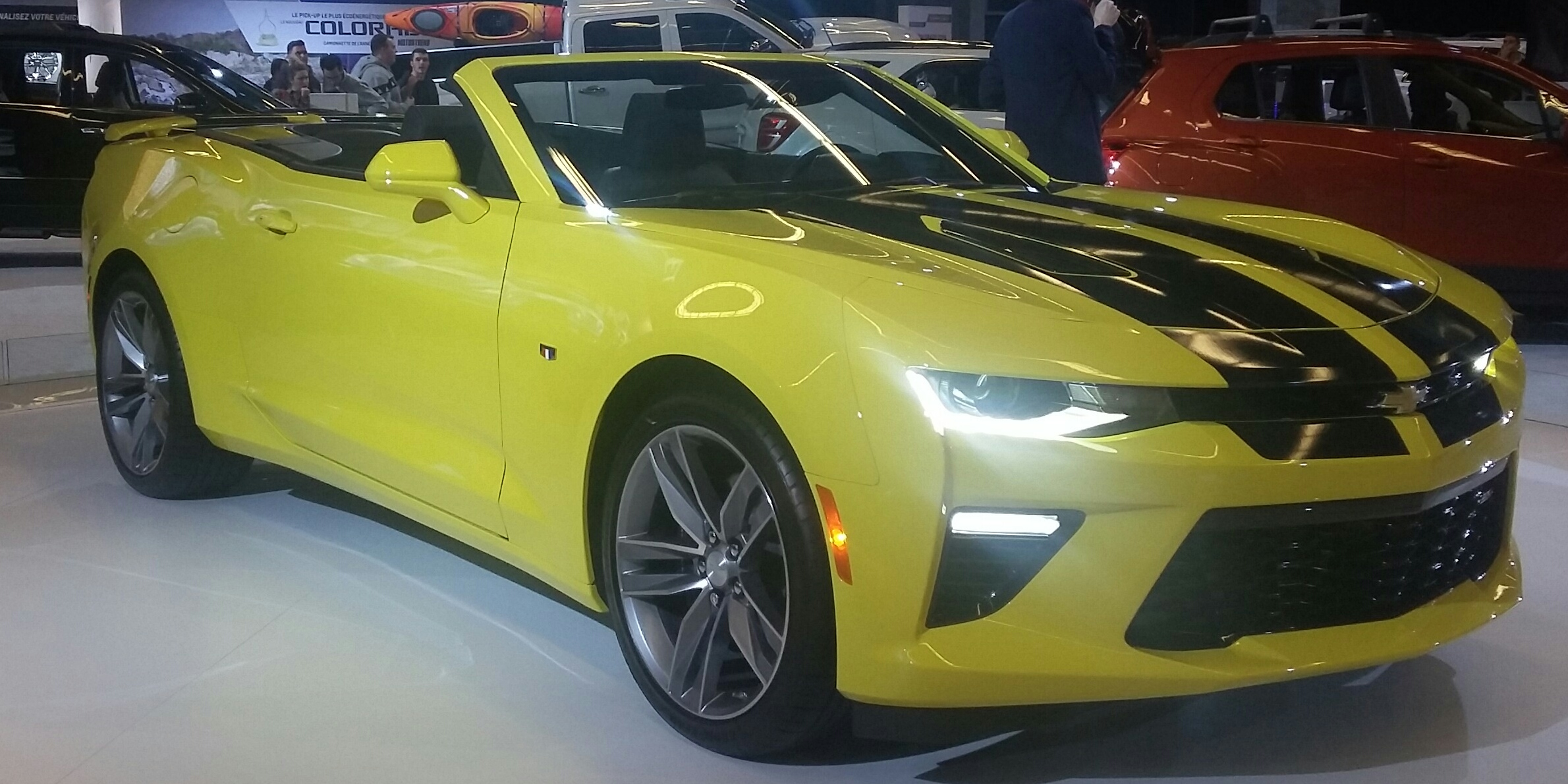
Chevrolet Camaro
"Well, see, I don't think that's ... I didn't, I meant to look it up and split hairs a little bit because really the difference with the, just the Camaro is that the bumper goes across the grill."
Chevrolet's famous sporty muscle car, built to compete with the Ford Mustang. It has been a staple of American performance since the late 1960s.
The Chevrolet Camaro is a front-engine, rear-wheel-drive pony/muscle car introduced by General Motors for the 1967 model year to compete directly with the Ford Mustang. It has been produced across six distinct generations, featuring a range of inline-six, V6, and high-performance V8 engines.
Bill Mitchell
"Another thing about that, when, you know, Jesse mentioned about the designers, Bill Mitchell was the, the, uh, head of design at that time. And another comment that sort of ties into that was that they had been working, like, towards the Riviera in '63"
A legendary design boss at General Motors who oversaw the styling of some of America's most famous cars from the late 1950s through the 1970s, including the Corvette Sting Ray.
William L. Mitchell was an influential American car designer who served as the Vice President of Design at General Motors from 1958 to 1977. He was responsible for creating iconic automotive designs including the 1963 Corvette Sting Ray, the 1963 Buick Riviera, and the 1967 Cadillac Eldorado.
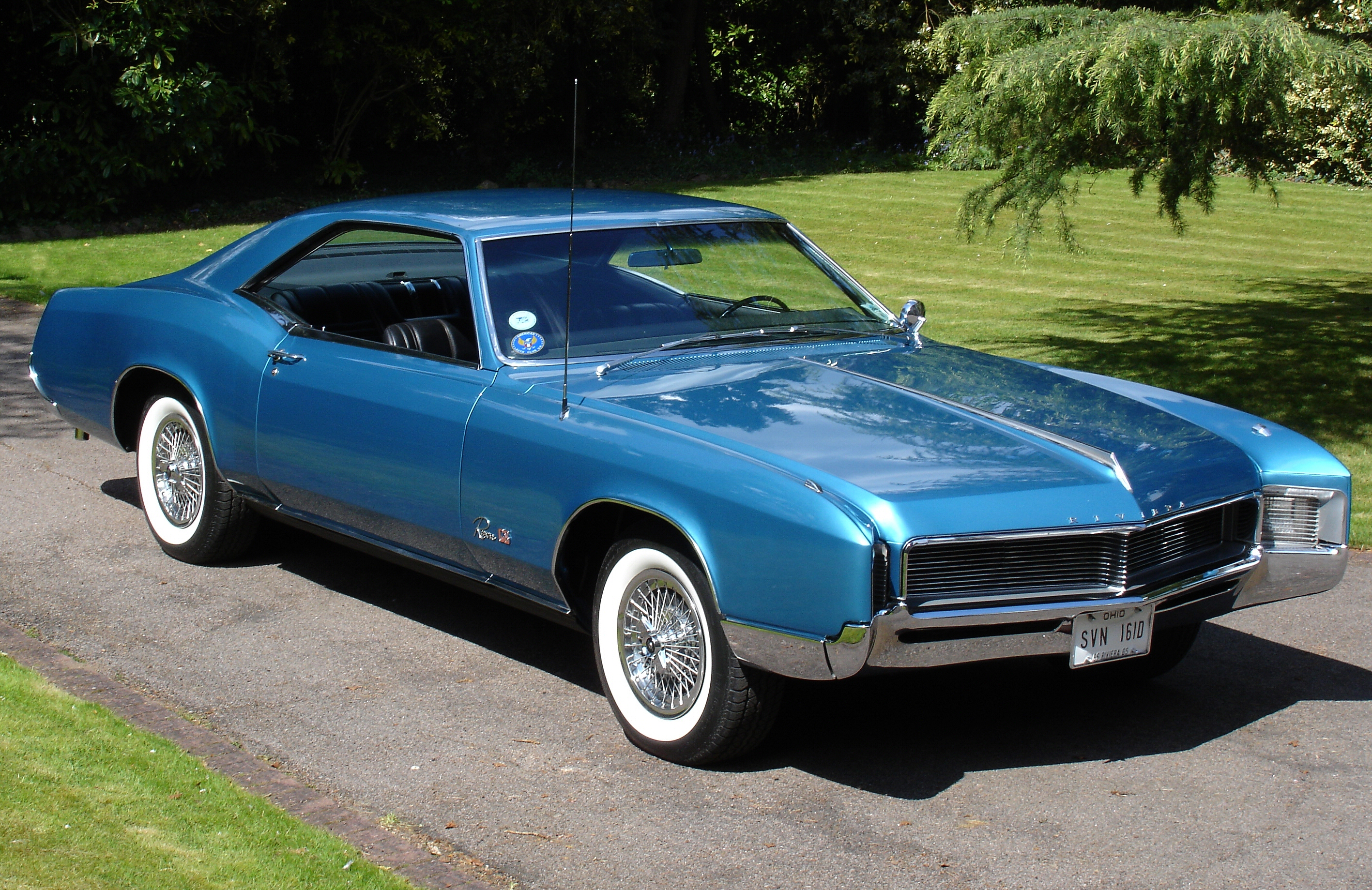
Buick Riviera
"And another comment that sort of ties into that was that they had been working, like, towards the Riviera in '63, and after a trip to England, Bill Mitchell came back and said, "Let's make it like a Ferrari Rolls-Royce.""
A high-end, stylish luxury coupe built by Buick starting in 1963. It was designed to compete with European luxury cars and is considered one of the most beautiful American cars ever made.
The Buick Riviera is a front-engine, rear-wheel-drive personal luxury car introduced by General Motors for the 1963 model year. Designed under Bill Mitchell, the first-generation Riviera featured a highly acclaimed, sharp-edged body style inspired by custom European coachwork, powered by powerful Buick 'Nailhead' V8 engines.
Request an Explanation
Heard something you'd like explained? We'll add it to this episode.
Sign in to request explanations for terms you heard.
Want to learn more?
Browse our glossary for plain-English explanations of automotive terms, jargon, and concepts.
Help improve this episode
See something that's not quite right? Our annotations are AI-generated and can sometimes miss the mark. Click the flag icon on any annotation to suggest a correction.