The Pontiac Firebird is a classic American muscle car. In the podcast, they mention it in the context of favorite show-style cars from the past. That’s why it comes up—people remember it for its design and character.
The GMC Cyclone is a performance version of a truck-like vehicle. The podcast is correcting someone’s assumption about what it is. It’s mentioned because it’s known for being unusually quick compared with normal trucks.
“299 cubic inch” is how big the engine is, based on the total volume inside the cylinders. Bigger displacement often means the engine can make more power, especially in older American cars.
A “straight six” is an engine with six cylinders lined up in a row. It’s often described as smooth because the engine’s operation is naturally balanced.
“F body” is a nickname for a Camaro/Firebird generation that shared the same basic platform. So when the host says “the F body,” they mean that particular Camaro/Firebird look and design era.
The Detroit auto show is a big car event where companies unveil new cars and concept designs. The host is saying this concept was first shown at that event.
“Fixed headlights” means the lights are mounted in one position and don’t move. The host is saying this headlight style eventually made it onto the C6.
The Chevrolet Corvette is a high-performance sports car from Chevrolet. The podcast is saying that a headlight design idea showed up later on the C6 generation. That matters because different Corvette generations look and feel different.
“Lugs” here are the nuts that hold your wheel onto the car. If you don’t have enough of them tightened, the wheel can loosen, which can be really dangerous.
The Dodge Viper is a very aggressive, high-performance sports car. The hosts mention it to make the point that the “Cavalier convertible” comparison is kind of a stretch compared to something truly extreme like a Viper.
A “Fox body Mustang” is a Ford Mustang from a specific generation (mostly late ’70s to early ’90s). People use it to describe that classic, boxy Mustang styling.
A “three-spoke” wheel is a wheel design where the rim has three main spokes, creating a very open, minimal look. The hosts connect it to a “Mustang wheel,” implying a recognizable styling motif associated with certain Mustang wheel designs.
A “concept car” is a one-off or prototype vehicle made to show off ideas. It usually isn’t something you can buy, and it may include design choices that are mainly for show.
The Cadillac Cimarron is a Cadillac from the late 1900s that many people didn’t think lived up to the Cadillac name. The hosts mention it as part of a list of cars they consider especially bad.
The Pontiac Sunbird is a compact car made by Pontiac. The podcast mentions it along with other cars they didn’t think were very good. It’s included because it’s part of that list of disliked models.
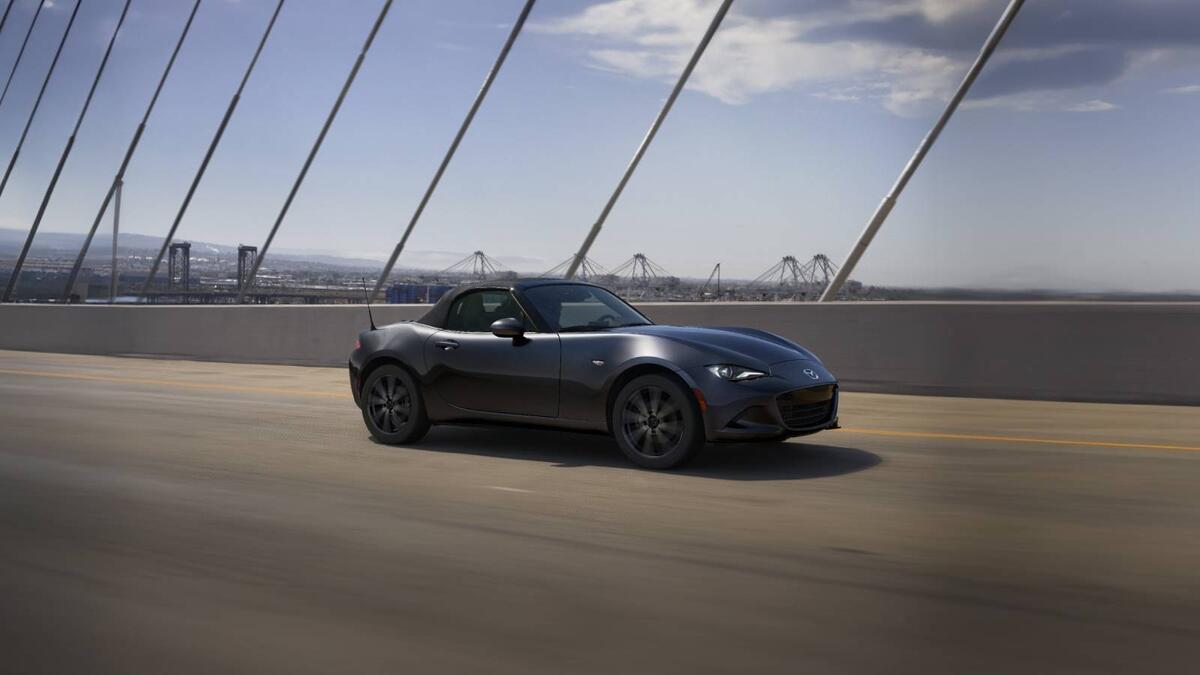
The Mazda MX-5, or Miata, is a small two-seat roadster designed to be fun and easy to drive. The podcast is comparing the look of a 1994 car to the Miata’s shape. That’s why the Miata comes up as a visual reference.
The Infiniti M45 is a luxury sedan made by Infiniti. The podcast is bringing it up in a performance context, connected to supercharger ideas. That means it’s being discussed as a car that can be made to feel faster.
A GM dealer is an official Chevrolet/GMC service and sales location. The point here is that the supercharger kit wasn’t just a random aftermarket install—it was meant to be installed through GM’s own dealer network.
4.7 PSI is how much extra pressure the supercharger adds to the engine. More boost usually means more power, but it also means the engine is working harder.
The Cavalier was GM’s smaller, more affordable car. Here they’re talking about how a supercharger could make it surprisingly powerful—close to 200 horsepower.
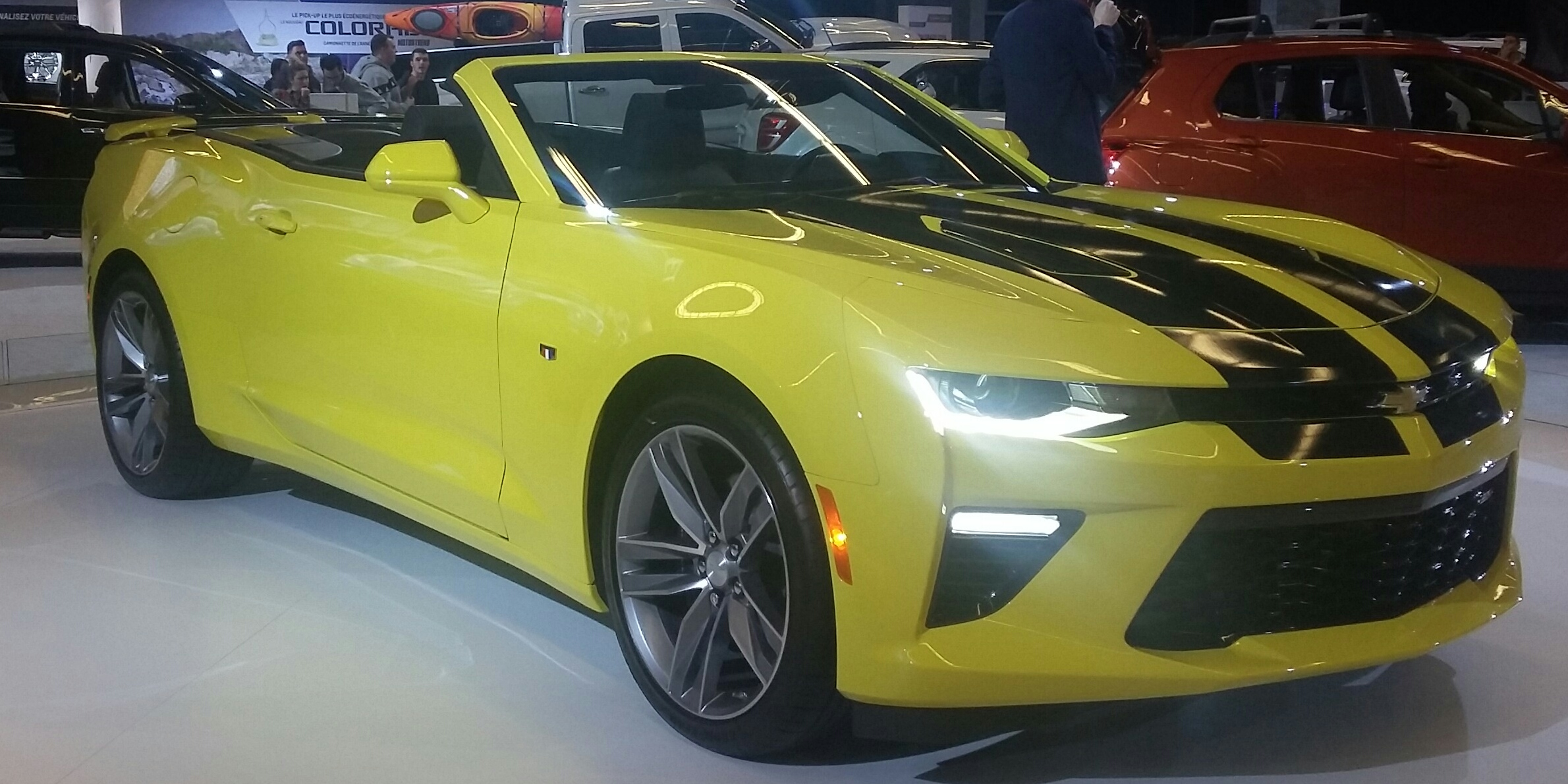
The Camaro is a classic American muscle car. They’re talking about a specific design look—how the windshield angles back—which changes how the car looks from the side and front.
The Chevrolet Caprice is a large, comfortable car from Chevrolet. The podcast is saying the design they tried was “bubbly,” and that it didn’t go over well with buyers. It comes up as an example of a model that didn’t perform as expected.
RPM tells you how fast the engine is spinning. Higher RPM can help an engine make more power because it’s working faster.
Concept
converge
They’re talking about how torque and horsepower numbers can meet at one engine speed and then behave differently as RPM changes. That’s why some cars feel strongest in one part of the rev range.
Drag racing is when cars race side-by-side in a straight line to see who accelerates fastest. The cars are often tuned to make power in the way that helps them launch and accelerate quickly.
A dual plane intake is a special shape of the air intake on an engine. It’s designed to help the engine pull harder at low speeds, like when you’re starting from a stop.
An intake runner is the tube that guides air from the intake manifold into the engine. Its length can change when the engine feels strongest—longer runners often help at lower speeds.
Term
302s
“302s” is a reference to a Ford V8 engine size (the 5.0-liter). The speaker is saying some intake designs on that engine are shaped to help the car feel stronger at low speeds.
HP (horsepower) is a measure of how much power the engine makes—basically how quickly it can do work. It tends to matter more when the engine is spinning faster.
LIVE
Hey, guess what! What? It's Friday. Wouldn't it be funny if I had a joke to say there?
Nope, I don't think so. People did not come here to laugh. This is all business.
That's true.
They need facts, and they need to know right now.
Buckled down. Buckled down. Well, let's get started then. I've got something from last week.
No, you don't.
Yeah, I do.
No, you don't.
And this is from...
Who's it from? Let me know. Tell me now. I need a faster-paced show.
Stop it.
Two-two. Two-two, one for life.
Okay. We've heard of him.
He's a super cool dude.
He hangs around these parts.
He does. Yeah. He's very active.
Last week's question about diesel gas difference and the person that answered the diesel has sleeves was cool.
That was me and the research that I did.
Two-twoed.
Oh.
Yeah.
I thought somebody wrote in and said that.
I don't think so. If they did, I guess I just took all their thunder.
I think that was something that I read in the research.
Okay.
Yeah, because that was something I had later.
I work in a sleeve manufacturing plant.
We make sleeves for Cummings, Mack, Detroit Diesel, John Deere, OEM, and replacement parts.
Sadly, that manufacturing has left the U.S.
and currently we make the OEM iron cylinder liners for GM and Chrysler that get cast into their aluminum blocks.
Keep up the great shows.
I think that's really cool.
I know.
I mean, I think that sucks that a bunch of it has gone overseas.
Yeah, that super sucks.
The story of America in manufacturing continues to get shittier and shittier all the time.
As much as that guy that is the color of a traffic cone tries to say otherwise, says one thing and then totally different other things happen.
I mean, I can't say it's because of that guy, but anyway, the story continues to suck.
The story continues to suck.
I'm sorry to hear that, that your work has been diminished.
At least you're still doing work for Detroit.
But thanks, we will try to keep up the great shows.
And we appreciate you saying that.
Yeah, yes.
I know we say that every week, but if you all didn't talk to us, what the fuck would we even be doing?
We would just be talking a dead air.
We would be talking to nothing.
Just into the void.
That's my new album, into the void.
Because of you were not.
Available Saturday.
You got quite a few answers for your question.
Oh, really?
Yeah.
I think the four.
One of them was from Facebook.
And that, you know, all right, my question from last week was what was GM's fireback?
What were they just like?
Oh, yeah.
Yo, yeah, Viper.
Watch this.
GM, you know, it's not like, it's not like Dodge was like, okay, GM, your turn.
GM constantly fires back.
Like GM built a big ass truck and then Ford was like, we'll build a big ass truck.
I just feel like they're just always, I don't know.
Back and forth.
Well, yeah, they got a, they're trying to corner the market from every angle.
Well, you know, for sure.
Harley Earl's Motorama cars back in the day really made an impression on people.
And that's probably what gave way to also Ford's cavalcade of customs.
Was they wanted to have concepts as cool as Harley Earl's Motorama cars?
Like your favorite, the Firebird one.
I just don't think you need to mix a fighter jet with a car.
I just don't think it's.
Von Dutch would agree with you.
Yeah.
Von Dutch would agree with you.
I do one or the other.
Well, hate to be a naysayer.
Hate to be a naysayer.
Let me get out my device here so I can read some answers.
Somebody said the Cyclone, Sheila PDX.
Did you, Chris Schulte, Schulte.
I'm not going to start there.
Oh, okay.
Sorry.
Thanks.
Never mind.
Okay.
Start over then.
Thanks.
Sorry.
Eye roll from Rose.
She the PDX Cyclone.
No, it's not a GMC truck.
Oh, right.
Yeah.
If you'll recall.
Yep.
Very cool.
Turbo.
Yep.
Turbo S15 basically is what the Cyclone is.
Alex Wild in the streets.
Sorry.
Said the series C classic six.
No question about it.
Okay.
I did have to look this up.
Very old car.
Way older than the Firebird.
26 or 27.
Okay.
So he nailed it.
Very funny.
No, it was great.
Actually, it was, it was actually a notable car in the sense that it had a 299 cubic inch
motor, which was GM's biggest motor until 1958.
I'm assuming that means when the 265 came out.
Oh.
Or maybe 56.
What size was it again?
299 cubes.
Oh, wow.
I think it was a straight six, but it basically until the V8, the 265.
But isn't 265 smaller than 298?
Wait.
Sorry.
I thought you said it.
Sorry.
Sorry.
You're right.
Okay.
I was like, wait a minute.
Am I really bad at math?
I'm inflating that.
That should be, that should be the 348W.
Okay.
Would be my assumption.
Okay.
My apologies.
Okay.
Thank you for your apologies.
I accept.
My apologies.
No, I mean, listen, I can't just be getting the news wrong here.
Well, we're supposed to.
We would never do something like that.
And then worry not Woodwork said, was it the NASCAR or Monte Carlo?
Nope.
It's sure not.
Chris Schulte came in from Facebook somewhere.
I don't hang out with the correct answer of the Stingray 3 question mark.
I'm Ron Burgundy.
100% correct, Chris.
Stingray 3 super curved body, not a hard line on this car anywhere.
Very raked back windshield reminiscent of the 93 Camaro, the F body.
Also under Chuck Jordan.
And the concept that debuted at Detroit auto show had a 300 horsepower VA.
But the concept really sported a v6.
And even though it was like a high output v6, people were like, come on.
What are you guys doing here?
Don't do that.
Don't do that.
So what they said was the headlights were like fixed headlights.
Those did make it eventually to the C6.
And that's really it.
The wheels had a three bolt pattern.
Oh my, that seems weird and dangerous.
And the wheels are kind of like that.
Three bolts?
They're sort of like it.
Huge bolts?
Sorry.
I don't know.
I don't have one.
Okay.
Well, I thought you looked at photos of it.
I can't tell.
Okay.
The photos aren't focused that well on the lugs.
Oh, okay.
They're not.
Okay.
Well, now I'm really disappointed.
Well, okay.
Look, they're buried in the hub.
So I can't tell if they're half inch, nine sixteenths, five eighths.
I mean, that would be the step up.
Fine.
You want me to tell you a sixteenth of an inch difference in the...
I rescind my question.
Another eye roll from Rose over there.
Always asking me the most difficult questions.
No, that's...
I was just shocked.
Three seems...
That's fair and valid.
I think what I'll do is I'll write the GM Heritage Center.
Okay.
Thank you.
I just...
Does that seem like a dangerously low amount of...
The Motor Trend article I read said in parentheses, probably not a good idea.
Okay.
All right.
So it's not just me.
Okay.
Sorry.
I was just so shocked by it.
I just instantly had to know more.
I've been whittled down to three lugs before I've had lugs break and found myself driving
with three.
Not a very comfortable moment.
No, sounds terrifying.
But they were...
I don't know.
Four seems like the limit.
Yeah.
Eight is too many.
I can tell you from owning a one ton.
Eight's too many.
When it comes time to take those bad boys off.
Too many.
Too many.
Okay.
Six I think is too many.
Five is just right.
Mm-hmm.
You know, four out of five ain't bad.
Three out of four, that's a little scary.
Yikes.
Yeah.
But you're a little...
You know, you're tiny little imports.
They sometimes have the four lugs.
Yeah.
The thing about the Stingray, three, is that it basically became the Cavalier convertible.
Oh, really?
Yeah.
Yeah.
The Chevy Cavalier compared to the Dodge Viper.
Yep.
Well, they really snapped back, huh?
They shrank it down and turned it into the Cavalier convertible.
Wow.
I personally think it's very true to form.
I need to kind of see what this Cavalier convertible looks like, I guess, because that's...
It's burned into my mind.
It's just...
They're really similar.
Yeah.
I mean, it is.
It's just a slightly smaller car.
Okay, so are...
Because is it cool?
Go ahead, look it all up if you'd like.
What year is it?
Gosh, it's probably going to be a 94.
I mean, the concept was 92, so yeah, probably like 94 or 5.
Wow.
Looks like a Fox body Mustang kind of.
Let me see.
One photo.
Is that it?
No.
No, it's not.
They even know...
I forgot the Cavalier looked like that.
Because that one to me looks like a Fox body and like a...
Here's the...
You'll know.
Cavalier made love.
Well, let me show you the Stingray 3.
Okay.
Okay, here's the Stingray 3.
Just look up like a 98 Cavalier.
Okay, yeah.
Okay, so Stingray 3 is not what I was expecting.
Okay.
What are your thoughts?
I like those wheels just because they're so ridiculous and they're like very 90s.
Isn't there a Mustang wheel that looks like that?
Probably.
I can swear that somebody put that on a van on time and I was like, don't do that.
I see why they only did three...
It's like a three-spoke Mustang wheel.
Yeah, yeah, because where are they going to put the other bolts at?
There's only...
It would look bad with like any more than that.
But I do like that motor trim was like probably not a good idea.
Yeah.
Whatever.
It's a concept car.
Shut up.
Okay, so I'll look at the...
Yeah, maybe like, yeah, maybe 98 is the line or something.
Well, I'm going to say Chevy, you lost that battle.
I see.
I think it's a win.
Really?
Yeah.
The Viper is so much more...
This looks like a squished Ford probe to me.
Is this...
Is it?
Yeah.
Is that the same one?
Okay.
Right?
Yeah.
I mean, it's got a pretty...
Yeah, it's got a real rigged windshield.
I'm in different Cavalier.
Just the name even is not...
I mean, it's a lot more fun, like the Viper is serious and mean.
Actually, I think it's more like the 97 Cavalier convertible.
Here's one with a little bit of ground.
Yeah.
I think the 97 is a lot closer.
Looking back to the first gen Cavalier, it's brutal, which pairs up with the Cadillac
Cimarron and the Pontiac Sunbird, some real piece of shit cars.
The second generation is...
It is one of the ugliest cars of all time.
But the Cavalier wagon from that time is...
I see some of these have like spoilers on them, like a chin spoiler and like a side.
Yeah.
Like a rocker spoiler.
And I think those...
I think that makes it look better.
Here's one that it looks like it's got almost like a Mazda Miata.
It's a 1994 one.
A little Miata front end smile there going on.
Yeah.
And I see where they took those wheels.
They took those wheels and turned them into not triangle, but they kept that same kind
of movement.
Yeah.
I don't totally...
I don't hate it.
I like that Cavalier Coupe.
Here's a cute teardrop.
Yeah.
I think the two-door Coupe is okay.
And the hatchback of the second gen, there's some...
There's some Cavalier...
Well, listen, my family owns some Cavaliers.
Oh, okay.
So...
You're not biased at all.
It's personal.
Yep.
Got it.
But yeah.
A GM Eaton M45 Supercharger Kit was also offered for the Z24 trim.
The Supercharger Kit was developed and tested by GM, and could only be installed at a GM
dealer.
This upgrade increased performance considerably due to the 4.7 PSI, which turn added approximately
40 horsepower.
Oh, wow.
And 54 Newton meters of torque, 40 foot-pounds.
So, it made 190 horse and 195 foot-pounds of torque.
So...
Okay.
You know, eventually the Cavalier came close to 200 horse.
All right.
Reaching for the sun there.
Anyway, it's just kind of funny to link the Corvette to a Cavalier.
Yeah.
So, yeah, maybe you're right.
Maybe it's a total blunder.
But if we go Viper, Corvette to Cavalier, I think it does speak...
I guess maybe that does speak to how much GM was kind of falling behind.
That's Irv or Bickey yours.
Irv?
Who seems like a nice guy, and I feel bad that I said I would kill him.
You know, I was reading in his story, and he was like really became like...
He talked about how he sort of became like isolated because he wouldn't talk to the underlings
once he wasn't running a studio and was the vice president because it would break the
chain of command for him to go out and hobnob with other people.
Oh, okay.
And so he like would take like two of the secretaries out once every few weeks and like
wasn't really tight with Chuck Jordan, which is who should have been his right hand man.
And then Chuck Jordan got it after him.
And Chuck Jordan did, you know, they came in, they had already been working on the Sting
Ray 3.
He pushed forward that really lean back windshield on the Camaro that you don't like.
And the really bubbly Caprice Chuck Jordan pushed through, which did not do well.
The marketing people were like, nobody wants this car.
And he was like, yes, do it.
And they did it.
And they were like, I don't know, ma'am.
Nobody wanted it.
It's some rough years.
Oh, man.
For a good designer.
I mean, yeah.
Is that the fourth gen Camaro?
Probably that has that real rake.
Yeah, I don't like that one very.
I don't like the fourth gen.
He went and they like the way that it reads in the book is like he went in in a sales
pitch that Harley Earl himself would be proud of that he took in a model with like the rake
back windshield and one with a more standard windshield and they were like, okay, fine.
Do it.
There you go.
Rough years.
Anyway.
All right.
Thanks everybody.
Chris Schulte way to go.
Winner.
Winner chicken dinner.
Cool concept.
A lot of Corvette concepts out there and they just don't all happen.
So that was a Corvette concept.
Turned into a Cavalier.
Stingray three.
How far we have fallen.
Oh, how the mighty have fallen.
Well, my question from last week was what is the difference between I remember.
I never remember my question, but I know yours.
It was easy.
Do you want to say it?
Horsepower and torque.
Yeah.
What the hell is the difference?
Yeah.
Tell me about it.
What the hell is the difference?
Well, Hey, JD said both of you looking hot.
Thank you.
That was hard eyes.
And that was hot.
So thanks, JD.
And you're not wrong.
You're not wrong.
And then she, the PDX said at 52, 52, nothing.
And I'm going to say right now, I don't know what that means.
I didn't know what that means.
I do now because I just did my research.
So I'm going to get back to that.
Some people out there might know what that means.
Some people might not.
Okay.
We're going to find out.
Okay.
Mopic camera guys.
I said, you feel torque in your butt?
Is he horsepower on the speedometer?
I saw that in the notes and like, I think that's a good answer.
I think it's a great answer.
I like that.
And then there was another one quite similar.
Well, and then he goes, also torque gets you, gets you light to light.
Horsepower tests the brakes at the end of the muesling straight.
What's muesling?
Mulsane, Mulsane straight at the end of the Mulsane straight.
I should have looked that up because it's probably something maybe to do with a car.
I don't know.
I mean, not a car.
I also meant to look that up.
But a roadway or something, something to do with a car.
And then 221 for life said there's an old drag racer saying horsepower is how
fast you hit the wall.
Torque is how far you move it.
That also, that was my favorite.
Is very well explained.
Okay.
So Einstein says, if you can't explain something simply, you don't understand it well enough.
And I think that is a very good, simple, concise explanation.
Yep.
Yeah.
I think so too.
Oh, oh, oh, that is a very long straight in the 24 hours of Le Mans race.
And since 1990, the straight is interrupted by two chicanes with the last section that
includes a slight right turn known as the kink leading to a sharp corner near the village
of Mulsane.
Oh, okay.
So how does something there?
You know, that's something I love about this is that we do often, you know, we get such
good right ends that wind up learning little like, oh, here's a little tidbit.
Yep.
Yep.
So thank you for that.
No shortage this week with the Chevrolet six, the classic six and the Mulsane straight.
I know, right?
Yeah.
So everybody was had like, okay, what about 50, 50.
Nothing.
Well, that one.
Okay, that one.
Is that some code language?
Kind of.
Okay.
Mathematically, horsepower equals torque multiplied by RPM.
H equals T times RPM divided by 52, 52, where H is horsepower.
T is pound feet.
RPM is how fast the engine is spinning.
And 52, 52 is a constant that makes the units jive.
So to make more power, an engine needs to generate more torque, operate a higher RPM or
both.
So she was talking about part of this equation.
So she went way over my head because I was like, I have no idea.
What are you talking about?
But yeah, so she got the real deep answer.
So it's a mathematical, it's basically a mathematical point where the two cross over
each other and one begets the other.
I guess.
Is that the idea?
So because 52, 52 is the constant.
I don't really understand.
I think that's what I, I mean, that's what I was understanding it to be.
It's a, it's a, it's a point at which they converge.
Okay.
Cause they do converge at one point and then your torque goes up and your
horsepower goes down, right?
Or do they both go down?
Okay.
Totally depends.
Yeah.
I mean, diesels are known for having loads of torque and more torque than horsepower.
But then like, you know, drag racing, you typically have a lot of horse and you're
going to have a lot of torque too, but probably on something that's designed for
high winding, you're probably going to have more horsepower than torque.
Yep.
And then also to have an economical engine, like dual plane intakes on a street
motor, you get low end torque, which is for like taking off from a stop sign.
And so that's how you quote unquote are economical and say fuel is that you have
this developed low end torque where instead of all your torque being produced
later at the top end when you're high revving.
Yeah.
So low end torque is stop sign to stop sign.
And that's how you, you know, again, that's how you get a quote unquote economy.
And that's what dual plane intakes are for the longer your intake runner, the
manufacturers learn that the more torque you can develop.
So a long intake runner, which is like those, those 302s have that intake that
looks like a U shape, it's folded over itself and that's to help get low end
torque and help with, with every day start, stop driving.
Well, yeah, a lot of, a lot of information coming at me right now.
Oh, yeah.
The torque horsepower, torque VH.
There's a lot.
But yeah, torque is basically the capacity to do work and HP is how quick can
the work get done.
That was something else that I read.
But yeah, everybody fucking killed it on that one.
Killed it.
I, you know what I think we're ready for next week's questions next week's
questions, right?
What is your question?
I have a question foreshadowing the forthcoming episode as we've done a
little bit here and there.
My question is what was the great Harley Earl's concept and personal car?
Oh my, and I'm going to say, because some people know, we got some real smarty
pants out there.
Is it the, oh, sorry, it's the earlier one.
Not going to ask if it's the earlier, it is.
Period.
It is the earlier one.
What was, what was Harley Earl's earlier concept and personal car?
Bonus.
If you get the later concepts, you can name, you can name several if you'd
like, name several and you're the winner.
My question for next week, who invented the electric starter motor?
Fred Flintstone nailed it.
Thomas Edison nailed it.
Alex Trebek.
No.
Tesla nailed it.
Ed Roth.
Nailed it.
Frank Einstein.
No.
Sorry.
Well, it'll be riveting, I'm sure.
It will be.
Actually, I know a little bit about the electric starter motor.
It'll be good to talk about.
Yeah, I think it'll be cool.
There's a story that anybody that's hung out with me knows I always have this
starter story to tell.
She does have a starter story.
I think she's got more than one starter, starter story.
Well, that's a, I do have a few story starters.
Story starter.
Starter stories.
Few story starters.
Well, hey, guess what?
It's Friday and we're going to let you get out of here.
Get on with your bad self.
Thoughts in your mind.
Hey, to everybody that did get the questions correct from last week,
because it was so many of you, we have a fresh batch of street cred made up
and we will be, go ahead and we're just going to box it up.
Send it, we're sending it out tomorrow.
First class mail.
Yep.
So when you get it, it'll still be fresh.
You're going to want to get that in the fridge.
And then hold on to that until you go out on Saturday, Sunday around town
and then let people know, you know, that you've got some fresh street cred.
Yep.
Let them know you got the brain buster right.
And maybe they helped and you didn't Google or use a data center or anything.
No, you didn't.
Did they use your old brain, the old fashioned gray matter, gray matter,
old squishy stuff up in your skull, upgrade your gray matter, the brain buster,
the brain buster, you've been busted.
Done, been brain busted, really rolls off the old tongue,
the old tongue there.
Okay, I'm just going to.
Okay.
About this episode
GM vs Ford rivalry and concept-car styling set the stage, with the hosts bouncing between Motorama-era influence and a “Stingray 3” concept that gets compared to 1993 Camaros and late-’90s Cavaliers. The conversation turns practical and a bit risky as they debate lug-nut counts and how to verify lug size via the GM Heritage Center. They then pivot into engine theory—torque vs horsepower, the horsepower equation, and why dual-plane intakes help low-end pull—before teasing next week’s electric starter motor trivia.