This is America on the Road named Best Radio Show by the International Automotive Media
Conference and now in its 33rd year on the air.
Thanks for being with us as we bring you the latest automotive information from around
the world.
I'm Jack Nierad.
With me is co-host Chris Teague and Chris, this is a question I have for you.
Kind of a sports question.
Do you think Tennessee's going to bounce back from that horrible loss to Georgia?
Boy, that was painful.
I had to make peace with Tennessee's up and down performances many, many, many years ago.
They were very good when I was growing up in Knoxville and then they kind of hit an
up and down streak and that's where they've been ever since.
So I've kind of given up on hoping for a national championship.
Oh boy, that was a tough one to take.
Plenty of news to talk about in the car business this week.
Ram has decided to shut down development of a vehicle it was once very high on.
We'll tell you what that is and give our reactions to that coming up.
Toyota is recalling nearly 700,000 vehicles including all of its battery electric vehicles.
It's possible one of the recalled vehicles is in your driveway.
So we'll have the details that could keep you safe.
The U.S. Congress is moving to curb catalytic converter thefts that are plaguing the nation.
We have tons of that here in Southern California.
We'll have more information on their plan coming up.
Lucid Motors and Uber have inked a robo-taxi deal that could prove to be a lifeline for
the struggling EV maker.
We'll have more on that.
So lots to talk about, Chris.
Any of these just pique your interest?
I like the Ram Truck story, Jack.
I wrote about it yesterday and there's some interesting things there.
So I'm happy to talk about that one.
Yeah, that is a fascinating one.
American on the Road is brought to you by drivingtoday.com, emlancy.com, the publisher
of my latest book.
Only one thing stays the same and mercury insurance.
If you're looking to save some money, you should switch to mercury for your auto and
home insurance.
California is saving an average of $670 with mercury.
So imagine how much you could save.
Get a quote today at drivingtoday.com slash auto insurance.
That's drivingtoday.com slash auto hyphen insurance.
As you longtime listeners of the show know, Chris lives at one end of the country.
I live at the other.
Each week we get together to talk about cars, the car industry, and how you can save some
money on your car.
Chris, what is your test vehicle this week?
I spent the week behind the wheel of the 2026 Chevrolet Silverado EV Trail Boss.
It's an all new trim for 2026 and I can't wait to tell you all about it.
Fascinating.
My test vehicle this week is the 2026 Honda Passport Trail Sport.
So I'll tell you all about that.
Our special guest this week is a friend of the show, Sam Fiorani, a terrific guy.
He serves as vice president of global vehicle forecasting for auto forecast solutions.
And we're going to be talking about the end of the EV tax credits that's coming up at
the end of this month.
So we'll see what effect that has on EV sales.
So stay with us.
We have tons of show for you and we'll be right back right here on America on the Road.
Welcome back everybody to America on the Road.
Check me out along with Chris Teague with you for News Time and an interesting news story
that has piqued Chris Teague's interest in mine too.
Ram is essentially ash canning their battery electric pickup truck.
This is a vehicle that we have talked about a lot on the show.
They have talked a lot about it.
Ram and Stellantis they announced this week that they will end development of the battery
electric Ram truck.
And it's kind of an interesting take isn't it?
I know you've written about it.
Tell us your thoughts.
I think that there are probably two things that Ram is seeing with this truck that's
making them change their mind.
They're probably way more than what I'm analyzing here.
But buyer demand is one thing.
They're seeing that expensive EVs aren't selling the way that a lot of people had hoped.
And then also it just took them a really long time to get this truck to market.
I mean it wasn't even scheduled until late next year at the earliest.
And all the other trucks have been on the market for a while and this is just not that
exciting anymore.
Yeah.
I think a lot of the trucks have been on the market and I don't know that they're setting
the world on fire.
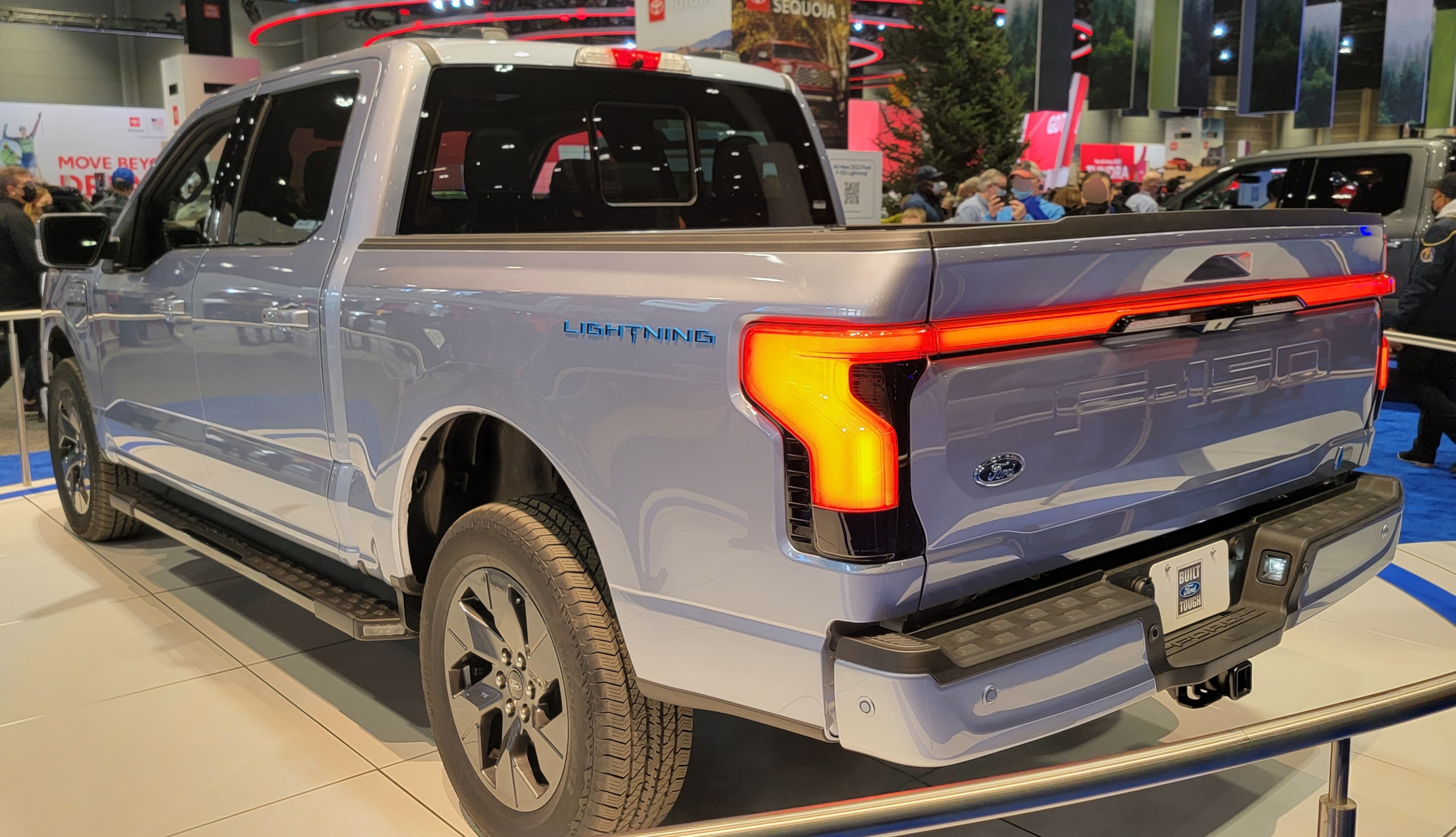
I think things like the Ford F-150 Lightning are doing okay and you're going to be talking
about the Silverado EV later in the show so we can talk about that.
Ram is going to have, I guess you would call it, they call it a range extender.
I would essentially call it a hybrid, right?
Plug in hybrid.
Ram 1500REV is what they're going to call what they had previously called the Ram Charger,
which I think maybe was a better name.
I don't know.
But what were your thoughts on that?
I think this gets them around some of the range anxiety issues, but what I don't think
it does is gets them past the perception of their buyers, right?
This is the brand that was built on the Hemi V8.
The buyers raised hell when they got rid of it and now they brought it back and now they're
trying to sell an electric truck.
Range Extender or not, I think it's going to be a hard sell for Ram buyers.
Yeah, absolutely.
I mean we both like that new six-cylinder engine, the turbocharged six-cylinder engine
that they have.
But at the same time, truck buyers indicated that they weren't all that excited about that
and I think a lot of truck buyers were excited when Ram brought back the Hemi V8 after a
very short hiatus.
It's interesting where Ram's going to go.
I mean they certainly hang their hat on things like luxury.
They have some very luxurious personal use trucks like this tungsten trim.
They also have the Cummins diesel.
So there's certainly some good reasons to consider Ram trucks.
I don't know that electric vehicle or the lack of an electric vehicle is going to hurt
them very much.
Yeah, and the range extended truck that they're selling or will be selling still has some
pretty decent specs.
I think it tows 10,000 plus pounds when it's properly equipped and those sort of things.
I just, you know, I think that people who like the V8 sound, like the V8, the sensation
of that engine are going to miss that and the V6 isn't even connected to the drive wheels.
It just powers the, generates electricity to charge the battery.
So I think it's going to be some education that they need to do with buyers.
Yeah, I think a lot of people, even truck buyers don't really have a sense of how the
drivetrain works.
I guess the typical truck operates very conventionally, right?
But some of these newer vehicles and these hybrids, et cetera, operate in a different
way and maybe that's lost on people.
They go six cylinder and go, I don't want a six.
I want a V8.
Let's talk about Toyota recalling nearly 700,000 vehicles in the United States.
More than 590,000 Toyota and Lexus models are being recalled for a malfunctioning
infotainment system.
The 12.3 inch instrument panel display can prevent the screen from turning on its
startup or go blank while driving.
Potentially leaving drivers, you know, kind of at a loss.
I mean, in theory, I would think that if your infotainment screen went out, you
could still drive the vehicle.
But what's your take on that, Chris?
I think a lot of it probably has to do with the backup camera and the available
information for it to meet the federal motor vehicle safety standards, the FMVSS.
But, you know, you're not supposed to rely on those things solely as your driving
assistance technology.
But once you get used to it being there, even if you're still using your eyes, it's
still an inconvenience and could present a safety problem for it to be blank.
Yeah.
Big important and, you know, highly sold vehicles are involved in this.
Toyota Camry, the Toyota RAV4.
I think the RAV4 is the best selling vehicle in the United States.
The Toyota Tacoma pickup truck, the Toyota Grand Highlander.
There are Lexus LS, RX and TX models also involved in this.
It will be fixed free.
The other recall was nearly 95,000 electric vehicles, which happens to be virtually
all of the electric vehicles that Toyota has put out there into the marketplace.
The Toyota BZ4X, the Lexus RZ and of course the Subaru Saltero, which is the twin
of the BZ4X.
It's not a Toyota product, but it's also being recalled.
These have windshield defrosters that may not work well.
So then you have visibility problems.
I get that.
And of course, the defroster in an electric vehicle doesn't work the same way
a defroster in a conventional vehicle works, right?
Yeah.
These are my favorite kinds of recalls, like the ones that are just kind of,
they sound silly on paper, but they end up being an issue that needs to be fixed.
But it is interesting that Toyota, you know, they've done pretty well with recalls
on the EVs so far to date, hybrids as well.
So it's interesting to see so many of them pop up out of nowhere.
Yeah.
Well, a catalytic converter theft is a big problem here in Southern California,
where I live.
And I'm wondering if it's a big problem in Maine.
There's a move now to a federal move, which is interesting to try and curb that a bit.
Thoughts on that?
Yeah.
I'm sure that there are some catalytic converter thefts.
I live in a smaller town and, you know, it doesn't really happen here, but it has become
a very annoying problem for my friends down south and for you guys on the West Coast.
So I think anything to help here would be great.
I mean, we've had instances out here where somebody will see the catalytic converter
being stolen from their vehicle go out and confront the criminals, which not necessarily
the wisest thing in the world to do, and end up dead, you know, end up shot by the people
who are stealing the catalytic converter.
I mean, that's the kind of issue this is.
I guess the thieves can get something like $350 for each catalytic converter that they
sell on the black market.
If you have to replace it, it'll cost you maybe well over $1,000.
So the fix is, and it's not that big a fix, but is at least to have the vehicle identification
number, the VIN, put directly onto the catalytic converter so they can be traced a bit.
I think we've had that kind of instance here.
We had an instance here.
In fact, it happened to me where the third row seats of Chevrolet Tahoe's were being
stolen, you know, just all the time.
And then you would get the insurance settlement go into a place that had a bunch of third row
seats.
It seemed like I was buying back my own seats at that point, you know, and I'm wondering if
the same kind of thing is going to happen with the catalytic converters.
Yeah, I'm sure it's happening, you know, less than reputable shops, people trying to save money.
But I've heard some of these things, you know, people imprinting the VIN on their
their catalytic converter, installing cage systems around this and all that.
But when you start getting into like personal safety, you mention people getting shot while
trying to stop the thefts.
That's a problem for me beyond a few dollars for a new catalytic converter.
Yeah.
And, you know, word to the wise, don't be confronting criminals because God knows what
they're going to do.
I mean, I'm a little leery about even honking at somebody who commits some kind of egregious
traffic problem in front of me.
For that reason.
Well, Lucid and Uber are going to have inked a deal.
They finalized a $300 million partnership to advance autonomous ride hailing.
This is something that, you know, Lucid had not been participating in up till now, at least
to my knowledge.
But maybe this is a market for the gravity SUV that we reported on years.
It seems like a couple of years ago and has yet to really come to market.
I'm curious as to what you think about all this.
Yeah, Lucid has pretty significant financial backing, but it's never really been the most
successful startup automaker.
So this could be a good way for them to get, as you said, some of those gravities into
someone's hands.
Few units.
But it is interesting to see this announcement because, as you said, Lucid has been very quiet
about its driving assistance technologies.
It's not been out testing vehicles like Tesla has and the others.
I'm interested to see how and where this is implemented and how far along they are on
this road of development.
Yeah, it'll be interesting to see.
And of course, these driverless taxis are, I guess, the coming thing.
We're seeing a lot more of them here in Southern California.
So that's coming up.
When we come back, we will have two very cool road test vehicles.
You're going to be testing the Chevrolet Silverado EV and I think in a new trim, right?
Yes, it's the new Trail Boss trim.
It's an off-road model.
It's new for 2026.
It's got some big tires and interesting features that can't wait to tell you all about it.
I'm looking forward to that off-road EV truck and your review of that.
I was driving a vehicle that also has some off-road aspirations, the Honda Passport
Trailsport.
So stay with us for that.
And we'll be right back right here on America on the Road.
Welcome back, everybody, to America on the Road.
Check me right back with you along with Chris Teague and Chris.
You have a really interesting view.
I'm really curious to hear what you have to say about the Chevrolet Silverado EV,
especially in this special off-road form.
Tell us about it.
Yes, I tested the Trail Boss trim.
It's new for 2026.
Taking a step back, Jack, you can get into this truck for around $55,000.
That's the basic work truck.
So for that money, you get vinyl upholstery, vinyl floors, a white paint job,
and a pretty basic pickup truck.
My Trail Boss with the Max Range battery, which is the most expensive battery you can get,
came in at just over $90,000.
So it's quite a spread of pricing for this vehicle.
But there's also a spread of features here, Jack.
Have you driven the Silverado EV?
And if so, what do you think?
I believe I drove one in North American Car of the Year that my only exposure to it
and a very short exposure, it seemed like it was just fine.
But again, like I say, it was a short time with it,
so I didn't have to deal with all the electric aspects of it really,
or get the chance to take it off road.
Yeah, some of the electric aspects might be the most impressive parts of this vehicle.
The base work truck, as I mentioned before, is not only the cheapest,
but it still comes with pretty good range.
It's a 286-mile base range for this vehicle,
which is I think the same range as my Honda Prologue,
which is the top trim of that vehicle.
So just to show you where that goes,
my Max Range Battery Test Vehicle, though,
offers 478 miles of range per charge.
So that makes it one of the longest range vehicles on sale.
I think maybe Lucid is one of the only ones that beats it.
But that's a great addition for this vehicle.
The Trail Boss adds lifted suspension, 35-inch tires on 18-inch wheels,
and you get some off-road drive modes with this vehicle, too.
One of the interesting things here, Jack,
and I want to get your opinion on the acceleration of this vehicle,
even though this is the off-road trim,
you still have the Watts to Freedom, the WTF acceleration mode.
What do you think about the speed of these trucks, given their size?
It's kind of uncanny, right?
I mean, it's almost otherworldly to really step on the accelerator on these things
and see how quickly they can go from 0 to 60 or how quickly they accelerate.
I mean, it kind of sears your eyeballs in some ways.
It does. It's almost unsettling to feel that sort of acceleration in a vehicle
that sets that tall with 35-inch tires.
But it could be a blast, I guess, if you really wanted it to be.
This vehicle also gets some of the goodies from the Hummer EV.
It rides on the same platform.
It's very similar underneath.
It gets four-wheel steering and also a diagonal driving mode.
I think the Hummer calls it crab walk, maybe Rivian calls it that.
But it basically allows the vehicle to drive at like a 45-degree angle
to go around off-road obstacles.
It's a really neat thing.
I couldn't find a reason to use it in town,
but I'm sure that people have a good reason.
I think tight parking, parallel parking spaces are where they show it off.
Yeah, maybe.
So these New England streets are not very friendly for a vehicle of this size,
though, I can tell you that.
One of the things I want to point out here, and it's most interesting
about the driving experience here,
is that this vehicle uses General Motors Altium Battery and Platform Technology,
which is the same technology that underpins my Honda Prologue.
It's made by General Motors.
The driving experience between the Altium-powered vehicles is so similar
that driving the Silverado EV feels almost exactly the same as driving the Prologue
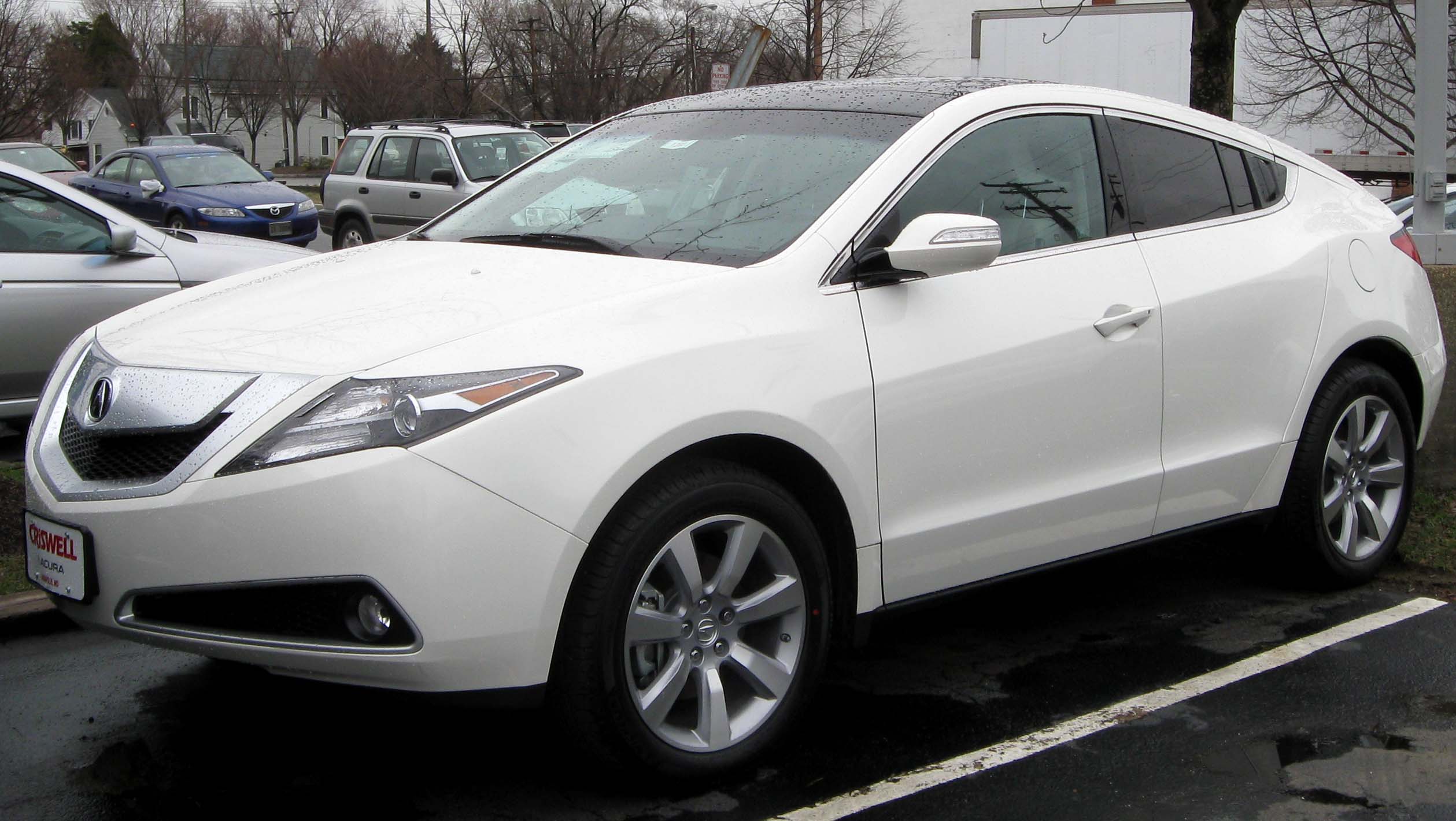
or driving the Acura ZDX.
The only difference there is the size and the weight of the vehicle that you're feeling.
It doesn't mean it's bad.
There's nothing wrong with it at all.
It's just, it's a fine driving experience, Jack.
I don't want to give you the impression.
Right.
Don't you get the impression that every electric vehicle
feels kind of like every other electric vehicle?
I do, but I think the difference here for me is that the sizes of these vehicles
are different, but they still drive so similarly that they're not completely interchangeable,
but they're close.
Interesting.
Inside, you get a 17.7-inch touchscreen, a large digital gauge cluster here.
Google built-in is standard, but one of the things you don't get,
or two of the things you don't get, are Apple CarPlay and Android Auto.
And General Motors will tell you that their interface is just as good,
that everything works just fine.
And in practice, in most ways, it does work just fine.
But what you get is a very basic Bluetooth music interface
that makes it difficult to navigate your songs and your podcasts and things like that.
And Jack, I know we talk about how difficult infotainment systems can be to use at times,
but I think Apple CarPlay and Android Auto fulfill a purpose,
even if they can be annoying for automakers.
What do you think?
Yeah, I think they do, because we use our phones all the time, right?
We use our phones a lot more than we use our cars, typically.
So understanding your phone is pretty basic.
We also, sometimes we keep our phones, some of us do, a lot longer than we keep our cars.
That's not possible for me, because I think the car that we have in our household predates
cell phones, practically.
Rotary phones, right?
Yeah, exactly.
But yeah, so like I said, the functionality is there.
It works.
You can figure it out, but what you get instead of a clean interface is basically a list of
folders that don't make sense, and it's hard to navigate through at first.
So I really would love to see an addition of this feature back to these vehicles at some point
in the future.
I know why they did it, but it is not a good user experience.
So I think that they get improved it by adding those features back.
You get a full suite of safety features here, too.
Blind spot monitoring with rear cross-traffic alerts, adaptive cruise control, and this vehicle,
this trim is available with General Motors SuperCruise, so you can do hands-free driving
on the highway, but that's not available for every Silverado EV trim.
So, Jack, I enjoy this vehicle.
I like electric vehicles.
I like electric trucks.
I think 90 plus thousand dollars is way out of my budget.
But if you could get into an LT model of this, which is the sort of lower-end trim and still
get many of the features for around 60 grand, 70 grand, you'd be doing pretty well.
What is your sense of just the utility using that truck as a truck, right?
Using it as a pickup truck?
Yeah, so you don't get a long bed option in this vehicle.
You only get the crew cab short bed body style.
It does have the flex midgate, which allows you to fold down the space between the cab and the
bed to fit longer items.
But it is a little shorter and it does have, I don't know what they're called,
some body-style things on the side that make it look like the Chevy Avalanche,
which do reduce some of the utility.
But it's still pretty useful as a truck.
I'm glad to hear that.
Interesting report, interesting vehicle.
I look forward to driving one maybe someday.
I'd like to tell you about the 2026 Honda Passport Trails Sport.
And of course, a couple years ago, I think Honda decided they'd climb on this bandwagon
of everybody making off-road, at least off-road appearance packages on various SUVs.
They have done that with the Passport and the Trails Sport as the result.
They kind of got dinged for the first version of this because it was,
you know, just kind of like putting on off-road clothes, right?
Like you put on Columbia gear and suddenly you're a hiker or something, you know,
which isn't quite the case.
This time around, I think they've changed it enough to give it some kind of credibility
for off-road.
I wouldn't say this is a heavy-duty off-roader and I don't think Jeep has anything to worry about
from the Passport Trails Sport.
But it's a pretty good-looking vehicle.
This is a two-row, five-passenger vehicle typically, conventionally powered,
or very conventionally powered as I will get into in a little bit.
Let's talk about the outside.
You know, it has Trails Sport badging, of course.
It has black mirror caps and door handles.
It has what Honda describes as a more aggressive front grille and it has dual exhaust finishers.
Those are swell.
18-inch wheels and all-terrain tires.
So there is some added capability there.
It has roof rails, of course, that kind of thing.
What did you take on the looks of this thing?
And it's just kind of on this overall idea of these kind of off-road looking vehicles.
Yeah, I never loved the previous generation Honda grille, the sort of slanted nose that they have.
I like the more upright look that they gave the Passport and the Pilot and also the Ridgeline.
So good job there.
And you know, we've talked about this a bunch of times on the show.
Whether it can go off-road or not, it's probably irrelevant to 90% of the people who buy this vehicle.
It's the look that it could do those things that matters to a lot of buyers.
And I think Honda hit the nail on the head with the styling there.
Yeah, I think I would agree with that.
Under the hood, it sticks with the 3.5-liter V6 engine.
An engine that has had some quality problems dating back a little bit.
We've seen some recalls, I think, on this engine in other vehicles.
But it delivers 280 horsepower, 262 pound-feet of torque.
This is very, very conventional, right?
We're not seeing a lot of V6-powered vehicles, a lot of turbos in this space these days.
It's made it to a nine-speed automatic transmission and then it has a torque-vectoring all-wheel drive
system, which in some instances, I always kind of looked at the system as being an
on-road system rather than an off-road system.
But I think they've tuned it a bit for off-road and it works reasonably well there.
Again, this is not something that you're going to get deep into doing Wrangler level or rock
crawling or something like that.
I would describe it as maybe trail capable, so that would be okay.
It also has a traction management system.
It has snow, sand, and mud modes, so that stuff is good.
I don't typically use those modes a lot, maybe because I'm mostly driving on the street,
but are you a mode selector kind of guy or do you just kind of let it go?
I'm not.
I think that they change the throttle feel and the behavior of the vehicle enough that I'm more
comfortable leaving it in normal and using my senses to navigate and trying to rely on a computer.
Yeah, I'd rather drive the vehicle myself as opposed to have the vehicle help me out a
bunch and maybe not help me so much.
As I say, this vector's torque, so that's good in terms of off-road and on-road handling.
The ride and handling is pretty good.
This has very good ride quality.
I think there's a nice combination, despite the fact that it has all-terrain tires.
They're not noisy and ride is generally good.
Of course, a lot of times off-road tune suspensions offer pretty good comfortable ride quality on the road,
so that's good.
Steering is light in the Honda tradition.
Maybe too light for some people's take, but certainly capable there.
Inside the cabin, it sets itself apart style-wise.
It has leather trim seats, heated front seats, heated leather-wrapped steering wheel,
10-way power adjustable driver's seat with two-way lumbar support, so this is up-level.
It has tri-zone automatic climate control.
The infotainment system works fine, but it's one of those when my wife says fine,
I don't think she means.
It's wonderful.
Only an 8-inch touchscreen, so I was kind of surprised by that in an era when we're seeing much larger
touchscreens.
Overall, I think this is a good vehicle.
It's not really hugely expensive, a little under $50,000, $47,500, including destination for the
Trail Sport Elite, which is the top level.
What's your quick take on that?
I think the pricing is decent.
It puts it in competition where it needs to be, and you do get a lot for your money.
I think it's a good deal to take a look at.
I think they've kind of nailed the outside exterior styling.
When we come back, we will be speaking with Sam Fiorani, who is the Vice President of Global
Vehicle Forecasting and Auto Forecast Solutions, so stay with us for that, and we'll be right back.
Hi, I'm Jack Arnie-Red, and I'd like to tell you about my newest crime novel,
Only One Thing Stays the Same.
In a style reminiscent of James M. Kane and Jim Thompson, two of my writing idols,
the book chronicles a blue-collar worker's up-and-down love affairs with two modern Southern
California women who continue to surprise, shock, and ultimately confound him.
As the story unfolds, an unemployed aeronautics worker named Bill McCurdy becomes disillusioned
with his wife and slips into an illicit affair with a teenager from down the street.
Before long, he begins to think of doing the unthinkable,
but despite his desperate attempts to make things work, almost nothing goes as planned.
His misguided quest for simple love doesn't turn out to be simple at all,
and before the roller coaster ride stops, he learns quite personally and very
finely that Only One Thing Stays the Same.
Only One Thing Stays the Same is available in Kindle e-book and paperback form,
exclusively at Amazon.com.
I'd appreciate it if you'd look for it today.
Welcome back, everybody, to America on the Road Check.
You're right back with me.
We have a terrific guest.
I consider him a friend, even though I don't think we've ever met face-to-face, Sam Fiorani.
Thanks for being with us.
You are vice president, as you well know, of global vehicle forecasting at Auto Forecast
Solutions.
Thanks for being with us.
Always glad to be here.
You know, this is kind of a monumental time, or certainly a landmark time,
in the auto industry, because we're coming to the end of electric vehicle tax credits that
have been in effect well over a decade, I think probably something like 15 or 16 years,
something on that order, maybe longer.
And I'm kind of curious as to your take on the effect of this.
So let's talk about that a little bit.
Yeah, these tax credits, which started way back in the Obama administration,
have propped up this transition to EVs.
Everybody thinks it's encouraging people to buy them, but it is encouraging people to buy them,
but also encouraging the manufacturers to supply these vehicles as the industry transitions.
With or without the tax credit, the global industry was transitioning to EVs,
and this just helped the American industry move it along.
The $7,500 credit always went to the manufacturer.
Even though it looks like it comes to the consumer, it always went to the manufacturer.
It allowed the manufacturers to increase their prices by $7,500.
So the end price is always going to be what the consumer will pay.
And if the price is $7,000 more after the tax credits,
well, that means fewer consumers are going to step up to buy these vehicles.
It just increased the volume.
It allowed the manufacturers to produce more,
and it allowed them to raise the prices so that they could pay off this transition.
And really, it, along with the other regulations, the fuel economy regulations,
really pushed electric vehicles maybe beyond what they would have been in terms of market share,
even in terms of being in existence in some cases,
beyond what they would have been without those, and now they're essentially going away.
Where are we going to stand with this?
I think we've seen EV market share, what, something like 8% or 9% these days.
Where's it going to go, say, in October, November, December?
Yeah, the market share currently is around 8%, and it has been there for about two years.
But the market itself all depends on what the manufacturers want to do.
If the manufacturers want to maintain this volume of EV production,
then we're going to see rebates, leasing incentives, anything to keep the price down
into the current price after the tax credits.
If the manufacturers don't see a need to keep those volumes up and want to decrease their
production and decrease their risk on EVs, you'll see the prices going higher.
Unlikely, they'll go to the full $7,500, before the $7,500 discount.
But we're going to see it at some level because these manufacturers have already paid for plants.
They've already paid for battery facilities.
They've already paid for most of this transition.
And so backing off on that will just risk all this investment they've already made
and turn off a lot of consumers.
The consumers are there for EVs.
It's just how many are willing to pay $7,000 more after October rolls around.
Right. What do you think your prediction is for EVs, though, for market share?
I've heard others suggest, in fact, I talked to my friends at JD Power recently,
one of them suggested that maybe 4% of market is more like what EVs would command
without the tax credits.
What are your thoughts on that, Sam?
Like I said, the tax credits were just an incentive for manufacturers to make more vehicles.
Without the tax incentives, the manufacturers would have lost more money.
I can't imagine that it would only be down at 4%, but it's somewhere between those two,
between 4% and 8% or 9%.
Going forward, we're going to still see increases in this.
We may see a drop in the next six months or nine months,
but we're going to see this market share pick up again once manufacturers have decided
how many vehicles to put out there, how many vehicles they want to build,
and how enthusiastic they are to transition out of internal combustion engines eventually.
It's a good idea to be on the cutting edge of that rather than wait for Chinese to meet you
in every other market outside of the United States and just have the leg up on them.
Yeah, well, I suppose that is a point of view.
It strikes me though that a company like Toyota is taking the opposite point of view.
Not at the forefront of EVs.
They've had some EVs.
They have some EVs in the US market,
but they certainly have not put their eggs in the EV basket to the way that, for example,
General Motors has, Ford Motor Company to some extent, even Kia and Hyundai.
Hey, talk about that a little bit.
Where do you think the various manufacturers stand?
Because I think there's big differences in stance on this.
It's not like a unilateral movement to EVs from all the manufacturers.
The impetus for any manufacturer was for emissions, to capture the emissions regulations ahead of
time and get their vehicles out there.
Toyota has had 25 years of building hybrids.
Their fuel economy was already better than most manufacturers to start with.
And we were a company like Stellantis or Ford or General Motors that relies on a large portion
of V8 engines to make your money for your market share.
You're going to need those EVs to offset that.
And Toyota has a lot of four cylinders, a lot of economical six cylinders,
and a lot of hybrids already in the market.
So their risk was already lower, and they had less of a need to transition to EVs immediately.
But longer term, they're going to need to make that move.
Their idea was that they were going to jump right from hybrids to fuel cells.
And we're just not seeing the infrastructure for hydrogen.
We're not seeing the greenness of hydrogen.
And we're not seeing the affordability of the gas.
So until those things happen, fuel cells are still going to be in the future.
We're looking at 2030, 2040, somewhere way out before somebody figures out how to do this.
On that note though, Sam, I mean, we're really not seeing the economics for electric vehicles
still. I mean, we're seeing them premium priced.
They're not as useful. They're not as versatile as a gasoline powered vehicle,
or even diesels for that matter.
It's kind of interesting that you have something that has less utility, but costs a lot more.
I don't know that the mass market is going to adopt that in any kind of numbers,
even going forward. I mean, what's your take on that?
On the contrary, I think EVs fit 95 to 99% of every owner's needs.
If you're going to drive cross country, EVs are going to be impractical.
But most drivers don't drive more than 100 or on the upper end, 200 miles in a day.
And in those cases, an EV can transition to that person.
As long as you have a plug at home, and you're driving less than say 200 miles in a day,
it's very practical. It's impractical for apartment dwellers who are very unlikely to
have a charging system at home. Combos probably are not going to have the charging system.
But we're going to see these things move into the mainstream going forward.
You're going to see apartment buildings with plugs. You're going to see condos with plugs.
It makes more sense. It doesn't make sense if you're charging on the road.
And that's the problem with driving longer distances.
Well, and as you well know, I mean, people buy vehicles not only for what they're doing every
day, because if they were buying vehicles for what they do every day, everybody would drive
a Honda Civic or a Toyota Corolla, right? I mean, they drive alone. Even that's maybe too much
car for them because they have five seats and they're only going to use one seat.
But you know well that people buy vehicles way more for way more than what they actually need.
That's why we see everybody driving SUVs, for example. I just don't see that changing and I
don't see people paying a premium for stuff that just doesn't work well for that one instance or
two instances a year when you want to go to grandma's house that's 500 miles away and you just can't
do it in your own personal car. I mean, that's a turn off to a lot of people, I think.
Yeah, you're right. A lot of people buy pickup trucks. Most people buy SUVs anymore.
While SUVs and crossovers can be made as a practical EV, if you're using a pickup truck,
the way it's designed to be used, an EV is not practical at the moment.
They're trying to find ways to do that. Scientist is working on extended range
electrics, which makes a lot of sense in this case because you get the torque,
you don't have the emissions of diesel, and you get the emissions-free driving occasionally
when you're not using the engine. That is a nice mix of the two, but for most people who decide
they're going to drive their F-150 to the office and back every day, it's kind of a problem with
transitioning them to EVs. They want it for more than the practicality of driving, they want it for
the command of the road, they want it for the sound that the Heming engine makes,
they want it for all these other reasons that are less practical and more what your personal
trait tastes like. Yeah, I mean people buy vehicles for emotional reasons, much more so than
utilitarian reasons. That's why we have so many on the market. If we didn't have those tastes,
we'd have one vehicle out there. Right. Let's talk about the new tax credits or the new tax policy
that's coming into effect that essentially in some ways subsidizes American-made, U.S.-made
production. Talk about your thoughts about what effect that's going to have going forward.
The tariffs now to pull production into the U.S. is a great idea, but it's heavy-handed and it
doesn't take into consideration that the automotive industry currently is global.
If you pull it into one country or another, then you remove all the benefits that you get from
sourcing components to whether best-made or least-cost and getting the volume up to a certain
point to make money on these vehicles entails pulling the parts in from Canada, from Mexico,
from South Korea, from Japan, from all over the world. If you don't do that, then not only do you
raise the price of the vehicles, but you limit the selection. You're not going to see these
niche vehicles that come in from Europe or Asia, but you're going to eliminate all the things that
need a certain volume for economies of scale. There's only so many Lexus LSs that are going
to be sold in the U.S. and it's a very low number. We get them because they build more of them in
Japan and sell them to other countries. We're going to see things like that disappear.
It strikes me that the tariff policy has been more bluff than actual incorporation into what's
actually happening, but there has been tax policy too. Now, going forward, consumers will get some
tax break based on the interest they're paying if they're buying a U.S.-made vehicle. What
effect do you think that's going to have? It wasn't tailored to American vehicle buyers,
but we had this tax credit before and during the Reagan administration, I believe it was,
they removed it. There was a reason that they saw the need to not have these credits in your
taxes. This one is to encourage local sales, but it's not going to help a lot of people because
most everyday buyers don't itemize. They don't use those credits anyway, so they use one
tax credit and it's not going to affect them that much in the first place.
Interesting, yeah. I'm not a big fan of tax credits of any sort. I'd like to see the market
operate and work for us and we vote with our dollars and I think that works pretty well.
What are your thoughts on that? Absolutely. Tax credits and tariffs are messing with the
natural order of free markets. As an economics major, I'm not a fan of that kind of thing,
but there are certain places where things either need encouraged or protected and
the US market is not necessarily one of those ones that needs protected.
Well, let's leave it at that because we're out of time and it's always great to talk
to you, Sam. I always like to exchange our opinions and we're not always in 100% sync,
but certainly I enjoy talking with you. It's always a great discussion.
And I look forward to doing it again. So thanks very much for being with us.
Absolutely. Thanks so much. And we'll talk to you again soon. Stay with us,
everybody. We'll be right back right here on America on the Road.
Welcome back to America on the Road with co-host Chris. He was exactly red with you and it's
listener question time. We love to get your listener questions, your questions and comments.
Send them to editoratdrivingtoday.com. That's editoratdrivingtoday.com.
Here's a question for you, Chris. What's your favorite sleeper car that no one talks about?
Do you think now is the time to buy a car like that? This is from Carson in Erie, Pennsylvania.
What's your favorite sleeper car? Wow, that's a good question. You know,
I think looking back at it, I think it's the mid 2000s Lexus GS with V8 engine.
I think it was a GS450 that you could get at the time. That engine is fantastic.
Is it a good time to buy one? That specific car probably not. I think all the ones I've seen are
high mileage. Look, I think used car values are going to be up in the air for a little while,
given that EVs are coming off the tax credits and things are going to be in flux for a little bit.
I wouldn't expect prices to drop significantly, but I also don't have a crystal ball. So I think
if you really want it, now is probably as good a time as any to buy it. But again, your financial
situation matters more than my opinion. Yeah. Well, my go to is the answer is always Miata,
right? I mean, when you're looking at Miata is one of those timeless cars that you can get.
There's so many of them out there and so many different vintages and different types these
days. But what a wonderful kind of Saturday morning car that is. And if you can get one
very inexpensively, I think that's always something you can step up to.
That essentially wraps up our show for this week. My new crime novel, only one thing stays the same,
is now available in both e-book and paperback form at Amazon. We have links in the show notes
to that book. If you like our show, please pass it on. Listen on this radio station each week and
let your friends know where you hear America on the Road. Of course, we love terrestrial radio.
And America on the Road is available as a podcast too, right, Chris? That's right. A quick Google
search for the America on the Road podcast will bring us to you on all the major platforms,
Apple, Spotify, all the others. Like us, download us, leave us a review. All of those things help
us out and you can take us with you wherever you go. We have YouTube and Rumble channels. Check
those out. Please subscribe. We have a bunch of shorts these days on our YouTube channel,
YouTube Shorts. So check those out. We're producing more of those lately and they seem to be resonating
out there. So check that out. Thanks to Mercury Insurance for sponsoring the show and our sports
byline network stations for carrying it. Most of all, thanks to you for listening. We know you
have a lot of choices out there. So we're honored by the fact you're listening to America on the
Road. And please join us again next time for another edition of America on the Road.
Hi, I'm Jack Arneerad and I'd like to tell you about my newest crime novel,
Only One Thing Stays the Same. In a style reminiscent of James M. Cain and Jim Thompson,
two of my writing idols, the book chronicles a blue collar workers up and down love affairs with
two modern Southern California women who continue to surprise, shock, and ultimately confound him.
As the story unfolds, an unemployed aeronautics worker named Bill McCurdy becomes disillusioned
with his wife and slips into an illicit affair with a teenager from down the street.
Before long, he begins to think of doing the unthinkable. But despite his desperate attempts
to make things work, almost nothing goes as planned. His misguided quest for simple love
doesn't turn out to be simple at all. And before the roller coaster ride stops,
he learns quite personally and very finely that Only One Thing Stays the Same.
Only One Thing Stays the Same is available in Kindle ebook and paperback form exclusively at
Amazon.com. I'd appreciate it if you'd look for it today.
About this episode
The episode dives into the latest automotive news, including Ram's decision to halt development on its electric pickup truck and Toyota's significant recall affecting nearly 700,000 vehicles. Co-host Chris Teague shares insights from his week with the 2026 Chevrolet Silverado EV Trail Boss, highlighting its off-road capabilities and impressive range. The discussion also features a special guest, Sam Fiorani, who provides expert analysis on the impending end of EV tax credits and their potential impact on the market. The episode wraps up with listener questions and a look at sleeper cars.
Chevy is charging into the off-road EV space with the 2026 Chevrolet Silverado EV Trail Boss, and Chris Teague got behind the wheel to see if this electric truck delivers on its bold promises. Built on GM’s Ultium platform, the Trail Boss version stands apart with a 2-inch lift, 35-inch all-terrain tires, and 24% more ground clearance than its base sibling. The off-road upgrades are more than cosmetic. The unique suspension tuning, hydraulic rebound control, and dedicated driving modes like Terrain and Sidewinder make this EV surprisingly capable when the pavement ends.
Power? There’s plenty. With the Max Range battery pack, the Trail Boss pumps out up to 725 horsepower and 775 lb-ft of torque, offering towing up to 12,500 pounds and a 2,100-pound payload. It’s not just brawn, though. The Silverado EV Trail Boss is loaded with tech, from its 17.7-inch touchscreen and Super Cruise hands-free towing to a Multi-Flex Midgate that opens up interior cargo flexibility. Does it live up to the hype? Chris will offer his view in this episode.
2026 Honda Passport TrailSport Elite Review
While Chris put the Silverado EV Trail Boss through its paces in Maine, Jack Nerad took the 2026 Honda Passport TrailSport Elite on a week-long test at the other end of the country. And while the Passport TrailSport doesn’t pretend to be a full-on rock-crawler, it delivers an interesting balance of off-road capabilitiesand suburban charm. Powered by a 3.5-liter V6 offering 280 horsepower and 262 lb-ft of torque paired with a nine-speed automatic, the TrailSport features Honda’s i-VTM4 torque-vectoring AWD, intelligent traction management, and retuned suspension for better trail performance.
Visually, the TrailSport Elite offers some blacked-out trim, 18-inch machined alloy wheels wrapped in all-terrain rubber, and subtle badging. Inside, it’s all about comfort with leather-trimmed heated seats, a moonroof, acoustic glass, tri-zone climate, and an 8-inch touchscreen with Apple CarPlay and Android Auto. Comfortable? Yes, but is this a vehicle to conquer the Rubicon? Jack and Chris will have the answer.
Special Guest: Sam Fiorani, AutoForecast Solutions
This week’s guest, industry insider Sam Fiorani, Vice President of Global Vehicle Forecasting at AutoForecast Solutions, will have the answer on what will happen with the end of federal EV tax credits, which expire in a little over a week. We’ll discuss what it all means for consumers, automakers, and the overall electric vehicle adoption rate.
In Auto Industry News this Week
Ram Drops Full-EV Plans, Bets on Range-Extended REV
Stellantis has canceled its battery-electric Ram pickup project, instead refocusing on a range-extended Ram 1500 REV that blends electric drive with a gas engine for longer range and better towing. The move reflects weakening demand for full-size EV trucks and a pivot toward flexibility in powertrains.
Toyota Recalls Nearly 700,000 Vehicles, Including All BEVs
Toyota issued two major recalls. One involves nearly 600,000 vehicles with potentially faulty 12.3-inch displays and the other covers 95,000 electric vehicles like the Toyota bZ4X and Lexus RZ with malfunctioning defrosters.
Congress Pushes Catalytic Converter Theft Legislation
The U.S. House has reintroduced the PART Act, aiming to reduce catalytic converter theft by requiring VIN stamping on new catalytic converters. Lawmakers hope it will deter thieves and aid police recovery efforts as the black-market value of stolen converters continues to rise.
Lucid and Uber Team Up on Robotaxis
Lucid Motors and Uber have signed a $300 million deal to develop a robotaxi using Lucid’s EV tech and Nuro’s Level 4 autonomous system. The goal? A 20,000-vehicle fleet based on Lucid’s Gravity SUV, set for limited deployment next year.
Listener Question of the Week
Carson from Erie, Pennsylvania asks, “What’s your favorite sleeper car that no one talks about? Do you think now is the time to buy a car like that?” Jack and Chris tackle this fun question with their picks for under-the-radar performance cars that don’t scream for attention but offer serious thrills behind the wheel. Tune in to hear their takes—and whether now is the right moment to buy before the world catches on.
Don’t Miss the Next Episode
If you enjoy America on the Road, make sure to subscribe wherever you get your podcasts, check out our YouTube and Rumble channels, and spread the word. And don’t forget to send your questions to: [email protected].