The Morgan Plus Six is a special kind of sports car that looks old-fashioned but uses new technology to go fast and handle well. It's made by hand and is popular with people who like cars that are both cool and fun to drive.
The Toyota Prius is a car that uses both gas and electricity to save fuel and pollute less. It's very popular and many people buy it to save money on gas.
Federal tax incentives are discounts from the government that help people pay less when they buy electric or hybrid cars. When these discounts go away, fewer people buy those cars.
The Cadillac Escalade is a big, fancy SUV that costs a lot of money because it has lots of luxury features and space. People often buy it to show off or because they want a very comfortable and powerful car.
The Hyundai Getz 3 Doors is a small, cheap car that is easy to drive and park. However, it has had some problems in the past that made the company fix certain parts to keep drivers safe.
Out-the-door price means the total money you pay to buy a car, including the price of the car plus taxes and other fees, so you know exactly how much it will cost.
LIVE
Quick, choose a meal deal with McValue, the $5 McChicken meal deal, the $6 McDouble meal
deal, or the new $7 Daily Double meal deal, each with its own small fries, drink, and
four-piece McNuggets.
There's actually no rush.
I'm just excited for McDonald's.
For a limited time only, prices of participation may vary not bad for McDelivery.
What's the only thing better than getting all of your favorite groceries from Kroger
delivered through Instacart in his fastest 30 minutes?
That would be getting in-store prices on those groceries from the comfort of your couch,
or your futon, or your kitchen table, or your daughter's beanbag that's unexpectedly
comfortable.
You can enjoy in-store prices on all your faves at select Kroger locations and get delivery
to your door in as fast as 30 minutes through Instacart for a limited time fees and in-store
offer exclusion supply.
It's noon here in Ventner City, New Jersey, and our nation's capital, Washington, D.C.,
and this is CarEdgeLive for what is today?
Tuesday, February 24th.
Happy birthday, Steph, and this is your car.
What do I say?
CarEdgeLive with your host, me, Ray, in Ventner City, and Zach, my handsome son, in Washington.
How are you today, young man?
Doing well.
Thanks.
Thanks, everyone, for tuning in.
Appreciate you being here for another episode of CarEdgeLive.
We're going to be talking about the European car brand collapse and how sales in Europe
are causing a little bit of a crisis mode over there.
Before we do, a friendly reminder, CarEdge.com.
My dad and I found at this company six years ago now, we've helped hundreds of thousands
of people buy, sell, and share, protect vehicles.
We have a promotion running right now.
We offer a car buying service, and it is $200 off as well as CarEdge Pro.
For those of you that are curious about either of those, go to CarEdge.com to learn more.
We've been talking about it all week.
We've been talking about it for about two weeks.
Now, we have a brand new beta product out there, our dealer ratings.
You can come to CarEdge.com slash dealer dash ratings to learn more here.
Find a dealership that you're interested in learning more about.
Dad, name a dealership.
Oh, name a dealership?
BMW of Silver Spring.
Silver Spring.
Look, there it is.
Yeah, we have limited only one quote, but you can come here and learn more about the
sales practices of these dealerships, how transparent they are back at CarEdge.com.
And for those of you interested in CarEdge Pro, you can see how AI is saving customers
yesterday, $204,000.
We started 496 AI negotiations yesterday, Dad.
Really crazy stuff.
So learn more back at CarEdge, putting the edge in carbuying.com.
You ready to jump into the stories today, Pops?
I just must say, this is some remarkable data and remarkable savings and not the Pat us
on the back.
Okay, Pat you on the back because I really, I got nothing to do with it other than being
the pretty face of the franchise.
You know, the data that you're collecting, that people will be able to utilize to make
a more informed decision as to who they want to spend their money with is really remarkable.
And something that I firmly believe will be disruptive to the industry because it'll be
easy for people to be able to compare dealer to dealer, transparency to transparency or
lack thereof.
So I just really believe that after six plus years, we're actually on to the right thing
that will impact the industry and save people millions, if not billions, over time.
Share your feedback with us again, it's in beta, but all sorts of good information back
at CarEdge.
I can't wait for it to be the alpha.
Um, dear, dash ratings, the show dad, let's jump into it.
Germany's once vibrant auto heartland falls on hard times.
This is one of two headlines this morning, an automotive news Europe that's catching
our attention.
The other is Thalantis dealers in Europe joined push for EU relief as sales lag debt.
Let's spend a moment here, European automakers, European auto sales.
This has been globally one of the mechas for the auto industry for a long, long time.
What are these two headlines starting to get at here and how does this impact our thinking
here domestically here in the United States of America, where obviously we focus on car
buying in the US, but there's some, uh, there's some challenges being faced globally in the
auto market right now.
Well, what it shows is that even though I couldn't walk around the earth if I wanted
to, it is really smaller than what we think.
Everything is so interconnected today.
What happens in Germany and in, in other countries in Europe have significant impacts
on what happens here in the United States.
They're all interconnected.
We always concern ourselves with the oversupply of vehicles here in this country.
We concern ourselves with the slowdown in sales here, but if you have a corresponding
slowdown in sales in Europe along with here, well, then suddenly you have all these
manufacturers that are struggling to figure out how to best utilize the manufacturing
facilities that they have.
Crime example, Nissan, struggling, closed seven manufacturing facilities worldwide
because you can't run these plants at 50% of capacity and have that make economic sense.
So what do you do at some point, you look at what's not being productive to the point
where it's profitable and you make those hard choices of closing those facilities.
Well, when you do that, that impacts local economies that ultimately impact global
economies that ultimately find their way here to the States.
This is what is going on in Germany and Europe at the moment is does not bode well for what
we will continue to see here in the United States.
And we're expecting a slowdown in new car sales this year.
And perhaps that slowdown will be a little bigger than what the pundits had originally
forecast because of the struggles that we're seeing in Europe.
And dad, it's many of those brands that you described.
And then it was like slantus yesterday.
What was the headline we were talking about there?
They're expected to lose for the whole year over $20 billion globally.
And so there's another angle to this, which is also the exports to various countries.
Obviously, we talk about the domestic slowdown here in the United States.
That shipments for these German automakers to China, for many of them down 33%, we've seen
a huge decline in the number of vehicles that are actually being exported from German automakers
in particular to that market.
That market's supposed to be kind of the saving grace.
That's where things are supposed to be buoying them.
And it was yesterday that we looked at the Stalantis report and it was actually like
Latin America, South America was where they were seeing profits grow.
So it's interesting we're seeing these markets where they previously had been the incumbent,
making a lot of money.
Now being disrupted, their products not selling.
Everyone's going to be looking at Latin America as the next place to make their money.
What it's showing is their strategies of obviously EVs and more expensive vehicles,
both here in the United States and in Europe and in China, have faltered, have not worked.
You know, sales in China are off as well.
And the Chinese government has come in and said to the Chinese manufacturers,
you cannot sell your vehicles below cost anymore.
We understand it's competitive, but it's not going to be that competitive.
You're not going to bastardize the market in such a way that you grow your business by
losing millions upon billions of dollars in order to do it.
And so we're seeing a slow down in China.
You're seeing a slow down in Europe.
You're actually seeing a slow down in some of the EV adoption in Europe.
And you're seeing manufacturers beg the European Union to rethink what their
emissions standards are going to be moving forward.
Because they're all looking at this.
They're all looking at the money that they've recently lost due to the slow down,
the worldwide slow down in EV sales.
Of course, the slow down is bigger here in the States than it is perhaps in Europe and other
areas.
But you look at that pivot and you look at the amount of money.
And the amount of money being written off at this point is approaching $60 billion.
Well, if there's $60 billion taken out of things, it's going to make it harder for them to be
innovative and to meet the timelines for emissions and such in Europe.
So they're all begging for help.
And they're literally, if you don't mind me pulling this up,
they're literally begging for help.
This is the Stalantis dealers in Europe joined Push for EU Relief as sales lag.
Look at this, Dad.
Stalantis' European dealer network, which is essentially the car dealerships of Europe for
Stalantis, have seen their sales fall sharply in the past two years.
They joined automakers and industry groups in appealing to the European Commission president
Ursula von der Leyen for legislative relief.
And a letter to this person, I'm not going to butcher their name any more than I already did.
The dealers say a commission proposal released in December that eases the 2035 zero emission
target by 10% of automakers offset tailpipe emissions with green stealers, synthetic,
or biofuels is insufficient to kickstart demand.
Our distribution network is now facing unprecedented challenges.
They're saying that they're looking for a comprehensive package of measures to bolster
competitiveness and help them make more money.
They are going to their federal government and begging for help.
That's how bad it's gotten for them already.
They're losing money in the United States.
They're losing money in Europe.
This is Stalantis.
They're making money in South America.
And my guess is that they're going to be looking at other emerging markets to try and make money in.
They bet wrong.
They bet wrong because governments all across the world bet on EVs and mandates were created
and artificial goals were set to reach zero emission standards by pick a date,
you know, whether it was 2030, whether it's 2035, whatever it is, they were all overly aggressive.
And so in the manufacturers in reaction, and let's face it,
they're typically more reactive than proactive.
In reaction to these government mandates,
it started putting all their money towards battery electric vehicles.
And yeah, there was an initial surge in out areas,
but it is starting to fall by the wayside and it started to fall by the wayside because
it's not just an affordability issue here in the United States.
It's an affordability issue around the world.
And it's an affordability issue around the world because of the economic catastrophes that we're
seeing in employment.
I mean, when we go back and look at that article about what's going on in Germany.
Yeah.
You know, the section of Germany where most of these manufacturers and suppliers are,
you know, their version of the rust belt here in the United States,
you know, unemployment has gone up there.
Well, and some of these companies are trying their best to hold on to the employees that they have
because they know if things pick up, they can't replace those employees,
but you can't do that forever.
And eventually you run out of money and eventually you have to lay off more people,
which just makes it harder to restart the economy as layoffs and unemployment grow worldwide.
It just makes it harder to overcome all this.
So, you know, I sit here and I think of all these legacy manufacturers,
whether they be here in the United States or France or England or Germany,
and you wonder if their upstarts out there that ultimately will force all of these legacy
manufacturers out of business, you know, that the whole concept of automobiles and those who
manufacture will be 180 degrees from what we've seen it today.
So, you know, will Nissan still exist? Will Honda still exist? I mean, Honda's,
you know, one of the true remaining independent manufacturers out there.
Will they be able to carry on long term or will some of these upstart disruptors
for so much change in automobile manufacturing and the type of vehicles that are manufactured
that these legacy manufacturers that we think of today won't have the wherewithal
to compete and change?
I mean, you could be onto something here, Dad. We've been talking about it for a while now,
and this is the first time I've seen an automotive news back-to-back headlines that are like,
look, the blank's hitting the fan. That's essentially what this says to me.
Let's look at some more data and numbers for the month of February thus far.
US new car sales fall in February with EV share, excuse me, down in prices up.
This speaks to obviously some of those strategic forays that have not paid off.
US new car sales are projected at 1.183 million units in February,
down 3.8% year over year. EV market share drops to 6.6% hybrids grow.
This data comes from JD Power, so that's why you're seeing different price
for average transaction prices here than we get from Cox Automotive,
about $3,000 difference between those two. But, Dad, this is a big,
big piece of what you're just talking about. EVs now account for just 6.6% of retail sales,
a drop of 1.8 percentage points, hybrids. We see them grow. Also, 1.183 million units
sold in February. I will be so interested to see how much of that is retail versus fleet sales,
because A, that's a really low number, 1.18, like below 1.2 million. I can't remember the last time
we saw that. And then B, I'm curious how much of that is being buoyed by fleet sales right now.
And then obviously the interesting tidbit, they're around 6.6% market share for EVs that
has declined significantly. What's the only thing better than getting all of your favorite
groceries from Kroger delivered through Instacart in as fast as 30 minutes?
That would be getting in-store prices on those groceries from the comfort of your couch,
or your futon, or your kitchen table, or your daughter's beanbag that's unexpectedly comfortable.
You can enjoy in-store prices on all your faves at select Kroger locations
and get delivery to your door in as fast as 30 minutes through Instacart
for limited time fees and in-store offer exclusion supply.
I would suspect, Zach, that because of the storm, the justing east coast,
that those numbers are going to be even lower. Okay? And the reason I say that is you're looking
in New England and the northeast, where snow totals are anywhere from 12 to 36 inches of snow.
That's pretty disruptive with four days left in the month. Okay? So that I think
you will see sales below the 1.183 million that they were expecting.
Weather plays a huge role in auto sales this time of year. So don't be surprised
if the numbers are considerably below that. And then the other thing is that
the cost of buying a car is still way too high for the vast majority of people.
So you combine taking people out of the market with a huge snowstorm that impacts
the ability to even open up and sell cars. Yeah. And then you're going to see a major
decline in sales. I don't know where I saw it this morning. But the number one selling
electric type vehicle last month was the Prius. Okay. Which is a hybrid.
And that was, I mean, significantly outsold any other battery electric or hybrid vehicle after.
What was shocking to me is it listed like all the major brands and models.
If I remember correctly, either at the very bottom of the list or near the bottom of the list
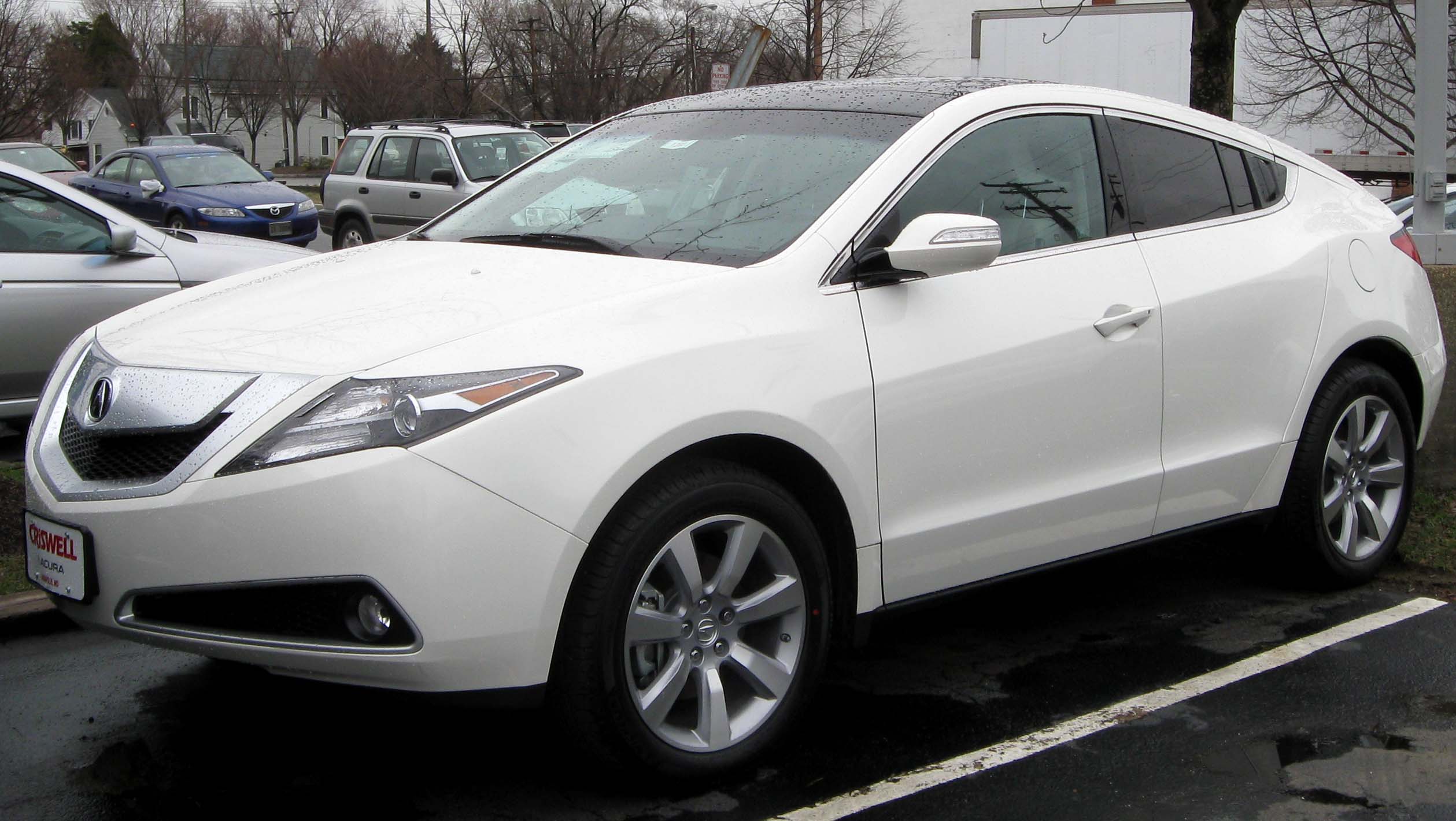
was the Acura ZDX. Okay. Now I know that that's built on the GM platform.
And they're basically doing away with it anyway. They sold 15. 15. Okay. I believe there's like
272 Acura dealers in the country. Oh man. The 272, they sold 15. Okay. The Honda Prolog
sold it like, I don't know, 600 and some. You look at some of these numbers and it is
staggering as to how poorly they sell now that there's no federal tax incentive to buy them.
And you sit here and you think to yourself, at least I sit here and think to myself,
and I said it before, high points of the bridge to wherever the hell it is we're going when it comes
to fuel choices for how we're going to power cars. And I said that five, six years ago and I believe
that more firmly today than I did then. Whether it be the lack of infrastructure, whether it be the
lack of range, whether it be how cold weather negatively impacts range, all of those things.
You look at it and you go, really is the future? And I know people think I bash EVs all day.
You don't bash EVs. I only bash them from noon to 12.30. Okay. The rest of the day, I don't think
about EVs. I don't give a damn about EVs. To be clear though, you don't give a damn about
cars. You think about the car business after 12.30. The only thing I think about the car business
after 12.30 is that I am ever so thankful that I'm no longer really involved in it.
But my point is that the reality is that people have spoken and they don't want for the most part
full battery electric vehicles. I'm not sure they know what they want. I know many people still want
ICE, internal combustion engine vehicles, and obviously a lot of the Stellantis customers
want their Hemi V8s back. I get that. But what does the future really hold for what the power
source is going to be? I don't know, but I think I probably said this five, six years ago. I'm not
betting it's a battery electric vehicle five or six. My guess is that somewhere along the line,
they come up with something else that makes a hell of a lot more sense. Then 15, 20 years from
now, you'll be sitting here with whoever your co-host is at that point, and you'll be discussing
whether or not it was the right investment to make in whatever that fuel source will be.
Yeah, maybe we are going back to steam engines, as Richard says. But it is interesting again,
just the latest data, really slow February. Your expectation is sales will be even
off even more than what they're anticipating because of the weather and that market share
based on powertrain, obviously telling a very clear and compelling story. Dad, let's switch gears.
Yes. But not too fast. GM recalls 44,000 full-size SUVs because the rear wheels could lock up. This
10-speed automatic transmission, Dad, can lock up. This is not a good recall from General Motors.
This is very much not an over-the-air update one. No, but it will be a software update.
Which is good. Yeah, it just can't be done over the air. Let's face it,
any time your wheels lock up, if you're in drive as opposed to park, if those rear wheels lock up,
it's not, it couldn't be an issue. It is an issue. That's a giant issue. And what it is, is that
there's, they have discovered that there's some excess wear that can occur. And so they've developed
a software related fix that will determine about 10,000 miles before the failure could occur
if there is that excess wear that could cause the failure to happen. So it's only on the 2020
twos. The 2023's and newer already had an updated software system built into it. So
yeah, it's not a good look. It's, especially when you're talking about, you know, a Tahoe,
a Suburban, an Escalator. They're expensive. Well, that's what I was going to say. Now,
are they big? But they've got big price tags. And if, if, I think most consumers think to themselves,
the more I spend, the better I, I, I think whatever it is I'm buying should perform.
It should be of a higher quality. Your mother, God rest her soul, used to always remind me,
Ray, you get what you pay for. If you buy cheap stuff, then you're going to be replacing your
cheap stuff more often. But the, but that theory doesn't necessarily seem to hold true when it
comes to automobiles. The more you spend, it appears as if you can have the same issues as
if you bought a Chevy Trax for 22 grand, as opposed to that Escalade for $122,000. So
expense doesn't correlate into necessarily a better, longer lasting vehicle. So yeah, your
mother's theory of you get what you're pay for doesn't hold water when it comes to, when it
is a little bit of an update on the current state of automotive recalls. Any guess who's in first
place with the most recalls so far in 2026? Oh, well, it's going to be Ford. Okay. Well,
let's do the real competition then. Who's in second and how many recalls do you think Ford has had
so far this year? I think Ford's having a down year. I, I, my guess is they, they have 12.
Okay. And who do you think's in second? Second might be, I'm going to guess Hyundai.
Give my dad a round of applause. Wow. We do not plan these things to be very clear. Ford has 10,
so you would guess 12, and you get Hyundai in second place for recalls. That was an incredible
guess, dad. Well, I, well, I remember that the last time we did this, Hyundai was in second place.
So my memory is still good. That's not. His memory is shot sharp. Yeah. But, but,
but yeah, Ford is, is, you know, they only have 10, we're what, seven weeks into the new year,
eight weeks into the new year. They are, they are slow and way down. You know, it seems as if
they, they could still, you know, have close to a hundred this year. That crazy. Yes. Yeah. And,
and, and may I say one thing when it comes to recalls and anybody that might be looking
at those suburban or Yukon's or Escalade's or, or whatever the hell the other one was,
you can go to NHTSA and see with, through the, the, the vehicle identification number,
whether or not there are any open recalls on a vehicle. So if you are looking at a 22, 2022 of
one of those, get the VIN number, plug it in at NHTSA to find out if there's an open recall.
If there is an open recall and you're serious about purchasing it, get the dealer that has it,
that you're looking to purchase it from to get the recall handled before you buy it.
And dad, I just pulled up on the screen. We have this on the car edge car search. So when you
search for any vehicle, scroll down to the bottom where it says ratings and it'll pull in if there
are any open recalls or if there are recalls, investigations, complaints, overall ratings.
So please, please, please, obviously do it. My dad was just suggesting you can also obviously
use the car edge car search to find that information as well.
Yeah, because look, let's face it, if you buy a vehicle and there's an open recall,
the first thing you want to, you, the first thing you don't want to do after you've bought it is to
have to then call the, the local dealership that sells that brand so that you can bring the vehicle
in for that recall. That is something that the, that the selling dealer should have handled
before you ever buy a vehicle. So just as a, as a buyer from your perspective,
you always want to make sure that there's no open recall, whether you use our website,
whether you use NHTSA, you just, you need to check, you know, there's two things in life
when it comes to a used vehicle that you need to do. You need to get a pre-purchase inspection done
and you need to check to see if there's any open recalls. Those are the two things that you must,
must do. And then I saw in the comments yesterday, somebody asked, well, how would I know if a vehicle
has a branded title? Okay, you could ask the dealer to see the title, but in a lot of cases,
they might not have the title at the, at that particular location because most dealerships
today are part of a larger group and they might have a centralized location where they keep the
titles and the title work is done. Carfax, auto check, those will show whether or not there's
a branded title involved. And, and people wonder, well, what's, what, what happens if a vehicle has
a branded title? Typically, a vehicle with a branded title is worth about a half of its
wholesale book value. So if the vehicle you're looking at has a wholesale book value of 10 grand
with a branded title, it's really worth five grand. And why is that? Well, because most people aren't
going to pay anywhere near retail price for a vehicle that has a branded title. And the unfortunate
reality is, is many dealers have figured out how to wash a title from one state to the next so that
from one state where it had a branded title, you take it to another state and you end up with a
clean title. So oftentimes, it's difficult, but you need to check Carfax or auto check.
They can have a history of those types of the situations because you don't want to be the one
holding the bag if you found out that you ended up buying a vehicle with a branded title.
Come here, Dad, from Rich. Thank you, Rich. We appreciate proof that things are bananas.
I give you the big banana car. Well, I would prefer the Oscar Meyer Wiener Mobile personally.
Somebody wants to know what is a branded title? And a branded title is a vehicle that's been a
total loss, whether it's been a flood vehicle, whether it was in an accident and it states on
their salvage title or branded title or lemon law buyback. That's what a branded title is. And that
is a banana mobile. I'm not quite sure how you ever appeal the damn thing, but you'll never ride
around and be hungry. Part of what's in beta back at caredge.com is caredge.com slash compare. On
this page, y'all, we pull in the data from our various dealers that we've interacted with to get
pricing from and you can compare their transparency scores. In this case, we're comparing our friends
over at JC Lewis Ford, the Ford of Clermont. And you can see here, dock fee comparison, average add-ons,
dealer markups. So in this case, obviously a negative, which is good, better than a positive.
How many quotes we've received and some information about both these dealerships down here as well.
This is all part of caredge's new dealer ratings program. This is again in beta. But on this page,
you can see what dealer dock fees are. They're add-on rates, how much has been negotiated.
And yes, folks, everything here, we have the notes for that. You can click in and see the
actual original OTD quotes here as well. All of the information redacted, of course. So please,
this is a new program, a new project. It's all part of caredge dealer ratings. The bigger program
as well, obviously with comparison, as you can see here, a map. You can browse by brands. Dad,
we even have state by state dealer fee reports. You can see all this information and more back
at caredge.com. Can you explain to folks how we gather this information? Absolutely. Absolutely.
And again, I encourage everyone to go to reports and then state fee reports and see
what's going on in New Jersey, for example, how many dealers add add-ons, what the add-ons are.
It's really, really, really compelling and good information here. But Dad, the way we capture
this information under reports methodology, we explain the dealer transparency index is powered
by real pricing data collected through CarEdge's AI car buying agent. When you find a car back on
caredge.com and you use CarEdge Pro to have our agent contact dealers, we get quotes from them.
And every single quote gets analyzed. Every dealer gets graded. And then ultimately, our vision here
is that you'll be able to use this dealer ratings and this transparency index to help inform
your decision of which dealerships you want to do business with. So these are not just made up
out the door quotes. These are legitimate out the door quotes that these dealers are providing
our AI negotiating agent with. Yep. Really cool stuff. It's really cool. Over 41,000 of them that
we've received and obviously you come here, we've saved people over $20 million, which is absolutely
crazy. Remember when we started this and it was just like the car buying service? Just us were like,
we must have saved people so much. People $3.87. Now we quantify it for a minute.
Now we quantify it and just mark just redacted. The numbers are not redacted, just personal
information. Your name, the sales person's name, your email, the agent email, I should say the
agent phone number. But no, all the numbers are all the numbers there. Yeah, it's really,
really cool stuff feeling really proud about this. But again, in beta, they're still seeking feedback
and input. We'll continue to talk about it and seek out that input for the next little while here
until it is stable. Dad, let's call the show. We're back tomorrow with more CarEdge Live. So
please tune in for that. And yeah, we appreciate everyone being a part of this today. Yep. Thanks
for being here today. I might actually go out and scrape the snow off the driver's side of my car.
I don't know that I'll go anywhere, but it's sunny and I figure, well, if I want to do it,
I might as well do it on a sunny day. It sounds good, Dad. Enjoy that. Be safe. Don't slip and
fall. We're back here tomorrow, folks. Well, assuming I don't slip and fall, I'll be back
here tomorrow, I promise. What's the only thing better than getting all of your favorite groceries
from Kroger delivered through Instacart in his fastest 30 minutes? That would be getting in-store
prices on those groceries from the comfort of your couch or your futon or your kitchen table
or your daughter's beanbag that's unexpectedly comfortable. You can enjoy in-store prices on
all your faves at select Kroger locations and get delivered to your door in his fastest 30
minutes through Instacart for limited time fees and in-store offer exclusion supply.
If you liked the show, please take a moment to rate, review, and subscribe.
It really does help the show to grow. Thank you for listening.
About this episode
The discussion centers on the severe challenges facing European car manufacturers, particularly in Germany, as sales slump and production facilities close. The hosts explore how this crisis, driven by aggressive EV mandates, economic downturns, and falling exports to China, is impacting global auto markets, including the U.S. They highlight Stellantis dealers' plea for EU relief amid declining sales and question the future viability of legacy automakers as affordability and demand issues persist worldwide.
Today on CarEdge Live, Ray and Zach discuss the latest news from Europe. Tune in to learn more! Hosted by Simplecast, an AdsWizz company. See https://pcm.adswizz.com
for information about our collection and use of personal data for
advertising.