The Jeep Wrangler is an SUV made for off-road driving. It’s designed to handle rough roads and trails, and it’s also known for having removable roof and doors. People talk about it a lot because it’s a popular choice for outdoor and adventure use.
The Hyundai Ioniq 5 is an electric car, meaning it runs on electricity instead of gasoline. It’s designed to be practical for daily driving, and people may talk about it when there are discounts or special deals. There’s also a higher-performance version called the Ioniq 5N.
The Subaru Outback is a family-friendly car that’s designed to handle bad weather and long trips, thanks to its all-wheel-drive setup. “Premium” is a higher trim level, meaning it usually comes with more features than the basic version.
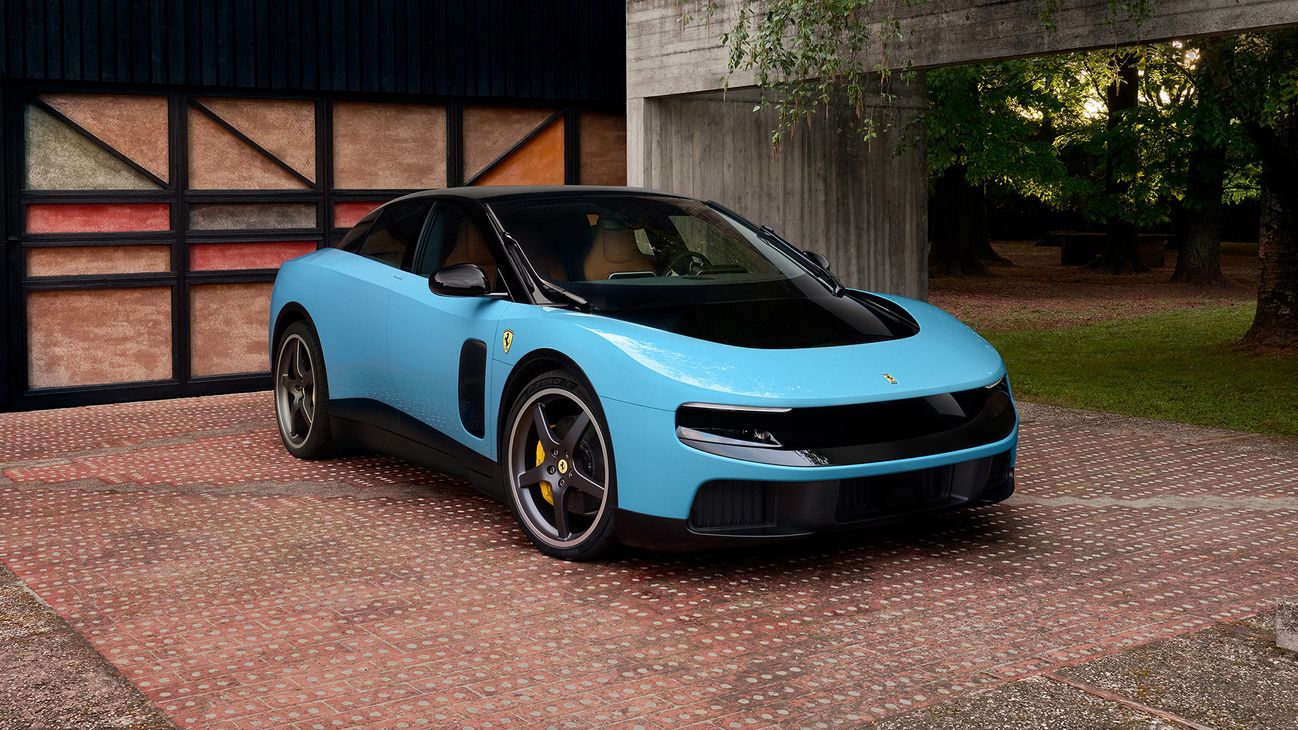
The Ferrari Luce is a Ferrari model name mentioned in the podcast. It’s brought up as part of a discussion about Ferrari. The excerpt doesn’t give details about what it is beyond that it’s related to Ferrari.
An EV ecosystem is the whole routine around owning an electric car, like charging at home and planning your day around charging. The host is asking whether people stick with EVs long-term once they get used to it.
Synthetic motor oil is a type of engine oil made to work well in different temperatures and conditions. The discussion here is about shortages that could make it more expensive or harder to find.
Low viscosity oil is thinner, so it flows more easily inside the engine. The hosts say the popular thinner synthetic oils are getting harder to source.
0W40 is a motor oil type marked by its viscosity rating—how it flows when cold and how thick it is when the engine is hot. The hosts say oils like 0W40 are also part of the supply crunch.
0W30 is a label on motor oil that tells you how it behaves in cold weather and when the engine is hot. The segment says oils like 0W30 are among the ones getting tighter to find.
Base oil is the foundational lubricant component that synthetic motor oil is made from. The segment explains that supply issues for base oil are a key reason certain synthetic grades are tightening.
Oil viscosity is a measure of how “thick” or “thin” the motor oil is at operating temperatures. When automakers suggest switching viscosity oil temporarily, they’re managing supply and cost while trying to keep the oil within acceptable performance specs for the engine.
An oil change is the scheduled replacement of engine oil to remove contaminants and replenish the oil’s protective additives. The host mentions being “due up” for an oil change soon, tying it to whether discounts or supply issues will affect what’s available.
Synthetic oil is a type of engine oil made to work well in more conditions and usually stay stable longer. The host is saying the shortage may be limited to certain synthetic oil types, not all of them.
A “trim” is the version of the car—basically how fully equipped it is. “Premium trim” usually means more features than the basic version, so it costs more.
A station wagon is a car with extra space behind the seats for cargo, with the roofline continuing to the back. Here, they’re saying the Outback still has that wagon shape, but it’s been redesigned to feel more like an SUV.
“Standard engine” is the engine that comes with the car by default for that trim. Some trims can be ordered with different engines, but this one had the base/default choice.
A CVT is an automatic gearbox that doesn’t shift like a normal car. It can smoothly change the engine’s “gear ratio” to match what you’re doing—sometimes it feels very smooth, but sometimes it can sound a bit different.
Static weight limit is the maximum weight the roof rack can safely hold while the car is sitting still. It’s basically the rack’s “safe maximum load” rating.
Dynamic rating is the roof rack’s safe maximum load while you’re driving. The car’s movement adds extra stress, so this number is meant to be the safer real-world limit.
Synthetic leather upholstery is a fake-leather seat material. The benefit mentioned here is that it’s easier to clean and resists stains and spills, which is helpful if you have a dog.
A digital gauge cluster is the screen behind the steering wheel that shows things like speed and warnings. A 12.3-inch one is bigger and easier to read.
Apple CarPlay and Android Auto let you use your phone’s apps through the car’s screen. If it’s wireless, you usually don’t have to plug your phone in every time.
iSight is Subaru’s set of safety features that help the car watch for danger. Here, the host mentions systems like emergency braking and warnings about nearby cars.
Automatic emergency braking is a safety feature that can brake for you if it thinks a crash is about to happen. It’s meant to prevent or lessen the damage.
Front cross-traffic alerts are warnings about cars that are crossing in front of you. They’re meant to help when you’re pulling out and can’t see everything clearly.
This is a Kia hatchback for 2026. A hatchback is a car with a rear door that lifts up, and the host is saying it’s priced in a way that makes it easier to buy than many other cars.
The host says the car’s price is about $32,000. They’re using that number to make the point that this Kia is still affordable, even with the nicer trim.
A hatchback is a car where the back door lifts up, and it often makes the trunk area more flexible. The host is saying fewer people are buying hatchbacks lately, even though many car writers like them.
“Driving dynamics” just means how the car feels to drive—how it turns, how it responds, and whether it feels smooth and controlled. It’s about the overall feel, not just speed.
Here, “efficiency” means how economically the car uses energy. For a gas car, that usually translates to better gas mileage—how far you can drive on a tank.
“Cargo area” is the part of the car where you put things—like bags, groceries, or luggage. Bigger or more usable cargo area usually means you can carry more.
The Saturn Aura is a midsize sedan, meaning it’s a regular passenger car sized between smaller and larger sedans. In the podcast, it’s mentioned because it can feel a bit more upscale than you might expect. The discussion is about how the car’s feel and image come across.
A turbo is a device that helps the engine make more power. It uses the car’s exhaust to push extra air into the engine so it can burn more fuel and feel stronger.
MSRP is the price listed on the car’s window sticker by the manufacturer. “Total MSRP” here means the sticker price for this exact car with its chosen options.
Floor mats are the removable coverings on the car’s floor. They help protect the interior from mud and spills, and some trims include them as part of a package.
This is the car’s automatic gearbox, and it has eight different gear ratios. Having more gears can help the engine stay in the right “sweet spot,” so the car feels smoother and more responsive.
The rear suspension is the set of components that connects the rear wheels to the car’s body and controls how the rear wheels move over bumps and during cornering. Its design and tuning strongly affect ride quality, traction, and how stable or “playful” the car feels.
Suspension calibrations are the way the car’s suspension is set up to feel a certain way. It affects how the car rides over bumps and how it behaves when you turn. Better tuning can make the car feel more fun and controlled.
The Mazda RX-3 is an older sports car made by Mazda. It’s known for using a rotary-type engine, which is different from the usual engines in most cars. People talk about it because it’s a memorable model from Mazda’s past.
Horsepower and torque are numbers that describe how strong the engine is. Torque is like the engine’s “push” that helps you get moving, especially from lower speeds. Horsepower is how much power it can keep producing as the engine spins faster.
The Ford Mustang is a sports car made by Ford. It’s known for being fun to drive and for having a big fan community. Automakers often talk to Mustang enthusiasts early because they strongly influence what people want in the car.
Concept
on brand
“On brand” means “does this match what the company is known for?” The speaker is saying the new direction might not feel like it fits Ferrari’s usual identity.
“Market got saturated” means there were too many similar choices available. When that happens, it’s harder for one company to keep growing because customers have lots of alternatives.
A “competitive set” is basically the list of other brands people consider when shopping. It’s the competition a company is up against for the same kind of buyer.
The Chevrolet Bolt is an electric car made by Chevrolet. It’s known for being one of the more affordable EV options, and the host is saying Chevrolet might be bringing it back.
The Honda S2000 is a small two-seat sports car that’s famous for being fun to drive and for its engine that really likes high revs. People love it because it feels sharp and responsive when you push it.
The Toyota Land Cruiser is a large SUV made for tough driving and long trips. It’s built to be durable and handle rough conditions. People bring it up because it’s known for lasting a long time with regular maintenance.
The Chevrolet Camaro is a popular American performance car. The host is hoping it comes back, because it would bring back a more exciting, car-focused option instead of everything being SUVs.
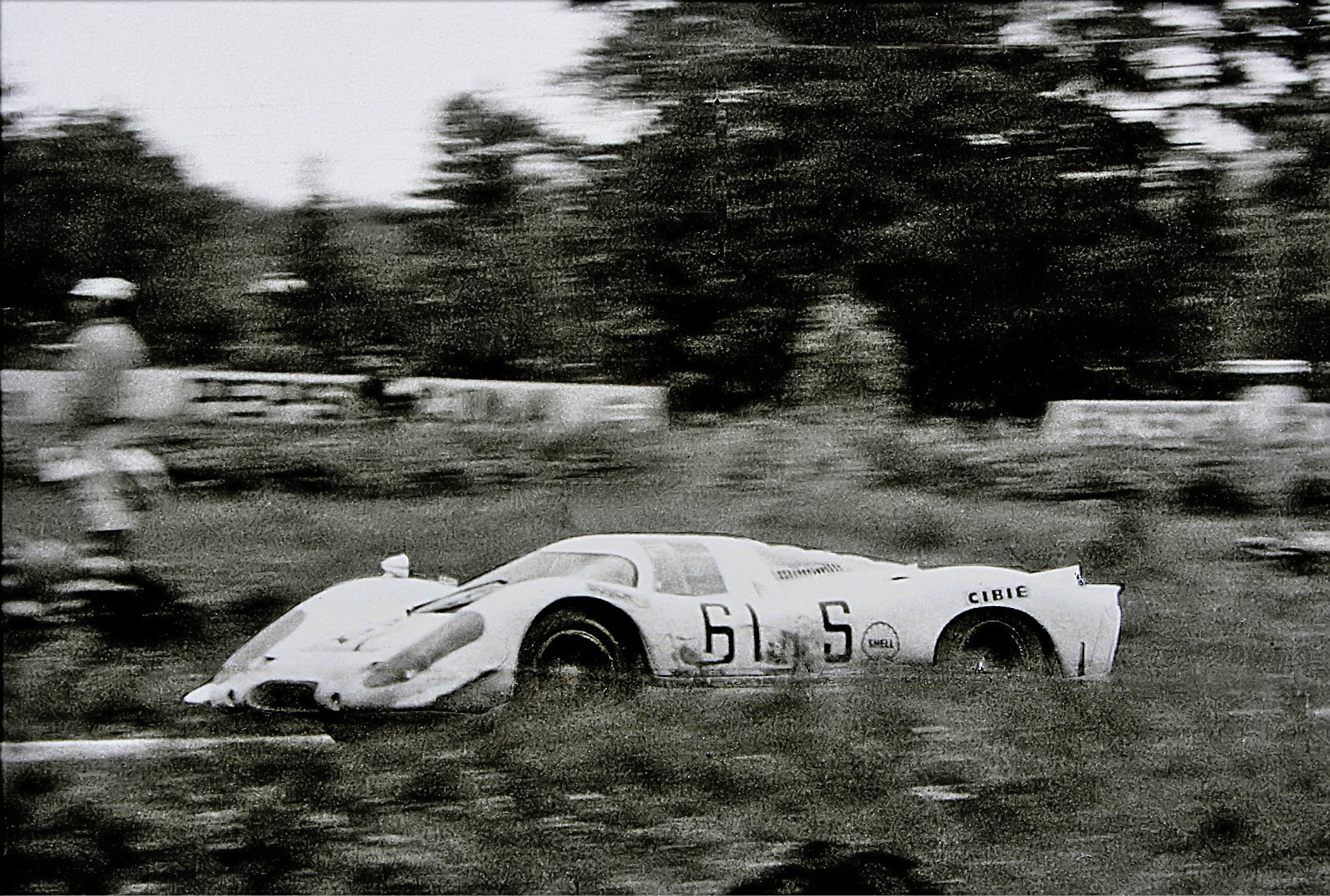
The Porsche 917 is a famous old race car from Porsche. It was built to go extremely fast for long races like Le Mans, and it’s remembered as one of the most iconic cars in racing history.
Le Mans refers to the famous French endurance race (24 Hours of Le Mans) where cars run continuously for a full day. It’s known for punishing reliability demands and for showcasing outright speed over long stints.
The Ferrari 512 is another famous race car from Ferrari. It competed in the same big endurance races, and here it’s mentioned as the Porsche’s main rival.
The Nürburgring is a famous racing location in Germany. It’s known for being very challenging, so it’s a big deal when a car or driver does well there.
The Targa Florio was a very famous old endurance race in Sicily. It was known for being extremely challenging and dangerous, which made it a true test of skill.
“Closing Speed” is a book about racing. In this segment, the host describes it as a story that helps you feel what it’s like to race at very high speeds.
LIVE
This is America on the Road,
named best radio show by the International Automotive Media Conference,
and now in its 34th year on the air.
Thanks for being with us as we bring you
the latest automotive information from around the world.
I'm Jack Neerad with me as co-host Chris Teague,
and Chris, are you planning any summer travel?
We are not. We blew all of our money on
a kitchen and bathroom renovation,
but we are sending the kids to summer camp for a few weeks.
Our things looking on your side of the world.
Are they both going to summer camp at the same time?
They will both be gone for one consecutive week,
or I'm sorry, one concurrent week,
and then the other one's gone for a week after that.
Oh, okay. So a little alone time for mom and dad.
That's not so bad.
Plenty of happening in the automotive world this week.
Americans are learning more about self-driving cars,
but they still aren't ready to hand over the wheel.
There's new JD Power research about that.
They call it the trust gap.
Jeep has a new contest that combines the World Cup,
the father of our country, and the lottery.
If you put all the magic pieces together,
a brand new Wrangler could be powering into your driveway,
but we're betting it'll never happen.
And we'll tell you why.
It's kind of the goofiest contest I've ever heard of.
Don't panic, but your next oil change could cost a little more.
Supplies of some popular synthetic motor oils
are beginning to tighten around the globe.
We'll have our thoughts on that coming up.
On the other hand, prices for new EVs are sliding.
Inventories are growing, and bargain hunters
may be finding a terrific time to buy an electric car.
Chris, do you have any quick thoughts
about buying an electric car these days?
Yeah, I wish I had an excuse to buy a Hyundai Ioniq 5N,
but I do not, so the discounted models will continue,
not in my hands.
There you go.
I thought you'd always find a way to buy a new one, Chris.
America on the Road is brought to you by drivingtoday.com,
emlancy.com, the publisher of my latest book.
Only one thing stays the same, and Mercury Insurance.
If you're looking to save some money,
you should switch to Mercury for your auto and home insurance.
California save an average of $670 with Mercury,
so imagine how much you could save.
Get a quote today at drivingtoday.com slash auto insurance.
Well, Chris, what is your test vehicle for this week?
I drove the 2026 Subaru Outback Premium
with a couple of options, and I can't wait to tell you all about it.
Well, very good.
My test vehicle is the 2026 Kia K4 GT Line Turbo Hatchback.
We'll tell you all about that.
Our special guest this week is auto branding expert Matt Powell.
He is an expert on what's going on with Ferrari,
among other things.
He's the CEO, actually, of a marketing firm in Dallas called Maroc.
So we'll talk with him about Ferrari
and other things that Ferrari Luce prompted our discussion with him.
So stay with us for that.
Stay with us for the auto news and road tests that are coming up
right here on America on the Road.
We're glad you're with us, and stay with us.
We'll be right back.
Welcome back to America on the Road with Chris T. Jack D. Radback.
But you were so glad you're with us.
If you like two guys talking about cars, that's us talking about cars.
Pass along.
Pass us along to others.
You can do that by passing along a podcast or letting folks know
when you hear America on the Road.
Chris, interesting automotive news this week,
and I'm looking forward to your comments on this story.
JD Power says confidence in self-driving vehicles
is basically stalled.
People are learning more about self-driving vehicles,
but they're not becoming much more comfortable with them.
They have what they call the Mobility Confidence Index.
That's conducted in conjunction with MIT,
their Advanced Vehicle Technology Consortium.
And what they found was that fewer than one in four consumers
say they would feel comfortable riding in a fully self-driving vehicle.
That kind of jumps out at you.
I mean, we got a lot of people doing that now in Ubers and Waymo cars,
those kind of things.
What are your thoughts?
It does jump out, but if you think about it,
as I was just thinking while you were saying that,
some people get nervous riding in cars when there's a human driving,
but at least there's a person there that you can give feedback
or yell at as my wife is like, slow down, stop, whatever.
With nobody there, no steering wheel in some cases and no feedback loop,
it does feel like you're a little bit out of control there.
And the news around these things over the past few years hasn't helped.
Right. The respondents to the survey cited concerns about personal safety,
yeah, go figure, emergency situations and vehicle performance
in difficult weather and traffic conditions.
Of course, you can choose to get into those cars or not.
I guess if you're thinking about buying a car that has this,
you have to be concerned about all types of weather and all of that kind of stuff.
It's interesting that the Mobility Confidence Index Score
is steady at 39 on a 100 point scale.
So, I mean, a lot of car makers are developing this technology,
but it doesn't seem like there's much enthusiasm from the public for it.
Yeah, they seem to work really well in contained environments,
set routes for taxis or buses and things like that.
But I don't think there's been a broad enough demonstration of them
operating smoothly with no hiccups in a large scale area for people to be
kind of into it.
And plus, to be honest, unless you're focusing on the auto industry a lot like we are,
you don't hear a lot about autonomous taxi drives and things like that on the news every night.
Yeah, we'll have to see what develops with that.
It seems like a lot of money is being used to develop something
that maybe people are never going to want to buy.
We'll see how that unfolds.
Here is maybe the strangest contest I have ever seen publicized, Chris,
and I want your comments on this.
This is what Jeep Brand is doing.
Jeep is what they say they're embracing patriotic humor.
I guess there must be a lot of humor to it because I don't know that there's much
real of anything else to it.
But, you know, they're embracing the World Cup.
They say, here's what you have to do to win.
If, number one, your name has to be George Washington.
Your real name has to be George Washington.
So that's kind of a disqualifier for most of us.
But then the United States has to win the World Cup.
That isn't exactly a guarantee either.
So 100 eligible Americans who are legally named George Washington,
registered for the promotion, will receive a new Jeep Wrangler.
Well, that's cool.
What are the chances of this happening, Chris?
Sounds very slim to me.
I mean, you know, you think about the insurance policies that businesses
set up when they do a giveaway like this.
I wonder what the payout on that would be.
But, I mean, it's fun.
It's going to get some attention.
I really wonder how many people are named George Washington in the U.S.
who would do this.
So, the odds might not be that bad if your name is George Washington.
Yeah, if your name is George Washington, you got a shot.
Everybody else doesn't have any shot at all.
I guess this is more designed to be goofy than and gain publicity.
We're talking about it.
So I guess that's what this, because there's not much chance.
I think a lot of companies insure themselves against, you know,
a giant payoff or something like that.
I don't think there's got to be much insurance on this.
I think the chances of somebody winning this are hundreds of people
named George Washington winning this are pretty slim.
Well, EV discounts and used electric vehicles are changing the auto market
and pretty markedly here.
The electric vehicle market is entering a new phase.
We kind of talked about this on the show, Chris.
It used to be that if you were buying an electric car,
you probably should have bought a new one because there was the tax credit.
There were a lot of incentives toward buying a new one.
And used ones were just kind of left by the side of the road.
I think kind of it has changed markedly now.
And I think as these used electric vehicles that were released
over the course of the last couple of years come back into the market,
it's going to be a great time to buy a used EV,
not so great necessarily to buy a brand new one.
Your thoughts on that?
Yeah, I agree.
And you know, as people learn more about battery longevity,
the batteries aren't going to die in the first year that you own it.
In most cases, I'm not going to guarantee that.
But batteries last longer than people think.
The range of a lot of these vehicles are very solid.
And then as you mentioned, the pricing makes them a really good deal
compared to their new MSRPs.
Yeah, I mean, if I were looking to buy an electric vehicle these days,
and as you listeners of the show know, I'm probably not going to do that.
But I'll tell you, it wouldn't be a bad deal as a second car
to just zip around our local zip code here and not go very far.
That would be great.
And I would have to rewire the garage, but otherwise it would make some sense.
But I use one as the one I'd buy, certainly,
and I wouldn't even consider a new one these days.
Although there are major, major discounts on the new ones out there.
Several of them have been.
Very solid lease deals going on right now.
They've been going on forever.
The incentive spending on EVs has been up for the past few months.
I just wrote about this yesterday from Kelly Blue Book or for Kelly Blue Book.
So it's interesting to see the other part of this
is that sales aren't skyrocketing along with this, though.
Like the discounts are there, but the buyers aren't chasing them down.
Yeah, I mean, it just proves a lot of things about electric cars, I think.
One of which is a lot of people were essentially kind of paid to try these
by the incentives.
And without those incentives, it's much harder for people to figure these out.
Even with the great deals that are being offered now,
I think a lot of people are going, oh, I'm not sure about that.
Yeah, I wish there was some data of people who have an EV or two
and have kind of settled into the ecosystem.
They've got the home charger like we do.
They've got some other lifestyle adjustments to have.
They've remained with electric vehicles for the long term.
Well, let me ask that of you.
Are you going to replace your Honda Prologue with another electric vehicle
when that comes time to do that?
Yes and no, no, because we probably won't immediately replace it.
If I drive loaner vehicles quite a bit to test them.
And it's a third car for us right now because my wife loves the Defender.
So if something changes between now and next summer when our lease expires,
I would definitely end up driving it.
Maybe trading it for a different one, but it's not a priority.
Well, there seems to be a little scare about synthetic oil and that supply.
Hey, I mean, drivers might notice higher prices, fewer choices when shopping for synthetic motor oil.
A lot of it comes from the fact that some very popular low viscosity,
I mean really low viscosity, 0W30, 0W40, those kinds of viscosity motor oil,
synthetic oils are tightening because the base oil used to make them
is difficult to find these days.
Other synthetic oils are made from things like natural gas.
They have no real quote unquote oil in them anyway.
What do you think is going on here?
Well, I mean, the same thing that's going on with gasoline,
you know, trying to leave the Middle East.
But I've seen a lot, I would say a lot, three or four different leaked dealer
memos from automakers, Toyota, Hyundai, Ford, a few others, letting them know,
hey, you can switch to this other viscosity oil for a little bit
because we're going to run low on this supply or whatever the price is going up.
So hopefully this comes down.
I'm due up for an oil change here pretty soon,
but I don't think I'm going to catch any discounts.
Yeah, probably no discounts.
I don't know that this is the gloom and doom that people are suggesting that it might be.
For one thing, it's just one type of synthetic oil, or maybe several types,
but not all synthetic oils.
And so I think there'll be some available when we go forward.
We'll have to see about that.
Remind us of the vehicle you're about to test, Chris.
I spent the week behind the wheel, the 2026 Subaru Outback.
In what model was that one?
It was the premium trim with a couple of very much needed options.
Very cool.
We'll talk about that and about those much needed options.
I was driving a rarity in the market, an affordable vehicle, the Kia K4.
And it's a hatchback, so it's something that all auto journalists should endorse.
Stay with us for both road tests, and we'll be back right here on America on the Road.
Thanks so much for being with us.
Stay with us.
We'll be right back.
Welcome back, everybody, to America on the Road with Chris Teague,
Jackie Redback with you for road test time.
And Chris, you were driving a vehicle that is the darling of main folks,
I think, certainly one of them, the 2026 Subaru Outback.
Tell us all about it.
Yeah, it definitely could be on our state flag as our state bird of some sort,
although the newer ones, like the one I'm driving, they're far fewer of those.
This is the 2026 Subaru Outback that has become even more SUV-like than it was before.
So we've kind of elevated beyond wagon status at this point, I think,
even though it's kind of shaped like one, it's hard to call this just a basic wagon.
But I tested the premium trim with the options packages and destination.
It came out to $38,715.
That is the base trim, so it's around $36,000 with no options on it.
At the very top of the line with destination, Jack, you can spend almost 50 grand on one of
these days.
Last time you drove an Outback, and what did you think of it?
It's been a couple years.
I've always been a fan of the Outback.
I mean, the Outback strikes me as really a station wagon,
kind of a tricked out, somewhat off-road-ish station wagon.
And I love station wagon, so I like it.
I think you could call it a battle wagon at this point in time.
It's quite armored up over what it used to be.
Taking a step back, my premium trim, which as I mentioned was the base model,
came with the standard engine.
It's a 2.5-liter four-cylinder with 180 horsepower, 178 pound-feet of torque,
continuously variable transmission and all-wheel drive.
There's an available turbocharged 2.4-liter engine for the higher trends.
It's 260 horsepower, 277 pound-feet of torque.
So quite a bit of difference between those two engines.
Jack, I'll say I think it did just fine without the turbo.
And the CVT Subaru has kind of figured this out at this point in time,
but this engine is inherently a little bit louder than a standard Toyota 2.0-liter engine.
It's just kind of a rougher engine, and you hear that more with the CVT in this vehicle.
Acceleration is fine.
There's a little bit of a jumpy quality between coming out of park,
or coming out of park into reverse, or in park into drive.
But otherwise, it's pretty refined.
It's a comfortable ride quality, as I mentioned.
The engine sound.
But otherwise, there's not a lot of road-like tire sounds and wind noise.
You get 18-inch wheels in the base model,
and it also comes standard with a roof rack that has an 800 pound static weight limit.
So when you're sitting still, and then it also has a 220 pound dynamic rating.
So you can put 220 pounds of gear on it when you're driving.
Inside, you get synthetic leather upholstery, all-weather floor mats,
and some other options.
As I mentioned earlier, this vehicle has a very nice options package,
which adds a 12.1 inch screen with navigation.
You get a sunroof, a heated steering wheel,
and a wireless device charging or phone charging,
and the rain-sensing windshield wipers.
So that adds a lot to this car at the lower end of the spectrum.
Jack, what do you think of the different configurations that Subaru's offering these days?
It's amazing to me the number of variations that all these brands offer,
including Subaru.
I don't know how dealers stock them.
You and I have both been to production plants within the last year or so,
and it's just mind-boggling, really, the number of vehicles that are being produced,
the number that are bought new when the average price is $35,000, $40,000, $50,000.
It's kind of a mind-blower, really.
Yeah, and you end up seeing all these trims on the road,
so it's not like nobody's buying one or the other.
It's really, really kind of amazing.
But the interior of this vehicle, as the outback has been for years,
I owned a 2015 outback.
It's comfortable.
It's spacious.
The seats are wide.
They're well-padded.
I do wish it had a little bit better lumbar support that's lacking in these seats.
I took it on a longer drive, and at the end of it, I could feel there was no lumbar.
But that said, there's good space in the back seat for kids in car seats,
kids in booster seats, and adults.
So you have more space than you think you do in a generous cargo area,
big enough to fit a giant dog and some other stuff that goes with him when he goes to daycare.
As I mentioned, with the package, you get a heated steering wheel and heated front seats.
The vehicle also comes standard with a leather-wrapped steering wheel and synthetic leather upholstery,
and everything feels pretty nice.
I think the synthetic leather is a little less upscale,
but the trade-off there is that it's water and stain resistant,
so you can put your dog in there.
You can go hiking and not worry about wiping it off when you're done.
You get a 12.3-inch digital gauge cluster, a 12.1-inch touchscreen,
wireless Apple CarPlay and Android Auto, Bluetooth gesture controls, connected apps,
a whole bunch of other stuff.
This new infotainment screen is light years ahead of where they were with the
large portrait display.
It's much smoother.
The processing power is there.
And then as this being a Subaru, you get the iSight safety equipment standard,
which comes with automatic emergency braking, blind spot monitoring,
front cross-traffic alerts, and a whole bunch more.
Jack, I mean, for almost 40K, I think you get a whole lot with this car.
I think the safety features are excellent.
The interior space is great.
This is probably a better vehicle for a lot of people than a full-on SUV,
even though I mentioned this is becoming more like one.
So I'm a fan of this car.
I wish it was a little bit cheaper, but I really liked it.
Yeah, I get that.
I 100% get why the Outback is so popular.
It's been popular for a long time.
It's really car-like.
It's really car-like because it's kind of a car.
And there's nothing wrong with that.
I mean, the vehicle I'm about to review is also a car.
And it was kind of a revelation to drive that.
I really enjoyed it.
But I think the Outback is a good value out there and justifiably popular.
Absolutely.
Well, let's maybe we should quit whining, Chris,
about the fact that there are no affordable cars out there
because the vehicle I'm about to test, and we do that on the show,
but the vehicle I'm about to test, the 2026 Kia K4 hatchback is just such a vehicle.
And I'll tell you, even in the GT-line turbo trim,
which is the trim that I had to test, it's still pretty darn reasonable.
I mean, it's super reasonable in terms of cost in base form and kind of midline form.
But even in this top of the line form, it's pretty reasonable in terms of price.
I can get to that price in a little bit.
It's around $32,000.
It arrives at a time when compact hatchbacks are becoming increasingly rare.
Americans, for some reason, don't warm up to hatchbacks.
Auto journalists love them.
I love them.
I think you love them.
They're just kind of fun to drive and very practical at the same time.
I mean, you have the practicality of a small utility vehicle, I think, in this vehicle,
driving dynamics and efficiency of a car.
So there's a lot to like about that.
From that level, from the 35,000 foot level, how do you feel about the K4?
Yeah, I had the K4 a few months ago, maybe six months ago now.
And it's surprising the space you have inside, but you still get the car like driving dynamics.
And not a ton of speed in the K4, but it handles well.
So yeah, I love it.
Yeah, very good.
In hatchback form, you can also get a K4 sedan.
But the hatchback adds more cargo area, of course.
It's actually shorter, I think, by a significant margin than the sedan,
in terms of overall length.
But basically, it has station wagon-like styling.
So as an auto journalist, I justifiably have to like that.
It also has a pretty upscale aura about it.
I mean, somehow Kia is, I think, partly from its styling,
partly from the way they're doing interiors.
This just gets a kind of upscale premium kind of feel.
Do you sense that too, Chris?
I do sense that.
They use nicer materials than you expect for the price tag.
And the design itself looks great.
So they've come a long way.
Right.
The GT line turbo trim sits at the top of the hatchback lineup.
So it has sporting styling enhancements.
It also has the model's most powerful engine
and a pretty extensive list of comfort technology safety features.
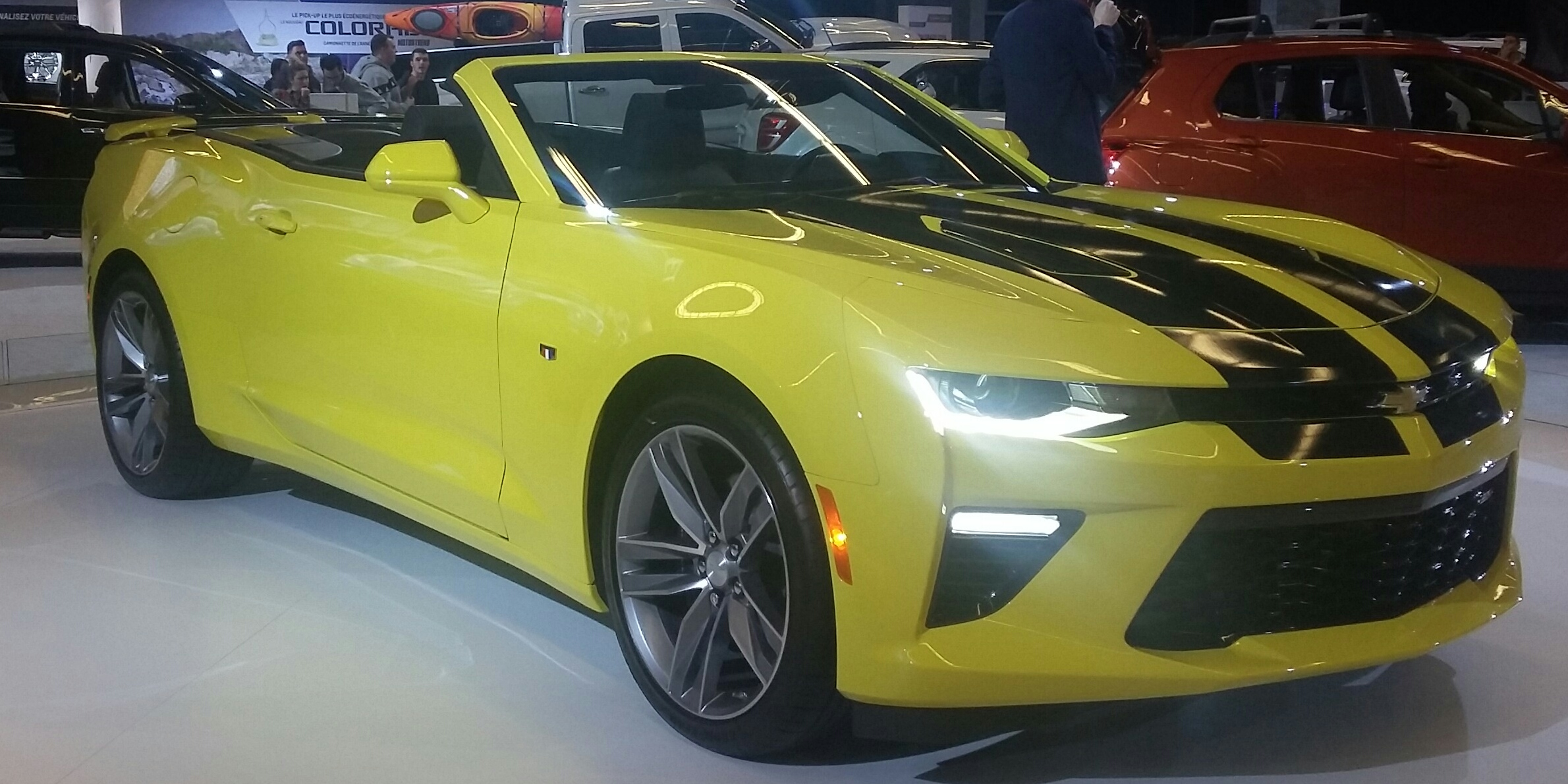
The test vehicle was finished in a color that my wife absolutely detests.
I thought it's kind of interesting.
It's called sparkling yellow.
I think it is the featured color for this vehicle.
And we're not here to review colors,
and you can get it in various colors.
But you have thoughts about sparkling yellow?
Yeah, mine was sparkling yellow.
And I think people, it's a shock to see.
And I also read recently that the boomer generation
or the older generations are people more likely to pick those colors.
And I don't think I'm not in that group yet.
Yeah, well, I don't think you're ever going to become a boomer.
But I can sell you a membership card.
I don't say that with any spite in my voice.
Total MSRP for the test vehicle we had was $32,870.
This had the GT line turbo technology package carpeted floor mats.
There was an extra charge for this particular paint color,
and it had destination charge, of course.
At the heart of this is a 1.6 liter four cylinder engine
that's turbocharged, produces 190 horsepower.
It routes its power through an eight speed automatic transmission.
Lesser K4s have a continuously variable transmission.
So we love the fact that this has an eight speed automatic.
I'm not sure about getting the turbocharged engine in this vehicle,
but on the other hand, I always have questions about turbocharged vehicles.
The standard two liter engine produces better fuel economy.
This, of course, gives stronger accelerations,
more responsive, and you get better stuff with it,
like the eight speed automatic transmission.
I think that's important.
The automatic doesn't totally eliminate turbo lag, though.
There's a little bit of hesitation when you put your foot in it
and you want more power.
That's just mainly how turbos work, right?
And so it's fine and you get plenty of power,
plenty of passing power, plenty of acceleration
onto freeway ramps kind of power.
I like that.
28 miles per gallon combined.
And I think this is not the quickest vehicle,
but it's a fun to drive vehicle.
I think it handles very, very well.
They've done some added trickery with the rear suspension.
I think it's got a more sophisticated rear suspension,
better suspension calibrations all around.
It's pretty fun to drive, isn't it?
Yeah, I was just thinking, I think Kia,
while they're not on the level yet,
I think they're kind of following the Mazda 3 path here, right?
You get nicer interior, you get a nice styling,
and you don't get a ton of horsepower and torque,
but you get a great handling vehicle.
It's playful, it's easy to drive.
I enjoy it.
Yeah, plenty of interior space.
We drove it out to the desert and back.
We do that a lot.
Front seat comfort was excellent.
And rear seat, my grown daughter rode out there
in the rear seat back and forth about 300, 400 miles,
had plenty of space, felt comfortable.
Wanted that, drive that rather than the SUV we could have driven.
Plenty of cargo space.
The technology is very good.
Kia does a really good job with that.
And there's tons of safety.
The safety equipment is very extensive,
and the GT line turbo gains even more,
including highway driving assist too,
so semi-automated driving.
I just think this vehicle's a good value.
Base of $28,000 as tested, $32,000.
There's lots to like about it.
I agree.
And when we come back, we will have a terrific guest,
Matt Powell, the CEO of Dallas-based Advertising and Marketing
firm, Merak.
We're going to be talking about the Ferrari Luce,
among other things, so stay with us for that,
and we'll be right back.
I'd like to tell you about my newest crime novel,
Only One Thing Stays The Same.
As the story unfolds, an unemployed aeronautics worker named
Bill McCurdy becomes disillusioned with his wife
and slips into an illicit affair with a teenager from down the street.
Before long, he begins to think of doing the unthinkable.
And before the roller coaster ride stops,
he learns quite personally, and very finally,
that Only One Thing Stays The Same.
Only One Thing Stays The Same is available in Kindle e-book
and paperback form exclusively at amazon.com.
I'd appreciate it if you'd look for it today.
Welcome back, everybody, to America on the Roadjack New Redback.
With you, we've got a terrific guest.
I'm really excited to talk to Matt Powell,
he's CEO of a Dallas-based company called Maroc.
They are branding and advertising experts.
And Matt, thanks for being with us.
We appreciate it.
Yes, thanks for having me.
Excited to be here.
It will be exciting, I hope,
to talk about all this stuff with car branding.
I mean, car branding is really a big deal thing, right?
I mean, this isn't just a million-dollar thing.
It's a billion-dollar thing.
What prompted our discussion today
was what Ferrari recently did with the Luce,
their first all-electric car.
But before we dive into that,
just talk about what your company does
in terms of branding and advertising.
Yeah, so we, as you mentioned,
we're a Dallas-based agency that works across the US
and we're what's called an integrated agency.
So we work anywhere from bringing a creative concept to life
and branding to life to deploying it to the right audiences.
So through our media, all media channels and types.
And so we have the privilege to work with brands
like McDonald's, Planet Fitness,
Biltmore Estates, Midas.
And so definitely love to have these kind of conversations.
Right.
Do you do the Planet Fitness hats at New Year's Day?
Is that your thing?
Is that part of your branding?
We're part of the team, yeah, that brings that.
So those are becoming pretty iconic.
It really is.
It's kind of amazing.
Isn't it interesting how that has worked out?
Well, I think there's something like 45 automotive brands
available in the United States.
And they're all across the gamut.
You know, there's mainstream brands or premium brands,
or super premium brands.
How does a brand separate itself from the others
in that kind of really competitive environment, Matt?
Yeah, yeah, it's a fair question.
And we've worked with a few different auto brands along the way.
And certainly in certain categories,
it's very tight in terms of customer perception
around what a vehicle can do and what the differences are.
And so there's not an easy answer.
I think it's kind of a continuous dialogue and conversation
and how you keep a brand relevant, evolving,
but also kind of stay true to the core of the brand
and what customers buy.
Because they're still, across all brands,
they're still loyalty.
The loyal customer is still their most important one.
Right.
And I think that's really important
when it comes to Ferrari and the luce, right?
I mean, certainly, most of us are never going to buy a Ferrari,
but we have in our minds what a Ferrari is
and kind of what a Ferrari buyer is like for that matter.
And it's kind of important to understand that
and stick with it, isn't it?
Yeah, it is.
And you said at Ferrari, especially,
there's an emotional connection to the brand
that probably supersedes most and a passion for the brand.
And so conversations like this,
you have to even be more conscious of who your loyal people are.
And there are a lot of fans of Ferraris,
again, who will never buy a Ferrari,
but because of their involvement in racing forever and ever.
Since before I was born, which is a long time ago, Matt,
a lot of people are fans of that brand
and really understand or believe they understand
what that brand represents and what it represents to them.
And that's important to continue, isn't it?
Yeah, absolutely.
I mean, I had a Ferrari shirt when I was in my college years.
Certainly was not in the buying market for a Ferrari as well.
So yeah, it's interesting what they stand for.
And I think it's important to this conversation as well
and that they've always been leaders of innovation.
Like when Ferrari does something,
people usually pay attention because sometimes
they're predicting the future and moving the industry
into a direction.
And so that kind of complicates a situation like this
because this is a sign that the industry is moving this direction
or have they just completely missed the mark?
Yeah, and I kind of wonder about that.
And I think the blowback and it's been pretty strong.
I mean, this is not just a little bit of blowback.
I mean, it's almost to the point where maybe they have to get involved
with crisis management with this with their brand.
But there's a lot of people who are pretty darn upset
over what this new vehicle seems to represent
because I think a lot of them would tell you
it doesn't represent anything that they know
about the Ferrari brand up till now.
Yeah, and it's kind of multifaceted
because the roar of the Invin is certainly built
into the mystique of the Ferrari that's not here.
The design of it, it doesn't look like a Ferrari act
or somebody say it's a nicer Nissan.
And so you've got a lot of layers to this conversation
that I think are interesting and kind of at the forefront
of my mind and a lot of people instantly
was what happened with Jaguar last year.
And is this a repeat of that?
And you would think Ferrari would have learned the lessons
of what Jaguar did.
Yeah, I think these things have the lives of their own, right?
And they were probably well down the road
of putting this thing together and getting out there.
And I doubt that even seeing that a year ago,
they were able to change course, maybe they should have
or maybe they should have worked on the messaging
a little bit at least to get that, get out front of that.
But it doesn't appear that they did that.
Yeah, that to me is where you nailed it in terms of where
I think the biggest miss was because exactly,
they're probably down the road with design and this rollout.
But if you're seeing what happened with Jaguar,
maybe don't just roll it out as if that didn't happen.
And we talk all the time, usually brands have kind of,
they have an audience and a customer that they go after,
but there's also kind of a core group like the Ultra Loyal,
the biggest fan, we call them ambassadors of the brand,
the people that will tattoo the Ferrari logo onto their ankle.
You know, to not have any dialogue,
at least on the surface, it doesn't seem they did,
to not have any dialogue with that group to me is a miss.
Because I think you kind of surprised them
and let them create the narrative.
And if it was me and my company, which it's not,
I would have started with that group and said,
here's what we're doing here and why.
I think that was kind of a miss.
Yeah, I mean, we see that from a lot of car companies.
Ford Motor Company will involve Mustang enthusiasts very early on
and talk to them as they're developing new things.
And they have, and certainly the Mustang Machia, the all-electric,
that shocked a lot of people too.
I think there's some analogies there to what happened with the luce.
What's your take on whether these are somewhat analogous or not?
I definitely think it's analogous.
You know, and I spent some time just kind of exploring the
content that's out there and Instagram and TikTok and things like that.
You're starting to see some things roll out that seem like the companies behind them
starting to get control of the narrative and tell the story a bit.
But it still feels like they haven't quite connected the dots.
And within the middle of that, you have some of Ferrari's biggest competitors,
Lamborghini, with an example saying we're not going there, which doesn't help.
And so that's kind of back to my earlier point.
Is this innovation that everybody's going to have to jump in with at some point?
Or are they just completely going rogue here?
And it's no longer, you know, a lot of people are saying this is no longer worthy of having
the logo on the car on it.
Well, I mean, another competitor or at least I think they would pretend to be a competitor
is Porsche that has kind of gone that way, right?
I mean, in a lot of ways.
And Porsche 20 years ago, 30 years ago, was a sports car company.
I mean, if it wasn't a two-seater or it wasn't a Porsche,
now it's essentially an SUV company, an SUV brand.
And yet it's retained some of its sports car panache.
I mean, that seems quite a balancing act.
Talk about that a little bit.
Yeah. And I guess to me, that's an interesting thing because Ferrari has always been
about exclusivity, right?
Like not everybody's going to own one.
Not everybody can have one.
They even say that.
Whereas I think Porsche probably, you know, even from its inception,
did want to be more market than I think Ferrari did.
So to me, philosophically, I can understand why Porsche went down that road.
Is that what Ferrari wants?
Because I think they're only planning to make this, you know, a few thousand of these
a year from what I've seen on the production side.
So it doesn't feel like they, you know, who knows, maybe that is the end game for them.
But it doesn't, that also doesn't feel on brand depending there.
Yeah. I mean, there's so many things that seem a little off about the Luce.
It's a four or five-seater.
That's a very rare Ferrari.
Certainly the styling is utterly different than any Ferrari we've ever seen.
And maybe that's great.
I mean, the Lamborghini Murat was certainly a different vehicle
than anything that came before.
And it's classic.
So we get that.
I mean, what do you think is the biggest misstep here?
You know, back to your point, this is probably obviously it's been in the works for a while.
So my brain tends to think around just what you called out in terms of the messaging
and the branding and their connection with the consumer.
That to me seems to be the biggest mess.
Clearly they've believed that this is the way forward
and they've invested a lot of money into it.
But I definitely think they fumbled the introduction to it.
And to me, that's a missed opportunity.
And I did read some commentators say, you know, this felt like them just kind of getting out there
that this is coming.
But when you actually see the full story, it will make a lot more sense.
It seems like maybe the full story was needed.
If that's the case from the beginning, because then we've shared
created more confusion than I think the brand.
Right.
Let me switch gears a little bit.
Something else I want, a completely different brand I want to talk to you about.
It's Nissan.
Yes.
Nissan has struggled in the United States, has been struggling for a long, long time.
I'm old enough to remember when Nissan's Datsun brand was, you know, right there with Toyota.
I mean, they were neck and neck in terms of sales in the American market way, way back.
Where do you think, how do you think that happened?
You know, how has Nissan got to be where it is?
Yeah.
You know, I think to your point, they've been struggling for a long time.
We've worked with some brands that, you know, used to compete with them more directly.
And it's dropped a little bit on their radar.
And, you know, I've even seen stuff from them around their strategy of kind of like shrinking to grow,
which, you know, always is a fancy way of saying we're having to do cutbacks.
And it doesn't seem like they have, you know, before, and I have some friends that are
massively loyal Nissan people who have switched cars in the last, you know, I would say four to
five years, they don't feel like it's the same company. And I think they have lost their way a
little bit in terms of pioneering, you know, some of it was they were out in front on the EV front.
And then that market got saturated in terms of like their price point.
And so I don't know, it's interesting.
Yeah, it's an interesting story and case story. I don't really know where they're going.
So yeah, I mean, they were out front on EVs, and then they just seemed to fumble that leadership,
you know, right away. I mean, virtually, you know, right after the kickoff, they fumbled the ball.
Yeah. And it's interesting because you think of their competitive set.
So if they're not going to be the ones that own EV, then what do they own and kind of their nearest
end competitors seem to have ownership of different things, you know, Toyota owns reliability,
Subaru owns adventure, Jeep owns freedom. You could kind of go down the list. I don't know
what Nissan stands for right now in the mix. Yeah, it's kind of a shame because they have
great products. This has been a stimulating discussion. I wish we could spend more time
on this, Matt, but we're coming to the end of this segment. I hope we can talk again.
We'd love to. Yeah, we'd love to. It's a lot of fun. Yes.
Matt, policy EO of Dallas based, Meroc. Thanks so much for talking with us. We appreciate it.
And thank you. Stay with us. We'll be right back. Thanks for being with us and stay with us.
Welcome back to America on the road with Coach Chris Teague. This is Jack Neerad with you. It is
listener question time. We love to answer questions for you based on our long experience
providing car advice. We do that a lot. Please send your questions to editoratdrivingtoday.com.
That's editoratdrivingtoday.com. Here's a great question. Chris, I think from Raymond in Cody,
Wyoming, where they do a kind of cool rodeo and stuff like that. I see that Chevrolet is bringing
back the Chevrolet Bolt. I'm wondering what discontinued car you'd most like to see return.
Oh, they're probably a bunch. But if I think on the brand level, Jack, I would really love to see
Saab and Pontiac come back, maybe not Saab under GM or anything, but those two would be great.
If we're talking individual cars, I would really want to see a new Honda S2000 in the same format
as it came before or a 300 series Land Rover. I realize they still sell them in other countries,
but I would like a full size Land Cruiser not Rover here for the U.S.
Yeah, that would be cool. I'd kind of like to see the Chevy Camaro return. We're talking Chevy and
I think that would be kind of cool. It might happen. Rumors are saying it's coming.
You know, Chris, in driving the K4 this week, it just reinforced to me how much I like driving cars.
So having a cool car like the Camaro come back with maybe a big V8 engine or perhaps a turbo
charged V6 or something like that, that would be terrific. A lot of cars, I think, are the vehicles
I'd like to see return to the marketplace. I guess people are not buying them, though. They're
buying SUVs. I think they miss something, though, when they don't have a car. Well, that wraps up
our show for this week. I'd like to mention that my crime novel, only one thing stays the same,
is available in both e-book and paperback form at Amazon. If you like our show, please pass it
on. Listen on this radio station each week and let your friends know where you hear America on the
road. We'd love to double our listenership this year and we need your help, don't we, Chris?
We do, and you can help us with a quick Google search for the America on the Road podcast. We'll
come to you on all the major platforms, Apple, Spotify, and plenty of others. Like the show,
leave us a review, sign up to receive automatic downloads. All those things help us keep growing
and you can take us with you wherever you go. Right. We have a YouTube channel, so check out
our videos there. We're now putting America on the Road on Substack, too, so look for that. That's
new to us. Our thanks to Mercury Insurance for sponsoring the show and our sports byline radio
network stations for carrying it. We do appreciate that. Most of all, thanks to you for listening,
and please join us again next time for another edition of America on the Road.
I'd like to tell you about the most exciting and authentic racing novel I've ever read.
It's called Closing Speed, written by award-winning author Ted West. In 1970,
the Indy 500 pole speed was 170 miles an hour, but at Le Mans, Vic Alfred's Porsche 917 raged down
the mulsins straight at 248 miles per hour. The racing pit of the Porsche 917 versus the
Ferrari 512, the fastest road racing ever, and road and track sent a promising new rider, 27-year-old
Ted West, to cover it. He traveled from Brands Hatch to Monza, the Targa Florio, Spa, the Nurburgring,
and Le Mans. You got to know the races personally and the women who loved them. The racing was
blindingly fast. Driving horrifically fragile cars at those speeds took unheard of courage.
That was around every corner and the drama tensely real every moment. Closing Speed is the most
realistic, intimate racing novel ever written. It's a look into the very heart of the sport,
an incomparable racing read. It's available now at Amazon. That's Closing Speed by Ted West. Look for it.
About this episode
Summer chatter and automotive headlines kick things off, including J.D. Power’s findings on self-driving confidence and a “trust gap,” plus a World Cup–themed Jeep Wrangler giveaway. The show then shifts to real-world shopping and ownership costs: synthetic oil supply tightening, EV pricing/incentives, and battery longevity expectations. Road-test coverage brings a 2026 Subaru Outback Premium and a 2026 Kia K4 GT-Line Turbo, with emphasis on affordability, practical space, and fun-to-drive tuning.
Who says there are no affordable cars on the market? This week on America on the Road, Jack Nerad and Chris Teague review two vehicles that put the lie to that notion — the redesigned 2026 Subaru Outback and the fun-to-drive 2026 Kia K4 GT-Line Turbo hatchback. They also discuss lagging consumer trust in self-driving cars, big discounts in the EV market, and tightening synthetic oil supplies. In the Hey What’s Going On Department, they take a look at Jeep’s attempt to leverage the World Cup, the nation’s 250th birthday and the desire to get something for free into a tongue-in-cheek promotion contest. If your name is George Washington, please raise your hand. All others, remain seated.
🚙 Jack Nerad’s Road Test: 2026 Kia K4 Hatchback GT-Line Turbo
Jack reviews the 2026 Kia K4 Hatchback GT-Line Turbo, a practical and engaging compact hatch that proves that fun-affordable cars still exist — they’re just colored in a weird shade of yellow. (Okay, it’s available in other colors, too.) Powered by a 190-hp turbo 1.6-liter engine backed by an eight-speed automatic, it offers sporty handling, a premium-feeling interior, generous cargo space (up to 59.3 cu ft), and advanced safety features. It bears a total price of $32,870 as tested, so it probably won’t force you to clear out your 401k.
🚗 Chris Teague’s Road Test: 2026 Subaru Outback
Chris tests the seventh-generation 2026 Subaru Outback. The “all-new” model looks a lot like the old one, but it brings bolder styling, increased interior space, and enhanced capability. The Outback is available with a 2.5-liter 180-hp boxer or 2.4-liter turbo 260-hp boxer engine, standard Symmetrical AWD, and up to 9.5 inches of ground clearance on Wilderness trim. Inside it features a large 12.1-inch touchscreen, improved EyeSight safety tech, and a more refined cabin while retaining its legendary adventure-ready DNA. If your adventure consists of a four-block trip to the local ice cream shop, all the better.
🎙️ Special Guest Interview
Auto branding expert Matt Powell, CEO of Moroch, joins the show to discuss the recent controversy surrounding the Ferrari Luce.
📰 This Week’s Headlines
Consumer Confidence in Self-Driving Cars Stalled
JD Power research shows awareness of autonomous vehicles is up, but fewer than 1 in 4 Americans feel comfortable riding in one, with safety concerns remaining the top barrier. Hmmmmm…safety concerns? Go figure.
Jeep will give new Wranglers to the first 100 eligible Americans named George Washington if the U.S. wins the World Cup as part of its “All In On America” campaign. (Yes, we know it’s a joke, and here at AOTR we’re in favor of jokes. Go USA! Go George Washington! Go Jeep!)
EV Prices Drop as Inventories Grow
Significant discounts, low-interest deals, and a booming used EV market are making electric vehicles more affordable than ever.
Synthetic Motor Oil Supplies Tighten
Global disruptions are causing shortages and potential price increases for popular low-viscosity synthetic oils. Panic is unnecessary, however.
❓ Listener Question
Raymond from Cody, Wyoming, asks: “What discontinued car would you most like to see return?” Jack and Chris share their picks.
Jack’s crime novel, Only One Thing Stays the Same, is available now in paperback and eBook on Amazon — currently at a sale price.
🎧 Where to Listen
Catch America on the Road on your local Sports Byline Radio Network station each week and subscribe to the podcast on Apple Podcasts, Spotify, YouTube, and more. Follow for new car reviews, guest interviews, auto news, and road tests.
Sponsored by Mercury Insurance and DrivingToday.com
📺 Watch & Subscribe
Find America on the Road on YouTube and Rumble. Subscribe for road test videos, shorts, and extended reviews.