
The hosts discuss the 2026 Mazda CX-70 Turbo S Premium and its appeal as a two-row SUV alternative, alongside the new Volvo EX60 electric SUV boasting 400 miles of range. They delve into Tesla's controversial decision to place self-steering features behind a subscription paywall, the financial strain of rising auto loan payments, and the impact of tariffs on the automotive industry with guest Mike Musanich, CEO of Detroit Axel. The episode highlights the challenges faced by consumers and manufacturers alike in a shifting automotive landscape.
This week on America on the Road, Jack Nerad puts Mazda’s new 2026 CX-70 Turbo S Premium to the test, while Chris Teague drives Volvo’s smallest and quickest electric SUV, the 2026 Volvo EX30. Jack and Chris also break down the top stories shaping today’s car market, from Tesla’s big shift in the way it charges for driver-assistance features to Volvo’s bold claim that its new EX60 electric SUV can finally put range anxiety to rest. In addition, the show digs into the growing strain of auto loan debt across generations and a controversial federal court ruling that requires that taxpayer funds be spent on electric-vehicle infrastructure.
🚗 Road Test Segment
Chris Teague Test-Drives the 2026 Volvo EX30
Chris reviews Volvo’s compact electric SUV with dual motors, 422 horsepower, rapid acceleration, and a minimalist Scandinavian interior, examining performance, range, charging capability, and where the EX30 fits in the small-EV market.
Jack Nerad Test-Drives the 2026 Mazda CX-70 Turbo S Premium
Jack evaluates the latest iteration of Mazda’s two-row midsize SUV powered by a turbocharged inline-six with mild-hybrid assist, covering pricing, performance, ride quality, interior refinement, and how the CX-70 stacks up against the closely related CX-90 and logical competitors like the Lexus RX.
📰 This Week’s Headlines
Tesla Restructures Driver Assistance Features
Tesla removes Autosteer from standard equipment, placing self-steering behind its Full Self-Driving subscription as it pushes recurring software revenue.
Volvo Officially Unveils the All-New EX60 Electric SUV
Volvo reveals a midsize electric crossover promising up to 400 miles of range, ultra-fast charging, and direct access to Tesla’s Supercharger network.
Auto Loan Debt Is Squeezing Every Generation
A new LendingTree study shows millennials and Gen X carry the largest balances, while Gen Z borrowers face the highest interest rates and the greatest strain on income.
Federal Judge Forces EV Charging Funds to Move Forward
A court blocks the administration from halting billions in EV infrastructure spending, even as future EV demand projections are revised downward.
🎙️ Special Guest Interview – Mike Musheinesh – CEO, Detroit Axle
Mike Musheinesh, CEO of internet auto parts retailer Detroit Axle, joins the show to discuss how recent tariff policy changes have affected the automotive aftermarket, supply chains, and global parts manufacturers.
📩 Listener Question of the Week
Lula from Spokane, Washington asks: “I only drive about 8,000 miles a year. Am I better off buying or leasing my next car?” Jack and Chris break down the real-world math and practical considerations for low-mileage drivers.
📚 Jack Nerad’s New Book
Jack’s crime novel, Only One Thing Stays the Same, is available now in paperback and eBook on Amazon — currently at a post-Christmas sale price.
🎧 Where to Listen
Catch America on the Road on this station each week, or subscribe to the podcast on Apple Podcasts, Spotify, YouTube, and more. Follow for newcar reviews, guest interviews, auto news, and road tests.
Sponsored by Mercury Insurance and DrivingToday.com
📺 Watch & Subscribe
Find America on the Road on YouTube and Rumble. Subscribe for road test videos, shorts, and extended reviews.
"...Tesla is putting self-steering behind a monthly paywall."
Self-steering is a feature that lets a car steer itself without the driver having to do it. Some companies are now charging a monthly fee to use this feature.
Self-steering refers to advanced driver-assistance systems that allow a vehicle to steer itself under certain conditions. This technology is often part of autonomous driving features and may require a subscription for access.
"...Volvo says its new EX60 electric SUV ends range anxiety for good."
The Volvo EX60 is a new electric SUV that helps solve the problem of running out of battery power while driving. It's made to make electric driving easier and more reliable.
The Volvo EX60 is an electric SUV designed to alleviate concerns about driving range, which is a common issue with electric vehicles. It aims to provide a more reliable and convenient driving experience for users.
"...sky high interest rates to $1,000 monthly payments, auto loans are squeezing every generation. Younger buyers are really hard hit."
Auto loans are loans you take out to buy a car. You pay back the loan in monthly payments, and the car is used as security for the loan.
Auto loans are loans specifically used to purchase vehicles, where the vehicle itself serves as collateral. They typically involve monthly payments over a set term, often with interest rates that can vary based on creditworthiness.
"...federal government EV charging funds to be spent even as change regulations suggest that fewer electric cars may actually need the chargers. So this was bound as first of controversy..."
EV charging is how you refill the battery of an electric car. There are different types of chargers that can fill up the battery at different speeds.
EV charging refers to the process of supplying electric energy to recharge electric vehicles (EVs). This can be done through various types of charging stations, which vary in speed and technology.
"I drove the 2026 Volvo EX30. It's one of the automaker's newer models, and I can't wait to tell you all about it."
The Volvo EX30 is a new electric car from Volvo. It's part of their effort to make more electric vehicles.
The Volvo EX30 is one of Volvo's newest electric models, showcasing the brand's commitment to electric mobility and innovation in the automotive industry.
"And of course, Tesla is always in the news, but they are changing things up for their drivers or for drivers who buy Tesla vehicles going forward."
Tesla is a car company that makes electric cars. They are known for their technology and have been in the news for changing how their cars work.
Tesla is an American electric vehicle manufacturer known for its innovative technology and high-performance electric cars. The company has gained significant attention for its advancements in autonomous driving features and sustainable energy solutions.
"...new vehicles sold by Tesla in the United States and Canada will no longer include auto-steer as a standard feature."
Auto-steer is a feature that helps cars steer themselves while driving. It uses cameras and sensors to stay in the lane and avoid other cars.
Auto-steer is a feature that allows a vehicle to steer itself within its lane, using sensors and cameras to detect lane markings and other vehicles. It is part of many advanced driver-assistance systems.
"...buyers must subscribe to the company's full self-driving software, $99 per month to regain access to self-steering. This is something that a lot of car companies provide..."
Full self-driving software is a technology that allows cars to drive themselves. Tesla offers this as a subscription service, so you pay monthly to use it instead of buying it outright.
Full self-driving software refers to advanced driver-assistance systems that enable a vehicle to navigate and drive itself with minimal or no human intervention. Tesla's version includes features like auto-steer, which assists with steering the vehicle automatically.
"This is an all-electric midsize crossover. Of course, the XC60 is, I think their biggest seller has been for a long time."
All-electric means the car runs only on electricity and doesn’t use any gas. It’s better for the environment because it doesn’t produce exhaust fumes.
An all-electric vehicle runs entirely on electric power, using batteries instead of gasoline or diesel. This technology contributes to lower emissions and often offers a quieter driving experience.
"...n all-electric midsize crossover. Of course, the XC60 is, I think their biggest seller has been for a l..."
The Volvo XC60 is a family-friendly SUV that is safe and comfortable to drive. It's popular because it has a lot of space inside and comes with features that help keep you and your family safe.
The Volvo XC60 is a midsize luxury crossover SUV that combines safety, comfort, and practicality. It is one of Volvo's best-selling models, known for its spacious interior and advanced safety features, making it a popular choice for families.
"This is a five-seat midsize SUV with 400 miles of estimated range."
A midsize SUV is a type of vehicle that’s bigger than a regular car but smaller than a large SUV. It’s good for families because it has more room inside.
A midsize SUV is a vehicle that offers more space and seating than a compact SUV but is smaller than a full-size SUV. They are popular for their balance of passenger comfort and cargo capacity.
"All-wheel drive here in the United States anyway. And their coming versions will have somewhat less range, 320 miles or 310 miles."
All-wheel drive means that all four wheels of the car get power from the engine, which helps it grip the road better, especially in rain or snow.
All-wheel drive (AWD) is a drivetrain system that provides power to all four wheels of a vehicle simultaneously, enhancing traction and stability, especially in adverse weather conditions.
"...is 268 miles or whatever our Honda Prologue is rated at enough? And I would have said no."
The Honda Prologue is a new electric SUV from Honda. It's part of their effort to make more electric cars as people move away from gasoline vehicles.
The Honda Prologue is an all-electric SUV from Honda, designed to compete in the growing electric vehicle market. It offers a modern design and is part of Honda's commitment to electrification.
"...hen I think the other challenge will be finding a charger that can actually deliver those speeds if you're..."
The Dodge Charger is a big car that looks sporty and can go really fast. It's famous for being powerful and is often talked about because of its cool design and speed.
The Dodge Charger is a full-size sedan known for its powerful performance and muscular styling. It has a rich history in American automotive culture, often associated with high-speed pursuits and muscle car heritage, making it a popular topic in discussions about performance vehicles.
"New vehicles are more expensive, almost $50,000 average transaction price. Interest rates are still elevated..."
The average transaction price is the usual price people pay when buying a car. It helps show how much cars cost on average right now.
The average transaction price refers to the typical amount paid for a vehicle, including any additional fees or costs. It provides insight into market trends and consumer spending behavior.
"Interest rates are still elevated, although they've come down a little bit. And then you have the rest of the economic situation..."
Interest rates are what banks charge you to borrow money. If they're high, it costs more to buy a car with a loan.
Interest rates are the cost of borrowing money, expressed as a percentage. Higher interest rates can make financing a car more expensive, impacting consumer purchasing decisions.
"I think this demand is going to push people to the used market, which is going to drive those prices up as well."
The used market is where people buy and sell cars that have been owned before. When more people want to buy used cars, prices can go up.
The used market refers to the buying and selling of pre-owned vehicles. Economic factors can significantly influence demand and pricing in this market, often leading to increased prices when demand rises.
"...The EX90 is the larger three-row, not version, but vehicle that they sell here."
The Volvo EX90 is a bigger electric car from Volvo that has three rows of seats, which means it can carry more passengers, making it a good choice for families.
The Volvo EX90 is a larger electric vehicle from Volvo, designed to accommodate three rows of seating, making it suitable for families or those needing more space.
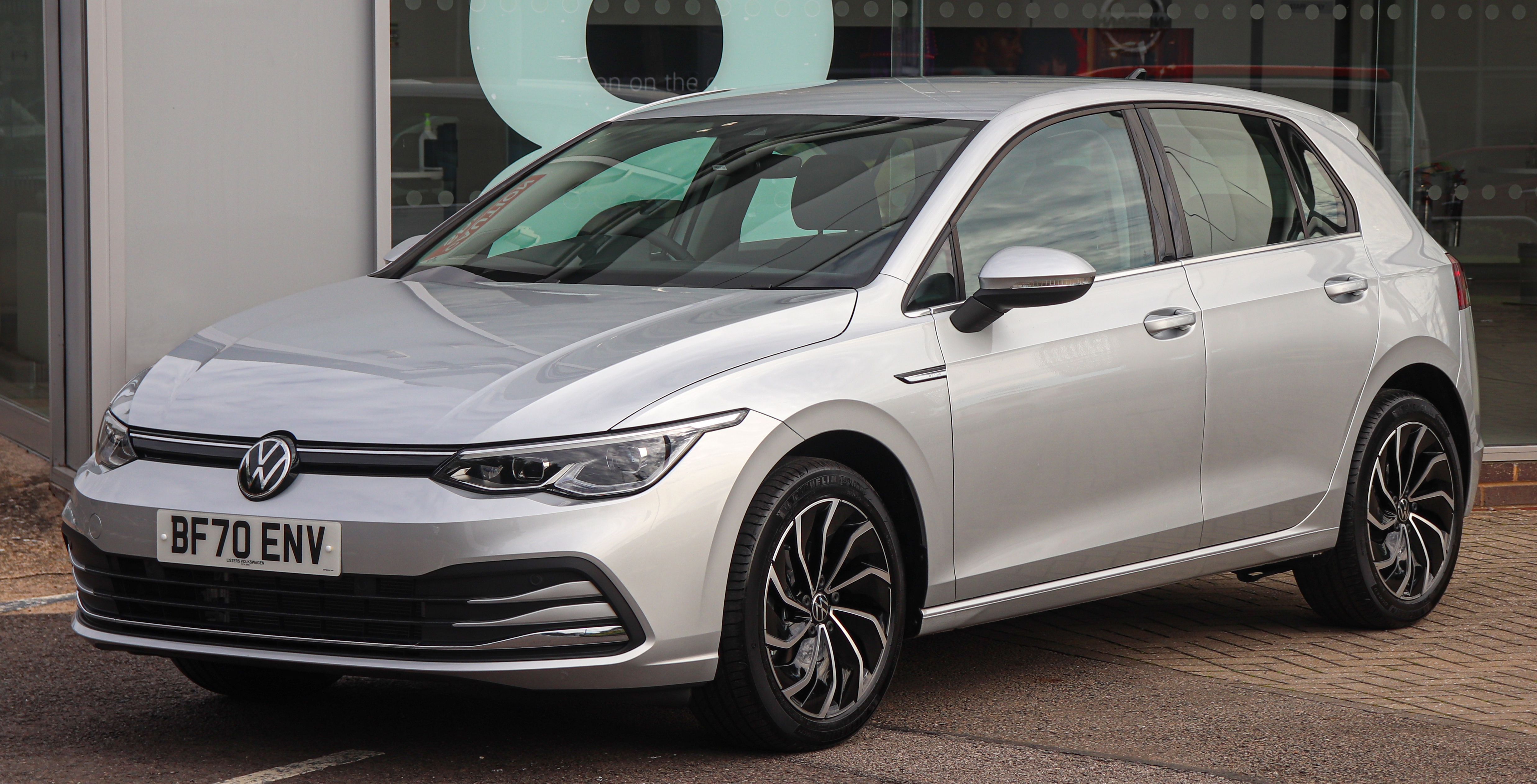
"...and all-wheel drive. Those are tremendous numbers for a vehicle that's not much bigger than a Golf GTI hatchback."
The Golf GTI is a fun and sporty version of the regular Volkswagen Golf. It's known for being quick and enjoyable to drive while still being practical for everyday use.
The Volkswagen Golf GTI is a sporty version of the standard Golf hatchback, known for its performance, handling, and practicality. It features a turbocharged engine and is popular among enthusiasts for its balance of fun and everyday usability.
"...the power delivery, as with all electric vehicles, feels pretty linear, and it's quiet."
Electric vehicles are cars that run on electricity instead of gas. They are quiet and can be very fast because they get power instantly.
Electric vehicles (EVs) are cars powered entirely by electricity, using batteries instead of traditional internal combustion engines. They are known for being environmentally friendly and often have instant torque for quick acceleration.
"...you get heated seats and not ventilated, and you get a heated steering wheel with this model as well."
Heated seats are seats in a car that can warm up, making them more comfortable when it's cold outside. They work by using electricity to heat the seat material.
Heated seats are a feature in many modern vehicles that provide warmth to the occupants, enhancing comfort during cold weather. They typically use electrical heating elements integrated into the seat cushions and backrests.
"...you get a heated steering wheel with this model as well."
A heated steering wheel is a steering wheel that can get warm, making it more comfortable to hold when it's cold outside. It helps keep your hands warm while driving.
A heated steering wheel is a feature that warms the steering wheel, providing comfort to the driver in cold weather. This feature is especially appreciated in regions with harsh winters.
"...rear cross traffic alerts, Ford collision alerts."
Forward collision alerts let you know if you're about to hit something in front of you, so you can stop in time.
Forward collision alerts are safety systems that warn drivers of an imminent collision with a vehicle or obstacle ahead, allowing for timely braking or evasive action.
"...the ultimate comes with a highway driving assistance system."
A highway driving assistance system helps you drive on the highway by keeping you in your lane and at the right speed, sometimes even letting you take your hands off the wheel for a bit.
A highway driving assistance system helps drivers maintain speed and lane position on highways, often allowing for hands-free driving in certain conditions.
"I mean, the Lexus RX is maybe the prime example of a vehicle like that that I think they want to compete with here."
The Lexus RX is a fancy SUV that offers a lot of comfort and features, making it a popular choice for people who want a stylish and reliable vehicle.
The Lexus RX is a luxury mid-size SUV that is known for its comfort, reliability, and upscale features. It serves as a competitor to models like the Mazda CX-70, particularly for buyers looking for a two-row SUV.
"that I think they want to compete with here. Well, what they did was they just eliminated the third row of the CX-90 and now have the CX-70, which is, I guess, a good solution."
The Mazda CX-90 is a stylish SUV that is made for families and people who want a nice car. It has a comfortable interior and is designed to be fun to drive.
The Mazda CX-90 is a midsize SUV designed to offer a blend of performance and luxury, featuring a stylish design and advanced technology. It aims to compete in a crowded market by providing a comfortable ride and efficient use of space.
"Well, what they did was they just eliminated the third row of the CX-90 and now have the CX-70, which is, I guess, a good solution. I mean, it certainly opens up a lot of cargo space."
Cargo space is the room inside a car where you can put your bags, groceries, or anything else you need to carry. More cargo space means you can fit more stuff in the vehicle.
Cargo space refers to the area in a vehicle designated for storing luggage, groceries, or other items. The amount of cargo space can significantly influence a buyer's decision, especially for families or those who frequently transport goods.
"Let's talk about other things. This has a strong turbocharged inline six cylinder engine, mild hybrid assist, so that's good."
This is a type of engine that has six cylinders arranged in a straight line. It uses a turbocharger to make the engine more powerful by pushing in extra air, which helps it run better and faster.
A turbocharged inline six cylinder engine is a type of engine configuration that uses a turbocharger to increase power output by forcing more air into the combustion chamber. The inline six layout is known for its smoothness and balance, making it a popular choice in performance and luxury vehicles.
"This has a strong turbocharged inline six cylinder engine, mild hybrid assist, so that's good."
This is a system that helps a regular engine use less fuel and produce fewer emissions by adding a small electric motor. It doesn't let the car run on electricity alone, but it helps the engine work better when you accelerate.
Mild hybrid assist refers to a system that combines a traditional internal combustion engine with a small electric motor to improve fuel efficiency and reduce emissions. Unlike full hybrids, mild hybrids cannot drive solely on electric power but can assist the engine during acceleration and improve overall performance.
"...es an hour. But at Le Mans, Vic Alfred's Porsche 917 raged down the Mulson straight at 248 miles per h..."
The Porsche 917 is a very famous race car that was super fast and won many races. People talk about it because it was really important in car racing history and had a unique design.
The Porsche 917 is a legendary sports car that gained fame for its dominance in endurance racing, particularly at the 24 Hours of Le Mans. With its innovative design and powerful engine, it set numerous speed records and is celebrated as one of the greatest racing cars of all time.
"...ur. The racing pit of the Porsche 917 versus the Ferrari 512. The fastest road racing ever."
The Ferrari 512 M is a famous race car from the 1970s that was really fast and powerful. It's talked about a lot because it raced against other legendary cars and is a symbol of Ferrari's racing success.
The Ferrari 512 M is a race car that was part of the iconic Ferrari lineup in the 1970s, known for its speed and performance in endurance racing. It is often compared to other legendary cars like the Porsche 917, highlighting the fierce competition in motorsport during that era.
"...timore and he was witty enough to understand this modus of logistics and operations."
The Renault Modus is a small car that is great for driving around the city. It's designed to be easy to park and has a lot of room inside for passengers and cargo.
The Renault Modus is a compact MPV (multi-purpose vehicle) designed for urban driving, offering practicality and versatility in a smaller package. It is known for its efficient use of space and ease of maneuverability, making it suitable for city dwellers.
Select text to request an explanation
This is America on the Road named Best Radio Show by the International Automotive Media
Conference and now in its 33rd year on the air.
Thanks for being with us as we bring you the latest automotive information from around
the world.
I'm Jack Neerad with me is co-host Chris Teague unburying himself from a major winter
storm.
I mean, tell us about that, Chris.
Yeah, the impacts here aren't as bad or as impactful, I guess I should say, as places
like Texas and some of the Midwest, but we got almost two feet a couple of days ago and
then another six inches right after that, the night after or so.
They are still running the plows here as I speak now, 48 hours later, so it's winter
in Maine.
Yeah, there you go, winter and winter and winter.
Let's talk about automotive news because that's what we're about, we're not a meteorological
show.
Here's some news.
Tesla is putting self-steering behind a monthly paywall.
It raises a big question for drivers who thought they got this kind of stuff.
This stuff came with the car.
Volvo says its new EX60 electric SUV ends range anxiety for good.
It has 400 miles of range and ultra-fast charging.
We'll see if that changes the game.
I'm curious as to your opinion on that, Chris.
From sky high interest rates to $1,000 monthly payments, auto loans are squeezing every generation.
Younger buyers are really hard hit.
So this is a story that affects virtually anybody who buys a new car, so we'll talk more
about this.
And a federal judge has forced federal government EV charging funds to be spent even as change
regulations suggest that fewer electric cars may actually need the chargers.
So this was bound as first of controversy, judicial appeal and everything else.
So we'll have our thoughts on that.
To spend or not to spend, right, Chris?
Yeah, it seems like a lot of it's already spent, so we'll have to see where we're going
after that.
Yeah, interesting.
America on the Road has brought you by drivingtoday.com, emlancy.com, the publisher of my latest
book, Only One Thing Stays, The Same, and Mercury Insurance.
If you're looking to save some money, you should switch to Mercury for your auto and
home insurance.
The Californians save an average of $670 with Mercury, so imagine how much you could save.
Get a quote today at drivingtoday.com slash auto insurance.
That's drivingtoday.com slash auto hyphen insurance.
Well, Chris, what is your test vehicle this week?
I drove the 2026 Volvo EX30.
It's one of the automaker's newer models, and I can't wait to tell you all about it.
All electric, of course.
My test vehicle this week is the 2026 Mazda CX70 Turbo S Premium, so we'll talk about
that.
We have an interesting guest, too.
My Moussainis is CEO at Detroit Axel, and his company has been dramatically affected
by recent tariffs, so we'll talk to him about that.
He reached out to us to talk to us about it, so we're eager to talk to him about that.
So, stay with us, and we'll be right back right here on America on the Road.
Welcome back, everybody, to America on the Road with Chris T. Jack D. Radback with you
at his news time.
And of course, Tesla is always in the news, but they are changing things up for their
drivers or for drivers who buy Tesla vehicles going forward.
They've changed the access to their advanced driver assistance technology.
Several key features are now behind a monthly paywall.
They want to increase subscription revenue.
That's basically their new business model, is to get as many people paying over and over
and over again forever and ever as long as they own the car.
New vehicles sold by Tesla in the United States and Canada will no longer include auto-steer
as a standard feature.
And instead, buyers must subscribe to the company's full self-driving software, $99 per
month to regain access to self-steering.
This is something that a lot of car companies provide, or you can get as a one-time fee
anyway.
Your thoughts, Chris?
Well, as you said, I think it does help them boost their subscriptions, right?
I think previously full self-driving was available for several thousand dollars on top of the
price of your Tesla.
So I guess it's good that they can get this to a cheaper price point for people or more
approachable price point, I should say.
But I have the question, so you mentioned new Teslas.
Does this impact existing Teslas?
So if I own one, do I now have to start paying a subscription if I want these products?
It doesn't appear that that's the case.
I think this is all new Teslas.
I don't know that they can do that.
There was a situation where you could buy full self-driving as, I think, an $8,000 option.
It was a giant option, but then you got it for the life of the car.
Now you might do the math and find out that the $99 a month would be cheaper than spending
$8,000 on it.
But it's interesting to me that these advanced features that Tesla is pretty much known for
are now behind a pay subscription kind of pay situation.
And I'm not sure that people are absolutely wild about this, and especially if you're
financing a car, you might go, OK, I'll finance this $8,000 for this thing, or whatever
an option costs to get this stuff.
Some of this stuff is standard, like Lane Centering, for example, is standard on things
like Hyundai's.
It's kind of wild to me.
Yeah, and one of the bigger selling points that I've heard from many people over the
years has been Tesla's technology and the fact that a lot of these features are baked
into the cars.
So who knows what this is going to do to demand.
I mean, if it makes their cars cheaper out of the gate, maybe, but I don't know that
that's going to be the case.
Yeah, I think in a lot of ways Elon Musk is trending away from the car business and trending
more into the software and AI business.
And maybe that's where the future lies for him.
I don't know if it lies that way for Tesla, but maybe some of his other companies will
have to see.
Well, we talked about this last week a little bit.
But the Volvo EX60, now Volvo has introduced it officially, I guess.
This is an all-electric midsize crossover.
Of course, the XC60 is, I think their biggest seller has been for a long time.
This is a five-seat midsize SUV with 400 miles of estimated range.
All-wheel drive here in the United States anyway.
And their coming versions will have somewhat less range, 320 miles or 310 miles.
As an electric vehicle owner yourself, Chris, does 400 miles of range change the game for
you?
No.
And this is only coming after having owned one for almost two years now.
I think if you'd asked me before I purchased one, is 268 miles or whatever our Honda Pro
Log is rated at enough?
And I would have said no.
But in daily practice, it's perfectly fine.
So 400 miles, I mean, for people who are experienced, it's not going to be a huge selling point,
I don't think.
But for newcomers, probably.
Yeah.
They're also using faster charging, or claiming faster charging speeds, 173 miles of range
can be added to the vehicle in about 10 minutes.
Of course, that's not a full charge.
I don't know what the full charge would be.
I think we could probably do the math on that.
Although it's not linear, is it?
I mean, it takes longer to get a full charge than like three times that or whatever the
full charge would be.
Yeah.
It slows significantly after 80%.
And then I think the other challenge will be finding a charger that can actually deliver
those speeds if you're trying to hit the maximum rate that they claim.
Yeah.
It's interesting to me that Volvo is making a big deal about this.
I guess they have to.
But certainly, I think the bloom on electric vehicles is off the road here quite a bit.
And we'll just have to see what happens with this new vehicle.
But they're touting a lot of things there.
Somebody at Volvo has data showing them that their customers want electric vehicles.
So I can see this being maybe something that fits that mold for them.
Yeah.
And I guess for Volvo customers, there's a lot to like about that too.
I mean, they're probably more ecologically oriented than a lot of customers of other
vehicles.
I want to talk about auto loans and auto debt.
There is a study that came out from Lending Tree that I think is fascinating and it shows
just how much people are paying and really getting clobbered by auto loans.
I mean, I hardly know where to start here.
The various generations are affected somewhat differently by this, depending on how much
they borrow and all their credit history, a bunch of other things.
But millennials owe an average of $22,600 on their auto loans.
That's a lot of money, I think.
Gen X borrowers about the same number, $22,500.
Gen Z borrowers borrow less, averaging $20,000, and so their monthly payments are the lowest
at $522, but for everybody, there's a ton of money.
And there are a lot of people now with $1,000 a month car payments and huge amounts of auto
loan debt.
Yeah.
It's kind of a perfect storm, right?
New vehicles are more expensive, almost $50,000 average transaction price.
Interest rates are still elevated, although they've come down a little bit.
And then you have the rest of the economic situation where people are struggling to buy
groceries and things.
So these kind of come together and make a big issue for a lot of people.
And unfortunately, I think this demand is going to push people to the use market, which
is going to drive those prices up as well.
Right.
Let's talk, I'm glad you talked about interest rates because I mean, that's something very
important.
And Gen Z borrowers, according to the study, are paying an estimated 13% interest, 13% interest.
That used to be usury.
That used to be illegal, you know, back when I was a kid.
That adds up to nearly $9,800 in total interest over the life of a loan.
Gen X borrowers pay about the same amount, but they're borrowing more, so they're paying
less interest.
Loan terms are stretching longer.
More than half of Gen X borrowers have auto loans longer than six years, and 8% of millennials
are locked into loans more than seven years long.
That might make the monthly payment lower, but you pay a lot in overall interest, don't
you?
You do.
And it also locks people into those vehicles because you're not paying off the principle
as quickly you end up upside down or with negative equity, I guess is the technical term there.
So a lot of people are going to be shocked when they try to trade these vehicles in three,
four years down the road, and they're not as valuable as they thought they were.
Yeah, here's another bunch of statistics I think are interesting.
Gen Z borrowers spend about 13.4% of their monthly household income on auto loans.
That's a ton of money.
Baby boomers, you know, I'm one of them, spend roughly 11.1%, probably less onerous
for them, given where they probably are in terms of overall personal worth.
Millennials are spending 7.7% and Gen X borrowers 7.1%.
You really don't want to spend over 10% of your income on an auto loan, right?
Yeah, I mean, I'm considered, I guess, an elder millennial almost in the Gen X category,
but it would be very painful for $1,000 to be coming out of my account every month.
That's a significant chunk of my mortgage cost.
Yeah, yeah, I mean, and you're talking about an asset that declines in value as opposed
to your home mortgage where, in theory, you'll at least break even or likely it will appreciate
in value.
Here's a story I want your comments on, Chris, a federal judge has ruled that the Trump administration
has to keep spending on electric vehicle charging, or resume spending I guess, on electric vehicle
charging infrastructure, saying that this had been approved by Congress, so they have
to spend it.
I think the Trump administration put a hold on that, thinking, hey, we're switching things
up, we won't need all this infrastructure, what's your basic take on this?
Well, again, we go back to the cart before the horse conversation.
I don't know if more chargers is going to spur more EV adoption.
I think that it's highly political here, so maybe it's not the best idea to do that.
At the same time, I would like to have more chargers for my own use, so it's hard for
me to come up with a solid answer there without flip-flopping.
I think that's a solid answer, and the answer is, we're not sure, right?
I mean, there's pluses and minuses, there's nothing wrong with that, it makes sense.
Remind us of your road test vehicle this week, Chris.
I had the 2026 Volvo EX30 all-electric SUV.
Right, and I'm testing the 2026 Mazda CX-70 Turbo S Premium, so stay with us for that,
and we'll be right back.
I received a letter from a reader this week, and I thought I'd share it with you.
Here's what he wrote.
I just got around to reading Dance in the Dark, and wanted to say how much I enjoyed
it.
I'm a compulsive reader, and this one was right up my alley, an unlikely hero, a lot
of twists and turns, some adult content, and humor that rose naturally from the action.
Keep on writing, and I'll keep on reading.
Of course, that's just the kind of letter any author would love to get.
I hope that others get the same enjoyment from reading Dance in the Dark, and my newest
crime novel, Only One Thing Stays the Same.
Both are available exclusively at Amazon.com.
That's Dance in the Dark, and Only One Thing Stays the Same, both written by me, Jack Arne
Red.
Thanks for looking for them today.
Welcome back to America on the Road with Jack here right back with you along with Chris
Teague.
Glad that Chris is with us co-hosting, and Chris you have a fascinating vehicle to road
test for us.
It is a vehicle that I drove, I think in Barcelona years ago, and then it's been kind of a political
football basically, but tell us about the Volvo EX30.
Yes, it is a surprising addition to the Volvo lineup given where it's made and all that,
but as a 2026 Volvo EX30, this is their smallest electric vehicle for sale in the United States.
The EX90 is the larger three-row, not version, but vehicle that they sell here.
You can get into this vehicle for around $40,300.
I tested the all-wheel drive Ultimate model, which with a few options came out close to
$50,000.
Jack, do you remember driving the EX30?
What were your impressions of it?
I do.
I remember it very vividly.
In fact, I think Matt DiLorenzo and I partnered up when we were in Barcelona to drive this
thing around.
I mean, it's a long time ago now.
I had fun with it.
I mean, it seemed like it's maybe a better car for Europe than it is for the United States,
just in terms of scale and everything else.
I liked the vehicle.
I thought it was a fun vehicle, and I thought it could be a good, valuable vehicle.
I agree, and there are some issues I had with the practicality, but I'll get to that after
the drivetrain.
The single-motor version, which starts down around $40,000, has 268 horsepower.
My dual-motor version had 422 horsepower, 400 pound-feet of torque, and all-wheel drive.
Those are tremendous numbers for a vehicle that's not much bigger than a Golf GTI hatchback
if at all, really.
I haven't looked at the specs, but it certainly didn't feel bigger than my Volkswagen Golf.
Volvo claims a sub-four seconds, zero to 60 time.
They're saying like 3.4 seconds.
My test car had all-season tires, and the roads are very cold here, so I did not put that
to the test.
I wanted to stay on the road and out of the ditch.
What I'll say is that it's extremely quick.
It's very smooth.
The power delivery, as with all electric vehicles, feels pretty linear, and it's quiet.
You're not hearing an engine go and all that.
The ride quality is surprisingly smooth, despite the fact that this car also has sharper than
expected handling.
You go around a corner in this vehicle, and it stays pretty flat, and that's surprising
given that the ride quality, there's not a big trade-off of ride quality for handling
there.
Jack, what did you think about the speed?
Did you guys get to test the dual motor that long ago, or did they only have the single
for you?
You know, I really can't remember.
I think we did.
It struck me as a pretty quick vehicle.
Of course, even in single-motor form, that's quite a bit of horsepower.
This is heavier than the typical subcompact or compact hatchback, but still, it struck
me as a very pleasant vehicle to drive with plenty of power.
I agree.
So speaking about range, which we did in the last segment, the single motor delivers 261
miles of range, and the dual motor delivers 253 miles of range, which I'm going to go
ahead and tell you if you can charge at home.
That's probably enough for you and your daily commute.
I don't know about road tripping, but those numbers are not bad in real life.
They're not as impressive as 400 miles, so we can say that.
Inside you get five seats.
My ultimate model came with, I won't say recycled, I'm going to use the word sustainable
cloth upholstery.
It feels like wool almost.
It's very high quality.
There's no plastic bottle feel to it or anything like that, but with those seats, you get heated
seats and not ventilated, and you get a heated steering wheel with this model as well.
There's good room in the front seats, Jack.
I've always loved Volvo's ergonomics.
I think the way that you can position the seats and the steering wheel adjustments fit
well with the rest of the interior.
So for me, at six feet, I can adjust my seat and have good visibility without any real
like ducking and moving to try to see around pillars and things like that.
The back seats are short on head and leg room, and that is partially due to this vehicle's
overall length.
The wheelbase is pretty short given compared to some of its competitors.
And it's also got a sloped roof, so you kind of lack some of the interior dimensions
that you would probably want.
And the cargo space is also compromised because of that.
So my 80 pound golden doodle loading him in through the back is kind of hard
because he smacks his face on the door.
He's just too tall for it.
So I think if you're considering this vehicle, it's great for in town use.
But I would try it out to make sure that it fits your your needs, especially if you
have kids or a large dog or you carry a bicycle or anything like that that you
want to to fit in there.
Technology wise, you get a 12.3 inch touchscreen.
We've talked about this and I've said this with every other vehicle that has this.
But everything is built into the touchscreen, climate controls, vehicle controls,
seat controls, headlights, windshield wipers, everything is in this screen.
And I had to look at the owner's manual to learn how to turn the windshield wipers on.
And it also took me 30 minutes to adjust the driver's seat scrolling through the menu.
And now I'm not a Luddite.
I'm not also that young anymore, but far from it, but you're young enough.
Yeah, I figure I can I count myself as pretty tech savvy.
And it took me a while.
And even my wife got in and was like, oh, how do you adjust the seat and things like that?
It's just too complicated for me.
I don't I don't enjoy that level of complexity.
I would wish for some physical controls.
I think most people would, too, even if you get used to it.
The good news is you get Google built in, you get wireless Apple CarPlay and Android Auto.
The end built the built in input or navigation system is fantastic.
And then on top of that, you also get Volvo's excellent safety equipment,
blind spot monitoring, rear cross traffic alerts, Ford collision alerts.
And the ultimate comes with a highway driving assistance system.
So you can go hands free for short periods of time.
Jack, if I were buying this vehicle, I would probably still opt for all wheel drive,
even with the extra cost.
I think it's worth it if you live in a cold climate.
But it's too small for my family of four plus our dog.
And that's really my biggest knock against it.
You know, the one thing I'll say before we close is that the key fob on this vehicle
has no buttons on it.
So you don't start, stop the vehicle.
It just automatically turns on and off.
And there were times when I would approach the vehicle,
it wouldn't recognize the key.
And I had to walk away and come back because there's no unlock button.
So just some things to keep in mind if you want to,
I would test it out before you before you make a decision.
Lot to like about it.
And then some things that are quite irritating, I think.
Maybe my wife would say that about me, Chris.
Well, as you probably know, sometimes the simplest solution is the best solution.
It's certainly true in solving crimes.
And of course, I write about crime, including true crime and some crime fiction.
But I also write about cars.
And the 2026 Mazda CX-70 Turbo S Premium kind of proves that in a way.
I mean, I think Mazda wanted to have a two-row alternative, a mid-size SUV.
There are some buyers who don't need a third row,
don't want a third row and want something like that.
I mean, the Lexus RX is maybe the prime example of a vehicle like that
that I think they want to compete with here.
Well, what they did was they just eliminated the third row of the CX-90
and now have the CX-70, which is, I guess, a good solution.
I mean, it certainly opens up a lot of cargo space.
I think not that much more cargo space than if you had a CX-90
with the rear seat folded out of the way.
But okay, they ashcan the third row and off we go.
And from that point of view, though, Chris, what's your overall take?
Say two quick things.
I still remain impressed that Mazda is able to offer so many variants
of every vehicle that it makes.
And in terms of the CX-90 versus CX-70, I still am in the camp of just make the CX-90
and maybe make it a little bit cheaper because you didn't have to modify it
because for the CX-70.
But I would just fold the third row seat down, honestly.
Yeah, yeah.
And then you have that opportunity to use the third row if you ever need it.
And if you don't, but I'm certain their focus groups have told them
that there are some people who want a five seat vehicle.
They don't want a third row.
They want to pay for a third row or even feel like they're paying for a third row,
which they probably wouldn't in this car.
Let's talk about other things.
This has a strong turbocharged inline six cylinder engine,
mild hybrid assist, so that's good.
All-wheel drive is standard here in the United States.
A long list of comfort and safety features.
I mean, Mazda just kind of pulls out all the stops in terms of safety features.
Let's dive into pricing here.
The starting MSRP is $53,240.
This sits above the turbo trims.
It's kind of among the top of the turbo trims.
As I mentioned, this does have the higher output version of the inline six cylinder engine,
the turbocharged engine with good numbers and 3.3 liter turbocharged six cylinder engine.
340 horsepower and 369 pound feet.
When running on premium fuel, power is routed through an eight speed automatic transmission.
It has iActive all-wheel drive, which is kind of an interesting smart all-wheel drive system.
There's a lot to like about the powertrain here, isn't there, Chris?
I agree.
Still funky with the premium fuel thing.
I like that you can get a little more power there.
But all-wheel drive, I like Mazda's system and it's standard on all their SUVs now.
Yeah.
Interesting all-wheel drive system.
This is a fairly quick car, 0-60 in quick vehicle.
6.2 seconds.
That's pretty darn good, I think, probably all you need.
It'll also tow 5,000 pounds when equipped with the Mazda genuine towing accessories.
So that's good.
It's a fun to drive vehicle.
I mean, Mazda does this right.
And this is pretty fun to drive vehicle for a vehicle of its size.
This isn't exactly a pocket kind of vehicle.
It also has this kinematic posture control, which I note you wrote about one time.
And maybe you can describe it.
It's pretty interesting.
Alternative to torque vectoring, right?
Oh, yeah.
It's been so long since I wrote about it.
Jack, I don't even remember.
That was probably four years ago.
Yeah.
Well, I read your piece and basically it applies braking to one of the wheels.
As opposed to extra torque.
So it kind of is the opposite of providing torque.
It takes away torque from some wheel.
Essentially, the same kind of thing as torque vectoring to help it go around corners.
So I think that's pretty cool.
It also has selectable modes.
Good suspension, as I say, fun to drive.
Interior, really nice as we are used to, especially in up-level Mazdas.
Napa leather seating.
Soft touch surfaces all over the place.
Nice design elements.
Front seats are heated and ventilated with a lot of adjustability.
Rear seat passengers do well with a lot of leg room.
Of course, this is a vehicle that could be a three-row vehicle.
So there's tons of rear leg room for that second row.
And cargo space is gigantic, of course, because you don't have that third row.
You have a power lift gate.
And then there's the infotainment system.
12.3 inch Mazda Connect display.
That's good.
Most of the time you use the rotary controller,
but you can use the touchscreen if you are using Apple CarPlay and Android Auto.
This baffles me, Chris.
Maybe you have some questions on that.
Why they just don't make a touchscreen available as well?
With a rotary controller, we see that in some other models,
other brands.
Thoughts?
Yeah, I would like to be able to scroll through a million radio stations
without cranking a dial 55 times just to change the radio station or select a song.
But it's decent while you're driving.
You don't have to reach over and touch the screen, I guess.
Yeah.
Absolute immense amount of safety equipment.
I can't list them all.
So I think this is a really good vehicle at about $55,000.
And I think you were driving a vehicle that's also worthy of taking a look at, right?
I agree.
So there you have it.
When we come back, we will have our special guest, Mike Mushanich,
who is CEO at Detroit Axel.
A lot of thoughts about tariffs.
So stay with us for that.
And I think you'll find that stimulating.
We'll be right back.
I'd like to tell you about the most exciting and authentic racing novel I've ever read.
It's called Closing Speed, written by award-winning author Ted West.
In 1970, the Indy 500 pole speed was 170 miles an hour.
But at Le Mans, Vic Alfred's Porsche 917 raged down the Mulson straight at 248 miles per hour.
The racing pit of the Porsche 917 versus the Ferrari 512.
The fastest road racing ever.
And Rodentrack sent a promising new rider, 27-year-old Ted West, to cover it.
He traveled from Brands Hatch to Monza, the Targa Florio, Spa, the Nurburgring and Le Mans.
You got to know the racers personally and the women who loved them.
The racing was blindingly fast.
Driving horrifically fragile cars at those speeds took unheard of courage.
Death was around every corner and the drama tensely real every moment.
Closing Speed is the most realistic, intimate racing novel ever written.
It's a look into the very heart of the sport.
An incomparable racing read.
It's available now at Amazon.
That's Closing Speed by Ted West.
Look for it.
Welcome back, everybody.
To America on the Road Check, you read that.
But we have a terrific guest for you.
I'm really eager for this interview with Mike Musanich, who is CEO of Detroit Axel.
A company that has been affected by the tariffs recently.
And I want to talk to you about it.
And you want to talk about it, too.
And number one, thanks so much for being with us.
We appreciate it.
Thanks for having me.
Tell us a bit about your company.
I think it's an American success story.
I love to hear that kind of thing.
Tell us all about how you got to be where you are.
Well, the company started by my old man back in the late 80s.
So Detroit Axel, there's American Axel.
Then there's also Detroit Diesel Axel, Mammoth Multinational Corporation.
This is the father and son operation.
We grew to over 1,000 employees in five different countries and generated $450 million a year in revenue.
That's a pretty nice father and son business, not exactly a cottage industry with 1,000 employees.
He started out with two employees.
I joined him at the age of 14.
They fired me from high school.
So I started working with them and we grew shoulder to shoulder.
And he's still working.
He's at 75 years old, like 13 stents in his heart, two packs of cigarettes, and he's still working.
God bless him.
God bless him.
And American in so many ways.
Tell us what your company does.
It's an interesting company and tell us about it.
We're in the business of auto parts.
We rebuild auto parts and we also import and distribute auto parts, mostly online, predominantly,
e-commerce, all your regular e-commerce channels from Amazon to eBay to Walmart to our website.
So these are replacement car parts, right?
Yes, after market.
Do you supply any OEMs or is this all your business?
I'm here in the city of Detroit.
We do not supply any of the OEMs because they sneeze, we get a cold and we die, right?
So I've seen a lot of these suppliers that rely on one or two or three businesses for all their
revenue and if something happens, they go right under.
Yeah, it's nice to have tens of thousands of customers, hundreds of thousands of customers
versus two or three is probably a better way to do business.
So we're strictly retail.
And just describe to our listeners the kind of stuff that you supply.
On your wear and tear items, your brakes and rotors, your suspension and tire rods and struts,
of course, your axles and your steering.
And now we're getting into more product lines as time goes on, as we grow the company.
A lot of logistics involved, a lot of infrastructure.
How should I this?
Learn as you go, there is no manual for this.
I see the internet, but we jumped on it early back in 2008.
And I liken it to when the railroads were first, they came online in the U.S. here.
Now you have a guy selling shoes in Baltimore and he was witty enough to understand this modus of
logistics and operations.
So he started selling it in Georgia versus, well, he was only selling around Baltimore,
now expanded his reach.
And that's what the internet really did, from our garage doors to every porch on the nation
and beyond.
Yeah, you can reach out into everybody's homes.
And it was the death of the middleman.
Right.
My brother owns his own auto shop.
And I'm a big fan of remanufactured parts and aftermarket parts.
I think often they are really terrific values.
And I think you found that to be the case.
Yes.
I mean, out there, the OEM are just, I don't know, or auto zone, all these big boys,
they're hitting it with 600 and 700% margins or something, because it's just incredible
what they're trying to sell it for.
Right.
And that's how we got in is we're able to give a value and quality and, of course,
service to the customer.
Right.
And then you got a bit of a curveball, right?
I mean, the Trump tariffs, tariffs through a major curveball, change the way you have
to do business and change the economics of your business.
Tell us about that.
Tell us what happened to you.
You know, I told everyone last year, don't do it.
Don't vote for this guy.
I'm telling you, he's going to throw a wrench in everything and everyone's doing.
Right.
So I'll try to try to explain it simply.
Right.
We import a million dollars worth of product.
Once upon a time, we pay the federal government $25,000 in tariffs.
Now for that same million dollars in products, we're paying the federal government $725,000
overnight.
Right.
So it's not like, you know, a little gradual, right?
The increase or not.
They're just sudden abrupt, right?
And that's been going on since March or April till about the end of November.
And then he brought it down 10% because he met whoever he met.
It just how he felt that morning.
So now for that same million dollars, it's $625,000 versus that $25,000.
So it's a little bit of a relief, but that's not how our system is made to work.
And I think you sued the government, right?
I mean, you sued the administration.
Where does that stand?
We took him to the court of international trade out there in New York and we sued him for another
section of the code that he eliminated.
It was called the de minimis exemption.
The de minimis exemption allows packages valued under $800 to enter the country with no tariffs.
It's been on the book since the 1930s.
It was a godsend for lower middle class Americans.
And literally 1.5 billion packages would enter the U.S. yearly under the de minimis exemption.
Interesting, yeah.
It's a statue of law and he just took a pen.
So I don't like that one.
So he'll erase it.
And that's not the way our government works.
It was made by Congress and it can only be repealed by Congress, not by the executive.
And that's what our lawsuit was about.
And where does that stand?
Is it pending?
There's another lawsuit that was just ahead of us by one week,
which was the VOS election versus Trump administration against the,
you know, he puts these tariffs, section 301, section 232.
I put tariffs and, you know, I've become a trade lawyer out of necessity, I guess.
But so this company, which I give him kudos because they had the cojones to go out there
and demand their day in court.
And so they won in the court of international trade.
Then it got passed on to the court, the federal court of appeals.
They won there and then it went to the Supreme Court.
Now it's heard, I think it was in November, it was heard in the Supreme Court.
Now we're just waiting on them to make a decision.
So you're in some ways at least an observer or a party to the current situation where the tariffs are
under consideration by the Supreme Court and we haven't seen a ruling on that as we speak.
They challenged the IEPA tariffs.
In our case, he removed the de minimis statue on the basis of the IEPA,
the emergency powers act, right?
Or whatever you want to call it, right?
So if they win, we win.
So when I was our day in court, the court of international trade simply said all the remedies
that Detroit axle was seeking have already been awarded in the BOS case.
Since it's an appeal, we're going to stay in your case, right?
So it's pretty much they win, we win in different ways.
I don't have my fingers crossed or nothing because I don't expect much from the Supreme Court.
After the rulings, we've seen them and they gravitate to the executive.
The way one has to be prudent is to plan their business and their future as if they lost, right?
Write it off, keep doing what you do.
So that's essentially, I guess, what you're doing now, right?
I mean, you're kind of adapting to the fact that there are these tariffs.
How much of the tariff cost to you have you been able to pass on?
Are you just basically because of the law of supply and demand,
which is something that nobody is going to repeal?
Tell us about that, tell us about pricing and that.
We're in the business of small margins, right?
That's how we stay competitive and stay ahead of the competitors.
So many people in our industry are small margins or retail in general is based on small margins.
Sure.
Here, you increase the tariff tenfold, tenfold overnight.
Prices will go up because of the increase of tariffs, of course.
But what's happening is that there's a shortage of supply
because the cost of entry is so high.
Imports are down 20, 30 percent.
De minimis is eliminated.
So there's 1.5 million packages not entering yearly.
So the amount of people that are able to afford these tariffs,
you got to pay them as soon as they land, right?
As soon as they get to your, you got to pay them.
And you stocked up three and four months supply
and you have to pay tariffs on three or four months supply.
So there's less people that are able to do that.
So that means you're going to have less products.
So now you have the same dollars chasing fewer product.
That in itself is probably going to raise the price
faster than the tariffs themselves.
There's going to be a shortage and which is starting to show.
In our case, yes, we had to increase price.
And I would say that our revenues up 35 percent from last year.
Our profits are down 90 percent.
So that's the world that he's, he's flipped on us.
Yeah. Well, it's certainly a major change.
There's no doubt about that.
Absolutely a giant change.
Where do you source most of your products?
So, you know, what countries do they come from typically?
China, India for some, but mostly out of China.
I am gun hoe about reshoring manufacturing back into the U.S.
It's there for us.
I mean, the way we're able to produce and distribute
straight to the end user, right?
By eliminating warehouses and distributors and retailers.
You know, each one of them want to flip the item as it goes down the food chain.
But if you're able to produce it and retail it, you can compete.
But how do you compete when the government just takes all the money?
There's nothing for us to invest in.
Are you looking for American suppliers, looking for U.S. suppliers
or North American suppliers versus the Chinese suppliers
that you've had up till now?
They don't exist.
Will they exist?
No, I don't, this is not the way to do it.
You don't shield us from the world.
We need to, you know, roll up our sleeves and compete with ingenuity and hard work.
By putting tariffs on, not only are you increasing the pricing on everything
and any revenue that would have been used for, you know, for machinery,
for tooling, for engineers, for Pelerac and for equipment is all gone.
I mean, I tell you, we used to pay 700, 800,000 a month in tariffs.
Now you're at 11 million a month in tariffs.
There's nothing left.
So everything goes right to the government.
So they can pay interest on their loans, I guess.
You say you have 1,000 employees.
Are those employees in the United States or, you know, where are the...
About 400 of them are in the U.S.
We had employees in Mexico right on the border with El Paso
when we leveraged that de minimis.
We set up infrastructure there.
Oh, I see.
So you could ship from there, you know.
Right, yeah, and follow that de minimis, yeah.
I mean, five, six years of investment in infrastructure
all wiped out with executive order.
What would you like to see happen?
If your dream were to come true, how would this change?
The market has to be the one to choose who the winners and losers are.
Not the government.
But right now, I'll tell you, the Soviet Union and the Pulitzer Bureau,
at least they had 40 people conducting and directing the economy.
It didn't work out all that well, Mike.
It didn't work out, but they had 40 people.
Yeah, and it was a disaster that I don't think we want that.
This is not the way economy should run, or business should run,
and let alone a nation should run.
It started a revolution over a 2% tariff on a breakfast beverage.
And then we had the Boston Tea Party.
I mean, the only thing we'd ever ask is,
the Constitution made this country what it is today,
the greatest country on earth, and we should abide by its dictates.
Couldn't agree more with that, Mike.
Mike Buchenich of Detroit Axel.
Thanks for talking to me.
I appreciate it.
I learned a lot, and I wish you well.
No, thank you very much for having me.
And stay with us, everybody.
We'll be right back right here on America on the Road.
Welcome back to America on the Road with Co's, Kristie.
This is Jack Nierad back with you.
It is listener question time,
and we love to answer your questions
based on our long experience providing car advice.
Send those questions to editoratdrivingtoday.com.
That's editoratdrivingtoday.com.
Krist, I think we have a good question from Lula in Spokane, Washington.
Lula says this,
I only drive about 8,000 miles a year.
Am I better off buying or leasing my next car?
There are a lot of it depends that goes with this question,
or they go with this question.
I would say a financial advisor would probably tell you
leasing is not the best thing to do financially,
but it really comes down to your comfort level with the not,
like the fact that you're not going to own anything
at the end of the term of the lease.
You're basically renting a vehicle for 36 months, 24 months,
with a giant down payment at the front of it.
That said, if you're only driving 8,000 miles a year,
it could come out in your favor,
especially since leasing payments tend to be a little bit lower
than some of the finance numbers there.
I would say it really depends on your comfort level
with your financial situation,
and whether you want to own a car at the end of the lease
or the loan or not.
Yeah, I'd say the other thing I would say
about this giant down payment is,
it's not precisely a down payment,
because a down payment, when you make a purchase,
gets you equity, but this gets you zero equity,
so thus zero ownership of the vehicle.
So look at that too.
Low mileage is good for leasing,
but I'd still think buying a car is probably a better bet.
And that kind of wraps up our show for this week.
I'd like to remind you my crime novel,
only one thing stays the same,
is available in ebook and paperback form at Amazon.
So look for that.
It's very inexpensive right now.
If you like our show, please pass it on.
Listen on this radio station each week.
Let your friends know where you hear America on the Road.
We'd love to double our listenership this year,
and we need your help, don't we, Chris?
We do, and you can help us get there
by visiting the, or looking for the America on the Road podcast
on Google, a quick Google search.
We'll come to you on all the major platforms,
Apple, Spotify, all the rest.
Like us, download the show, leave us a review.
All those things will help us continue to grow,
and you can take us with you wherever you go.
We'd love to be with you.
We have a YouTube channel, so check that out.
Look at our videos.
We do road tests and shorts and all kinds of stuff there.
All right, thanks to Mercury Insurance
for sponsoring the show,
and to our sports byline network stations for caring it.
Most of all, thanks to you for listening.
We know you have a lot of choices,
so we're honored by the fact you listen to America on the Road,
and please join us again next time
for another edition of America on the Road.
Hi, I'm Jack Arnie Redd,
and I'd like to tell you about my newest crime novel,
Only One Thing Stays the Same.
In a style reminiscent of James M. Kane and Jim Thompson,
two of my writing idols,
the book chronicles a blue-collar worker's
up-and-down love affairs
with two modern Southern California women
who continue to surprise, shock, and ultimately confound him.
As the story unfolds,
an unemployed aeronautics worker named Bill McCurdy
becomes disillusioned with his wife
and slips into an illicit affair
with a teenager from down the street.
Before long, he begins to think of doing the unthinkable,
but despite his desperate attempts to make things work,
almost nothing goes as planned.
His misguided quest for simple love
doesn't turn out to be simple at all.
And before the roller coaster ride stops,
he learns quite personally and very finely
that Only One Thing Stays the Same.
Only One Thing Stays the Same
is available in Kindle e-book and paperback form
exclusively at Amazon.com.
I'd appreciate it if you'd look for it today.
Request an explanation for:
12 cars
Scroll for more
12 cars featured
Request an Explanation
Heard something you'd like explained? We'll add it to this episode.
Sign in to request explanations for terms you heard.
Want to learn more?
Browse our glossary for plain-English explanations of automotive terms, jargon, and concepts.
See something that's not quite right? Our annotations are AI-generated and can sometimes miss the mark.
Click the flag icon on any annotation to suggest a correction.