
Wedding Bell Blue: 2026 Jeep Grand Wagoneer Takes on Central CA
About this episode
Jack Neerad and Chris Teigen kick off with July plans, then dive into the 2026 JD Power U.S. Initial Quality Study: overall quality jumps to the best year-over-year improvement since 1997, but infotainment remains the biggest frustration—especially inconsistent Apple CarPlay/Android Auto connectivity and touch-heavy controls. They also break down brand rankings (Porsche highest overall, Ford leading mass market) and discuss Volkswagen ending a major self-driving partnership with Bosch. Polestar’s U.S. exit is tied to upcoming federal software regulations. The hosts then preview their test vehicles: a 2026 Jeep Grand Wagoneer and a 2026 Subaru Uncharted GT, plus a guest interview with Matt DeLorenzo.
Getting six adults and their luggage to a gala wedding 150 miles away is no small task. So to accomplish it, we called in Big Blue 2, our affectionate nickname for the 2026 Jeep Grand Cherokee that was chosen for the special duty. How did the full-size SUV fare? We’ll tell you this week on America on the Road.
While Jack Nerad was transporting most of his family to central California, across the country in New England Chris Teague was reviewing the 2026 Subaru Uncharted electric crossover, and we’ll have his report as well. Jack and Chris also discuss improving new-vehicle quality with lingering tech frustrations, as revealed by the 2026 JD Power Initial Quality Study. And they examine the drama surrounding Volkswagen ending its big self-driving partnership and Polestar’s departure from the U.S. market.
🚙 Jack Nerad’s Road Test: 2026 Jeep Grand Wagoneer Limited ReserveIn a special road trip report, Jack reviews the 2026 Jeep Grand Wagoneer Limited Reserve 4×4, a full-size luxury SUV that combines premium comfort with genuine off-road ability. Powered by a twin-turbo inline-six, it features opulent Nappa leather, a 12-inch Uconnect touchscreen, and upscale McIntosh audio. But did it have the room, power and gravitas to transport the six-adult entourage to its destination and back? We’ll have a complete report.
🚗 Chris Teague’s Road Test: 2026 Subaru UnchartedWhile Jack was traveling to the wedding, Chris tested the 2026 Subaru Uncharted, Subaru’s newest and most affordable EV. Starting at $34,995, it offers up to 308 miles of range, 338 hp with AWD, a 14-inch touchscreen with wireless CarPlay/Android Auto, 8.2 inches of ground clearance, and up to 25 cubic feet of cargo space. Available in Premium, Sport, and GT trims, it promises practical EV motoring with Subaru’s signature all-weather capability. Did it deliver the goods? We’ll let you know.
🎙️ Special Guest InterviewMatt DeLorenzo, noted auto journalist, North American Car of the Year juror, and author of Mercedes-AMG: Race-Bred Performance, joins the show.
📰 This Week’s Headlines J.D. Power: Vehicle Quality Improves but Tech FrustratesOverall initial quality jumped sharply, but infotainment and connectivity issues (especially Apple CarPlay/Android Auto) remain the top owner complaints.
Volkswagen Ends Bosch Self-Driving PartnershipVW is winding down its $1.7 billion autonomous driving collaboration with Bosch as fully self-driving tech proves harder than expected. Is self-driving farther off than many suggest?
Polestar to Exit U.S. MarketThe Swedish-Chinese EV brand will stop new vehicle sales in the U.S. after 2026 due to federal rules on Chinese software. But is there another reason? We’ll offer our theory.
Honda Sells 15 Million Accords in AmericaThe iconic midsize sedan reaches a major milestone, with strong hybrid sales and decades of U.S. production in Ohio.
❓ Listener QuestionToby from Yuma, Arizona, asks: “Are today’s cars becoming too complicated for people to do their own repairs?” Jack and Chris share their thoughts.
📚 Jack Nerad’s New BookJack’s crime novel, Only One Thing Stays the Same, is available now in paperback and eBook on Amazon — currently at a sale price.
🎧 Where to ListenCatch America on the Road on your local Sports Byline Radio Network station each week and subscribe to the podcast on Apple Podcasts, Spotify, YouTube, and more. Follow for new car reviews, guest interviews, auto news, and road tests.
Sponsored by Mercury Insurance and DrivingToday.com
📺 Watch & SubscribeFind America on the Road on YouTube and Rumble. Subscribe for road test videos, shorts, and extended reviews.
📨 Email: [email protected]
Look for Matt DeLorenzo’s Book on AMGLook for guest co-host Matt DeLorenzo’s terrific new book Mercedes-AMG: Race-Bred Performance
Check Out Gary Witzenburg’s New BookPick up a copy of auto journalist Gary Witzenburg’s engaging new book Legends in Motion.
Special Price for Jack’s Newest Crime NovelJack is now offering his newest crime novel, Only One Thing Stays the Same, at a 67%-off price of just $4.99. Click here to buy from Amazon at this special limited-time price.
electric crossover
"[83.7s] Subaru's newest electric crossover is coming back for 2027, and Chris will tell us about [88.8s] that coming up, but we have pricing on it, too."
An electric crossover is an SUV-like vehicle that runs on electricity. It’s built for everyday use, with a shape that’s between a regular car and a bigger SUV.
An electric crossover is a crossover-style SUV (higher ride height, car-like packaging) powered by an electric powertrain instead of a gasoline engine. The crossover format is popular because it balances space and comfort with easier everyday driving.
Subaru Uncharted naming discussion
"[91.5s] Chris, are you a fan of the new Subaru Unwashed? [95.2s] The Uncharted? [96.4s] Yes, I am. [97.0s] Uncharted, yes. [98.7s] Unhoused."
They’re talking about Subaru’s new model naming, especially the “Un-” theme. It’s basically a fun branding conversation before they get into details.
The hosts joke about Subaru’s recent naming choices for the Uncharted and related “Un-” model names. This is more of a branding/marketing discussion than a technical one, but it sets up why the model name might sound unusual to listeners.
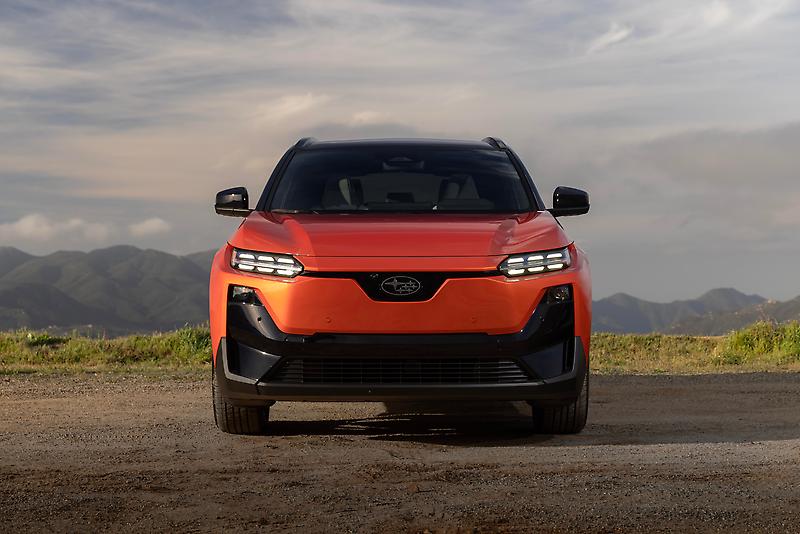
2026 Subaru Uncharted GT
"Well, Chris, what is your test vehicle? [131.2s] I guess I kind of alluded to that already. [134.2s] Yeah, you stole my thunder. [135.3s] It's the 2026 Subaru Uncharted GT. [138.8s] Ah, the Uncharted and GT version."
This is a Subaru electric crossover called the Uncharted, and “GT” is the higher trim level. The hosts are saying this is the car they’re using to test and talk about.
The 2026 Subaru Uncharted GT is Subaru’s newest electric crossover being discussed for the 2027 model-year rollout, and this specific trim (“GT”) is the more performance/feature-focused version. In this segment, the hosts are treating it as the test vehicle, so it’s the main car context for what they’ll cover next.

2026 Jeep Grand Wagoneer
"Well, my test vehicle on this All-American Day is the 2026 Jeep Grand Wagoneer, and we [148.5s] drove it to an All-American wedding in Los Alivos, California, and we'll tell you all [153.3s] about that."
This is the 2026 Jeep Grand Wagoneer, Jeep’s big, upscale SUV. The hosts are using it as their test vehicle for the trip, so it’s the main car tied to what they’re talking about.
The 2026 Jeep Grand Wagoneer is a full-size, luxury-oriented SUV from Jeep, positioned as a flagship with a focus on comfort and modern tech. In this segment it’s the host’s test vehicle, used to connect the episode’s driving story to real-world ownership and quality discussion.

Jeep Grand
"...test vehicle on this All-American Day is the 2026 Jeep Grand Wagoneer, and we drove it to an All-American wedd..."
The Jeep Grand Cherokee is a mid-sized SUV, meaning it’s a larger family car with more ground clearance. It’s designed to be comfortable for normal driving but also capable for rougher roads. The podcast brings it up as part of Jeep’s SUV lineup.
The Jeep Grand Cherokee is a mid-size SUV that’s built to handle both daily driving and more rugged conditions. In the podcast, it’s tied to the 2026 Jeep Grand Wagoneer test-drive segment, which places it in the conversation about Jeep’s larger lineup and capabilities. It’s discussed because it’s a well-known nameplate for people who want an SUV with off-road potential and comfort.
JD Power
"It is news time, and there's quality news this time around from JD Power. [185.7s] They have announced their initial quality study for this year, the 2026 JD Power."
J.D. Power is a company that surveys car owners and publishes reports about how good new cars are. In this segment, they’re the source of the quality numbers the hosts discuss.
J.D. Power is a well-known automotive research and consumer insights company that publishes quality and reliability studies. Here, they’re cited for their initial quality study results for the 2026 model year.
initial quality study
"They have announced their initial quality study for this year, the 2026 JD Power. [191.3s] U.S. initial quality study. [193.7s] And what they found is overall car quality has improved dramatically..."
An initial quality study measures how many problems new car owners report shortly after purchase. In this segment, it’s specifically tied to the first 90 days of ownership, which helps indicate early build/fit issues and early software/feature problems.
problems per 100 vehicles
"Owners reported just 175 problems per 100 vehicles. [208.8s] This is during the first 90 days of ownership. [211.3s] This is down substantially from 192 a year ago."
This is a way to count how many issues show up across a group of cars. It’s scaled to “per 100 vehicles” so you can compare years more easily.
“Problems per 100 vehicles” is a standardized metric used in quality surveys to express how frequently issues occur across a sample. It lets you compare different model years or categories on a consistent scale rather than relying on raw counts.
driving assistance systems
"There were improvement in pretty much every category, driving assistance systems, interior [220.2s] quality, body fit and finish, and even cup holders."
Driving assistance systems are the car’s safety and convenience tech that helps you drive—things like keeping you in your lane or helping avoid crashes. The hosts say these systems improved in the latest quality results.
Driving assistance systems are electronic features that help the driver with tasks like lane keeping, adaptive cruise control, collision avoidance, and other semi-automated safety functions. The segment notes improvements in this category, implying fewer early-reported issues with these technologies.
driver assistance features
"Yeah, well, I'm happy to see that driver assistance features improved in satisfaction. I think that's one thing that you and I have talked about a bunch of times."
These are car features that help you drive, like warning you or helping steer and brake. They don’t drive by themselves—you still have to pay attention and be ready to take over.
Driver assistance features are systems that help the driver with tasks like staying in the lane, maintaining distance, or reducing collision risk. They’re different from fully autonomous driving because the human driver still has to supervise and take over.
Android Auto
Android Auto is how you connect an Android phone to your car so you can use maps, calls, and music on the car screen. It can work with a cable or sometimes wirelessly.
Android Auto is Google’s smartphone-to-car system that brings compatible Android apps to the car’s infotainment display. Like CarPlay, it’s used for navigation, calls, and media, and can work either wired or wirelessly depending on the car.
Apple CarPlay
"Infotainment is still a pain. Connectivity for wireless and wired Apple CarPlay and Android Auto is a big deal."
Apple CarPlay is how you connect an iPhone to your car so your maps, calls, and music show up on the screen. Some cars do it with a cable, and some do it wirelessly.
Apple CarPlay is a smartphone-to-car system that mirrors compatible iPhone apps onto the vehicle’s infotainment screen. It lets you use navigation, calls, and music through the car’s interface, either via a cable or wirelessly depending on the vehicle.
wireless connection
"Sometimes you can do it wirelessly. Sometimes the wireless connection breaks. It's just kind of a never-ending stream of problems."
Here, “wireless connection” means your phone connects to the car without a cable. If it breaks, the car may lose your phone apps until you reconnect.
A wireless connection in this context refers to the phone-to-car link used for CarPlay or Android Auto without plugging in. When it “breaks,” the infotainment system may lose the connection and apps/navigation can stop working until you reconnect.

Jeep Cherokee
"I found some of this problem when I was up in Los Alivos driving the Jeep Grand Cherokee in that there was connectivity problems. There just wasn't service problems up there."
The Jeep Grand Cherokee is a popular Jeep SUV. In this story, the host says their experience in a Grand Cherokee included phone connectivity issues while driving.
The Jeep Grand Cherokee is a midsize-to-large SUV known for its off-road capability and available tech features. In this segment, it’s specifically referenced as the host’s test vehicle where phone connectivity problems affected Apple CarPlay/Android Auto behavior.
Los Alivos
"I found some of this problem when I was up in Los Alivos driving the Jeep Grand Cherokee in that there was connectivity problems."
Los Alivos is a place in California. The host mentions it to explain that even in an upscale area, they still saw phone connectivity problems.
Los Alivos is a town in California’s Central Coast region. The hosts use it as a real-world driving location to contrast connectivity issues with the availability of cellular service.
infotainment systems
"Infotainment systems are also the biggest source of driver distraction, according to this study. [350.8s] I mean, distracted driving concerns blame touch screens and infotainment displays."
Infotainment systems are the car’s screen and electronics for things like music, navigation, and phone features. They can distract drivers because they pull attention to the display. The hosts are saying studies point to these systems as a big distraction risk.
Infotainment systems are the in-car electronics that combine entertainment and information features, typically including the touchscreen, media playback, navigation, and phone integration. Because they involve menus and visual attention, they’re often studied as a contributor to driver distraction. The segment frames infotainment as a major distraction source compared with some driver-assistance alerts.
driver assistance alerts
"The driver assistance alerts don't seem to be as distracting anymore. [363.2s] I don't know whether people have just learned to ignore them or they are getting better."
Driver assistance alerts are the beeps, warnings, or messages your car gives when it thinks something is wrong—like drifting out of a lane or getting too close to something. The hosts think these warnings are getting less annoying and less distracting over time. They may be fewer false alarms or better designed.
Driver assistance alerts are warnings generated by safety/driver-assist features—such as lane-keeping or collision-avoidance systems—when the car detects a potential hazard. The segment suggests these alerts may be less distracting now because they’re either being tuned to reduce nuisance warnings or drivers have learned to respond appropriately. This is contrasted with infotainment distraction.
false alarms
"Yeah, I would say in the past 18 months or so, [373.7s] I've seen a pretty notable decline in the false alarms"
False alarms are warnings that go off even though there’s no real danger. With driver-assist features, too many false alarms can make people tune them out or get distracted. The hosts say these kinds of warnings have been improving recently.
False alarms are safety-system warnings triggered when the car’s sensors or software think there’s a problem but there isn’t one. In driver-assistance contexts, reducing false alarms is important because it prevents drivers from ignoring alerts or becoming distracted by nuisance notifications. The segment claims there’s been a decline in false alarms over roughly the past 18 months.
unexpected system malfunctions
"I've seen a pretty notable decline in the false alarms [376.7s] and unexpected system malfunctions and things like that."
Unexpected system malfunctions are when the car’s electronics act up in a way you didn’t expect—like a feature glitching or a warning appearing incorrectly. The hosts are saying these problems have been happening less often recently. That would make the systems easier to live with.
Unexpected system malfunctions refer to unplanned errors where a vehicle’s electronic features behave incorrectly or fail temporarily. In infotainment and driver-assistance systems, these can show up as glitches, warning messages, or features that stop working until the system resets. The segment groups these with false alarms as issues that have declined, implying software refinement.
Porsche
"Yeah, yeah. Among automakers, among brands, basically, Porsche ranked highest overall in initial quality."
Porsche is a car brand from Germany that makes performance cars. Here, they’re mentioned because the discussion says Porsche scored best for how reliable new cars seem to be early on.
Porsche is a German automaker known for performance-focused sports cars and SUVs. In this segment, it’s referenced as ranking highest for “initial quality,” meaning early ownership problem rates were best among the brands being compared.
Ford
"Ford, F-O-R-D. Ford led all mass market brands in initial quality, then followed by Nissan and Buick."
Ford is a major American automaker. The hosts discuss Ford leading mass-market brands in initial quality, then later mention Ford recalls and a shift in strategy involving AI/software, engineering hires, and more time spent in quality control.
Nissan
"Ford led all mass market brands in initial quality, then followed by Nissan and Buick. Nissan and Buick don't surprise me so much."
Nissan is a Japanese automaker. Here it’s mentioned as one of the mass-market brands ranking near the top for initial quality, and the host suggests it was number one the previous year.
Buick
"Ford led all mass market brands in initial quality, then followed by Nissan and Buick. Nissan and Buick don't surprise me so much."
Buick is a U.S. brand under General Motors. In this segment, it’s grouped with Nissan as a mass-market brand that ranks highly in initial quality, and the host says it doesn’t surprise them.
quality control phase
"They went all in on AI, on software development and quality control and things like that. And now they're kind of pulling back on that, rehiring some engineers, spending more time in the quality control phase."
The “quality control phase” is the part of the production and/or inspection process where vehicles are checked for defects before they’re released. Spending more time here typically means more inspection steps and tighter verification of parts and systems.
Bosch
"I guess it's somewhat important, but really it's the individual model. ... Volkswagen is reportedly ending its partnership with Bosch. This is on automated driving technology."
Bosch is a big company that makes car parts and technology for other automakers. Here, it’s mentioned because Volkswagen worked with Bosch on self-driving/automated-driving tech.
Bosch is a major automotive supplier that provides parts and technology to automakers, including components used in advanced driver-assistance and automated-driving systems. In this segment, Bosch is specifically tied to Volkswagen’s automated-driving technology partnership.
Volkswagen
"Volkswagen is reportedly ending its partnership with Bosch. This is on automated driving technology. ... Volkswagen has apparently invested something like 1.7 billion with a B, billion dollars in this and now pulling the plug."
Volkswagen is a car company. Here, they’re mentioned because they’re backing away from a self-driving-related partnership after spending a lot of money.
Volkswagen is an automaker that has been investing in automated-driving partnerships and technology. In this segment, it’s described as ending its partnership with Bosch and “pulling the plug” after a large investment, illustrating how quickly strategies can change in the self-driving race.
automated driving technology
"Volkswagen is reportedly ending its partnership with Bosch. This is on automated driving technology. I think it's a sign."
Automated driving technology is the set of systems that help a car drive itself or handle driving tasks. The point here is that making it work safely and consistently for everyday drivers is really difficult.
Automated driving technology refers to vehicle systems that can perform driving tasks with varying levels of autonomy, typically using sensors, cameras, radar, and software to perceive the road and control the car. The hosts are emphasizing that these systems are extremely hard to engineer reliably for consumer use.
Waymo
"So there are a couple of companies, Waymo and a few others that are operating. But we saw GM drop out with Cruz."
Waymo is a company that works on self-driving cars. The hosts mention it because it’s one of the few companies already operating in this area.
Waymo is a company focused on self-driving (autonomous) vehicle technology and operations. In the segment, it’s used as an example of a player that is already established in the automated-driving space.
GM
"So there are a couple of companies, Waymo and a few others that are operating. But we saw GM drop out with Cruz."
GM (General Motors) is a major automaker that has invested in autonomous-driving efforts. Here, it’s mentioned in connection with withdrawing from its self-driving program, highlighting how costly and challenging the space can be.
Cruz
"But we saw GM drop out with Cruz. Obviously they had other problems that weren't necessarily financially related."
Cruise/Cruz is GM’s self-driving effort. The hosts mention it to show that even big automakers can struggle and eventually step away.
Cruz refers to GM’s autonomous-driving initiative (commonly associated with Cruise). The hosts use it as an example of an automaker exiting the self-driving race, suggesting the investment can become a major financial risk.
investment black hole
"But this does appear that it could be a big investment black hole for a company who isn't already established in the space."
An investment black hole means money gets spent, but the payoff doesn’t show up. The hosts are saying self-driving can be so hard that it may swallow a lot of funding without clear progress.
An investment black hole is a situation where spending keeps increasing without producing the expected results, effectively consuming capital. In the segment, it’s used to describe how automated-driving development can drain resources, especially for companies not already established in the field.
Polestar
"I'm surprised that Volvo got the authorization and Polestar did not... Polestar just say, we're going to focus on other markets and not try to appeal or try to, you know, move into compliance with the regulations..."
Polestar is a car brand that makes modern, tech-heavy vehicles. In this episode, they’re discussing why Polestar isn’t selling much in the U.S. and how that relates to regulations and support.
Polestar is a performance-leaning automaker brand that’s closely tied to Volvo’s engineering ecosystem. The segment discusses Polestar’s software/regulatory approach and its decision to focus on other markets instead of selling in the U.S.
Volvo
"I'm surprised that Volvo got the authorization and Polestar did not."
Volvo is a car brand from Sweden. Here, they’re talking about Volvo getting approval for something related to regulations and software, compared with Polestar.
Volvo is a Swedish automaker known for safety-focused engineering and modern electrification efforts. In this segment, the hosts mention Volvo in the context of regulatory authorization and software differences versus Polestar.
software
"I'm not sure what the differences are between their software, at least in terms of like the the coding part of it."
In cars, “software” is the computer code that tells the vehicle how to behave. The hosts are saying Volvo and Polestar may have different software setups, which can matter for regulations.
In modern cars, “software” refers to the code that controls vehicle functions like power management, driver-assist behavior, and emissions-related systems. Here, the hosts are specifically comparing software differences between Volvo and Polestar, implying regulatory and technical requirements.
compliance with the regulations
"we're going to focus on other markets and not try to appeal or try to, you know, move into compliance with the regulations, but they don't sell a ton of cars here."
“Compliance with the regulations” means the car has to meet government requirements to be sold legally. The discussion is about whether Polestar would adjust its approach to meet those rules in the U.S.
“Compliance with the regulations” means meeting government rules that govern how vehicles are designed and operated—often including emissions, safety, and other legal requirements. The hosts connect it to whether Polestar tries to enter or remain in a market by meeting those rules.
federal laws
"I think there are federal laws that force car makers to provide parts and service for a lengthy period, even after they go out of the market."
“Federal laws” are rules set by the U.S. government. Here, the host is saying those laws can require car companies to keep providing parts and service for a while, even if they stop selling a model in the U.S.
“Federal laws” are U.S. nationwide statutes that can impose obligations on automakers, including requirements related to parts availability and service support. The host claims these laws can force manufacturers to keep supporting vehicles for a long period even after they stop selling them.
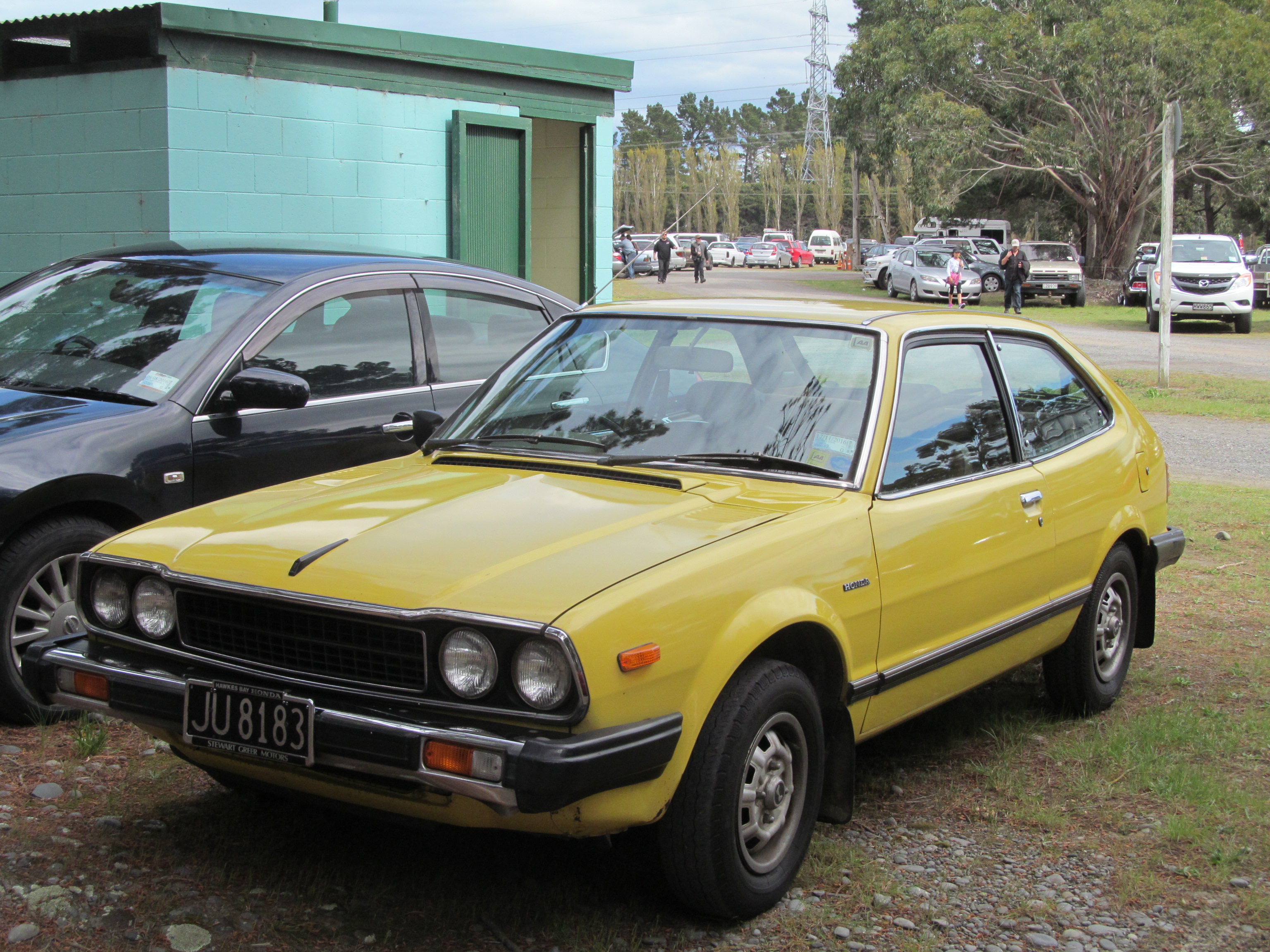
Honda accords
"Honda has sold 15 million accords in America."
The Honda Accord is a very popular Honda car model that’s been sold in huge numbers. The host mentions how many have been sold in America to show it’s a long-term, well-supported model.
The Honda Accord is a long-running midsize sedan/coupe (depending on generation) that’s known for broad mainstream appeal and high sales volume. The host cites total U.S. sales—“15 million accords”—to emphasize how established the model is and to frame the discussion about market presence and support.

Toyota Chr
"...k just mentioned, this is the sister model to the Toyota CHR. It looks a lot like the CHR down to the weird re..."
The Toyota C-HR is a compact crossover, which means it’s bigger than a typical sedan but smaller than a full-size SUV. It’s built for everyday driving with a higher seating position. The podcast mentions it because it’s closely related to another model in the same family.
The Toyota C-HR is a compact crossover designed for buyers who want a smaller SUV-like shape with a practical daily-driving layout. The podcast notes it as the sister model to the Toyota CHR, focusing on their shared design direction and similarities. It’s discussed because it’s part of Toyota’s compact crossover lineup and is widely recognized in that segment.
single motor front wheel drive
"That's the single motor front wheel drive trim. My top GT test trim came out to around $43,000."
This means the car has one electric motor and it powers the front wheels only. One-motor front-wheel-drive versions are often cheaper and can get better efficiency, but they may not accelerate as strongly as all-wheel-drive versions.
“Single motor front wheel drive” means the electric motor drives only the front wheels. Compared with dual-motor setups, it typically costs less and can be more efficient, but it may feel less quick and less capable in low-traction situations.
dual motor all wheel drive system
"That has a dual motor all wheel drive system. The single motor model comes with 221 horsepower. The dual motor all wheel drive system has 338 horsepower."
This means the car has two electric motors and can drive all four wheels. It often feels quicker and grips better, especially when roads are slippery.
A “dual motor all wheel drive system” uses two electric motors—typically one for the front axle and one for the rear—so power can be sent to all wheels. That usually improves traction and enables stronger acceleration because both axles can contribute torque.
zero to 60 time
"Jack, I can tell you that the dual motor system in this vehicle delivers a sub five seconds, zero to 60 time. Wow."
“Zero to 60 time” measures how fast a car can go from standing still to 60 mph. Lower time usually means the car feels quicker.
“Zero to 60 time” is the elapsed time it takes a vehicle to accelerate from 0 mph to 60 mph. It’s a common performance metric because it captures how quickly the car can build speed.
miles of range
"Yeah, so you started around 273 miles of range, which is what my test model came with the dual motor all wheel drive system. 308 miles."
“Miles of range” tells you how far the EV can drive on one full charge. More range generally means fewer charging stops on trips.
“Miles of range” refers to how far the vehicle can travel on a full battery charge under stated testing conditions. In EV comparisons, range is a key practical measure because it affects how often you’ll need to charge.
Tesla Nax North American charging system charging port
"All of them come with a Tesla Nax North American charging system charging port, "
This is about the charging plug/port the EV uses. Different EVs use different connector types, and that affects which charging stations you can use without adapters.
The “Tesla Nax North American charging system charging port” refers to an EV charging connector standard used in North America. It matters because the port type determines which public fast chargers the vehicle can use and whether adapters are needed.
home charger
"which means that if you have a regular old home charger like I do, [901.9s] you need an adapter to charge, but the vehicle comes with that."
A home charger is the device you use to charge an EV at your house. It lets you plug in and charge overnight instead of relying only on public stations.
A home charger is an EV charging unit installed at (or used from) your residence. It’s how you typically recharge an electric vehicle overnight so it’s ready for daily driving.
adapter
"you need an adapter to charge, but the vehicle comes with that. [904.5s] Jack, I'll tell you, as I said, this is a very quick vehicle."
An adapter is a small connector piece that helps your EV plug into the charger you have. It’s needed when the plug types don’t match.
In EV charging, an adapter is used to make the car’s charging connector compatible with the charger you have. Different charging setups can use different plug/connector standards, so an adapter bridges that gap.

Subaru Crosstrek hybrid
"but if you're already a Subaru driver and you're looking to move [919.7s] from like a Crosstrek hybrid into an electric version,"
The Subaru Crosstrek Hybrid is a small SUV that uses both gas and electricity. The point here is that people coming from that kind of Subaru may find the EV transition easier.
The Subaru Crosstrek Hybrid is a compact crossover that uses a hybrid powertrain, combining an internal-combustion engine with an electric motor. The host brings it up as a baseline for drivers moving from hybrid Crosstrek ownership to a fully electric Subaru.
GT trim
"Inside the GT trim comes with synthetic leather upholstery. [939.4s] You get heated front seats, heated steering wheel, heated rear seat."
“GT trim” means a particular version of the car with a specific set of features. In this case, it includes nicer seat materials and heated comfort items.
A trim level (like “GT trim”) is a specific equipment package for a car, typically bundling features such as upholstery, infotainment, and comfort tech. The host is saying the GT trim includes synthetic leather and multiple heated seating/steering features.
synthetic leather upholstery
"Inside the GT trim comes with synthetic leather upholstery. [939.4s] You get heated front seats, heated steering wheel, heated rear seat."
Synthetic leather upholstery is a fake-leather material used on seats. It’s meant to look like leather and usually costs less than real leather.
Synthetic leather upholstery is a man-made material designed to look and feel like leather. It’s often used to reduce cost and improve durability versus real leather, while still offering a premium cabin look.
heated steering wheel
"You get heated front seats, heated steering wheel, heated rear seat. [943.5s] Jack, there's plenty of room in this vehicle, even though it's a little"
A heated steering wheel warms up the steering wheel so your hands feel comfortable in cold weather. It’s a convenience feature for winter driving.
A heated steering wheel uses built-in heating elements to warm the wheel surface. It improves comfort in cold weather and can reduce how quickly you feel chilled while driving.
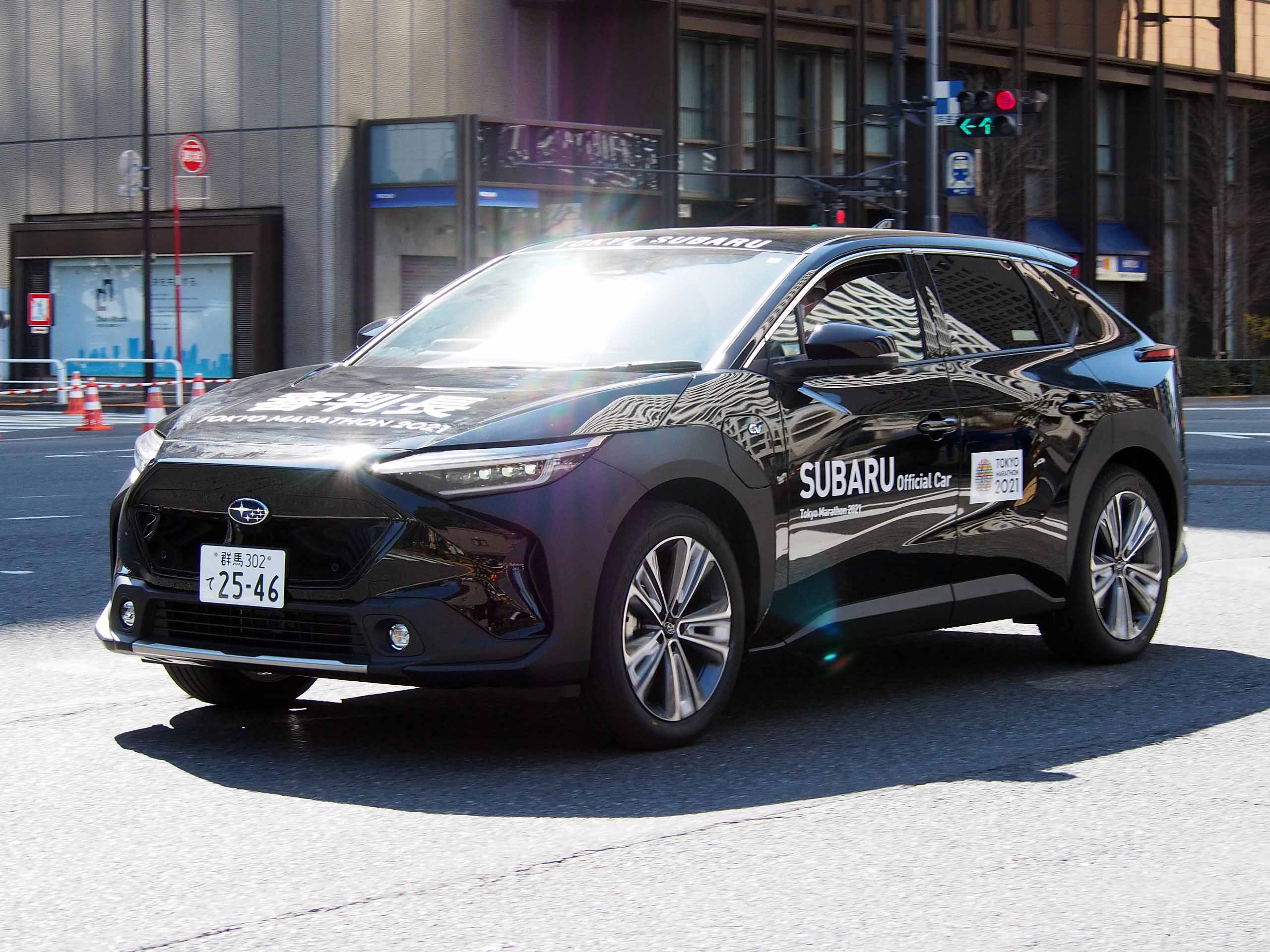
Solterra Soltera
"...bit smaller than like the Toyota BZ or the Subaru Soltera that are a little bit larger, but I think, you kn..."
The Solterra is an electric vehicle from Subaru. The podcast is comparing it to other electric cars by size, saying it’s a bit smaller than some larger EVs. It’s mentioned because size and everyday usability matter when shopping for an EV.
The Solterra is a Subaru electric vehicle discussed in relation to other similarly sized electric models. The podcast compares its size to larger EVs like the Toyota BZ and the Subaru Solterra, positioning it within the compact-to-mid EV space. It’s discussed because buyers often compare EV size and practicality when choosing their next vehicle.
headliner
"he can sit in the back [962.4s] seat, too, without rubbing his head on the ceiling on the headliner, [965.6s] which I think a lot of people will appreciate,"
The headliner is the fabric or panel on the inside ceiling of the car. The host is saying there’s enough headroom that a big dog won’t bump it.
The headliner is the interior ceiling panel of a car. The host mentions it because a large dog in the back seat shouldn’t rub its head against the ceiling area.

Subaru
"Jack, we've talked about Subaru's 11.6 inch portrait oriented screen, which is very large, but it's kind of slow."
Subaru is the car brand being compared here. The hosts are talking about Subaru’s dashboard screen system—how big it is, and that it can be slow or laggy when you first use it.
Subaru is the brand whose infotainment system the hosts compare against the Jeep’s setup. The segment specifically references Subaru’s large, portrait-oriented screen and how it can feel slow to start and laggy at first.
shared platform
"Well, I was going to ask you, is this essentially the Toyota system, but rebranded as a Subaru because this is, you know, a shared platform?"
A shared platform means different cars are built on the same basic “foundation.” Because of that, they can share parts of the tech and design, even if the screens and menus look different by brand.
A shared platform is when multiple vehicle models (often across brands) use the same underlying architecture—such as chassis, electronics, or major components—to reduce development cost and speed up production. When the platform is shared, infotainment systems and software layouts may look or behave similarly even if they’re branded differently.
digital gauge cluster
"You get a seven inch digital gauge cluster in this vehicle, a Harman Kardon sound system in the top GT trim and dual wireless charging pads."
Instead of regular needles and dials, the speed and other info show up on a screen. It can also show extra driving info like warnings and settings.
A digital gauge cluster replaces traditional analog dials (speedometer/tachometer) with a screen that can display customizable information. It often improves readability and can show navigation, driver-assist status, and vehicle settings more clearly.
dual wireless charging pads
"a Harman Kardon sound system in the top GT trim and dual wireless charging pads."
This means there are two wireless charging spots in the car. You can set two phones down to charge at the same time without plugging them in.
Dual wireless charging pads let you charge two compatible devices at the same time without plugging in cables. They’re usually integrated into the center console or dash area and can be convenient for passengers and the driver.
Harman Kardon
"a Harman Kardon sound system in the top GT trim and dual wireless charging pads."
Harman Kardon is a well-known brand for high-quality audio. If it’s in the car, the sound system is usually upgraded for better music and clearer voices.
Harman Kardon is an audio brand known for premium car sound systems. When a vehicle lists Harman Kardon, it typically means the speakers, amplifier, and tuning are upgraded beyond the base audio setup.
blind spot monitoring
"And then talking about safety features, the GT trim comes with a blind spot monitoring, rear cross traffic alerts, adaptive cruise control"
This system watches your blind spots for other cars. If someone is there and you try to change lanes, it warns you.
Blind spot monitoring uses sensors to detect vehicles in areas you can’t easily see in your mirrors. It alerts you—often with lights or warnings—so you’re less likely to change lanes into another car.
rear cross traffic alerts
"the GT trim comes with a blind spot monitoring, rear cross traffic alerts, adaptive cruise control and a whole suite of other features"
When you back out of a parking space, this warns you if a car is coming from the side. It’s meant to prevent surprises when visibility is blocked.
Rear cross traffic alerts warn you when vehicles are approaching from the sides as you back out of a parking spot. It helps reduce the risk of collisions with cars you can’t see while reversing.
adaptive cruise control
"blind spot monitoring, rear cross traffic alerts, adaptive cruise control and a whole suite of other features"
Cruise control keeps a steady speed, but adaptive cruise control also reacts to the car in front. If traffic slows, it can slow you down too.
Adaptive cruise control automatically adjusts your speed to maintain a set following distance from the car ahead. Unlike basic cruise control, it can slow down and speed back up as traffic changes.
all will drive
"And plus I need all will drive here in Maine. So can't pass up on that."
It sounds like they mean “all-wheel drive,” which powers all four wheels. That usually helps the car grip better on slippery roads.
This appears to be a transcription error for “all-wheel drive” (AWD), which sends power to both the front and rear axles. AWD improves traction in rain, snow, and uneven surfaces compared with front- or rear-wheel drive.
electric battery
"So I think it's got some chance of success there or as successful as electric battery, electrics are going to be in the in the next couple of years."
The electric battery is what stores the energy that powers the car. It affects how far you can drive and how long charging takes.
An electric battery is the energy storage pack in an EV or electrified vehicle that powers the electric motor(s). Battery technology affects range, charging time, weight, and long-term cost.
Stellantis
"But this is a vehicle that I think is filling a hole that used to exist in the Jeep lineup, in the Stellantis Jeep lineup"
Stellantis is the company that owns Jeep. So when they mention the “Stellantis Jeep lineup,” they mean Jeep cars that come from that bigger group.
Stellantis is the large automaker group that owns the Jeep brand (among many others). When the host says “Stellantis Jeep lineup,” they’re pointing to Jeep as part of that corporate family.

Chevrolet Tahoe
"And by that, I mean a full size, three row serious competitor to the Chevrolet Tahoe and to the Ford Expedition, those kinds of vehicles,"
The Chevrolet Tahoe is a big SUV with three rows, often used for family trips. The host is comparing it to the Grand Wagoneer because they’re aimed at the same kind of buyer.
The Chevrolet Tahoe is a full-size, three-row SUV that’s a common benchmark for family hauling and highway comfort. The host lists it as a direct competitor to the Jeep Grand Wagoneer’s role in the lineup.

Ford Expedition
"And by that, I mean a full size, three row serious competitor to the Chevrolet Tahoe and to the Ford Expedition, those kinds of vehicles,"
The Ford Expedition is a large family SUV with three rows. The host mentions it because it’s one of the main alternatives people consider in this size/class.
The Ford Expedition is Ford’s full-size, three-row SUV, known for carrying multiple passengers and luggage on longer trips. In this segment, it’s used as a comparison point for where the Grand Wagoneer fits in the market.
third row
"not as accommodating in a third row. I'll tell you, Chris, you might not believe this,"
The third row is the rear-most set of seats in a three-row SUV. It’s a key selling point in full-size family vehicles because legroom and comfort determine whether it’s usable for adults or just kids.

Lincoln Navigator
"not to mention the Cadillac Escalade Lincoln Navigator and even the Lexus LX."
The Lincoln Navigator is a large, luxury SUV with three rows. The host is listing it as a main competitor to the Grand Wagoneer’s “big family luxury” idea.
The Lincoln Navigator is a luxury full-size, three-row SUV positioned against other top-tier family haulers. The host uses it as another example of the kind of vehicle the Grand Wagoneer is meant to compete with.

Cadillac Escalade
"not to mention the Cadillac Escalade Lincoln Navigator and even the Lexus LX."
The Cadillac Escalade is a luxury big SUV with three rows. It’s mentioned here because it represents the more upscale end of the same family-SUV category.
The Cadillac Escalade is a luxury full-size SUV that’s often seen as the “premium” option in the Tahoe/Expedition size class. The host brings it up to show the Grand Wagoneer is targeting that same high-end, three-row audience.

Lexus Lx
"not to mention the Cadillac Escalade Lincoln Navigator and even the Lexus LX."
The Lexus LX is a luxury big SUV that’s built for comfort. The host is saying the Grand Wagoneer is trying to compete with that kind of upscale family vehicle.
The Lexus LX is a luxury full-size SUV known for comfort and a more refined ride. The host includes it among the vehicles the Grand Wagoneer is filling in for—meaning the Grand Wagoneer is aiming at that same premium, three-row buyer.
four by four
"I think the Grand Wagoneer from Jeep fills that we were driving a limited reserve four by four to a wedding in which I had to transport"
“Four by four” means the SUV can send power to all four wheels. That can help it grip better when roads are slippery or uneven.
“Four by four” is a common way to say a vehicle has four-wheel drive (4WD). It means power can be sent to both the front and rear axles to help with traction in tougher conditions.
twin turbocharged hurricane inline six cylinder engine
"It has a twin turbocharged hurricane inline six cylinder engine. Hurricane is not a is a trade name."
It’s a six-cylinder engine with two turbochargers. The turbos help the engine make stronger power, especially when you accelerate.
This describes a twin-turbo inline-six engine, meaning six cylinders arranged in a straight line with two turbochargers forcing more air into the engine. The host also notes “Hurricane” is a trade name, not a description of the underlying technology.
MSRP
"Our vehicle had a long list of options. And yet the total MSRP was about $84,000."
MSRP is the manufacturer’s suggested price for the car. It’s basically the starting point on the price sticker before other fees and taxes.
MSRP (Manufacturer’s Suggested Retail Price) is the sticker price a manufacturer recommends before taxes, registration, and dealer-specific fees. Hosts often use it to compare how “well equipped” a car is versus what it costs.
heavy duty trailer tow package
"So yeah, this had the limited reserve package, a heavy duty trailer tow package. And of course, destination charges."
This is an option bundle that helps the SUV tow trailers more safely. It usually includes the right hitch/wiring and extra systems to handle the extra load.
A heavy-duty trailer tow package is an option group that equips a vehicle for towing, often including a higher-capacity hitch setup, upgraded cooling, and wiring for trailer lights. It’s relevant on a three-row SUV because towing demands can stress the engine and transmission more than normal driving.
limited reserve package
"So yeah, this had the limited reserve package, a heavy duty trailer tow package. And of course, destination charges."
A “package” is a bundle of options the dealer/manufacturer includes together. The “limited reserve” package usually means you get a specific set of upgrades rather than choosing everything separately.
A “limited reserve package” is a trim/options bundle that groups specific features together, typically affecting interior materials, convenience tech, and appearance. It’s not a mechanical part by itself, but it’s important because it explains why the vehicle is equipped the way it is.
destination charges
"So yeah, this had the limited reserve package, a heavy duty trailer tow package. And of course, destination charges."
Destination charges are the cost of getting the car from the factory to the dealer. It’s a standard fee that gets added to the final price.
Destination charges are fees added to the vehicle’s price to cover shipping the car from the manufacturer to the dealership. They’re commonly included in the “out-the-door” shopping conversation even though they aren’t tied to the car’s performance.
eight speed automatic transmission
"Let's talk a little bit about the drivetrain. As I mentioned, twin turbocharged inline six cylinder engine. It was paired with an eight speed automatic transmission."
This is the SUV’s automatic gearbox with eight different gear ratios. More gears can help the car feel smoother and keep the engine in the right “power band.”
An eight-speed automatic transmission uses eight forward gears to keep the engine operating in its most efficient or most powerful range. Compared with fewer-gear automatics, more gears can help with smoother acceleration and better fuel economy at certain speeds.
Hemi V8
"Of course, this kind of takes the place of the Hemi V8. And there were times when I thought, well, this would be pretty nice if I had the Hemi V8, but the overall drive ability was pretty good."
A “Hemi V8” is a type of V8 engine design used by Chrysler/Jeep. It has a combustion chamber shape that can help the engine make good power. Here, the host is saying this setup feels like it replaces the role of that engine.
“Hemi V8” refers to Chrysler’s hemispherical-combustion-chamber V8 engine design. The “hemi” shape helps airflow and combustion, which can support strong power and torque. In this segment it’s used as the baseline engine choice the speaker is comparing against.
101
"Passing required a little effort. I was on the 101 for a lot. We called it the 101 out here."
“101” is a nickname for a big highway in California (U.S. Route 101). The host is basically saying they tested the car’s feel and efficiency on that road. It’s a real-world reference, not a car feature.
The “101” is shorthand for California’s U.S. Route 101, a major highway used here as the speaker’s real-world driving reference point. Mentioning the specific road helps listeners understand where the acceleration, turbo behavior, and fuel economy were evaluated.
turbo lag
"Little bit of turbo lag. And there's no getting around to turbos. Take a little bit to spool up because when you're driving at very low RPM,"
Turbo lag is the momentary delay before a turbocharged engine really “kicks in.” When you’re at low engine speed, there isn’t enough exhaust flow to spin the turbo quickly. The host is warning that you may feel that delay when you accelerate from low RPM.
“Turbo lag” is the delay between pressing the accelerator and the turbocharger producing boost. At low RPM there’s less exhaust energy to spin the turbo, so boost builds more slowly. The speaker explains this exact cause in the segment.
spool up
"Take a little bit to spool up because when you're driving at very low RPM, there's not much exhaust gas to spin the turbo."
“Spool up” means the turbo is speeding up until it can start making boost. It takes time, especially when the engine is turning slowly. That’s why the car may feel less responsive right off idle.
“Spool up” describes how quickly a turbocharger accelerates to the speed needed to generate boost. It depends on exhaust gas flow and engine RPM. In this segment, the speaker ties spool-up time to low-RPM driving and the resulting turbo lag.
single speed transfer case
"So I took a little bit standard is a single speed transfer case for full time all wheel drive."
A transfer case is the part that sends power to the front and rear wheels in a 4WD/AWD truck. A “single speed” transfer case uses one gearing setup for that power split. The host is saying some configurations use this simpler arrangement.
A “transfer case” splits power from the transmission to the front and rear axles in a 4WD/AWD vehicle. A “single speed transfer case” uses one ratio for that split, rather than switching between low and high ranges. The speaker contrasts it with a two-speed setup when towing.
two speed transfer case
"But when we had the heavy duty trailer tow package, we got the two speed transfer case, select speed control"
A two-speed transfer case lets the truck switch between two gearing modes for sending power to all wheels. One mode is usually better for low-speed pulling and control. Here, the host says the tow package upgrades to this more capable transfer case.
A “two speed transfer case” provides two selectable gearing ranges for the drivetrain. That typically enables better low-speed control and torque multiplication for tasks like towing or off-road crawling. The speaker says the heavy-duty trailer tow package brings this two-speed setup.
electric limited slip differential
"we got the two speed transfer case, select speed control and electric limited slip differential. So a lot of good stuff there and fuel economy was what you might expect it to be."
A limited-slip differential helps keep power going to the wheel(s) with grip instead of letting one wheel spin uselessly. When it’s “electric,” it uses an electronic system to control how it locks or limits slip. The host is saying this truck’s AWD setup includes that traction help.
An “electric limited slip differential” is a traction device that helps manage wheel slip by limiting speed differences between wheels on the same axle. Using an electric actuator/control, it can react quickly to changing grip. The speaker lists it as part of the tow-package AWD hardware.
EPA says 19 miles per gallon combined
"So a lot of good stuff there and fuel economy was what you might expect it to be. EPA says 19 miles per gallon combined. I was driving it."
The EPA is the U.S. agency that tests and rates how efficiently cars use fuel. “Combined” is a single number meant to represent both city and highway driving. The host is comparing that official estimate to what they got while driving.
“EPA” refers to the U.S. Environmental Protection Agency’s fuel-economy testing and labeling. “Miles per gallon combined” is a blended estimate that mixes city and highway driving into one number. The speaker uses it to frame real-world results versus the official rating.
torque
"Well, you wouldn't have to deal with turbo lag. You'd have more torque right off right from the go."
Torque is the engine’s “pulling power.” More torque available right away usually means the car feels quicker and easier to accelerate.
Torque is the twisting force an engine produces, and it strongly affects how quickly a vehicle accelerates from a stop or at low speeds. The segment contrasts turbo lag with the idea of getting torque immediately for smoother, easier driving.
quadrelift air suspension
"I agree. It has our vehicle had the quadrelift air suspension, semi-active suspension damping, so felt very, very good."
Quadra-Lift air suspension (spelled “quadrelift” in the transcript) uses air springs instead of traditional steel springs to adjust ride height and improve ride comfort. Combined with damping control, it can make a big SUV feel smoother and more composed over uneven roads.
semi-active suspension damping
"It has our vehicle had the quadrelift air suspension, semi-active suspension damping, so felt very, very good."
Semi-active suspension damping refers to shock absorbers that can adjust their resistance in response to driving conditions. That helps control body motion (like pitch and roll), which is why the hosts describe the ride as feeling very good and predictable.
off-road
"I didn't take it off road. I don't think a lot of people will, but it could. I think Jeep has always struggled with, should this be an off-roader or not?"
Off-road capability means how well a vehicle can handle rough, unpaved terrain. They’re discussing whether this big Jeep is meant for that, even though they didn’t test it there.
Off-road capability is how well a vehicle can handle rough terrain like dirt, rocks, and uneven trails. The hosts debate whether Jeep’s Grand Wagoneer should be treated as an off-roader, noting they didn’t take it off-road but that it “could.”
cargo space
"But I think overall at this kind of price, with all the stuff that this has and the safety equipment, it's an excellent vehicle with a lot of cargo space."
Cargo space is how much stuff you can carry in the SUV—like luggage, bags, and gear. They’re saying this one has a lot of room for travel.
Cargo space is the amount of usable storage volume in and behind the vehicle, usually measured with the seats up and/or folded. The hosts connect the Grand Wagoneer’s cargo space to practical long-distance travel and family packing needs.
safety equipment
"But I think overall at this kind of price, with all the stuff that this has and the safety equipment, it's an excellent vehicle with a lot of cargo space."
Safety equipment is the set of features meant to help prevent accidents and protect people if something happens. They’re saying the SUV includes a lot of these features.
Safety equipment refers to the active and passive systems designed to reduce crashes and protect occupants, such as driver-assistance features and structural/airbag systems. The hosts mention it as part of why the Grand Wagoneer feels like a strong value at its price.
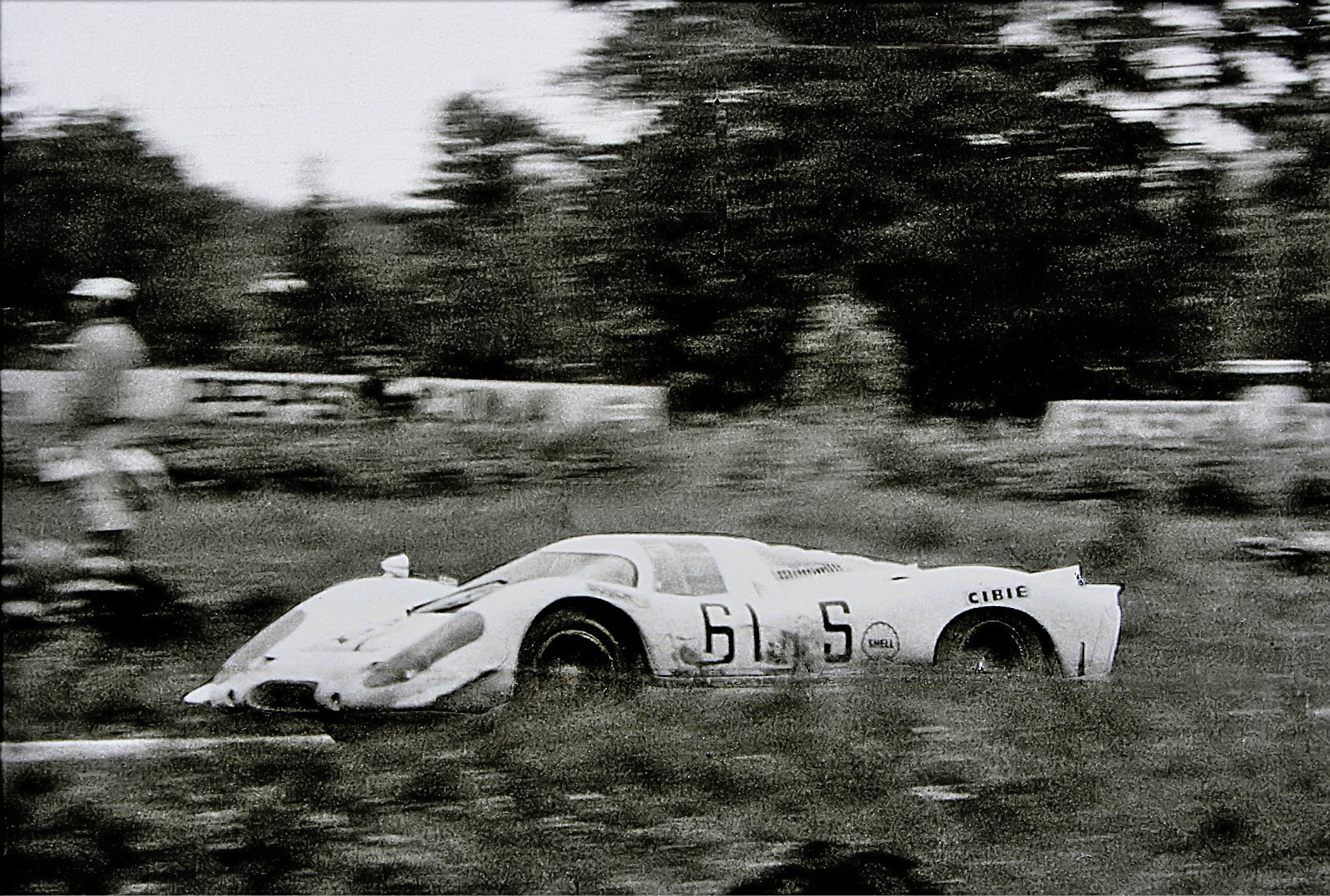
Porsche 917
"...les an hour. But at Le Mans, Vic Alfred's Porsche 917 raged down the Mulson Strait at 248 miles per hou..."
The Porsche 917 is a famous race car that competed in long-distance events. The podcast is talking about how incredibly fast it was during racing. It’s remembered because it became a symbol of top-level performance in motorsports.
The Porsche 917 is a legendary race car best known for its dominance in endurance racing, especially at Le Mans. The podcast highlights its speed and performance, describing it as raging down the track at very high speeds. It’s discussed because it’s one of the most iconic cars in motorsport history.

Ferrari 512
"...our. The racing pit of the Porsche 917 versus the Ferrari 512. The fastest road racing ever."
The Ferrari 512 M is a race car made by Ferrari for endurance-style racing. The podcast mentions it alongside the Porsche 917 to compare top racing performance. It’s known for being extremely fast in its racing era.
The Ferrari 512 M is a race-focused Ferrari from the era of classic endurance racing. The podcast places it in direct context with the Porsche 917, including a comparison of racing performance at Le Mans. It’s discussed because it’s remembered as one of the fastest and most significant road-racing machines of its time.
AMG
"Pretty cool stuff about AMG. Tell us about it. ... it's basically the story of Mercedes Performance Division AMG and how it got started."
AMG is Mercedes-Benz’s performance division. It started with people who wanted to race, and it eventually became the part of Mercedes that builds the faster, sportier cars.
AMG is Mercedes-Benz’s performance brand, originally created by engineers who wanted to race when Mercedes wasn’t actively doing so. Over time, AMG became closely integrated with Mercedes and is known for building high-performance “sports” versions of Mercedes models.

Red Pig
"And they eventually left the company and then they built a car called the Red Pig, [1598.6s] which was a 300 SEL in 1971 with a big V8 engine in it and kind of set the racing world on its ear by finishing second at the 24 hours of Spa in 1971."
“Red Pig” is the nickname for an early performance/racing car based on a 1971 Mercedes 300 SEL. The key idea is that it had a big V8 and helped prove the team could compete in major races.
The “Red Pig” refers to a famous early AMG racing car described here as a 300 SEL from 1971. It’s notable because it used a big V8 and helped establish AMG’s racing credibility by performing strongly at endurance events.
V8 engine
"And they eventually left the company and then they built a car called the Red Pig, [1598.6s] which was a 300 SEL in 1971 with a big V8 engine in it and kind of set the racing world on its ear..."
A V8 engine is a type of engine with eight cylinders arranged in a V shape. It’s often used in performance cars because it can make strong power and pull well.
A V8 engine is an internal-combustion engine with eight cylinders arranged in a “V” shape. Compared with smaller cylinder counts, it typically delivers strong power and smooth torque, which is why it’s common in performance and racing-era Mercedes builds.
24 hours of Spa
"...set the racing world on its ear by finishing second at the 24 hours of Spa in 1971. [1613.4s] And they won their class and other races started flocking to them..."
The “24 hours of Spa” is a very long endurance race—cars race for a full day. Doing well there matters because it proves the car can stay fast and reliable for hours, not just minutes.
The “24 hours of Spa” refers to an endurance race held at Spa-Francorchamps, where cars compete over a full day. Finishing near the front in this kind of race is a major credibility boost because it tests durability, consistency, and pace over long stints.
SRT
"I mean, we see others. [1654.6s] We see Stellantis does SRT, for example."
SRT is a performance label used by Stellantis for sportier, higher-output versions of certain cars. In this discussion, it’s mentioned as a parallel to AMG’s role at Mercedes.
SRT is a performance brand used by Stellantis for high-performance Dodge/Chrysler-era models. It’s referenced here as another example of a manufacturer creating a dedicated performance “label” inside a larger corporate structure.
BMW
"I see the M cars, I guess, from BMW. Exactly."
BMW is a well-known car brand from Germany. In this conversation, they’re mentioning BMW’s performance line, “M,” to explain how performance badges influence what people think of a car.
BMW is a major German automaker, and the transcript references its “M cars,” which are BMW’s performance models. The point being made is how different brands use performance sub-lines to create an aspirational image across their lineup.
M cars
"I see the M cars, I guess, from BMW. Exactly."
BMW’s “M” line is the brand’s performance version of certain models. It’s meant to signal that the car is built to drive harder and feel more sporty.
“M” is BMW’s performance sub-brand, used on models tuned for track-ready driving characteristics. The host uses “M cars” as an example of how performance branding can create a halo effect that influences consumer perception.
halo
"Well, these divisions really bring, they're sort of like a halo. Before it was luxury and a lot of the big manufacturing like Rolls Royce and Bentley"
A “halo” effect means one really impressive car or brand image makes other cars from the same company seem better too. Here, the speaker says performance versions can make regular versions feel more desirable.
In automotive marketing, a “halo” effect is when a brand’s top-tier image (often from performance or luxury models) boosts how people perceive other models in the same lineup. The host argues that performance badges like AMG can create that halo across a wider range of cars.
Rolls Royce
"Well, these divisions really bring, they're sort of like a halo. Before it was luxury and a lot of the big manufacturing like Rolls Royce and Bentley were scooped up by VW Group and BMW."
Rolls-Royce is a very high-end luxury car brand. The speaker is using it as an example of “old-school” luxury that used to dominate the top tier.
Rolls-Royce is a luxury automaker known for ultra-premium vehicles. The transcript contrasts traditional luxury branding with the newer trend of performance sub-brands influencing mainstream buyers.
Request an Explanation
Heard something you'd like explained? We'll add it to this episode.
Sign in to request explanations for terms you heard.
Want to learn more?
Browse our glossary for plain-English explanations of automotive terms, jargon, and concepts.
Help improve this episode
See something that's not quite right? Our annotations are AI-generated and can sometimes miss the mark. Click the flag icon on any annotation to suggest a correction.