An electric crossover is an SUV-like vehicle that runs on electricity. It’s built for everyday use, with a shape that’s between a regular car and a bigger SUV.
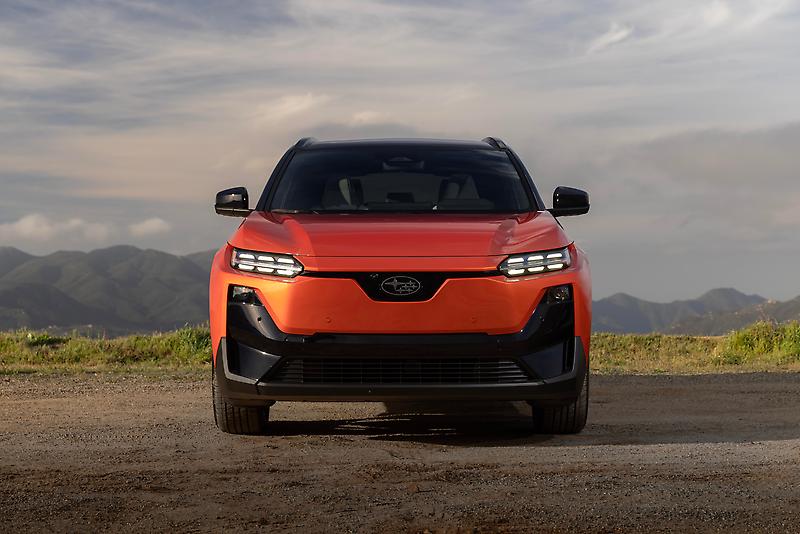
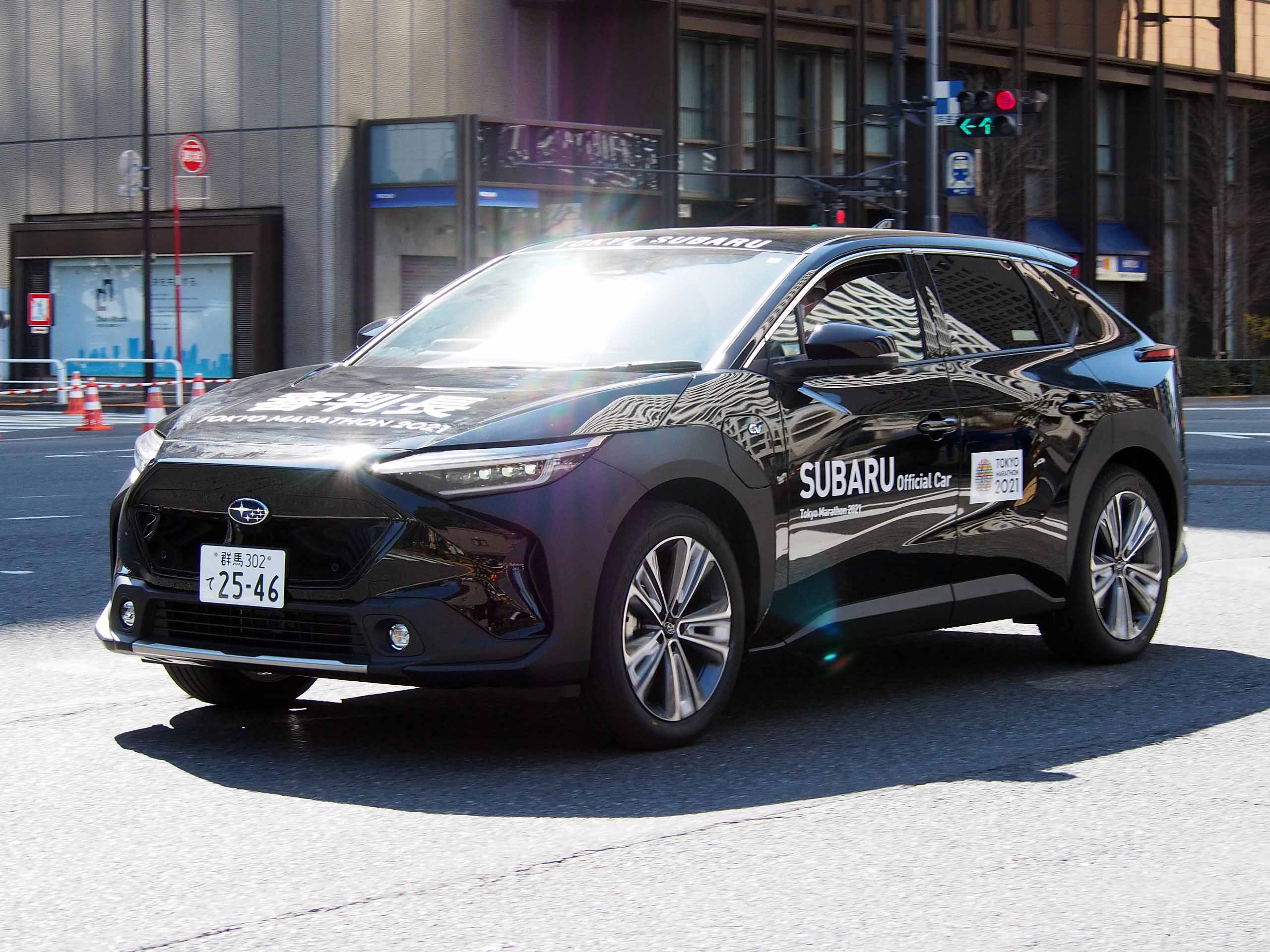
This is a Subaru electric crossover called the Uncharted, and “GT” is the higher trim level. The hosts are saying this is the car they’re using to test and talk about.
This is the 2026 Jeep Grand Wagoneer, Jeep’s big, upscale SUV. The hosts are using it as their test vehicle for the trip, so it’s the main car tied to what they’re talking about.
The Jeep Grand Cherokee is a mid-sized SUV, meaning it’s a larger family car with more ground clearance. It’s designed to be comfortable for normal driving but also capable for rougher roads. The podcast brings it up as part of Jeep’s SUV lineup.
J.D. Power is a company that surveys car owners and publishes reports about how good new cars are. In this segment, they’re the source of the quality numbers the hosts discuss.
An initial quality study measures how many problems new car owners report shortly after purchase. In this segment, it’s specifically tied to the first 90 days of ownership, which helps indicate early build/fit issues and early software/feature problems.
Driving assistance systems are the car’s safety and convenience tech that helps you drive—things like keeping you in your lane or helping avoid crashes. The hosts say these systems improved in the latest quality results.
These are car features that help you drive, like warning you or helping steer and brake. They don’t drive by themselves—you still have to pay attention and be ready to take over.
Android Auto is how you connect an Android phone to your car so you can use maps, calls, and music on the car screen. It can work with a cable or sometimes wirelessly.
Apple CarPlay is how you connect an iPhone to your car so your maps, calls, and music show up on the screen. Some cars do it with a cable, and some do it wirelessly.
The Jeep Grand Cherokee is a popular Jeep SUV. In this story, the host says their experience in a Grand Cherokee included phone connectivity issues while driving.
Infotainment systems are the car’s screen and electronics for things like music, navigation, and phone features. They can distract drivers because they pull attention to the display. The hosts are saying studies point to these systems as a big distraction risk.
Driver assistance alerts are the beeps, warnings, or messages your car gives when it thinks something is wrong—like drifting out of a lane or getting too close to something. The hosts think these warnings are getting less annoying and less distracting over time. They may be fewer false alarms or better designed.
False alarms are warnings that go off even though there’s no real danger. With driver-assist features, too many false alarms can make people tune them out or get distracted. The hosts say these kinds of warnings have been improving recently.
Unexpected system malfunctions are when the car’s electronics act up in a way you didn’t expect—like a feature glitching or a warning appearing incorrectly. The hosts are saying these problems have been happening less often recently. That would make the systems easier to live with.
Porsche is a car brand from Germany that makes performance cars. Here, they’re mentioned because the discussion says Porsche scored best for how reliable new cars seem to be early on.
Ford is a major American automaker. The hosts discuss Ford leading mass-market brands in initial quality, then later mention Ford recalls and a shift in strategy involving AI/software, engineering hires, and more time spent in quality control.
Nissan is a Japanese automaker. Here it’s mentioned as one of the mass-market brands ranking near the top for initial quality, and the host suggests it was number one the previous year.
Buick is a U.S. brand under General Motors. In this segment, it’s grouped with Nissan as a mass-market brand that ranks highly in initial quality, and the host says it doesn’t surprise them.
The “quality control phase” is the part of the production and/or inspection process where vehicles are checked for defects before they’re released. Spending more time here typically means more inspection steps and tighter verification of parts and systems.
Bosch is a big company that makes car parts and technology for other automakers. Here, it’s mentioned because Volkswagen worked with Bosch on self-driving/automated-driving tech.
Volkswagen is a car company. Here, they’re mentioned because they’re backing away from a self-driving-related partnership after spending a lot of money.
Automated driving technology is the set of systems that help a car drive itself or handle driving tasks. The point here is that making it work safely and consistently for everyday drivers is really difficult.
GM (General Motors) is a major automaker that has invested in autonomous-driving efforts. Here, it’s mentioned in connection with withdrawing from its self-driving program, highlighting how costly and challenging the space can be.
Company
Cruz
Cruise/Cruz is GM’s self-driving effort. The hosts mention it to show that even big automakers can struggle and eventually step away.
An investment black hole means money gets spent, but the payoff doesn’t show up. The hosts are saying self-driving can be so hard that it may swallow a lot of funding without clear progress.
Polestar is a car brand that makes modern, tech-heavy vehicles. In this episode, they’re discussing why Polestar isn’t selling much in the U.S. and how that relates to regulations and support.
Volvo is a car brand from Sweden. Here, they’re talking about Volvo getting approval for something related to regulations and software, compared with Polestar.
In cars, “software” is the computer code that tells the vehicle how to behave. The hosts are saying Volvo and Polestar may have different software setups, which can matter for regulations.
Term
compliance with the regulations
“Compliance with the regulations” means the car has to meet government requirements to be sold legally. The discussion is about whether Polestar would adjust its approach to meet those rules in the U.S.
“Federal laws” are rules set by the U.S. government. Here, the host is saying those laws can require car companies to keep providing parts and service for a while, even if they stop selling a model in the U.S.
The Honda Accord is a very popular Honda car model that’s been sold in huge numbers. The host mentions how many have been sold in America to show it’s a long-term, well-supported model.
The Toyota C-HR is a compact crossover, which means it’s bigger than a typical sedan but smaller than a full-size SUV. It’s built for everyday driving with a higher seating position. The podcast mentions it because it’s closely related to another model in the same family.
This means the car has one electric motor and it powers the front wheels only. One-motor front-wheel-drive versions are often cheaper and can get better efficiency, but they may not accelerate as strongly as all-wheel-drive versions.
“Miles of range” tells you how far the EV can drive on one full charge. More range generally means fewer charging stops on trips.
Term
Tesla Nax North American charging system charging port
This is about the charging plug/port the EV uses. Different EVs use different connector types, and that affects which charging stations you can use without adapters.
A home charger is the device you use to charge an EV at your house. It lets you plug in and charge overnight instead of relying only on public stations.
The Subaru Crosstrek Hybrid is a small SUV that uses both gas and electricity. The point here is that people coming from that kind of Subaru may find the EV transition easier.
“GT trim” means a particular version of the car with a specific set of features. In this case, it includes nicer seat materials and heated comfort items.
The Solterra is an electric vehicle from Subaru. The podcast is comparing it to other electric cars by size, saying it’s a bit smaller than some larger EVs. It’s mentioned because size and everyday usability matter when shopping for an EV.
Subaru is the car brand being compared here. The hosts are talking about Subaru’s dashboard screen system—how big it is, and that it can be slow or laggy when you first use it.
A shared platform means different cars are built on the same basic “foundation.” Because of that, they can share parts of the tech and design, even if the screens and menus look different by brand.
Harman Kardon is a well-known brand for high-quality audio. If it’s in the car, the sound system is usually upgraded for better music and clearer voices.
The Chevrolet Tahoe is a big SUV with three rows, often used for family trips. The host is comparing it to the Grand Wagoneer because they’re aimed at the same kind of buyer.
The Ford Expedition is a large family SUV with three rows. The host mentions it because it’s one of the main alternatives people consider in this size/class.
The third row is the rear-most set of seats in a three-row SUV. It’s a key selling point in full-size family vehicles because legroom and comfort determine whether it’s usable for adults or just kids.
The Lincoln Navigator is a large, luxury SUV with three rows. The host is listing it as a main competitor to the Grand Wagoneer’s “big family luxury” idea.
The Cadillac Escalade is a luxury big SUV with three rows. It’s mentioned here because it represents the more upscale end of the same family-SUV category.
The Lexus LX is a luxury big SUV that’s built for comfort. The host is saying the Grand Wagoneer is trying to compete with that kind of upscale family vehicle.
This is an option bundle that helps the SUV tow trailers more safely. It usually includes the right hitch/wiring and extra systems to handle the extra load.
A “package” is a bundle of options the dealer/manufacturer includes together. The “limited reserve” package usually means you get a specific set of upgrades rather than choosing everything separately.
This is the SUV’s automatic gearbox with eight different gear ratios. More gears can help the car feel smoother and keep the engine in the right “power band.”
A “Hemi V8” is a type of V8 engine design used by Chrysler/Jeep. It has a combustion chamber shape that can help the engine make good power. Here, the host is saying this setup feels like it replaces the role of that engine.
Topic
101
“101” is a nickname for a big highway in California (U.S. Route 101). The host is basically saying they tested the car’s feel and efficiency on that road. It’s a real-world reference, not a car feature.
Turbo lag is the momentary delay before a turbocharged engine really “kicks in.” When you’re at low engine speed, there isn’t enough exhaust flow to spin the turbo quickly. The host is warning that you may feel that delay when you accelerate from low RPM.
“Spool up” means the turbo is speeding up until it can start making boost. It takes time, especially when the engine is turning slowly. That’s why the car may feel less responsive right off idle.
A transfer case is the part that sends power to the front and rear wheels in a 4WD/AWD truck. A “single speed” transfer case uses one gearing setup for that power split. The host is saying some configurations use this simpler arrangement.
A two-speed transfer case lets the truck switch between two gearing modes for sending power to all wheels. One mode is usually better for low-speed pulling and control. Here, the host says the tow package upgrades to this more capable transfer case.
A limited-slip differential helps keep power going to the wheel(s) with grip instead of letting one wheel spin uselessly. When it’s “electric,” it uses an electronic system to control how it locks or limits slip. The host is saying this truck’s AWD setup includes that traction help.
Term
EPA says 19 miles per gallon combined
The EPA is the U.S. agency that tests and rates how efficiently cars use fuel. “Combined” is a single number meant to represent both city and highway driving. The host is comparing that official estimate to what they got while driving.
Quadra-Lift air suspension (spelled “quadrelift” in the transcript) uses air springs instead of traditional steel springs to adjust ride height and improve ride comfort. Combined with damping control, it can make a big SUV feel smoother and more composed over uneven roads.
Semi-active suspension damping refers to shock absorbers that can adjust their resistance in response to driving conditions. That helps control body motion (like pitch and roll), which is why the hosts describe the ride as feeling very good and predictable.
Off-road capability means how well a vehicle can handle rough, unpaved terrain. They’re discussing whether this big Jeep is meant for that, even though they didn’t test it there.
Safety equipment is the set of features meant to help prevent accidents and protect people if something happens. They’re saying the SUV includes a lot of these features.
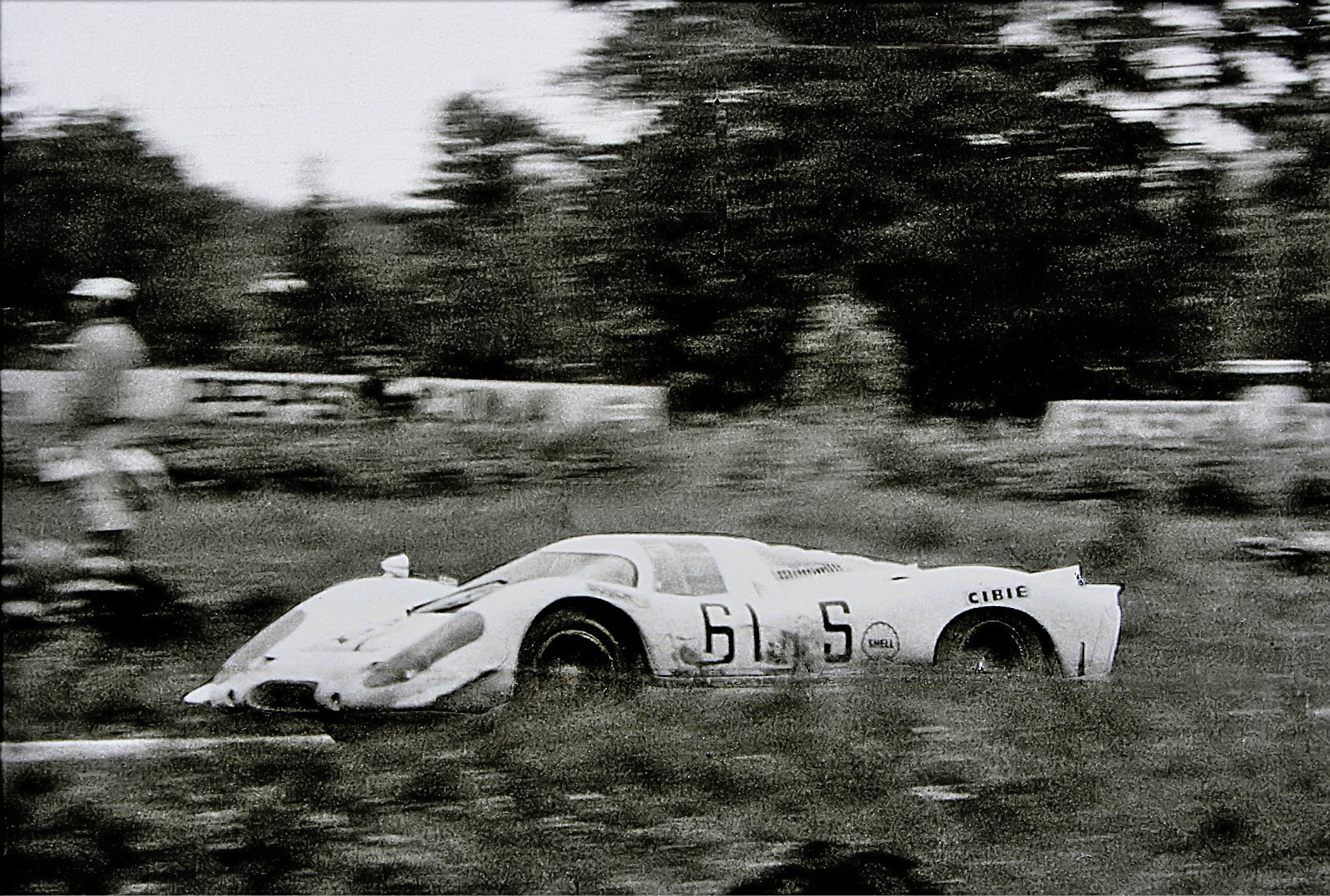
The Porsche 917 is a famous race car that competed in long-distance events. The podcast is talking about how incredibly fast it was during racing. It’s remembered because it became a symbol of top-level performance in motorsports.
The Ferrari 512 M is a race car made by Ferrari for endurance-style racing. The podcast mentions it alongside the Porsche 917 to compare top racing performance. It’s known for being extremely fast in its racing era.
AMG is Mercedes-Benz’s performance division. It started with people who wanted to race, and it eventually became the part of Mercedes that builds the faster, sportier cars.
“Red Pig” is the nickname for an early performance/racing car based on a 1971 Mercedes 300 SEL. The key idea is that it had a big V8 and helped prove the team could compete in major races.
A V8 engine is a type of engine with eight cylinders arranged in a V shape. It’s often used in performance cars because it can make strong power and pull well.
The “24 hours of Spa” is a very long endurance race—cars race for a full day. Doing well there matters because it proves the car can stay fast and reliable for hours, not just minutes.
SRT is a performance label used by Stellantis for sportier, higher-output versions of certain cars. In this discussion, it’s mentioned as a parallel to AMG’s role at Mercedes.
BMW is a well-known car brand from Germany. In this conversation, they’re mentioning BMW’s performance line, “M,” to explain how performance badges influence what people think of a car.
A “halo” effect means one really impressive car or brand image makes other cars from the same company seem better too. Here, the speaker says performance versions can make regular versions feel more desirable.
Rolls-Royce is a very high-end luxury car brand. The speaker is using it as an example of “old-school” luxury that used to dominate the top tier.
LIVE
This is America on the Road named Best Radio Show by the International Automotive Media
Conference and now in its 34th year on the air.
Thanks for being with us as we bring you the latest automotive information from around
the world.
I'm Jack Neerad with me as co-host Chris Teigen.
Chris, what is your plan for 4th of July?
Here we are on 4th of July.
Yeah, we're going to have some pretty high temperatures later on this week.
I'm going to go to the beach, I think, and sit there.
How about you?
Yeah, not the beach, although I basically live at the beach, but I think we're going
to go to a baseball game and see some fireworks there.
Plenty happening in the automotive world this week.
New vehicles are getting better built, but owners are finding new ways to get frustrated.
The latest JD Power Quality study points out the industry's biggest headache.
We'll tell you what that is coming up.
It's not us.
Volkswagen is reportedly pulling the plug on a billion-dollar self-driving partnership.
We'll tell you why one of the industry's biggest autonomous driving projects is coming
to an end.
It's also the end of the road for Polestar, at least in the United States, the end of
the American road, I guess.
The Swedish-Chinese brand is preparing to leave the US market, and we'll tell you why
coming up.
Honda has reached a remarkable milestone, selling its 15th million Accord in America.
The mid-sized sedan continues to be one of the industry's biggest success stories.
Evan knows we've all driven Accords.
Subaru's newest electric crossover is coming back for 2027, and Chris will tell us about
that coming up, but we have pricing on it, too.
Chris, are you a fan of the new Subaru Unwashed?
The Uncharted?
Yes, I am.
Uncharted, yes.
Unhoused.
They've taken a very interesting direction with their naming lately, so we can talk about
that later.
I like the Un thing.
There are so many Uns.
American on the Road is brought to you by drivingtoday.com, emlancy.com, the publisher
of my latest book.
Only one thing stays the same, and Mercury Insurance.
If you're looking to save some money, you should switch to Mercury for your auto and
home insurance.
California has saved an average of $670 with Mercury, so imagine how much you could save.
Get a quote today at drivingtoday.com slash auto insurance.
Well, Chris, what is your test vehicle?
I guess I kind of alluded to that already.
Yeah, you stole my thunder.
It's the 2026 Subaru Uncharted GT.
Ah, the Uncharted and GT version.
Wow.
Well, my test vehicle on this All-American Day is the 2026 Jeep Grand Wagoneer, and we
drove it to an All-American wedding in Los Alivos, California, and we'll tell you all
about that.
Our special guest this week is one Matt DeLorenzo.
He's a noted journalist, fellow member of the North American Car of the Year Jury, and
so we'll chat with him.
And stay with us.
We have a ton of show for you.
We're glad you're with us.
And stay with us.
We'll be right back right here on America on the Road.
Welcome back, everybody, to America on the Road with Chris Teague, Jack Neuradback with
you.
It is news time, and there's quality news this time around from JD Power.
They have announced their initial quality study for this year, the 2026 JD Power.
U.S. initial quality study.
And what they found is overall car quality has improved dramatically and the largest
year-over-year improvement since 1997, hopefully, smokes.
Owners reported just 175 problems per 100 vehicles.
This is during the first 90 days of ownership.
This is down substantially from 192 a year ago.
There were improvement in pretty much every category, driving assistance systems, interior
quality, body fit and finish, and even cup holders.
But then there is infotainment, right, Chris?
That just seems to be such a problem area.
Your thoughts on that?
Yeah, well, I'm happy to see that driver assistance features improved in satisfaction.
I think that's one thing that you and I have talked about a bunch of times.
The implementation and the functionality really matters with those features, and I'm glad
to see that they're improving.
And we've talked about this, too.
Infotainment is still a pain.
Connectivity for wireless and wired Apple CarPlay and Android Auto is a big deal.
And all the touch-based buttons for everything is a problem for a lot of people.
Yeah, I mean, connectivity problems involving Apple CarPlay and Android Auto accounted for
the largest increase in owner complaints, increase.
This is when everything else is getting better, the increase in owner complaints.
And it just seems to me that this stuff works sometimes, doesn't work sometimes.
Sometimes you have to plug it in with a wire.
Sometimes you can do it wirelessly.
Sometimes the wireless connection breaks.
It's just kind of a never-ending stream of problems.
And yet everybody wants to use their phone in their car, and rightly so.
I mean, I certainly do.
I found some of this problem when I was up in Los Alivos driving the Jeep Grand Cherokee
in that there was connectivity problems.
There just wasn't service problems up there.
I don't know how those people get by without having cell phone service in what is a fairly
upscale area, but that seems to be an issue, too, right?
Yeah, I realize that people don't switch vehicles like we do.
Normal people don't switch vehicles every week.
But there's no consistency between how the systems connect to your smartphone,
how they function.
Once you're connected, the notification systems, like you leave the car with the phone in your pocket,
you come back and the connection doesn't exist anymore.
Those sorts of things.
So Apple CarPlay has been around since 2016.
And I think that was the first time it came out.
So we're now a decade into this.
It feels like we should have more progress at this point.
Yeah, and I just don't think the cars can keep up with it.
And you have different cords you have to use, all kinds of stuff.
It's really kind of interesting.
Infotainment systems are also the biggest source of driver distraction, according to this study.
I mean, distracted driving concerns blame touch screens and infotainment displays.
That kind of makes sense.
The driver assistance alerts don't seem to be as distracting anymore.
I don't know whether people have just learned to ignore them or they are getting better.
In some ways, I think they're getting better.
What are your thoughts about that?
Yeah, I would say in the past 18 months or so,
I've seen a pretty notable decline in the false alarms
and unexpected system malfunctions and things like that.
So I do think they're becoming much more refined and easier to live with.
I find myself turning them off a lot less and a lot fewer vehicles than I used to.
Yeah, yeah.
Among automakers, among brands, basically, Porsche ranked highest overall in initial quality.
It, of course, was also the highest ranked among luxury brands
because they're not cheap now, are they?
This was a surprise to me, Chris.
Ford, F-O-R-D.
Ford led all mass market brands in initial quality, then followed by Nissan and Buick.
Nissan and Buick don't surprise me so much.
I think Nissan was number one last year.
They're going to have to change their national advertising now,
now that Ford is the number one.
But I'm kind of surprised about Ford getting this honor thinking about that.
Yeah, I wrote about this yesterday.
Ford's very proud of this honor.
They've already shouted it from every rooftop they have available to them.
But they've realized they've made some mistakes.
They went all in on AI, on software development and quality control and things like that.
And now they're kind of pulling back on that, rehiring some engineers,
spending more time in the quality control phase.
And I think we're starting to see some of the results.
Now, we've still had a ton of Ford recalls in 2026 and we had a bunch in 2025.
So I guess time will tell.
But it does appear that they're taking steps to kind of work on this.
Yeah.
I mean, the important thing is not so much the brand that it does well in overall.
I guess it's somewhat important, but really it's the individual model.
And so you have to kind of dig down a little bit to see whether your model ranks well or not
when you get into this.
And of course, we can't go over all the 350 models here.
But a lot in this report from JD Power.
So interesting.
I found this interesting too, Chris.
Volkswagen is reportedly ending its partnership with Bosch.
This is on automated driving technology.
I think it's a sign.
And we kind of heard rumblings from this from Volkswagen people really
that self-driving systems are very, very difficult to engineer.
And maybe we're a lot farther from having this perfected for consumer use than some people would suggest.
Yeah, it is interesting that they're dropping out of this race.
But I think to me it shows where the money has gone in the industry.
So there are a couple of companies, Waymo and a few others that are operating.
But we saw GM drop out with Cruz.
Obviously they had other problems that weren't necessarily financially related.
But this does appear that it could be a big investment black hole for a company
who isn't already established in the space.
Yeah.
I mean, Volkswagen has apparently invested something like 1.7 billion with a B,
billion dollars in this and now pulling the plug.
I think they might be looking to another supplier rather than Bosch.
I think they probably wanted to develop this in partnership with Bosch
so they would have some ownership over this.
Maybe now they will source this from Waymo or from Tesla or some other company.
But these are fully autonomous driving, especially in consumer hands,
not as a taxi kind of service or that kind of right hailing service.
I think it's really difficult to achieve.
Yeah, I think we expected when this whole self-driving craze got started
to see some government infrastructure put in place to help these vehicles function
or we wanted those sorts of things like vehicle to everything technology.
So the car is communicating with other vehicles on the road and other signs
and things like that, stop lights.
And we just don't have that, at least not in most of the country.
So I think, you know, there were some pieces missing from the puzzle
before we even got started.
Yeah, yeah.
And if we were going to have that, I think now they've kind of come to the conclusion
that's not going to happen, at least in the near term.
And by near term, I mean the next 10 years or so.
So they're developing cars that can figure it out themselves for good or ill.
This is interesting, too.
And maybe not unexpected, Polestar is going to leave the US market after 2026.
Largely, it's because federal regulations targeting Chinese software
take effect for the 2027 model year.
And I guess there's a great deal of concern about
software developed in China or Russia, security concerns.
How do you feel about that?
I'm surprised that Volvo got the authorization and Polestar did not.
I'm not sure what the differences are between their software,
at least in terms of like the the coding part of it.
But I'm also surprised to hear that Polestar just say,
we're going to focus on other markets and not try to appeal or try to, you know,
move into compliance with the regulations, but they don't sell a ton of cars here.
Yeah, I think this maybe is a cover story for we're not selling cars here
and thus we're leaving the market.
And here's the reason and maybe that's not really the reason.
The real reason might be that they're just not there.
I think a lot of people are surprised that Polestar is leaving
because they didn't know it was here, you know, so there you go there.
Current owners won't be left without support.
All three of them will get together and have a community sing or something.
No, that's not true.
They will be supported at least through the end of 2026.
I think there are federal laws that force car makers to provide parts
and service for cars for a lengthy period, even after they go out of the market.
So we'll see what happens with that.
Again, policy has changed things.
Honda has sold 15 million accords in America.
Your quick thoughts about that.
I was responsible for two of those sales.
I think it's an excellent car and I'm happy to see it's still going strong.
Yeah, absolutely going strong and continues to go strong
as a sedan in a market that is filled with SUVs.
So I think that's interesting.
But there you go.
A lot of the most of the accords sold in America were built in Marysville, Ohio.
They've been building those cars since 1982.
So that's very cool.
And we'll have some summer road trip advice for you later in the show.
So stay with us and we'll be right back right here on America on the Road.
Welcome back to America on the Road with Kristina Jackson.
We're back with you and we're so glad you're with us.
If you like hearing two guys talk about cars, which is what we do on this show every week,
please pass this along to friends of yours who might like our show as well.
We'd appreciate that. You can pass along a podcast.
Tell your friends where and when you hear America on the road,
because we love being on terrestrial radio as well.
And Chris, it is road test time and you have the road test of an interesting vehicle
that I've driven the sister ship of.
But tell us about the the uncharted from Subaru.
Yeah, it was exciting.
I don't normally get vehicles this close to the launch.
They usually take a while to filter up here.
But this is one of the newer models I've tested.
It's the 2026 Subaru Uncharted.
And as Jack just mentioned, this is the sister model to the Toyota CHR.
It looks a lot like the CHR down to the weird rear door handles
and the interiors very much Toyota.
But taking a step back, you can get into this vehicle for around 36,500 dollars.
That's the single motor front wheel drive trim.
My top GT test trim came out to around $43,000.
That has a dual motor all wheel drive system.
The single motor model comes with 221 horsepower.
The dual motor all wheel drive system has 338 horsepower.
Jack, I can tell you that the dual motor system in this vehicle delivers
a sub five seconds, zero to 60 time. Wow.
And so this is a very, very quick vehicle for a Subaru.
And I know you haven't driven it yet, but what do you kind of think this translates
to, at least from your experience with the Toyota version of it?
Well, I think it's a fun car.
It's a fun car whose market I'm finding difficult to figure out what it is
because I don't know that the people are gravitating to performance electrics.
But that's kind of what it is.
I mean, and it is a fun car to drive.
It's certainly fast enough and as well, I don't want to steal your thunder.
I think it handles pretty well, too.
Yeah, so you started around 273 miles of range, which is what my test model came
with the dual motor all wheel drive system. 308 miles.
The bottom are the sorry, the front wheel drive trim comes with around 308 miles.
So quite a bit more efficient on the low end.
All of them come with a Tesla Nax North American charging system charging port,
which means that if you have a regular old home charger like I do,
you need an adapter to charge, but the vehicle comes with that.
Jack, I'll tell you, as I said, this is a very quick vehicle.
I have no complaints about the ride quality.
It's extremely quiet inside and it handles reasonably well.
Again, I don't know, as you said, how many people are seeking out a high
performance EV, but if you're already a Subaru driver and you're looking to move
from like a Crosstrek hybrid into an electric version,
this is a great transition point for you.
A little bit more expensive than a Crosstrek, but you do get all the bells
and whistles with an EV and it's very quick here, too.
So you can have some fun with it, even though I don't think it's really
the best vehicle for that.
Inside the GT trim comes with synthetic leather upholstery.
You get heated front seats, heated steering wheel, heated rear seat.
Jack, there's plenty of room in this vehicle, even though it's a little
bit smaller than like the Toyota BZ or the Subaru Soltera that are a little
bit larger, but I think, you know, your kids in the car seats have plenty of room
in the back seat.
They're not fighting for position with me or the adults in the front seat.
And if you have a dog like I do, who is almost 90 pounds, he can sit in the back
seat, too, without rubbing his head on the ceiling on the headliner,
which I think a lot of people will appreciate, especially Subaru owners,
which are very heavily oriented towards dog ownership.
Technology is pretty strong in this vehicle, too.
And I'm going to talk about the infotainment a little bit more.
You get a 14 inch touchscreen here.
Jack, we've talked about Subaru's 11.6 inch portrait oriented screen,
which is very large, but it's kind of slow.
It takes a while to start up.
The inputs are laggy at first and you have climate controls.
Everything is built into the touchscreen.
And that system was a little bit more frustrating for me than other
automakers systems.
This one fixes all of those things, except for the fact that all of your
climate controls are still built into the screen as touch controls.
What do you think about the evolution of Subaru's infotainment?
Well, I was going to ask you, is this essentially the Toyota system,
but rebranded as a Subaru because this is, you know, a shared platform?
Or is this a Subaru system?
It feels to me like a re-skinned version of the Toyota system.
It doesn't have the same menu structure, but the layout is similar.
The functionality is greatly improved.
So if they took pointers from Toyota on this, more power to them.
I don't think there are any complaints to give out there.
But you get wireless Apple CarPlay and Android Auto.
As we talked about earlier in the show, I had difficulty maintaining
a consistent wireless connection in this vehicle with Apple CarPlay.
I found myself having to plug it in to get it started at points.
But once it was plugged in, it worked fine.
You get a seven inch digital gauge cluster in this vehicle,
a Harman Kardon sound system in the top GT trim and dual wireless charging pads.
So I think, you know, you get quite a bit of tech features for the money here.
The infotainment is greatly improved.
And then talking about safety features, the GT trim comes with a blind spot
monitoring, rear cross traffic alerts, adaptive cruise control
and a whole suite of other features, this being a Subaru.
So if I were going for this model, I'd probably go for the top trim.
I mean, 90000 dollars
isn't a ton of money in terms of today's auto market.
And you get a lot for the price.
And plus I need all will drive here in Maine.
So can't pass up on that.
Yeah, I think there's a lot to like about it.
Again, I think it's a limited market.
But I think maybe it's it's more of a Subaru market
for the uncharted than for its sister ship, which I could never figure out
why Toyota decided to name the vehicle the CHR, which has its own history
and not necessarily a very positive history.
I think you and I kicked that around a while ago when I was driving that vehicle.
So I think it's kind of right in a pretty good spot for Subaru buyers
and filling a hole that wasn't in the in that line up before.
So I think it's got some chance of success there
or as successful as electric battery,
electrics are going to be in the in the next couple of years.
Well, I was driving a vehicle with my family.
So that was wonderful in and of itself.
But this is a vehicle that I think is filling a hole
that used to exist in the Jeep lineup, in the Stellantis Jeep lineup
for a long, long time.
And by that, I mean a full size, three row serious competitor
to the Chevrolet Tahoe and to the Ford Expedition, those kinds of vehicles,
not to mention the Cadillac Escalade Lincoln Navigator and even the Lexus LX.
I think the Grand Wagoneer from Jeep fills that we were driving
a limited reserve four by four to a wedding in which I had to transport
my middle daughter and her husband, my oldest daughter and her boyfriend
and my wife and myself and our luggage from our home in Southern California
up the California coast a little bit to Los Alivos, beautiful spot up there.
And to tell you the truth, I was a little bit concerned,
but this vehicle was just so terrific for it.
You might expect a Jeep to be a little rough riding,
not as quiet as some of the other vehicles out there,
not as accommodating in a third row.
I'll tell you, Chris, you might not believe this,
but the two couples were kind of arguing for the third row.
It was that roomy and they liked it so much.
What's your take from the high level about Grand Wagoneer before I go onward here?
Yeah, I think it is a little bit of an oddity in Jeep's lineup,
but they did a great job making it legitimately luxurious.
I mean, I think, of course, you pay for that.
And you pay for it.
But when I get to the pricing, I think you might be surprised
what we paid for that.
It has an interesting powertrain.
That's for certain.
It has a twin turbocharged hurricane inline six cylinder engine.
Hurricane is not a is a trade name.
It is not describing technology,
but it's been used in a lot of the Stellantis vehicles recently.
Our vehicle had a long list of options.
And yet the total MSRP was about $84,000.
Now, $84,000 is a lot of money,
but we've tested some three rows, luxury three rows lately
that are well over $100,000.
So something that's less than $85,000.
I've got to kind of say it's a bit of a bargain.
I might agree with that, given that the Escalade I tested a few weeks ago
was $130,000.
So yeah, this had the limited reserve package, a heavy duty trailer tow package.
And of course, destination charges.
Nice interior, had an interesting exterior color, steel blue,
black napple leather interior, good looking interior.
Let's talk a little bit about the drivetrain.
As I mentioned, twin turbocharged inline six cylinder engine.
It was paired with an eight speed automatic transmission.
Of course, this kind of takes the place of the Hemi V8.
And there were times when I thought, well, this would be pretty nice
if I had the Hemi V8, but the overall drive ability was pretty good.
Good acceleration, broad torque curve.
So that, that I like the eight speed automatic work very, very well.
It says all wheel drive, of course, and pretty sophisticated all wheel drive.
I'll dive into that.
Passing required a little effort.
I was on the 101 for a lot.
We called it the 101 out here.
Little bit of turbo lag.
And there's no getting around to turbos.
Take a little bit to spool up because when you're driving at very low RPM,
there's not much exhaust gas to spin the turbo.
So I took a little bit standard is a single speed transfer case
for full time all wheel drive.
But when we had the heavy duty trailer tow package,
we got the two speed transfer case, select speed control
and electric limited slip differential.
So a lot of good stuff there and fuel economy was what you might expect it to be.
EPA says 19 miles per gallon combined.
I was driving it.
I have to admit, maybe a little extra legal speeds on the 101 here and there.
And that's about what we got.
So pretty good.
And like I say, maybe a VA powered Grand Wagoneer would have.
Well, you wouldn't have to deal with turbo lag.
You'd have more torque right off right from the go.
But I like the drivability.
And have you had a chance to drive a Grand Wagoneer?
I have. And I do agree with the turbo lag assessment.
There is kind of a rush of power as you're going up the rev range accelerating.
You know, it depends on how quickly you dip in and all that stuff.
But smooth acceleration, generally a very quiet cabin, comfortable highway ride.
I like that for this long distance travel.
And we were driving, I guess, 150 miles or back and forth, that kind of stuff.
So 300 miles plus.
And as I say, a lot of people were trying to vie for that third row,
which I found amazing, but it's a pretty roomy third row.
I agree. It has our vehicle had the quadrelift air suspension,
semi-active suspension damping, so felt very, very good.
Handling predictable, a big vehicle.
I didn't take it off road.
I don't think a lot of people will, but it could.
I think Jeep has always struggled with, should this be an off-roader or not?
But I think overall at this kind of price, with all the stuff that this has
and the safety equipment, it's an excellent vehicle with a lot of cargo space.
We got luggage for six people in this thing, like the entertainment system.
So you connect five.
So all around, I think it's a winner.
And I think you had a winner as well in your vehicle.
So when we come back, we will have a winner of a guest in Matthew Lorenzo.
So stay with us for that.
We'll be right back right here on America on the Road.
I'd like to tell you about the most exciting and authentic racing novel I've ever read.
It's called Closing Speed, written by award-winning author Ted West.
In 1970, the Indy 500 pole speed was 170 miles an hour.
But at Le Mans, Vic Alfred's Porsche 917 raged down the Mulson Strait at 248 miles per hour.
The racing pit of the Porsche 917 versus the Ferrari 512.
The fastest road racing ever.
And Rodentrack sent a promising new rider, 27-year-old Ted West, to cover it.
He traveled from Brands Hatch to Monza, the Targa Florio, Spa, the Nurburgring and Le Mans.
You got to know the racers personally and the women who loved them.
The racing was blindingly fast.
Driving horrifically fragile cars at those speeds took unheard of courage.
Death was around every corner and the drama tensely real every moment.
Closing Speed is the most realistic, intimate racing novel ever written.
As a look into the very heart of the sport, an incomparable racing read.
It's available now at Amazon.
That's Closing Speed by Ted West.
Look for it.
Welcome back everybody to America on the Road to Tech and your head back.
With you we have a terrific guest, a very familiar face.
Of course, face for radio, that's what I have.
Matt DiLorenzo does not though.
Matt guest hosts on the show frequently, but today he is just guesting.
After coming back from Japan had an interesting time there.
But before we get to that, Matt, let's talk a bit about your new book.
You've got a book out.
A lot of people should be looking at it.
Pretty cool stuff about AMG.
Tell us about it.
Yeah, it's called Mercedes AMG Race Bread Performance.
And it's basically the story of Mercedes Performance Division AMG and how it got started.
And it really started out with a couple of engineers who worked for Mercedes and wanted
to go racing at a time when Mercedes wasn't racing.
And they eventually left the company and then they built a car called the Red Pig,
which was a 300 SEL in 1971 with a big V8 engine in it and kind of set the racing world
on its ear by finishing second at the 24 hours of Spa in 1971.
And they won their class and other races started flocking to them to build cars
and they started doing road cars.
So after a while, Mercedes looked at the popularity of AMG and then AMG helped them
with their German touring car racing team.
They decided they liked the company so much they went out and they bought it
and incorporated it into the overall Mercedes structure as their sports car division,
in essence.
Yeah, I think in a lot of ways, maybe AMG is the epitome of some kind of specialty
division within a manufacturer, right?
I mean, we see others.
We see Stellantis does SRT, for example.
I see the M cars, I guess, from BMW.
Exactly.
But it looks like AMG and we're starting to see that from the Koreans as well.
I think what Andy has in, for example, has been at things.
Maybe we'll go through the entire alphabet.
Well, these divisions really bring, they're sort of like a halo.
Before it was luxury and a lot of the big manufacturing like Rolls Royce and Bentley
were scooped up by VW Group and BMW.
But now, I think performance is kind of the new blue chip, you know,
you back it with some racing successes, you do some street cars.
And then it builds sort of an aura that you can share across the lineup.
You know, luxury is pretty much confined to the high end.
But with this performance thing, you'll see the AMG badge, for instance, appearing on
a wide range of Mercedes products.
They may not have the full AMG treatment, but they certainly enjoy some of the positive
rub off from the brand itself.
Yeah, I think they enjoy some positive rub off that maybe is misplaced in a way, too.
I mean, I think a lot of people will go into a Mercedes-Benz dealer and they'll want the
most expensive, whatever, S class, you know, pick a class, the most expensive E class,
which is typically the AMG version thereof.
But they're not necessarily performance-oriented people.
I think that's kind of interesting, you know, you've got the blue-haired old ladies that are
getting into the Mercedes-AMG model and maybe that's not appropriate for them.
Yeah, well, you can, you know, they're in the business to sell cars for the most amount of
money they can and that AMG badge does it.
Did you see the same thing with BMW and the M badge?
There are a lot of cars that have the M badge on it.
And again, people tend to look favorably upon those things.
Yeah, I think the good news with the AMC stuff that I've driven recently is it's
perfectly usable as a regular car.
I mean, it doesn't meet you up.
It's not crazy exotic or something like that.
It has, you know, very often some pretty exotic stuff under the hood and in the suspension.
But as a typical driver, they work just fine, don't they?
Yeah, you can get a wide range.
There's AMG line, which is just basically wheels and tires and kind of the AMG look.
There are some AMG models that have some minor lifts in performance.
And then you can go a whole hog into the really hardcore AMG ones where the engines are actually
built at the headquarters in a Falterbach, Germany.
And you get the most horsepower and kind of extreme handling out of those types of cars.
And it's, you know, I believe they sold upwards of 150,000 AMG products last year,
badge products.
So it's been quite successful for Mercedes.
Great brand for them.
Some of those engines, I think, are built by a particular guy, right?
Or a guy who signs the engine.
I mean, he is the author of that particular engine, which is kind of cool.
Yeah, they have one technician work on an engine.
Some of them, the V8 engines, they can do maybe two engines a day.
And then if he's not done with the second engine of the day, they put it aside.
And then when they come back into work the next day, they pick up where they left off.
So it really is kind of a bespoke way of doing things that you don't see too much
anymore in the business.
Yeah, kind of taking it back to the cottage industry that it used to be,
you know, 120 years ago.
Yeah, yeah.
Let's shift gears a little bit.
I want to talk about your experience in Japan.
And we talked about this a little off air.
And you were there recently attending an auto show, essentially.
Tell us about that whole thing.
Yeah, I had an opportunity to go to the Tokyo Auto Salon.
And the best way I can describe it is sort of SEMA meets Tokyo drift.
You know, the SEMA show here in America is a lot of performance parts, aftermarket parts.
Manufacturers come and they show off their performance oriented vehicles.
The same thing happens in Japan.
And, you know, it's interesting that the Tokyo Motor Show used to be at this place where the
Tokyo Auto Salon is.
It's called the Makuhari mess.
It's a gigantic exposition fairground center with three massive convention halls.
Well, the Tokyo Motor Show, which is now known as the Japan Mobility Show,
moved to a smaller facility back.
It's kind of a cross town.
It's way, way different.
Right.
It's like in almost downtown Tokyo, where the Makuhari mess is in the area that's halfway
between Tokyo and Norita International Airport.
It's quite a distance from the city center.
But this place is just massive and it's full.
I went there and manufacturers are there.
You know, Mitsubishi, Toyota, Honda, Nissan, all showing off their performance oriented
stuff.
And then you have the little tuners and different people making drift cars.
It's just an amazing show and they get a ton of people.
It's only a weekend long show and they get upwards of 300,000 people coming.
So on any given day, there's, you know, 150,000 people in these buildings.
And it's pretty cool.
Like Toyota, for instance, was showcasing its GR Performance brand, which is
Gazoo Racing.
They're trying to turn it into sort of an AMG type performance brand with specific products.
They announced some stuff with Toyota Racing.
So Gazoo Racing, GR, used to handle a lot of the racing stuff.
But now they're going to split it up and they announced that Toyota Racing now will handle
kind of the Le Mans effort, NASCAR, sort of bespoke racing.
And then Gazoo Racing will do more vehicles that are related to production cars, production
car type racing.
So that was a big announcement there.
Nissan showed off a facelifted 370Z, which was really interesting.
And then there were all these, I mean, the tuners and the different drift cars.
I ran into people I know from a TAL design.
They were there and they're doing a really cool project where they're taking some of the last
generation NSXs and re-bodying them into these really cool looking sports cars.
They're going to do a limited run of maybe 50 of these things.
And they were just showing it off there, hoping to get some bites to find some customers for this
sort of bespoke Italian bred NSX.
Yeah, that would be cool.
Yeah, I like that.
Kind of a Fiat 124 Miata kind of.
Yeah, exactly.
Exactly.
Were there any electrics there?
I mean, I'm kind of curious where electric performance is going if it's going anywhere.
No.
Maybe not so curiously enough.
No, it was all about performance.
And even though electric vehicles deliver awesome performance, you'll see some hybridization
there, but there wasn't a lot of emphasis on pure electrics there.
It was all drift cars, all-wheel drive, stuff like that.
Based on the zero to 60 performance, the kind of acceleration we see out of electric cars,
even the fairly mundane electric car, an Ioniq 5 or something like that,
not that it's horribly mundane, but you know what I mean.
It's kind of a largely mainstream kind of electric car if there is such a thing.
They have incredible performance, but it just doesn't seem to resonate with performance people
for some reason.
I don't know whether they have gasoline in their veins.
They like the smell of exhaust.
What do you think it is?
I think it's the sound.
I think the thing about internal combustion is that they're exciting sounding cars as they go by.
And electric cars just don't have that.
And a part of this show is that they're doing like burnouts and donuts in the parking lot.
They have a little track that goes around the outside of the convention center.
Accio Toyota was there doing donuts in a Yaris rally car.
They took the GT.
This is a new Toyota introduced this GT and GT3 super sports car, sort of a successor to the
LFA.
It's a super car V8 front engine rear drive.
They were driving that thing around the outside of the building.
And I think that that's it.
You know that the whole drift mentality is really an internal combustion phenomenon,
especially over there.
I just think internal combustion engine vehicles are just more visceral in a way.
I mean, it's just kind of get under your skin in a way that electrics just have never done
it for me.
And I don't know whether I'm the rare breed or it seems like maybe not.
I don't know.
What do you think?
No, you know, because there were a lot of young people at the show.
And the next day after I had an opportunity to go to like an open drift session at a small
track outside of Tokyo.
And there were a bunch of like engineers there, guys who work for different car companies,
tuning their cars, drifting their cars, working on their cars.
And I think an electric vehicle doesn't give you the opportunity to do that kind of stuff.
And I think that that's part of, and that's part of the culture over there too,
that's taken hold.
They said a lot of these Japanese manufacturers are encouraging their engineers to work as
mechanics on these cars and drive these cars.
So they really understand vehicle dynamics, how they work.
And it's really a way for them to build, to improve the breed really through,
you know, there's nothing harder on a car than watching it slide sideways on a track,
burning up tires, you know, and they go through tires like crazy.
Like in a 10 minute session, they're done.
You know, all these cars go out there and they drift around.
It was, and I got a chance to ride in one of them.
And it was kind of like ballet meets break dancing, because you're in these cars that
are kind of, you know, in tandem kind of going back and forth.
And you get inside and the guy's like break dancing.
He's yanking on a brake lever and, you know, shifting a gear, yanking the steering wheel,
or it's really frenetic inside the car and outside the car.
They're kind of, you know, doing these long, lazy drifts with their tires,
smoking the engine, screaming.
It's quite a sight.
Yeah, well, we'll have to see what happens in the future.
But thanks so much for being with us.
As always, love talking to you about cars.
We're probably going to do a little more off the air when we get off here.
So stay with us, everybody.
We'll be right back right here on America on the Road.
Welcome back to America on the Road with co-host Chris Teague.
Casual here with you.
It is listener question time.
Our final segment of the week.
We love to answer questions for you based on our lengthy experience and providing car advice
to those who need it, those who just want it.
We'd love to hear from you.
Send questions to editoratdrivingtoday.com.
That's editordrivingtoday.com.
Here's a great question.
This is from Toby in Yuma, Arizona.
Short and sweet question.
Are today's cars becoming too complicated for people to do their own repairs?
I think cars have probably been too complicated for most people to do their own repairs for
more than two decades at this point.
I think it's been a while.
But the basic tools haven't changed, right?
Your socket set, your wrenches, everything.
That's all still applicable here.
I think the difference for a lot of people comes down to access to the software side of things
because a lot of vehicles rely on software.
Even if the hard part of it, so the hardware part of it is fixed,
there's often a part of the software that you have to go and turn off a warning light.
And that can make it difficult.
But I think the aftermarket and the internet is full of people finding out ways around this.
So I think you could repair almost anything with enough effort.
Yeah, enough effort and enough knowledge and be prepared to have it not work.
Avoid your warranty, yeah.
Yeah, I mean, you can certainly do maintenance.
You can do things like change your oil, change your oil filter, that kind of stuff.
Make sure your tires are properly maintained, that kind of thing.
When it comes to going into things like, I remember the day when you could change out a radio
or do things like that.
I mean, that's just not going to happen anymore because as we mentioned,
so much stuff is in the infotainment system.
Yeah, you don't want to lose your climate controls and airbags because you changed out the radio.
Right, absolutely.
Well, that sums it up for this week.
I'd like to mention that my crime novel, only one thing stays the same,
is available in both e-book and paperback form at Amazon.
If you're like our show, please pass it on, listen on this radio station each week
and let your friends know where you hear America on the Road.
We'd love to double our listenership this year.
And Chris, we need their help, don't we?
We do.
And you guys can do that with a quick Google search for the America on the Road podcast.
That'll bring us to you on all the major platforms, Apple, Spotify, plenty of others.
Like the show, leave us a review, subscribe to get our downloads every week.
All of those things help us out and you can take us with you wherever you go.
Right, we have a YouTube channel, so check that out.
Please subscribe to that.
Look at our America on the Road videos, road tests and shorts.
Our thanks to Mercury Insurance for sponsoring the show
and to our sports byline radio network stations for carrying it.
We love terrestrial radio.
Most of all, thanks to you for listening and please join us again next time
for another edition of America on the Road.
I received a letter from a reader this week and I thought I'd share it with you.
Here's what he wrote.
I just got around to reading Dance in the Dark and wanted to say how much I enjoyed it.
I'm a compulsive reader and this one was right up my alley.
An unlikely hero.
A lot of twists and turns.
Some adult content and humor that rose naturally from the action.
Keep on writing and I'll keep on reading.
Of course, that's just the kind of letter any author would love to get.
I hope that others get the same enjoyment from reading Dance in the Dark
and my newest crime novel, Only One Thing Stays the Same.
Both are available exclusively at amazon.com.
That's Dance in the Dark and Only One Thing Stays the Same,
both written by me, Jack Arnie Red.
Thanks for looking for them today.
About this episode
Jack Neerad and Chris Teigen kick off with July plans, then dive into the 2026 JD Power U.S. Initial Quality Study: overall quality jumps to the best year-over-year improvement since 1997, but infotainment remains the biggest frustration—especially inconsistent Apple CarPlay/Android Auto connectivity and touch-heavy controls. They also break down brand rankings (Porsche highest overall, Ford leading mass market) and discuss Volkswagen ending a major self-driving partnership with Bosch. Polestar’s U.S. exit is tied to upcoming federal software regulations. The hosts then preview their test vehicles: a 2026 Jeep Grand Wagoneer and a 2026 Subaru Uncharted GT, plus a guest interview with Matt DeLorenzo.
Getting six adults and their luggage to a gala wedding 150 miles away is no small task. So to accomplish it, we called in Big Blue 2, our affectionate nickname for the 2026 Jeep Grand Cherokee that was chosen for the special duty. How did the full-size SUV fare? We’ll tell you this week on America on the Road.
While Jack Nerad was transporting most of his family to central California, across the country in New England Chris Teague was reviewing the 2026 Subaru Uncharted electric crossover, and we’ll have his report as well. Jack and Chris also discuss improving new-vehicle quality with lingering tech frustrations, as revealed by the 2026 JD Power Initial Quality Study. And they examine the drama surrounding Volkswagen ending its big self-driving partnership and Polestar’s departure from the U.S. market.
🚙 Jack Nerad’s Road Test: 2026 Jeep Grand Wagoneer Limited Reserve
In a special road trip report, Jack reviews the 2026 Jeep Grand Wagoneer Limited Reserve 4×4, a full-size luxury SUV that combines premium comfort with genuine off-road ability. Powered by a twin-turbo inline-six, it features opulent Nappa leather, a 12-inch Uconnect touchscreen, and upscale McIntosh audio. But did it have the room, power and gravitas to transport the six-adult entourage to its destination and back? We’ll have a complete report.
🚗 Chris Teague’s Road Test: 2026 Subaru Uncharted
While Jack was traveling to the wedding, Chris tested the 2026 Subaru Uncharted, Subaru’s newest and most affordable EV. Starting at $34,995, it offers up to 308 miles of range, 338 hp with AWD, a 14-inch touchscreen with wireless CarPlay/Android Auto, 8.2 inches of ground clearance, and up to 25 cubic feet of cargo space. Available in Premium, Sport, and GT trims, it promises practical EV motoring with Subaru’s signature all-weather capability. Did it deliver the goods? We’ll let you know.
🎙️ Special Guest Interview
Matt DeLorenzo, noted auto journalist, North American Car of the Year juror, and author of Mercedes-AMG: Race-Bred Performance, joins the show.
📰 This Week’s Headlines
J.D. Power: Vehicle Quality Improves but Tech Frustrates
Overall initial quality jumped sharply, but infotainment and connectivity issues (especially Apple CarPlay/Android Auto) remain the top owner complaints.
Volkswagen Ends Bosch Self-Driving Partnership
VW is winding down its $1.7 billion autonomous driving collaboration with Bosch as fully self-driving tech proves harder than expected. Is self-driving farther off than many suggest?
Polestar to Exit U.S. Market
The Swedish-Chinese EV brand will stop new vehicle sales in the U.S. after 2026 due to federal rules on Chinese software. But is there another reason? We’ll offer our theory.
Honda Sells 15 Million Accords in America
The iconic midsize sedan reaches a major milestone, with strong hybrid sales and decades of U.S. production in Ohio.
❓ Listener Question
Toby from Yuma, Arizona, asks: “Are today’s cars becoming too complicated for people to do their own repairs?” Jack and Chris share their thoughts.
📚 Jack Nerad’s New Book
Jack’s crime novel, Only One Thing Stays the Same, is available now in paperback and eBook on Amazon — currently at a sale price.
🎧 Where to Listen
Catch America on the Road on your local Sports Byline Radio Network station each week and subscribe to the podcast on Apple Podcasts, Spotify, YouTube, and more. Follow for new car reviews, guest interviews, auto news, and road tests.
Sponsored by Mercury Insurance and DrivingToday.com
📺 Watch & Subscribe
Find America on the Road on YouTube and Rumble. Subscribe for road test videos, shorts, and extended reviews.