
2026 Nissan Leaf Review- The Affordable EV That Finally Gets It Right
About this episode
Nissan’s all-new 2026 Leaf gets a week-long real-world review focused on value, usability, and whether it finally feels like a “right” EV. The host breaks down pricing (from about $31.5k), trim differences, and EPA range versus observed ~230 miles in mild weather. Tech is a highlight: improved Nissan interface, wireless Android Auto/Apple CarPlay, and a larger, more useful HUD. Driving impressions are city-friendly and quiet on highway, but the suspension can feel bouncy and there’s no AWD. Charging is practical for daily life, with 150 kW DC fast-charging and easy home setup.
The 2026 Nissan Leaf is all-new and more refined. Plus it's more affordable than most EVs on sale today. Starting at $31,500 (yeah, including shipping), it delivers real-world range, upgraded tech, and the everyday comfort Nissan is known for — without drifting into luxury-car pricing.
After living with the Leaf for a full week, I dig into real-world range, charging speeds, interior usability, ride quality, and how it stacks up as a practical electric vehicle. The third-generation Leaf is so improved, Nissan could've given it a new name. Remember, Leaf was a finalist for the NACTOY 2026 North American Utility of the Year.
instant torque
"EVs can be better vehicles for some people, even the least expensive ones deliver luxury car refinement, an instant torque. Leaf was a finalist..."
Instant torque means the electric motor can provide strong pulling force right away. That’s why EVs often feel quick and responsive from a standstill.
Instant torque is the immediate twisting force an electric motor delivers from a stop. Because EVs don’t need to wait for engine revs or a torque converter, the acceleration feel can be smoother and more responsive than many gas cars.
2026 North American utility vehicle of the year
"Leaf was a finalist for 2026 North American utility vehicle of the year, no small feat in a crowded field."
The host is mentioning an award the Leaf was up for. It’s basically a “this car is getting recognized” moment in a competitive field.
This refers to an annual award category for utility vehicles in North America, and the host notes the Leaf was a finalist. It’s used as a credibility signal that the car is competing in a crowded market segment.
EPA rated
"Platinum Plus that stickers for just over $41,000. Range here is EPA rated at 259 miles."
EPA rated range is a standardized estimate of how far an EV can go on a full charge. Your actual range may be different depending on how you drive and the weather.
EPA rated range is the distance an EV is expected to travel under standardized testing by the U.S. Environmental Protection Agency. It’s a consistent way to compare EVs, though real-world range can vary with speed, temperature, and driving style.
Electrochromic Roof
"You give a Platinum Slick Electrochromic Roof, it's a trick that many luxury vehicles still don't offer, and the excellent Bose Surround Audio."
An electrochromic roof is a glass roof that can automatically darken or lighten. It helps control sunlight and heat without you having to add a shade.
An electrochromic roof is a smart-glass system that can change tint electronically, helping manage heat and glare without manual shades. It’s a feature more commonly seen on higher-end vehicles, which is why the host highlights it as a luxury touch.
19-inch wheels
"Platinum also upgrades to 19-inch wheels instead of 18s."
19-inch wheels are bigger wheels than the more common 18-inch size. Bigger wheels can change how smooth the ride feels and how the car handles bumps.
Wheel size like 19-inch refers to the diameter of the wheel, which affects ride comfort, steering feel, and tire sidewall height. Larger wheels often look sportier but can make the ride a bit firmer depending on tire choice and suspension tuning.
Bose Surround Audio
"You give a Platinum Slick Electrochromic Roof, it's a trick that many luxury vehicles still don't offer, and the excellent Bose Surround Audio."
Bose is a well-known company that makes car audio systems. “Surround Audio” means the speakers are set up to make the music sound more enveloping.
Bose is an audio brand known for premium speaker and sound-processing systems. “Surround Audio” indicates a multi-speaker setup designed to create a more immersive sound stage in the cabin.
Sea Breeze Blue Pearl paint
"And I lost count of how many people admired the $800 Sea Breeze Blue Pearl paint."
Sea Breeze Blue Pearl is a named paint color. “Pearl” usually means it has a special finish that can look different depending on the light.
“Sea Breeze Blue Pearl” is a specific paint color name, with “pearl” indicating a multi-layer finish that uses pearlescent pigments to create depth and color shift under different lighting. Color names like this are often tied to optional paint packages.
interface
"Press events don't allow much time to live with an interface, and that matters, especially in an EV. Nissan's upgraded system is a huge improvement..."
Here, “interface” means the car’s screen and controls—how you use things like navigation, charging, and climate settings. The host says it’s important because EVs rely on the screen for more of your day-to-day actions.
In an EV, the interface typically refers to the infotainment and driver-control system used for navigation, charging info, climate control, and vehicle settings. The host argues that a responsive, intuitive interface matters more in EVs because many daily tasks are managed through it.
rudimentary setups
"Nissan's upgraded system is a huge improvement over the rudimentary setups that hung around far too long. After a week, I find this one responsive and intuitive."
The host is saying some EV systems feel basic or outdated. They weren’t as smooth or easy to use as the Leaf’s newer setup.
“Rudimentary setups” is the host’s criticism of older or simpler EV infotainment/controls systems. The point is that earlier designs were less polished and less user-friendly compared with the Leaf’s updated system.
Android Auto
"but unlike GM's EVs, Nissan gives buyers Android Auto and Apple CarPlay. That's a must for some people."
Android Auto lets you connect your Android phone to the car and use certain apps on the car’s screen. It’s meant to make navigation and music easier without taking your eyes off the road.
Android Auto is a smartphone-to-car interface that mirrors compatible apps and navigation onto the vehicle’s infotainment screen. It’s designed to keep you using familiar phone features while focusing on driving.
Apple CarPlay
"but unlike GM's EVs, Nissan gives buyers Android Auto and Apple CarPlay. That's a must for some people."
Apple CarPlay connects your iPhone to the car so you can use certain apps on the car’s screen. It’s a way to get navigation and media without fiddling with your phone while driving.
Apple CarPlay is a smartphone-to-car interface that brings compatible iPhone apps (like maps and music) to the car’s infotainment display. It helps drivers use phone features with simpler, car-focused controls.
Natural voice commands
"Which works really well. I love this technology. Natural voice commands allow you to keep your eyes on the road."
Natural voice commands mean you can talk to the car and it understands what you’re asking. It’s meant to help you keep your eyes on the road.
Natural voice commands are voice controls that understand spoken requests in a more conversational way. The goal is to reduce distraction by letting you control navigation or media without touching the screen.
single-motor front-wheel drive layout
"Leaf uses a single-motor front-wheel drive layout. Front lovers will be disappointed. All but the upcoming base version produced 214 horsepower and 261 pound-feet of torque."
This means the Leaf uses one electric motor and it drives the front wheels only. It’s simpler than cars with motors on both axles, but it also means you can’t get all-wheel drive in this configuration.
A single-motor front-wheel drive layout means one electric motor powers only the front wheels. Compared with dual-motor setups, it typically offers simpler packaging and lower cost, but it can limit traction and handling options like all-wheel drive.
single-speed transmission
"The single-speed transmission uses budget-looking buttons. The little nubs allow operation by Braille, if you don't want to look down."
Electric cars often use a single gear because the motor pulls strongly at many speeds. That means there’s no multi-gear shifting like you’d expect in a gas car.
An EV single-speed transmission uses one fixed gear ratio because electric motors deliver strong torque across a wide speed range. That eliminates the need for multi-gear shifting like a traditional automatic.
head-up displays
"The head-up displays much larger and more informative while driving."
A head-up display shows important info in front of you, usually on the windshield. It helps you check things without taking your eyes off the road.
Head-up displays (HUDs) project key driving information onto the windshield so you can see it without looking down at the instrument cluster. This can improve usability for speed, navigation cues, and alerts.
regenerative braking
"Regenerative braking is adjustable using these, or there's E-Step. It's the most aggressive setting."
Regenerative braking is how an EV slows down while also recharging its battery. When you lift off the pedal, the car can use the motor to slow you and put energy back into the battery.
Regenerative braking is when the electric motor slows the car and converts some of that motion back into electricity to recharge the battery. It’s adjustable in many EVs, affecting how strongly the car slows when you lift off the accelerator.
E-Step
"Regenerative braking is adjustable using these, or there's E-Step. It's the most aggressive setting."
E-Step is a Nissan setting that makes the car slow down more using regenerative braking. It’s meant to help you drive with less brake pedal use.
E-Step is Nissan’s named driving mode for stronger regenerative braking behavior. In this segment, the host says it’s the most aggressive setting, meaning the car slows more when you lift off the accelerator.
liquid-cooled
"The battery pack is now liquid-cooled and rated at 75 kilowatt hours."
Liquid-cooled means the battery has a cooling system with fluid. That helps the battery stay at a good temperature so it can charge and perform more consistently.
Liquid-cooled battery packs use a coolant loop to manage battery temperature. Keeping the battery in an optimal temperature range helps performance and charging consistency, especially during repeated fast charging or hot/cold weather.
75 kilowatt hours
"The battery pack is now liquid-cooled and rated at 75 kilowatt hours."
“75 kilowatt-hours” is how big the battery is. A bigger battery usually means you can drive farther before needing to charge.
“75 kilowatt-hours” is the battery capacity, a measure of how much electrical energy the EV can store. Larger capacity generally means more potential range, though real-world range also depends on efficiency and driving conditions.
J1772 port
"Home charging uses a J1772 port on the driver's side, DC fast charging."
A J1772 port is the typical plug used to charge an EV at home or at many public chargers. It’s the most common connector you’ll see for regular charging.
A J1772 port is the common North American connector used for Level 1/Level 2 home and public AC charging. It’s the standard plug most people use for everyday charging.
DC fast charging
"Home charging uses a J1772 port on the driver's side, DC fast charging."
DC fast charging is the faster type of public EV charging. It can add a lot of energy in less time than home charging, especially when the battery isn’t too hot or too full.
DC fast charging supplies direct current to the battery through the car’s charging system, allowing much higher power than standard home charging. It’s designed for quicker top-ups on trips, though actual speed depends on battery temperature and charge level.
150 kilowatts
"DC fast charging. That's Nax on the front passenger fender, maxing out at 150 kilowatts."
“150 kilowatts” is how fast the charger can power the battery at its best. Even with a high number like this, charging can slow down as the battery gets fuller.
“150 kilowatts” is the peak charging power the car can accept during DC fast charging. Higher peak kilowatts generally means faster charging, but the real-world curve still depends on how the battery manages heat and how full it already is.
charge limit settings
"Charge limit settings are easy to manage. And remember, 80% is best for daily use, save 100% for road tripping."
Charge limit settings let you choose how full the battery is allowed to get. Stopping at something like 80% can help the battery last longer for everyday use.
Charge limit settings let you cap how full the battery is charged (for example, stopping at 80%). This can reduce battery stress from frequent 100% charging and help daily longevity.
zero to 60-time
"If that whole zero to 60-time thing is important to you, know that this will spool up to that benchmark in about seven seconds, which is not Porsche"
“Zero to 60 time” measures how quickly a car accelerates from a standstill to 60 mph. It’s a simple way to compare quickness between cars.
“Zero to 60 time” is the elapsed time it takes to accelerate from 0 mph to 60 mph. It’s a common performance metric used to compare how quickly cars feel responsive, especially in stoplight driving.

Porsche Taycan Turbo S
"know that this will spool up to that benchmark in about seven seconds, which is not Porsche Taycan Turbo S territory."
The Porsche Taycan Turbo S is a very fast electric Porsche. The reviewer is basically saying the Leaf can accelerate well, but it’s not in the same league as that Porsche.
The Porsche Taycan Turbo S is a high-performance electric sedan known for very strong acceleration and advanced EV hardware. The host uses it as a benchmark to show the Nissan Leaf’s acceleration is quicker than you might expect, but not at Taycan Turbo S levels.
all-wheel drive
"you can't get all-wheel drive with this, that would help. Leaf is a good time bombing around the burbs."
All-wheel drive means power goes to all four wheels. That can help the car grip better in rain or snow, but this Leaf version can’t be had that way.
All-wheel drive (AWD) sends power to both the front and rear axles, which can improve traction and stability, especially on slippery surfaces. In EVs, AWD often requires additional motors and can change handling and efficiency.
body roll
"In the city, during hard cornering, there is a bit of body roll happening and not an awful lot"
Body roll is when the car leans to the side when you turn. It usually happens more when the suspension is tuned to be softer for comfort.
Body roll is the tendency of a car’s body to lean outward when cornering. It’s influenced by suspension tuning, spring rates, and anti-roll (stabilizer) setup; softer setups often feel more roll-prone.
Pro Pilot Assist
"Enthusiasts will hope for a Nismo version. Leaf doesn't get Nissan's most advanced [354.7s] Pro Pilot Assist, so hands-on the steering wheel is required regularly while on the highway."
Pro Pilot Assist is a feature that helps the car steer and stay in its lane on highways. If your car doesn’t have it, you have to steer yourself and keep your hands on the wheel.
Pro Pilot Assist is Nissan’s driver-assistance system that can help with steering and highway lane keeping. If it’s not included on a given Leaf trim, the driver must keep hands on the wheel and stay actively engaged.
Active Electronic Safety Tech
"[361.1s] Still, the suite of Active Electronic Safety Tech is solid for an affordable EV. [366.6s] Recuperation drag is adjustable."
This is a bundle of safety features that help the car avoid accidents. They can warn you and sometimes even help brake or steer to reduce the chance of a crash.
Active Electronic Safety Tech refers to automated safety systems that help prevent crashes, such as collision warning/braking and other driver-assist functions. The host is saying the Leaf’s package is strong for its price point.
Recuperation drag
"[366.6s] Recuperation drag is adjustable. E-Step is the most aggressive setting. However, [373.9s] take your foot off the throttle. It'll slow down for sure, but it will not come to a complete stop."
When you let off the gas in an EV, the car can slow down using the motor. That “drag” feeling is adjustable, and it’s stronger in the highest setting.
Recuperation drag is the slowing resistance you feel when an EV lifts off the accelerator, caused by regenerative braking. The host notes it’s adjustable, with E-Step being the most aggressive setting.
regeneration
"[382.6s] You have to use the brake pedal for that. The transition from regeneration to physical brakes [388.6s] is smooth, though in E-Step mode, the brake pedal actually moves, which is a little weird"
Regeneration is how the EV “recharges” a bit while you slow down. Instead of wasting energy, it uses the motor to slow the car and recover some electricity.
Regeneration (regenerative braking) is how an EV recovers energy when slowing down, turning the electric motor into a generator. The host is describing how the Leaf blends regen with the physical brakes.
heat pump
"Net results, the real world range lands [442.2s] very close to the EPA estimate, unless it's really cold. However, the HVAC system is now an [450.0s] efficient heat pump, so folks in Frostbite Falls should ring more efficiency out of Leaf now."
A heat pump is how the car warms the cabin more efficiently. In cold weather it can use less battery energy than older heating setups.
A heat pump is an HVAC system component that moves heat more efficiently than a basic electric heater, especially in cold weather. The host says the Leaf’s HVAC is now a heat pump, improving efficiency for drivers in colder climates.
subcompact SUV
"[458.1s] I can't do this test at press launches, so if you were disappointed in the first video, [464.7s] this one's for you. Leaf is classified as a subcompact SUV, and though calling it a hatchback [471.3s] is fair game, I like how the adjustable floor doubles as a divider to keep grocery bags from [477.1s] sliding around."
Subcompact SUV is a smaller class of crossover/SUV-sized cars. It usually means a compact footprint with a higher driving position, even if the body style is a hatchback.
Subcompact SUV is a vehicle category defined by size—smaller than compact SUVs—typically with a higher seating position and a crossover-style layout. The host is noting the Leaf’s body shape and how it fits that “small SUV” sizing even though it’s also a hatchback.
hatchback
"Leaf is classified as a subcompact SUV, and though calling it a hatchback [471.3s] is fair game, I like how the adjustable floor doubles as a divider to keep grocery bags from [477.1s] sliding around."
A hatchback is a car where the back opens like a door, giving access to the cargo area. It’s often more practical for loading than a traditional trunk.
A hatchback is a body style where the rear cargo area is accessed via a door that swings upward, typically integrating the trunk and rear window. The host is using it to describe the Leaf’s practical cargo layout.
120 volt outlet
"No spare tire, though. That's pretty common. [488.4s] Platinum adds a 120 volt outlet. No remote seat releases, and honestly, Leaf doesn't need them."
A 120-volt outlet is like the kind you’d find in a home. It lets you plug in small electronics or tools directly from the car.
A 120-volt outlet is a standard household-style power socket (common in North America) that can run small devices or power accessories. The host says the Leaf Platinum adds this outlet.
TP trunk test
"[495.2s] With seats folded, there's a flat load floor and 55 cubic feet of space. [500.9s] The TP trunk test is done with the seats up and the floor in place. If the next generation bolt [507.0s] matches the old one, and it should, these two affordable EVs tie."
The TP trunk test is a standardized way to measure how much stuff a car’s cargo area can hold. It helps you compare different cars more fairly than just eyeballing the trunk.
The TP trunk test is a standardized cargo-measurement procedure used by the publication “The Drive” (often abbreviated as TP in automotive media). It’s meant to compare real-world trunk space consistently across cars.
home fueling
"I've lived with dozens of EVs, and home fueling is a huge advantage."
For an electric car, “home fueling” means charging at home instead of using public chargers. It’s more convenient and you don’t have to deal with gas stations.
In EV context, “home fueling” refers to charging the battery at home rather than relying on public stations. The host frames it as a major convenience advantage because it reduces trips and eliminates gasoline smells.
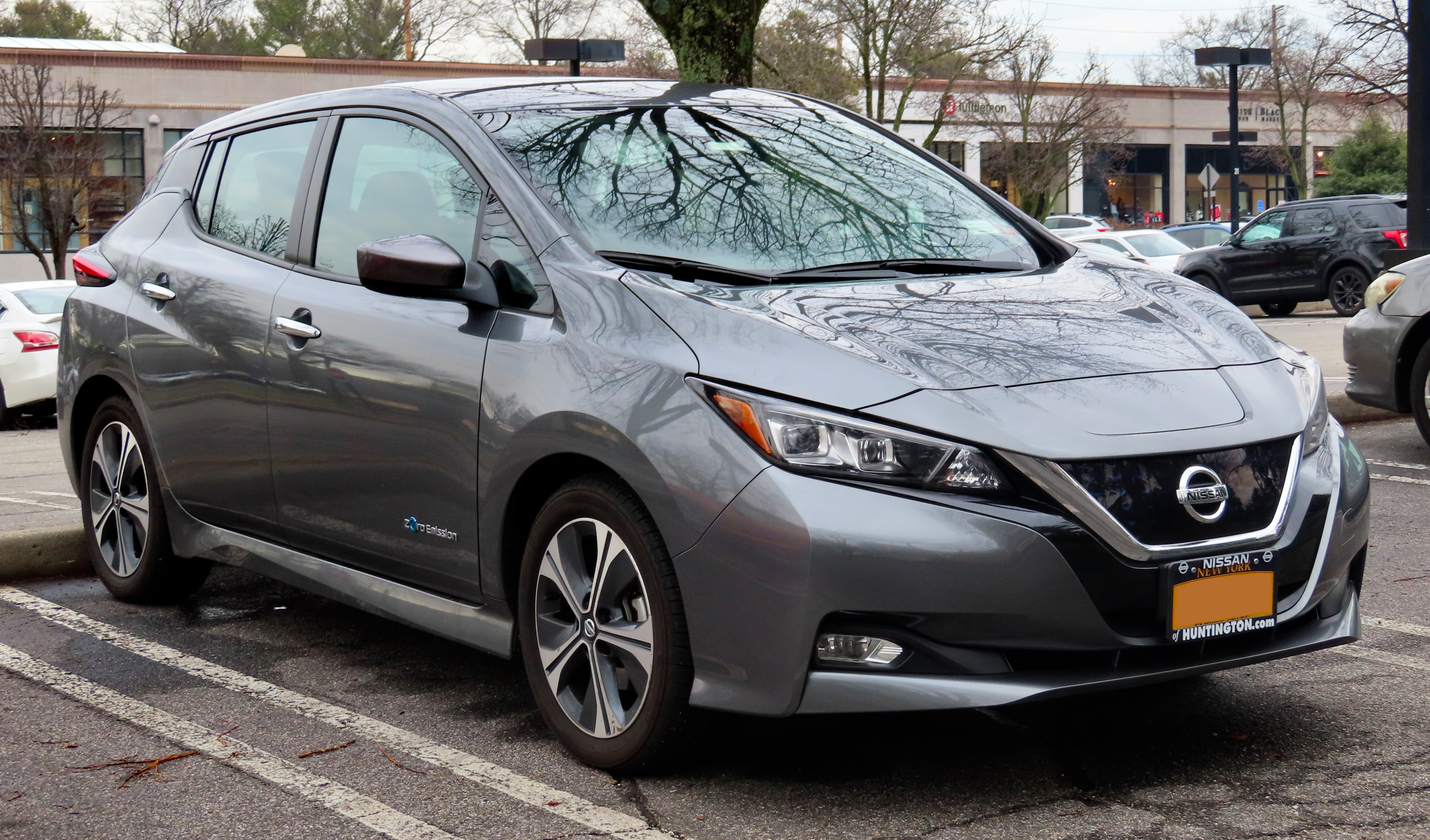
Nissan Leaf
"From empty, Leaf charges in just over [532.0s] six hours on a 240 volt level two setup... Leaf's 150 kilowatt max take rate means five to 80% in about 35 minutes."
The Nissan Leaf is an electric car meant for everyday driving. Here they’re talking about how fast it charges and how comfortable it is for regular commutes, not long road trips.
The Nissan Leaf is an all-electric compact/subcompact hatchback built around daily commuting. In this segment, the host focuses on how its charging times and driver-assist/comfort features make it practical for typical short trips.
240 volt level two
"From empty, Leaf charges in just over [532.0s] six hours on a 240 volt level two setup."
Level 2 charging is the faster kind of home charging that usually uses a 240-volt setup. It charges the car much quicker than plugging into a regular outlet.
“Level 2” charging is a home or public AC charging standard that uses higher voltage (often 240V in the US) than basic outlet charging. It typically delivers much faster charging than Level 1, which is why the host quotes a roughly six-hour charge time.
DC fast charger
"Then, if you need a quick [564.1s] charge, just go to a public DC fast charger."
A DC fast charger is a high-power public charger that can add a lot of battery in a short time. It’s mainly for quick charging stops, not overnight charging.
A DC fast charger supplies direct current at high power, allowing much quicker charging than AC Level 1/Level 2. The host uses it to explain how the Leaf handles occasional road-trip-style top-ups.
150 kilowatt max take rate
"At DC fast chargers, [570.8s] Leaf's 150 kilowatt max take rate means five to 80% in about 35 minutes."
The “max take rate” is how fast the car can pull power from a fast charger. A higher number usually means you can charge quicker, and the host says the Leaf tops out at 150 kW.
“Max take rate” is how much power (in kilowatts) the car can accept from a charger at its best point. Here, the Leaf’s 150 kW peak limits how quickly it can charge, which the host compares to the faster-charging Hyundai Ioniq 5.

Hyundai Ioniq 5
"Not class-leading, [578.7s] Hyundai Ioniq 5 is quicker, but Leaf is more affordable."
The Hyundai Ioniq 5 is mentioned because it charges faster than the Nissan Leaf. It’s basically the “speedier” example in their charging comparison.
The Hyundai Ioniq 5 is used here as a charging-performance comparison point. The host says it’s quicker than the Nissan Leaf on DC fast charging, implying stronger fast-charging capability.
Platinum's surround view camera system
"but there's a volume knob, so all is forgiven. [604.2s] Platinum's surround view camera system is [604.2s] excellent for avoiding kerb rash"
This is a set of cameras that helps you see around the car, often with a near “bird’s-eye” view. It’s meant to help you avoid bumping curbs when parking.
A surround view camera system uses multiple cameras to create a top-down or wide-angle view around the car. The host highlights it as helpful for avoiding curb rash, and notes it’s part of the Leaf’s Platinum trim.
kerb rash
"Platinum's surround view camera system is [604.2s] excellent for avoiding kerb rash, and everyone hates that."
Kerb rash is when you accidentally scrape your wheel against the curb and it gets scuffed. It’s a common parking mistake, and cameras can help you avoid it.
Kerb rash is the scuffing or scraping damage to wheels and tires caused by rubbing against a curb. The host brings it up as a common annoyance that surround-view cameras can help prevent.
memory settings
"The driver gets memory settings, [610.5s] and the chairs themselves are extremely supportive."
Memory settings let you save your preferred seat/steering positions and then press a button to return to them. It’s handy if more than one person drives the car.
Memory settings are stored driver preferences (commonly for seat position and sometimes steering wheel and mirrors) that can be recalled with a button. The host notes the Leaf provides memory settings for the driver.
retractable units
"These are not traditional, [635.6s] but they work flawless for me. Not always the case with retractable units."
Retractable units are parts that slide in or out instead of staying fixed. The host is saying they prefer traditional buttons because retractable ones don’t always work as well.
Retractable units here refers to controls or features that move in and out (for example, retracting buttons or panels). The host contrasts their experience with retractable designs versus traditional fixed buttons.
separate climate zone
"No separate climate zone, but adjustable vents and heated seats help."
A separate climate zone means the driver and passenger can control the temperature independently. The host says the Leaf doesn’t do that, but it still has adjustable vents and heated seats to help.
A separate climate zone means the car can heat or cool different areas independently (typically driver vs passenger). The host says the Leaf doesn’t have a separate climate zone, but it still offers adjustable vents and heated seats.
suspension
"enthusiasts may not like that, because there is some bouncing and bounding from the suspension... Yeah, it does kind of pogo a little bit."
Suspension is what helps the car ride smoothly over bumps and keep the tires planted. They say the Leaf can bounce a bit and feel like it’s pogoing over the road.
The suspension is the system of springs, dampers, and linkages that controls ride comfort and how the tires stay in contact with the road. The hosts criticize the Leaf’s suspension for causing bouncing/bounding and “pogo” behavior, which can make the ride feel less composed.
range
"Plus, you know, like all electric cars, once you get to the fancy trims, you start losing range."
In EV context, range is how far the car can drive on a full battery charge under typical conditions. The hosts mention that when you move up to higher “fancy” trim levels, you can lose range—often due to added weight, larger wheels, or more power-hungry features.
charge speeds
"Also, charge speeds are average for frequent road trippers, but buyers have been needling automakers for an affordable EV with good range..."
Charge speed is how fast the battery fills up when you plug into a fast charger. They’re saying it’s not especially quick for road trips.
Charge speeds describe how quickly an EV can add energy to its battery during charging, usually measured at fast-charging stations. The segment calls them “average,” implying that frequent road trips may require more time charging than buyers might hope.
Nismo
"Come on, Nissan, build a Nismo Leaf. It really doesn't need more power, just a sportier suspension, and maybe some red trims..."
Nismo is Nissan’s performance label. The host is joking that a “Nismo Leaf” would mean a sportier suspension and more aggressive looks.
Nismo is Nissan’s performance brand, used for higher-output and more track-focused versions of certain models. The host’s “Nismo Leaf” idea is about adding sportier suspension and styling cues to make the Leaf feel more performance-oriented.
Chevy Bolt
"Come on, Nissan, build a Nismo Leaf... I always felt the Chevy Bolt should get that treatment too."
The Chevy Bolt is another popular affordable electric car. The host is basically saying the Bolt could also use a sportier version like they’re imagining for the Leaf.
The Chevrolet Bolt is an affordable EV that competes in the same “mainstream EV” space as the Nissan Leaf. Here, the host compares the idea of a sportier “Nismo Leaf” treatment to what Chevrolet could do with the Bolt.
charging at home
"The important thing is you need to be able to charge at home. Then, fueling costs are less, you don't have to go to the gas station..."
Charging at home means you plug the EV in where you live, usually overnight. They’re saying that’s important because it makes EV ownership easier and cheaper day-to-day.
Charging at home is the idea that most EV owners should be able to plug in overnight, making daily driving convenient and predictable. The hosts argue this is the key requirement for an EV to feel “better,” because it lowers hassle and can reduce overall fueling costs.
fueling costs
"The important thing is you need to be able to charge at home. Then, fueling costs are less..."
Fueling costs are what it costs to keep the car running. For an EV, that usually means paying for electricity instead of gas, and they say it can be cheaper.
Fueling costs are the ongoing expense of powering the vehicle—electricity for an EV instead of gasoline. The segment claims that with home charging, electricity is typically cheaper than gas, which is a major part of the EV value proposition.
oil changes
"Then, fueling costs are less, you don't have to go to the gas station, there are no oil changes, your brakes last a lot longer..."
Oil changes are something gas cars need to keep the engine healthy. Since the Leaf is electric, it doesn’t require the same kind of oil changes.
Oil changes are routine maintenance for internal-combustion engines, where engine oil degrades and needs replacement. EVs like the Leaf don’t have an engine oil system in the same way, so the hosts highlight that oil changes aren’t part of EV ownership.
brakes last a lot longer
"there are no oil changes, your brakes last a lot longer, plus they're smooth and they're quiet..."
They’re saying the brake pads wear out more slowly on EVs. That’s because EVs can slow down using the battery system, so you don’t rely on the brakes as much.
EVs often wear brake pads more slowly because they can slow the car using regenerative braking, reducing how often friction brakes are used. The hosts’ claim that brakes last longer is a common EV ownership benefit, especially for city driving.
Request an Explanation
Heard something you'd like explained? We'll add it to this episode.
Sign in to request explanations for terms you heard.
Want to learn more?
Browse our glossary for plain-English explanations of automotive terms, jargon, and concepts.
Help improve this episode
See something that's not quite right? Our annotations are AI-generated and can sometimes miss the mark. Click the flag icon on any annotation to suggest a correction.