A CVT is a type of automatic transmission that doesn’t use set gears. It can smoothly change the “gear ratio” all the time to keep the engine working efficiently.
Rev hunting is when the engine RPM keeps changing up and down instead of staying steady. It can make the car feel a little unsettled when you accelerate.
Some CVTs try to mimic normal gear shifts by making the car “feel” like it’s changing gears. In this case, it only does that when you accelerate more aggressively.
“Surging” is when the car’s pull feels uneven—like it hesitates or then suddenly jumps forward. They’re describing it happening when they briefly lift off the gas and then press it again.
Turbo lag is the momentary hesitation you can feel before a turbo starts making power. The speaker is saying that modern turbos don’t have that problem as much anymore.
A leg extender is a part of the seat that helps support your legs. Manual means you move it by hand, but it can still make long drives more comfortable.
Two-way lumbar support means the lower-back support can be adjusted, but not as many ways as the four-way setup. That can make it harder to dial in the perfect fit.
They’re comparing the Outback’s feel to the Subaru Forester. The point is that getting in and sitting can feel similar, especially with the roof/sunroof affecting headroom.
The Subaru Outback Premium is a specific version (trim) of the Outback. Here they’re talking about how the inside looks and feels—especially the seats and materials.
The Renault Wind is a small car designed to feel more open and sporty than a typical compact. Because of its shape, it can be more sensitive to wind and road noise when you drive faster. That’s why it might come up in discussions about highway comfort.
Physical climate controls are real buttons or knobs for temperature and fan settings. They’re usually quicker to adjust than using the screen while driving.
Some cars put the temperature and fan controls inside the touchscreen instead of having buttons. The speaker is saying the Outback avoids that and uses physical controls instead.
A portrait screen is shaped like a phone—taller than it is wide. The speaker says that shape often encourages automakers to put climate controls on the screen.
Physical controls are the real buttons and knobs you can feel. The idea is that they’re easier and safer to use while driving than relying only on touch screens.
A tachometer shows how fast the engine is spinning (RPM). It helps you understand what the engine is doing, especially when accelerating or changing gears.
A hybrid is a car that uses gas and an electric motor together. The goal is usually better fuel economy, and not having one can make some buyers look elsewhere.
Toyota is known for making hybrid cars that are efficient and well-developed. The speaker is saying Subaru using Toyota hybrid know-how/components could be a smart move.
Wheel wells are the areas around the tires where the body is cut out. They’re talking about the shape—whether it looks squared-off or more rounded—and how that changes the car’s overall look.
Options are extra features you can add to a car for more money. They mention their Premium had options, so the price difference isn’t just the “starting” price.
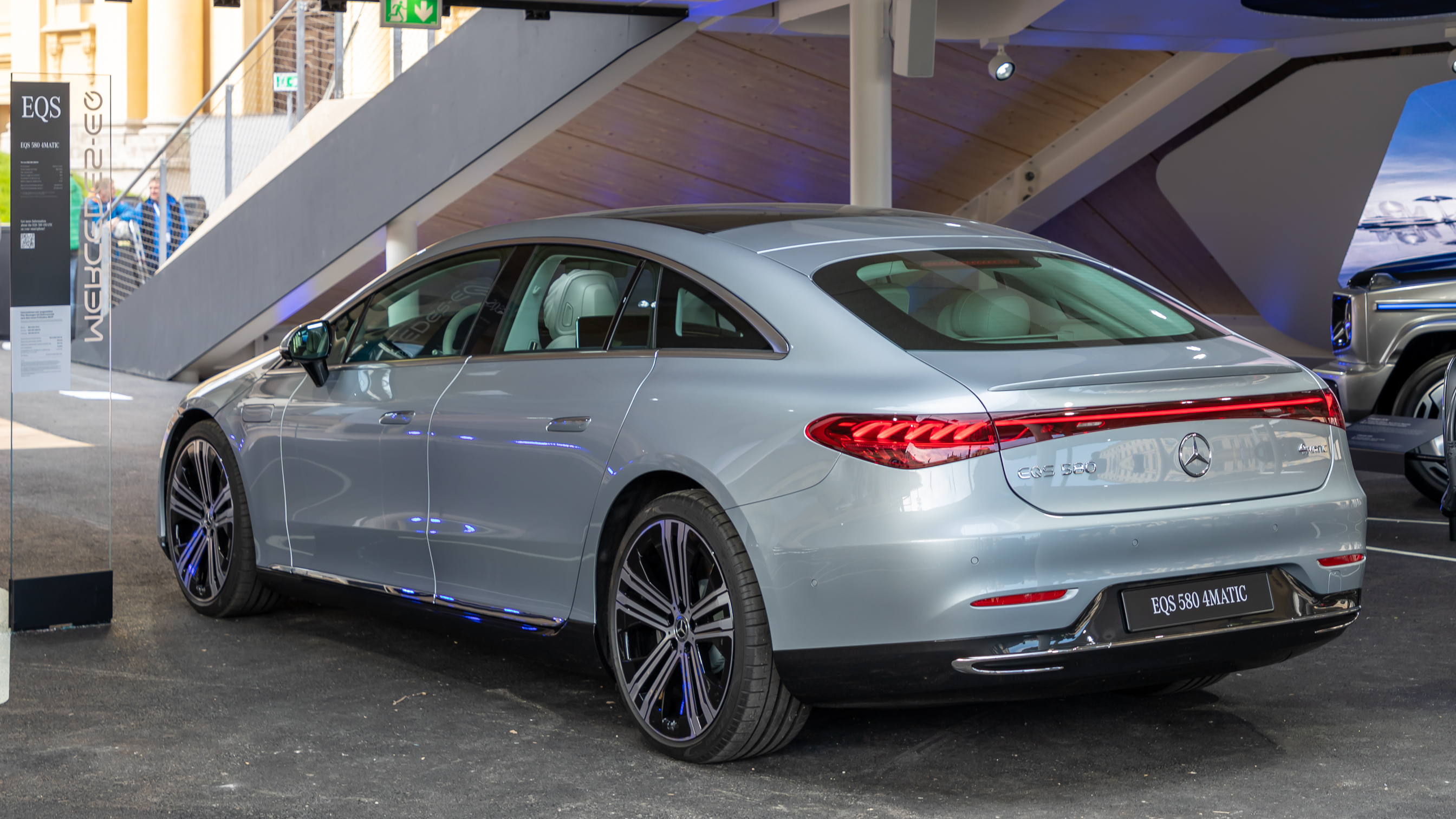
This is Mercedes-Benz’s electric SUV, the EQS 450+. When you replace tires, you still need the right tire size and ratings, but the tire type can change how efficient the car is and how well it grips in snow.
General RT-45 is a particular tire you can buy as a replacement. They used it to see how a normal tire compares to the tire that came on the car from the factory.
Tread wear is how quickly a tire’s tread depth decreases with use. Since wet grip and hydroplaning resistance depend on tread depth, worn tires can reduce performance—especially on rain and snow where tread helps evacuate water and bite into the surface.
LIVE
Hi, and welcome back. I'm Mike Quincy. I'm Ryan Dulekowski, and I'm Mike Monticello.
So we are super excited to talk today about the 2026 Subaru Outback. This is an uber
popular model. It's got a pretty radical redesign and really marking the end of the
Outback as a wagon, which a number of us really liked and got all sentimental about. It's clearly
an SUV now, just looking at the styling. But even with the changes, the 2026 Outback dimensionally
is the same as the 2025. The roofline is a little bit higher, a little bit more headroom,
more cargo room. And in somewhat unusual twist, we actually bought two Outbacks to test. We bought
a premium, which comes with a base 2.5-liter engine and a Touring XT, which has a more powerful
turbocharged 2.4-liter four-cylinder. And without getting too much in the weeds about options and
whatnot, we spent $40,098 in the premium and coughed up $50,290 for the Touring XT. So let's
just get right into it, obviously starting with the powertrain and going from there. Let's go
through a few details about how these trims are different. And Mr. Monticello, let's start with you.
Yeah, so I mean, you're right, you got to start with the powertrain because these two trims actually
are remarkably similar. You know, there's not that much difference between them, but the powertrain
is the really big thing, right? You're talking about 180 horsepower for the base trim, the base
engine without a turbo and then 260 horsepower with the turbocharged four-cylinder. And you know,
the bottom line is the turbocharged four-cylinder is a nicer engine. There's some things about the
the regular engine. For me, just starting right off right off the bean as you're getting going,
it has this kind of annoyingly abrupt throttle delivery. I call it the dreaded subi surge. Yes,
has a lot of love it. Subaru naturally aspirated engines have this where as soon as you hit the
gas pedal, the thing launches forward. And they do that with the lower horsepower vehicle so that
it makes them seem a little thicker than they really are. It's a CVT, but they kind of do something
with the gearing to make it seem like it's as little as a throttle delivery. It's not it's not
even the CVT. It's just the way that the throttle is tuned. And not only that, but even does sort of
like a dual surge, like you get that initial surge and then as you're getting going more,
another surge comes on. So that said, I think that, you know, if you can if you drive it gently,
you can get around that abruptness a little bit. And once you get going, it's actually not a bad
engine. It's not a, you know, the CVT works well, the beauty of a CVT is it can keep
the revs nice and low during regular driving. And it has enough power for most situations. But
if you need any kind of moderate acceleration or more, two things are going to happen, right? One,
it's going to get pretty loud, the engine. And it has to be revved pretty high to get some real
sauce. And there isn't that much left in reserve, you'll find when, you know, you think you're,
you're not that far with your throttle, and then you realize, oh, wow, I'm almost flooring.
And there isn't that much left, right? So, so that's, and the other thing I want to say is that
it does do simulated upshifts, the CVT, the continuously variable transmission,
which we typically like, right? Because it helps CVTs tend to, you know, let the revs wind out
really high. And that can get annoying. And when they do simulated upshifts, it bring keeps bringing
the revs back down. So it feels more like a regular automatic. But you got to be careful what you
wish for, because in this case, sometimes the, the simulated upshifts are rougher than the upshifts
of some regular automatics, especially when you're harder on the throttle. So not everything
is perfect with that engine. But and so because of that, I, you know, prefer the turbocharged
four cylinder, Ryan, I'm going to let, I'm going to let you speak about that a little bit, because
I, well, one thing I've gone on and on here. I like it better. I'll let you talk about some
of the things you like better about the turbo four. Yeah, I mean, it's, it's considerably more
powerful. And maybe not numbers wise, but it feels that way when you drive it. I mean, it's,
it doesn't, you know, it's not hunting, you know, you know, when you step in the throttle,
you're not getting the revs, the CVT to wind out. And because of that, you get less noise and
it's you get a little like a better experience altogether, right? But, you know, you just tip
into the throttle on that and it just, it takes right off. Now, these are little SUVs. So I'm
just picturing like with their XT, if I have this thing loaded to the gills, and it's already
feels low, you know, underpowered by myself in it, never mind the premium. I'm sorry, the
premium, I'm sorry. Yep. Yep. Well, it seemed backwards to me, the premium.
Premium doesn't seem premium anymore. I would think that's the higher term. That's what I
thought when you got him here. Anyway, yeah, so that's the first thing I think about. Like,
this thing already feels underpowered now. So the XT makes sense to me, like, okay,
because I'm going to put stuff in this, you could potentially tow a little bit with it,
whatever you're going to do. And just driving it, it's just, it feels more relaxed because you
don't have to, you don't have to beat it up so much, you know? I think that's the main thing.
And that goes a long way. It makes you just feel like you're in a nicer car and because
they're not that much different otherwise, right? Yeah, I think you're so right that it just feels
like it doesn't have to work anywhere as hard as the regular engine, right? And I also, you know,
it's not perfect either. There's a little bit of a propness off the line, but nothing like the
regular engine with this engine. And the funny thing is that it also has a CVT and it doesn't do
simulated upshifts in the way that the regular one does it pretty much only does them if you're
pretty hard on the throttle. So I kind of missed that a little bit, but it didn't matter because
it has that extra power to work with. And when it goes back to CVTs in general, we've always,
like a little more power from the motor helps that CVT behave a little better. So the package is
always a little better when it has a little more power. Historically, we've kind of always seen that.
Did you also find like, again, first of all, I really do like this turbo engine. We've seen it
in other vehicles, we've seen it in the Ascent. It is a nice engine, but it does do kind of these
surging moments at other times. Like, I noticed sometimes I'd be going along and maybe I lift
off the throttle and then I get back on the throttle, and then the power will come on more
abruptly. Like again, there's something about the delivery. Again, I still would much rather have
this engine than the regular engine, but it's honestly, it's not perfect either.
Right. And just like in day-to-day living with the non-turbo engine, for me, it's like merging on
the highway. And you get going, okay, just like you said, Monty, but then you need some more power.
You can see the traffic coming up behind you. And so you put your foot down, you get a lot of
sound and fury, not a lot of power. And you're like, okay, come on, let's go now. And getting
into the turbo models is a different animal. I think it's interesting when you talk about
the pros and cons of the CVT and turbo engines with Subaru and maybe most manufacturers,
early turbos used to have a lot of turbo lag. And I don't think we're really seeing that,
at least with Subaru's application and CVT's overall, seem to be getting better. They're not
the dreaded, three letter word that people would get upset about. Sorry, traditional turbo lag,
I think is kind of a thing of the past, right? Thank goodness. If anything, we'll see delays,
but it's really throttle mapping or transmission issues or DSGs. But it's not really the engine
itself. The power is there right away nowadays. I can remember years ago, yeah, you would sometimes
have to wait for these things to wind up and then all of a sudden just slung you in back in the seat.
Yeah. And that's no fun either. And it was a four-wheel drive, you'd get like torque steering
all the way. So a lot of the weirdness of either turbos or turbos or CVT's have been tamed by
Subaru. And that's really nice. We're not done testing these cars yet. But certainly,
looking at the logbook comments, most of us prefer the turbo. And I think, you know,
that's right now, we're thinking, yeah, if I was going to buy one of these.
Well, yeah, you know what's funny? It's not a small difference in price.
No, you're right. Like, I mean, you were talking, it's not like two, three grand.
It's $10,000. It's $10,000. That's a lot of money.
It would be a no brainer if it was, but it's not a no brainer.
That's where it becomes difficult because it's like, wow, I mean, that's a lot of money.
It's a lot nicer, but I don't know if it's how much nicer is it? And, you know,
if you're in the market for one of these cars, you know, this is in some high end luxury vehicles.
So you're paying attention to what you're spending probably, right? I don't know.
That's a lot of extra money for that. Yeah. And so when we talk about the differences
with the engine, let's look at a few other things that distinguish one model from the other.
And the first one that comes to my mind are the seats. So can we talk about how the XT's seats
are different than the premium? Yeah. So the XT, I mean, first of all, I like both front seats.
They both work well for me. They're both pretty good bolsters and good comfort,
but the Touring XT has more features. So it has a 12-way power driver seat with four-way
lumbar support and one of those manual leg extenders. And the cushion, yeah.
Yeah, on the front edge of the cushion. I love that too.
And it also has an eight-way power front passenger seat. So when you look at the premium that we
have, it has a 10-way power driver seat with two-way lumbar support, no leg extension ability,
and a four-way manual front passenger seat. So some big differences right there.
And more than that, although if you look at the seats side by side, the shape looks pretty similar,
but the Touring XT's seat has a longer bottom cushion, which for me worked better. I got to
imagine some of the long legs like you. It must have worked even better. So I just found the
comfort and support better in the Touring XT. So it's just another thing that you're getting
for that extra money that you're spending. Yeah, it's not just a motor. There are a few other
things. Did the seats, did you find similar that you preferred the ones in the Touring XT as well?
Yeah, they're both okay. They're both good, but the XT was better. I have an issue with driving
position if you don't want to jump into that. So the seat doesn't go low enough in either car.
That's a Subaru problem for you, isn't it? I know the cross-track is the same thing.
Yeah. Even with the extra headroom that this model has compared to the last.
Yeah, it's still not thick. Yeah, it's weird. I thought that too. It's just a little taller.
It's almost like getting into a Forester. The Forester always like, you know, but this isn't,
it's not that way. I get in there and sometimes you have the sunroof issues too, where the
ceiling is a little lower because of the sunroof built in. So unless your head's where the sunroof
is, which it's not in this case, it doesn't help me. So yeah, so I found myself just not getting
low enough. And when I get in a car and I can't get the seat low enough and get in a good position,
I cry. No, I don't. We can't have rides. It is funny that when you, at the end of the day,
you walk out into the parking lot and you see, you know, this big burly guy out there in the
driver's seat crying in the test car. You feel bad. I didn't cry. No, because it would be so great
if I could just get a little like, I need to go down like an inch me, right? And there's reasons
they didn't make that or couldn't do that. But yeah, the seats, I think they're good. The XT is
better. But the driving position suffers a little bit for both for me. Yeah. Right. So maybe on
the taller side of the drivers, people would feel that. I think Monty, for you and I,
that you guys were fine. Yeah, because we're not quite... Did you like the Tourian XT seats better
as well? Absolutely. I keep trying to find, it's like, oh, I disagree with that. My goodness,
you guys, this is such a boring podcast. I'm still like the logicality of Ryan's. Well,
why is the premium model not the top model? Logicality? That's a word question.
Technologia? It's probably not. Okay, so we got seats. We got driving position. Let's talk a
little bit about fit and finish. Like you guys, sometimes you get into both. We got the white
one. We got the green one. And sometimes they seem so similar. So are we seeing $10,000 more
for the interior fit and finish compared looking at the two? Well, you're the... What are you
looking at us for? You're the fit and finish guy. As super produced, David, I don't know anything.
One of the guys on staff that handles actually scoring the fit and finish of the cars, I will say
this. I noticed very few differences between them. The biggest one would be that the Tourian XT
comes with Napa leather. And the premium has what they call Star-Tex, the Leatherette upholstery.
Which is pretty... They almost look and feel similar. Right.
Beyond that, I thought they were very similar. And I'll let you speak to any big differences.
But what I will say is, one of the things I really like about both of them is that they have
lined door pockets. Now, that's a weird pet peeve of mine maybe because of my time scoring fit and
finish. But you just don't see actual lining in door pockets at these prices. And it's not like
it's amazing. Like Volvo also does it. Volvo's more expensive vehicles. Their material is more like,
you know, soft carpet inside. This is cheaper. But most door pockets anywhere near this price
range are just plastic all the way around. Possibly not even a rubber base, just plastic
everywhere. And so, I kind of give them credit for doing that. And there's some other nice things
like soft touch window sails front and rear, nicely padded and stitched upper door panels,
nicely grained plastic trim around like the interior door release and the mirror controls
and window controls. And same with some of that on the center console. So, some actually pretty
nice stuff in there. But what is there a big difference? Not much. I mean, when you talk about
the door panels and the mid-dash area for the premium, it's sort of like soft to the touch
fabric. It almost looks like the corduroy, if you remember what corduroy's were like.
For the X, for the Turbo XT, that's kind of a kind of a leatherette with exposed stitching.
And Subur also says that the wrapped steering wheel is a little nicer for the XT.
But again, a casual person probably wouldn't know. Well, that's what they say in their press.
Sure. And $10,000. No, no. Of course, it's more than just the finish. I mean, it's the engine,
it's the seat. They're both nice. But the differences are way more stark when you drive it,
as opposed to just looking at it. And also, looking at it, the wheels and tires are different
between the two. Ryan, you want to comment on that a little bit? Yeah. So, the XT has bigger wheels,
fancier wheel and tire package. I'd actually opt for the premiums, the smaller wheels and
more. So that sidewall gives a little bit better ride. They both ride really well.
Like really well. But I think, and it's kind of for two different reasons. I don't know what this
suspension tuning is a little different, but then also that wheel and tire offset it because
less sidewall, a little stiffer. 100% agree. More sidewall, a little more compliance,
but then the suspensions are different. So there's some, but they almost bounce out pretty well.
But yeah, that being said, I mean, they both ride really nice. And I think for that type of car,
it's very appropriate for that type of vehicle. I think anyone that buys it is going to be pretty
happy with it. I pull out of here with the XT the first day I had it, and then go down the dirt
road. And that's like, just Powell's got it from the winter and it just soaks everything up. And I
was like rather impressed with it, which that's, that's what I was expecting though. It's an outback,
right? It is an outback trait. However, one of the outback traits that I'm finding to be very
different between the previous model and the ones that we have are the noise levels. And we touched
on that with the regular engine has to work harder to move the mass of the outback. So that's
like one aspect of noise. But for me, also spending a lot of time with both these models on
highway, there's a lot of wind noise. There's a lot of road noise. The boxy shape is, you know,
the Subaru was like, we need to make it more like an SUV than a wagon. Well, the downside of that
is it's a brick through the wind. Yeah, I got a fair amount of wind noise, even some road noise
on the back roads. Yeah, I thought the road noise was, I actually thought the road noise was worse
in the premium. I don't know if there's different insulation between the cars or if it's just purely
a tire thing, because could be, you know, they are different size wheels and tires.
But yeah, so the road noise is definitely gets elevated. And while the naturally aspirated
four cylinder for the most part, if you're just driving casually, it's no big deal stays in the
background. And even just, you know, cruising on the highway at 70, it's not like it's, you know,
all encompassing or anything. It's mostly in the background. But it's those situations anytime
you need any kind of like I said, moderate acceleration and more, there's a stark difference.
And look, they're both horizontally opposed four cylinders, right? Flat fours, box or fours,
whatever you want to call them. And they have a unique sound. And to some ears, including mine,
they don't always sound better than inline four cylinder, right? So that is part of not only
is it an elevated sound, but it's a slightly odd sounding sound. So there's that to keep in mind.
And because of that, the touring XT I think is unquestionably the quieter car overall.
If for nothing more than the engine alone, that it's the turbo is muffling this, you know,
turbo is muffled sounds. And also just the fact that it has more power, it doesn't need to rev as
high. Exactly. And when you when you talk to car reviewers, they'll often bring up this term
NVH is like noise vibration and harshness. And one of the things that I think is indicative
of Subaru with this flat four engine to go on what you're saying is like when you start it,
and sometimes just at idle, like the engine shakes a little bit, and it kind of shakes the car a
little bit. And some people might be put off, I think it's kind of cool. It's an engine, I love it.
And it revs high too, at idle. They think right off a rev pretty high. You can feel the whole car
kind of shaking a little bit just when the engine is running. And so there's definitely some vibration
there. It's a little mechanical device. It's like, you know, reminds me of like a, you know, a 70s
era transient with the shaker hood. You can see the whole thing moving in the car. It's a unique
sound, right? It's definitely a unique sound. It's not like it's terrible, but it is going to sound
different and potentially louder than some other engines. Yeah, even the turbo four I thought
sounded just sounds doesn't sound great. It's like, you know, but hey, we want to neglect
other parts of the car, like the interior, like we talked about finish, but let's let's chat about
the controls a little bit. Some of the big news about this outback is a much bigger screen is
going horizontal as opposed to vertical. What did you guys think of the controls overall?
I kind of like them. I mean, the screen is big. It's pretty easy to navigate. The climate stuff
is easy to navigate. I'm not a huge controls guy. I try to make keep things as simple as possible
and drive the car. But yeah, I think, you know, we've gone back and forth with them where they
have the heated seat buttons and all this stuff. And I think they finally have it pretty well sorted
out. Yeah, what do you think? Yeah, I I think the best part about the controls for me is that
they have all physical climate controls. And we've seen this is so this is a new kind of a new thing
for them is that we've seen in a lot of super is lately where the the vast majority of the climate
controls are in the the center screen. Yeah, the portrait oriented touchscreen, right? So it's
taller than it is wide on these other super is. And so the climate controls end up being
toward the bottom of the screen. And most of them are in the screen other than like temperature
buttons, which are the only physical ones. And I think defrost buttons. So here,
they're all physical controls. And of course, that's what we've been pushing automakers to go
back to. And they have that here. I also say in a weird note, because I am a weird dude, and I like
never know. I love I love that two of the driver screen views have an actual tachometer, like
there's multiple views you can switch between, which is cool that you can do that. But two of
them have an actual tachometer. And I love that. So I think they're kind of in some ways, going
back to some, some a better way of doing some controls, some aspects of the controls.
I would agree. Overall, pretty simple, doesn't require lots of orientation or your salesperson
standing over your shoulder. And this is how you do this. And they say you do that.
It's all pretty straight forward. And that's, yeah, exactly. That's, that's really refreshing.
Goes along. It kind of goes a long way, you know, but let's, but let's kind of go into
not, not the weeds, but there's no hybrid option. Now, is this a mistake that Subaru is making with
the Outback? Maybe it's coming. Yeah, that's what I'd, I'd, I'd lean. Maybe they're not telling
us. I guess it's coming. I mean, because we've seen it now in the Forester, we've seen it in
Cross Trek. They use some Toyota source components, which is a real smart move that no one does
hybrids like Toyota. So those are real smart moves. So I would say since so many,
so much powertrains are shared between all the supermodels, I'd say it's a, it's a good bet
that a hybrid's coming. Okay. Well, maybe it's around the corner. Who knows? We might be testing
another app these days. And finally, we have to talk about the styling. Okay. Can you call it
styling? Now, this is not something that we, this is not something that, that we evaluate. You
don't get points for, again, styling or something like that. But we're car people, talking cars,
audience are car people. This is where it all goes south for me. I don't dig the body cladding.
I don't, it's just a big blocky mess. There's no, there's no round softness to it at all.
And when, when, when you think about like the wheel wells, first of all, they have the fake
grab handles, which drive me those. I couldn't tell if that was like, uh, you're supposed to pull
on it or you push on it and it like pops out and becomes a bottle holder. Like what the heck are
those for? I don't know. It's a weird touch because it does look like a handle. Yeah, I, yeah. My,
my issue is though, yeah, it's a lot, but like 50% of the body mass is plastic and the rest is,
you know, metal or painted plastic, whatever. But like, it's very like, just blocky and chopped up
and it's not very cohesive. I'm sorry. Go ahead. I was just going to say, I wrote in the log book
that the Alpax, a totally fine vehicle, if you don't have to look at it from your side out. And
the other thing I said was it, it reminds, all I can think when I look at it is the family truckster
from National Lampoon's vacation. If you go and look up that, uh, you'll see that there is some
real similarities. It's a little awkward. Yeah. The final detail that just kills it for me are the,
are the, the wheel wells. They're squared off. You think round tire squared off wheel well.
But when, the first time I saw it, it reminded me of the early 2000s Toyota 4Runner and Chevrolet
Avalanche. And I'm sure, and it's totally the great is flashing those images right now. And it
also is key to note that, that, that Chevrolet and Toyota softened those during before, like a full
redesign of either the 4Runner, the Avalanche, they made those wheel wells rounder, better looking.
And so you can only hope the Subaru is listening right now, because if you're going to do some kind
of a mid cycle refresh for goodness sakes, please fix those wheel wells. Make wheel wells round again.
Exactly. No. It's a new campaign. So, kind of putting, putting a wrap on this. Who do you think
is going to be buying the premium? And, and what do you think like a touring XT customers like?
And Ryan, I'll, I'll start with you. I don't know. I mean, we talked about it earlier. It's,
it's not a small amount different in price. I mean, it's considerable, an extra $10,000.
If you, yeah, I mean, if you, Wow, we got him stumped.
I'm looking at myself like, what would I, I don't know. That's a lot of money.
But I do like, I do appreciate the power that the XT has. The XT interior doesn't make me feel
like I need that, that for that much money. And otherwise they ride the same. So it's very like,
to me, it was mostly the engine that's giving you that premium. I don't know. I mean,
you can really pinch and pennies and you want a nice, super practical car. Right? I mean,
I think the, the, the premium is going to be okay. You just have to deal with a little bit of
underpoweredness. Yeah. Yeah. So, you know, I think you'd go with the premium because you want to
save some money. You know, in our case, the, they were about $10,000 different, but actual base
prices between these two trims is more like $13,000, you know, without any options, you know,
we got some options on our, on our premium. So that's not insurmountable. And then you're talking,
you know, better fuel economy, right? 27 MPG combined for the premium and 24 MPG combined
for the Touring XT. So according to the EPA, according to the EPA, we'll do our own testing,
of course. So I think when you think about right now, what's going on in the world or what's going
on with the economy, fuel prices, I could see why this would be a good time to spend as little money
as you can as possible. So I could see going with it. But that said, if you can swing it and you
can pay the extra upfront for the, for the Touring XT or the, what's the other trim that
comes with that? The limited XT. So if you can swing it and you know that you're going to take
that fuel economy hit, it's just going to be a nicer vehicle overall. That powertrain does
make a big difference in your everyday drivability, livability, appreciability. Again, probably not
a word either, but you will enjoy the turbocharged engine much more than the regular engine.
Yep. I'm with you on the limited XT. I think that's the one to go. But, you know, this just
remind the audience, keep it, you know, this is, we have a, so kind of our first impressions
of the Outback. We have a full road test video, takes an even deeper dive and
check out consumerreports.org for more updates as we wrap up our testing and, you know, overall
Outback pretty favorable, pretty positive. Whether or not the styling works for you,
it's a different issue. That's a personal choice. Definitely a personal choice. It's not up to you,
right? They wore up to me. You wouldn't have those squared off wheel wells. God. Anyhow,
let's move on to our audience questions, which we love. Please keep them coming. Text 30 second
videos. Just go to talkingcarsaticloud.com. That's talkingcarsaticloud.com. If we use your question
on the podcast, we'll send you a groovy t-shirt, some kind of auto test swag. So keep them coming.
And we have one. This is Robert from Phoenix, Arizona, who writes,
I have a 2023 Mercedes EQS 450 plus electric SUV. And I'm looking for replacement tires.
Is it always recommended to use EV dedicated tires? Or can I use any tire that fits my car's
specification? Mike Monticello, do we have a tire expert anywhere? It's not me. Near,
right here. Right here. I think you guys can answer this actually. Right here.
Right, Pislakowski. Tires, man. What do you got for Robert?
So the answer is his question. No, you can put any tire on that vehicle that, as long as you
satisfy the requirements, speed rating, load, and size. Make sure you have the right size on there.
We actually did a little experiment last year. Last year? Let me strike a time. Maybe two years
ago. Last year. We tested an array of replacement tires on a Tesla Model 3. And we found, guess what,
tires just like, these replacement EV tires are just like all the other replacement tires we test
to compromise. The chances are the tire that comes on their vehicle, OE from the factory,
on an EV, are going to be probably the most low rolling resistance because they're trying to get
that range up, get the efficiency, right? However, you give up some things with that. We found the
Tesla that we tested on, the OE tire, wasn't as good in the snow, winter traction, hydroplaning,
because the tread's shallower. It was a smoother, lower rolling resistance tire to get that efficiency
up. So still a great tire on the car. It was fine. But we put replacement EV tires and even regular
replacement tires that you'd put on a Camry. That satisfied the requirements. And the results
were actually quite mixed. The regular replacement tire actually did quite well. Up to all your
winter traction, even the braking distances were great. And you only really, our projections
only showed us losing maybe 10, 15 miles of range with some of these tires. So if you can
handle that, a little bit of loss, but you'll gain all this other stuff potentially. So the
answer is question. Yeah, you can put anything on there. I'd say take a look at our ratings
and see what you're... What's important to you? What's important to you? Did you live up north
and you're worried about snow traction? Yeah, if you live down south and you're not, the OE tire
might be just fine. So do you think EV-specific tires are a marketing thing or they really
are specific to EVs? They're doing things to help these tires be better EV tires. However,
our findings show that there was a lot of marketing involved in that because, like I said,
we took a regular replacement car tire, a General RT-45, slapped it on that Model 3 and we lost a
little range and it did everything else very, very well. So it did some things better than the OE
tire that had come on the car. Yes, but the OE tire did have tremendous dry and wet grip.
But when it came to hydroplaning and snow traction, stuff like that, it fell a little
short because just the way these tires were built, low rolling resistance tires will have
less mass to them. So they have a shallower tread. You know, literally an old brand new tire on the
car coming from the factory will have a little bit less tread than maybe a replacement one would.
Then you run into you lose some tread wear there too. So again, there's so many factors to this
but if he matches the loads and the size and everything, he can put anything else on there,
but there will be some trade-offs depending. Load rating being very important because EVs
are quite heavy. Oh no, that's yeah, they are heavier. So yeah, in almost all cases now they'll
be an XL load range. So yeah, it's, there's no perfect answer but it depends on your priorities
really is what it comes down to. Right, but to me it sounds like there's no difference between
replacing your regular internal combustion engine tire and an EV tire because like a regular gas
car, you're going to make some compromises. You might get a better ride but you might get
worse fuel economy or might get better fuel economy but less grip. So there's always compromises
and EV replacement tires are the same. You're dealing with the same compromises.
You're still getting those compromises and honestly you're going to spend a fair amount of money on
from what I've seen that they were quite expensive. The old tire. Yeah, so it's funny actually
a little anecdote story from here. We had a 450 plus SUV and John Ibbison in the shop was like,
hey we need tires for this thing. There's only two available because it was a 21 inch wheel which
this Mercedes comes with three different sizes I believe one of them the 21 which is not a common
size and the replacement OE tires were these kind of unique European style summer tires with low
rolling resistance. They were like $450 a piece and we couldn't even get our hands on them and we
needed this car to drive around. So we ended up putting some replacement tires that we tested
some driving cross-line at twos and the car was great. We could drive it in the winter,
we're no issues and we saved some money too believe it or not even buying a premium tire
like a mission. So it's worth looking around, take a look at our ratings and just understand
that there can be a compromise and the OE tire that came on the car likely is the most efficient
but you might give up other things and I'm not sure if there's driving range. Yeah, exactly. I'm
not sure if he's happy with the rest of the performance and whatnot but yeah. Well, Ryan
Pislakowski like Monticello the excellence of execution and that and that will do.
That will do it for this episode which was conducted by Dave super producer Abrams and
expertly added by Andrew. I still play hockey Belize and of course Anatoly the great Shumski
as always check the show notes for more information on the vehicles and topics that we discussed
and just a reminder keep your questions coming go to Talking Cars at iCloud.com and also since we
have to buy all these tires for Ryan a reminder that CR is a non-profit organization we have a
donate button on our YouTube page so please consider helping us out so we can keep on Talking Cars.
Thanks so much for tuning in we'll see you next week.
About this episode
The Consumer Reports crew breaks down the 2026 Subaru Outback’s big shift from wagon to SUV styling, then compares two tested trims: the Outback Premium (2.5L, 180 hp) and the Touring XT (2.4L turbo, 260 hp). The turbo is praised for smoother, stronger real-world drivability and quieter operation, while the non-turbo gets criticized for abrupt “Subaru surge” throttle response and limited reserve power. They also cover seat comfort, fit-and-finish differences, physical climate controls, and the lack of a hybrid option. The episode ends with an audience tire question for EVs.
This week, it's all about the 2026 Subaru Outback. We bought two trims of the Outback: Premium and Touring XT. We discuss its radical redesign from a wagon to an SUV, talk about why we bought two trims and the differences between them, and how Subaru's omission of a hybrid powertrain may be a mistake. Plus, we answer a question about EV replacement tires.
Join CR at https://CR.org/joinviaYT to access our comprehensive ratings for items you use every day. CR is a mission-driven, independent, nonprofit organization.
SHOW NOTES
-----------------------------------
00:00 - Introduction
00:15 - Overview: 2026 Subaru Crosstrek
01:10 - 180hp Non-Turbo vs 260hp Turbo engine
08:19 - Premium vs Touring XT Seats
11:25 - Fit and Finish Differences
13:50 - Wheels and Tires
14:59 - Cabin Noise
17:56 - Controls
19:58 - No Hybrid Option?
20:37 - New, Bold Styling
22:49 - Wrap up
25:49 - Question: Is it necessary to use EV-specific tires when replacing the tires on an electric vehicle?