The DeLorean is a car known for its unique design and its role in a popular movie where it travels through time. It has special doors that open upwards.
The Nissan Leaf is an electric car that is popular for city driving. It's known for being affordable and has a good range, meaning it can travel a decent distance on a single charge.
The Tesla Model Y is an electric SUV that is known for its long range and high-tech features. It's a popular choice for families looking for an electric vehicle.
The Chevrolet Bolt is an electric car that is usually cheaper than others. It's good for city driving but might not have as many features or as long a range as some more expensive models.
The Ford Mustang Mach-E is an electric SUV that has a sporty design and good driving range. It's part of Ford's efforts to enter the electric vehicle market.
Level two charging is a way to charge electric cars faster than using a regular home outlet. It needs special equipment and is often found at homes or charging stations.
A gasoline engine is a type of engine that runs on gasoline, which is a common fuel for cars. It helps the car move by creating power from burning the fuel.
A tax credit is money the government gives back to you when you file your taxes. If you buy a hybrid or electric car, you might get some money back to help with the cost.
The Ford Fusion Energi is a type of car that can run on electricity and gasoline. It can be charged by plugging it in, but some people may not use this feature.
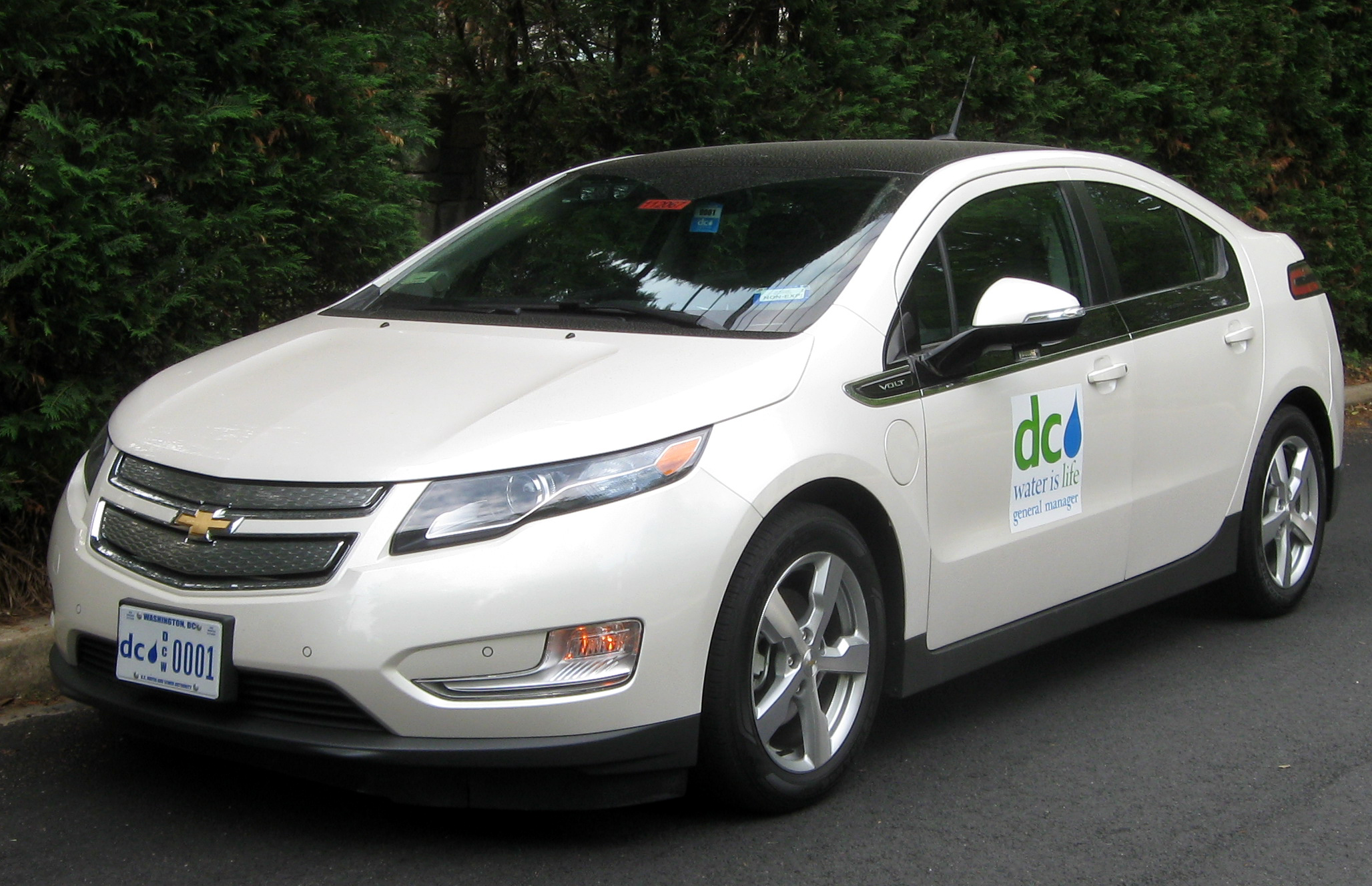
The Chevrolet Volt is a type of car that can run on electricity and gasoline. It helps save fuel and reduce pollution.
Car
Scout SUV
The Scout SUV is a type of vehicle that was made by a company called International Harvester. It's known for being tough and good for driving off-road, like in the mountains or on rough trails.
The four by four market includes cars that can drive on rough roads and off-road, like trucks and SUVs that have special features for tough conditions.
An EV is a car that runs only on electricity, so it doesn't use gas at all. You charge it up like you would a phone or a laptop, and then it drives using that stored energy.
An EREV is a type of electric car that can also use a gasoline engine to help it go further when the battery runs out. It's like having a backup to make sure you don't run out of charge on long drives.
The Tesla Cybertruck is a unique electric truck that looks very different from regular trucks because of its sharp angles and metal body. It's important because it's trying to change how we think about trucks by being more environmentally friendly and packed with technology. People talk about it because it stands out and could change the truck market.
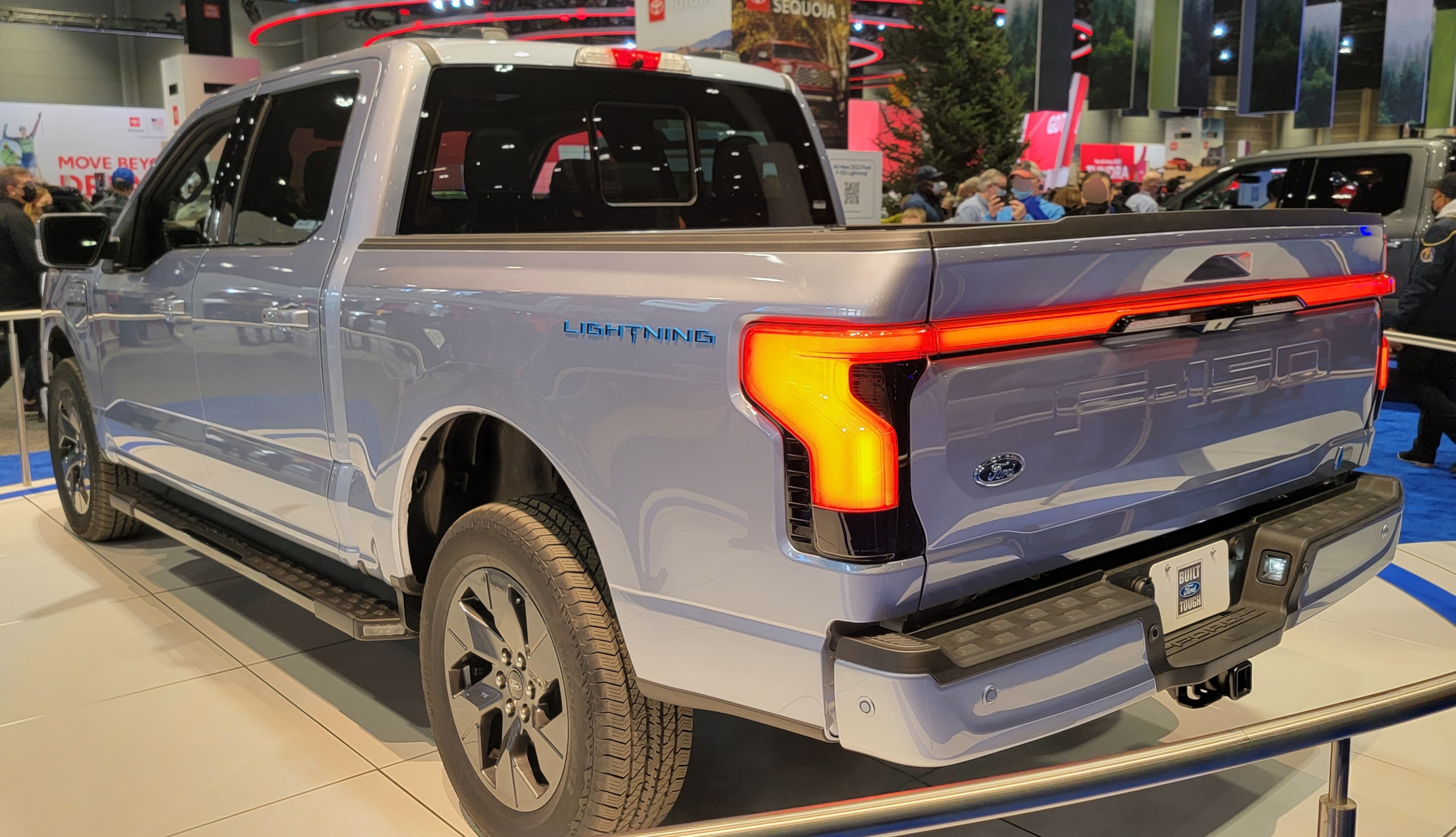
The Ford Lightning is an electric pickup truck from Ford. It’s designed to be powerful and useful like regular trucks but runs on electricity instead of gasoline.
Electric trucks are trucks that run on electricity instead of gas. They are better for the environment and can have cool features like fast acceleration and smart technology.
EcoBoost is a type of engine made by Ford that helps cars use less gas while still being powerful. It uses turbocharging to get more power from a smaller engine.
The Ford E-Transit is a new electric van made by Ford. It's used by businesses to transport goods and is better for the environment because it doesn't use gas.
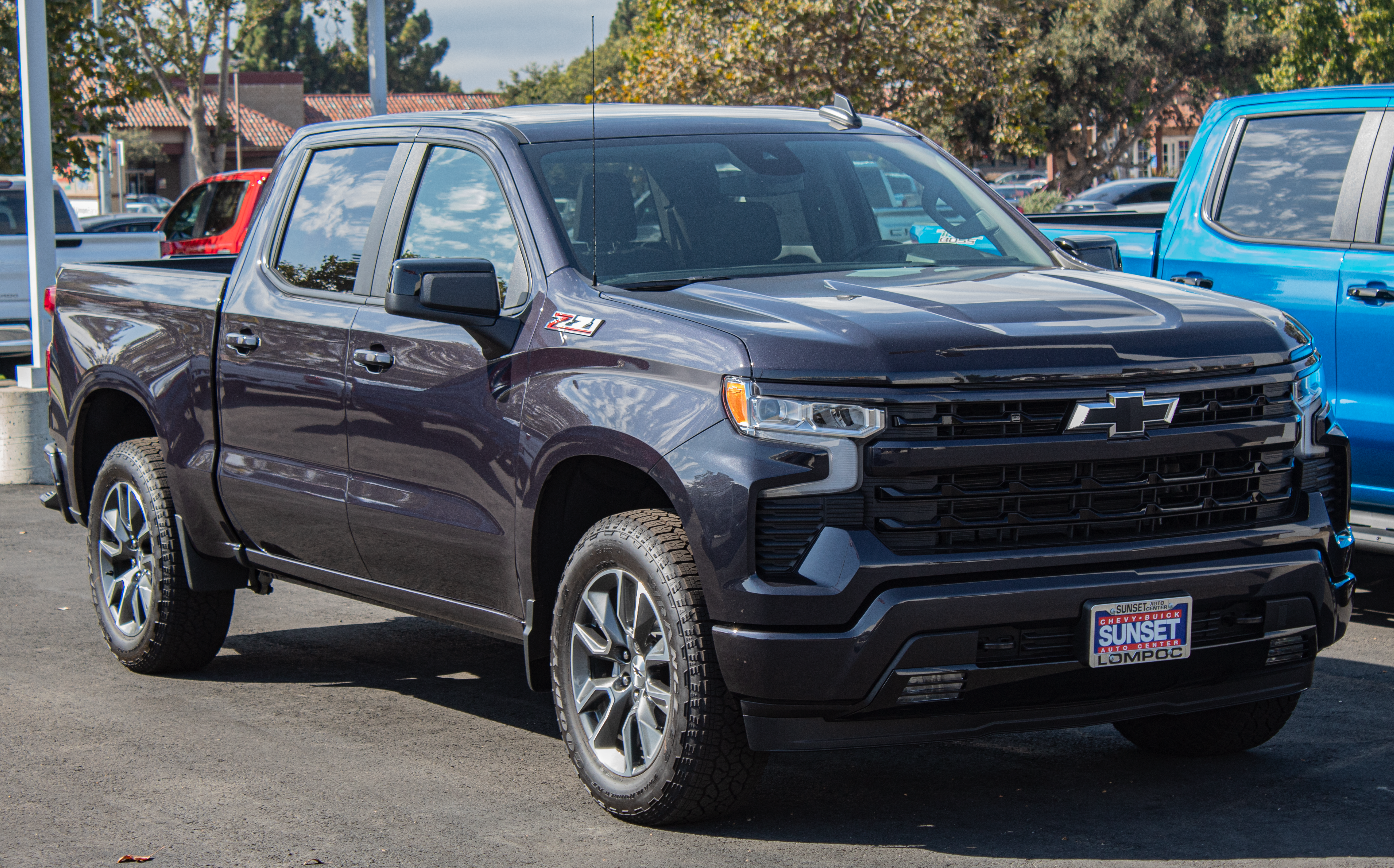
The Chevrolet Silverado EV is a new electric truck that aims to offer the same usefulness as regular trucks but without using gas. It’s important because it shows how trucks can be more environmentally friendly while still being strong and practical. People talk about it because it represents a big change in how we think about trucks.
The Honda Prelude is a small, sporty car that was made for many years and is loved for how fun it is to drive. It’s special because it combines style and speed, making it a favorite among people who enjoy driving. People talk about it because it has a cool history and is considered a classic.
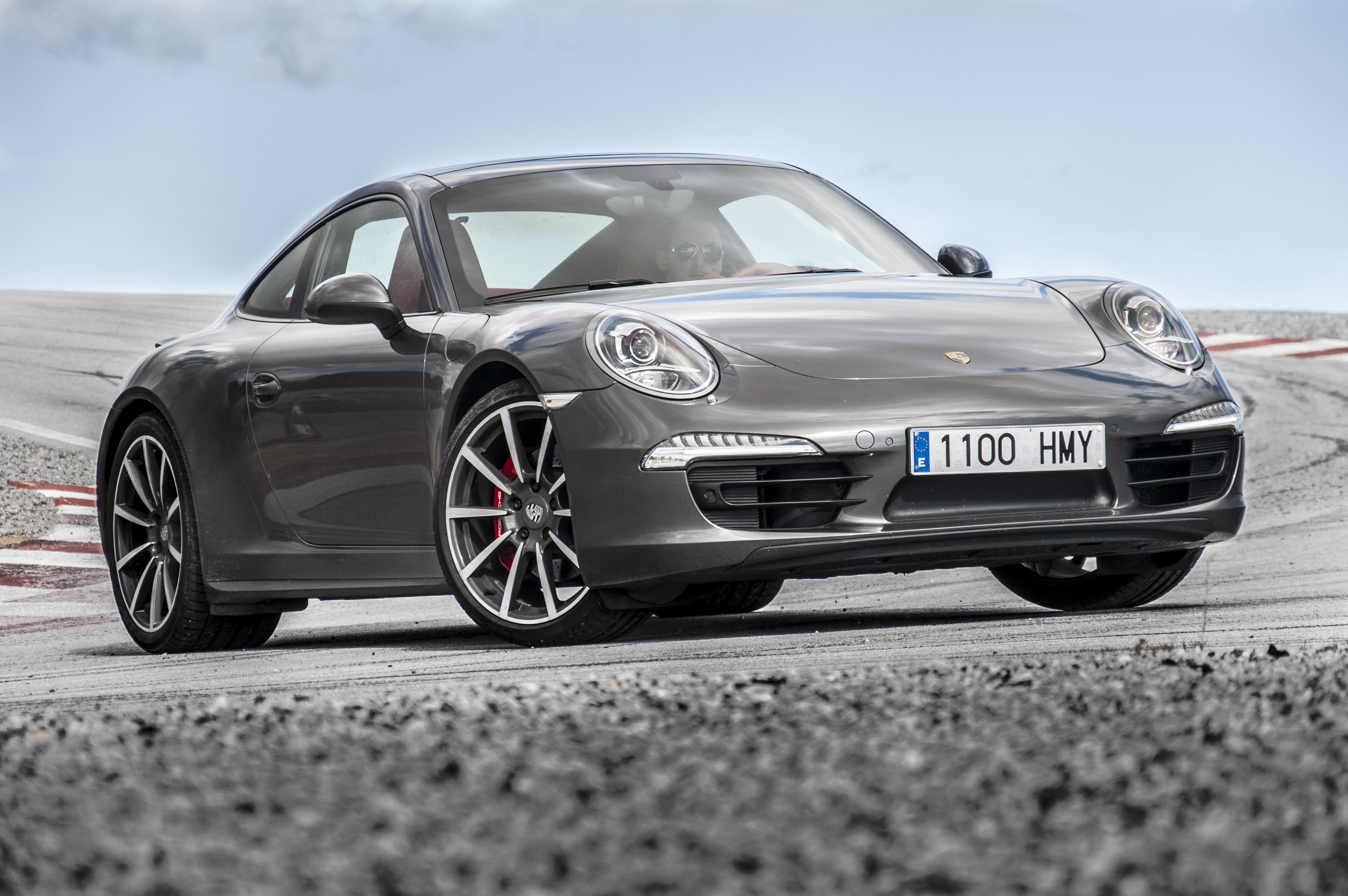
The Porsche 911 is a famous sports car that has been around for a long time and is loved for how fast and fun it is to drive. It looks unique and has a special engine placement that makes it handle really well on the road. People talk about it because it's considered one of the best sports cars ever made.
The Toyota Corolla is a small car that many people love because it’s very reliable and doesn’t use much gas. It’s been around for a long time and is known for being easy to drive and maintain. People talk about it because it’s a great choice for anyone looking for a dependable car.
LIVE
This is the What Car? EV podcast for Thursday, October 23rd, 2025, episode 245, Phevgate.
Did we miss something last week?
What?
Well, so you put a note in our show notes that we may have forgotten to talk about a certain EV.
Did we?
Oh, yes.
Did we speak on the new leaf?
Yes.
Did we?
Did we?
I don't, and I don't know the answer to that because I've been sleeping on everything.
I feel real.
It was real.
I am one of the co-hosts here on the What Car podcast.
I've been, what, 20 years, five years, somewhere between five and 25 years' experience in the automotive.
I thought you were the youthful one.
I'm the youthful one.
I'm brand new.
Why is it real?
I've been doing this once into the industry and doing automotive and content and creation
in some form or fashion.
And I also tell people to go to the, man, I'm really bad at URLs.
This internet thing, it's so new.
YouTube.com slash at the What Car.
At the What Car.
That's correct.
You can watch our smiling faces there instead of just listening to it.
But, you know, we're good for your ears as well.
So I'm all for it.
And if you have ADD, we have a wonderful selection of shorts to watch.
We do.
Those are all on the YouTubes.
I don't think we post any of those as reels or anything anywhere else, do we?
I don't know.
Maybe we should.
Maybe that's our next step.
I don't know.
Baby steps.
Like I said, this internet thing is new.
Maybe it'll catch on.
We're just kind of...
We should invite Katie Cork on to...
We're biting our time.
Ed Sanchez, I guess I'm the wise and old veteran of the duo supposedly.
I would say you've got more gray hair than me, but mine really just hides well.
Yeah, but you have more where it matters anyway.
Yes, four plus years into podcasting, living in the moment, enjoying things and wearing
goofy t-shirts, which you can discuss.
Back too far.
Back too far.
Back too far.
Little play on.
Back to the future.
One of my favorite movies.
Anyway.
That vehicle, and I forget the whole story behind it, was apparently electric supposedly.
The DeLorean in the movie.
Yeah.
In the movie, yes.
In the movie was supposed to be electric.
Yeah.
But they overdone like a V8 soundtrack.
Well, any shifting, which is possible, but he gets to the like the cranking part
where it all falls apart.
But there was something in the movie and I don't remember what it was.
Make a comment in the YouTubes and tell me because I'm too lazy to look it up again.
But I seem to recall it supposedly was the DeLorean in the back to the future movie was
supposed to be electric.
All right.
That's a whole other episode.
Slept on another electric vehicle, the Leaf.
Tell me about this because I know, I mean, I know the Leaf exists.
I know that we talked briefly about it an episode or two ago because I asked about it's
charging what it uses because I assumed that it was still on channel.
So we, one of our past episodes, we discussed the hypothetical ideal EV.
And I think we decided 30,000 ish 300 miles range.
We gave some other parameters in terms of charging time, cargo capacity, all that.
We kind of came up with a quote, perfect EV.
And we decided the Model Y standard was not it, the new bolt was not it.
Yeah.
The Model Y standard was too expensive, but had all the right features, maybe too good
for a cheap car.
And then the bolt had the right price, but the features weren't good enough.
The range wasn't good enough.
The charging wasn't good enough.
Is the answer Leaf?
Well, maybe.
Well, so here's the thing.
So the new Leaf, so the longest range model, which happens to be the base model because
I guess it's the lightest and has the least, you know, power sucking bells and whistles
has a 303 mile range rating nice and a 2990 starting price.
However, that model, I looked at the specs.
It's pretty, I mean, compared to cars like 10 years ago, it's pretty well equipped.
But by today's standards, it's a little, little stripper.
So I'm kind of like, yeah, it's almost there.
But I think some of the stuff they offer in the higher trim models in terms of equipment
should be standard, I think.
And if they could offer it for that price with that equipment, with that range, that
would be pretty close to perfect.
So case could be made.
The new Leaf in the base trim is the ideal like EV sweet spot.
It's the closest thing we've got right now.
Closest so far.
Yeah. Anyway, I would argue, because I'm cheapo, Phil, that a used EV is the
best deal right now and that I would buy a used Tesla or Mach E and get something
with good range, low miles, affordable price, fast charging.
Although the problem then comes, you buy something used like used Mach E and you
don't get an ACS.
That's the new problem now.
So now I've got to wait another few years.
Right now, I guess it's only Tesla that you buy.
Or you've got a dongle, you know, dongles for all.
Well, I mean, but see, that's that's kind of a thing that's even with the new
in ACS native models, there there are, they're not all the same.
Even though, you know, externally, they look the same.
There's still varying implementations of an ACS in that some have what's
called plug-in charge where you literally it's is what it says it is.
You just plug it in.
Boom. Seamless.
Just basically like the Tesla experience, but for everybody, other ones, you have
to download the Tesla app.
You have to initiate the charge through the smartphone app.
And then others and another thing I found out too, is I guess the, the, the
mobile chargers like, like I have, those will not work in non-Tesla's or a
lot of non-Tesla's for level two.
So even though, you know, they say, oh, yeah, in ACS is a new standard.
The implementation is not uniform.
The problem is software based, though, isn't it?
I mean, the hardware is gone.
Predominantly software, I would say there is.
There may be a little bit of a hardware component.
You know, like, so case in point, when I upgraded.
So remember, I did that upgrade, I think about a year ago, where I
could use, I could use third party in ACS chargers because they changed the
protocol to a kind of, not exactly proprietary-ish, but kind of, kind of
a rare protocol to the CCS protocol, even though it's the next port, it
uses the CCS protocol.
And so that was kind of a software and hardware thing, but it's basically
like a little microchip.
Yeah.
Yeah.
Yeah.
So TLDR, not, not, not all in ACS are created equal.
Anyway, moving on.
I haven't mentioned this in a while, but we're in, like, the early stages of
this and it is such a mess.
It is, EVs are such a mess when it comes to charging infrastructure.
They work great.
Sure, it works great.
But once you start getting into the details, you're like, Oh my God,
seriously, like this should have been a V1 problem that we had 15
years ago that has long been solved.
Well, yeah.
And plus newcomers, you know, coming from gas cars to this, it's just, I
can see how it can get infuriating.
It's like, I don't, I don't want to deal with this.
It's like, forget it.
Yeah.
Yeah.
All right.
Uh, all right.
So, um, at various points, I've made a defense for P halves and
E revs extended range, extended EVs where they do work in some use
cases, they add extra measure of utility, practicality.
I'd say specifically with like larger pickups, large SUVs for
applications where you tow.
So I think there's a rational case to be made for that.
However, um, some European researchers gave them a resounding
thumbs down, uh, in a recent report.
Hmm.
So do we want to dig into this?
Yeah.
Let define to me pretend like I'm an idiot because I'm an idiot.
Is there a difference between?
Yes, explain it to me like I'm five.
P have E rev.
Is there actually a difference or are these the, these synonyms and
then companies are defining them differently?
Because generally speaking, these are vehicles that have a battery, an
electric motor and a gasoline engine.
Now I think of P have is a plug in hybrid as something where the
gasoline power engine powers the tires and an E rev as something
where the gasoline engine is a generator that powers the battery
and the battery uses the motor to power to propel the vehicle.
That's essentially right.
And with P have's the electric motor can just power the vehicle, but the
main, the main use of its propulsion is gasoline directly driving the tires.
Is that the definition we're using?
Is that the definition everybody uses effectively?
Yeah, effectively.
The difference between P have's and E rev's is an E rev the gasoline
engine is acting almost exclusively as a generator.
Whereas P have it's like a quote regular hybrid, except the electric
motor is more powerful to the point where the electric motor alone can
provide more of the propulsion.
They typically have a larger battery.
So yes, your definition, I would say is generally correct.
Okay.
All right.
Carry on.
I want to make sure that I'm understanding.
Yeah.
Anyway, so this report in particular specifically, it seems like
focused on P have's.
Um, so they, I guess, I guess they, I don't know how they track this if they
put, I guess they, they somehow tapped into the telematics data of how
often these vehicles were charged, which is something OEMs have been
very, very guarded about.
And they've gotten a lot of questions about, but they haven't wanted to
share, but somehow they were able presumably to get this information.
They found that they're fairly infrequently charged.
So most of the time shock.
So most of the time they just operate as quote regular hybrids, but with
the added disadvantage of, of heavier batteries.
So basically driving a P have that doesn't have a full battery, they're
less efficient than non-plugging hybrids.
Yeah.
Like I said, they're carting around more weight.
They're burning more fuel, but so they get you like a tax credit or
some kind of rebate and they get you carpool sticker.
Well, they did.
Not anymore, but yeah, yeah.
But that was, that was one of the big things about them.
Yeah.
So a lot of people were buying them and then never charged them because
now they could drive in the carpool lane.
In fact, I remember going to a party, your play, I'm not going to name
it.
In fact, I can't even remember his name, but.
You couldn't name names if you wanted to.
Uh, one of the friends at your party who got a, at the time got a Ford
Fusion Energy openly admitted, I never plug it in.
I just got it for the carpool stick.
Yep.
It's the American way.
So at least California way, I could get that living in Los Angeles,
but it's like, you know, to me, I would say, if you get a P
heaven, don't plug it in.
You're, you're stupid.
You're kind of, kind of missing the point, but anyway.
So I'll mark down the time is about 12 minutes into the podcast.
That's a good, that's going to be one of the shorts right there.
Well, no, really.
I mean, you're, you're missing out on the main advantage to it
other than carpool access or.
No, in no way, the main advantage was carpool.
Well, true.
Yeah.
That buys you time.
You can't buy time.
And that was what that was buying.
Okay.
So they, so what's the deal?
So they, so they, they discovered through Criken Hook,
however they got this information, the real world CO2 emissions
of PF models registered in 2023 are nearly five times the
official rated emissions.
And it, and it noted this gap is widening.
So, and it says right here, based on official data
transmitted from onboard fuel consumption meters.
So, yeah, it's basically through telematics data.
Somehow they were, they were able to get, get hold of this
information.
Um, and it said the gap is mostly caused by flawed
assumptions on the share of electric driving mode, which
they call the utility factor, whatever that means, which
leads to a drastic underestimate of official PF emissions.
The UF utility factor overestimated the electric
driving share, assuming 84%.
Between 2021 2023, whereas real world data shows this just to
be 27%.
I don't want to drop a bad word here.
But is this P have gate?
It's honestly, other than, we, we talk about this a lot.
EV nerds, I think other than EV nerds, nobody's going
to care about this, but it's, it's just basically
a validation of, of some people's premise that P have's
are not plugged in as often as they should.
And to your point, a lot of people at the time just bought
them for the, the carpool sticker or tax break or
whatever, and otherwise didn't, didn't care about it.
Didn't, didn't bother to plug them in.
Just, just wanted the, the goodies.
So, but I'm, I, I still think they make sense for some
people, and if used in the way they, they were intended
can save you a lot of money on fuel, but it does
require plugging them in, operating them predominantly
on electricity for short trips and using the, the
gas motor for longer trips.
I can see E revs being also incorrect, incorrectly
reported of their emissions, but not as much as like a P
have, because I can see where in an E rev, if you drive
it like, drive it like you stole it, and you were
always foot to the floor, your lead foot, then
it's always going to be kicking on the electric or
the gasoline engine and revving it to charge the
battery. So if you drive it, not really like a grandma,
but more sedately, how you should be driving, and
that's probably how the emissions are calculated.
But then I mean, a lot of people are just like
foot to the floor and that engine is going to click
on and it's going to rev up high to generate the
electricity to regenerate the power for the, the
battery. So I can see that also being miscalculated,
but to a lesser degree.
Well, the other thing with, with E revs generally is
they generally have larger batteries and PFs.
So you will, I mean, even though it's, they're
still, the propulsion is electric.
They'll still be operating on battery power more
of the time than a P have.
I had a friend who's now got, I don't know, he's
on like his third or fourth Tesla, whatever it is.
And what got him into EVs was the Volt,
which was an E rev.
Kind of the OGE rev really.
Yeah. And maybe make a comment in the
YouTube's if I'm wrong about this, but I recall
him saying that one of the problems with that
was when he came to the hills, because there
are a lot of hills in Southern California,
that if you hadn't set it for, I'm going
to be going over this hill, you can actually
run out of juice going up the hill.
It couldn't generate enough power from when
you depleted the battery going up an extended
hill, trying to do 75 miles an hour.
Yeah, you couldn't get up the hill.
So you'd actually have to, there was like a
setting, there was something where you could
tell it, OK, click that engine on.
Start, start getting some juice banked here
because we're about to go up a huge incline
of like, you know, a six or nine percent
grade for the next 20 miles, whatever it
is, I need to get to the top.
So there's also problems with, I don't know,
there's problems with all of it.
Yeah, I think this is why gasoline is the
future, you guys.
And always will be.
And always we're going to live like in a
Mad Max future, future of the world.
Anyway, so speaking of E revs.
Yeah, OK.
One that was not dead yet, we're not dead yet.
This is one we've discussed and I think
we're both kind of kind of fans of we kind
of like the concept.
But this is kind of going in maybe a little
bit different direction than the company
originally intended or not.
I don't know.
But so the scout, the scout SUV,
which going in the way back machine
was part of the VW group's acquisition
of Navistar or international.
And if you remember way, way back in the day,
back when we were still crapping our diapers,
international actually made like smaller trucks,
you know, not just big rigs, but pickups,
SUVs, so forth.
And Scout was the brand.
So with all the IP and brand stuff
that VW acquired within the national,
they also got Scout.
I can't remember the exact episode.
I think we discussed this.
This is way before Scout was even announced.
I said, Mark, my words, Volkswagen's going to do something with Scout.
I remember that international and nobody at the time was even discussing it.
And I was like, something's going to happen.
And it did.
So I think the original plan with Scout, you're welcome, Volkswagen.
You're welcome. Yes.
Was they were going to make Scout an EV brand.
But I guess somewhere along the way, they said, well, you know,
the four by four market traditionally has been, you know, kind of more
kind of old school, kind of more kind of skeptical of new technologies.
And, you know, they kind of need maybe you need a little bit of a crutch
to get over the, you know, their biases and stuff.
So they said, OK, so we're going to do a range extended model
in addition to the battery model.
And when they announced it for preorders,
I guess some like three quarters of the preorders have been for the EREV
and like very, very little interest in the pure EV model.
So the news now is they may at least for the time being drop the
the EV model completely or postpone it.
And just focus mainly on the EREV, which I mean, if their objective
is to sell vehicles and, you know, do it with.
I'm going to say, yes, their objective is to sell vehicles.
Go out on a maybe this isn't the worst strategy because, you know, they don't.
I mean, as we kind of saw with with the Cybertruck and for a while
with the lightning, even though I think the supply and demands
kind of normalized a little bit is they way overproduced kind of
overanticipating demand and had all this inventory they were sitting on,
which is I'd say still kind of the case with Cybertruck.
But, you know, dealers don't don't want a bunch of unsold inventory.
They want the cars to come in.
They want to sell them to get them off the lots.
So I don't know.
I don't I don't think this is maybe the worst strategy, at least in the near term.
So I I do think it's the right move.
And I think that they are.
We've talked a lot about I mean, we don't use the term first move advantage,
but like where.
Ford has got its lightning.
You got Rivian with the R1 T and then Cybertruck and the Silverado was coming out.
And then there was Dodge.
There was just kind of like
plunking away in the back to.
Yeah. And we were like, is it too late for them?
And I I think that they're going to
financially be better off than a lot of other companies
that have had to be those martyrs at the front that discovered
that electricity has discovered what we've been saying from day one,
which is electric trucks.
There's a market, but it's not the mass market.
Yeah, there's like for Rivian R1 T stuff, there's a lifestyle
that's out there and kind of with the Cybertruck
that there's a lifestyle that goes with it is a venture lifestyle.
And for that, electric trucks are great.
Three surfboard, lightning, I'd say like
casual weekend warriors, perfect for that.
Yeah. Now, Ford's advantage was they have the lightning.
They've got their hybrid and they've got straight up gas.
So you have a choice there with the other
Rivian's kind of you're all in Cybertruck, you're all in.
Mm hmm.
But I think right now, at least the market is
if you want a truck, you probably want more utility with it
than what electric can provide because you already are only getting
two miles per kilowatt hour out of a battery pack.
And as soon as you tow anything, you're down to one,
maybe one point two, if you're lucky.
You need the gasoline engine.
You need like an e-rev or a plug in hybrid version and dodge.
That's exactly they've managed to turn tail on it before they got to invest it.
And Volkswagen is kind of similar.
They're turning before they get to invest it and not having to to reengineer.
What's kind of ironic about that is Ram, like almost kind of overnight
quite possibly could have the first mover advantage with having an e-rev.
They were kind of coming from behind with the battery.
By being last to market, they will be first to market
with the right problem.
No, I think soon you will see Ford and GM do an e-rev,
either a P ever an e-rev version of the Silverado and F 150.
But I think which is what I was saying when I tested the original EcoBoost.
Was that they needed the power boost or the power boost?
Yeah, they needed to have a they needed to have a plug in.
Yeah. So I think those are coming.
But but ironically, Ram may be beat everyone else to market with that.
So we'll see. Long live Stalantis.
Yes, we hope. Hopefully, hopefully.
Yeah. So this is speaking of GM.
Speaking of big vehicles that are electric powered,
then maybe maybe would have been so bright a future.
Yes. Oh, no pun intended.
Yeah. So Breitrop.
So Breitrop has had an interesting history.
It went from a standalone brand to being folded into a Chevy.
And now it looks like nothing.
Folded into the trash can. So.
Yeah. So, yeah, the latest latest announcement,
GM, they're discontinuing Breitrop.
Why?
I think low sales also.
I don't know how much of a factor this was, you know, the whole tariff situation
and Trump's war of words with Canada.
So Breitrop was made in Canada.
And so I, you know, I don't know in terms of like domestic content
and USMCA, all that.
I don't know if that was a factor, but certainly, I think the $7,500 credit
disappearing was a factor.
Plus, even with the massive discounts, these things were still expensive.
I think the list prices on them was like 80 or 90 grand.
Some dealers were offering like 20,000 off.
But this still isn't like just a casual purchase.
Never mind the fact they're massive.
So unless you'd need massive cargo capacity, huge vehicle.
Kind of a limited market.
So anyway, you're not really getting the plumber sale.
You're not getting the electrician sale on these, which you would get
with Rivians, MDV, whatever, multi.
They're they're Amazon then.
Yeah, you are.
You can get those sales from the Ford.
What is that, Conalign?
I don't even remember.
Transit, that EV, you're going to get potential plumber sales,
electrician sales, mobile, whatever, handyman.
Same thing with the Mercedes, the bright drops massive.
Yeah, it's huge.
And the only ones that I've seen almost all FedEx of the FedEx is in my neighborhood
are bright drops and have been for a while.
But that's it.
I've never seen one that's not a FedEx.
And there's fleets of them in my city.
So I think the the the opportunity in this is probably for Rivian
because they have the next closest
vehicle to this kind of form factor.
So they potentially could scoop up a lot of the sales of companies
that were buying the bright drop could end up going with the Rivian van.
Can you have a concept of this?
Let's bring canoe back.
Well, yeah, I don't think they're coming back.
Anyway, so yeah, kind of a little disappointing.
I thought it had potential, but not not enough.
It was it was only going to be fleet sales,
maybe the underpinnings for RVs.
And that's a it's a it's a market.
But I don't know if it's a market.
So there was a gosh, I can't even remember the name of the company,
but they did like a full fledged RV concept based on the bright drop.
It'll be interesting to see if they completely fold or if they end up
kind of pivoting to using the Rivian chassis.
For an RV.
Or they start doing like the E transit or the Sprinter, the EV Sprinter.
I don't know.
Yeah, then we could do a whole episode on RVs and where that needs to go.
And I think they definitely fall into long story short.
If we do an episode on it, where my opinion will be, is it right now?
It's Peahabs or E revs for if you're going to do
like anything bigger or heavier.
Yeah, large trucks, vans.
Yeah. Yeah.
Anyway, so moving on to something a little smaller pressing.
So Porsche McCann, Evie.
So and this is not unexpected.
Porsche kind of does this with all of their models.
Whenever they come out with a new model, they kind of kind of slow
drip the different variants.
Yeah, they come out with like 15 different versions of everything.
So I saw this announcement and was like, all right, like Porsche doing Porsche stuff.
Porsche, they've got the McCann, Evie, GTS.
Yeah, so this is kind of the in-betweener.
This is between the turbo, which is the top of the line
and the four S, which is kind of a step below.
So if you're a Porsche person, I'm sure this makes sense.
Yes, the casual car guy.
Like I don't I can't keep track of this stuff.
Yeah. Anyway, if you like fast kind of mid-size-ish TVs,
five hundred sixty three horse seven hundred four pound feet with over boost
function, if not, it has only five hundred nine horsepower.
Yeah. Zero to sixty three point six seconds.
Top speed one fifty five hundred kilowatt hour battery pack.
Two hundred seventy kilowatt max charging power.
Ten to eighty and twenty one minutes under ideal conditions.
But, you know, I'm willing to cut a little slack because a hundred kilowatt
hours is a pretty good size battery.
If it was only sixty or seventy and it was twenty minutes, I'd say that.
That's not great.
But for a battery of that size, that's decent charging.
Optional rear wheel steering, which kind of surprised me
because they're not particularly huge.
So I don't know if that's more for just handling more than like parking lot,
you know, maneuverability.
But anyway, I don't know what's going on with a carry on.
For the low, low price of one hundred three thousand.
Now you're buying a Porsche.
So you're going to pay a bit of a premium.
But isn't this double what a model Y with similar specs?
For the non non performance, yes, this is about double.
I'm for the performance is like performance model.
I think it's like sixty four.
I would say.
So you're still paying almost forty grand.
So you're paying the Porsche tax to have that.
And I say that as somebody that's now been shopping for a Porsche this year
that may or may not happen, but not a new one.
No, not a new one.
One that's like very used price.
But so there is a price that you have to pay to have a Porsche.
And maybe people will pay this.
I don't know to talk about the rear steer.
Maybe that's just an option that they're throwing on there.
The.
I mean, I get it, I get it in large, like.
Like the Silverado EV, the Cybertruck vehicles of that size,
it does have a real real world advantage for smaller vehicles.
I don't know.
So I'm going to date myself.
You might remember this.
So speaking of small cars with four wheel steering,
do you remember the prelude back in the day?
Oh, yeah, the the late 80s, early 90s.
Yeah.
But what was cool about that was it's fully mechanical.
Yeah.
And you could see it just barely kind of.
And the advantage because, you know, preludes a small car.
So the main advantage for that was handling.
It wasn't so much maneuverability.
But so, you know, I mean, maybe that's a thing.
But technically.
And I never really understood how it worked.
My RX seven, I've got a second gen RX seven that had rear steer.
Yeah.
But if memory serves me correctly, it was more passive where it depended
on like the lean angle would would like change the suspension geometry.
So and I don't know exactly what it did or how it did
because literally the first thing I did was I dropped the subframes off the car,
replaced everything, better bushings and eliminated the rear steer.
But rear steer is something that's been around for a while.
And they had it in.
Got some SUVs had them in the early 90s, early 2000s, late 90s, maybe
GM quadruple if you remember that.
Yeah, yeah.
So they've come and gone and they always break.
They're always a pain.
Always break.
And I see cyber trucks all the time and they'll round the corner
and you watch the back tires move and everything.
And that's neat.
And then it gets them in to parking spaces.
I'm just hoping that technology is better now than it was 25 years ago
when they tried this before, because everything that had rear steer before
broke and I mean, except for the prelude.
I don't I don't remember them especially having any problems.
I don't know. Well, yeah, this is a pretty rare model.
Yeah, those were it was the SH or whatever the model was that
it it was like super handling model, whatever it was.
I don't think that those are the mass numbers.
No. But but it does serve a good purpose
because I've got a Yukon and I've got an F 250.
And that goes into like wheelbase and steering angle.
But the F 250 is not a daily daily drivable thing.
And it's a school bus.
Yes. And it's because of the turning radius on the thing.
It's like 50 something feet to make a turn.
It's massive.
Rear steer would really help on something like that.
I mean, I'm sure there's probably some intersections.
You just go around the block rather than trying to make a U-turn.
You can't do a U-turn.
You simply cannot do a U-turn.
If there are three lanes and a hard shoulder.
Yes, you can do the two lane. Forget it.
Two lane. There's no way you've got to go over a curb
or you're doing a three point turn.
It's absolutely ridiculous that you can't daily drive these F 250s.
But the Yukon.
It can. And you drive it.
I want to say GM did make a quadrsteer suburban.
I don't know why they. Yeah.
And then it probably broke. All right.
OK, so Germany.
Speaking of Germany, they did they get rid of their AV subsidy?
You're saying that they are reviving it.
Well, I guess the old one was just very broad.
It was very basically it didn't discriminate
based on, you know, origin, so to speak.
OK, so it would apply to like Chinese
EVs like whatever from wherever.
Yeah. So of course, everyone is afraid of, you know,
the Chinese threat.
So they're they're proposing reintroducing it,
but only applying it to German or EU built models.
So narrowing the focus.
Yeah. So for 4,000 euro credit,
only applicable to vehicles, 45,000 euros or below.
Only BVs, not P. Heves or E revs.
So kind of a little more targeted.
I'm guessing the the German auto lobby had something to do with this
because they were I don't know if you want to say tricked or bamboozled.
But but a few years ago, they they when everyone saw Tesla as this
like huge imminent threat that was going to take over the world,
they really double down into EV R&D.
So they invested billions and billions of dollars, euros, whatever,
the EV development.
And now sales are kind of cooling off.
You know, inventories are starting to stack up.
There's more demand for ice.
And they're like, well, what are we going to do with all these?
We need to kind of prime a little bit.
So I think that's probably has something to do with it.
I don't know.
Sure. Why not?
That's all I have to say.
I mean, yeah. No, there was a there was a moment in time where everybody
I hate this.
I hate this just in general in the business that that I'm in,
like with everything, I hate chasing shiny new things.
And you see something that's doing well and you go, oh, let's do that.
Let's drop what we're doing and let's do this other thing.
Because obviously they're winning and we don't know how they're winning.
We don't know any of those details.
And in this case, it was Tesla and Tesla has taken over the world.
They didn't know how scalable it was.
They didn't know the profit margins that there were.
They didn't know how difficult battery batteries
were going to be to produce.
They didn't understand completely that whole thing.
Then they didn't look at they didn't know the tariffs were coming down.
The the pike with like craziness that's been happening.
They didn't know any of this stuff, but they still went all in.
And they picked a direction.
And I don't know.
I hate I hate changing.
And you know, and I say this co-hosting a TV podcast.
Don't ever chase the shiny new thing.
Like everything should go with moderation and you take the steps into it.
And that's the only way that you don't end up with cratering an industry
and leaving with a with a bad taste in your mouth.
Like let's ease up to full EV in embracement, if that's a word.
Let's ease into this, not say everybody's got to be EV by 2030.
Which is what if I didn't know better, I'd say you're channeling
Archeo Toyota, but possibly it just seems like you need a very
measured approach to an entire shift in an industry that affects
almost every country in the world.
Yeah, like let's be measured about this.
And so now we're kind of on this like rebound, like bouncing back and forth.
Well, you know, we had all these incentives.
Everybody produced this.
Now they're not selling. Now we've got to do this.
Now we. Yeah.
Anyway, all right.
So getting back to something a little more interesting slash exciting little more.
If you're an enthusiast, I think you'll maybe geek out on this a little bit.
So Jason Fenske engineering explained one of my favorite channels.
I just love how he breaks stuff down.
So he he did a video comparing the Yang Wang, you know, extreme the recent
top speed record holder, I guess.
And he compared it to Corvette ZR1 and also 911 GT3 RS.
So electric versus two.
I don't know if I'd say total complete pinnacle, but
some of the highest performance ice sports cars you can buy.
So he noted that while it did a sub, I guess a sub seven minute
lap time that the the ZR1 did a little bit quicker lap time than the Yang Wang did.
The electric Yang Wang did with about one third of the power.
So the ZR1 with a third of the power did about the same lap time.
A little quicker, actually a little quicker.
OK, and the 911 GT3 RS did it even quicker than the ZR1 with about half
the horsepower of the ZR1.
So he broke it down and the TLDR on it is, yes, the Yang Wang has
very impressive peak power output, but it can't sustain it.
Whereas the ZR1 and the Porsche, it can sustain that max power level for longer.
Whereas I guess with the Yang Wang, it first of all, it has by most reports
has a actually pretty small battery considering the amount of power it has.
It only has 80 kilowatt hour battery and 3000 horsepower.
So if you're going foot to the floor, I think he said something like
it would basically deplete its battery in like two minutes.
If you were if you were like foot to the floor all the way around.
So which sounds bad, but remember, there was a video of somebody
and like it was like a hellcat or something like that.
And they were on the Nürburgr.
Or you could physically see the gas.
You could watch the gas gauge moving like you didn't have much.
Like it probably wasn't two minutes, but it was.
But I guess the difference is with with gas engines.
You can you can basically maintain max power as long as you have the fuel.
When you're out of gas, you're out of gas, but they can maintain max power for longer.
And the other thing he mentioned is the Yang Wang is probably traction limited.
He did all these mathematical calculations and stuff.
And basically you can't apply all 3000 horsepower all at once, all the way around the ring.
So it's very much a balance of power on breaking, handling,
traction limitations, battery limitations.
So it's like, yes, it can set these records,
but it's there.
They I guess the operational parameters in which it sets these is pretty limited.
So so it's kind of interesting.
If you're if you're total performance nerd, it's worth a watch.
It's a very interesting, all the intricacies and nuances
that he went went into about this.
I'm sure he mentions this.
I don't remember if you did because I was busy googling stuff.
But the Yang Wang weighs a lot.
Yeah. Didn't we decide it's like around 5000?
So I just I just googled it and the Googles says and they're pulling from.
I don't know where they're pulling from, but they say it weighs 5467 pounds.
The ZR one weighs 3560.
So 2000 pounds less.
And the GT3, did you say RS?
Because that's what I looked up.
GT3 RS is 3268.
So another 300 pounds lighter than the Corvette.
Part of what you can get with performance with EVs is you can brute force everything.
You can put in so much power and stuff it with so much tire
that you can brute force a record.
And we get that with in motorsports, something that is sustained
motorsport that is sustained for less time.
So you get something like drag racing or autocross.
You take an electric vehicle and they will really excel at that
because you're only going for in drag racing, nine seconds in autocross.
A long one to be 60 seconds.
But you put it out on the track and you try to do a seven minute
Nurburgring lap and you now the weight catches up to you.
And you overheat the brakes, you overheat the tires, you're overheating.
I'm sure suspension components, you know, shocks can only take so much
before they start overheating and it begins to fall apart.
It's a house of cards in the performance world that will that will crumble
when you sustain, try to sustain the performance for extended periods of time.
I'll need to watch his video because I'm sure that he goes into all of this.
But by and large, that's what I've noticed is just
the model three performance is great.
But if you want to do that, do that performance for a longer period of time,
a 20 minute, 30 minute track session, it will fall on its face more.
It may still be going really, really, really fast.
But it's potential at the end is not what it was at the beginning.
It's more of a time attack car than it is an endurance car.
Even if you got rid of the charging issues,
even if you did like a battery swap and, you know, two minutes or whatever.
And you could get around that.
You've still got this weight issue that will just compound, compound, compound.
And then you'll start breaking things once you go to longer and longer
events because because that weight is going to abuse everything that much more.
So I guess the question with this is
is it kind of exercise and futility trying to
keep setting these like power or whatever records or TVs?
I mean, everyone thought it was insane when the plaid came out with a thousand
horsepower, then the the sapphire came out with 1200.
Then, you know, these church, you know, the
the Xiaomi, you know, SU seven
whiz bang, whatever it is.
That's I think I was like 1500.
Yeah. It's like for what, you know, it's like, OK,
so you get you get to zero to 16, like to one point nine.
Or, you know, it's like, at what point is it like, this is silly.
It doesn't matter anymore.
Are we there?
Oh, we're long there.
It would really pass that.
Yeah. It really the acceleration doesn't matter.
Like I said, it's a party trick.
Yeah. Everything is fast enough now.
Almost every gas powered car is fast enough now.
It's not necessary.
They need to work on.
We went through this the other week, didn't we, that they need to work
more on charging speed, charging speed, charging infrastructure,
put the money into that.
We've already done the speed thing.
And at the same time, Yang Wang comes out with their Unine Xtreme.
You've got remats within a Vera, whatever they end up making next after that.
You've got these super duper cars.
That's fine. Let them do that.
Let Lamborghini and Ferrari do their thing.
But mass market, we don't need.
We don't need the speed.
I'm just going to say I still think the ideal.
And some people say, why do you even focus on that?
The ideal acceleration time for mass market cars, I would say is between five
and seven seconds, five seconds on the quicker end, seven seconds for mass market.
Five seconds, zero to 60 is legit.
Pretty impressive, especially if you're used to like, you know, a Corolla,
well, except for the GR, but, you know, just your kind of a mainstream car,
especially if you get into an EV with the torque delivery.
Five seconds is like, wow, this thing is quick.
And even seven seconds is like, wow, this thing's pretty peppy.
So to me, that's that's kind of the the golden mean, so to speak, I feel.
It lets you merge on the freeway.
And that's what legitimately all you need to do is merge onto a freeway.
And to me, like, I'd say the five, six second range
on a test drive is enough to impress most people.
Now, granted, if you're if you're coming from a plaid or, you know, a ZR1
or whatever you're like, John, you know, this is like me, but I'd say
most people would say, you know, five to six and a half second range.
Ooh, that's pretty quick.
So, yeah, I mean, to your point, I'm not saying stop making
the plaids or sapphires or Navarra's or Yang Wang's.
I mean, sure, if you're willing to pay the price,
you know, go for it.
But that's that's not what the market needs right now.
Yeah, there's other places to put that money time development.
And if you can say, OK, five and a half seconds is what our
EVs are going to do zero to sixty time and then work in the efficiency
of production on that and get the prices down.
I'd much prefer a twenty five thousand or thirty thousand dollar
EV that does zero to sixty and five and a half seconds.
Then have to pay one and two for a hundred thousand.
Yeah, it. Yeah. Yeah.
All right. Do you want to go?
Yeah, I think well, there was one more thing you were like,
oh, we have to talk about this. Do we? Do we want to? Do you?
Save it for another episode.
All right, we'll keep you hanging.
Yeah. All right.
Everything we talked about notes, show notes in the show.
How do I say it?
The show notes are embedded somewhere in the show notes, whatever.
Links in the show notes.
I knew that I come up with the right word.
You just got to speak enough and eventually the right words come out of your mouth.
You can find us on any podcast player.
Also, YouTube dot com slash at the walk car.
I don't ever promote this, but we still have the walker dot com slash store
if you would like to buy any merchandise.
I don't really advertise it because with tariffs,
I don't actually think we're making money.
I think we're losing money on it.
And I've been meaning to shut that down, which is why I stopped talking about it.
But if you want to make us go broke, go buy a shirt.
We're on all social medias.
It doesn't matter.
I don't care if you like and follow us, share us.
Do on your social media, share something,
whether it's our shorts or make a comment, whatever.
I don't know how the internet works and we get more comments,
which we may get into in future episodes.
Yes. And the walker dot com slash advertise big companies
like Yang Wang go and throw us your Chinese dollars.
And we will say how great a fifty five hundred pound supercar is.
All right.
Talk to you next week.
About this episode
The discussion centers around the recent revelations regarding plug-in hybrid electric vehicles (PHEVs) and their real-world emissions, highlighting a study that shows many are not charged frequently enough to be efficient. The hosts debate the merits of PHEVs versus electric vehicles (EVs), touching on the Nissan Leaf's potential as an ideal entry-level EV. They also explore the future of extended-range electric vehicles (EREVs), with a focus on the Scout SUV's shift from pure EV to EREV. The episode concludes with a comparison of the Yang Wang electric supercar against traditional performance vehicles, emphasizing the challenges of sustaining high performance in EVs.
There’s an emissions scandal brewing, this time around PHEV and EREV technology. Could this be the next Dieselgate? We talk about that, plus Scout booting its BEV, GM dropping BrightDrop, Porsche introducing a tweener EV, and more, all on this week’s podcast.
Engineering Explains breaks down why Corvette ZR1 is faster around the Nüburgring than the Yangwang U9 Xtreme, with nearly 1/3 the power: https://www.youtube.com/watch?v=TynF7R7q6c8