The Tesla Model S is a high-end electric car that is known for being very fast and having a long battery life. It's one of Tesla's most famous models and is popular among people who want a luxury car without using gas.
The Tesla Model 3 is a smaller electric car made by Tesla that is known for being fast and having a long battery life. It's popular because it's more affordable than other Tesla models and helps people drive without using gas.
The Chevrolet Suburban is a large SUV that can fit a lot of people and their stuff, making it great for families or long trips. It's known for being tough and able to tow heavy things.
The Tesla Model Y is an electric SUV that is similar to the Model 3 but offers more room for passengers and cargo. It's a great choice for people who want an eco-friendly vehicle that can carry more stuff.
The BMW X5 is a fancy SUV that feels nice to drive and has a lot of high-tech features. It's popular because it offers a comfortable ride and looks stylish.
The BMW X1 is a small luxury SUV that is designed to be practical and fun to drive. It's a good choice for people who want a nice car that isn't too big.
The BMW X7 is a big luxury SUV that has room for a lot of people and comes with many high-end features. It's perfect for families or anyone who needs extra space.
The BMW X3 is a medium-sized luxury SUV that is known for being fun to drive while still having plenty of room inside. It's a popular choice for families.
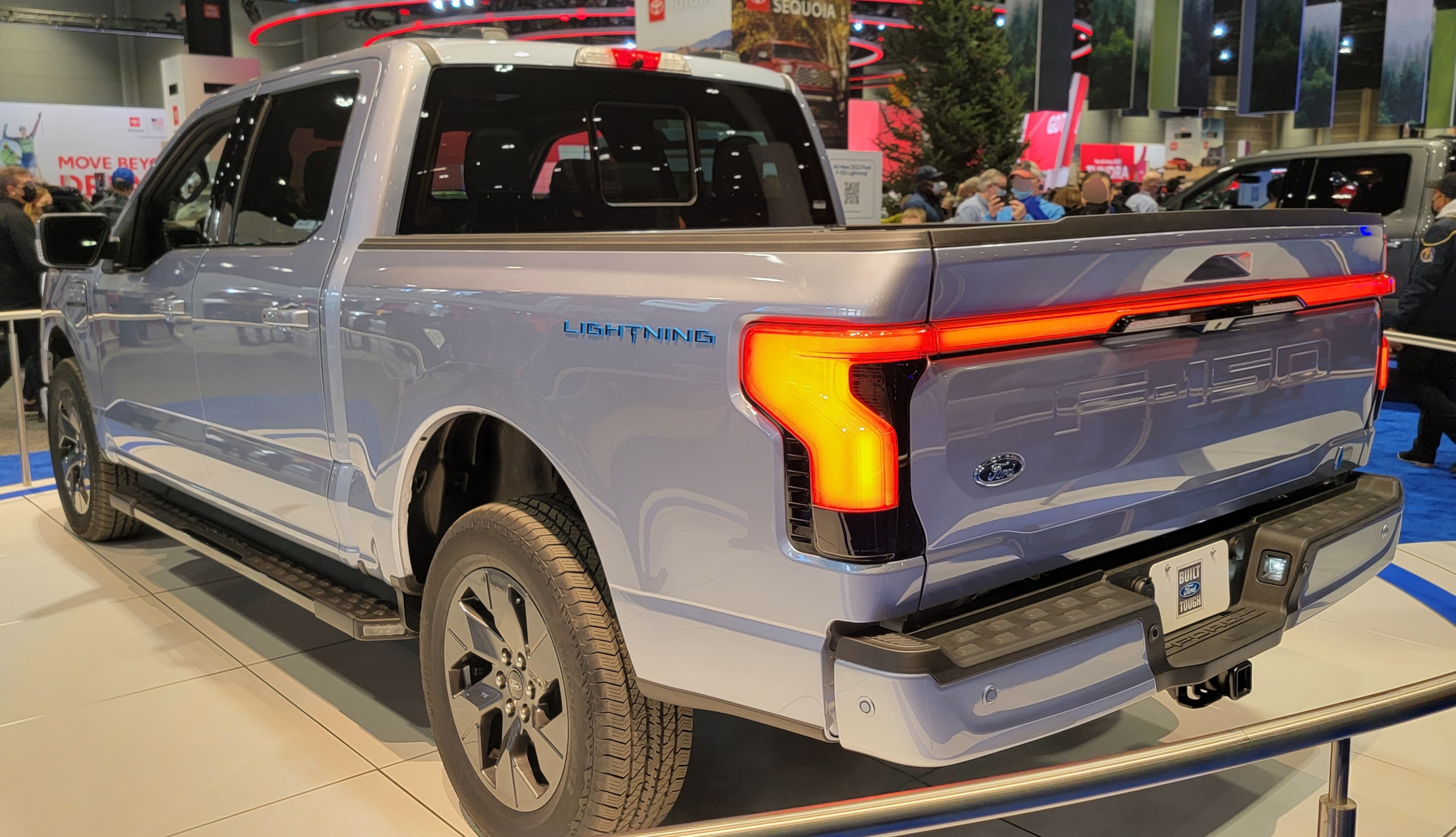
The Ford F-Series is a group of pickup trucks made by Ford, including popular models like the F-150. It's often mentioned as the best-selling truck in America, but it actually includes several different models.
The Ford F-100 is an older model of a pickup truck that many people love for its toughness and classic style. It's part of a famous line of trucks that are still popular today.
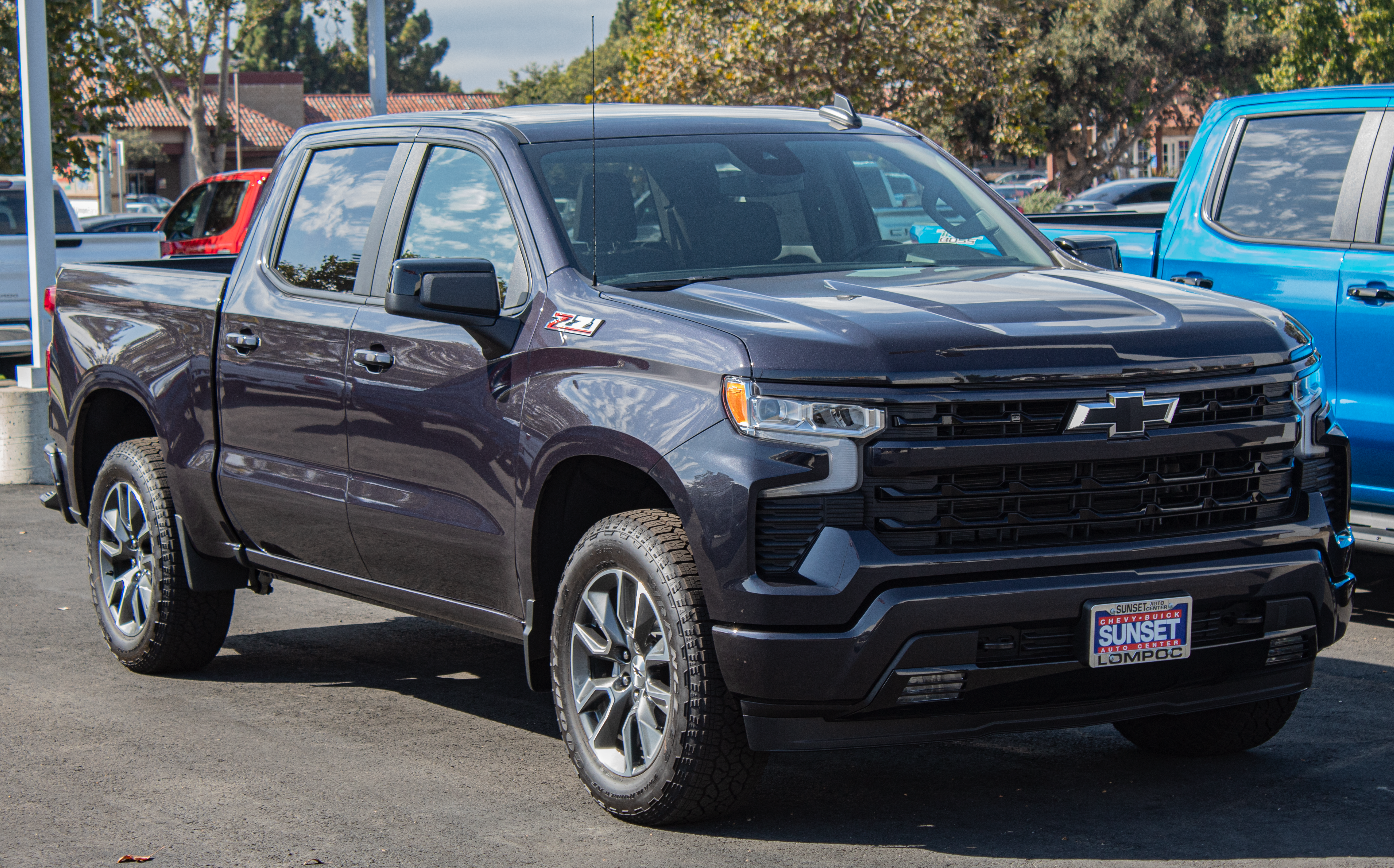
The Chevrolet Silverado is a big truck that can carry heavy loads and is great for work or towing things. It's popular because it's tough and reliable.
EV means electric vehicle, which is a car that runs on electricity instead of gasoline. They are often better for the environment because they produce fewer emissions.
A supercharger helps engines get more air, which means they can burn more fuel and go faster. For electric cars, it usually means a special charging station that can quickly charge the car's battery.
The Kia EV6 is a new electric car that looks cool and can go a long distance on a single charge. It's a good option for people who want an eco-friendly vehicle that still has a lot of space.
The Kia Stinger is a stylish car that is fun to drive and has a sporty look. It's a good choice for people who want a car that feels exciting but is still practical.
A twin turbo V6 engine has six cylinders and uses two small turbines to make the car go faster. It's a way to get more power from the engine without making it bigger.
The Jaguar S-Type is a fancy car that looks elegant and is very comfortable to drive. It's known for its stylish design and is a good choice for people who like luxury cars.
The Kia K900 is a large luxury car made by Kia. It's designed to be very comfortable and has many fancy features, but it didn't sell well in the United States.
The Mercedes-Benz S-Class is a very fancy car that is known for being super comfortable and packed with the latest technology. It's often considered one of the best luxury cars you can buy.
The Kia Cadenza is a larger car that focuses on comfort and luxury. It's not as sporty as the Stinger or EV6 but is still a nice option for those looking for a smooth ride.
Car
Kia Vision Meta Turismo Concept
A concept car is a prototype that car manufacturers create to showcase new ideas and designs. The Kia Vision Meta Turismo is one such example, showing what Kia might build in the future.
Concept cars are special cars made to show new ideas and designs. They usually aren't sold to the public and might have features that won't be used in regular cars.
A heads-up display is a screen that shows important information right on the windshield of a car. This way, drivers can see things like their speed without taking their eyes off the road.
The DeLorean is a famous car known for its unusual design and its appearance in movies. It has doors that open upwards and is made of shiny metal, making it look very futuristic.
The Ioniq 5 is an electric SUV made by Hyundai. It's known for its modern look and high-tech features, and it was designed based on a concept car that people liked a lot.
The Ioniq 6 is also an electric car from Hyundai, following the Ioniq 5. It has a stylish design and is packed with modern technology, making it a popular choice for electric vehicle buyers.
The Rivian R2 is a new electric car that Rivian is planning to release. It's designed to be a more budget-friendly option compared to their other models.
LIVE
This is the WakkarEV podcast for Thursday, January 22nd, 2026, episode 254, The Michigan of Canada.
I'm assuming you didn't die in the last week.
I'm not dead.
You somehow recovered from the CES flu, or the CES bug, which that last episode gotta say, I don't know, SEO.
Not the best.
No, no, SEO or whatever.
I was looking at some of our download numbers and last week's episode was pretty good.
So apparently CES in the title resulted in some downloads for the podcast, more downloads for the podcast.
So we're seeing, I'll get back to this.
I'm Phil Royal.
I am one of the co-hosts here at the Wakkar podcast.
I've been doing automotive content creation for longer than I like to admit.
So what my current deal is with this whole deal, I don't know, I've run out of words.
I ran out of words like a decade ago.
You don't have the best words?
No, I don't have the best words.
I used up the best words a long time ago.
Now I'm down to like second grade words.
Not even, because I got a second grader.
I know what those words are and they're beyond me.
YouTube.com slash at the Wakkar.
See our smiling faces.
See how dumb we look as well as sound.
Am I selling this well?
Am I selling this well?
You're selling the heck out of it.
TheWakkar.com slash store.
Get your paraphernalia of which I am not wearing any, but Ed is.
Who's Ed?
Dude about to talk.
Ed, I am Phil's partner in crime.
I mean that metaphorically.
No nefarious dealings going on.
I am sure we've committed a crime here or there.
Crime against journalists.
I don't know.
Anyway, likewise been doing this quite a while.
Hopefully that shows through somehow.
Yeah, here we are.
I'm not dead.
I'm here.
I'm raring to go.
Got some news.
It may seem a little lopsided at first glance, but I guess the theme I wanted to,
I hope I leave you with is, there's more than meets the eye to the headlines.
So some of what I'm about to share goes against the popular narrative about certain segments or companies.
But I think it's important to be well-rounded, well-informed of what's going on in the world of EVs.
Nah.
Here we go.
What was I talking about before I did my introduction?
What was I talking about?
Was it downloads?
Was that what it was?
Last episode.
Super popular.
The last episode, the downloads went up.
I assume because of the using CES as keyword.
Keywords.
But we've also done our shorts on YouTube.
Pretty good.
I also have been uploading the entire episode.
All like 40 minutes to Facebook, to a Facebook reel.
Just out of like, what will this do?
And shockingly, people are watching that too.
So we're on all the social medias and we're just trying things out.
So it does seem weird to put like a 40 minute reel up, but they let you.
MrBeath does it.
He gets views.
So why not us?
I think that was what I was talking about, but I've been doing this for so long.
I've forgotten.
So let's move on.
We're learning new tricks every day.
Yeah.
Or tricks that we should have known.
It's a learning process.
It's all learning process.
Anyway.
Okay.
A lot has happened as far as the world.
Yes.
And so this is like now brought China into the conversation for Chinese vehicles.
Who would have thought that a conversation about like America and other countries has
now introduced, has now got China closer to China EVs, closer to US soil?
Yes.
In a roundabout way.
So explain and maybe confusing things.
You may have your various thoughts on Trump's methods of diplomacy.
Let me do air quotes for methods of diplomacy, methods of diplomacy.
Anyway, so, so one of the countries he's kind of poked in the eye a little bit.
I'd say the past year or so has been Canada.
So, you know, the liberation day, big, beautiful tariffs across the board.
I think he stuck it to Canada pretty good.
I don't know what the final number kind of landed on.
I want to say 25%.
Anyway, I don't even remember.
I remember we suddenly, they were, I think the first ally we attacked in this administration.
I think.
So anyway, so I can't remember.
I think it was actually Mark Carney who reached out to China and said, let's talk.
And of course, you know.
Canadian Prime Minister.
Canadian Prime Minister.
And of course, you know, Chinese are more than eager to expand their markets.
So they're like, sure, let's talk.
Just quick question here.
Does Mark Carney get to date a pop star after he's no longer the Prime Minister?
Is this now the way things.
You're talking about Justin Trudeau and.
Katy Perry.
Katy Perry.
Yeah.
I'm just wondering.
I'm just wondering.
I don't know.
It's an honest question.
Because that's not a bad job to have if this is the case.
So a little interesting.
You can look this up.
I'm pretty sure this is true.
Before it was Canadian PM, Mark Carney was I think the head of the Bank of England.
Google it if you want.
I'm pretty sure it's the same guy.
I'll see.
That's kind of beside the point.
He knows money.
Yeah.
So he flew over to Beijing, met with Xi Jinping and since Trump has told him to basically
go pound sand, he says, you know, hey, let's let's find some new trading partners.
Let's let's work out some deals of our own since, you know, Trump basically told us to
get lost.
Yes.
So, so I guess up until so started this, I guess when Biden was still in office, Canada
followed suit with the 100% tariff we had, again, going back to Biden's term against
Chinese EVs in solidarity to kind of protect their market because Canada is actually a
pretty big auto producing country.
So this was kind of a protectionist measure.
So they, so he went over there and one of Canada's big exports is canola oil was basically
like household vegetable oil.
Anyway, but I guess China was at one point a large importer of it.
So I guess China was the number one export destination to that.
So they worked out this kind of this trade deal where China buys more canola oil from
Canada and Canada drops their tariffs on Chinese EVs from 100% to 6.1.
Now, there is a quantitative cap.
I guess this will apply to 49,000 Chinese EVs, which the greatest game of things.
Now, it's important to keep in mind Canada's market is about one-tenth the size of the US
in terms of cars because their population is about a tenth of the US.
So this would be equivalent to like if the US made a deal where they said, okay, we'll
allow half a million Chinese EVs in.
So, you know, it's important to kind of keep the perspective of the proportions and stuff.
So somewhat significant.
I wouldn't say this is like, I don't know, like trance, but I think it is important in
that it is symbolic of Chinese cars getting that much closer to the US to the point where
probably I'd imagine within the next few years, if they start selling more of them in Canada,
you know, visitors that come over the border, you know, to visit the US will start seeing
more of these on the road just from tourism, even though I've heard Canadian tourism to
the US has dropped off a little bit too.
But anyway, separate conversation.
Anyway, so, okay, you've got, well, okay, first thing that occurred to me was I did not know
that you would tie canola oil to EV sales.
Take the EV, leave the canola or whatever the, whatever you would say from that.
You having your notes that, okay, so this Canada will allow 49,000 electric vehicles
at a tariff of 6.1% instead of 100%, which is sizable drop.
But that you also put that in 2023, China exported 41,678 EVs to Canada.
So it really...
That was before the tariffs.
Yeah, but it really, I don't know what the number was after the tariffs, but it just
kind of says, okay, well, the cars that you were bringing in before, we're just going to
have a lower tariff on it, possibly back to what it was before.
I don't know what it was before.
So it's not really that crazy to me to say 49, it's not really that they're coming in.
They've already been coming in.
And they've already been coming in at that number.
And it's kind of a return to what it was before, effectively.
But then it ramps up over the course of five years to potentially 70,000 EVs that would
get this lower tax rate, which is the, I don't know what the expression is.
It's the first...
Virgin horse?
Yeah, I guess, I mean, they're not...
It's not really a hidden thing.
It's kind of like, well, we start with this and then we'll shift up from there.
At the same time with this, Trump just said, China, come on in, build your plants here
and we welcome you here.
I guess Canada is not saying build your plants here.
They're saying we will welcome your cars.
Well, I mean, I think the inference is if they want to set up manufacturing there.
Because like I said, Canada's got a pretty substantial automotive industry.
Over the last few years, they've had some plant closures.
We've discussed it here before the bright drop was made in Canada.
That's out of production now.
So, I'm sure there are some auto workers that, you know, I mean, particularly they
feel about, you know, Chinese companies, but I'm sure they'd be eager to, you know, get
a job.
So, but yeah, I mean, I think it's important to know that the Trump's comments were in
the context of coming over and setting up manufacturing in the US.
So, as opposed to just like importing your cars and like flooding the market.
So, although I would say that the praise for this has not been universal.
So, Carney made this trip, but Premier Doug Ford of Ontario, which premieres basically
like the equivalent of a governor effectively.
So, he represents Ontario.
That's their top auto producing province.
So, it's basically kind of like the Michigan of Canada effectively.
And they actually border each other too.
But anyway, his quote was the federal government, the Canadian federal government is inviting
in a flood of cheap made in China electric vehicles without any real guarantee of equal
or immediate investments in Canada's economy, auto sector or supply chain.
So, to your point, I don't think there were any caveats involved in this like, oh, you
need to come over here.
You need to invest in our economy.
You need to build manufacturing, you know, in Canada.
It's just like, oh, we're going to, you know, open up the market to all these imported EVs.
So, so yeah, it's it's not like I said, there's still still a little bit of tension about
this, you know, not universally popular.
But, you know, I think it shows the Chinese determination.
I mean, they're the big prize, you know, I think it goes without saying is the US, you
know, Canada is a fairly good size market, for sure.
The US is a much bigger market.
So, you know, not to fear monger, but you know, to be honest, you know, a couple of years ago,
it was Canada, China's coming in, and it's going to destroy the auto market, the auto
market and yada yada yada.
And now, maybe I'm wrong, but this seemed like China, Canada's decision to allow China
in at a lower tariff rate seems like this is in direct response to something that Trump
has done.
And you could make that case.
Is it is Trump going to be essentially the undoing of the US auto market by creating enemies
and them going, well, we need cars.
So instead of buying them from the US, we're just going to buy them from China.
And we're going to make an alliance there.
And this is one of the first steps of North America, like the Americas, whatever, of moving
to China, the other big power, the other one that's capable of producing things like automobiles,
going to them instead of coming to America, because we used to be the old trustee.
We used to be the one that you could rely on.
I mean, I mean, effectively, I mean, again, I try to avoid kind of, you know, highly charged
political conversations.
But I mean, let's be honest, I mean, Trump's tariff policies have alienated a lot of who
we consider our former, our former allies or current, I mean, current or former allies.
He's still kind of threatening that, that, you know, cajole or whatever term you want
to use against, you know, he's determined to take Greenland, it seems like still.
So he's like, if you don't go along with my plan, I'm just going to throw more tariffs
at you.
So that seems to be, tariff seems to be his only weapon of choice.
So he's one word is my favorite word.
It's my favorite.
So anyway, yeah, so this is this is kind of the outcome we get.
I wonder if this is Trump's going to have many legacies.
It's an understatement.
I wonder if one of his legacies is going to be that the he allowed the Chinese auto market
to take over the world because people backed away from America.
Well, I mean, I think it's a matter of unforeseen consequences.
I think in his mind, he's like, Oh, what I'm doing is good for the US.
It's good for our economy.
It's good for our companies.
But the net effect is it's alienating a lot of our trading partners and they said, well,
we're going to go someone else.
It's not going to slap these punitive tariffs on us and, you know, treat us like al-casts.
And besides which, I mean,
and can scale up and can get the cars there and have all the infrastructure to do this.
And it's not a matter of five years, 10 years to build a plant and start making this happen.
It's load up the boats and bring them.
They are there.
They hit a button and they produce more cars and they send a ship out and it delivers those cars
like they are set up to do this.
And I should note that the Chinese are expanding their manufacturing in Europe too.
So in terms of, I mean, if it's a matter of them being produced domestically,
but, you know, I mean, I think when it comes to the US, the Chinese are just going to wait it out.
They're going to wait it out to until the next administration that hopefully is a little more reasonable.
And, you know, and, you know, they're going to try to get in and get more favorable terms as, you know, as they should.
I mean, I'm not, I'm not saying I'm a big fan of the CCP or, you know, whoever, but, you know,
I think it's in their interest to negotiate more favorable terms for themselves.
And I think that's what they're going to do.
So I think basically, yeah, the US market is effectively being bypassed by China and a lot of other countries.
And they said, we're going to, we're going to just go with someone that treats us, you know, with a little more respect.
So anyway, yeah, so now, I mean, you could also make the case that if Trump hadn't done his things,
that the Chinese potentially would have come in even more aggressively and quicker than otherwise.
But I mean, they're already doing it across the world, except for the US.
It seems like the US is the last bastion of like isolation from the Chinese onslaught, honestly.
But it's a North Korea.
Anyway, so yeah, anyway, we'll see how this plays out.
So yeah, kind of interesting.
Do you want to talk about something else that's not controversial at all?
Tesla?
Tesla.
Let's talk about Tesla.
Yeah, it used to be, but it is now.
Tesla and China.
Okay.
I have gotten off of X a while back.
Yes.
And I, so I don't go on there very much and thus I am not fed Elon Musk's craziness through his tweets as I used to when I was on there.
But if you noticed that he's not, since he got his hands slapped since the board at Tesla kind of reeled him in a little bit since he did Doge and then got kicked out of Doge and then went public and said that he wouldn't do it again.
And I don't remember if he said that he regretted it, but the Doge was a bad idea, basically.
Since all of that, have you noticed he's not been out publicly being crazy Elon anymore?
Well, not as much.
Yeah.
Crazy.
It's getting in the media.
It's wild how much he has turned around since that whole thing, the whole Doge thing, like all of that went nuts.
And now we don't hear about him as much anymore.
No, not quite as much.
Yeah.
So let's hear about it.
Well, I mean, I think there have been other things kind of, you know, sucking the oxygen out of the headlines.
Yeah, that could be it.
Yeah.
So again, this is like a little beyond the headlines here.
But so potentially one of the automakers that could be the biggest beneficiary of this trade deal, care to guess.
Well, I kind of gave away the ghost, didn't I?
On that one.
It's Tesla.
It's actually Tesla because prior to the imposition of the 100% Canadian tariffs on Chinese EVs,
Tesla started bringing in a lot of the Model 3s from Shanghai for the Canadian market.
So now with the reduction of tariffs, you know, it seems, I mean, if I'm reading this correctly,
it seems like the case that the Model 3 is coming from Shanghai.
And I think the Model Ys as well are going to Canada are actually cheaper than the ones made in the U.S.
It makes sense.
I mean, everything made in China is less expensive.
That's why everything in the world is made in China.
Yeah.
So yeah.
So ironically, Tesla could be one of the biggest beneficiaries of the steel.
And so and I'll tell you what's interesting.
If you look at from a purely from a number standpoint, I'm assuming this is before the imposition of the 100% tariffs.
Tesla imported 44,356 vehicles to Canada in 2023, which I mean, if you look at the numbers, you know, with the Carney trade deal,
that's almost all of that's almost 49,000.
I mean, not far from it.
So is that 44,000 number Tesla's imports from China?
It can't be.
It can't be their imports from China.
That's just got to be Tesla's imports into Canada.
Not from China.
That's what it was in 2023.
Because in 2023, we just said that China exported 41,678 EVs to Canada.
So.
Okay.
So.
So that must be conflicting reports here.
Hold on.
Yeah.
I mean, either way, it's in the 40 something thousands and that they were being imported.
So, okay.
So the 44.
Okay.
I misspoke.
So the 44,356 might not be all Tesla's.
It says the same years Tesla started shipping the car from Shanghai to Canada, boosting Canadian imports of automobiles from China to its largest port of Vancouver by 460% year over year to 44,356.
So I'm assuming that's all Chinese EVs.
So what we need is this other report says 41,678.
All these numbers.
Little.
Apparently there's rounding errors on all of this stuff because those numbers don't line up.
Yeah.
It seems like, yeah.
It seems like it's in the 40,000 range.
40,000 something.
Yeah.
And those, those are not all Tesla's, but it turns out the Tesla sell well.
And if they can produce them cheaper in China and ship them from China to Canada, and there's lower tariff on those vehicles.
Ironically, clover tariffs on Chinese cars on American ones.
Then how funny how the turntables have turned.
How the turntables, yeah.
The guy that was buddy, buddy with President America first will probably up his production in China to take advantage of that tariff number and production cost to sell cheaper.
Yeah, he's not stupid.
Yeah.
I mean, he has no option.
He may be crazy, but he's not stupid.
And he also has zero option.
Like he has to do that.
Yeah.
As the, as the grand poobah of Tesla, that is his, his charge at the company is to maximize profit.
Yeah.
And then also ask for a trillion dollar payday for himself.
But he has to hit that not in order to get a trillion dollars.
And this is one of the ways he's going to do it.
Yeah.
So yeah.
So anyway, you know, of course, BYD, Geely, you know, others will benefit from this.
But the most immediate beneficiary will probably be China or excuse me, probably be Tesla just because they kind of already had that in place prior to the imposition of the 100% tariffs in 2023.
So anyway, so now we're going to shift away from Canada to China itself.
And, you know, every, the, you know, everyone's talking about, oh, EVs are selling so great in China.
So you care to guess what the best selling SUV in China was for through the end of 2025?
Not the suburban.
No.
Is it, is it a Tesla?
Yeah, it's the Model Y.
Huh.
That's an SUV.
And by a fairly, by a fairly substantial amount.
I guess the second place model was the Geely.
I don't even know how to pronounce this one.
Say Jing, Jing Yue L, whatever that is.
Yeah, you got the L part.
But the Model Y outsold that by more than 180,000 units.
So wow.
So it's still, I mean, you can say all you want about Elon's politics, but it's still relatively popular in China.
Now, I mean, so one critique I've heard of that is like, well, it's kind of a fair because like if you look at like BMW or Audi or anyone else,
at least maybe not so much as they used to, but we'll take BMW, for instance, they have the X1, the X3, the X5, the X7.
They've got the Sportback.
They got all these different variants of variants of all these different models.
So they've got maybe like five different models that roughly fall into the same like price and size range as the Model Y,
whereas Tesla just has the Model Y.
Now, they have different, you know, configurations.
They'll have rear wheel drive, all wheel drive performance, you know, whatever.
They got the Model Y L in China, which is a long wheelbase model.
So they do have that.
But generally, it's basically one model versus multiple.
So I mean, that's how the Ford F series, everybody says the F 150 is best selling truck in America and it's not necessarily.
It's the F series, which includes F 150, 250, 350, 450, 550 and whatever else that they've got.
Yeah. Now, I mean, of that, probably, I would say probably 60% of those sales are the F 150.
Yeah. But it and I think you are the one who told me this is that if you actually combine like Sierra and Silverado, Silverado sales,
that actually more than the F series would sell more than the F series or the F 100 or whatever it is that that it's just the way you combine things.
So yeah, it's kind of a word game.
Yeah. So like BMW is not combining things.
They've got the X1, the X3, the X5, the like whatever cars they've got.
I don't have a BMW.
So anyway, but you know, I mean, I think the total number figure for the year was for the Model Y was like 450,000.
Now, granted, China is a huge market.
That's not an insignificant number.
So I mean, those that are still want to write Tesla's obituary, no, they're not going anywhere.
I mean, they're not maybe they're not this massive juggernaut.
They that some expected they were going to be a few years ago, but they're still very much in the game.
So yeah, the unfortunate part is with Tesla or I mean, in my mind is still well, not so much now, now that an ACS has taken over,
but just rewind a year.
And while I wasn't I've not been a fan of Elon Musk since probably 2019 was when it all just like where he proved he showed his colors to me.
And I think it was going to say when I bought my model three is exactly aligns with when you made that horrible, horrible decision.
That up until a year ago, if somebody said to me, I was going to buy I'm going to buy an EV.
My answer was Tesla.
Like, it's the infrastructure that you're buying.
It's not necessarily the cars cars are great.
But the infrastructure, even though I don't like the guy who runs it and thus the entire company because of how closely connected he is with the company and how he kind of rules.
He is Tesla, unlike any almost any other CEO at any other company.
So you have to combine them and not like with Ford and GM, you don't really have to.
The CEO isn't necessarily part.
I'm buying a Mary Barra.
I'm not buying a Jim Farley.
Yeah.
So in the last year, the game has changed with NACS going to the other companies and whatnot.
So I wonder if this trend is going to continue as NACS is now, I don't know if it's fully rolled out for other manufacturers.
And in fact, in China, now that I'm saying all this, NACS, I correct me.
It's a non issue because they have their own standard.
Yeah.
So everything that I just said, forget it because they China doesn't imply, but in America it does.
Yeah.
And it's still pretty much uniquely American because as we just, I think we've discussed this at some point, Europe has their own.
It's basically CCS too, which includes Tesla.
Everybody, you know, it's kind of like the USBC mandate.
They basically did the same thing for cars and says everybody needs has to use this, no exceptions.
China has done the same thing.
Their standard is called the GBT.
So all EVs in China have to use GBT, Tesla's included.
So yeah, the charging infrastructure thing is a non issue over there because they have a single universal standard.
My guess is you still have the supercharger network that's there though, and people see it and that's like billboards, essentially.
And you might draw the connection that the supercharger Tesla superchargers are only for Tesla's.
No, but I mean, the difference in China is, is their infrastructure is developed enough that they have other providers that Tesla doesn't have like 70 or 80% market share like, like they do in the US.
I don't know if it's quite that here, but it's, they're still pretty dominant in the US.
So it's not like it's, it's not like it's like Kleenex or where superchargers like Xerox.
Yeah, for this term, it's like synonymous with analogies that are no longer applicable.
No, but I mean, I'd say arguably you could say Tesla's been so dominant in the fast charging space that you people kind of use the term supercharger almost interchangeably with DC fast charging.
Yeah, definitely.
So I mean, that that's how dominant they've been.
So and I, you know, I think the supercharger network still has, you know, pretty broad recognition in Europe and Asia, but not, I'd say probably not to the extent that it does in the US.
But anyway, let's see.
So let's get away from Tesla.
Yes.
So this, this goes back, I think, I mean, certainly to the beginning of the blog, but I think maybe before we started doing the podcast.
And if you care to visit the blog, which has very low, low visitor figures, it's still there as far as I know.
Do you know what our number one store, our number one article still is?
I just look at this up.
It's our model three.
Versus Kea Nero.
Yeah, still.
That was an article from like 20 early 2020.
Yeah.
And it's still like month over month.
Number one.
Anyway, so yeah, so we years and years ago, I drove.
If he'll let me get behind the wheel of the Nero, he was testing it out.
And I just got my model three.
So it's kind of an interesting compare and contrast.
Have you, have you driven a EV6 since then or not?
I can't remember.
No.
It might be time for you to get into one.
Anyway, so yeah, so a lot of people like when they came out the EV6 GT, a lot of people said, oh, this is the new Stinger.
Because for the, I know the gear heads will probably know this, but for a couple of years, Kea made this rear wheel drive kind of fastback five door sedan called the Stinger.
It's an awesome car.
Absolutely awesome car.
Now you did drive one of those.
Yeah.
So the top model had like twin turbo V6.
It was like 370 something horsepower.
So quite a bit of power, you know, it was, it was, you know, supposedly they like benchmark BMW when they were developing this.
You said it's really legit fun, fun to drive car.
It is a grand tourer in every sense of the word.
It is not the fastest car out there.
It is not the most efficient car out there.
But what it is, is an absolute blast to drive to ride in to cruise down the freeway.
Like the Stinger just got everything right.
So the Stinger was kind of, I guess they're, Kea has been through some weird phases in their history.
Like they had, oh gosh, I can't even remember the name of it, but it had the, it kind of looked like a Jaguar S type for a while.
It was like kind of their big luxury sedan kind of model.
I can't even remember.
Oh man. Yeah, you know what?
I know, sort of with a C, I want to say, because I have an Optima.
It was, it was like a level above the Optima.
Yes, because I had the Optima and the, I bought it secondhand.
It was like a year and a half old and the person who had returned it back to the dealership got rid of it and bought that car because they wanted something bigger.
Oh, okay.
Oh gosh.
That was how I got a deal on my Optima.
But anyway, it was like a step above the Optima anyway.
So they did that and then later they did the K900.
I don't know if you remember that.
It was like the version of the Hyundai Yikwas.
Yeah.
So I was about to say the Stinger was kind of the key of flagship, but for a while it wasn't because there was actually a model even above that,
which was like this S-class size luxury sedan, which kind of reminded me a little bit of the Volkswagen Fayton, you know, kind of this brand hubris of like, oh, look how far we've come.
Look at us.
And I mean, they still sell in some overseas market, but it never really took off in the U.S.
because, you know, Kia's, I'd say since they're entering the U.S.
Mark has kind of been known as a value brand.
And so the idea of spending like $80, $90,000 for a Kia, people were like, I don't know about this.
Yeah.
I mean, even the Stinger, I think the top levels were like, it was like mid 50s to 60,000, which was even kind of a little bit of a stretch.
But, you know, it had enough performance and, you know, enough features that, you know, kind of justified it a little bit.
Anyway, getting back on track here.
So EV6 GT, a lot of people kind of saw that kind of roughly as kind of the spiritual successor to the Stinger somewhat.
Cadenza.
You know, some people consider the EV6.
Cadenza?
Cadenza.
Yeah.
That was their flagship.
No, no, no.
It was actually the predecessor to the Cadenza.
I know what you're talking about.
And the Cadenza was kind of that level.
But it was the predecessor model of that that had these weird round headlights.
Carry on.
I'll stop interrupting you.
Anyway, when you find a Monty.
A Monty.
Yes.
The Kia Monty was really an odd vehicle.
Anyway.
All right.
Back to your regularly scheduled program.
So Kia's had all sorts of interesting models.
Anyway, getting, getting back to the main topic again.
So they just, I think just yesterday they, they dropped this or maybe, maybe they gave a sneak peek like maybe a month ago or something.
It's called the Kia Vision Meta Turismo Concept.
It rolls off the tongue.
No relation to Meta, the social media platform as far as I know.
Yeah.
It is weird, isn't it?
But it kind of, when I saw it, it kind of reminded me of the Honda Zero.
I don't know if you got that.
It has the same front end.
Yeah.
Kind of the wedgie supercar looking front.
Yep.
Yep.
Yeah.
So I guess that look is starting to take off.
It seems.
So where are you going with the Cadenza and the all that?
So this is kind of like a Stinger, Cadenza, high end sedan kind of thing?
This is, a lot of people are speculating this is basically the de facto replacement for the Stinger.
Like this will sit above the EV6.
This will be kind of like a flagship EV model.
Hmm.
I don't know.
We don't even know what it's going to be called.
A lot of people are thinking EV8.
Maybe.
I don't know.
Not whatever it was that you said initially.
The meta.
The meta, meta-tourismo concept.
Yeah.
I don't know.
When you look at the pictures, there'll be a link in the show notes to, I believe, an electric article.
Concept cars rarely have anything to do with reality.
And I don't understand the interior of this one.
There's a picture that they have of the interior and it's got like, not really a yoke steering wheel, kind of a half a yoke.
Did it strike you as like vaguely kind of 80s, like the vibe?
It's kind of like the movie Pixels that came out like 10 years ago that they then made an interior out of.
It's kind of strange.
But then it's got a joystick and like an Apple Watch attached to the top of the steering wheel.
And then a heads-up display.
I don't see how this is now.
I look at this concept interior-wise anyway.
And go back 15 years and this would have been, oh yeah, this is what the inside of a concept looks like to me.
Now, this doesn't look like the inside of a concept car.
This looks like laziness to me.
Because you look at things like Teslas, they set the standard for the interior of modern cars now with a giant screen.
And those look futuristic kind of still.
So when you now look at a car and it's got no screens to show your map, to show anything other than like a slight heads-up display.
I don't know.
It just looks like a step backwards.
Yeah.
I know.
When I looked at the interior, it looked very 80s-ish concept car to me.
The exterior looks fine.
It looks like any movie from the 1990s or early 2000s that had something set in the future, this is what those cars look like.
They just watched iRobot or whatever it was called or Demolition Man.
Okay, but the tone I'm hearing from you is not like, wow, I love this.
No.
There have been some cars I've mentioned, you're like, yeah, I just love the look of it.
And this does not seem like one of those.
What was the DeLorean car they came out with that Kia Hyundai had?
I can't remember the name.
It's like MZ23567.
I don't know.
Some, was it Vision 74 or something?
Oh, yeah.
Okay.
Yes.
Vision 74.
Bring that.
Vision 74.
Yeah.
Bring that.
That was much cooler.
Not that I dislike this.
I just, I'm not as inspired.
Yeah.
Go to the Vision 74 styling.
Bring something cool.
I do want to kind of recap something a little bit.
You mentioned on this, this Kia Metavision Turismo concept, you're like, you know, oh,
concept cars have very little connection to production models.
However, now again, not a Kia, but it's same parent company.
And we discussed this before.
The Ionic 5 basically went straight from concept to production, looking almost exactly
the same.
Yeah.
The rules have changed.
Yeah.
Ionic 6 pretty much the same thing.
And when I saw the concept car that's like, no, they're not, this is way too wild to go
into production like this.
And they did.
And you know, to your point, it hasn't been a wild sales success.
Ionic 5 has done pretty well.
The Ionic 6 hasn't really taken off.
The Ionic 9 is reminiscent of its concept, but way smaller.
Like when they unveiled.
Way tone, quite a bit tone down.
Yeah.
You can look at the two and like really out there.
You see the connection, but it is very different.
This, I could see exterior wise, then making something similar, not with the huge wheels
and the tiny profiles on tires and all that.
That probably with a different interior, I'd guess.
Yeah.
That interior just seems like it's a step backward.
It's not a modern day concept.
I don't know.
It doesn't.
It's not allowing, you know, I'll give Kia credit for really kind of pushing the envelope.
I mean, some of their newer models, you know, the EV4, I think you used, you were definitely
not feeling that one.
And then the K4, which is kind of the ICE equivalent.
I don't mind it.
In fact, the hatchback that the K4 hatchback they just came out with, I kind of dig that.
It kind of reminds me of a, you know, more present day kind of more refined version of
the Prodigy 5 I had a little bit.
I'm seeing a rebirth of those Prodigy 5's.
I've seen more and more people buying like old ones of those.
Yeah.
That's so funny because even though they were cheap and small, it wasn't really that fuel
efficient.
Now, you know, it's granted probably because of the way I drive, but you know, it just,
yeah, I expected it would be more efficient.
And I think I average probably like 22, 23 miles per gallon.
And I was like, I think a lot of that.
I think you're right.
So a lot of that had to do with you.
Anyway, we are, we are already at the point where we normally end this and we still have
things to talk about.
Well, we get, we'll, we'll buzz through these, these next ones pretty quick.
I think production builds supposed to start late Q1 this year now, 26 or early Q2.
So I guess good for that.
The only thing that shocked me about that is that he tweeted it or Rivian tweeted it.
I'm sure they put it everywhere, but why are they on, why are they on X?
Well, they don't have the, like the, the R, R tweets are like, they don't have their
own platform.
No, but there's other places that you could go and they do.
They will have put this everywhere, but why are they still on X?
It seems bizarre that you announced things on your competitors.
I don't know.
It's, it's kind of weird.
I wonder, I wonder if like Scorange and Musk have like kind of a low key bromance because
I know some, and some interviews, like it seems like, you know, reporters or interviewers have
tried to kind of bait Scorange to making like, like trash talk Musk.
And he's like, no, he's like, honestly, and of course, this is, you know, before the R2
is in production.
He said, honestly, if you won't like good, the best mid-price EV crossovers model Y.
He just said that's probably your best option right now.
So, yeah, I think RJ is too smart to take the bait.
Yeah, probably.
Anyway, so good for that.
R2 is cool, but it's a little, it's a little too mainstream for me.
I'm still holding out for the R3.
Anyway, so Germany, they're bringing back the EV credit.
I mean, I know last week we talked about California and what they're trying to do with 200 million,
which, you know, however far that's going to go.
Yeah, we did the math.
It doesn't go far.
Not far.
So will Germany's go further?
Um, it's kind of, I don't want to go too down the rabbit hole with this.
It's very complicated.
It's very dependent on your income, how many kids you have, and depending on the price of
the vehicle, you get a different amount on this link in the show notes.
If you click on it, there's a table that does a lot better explanation of it than I could
do in the next two to three minutes.
Anyway, so they're bringing it back.
I guess the big change this time around is they're also going to apply it to E revs.
And I guess Chinese imported EVs will also be eligible.
Whereas before, I think it was just like only like European made models, I think.
But so there you go.
Hmm.
So the Chinese are expanding everywhere except the US.
Yeah.
Maybe this is less complicated though.
Then remember the EV passport or whatever it was, production passport that didn't they
pass that in Europe where Biden proposed or something?
Yeah, in Europe.
Yeah, they did one in Europe, but then in that came out and then America launched like within
the next six months, we changed all of our rules.
This is during Biden where it was like 70% of the vehicle needed to be this and 60%
need to be this and 90% need to be from this.
And it was just way too confusing.
So hopefully this Germany, hopefully you're not making that same mistake that America
made about it seems less confusing.
But there is still kind of kind of asterisks and conditions to it.
If you want to know more number of children, is that born?
Is that to be born?
Do you need to now hold off on the purchase until the child is born and I registered with
the government and how does that all work?
I don't know.
And I don't really will.
I won't need to know because I don't live in Germany and I'm also ending the podcast.
We don't need to talk more about it.
So I don't need to research any of this stuff.
And that's
But in the meantime, go on youtube.com slash the walk car.
And at the last shorts at the walk car.
I don't know if it's slash shorts or you can click the shorts button from there.
And you can view all the shorts.
Yeah, the shorts to do pretty well.
And then yeah, the merch, I think.
I don't know.
Maybe it's linked on YouTube on our YouTube pay.
I don't remember.
I had one of our employees do all of that.
You should fire him.
Yeah.
Get rid of that person.
Everything we talk about links in the show notes the walk car.com slash store for any
merch that you might want to purchase.
You know, Valentine's Day is coming up.
There you go.
Order your loved one something like Ed's hat that he's pointing at now or a shirt or
I don't know.
I don't know.
We sold another EVAF.
Yeah.
We still have that.
EVAF shirts are wonderful for Valentine's Day.
EVAF shirts.
I guess I should clarify.
I think we're back next week.
We haven't been canceled yet.
We're working on it.
Hopefully I won't get sick again.
And hopefully you've recovered.
You didn't turn into a CBS zombie.
And I'm done.
I think we're out.
I'm out.
All right.
Peace out.
See ya.
About this episode
Exploring the evolving landscape of electric vehicles, this episode dives into Canada's recent trade deal with China, significantly lowering tariffs on Chinese EVs. The hosts discuss the implications for the Canadian auto market and how this move could signal a shift in North American automotive dynamics, particularly in relation to U.S. policies. They also touch on Tesla's potential benefits from these changes, alongside insights into the latest EV models and concepts from Kia, including the Vision Meta Turismo. The episode balances industry news with lighthearted banter, making for an engaging listen.
Canada seemingly counters increasing U.S. tensions by welcoming Chinese automakers into The Great White North. Could this tariff decrease be all that’s needed to bring a cascade of Chinese EVs to North America? There’s more to the story, which we cover on this week’s podcast. We also chat about Kia’s new concept EV, an update on Rivian’s R2, and more!