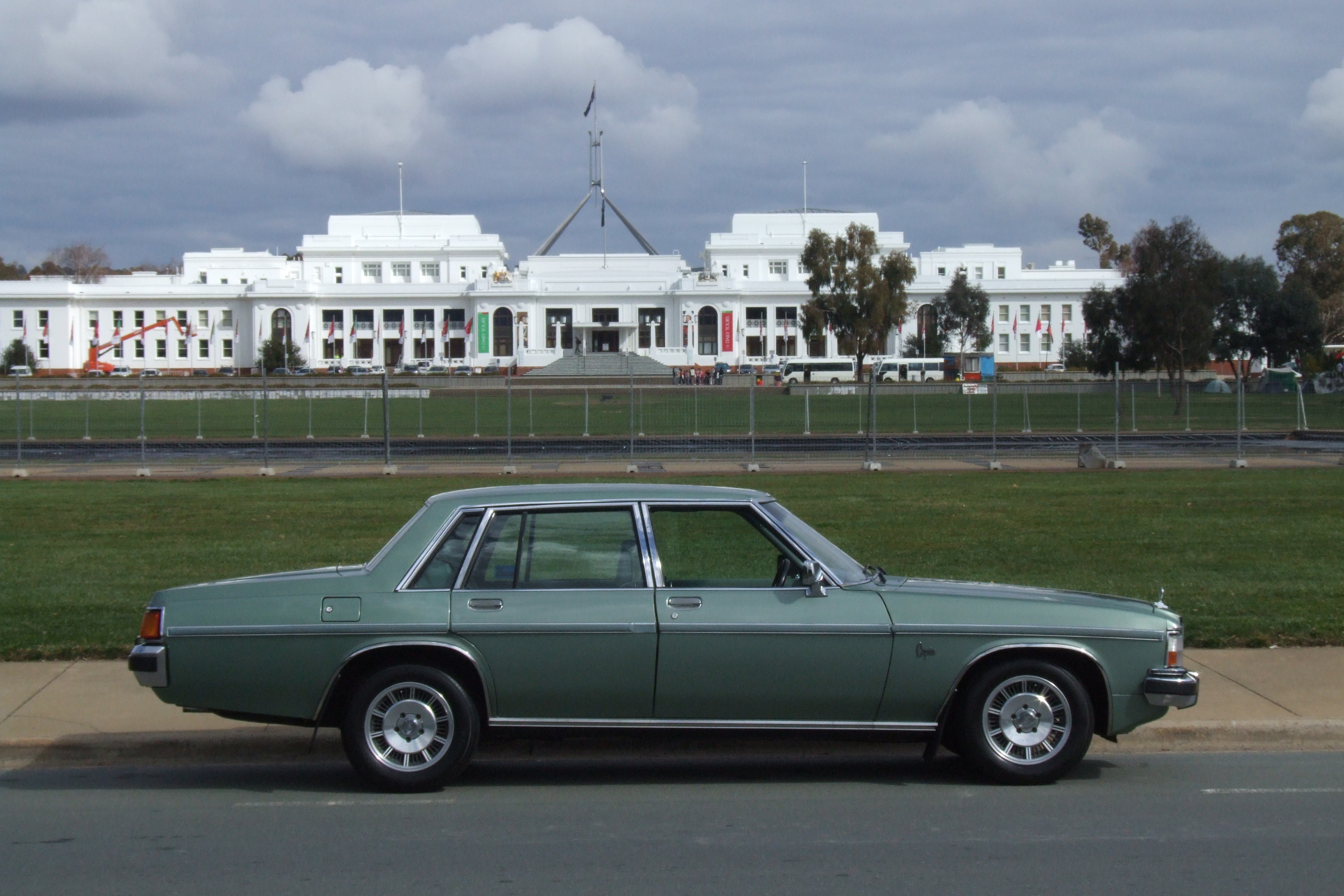
The Grand Marquis is a large sedan designed for comfortable driving. The podcast mentions a special edition that adds certain features and styling. It’s the kind of car people choose when they want a roomy, easy-to-drive ride.
The Grand C-Max is a people-hauling car with extra room compared to a typical sedan. The podcast mentions a themed version, which usually adds styling or convenience features. The key point is that it’s meant to be practical for families or groups.
The Accent is a small, budget-friendly car for everyday trips. The podcast mentions a special edition that ties into a theme and adds certain extras. The main point is that it’s still a regular compact car underneath.
The Fleetwood is a big luxury car meant to feel comfortable and smooth. The podcast is talking about a special edition of it with extra theme-related details. These cars are usually remembered for their size and comfort.
The Expedition is a large SUV meant for carrying people and handling bigger tasks like towing. The podcast mentions a special themed version of it. Those editions usually change the look and add some features.
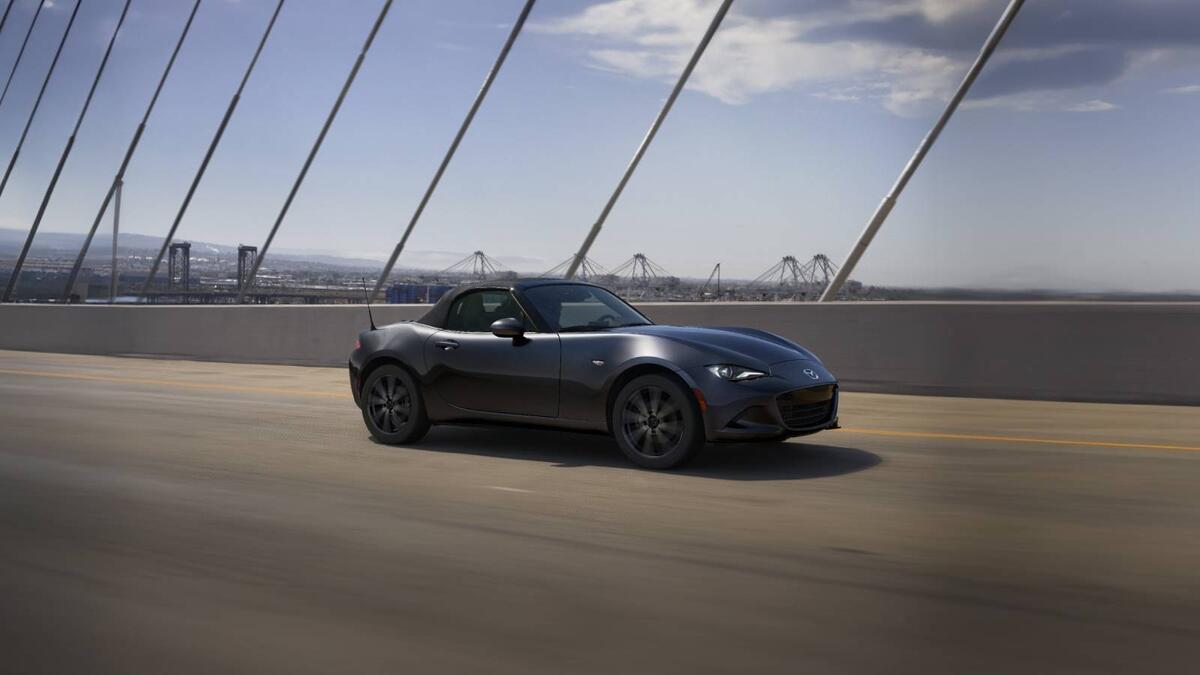
The Miata is a small two-seat car made for driving on twisty roads. It’s known for being light and easy to enjoy. The podcast mentions a themed edition, which usually adds special styling or extras.
This is a 1989 Acura Integra LS, a small car from the late ’80s that can be had with a manual transmission. The caller says it feels jerky when you’re creeping slowly, like pulling out of a parking lot or backing up.
“Five-speed” means the car has a manual transmission with five forward gears. The problem described happens when you’re using the lowest gears while moving very slowly.
It’s a simple way to compare how strong the engine is versus how heavy the car is. More power for the same weight usually means quicker acceleration. Less power or more weight usually means it feels slower.
Ignition timing is when the spark happens inside the engine. If it’s too early or too late, the engine can run poorly or act weird. Checking it is a common step when troubleshooting engine problems.
This is a Volvo wagon called the V70, and “Cross Country” is the tougher, higher-clearance version. It’s meant to handle rougher roads and weather better than the regular wagon.
A fuel filter is like a screen for your gas. It helps keep junk out of the fuel system so the engine can run smoothly. If it’s clogged, the car may hesitate or run rough.
Fuel injectors are the parts that spray gas into the engine. If they get gummed up from old fuel, the spray can come out wrong, and the engine may run rough or not burn the fuel well.
To atomize fuel means to break liquid fuel into a fine mist so it can mix with air and burn efficiently. If the injectors aren’t atomizing well (often due to clogging), some fuel may not vaporize and won’t burn completely.
Fuel has to turn into vapor to burn efficiently in the engine. If it comes out as a dribble instead of a mist, it may not vaporize, so the engine can’t burn it properly.
“Floor it” means you press the gas pedal all the way down. The engine responds by demanding more fuel and pressure, which can sometimes make a clogged injector spray better.
The spray pattern is how the fuel comes out of the injector—like whether it’s a fine mist or uneven. If it’s wrong, the engine may not get the right mix of fuel and air.
Techron is a fuel additive—basically a cleaner you put in with your gas. The idea is that it can help remove gunk that may be clogging or dirtying fuel injectors.
Sensors are the car’s little monitors that tell the engine computer what’s going on. If one is wrong or not reading correctly, the computer can make bad adjustments and the car can act like there’s a fuel problem.
“Out of range” means a sensor reading is outside what the car expects. If the computer gets a bad reading, it can adjust the engine incorrectly and cause drivability issues.
Flushing the radiator means draining and replacing the coolant. If air gets trapped in the system, it can make gurgling noises and cause weird behavior until it’s corrected.
The heater coil is what helps the car’s heater make warm air. If it’s “broken,” coolant may not flow correctly through it, so the heat system can act up or leak.
Sometimes air gets stuck in the car’s coolant lines instead of coolant filling everything. That air can block flow and make weird gurgling sounds when the system tries to circulate coolant.
Bleeding the system means getting the trapped air out of the coolant. You run the car and top up coolant until the bubbles stop, so heat and cooling work normally again.
Bleeding means getting air out of the cooling system. Air can stop coolant from circulating well, so the heater may not work right until the air is removed.
The radiator cap is the lid on the cooling system that helps it stay pressurized. If air gets trapped in the cooling system, changing the car’s angle can help push that air out so the system works correctly.
“Get the air out” means removing trapped air from the cooling system. If air is trapped, the system can act like something is broken even when the main parts are fine.
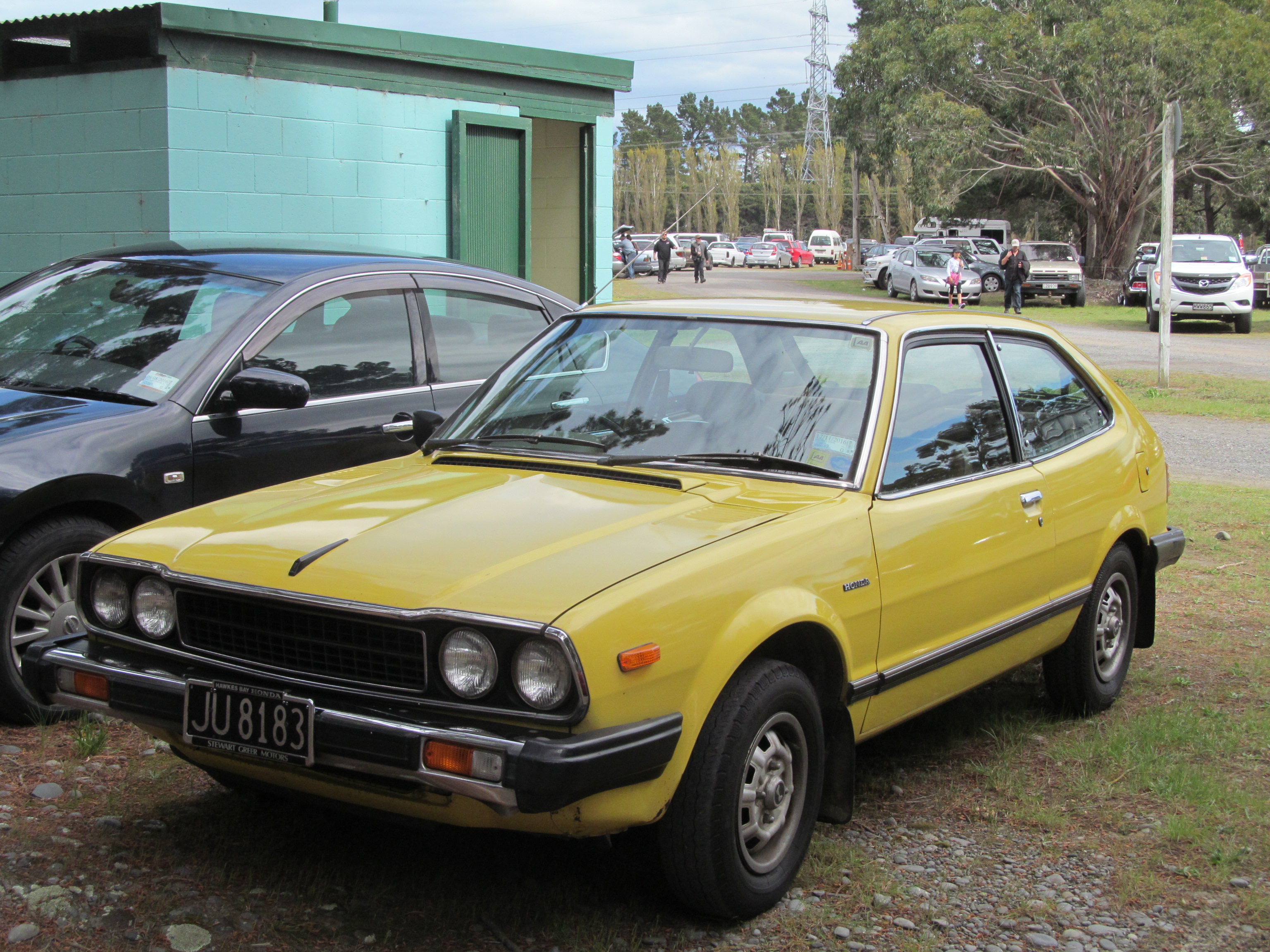
The Accord is a regular family-style car that’s meant for daily driving. The podcast is talking about an older 1994 model that’s still running well. That’s notable because many people expect older cars to need more work.
This is a Ford Contour, and the caller says it has a manual (stick-shift). They’re describing trouble shifting as the car gets faster, which usually points to something in the clutch or shift system rather than the engine itself.
A manual transmission is the stick-shift setup where you choose gears yourself. You use the clutch to switch gears, so shifting problems—especially changing gears at speed—often point to the clutch or the linkage.
A downshift means switching to a lower gear. Drivers do it to get more power, and if it becomes hard to downshift at higher speeds, something in the clutch or shifting system may not be working right.
Revving the engine means making the engine spin faster (higher RPM). When you’re trying to shift, the engine speed matters—if the RPM is too high or too low, the gears may not go in easily.
Front-wheel drive means the front wheels do the work of moving the car and turning it. If something in the front drivetrain is loose or worn, it can affect how the car behaves and even how the shifter feels.
A motor mount holds the engine in place. If it’s broken or loose, the engine can move around while you drive, which can mess with the parts that connect to the shifter and make gears harder to select.
The shifter is what you move to choose gears. If the shifter mechanism or its connections are worn or out of adjustment, the transmission may not line up correctly, so you can’t get into gear unless you slow down or stop.
Torque is the engine’s twisting force. When you rev higher, the engine is trying harder to turn the drivetrain, which can make it tougher to slot the transmission into gear.
RPM tells you how fast the engine is spinning. Telling someone to rev to a certain RPM is a way to test whether shifting gets worse when the engine is working harder.
The Cabriolet is a Volkswagen convertible, meaning the roof can open for driving with the top down. The podcast is talking about it in terms of how people perceive certain car styles. The important thing to know is that it’s built for open-air driving.
Car
Mazda Miata
The Mazda Miata is a small two-seat sports car. People like it because it’s light and fun to drive, not because it’s super complicated or intimidating.
The Chevy Corvette is a performance-focused American sports car with a reputation for strong power and handling. It’s especially notable because it’s been offered in many generations, often with a mid-engine or high-performance V8 focus depending on the era.
This is a 1974 Chevrolet Caprice Classic convertible. It’s a big, old-school American car, and the convertible version is basically the same car but with the roof down for cruising.
The Caprice is a large car meant to be comfortable, like a classic family or luxury sedan. The podcast mentions a 1974 Caprice Classic convertible, which means it has a roof that can open. The main point is that it’s a classic, big, open-top car.
LIVE
This is our glass. On This American Life, one that we like is a good mystery.
Sometimes about really big things, but most times, the little mysteries are the best.
Our lost and found is currently filled with pants. I don't know, I've never seen this happen.
Wait, is this true?
This is true.
Mysteries of every size, each week, This American Life, wherever you get your podcasts.
Music
Hello and welcome to Car Talk from National Public Radio.
With us, Click and Clack, the Tappet Brothers.
And we're broadcasting this week from the Limited Editions Department here at Car Talk Plaza.
Yes, indeed. We got a note from Julio Kuliat.
We don't know where he's from.
He says, the other night, I watched with amusement as Subaru now has a car,
the Forester, I think it was, that is the LL Bean Edition.
Yes.
I can also recall Lexus associating themselves to coach. They have the leather thing, you know.
I can see what the two companies are getting to, but I don't see any sense in it.
At any rate, since they started it, we can take it a bit further.
When you think about it, what would stop us?
Here are some thoughts, and he gives us some, like the Lexus ES300 Martha Stewart Edition.
That would make sense. The Ford Grand Marquis AARP Edition.
The Dodge Caravan Fisher Price Edition.
And of course, the staff here, the crack staff at Car Talk Plaza said,
We can do one better than that.
We can do better than that.
And they have the following.
The Hyundai Accent Domino's Edition comes with the Domino's Pizza Bucket right installed on the antenna.
The Cadillac Fleetwood Brom Witness Protection Program Edition.
The Ford Expedition Valdez Edition.
And my personal favorite, the Mazda Miata Rogaine Edition.
So, I mean, if anyone has some ideas, I mean, we could collect them.
We'd be happy to do that, right?
Indeed.
And we would send them to the manufacturers and maybe they'll give us something.
Like what?
Like what?
Maybe drop a lawsuit. Who knows?
I mean, it's interesting that we really, we give out some great ideas and we never get anything for them.
I remember when I started singing Help Me Honda, Help Help Me Honda.
And it was only a matter of weeks.
It was only a matter of weeks before some dealership had had ads on the radio.
Did I get my...
And what did you get?
You got Bubkas.
Bubkas.
Bubkas.
At least he could have sent me a little note saying thanks for the great idea.
But no.
Because that would be an admission that he had what?
Stolen.
Stolen.
Anyway, if you've got an idea for a limited edition car or more likely, a limited edition car talk.
One where we only give correct answers.
Give us a call at 1-888-CAR-TALK.
That's 8888.
Wait a minute.
That's not a bad idea.
What if there was a filter on everybody's radio and every time we gave a wrong answer,
we'd just cut out the call completely?
There'd be no show.
The FCC would be dead.
Well, organ music.
Anyway, the number is 888-227-8255.
Hello, you're on Car Talk.
Hi.
Hi.
This is Zoe Brady from Eugene, Oregon.
Zoe.
Zoe.
Z-O-E from Eugene.
Yes, that's right.
Got it.
Well, I have a little car problem.
Wait, a little problem or a problem with a little car?
It's both, actually.
It's a little car and it has a little problem.
Cool.
I have a 1989 Acura Integra LS.
It's a two-door five-speed.
It's a great car, except when you're in first gear or in reverse and you're going slowly
like out of a parking lot or just haven't got a lot of speed.
It lurches like crazy.
Yes, it does.
It lurches.
It lurches.
It lurches.
Well, thanks for calling, Zoe.
Thanks a lot.
It was helpful.
Guest the question.
Welcome to Guest the Question.
You know, that's a lot harder to do than to give the answer.
Of course.
I mean, anyone can give an answer, but to figure out the question.
That was great.
Now, I don't think it's causing any car trouble.
It's just that it's embarrassing.
And it's always done this, hasn't it?
Always, yes.
Yeah.
Yeah.
Nothing's wrong.
Nothing is wrong.
Well, nothing is necessarily wrong.
However, it could be that your clutch is chattering and it may be time for a clutch.
It may be the way you drive, too.
I mean, I assume that it does that even when you have your foot completely off the clutch.
Yes.
Then it ain't chattering.
Huh.
It might be just dawdling.
I think there's nothing wrong, Zoe.
Well, is it increased in severity?
No.
It's always about the same.
Yeah.
And it'll go away if you go faster.
I'll tell you, there are some cars which do this.
I've never noticed, and we've worked on a lot of Integra's over the years, that Integra's
necessarily do this.
The worst offender in my book, without question, is a sob.
Oh.
I've never driven a sob that I was satisfied with in first gear, except for the automatics.
They're great.
Well, I have to say that, I mean, almost all cars will do this to some extent.
And frankly, I have no idea why.
No.
I'm picturing myself being reverse gear.
And there I am, laying there in the transmission, and power is coming to me from the front shaft.
And I'm trying to figure out, what do I feel like?
You see, I've taken a lot of these S courses.
And I mean, it must be a surge of power, right?
Right.
Coming to the gear, and why do I want to do that?
Well, because, I mean, the shaft is spinning at a constant speed.
Well, it isn't, I mean, it is spinning at a constant speed, but maybe the engine isn't
powerful enough.
That may have something to do with it.
So you think, that would explain it.
And therefore, cars with big, powerful engines would do this less.
Yeah.
Except we can't test this theory, because cars with big, powerful engines have automatic
transmissions.
Well, except for trucks, for example.
Except for trucks.
Right.
Yeah.
So trucks shouldn't do this.
Yeah, but they do, because they're what?
Heavier.
Heavier.
So it might have to do with the critical horsepower to weight ratio.
I'm sure you've taken this to your mechanic over the last 60...
No, it was too embarrassed.
Because, you know, I just felt like it was the kind of problem that I couldn't get them
to recreate, and then they would all laugh, and that would cost me 50 cents.
Well, one of the things that can cause this is incorrect ignition timing.
So at the very least, you should have your mechanic check that.
The timing.
The timing.
Okay.
And if that isn't it, just ignore it.
Okay.
Don't worry about it.
Okay.
So what should I say to those people who think I'm a bad driver?
Say they all do that.
They all do that.
They all do that.
I'll just make a sign and put it in the window.
There you go.
See you, Zo.
Thanks very much.
Thanks for your call.
I mean, it only shows on NPR where people can bring up critical issues such as this.
Indeed.
Speaking of which, I left off from the list the Volvo V70 cross country public radio
edition.
Oh, I mean, how could we have forgotten that?
Of course.
1888 car talk.
That's eight double eight double 278255 a lawyer on car talk.
Hi.
My name is Dale Fried and I'm from Arlington, Massachusetts.
Hi, Dale.
No kidding.
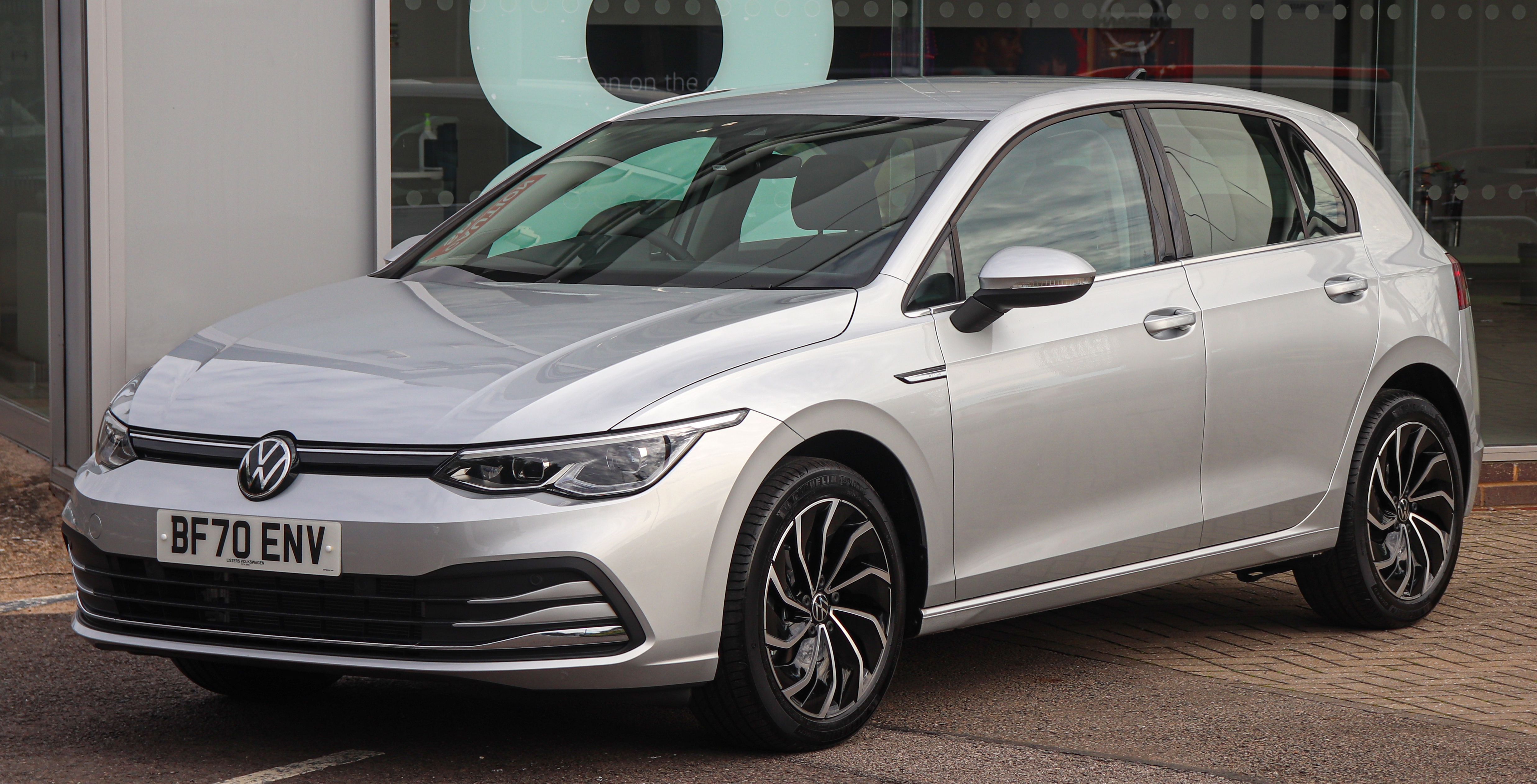
I have a 1988 Volkswagen Golf and you're not going to want to hear this, but it also
lurches.
But I have to say, I'm a little hesitant to call you guys because the last time I heard
you talking, it was when you were using charts and graphs to show that happiness was inversely
proportional to intelligence.
Yeah.
And you seem pretty happy.
Well, to be fair, Dale, we weren't demonstrating that happiness is inversely proportional.
One of us was.
Okay.
If you recall.
Yeah.
Dale, of course, is referring to our commencement address at MIT a year or two ago in which
we described the theory of reverse reincarnation, which one of the great thoughts of all time.
I mean, it's up there with the big bank theory and the little bank theory.
So Dale, what's up?
Okay.
Well, basically, and this is a lurching that hasn't always happened.
So there's something that has changed.
But it happens when the engines between about 1800 and 2000 RPM and also when the engine
isn't putting out very much power, when I don't have the gas pedal down very far.
Right.
And you can override it by stomping on the pedal.
Yeah.
If I do that or if I shift into a different gear, so I'm in a different RPM or yeah, from
going up a hill, it doesn't do it.
If you downshift it, it almost always makes it go away.
Yeah.
Because then I'm up in a higher RPM.
Right.
Right.
But if you upshift it, it wouldn't necessarily make it go away, but it could.
It usually does, but yeah.
Upshifting also makes it go away?
Well, let's see.
Actually, I'm not sure.
Yeah.
I didn't think you would be sure.
Yeah.
That's all right.
It's better.
You're not sure because then you'll accept any answer.
Okay.
And the other pieces of information you, I mean, you know, if you've asked the pertinent
questions.
Well, actually, I had the car in storage for about five or six years.
And so it was about two or so years ago when I started driving it again and that's when
I started doing it.
Someone suggested I change the fuel filter, which I did, but it didn't seem to really
help much.
No.
It's probably too late to have changed the fuel filter.
It didn't really matter.
I suspect what happened during that period of time where it was stored is gums and varnishes
exactly clogged up your fuel injectors, man, I could feel that one coming.
And so the, so what would be happening then when it's trying to put out, when it's trying
to put out a little bit of fuel, it just kind of dribbles and it doesn't atomize exactly
right.
It isn't atomizing it well enough so that some of the fuel isn't getting burned because
it isn't, you know, vaporized.
Sure.
And then if you'll floor it, you'll increase the pressure and then the thing sprays correctly
under the increased pressure.
Well, it sounds good.
It does sound very good.
In fact, it can be even tested because your mechanic can pull off one of the fuel injectors
or two of them and see if the spray pattern is correct.
Now, is that something I could do?
Well, if you don't mind setting yourself on fire, that doesn't bother you.
You have to call Volkswagen and get the self-immolation key.
And the asbestos suit.
And not only is it easy to test it if this is the problem, but it's probably easy to
fix by getting some fancy additive at your local pot store.
Oh, yeah.
You can try something like Tecron, which is made by Chevron, and there are many other
add-ins.
You can try them all.
OK.
But I bet you one or two cans of one of them will clean up the injectors enough so that
you'll notice a difference.
And then if it still isn't good enough, you can go ahead and buy more of it.
And buy more.
I mean, there's always the possibility that one of your sensors is out of range, but we
don't want to discuss that because your time is up.
OK.
Well, thank you very much.
All right, Dale.
Thanks for your call.
Bye-bye.
OK.
Bye.
OK.
Tell me, what are the chances that you'll remember last week's puzzler?
Well, as Dan rather would say, Slim just left the station.
Well, I'll give you a hint.
It had to do with a husband and a wife going nowhere fast.
Ah, about my first marriage.
No.
My second marriage?
No.
But we'll be back in a minute.
Ha.
It's been a minute, NPR is what's happening
in Culture Podcast starts by asking three questions.
Who, how, why now?
If the culture's asking it, we're talking about it.
At NPR, we stand for your right to be curious
and indulge your cultural curiosity.
Follow it's been a minute wherever you get your podcasts
and we'll break down the zeitgeisty topics
that are filling your feed.
Hi, it's Terry Gross, host of Fresh Air.
Hey, take a break from the 24 hour news cycle with us
and listen to long form interviews
with your favorite authors, actors, filmmakers,
comedians and musicians, the people making the art
that nourishes us and speaks to our times.
So listen to the Fresh Air podcast from NPR and W-H-Y-Y.
Hi, we're back and listening to Car Talk with us,
Click and Clack the Tapper Brothers
and we're here to talk about cars, car repair
and the answer to last week's puzzler.
Now this was one of my series of locomotive
yet non-automotive puzzles.
I have no recollection of it whatsoever.
Really?
Yeah.
No, in fact, I sensed that when I was giving the puzzler
last week that you knew the answer right off
and we'll see if that's true.
See if that's true.
A woman and her husband frequently go walking together.
On this day, like most others,
they walked side by side, one never getting ahead
of the other.
In fact, they held hands or could have held hands
the entire time.
So they walked side by each, as certain people say,
for an hour.
At the end of the hour, the woman says,
boy, that felt good.
I think I walked four miles.
The husband says, oh, I walked much farther than that.
I'm sure I walked five or six.
The question is, how could that be?
Well, I mean, it's not true that I know the answer
because I don't know it now.
I may have known it then, but I don't know it now.
I mean, the only thing I can assume
is that there is a third dimension involved.
There is a third dimension.
It's right up.
This is going to elicit a few groans, I'm sure.
But I mean, as is often the case,
the puzzler is better than the answer.
Often the case?
Sometimes the case.
And it's important that you have a mediocre puzzler
once in a while.
So you can differentiate it from the stellar puzzlers,
which are most of them.
Well, I mean, some of the best puzzlers
have had lousy answers.
Yeah.
I mean, the bicycle puzzler, for example.
I mean, that was a classic.
The answer, on the other hand.
Stinko.
Well, anyway, the answer simply here is
that they are both walking side by each
and on treadmills.
Ah, ah, I didn't think.
That, oh man, tread, of course,
they could have held hands.
They would have fallen off the treadmill.
No, you could theoretically hold hands.
You could theoretically hold hands.
And all the conditions have met,
they walk side by side,
one never getting ahead of the other.
Of course.
Except the husband, in order to travel five or six miles,
or at least a greater distance than she,
just took more steps.
Well, that's the problem I was having
with the third dimension.
Because if, for example,
the husband was walking up and down,
up and down a ridge.
He was in a, he was some,
I couldn't imagine what this place would be.
She's on level ground
and he's going up and down,
up and down, up and down.
Obviously, you had the analog of the treadmill.
I did have the analog of the treadmill.
And you couldn't make that step
because you're a bonehead.
Two years ago, you would have done it, but.
I mean, there was a time when the synapses actually.
You start to click, huh?
Yeah.
Okay, not anymore.
Do we have a winner?
Yes, we do.
The winner is Christina Van Rye
from Salt Lake City, Utah.
And for having her answer selected at random,
from the barrels of correct answers that we got,
Christina is going to get a $25 gift certificate
to the store at the cartalksectionofcars.com.
And with that $25 gift certificate,
you know what she can do?
No, I don't.
She can get a don't blame me,
I voted for click and collect t-shirt.
25 bucks, we'll get you that.
Pretty good.
By the way, if you find yourself craving
some of the cartalk gifts that we occasionally flog
like the don't blame me t-shirt,
you can always visit the store
at the cartalksectionofcars.com,
which is open 24 hours, seven days a week.
Wow, three of it in 65 or six days a year.
Right through Christmas.
We don't care.
Man, how much work can we do?
We keep those gnomes working around the clock.
Wow, it's a website, you know.
It's always open 24 hours.
Go ahead, spoil my pitch.
Anyway, we'll have a new puzzler coming up,
a mathematical puzzler of sorts
in the third half of today's show.
So try to stay awake at least until then.
In the meantime, you can call us and ask us a question
or many questions about your car.
Don't have to ask a question, you know.
You can just make a comment.
Or you can give an answer.
You can give us an answer.
Wouldn't that be unusual?
Wouldn't that be good?
People give us the answer, we give them the question.
Let's try it.
1-888-CARTALK, that's 888-227-8255.
Hello, you're on Car Talk.
Hi, this is Marsha from Export, Pennsylvania.
Marsha with an S-H or a C-I-A?
C-I-A.
C-I-A, she works for the C-I-A.
Oh, I know it, she sounded sneaky to me.
And where are you from?
Export, Pennsylvania.
Export.
Where praetel is that?
About 25 miles east of Pittsburgh.
Oh, way out west.
Way out west, yeah.
You guys ride horses out there still?
Oh, absolutely.
Wear guns on your hips?
Of course.
Do you want to talk about cars
or do you have something more interesting to talk about?
Well, I was going to talk about my car.
Okay.
I have a 96 blazer.
And I took it in to have it winterized about a year ago
and they flushed, my mechanics flushed the radiator.
And since then, it gurgles.
You start up and it goes, go, go.
And then you slow down and it goes, go, go.
And it's kind of behind the radio.
Yeah.
In the middle of a dash.
That's exactly where it is, yeah.
So he said there was nothing he could do about it.
So I took it to the dealer and they said,
I could either flush the radiator for $100
or have it super flush for $200.
So I got the $100 deal and that didn't solve the problem.
So we went back to the dealer again
and he said you could have the $200 flush
or a $500 heater coil repair.
Ha, ha, ha, ha, I love it.
The stakes are getting higher and higher, I love this.
So what do I do?
None of the above, none of the above.
Did anyone try to explain to you,
which I think they would have failed at,
what's causing the gurgling?
No.
And they said if you have the flush,
it's gonna get rid of the gurgling.
Right, and they also told me
if I didn't do anything about it,
it would start leaking in my car eventually.
Oh, that's a lie.
Okay.
That's Skalduggery of the first order.
But good Skalduggery.
Ha, ha, jeez.
Well, here's what's going on.
The first guy who did the job
didn't purge the system of all the air.
And what you're hearing is the,
The glugging, the glug, the glug factor.
Exactly, if you were to take a quart of milk
and tip the thing and pour it into a pan,
you'd hear the thing glug, glug
as the air and the milk try to get past each other.
Right.
Okay, well you're hearing the same thing in your heater.
You have air trapped in the heater core
and as the coolant is trying to get
into the heater core and pass the air,
it's making the same kind of gurgling noise.
And the reason it happens in a lot of vehicles
is that the heater is placed much higher
than the rest of the engine,
than the rest of the cooling system, in fact.
Okay.
So it's, so where does the air go
whenever you have air trapped in a system like this?
It goes to the top.
Okay.
So they have to bleed the system and if you,
if they were patient and ran the thing
and watched the air bubbles come out
and carefully added more coolant and more coolant
and more coolant until the bubbles stop coming out,
the gurgling would go away.
Eventually the air will work its way out of the system.
Okay, it's been about a year now.
It probably will never get out of the system.
Here's what I would recommend.
I would recommend that you take it back to guy one.
Okay.
Tell them what the problem is.
In some instances where we have trouble bleeding these,
we will actually jack up the front of the vehicle
to make the radiator cap higher than the heater.
And that usually gets the air out
and it may take them an hour to do it,
but if that's what it takes,
that's what it takes and I'd go and complain.
That's what our customers do when we make mistakes.
And the fact that the dealer,
I would never go back to that dealer again
because they tried to sell you a heater core
to get rid of the glug glug glugs
and that was absolutely unconscionable.
And yes, you might have gotten rid of the glug
because they would have had to jack up the car to do this.
Yeah, go back to the first guy and tell him what to do.
Okay.
See you, Marsha.
Thanks very much.
Thanks for your call.
Bye.
I'm never going to the blazer dealer in export PA.
Oh, or export PA for that matter.
1-888-CAR-TALK, that's 888-CAR-TALK,
which is 888-227-8255, a lawyer on CAR-TALK.
This is Gloria from Portland, Oregon.
Gloria?
Portland.
Yes.
What's up?
I have a 1994 Honda Accord and it's performed
like a little jewel for the last six years.
Good.
So I confidently took it in for its 45,000 mile routine check
at the local Honda dealership.
Yeah.
And the fellow said, well, everything's just checked
out beautifully.
The brake linings are great.
You don't have to do anything with those.
And so there's no repair necessary.
However, I think we would recommend that at some point
you consider replacing the timing belt.
Right, because six years is kind of like the cutoff.
So I said, all right, is there any indication
when this timing belt's going to go out?
And he said, no, it's just recommended that you do it
at this point in time.
So I've been playing games with that little dilemma
when to do it.
And now I'm planning a trip across country
as far as Arizona.
And do I leave town before replacing the timing belt?
Or?
Or Arizona is across the country?
Well.
That's like the Bostonians view of the world.
I feel like.
We think like Springfield mass is west.
Right, and then just west of that is China.
Okay, but for me, a little old lady in tennis shoes,
that's a long trip.
But Gloria, are you usually such a cheapskate?
No, no, no, no.
No, no, this is not a cheap, this is not a cheap job.
Okay, well.
No, no, I mean, but she's gone six years
practically spending nothing on this magnificent car.
The guy asked her to spend a couple hundred bucks
and she's hesitating.
And they didn't charge you hardly anything
for this 45,000 mile checkup.
And they would have been well within their rights
as automobile mechanics to charge you hundreds.
The price he quoted me was $695.
It seems a little high.
It's not out of line with what most dealers
would charge for this job.
Okay.
So, and you should do it because you're planning
to keep the car for another five years.
Oh, I think so, yes, as long as it performs
as well as it has.
During the next five years,
you're gonna have to change it.
Would you agree with that?
Yes.
But why not do it now?
And then not do it in 2003, four or five.
And more importantly, don't worry about it.
Yeah, I think drive good.
So if you drive to Arizona with the thought
that the belt may go and leave you stuck
and you'll get eaten by Gila monsters.
I knew I could depend on you two guys.
I think you should just, you should run,
if they're open late, run over there.
Do it now.
Yes, they can do it today.
Okay, very good.
All right.
Thank you so much.
See you Gloria, enjoy your trip.
Thank you, bye.
Watch out for those Gila monsters.
I'll do my best.
Bye.
Bye bye.
All right, it's time to take a break
so I can do some important calculations.
Getting ready for the new puzzler, right?
No, I'm trying to calculate how I'm going to survive
in over 20 minutes here in the studio with you.
This week on Consider This,
the global race to dominate AI
has made a handful of people incredibly rich.
Senator Bernie Sanders wants to spread that money around.
AI is based on human knowledge and human labor.
They deserve the benefits of that.
Bernie Sanders on his idea for an AI sovereign wealth fund.
This week on Consider This, listen on the NPR app
or wherever you get your podcasts.
Hi, it's Terry Gross, host of Fresh Air.
Hey, take a break from the 24-hour news cycle with us
and listen to long-form interviews
with your favorite authors, actors, filmmakers,
comedians and musicians,
the people making the art that nourishes us
and speaks to our times.
So listen to the Fresh Air podcast from NPR and W-H-Y-Y.
Ha, we're back.
You listening to the cards?
Don't wake me up like that, for God's sake.
You're listening to car talk with us,
click and collect the Tapper Brothers
and we hear to discuss cars, car repair and the new,
I would have to say mathematical puzzler,
although I take a little license here.
Does it have to do with equality and inequalities?
No, not really.
Okay.
A landscaper returns from work
and is sitting at the kitchen table with his kids.
And he says,
mathematicians are a strange lot, my dear.
No, no.
It's a different puzzler.
Sitting with his kids, okay.
And the kids ask, did you work hard today, daddy?
And he says, I did, I planted a lot of trees.
He goes on to say, I planted five rows of four trees each
and his little third grader wanted to show off
for new found skills, vis-a-vis the multiplication tables.
Says, you planted 20 trees, daddy.
So close, 18, right?
He says, no, I'm sorry, you little twerp, that's wrong.
He says, I planted 10 trees.
And she says, that's impossible.
And he said, no, it isn't.
He said, it isn't impossible.
And I'm gonna give you a hint.
If you look at one of the papers
that you're one of your test papers
that your teacher has returned to you recently,
you're going to find the answer on one of those papers.
The little girl sits there and thinks for a minute
and she says, I've got it.
What did she find in her paper that gave her the answer?
And it makes no difference whether it was a math paper
or a history test.
Wow, that's very, very good.
So how did the little kid figure out how to plant
10 trees in five rows of four each?
If you're thinking of the answer, write it on a postcard
or tuck it inside the pocket of a hand sewn,
mahogany colored, florentine leather,
three quarter length, women's jacket, size eight.
That's Cronin!
Oh, no!
Who writes this little thing?
Evidently she and sent it to Puzzlet Tower,
Car Talk Plaza, Box 3500, Harvard Square, Cambridge,
our fifth city, Matt 02238.
Or you can email your answer from the Car Talk section
of cars.com.
If you'd like to call us as always, the number is 1-888-CARDTALK
that's 888-227-8255.
Hello, you're on Car Talk.
Hello, this is Curt in Glenburn, Maine.
Curt with a C?
Oh, no, with a K.
And with a U-R-N-I.
K-U-R-T, very German.
Uh-huh.
See, and if you had been something else like Scandinavian,
it would be K-I-R-T.
Don't get cocky.
He's warning you now.
Well, I...
Kathy with a K, Curt with a C.
Come on!
Where'd you say you were from?
I wasn't paying attention.
Glenburn, Maine.
All right, Curt, spill your guts.
Spill my guts.
I have a 95 Ford Contour with a manual transmission.
Yeah.
And about two weeks ago, it started doing this very strange
thing where if I am sitting still, the engine running,
I can shift into any gear I want, and it works fine.
I can take off in first.
I can get into second.
And as I start going faster and faster,
it becomes more and more difficult to shift or downshift
into anything.
Have you ever had a stop?
You stopped.
Yeah.
But you got your foot on a gas pedal
and you're revving up the engine while you're trying to shift.
No, I haven't done that.
Do that and call us back.
Yeah, why would you do that anyway?
No, I don't think we need the answer to that,
but it would tell us whether it's related to the motion
of the car or the speed of the engine.
Right.
But when you're shifting from first to second,
what you claim is difficult.
Let's say I'm going 20, it's not all that hard.
And the faster I go, it becomes, at some points,
I can't even shift.
I can't get it into any gear at all,
unless I slow down the car or stop on the side of the road.
Right, now the fact that I've never worked
on one of these cars will not, in any way,
prevent me from doing anything.
Have you ever seen one of these cars on the road?
No, and in fact, I have test driven.
Oh, when this car first came out, we test drove the car.
It's not a bad car.
It's front wheel drive.
I don't know if that makes a difference.
Well, it does make a difference.
I think it does make a difference.
I think what's happening to this thing
is you have a broken or weak motor mount or a shifter.
This probably has a shifter cable or cables.
And somehow or another, things are getting moved around.
Either the motor is shifting around
or the transmission's such that you are no longer
lining up the gears correctly when the thing is in motion.
And that would explain why it's harder
to shift the faster you go, maybe.
And this would happen even if the car weren't moving,
but if you were revving the engine.
Mike, no, no, no.
Because the torque of the engine
is what's causing the problem, I think.
No, I think you're gonna be moving.
You do.
Oh, yeah.
You wanna make a bet?
I'll bet if he goes out right now.
I've already cleaned you out, man.
You got no money left, what did you bet with?
I opened my mouth the other day, it cost me $100.
Yeah.
I'll bet you a hundred bucks.
Just rev it up to 2,000 RPM
and try to get it in first.
And I'll bet you you'll have trouble doing it.
Is the car outside?
Yes.
You have two minutes to go and try it?
We'll put you on hold and we'll talk to another caller.
Seriously?
Yeah, seriously.
Sure.
We'll get nothing better to do.
Come on, there's 10 bucks in it for you.
Seriously.
To give us the right answer.
Okay, so here's the test.
You're gonna just put it in.
First, you're gonna try it with the engine idling
and it's gonna shift easily according to you.
Then you're gonna rev it up till it's screaming,
not too much, but up to 2,000 RPM.
As fast as you want, 3,000, 3,500.
And then you're gonna try to put it in first
and it's gonna be much harder to get it into first
the second time I'm saying,
and I'm willing to put 10 bucks on this.
Try all the gears, Kurt.
Okay.
Try whatever you want.
All right, I'll use it.
See ya.
Thanks.
We'll talk to you in a minute.
We'll put you on hold.
All right, I'll be right back.
Thanks, Kurt.
The meantime, we'll discuss something else,
which is of, I'm sure, interest to everyone.
Yeah, you may remember a couple of weeks ago,
we got a letter from some woman
who wanted to get her teenage in a car.
She was afraid she would accidentally get him a chick car.
So we asked people to tell us which cars were chick cars
and here's what they said so far.
The top three chick cars.
As we predicted, I believe.
We did predict.
Well, we actually, we didn't predict the third one.
The very top chick car is the new VW Bug.
Yeah, any car they put a flower vase in
is gonna be a chick car, I mean, come on.
Of course, I mean, they made it a chick car.
The second one is the VW Cabriolet.
They begin to females, huh?
Yeah.
And the third one, which was a surprise to us,
is the Mazda Miata.
And as you might expect,
the top three guy cars are
a Ford Mustang,
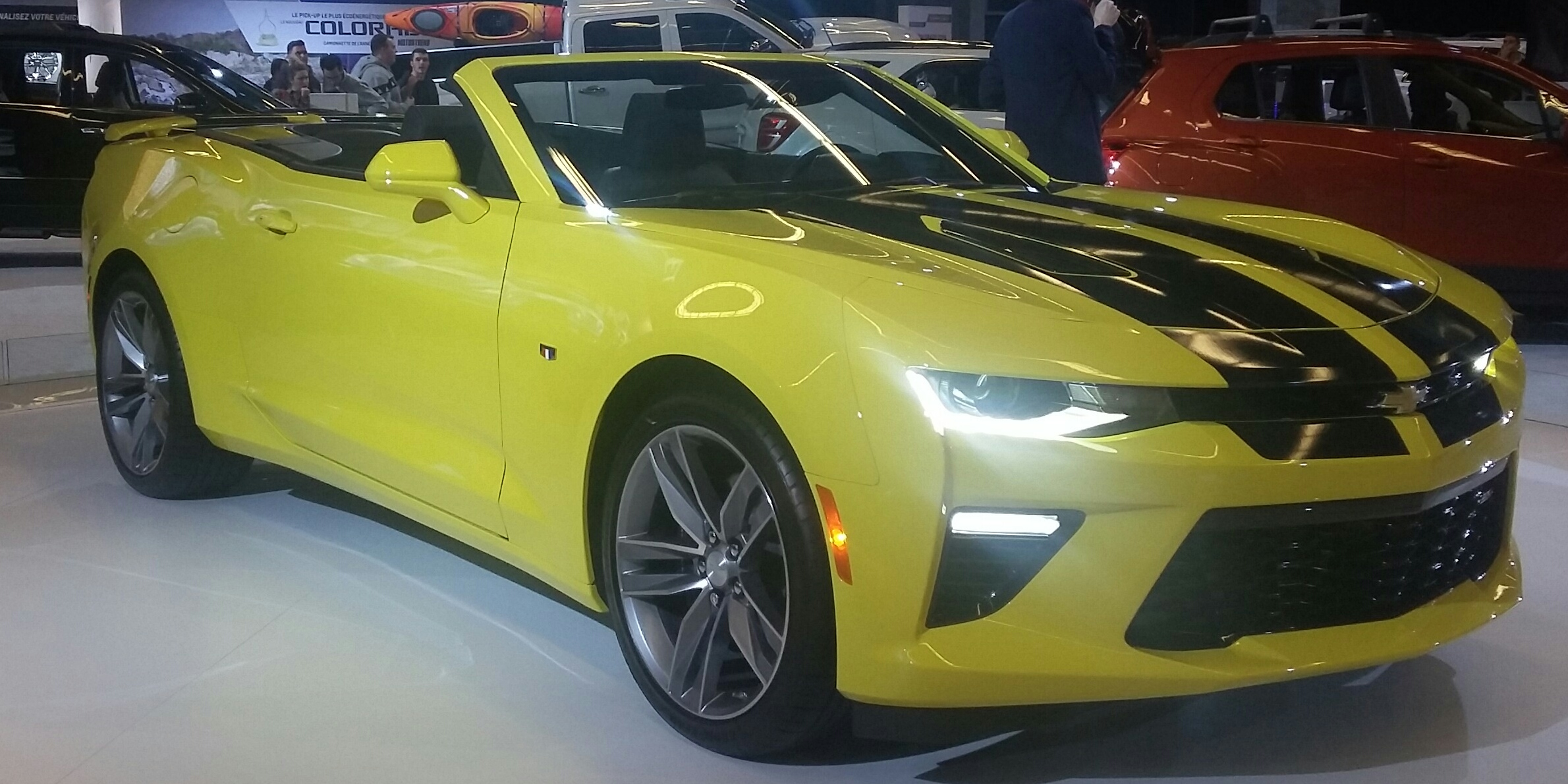
Yeah.
the Chevy Corvette
and the Chevy Camaro.
Yeah, well, that's, that's a,
it's all a given.
No, those are no surprise.
I mean, it's, I mean, none of these is a surprise.
The real question becomes,
if you're looking for chicks,
should you drive a chick car?
Oh, I don't think so.
I mean, you think, the theory is that if you go out
and buy, you're a six foot eight
and you're gonna go out and buy a VW Bug
and therefore you're gonna attract chicks?
Yeah, no, I don't think so.
No, and on the other hand,
The car will attract the chicks
and they'll ask you if they can take it for a ride
and they'll leave you standing there at the curb.
You'll never see them on the car again.
That's right.
Yeah.
But on the other hand,
I don't even, I don't think that driving like a Ford Mustang
or a Chevy Corvette is gonna be a magnet for the chicks either.
They're just gonna think you're stupid.
They're gonna think that you're a muscle car freak
and if they're not interested in that kind of guy.
So the question is,
if you're interested in attracting members
of the opposite sex.
You have to have an expensive car.
Not necessarily.
I think so.
Oh no.
Let's say you were at 23 year old stud in our fair city.
Well, if you're a stud, you don't need to drive anything.
The girls are picking you up.
What would you, what would you drive?
I've tried everything.
I'm reduced to the subway.
I figure that's my bed.
My 74 Caprice Classic convertible, I thought was gonna be powerful.
I think the real question is,
what do you drive if you want to get noticed?
And we can't leave out the gay community because,
I mean, if you're a lesbian and you're interested in,
what car would you be interested in?
If you're looking for another woman
and the same thing with another guy.
I want to hear this.
This is important.
This is important.
This is very important.
This is the kind of stuff that goes into the carousel.
It is the only important stuff.
Anyway, is Kurt back?
Do we have Kurt back?
Yes, I'm back.
Hey, Kurt baby.
Hey.
All right, now I'm not gonna say anything.
I'll let you and my brother discuss everything.
I'm not gonna say anything either.
I don't want to influence this outcome.
I just want to know what happened.
Okay, well, I don't have a tachometer on the car.
If I got it, you know, revved up pretty good
and shifted, there was absolutely no difference.
But if I got the thing fairly screaming,
you know, like, whoa, you know, like that
and tried to shift, it became very hard.
Oh, that's it.
I want to recount.
I want to recount.
You said the car had to be in motion.
Kurt.
Yes.
What was the car in motion?
No, the car.
Give me the 10 bucks.
Come on.
Did you take a check?
I got to get your check right here.
Okay, well, obviously we can't be of any help to you, Kurt.
But I'm gonna-
It is a motor mount.
No, I'm gonna go back and say it's the clutch is no good.
No, come on, it's a motor mount.
Of course it's a motor mount.
Because the motor mounts aren't doing anything
when he's in neutral, when he's not moving.
He's not causing the engine to move very much.
Yes, he is.
I don't buy it.
And either that or the motor mount is so broken.
I mean, I really had to get it really screaming
for this to make it different.
No, if you get it really screaming,
any, first of all, if you get any engine really screaming,
there is no car which you can shift into first or reverse.
Did you try any other gears?
Yeah, I tried them all.
Yeah, for every action there is an equal and office reaction.
No, I'm sticking by Kurt.
Yes.
Don't listen to my brother.
He's nuts.
Every car when you get the RPMs high enough
is difficult to get into any gear from neutral, okay?
All right, so what's the bet now?
You're betting that it's the clutch and I'm...
No, I'm not betting it's the clutch.
I'm still sticking with the motor mount.
Well, that's what I said.
But you have the wrong reason
and the reason counts for everything.
Well, who owes who 10 bucks then?
Berman owes us both 10 bucks.
Hey, Kurt, get the motor mounts checked
because that's what it is.
Okay.
We don't know why, but that's what it is.
All right.
Say, Lane, thanks a lot.
Thanks for your help while the show.
Kurt's shaking his head in the middle of his head.
What am I wasting my time with those jerks?
How could they both have different explanations
and have the same answer?
Well, it's happened again, you've blown off
another perfectly good hour listening to car talk.
Blown off, that's a good description, huh?
Yeah.
Our esteemed producer is Doug Bungalboy-Berman.
Our associate producer is our Louis Cronin,
the barbarian, size eight, I believe.
Petite, is that correct?
Size eight, Petite, yes.
And David-
Three quarter lengths, she wanted.
Don't forget that.
And David, it's not over till the fat lady sings green.
Our engineer is Ted Massaman Curry.
Our senior web lackey is Doug the Old Gray Mayor,
AKA Sheepboy, and our technical, spiritual,
and menu advisor getting ready
for his annual neighborhood-wide turkey trot
is John Bugsy Lawler.
Our public opinion pollster is Paul Murkey
of Murky Research, assisted as always
by statistician Marge Inovera.
Our customer care representative is Heywood Jabuzov.
Our director of new product repair is Warren T. Myfoot.
Our shop foreman is Luke Busy.
Our new truck reviewer is Zabignu Rigg
and our overseer of Florida voting practices
is Emmanuel Recount.
Our fourth attorney is Carmine Nott,
yours, our director of genealogical research
is Manny Cousins.
The car talk lottery ticket coordinator
is Jason Rainbows.
Jason Rainbows.
Our Russian chauffeur is Bekoff and Dropoff.
My favorite.
The bank or a car talk poker games
is Nikolai Putkin and our sea cushion tester
as always is Mike Easter.
Our chief counselor from the law firm
of Dewey, Cheetah, and Howe is Uluis Dewey,
known to the death wish pedestrians in Harvard Square
as Ului Dewey.
Thanks so much for listening.
We're click and clack the tepid brothers.
Don't drive like my brother.
Don't drive like my brother.
We'll be back next week.
Back, back, next week, bye.
Car talk is a production of Dewey, Cheetah, and Howe
and WBUR in Boston.
And even though deep space asteroids
change course and veer away from planet Earth,
whatever we say it, this is NPR, National Public Radio.
Hi, it's Terry Gross, host of Fresh Air.
Hey, take a break from the 24 hour news cycle with us
and listen to long form interviews
with your favorite authors, actors, filmmakers,
comedians, and musicians,
the people making the art that nourishes us
and speaks to our times.
So listen to the Fresh Air podcast
from NPR and W-H-Y-Y.
On Consider This, NPR's afternoon news podcast,
we cover everything from politics,
to the economy, to the world,
but every story starts with a question.
And NPR, we stand for your right to be curious,
to make sense of the biggest story of the day
and what it means for you.
Follow Consider This wherever you get your podcasts.
Every story from Shortwave NPR Science podcast
starts with a question.
Like, why do we have nightmares?
How does AI affect my energy bill?
At NPR, we are here for your right to be curious
about the world around you.
Follow Shortwave wherever you get your podcasts,
because the more you ask,
the more interesting the world gets.
About this episode
The show kicks off with playful “edition” car-name jokes, from lifestyle trims to absurd Domino’s and Rogaine concepts, then pivots into listener calls about drivability. One caller’s 1989 Acura Integra LS “lurches like crazy” at low speeds, with hosts suspecting clutch chatter and discussing clutch vs. motor mounts. Another caller’s 1988 Volkswagen Golf lurches in a specific RPM window, leading to a fuel-injector theory. Later, a Blazer owner hears gurgling after radiator service—explained as air left in the system that needs proper bleeding.
Goria is about to cross the Southwestern US in her Honda that she is told needs a new timing belt. Will she make it or will she get stranded and end being buzzard meat on the side of the road? Find out on this episode of the Best of Car Talk.
See pcm.adswizz.com for information about our collection and use of personal data for sponsorship and to manage your podcast sponsorship preferences.