Here, “hydrogen” means a fuel that can be turned into electricity to drive an electric motor. Some people think it could be a future EV option, but it depends a lot on how easy it is to make and deliver hydrogen.
CES (Consumer Electronics Show) is a major annual tech trade show where automakers and suppliers often debut prototypes and software/AI concepts. Repeated CES appearances without visible change can suggest a concept that’s still evolving or not ready for production.
In modern cars, software is what runs the screens, apps, and many of the “smart” features. The speaker is saying Honda’s software progress has been a challenge.
The Tesla Cybertruck is an electric pickup truck. It’s famous for its unusual, boxy-looking shape. People talk about it a lot because it looks very different from most trucks.
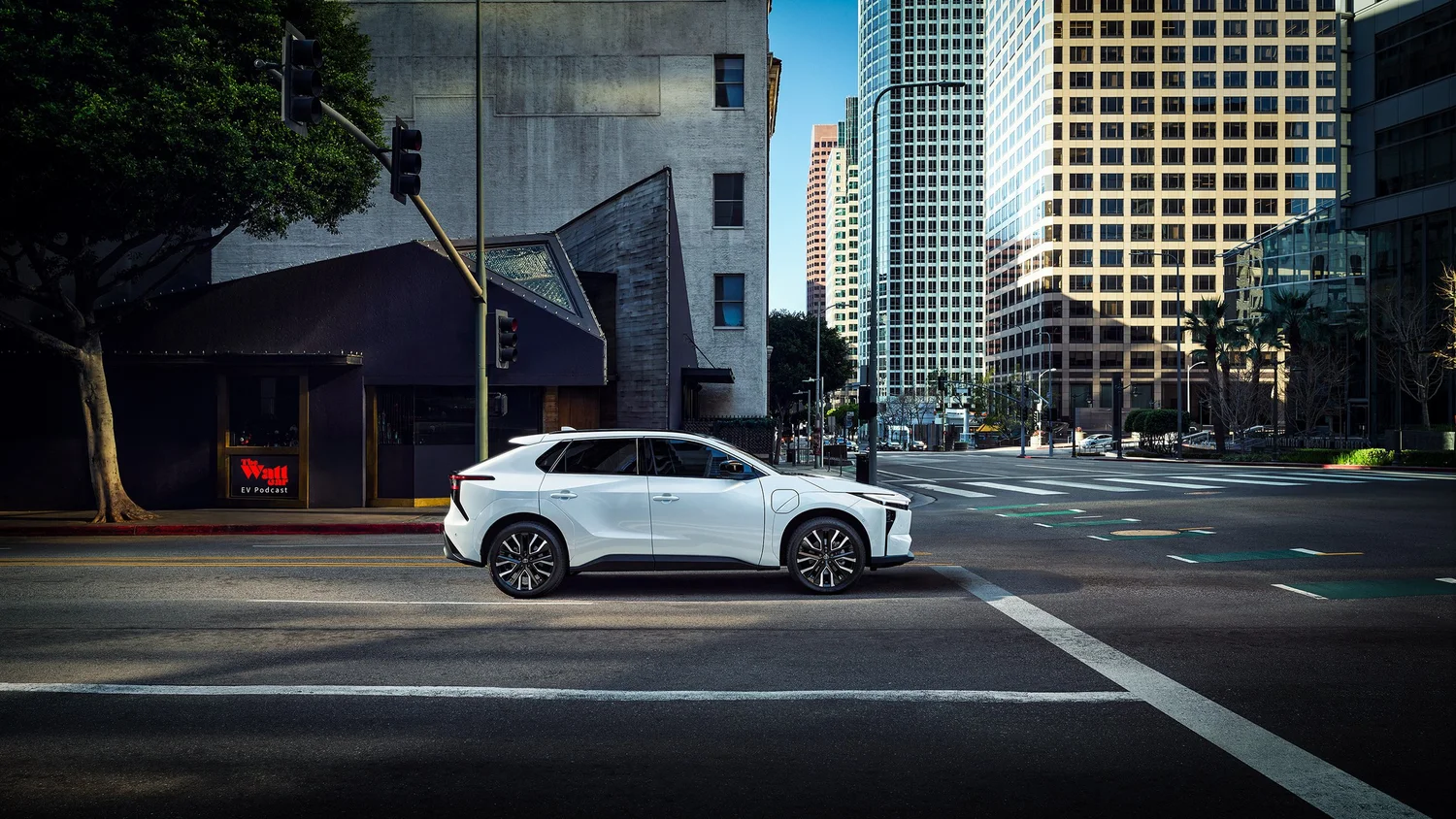
The Toyota BZ4X is Toyota’s electric SUV/crossover. When it launched, many people felt it wasn’t as impressive as the best EVs on the market at the time.
Four wheel drive means the car can send power to all four wheels. That can help when roads are slippery, but not every version of a model is necessarily AWD.
“Q1 sales” means first-quarter sales (January–March) and is commonly used to track short-term market momentum. The speaker uses Q1 comparisons to argue that the updated EV is gaining traction with buyers.
The built-in navigation system is the EV’s factory infotainment navigation. In this segment, the speaker emphasizes that the built-in system does not provide EV-specific functionality like charging-stop suggestions, which they consider a major drawback.
OTA updates are software updates your car can download wirelessly. Instead of going to a shop, the car gets improvements over the internet, which matters a lot when charging networks and software needs change.
A three-row SUV is designed to seat up to seven or eight people, with a third row for kids or extra passengers. In the EV market, three-row models have historically been less common, so their arrival is a big deal for families who need space and practicality.
Rivian is a company that makes electric vehicles, especially ones aimed at outdoor/adventure use. Here, they’re mentioned as a premium EV brand and as the maker of the R2 they’re discussing.
“How the sausage is made” is a metaphor meaning the details of the process behind a product. In this context, it means buyers may not care about the engineering methods used to achieve range and efficiency.
The coefficient of drag is a number that tells you how much the car fights the air. A lower number usually means the car uses less energy to move, which can help range.
Aerodynamic design is about shaping the car so air flows around it more easily. If the air resistance is lower, the car needs less energy to go the same speed.
They’re talking about electric cars made in China. The big question is whether those cars will be allowed to sell in the US, and what rules might change.
Volvo is a car brand from Sweden. The speaker is saying that even though Volvo is still sold in the US, it’s owned by a Chinese company (Geely), so it shows how Chinese automakers are already part of the American market.
DJI is a major Chinese manufacturer of consumer and professional drones. The speaker uses DJI as an analogy for how governments may restrict Chinese-made tech while allowing domestic alternatives, framing it as a policy driven by incentives and supply-chain realities.
The sensor is the part of the camera that actually records the picture. If the sensor is worse, your photos and video usually look less sharp or less clear.
Direct-to-consumer means the company sells the car straight to you, rather than through a dealership network. The tradeoff is the company has to handle more logistics like inventory and delivery.
A service center is where the company brings your car for repairs and maintenance. The speaker is saying Tesla uses these locations as part of both delivery and service.
Here, “infrastructure” means the setup that makes EVs work in real life, like charging. Instead of only making money when you buy a car, the business can earn money every time someone charges.
This is the specific EV charging version of the “transaction cut” idea. It implies charging networks can monetize usage through per-session fees, per-kWh pricing, or other charging-related margins.
LIVE
This is the WhatCoreEV podcast for Thursday, April 9th, 2026, episode 265, Finding There
There.
Guess what's dead?
Hydrogen.
No, hydrogen's the future.
I thought we decided that last week, didn't we?
And always will be.
And always will be.
This week, we're going to talk about something that I don't know.
I think I've been saying that this shouldn't have been alive for a while, and then shocked
that it wasn't dead already, and in the last couple weeks has died that shouldn't shock
anyone.
I'm Phil Royal.
I am one of the...
How's that for a lead-in?
This won't shock anyone.
I'm Phil Royal, one of the co-hosts here, and also the person that says, stop listening
to this podcast, and go to youtube.com at the WhatCore.
I was talking to somebody else that does podcasts, and it was interesting in that we don't have
a ton of YouTube watchers, but we have plenty of listeners.
And I thought, as we're transitioning over to the video thing, that maybe that's just
strange for us.
And then I was talking to somebody else that does a podcast, and they've got plenty of
listeners as well, and 95% of their views or listens come from audio only, and the other
5% is video stuff.
I'm like, yeah, it's not only us.
It's not.
Some things are...
Some things and people are better heard than seen.
Like me, Ed Sanchez, a podcaster, guy in the auto industry in one form or another for
over a decade, I'll leave it at that.
I think we passed the official five-year mark.
For the podcast?
I think so.
Could be.
I'm really bad at math.
That's why I'm a podcaster and not a whatever people are that do math.
Okay, so we want to kick it off with the item you alluded to.
Yes.
All right.
Sony had this sweetheart deal with Honda where we all went, what?
Why are you guys making a car together?
And this had to have been three years ago, at least, because it depends, like the original
concept of a Sony car or from the date that Sony and Honda announced the tie-up.
Because they're...
Kind of two different things.
They're intercompany hug.
I think that was 2022.
Okay, because they announced this and we all went, what?
All right.
I mean, software-defined vehicles and Sony, whatever, but there was no...
There was no like Sony really involved in this.
There wasn't what you would expect from like...
There was no PlayStation integration, as far as I could tell.
There was...
I don't know.
It was just kind of like...
They claimed it later on.
I mean...
Yeah, it...
I covered this pretty closely, so I mean, I could add some code.
They brought it to CES, and then the next year, they brought it to CES again, and then
the next year, they brought it to CES again, and it never really changed.
And what...
I've not understood this car from day one.
It didn't look amazing.
The specs were not incredible.
Like, I didn't understand it other than it gave maybe Honda a leg up in the software
development, which we have since learned has been a major problem with Honda, at least
breaking into the Chinese market, is they want software in their cars.
And Honda's not been able to crack that nut with all their cars.
So maybe that was Honda trying to use Sony for software, but Sony's not really known
for car software, are they?
They're actually known more for car hardware in the form of cameras and sensors and microprocessors.
So a lot of people think of Sony as TVs and Walkmans and consumer electronics and stuff,
but they actually have a pretty significant censorship business.
So that's one area where they had some level of expertise.
So, yeah, really from the beginning, this tie up kind of puzzled me a little bit, exactly
what the rationale was.
And like you said, I never really felt anything about a Fila was really spectacular or amazing
in terms of styling, form factor, specifications, price.
I was like, you know, for the amount of money they're asking for it, it's really honestly
kind of mediocre in a lot of ways.
There were tons of ads that I saw on Facebook that were a big digital ad campaign.
And they didn't seem to say that a Fila, because a Fila was the name of this combo, they didn't
really seem to say a Fila is Sony and a Fila is Honda, which are the two names that make
it worthwhile that make you want to take a second look.
It was like a Fila.
And then the price that they never really announced, but the price that they were kind
of aiming toward was higher end and the car didn't look anything worthy of note.
I mean, it had a lot of bells and whistles, but to me, it always looked kind of 2010s
to me.
It didn't really look futuristic or like, it didn't have the wow factor to me at least.
I mean, it did have the big screen and, you know, toward the end, they said, oh, it's
going to have PlayStation integration and this and that and it's going to have 40 sensors
around the car.
And it just kind of felt like they were like just throwing stuff out there, hoping something
would stick and really ignite the public's, you know, interest and excitement and they
never really did.
And I didn't really put the pieces together till later, but I think this did, as we found
out kind of in the postmortem, this did tie into Honda zero program, you know, the wedge
wedge shaped sedan and the kind of kind of unusual looking SUV, which they were making
a big deal about and like, oh, this is going to come out in 2027 and it's going to light
the market on fire.
Well, they just, I think maybe we covered this in a previous episode.
I can't remember how to just completely ax that.
Yeah, that was so that was going to be my question for you is Honda killed the zero
lineup, which was the closest to a Cybertruck for good or for bad in design is going to
get.
The Fila was a no nothing, ho hum, yogurt kind of refrigerator type sedan like it was
nothing to take note of the zero sedan was this pretty radical looking.
Yeah, it was it was like 1960s futuristic kind of meets Cybertruck meets maybe a Lamborghini
kind of sedan sports thing.
Should that have been the Fila, but from what you just said, it's almost like it was was
the Fila the proof of concept.
And then they were using those was the idea that in all that technology was going to go
into the zeros and Honda was using this whereas I thought that Honda would use Sony as a software
step up, but they never really do anything with it.
It was really a hardware partnership.
I ice to this day, I don't exactly the whole rationale of business case for a Fila and Sony
Honda mobility to this day is still kind of a mystery to me.
We'll pretend I'm right then.
Okay, sure.
I'd say take the W and let's be wrong because I mean, because Sony and Honda have, you know,
I mean, I think this may be one of those things that like 10 years from now, it'll be like
whatever happened to and they'll be this kind of post mortem documentary and people kind
of come out of the woodworks and kind of share what a horror show it was behind the scenes.
I don't know, but it's I mean, I kind of feel bad, but I just I think it was kind of kind
of doomed from the start and I hate to say that, but just from the beginning, there was
nothing that struck me as real shattering or just game changing about it.
Who is it that said there was no there there?
Where's that quote from?
I can't remember, but I've heard it a million times.
Yeah.
That's kind of what this was.
There was no there there.
And there we go.
There we go.
Toyota's there.
Yeah.
Yeah.
So yeah, Toyota, the unexpected EV hero, it's turning out.
So we've talked about this some the when it came out that what at the time was called
the BZ4X, the awkwardly named kind of RAV4-ish EV crossover, BZ was beyond zero.
The 4X was, I guess, four wheel drive, even though I think some of them were front wheel
drive.
So, you know, I don't know.
So when it first came out, we both kind of, no, specs are kind of meh, you know, it's
not really that competitive.
It didn't go far.
It didn't charge fast.
It wouldn't charge fast repeatedly.
They don't go very far.
They don't charge very fast.
It kills birds.
Kills birds.
Yeah.
So, but, but I guess Toyota got the memo pretty quickly because they did a refresh.
I don't know if it was this, I guess a second year, but they refresh it pretty quickly,
faster charging, longer range, more power.
So they've the 2026 is significant improvement from the first gen.
And it looks like customers have noticed.
So, Q1, so Q1 sales for this are up 79% from last year.
Wow.
So they sold 79 of them instead of one?
Is that?
Well, suppose, so it says here, Q1 2025.
That's how math works.
Wait a second.
They sold about 5600 on Q1 2025.
They sold a little over 10,000 first quarter.
So not too bad.
I mean, not Model Y numbers, but, you know, but not too shabby.
So also, I guess demand for the Lexus RZ, which is like the fancier version of it is
like way up.
That's gone up over 200% to about around 4500.
So, so yeah, good on them.
Yeah, percentages are easy to seem impressive when you're dealing with low numbers, but
you got to start somewhere.
And I do know one of my neighbors has a BZ, like a new one, and then charges on the 120.
That's the RZ.
Like, I've got another neighbor that bought a BZ, and there are a couple has it down from
somebody with a BZ4X.
So they are showing up in my neighborhood, at least.
I don't know.
Yeah.
Um, so I was reading as part of this, I was reading through some of the reviews on them.
And I guess inside EVs did a review of the 2026 BZ.
And one thing I noted in the review, and I was honestly kind of shocked by this because
I kind of figured this is pretty much standard in every EV sold, but I guess not.
I guess I'm in kind of in the Tesla bubble.
So I just, all these things I think should just magically happen.
You know, these are like, yeah, it does not have built-in route planning.
So that means like suggested charging stops, any of that.
Now, you can't get it through like CarPlay or Android Auto.
I guess if you use those, it has that feature.
But if you just use the built-in navigation system, it doesn't, it doesn't have that,
which to me, I think is a huge emission for an EV.
I think that's a big oversight.
So I was really shocked by that, honestly.
I'm about to cross streams here to use a Ghostbusters term to your day job.
Okay.
Because this kind of doesn't this kind of sit in as far as in car infotainment stuff.
Do most people use the, I know in Tesla, you kind of have to, or at least you had to.
I don't remember if they've opened it up.
I don't own a Tesla.
I'm not one of those people.
So I'm not actually 100% sure.
But do most people, like with the Android being Apple and robot compatible on the infotainment
center, do most people use the stock system that comes with the car or do they use the
Apple or Android car infotainment software?
Based on the information I've seen in vehicles equipped with what I call smartphone projection,
which would be Android Auto or CarPlay.
If they have it, they typically use it quite a bit.
I, in a lot of cases, over 50% if it's equipped with it.
So maybe Toyota kind of looked at that and kind of figured this was kind of a non-issue.
They said, oh, well, statistically, most owners are probably going to use
Android Auto or CarPlay, which has this.
So we don't need to worry about it.
That means that as soon as I changed the head unit out on one of my vehicles,
there was a dumb vehicle and I changed the head unit out and I could now use Android Auto.
I almost never used the stock.
Like the built-in, whatever Alpine, whatever it is, head unit that I've got.
I almost never used that interface.
I use that to change radio stations.
Everything else is 90 plus percent of the time I'm on the Android Auto screen.
So that wouldn't even bother me if there was no route planning.
Whatever the head unit was that I bought, I don't even know what brand it is.
It doesn't even have nav, like it's just basically a CD player and radio with a touch screen.
But as soon as I plug my phone in, it's everything.
And this is, I don't want to get too into the weeds with this.
This is a much larger conversation about automotive infotainment and the role
smartphone projections played and how, I don't want to be overly dramatic about this.
I was going to call it an existential battle, but like how basically the embedded infotainment
is kind of battling it out with Android Auto and CarPlay and they're trying to jockey for position.
GM has taken the stand.
We're taking out smartphone projection completely.
Because they want all the data themselves.
Yeah, well basically, I mean GM's infotainment system is Android based,
but it's different than Android Auto.
But they basically said, no more smartphone projection.
You got to use the built-in system.
Anyway, but you know, another topic, another day.
But yeah, so, but ironically, the newest RAV4 does.
I guess I'm assuming like on the Pheaver, I don't think they call the Prime anymore.
But the newest RAV4, you can like do the little, you know,
pin drops for like gas stations or EV charging or whatever, but ironically not on the BZ.
So the plug-in will tell you what to charge and the EV won't.
For now, yeah.
If these departments met, like, do they need a corporate lunch or something?
Can they all go out to like Subway together and dock?
Yeah, you'd think.
I mean, this seems kind of strange, but I mean, kind of knowing how the industry works
is kind of like generational kind of cadence of like
what was available when, when they started, did start of, I don't even want to,
not even start a production, but like when they were kind of still in the planning stages,
when they were lining up suppliers and, you know, they kind of made decisions
on what was available at the time they started designing it.
Um, do you think some of this has to do with OTA updates as well?
Like that because in terms of the sophisticated, yeah, I think it has to do with the sophistication
of the system on the vehicle in terms of what it can handle relative to OTA updates.
Well, I'm just thinking you've because EV charging infrastructure is changing
pretty quickly that you would constantly need to be pushing out updates
over the air to that system.
And I know, I mean, that's a dynamic database.
Yeah, I mean, yeah.
Yeah, so like I wonder, I wonder if a built in one, they're just like,
it's another layer of complication.
We can't even do like OTA for the, the all the essential systems that we need to do that for.
So let's just rely on the phone projection to band aid us through this.
Yeah. Again, I could really go into the weeds about this.
It's a very.
The RAV4 crew is just like, haha, we did it.
Well, I mean, relatively speaking, the BZ or the BZ4X at the time came out before the new RAV.
And I think maybe, you know, the RAV was just new enough when they started working on,
you know, the current generation, all of a sudden, this was an option where maybe before it wasn't,
or it might have been a cost issue.
Like when they first developed the BZ4X, they could have said, we can do this,
but it's going to cost us much money.
But, you know, most, most drivers use CarPlay or Android Auto anyway, which has it.
So it's an easy way to couple of a few bucks from a car.
I definitely could see that.
Anyway, somewhat peripherally related to Toyota, not directly, but kind of.
So we mentioned, I can't remember exactly what episode it was.
The Highlander is going full EV, Toyota Highlander.
Now, there's still the Grand Highlander.
Again, if you want hybrid or ice with that.
But so the Highlander is full EV.
It sounds like you just ordered a drink to me.
It feels like my radar.
It sounds like you just ordered a drink if you'd like hybrid or ice with that.
Would you like ice with that?
Anyway, so guess what?
Subaru is getting a version of the new Highlander.
Interesting.
Yeah, with kind of an unusual name.
I mean, maybe, you know, in the fullness of time, this won't seem so strange,
but it's called the getaway.
But I mean, if you think about it, I mean, there's the Pathfinder,
there's the Expedition Explorer.
I mean, and now those seem normal.
So maybe this won't seem so weird.
But anyway, so this, this is a Highlander.
So electric Subaru badge on it.
More power though.
420 horsepower, about to 338 in the Highlander.
That's a lot more power.
Yeah, it's significant amount more.
Big battery, 95.8 kilowatt hour battery.
Charging time, exactly what you'd expect from a Toyota, 30 minutes, 10 to 80%.
Yeah.
Not impressive, but not bad.
Yeah.
Sure, why not?
I don't know.
The price, they're, they haven't announced official pricing,
but the kind of speculated pricing on this, it's not going to be cheap.
They're saying like the 60 to 70k range.
So definitely, you know, on the higher end, I think, but you know,
then again, the three row SUV market is not huge.
And the existing models on the market are quite a bit more than that, if you think about it.
The, why am I drawing a blank on this?
So you got the Rivian R1S, the model, the soon to be departed Tesla Model X.
I believe Cadillac has a three row EV SUV.
I'm trying to remember, is that the Vistik?
I want to say, or is the Vistik the smaller one?
I can't remember.
I don't remember.
I mean, the Escalade.
I know they got the Escalade EV.
But I thought they had one like a size smaller that was three row anyway.
They could, I don't know.
I kind of ignore Cadillac.
So anyway, so, you know, yeah, not cheap, but I mean, considering the class for this,
I guess not horrible.
And this is since day one of this podcast, just about.
And a while, even before then, like I've been saying, we need three row SUVs.
That's someone who owns a three US, three row SUV,
a family vehicle that only has two rows is not big enough.
Like it just simply, this is America.
We need to get in one side of the vehicle and get out in a different state.
It needs to be long and huge of a vehicle.
Canyon arrow.
Yeah.
So I'm glad we're finally getting there years later,
but we are finally getting to the point where my family can fit in an EV.
Yes.
So yeah, three rows.
Does that say more about the EV world or more about my family?
Yeah.
So it looks like three three row EV SUVs are getting to be a thing.
So this brings.
So this brings Subaru's EV line up to four models now.
I'm trying to remember all the names.
So Soltera, obviously get away and then like two more and the rest.
Yeah.
So but but largely thanks Toyota.
I mean, they were kind of co-developed and they share platforms.
But yeah, I think I mean, I don't mean to stereotype too much, but
Subaru's have always kind of had a crunchy vibe.
I mean, they're popular and more progressive areas.
You know, Northern California, Colorado, Vermont, all that.
A lot of those are very environmentally consciousness and that.
So I thought for a long time it's like, you know, Subaru kind of seems like a natural brand to
have an EV, but you know, relatively speaking, they're smaller companies.
So kind of kind of similar to Mazda, I guess, from that standpoint.
So they don't have the resources to completely develop one on their own.
But I guess at some point, Subaru and Toyota kind of got together and said,
hey, you want to you want to go in on this?
And they saw an opportunity and there you go.
So so they've got what is this electric?
There we go.
Soltera getaway uncharted and trail seeker.
Again, with the unusual.
I think they sound unusual to me, but again, 20 years from now,
they might sound completely normal, but uncharted.
And what was the other one?
Trail seeker.
Trail seeker.
So you're lost.
I guess that's not hunting for the trail.
That's not.
I guess that's not that much different than Pathfinder.
Pathfinder trail seeker.
I think they're all better than Soltera.
I mean, uncharted getaway trail seeker.
Yeah, yeah, Soltera.
I just think of the cracker like I just can't help it.
Yeah, I think you're right.
I think this is a good natural fit for the company to do EVs.
I think it is easy to sell for their granola clientele.
There you go.
So I'm sure another company that would love to get some business from the granola clientele.
I would say the Whole Foods granola clientele.
The higher end granola.
Higher end.
High end granola is Rivian.
So yeah, so this is still kind of not really definitive, but I guess inside EVs had something
found in the Rivian forms with some preliminary EPA numbers on R2.
And again, these are not official EPA figures, but it looks like the R2 could be even more
efficient than the Tesla Model Y, which is kind of surprising because at least outwardly,
the R2 is kind of boxy and you wouldn't think it's as aerodynamic as the Model Y,
which is more kind of egg-shaped, I guess.
But it looks like they could be as good or better than the equivalent Model Y models.
But this kind of gets back to this discussion we've had before about
do consumers really care?
They're like, they just care about total range.
As I've said before, they don't care about how the sausage is made.
They just care if it tastes good.
I don't know if this is going to be a big selling point one way or the other.
They're like, does that have a 300, whatever mile range?
Cool.
Yeah, I think ultimately, this is what...
What they brute force things and that I think it works.
I think people don't care how you get there.
I think between a GM and a Lucid, when you see that the Lucid air gets 500 miles of range
and you see that the Chevy Silverado gets 500 miles of range,
I think most people don't care how they get there.
So I don't really know.
I don't think this will necessarily be a headline selling point.
I think when the R2 starts rolling out onto roads, it's going to be the look.
There's some people that really like the Rivian aesthetic.
It's going to be the driving experience.
It's going to be all that that's going to sell it.
Not, oh, it gets 140 MPGE or whatever.
Yeah, I think Rivian sell in a lifestyle.
If they go in and they try to sell technological superiority, that's a non-starter.
It's the lifestyle.
It's kind of what my problem was.
Yeah, so it's when Rivian came out with Rad a month ago, whenever it was, the Rivian
activity design team, whatever it was called.
It was like their outdoor team.
And it's like, but that was your adventure division or something?
Yeah, that was your thing from day one.
If you didn't think it was your thing, then you had an internal issue with your marketing department
because that's what you've been this whole time.
It's the adventure and design or adventure department or whatever it was.
Rivian is the adventure department.
So talking about Aero, I got a little distracted because I was looking up to see how this works.
If you look up the Tesla, this is where when you said it's a little surprising that the R2,
being boxy, would be slippery.
The coefficient of drag on the Model Y, according to the internet, is about 0.23.
Which is good.
The Mazda RX-7FD, swoopy car.
Low, low slung.
Super low to the ground, rounded, like everything was about sports car and performance.
Coefficient of drag was about 0.3.
So the Model Y is about 0.07 CD.
Yeah.
Sleeker, yeah.
It's almost the third sleeker.
Yeah.
So just because something looks fast, that's what I mean.
Well, same thing like I think that the coefficient of drag on the Kuntas was like 0.45 or something.
That wouldn't surprise me.
That thing was square.
Yeah.
Well, it was very, very angular, but.
Yeah, yeah, yeah.
No, the angles, and that was when they came out with the Cybertruck.
It's all angles, and angles are not what you want for aerodynamic design.
The Rivian, it looks square, but everything's kind of rounded off.
I would say I read somewhere it's the R2 is like 0.25 or 0.26.
I don't know if they've officially announced the figures for it, but it's below 0.3.
I'm pretty sure about that, but anyway.
So yeah, good for them.
But like I said, I don't think it's going to be the headline selling point.
No, and it shouldn't be.
It shouldn't be.
It should be the lifestyle.
They're competing against Jeep.
Yeah, effectively.
Anyway.
Chinese.
Back to the Chinese.
Well, actually, this is the first in this episode, but we've discussed a lot before.
I think we've done like almost whole episodes on Chinese EVs.
Yeah, so people are, I shouldn't say finally, sounding the alarm.
I think in various sectors of the industry, people have been sounding the alarm for a while,
but it's finally kind of come to Main Street or Pennsylvania.
I don't even know if Congress is on Pennsylvania.
You know what I mean?
It's come to Washington, DC, and they're like, oh, this kind of existential freakout.
So the story from Autoblog says, the American ambassador to Canada has said,
Chinese made EVs won't be allowed in the US, but that's kind of a very vague statement because
it's unclear whether he means Canadian registered EVs will not be allowed across the border
or Chinese cars will not be allowed in period.
So it's kind of like, okay, this kind of sounds like it's almost just kind of grandstanding or kind
of kind of making a vague triumphal statement, but not really backing it up with very much
substance. It sounds like to me, but I think that's exactly what that.
So little known fact, there are already Chinese built cars on American roads fully,
but they're not Chinese branded. Both of them are ironically American brands.
The Buick Envision and Lincoln Novelists are both built in China
and have been on sale in the US for a couple of years now.
So newsflash already here. Not to mention Polestar, I mean on top of that.
And Lotus for all tens of those.
There's dozens of us.
Yeah. And then this is another kind of political figure that's kind of tied up with the auto
industry in one form or another. Senator Bernie Moreno of Ohio. So he owned,
I'm assuming still does, a chain of dealerships and I think predominantly Ohio and Florida.
Anyway, he has said he's going to introduce legislation next month to toughen a US government
ban on Chinese automakers from entering the American market and encourage other countries to
follow suit again. They're already here. I feel the cats kind of already out of the bag.
It's like some people didn't get the memo. Yeah.
They just missed on what reality actually is.
And I don't think this is like an insurmountable challenge because I mean,
even if you cite national security issues, you know, again, going back to 2010,
Volvo has effectively been Chinese owned by Geely. Volvos, you know, they're still on sale.
Now, I don't, I think for a while there were some Chinese below Volvos, but the pole stars have
been coming in for a while. Now, I don't know what the current status on those because of the
tariffs and everything, but you know, this can be circumvented by basically just swapping out the,
the, I guess the Chinese chips for approved, you know, chip sensors, modems, whatever from
you know, Taiwan or Europe or wherever. So I, I just, I just feel they, they don't have a full
understanding of the intricacy of this problem and that throwing up these arbitrary barriers is
going to stop them. I still, you know, and I'm not saying this is kind of sounding like I'm
capitulating or anything, but it's, it's a matter of when, not if the Chinese are coming to the US.
I really believe that. And again, to your point, they're kind of already here. Geely is already
here in the form of Volvo and Polestar. They could easily, in fact, going back to the intro,
we didn't even really touch on this. So Zeekr is making basically a purpose built
effectively like an autonomous minivan for Waymo. And I saw one of those on the road. So
that's already here. Made in China. So I don't know, I kind of feel Washington's a little late to
the game on this. So there's something, there's something going on. And it's easy to follow the
money in the drone conversation where they're trying to ban DJI. That's easy. I'm not going to,
but you can follow the money on that. And you can see exactly why this administration wants to ban
Chinese made recreation drones from US sales and only allow US produced drones. Like,
Like five times the price. Yeah, they do not have the features. Before I bought my DJI drone,
I tried to buy American and it is hard to buy something that costs more to get less.
And you know the, because I needed it for video, that the sensor is worse. And no matter what you
do, like I could get around some of the flying features that it was missing. But the fact that
the image will not be as good. It's kind of a hard sell at that point. But it's easy to follow
the money on that because that is so now well documented as to why the administration would
want to ban those, the Chinese made drones and only allow American drones. I don't know if we've
seen the reason why for the Chinese made EVs or vehicles in general outside of just fear
mongering. Fear mongering protectionism. I mean, honestly, I mean, and again, I'm not saying there
isn't legitimate concern about cybersecurity and data privacy and all that. I'm not, again,
I'm not privy to that. I'm sure there are legitimate reasons to have concern about that.
But that alone will not keep the Chinese OEMs out of the U.S. market. They will find a work
around. And they're already here. Global supply chains are so intricate that it's almost impossible
to completely say, okay, we want no Chinese parts in this car. I don't care. Ford, Chevy,
Nissan, Toyota, guarantee they all have a ton of Chinese parts in them.
And if the Chinese are going to infiltrate America with data gathering devices?
Hello, TikTok. They've already done that.
Phones. Yeah. Like it's already almost all of them. Yeah. In Samsung, our phone doesn't matter.
Almost all of them are made in China. All of them have GPS. All of them have microphones.
All of them have cameras. And I don't know the percentage, but I'm going to say
95% of adults probably have one. Yeah. And probably of that, probably 90% of them are made in China.
Yeah. Like it's already done. So the car goes and parks outside. Big whoop. Like it's the Chinese
made listening device is already in the building. The call is coming from within the house. It is
literally here with you. Yeah. So once again, Washington's on the leading edge of being proactive
about a lot of these geopolitical issues. Add the little slash s hashtag or whatever it is.
Anyway. All right. You got one more thing to talk about.
So let's wrap this up. Yeah. So my opinions about franchise dealers are well-documented.
You love them. Yes. Yeah. So I'm surprised. Yes. I'm surprised, you know, the men in black
from now to haven't cased out my house. But anyway, this is where is this? Oh,
center for International Center for Law and Economics. Never heard of them.
Ikely. Ikely. Yeah. So they did a study about franchise dealerships and the economic model
they're in and they say franchise dealers add basically between four and five thousand to
the transaction prices of new cars with they they call it a quote middleman tax. So
they're basically saying they don't really add value. They add complication and frustration
of the process. I'll just leave it at that. I really don't have a lot more to say about this.
Now, you could make the point that, you know, a lot of the establishment makers like the status
quo because they're comfortable with it. They've learned how to operate within it. And from their
standpoint, when they offload the cars to the dealers, the OEMs have made the sale, so to speak.
Whereas, you know, like for instance, like Tesla or Rivian or whoever, you know, they don't get
the sale until they get a delivery until they've sold it to the end consumer. And it's on the
company's books to to deal with all the excess inventory, where to store that, so on so forth.
So I guess you could kind of make a case that way that it's not it's not necessarily all unicorns
and rainbows to be for, you know, direct direct to consumer. But certainly, there are a lot of
people making the case that that franchise dealerships really don't have a lot of value to the process.
So I think we're gonna end up with a for a while. So we're gonna have a hybrid system, I think,
ultimately, because I while I'm not a big fan of dealerships, and I have walked out of dealerships
before, I don't know if I've ever left happy. But I think that there are definite benefits to
when you need a repair, which people will be like, Oh, like we were talking about earlier over the
air. But you know what, when a car hits 100,000 miles, I can't OTA the bushings in my suspension.
Like it doesn't happen. You can't OTA new shocks on the car. Or like that just doesn't
you hit a point where you need a mechanic. And yeah, you could go to pet boys. But are you really
gonna like I've had shocks replaced at pet boys? It was not a delightful experience. Yeah. And I
know my in laws had their shocks replaced on their Toyota years ago. And that was they've got raked
over the coals on that one as well. But I don't know, it's something easy. If you buy your Toyota
from a Toyota dealership, and then you need service on it, you go back to Toyota. And I think a lot
of people that buy new vehicles are looking for easy answers on a lot of things. So I can see
there being a hybrid in how these end up. Possibly I I I frankly do feel franchise dealerships are
kind of a model in decline. And so far, they've had a lot of legal protections. I think that's
changing. I mean, Rivian recently kind of had a small victory in Washington state. I think you
may possibly see that play out over state houses. I still think this at some point could reach the
Supreme Court. And, you know, can you take delivery of a Tesla at a service center?
Yeah, that's I mean, that's where I got mine. Even though even though California really doesn't
have that restrictions, California does allow direct. Yeah, so that'll be state by state,
I'm sure, whatever. I think as I'm thinking it through in my mind for what would a hybrid system
look like? I think it's Tesla. I think that's what the hybrid system looks like. So so case in
point, Tesla in Texas, it's a very kind of tortured work around. I think it would be Tesla in California.
I think that's somehow make it work. But yeah, where if you can take delivery, you can order it
from a service center, you could take delivery there. But the sticker price is a sticker price.
There's no anything else you can order it online. I'm sure you could walk in and buy one if you
wanted to. And then there's a service station service center that is attached to that there's
a network across the nation. I think that that's what I'm God, it pains me to say it. I think Tesla
got it right. Yeah, I mean, like I said, my my experience, I'm only speaking for myself,
sales service, all that. Now granted, some of the parts are expensive.
Well, that's what you're gonna get pension bushings in particular. But when you take the easy route,
it is going to cost you money with ease when convenience comes price like those are the
handoffs. Yeah. So you'd always do it yourself. But there now you've got to buy the equipment to
do it and you've got to have the time to do it. It's like what's your time worth? It's with convenience
comes cost. So I think that that's fine. Like you can overpay because you know, you're obviously
swimming in Jewish. I mean, you drive a Tesla. What else do you need to know? It's actually
13 year old draft for but
yeah, this last one real quick and we'll sign off Tesla folding supercharger. So basically,
if you want it's there's a video. Basically, it allows them to stack a third more superchargers on
the back of semi truck. So basically, it just kind of kind of unfolds and they can just lay it in.
So basically, they pre prepped the site for this. They just kind of open it up and boom in the ground
and includes it includes the transformers and the chargers. So basically, all they have to do is
connect the wiring and off to the races. So kind of cool. I think much like when we started, you
were like, we're going to look back in 10 years and see, you know, the effects, whatever. I
I'm very curious with how we look back in 10 years and the rollout of EVs and the
how Tesla keeps investing in superchargers, even though now it's not just for Teslas,
they're investing in something like this and making the rollout but it's for everybody.
Just kind of how this plays out. I think there's a big, there's a big story that we won't see for
five years, 10 years. Yeah. And then we can look back and go, oh, you know, that was a giant mistake
or oh, that was the point where Tesla became a multi trillion dollar company because of this.
And you know, or deny like basically a 10 year ahead start and it kind of shows.
But do you fast forward 20 years and Tesla's not even making cars, they're an infrastructure company.
They've basically become an IBM. You know, the other part of the business was more
profitable than the business that they started. And so they move somewhere else and they start
doing that thing. Like Tesla's in a very, it sounds weird to say because they're the number
one EV company, like they're selling more EVs than like the Model Y, what outsold the camera
or whatever it was in California, I can't remember what the horse was. Outside of China,
they're by far the biggest EV company. So it sounds a little stupid, but I'm not talking like
now next year, 20 years, 50 years. People thought IBMs would be selling, you know,
you'd be going to buy an IBM, but that's not the case. That's all corporate stuff.
They completely changed because of the way that they're all like predominantly data center stuff
now. Yeah. So I think Tesla's got that ability to be the infrastructure. And if you're the
infrastructure, what is it that Jeff Bezos said that was it Bezos? It was he wants to have a cut
of every transaction. That was the goal. So it was pretty much there. Yeah, it wasn't to make
anything in particular, even though they've gone into that, it was to take a cut of every
transaction that takes place. So you sell, you've got all these other people selling on Amazon,
and he takes a tiny little cut of literally everything that anybody in America buys.
You know, is there more money in that for Tesla with the infrastructure? And they take
a little cut of every time you charge. They're well on their way.
And for a while. So yep. Next episode, maybe a little different,
depending on geopolitical events and opinions thereof. Hey, we may all blown up by them.
I have no idea. We may not there may not be an episode 266. We'll see. We'll find out in a week.
Yes. See you then.
About this episode
The hosts kick off with the “there there” problem: Sony’s Honda-backed Afeela EV never wowed, and the team questions the business rationale—was it meant as a hardware/software bridge, or just a proof of concept for Honda’s later (now-canceled) Zero lineup? They pivot to Toyota’s unexpected EV win with the improved BZ4X/RZ, then discuss Toyota/Subaru’s new three-row EV plans and Rivian R2 efficiency rumors. The debate turns political with vague talk of banning Chinese EVs, plus a study arguing franchise dealers add a “middleman tax.” They close with Tesla’s expanding Supercharger infrastructure and what it could mean long-term.
This week, we discuss a number of automotive brands finding their “there” in the EV world. For starters, Toyota’s bZ gains footing while Subaru gets into the three-row EV game and Rivian’s R2 ups its efficiency. Meanwhile, Afeela’s dead, plus some politicians say Chinese cars are not welcome on America’s shores (although that ship has certainly sailed).