The Range Rover is a big luxury SUV made by Land Rover. It’s designed to be comfortable on regular roads and capable off-road. The podcast mentions a “Timu Range Rover,” which sounds like a particular version or modification of the Range Rover.
A plug-in hybrid (PHEV) is a car that combines a battery-electric system with a combustion engine, and it can be charged from an external power source. That typically allows short trips to be done on electricity alone, while the gas engine extends range when the battery is depleted. In this segment, the hosts use the term to classify the Jku J7’s powertrain type.
Toyota is one of the biggest car companies in the world. In this segment, they’re talking about how many EVs Toyota sold in Europe and how fast that number is growing.
Android Auto and Apple CarPlay are smartphone-integration systems that mirror certain phone apps and navigation onto the car’s infotainment screen. They’re often used as a “quality-of-life” feature because they make the car’s interface feel familiar and reduce friction when using maps, music, and messaging.
BYD is a big Chinese company that makes electric cars and batteries. The hosts are saying BYD has been growing quickly and is a serious competitor, especially in Europe.
Concept
EV brand sales rankings
“EV brand sales rankings” refers to how different automakers place based on the number of electric vehicles they sell in a given market. The segment uses these rankings to argue that BYD is growing faster than other major brands in multiple countries.
“1200 volts” is the EV’s high-voltage electrical system. Using higher voltage can make it easier to move a lot of power efficiently, which can help with things like acceleration and charging speed.
A limited edition means only a small number of cars are made. The hosts are talking about special Navara versions that were planned in small quantities.
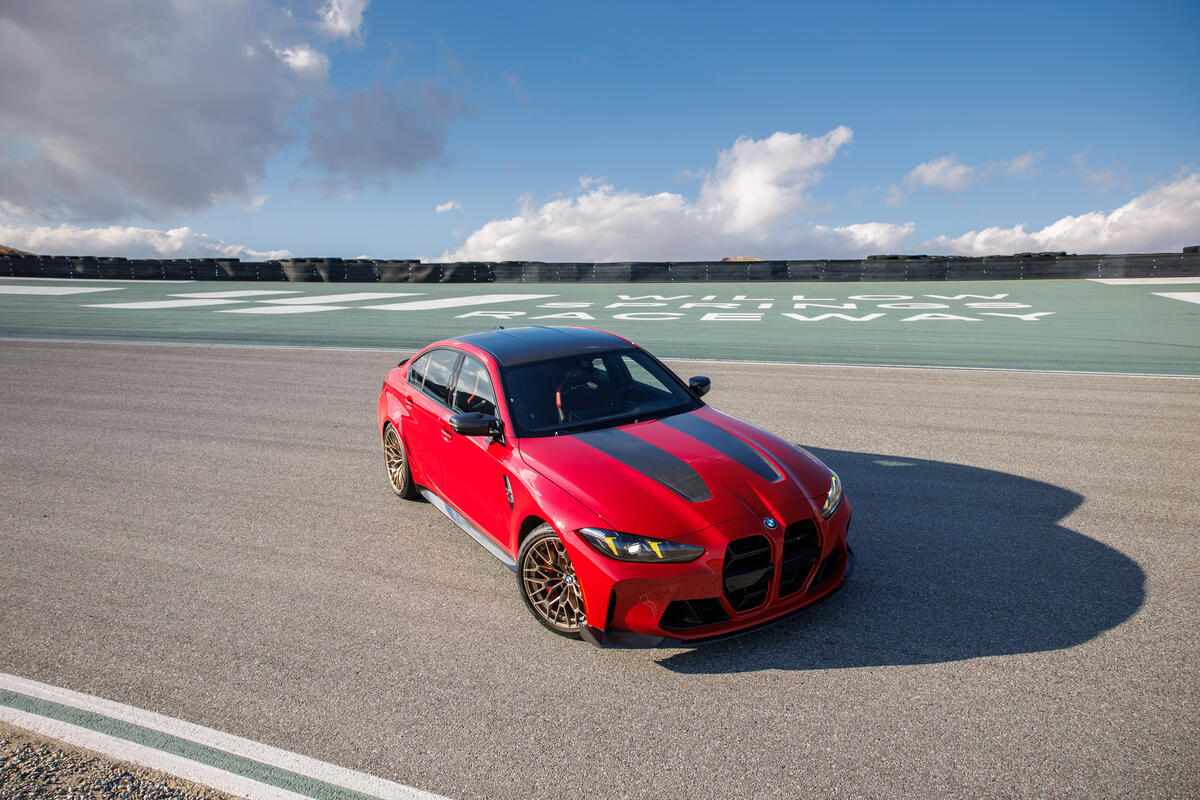
The BMW M3 is a high-performance version of a BMW 3 Series. People often choose it because it’s built to feel sporty and fast. In this episode, it’s mentioned because someone is talking about converting an older M3 to electric power.
The Yangwang U9 is a very high-performance electric vehicle. The podcast is talking about how many of them might be made and whether that matches customer demand. It’s being treated as an “extreme” model rather than a common car.
The Cadillac V16 is a Cadillac concept/model idea that emphasizes a very large, special engine setup called a “V16.” The podcast is bringing it up because the name itself is part of what makes it feel rare or impressive. It’s less about everyday practicality and more about standing out.
A carbon fiber wing is a spoiler on the outside of the car. It’s often used to push the car down onto the road so it can grip better when you drive fast.
Fang Cheng Bao is a separate car brand that’s aimed more at off-road style. The hosts are basically pointing out that big automakers are making lots of different brand names for different kinds of cars.
Ti7 is a vehicle model name mentioned in the podcast. The episode connects it to luxury and off-road branding, including a specialized off-road brand called Fang Cheng Bao. The discussion sounds more about what it represents than about charging or maintenance.
Concept
brand proliferation
They’re talking about companies making lots of new car brands and product lines. The idea is that it can get out of hand, and eventually the company has to simplify or make it make sense.
Term
3,000 horsepower
Horsepower is a number that tells you how much power the car has. When someone says “3,000 horsepower,” they mean the car is being marketed as extremely powerful.
Geely is a big Chinese car company that also owns other brands like Volvo and Polestar. The discussion is about how Geely’s reach could help it be early in the U.S. EV race.
Volvo is a well-known car brand. In this segment, it’s mentioned because Geely owns Volvo, and that ownership is part of the argument about who arrives in the U.S. first.
Polestar is an electric car brand. It’s brought up here because Geely owns it, and the host thinks that gives Geely an advantage in the U.S. EV rollout.
DOE loans are government-backed loans from the U.S. Department of Energy. The segment is about whether that funding was paused and then released again.
The Mitsubishi Eclipse is a car model name from Mitsubishi that has been used on sporty cars in the past. In this episode, it’s mentioned because someone is trying to remember or identify the model. The discussion doesn’t sound like it’s about charging or EV specifics for this nameplate.
The Eagle Talon is an older sporty car model. The podcast mentions it to connect it with another similar model name from the same time period. It’s mainly being used as a reference, not as a current EV topic.
Amazon previously invested in Rivian too, but reduced its stake later. The hosts are using that history to explain how big Volkswagen’s investment is now.
The Rivian R1S is an all-electric SUV with room for more than two people. It’s designed to handle both everyday driving and rougher roads. The podcast brings it up as a comparison point for another vehicle idea.
The Rivian R2 is an electric vehicle that Rivian is planning as a smaller option compared to its larger R1 vehicles. The podcast is talking about how Rivian’s lineup might expand over the next few years. It’s essentially about what models could come next.
The Rivian R3 is a vehicle name the podcast talks about as a possible future Rivian model. The speakers are speculating about how it might look or what it might be called. It’s mainly a discussion about what could come next in Rivian’s lineup.
“Traveler” sounds like a vehicle name or project label mentioned in the podcast. It’s being brought up while the hosts talk about possible EV models and how they relate to other “Scout” style ideas. The episode doesn’t provide enough detail here to treat it like a full review.
Tesla Semi is Tesla’s electric big-rig truck for hauling goods. The key challenge is getting enough charging stations and power so it can actually run routes reliably.
A slow ramp up means the factory starts making cars or trucks, but it takes time to reach high production levels. That delay can affect when customers actually get vehicles.
Charging infrastructure means the charging stations and the electrical power behind them. For electric trucks, you need enough of it along common routes so the trucks can keep working.
The Dodge Charger is a performance car model from Dodge. The podcast is talking about charging—how quickly it can charge and what kind of charging setup it uses. Even though it’s a car name, the discussion is really about charging performance.
The MCS plug is the connector shape/standard used for fast DC charging. It matters because it lets the same truck or charger setup work at different charging stations.
Term
DC
DC charging is the type of fast charging that can push a lot of power into the car quickly. It’s different from normal home charging, which is usually slower.
A megawatt (MW) is a huge amount of power—1,000 times a kilowatt. The hosts mention it to show that the “mega charger” is in a much higher power category than normal fast chargers.
Range replenishment means how much driving distance you get back after charging for a certain amount of time. It’s a practical way to compare how fast different chargers add usable battery capacity.
A depot fleet model is when trucks or vehicles mostly run from a home base (a depot) and come back each day. Charging can be planned for overnight, instead of relying on random stops.
Concept
battery capacity vs charging speed mismatch
They’re basically saying: even if you have a big battery, charging speed depends on the charging setup too. Sometimes it’s slower on purpose because the system is designed for something other than ultra-fast charging.
Charging power is how quickly the charger can deliver energy to the car. If the battery can’t accept that much power, charging will be slower even at a fast station.
A “mega charger” means a very high-power charging station meant for bigger vehicles. It’s designed to deliver a lot of electricity quickly compared with typical chargers.
Concept
apples and oranges
“Apples and oranges” is used here as a framing concept: the speakers argue that comparing passenger-car charging gear to commercial-truck charging gear is not a fair like-for-like comparison. The implication is that different vehicle classes have different power needs, infrastructure, and business targets.
A software upgrade is like updating the charger’s computer. The idea here is that the charger might be limited today, but later the software could allow it to charge faster.
Term
MCS 2.4
MCS 2.4 is a specific charging standard/version tied to Tesla’s high-power charging hardware. The episode is saying that this kind of setup ended up spreading beyond Tesla and became widely used for big trucks.
“Charger wars” is the idea that EV charging wasn’t standardized at first—different companies used different plug/charging systems. The segment suggests that the industry eventually converged on one main approach.
This part is about EV charging for big trucks—how the industry is settling on one main charging standard. It’s more about “what’s becoming common” than how the charger works internally.
DHL is a logistics company referenced here as an example of a fleet operator that likely uses Tesla-installed fast chargers at depots. The mention is about real-world charging deployment by major delivery networks.
“Top them off overnight” describes charging strategy for fleets that park for long periods—charging enough during downtime to be ready for the next shift. It implies lower average charging power than megawatt-class fast charging, because the vehicle has many hours to reach a usable state of charge.
MCS is a charging plug/charging system standard for very high-power EV charging. If a truck uses MCS, you need chargers built for that same standard—other plug types won’t work.
Transformers are part of the power system that prepare electricity for the charger. If the transformer is too small, the station can’t provide as much charging power as you might expect.
DC power is the type of electricity EVs want for charging. The charger usually converts the power from the grid into DC before it goes into the battery.
Term
delay
Here, “delay” likely means the charger waits a bit or changes when it starts or ramps up charging. It’s about timing—how the system behaves rather than a physical part.
Payment terminals are the machines at a charger where you can pay with a card or phone. Some chargers are set up for public use, while others work only for a specific fleet or account.
Concept
private depot fleet
This is charging meant for one organization’s vehicles. Since only that group uses it, the charger can use account/network access instead of a public payment terminal.
A “base charger” is a simpler, usually slower charging setup than the fastest chargers. If trucks need more time at those chargers, it can cause lines, traffic, and more accidents while vehicles are coming and going.
EVs don’t like very hot or very cold weather because they have to spend extra energy to keep the battery and electronics working properly. The hosts say there’s a temperature range where efficiency is best.
Fuel efficiency means how much energy the car uses to go a certain distance. They’re talking about how hot or cold weather can make the car use more energy, so you get worse efficiency.
Calculated driving range is the number the car estimates for how far you can go. In real life, weather and how you drive can make that number change a lot.
MPGe is a comparison number that tells you how far an EV can go using the same amount of energy as one gallon of gas. It helps you compare an EV to a gas car without doing electricity math.
DC fast charging is the quick-charging option you use at public stations. It can refill an EV much faster than charging at home, but it often costs more per unit of electricity.
Off-peak rates are electricity pricing periods when the utility charges less for power. Many EV owners can reduce charging cost by scheduling charging during off-peak windows, especially when charging at home.
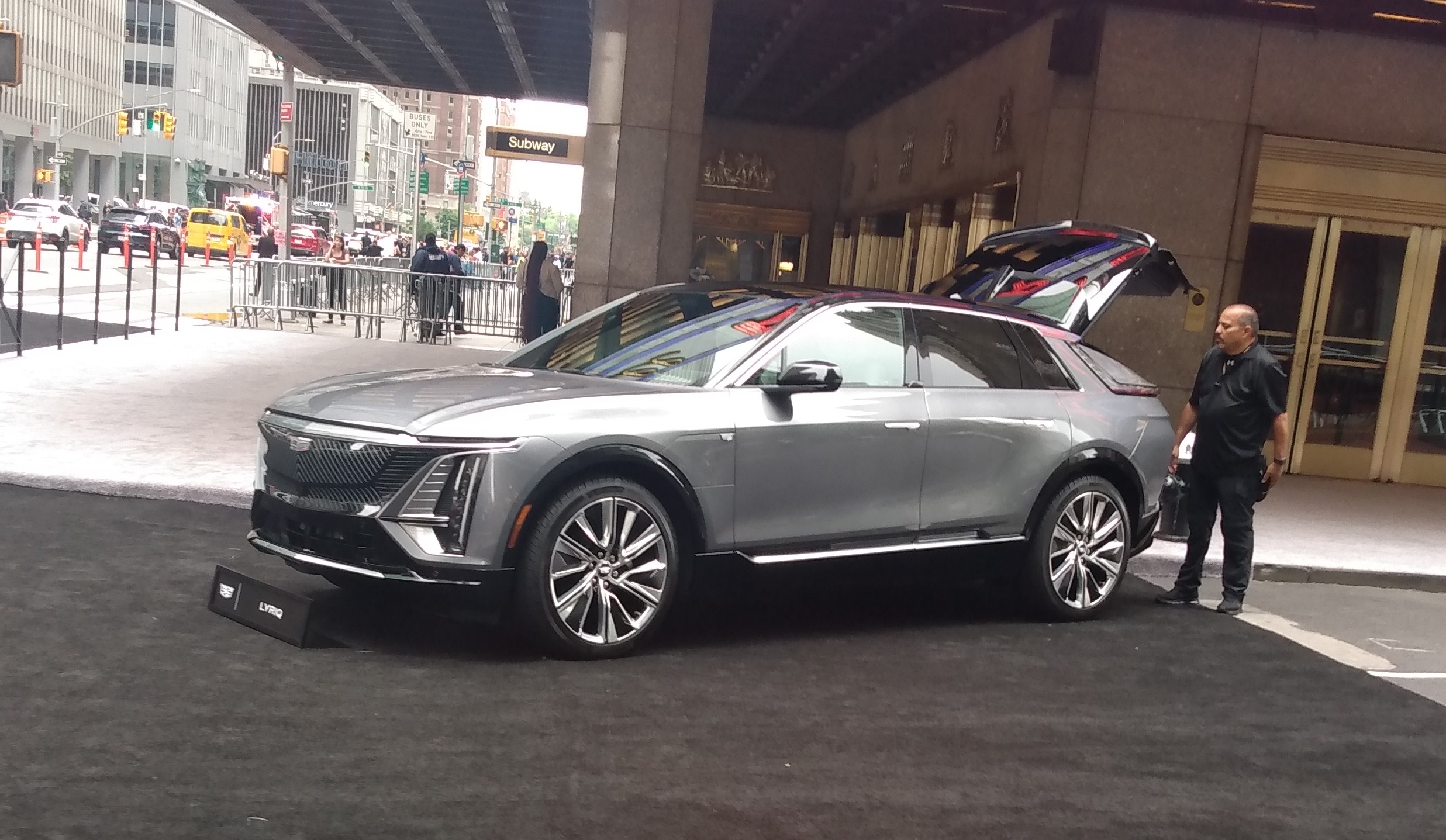
The Cadillac Lyriq is an electric luxury SUV made by Cadillac. It’s designed for comfortable everyday driving while using an all-electric powertrain. The podcast mentions it in a joke about the name, but it’s still a real EV model.
In an EV, the high voltage battery is the big battery that powers the car’s electric motors. If you cut and stretch a car and that battery is in the way, it becomes much harder and riskier to do safely.
All-wheel drive (AWD) means power is sent to more than one axle—typically both the front and rear wheels—so the car can manage traction better. For a stretched EV, AWD adds complexity because you may need additional drivetrain components and packaging compared with rear-wheel drive.
Rear-wheel drive (RWD) means the drive wheels are the rear axle, with power delivered to the rear wheels through the drivetrain. The hosts suggest that offering RWD-only can simplify the conversion/packaging compared with AWD when building a lengthened EV.
A drive shaft is the part that sends power from the transmission to the rear wheels. If you stretch the car, the distance changes, so you may need a custom drive shaft to make everything line up.
Lengthening means adding extra body length, like a limo conversion. Doing that changes how the car flexes and where forces act, so engineers have to account for extra twisting and bending.
Toyo Tires is a tire maker. The host is saying they sell similar tires in different versions, depending on how much twisting force (torque) the vehicle applies when starting.
Company
Trevor Milton
Trevor Milton is a public figure tied to the truck industry and past controversies. Here he’s brought up because he’s making comments about Tesla’s big electric truck.
LIVE
This is the What Car Evie Podcast for Thursday, May 7th, 2026, episode 269, Mutually Assured
Destruction.
Let's talk about the other side of the Earth for a while.
Like Middle Earth or Eastern Hemisphere, I guess?
Yeah.
We talk a lot about, well, you know, I was going to say, we talk a lot about what goes
on in America.
You know, we've been talking more and more about China because this being an Evie podcast,
Chinese are coming.
And we can't determine if that's good or bad.
Is that a correct assumption?
Well, as I like to say, it's not if but when.
Mm-hmm.
Yeah, I guess it doesn't matter if we think it's good or bad.
It is coming.
It's coming.
Yep.
I'm Phil Royal.
I will happily point you to two websites, youtube.com slash at the What Car where you
can watch our smiling faces or find us at any podcast platform.
And if you're listening to us, you already know which one you found.
Go and also download the other one and watch every episode twice or share us on social
media or kind of everywhere.
But yeah, you know, I say that and I'm wrong.
I don't care if you connect us to our social media thing.
Like when you share is you don't have to add us.
You just share the content.
That's all I care about.
And the other URL that I go to is the what car.com slash store where you can buy things
like the hat that Ed is wearing and shirts and whatnot.
Some of them say the what car and some of them don't.
Some of them are just kind of fun, interesting, irreverent, various assorted, whatnot.
That sounds description.
And for me, professionally, I do words for a living.
As you can tell from my assorted comment, the best words is what I have and I've been
using those best same, the same best words.
You know, I actually had a really, I don't know if it's a compliment or an insult for
my day job.
We'll get to introducing you in a minute in my day job.
I wrote this article and it went up and, you know, a bunch of people read it on social
media.
Somebody commented, they use chat GPT for this.
And I'm like, actually, I have the ability to write just because you can't doesn't mean
other people can't as well.
Ouch.
And so I reread it because I like I use chat GPT for things, you know, if I'm struggling
with an idea or whatever, I've just got a punch list, something I might put the thing
in and be like, you know, help me out.
And then it pumps something out and it gets me going like I can use it the same way that
I used to search Google for ideas, you're just using it like that.
It's not an evil thing.
It's not a bad thing.
But like, wow, so, you know, actually, I'll talk to you offline about this other thing
that's come up.
We'll jump to you right now.
All right.
Ed Sanchez, also user of the best words about EVs been doing this a while in various iterations,
even pre EV, but for the last five years, podcaster extraordinaire, if I may, to my own
horn, along with my partner crime, Phillip.
So anyway, let's just jump right into it.
Yeah.
So today's episode, we dance around China a lot.
And this episode is like at least 50% China.
A lot of China.
Well, I mean, part of is they just had the Beijing auto show.
So some of this is kind of related to that somewhat.
But the first item, I did not understand why you're interested in it, the Timu Range Rover.
Is it actually a Timu Range Rover, or are they just calling it the Timu Range Rover?
That's kind of a pejorative nickname.
So I was excited for a second.
This brand I kind of maybe heard about before, but it's not one that typically comes up in
kind of mainstream EV conversation.
And this particular model, I think is actually an E rev or a plug-in hybrid.
It's the Jku J7 and it's earned the nickname in the UK of the Timu Range Rover.
So, but I don't know, it seems to have caught on in the UK, because I think it was the best
selling vehicle there last last month.
Really?
Or at least at least for SUVs.
I don't know of all cars, but I think in its segment at top of the sales charts.
Yeah, I always love sales because they're always like, like exactly that is best selling.
Oh, well, in the segment of midsize SUV priced between blah and blah, this was the number one.
So, yeah, I don't know if that's all cars or just SUVs or whatever.
But anyway, sold 10,000 units in March, which I don't know, it's kind of.
I mean, that doesn't seem like a lot, but you know, it's between the UK and the U.S.
And it's it's kind of hard to do exact apples to oranges comparison, or I should say apples
to apples, I guess this would be apples to oranges.
But anyway, so if you hadn't heard the brand, you probably heard of the parent company, Cherry.
So like the big, I guess, well-known EV companies in China, outside of China, I would say are
probably BYD, Geely, Cherry are probably what I would consider the big three.
And then there's some smaller ones.
There's like Chang'an and, you know, a bunch of smaller ones.
So Jakku is kind of, I guess, Cherry's kind of maybe like mid-level division.
So yeah, it's kind of funny.
So this has been in the UK market for a few years and some of the initial reviews on it
weren't great.
The reviewers kind of, you know, that the ride dynamics and performance, they were just like,
this thing's not that impressive, but consumers are impressive enough.
They bought a whole bunch of them.
So I was just digging for the number of sales is what matters.
I was digging into that sales number where you said 10,000 units roughly sold in March 26 in the UK.
I'm like, just recently, we've talked about like some EU sales.
Last week, we talked about Toyota EV sales in Europe was up 85% in the first quarter to 25,640.
For the quarter?
For the quarter in Europe.
This is 10,064 units in March in the UK or England, which I don't know which one in particular.
That's a whole other debate.
So that seems like a solid number compared to the likes of Toyota selling it.
I mean, that very melt, very well, maybe the best selling vehicle in the UK in March.
I don't that's don't think that's inconceivable.
The pictures in the article, there aren't a ton of them, so I can't really get a great idea.
And because I'm me, I didn't bother to Google it.
I mean, if Chad GBT can't write it for me, then why should I do anything?
But I mean, it's no, it kind of reminds me a bit of maybe not a Range Rover,
but like a Hyundai or something like it, like a good looking, but not crazy expensive looking SUV.
Sure, seems good.
Yeah.
So it's like the infotainment, it's got like, you know, Android Auto CarPlay, all that.
I mean, I don't know, people seem to like it.
So so watch out.
We could all be driving jacos.
Maybe I don't know what their ambitions are for the US, but they definitely struck a chord in the UK.
So getting back to the Chinese big three.
So BYD BYD has been like the Chinese boogeyman that everyone's been like afraid of for past several years.
Maybe there's good reason to because they're they're making moves in a lot of markets.
So this report, this is from Electric.
So supposedly I never mind the just the Jku itself.
I guess as a brand BYD is now the top selling EV brand in the UK, surpassing Tesla Kia and Volkswagen.
BYD was also the best selling EV brand in Australia, Brazil and other overseas markets.
And in Brazil, BYD leads not just EVs, but overall vehicle sales in Brazil.
Surpassing VW GM and Hyundai.
And Volkswagen has historically been really strong in Brazil and South America.
But so BYD is the best selling EV brand in the UK.
BYD is on the march, it seems like.
There'll be a link in the show notes to that electric article.
And when you click on it, they've got all these BYD, whatever they are, tiny cars, like a whole fleet of them.
And that must have been like a media day drive or something, I'm guessing.
There's somebody taking a selfie.
There's somebody like with a camera, like walking down the side.
I really like the wrap on the one on the left.
It's like this funky little multicolored wrap thing.
I don't know.
Yeah.
This car looks that they're showing in this.
What is this?
This is the Dolphin.
Dolphin Mini.
So that's like the mid-sized or mini?
The, well, it's called the, that one's the Dolphin Mini, I guess.
And they like to name their cars after Marine mammals, I guess.
And they are all like neon green.
According to these pictures, they come in one color.
They come in, what is it saying?
It comes in any color that you want, as long as it's neon green.
As long as it's neon green, I guess.
Yeah.
I mean, when they come to America, that's, I don't know where this stands.
We are so anti-China here.
That they're taking over the rest of the world and we're not going to let them in.
Which I don't know if that's good or bad, but we're not by us.
I don't know how to word this.
I have all the best words.
We're just weakening ourselves.
No, I'm, we're, to me, I don't know if we're weakening ourselves, but we're
showing that we're weaker by forcing them to be.
To stay out, we're saying that we in America cannot generate a product as
compelling as what they have.
And the only way to compete is to ban them.
I don't think that this is a security issue.
Because if this were a security, it's a competitiveness issue.
If this were security, we would ban all Chinese made smartphones.
Which is pretty much all of them.
Yeah, which is pretty much.
And even the ones that are made in America, probably, and I'll say this without
any fact to back it, have some Chinese components in them, whether it's
software or hardware.
There were, there was a couple of years ago at least, there was a couple that
when I was replacing my last phone, that I looked at getting this US quote
unquote made phone.
And by goodness, that was expensive.
And probably in the fine print, it says of imported components.
Yes.
So I, I just don't know where we stand at this because I view they're taking
over Europe and it's like, okay, so the Chinese is kind of, they're kind of
taking over this market.
And if you let them destroy the European manufacturing of vehicles, then now
we become more reliant.
I'm, I'm for a world economy where everybody relies on everybody else.
As long as everybody respects that you all rely on everybody else, then you've
got this, this kind of like the Cold War, this guaranteed destruction of everyone.
If you usually show destruction.
Yes.
But they've come in and they're doing well in Europe, which says these are
compelling products.
And so America goes, oh, no, we're going to lock the door.
And to me, that shows weakness on our side that we can't compete.
Yeah.
Case to be made for that.
Yeah.
So this next item is also a BYD brand, one we've discussed before.
Um, the Yang Wang Unine Xtreme.
So this is the 3000 horsepower supercar, EV top speed record setter.
Um, so they actually are going to build, supposedly only 30 of these they're claiming.
Um, so very limited production.
We finally know how much it's going to cost.
Any, any guess?
Uh, I cheated, but it's a lot.
It's a lot.
We thought the rematch Navira was expensive.
Well, this is pretty much right there.
What, so that was where I wanted to go with this.
This is the Unine Xtreme is 3000 horsepower, 1200 volts.
Uh, you got a note of the base model is 1287 horsepower and sells for about
236,000.
This sells for the 3000 horsepower version sells for two and three quarter million
dollars.
The rematch Navira is about 2.2 to two and a half million, at least when it came out.
I don't know what it is now.
If you can even buy them, like I, I don't even know how you find that out.
But they were going to make, man, I had all these numbers in my head and now they've
gone out that rematch was going to make something like a couple hundred, yeah,
a hundred, a hundred and fifty of the Navaras, which were like 2200 horsepower,
zero to 60 in 1.8 seconds, zero to 60 time, whatever.
So I assume that this is comparable in acceleration.
The price is a little bit more expensive, but I would guess if you order a rematch
to vary it out, that was two and a half million several years ago.
I imagine it's prices gone up.
Probably be about this.
Yeah, they'd sold by middle of 2024, something like 40 or 50 Navaras.
Then they came up with another limited edition, basically like this,
an extreme version of the Navara, and they were planning to sell like 40 of those.
And then remember, Mate Rematch ordered his own Navara and had that delivered.
And I took that as pretty cool.
You know, he could finally afford a guy that came from electrifying his own E30M3
or E30BMW9M3 from electrifying that out of a forklift EV to being able to order
a multi-million dollar EV that he probably, even if he paid cost that,
is still probably a million bucks.
Yeah, easily.
So, you know, that was that seemed like a heartwarming story.
But I took it as they fulfilled all the orders of customers.
And now Mate gets his, which means they've run out of orders.
And this was a publicity stunt to try and go, oh, you know, remember us.
Yeah, I don't know if there's a market for this is where I'm going.
Is I'm not sure that in that realm that we've had this conversation before
with Rolls Royce Bentley and whatnot.
Is there a market for this that is more like is 30 units too many for
this Yang Wang U9 Extreme?
Is this market actually like 20 or 15?
I mean, I think they'll sell them.
I mean, I think that the good thing with the U9 is, I mean, I don't know
how like bespoke the extreme is compared to the regular ones.
I don't know if it's just motors and some different components that are different.
But they have the quote standard U9, which is only about a quarter million.
So I imagine if, you know, the demands a little life for the extreme, they'll say,
oh, we'll just build more regular ones.
I mean, even so, that's still a six bigger car.
It's still not cheap.
But in regard to rimouts, they pretty much, I think, pivoted to focusing
mostly on Bugatti rimouts was, you know, it was kind of a proof of concept
like, hey, look, we can do kind of a technological showcase.
But yeah, I'm not I'm not hearing a lot of like new, like, oh, we're going to do
a new Navara or we're going to be do a lower cost sports car.
It's like, nah, we're pretty much all in on Bugatti on hybrids.
And you know, this and that.
And even Mate has said that that the Bugatti crowd is not necessarily into.
They're not super going to know about EVs.
Yeah, maybe hybrid.
Sure. Yeah.
But I mean, and I think I don't know if it's Maté or someone else, but they
kind of made the comparison with like a Swiss watch, like, you know, an Apple
watch, you know, like, like this, I mean, from a functional standpoint, can do way
more than like a Rolex or whatever.
But just the craftsmanship and the mechanical, like, nuance and
intricacy that goes into, you know, a hand built Swiss watch makes it special.
No, functionally, it can't do as much, but it's more of a status symbol.
And I kind of feel in the ultra high end, you know, we're talking like, I'd say
500,000 plus vehicle realm, it's more that specialness than even technological
capability or anything else is the customers want to feel special.
And if that means, you know, a representative flying out in person and
opening up like, you know, a binder with leather swatches and, you know, wood
samples and, you know, this and that, like, oh, you get to pick whatever you want
or, you know, that's more important to them than what powers it.
So having an EV is not that much of a flex.
I think saying you have a V16 for those people matters more.
Yeah, like quad turbo W16 engine, like, and it sounds, it sounds loud
when you start it and it, it does something, it does a function.
The exclusivity thing where you're going or where you introduced whatever with
that, all the best words.
Do you think this, I also think that there's a problem.
There's a gap somewhere here.
If you can buy one version of the car for $275,000 and then the other
version that you buy for 2.7 million, when you buy that 2.7 million and then
you're driving down the street and there's another one that looks like
75% of the car that you own for a quarter million sitting next to you.
Like, yeah, it the rematch was exclusive.
There was no half million, quarter million version.
You you parked next to some, you're driving down the road, you come across
another Navarra, that person probably spent over $2 million for their car as well.
So you're not going to see a ton of them.
This could almost look like when you show up and it's got the carbon fiber
splitter or something that, because I'm sure that's tons of what this has got.
It's probably got a bigger carbon fiber wing, bigger front splitter.
Is it just going to look like a Timo version of itself when you're driving down
the road? I think that that's a possible problem with this vehicle.
Well, I mean, the other, this is kind of a larger discussion, but I think
the brand proliferation in China is a little bit out of control.
Even within BYD especially, I'm finding out every day like a new brand
that's part of the BYD family.
No, isn't it crazy?
I mean, you started this episode with exactly that.
I mean, not exactly, but the the jacu was like, jacu was cherry.
Yeah, but I've never heard of it like or maybe I had, but I'd forgotten about it.
It's I think it's almost as bad as like GM back in the 80s.
Yeah, I think BYD itself has something like 10 or 12 brands, half of which I
haven't even heard of until like I see some story about, oh, this new something,
something model.
Oh, I didn't even know that was a thing.
Yeah.
To the point where they have brands that, you know, at least from the
conventional standpoint, almost kind of compete with each other.
You know, like where, like what's BYD's other high end brand?
I'm trying to remember.
Like Yang Wang is like the ultra exotic Denza.
Then there's Denza.
Then BYD is kind of like the Chevy, but there's one in between BYD and Denza.
There's and then I think there's another one between BYD premium Denza.
Luxury Yang Wang, specialized off road brand Fang Cheng Bao.
Fang Cheng Bao, that's right.
And that's not weird enough.
Fang Cheng Bao is like off road, but so supposedly Fang Cheng Bao showed a
like exotic sports car at Beijing.
And that's in addition to the Denza Z Roadster that we talked about last week.
And that's a whole other division, even though they looked very similar.
It's like at some point this kind of has to stop.
I'm just wondering if they're just doing it because they can and they're just
kind of flexing and they're like, oh, look what we can do.
We can create a new brand.
We can make a 3,000 horsepower car.
We can, you know, there has to be a rationalization at some point.
And I don't know when that's going to come or what it's going to look like.
But it's, yeah, it's kind of getting a little crazy, I think, but.
Not that America didn't go down that road.
Yeah, no, we.
Many decades ago.
We did.
I mean, that was GM before, what was it?
2011 or 2010?
Yeah.
Yeah.
So I guess they're not at quite at that arc in their history yet, where they've
had to go through there.
When do we see the Yang Wang, you nine extreme shootout between that and and a remit?
Dude, I have a feeling I know who's going to be one of the first to do it.
I'm going to go on record right now.
It's going to be Jason Commiss at Hagerty.
If there's a shootout between the Navarra and the Yang Wang, you nine extreme,
I'm putting my money on him if they can get one over here.
So and this stuff is always very entertaining.
So and they'll probably do it about an hour from my house is where they see
to film a lot of stuff.
Probably is not like a private airport or something where they.
No, they do a lot of it out at Willow Springs.
Oh, OK, there we go.
So this next item, I felt kind of validated by this
because I've been saying this for a couple of years and some people are like,
yeah, you might be right.
And other people like, yeah, no, it's going to be BYD.
BYD is going to just come in and steamroll everyone's like, no,
I think someone else will be first.
So this was a video from CNBC.
This just came out the day before we're recording this, actually.
This was Robert Ferris, I think, did this.
So this is basically their analysis and, you know, backed up by some other people's
input, they think Geely is going to be first in the U.S.
And I agree for many of the reasons I've talked about before, Geely is the parent
company of Volvo and Polestar.
They already have a U.S. manufacturing plant, which is currently under capacity
in terms of production.
So yeah, I think that is that is a part for the course for many EV
manufacturers plants right now.
Yes. And another interesting tidbit, which I also have speculated about.
They said the first Geely brand outside of Volvo and Polestar that could come
to the U.S. is they speculated Zeekr.
And I think that's probably pretty good.
Noice.
So if it's the the 001 I'm all for that.
So it's kind of like a strange thing to say is that Geely is best
position for entry into the U.S.
You've already covered it.
They're already in the U.S.
Yeah, pretty much.
Like not even pretty much.
They make the cars that come to America.
No, I mean, that's the thing is they already have the infrastructure set up.
I mean, whether you're talking dealer networks, service networks, parts,
distribution, manufacturing, they're here.
So it's basically it comes down to corporate decision.
While EVs show a 10.4 percent reduction in efficiency.
So about the same.
Yeah.
So it seems like the happy place is again, not a huge surprise.
Like 75, 80 degrees is kind of they're optimal.
So cold is where it's hybrids lose 20.
The big one.
About 23 percent in fuel economy and EVs lose just over 35 percent.
And a 39 percent decrease in calculated driving range, which is all fake numbers
anyway, with calculated driving range.
Your favorite measurement, MPGE.
Yeah, I whatever.
Yeah, I mean, I think the answer is why would you live anywhere where it's
really cold or really warm?
So you just lost our audience in Michigan and Minnesota and Arizona.
It's always nice in California.
I don't understand it.
Well, maybe they don't want to pay a seven dollar gallon gas, maybe.
Yeah, no, that's I suppose.
I suppose and crazy expensive electricity rates that we've got here.
And crazy.
So that was that was the other thing on the study.
They said, I guess this would also depend on where you live to.
If you live in a place with high electricity rates.
So DC fast charging, I know in California, at least it's typically between
about the lowest I've seen is about 35 cents kilowatt hour.
I have seen it over 50 cents a kilowatt hour.
So if you charge at home, if you charge an EV at home, like on off peak rates,
they're cheaper to drive than hybrids.
But if you're always using like superchargers and DC fast chargers,
EVs are actually more expensive than hybrids, I guess,
in terms of cost of operation.
So as the saying goes, your mileage may vary.
And I can't remember what the number was because I blocked it from my mind.
But there was a certain time period at my house where if I charged
an EV at my house, it was actually cheaper to go to a charging station.
Oh, same. Yeah.
Yeah, if I charge during peak power periods,
I'm better off going to the supercharger down the street.
So there you go.
Temperature affects your EV and keep an eye
on what your charge rates are at your house, especially if you live
in southern and northern, I guess, California, in sunny California,
because we pay for it.
Well, we're another.
We're paying for all of this last one real quick, real quick.
There was no picture.
So as far as I'm concerned, it's disappointing.
I was hoping for this, but so we're all going to die.
Not to not to an on a down note, but.
But you may be going out in the future in a lyric hearse.
That seems good.
So there you go.
But yeah, disappointed that the story did not have any pictures.
So I would imagine imagine a lyric but longer.
Yeah, that would be my guess.
So again, no pictures yet.
Who's making it? Is it Cadillac make a lyric coach builder funeral hearse?
Are they saying who's building it?
So this is this is what I don't know, like typically with like Cadillac limos.
They have a specific like package that they send to third party.
Like, yeah, I guess modifiers or whatever.
And they they literally chop the chop the vehicle in half, stretch it,
put in the center section and weld it back together.
So I don't know if it's this is going to be that or if they're going to build it
straight from the factory ready to go.
That wasn't immediately apparent.
So because if you cut this one right down the middle.
Cut in the high voltage battery.
You have slight issues, slight issues.
But the cool thing with this is if you have an all wheel drive lyric or any EV.
Well, so the releases that's going to be offered rear wheel drive only.
Even I mean, that's fine too.
Like anything where you had front engine and you had to drive the rear tires.
You were looking at you had to beef up the transmission, which maybe I mean,
this should be able to take it, but you had to do a custom drive shaft.
You had to like look at how you were going to be applying more torque at the front
and how much that's going to twist the chassis.
And there's all this stuff that you've got to look at when you're lengthening it
because of the way leverage works and pivot points and all this stuff.
And with this.
OK, you're you're adding more weight and that is going to add more twist,
you know, on the motor and everything.
But it's all just being done at the back.
So it's kind of easier.
Yeah, I mean, if you drop the battery, this is aren't like high speed cars.
Yeah, I mean, getting so.
Starting is where you have issues
because that is where you apply all this torque to the tires.
When I bought the last set of I think there were Toyo tires for my F 250,
you could buy two different types of them.
They were the same same e range tire, but you could buy a diesel version
and a gas version because it was the amount of torque that was applied
at a stop at a stop, you throw, you know, 10,000 pounds behind you
and you start to go and the diesel can actually supply so much torque
that they had to design a different tire.
So I bought the gas version because I got a gas vehicle.
But that is a thing.
And to go back to the I meant to talk about it a little bit with Tesla.
Truck semi.
Trevor Milton popped out of the woodwork with that.
I don't know if you saw that trash.
Yeah, it's talking trash about the Tesla semi.
Just he talks as much trash as I do about that thing.
It's craziness.
Everything we talked about links in the show notes.
The show notes can be found at the walker dot com and in YouTube
just below or in your player, wherever it is in your player.
YouTube dot com slash at the walk car.
That's what I'm talking about there.
Share us in social media, but you don't need to find us and like us.
You can if you want.
I don't care, but just share the content.
And that could be the podcast player.
That could be the YouTube player.
That could be the walk car.
We've got an embedded thing there, like whatever you can do, all of that.
The walker dot com slash store helps sport the blog of the podcast
because this episode is brought to you by us.
So any sale helps fund this endeavor.
And if we sell enough of them, you will see me driving a Yang Wang
Unia next week.
How many hats do we need to sell for that to happen?
A lot of hats.
See you next week.
Yep.
About this episode
The hosts spend much of the conversation on China’s growing EV influence, from BYD’s expanding brand family and UK sales momentum to questions about how Chinese makers might enter the U.S. market. They also dig into extreme EVs like the Yangwang U9 Extreme, then shift to the Tesla Semi and the charging infrastructure needed for heavy trucks. Along the way, they compare EV efficiency in hot weather, charging costs, and the practical limits of depot charging.
Between Jaecoo, BYD, Yangwang, and Geely, Chinese automakers are most definitely coming. In fact, in Europe, they’re already there, and selling well. Is what’s keeping them from the U.S. fear on America’s side, or is there a legitimate reason to keep these vehicles from our shores? We look at some recent news and chew on what it all means. Also, Rivian ups production capacity, the Tesla Semi gets a slow charger, and more!