269: Mutually Assured Destruction
About this episode
The hosts spend much of the conversation on China’s growing EV influence, from BYD’s expanding brand family and UK sales momentum to questions about how Chinese makers might enter the U.S. market. They also dig into extreme EVs like the Yangwang U9 Extreme, then shift to the Tesla Semi and the charging infrastructure needed for heavy trucks. Along the way, they compare EV efficiency in hot weather, charging costs, and the practical limits of depot charging.
Between Jaecoo, BYD, Yangwang, and Geely, Chinese automakers are most definitely coming. In fact, in Europe, they’re already there, and selling well. Is what’s keeping them from the U.S. fear on America’s side, or is there a legitimate reason to keep these vehicles from our shores? We look at some recent news and chew on what it all means. Also, Rivian ups production capacity, the Tesla Semi gets a slow charger, and more!
Subscribe to the podcast on Apple Podcasts, Amazon Music, Audible, Spotify, PocketCasts, iHeartRadio, Podbean, and more! Or heck, use your favorite podcast application.
Perhaps you prefer to watch as well as listen. If so, we’ve got you covered.
SHOW NOTES
“Temu Range Rover” Jaecoo J7 tops UK sales charts in March: https://www.theguardian.com/business/2026/may/01/jaecoo-7-china-electric-car-chery-price-temu-range-rover
BYD moving into top spot for EV sales in multiple markets: https://electrek.co/2026/05/05/byd-overtakes-tesla-kia-best-selling-ev-brand-key-overseas-markets/
Yangwang U9 Extreme price announced: https://carnewschina.com/2026/04/30/byd-u9-xtreme-sold-at-2760000-becomes-most-expensive-byd-ever/
CNBC says Geely is best positioned for entry in U.S. market: https://www.youtube.com/watch?v=QNPzWaafsCA
Rivian expands plans for Georgia plant: https://www.electrive.com/2026/05/04/rivian-plans-georgia-plant-50-larger/
Tesla announces “Basecharger” slow-charging for big rigs: https://evchargingstations.com/chargingnews/tesla-semi-charging-business/
AAA studies effects of high/low temperatures on EVs, hybrids: https://newsroom.aaa.com/2026/05/aaa-study-reveals-temperature-impacts-on-ev-and-hybrid-performance-efficiency-and-costs/
This week’s hosts: Phil Royle and Edward A. Sanchez
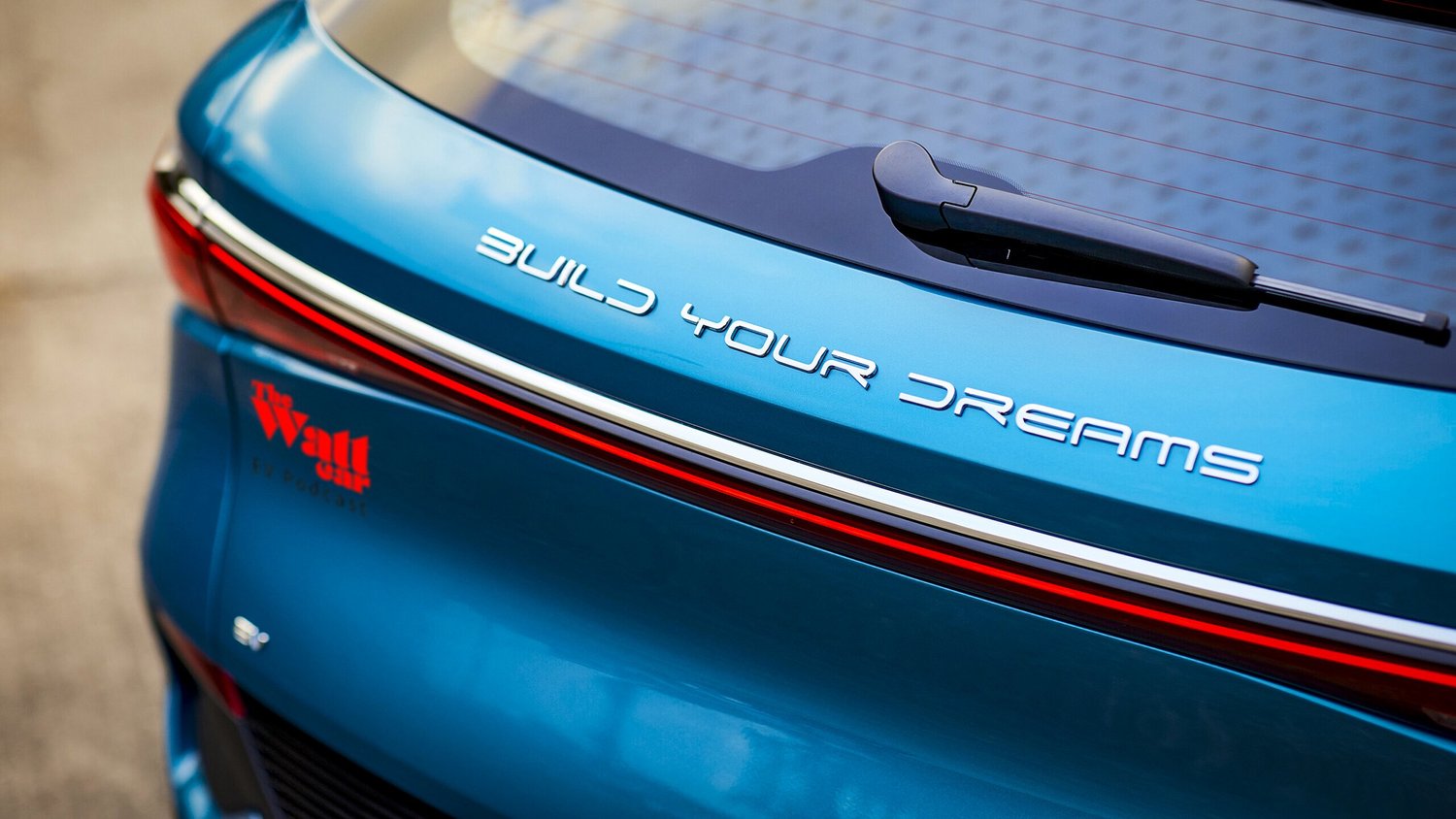
Episode art courtesy BYD
Music courtesy Twisterium at Pixabay
Website: https://www.thewattcar.com
Buy merch: https://www.thewattcar.com/store
YouTube: https://www.youtube.com/@thewattcar

Land Rover Range Rover
"... understand why you're interested in it, the Timu Range Rover. Is it actually a Timu Range Rover, or are they j..."
The Range Rover is a big luxury SUV made by Land Rover. It’s designed to be comfortable on regular roads and capable off-road. The podcast mentions a “Timu Range Rover,” which sounds like a particular version or modification of the Range Rover.
The Land Rover Range Rover is a full-size luxury SUV known for comfort, off-road capability, and high-end features. It often comes up in discussions about premium EV and hybrid conversions or niche “special” versions because people want the Range Rover experience with different powertrains. In this episode, it’s mentioned in the context of a “Timu Range Rover,” which suggests a specific modified or branded variant.
plug-in hybrid
"“And this particular model, I think is actually an E rev or a plug-in hybrid.” ... “It's the Jku J7 and it's earned the nickname in the UK of the Timu Range Rover.”"
A plug-in hybrid (PHEV) is a car that combines a battery-electric system with a combustion engine, and it can be charged from an external power source. That typically allows short trips to be done on electricity alone, while the gas engine extends range when the battery is depleted. In this segment, the hosts use the term to classify the Jku J7’s powertrain type.
Toyota
"Last week, we talked about Toyota EV sales in Europe was up 85% in the first quarter to 25,640. For the quarter? For the quarter in Europe."
Toyota is one of the biggest car companies in the world. In this segment, they’re talking about how many EVs Toyota sold in Europe and how fast that number is growing.
Toyota is a major automaker whose EV sales performance is being compared here using Europe-first-quarter figures. The episode is using Toyota’s growth rate and unit counts to illustrate momentum in the European EV market.
Android Auto CarPlay
"So it's like the infotainment, it's got like, you know, Android Auto CarPlay, all that. I mean, I don't know, people seem to like it."
Android Auto and Apple CarPlay are smartphone-integration systems that mirror certain phone apps and navigation onto the car’s infotainment screen. They’re often used as a “quality-of-life” feature because they make the car’s interface feel familiar and reduce friction when using maps, music, and messaging.
BYD
"So getting back to the Chinese big three. So BYD BYD has been like the Chinese boogeyman that everyone's been like afraid of for past several years."
BYD is a big Chinese company that makes electric cars and batteries. The hosts are saying BYD has been growing quickly and is a serious competitor, especially in Europe.
BYD is a Chinese EV and battery manufacturer that the hosts describe as a major competitive threat in multiple markets. The segment frames BYD as a “Chinese big three” player whose rapid expansion is driving concern among other automakers.
EV brand sales rankings
"BYD was also the best selling EV brand in Australia, Brazil and other overseas markets. And in Brazil, BYD leads not just EVs, but overall vehicle sales in Brazil. Surpassing VW GM and Hyundai."
“EV brand sales rankings” refers to how different automakers place based on the number of electric vehicles they sell in a given market. The segment uses these rankings to argue that BYD is growing faster than other major brands in multiple countries.

BYD Dolphin Mini
"This is the Dolphin. Dolphin Mini. So that's like the mid-sized or mini? The, well, it's called the, that one's the Dolphin Mini, I guess."
The BYD Dolphin Mini is a small electric car made by BYD. In the clip, they’re pointing it out as one of the tiny BYD EVs shown in the article.
The BYD Dolphin Mini is a small, city-focused EV model in BYD’s lineup. The hosts identify it by name while discussing a fleet of BYD “tiny cars,” and they connect the model naming to BYD’s use of marine-mammal themes.
1200 volts
"This is the Unine Xtreme is 3000 horsepower, 1200 volts. Uh, you got a note of the base model is 1287 horsepower and sells for about 236,000."
“1200 volts” is the EV’s high-voltage electrical system. Using higher voltage can make it easier to move a lot of power efficiently, which can help with things like acceleration and charging speed.
“1200 volts” refers to the high-voltage electrical architecture in an EV. Higher-voltage systems can reduce current for the same power, which can help with efficiency and enable faster charging and stronger power delivery (depending on the car and charger).
zero to 60 time
"which were like 2200 horsepower, zero to 60 in 1.8 seconds, zero to 60 time, whatever."
Zero to 60 time measures how fast a car can go from stopped to 60 mph. Lower time usually means quicker acceleration.
Zero to 60 time is the elapsed time it takes a car to accelerate from a standstill to 60 mph (or 100 km/h in some markets). It’s a common performance metric because it captures how quickly the drivetrain can deliver torque to the wheels.
limited edition
"Then they came up with another limited edition, basically like this, an extreme version of the Navara, and they were planning to sell like 40 of those."
A limited edition means only a small number of cars are made. The hosts are talking about special Navara versions that were planned in small quantities.
A limited edition is a production run with a restricted number of units, often with unique styling or equipment. In this segment, the hosts use it to describe special Navara variants and to frame how scarce (and potentially desirable) they are.
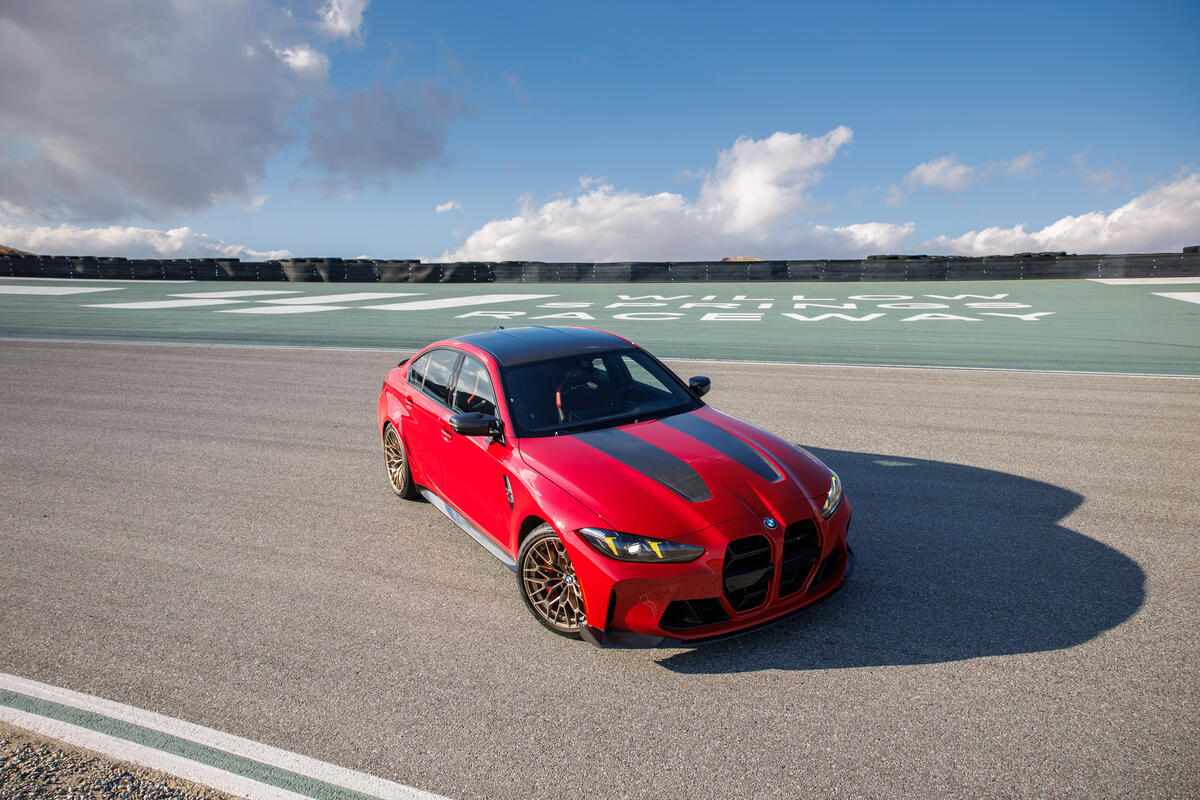
BMW E30M3
"... afford a guy that came from electrifying his own E30M3 or E30BMW9M3 from electrifying that out of a fork..."
The BMW M3 is a high-performance version of a BMW 3 Series. People often choose it because it’s built to feel sporty and fast. In this episode, it’s mentioned because someone is talking about converting an older M3 to electric power.
The BMW M3 is a performance version of the 3 Series, known for being a driver-focused sports sedan/coupe with an enthusiast reputation. In this episode, it’s referenced in a personal-story context about someone “electrifying” an older M3, which highlights how people adapt classic performance cars to EV power. That makes it relevant to an EV podcast even when the original M3 wasn’t electric.

Yangwang Yang Wang U9
"...s that is more like is 30 units too many for this Yang Wang U9 Extreme? Is this market actually like 20 or 15?"
The Yangwang U9 is a very high-performance electric vehicle. The podcast is talking about how many of them might be made and whether that matches customer demand. It’s being treated as an “extreme” model rather than a common car.
The Yangwang U9 is an electric performance vehicle from Yangwang, positioned as an extreme, high-end model. The episode discusses production scale or availability—questioning whether the number of units is “too many” for the U9 Extreme and what the market size might be. That makes it a topic about EV exclusivity and demand rather than everyday ownership.

Cadillac V16
"...ot that much of a flex. I think saying you have a V16 for those people matters more. Yeah, like quad tu..."
The Cadillac V16 is a Cadillac concept/model idea that emphasizes a very large, special engine setup called a “V16.” The podcast is bringing it up because the name itself is part of what makes it feel rare or impressive. It’s less about everyday practicality and more about standing out.
The Cadillac V16 refers to a high-end, flagship-style concept or model idea centered on a “V16” engine configuration, which is a major part of the vehicle’s identity. In the episode, it’s mentioned as a status or flex point—suggesting the V16 name matters to buyers because it signals something rare and special. The conversation also includes “quad” wording, implying attention to distinctive performance or design details.
carbon fiber wing
"It's probably got a bigger carbon fiber wing, bigger front splitter. [1276.0s] Is it just going to look like a Timo version of itself when you're driving down"
A carbon fiber wing is a spoiler on the outside of the car. It’s often used to push the car down onto the road so it can grip better when you drive fast.
A carbon fiber wing is an aerodynamic spoiler mounted to the car’s body, made from carbon-fiber composite. In performance EVs, larger wings are typically used to increase downforce, helping the tires generate more grip at speed.
front splitter
"It's probably got a bigger carbon fiber wing, bigger front splitter. [1276.0s] Is it just going to look like a Timo version of itself when you're driving down"
A front splitter is a flat piece near the bottom of the front bumper. It helps the car’s airflow so the car stays more planted at speed.
A front splitter is a low, horizontal aerodynamic panel at the front of the car. By shaping airflow under the vehicle, it can increase downforce and reduce lift, which improves high-speed stability.
Denza
"Like Yang Wang is like the ultra exotic Denza. [1354.6s] Then there's Denza. [1356.8s] Then BYD is kind of like the Chevy, but there's one in between BYD and Denza."
Denza is another EV brand connected to BYD. In the conversation, it’s mentioned as one of the different brand names that show up under BYD’s umbrella.
Denza is a Chinese EV brand associated with BYD’s broader corporate ecosystem. The hosts mention it as one of the names in BYD’s “family” of brands, positioned as a higher-end or adjacent alternative to other BYD-linked marquees.
Fang Cheng Bao
"Luxury Yang Wang, specialized off road brand Fang Cheng Bao. [1372.6s] Fang Cheng Bao, that's right. [1374.1s] And that's not weird enough."
Fang Cheng Bao is a separate car brand that’s aimed more at off-road style. The hosts are basically pointing out that big automakers are making lots of different brand names for different kinds of cars.
Fang Cheng Bao is an off-road-focused brand within China’s luxury EV ecosystem. In this segment, it’s contrasted with other sub-brands to highlight how automakers are creating multiple identities for different vehicle styles.

Ti7 Fang Cheng Bao
"...nza. Luxury Yang Wang, specialized off road brand Fang Cheng Bao. Fang Cheng Bao, that's right."
Ti7 is a vehicle model name mentioned in the podcast. The episode connects it to luxury and off-road branding, including a specialized off-road brand called Fang Cheng Bao. The discussion sounds more about what it represents than about charging or maintenance.
“Ti7” in this context appears to be a model name tied to Yangwang’s luxury/off-road-related brand ecosystem, with the episode mentioning Fang Cheng Bao as the specialized off-road brand. The conversation frames it as part of a broader set of luxury and off-road EV offerings. It’s included to connect model naming and brand positioning rather than to go deep on specs.
brand proliferation
"It's like at some point this kind of has to stop. [1395.7s] I'm just wondering if they're just doing it because they can and they're just kind of flexing and they're like, oh, look what we can do. [1402.2s] We can create a new brand."
They’re talking about companies making lots of new car brands and product lines. The idea is that it can get out of hand, and eventually the company has to simplify or make it make sense.
The hosts are describing a pattern where automakers create new brands and divisions to chase different market niches. They frame it as a potential overreach—“flexing” with new identities and increasingly extreme specs—until a “rationalization” happens.
3,000 horsepower
"We can create a new brand. [1403.1s] We can make a 3,000 horsepower car. [1406.5s] We can, you know, there has to be a rationalization at some point."
Horsepower is a number that tells you how much power the car has. When someone says “3,000 horsepower,” they mean the car is being marketed as extremely powerful.
“Horsepower” is a measure of engine (or motor) power—how quickly the vehicle can do work. In EV discussions, very high horsepower claims are often used to signal performance capability, even if real-world output depends on power limits and traction.
Willow Springs
"Probably is not like a private airport or something where they. ... No, they do a lot of it out at Willow Springs."
Willow Springs is a race track where people test and film cars. It’s mentioned to show they’re doing the comparisons on a proper track.
Willow Springs is a well-known motorsports venue used for filming and testing. Mentioning it signals that the “shootout” comparisons are likely being done in a real driving environment rather than only on public roads.
Geely
"they think Geely is going to be first in the U.S. ... they think Geely is going to be first in the U.S. And I agree for many of the reasons I've talked about before, Geely is the parent company of Volvo and Polestar."
Geely is a big Chinese car company that also owns other brands like Volvo and Polestar. The discussion is about how Geely’s reach could help it be early in the U.S. EV race.
Geely is a Chinese automaker group that owns multiple brands, including Volvo and Polestar. In the segment, the hosts connect Geely’s corporate position to the idea that it could be the first major EV maker to establish itself in the U.S. market.
Volvo
"Geely is the parent company of Volvo and Polestar."
Volvo is a well-known car brand. In this segment, it’s mentioned because Geely owns Volvo, and that ownership is part of the argument about who arrives in the U.S. first.
Volvo is a consumer-facing automotive brand owned by Geely. The host mentions it to illustrate Geely’s ownership structure and why Geely may be positioned to move quickly in the U.S. EV market.
Polestar
"Geely is the parent company of Volvo and Polestar."
Polestar is an electric car brand. It’s brought up here because Geely owns it, and the host thinks that gives Geely an advantage in the U.S. EV rollout.
Polestar is an EV-focused automotive brand owned by Geely. The host uses it alongside Volvo to support the idea that Geely has the infrastructure and experience to be an early mover in the U.S. EV market.
Rivian
"And then Rivian gets the additional money ... Rivian says that it plans to expand its Georgia plant to raise its capacity, presumably for its own vehicles."
Rivian is the company making EVs. They’re talking about getting money to support production and increasing factory output in Georgia.
Rivian is an EV manufacturer that’s discussing how government funding and manufacturing capacity affect its ability to build vehicles. In this segment, they’re talking about expanding production in Georgia and how that interacts with other companies potentially producing EVs elsewhere.
DOE loans
"there was a freeze on the DOE loans that went out ... But I guess there was a judge rule they had to release the funds."
DOE loans are government-backed loans from the U.S. Department of Energy. The segment is about whether that funding was paused and then released again.
DOE loans refers to U.S. Department of Energy loan programs used to fund EV and clean-energy manufacturing. In this segment, the speaker describes how a freeze and legal ruling affected whether those funds would be released.

Mitsubishi Eclipse
"...ed that made the. Oh, gosh, what's the Mitsubishi Eclipse? Mm hmm."
The Mitsubishi Eclipse is a car model name from Mitsubishi that has been used on sporty cars in the past. In this episode, it’s mentioned because someone is trying to remember or identify the model. The discussion doesn’t sound like it’s about charging or EV specifics for this nameplate.
The Mitsubishi Eclipse is a nameplate best known historically as a sporty coupe. In a podcast conversation, it’s being brought up as a recognizable model people associate with Mitsubishi’s past lineup. The mention is brief, but it likely serves as a reference point while discussing car history or model naming.

Eagle Talon
"Mm hmm. Eagle Talon and Plymouth was the laser, right? Yeah."
The Eagle Talon is an older sporty car model. The podcast mentions it to connect it with another similar model name from the same time period. It’s mainly being used as a reference, not as a current EV topic.
The Eagle Talon is a sporty car model that’s often remembered from earlier decades, typically associated with performance-focused versions. In the episode, it’s mentioned alongside the Plymouth Laser, which suggests the conversation is referencing related model names from the same era. It’s likely included as a historical comparison or identification point.
Volkswagen
"in addition to this, I guess VW increased their stake in Rivian. It was previously 12.3 percent. Now it's 16 15.9 or 16 percent."
Volkswagen is buying more of Rivian. That matters because it suggests Volkswagen has real confidence in Rivian’s electric-vehicle plans.
Volkswagen is increasing its ownership stake in Rivian, which signals deeper involvement in Rivian’s EV strategy and future products. In this segment, the hosts compare Volkswagen’s stake to Amazon’s earlier investment levels.
Amazon
"because Amazon initially, I think, made a 20 percent... Had a 20 percent stake and then they kind of scaled that back."
Amazon previously invested in Rivian too, but reduced its stake later. The hosts are using that history to explain how big Volkswagen’s investment is now.
Amazon is referenced as having initially taken a minority stake in Rivian before scaling it back. The comparison is used to frame how Volkswagen’s stake now stacks up against Amazon’s.

Rivian R1S
"... like, Oh, is the scout just going to be a Rivian R1S and they were like, No, no, no. You know, it's go..."
The Rivian R1S is an all-electric SUV with room for more than two people. It’s designed to handle both everyday driving and rougher roads. The podcast brings it up as a comparison point for another vehicle idea.
The Rivian R1S is a three-row, battery-electric SUV built for adventure use, with a focus on off-road capability and family practicality. It’s frequently referenced when people talk about Rivian’s lineup because it shares the same core platform ideas as the R1T pickup. In this episode, it’s mentioned as a possible “default” choice for a vehicle someone is comparing against.
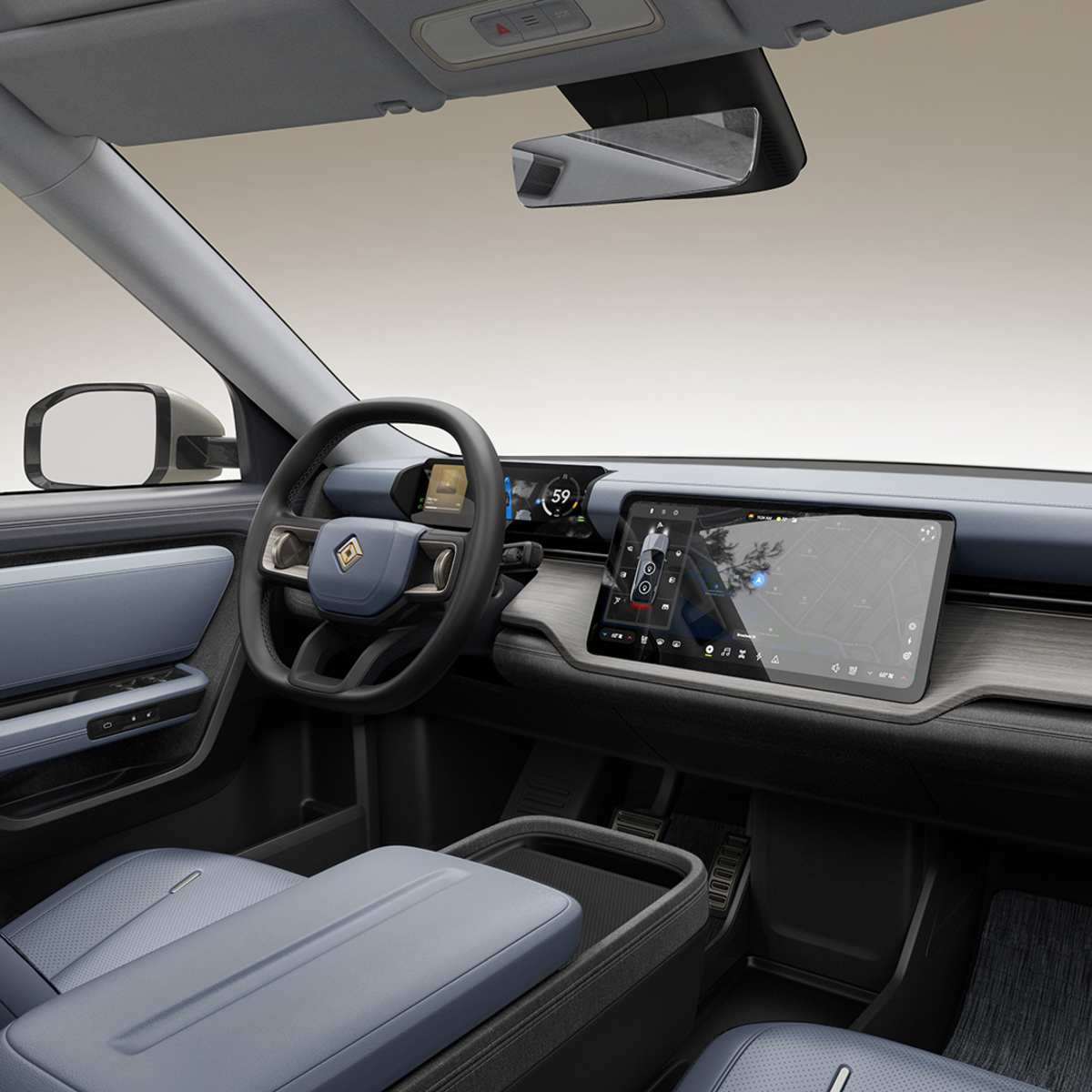
Rivian R2
"...ve years is Rivian Volkswagen and the R1 line and R2 and whatever their Scouts. And maybe the R3 never..."
The Rivian R2 is an electric vehicle that Rivian is planning as a smaller option compared to its larger R1 vehicles. The podcast is talking about how Rivian’s lineup might expand over the next few years. It’s essentially about what models could come next.
The Rivian R2 is a smaller, more affordable-in-position electric vehicle that’s part of Rivian’s broader R-series strategy. It’s discussed in the context of Rivian’s future lineup and how the company’s different models (R1 line and beyond) fit together. The episode also hints at uncertainty about which models will arrive and when.
Rivian R3
"...y it could they could call they could release the Rivian R3, call it a rabbit, change the nose on it and it w..."
The Rivian R3 is a vehicle name the podcast talks about as a possible future Rivian model. The speakers are speculating about how it might look or what it might be called. It’s mainly a discussion about what could come next in Rivian’s lineup.
The Rivian R3 is discussed as a possible future addition to Rivian’s lineup, with the episode speculating about naming and design changes. The conversation suggests it could be positioned differently (even joking about calling it something else) while still fitting into Rivian’s R-series approach. It’s relevant because it shows how Rivian’s product planning might evolve.

Traveler Scout Volkswagen
"...or so ago. Whenever that was, we were having this Scout Volkswagen conversation, Scout Volkswagen Rivian conversatio..."
“Traveler” sounds like a vehicle name or project label mentioned in the podcast. It’s being brought up while the hosts talk about possible EV models and how they relate to other “Scout” style ideas. The episode doesn’t provide enough detail here to treat it like a full review.
“Traveler” is mentioned in the context of a broader conversation about Rivian and other EV “Scout” style discussions. It sounds like a vehicle name or project label being compared or grouped with those ideas. In this episode, it functions as part of the lineup conversation rather than a detailed technical review.

Tesla Semi
"So Tesla Semi, the truck that was shown almost 10 years ago at this point, I guess is finally starting to come into production. I guess last week they announced their high volume production line in Nevada is finally actually starting to produce."
Tesla Semi is Tesla’s electric big-rig truck for hauling goods. The key challenge is getting enough charging stations and power so it can actually run routes reliably.
Tesla Semi is Tesla’s battery-electric Class 8 semi truck, designed for long-haul freight. The big story is not just the vehicle itself, but the production ramp and how it depends on charging infrastructure to keep trucks moving on schedule.
slow ramp up
"in Nevada is finally actually starting to produce. So that's that's probably also still going to be a slow ramp up. But only seven years later than their target."
A slow ramp up means the factory starts making cars or trucks, but it takes time to reach high production levels. That delay can affect when customers actually get vehicles.
A slow ramp up is when a new factory or production line increases output gradually rather than immediately reaching full volume. In EV manufacturing, ramp timing matters because it affects how quickly vehicles can be delivered and how fast supply can meet demand.
charging infrastructure
"But so one of the critical components specifically for electric class A trucks is the charging infrastructure. So Tesla, now it's something that I found kind of interesting."
Charging infrastructure means the charging stations and the electrical power behind them. For electric trucks, you need enough of it along common routes so the trucks can keep working.
Charging infrastructure is the network of charging stations, power delivery, and site planning needed to recharge electric vehicles. For electric Class A trucks, it’s critical because charging time and station availability directly affect route planning and uptime.

Dodge Charger
"... interesting. So we already talked about the mega charger. So this is a lower charge rate, but it still use..."
The Dodge Charger is a performance car model from Dodge. The podcast is talking about charging—how quickly it can charge and what kind of charging setup it uses. Even though it’s a car name, the discussion is really about charging performance.
The Dodge Charger is a performance-oriented sedan/coupe-style car that’s known for strong power and a long enthusiast history. In an EV-focused podcast, it’s being discussed because there are EV-related topics like charging rate and how a “charger” setup works with the vehicle. The context suggests the episode is comparing charging behavior across different setups or versions.
MCS plug
"So this is a lower charge rate, but it still uses the MCS plug. It's called the base charger."
The MCS plug is the connector shape/standard used for fast DC charging. It matters because it lets the same truck or charger setup work at different charging stations.
The MCS plug refers to a specific connector standard used for high-power DC fast charging. Using the same plug across charger tiers helps fleets and drivers avoid retooling their charging hardware when they move between sites.
DC
"It's still DC, but it's 125 kilowatt as opposed to like one point two to one point five megawatt."
DC charging is the type of fast charging that can push a lot of power into the car quickly. It’s different from normal home charging, which is usually slower.
DC (direct current) fast charging delivers electricity directly to the vehicle’s power electronics, enabling much higher charging power than typical AC charging. In this segment, the hosts contrast DC fast charging power levels to explain how quickly range can be replenished.
kilowatt
"It's still DC, but it's 125 kilowatt as opposed to like one point two to one point five megawatt."
Kilowatts (kW) tell you how much charging power a charger can deliver. More kW usually means faster charging, but the car still has limits.
Kilowatt (kW) is a unit of electrical power and is commonly used to describe how strong a charger is. Higher kW generally means faster charging, though the vehicle’s battery and thermal limits still cap the real-world rate.
megawatt
"It's still DC, but it's 125 kilowatt as opposed to like one point two to one point five megawatt."
A megawatt (MW) is a huge amount of power—1,000 times a kilowatt. The hosts mention it to show that the “mega charger” is in a much higher power category than normal fast chargers.
A megawatt (MW) is 1,000 kilowatts, and it’s an extremely high power level for charging infrastructure. The segment uses MW-class charging to illustrate how much more power a “mega charger” can deliver versus the base charger.
range replenishment
"So about a tenth of the power, but they're claiming sixty percent range replenishment in about four hours."
Range replenishment means how much driving distance you get back after charging for a certain amount of time. It’s a practical way to compare how fast different chargers add usable battery capacity.
Range replenishment is how much driving distance (or “range”) a vehicle gains after charging for a given time. It’s often expressed as a percentage of the battery’s usable range over a time window, which helps compare charging speed across different charger power levels and vehicles.
depot fleet model
"Like if they're going between different depots owned by the same company... Like that's this is kind of kind of seems like it's intended for kind of like overnight charging. So like kind of a depot fleet model."
A depot fleet model is when trucks or vehicles mostly run from a home base (a depot) and come back each day. Charging can be planned for overnight, instead of relying on random stops.
A depot fleet model is an operating pattern where vehicles start and end at a shared depot, doing routes during the day and returning for charging overnight. Charging infrastructure is designed around predictable daily duty cycles rather than one-off public charging.
battery capacity vs charging speed mismatch
"So if you take something that's got what did we decide that the the truck is like 800 kilowatt hour battery... And you've got superchargers that are capable of charging your car at. Whatever, 180, 200 kilowatts. Why so slow for this?"
They’re basically saying: even if you have a big battery, charging speed depends on the charging setup too. Sometimes it’s slower on purpose because the system is designed for something other than ultra-fast charging.
The segment is contrasting a large battery (tens to hundreds of kWh) with the charging power available (hundreds of kW) and questioning why charging isn’t “quick.” In practice, charging speed depends on both battery size and the system’s charging strategy—some setups prioritize cost or throughput over rapid charging.
superchargers
"And you've got superchargers that are capable of charging your car at. Whatever, 180, 200 kilowatts. Why so slow for this?"
“Superchargers” are Tesla’s fast-charging stations. They can charge a Tesla quickly, but the car still has limits on how fast it can take power.
“Superchargers” here refers to Tesla’s high-power DC fast-charging network. These chargers can deliver very high charging power (often hundreds of kW), but the vehicle and battery chemistry determine the real-world charging rate.
charging power
"Whatever, 180, 200 kilowatts. Why so slow for this? Well, because it's not meant for quick charging."
Charging power is how quickly the charger can deliver energy to the car. If the battery can’t accept that much power, charging will be slower even at a fast station.
Charging power is the rate at which energy is delivered to the vehicle during charging, typically expressed in kW. Even with a high-power charger, the car may charge more slowly if it can’t accept that much power at that moment.
mega charger
"The the mega charger, the MCS plug is just the end, the cable and the end to it."
A “mega charger” means a very high-power charging station meant for bigger vehicles. It’s designed to deliver a lot of electricity quickly compared with typical chargers.
A “mega charger” is a high-power charging setup intended for very large energy delivery, typically aimed at commercial vehicles. In this discussion, it’s contrasted with superchargers and linked to the MCS plug, implying a megawatt-class charging ecosystem.
apples and oranges
"But again, getting back to the apples and oranges thing, this this is purpose built for commercial trucks."
“Apples and oranges” is used here as a framing concept: the speakers argue that comparing passenger-car charging gear to commercial-truck charging gear is not a fair like-for-like comparison. The implication is that different vehicle classes have different power needs, infrastructure, and business targets.
software upgrade
"We then potentially a later software upgrade."
A software upgrade is like updating the charger’s computer. The idea here is that the charger might be limited today, but later the software could allow it to charge faster.
A software upgrade in charging hardware can change how the charger behaves—such as enabling higher power output or adjusting charging profiles—without replacing the physical equipment. In the segment, it’s suggested that the system might be “slowed down” now but later unlocked via software.
MCS 2.4
"I guess that was they called the MCS 2.4 or something. Anyway, who knew?"
MCS 2.4 is a specific charging standard/version tied to Tesla’s high-power charging hardware. The episode is saying that this kind of setup ended up spreading beyond Tesla and became widely used for big trucks.
MCS 2.4 refers to a specific version of Tesla’s charging connector/standard used for high-power charging. The hosts discuss how Tesla’s approach (including this “MCS” variant) was expected to influence the broader industry and eventually became common for heavy trucks.
charger wars
"So it was not like a fate at complete that, you know, charger wars are over, Tesla's won."
“Charger wars” is the idea that EV charging wasn’t standardized at first—different companies used different plug/charging systems. The segment suggests that the industry eventually converged on one main approach.
“Charger wars” describes the period when different companies pushed competing charging standards and connector designs for EVs. The hosts frame it as a competition that eventually settled, with Tesla’s standard gaining broad adoption.
heavy truck charging standard
"But it seems like MCS has effectively become the universal heavy truck charging standard. Yeah."
This part is about EV charging for big trucks—how the industry is settling on one main charging standard. It’s more about “what’s becoming common” than how the charger works internally.
This segment focuses on how a particular EV charging standard (MCS) is becoming the default for heavy-duty trucking. It’s a topic about infrastructure adoption rather than a technical deep-dive into the hardware itself.
DHL
"So DHL, Frito, La, whatever, they probably they have probably had those. They Tesla probably installed the fast chargers at their depots."
DHL is a logistics company referenced here as an example of a fleet operator that likely uses Tesla-installed fast chargers at depots. The mention is about real-world charging deployment by major delivery networks.
top them off overnight
"They're going to sit for four to eight, 10 hours overnight, something that'll be able to top them off overnight."
“Top them off overnight” describes charging strategy for fleets that park for long periods—charging enough during downtime to be ready for the next shift. It implies lower average charging power than megawatt-class fast charging, because the vehicle has many hours to reach a usable state of charge.
MCS standard
"They only have MCS. So, you know, you couldn't use an axe plug on them if you want it. So yeah, they needed something that used the MCS standard."
MCS is a charging plug/charging system standard for very high-power EV charging. If a truck uses MCS, you need chargers built for that same standard—other plug types won’t work.
“MCS” refers to the Megawatt Charging System, a standardized high-power charging interface designed for heavy-duty EVs. If a vehicle only supports MCS, it can’t use other connector standards (like CCS/other plug types), so the charging infrastructure has to match the vehicle’s standard.
transformers
"And then are the transformers that we've installed when you were doing this test are for the megawatt. And this is how the math works out."
Transformers are part of the power system that prepare electricity for the charger. If the transformer is too small, the station can’t provide as much charging power as you might expect.
Transformers are electrical components that adjust voltage levels so the charging system can safely and efficiently deliver the right power to the chargers. The discussion implies that the installed transformer capacity may limit how much total power is available (e.g., for a megawatt-scale setup).
cable
"Yeah, I mean, no, there'll be like the board where it connects. That'll be different. The cable will be different."
The cable is the thick wire that carries electricity to the car. It has to be strong and able to handle heat from fast charging.
The cable in EV charging is a high-current power conductor, and its design affects heat management, voltage drop, and durability. The transcript indicates the cable may differ from other components (like the board/connection hardware) even if the overall charging system is similar.
DC power
"But electricity is electricity is still charging DC power into a truck."
DC power is the type of electricity EVs want for charging. The charger usually converts the power from the grid into DC before it goes into the battery.
DC power (direct current) is electricity that flows in one direction. Most EV charging discussions revolve around converting grid AC power into DC so the vehicle can charge its battery efficiently.
delay
"And to me, it's like, oh, they put a different head on a supercharger and installed the delay."
Here, “delay” likely means the charger waits a bit or changes when it starts or ramps up charging. It’s about timing—how the system behaves rather than a physical part.
In charging hardware discussions, “delay” usually refers to a timing or control behavior—such as when charging starts, when power ramps up, or how long the system waits before enabling output. Without more context, it’s best understood as a software/controls change affecting charging behavior.
payment terminals
"What other items? Payment terminals, optional."
Payment terminals are the machines at a charger where you can pay with a card or phone. Some chargers are set up for public use, while others work only for a specific fleet or account.
Payment terminals are the card/contactless or payment interfaces at charging stations that let drivers pay directly at the charger. Whether they’re required depends on the charging model (public pay-at-the-pump style vs. fleet/private network access).
private depot fleet
"But I guess the difference would be if it's a private, like a depot fleet, you wouldn't need a payment terminal because it would be within your network."
This is charging meant for one organization’s vehicles. Since only that group uses it, the charger can use account/network access instead of a public payment terminal.
A private depot fleet is a charging setup where access is limited to a specific group (like a company’s vehicles) rather than the general public. In that case, the system can rely on network authentication and internal payment, reducing the need for on-site payment terminals.
base charger
"And if they put a base charger in the areas where the trucks are a park over night overnight. Yeah, that creates other chaos because now you got trucks pulling in and out"
A “base charger” is a simpler, usually slower charging setup than the fastest chargers. If trucks need more time at those chargers, it can cause lines, traffic, and more accidents while vehicles are coming and going.
A “base charger” refers to a lower-power charging setup compared with higher-speed options. In fleet or truck-stop contexts, using lower-power chargers can increase how long vehicles occupy charging spots, which can lead to congestion and even damage from maneuvering.
temperature effects on EV efficiency
"It's a press release from AAA studies affect the high and low temperatures of EVs and the hybrids... 95 degree Fahrenheit... While EVs show a 10.4 percent reduction in efficiency... Like 75, 80 degrees is kind of they're optimal."
EVs don’t like very hot or very cold weather because they have to spend extra energy to keep the battery and electronics working properly. The hosts say there’s a temperature range where efficiency is best.
EV efficiency can drop in extreme temperatures because the battery and power electronics need more energy to maintain safe operating conditions. This segment cites AAA testing that compares EVs and hybrids across hot/cold conditions and finds an “optimal” temperature range.
fuel efficiency
"95 degree Fahrenheit, hybrids experience, 12 percent decrease in fuel efficiency. While EVs show a 10.4 percent reduction in efficiency."
Fuel efficiency means how much energy the car uses to go a certain distance. They’re talking about how hot or cold weather can make the car use more energy, so you get worse efficiency.
Fuel efficiency is how much energy a vehicle uses to travel a given distance. In this segment, the hosts compare how cold or hot weather changes fuel efficiency for hybrids versus EVs.
calculated driving range
"[3107.6s] And a 39 percent decrease in calculated driving range, which is all fake numbers [3112.2s] anyway, with calculated driving range. [3115.1s] Your favorite measurement, MPGE."
Calculated driving range is the number the car estimates for how far you can go. In real life, weather and how you drive can make that number change a lot.
Calculated driving range is the estimated distance an EV (or hybrid) can travel before running out of usable energy, based on assumptions. Real-world range can differ due to temperature, speed, terrain, and charging behavior, so the estimate can be optimistic or pessimistic.
MPGE
"[3112.2s] anyway, with calculated driving range. [3115.1s] Your favorite measurement, MPGE. [3117.4s] Yeah, I whatever."
MPGe is a comparison number that tells you how far an EV can go using the same amount of energy as one gallon of gas. It helps you compare an EV to a gas car without doing electricity math.
MPGe (miles per gallon equivalent) is a way to compare the energy use of EVs to gasoline cars. It converts electricity consumption into an equivalent “gallon of gas” energy basis so different powertrains can be compared on a single scale.
DC fast charging
"[3153.8s] They said, I guess this would also depend on where you live to. [3159.8s] If you live in a place with high electricity rates. [3162.6s] So DC fast charging, I know in California, at least it's typically between"
DC fast charging is the quick-charging option you use at public stations. It can refill an EV much faster than charging at home, but it often costs more per unit of electricity.
DC fast charging is a method of charging an EV using direct current delivered at high power. Because it’s faster than typical home charging, it can be convenient for road trips, but the electricity price per kWh is often higher.
off peak rates
"[3174.9s] So if you charge at home, if you charge an EV at home, like on off peak rates, [3181.8s] they're cheaper to drive than hybrids. [3184.7s] But if you're always using like superchargers and DC fast chargers,"
Off-peak rates are electricity pricing periods when the utility charges less for power. Many EV owners can reduce charging cost by scheduling charging during off-peak windows, especially when charging at home.
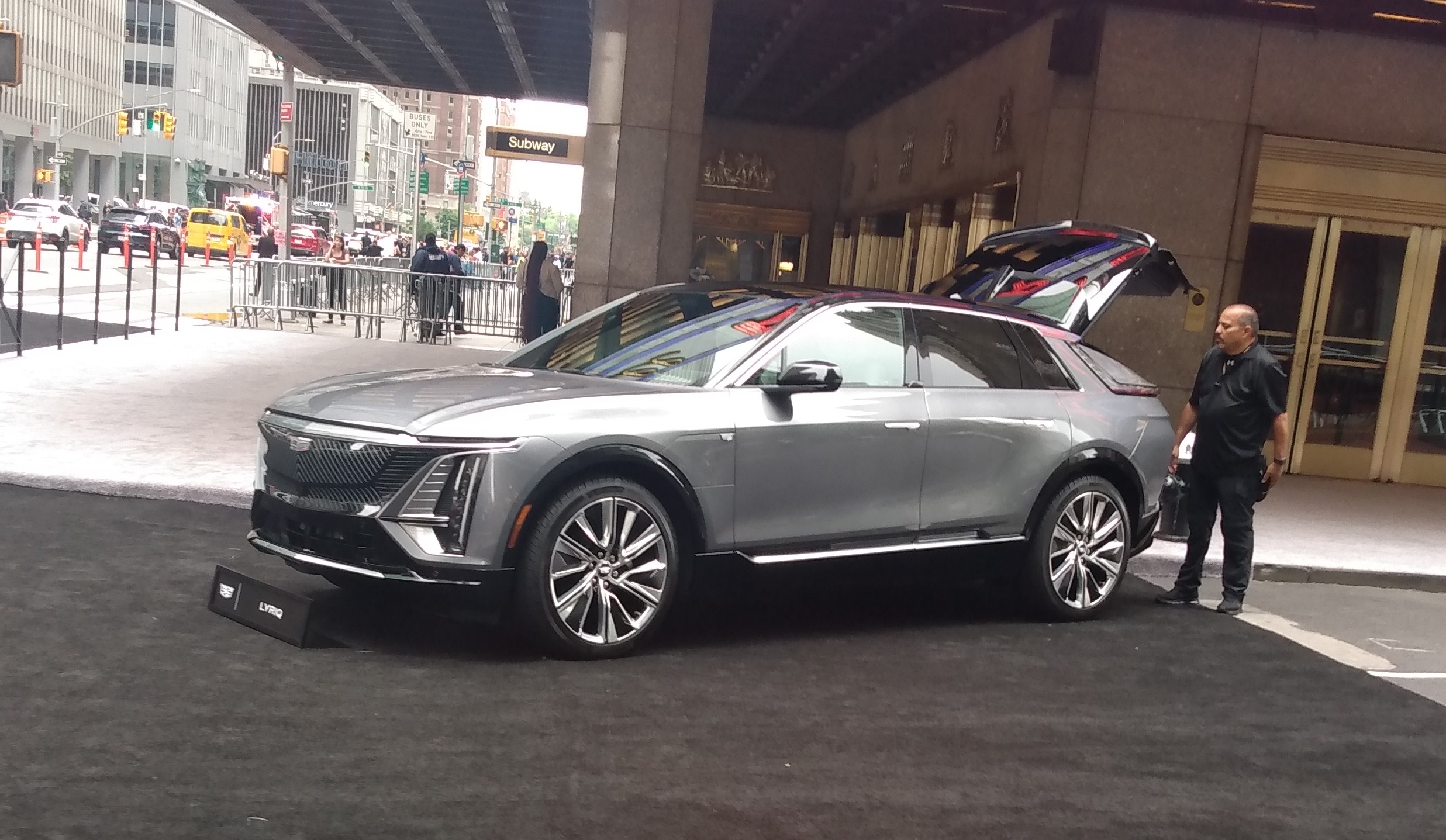
Cadillac Lyric
"... but. But you may be going out in the future in a lyric hearse. That seems good."
The Cadillac Lyriq is an electric luxury SUV made by Cadillac. It’s designed for comfortable everyday driving while using an all-electric powertrain. The podcast mentions it in a joke about the name, but it’s still a real EV model.
The Cadillac Lyriq is a battery-electric luxury SUV from Cadillac, designed to bring EV technology into a premium, comfort-focused package. In the episode, it’s mentioned with a humorous “Lyriq hearse” line, which points to how the name sounds and how people might joke about it. The car is relevant because it represents Cadillac’s EV push in the luxury SUV segment.
high voltage battery
"So because if you cut this one right down the middle. Cut in the high voltage battery. You have slight issues, slight issues."
In an EV, the high voltage battery is the big battery that powers the car’s electric motors. If you cut and stretch a car and that battery is in the way, it becomes much harder and riskier to do safely.
A high voltage battery is the main battery pack in an EV that stores and supplies electricity to the motors through high-voltage power electronics. Cutting a vehicle “right down the middle” through the high voltage battery area is a major engineering and safety challenge, because it can introduce electrical, structural, and crashworthiness issues.
all wheel drive
"But the cool thing with this is if you have an all wheel drive lyric or any EV. Well, so the releases that's going to be offered rear wheel drive only."
All-wheel drive (AWD) means power is sent to more than one axle—typically both the front and rear wheels—so the car can manage traction better. For a stretched EV, AWD adds complexity because you may need additional drivetrain components and packaging compared with rear-wheel drive.
rear wheel drive
"Well, so the releases that's going to be offered rear wheel drive only. Even I mean, that's fine too."
Rear-wheel drive (RWD) means the drive wheels are the rear axle, with power delivered to the rear wheels through the drivetrain. The hosts suggest that offering RWD-only can simplify the conversion/packaging compared with AWD when building a lengthened EV.
custom drive shaft
"You were looking at you had to beef up the transmission... you had to do a custom drive shaft."
A drive shaft is the part that sends power from the transmission to the rear wheels. If you stretch the car, the distance changes, so you may need a custom drive shaft to make everything line up.
A drive shaft transfers rotational power from the transmission to the differential and ultimately the wheels. When a vehicle is lengthened, the distance between drivetrain components changes, so a custom drive shaft is often required to maintain correct fitment and driveline geometry.
lengthening it
"And there's all this stuff that you've got to look at when you're lengthening it because of the way leverage works and pivot points and all this stuff."
Lengthening means adding extra body length, like a limo conversion. Doing that changes how the car flexes and where forces act, so engineers have to account for extra twisting and bending.
Lengthening a vehicle (like adding a center section for a limousine or hearse) changes the structure’s geometry and how forces travel through the body. The hosts mention leverage, pivot points, and stress paths—because stretching can increase bending and twisting loads compared with the original design.
torque
"Starting is where you have issues [3395.1s] because that is where you apply all this torque to the tires."
Torque is the “twisting pull” your motor makes. When you start moving, that pull goes to the tires, and that’s what can make them grip or spin.
Torque is the twisting force an engine or motor produces. In a vehicle, higher torque—especially at launch—means more force is applied to the tires, which affects traction and how easily the tires spin.
Toyo tires
"When I bought the last set of I think there were Toyo tires for my F 250, [3405.3s] you could buy two different types of them."
Toyo Tires is a tire maker. The host is saying they sell similar tires in different versions, depending on how much twisting force (torque) the vehicle applies when starting.
Toyo Tires is a tire brand that offers different tire constructions and load/traction ratings. In this segment, the key point is that the same tire “family” can be sold in different variants intended for different engine/torque use cases.
Trevor Milton
"[3440.4s] Truck semi. [3442.0s] Trevor Milton popped out of the woodwork with that. [3444.8s] I don't know if you saw that trash."
Trevor Milton is a public figure tied to the truck industry and past controversies. Here he’s brought up because he’s making comments about Tesla’s big electric truck.
Trevor Milton is a well-known figure associated with the early hype and later controversy around Nikola, an alternative-fuel truck company. In this segment, he’s mentioned as commenting on the Tesla Semi, framing the discussion as part of a public dispute.
Request an Explanation
Heard something you'd like explained? We'll add it to this episode.
Sign in to request explanations for terms you heard.
Want to learn more?
Browse our glossary for plain-English explanations of automotive terms, jargon, and concepts.
Help improve this episode
See something that's not quite right? Our annotations are AI-generated and can sometimes miss the mark. Click the flag icon on any annotation to suggest a correction.