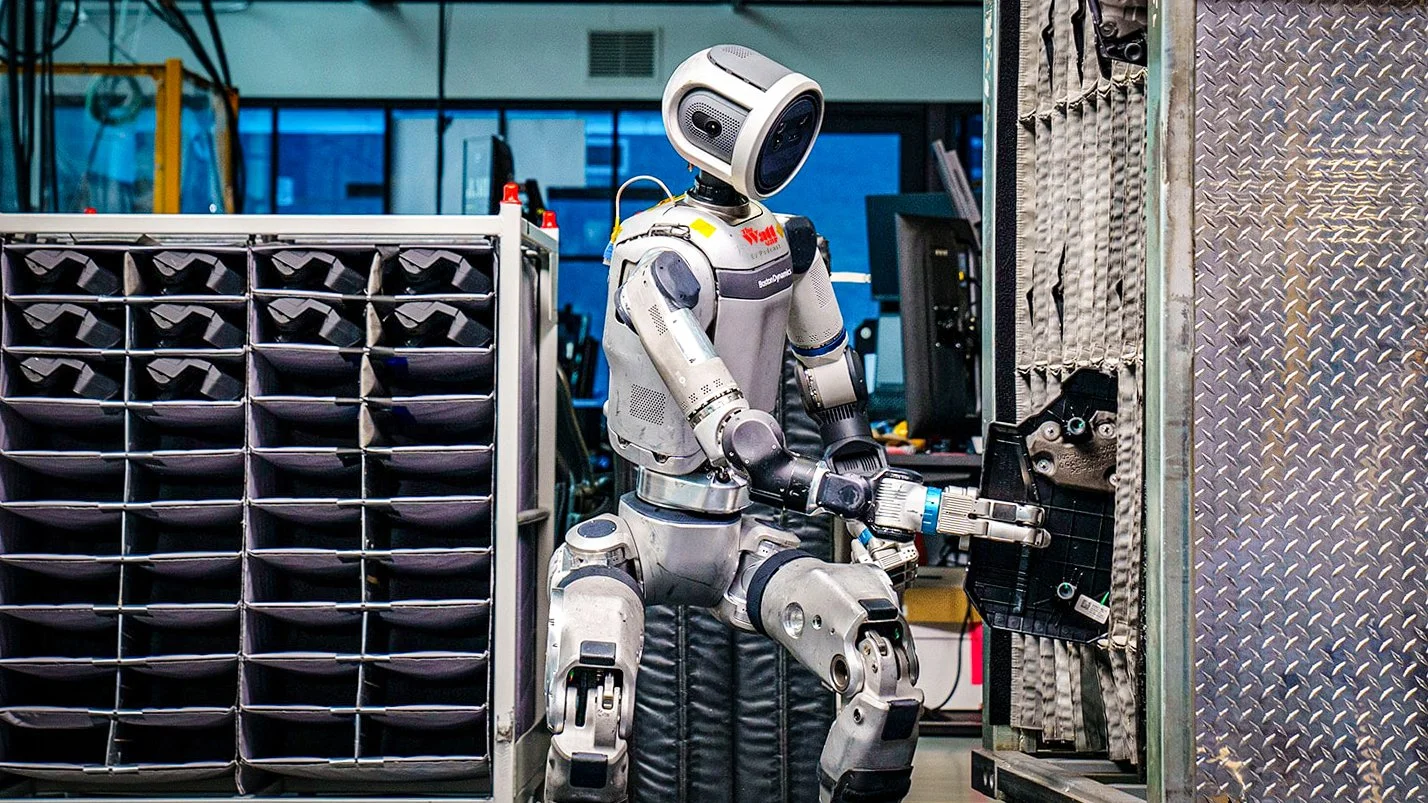
About this episode
Hyundai’s latest Ioniq news kicks things off, with hosts calling out headline specs like “66.8 kilowatt hour battery and 620 kilometers in range” and debating how real-world performance and styling will age. The conversation then shifts from EV “fake gear shifts” and virtual sound design to Hyundai’s humanoid-robot bet—buying Boston Dynamics and discussing Atlas reliability benchmarks. From there, they broaden into factory automation, job impacts, and EV company survival, ending with Jeep Recon efficiency and Porsche Taycan wagon fallout.
From a ho-hum car to more fake ICE sounds to robot overlords, Hyundai’s in the news! Is this Korean automaker joining Tesla in building the robots that are mankind’s downfall? One of the hosts of this podcast thinks it’s a possibility. Plus, Lucid stares at death’s door, Porsche’s U.S. sports wagons are no more…and more!
Subscribe to the podcast on Apple Podcasts, Amazon Music, Audible, Spotify, PocketCasts, iHeartRadio, Podbean, and more! Or heck, use your favorite podcast application.
Perhaps you prefer to watch as well as listen. If so, we’ve got you covered.
SHOW NOTES
Hyundai reveals Ioniq V at Beijing Auto Show: https://carnewschina.com/2026/06/15/hyundai-ioniq-v-fastback-revealed-66-8-kwh-battery-and-620-km-range/
Hyundai’s global R&D chief says next-gen N EVs will be better at faking ICE cars: https://www.autocar.co.uk/car-news/electric-cars/hyundai-developing-even-more-realistic-electric-n-cars
Hyundai pays $325 million for remaining 10% stake in Boston Dynamics: https://www.gadgetreview.com/softbank-walks-away-from-boston-dynamics-for-325-million-hands-hyundai-the-keys
GM fires 1,000 factory workers and replaces them with robots: https://www.autoblog.com/news/gm-cut-1000-workers-at-its-ev-plant-then-added-robots
Deathwatch? Lucid lays off 18% of staff: https://electrek.co/2026/06/22/lucid-lays-off-18-percent-second-cut-four-months/
Lucid lays off COO Marc Winterhoff (who was interim CEO) and is eliminating COO position: https://eletric-vehicles.com/lucid/lucid-coo-exit-ends-undisclosed-eight-year-relationship/
Jeep Recon is a huge electron-guzzler: https://insideevs.com/news/799088/2026-jeep-recon-epa-range-efficiency/
RIP Speedwagons: Porsche drops Taycan Cross and Sport Turismo from US lineup: https://www.theautopian.com/porsche-just-killed-the-beautiful-taycan-wagon-lets-see-how-cheap-we-can-find-a-used-one/
This week’s hosts: Phil Royle and Edward A. Sanchez
Episode art courtesy Boston Dynamics
Music courtesy Twisterium at Pixabay
Website: https://www.thewattcar.com
Buy merch: https://www.thewattcar.com/store
YouTube: https://www.youtube.com/@thewattcar

Hyundai Ioniq
"I don't know. Hyundai reveals the Ioniq V. Well, they already have an Ioniq five, so I do..."
The Hyundai Ioniq is Hyundai’s name for its electric cars. Hyundai has already made an Ioniq 5, and the podcast is talking about more Ioniq EVs being revealed. The key point is that it’s an EV series, not just one single car.
The Hyundai Ioniq line is Hyundai’s family of electric vehicles, with different models under the Ioniq name. In the podcast, the Ioniq is mentioned because Hyundai has already offered an Ioniq 5 and is associated with further Ioniq EV reveals. It’s discussed as part of the broader EV lineup growth from a major automaker.
CLTC
"It's that translates 385 miles CLTC. Realistically, let's just call it 300 ish."
CLTC is a test method used in China to estimate how far an EV can go on a full charge. It’s a lab-style number, so your real range can be different depending on how you drive and the weather.
CLTC is a standardized testing cycle used in China to estimate an electric vehicle’s range. Because it’s based on specific assumptions about speed, temperature, and driving style, CLTC numbers often don’t match real-world range as closely as some other standards.
single or dual motor
"I don't know if this is a single or dual motor, top spec 225 horsepower. So not not a plaid or a sapphire, but good enough."
Some EVs have one electric motor, while others have two—usually one in front and one in back. Two motors can help the car put power down more effectively, which can make it feel faster and more stable.
An EV can use one motor (single-motor) or two motors (dual-motor), typically one for the front axle and one for the rear. Dual-motor setups can improve traction and allow more flexible torque distribution, often resulting in quicker acceleration and better control.
225 horsepower
"I don't know if this is a single or dual motor, top spec 225 horsepower. So not not a plaid or a sapphire, but good enough."
Horsepower is a measure of how much power the car can make. It’s one way to compare cars, but how the power is delivered can change how fast it feels.
Horsepower is a measure of how much power the vehicle can produce. For EVs, the key nuance is that power output and how quickly it’s delivered (torque and control strategy) often matter as much as the headline horsepower number.
800 volt architecture
"800 volt architecture, 3,800 pounds. Scheduled to hit the Chinese market sometime in 2026."
“800-volt” describes how the EV’s electrical system is set up. Higher voltage can let the car charge faster and move power more efficiently, as long as the charging station supports it.
800-volt architecture refers to an EV’s high-voltage electrical system, which can reduce current for a given power level. That typically enables faster charging and more efficient power delivery, especially when paired with compatible high-power chargers.
3,800 pounds
"800 volt architecture, 3,800 pounds. Scheduled to hit the Chinese market sometime in 2026."
That’s the car’s weight. Heavier cars can use more energy and may feel different to drive, even if they have plenty of power.
3,800 pounds is the vehicle’s curb weight, which matters because EVs are often heavy due to battery mass. Higher weight can affect efficiency, acceleration feel, and braking/handling balance, even if the car has strong power.

Toyota Corolla
"...e, so it reminds me of a Honda zero meets the new Corolla that they just Toyota just revealed last year con..."
The Toyota Corolla is a common, everyday car that’s usually chosen for being reliable and easy to live with. It’s not an EV by default, but it’s often mentioned when people talk about how new cars compare to what you can buy today. The discussion is usually about how it feels and fits into daily driving.
The Toyota Corolla is a long-running compact car known for being practical, efficient, and widely available. In an EV-focused podcast, it comes up because people often compare how mainstream gas models (and their recent updates) relate to the feel and packaging of newer EVs. It’s discussed as a reference point for what “normal” everyday cars are like compared with electrified options.

Tesla Cybercab
"...led last year concept. And then also like a Tesla cybercab, like is the color accidental? The like it's a ve..."
The Tesla Cybercab is a proposed Tesla vehicle concept that’s meant for transportation services, not just personal ownership. The podcast mentions it in the same conversation as other Tesla vehicles to talk about what Tesla might build next. The key point is that it’s a mobility-focused idea.
The Tesla Cybercab is a concept/idea discussed as a future Tesla autonomous or ride-hailing-focused vehicle. It’s mentioned alongside the Cybertruck, with the podcast comparing “100/zero” style performance expectations and the broader Tesla product direction. In this context, it represents Tesla’s move beyond personal EVs into dedicated mobility concepts.

Tesla Model 3
"..., that's typical. That's in the range of like the Model 3. Yeah, it seems portly to me, but well, not when ..."
The Tesla Model 3 is an electric car (it runs on a battery instead of gasoline). It’s made to be a practical daily driver, and many people use it as a comparison when talking about other EVs. The conversation is likely about how big or heavy an EV like this tends to be.
The Tesla Model 3 is a mainstream electric sedan designed for everyday driving with a focus on software and charging convenience. It’s frequently used as a benchmark for EV size, performance, and range because it’s one of the most common reference points in the market. In the podcast, it’s mentioned in the context of typical EV weight/range expectations.

BMW M5
"...it seems portly to me, but well, not when the new M5 is like almost 6,000 pounds."
The BMW M5 is a powerful version of a regular BMW 5 Series sedan. It’s designed for quick acceleration and high-speed driving. The podcast mentions it to compare how heavy a fast car can be.
The BMW M5 is a high-performance version of the 5 Series, built for serious power and fast driving while still being a full-size sedan. It’s discussed because its weight and performance characteristics are often compared to EVs, especially when people talk about how “heavy” modern cars can be. In the podcast, it’s used as a reference point for what a very fast gas car weighs.

Tesla Cybertruck
"...her for slash because like it's cyber cab and the Cybertruck. 100 zero."
The Tesla Cybertruck is an electric pickup truck. It’s designed to be tough and useful, and it looks very different from most trucks. The conversation is using it as an example of an EV truck and its performance expectations.
The Tesla Cybertruck is an electric pickup truck known for its unusual angular design and strong emphasis on durability and utility. It’s a major talking point in EV discussions because it represents a bold approach to the truck segment. In the podcast, it’s referenced alongside other Tesla concepts and EV “100/zero” style comparisons.
fake gear shifts
"Yeah, we're not going to, to shed a tear about that. [573.8s] Now, will you shed a tear if this also had multiple gear sounding, uh, fake [582.9s] noises, fake noises that go with it because the R&D chief at Hyundai says the [589.2s] next gen N EVs will be better at being a fake car."
Some EVs add pretend “gear shift” behavior. Since EVs don’t shift like gas cars, the car uses sound and timing to make it feel more like a normal transmission.
“Fake gear shifts” are artificial driveline cues used in some EVs to mimic the sensation of shifting gears. Because EVs don’t have traditional gear changes in the same way as manual or automatic cars, manufacturers use sound and control logic to create that familiar rhythm.
fake noises
"Now, will you shed a tear if this also had multiple gear sounding, uh, fake [582.9s] noises, fake noises that go with it because the R&D chief at Hyundai says the [589.2s] next gen N EVs will be better at being a fake car."
EVs sometimes play made-up engine sounds through the speakers. The goal is to make the car feel more like a gas car when you accelerate or change modes.
“Fake noises” refers to synthesized engine/drive sounds played through speakers to simulate a combustion-car experience. In EVs, this is often tied to driving modes and can include effects that resemble acceleration, rev changes, or gear changes.
R&D chief
"Now, will you shed a tear if this also had multiple gear sounding, uh, fake [582.9s] noises, fake noises that go with it because the R&D chief at Hyundai says the [589.2s] next gen N EVs will be better at being a fake car."
“R&D chief” means the top leader in charge of research and development. In this case, they’re talking about engineering changes to future Hyundai EVs.
“R&D chief” means the head of Research and Development, the executive responsible for directing engineering work and new product ideas. Here it’s used to attribute the statement about improving artificial sound/shift behavior on future Hyundai N EVs.

Hyundai Ioniq 5N
"...tly some Porsche engineers like, uh, evaluated an Ioniq 5N and they were actually really impressed by it, by..."
pure EV mode
"[635.2s] Actually slower in that mode. [637.6s] Yeah. [638.1s] It's faster and pure EV mode. [639.9s] When you do the fake shifts and stuff, it actually slows it down."
“Pure EV mode” is a driving mode that prioritizes the car’s straightforward electric behavior rather than adding artificial combustion-like cues. In the segment, the host claims the car is faster in pure EV mode than when using the fake shift/sound effects.
virtual gear shifts
"Hyundai told auto car that he is quote, super proud of the virtual gear shifts function and said the brand plans to develop it further for the next iteration."
EVs don’t shift like gas cars, so some manufacturers add simulated shift “events.” That can include a sound or a momentary change in how the car responds so it feels more like a normal transmission.
“Virtual gear shifts” are artificial shift events created by an EV’s software to mimic the feel and sound of changing gears in a traditional car. Because EVs don’t have gears in the same way, manufacturers use this kind of feedback to make acceleration feel more familiar and engaging.
idling exhaust backfiring
"I want to make it more realistic. I want to enhance it further idling exhaust backfiring and vibration in the car."
Backfiring is the popping/crackling sound people associate with some gas engines. Since EVs don’t have the same exhaust behavior, this is about adding or simulating that kind of sound effect for the driver.
“Exhaust backfiring” refers to popping or crackling sounds that happen when unburned fuel ignites in the exhaust system. In an EV context, hosts are discussing simulated or enhanced sound effects (including at idle) to create a more “enthusiast” feel.
vibration
"I want to make it more realistic. I want to enhance it further idling exhaust backfiring and vibration in the car."
Here, “vibration” means the car intentionally shakes or pulses in a way you can feel. The goal is to make the experience more exciting, even though an EV doesn’t naturally create the same engine sensations as a gas car.
In this context, “vibration” is a deliberate tactile feedback effect used to make the car feel more alive during acceleration, idle, or sound-effect moments. It’s part of the broader strategy of using artificial sensory cues to increase driver engagement in an EV.
engine speed
"Maybe it gives a sensation of speed and that is important. That's an important aspect when driving high performance driving is to know how fast you're going and engine speed can kind of give you that."
Engine speed is basically how fast the engine is spinning, usually measured in RPM. In driving, it helps you judge what the car is doing and how hard it’s working.
Engine speed (RPM) is how fast the engine is rotating, and it strongly influences how a driver perceives acceleration and urgency. The host argues that engine speed helps communicate “how fast you’re going,” even when other simulated effects (like backfiring) may be less convincing.
Ioniq 5N
"You know what? In full disclosure, I've not driven an Ioniq 5N, but it's gotten good reviews and so cool."
The Hyundai Ioniq 5N is a sportier, more performance-oriented version of the Ioniq 5 electric car. The discussion here is about how EVs can create driving “feedback” sounds and sensations to feel more engaging.
Hyundai Ioniq 5N is a performance-focused version of the Ioniq 5 electric crossover, tuned for more driver engagement than a typical EV. In this segment, the host mentions it in the context of “virtual gear shifts” and sound/feedback features like exhaust backfiring and vibration.
co bots
"I mean, right now they use robots in they call them co I thought I wrote this down. [1183.8s] Co bots. Yeah, like in the Amazon logistic centers and stuff."
Cobots are robots that are built to work safely near people. Instead of taking over everything, they help with repetitive jobs while a worker still does the parts that need judgment.
“Cobots” (collaborative robots) are robot systems designed to work alongside people rather than fully replacing them. In automotive assembly, they often handle repetitive or hazardous tasks while humans handle steps that require judgment or fine dexterity.
robot arm
"So like right now you go to a production assembly line and you will have a robot arm that reaches in and welds a bunch of stuff. [1196.6s] And a person that then like fits a door and then they'll like clamp the thing onto another machine."
A robot arm in a factory is a mechanical arm that can do the same movement over and over. Car plants use them for jobs like welding because they’re very consistent.
In car manufacturing, a robot arm is typically an industrial robotic manipulator used for repeatable operations like welding, dispensing, or part placement. Because it can repeat the same motion thousands of times, it improves consistency on tasks that don’t require human “feel.”
rotisserie
"It flips the car upside down on a rotisserie and then you can get to these suspension bolts and it can zap these and these and these."
In a car factory, a rotisserie is a rotating stand that holds the car body. It turns the car so workers and machines can reach the underside and other areas more easily.
A “rotisserie” in an automotive plant is a fixture that holds a car body and rotates it so workers and robots can access different sides. It’s especially useful for operations like welding, underbody work, or suspension-related steps that need access from multiple angles.
quality control
"And I don't see how it can do quality control. [1232.5s] When it it prop, I mean, maybe it can maybe you can see something and say that's good enough because that's what humans have to do."
Quality control is how a factory checks that parts meet the required standard. It usually doesn’t mean flawless—it means the item is good enough to pass inspection.
Quality control (QC) in manufacturing is the process of checking parts and assemblies against acceptance criteria. It doesn’t usually mean “perfect”; instead, it means the product meets a defined standard—often described as “passable” or within tolerances.
optical sensors
"I guess the difference is in terms of the the optical sensors, like you could put more sophisticated optical sensors than the human eye is capable of in terms of ultraviolet infrared, even, you know, potentially could measure."
Optical sensors are devices that use light to detect what’s around them. They can be set up to notice details that people can’t see, like certain kinds of light or how shiny something is.
Optical sensors are cameras or light-measuring devices that “see” the world using different parts of the light spectrum. In robotics and driver-assistance systems, they can be tuned to detect things like reflectivity, ultraviolet, or infrared that the human eye can’t reliably measure.
ultraviolet infrared
"I guess the difference is in terms of the the optical sensors, like you could put more sophisticated optical sensors than the human eye is capable of in terms of ultraviolet infrared, even, you know, potentially could measure."
Ultraviolet and infrared are types of light that humans can’t see. Special sensors can detect them to help a system “understand” things like heat or surface characteristics.
Ultraviolet (UV) and infrared (IR) are parts of the electromagnetic spectrum outside what humans can see. Sensors that can measure UV/IR can help robots or vehicles detect materials, heat signatures, or surface properties more reliably than visible-light-only systems.
reflectivity
"No, I was going to say luminescence, but like if something needs to be a certain finish, like, yeah, reflectivity or something."
Reflectivity is how shiny or how much light a surface reflects. If a robot/vehicle knows how reflective something is, it can “read” the scene more accurately.
Reflectivity is how much light a surface bounces back toward the sensor. In perception systems, calibrating for reflectivity helps the software interpret what it’s seeing under different lighting, finishes, and materials.
calibrate
"I don't know, like you could calibrate it for all sorts of different things that, you know, maybe someone with a lot of experience in something would just kind of intuitively know."
Calibrate means “set it up correctly” so the sensor readings are accurate. For cameras and light sensors, it helps them work reliably across different lighting and surfaces.
To calibrate a sensor means adjusting its settings so its readings match known real-world conditions. For vision systems, calibration can account for different finishes, lighting, and materials so the software parameters produce consistent results.
upload it to the entire fleet
"As long like if you're a multinational national company with like facilities and a bunch of different places that for a human worker would require, you know, you know, three to six or 12 months of training, basically, you know, shadowing someone and like kind of an apprenticeship program with this once you've trained trained one robot, assuming kind of the parameters and the scenarios are the same globally, like, like if it's kind of a copy paste, you basically upload it to the entire fleet, rather than having to individually, you know, train an apprentice."
This means sending the same robot “settings” to lots of robots at once. If the work is similar everywhere, you don’t have to teach every robot separately.
In robotics and automation, “uploading to the entire fleet” means deploying the same trained software parameters across many robots or production sites. The idea is that if the scenarios and operating conditions are consistent, you can replicate the capability without retraining each unit from scratch.
GM
"We've already gotten rid of a bunch of people. And in fact, this was one thing that's on the lineup here. GM has fired 1000 factory workers and replaced 1000 factory workers and replaced them with robots."
GM is a big car company. The host is saying GM cut some factory jobs and used robots instead for parts of the manufacturing process.
GM (General Motors) is a major automaker that runs large manufacturing operations and uses automation to change staffing needs. In this segment, GM is cited as replacing factory workers with robots, illustrating how EV-era production can shift toward higher automation.
General Motors
"General Motors cuts more than 1000 workers at its factory zero plant in Detroit. It's softened its EV commitment, pause production more than once."
General Motors is a big car company. Here, they’re talking about GM reducing factory workers and slowing EV production, which suggests the company is changing its EV plans.
General Motors (GM) is a major automaker that builds vehicles and EVs in large factories. In this segment, GM is described as cutting jobs and pausing EV production at a Detroit-area plant, which signals a shift in how aggressively it’s pursuing EV manufacturing.
Detroit
"General Motors cuts more than 1000 workers at its factory zero plant in Detroit. It's softened its EV commitment, pause production more than once."
Detroit is a U.S. city known for car manufacturing. The hosts mention it because GM’s factory there is changing how it builds EVs.
Detroit is a major U.S. auto-industry hub, historically tied to large automaker factories and labor. In this segment, it’s where General Motors’ EV-related factory activity is being discussed.
collaborative robots
"And then it started installing robots around 50 collaborative robots have been added to the assembly line at the facility, working alongside people who remain attached to it, who remain to attach body panels"
Collaborative robots are robots that are built to work safely around people. Instead of replacing everyone, they often help with repetitive assembly tasks while workers still do the detailed work.
Collaborative robots (cobots) are industrial robots designed to work near people instead of being fully fenced off. They’re often used for repetitive tasks like positioning parts, assisting assembly, or handling components while workers do the more hands-on steps.
assembly line
"around 50 collaborative robots have been added to the assembly line at the facility, working alongside people who remain attached to it, who remain to attach body panels"
An assembly line is how cars are built in stages. The car moves along a line while workers and machines do different jobs at each stop.
An assembly line is a production setup where a vehicle moves through a sequence of stations, with different tasks performed at each station. In modern factories, assembly lines increasingly mix human labor with robots for specific steps like part placement.
Ferrari
"So I mean, to your point, I think, you know, Ferrari, you know, ultra high-end cars, there will be human touch involved."
Ferrari is a luxury sports car brand. The host is saying that expensive cars may still rely on people doing some work because the brand value is tied to craftsmanship.
Ferrari is an ultra-high-end sports car brand known for emphasizing craftsmanship and a “human touch” even when automation could be cheaper. The host uses Ferrari as an example of where manual involvement can remain part of the product experience.
end to end automation
"But I think for more commoditized products, I mean, I, I do think the end game is end to end automation effectively, just just for economic reasons."
End-to-end automation means automating the full production workflow rather than only isolated tasks. The idea is that, for cost reasons, factories may move toward systems where robots handle most steps and humans are used only for exceptions, oversight, or high-end customization.
inverter
"Well, I guess the battery packs are not efficient. It's the whole inverter and how it works with the battery and the whole system."
An inverter is the EV’s power converter. It takes electricity from the battery (DC) and turns it into the right kind of electricity (AC) that the motor can use. If the inverter is efficient and well-controlled, the car can go farther on the same battery.
In an EV, the inverter is the power electronics module that converts the battery’s DC electricity into AC power for the electric motor. It also controls how much torque the motor produces by modulating the AC output. Efficiency and control quality here strongly affect real-world range.
Formula E
"Their whole ecosystem of electronics was groundbreaking at the time, built on the racetrack with the Formula E for years."
Formula E is an electric-car racing series. Teams use it to test EV technology hard—like how efficiently the car uses energy and how well its electronics control power. That experience can translate into better efficiency in road cars.
Formula E is a professional racing series for electric cars, where teams develop and validate EV powertrains and energy management under extreme conditions. Because races demand repeated acceleration and braking, it’s a useful proving ground for efficiency, thermal management, and control electronics. The speaker is linking that racing development to the EV “ecosystem of electronics.”
Lucid
"It's not Lucid dead. It's not a canoe incident and what will happen with Slate, where they don't bring canoe brought nothing to the table."
Lucid is an electric-car company. Here, the point is that Lucid has valuable know-how and technology, not just vehicles. The host is saying that makes the company harder to write off.
Lucid is an EV manufacturer known for building high-efficiency electric powertrains and focusing heavily on electronics and software control. In this segment, the host argues that Lucid’s value isn’t just cars—it’s also intellectual property and engineering know-how. That’s why they suggest Lucid won’t simply “disappear.”
Fisker
"Slate brings nothing to the table. Fisker brought nothing to the table. They were trying to hit certain price points or certain models, but they brought no technology."
Fisker is an electric-car brand. In this conversation, the host is using it as an example of a company that didn’t have strong technology to back up its plans. It’s a comparison about engineering value, not a specific car model.
Fisker was an EV brand that pursued specific price targets and model plans, but the host claims it “brought no technology” compared with competitors. The discussion frames Fisker as an example of a company that struggled to deliver meaningful technical differentiation. This is more about business/tech positioning than a particular vehicle model.

Chevrolet Corvette
"am I imagining this? Could you get a Corvette at some point that was nose? There was some car t..."
The Chevrolet Corvette is a sports car made for fast driving and driving enjoyment. It’s known for being powerful and for having a performance-focused design. The podcast mentions it as a car people might want to own for fun.
The Chevrolet Corvette is a long-running American sports car known for high performance and a strong enthusiast following. It’s often discussed as a benchmark for what a “real sports car” feels like, especially when comparing acceleration and handling expectations. In the podcast, it comes up as a possible future purchase and as part of the conversation about performance cars.

Lucid Air
"...still make your, you know, kind of, you know, the air, the gravity fine, you know, keep doing that. May..."
The Lucid Air is an electric car (a sedan) made by Lucid. It’s designed to be efficient and to use modern EV technology. The podcast brings it up because it’s the base model that the Gravity name and idea are connected to.
The Lucid Air is Lucid’s electric sedan, known for its efficiency and advanced EV technology. It’s mentioned in the podcast as part of the ongoing “Air/Gravity” naming and product strategy, implying continuity in Lucid’s approach. In this context, it’s used as a reference point for what Lucid is building and how the brand is expanding.
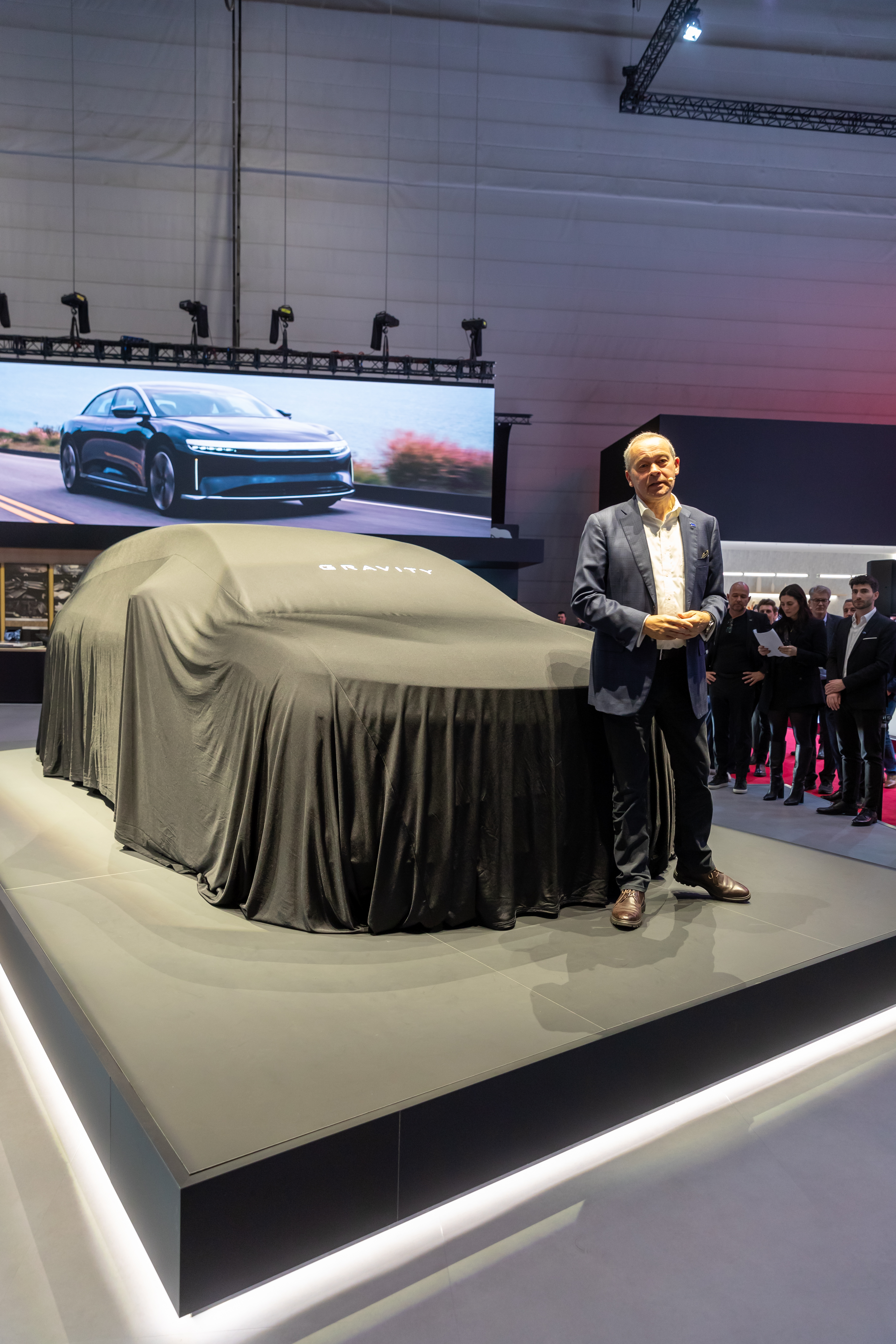
Lucid Gravity
"...e your, you know, kind of, you know, the air, the gravity fine, you know, keep doing that. Maybe even the e..."
The Lucid Gravity is an electric SUV that’s meant to be bigger and more practical than a typical sedan. It’s part of Lucid’s plan to make more than one type of EV. The podcast mentions it as a next step in Lucid’s lineup.
The Lucid Gravity is an upcoming or discussed Lucid electric SUV concept/vehicle line, aimed at bringing Lucid’s EV approach into a larger family-oriented package. It’s referenced in the podcast as part of the “keep doing that” theme—continuing to build on Lucid’s design and EV strategy. The conversation frames it as an EV option beyond Lucid’s sedan lineup.
cash on hand
"[2665.2s] I didn't look at what their cash on hand is. [2667.9s] Probably not good."
“Cash on hand” means the money a company has right now that it can use quickly. The host is implying Lucid might not have much money available.
“Cash on hand” is the amount of liquid money a company has available immediately to pay bills and fund operations. The host uses it to suggest Lucid may not be in a strong financial position if it isn’t generating enough money.
Rivians
"Just like Rivians where they're burning. [2672.9s] They are out of business fast."
Rivian is an electric-vehicle company. The host is saying Rivian has been spending a lot of money and may not be able to last long.
Rivian is an EV brand best known for electric trucks and SUVs, including the R1T and R1S. Here, the host uses Rivian as an example of an EV maker “burning” cash and struggling to stay afloat.
burning
"Just like Rivians where they're burning. [2672.9s] They are out of business fast."
“Burning” here means the company is spending money faster than it’s earning it. The host is saying that kind of spending can’t last forever.
In startup/EV-company talk, “burning” refers to “cash burn”—spending money faster than the business is bringing in revenue. The host uses it to characterize Rivian’s financial situation as unsustainable.
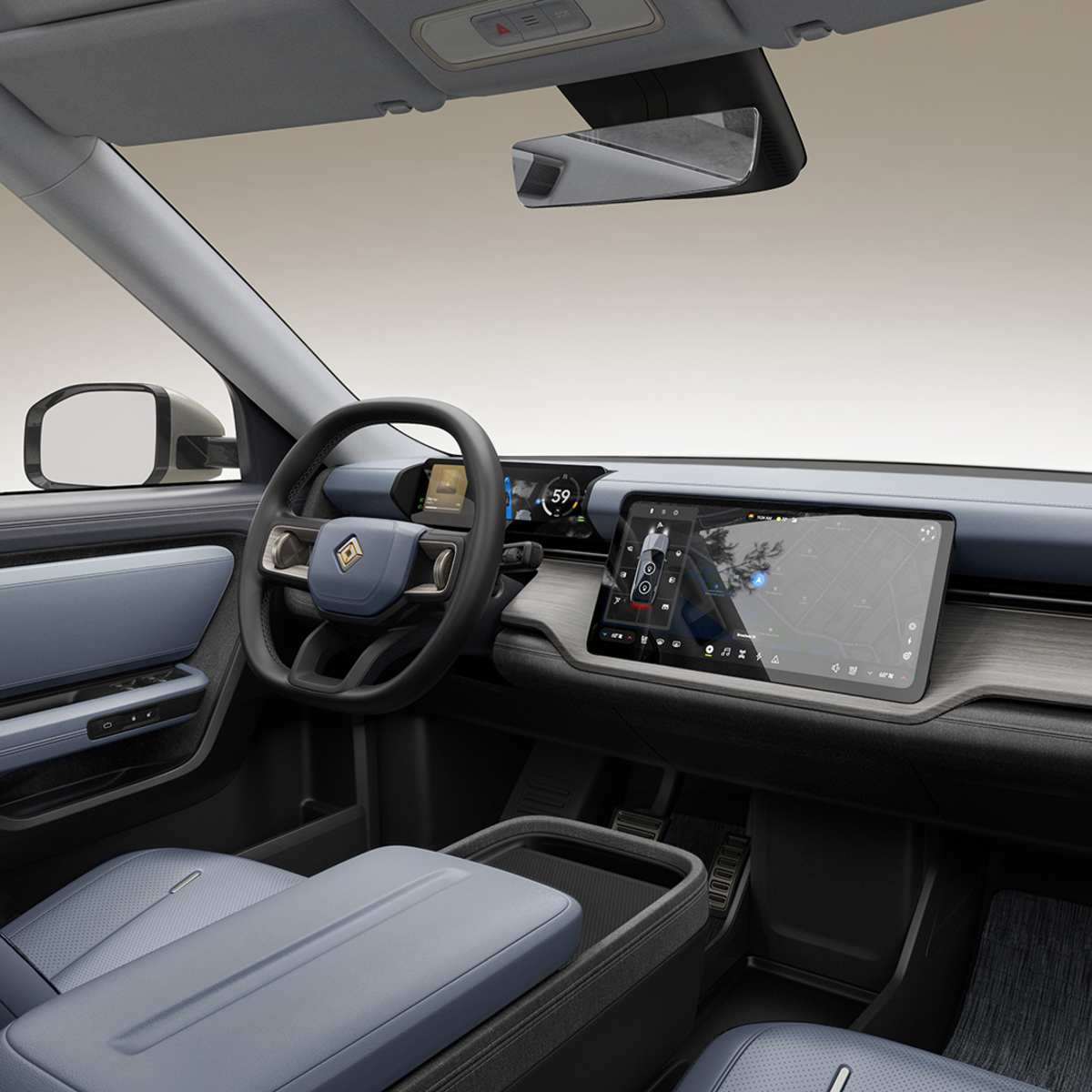
Rivian R2
"...business fast. This next vehicle is an ostensible R2 competitor, I guess. I don't know."
The Rivian R2 is an electric vehicle that Rivian is expected to offer in a smaller or more accessible category. The podcast is comparing it to other EVs that people might consider around the same general segment. The main idea is that it’s meant to broaden Rivian’s lineup.
The Rivian R2 is a smaller, more affordable-leaning electric vehicle that’s discussed as a potential competitor to other mainstream EVs. In the podcast, it’s referenced as an “ostensible R2 competitor,” meaning people are comparing it to other EVs in a similar size or price expectation. It’s part of the conversation about how EV makers are expanding their model ranges.

Jeep Recon
"...it is I had to go and look up what exactly a Jeep Recon is. Because I forgot that this thing even existed..."
The Jeep Recon is a Jeep electric vehicle that people may not have heard about recently. The podcast mentions it because it’s an EV that’s supposed to carry Jeep’s off-road style. The discussion is mainly about remembering what it is and where it fits.
The Jeep Recon is an EV model name that’s brought up as a Jeep-branded electric vehicle, and the podcast notes that it was easy to forget it existed. It’s discussed because it fits the idea of bringing Jeep’s off-road identity into an electric format. The conversation is essentially about awareness and expectations for what Jeep’s EV lineup includes.
EV Wrangler
"[2704.3s] It's basically an EV Wrangler, roughly kind of. [2712.3s] I mean, I'd say that's the best way to describe it."
“EV Wrangler” just means “an electric Jeep that’s meant to feel like a Wrangler.” The host is using it as a quick comparison for the Recon’s style and purpose.
“EV Wrangler” is a shorthand comparison meaning an electric vehicle designed to deliver the same kind of open-air, off-road, and rugged identity people associate with the Jeep Wrangler. It’s not a formal model name; it’s a way to describe the Recon’s intended character and use case.
miles per kilowatt hour
"So it's a what is it 80 cities, 62 highway MPGE. ... And it's 2.8 2.08 miles per kilowatt hour, which is the number that I think is useful versus the R2, which is 109 city 89 highway or 2.94 miles per kilowatt hour."
It’s a way to measure EV efficiency. It tells you how far the car can go using one unit of electricity from the battery. Bigger number usually means it wastes less energy.
“Miles per kilowatt hour” (mi/kWh) is an efficiency measure for an EV: how many miles you can drive per unit of electrical energy taken from the battery. Higher mi/kWh means the car uses less electricity to travel the same distance. Hosts often compare mi/kWh across models to judge real-world energy use rather than just range claims.
MPGE
"So that's cool. ... So it's a what is it 80 cities, 62 highway MPGE. ... And it's 2.8 2.08 miles per kilowatt hour..."
MPGe is how EVs get compared to gas cars. It converts electricity use into a “gas-equivalent” number so you can compare efficiency. City and highway MPGe reflect different driving styles.
MPGe (“miles per gallon equivalent”) is the EPA-style way of expressing EV efficiency using an energy-equivalent to gasoline. It’s reported as separate city and highway figures to reflect different driving conditions. While it’s useful for comparisons, it can be less intuitive than energy-per-distance metrics like mi/kWh.
charges from five to 80%
"Apparently this came out with was an ounce in October or something. ... It charges from five to 80% in 28 minutes. ... The recon does or the R2?"
This is a standard way to compare EV charging speed. Charging is usually quicker when the battery is low and then slows down as it gets fuller. So 5% to 80% is a fair “apples to apples” comparison.
“Charging from 5% to 80%” is a common EV fast-charging test window because charging is typically fastest after a low state of charge and slows as the battery fills. Reporting this specific range helps compare charging performance across cars more consistently than quoting a full 0–100% time. The host uses it to quantify the Recon’s charging speed.
fast
"So it doesn't charge fast, but it goes through its power a lot. It has a range of, what was it, 230 miles?"
When people say an EV doesn’t “charge fast,” they mean it takes longer to add energy at charging stations. It depends on how much power the car can accept while charging.
In EV talk, “fast” usually refers to how quickly the battery can be recharged during DC fast charging. The key idea is charging power (kW) and how much of that power the car can actually accept as the battery state of charge changes.
range
"It has a range of, what was it, 230 miles? Something like that."
“Range” is how far the car says it can go before the battery runs out. Driving style, speed, and how efficient the car is can change it a lot.
“Range” is the estimated distance an EV can drive on a full battery under a specified test cycle. It’s strongly affected by battery size, vehicle weight, aerodynamics, and efficiency (how much energy the car uses per mile).
kilowatt hour battery
"Isn't that like on 100 plus kilowatt hour battery? Yeah, on 100 kilowatt hour battery, roughly 100 kilowatt hour battery."
A “kilowatt hour battery” refers to battery capacity measured in kWh, which indicates how much electrical energy the pack can store. More kWh generally means more potential range, but real-world range also depends on efficiency and charging behavior.
heavy
"So it's heavy. It isn't efficient."
“Heavy” means the car weighs a lot. Heavier cars typically use more energy, so they may get less range.
EVs can be “heavy” because large battery packs and structural components add mass. Extra weight usually hurts efficiency (more energy needed to move the car), which can reduce range and make the vehicle feel less “efficient” overall.
inefficient
"It isn't efficient. And then imagine that you open the roof and you take the doors off."
“Inefficient” means the EV uses more battery energy to drive the same distance. That usually leads to shorter real-world range.
“Inefficient” in EV context means the vehicle consumes more energy per mile than expected. That can come from weight, aerodynamics, drivetrain losses, and how the car is tuned for power delivery.
tow a trailer
"Like it's probably better to tow a trailer with a H2 than it is to drive this thing around. And it costs, is that right, $769,000?"
Towing makes the car work harder because you’re pulling extra weight and dealing with more air resistance. For EVs, that usually means you burn battery faster.
Towing a trailer increases aerodynamic drag and rolling resistance, which can dramatically raise energy consumption for an EV. That’s why the host suggests towing might be “better” than driving—because the vehicle’s efficiency/range penalty may be less surprising in that use case.
H2
"Like it's probably better to tow a trailer with a H2 than it is to drive this thing around."
“H2” is probably the Hummer H2, a big SUV. The host is basically saying that if you’re going to be inefficient anyway, the H2 might be the more sensible choice for the situation they’re imagining.
“H2” here likely refers to the Hummer H2, a large, heavy SUV. The comparison is about real-world practicality: the host is arguing that a big, inefficient vehicle might still make more sense than the EV being criticized for its energy use.

Wrangler
"Unless you're like a really die hard Jeep guy. Well, that's where I was about to go. But this isn't a Wrangler."
The Jeep Wrangler is a rugged SUV famous for off-roading and for having removable doors. The host is saying people might tolerate drawbacks if the car is bought mainly for that Wrangler lifestyle.
The Jeep Wrangler is a long-running off-road SUV known for its removable doors and open-air driving style. The host uses it as a “cult” reference point to argue that some compromises (like slower charging or inefficiency) might be more acceptable if the vehicle’s identity is off-road fun.
Stellantis
"And in this case, Stellantis could have said, well, what can this do well? It can be a Jeep. ... I would say their efforts so far with EVs have been kind of lukewarm."
Stellantis is a big car company that makes brands like Jeep. The hosts are saying its electric-vehicle plans haven’t been very convincing so far.
Stellantis is the automaker formed from the merger of Fiat Chrysler Automobiles and PSA Group. In this segment, the hosts criticize Stellantis’s EV efforts as not being compelling enough yet, using Jeep/Wrangler as the yardstick for what should be working.
four by E
"We've already muddied the waters with the four by E with it. And people seem to eat that up, at least here in California, they do."
“Four by E” is basically a way of saying an electric version of four-wheel drive. The host thinks that approach didn’t land well with people who want the classic Jeep experience.
“Four by E” is a shorthand reference to an electric four-wheel-drive setup—i.e., driving all four wheels with electric motors rather than a traditional gas-engine drivetrain. The host says they “muddied the waters” with it, suggesting the EV approach may have confused buyers who expect Wrangler-style off-road capability.

Challenger Hellcats
"They had it in Dodgers. Hellcats for everyone. They had the most power, the crazie..."
The Dodge Challenger is a muscle car, meaning it’s built to be fast and powerful. It has been offered with very high-performance versions over the years. The podcast mentions it because people associate it with lots of powerful choices.
The Dodge Challenger is a muscle car known for powerful engines and performance-focused trims. In the podcast, it’s referenced in the context of “Hellcats for everyone” and the idea of having very high-power options available. It’s brought up as a shorthand for the Challenger’s reputation for extreme performance variants.
platform
"So ironically, this also in a roundabout way shares its platform with the Charger Daytona and also with the Wegener S. So you talk about vehicles that you're like, how are these related?"
A “platform” is the main underlying design that a car is built on. If two cars share a platform, they’re built using similar core parts and engineering, even if they look and drive differently.
A “platform” is the shared set of major engineering foundations—like the chassis architecture and mounting points—that multiple vehicles can use. When two cars share a platform, they can end up feeling different on the outside but still have common structural design and production processes.

Dodge Charger
"... in a roundabout way shares its platform with the Charger Daytona and also with the Wegener S."
The Dodge Charger is a car that’s built for performance, not just everyday commuting. It has had different powerful versions over time. The podcast is mentioning it because some performance models share the same underlying design.
The Dodge Charger is a performance-oriented sedan that has been offered in multiple high-power trims over the years. In the podcast, it’s mentioned because its platform connections are relevant to how different performance models relate to each other. The conversation links it to other Charger-based performance variants and shared engineering foundations.
aerodynamic
"The recon, having the disadvantage of being obviously the least aerodynamic. So I think that has something to do with its range and efficiency."
“Aerodynamic” means the car’s shape is designed to cut through the air more easily. If it’s not very aerodynamic, it takes more energy to move, which can reduce EV range.
“Aerodynamic” refers to how well a vehicle’s shape reduces air drag. Lower drag generally improves efficiency and helps EV range, which is why the speaker connects the Recon’s “least aerodynamic” design to range and efficiency.
EPA regulations
"It's fewer EPA regulations and go back to all V8s. [3109.5s] And I mean, I'd say their window on that's like two to three years."
The EPA is the U.S. agency that sets rules for vehicle pollution. If there are “fewer EPA regulations,” carmakers may have more freedom to sell engines that would otherwise be harder to keep clean.
The EPA (Environmental Protection Agency) sets U.S. rules that affect vehicle emissions and fuel/efficiency requirements. When the hosts say “fewer EPA regulations,” they’re implying automakers could more easily sell less-restricted powertrains like large-displacement engines.
V8s
"It's fewer EPA regulations and go back to all V8s. [3109.5s] And I mean, I'd say their window on that's like two to three years."
A V8 is a type of engine with eight cylinders. The point here is that they’re talking about returning to big, traditional engines instead of going fully electric or using smaller engines.
A V8 is an engine with eight cylinders arranged in a “V” shape. The hosts mention “go back to all V8s” to describe a shift toward traditional, higher-displacement engines rather than smaller or electrified powertrains.
EV
"And then they go to make an EV and they do this, they drop the recon. [3166.8s] And you're like, you even got it, all you needed to do is make it a different one of your Jeeps."
EV means electric vehicle. It’s a car that runs mainly on electricity from a battery, not a gasoline engine.
EV stands for electric vehicle, meaning the car is powered primarily by one or more electric motors and a battery. The hosts discuss Jeep’s move toward an EV product line and how that affects consumer perception.

Porsche Taycan wagons
"But they've just killed all of the Taycan wagons. Then they cross Turismo and Sport Turismo."
The Porsche Taycan is Porsche’s electric car. A “wagon” version of it exists (called the Sport Turismo / Cross Turismo), and the hosts are saying Porsche stopped making those versions, so they’re harder to find now.
The Porsche Taycan is Porsche’s all-electric performance sedan, and the “wagon” version is the Taycan Sport Turismo / Cross Turismo body style. In this segment, the hosts say Porsche has discontinued those wagon variants, which affects availability and how enthusiasts can buy them.
Cross Turismo
"Then they cross Turismo and Sport Turismo. Go on."
Cross Turismo is Porsche’s name for the Taycan wagon version that’s styled to feel more outdoorsy. Think of it as the electric wagon with SUV-like cues for versatility.
Cross Turismo is Porsche’s name for a more rugged, crossover-leaning Taycan wagon variant. It’s positioned as a wagon with SUV-like styling and capability cues, aimed at buyers who want the Taycan’s electric performance plus more versatility.
Sport Turismo
"Then they cross Turismo and Sport Turismo. Go on."
Sport Turismo is Porsche’s name for the Taycan wagon-style version. It’s the same electric Taycan idea, but shaped like a station wagon for more everyday practicality.
Sport Turismo is Porsche’s name for a Taycan wagon-style body. It’s essentially a more practical, estate-like version of the Taycan, with extra cargo space compared with the sedan.
resale on these is not great
"Yeah, I guess they found some for like in 60s and 70s. OK, I'll just pick up a couple of those. No, every time I see one of these, they're like jaw dropping."
“Resale” is the price you can sell the car for after you’ve owned it. Saying it’s “not great” means these models likely don’t hold their value as well as some other cars.
“Resale” refers to what you can sell the car for later, and “not great” means the used-market prices are relatively weak compared with what buyers paid. For discontinued variants like the Taycan wagons, resale can be influenced by limited supply, demand from enthusiasts, and how many buyers want that specific body style.
cargo area
"I mean, the cargo area is not very big."
The “cargo area” just means the trunk/space where you put bags and other items. It’s the part you care about if you want the car to be practical.
The “cargo area” is the space in the vehicle used to carry luggage or other items. In wagon-style EVs, it’s a key practical tradeoff versus sleeker body shapes.

Porsche Macan
"... got something. But everyone buys the Cayenne and Macan. Yeah."
The Porsche Macan is a luxury SUV that’s smaller than some other Porsche SUVs. It’s meant to feel sporty and fun to drive while still being practical. The podcast brings it up because it’s one of the most commonly purchased Porsche SUV models.
The Porsche Macan is a compact luxury SUV positioned as a sportier, more agile option within Porsche’s lineup. It’s mentioned alongside the Cayenne because both are popular choices, and the podcast is referencing how buyers tend to gravitate toward these models. In this context, it’s less about technical details and more about which SUVs people choose.

Porsche Cayenne
"It's got something. But everyone buys the Cayenne and Macan. Yeah."
The Porsche Cayenne is a luxury SUV. It’s designed to be comfortable for daily driving while still feeling sporty. The podcast mentions it because it’s a very common choice for people shopping Porsche SUVs.
The Porsche Cayenne is a luxury SUV known for combining everyday usability with strong performance. It’s brought up in the podcast because it’s one of Porsche’s most popular models, often alongside the Macan. The discussion is more about market presence and what people actually buy within the brand’s lineup.
Request an Explanation
Heard something you'd like explained? We'll add it to this episode.
Sign in to request explanations for terms you heard.
Want to learn more?
Browse our glossary for plain-English explanations of automotive terms, jargon, and concepts.
Help improve this episode
See something that's not quite right? Our annotations are AI-generated and can sometimes miss the mark. Click the flag icon on any annotation to suggest a correction.