The Hyundai Ioniq is Hyundai’s name for its electric cars. Hyundai has already made an Ioniq 5, and the podcast is talking about more Ioniq EVs being revealed. The key point is that it’s an EV series, not just one single car.
CLTC is a test method used in China to estimate how far an EV can go on a full charge. It’s a lab-style number, so your real range can be different depending on how you drive and the weather.
Some EVs have one electric motor, while others have two—usually one in front and one in back. Two motors can help the car put power down more effectively, which can make it feel faster and more stable.
“800-volt” describes how the EV’s electrical system is set up. Higher voltage can let the car charge faster and move power more efficiently, as long as the charging station supports it.
The Toyota Corolla is a common, everyday car that’s usually chosen for being reliable and easy to live with. It’s not an EV by default, but it’s often mentioned when people talk about how new cars compare to what you can buy today. The discussion is usually about how it feels and fits into daily driving.
The Tesla Cybercab is a proposed Tesla vehicle concept that’s meant for transportation services, not just personal ownership. The podcast mentions it in the same conversation as other Tesla vehicles to talk about what Tesla might build next. The key point is that it’s a mobility-focused idea.
The Tesla Model 3 is an electric car (it runs on a battery instead of gasoline). It’s made to be a practical daily driver, and many people use it as a comparison when talking about other EVs. The conversation is likely about how big or heavy an EV like this tends to be.
The BMW M5 is a powerful version of a regular BMW 5 Series sedan. It’s designed for quick acceleration and high-speed driving. The podcast mentions it to compare how heavy a fast car can be.
The Tesla Cybertruck is an electric pickup truck. It’s designed to be tough and useful, and it looks very different from most trucks. The conversation is using it as an example of an EV truck and its performance expectations.
Some EVs add pretend “gear shift” behavior. Since EVs don’t shift like gas cars, the car uses sound and timing to make it feel more like a normal transmission.
EVs sometimes play made-up engine sounds through the speakers. The goal is to make the car feel more like a gas car when you accelerate or change modes.
Term
R&D chief
“R&D chief” means the top leader in charge of research and development. In this case, they’re talking about engineering changes to future Hyundai EVs.
“Pure EV mode” is a driving mode that prioritizes the car’s straightforward electric behavior rather than adding artificial combustion-like cues. In the segment, the host claims the car is faster in pure EV mode than when using the fake shift/sound effects.
EVs don’t shift like gas cars, so some manufacturers add simulated shift “events.” That can include a sound or a momentary change in how the car responds so it feels more like a normal transmission.
Backfiring is the popping/crackling sound people associate with some gas engines. Since EVs don’t have the same exhaust behavior, this is about adding or simulating that kind of sound effect for the driver.
Here, “vibration” means the car intentionally shakes or pulses in a way you can feel. The goal is to make the experience more exciting, even though an EV doesn’t naturally create the same engine sensations as a gas car.
Engine speed is basically how fast the engine is spinning, usually measured in RPM. In driving, it helps you judge what the car is doing and how hard it’s working.
The Hyundai Ioniq 5N is a sportier, more performance-oriented version of the Ioniq 5 electric car. The discussion here is about how EVs can create driving “feedback” sounds and sensations to feel more engaging.
Cobots are robots that are built to work safely near people. Instead of taking over everything, they help with repetitive jobs while a worker still does the parts that need judgment.
A robot arm in a factory is a mechanical arm that can do the same movement over and over. Car plants use them for jobs like welding because they’re very consistent.
In a car factory, a rotisserie is a rotating stand that holds the car body. It turns the car so workers and machines can reach the underside and other areas more easily.
Quality control is how a factory checks that parts meet the required standard. It usually doesn’t mean flawless—it means the item is good enough to pass inspection.
Optical sensors are devices that use light to detect what’s around them. They can be set up to notice details that people can’t see, like certain kinds of light or how shiny something is.
Ultraviolet and infrared are types of light that humans can’t see. Special sensors can detect them to help a system “understand” things like heat or surface characteristics.
Reflectivity is how shiny or how much light a surface reflects. If a robot/vehicle knows how reflective something is, it can “read” the scene more accurately.
Calibrate means “set it up correctly” so the sensor readings are accurate. For cameras and light sensors, it helps them work reliably across different lighting and surfaces.
This means sending the same robot “settings” to lots of robots at once. If the work is similar everywhere, you don’t have to teach every robot separately.
General Motors is a big car company. Here, they’re talking about GM reducing factory workers and slowing EV production, which suggests the company is changing its EV plans.
Collaborative robots are robots that are built to work safely around people. Instead of replacing everyone, they often help with repetitive assembly tasks while workers still do the detailed work.
Ferrari is a luxury sports car brand. The host is saying that expensive cars may still rely on people doing some work because the brand value is tied to craftsmanship.
End-to-end automation means automating the full production workflow rather than only isolated tasks. The idea is that, for cost reasons, factories may move toward systems where robots handle most steps and humans are used only for exceptions, oversight, or high-end customization.
An inverter is the EV’s power converter. It takes electricity from the battery (DC) and turns it into the right kind of electricity (AC) that the motor can use. If the inverter is efficient and well-controlled, the car can go farther on the same battery.
Formula E is an electric-car racing series. Teams use it to test EV technology hard—like how efficiently the car uses energy and how well its electronics control power. That experience can translate into better efficiency in road cars.
Lucid is an electric-car company. Here, the point is that Lucid has valuable know-how and technology, not just vehicles. The host is saying that makes the company harder to write off.
Fisker is an electric-car brand. In this conversation, the host is using it as an example of a company that didn’t have strong technology to back up its plans. It’s a comparison about engineering value, not a specific car model.
The Chevrolet Corvette is a sports car made for fast driving and driving enjoyment. It’s known for being powerful and for having a performance-focused design. The podcast mentions it as a car people might want to own for fun.
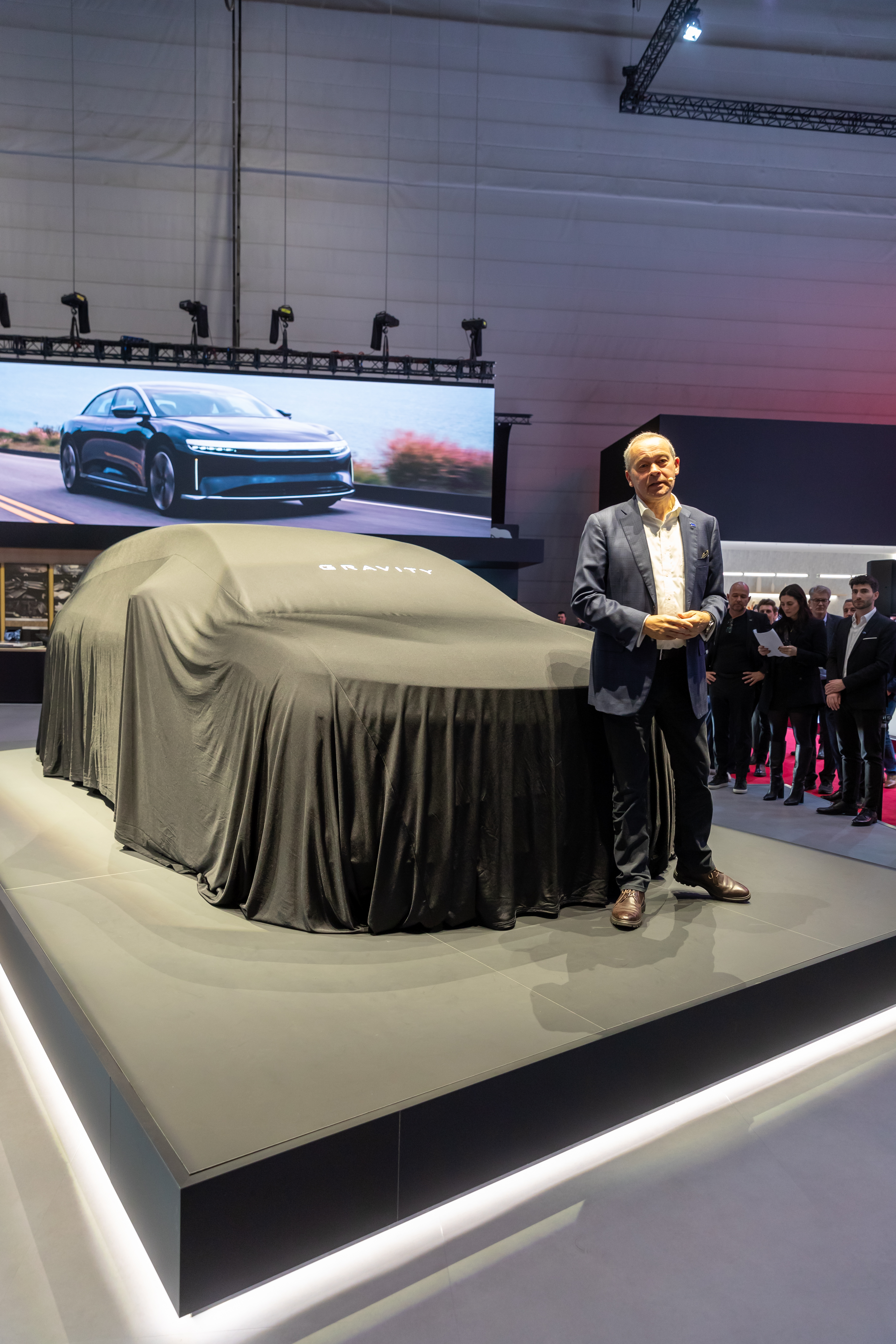
The Lucid Air is an electric car (a sedan) made by Lucid. It’s designed to be efficient and to use modern EV technology. The podcast brings it up because it’s the base model that the Gravity name and idea are connected to.
The Lucid Gravity is an electric SUV that’s meant to be bigger and more practical than a typical sedan. It’s part of Lucid’s plan to make more than one type of EV. The podcast mentions it as a next step in Lucid’s lineup.
Term
cash on hand
“Cash on hand” means the money a company has right now that it can use quickly. The host is implying Lucid might not have much money available.
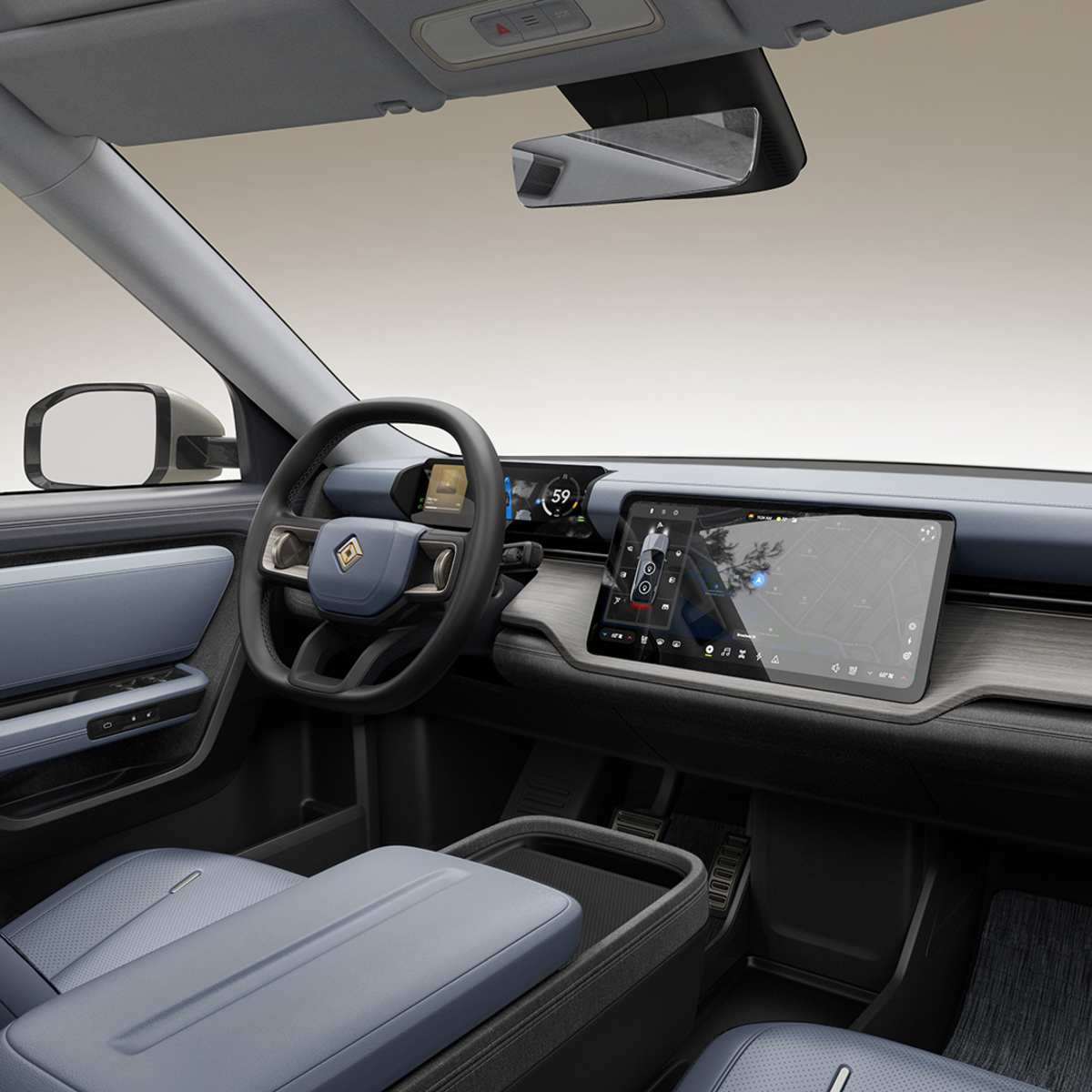
The Rivian R2 is an electric vehicle that Rivian is expected to offer in a smaller or more accessible category. The podcast is comparing it to other EVs that people might consider around the same general segment. The main idea is that it’s meant to broaden Rivian’s lineup.
The Jeep Recon is a Jeep electric vehicle that people may not have heard about recently. The podcast mentions it because it’s an EV that’s supposed to carry Jeep’s off-road style. The discussion is mainly about remembering what it is and where it fits.
“EV Wrangler” just means “an electric Jeep that’s meant to feel like a Wrangler.” The host is using it as a quick comparison for the Recon’s style and purpose.
It’s a way to measure EV efficiency. It tells you how far the car can go using one unit of electricity from the battery. Bigger number usually means it wastes less energy.
MPGe is how EVs get compared to gas cars. It converts electricity use into a “gas-equivalent” number so you can compare efficiency. City and highway MPGe reflect different driving styles.
This is a standard way to compare EV charging speed. Charging is usually quicker when the battery is low and then slows down as it gets fuller. So 5% to 80% is a fair “apples to apples” comparison.
When people say an EV doesn’t “charge fast,” they mean it takes longer to add energy at charging stations. It depends on how much power the car can accept while charging.
A “kilowatt hour battery” refers to battery capacity measured in kWh, which indicates how much electrical energy the pack can store. More kWh generally means more potential range, but real-world range also depends on efficiency and charging behavior.
Towing makes the car work harder because you’re pulling extra weight and dealing with more air resistance. For EVs, that usually means you burn battery faster.
Term
H2
“H2” is probably the Hummer H2, a big SUV. The host is basically saying that if you’re going to be inefficient anyway, the H2 might be the more sensible choice for the situation they’re imagining.
The Jeep Wrangler is a rugged SUV famous for off-roading and for having removable doors. The host is saying people might tolerate drawbacks if the car is bought mainly for that Wrangler lifestyle.
Stellantis is a big car company that makes brands like Jeep. The hosts are saying its electric-vehicle plans haven’t been very convincing so far.
Term
four by E
“Four by E” is basically a way of saying an electric version of four-wheel drive. The host thinks that approach didn’t land well with people who want the classic Jeep experience.
The Dodge Challenger is a muscle car, meaning it’s built to be fast and powerful. It has been offered with very high-performance versions over the years. The podcast mentions it because people associate it with lots of powerful choices.
A “platform” is the main underlying design that a car is built on. If two cars share a platform, they’re built using similar core parts and engineering, even if they look and drive differently.
The Dodge Charger is a car that’s built for performance, not just everyday commuting. It has had different powerful versions over time. The podcast is mentioning it because some performance models share the same underlying design.
“Aerodynamic” means the car’s shape is designed to cut through the air more easily. If it’s not very aerodynamic, it takes more energy to move, which can reduce EV range.
The EPA is the U.S. agency that sets rules for vehicle pollution. If there are “fewer EPA regulations,” carmakers may have more freedom to sell engines that would otherwise be harder to keep clean.
A V8 is a type of engine with eight cylinders. The point here is that they’re talking about returning to big, traditional engines instead of going fully electric or using smaller engines.
The Porsche Taycan is Porsche’s electric car. A “wagon” version of it exists (called the Sport Turismo / Cross Turismo), and the hosts are saying Porsche stopped making those versions, so they’re harder to find now.
Cross Turismo is Porsche’s name for the Taycan wagon version that’s styled to feel more outdoorsy. Think of it as the electric wagon with SUV-like cues for versatility.
Sport Turismo is Porsche’s name for the Taycan wagon-style version. It’s the same electric Taycan idea, but shaped like a station wagon for more everyday practicality.
“Resale” is the price you can sell the car for after you’ve owned it. Saying it’s “not great” means these models likely don’t hold their value as well as some other cars.
The Porsche Macan is a luxury SUV that’s smaller than some other Porsche SUVs. It’s meant to feel sporty and fun to drive while still being practical. The podcast brings it up because it’s one of the most commonly purchased Porsche SUV models.
The Porsche Cayenne is a luxury SUV. It’s designed to be comfortable for daily driving while still feeling sporty. The podcast mentions it because it’s a very common choice for people shopping Porsche SUVs.
LIVE
This is the What Car Eevee Podcast for Thursday, June 25th, 2026, episode 276, The Human Touch.
Last week we were all Rivian, like everything, everything was Rivian.
This week, it's not going to be all Hyundai, but it's going to be a lot of Hyundai, which I guess that's a welcome change.
At least it's not all Tesla.
Yes.
And it's not all death watch, even though we do have an update on that, so.
We have death and dead watch, but the dead watch isn't completely dead.
I'm not, we're not, what is it?
What is it?
I'm not, well, is this dead yet?
I'm not dead yet.
And then there's only partially dead.
Was that from the Princess Pride?
Oh, I thought you were talking about Monty Python.
No, there's that too.
There's that too.
I'm Phil Royal.
I am one of the co-hosts here at the podcast and I almost did this seamlessly, but did not.
If you go to youtube.com slash at the what car, you can see us selling our own merchandise at the what car.com slash store where you have t-shirts.
Some of them say what car.
Some of them don't.
Some of them say charge baby charge on a red hat because who doesn't like poking fun at the things that politicians do and sweaters because it's summer.
And if you ever needed a hoodie now is the season for a nice warm hoodie.
Yes.
We've got where I live, but not where I'm going to.
No, we've got to wake up to a full charge.
I've got an adapter for that.
Got a variety of things.
Anyway, go to the what car.com slash store helps port the podcast because that's how we make this not break us completely.
I guess.
Yeah.
And I am supposed to say who I am.
I said my name.
Google me.
You'll find that I've written stuff.
Yes.
Ed Santra's.
You can Google me.
Most of my current stuff is behind a paywall.
But anyway, there's probably some freebies out there floating around from eons ago.
Well, sadly, your new stuff's behind a paywall and your old stuff from back when we used to work together in the in the cartooning world.
All that stuff's gone because it was like pre-internet or it wasn't really pre-internet, but it was before they really got into putting everything online.
Yeah, I have some stuff out there.
It all got sucked over to Super Street online and then they killed Super Street.
So now it's presumably under Motor Trend.
Now it'll be somewhere under Motor Trends website.
Yes.
Anyway, yeah, doing this while.
Well, podcast, what do we decide we're going on a solid two years with this episode 276.
So I would say just do the math and divide by 52.
But we have skipped episodes here and there four years.
That's how good that's why I wasn't a math major.
Yes, I'll say four ish four ish.
And for Hyundai, we can say good ish news.
What?
Their news, Hyundai, is good ish news for going with ish as a theme here.
It's not negative.
No, I don't think the first one.
So I dislike reporting on things that we're not getting in America because I don't see a point.
Unless it's going to come to America.
This one may come to America.
I don't know.
Hyundai reveals the Ioniq V.
Well, they already have an Ioniq five, so I don't know what this would be.
That's why I'm thinking it's got to be the V at where was that?
The Beijing auto show.
And it looks, you know, I can't do multiple things here at once.
If I'm going to share my, if we're going to pull up, you see, you might have to take over here
because I don't know any of the specs.
Other than the title says of the article that I'm pulling up from car China news.com.
The fastback, which you'll like is 66.8 kilowatt hour battery and 620 kilometers
in range, which I've got in our little notes.
I've got conversions for all of that stuff.
Multiple motors.
What are the specs?
Because I can't look at that.
It's that translates 385 miles CLTC.
Realistically, let's just call it 300 ish.
I don't know if this is a single or dual motor, top spec 225 horsepower.
So not not a plaid or a sapphire, but good enough.
800 volt architecture, 3,800 pounds.
Scheduled to hit the Chinese market sometime in 2026.
So now ish.
Yeah.
Now, as you saw, if you're at youtube.com slash Edelman car,
you saw the styling.
It's kind of like, so it reminds me of a Honda zero meets the new
Corolla that they just Toyota just revealed last year concept.
And then also like a Tesla cybercab, like is the color accidental?
The like it's a very it styled car.
That was kind of what caught my attention about this is that it it's
taken everything that is hot in the last six months.
And it's like they put it into chat GPD and said, make me a car.
And this thing came out.
Yeah.
And I don't dislike it.
I don't dislike it, but I do.
I do kind of wonder how it's going to age.
And it was 30.
Did you say 3,800 pounds?
3,800.
So, but, you know, I mean, that's typical.
That's in the range of like the Model 3.
Yeah, it seems portly to me, but well, not when the new M5 is like almost
6,000 pounds.
Yeah, I guess I just look at even like your Model 3.
And it will outperform this in every way possible.
This doesn't really happen.
I mean, I, but I don't know if that's what they were shooting.
Well, I will put, I will put it this way.
I think the styling tries to ride a check that it can't cash.
You know what I mean?
Yeah, looking at this, you'd say, oh, this is high performance.
It's like, eh, it's okay.
I wouldn't call it high performance.
I, with these specs, I would guess maybe zero to 16, like seven seconds,
which is okay.
Yeah.
Yeah.
Not fantastic, but, you know, I think China has very strict speed limits.
And besides which, at least in the urban areas, the congestion is so bad.
I think, you know, you're lucky to get above like 15 miles per hour.
It definitely keeps true to Hyundai slash Ionix style design.
Like remember several years ago, they said Ioniq is not going to have a design language.
It's design, it's design language is going to be different from every vehicle.
So every Ioniq that comes out will look different from the last one.
This completely keeps that true so far.
Yeah.
Yeah.
And this, this, yeah, I don't, don't hate it, but I think kind of it
strikes me as they're trying to be trendy, you know, but they put these three vehicles
together for slash because like it's cyber cab and the Cybertruck.
100 zero.
No, what they, the, it's definitely Honda zero.
It's definitely Toyota Corolla concept.
And then it's two Teslas.
Yeah.
And I really should have done it.
I should have put those four vehicles into chat DPD and just seeing what it spits out.
It came up and it's like, yeah.
Do you think this is coming to America or do you think there's just not a market?
I kind of doubt it.
I could see this, you know, going, you know, they've already announced it for the Chinese market.
I mean, maybe Europe, I don't know.
Possibly, I'm not going to say no, but my guess is probably not.
Um, I don't know.
I don't feel especially strongly one way or another if it does or doesn't.
No, it's not an exciting.
There's many things about it.
It's just, I mean, the specs aren't exciting to me.
The specs are, you know, solidly kind of average for an EV, I'd say they're fine.
But, you know, reading over the specs and even looking at the styling doesn't make
me like, ooh, I have to have that.
It's like, oh, that's cool.
But yeah.
So no, I'm just too old and cynical.
Yeah, we're not going to, to shed a tear about that.
Now, will you shed a tear if this also had multiple gear sounding, uh, fake
noises, fake noises that go with it because the R&D chief at Hyundai says the
next gen N EVs will be better at being a fake car.
Yeah.
So yeah, they're doubling down on the whole fake gear shifts and engine noise thing.
Um, so I don't know if you remember reading about this, but evidently some
Porsche engineers like, uh, evaluated an Ioniq 5N and they were actually really
impressed by it, by, by the, the fake, you know, gear shifts and noise.
And, and so they're saying they want to do that for like future Porsches.
So, um, I don't know.
I guess Hyundai said a pretty high bar of Porsche wants to emulate it.
So, but at the same time, it doesn't gain you any performance.
Actually slower in that mode.
Yeah.
It's faster and pure EV mode.
When you do the fake shifts and stuff, it actually slows it down.
But so is this, we draw analogies to, uh, to horses, like when you transition
from cars to, uh, or from horses to cars and the, the famous quote from Henry
Ford was faster horse.
Yeah.
People that asked for a faster horse.
But here they're trying to make the EVs seem like, uh, ice vehicles.
Yeah.
Is this like if they would have put horse noises on cars back in the day?
Someone's driving makes a galloping noise.
Yeah.
And when you hit the accelerator, it goes, yeah, like was the horn supposed to be
like a Winnie and like, I, I, you know,
I don't really, my big thing, as long as I can turn it off, that's all I care about.
If people get their jollies off this and they're like, Oh, this is so cool.
And, you know, they just want to play with the fake gear shifts.
That's fine.
But if I don't, I want to be able to shut it off.
So I've kind of, that's kind of the compromise I've come to with the whole,
the whole fake noise gear shifts, all that is I'm not going to be this, you know,
Kiljoy purists that saying, Oh, they're so horrible.
It's like, no, that's fine.
But, you know, what if I don't want it?
If I can turn it off, cool.
So you pulled a quote out from this article, Lincoln, the show notes that says,
what was the first quote, super proud?
Yeah, he did.
He's super proud of the, this was Manfred Herrera, the global head of R&D for
Hyundai told auto car that he is quote, super proud of the virtual gear shifts
function and said the brand plans to develop it further for the next iteration.
Develop it further.
Okay.
We are leading, not following on the technology, which apparently Porsche agrees
with in the next generation of these cars.
I want to make it more realistic.
I want to enhance it further idling exhaust backfiring and vibration in the car.
Could be defining characteristics that would quote, bring in the next level of engagement.
I think Dodge already does everything, but the backfiring on it.
They do the idling exhaust.
Yeah, they do the idle and I don't think they do the exhaust backfiring.
I'm kind of in between on all of this because I like driving and I like the,
I like the sensations and I could see this getting addicting, you know, on a road
because you can hear it and it's just another thing that you can play with on
the car, even though it's not making you any faster, whatever.
Maybe it gives a sensation of speed and that is important.
That's an important aspect when driving high performance driving is to know
how fast you're going and engine speed can kind of give you that.
But exhaust backfiring.
I don't know, maybe, maybe that's too far for me.
Maybe that one we need to skip on.
You know what?
In full disclosure, I've not driven an Ioniq 5N, but it's gotten good reviews
and so cool.
But again, as long as I can shut it off.
Well, they're investing in things like that, apparently.
They're investing in all of those special noises and backfires.
Yes, they're also investing in things like Boston Dynamics, which they even
invested in a while back.
Yeah, they've had a majority stake in it for a while, I think.
Yeah.
And now they have decided to outright purchase, I guess, Boston Dynamics
with for 325000000 which doesn't seem that much.
That was the last, I guess, 10 percent that they owed, which is like,
well, then why didn't they just buy it before?
I mean, I don't have 325000000 dollars sitting around.
But I got to believe Hyundai does.
Hyundai's like global, like they do everything.
They've got a house.
I think Hyundai alone and all that's various iterations is don't quote me on this.
But I think it's something like 10 or 15 percent of the South Korean GDP or something.
They're huge.
Yeah. Yeah.
So they're known for their death killer dog.
Oh, but spot.
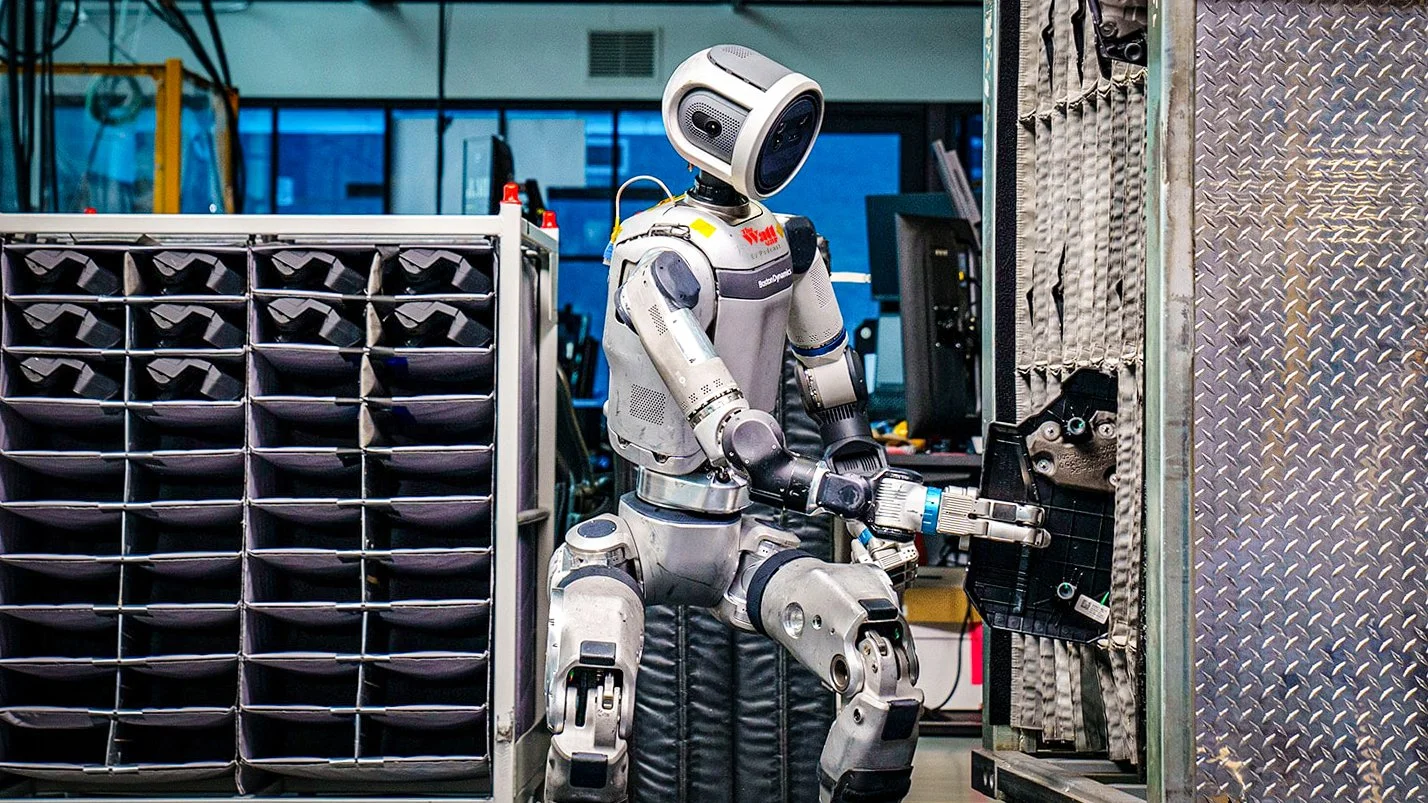
But also, I guess why they've purchased this thing is for Atlas, the humanoid robot.
Yes.
And oh, I wanted to go over the past owners of of Monday real quick.
So it was originally like DARPA grants that funded this whole thing.
And then Google became a majority shareholder or stockholder or whatever
in the company.
And then most recently, SoftBank was the other investor outside of Hyundai.
And they're just a Japanese investment firm.
So they were looking to flip it, make some money.
So Hyundai offered them 325000000 dollars.
So Atlas, their humanoid robot is apparently six feet, two inches tall, weighs 100
98 pounds, has fingers, can pick up small parts, can lift up to 100
ten pounds and reaches seven and a half foot wingspan.
Mm hmm.
With arms extended.
So why in the world is Hyundai interested in this?
Because this is like it really, you can't think of this and then also not think of Tesla
and Optimus.
Yeah. And think, well, I mean, Hyundai, I think was doing this first.
Essentially, I think they were investing in Boston Dynamics first before Optimus was like.
Well, it's like the RoboDogs.
But yeah, yeah.
And obviously working towards something like this.
But they're actually OK.
So in this article, they say the deployment target is Hyundai's Hyundai's
meta plant near Savannah, Georgia by 2028 of Atlas.
I guess they're actually going to deploy a humanoid humanoid robots.
Start with part sequencing, essentially bipedal warehouse logistics on an assembly line.
Mm hmm.
Hyundai reportedly plans to deploy more than 25000 Atlas robots
across its plants globally with a dedicated human humanoid factory targeting
10000 to 30000 units annually by around 2030
Boston Dynamics CEO Robert Plater has set a demanding benchmark.
Atlas must learn new factory tasks in a day or two and hit 99.9 percent
reliability before it earns a permanent spot on the line.
What do you think of humanoid robots in this?
I think they're coming, whether we like them or not.
I think the question is when is it the way to go?
I have never viewed humanoid robots as the way to go for assembly line production.
I view them as something that would be useful in things like and it's scary
hospitals, assisted living, things where you are dealing with multiple varied tasks,
all of which are different.
Every situation is different and unique.
Somebody falls over, they need help.
You've got to pick them up.
They will be in a different position every single time.
The bed will be in a different position every single time.
Everything requires analysis.
Everything requires an adjustment.
You can't have a robot attached to the wall that will just scoop somebody up
because in a hospital or assisted living, they're never going to fall over at the same place.
You need something very versatile.
So in situations like that, then you would go with something like a humanoid robot is what I'm thinking of.
It's scary because then you're dealing with people and it could just snap them in half and it wouldn't know.
Yeah, but when it comes to assembly line, that's taken a not off a shelf and putting it on a bolt.
Like that's a repeated thing that doesn't require legs.
Well, I mean, I guess my feeling about humanoid robots is
maybe they're not great at any one thing, but they're good at a lot of things.
You know what I mean?
Like to your point, they're very adaptable.
You could use them for a lot of different scenarios, whereas really hyper focused robots could be amazing at a defined task.
But if they're asked to do something outside of that, they can't.
You know, if they're just little like rolling platforms or, you know.
I mean, right now they use robots in they call them co I thought I wrote this down.
Co bots. Yeah, like in the Amazon logistic centers and stuff.
Yeah, the things that assist you.
So like right now you go to a production assembly line and you will have a robot arm that reaches in and welds a bunch of stuff.
And a person that then like fits a door and then they'll like clamp the thing onto another machine.
It flips the car upside down on a rotisserie and then you can get to these suspension bolts and it can zap these and these and these.
And then you have a human inspect because the robot doesn't know what it's doing.
It's just doing the same thing 10,000 times a day.
I don't I don't see where a humanoid robot.
Can do those tasks better than just an arm.
And I don't see how it can do quality control.
When it it prop, I mean, maybe it can maybe you can see something and say that's good enough because that's what humans have to do.
We have to make the call.
So you quality control does not mean something is 100 percent perfect.
It means that it's passable.
Yeah, but I mean a range.
I guess the difference is in terms of the the optical sensors, like you could put more sophisticated optical sensors than the human eye is capable of in terms of ultraviolet infrared, even, you know, potentially could measure.
You know, like electrical fields or or.
You know, what's the term I'm looking for?
No, I was going to say luminescence, but like if something needs to be a certain finish, like, yeah, reflectivity or something.
I don't know, like you could calibrate it for all sorts of different things that, you know, maybe someone with a lot of experience in something would just kind of intuitively know.
But but it takes them decades to amass that level of expertise and knowledge, whereas that's conceivably just, you know, software parameters, you can just plug in and they just automatically have that capability.
So I've, you know, on some of the kind of futuristic podcasts I've listened to, they say that potentially the big game changer.
And this isn't necessarily only with humanoid robots.
It's really any robots, but the potential for scales bigger for humanoid robots from the standpoint of, like you said, they're adaptable to many different scenarios is basically.
As long like if you're a multinational national company with like facilities and a bunch of different places that for a human worker would require, you know, you know, three to six or 12 months of training, basically, you know, shadowing someone and like kind of an apprenticeship program with this once you've trained trained one robot, assuming kind of the
parameters and the scenarios are the same globally, like, like if it's kind of a copy paste, you know, scenario, you basically upload it to the entire fleet, rather than having to individually, you know, train an apprentice.
This way, everything across all manufacturing plants that they're doing is incorrect, instead of just one shift for one guy is having a bad day.
Well, I mean, potentially, I mean, yeah, I mean, I guess the potential of the scale could go both ways.
It's either you multiply error, like, you know, you know, 1000 fold, or in, you know, you, you multiply productivity 1000 fold.
So I don't know.
Brave New World.
Do you think that the assembly line worker, the day the assembly line worker is gone, except for the likes of Ferrari and Lamborghini?
And Royce and whatnot?
Do you think this is this is I mean, obviously, robots are the future.
They already are here.
They already are doing the welding, the lifting, the nut and bolting.
They already are doing that.
We've already gotten rid of a bunch of people.
And in fact, this was one thing that's on the lineup here.
GM has fired 1000 factory workers and replaced 1000 factory workers and replaced them with robots.
Yeah, which is I didn't understand this news item because this is auto blogging.
General Motors cuts more than 1000 workers at its factory zero plant in Detroit.
It's softened its EV commitment, pause production more than once.
And then it started installing robots around 50 collaborative robots have been added to the assembly line at the facility,
working alongside people who remain attached to it, who remain to attach body panels, vehicles as they move down the track,
which is kind of exactly what I was talking about.
Just the arm.
Bum, bum, bum.
Is the future like, I guess, a combination of these those arms and then.
Like, do there's always been a position for management or something to give that final sign off?
Is that now they're gone?
Is this that you've got the assembly line robot and now the middle management is now being outsourced by these Boston Dynamics robots?
Honestly, I do think human interaction for.
A product or service in the future will increasingly become more and more of a luxury.
Just because humans are expensive, you know, relative to.
You know, robots.
So I mean, to your point, I think, you know, Ferrari, you know, ultra high-end cars, there will be human touch involved.
You know, assembly production, craftsmanship, even, even if it doesn't economically make sense.
I mean, the, the margins are so big that it's not going to matter as much.
But I think for more kind of commoditized products, I mean, I, I do think the end game is end to end automation effectively, just just for economic reasons.
So when's the last time you went to McDonald's?
A couple of months ago, probably.
Did you use the screen?
Yeah, the what did you use the kiosk thing?
Yeah, yeah, did it work?
Yeah, I've never had one not work.
Why, I would say you're on you or I'm at best 50% I don't go to McDonald's that often, but I'm it's at best 50% success rate.
I usually have to go and talk to someone like it didn't give me the order number when I finished.
So I don't know what I'm looking for.
Sometimes they're out of the little tents.
If you're getting the food and you're walking over, like how they stack up.
I'm going to stack those next to the little kiosks.
I've had it where it's not given me the selection that is available and you've got to walk over and ask for the thing.
I have had all sorts of failures in those.
Maybe it's my McDonald's because if I go to one, it's only the one like right around the corner to grab like a breakfast or something.
Kids want it, but yeah, it is not a successful thing.
I usually end up then having to go and talk to somebody who then you've got to wait because then there's nobody there at the cash register and there's nobody there to staff it.
You're taking away from some other person person's job for them to come over.
So that so now the person that delivers the food from the back to the counter now has to go over and stand at the cash register.
And they don't know what they're doing because now they don't know how to work the cash register either.
No, it's not something I've had a lot of luck with.
And I do like having kind of the people interaction that said.
Like, yeah, but like I said, that's going to become more and more of a luxury.
Yeah. I mean, at Home Depot, I just went there the other day.
I believe the only person interaction that you get at checkout is either at the pro counter over in the woodwork, wood area and in the returns area.
Everything else is the regular checkout.
It does not.
They don't have a regular.
They have like one supervisor that oversees like that oversees the bank registers.
Yeah.
And that's it.
So it is definitely the way we're going.
Yeah. I mean, I can't remember what episode we got like philosophical about.
I can't even remember what we got philosophical about.
But this is kind of another one.
There's like philosophical things.
Well, it is because on one hand, it's it sounds like I'm the old guy just shaking my fist at the sky going, you know, darn you progress.
Yeah.
But why are we here?
If we're just going to create things that replace us.
Yeah.
Well, point.
Does life not matter?
Like, not that not that working on an assembly line is the drabiest job ever.
But if you outsource everything, you end up with a trillionaire that runs the world.
And everybody else living in poverty, which Elon has already said is his the way he views the future, because he views.
So well, I'm going to push, push back a little bit on that.
He's he said he sees a future of super abundance for what it's worth.
Uh huh.
I mean, that's pretty, pretty ironic coming from the world's first trillionaire.
Yeah, super abundance from from who and how does he suggest that people survive in the future?
I mean, he's suggesting universal basic income, a very socialist thing.
Well, you know, again, because he can't figure out how we make money in his mind.
He eliminates the human.
But it's really scary to say, hey, guess what?
There is no way for you to make money in the future.
That doesn't exist anymore.
The only reason that Mr. Trump's right hand man for a while would say a very socialist thing is if in his mind, he just hasn't said it out loud yet, is that there is no future for the human being.
There's nothing for us to do again, but that but I wouldn't pick on Elon about that.
There are a lot of futurists.
They seem to be kind of diverging into two camps is like these techno techno optimists that think AI is going to bring like this, this future techno utopia and others that say it's going to destroy the world and humans with it.
And then there's me that says it's overhyped because just look at the people who are running those companies who are the only ones that are saying how amazing this stuff is.
And then anybody else that uses it is like, it's neat.
It does some of the stuff they say, but it doesn't do everything that they're saying.
So I think they're overhyping in order to get their IPOs that just look at SpaceX.
SpaceX was IPO'd so high because it was advertised as an AI company, not as a space company, not as an internet based space internet space based internet company, which is the only segment of it that makes money.
It was it was sold as an AI company.
Yeah, that's what Elon's doing for the car company to that other thing that he's got.
Tesla.
Yeah.
Oh, yeah.
I don't know.
I read all of this and I was like, wow, this is like big conversation stuff because it's scary.
It's absolutely horrifying that, okay, we don't all want to be working in an assembly line.
I don't want to be working in an Amazon plant.
I don't want that, but we do need to have jobs.
But I don't mean to downplay your concerns, but this has been said when the steam like the steam revolution came along and like a lot of factories went, you know, they adopted steam power, the railroads once electricity was in vid and scaled.
Well, more modern when MP3 started becoming available online and the music industry said this is going to kill us and they're doing better, I believe, than they've ever done through streaming.
And also to the shift.
Innovation comes more money, but does it bring more jobs?
Not always, yeah.
Well, and the other thing is the shift from the U.S.
Look at who gets the money.
Yeah, or the U.S. being, you know, predominantly agrarian to predominantly like urban suburban, you know, services based rather than agricultural.
Yeah.
So where this ends up, who knows?
We may be dead by then.
Yes.
Well, you and I, I don't, I think AI so far away and these robots are so far away that we'll be retired before.
Depends on who you ask.
Some people saying three years.
But if you ask who are those people, those are the people profiting from it.
Yeah.
Those are the people that are trying to get their IPO pumped up as much as they can so they can become the second trillionaire in the world.
That's what I keep looking at is who's saying what.
And I was listening to another podcast the other week and it was, what was it, the quote said,
evil is the root of all money.
Well, I'll tell you the other big roadblock too is data centers and the pushback from people that say, no, we don't want them here.
Yeah.
What concerns me a little bit is China's full speed ahead on those in terms of their power grid and infrastructure.
They're like, I think it read somewhere they're building more out per year than we've done in the last 30.
It wouldn't surprise me.
It's crazy.
And the difference, though, is in China, you can't push back against the data centers that the government.
In America, we still can.
We may lose out because we can't afford to fight the fights.
Like Elon now, he was untouchable before.
It's completely untouchable now.
Yeah.
Like he has more money than there's something like 12 countries that have less money than this one guy has.
Yeah.
Yeah.
That's pretty crazy.
It's insane.
I'll tell you who's probably not getting replaced.
The 18% of lucid stuff.
I shouldn't laugh.
No, because these are people's lives.
Yes, but I'm not laughing at that.
I am laughing at this was not caused by automation.
This was not caused by AI.
This was caused by good old fashioned failure of a business.
I mean, they're not dead yet.
But getting back to the old money python.
Yes.
So lucid lays off 18% of its staff, which is 1500 employees.
They're not a big company.
I mean, that's a fifth of their employees with their sub 10,000 employee company.
Just four months after the EV maker cuts 12% of its staff.
So, okay.
So 18 plus 12 is a bigger number than they've eliminated second production shift.
And they're Arizona factory.
And in other news, the lucid of the former CEO.
Their COO turned interim CEO has now been let go or is left.
And lucid says it's no longer even going to have a COO.
They've eliminated the position.
Not exactly inspiring confidence.
Is this the writing on the wall?
Is this, is this it?
Is this, I always call in both watch on tello.
No, was it tello last?
I think it's slate.
Is it slate?
Okay.
It was slate last week.
And now is it, is this it for lucid?
Is this we start death watch?
I mean, I'm inclined to believe to start our clock ticking the doomsday clock to start going.
Possibly.
They, I mean, they've been bankrolled by the Saudi private investment fund for most of their existence.
And I would say if it weren't for that, they would have gone under already.
But something tells me the Saudis are starting to get a little impatient and be like, okay,
so when is this actually going to happen?
So they got the, they got the cosmos and the earth and those better, those better produce.
Because, yeah.
Do you think they have that much time?
I, I honestly don't know that I really, I really hope they don't.
I hope they either get acquired or somehow restructure because I just think the technology
they've made so far is genuinely impressive.
And they're kind of segment leaders in some ways.
But, you know, again, but ultimately who cares?
It's like, did they deliver product that the general public wants and can afford?
I mean, that's the other, the big discussion in the EV world as affordability.
I don't know.
I will counter this with our next story.
But with this one, I'll say what I've said before, which is I don't think
to a point being a leader technologically makes a difference in many industries.
You don't have to be the most efficient EV or the fastest charging EV.
You need to hit a couple points.
One of them is brand recognition, which Lucid couldn't just simply not have without dumping
tons of money into advertising, which I don't believe they have.
But they you need to hit the price point.
Price point is like number number.
You've got name recognition.
You got the ability to buy a car.
They don't have the name recognition.
They don't have the ability to buy a car.
They don't have dealers or anything to get these in people's hands.
And then they don't have a price that is attainable for most people.
Yeah.
And so they have the most efficient motors.
They have battery packs that are incredibly efficient.
Well, I guess the battery packs are not efficient.
It's the whole inverter and how it works with the battery and the whole system.
Their whole ecosystem of electronics was groundbreaking at the time,
built on the racetrack with the Formula E for years.
And they've dialed this in and it's great.
And nobody cares.
Does nobody?
Nobody cares.
So they get acquired.
That's going to be the next step.
Is that what we agree on?
I think so, probably.
It's not Lucid dead.
It's not a canoe incident and what will happen with Slate,
where they don't bring canoe brought nothing to the table.
Slate brings nothing to the table.
Fisker brought nothing to the table.
They were trying to hit certain price points or certain models,
but they brought no technology.
The difference that Lucid has is they have value as in intellectual property.
Technology and engineering.
Yeah.
So they're not going to disappear.
Did they go away?
I think I've suggested this before or something like back in the day,
when Lotus was just being handed around like the village bicycle,
that you would get cars that like when I was it,
am I imagining this?
Could you get a Corvette at some point that was nose?
There was some car that you could get suspension by Lotus.
And it was Zuzu.
Okay, there you go.
And so Lotus had this incredible suspension technology.
The good license too.
And then you got them on these other vehicles.
Is this where we end up with a Lucid-tuned Aston Martin or Mercedes-Benz or BMW
or something where they get purchased and they become just an engineering arm
and enter an arm within the company?
Possibly, yeah.
I think my guess on acquisition is either,
ironic as we open the show with it, either the Hyundai Group,
a Chinese company, be that Geely, BYD.
Yeah, they bought everything else.
Why not that?
Or I would say because, so the Saudis actually do own a smaller stake in Rivian.
I think it's about 10% is if basically the Saudi PIF actually basically
kind of forces a shotgun marriage between Lucid and Rivian and says, look,
you know, you guys need to get together.
They may sink together.
So, you know, and make them like, okay, Lucid, you can still make your, you know,
kind of, you know, the air, the gravity fine, you know, keep doing that.
Maybe even the earth and cosmos kind of see how it goes for a while.
Rivian does the more kind of trucky off-road-y stuff.
But Lucid's primary role within that relationship will be R&D rather than manufacturing.
And potentially, over time, they may fade out where they're purely, you know,
engineering and R&D and they're no longer basically, they wind down the car making
where that technology kind of becomes, basically gets absorbed into Rivian.
You know, who knows?
I don't know.
I think there are days as a standalone brand and automaker.
As of right now, look numbered to me.
Yeah, based on this last week.
I am wondering if they get to the end of the year without another major
shoe dropping on this, that whether it's them, I don't think it's necessarily them
going to be going out of business, but something where you go, oh yeah, that's it.
You know, when they announce a big partnership with Rivian,
or R&D, or yeah, and they're going to be doing all of the electronics within,
it's all going to be Lucid.
You're like, yeah.
I want to say, I'll have to go way back and dig it up.
But I want to say at one time, I think Genesis was talking with Lucid
about possibly licensing some of their technology.
So I think you're right.
And I think I mentioned Aston Martin before.
I think Aston Martin also announced at some point that Lucid
was like, they've tried.
They've tried to nothing.
Maybe there's businesses that keep going on, like business that keeps going on behind the
scenes, but nothing seems to be giving them tons of money.
I didn't look at what their cash on hand is.
Probably not good.
Just like Rivians where they're burning.
They are out of business fast.
This next vehicle is an ostensible R2 competitor, I guess.
I don't know.
Depends on how you look at it.
But I don't know how competitive it is.
You know how I looked at it is I had to go and look up what exactly a Jeep Recon is.
Because I forgot that this thing even existed.
It's basically an EV Wrangler, roughly kind of.
I mean, I'd say that's the best way to describe it.
Yeah.
And apparently for sale.
Yeah.
Although I, you know, looking at the specs and the price, I'm like, I don't know.
I'm not sure who's going to buy this.
Yeah.
Okay, so you take the doors off.
So that's cool.
Yeah.
And that's all of its promos involve having no doors.
It's got a power roof, retractable roof.
It looks kind of cool, but the problem comes in a variety of things here, which is apparently
where this made the news on inside EVs was its power consumption.
Yes, it's not great.
It takes all the power and doesn't do much with it.
So it's a what is it 80 cities, 62 highway MPGE.
I won't give the other number because I don't like it.
And it's 2.8 2.08 miles per kilowatt hour, which is the number that I think is useful
versus the R2, which is 109 city 89 highway or 2.94 miles per kilowatt hour.
So the R2, in theory, goes third more efficient.
Yeah.
But so where I said that I was going to contradict myself a minute ago,
where you don't need to be the most efficient, you don't need to be any of that.
Yeah, but if you're the worst, that's not great either.
Yes, being the worst is not good.
When you look up online, because I went, what, I don't remember this at all.
Apparently this came out with was an ounce in October or something.
I completely, I'm sure we talked about it.
I've blocked it from my memory.
It charges from five to 80% in 28 minutes.
The recon does or the R2?
The recon.
So it doesn't charge fast, but it goes through its power a lot.
It has a range of, what was it, 230 miles?
Something like that.
Isn't that like on 100 plus kilowatt hour battery?
And then imagine that you open the roof and you take the doors off.
Like it's probably better to tow a trailer with a H2 than it is to drive this thing around.
And it costs, is that right, $769,000?
So 10 grand more than a Rivian?
Yeah, our two performance new less.
The top of the, well, for now they're top of the line model.
So where, I don't, I don't know.
Yeah, again, it's like, who, who's going to buy this?
If, I mean, unless you're like a really die hard Jeep guy.
Well, that's where I was about to go.
But this isn't a Wrangler.
No.
If it were a Wrangler, I would say all of that's fine.
All of that, the price is fine, the slow charge, whatever, kind of a bummer.
The inefficiency is fine.
I don't think it matters when you're talking about a Wrangler.
A Wrangler is just, it's a cult.
So it doesn't matter.
As soon as something's a cult, it simply doesn't matter.
Yeah, everything's fine.
Like it's all rosy, but it's not even a Wrangler.
Like, why is this not a Wrangler?
Yeah, good question.
If it's going to do everything bad, you've got it back to what I was saying.
It's got to do something good.
It's got to be priced well.
It's got to do something.
And in this case, Stellantis could have said, well, what can this do well?
It can be a Jeep.
Well, and what is the best Jeep?
A Wrangler.
We've already muddied the waters with the four by E with it.
And people seem to eat that up, at least here in California, they do.
Yeah.
So it's like they just got it wrong.
And I'm like, is Stellantis trying to die?
I would say their efforts so far with EVs have been kind of lukewarm.
I mean, I'm just.
I would say their efforts are kind of harsh, but yeah.
In the last two or three years, their efforts with everything.
It's like they got to peak car probably, I don't know what the number was,
five years ago, whatever it was.
57 years ago, yeah.
They got to peak car.
Yeah, they hellcatted everything.
They had a Jeep.
They had it in Dodgers.
Hellcats for everyone.
They had the most power, the craziest ads.
They had everything.
And then Tavares came in and like.
Yeah.
And they have just said, how can we die?
How can we just steer this into the ground?
You could make the case that the recon came out of the Tavares era.
So ironically, this also in a roundabout way shares its platform with the Charger Daytona
and also with the Wegener S.
So you talk about vehicles that you're like, how are these related?
I mean, it just completely different vehicles that I guess somehow share a platform.
The recon, having the disadvantage of being obviously the least aerodynamic.
So I think that has something to do with its range and efficiency.
I mean, I don't know.
So a Stellantis on death watch?
Depending on who you talk to, I think their glory days are going to probably last about
as long as the current administration, because if we get a more progressive administration
with higher environmental goals and priorities, I think the Hellcat days are going to be over.
So they better figure out something.
Their only hope is exactly that.
It's fewer EPA regulations and go back to all V8s.
And I mean, I'd say their window on that's like two to three years.
Yeah.
But that's what they're going to be gambling on.
They need to be dumping money into politics pretty heavily over the next few years.
I think that that based on the engineering that I've seen,
I think that's their best bet is to play political games.
Or convince people to buy the hurricane.
I mean, everything I've seen and read about the hurricane is that's a fantastic engine.
But the Bubba's they're like, I want to hear me.
It's because all their marketing for the last like 20 years has been heavy.
I mean, they're victim of their own success.
Yeah.
They've been so good at convincing everyone to get a Emmy,
even though they haven't objectively as good, arguably superior engine,
more efficient, more powerful, smoother, everything.
Nobody wants it.
And then they go to make an EV and they do this, they drop the recon.
And you're like, you even got it, all you needed to do is make it a different one of your Jeeps.
And it would have been good.
Like nobody would have complained.
Nobody would have been shocked.
Yeah, I give a recon a year or two and then.
Yeah, I wonder if I'll even see one.
Well, I mean, I think the more logical thing would would have been to offer an EV version
of the Wrangler, which will probably come at some point.
I just think the positioning of this is not very compelling.
But well, it was compelling, but evidently not compelling enough to that many people in the US.
Yeah, I think we're both sad about this.
Yeah.
Well, I mean, this is wagons don't make it in America.
And Porsche already doesn't sell a lot.
Porsche doesn't sell a lot of cars in America.
Anyway, or even the world, I don't believe.
But they've just killed all of the Taycan wagons.
Then they cross Turismo and Sport Turismo.
Go on.
R.A.P.
Oh, that's great.
This is the Autopian Lincoln.
The show notes.
Tay can't can't get these anymore.
Yeah.
But I guess and I guess this is good news for enthusiasts.
I guess the resale on these is not great.
So are they really?
I wouldn't say they're still not cheap used, but they're cheaper than new.
So I guess they found some for like in 60s and 70s.
OK, I'll just pick up a couple of those.
No, every time I see one of these, they're like jaw dropping.
Yeah, these are super cool.
These are, I think, like the Sport Turismo is arguably the best looking EV.
Yeah.
Like period.
Like inside and out.
Yeah.
This thing is absolute just sex on wheels.
I guess I was going to say gangbusters, but not particularly practical.
I mean, the cargo area is not very big.
But I mean, that's, you know, if you need that, get a minivan.
Yeah.
Yeah.
Porsche has an answer for that as well.
So yeah, no, it's a shame.
It's not surprising.
But I guess the plus side to it is they were sold in America.
So there is now a used car market for them.
They charge fast.
They go far.
They're not the best in particular of anything that they do.
But they look cool.
What do they have going for them?
It's a Porsche.
They look cool.
It's a wagon, which is awesome.
Like it's got a market.
It's got something.
But everyone buys the Cayenne and Macan.
Yeah.
Yeah.
And they also, everybody also goes to the walker.com slash store.
And they purchase t-shirts.
No, they don't.
T-shirts and hats.
I would be wearing my hat, but I couldn't find it.
So I've got one.
You might even notice that the eagle-eyed viewers may notice I have fewer model cars above me.
I hadn't even noticed that.
Process of moving.
So I guess they were put away.
Yeah.
That's we're going to have to figure that out.
Or we're going to have to do one episode while you're driving your car.
Like Ed from the living in his car episode.
Yeah.
So purchase a t-shirt or water bottle or a hat at the walker.com slash store so you can help fund Ed's move.
YouTube.com slash at the walk car.
You can also, you are viewership on, I've just been putting, I mentioned this before,
I've been putting our whole episode up.
I've been bucking the system.
You're not supposed to put hour long episodes on Facebook, but I've been doing it.
And every week we're getting more viewers.
So go to Facebook, like us on there.
And you can get this whole episode.
Watch us on the bathroom, on the toilet.
Like in bits and drabs and bits or whatever the expression would be.
We're on social media.
Share us.
Share us on social media.
And that's it.
Ta-da.
All right.
Until next week, maybe.
Bye.
About this episode
Hyundai’s latest Ioniq news kicks things off, with hosts calling out headline specs like “66.8 kilowatt hour battery and 620 kilometers in range” and debating how real-world performance and styling will age. The conversation then shifts from EV “fake gear shifts” and virtual sound design to Hyundai’s humanoid-robot bet—buying Boston Dynamics and discussing Atlas reliability benchmarks. From there, they broaden into factory automation, job impacts, and EV company survival, ending with Jeep Recon efficiency and Porsche Taycan wagon fallout.
From a ho-hum car to more fake ICE sounds to robot overlords, Hyundai’s in the news! Is this Korean automaker joining Tesla in building the robots that are mankind’s downfall? One of the hosts of this podcast thinks it’s a possibility. Plus, Lucid stares at death’s door, Porsche’s U.S. sports wagons are no more…and more!