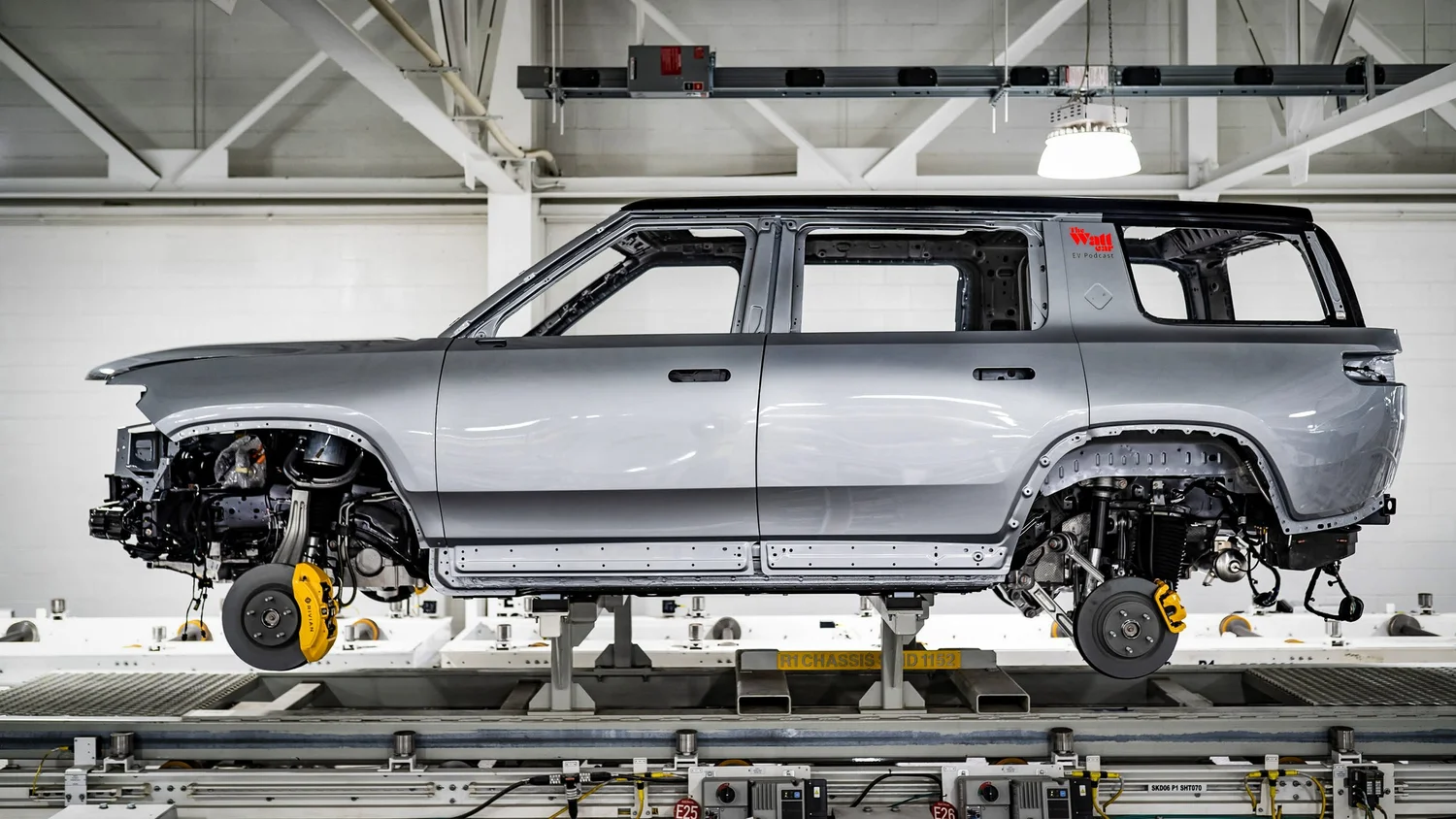
About this episode
The hosts kick off with a quick “a few random items and then a whole bunch of Rivian” setup, then bounce through EV talk, BMW M3 history and design debates, and a few speculative EV/robotaxi concepts. The conversation ultimately settles into Rivian’s world: its R2-first roadmap, R3/R3 X timing uncertainty, profitability and cash-runway pressure, and why autonomous development costs matter. They also dig into Rivian’s digital radio approach, connected-car tradeoffs, and how fleet use can change what “range” even means.
Rivian is in the news! From R2 production to R3 expectations, radio features, CalTrans orders, and more, this week’s podcast is packed full of Rivian goodness. But before we get there, first we tackle the BMW M Concept Neue Klasse unveiling, Tesla Cybercab EPA figures, the promise of Telo production, and more!
Subscribe to the podcast on Apple Podcasts, Amazon Music, Audible, Spotify, PocketCasts, iHeartRadio, Podbean, and more! Or heck, use your favorite podcast application.
Perhaps you prefer to watch as well as listen. If so, we’ve got you covered.
SHOW NOTES
BMW unveils M Concept Neue Klasse: https://www.motor1.com/news/798518/bmw-electric-m3-concept/
Tesla Cybercab specs revealed in EPA docs: https://www.caranddriver.com/news/a71590701/tesla-cybercab-specs-epa-documents-revealed/
Telo claims it has secured a supplier for the MT1’s “Body-in-White”: https://insideevs.com/news/798776/telo-mt1-production-update-partnership/
In an interview with The Drive, RJ Scaringe says R3 and R3X will enter production by the end of the decade:
https://www.thedrive.com/news/r2-profits-r4-is-very-cool-rad-variants-rivians-ceo-just-gave-us-the-roadmap
CalTrans orders 524 more Rivian R1s for its fleet: https://www.electrive.com/2026/06/15/caltrans-orders-524-additional-evs-from-rivian/
Rivian R2 drops traditional radio tuning for all-streaming audio: https://www.carscoops.com/2026/06/rivian-r2-fm-radio/
This week’s hosts: Phil Royle and Edward A. Sanchez
Episode art courtesy Rivian
Music courtesy Twisterium at Pixabay
Website: https://www.thewattcar.com
Buy merch: https://www.thewattcar.com/store
YouTube: https://www.youtube.com/@thewattcar
EV Displacement Replacement
"Some of it says EVAF. Some of it says EV Displacement Replacement. Some says I've got an adapter for that."
It’s a fun phrase that compares old-school gas-engine “displacement” to EVs. The idea is that EVs don’t use the same engine size concept, so it’s being replaced by electricity.
“EV Displacement Replacement” is a playful slogan that reframes the idea of engine displacement (a traditional measure of how big an engine is) as being “replaced” by electric power. It’s a way to connect EVs to the enthusiast language people used for gas engines.
frunk
"He has an adapter for that. A frunk full of adapters. That was one I don't think I made."
A frunk is a storage compartment in the front of an EV—like a trunk, but at the nose of the car. It exists because there’s usually no engine taking up that space.
A frunk is the “front trunk” on many EVs and some other cars, where the engine bay would normally be. Because EVs don’t have a traditional engine up front, manufacturers can use that space for storage.
internal combustion performance
"“So this is one I would consider one of the icons of internal combustion performance.” “I'd say definitely over the past 50 years for sure.”"
They’re talking about “internal combustion” cars, meaning cars with gasoline or diesel engines. “Performance” here means how fun and capable the car is to drive, not just how fast it is.
“Internal combustion performance” refers to performance cars powered by internal combustion engines (ICE), as opposed to electric drivetrains. The hosts use it to frame the BMW M3 as an iconic example of engine-based driving feel and history.

BMW E30
"So first came out and I don't know was it 84 85 camera. Remember something like that somewhere on the E 30 generation. And ironically that one of the kind of publicity photos that accompanied this release."
The BMW 3 Series is a popular BMW model line that’s been made for many decades. It’s a compact car that’s meant to balance everyday comfort with a more engaging drive. It’s often discussed because many BMW versions and upgrades are based on it.
The BMW 3 Series is BMW’s long-running compact executive sedan/compact car line, with many generations since the early 1980s. It’s significant because it’s one of BMW’s most important nameplates and a common foundation for performance variants like the M3. It may be mentioned in the context of early styling and generation history, such as the E30-era references.

BMW Neue Klasse
"... showed this new they're calling it the M concept Neue Klasse next to the original M30 or not M30. E 30 M3."
BMW Neue Klasse is BMW’s name for a new car platform they’re working on. A platform is basically the main “foundation” that future cars are built on. The podcast connects it to BMW’s performance history to explain where BMW is headed next.
BMW “Neue Klasse” refers to a new vehicle platform BMW is developing, and the podcast mentions it alongside an “M concept” and historical BMW M3/E30 references. It’s significant because a new platform can change how future BMW cars are engineered, including packaging, efficiency, and technology. In this kind of discussion, it’s brought up to connect BMW’s performance heritage with its next-generation direction.
M concept Neue Klasse
"“...it showed this new they're calling it the M concept Neue Klasse next to the original M30 or not M30.” “…E 30 M3.”"
“Neue Klasse” is BMW’s name for a future generation of car platform/technology. When they mention an “M concept” with it, they mean a BMW performance (M) concept car that’s meant to show what that next platform could enable.
“Neue Klasse” is BMW’s “New Class” platform concept—an internal program name for a next-generation vehicle architecture. When the hosts say “M concept Neue Klasse,” they’re referring to an M-branded concept car built around that future platform direction.

seven series
"Especially like you know the seven series and some of those I think the grill started enlarging to like cartoonish proportions and just. I don't know this."
They’re referring to the BMW 7 Series, which is BMW’s top luxury sedan. The host thinks the front grille on newer 7 Series models looks overly large and cartoon-like.
The BMW 7 Series is BMW’s flagship luxury sedan line, known for high-end interior tech and a very prominent front-end design. Here, the host is specifically reacting to the 7 Series grille and overall styling getting more exaggerated.
racing harnesses
"Now. It won't make it to production this way. Oh what the racing harnesses and. Yeah."
A racing harness is a stronger, more secure seatbelt setup used in track driving. It keeps the driver firmly in place during aggressive driving, more than a regular seatbelt.
A racing harness is a multi-point seatbelt system (usually with shoulder straps and a lap belt) designed to hold the driver securely during hard cornering and impacts. It’s common in motorsport because it reduces the driver’s movement compared with a normal seatbelt.
single center screen
"One PC racing harnesses all that stuff but this even on the interior for like a single screen which I'm I'm never. Really a big fan of a single center screen."
This is about the dashboard using one big screen in the middle instead of multiple displays. The host is saying they either like or dislike that layout depending on how it’s implemented.
A single center screen refers to consolidating most infotainment and vehicle settings into one large display mounted in the middle of the dashboard. The host is debating whether that layout is preferable to having separate screens or a more traditional instrument arrangement.
speedometer in front of you
"I don't. I'm confused by there not being a speedometer in front of you and. Yeah."
They’re talking about where the speed display is. Some cars put the speedometer right in front of the driver, while others hide it or show it in a different spot.
A speedometer is the gauge that shows vehicle speed, and “in front of you” usually means it’s placed directly in the driver’s line of sight (often behind the steering wheel). The host is noting that this vehicle may not have a traditional speedometer directly in the cluster and instead uses a more subtle display.

Honda Civic
"...s not even a head up. That's a oh that's like the Civic the like ninth gen Civic isn't it. Yes but I thin..."
The Honda Civic is a common compact car that people buy for daily driving. It has had many generations, and “ninth gen” refers to one of those versions. It’s mentioned because it’s a familiar example of a normal, everyday car model.
The Honda Civic is a mainstream compact car known for being practical and widely available across many generations. In the podcast context, it’s being used as a reference point for what a “ninth gen” Civic might look like or represent. It often comes up in EV and future-car discussions because it’s a common baseline for what everyday buyers expect from a car.
quad motor
"[367.1s] It is quad motor. [370.9s] 800 volt. [372.4s] 400 kilowatt charging."
“Quad motor” means the car has four electric motors. More motors can help the car put power to the wheels more precisely, which can improve acceleration and grip.
“Quad motor” means the EV uses four electric motors, typically one per wheel or per axle. This can improve traction and allow more precise torque control, which often translates into stronger acceleration and more adjustable handling behavior.
800 volt
"[367.1s] It is quad motor. [370.9s] 800 volt. [372.4s] 400 kilowatt charging."
This means the car uses a higher-voltage battery/electrical system. In simple terms, it can help the car charge faster because the system can move more power efficiently.
“800 volt” refers to the vehicle’s high-voltage electrical architecture. Higher voltage can reduce current for the same power, which helps enable faster charging and less heat in the charging system (assuming the charger and battery support it).
400 kilowatt charging
"[370.9s] 800 volt. [372.4s] 400 kilowatt charging. [374.6s] 100 plus kilowatt hour battery."
This is how fast the car can charge at a fast charger, measured in kilowatts. Higher numbers usually mean quicker charging, but it still depends on conditions like battery temperature and charger capability.
“400 kilowatt charging” describes the maximum charging power the EV can accept from a fast charger. Higher kW generally means shorter charging sessions, but the real-world result depends on battery temperature, state of charge, and whether the charger can deliver that power.
kilowatt hour battery
"[372.4s] 400 kilowatt charging. [374.6s] 100 plus kilowatt hour battery. [378.6s] I didn't see anything on acceleration."
“Kilowatt hour” (kWh) is a measure of how much energy the battery can store. A bigger number usually means the car can go farther, but driving conditions still matter.
A “kilowatt hour battery” is the battery’s energy capacity, measured in kWh. More kWh typically means more potential range, though actual range depends on vehicle efficiency, speed, temperature, and how the battery is managed.
thousand horsepower
"[391.6s] I can't remember where I saw this and this could be completely speculative. [396.1s] I heard some people speculating this could be about a thousand horsepower. [400.6s] I mean it's got four motors."
This is a rough way people talk about how much power the car could have. Even if the car has four motors, the actual output can be limited by software and how much heat the system can handle.
“Thousand horsepower” is a power claim (1,000 hp) often used to describe how strong an EV’s performance could be. For EVs with multiple motors, horsepower can be plausible, but the final number depends on software limits, traction, and thermal constraints.
M3
"So did we talk about this it's a concept. [504.4s] Yes it is supposedly not going to have the I in front of the M3 when it's released as an M3. [511.3s] It's just going to be an M3 which is normalizing electric vehicles."
“M3” is BMW’s name for a high-performance version of a model. They’re saying the new electric version might be branded simply as “M3” instead of using an extra “i” in the name.
“M3” is BMW’s performance model designation associated with the M division. In this segment, the hosts discuss how an upcoming car is expected to be called “M3” without an “i” prefix, which is a naming convention BMW has used for some electrified models.
normalizing electric vehicles
"[511.3s] It's just going to be an M3 which is normalizing electric vehicles. [515.8s] Heaven forbid that these should be called cars and not electric cars or i cars or whatever it is the manufacturer or ID dots or what other people like every at some point these are cars."
They mean EVs should be talked about like normal cars, not like a totally different kind of vehicle. The naming point is that the car should sound like a regular model name, even if it’s electric.
“Normalizing electric vehicles” is the idea that EVs should be marketed and named like regular cars, rather than being treated as a separate category. The host connects this to dropping extra EV-specific naming (like an “i” prefix) so the model name reads more like a traditional performance badge.
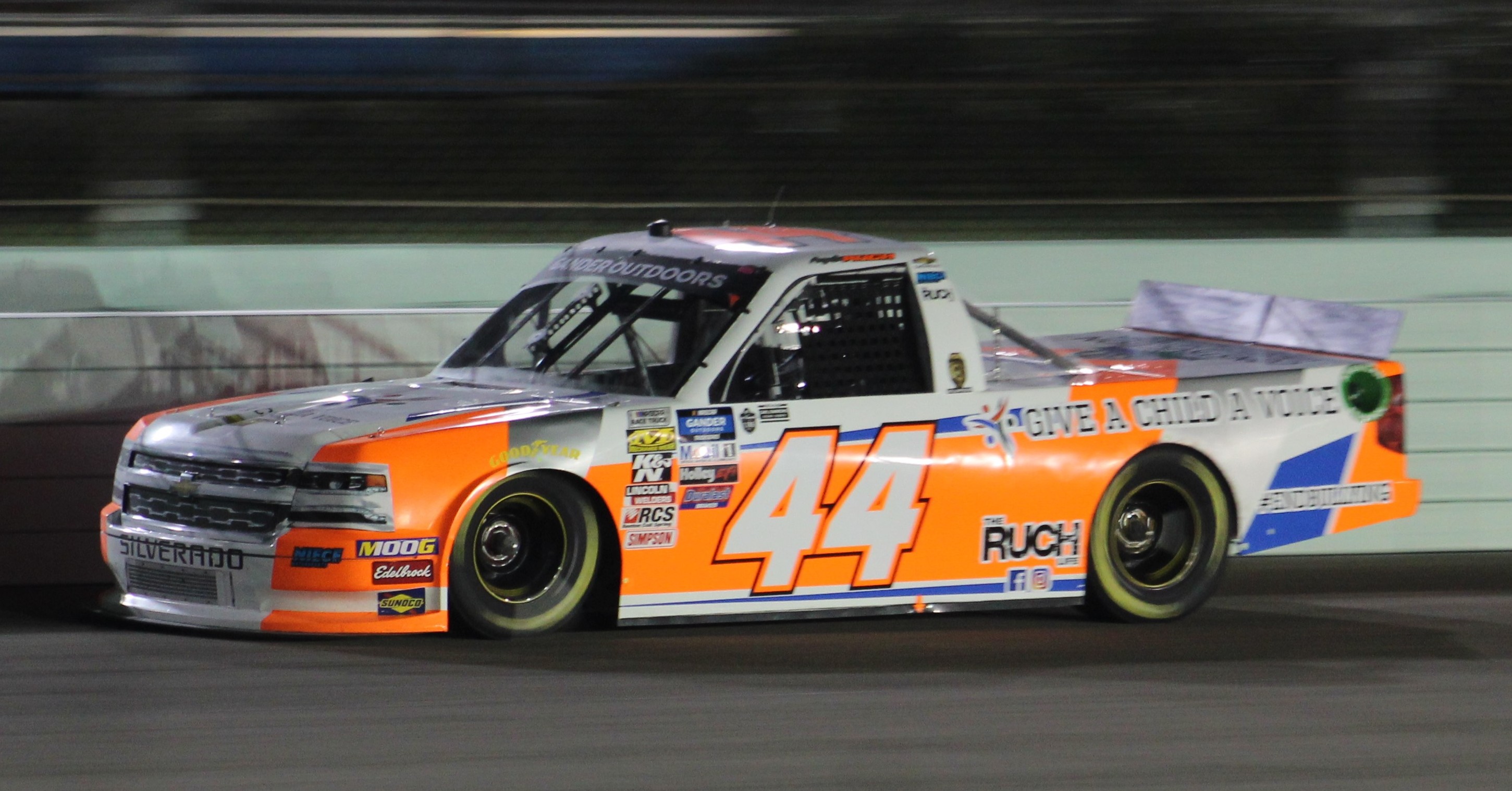
Chevrolet Silverado
"They're cars or a Silverado with the blue E. [536.8s] They're cars or a Silverado with the blue E."
They mention the Silverado, which is a common Chevy pickup truck. It’s being used as an example to compare how people label vehicles.
The Chevrolet Silverado is a full-size pickup truck line used here as a quick comparison point. The host’s broader point is about how EVs (and cars in general) get labeled, using a familiar non-EV model as the contrast.
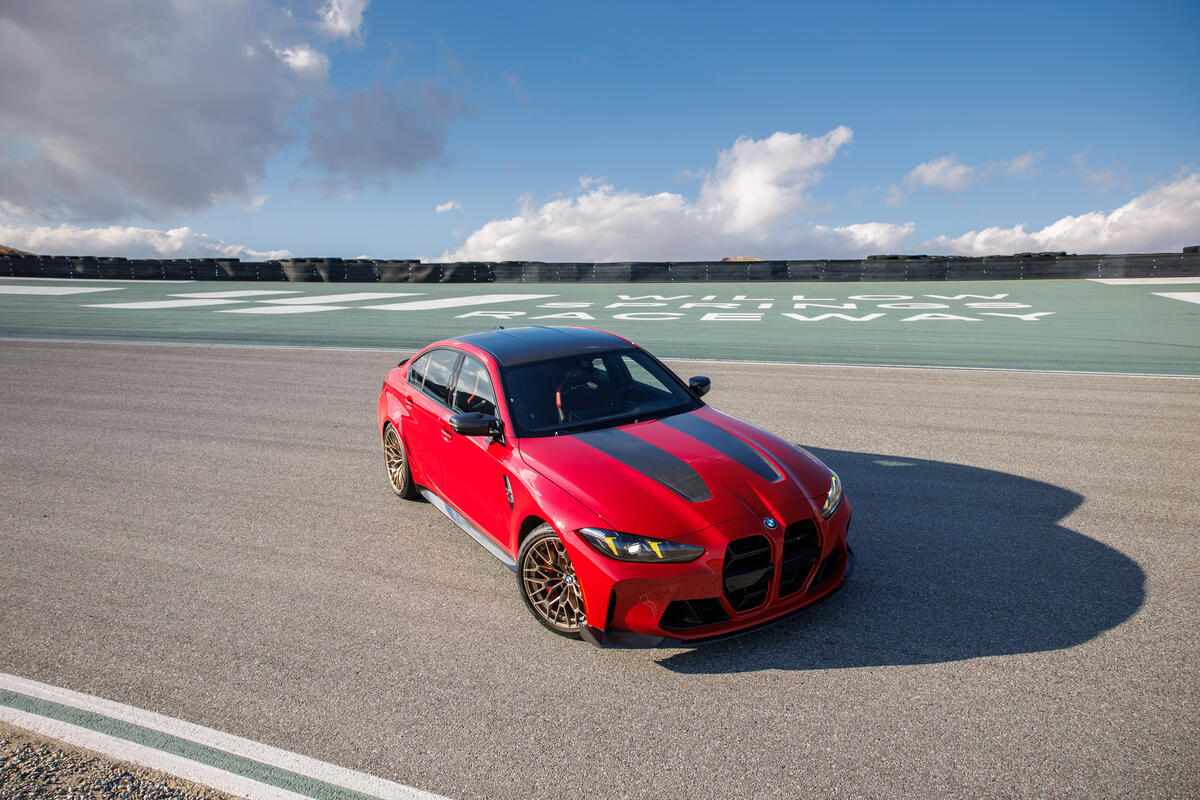
E30 M3
"I have very high standards for M3 is the the E30 M3 was a fun nice car."
The BMW E30 M3 is an older BMW performance car that many enthusiasts consider one of the best M3s. People like it because it feels very connected and fun to drive, and it’s powered by a traditional gas engine.
The BMW E30 M3 is a legendary performance version of the 3 Series, best known for its sharp, driver-focused handling and its role in establishing the M3 as a benchmark “driver’s car.” It’s from the era when BMW’s M cars were built around internal-combustion engines, and it’s often treated as the “baseline” M3 experience by enthusiasts.
DSG
"It came it was the first one that came with like the DSG whatever paddle shift things that was the it was more bloated I guess it was more advanced than the others."
DSG is a type of automatic transmission that shifts very quickly using two clutches. The idea is that it can change gears fast without the car feeling like it’s “pausing” between gears.
DSG is Volkswagen Group’s dual-clutch transmission (a gearbox that uses two clutches to shift quickly with minimal interruption). In the context of the BMW E46 M3 discussion, the host is referring to paddle-shift, fast-shifting behavior associated with a more modern transmission feel.
parts car
"One of the parts car ones. Yeah the white one does kind of look like it's had some parts borrowed off of it but they're both on the street they both drive."
A parts car is a car that someone keeps mainly so they can take parts off it for another car. It’s usually not the “main” car—it’s more like a donor vehicle.
A parts car is a vehicle kept primarily to supply usable components to another car—often because it’s too damaged or too expensive to repair. In this segment, the host describes an E36 M3 as having parts borrowed from it, which is a common enthusiast practice when sourcing hard-to-find parts.

Dodge Charger
"...parison but. I think what what Dodge did with the charger and coming out the EV version first. Which was a ..."
The Dodge Charger is a car name that’s usually associated with strong performance. The podcast is talking about Dodge bringing an electric version of the Charger idea. That matters because it shows how the Charger is changing for EVs.
The Dodge Charger is a well-known American muscle-style sedan that has historically focused on performance and power. The podcast mentions Dodge moving toward an EV version first, which is notable because it signals a shift in how the Charger nameplate is being used in the electric era. It’s discussed as part of the broader trend of automakers adapting iconic models to EV platforms.
straight sixes
"I you know BMW is always I mean they've had V8s but they've always been famous for their straight sixes. [813.8s] So I mean I think for sure the gas version the ice versioners you know they're going to be huge huge demand for that."
“Straight sixes” means an engine with six cylinders lined up in a row. The host is saying BMW is known for this kind of engine, and that could affect how people feel about the gas versions versus EVs.
“Straight sixes” refers to inline-six engines, where six cylinders are arranged in a single line. The host notes BMW’s reputation for inline-six engines, using it to suggest strong demand for BMW’s gas versions while also discussing how EV versions might perform differently.
all wheel drive
"Well this be the first all wheel drive M3. [843.0s] I don't know it's not the first all wheel drive M vehicle. [847.3s] Yes I think the M5."
All-wheel drive means the car can send power to more than two wheels, which helps it grip the road better. That can make launches and corner exits feel more stable, especially when traction is limited.
All-wheel drive (AWD) sends power to more than just the rear axle, improving traction by distributing torque across multiple wheels. On performance cars like the BMW M3 the host is discussing, AWD can change how the car accelerates and how it behaves under hard cornering compared with traditional rear-wheel-drive setups.

BMW M5
"I don't know it's not the first all wheel drive M vehicle. [847.3s] Yes I think the M5. [851.2s] The current and maybe even the previous generation were all wheel drive."
The BMW M5 is BMW’s top performance sedan. It’s the kind of car people buy when they want “M” power and handling in a bigger body. The host brings it up because some M5 versions have used all-wheel drive before.
The BMW M5 is BMW’s flagship performance sedan from the M division, historically offered with high-output engines and, in some generations, all-wheel drive. The host mentions it to argue that an all-wheel-drive “M” setup isn’t brand-new for BMW’s performance lineup, even if an all-wheel-drive M3 would be a first.
Nurburgring
"So yeah but in a straight line I'm sure the EV will smoke it. [878.2s] Yeah it'll be interesting to see Nurburgring to Nurburgring because you know that they'll do it. [885.0s] Somebody will do it that you'll have ice versus EV on this."
The Nürburgring is a very famous race track in Germany. Car makers and reviewers use it to compare how fast and how well cars handle. The host is basically saying it’ll be a good place to see how an EV compares to a gas car.
The Nürburgring (often shortened to “the Ring”) is a famous German circuit used as a benchmark for performance cars. The host is saying it’ll be interesting to see an internal-combustion (ICE) car versus an EV run there, because lap times and feel on that track are widely used to judge real-world performance.
ice
"Yeah it'll be interesting to see Nurburgring to Nurburgring because you know that they'll do it. [885.0s] Somebody will do it that you'll have ice versus EV on this."
“ICE” is shorthand for a regular gas engine (not electric). The host is comparing how a gas car and an electric car might perform against each other.
“ICE” stands for internal combustion engine, meaning a conventional gas- or diesel-powered powertrain. In this segment, the host contrasts ICE cars with EVs to predict how they’ll differ in straight-line acceleration and on a handling-focused track like the Nürburgring.
one-to-one comparisons
"Yeah I'll be interesting to see how the sales break down once they're both on the market. [955.2s] Like there's I love these one to one way outpace the ice or vice versa or whatever. [961.4s] Yeah I love even when with like Dodge where the EV flops and the ice version is flopping too."
A “one-to-one comparison” tries to match two cars as closely as possible so you can see what changes because of the powertrain. The point here is that real-world results can be more complicated than simple stereotypes.
“One-to-one comparisons” in car talk means comparing an EV and an ICE version as directly as possible—same brand, similar performance goals, and similar use cases—so differences are easier to attribute to the powertrain rather than unrelated variables. The host argues these comparisons reveal that it’s not always as simple as “EV bad” or “EV good.”
Stalantis
"[979.5s] Nobody wants EV it's the audience that they've been marketing to the Stalantis is the brand [985.6s] that they have built around Dodge and that cult. [988.9s] They have shot themselves in the foot with going to anything other than a V8 and they saw it with EV"
“Stalantis” sounds like the automaker Stellantis. The host is basically saying the parent company’s strategy and marketing choices influence how brands like Dodge perform.
“Stalantis” appears to refer to Stellantis, the automaker formed from the merger of Fiat Chrysler Automobiles and PSA. In this segment, the host attributes marketing and product strategy decisions to the company behind brands like Dodge.

Tesla Cyber Cab specs.
" [1051.6s] Tesla Cyber Cab specs. [1056.3s] So we have we have some numbers here."
The Tesla Cyber Cab is a Tesla EV concept that’s meant to work like an autonomous ride/cab. The hosts talk about its battery size and whether it uses front-wheel drive, which changes how the car can fit passengers and luggage.
The Tesla Cyber Cab is Tesla’s proposed autonomous, cab-style EV concept. In this segment, the hosts discuss its likely battery size and layout, including a claim about front-wheel drive—important because it affects packaging and how the vehicle can use space for passengers and cargo.
50 kilowatt hours
"[1060.6s] Smallish battery. [1063.3s] I think this one said 50 kilowatt hours I've seen others that are saying like 48 which is pretty small."
Kilowatt-hours (kWh) tell you how much energy is stored in the EV battery. The hosts are saying this concept might have around 50 kWh, which usually means a smaller battery than many long-range EVs.
Kilowatt-hours (kWh) measure the size of an EV’s battery in terms of stored electrical energy. A value around 50 kWh (as mentioned here, with references to 48 kWh) suggests a relatively smaller battery pack, which can imply shorter range but potentially lower cost and weight.
front wheel drive
"[1070.3s] Interestingly front wheel drive which would make this the first Tesla that's front wheel drive if that's true. [1076.8s] Makes a lot of sense for a cab."
Front-wheel drive means the front wheels are the ones that get power. The hosts are saying that, for this kind of vehicle, putting the drive components up front can free up more space in the back for luggage.
Front-wheel drive (FWD) means the electric motors drive the front wheels. For an EV like the Tesla Cyber Cab being discussed here, FWD can simplify packaging by allowing more space in the rear for cargo—especially useful for a cab/minivan-like layout.
autonomous vehicle
"[1110.1s] So for certain applications it's great and this is one of those applications where you're going to put luggage in the back. [1117.5s] You don't want to stand in front of this autonomous vehicle."
An autonomous vehicle is a car that can drive itself. The point here is about how the vehicle is used and where people and luggage are positioned, not about the driver’s seat being in the way.
An autonomous vehicle is a car that can drive itself using sensors and software rather than requiring constant human control. The hosts connect this to vehicle layout—suggesting you wouldn’t want people standing in front of an autonomous vehicle, and that the design can prioritize passenger/cargo space.
lift back
"Well it's a lift back. It's one of your favorites."
A liftback is a car with a rear door that lifts up to open the trunk/cargo area. It’s like a hatchback, but the rear shape is usually a bit more “car-like” and streamlined.
A liftback is a body style where the rear hatch lifts upward and the cargo area is accessed through that single door. It’s similar to a hatchback, but the rear roofline and hatch shape are typically more steeply integrated for easier cargo loading and a more streamlined look.
EPA range
"Only 30 just a little bit over 3100 pounds which is very light by standards. 280 mile EPA range. Not bad."
EPA range is an official estimate of how far an electric car can go on one charge. It’s based on standardized testing, so your real range may be higher or lower depending on how you drive and the weather.
EPA range is the estimated distance an EV can travel on a full charge, measured using the U.S. Environmental Protection Agency’s standardized testing procedure. It’s a useful apples-to-apples number, but real-world range can vary with speed, weather, and driving style.
Nürburgring
"We don't this doesn't need to be a thousand horsepower. This doesn't need to you know go around the Nürburgring in six minutes. You know yeah you need to be efficient low cost of operation practical."
The Nürburgring is a well-known race track in Germany. People use it as a benchmark because it’s tough and twisty, so fast lap times are a big deal.
The Nürburgring is a famous German racing circuit, especially known for the Nordschleife (“North Loop”) with its long lap and complex mix of corners and elevation changes. When someone mentions lap times there, they’re usually talking about a car’s overall performance and development benchmark.

Model Y
"Or they'll just tell you to take the bus. [1231.5s] Or they'll just tell you to take the bus."
The Tesla Model Y is an electric SUV that many people use as a practical, everyday EV. Here, the hosts are saying it could be the kind of car used for most single- or two-person rides.
The Tesla Model Y is an electric crossover/SUV that’s commonly used as a baseline for ride-hailing and fleet discussions because it’s widely available and designed for everyday practicality. In this segment, it’s mentioned as a likely substitute for a more purpose-built two-seater EV.
composite
"What and I think the body panels are just composite. They're it's not even painted."
A composite is a “made-from-more-than-one-material” panel. It’s often lighter than metal and can be shaped in a factory process that’s good for mass production.
In car manufacturing, a composite usually means a material made from two or more components (like fibers plus resin) that’s molded into a strong, lightweight panel. When hosts say “body panels are composite,” they’re pointing to a lighter, potentially cheaper way to build exterior parts than traditional stamped steel.
sheet molding compound
"Like they just inject the pigment into the end of the the the sheet molding compound or whatever it is. Yeah so it's plastic car disposable."
Sheet molding compound (SMC) is a plastic material mixed with reinforcement (often fiberglass) that’s pressed into shape. It’s commonly used to make car body parts because it can be produced efficiently.
Sheet molding compound (SMC) is a fiberglass-reinforced plastic material used to form body panels and other structural parts. It’s typically molded under heat and pressure, which can reduce tooling cost and speed up production compared with metal stamping.
body in white
"Yeah as far as I don't know how production goes but in the race car world where I'm from if you get a body in white you're getting a car that is the pan. It's the subframe whatever the structure of it."
“Body in white” means the car’s main metal shell is built, but it’s not fully finished yet. At that point it usually doesn’t have the electronics, engine, or other major parts installed.
“Body in white” (BIW) is the stage in car manufacturing where the vehicle’s body structure is assembled and welded, but it’s not yet fitted with the final interior, wiring, brakes, or powertrain components. It’s essentially a bare shell that later gets “plopped” with the rest of the car’s systems.
subframe
"It's the subframe whatever the structure of it. It's the pan."
A subframe is like a smaller metal frame inside the car that supports important parts. It helps hold things like the suspension in place and can make the car easier to build and repair.
A subframe is a secondary structural frame that’s mounted to the vehicle’s main body to carry key components like suspension and sometimes the powertrain. Using a subframe can make assembly and service easier, and it can help isolate loads and vibrations from the main body.
start of production
"So they claim they have a supplier secured for that Schwab Industries in Michigan which I guess has been a automotive supplier for about 30 years or so. And they're aiming for a start of production in late 2026 which you will see."
“Start of production” is when the company plans to begin building the cars for real, not just prototypes. If that date slips, it usually means customers get the cars later too.
“Start of production” is the planned date when a vehicle program begins manufacturing at scale—moving from prototypes and tooling into actual production runs. For listeners, it’s a key milestone because delays here often cascade into later delivery timelines.
Q1 2027
"So I'm just wondering if this is going to be bumped out to Q1 2027 or 2028. [1576.3s] I mean who knows."
“Q1 2027” means the first three months of 2027. If a car company moves its production target to that window, it usually means the cars will arrive later than originally planned.
“Q1 2027” refers to the first quarter of the year 2027 (January through March). In automotive program discussions, shifting a target from “late 2026” to “Q1 2027” signals a schedule slip that can affect supplier readiness and customer delivery estimates.

Tesla Model 3S
"But now they were trying to produce hundreds of thousands of these Model 3's and that just about put them out of business."
RJ Scorange
"And they had RJ Scorange on there and in it he said."
RJ Scorange is the leader of Rivian. In this clip, he’s talking about when Rivian’s future EVs (like the R3 and R3 X) might be released.
RJ Scorange is Rivian’s CEO, and in this segment he’s quoted discussing Rivian’s timeline for the R3 and R3 X. The hosts use his comments to question whether those models will actually reach production.
Rivian R3 X
"Rivian he said as far as the R3 and R3 X Rivian has a really clear idea on a timeline we just haven't announced it yet."
Rivian R3 X is a different version of the upcoming R3 EV. The hosts are questioning whether Rivian will actually build it, based on timing and whether the company makes enough money.
Rivian R3 X is a variant of the upcoming Rivian R3 model line, referenced here as part of Rivian’s longer-term EV roadmap. The discussion centers on whether Rivian’s timeline and business case will allow the R3/R3 X to reach production.
Caltrans
"They have just announced that they might be able to maybe they're on their way to get a little bit more money because Caltrans. For what California Department of Transportation."
Caltrans is California’s transportation agency. Here it’s mentioned because it ordered more electric vehicles from Rivian, which suggests EV adoption is expanding beyond just private buyers.
Caltrans (California Department of Transportation) is a government agency that can place fleet orders for EVs. In this segment, Caltrans ordering additional Rivian EVs is used as evidence that Rivian is moving toward more mainstream adoption.
EVs
"Has ordered 524 additional EVs from Rivian. Which indicates that they already had $2 of work."
EVs are electric vehicles powered by electricity from batteries. The segment is using EV orders to show that more organizations are buying electric cars.
EVs means electric vehicles—cars or trucks powered primarily by electric motors and rechargeable batteries. In this context, the host is talking about EV procurement by Caltrans and how that relates to Rivian’s growth.
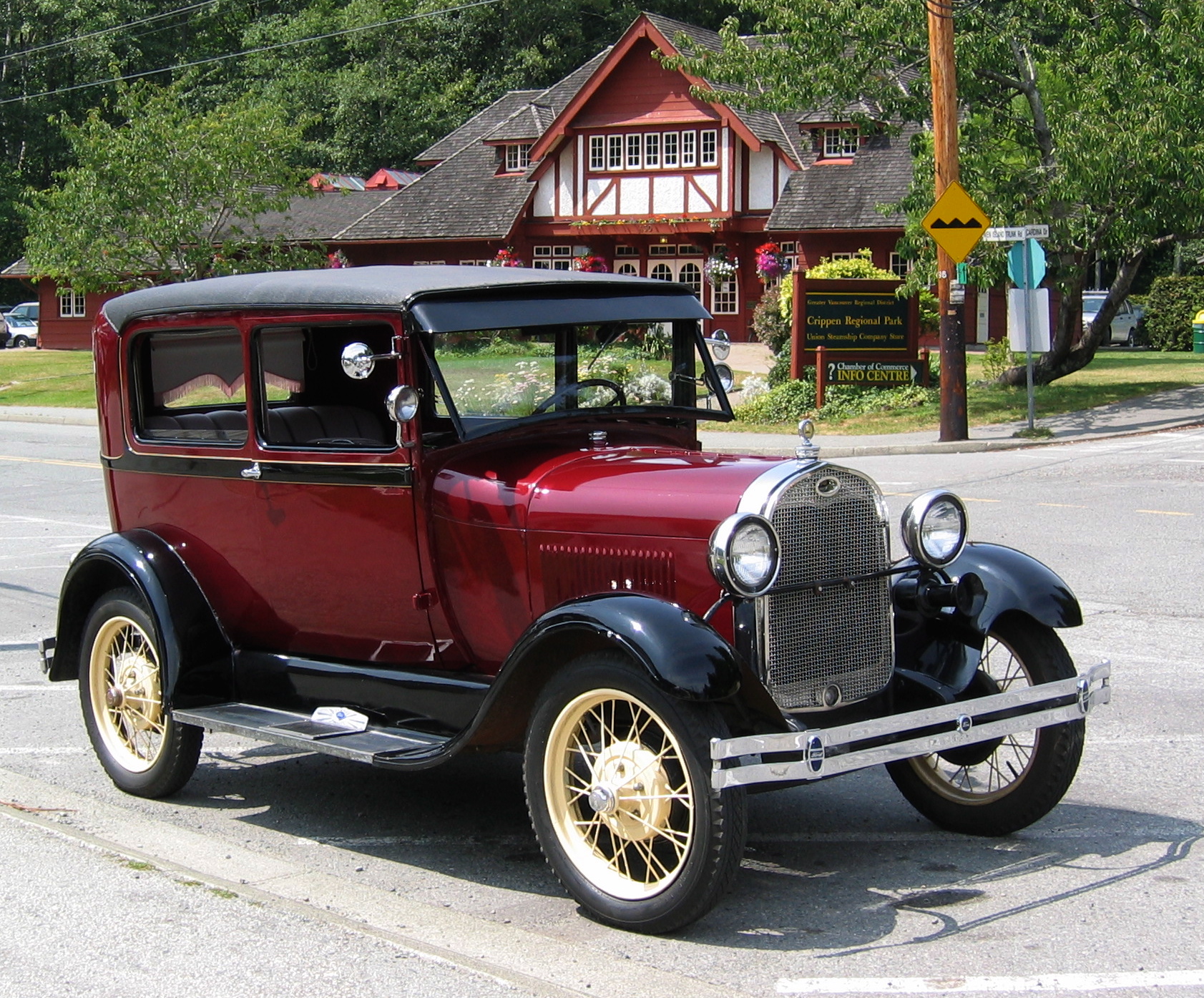
Ford Superduties
"But I mean if you think about most of the other Caltrans vehicles you see I would say a good portion of Ford Superduties."
Ford’s “Super Duty” is a line of heavy-duty trucks that lots of fleets use for tough jobs. The host is saying Caltrans already uses these trucks, so the EV comparison isn’t coming out of nowhere.
“Super Duty” is Ford’s heavy-duty truck line (often used by fleets and government agencies) built for towing and high payload work. In this segment, the host uses it as a baseline for what Caltrans already buys, comparing typical costs of gas and diesel versions.

Chevrolet Silverado EV
"And a couple of those are Silverado EVs. So I know that they're not shy about spending some money."
The Silverado EV is Chevrolet’s electric pickup truck. The host is talking about Caltrans using them, and how they may be relatively cheaper versions meant for fleets.
The Chevrolet Silverado EV is GM’s electric version of its popular full-size pickup, aimed at fleet and consumer buyers who want truck capability with an EV powertrain. Here, the host specifically mentions Caltrans having Silverado EVs and then ties it to the “WT” trim, implying a more basic configuration.

R1 T's
"Now they're probably those are probably cheaper than R1 T's. I would guess. Because they're definitely the WT model."
The Rivian R1T is Rivian’s electric pickup truck, known for its adventure-oriented design and EV performance. The host compares Caltrans’ likely Silverado EV “WT” cost to the Rivian R1T, implying the Rivian is more expensive than the fleet-focused Chevy.
WT model
"Now they're probably those are probably cheaper than R1 T's. Because they're definitely the WT model. The very big bare bones Silverado."
“WT” usually means “Work Truck,” which is the simpler, more stripped-down trim meant for fleets and work use. The host is saying the EV they saw wasn’t the fancy top version.
“WT” is a trim designation that stands for Work Truck, typically meaning a more basic, fleet-focused configuration with fewer convenience features. In this segment, the host uses “WT model” to emphasize the Silverado EV they saw is the very bare-bones version.
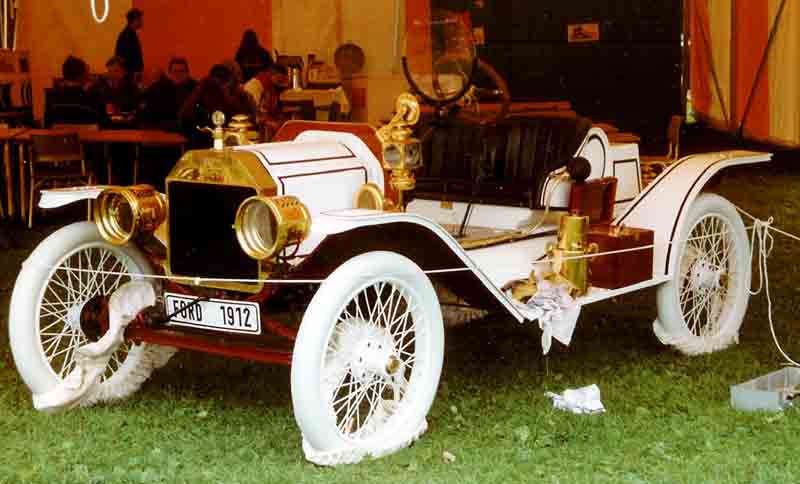
Ford Wt Model
"I would guess. Because they're definitely the WT model. The very big bare bones Silverado."
icing this charger
"I was a sudden at a picture of me icing this charger with my big old Yukon part. Taking up two chargers spots."
In EV charging talk, “icing” means parking in a charger spot without charging. The host is admitting they were parked there and taking up the space.
“Icing” (in EV charging contexts) means blocking an EV charging station while not charging—often by parking a non-EV vehicle in the charger spot. The host uses it as a joke about taking up two charging spaces with their Yukon.
52 point 7000000 dollars
"Okay so they're spending total value of 52 point 7000000 dollars."
This is the host’s stated total spending figure for the program they’re discussing, expressed as a dollar amount. It’s relevant because it frames the scale of the government vehicle procurement they’re debating.
cash flow positive
"He said Rivian hasn't generated a profit as a business yet and we haven't been cash flow positive as a business but that's not an accident."
“Cash flow positive” means the company is taking in more money than it’s spending. If you’re not cash-flow positive yet, you usually need funding or reserves to keep operating.
“Cash flow positive” means a business brings in more cash than it spends over a period of time. For an EV startup like Rivian, the discussion is that it hasn’t reached that point yet, which matters because it determines how long the company can fund operations without running out of money.
vertically integrate
"It's actually a very intentional and methodical build out of a bunch of capabilities in order to build a much larger business and on the product side we've taken the decision to vertically integrate in almost all technically important areas."
“Vertically integrate” means the company tries to build more of the parts in-house instead of relying on outside vendors. The idea is to control quality and costs as production grows.
To “vertically integrate” means a company makes more of the components and systems itself instead of buying them from suppliers. Here, Rivian is described as vertically integrating key EV technologies (software, electronics, high-voltage systems, power electronics, and motors) to improve control and potentially lower costs at scale.
high voltage systems
"So software electronics high voltage systems power electronics motors everything associated with drive line."
EVs use a high-voltage electrical system to move the car. It’s different from the normal 12-volt system and needs special safety and control equipment.
In EVs, “high voltage systems” are the battery and electrical subsystems that operate at much higher voltages than a typical 12V car system. These systems power the drivetrain and require specialized safety design, insulation, and control electronics.
power electronics
"So software electronics high voltage systems power electronics motors everything associated with drive line."
“Power electronics” are the EV’s electrical control parts. They take electricity from the battery and convert/control it so the motor can run efficiently.
“Power electronics” are the electronic components that convert and control electrical power from the battery to the motor. In EVs, they manage things like voltage/current conversion and motor control, which strongly affects efficiency and performance.
drive line
"So software electronics high voltage systems power electronics motors everything associated with drive line."
“Drive line” is the set of parts that deliver power to the wheels. In an EV, it’s mainly the motor and the systems that control it.
“Drive line” refers to the drivetrain components that transmit power from the energy source to the wheels. In EV context, that includes the motor(s) and the associated electrical/control systems that make the motor produce torque.
runway
"But if you're burning a billion dollars a quarter and you've only got 5000000000 dollars less than 5000000000 in the bank. I know. Runway."
“Runway” here means how much time the company has left before it needs more money. It depends on how fast it’s spending versus how much cash it has.
“Runway” is a finance term for how long a company can keep operating before it runs out of cash, given its current spending rate. The segment uses it to frame Rivian’s situation: if cash burn is high and cash on hand is limited, the runway shrinks.
full autonomy
"I think you need to come to market with Lane Assist driving assist you need things like that some hands off controls but you don't need this sounds to me like this is full autonomy that they're working on. ... Don't waste your time. Just make your vehicle get profitability."
Full autonomy means the car drives by itself without you having to watch the road. The discussion here is about how close (or far) current systems really are.
Full autonomy refers to a self-driving system that can handle driving tasks end-to-end without the driver needing to supervise. In practice, most real-world systems are limited by regulations, operating conditions, and sensor performance, so “full” capability is often restricted.
Lane Assist
"I think you need to come to market with Lane Assist driving assist you need things like that some hands off controls but you don't need this sounds to me like this is full autonomy that they're working on."
Lane Assist is a system that helps your car stay in its lane. It watches the lane lines and can gently steer so you don’t drift.
Lane Assist is a driver-assistance feature that helps keep the car centered in its lane using steering inputs. It typically works by detecting lane markings and then nudging or steering to reduce unintentional lane departures.
driving assist
"I think you need to come to market with Lane Assist driving assist you need things like that some hands off controls but you don't need this sounds to me like this is full autonomy that they're working on."
Driving assist means the car helps you with parts of driving, like staying in lane or controlling speed. It doesn’t fully replace the driver in most real-world cases.
Driving assist refers to driver-assistance systems that help with specific tasks (like lane keeping or adaptive cruise) but still rely on the driver for overall supervision. The hosts are arguing that startups should focus on these near-term assist features rather than promising full autonomy.
level three
"They have full level five but only in very specific areas like level three. ... Technically level three could be hands off eyes off but I think it's only they're only approved up to like 40 or 50 miles per hour."
Level 3 is when the car can drive for you in some situations, but you still have to be ready to take control. It’s not a blanket “you don’t have to watch” system.
“Level 3” autonomy means the car can handle driving in certain conditions, but the driver must be ready to take over when prompted. The hosts also note practical limits like speed caps and operating conditions, which is why Level 3 is not the same as “hands-off, eyes-off” everywhere.
level five
"They have full level five but only in very specific areas like level three. I thought they had ones where it was all five is no pedals no level."
Level 5 is the “the car does everything” level of self-driving. The point being made is that real systems often aren’t truly Level 5 everywhere.
“Level 5” is the highest SAE self-driving autonomy level, meaning the vehicle can perform all driving tasks in all conditions without human intervention. The hosts are contrasting claims of Level 5 capability with the reality that deployments are usually limited to specific areas and conditions.
no pedals
"I thought they had ones where it was all five is no pedals no level. Yeah no it was level four wasn't it."
“No pedals” is a way of saying the car is supposed to drive without you using the gas or brake. The hosts are basically arguing that real systems still have limits and requirements.
“No pedals” is a shorthand for a self-driving setup where the vehicle doesn’t rely on traditional driver controls (accelerator/brake) because the system is intended to handle driving tasks. In real deployments, even when automation is advanced, driver controls and supervision requirements often remain.
Geofence
"Yeah no it was level four wasn't it. It was where they've got the vehicles got everything but it's full hands off not looking and it's only in Geofence."
A geofence is a “map area” where the self-driving system is permitted to work. If you leave that area, the feature may shut off.
A geofence is a defined geographic area where an automated driving feature is allowed to operate. Outside that boundary, the system may refuse to engage or may require the driver to take over.
level four
"“...if you're going level four and no eyes required then somebody's got to be financially responsible…”"
“Level four” means the car can drive itself in certain situations without the driver needing to constantly watch. The host’s point is that accidents can still happen, so someone still needs to be responsible for the costs.
“Level four” refers to SAE automation levels for driver-assistance systems, where the car can handle driving tasks in specific conditions without human monitoring. The key point in the discussion is that even with high automation, real-world incidents can still create liability and insurance responsibility.
self driving
"“...it was a Tesla… I don't know if it was on self driving or what…” … “...if you're full autonomous everything… until somebody trips and falls…”"
“Self driving” here refers to automated driving systems that attempt to perceive the road and control the vehicle without continuous human input. The segment uses a near-miss/accident scenario to argue that even advanced automation can be affected by unexpected events, which is why liability and business strategy matter.
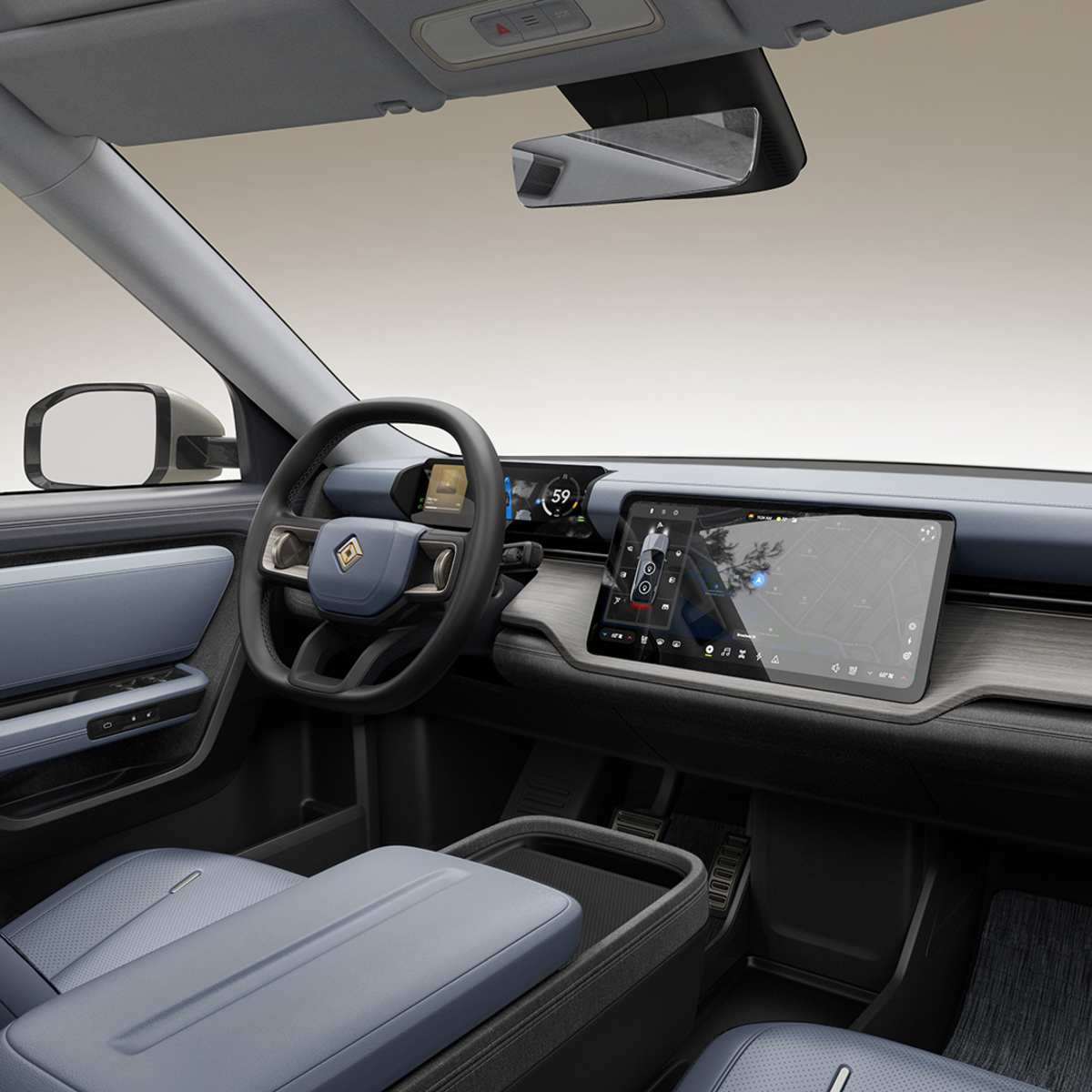
Rivian R2
"“Ramping R2 and so on to yes selling that get profitability… ” … “So Rivian digital radio… With the R2.”"
Rivian R2 is a future Rivian electric SUV/pickup-style EV that the company is working to sell. In this episode, they mention it as the car where Rivian plans to start rolling out some new features, including how radio works inside the vehicle.
Rivian R2 is the next-generation EV that Rivian is ramping up for production and sales. In this segment, the hosts connect the R2 rollout to Rivian’s strategy for funding self-driving progress and also discuss changes to in-car audio starting with the R2.
infotainment
"“...Rivian's taking the right road because. What on the infotainment front.”"
Infotainment is the car’s dashboard system for things like music, radio, and navigation. In this segment they’re talking about infotainment changes on the Rivian R2, especially for listening to radio.
Infotainment is the in-car electronics that combine information and entertainment—typically the touchscreen, navigation, and media playback. The hosts discuss infotainment changes on the Rivian R2, specifically how radio reception will work.
terrestrial and FM
"“...traditional and terrestrial and FM yes yes yes so you've only you're only going to be able to stream…”"
Terrestrial FM refers to traditional over-the-air radio broadcast received through an antenna. The hosts say Rivian is dropping traditional radios, meaning the R2 will rely more on streaming/digital radio instead of classic FM reception.
Rivian digital radio
"“So Rivian digital radio.”"
“Rivian digital radio” is Rivian’s newer way to get radio/music in the car instead of classic over-the-air FM. The takeaway is that starting with the R2, you’ll be more dependent on streaming/digital services.
“Rivian digital radio” is the in-vehicle radio approach the hosts describe as replacing traditional terrestrial FM. In this segment, they connect it to the Rivian R2 starting point, implying listeners will need streaming-capable connectivity for audio.
cellular connection
"[2784.3s] Anywhere in the country basically but. [2787.3s] It receives a signal through a cellular connection not. [2792.3s] Not traditional. [2794.3s] FM receiver."
A cellular connection means the car can use the same kind of mobile network your phone uses. Instead of picking up radio stations with an antenna, it can stream the audio over that network.
A cellular connection means the vehicle uses a mobile network (like LTE/5G) to stream or receive data. Here, it’s used to deliver “digital radio” content across the country without relying on over-the-air FM reception.
FM receiver
"[2775.3s] So I heart has two nins content to NIN is another kind of. [2784.3s] Anywhere in the country basically but. [2787.3s] It receives a signal through a cellular connection not. [2792.3s] Not traditional. [2794.3s] FM receiver."
An FM receiver is the part of a car radio that listens for normal radio stations over the air. This episode is saying the system can work without that traditional radio hardware by using a data connection instead.
An FM receiver is the car’s radio hardware that picks up traditional over-the-air FM broadcasts. In this setup, the host is describing a system that doesn’t rely on the usual FM receiver path because it uses a cellular connection instead.
tuner chip
"[2794.3s] FM receiver. [2795.3s] So. [2797.3s] So from like a system standpoint this eliminates the need for a tuner chip. [2802.3s] So they're saving a couple bucks a car."
A tuner chip is the electronics that help the radio “tune” into regular broadcast stations. If the audio comes over the internet/mobile network instead, the car may not need that chip.
A tuner chip is the integrated circuit that performs the tuning and signal processing needed for traditional radio reception. The host argues that using a network-streamed radio approach can remove the need for that tuner hardware, reducing cost per car.
electromagnetic interference
"[2806.3s] And the power draw I'm sure that that's got a power draw with it. [2809.3s] Yeah. [2811.3s] And power draw and I guess associated complications like electromagnetic interference. [2817.3s] That's I don't know if that's so much an issue but in the early days of EVs that was kind of an issue."
Electromagnetic interference is electrical “noise” that can mess with other electronics. In a car, that noise can show up as static or weird audio behavior when the wiring or grounding isn’t right.
Electromagnetic interference (EMI) is unwanted electrical noise that can disrupt electronics or cause audio artifacts. The host connects EMI/grounding issues to early EV-era problems where noise from the power system could “leak” into audio playback.
grounding issue
"[2821.3s] It's always been an issue. [2822.3s] My my Yukon that I referenced earlier has a DVD player in it and you can hear the the engine RPM through the DVD player when I'm playing it doesn't play through the stereo but it plays through the DVD player which is undoubtedly a grounding issue but it's it's bad. [2839.3s] It's a problem."
A grounding issue means the car’s electrical “return path” isn’t connected correctly. When that happens, unwanted noise can get into the audio system, so you hear things you shouldn’t.
A grounding issue means the electrical reference/return path isn’t properly connected, which can cause noise to travel into other circuits. The host’s example describes engine RPM “leaking” into a DVD player’s audio output, and they suggest fixing the missing/incorrect ground would eliminate the problem.
Sirius XM
"So basically I mean I can tell you you know between tune in I mean I most of the stuff I listen to is on Sirius XM but I have to pay for a data on my Model 3 I have to pay for a data subscription to get all those streaming services."
Sirius XM is a paid radio service that sends stations to your car using satellites. It can work in places where regular cell-data streaming might not.
Sirius XM is a satellite radio service that broadcasts music and talk programming nationwide. In this segment, it’s mentioned alongside streaming services, highlighting that satellite radio can keep working even when cellular coverage is spotty.

Model 3
"So basically I mean I can tell you you know between tune in I mean I most of the stuff I listen to is on Sirius XM but I have to pay for a data on my Model 3 I have to pay for a data subscription to get all those streaming services."
The Tesla Model 3 is an electric car that can use the internet while you drive. Some streaming and connected features rely on a cellular data subscription, so you may have to pay to get them.
The Tesla Model 3 is Tesla’s mass-market electric sedan, and it commonly uses cellular data for in-car streaming and connected services. In this segment, the host is talking about paying for a data subscription to access streaming services, which affects how well those features work on road trips.
Reservation
"If you're driving through I would end up going through a it was a Native American. Reservation. Reservation in I think New Mexico because I had to head south Albuquerque..."
A reservation is a specific type of land area. In this story, it’s where the host ran into long stretches without phone signal, which can affect internet-based car features.
A reservation is a designated area with its own governance and land status, and it can be relevant here because it’s where the host experienced long stretches without cellular coverage. The point is less about the geography and more about how coverage gaps affect connected-car features.

Yukon
"Let me talk about my Yukon some more. Your 22 year old Yukon. Yeah. That has an on star button that doesn't work. Because I was 2G."
The GMC Yukon is a large SUV. It can have a built-in service button (OnStar), but if the car only supports an older phone network, that button can stop working when the network is retired.
The GMC Yukon is a full-size SUV that, like many modern vehicles, can include built-in telematics features such as emergency calling and connectivity. Here, the host mentions an OnStar button that doesn’t work due to older cellular network support (2G), which is a common issue as carriers shut down legacy networks.
OnStar
"That has an on star button that doesn't work. Because I was 2G. Yeah."
OnStar is a service built into some cars that can help in emergencies and provide connectivity features. If the car can’t connect to the modern cell networks anymore, the button may not work.
OnStar is a telematics service that uses a vehicle’s built-in cellular connection to provide features like emergency assistance and remote connectivity. This segment points out that an OnStar button can fail when the car’s cellular network support is outdated (tied to older networks like 2G).
2G
"That has an on star button that doesn't work. Because I was 2G. Yeah."
2G is an older type of cell-phone network. If your car’s built-in connectivity only works on 2G, it may stop working when that network gets shut down.
2G is the second generation of cellular networks, designed for basic voice and low-data connectivity. Many vehicles with older telematics hardware relied on 2G, so when carriers retire 2G service, features like connected services or emergency buttons can stop working.
AM Radio for All
"There is an pending legislation in Congress that AM Radio for All something though. That basically mandates AM radio receivers and cars."
This is a proposed law in the U.S. that would require cars to include AM radio. The idea is that AM radio can still be used for emergency messages, even if other services aren’t working.
“AM Radio for All” refers to proposed U.S. legislation aimed at requiring AM radio receivers in vehicles. The goal is to keep AM radio available for public-safety uses like emergency alerts, even as more vehicles shift to streaming and other connectivity.
AM radio receivers
"That basically mandates AM radio receivers and cars. Yeah."
An AM radio receiver is the part of a car that lets you listen to AM stations. If a law requires it, car makers have to include that capability in the infotainment system.
An AM radio receiver is the car’s hardware that tunes and decodes AM broadcast signals. If legislation mandates AM radio receivers, it affects vehicle infotainment design and the cost/complexity of the audio system.
satellite L.E.O.
"Hypothetically with satellite L.E.O. you know satellite service you would have basically universal coverage."
This means using satellites that fly relatively close to Earth. They can help keep a signal available for things like connectivity, so you’re less likely to lose service when you drive far away.
“Satellite L.E.O.” refers to Low Earth Orbit satellites, which orbit much closer to Earth than traditional geostationary satellites. Because they move relative to the ground, they can provide more consistent coverage when paired with a network, reducing “out of range” issues for connected services.
Starlink
"Rivian going to Congress and saying well we just think to deal with Starlink even though that's you know I don't think Tesla and Rivian kind of front of me but anyway. Well but Amazon is working on their blue whatever it's called their Starlink."
Starlink is a satellite internet service. The point here is that it could help cars stay connected even when regular cell coverage is weak or unavailable.
Starlink is SpaceX’s satellite internet service, often discussed as a way to keep vehicles connected beyond cellular coverage. In the context of this episode, it’s brought up as an alternative to relying on terrestrial connectivity for services like alerts and media.
SOS function
"Even the emergency response and like the newer cell phones the newer iPhones and androids. [3216.3s] If you're out hiking on a remote trail it's the the SOS function is text only."
“SOS” is an emergency button/feature on your phone. It’s meant to quickly get help, and in some situations it works by sending a text instead of making a call.
On modern smartphones, the SOS function is an emergency feature that can contact help when you’re in danger. In the context of this discussion, it’s described as text-only for remote situations, which matters because it reduces network load compared with voice calls.
mechanical physical controls
"So you can either go through the screen or you can go through a mechanical physical you can go through mechanical physical controls or you can talk to the car and it'll respond different demographics respond in different ways to this."
Mechanical physical controls are the normal buttons and knobs you can press without going through menus. The host is comparing that to using the screen or speaking to the car.
Mechanical physical controls are traditional hardware inputs like buttons and knobs. The segment frames them as a “parallel path” to touchscreen and voice, emphasizing tactile, direct control versus menu navigation.
cloud
"the cars now the voice control used to have to go to the cloud and now they can do it all in car."
In this context, “the cloud” means the car sends your voice commands to an internet server to figure out what you said. The newer approach is that the car can do that processing inside the vehicle.
“Cloud” here means sending voice commands or data to remote servers over the internet for processing. The discussion contrasts that older setup with newer in-car processing, where the car can handle the conversation locally.
inflection point
"We're at an inflection point from a societal point of view where we're starting to use voice more because suddenly it becomes a lot more capable"
An inflection point is when a change starts happening faster or becomes more common. In this case, it means voice control is improving enough that more people are starting to use it.
An inflection point is a moment when a trend starts accelerating or changing direction. Here it’s used to describe when voice interfaces become good enough to shift consumer behavior toward speaking to the car more often.
software based
"It's going to be all done in the vehicle software. [3317.3s] Everything's going to be software based which is the trend."
“Software based” means more of the car’s features are controlled by computer programs. The idea is that instead of lots of physical hardware, the car can handle functions through software.
“Software based” means vehicle functions are controlled primarily by software running on the car’s computers, rather than by dedicated hardware switches. The segment links this to a broader trend: consolidating features into software to reduce cost and enable updates.
servos
"A little electronics little servos and that those are cheaper than just putting a little plastic slider that you move with your finger like that."
A servo is a small motor that can move something in a controlled way. Here, it’s being compared to a cheaper, simpler slider design.
Servos are motor-driven actuators that move a mechanism to a precise position or follow a command signal. The host contrasts them with a simpler “plastic slider,” implying a design tradeoff between electronic actuation and manual/low-cost mechanical controls.
make or break point
"They are in a make or break point. They are burning cash so fast."
A make-or-break point is when the next steps decide whether things work out or fall apart. The host is saying Rivian is in that kind of situation.
A “make or break point” is a high-stakes moment where outcomes determine whether a project or company succeeds or fails. The host ties this to Rivian’s cash burn rate and the need for the next vehicles to perform strongly enough to sustain the business.
burning cash
"They are burning cash so fast. They are looking at how can we stay in this market as cheaply as we can"
Burning cash means the company is using up its money faster than it’s earning it back. For EV startups, that can happen when building cars and developing new tech costs a lot upfront.
“Burning cash” means spending money faster than the business is bringing in revenue. In an EV context, it often reflects high costs for manufacturing scale-up, tooling, staffing, and long development cycles.
autonomous development
"They are looking at how can we stay in this market as cheaply as we can while also building toward the future with their autonomous development which is killing them financially."
This means the work a car company does to make cars drive themselves or handle driving tasks automatically. The host is saying Rivian is spending a lot of money on that, and it’s hurting their finances.
“Autonomous development” refers to the engineering work required to build self-driving or advanced driver-assistance software. In this segment, the host says it’s financially “killing them,” meaning the R&D costs are straining Rivian’s cash flow.
RJ Scurringe
"[3506.3s] But I think RJ Scurringe is the right guy to lead the company. [3510.3s] I'm sure that other people could do it. [3512.3s] But I think he is not a bad person for doing that is just right now."
RJ Scurringe is a Rivian leader. The hosts are saying they think he’s the right person to run the company right now.
RJ Scurringe is a Rivian executive discussed here as the person the hosts believe should lead the company. The segment frames him as the “right guy” to guide the business through a difficult financial period.
Request an Explanation
Heard something you'd like explained? We'll add it to this episode.
Sign in to request explanations for terms you heard.
Want to learn more?
Browse our glossary for plain-English explanations of automotive terms, jargon, and concepts.
Help improve this episode
See something that's not quite right? Our annotations are AI-generated and can sometimes miss the mark. Click the flag icon on any annotation to suggest a correction.