A commercial vehicle registration fee is a charge tied to vehicle use and classification, often with formulas that depend on factors like weight. The host contrasts this with “regular cars,” saying consumer vehicles don’t have the same kind of registration fee in their state’s system.
It’s a tax the government charges when you buy fuel, and it’s meant to help pay for roads and transportation. The host is quoting the typical per-gallon amounts for gas and diesel.
This is a federal fund that keeps track of money related to roads and transportation. The host is saying it’s more about tracking and funding than directly fixing every road problem.
It just means transportation that happens on the ground, like roads and highways. Here it’s describing what the federal transportation fund is responsible for.
Solid-state is a type of battery design that could make batteries lighter for the same energy. The host is saying that could eventually make EVs closer in weight to gas cars, affecting weight-based fees.
The Ford F-250 is a heavy pickup truck. In this discussion, they’re focusing on how much heavier trucks are and how that should affect road-fee calculations.
The Tesla Model 3 is an electric car. Here, they’re using its weight as part of an argument about how much different vehicles should pay for road costs.
Fuel economy is how efficiently a vehicle converts fuel into distance, typically measured as miles per gallon (or equivalent for EVs). The host uses fuel economy to argue that a gas car and a truck can pay similar road fees per gallon of fuel even though they drive differently in terms of efficiency.
A flat fee is a set price that stays the same no matter how much you use something. The host is saying that for transportation, a one-size-fits-all fee doesn’t match real driving/use as well as other approaches.
An honor system relies on users to self-report or comply without direct enforcement at every step. In the context of EV or transportation taxation, it’s being proposed as a way to collect revenue with less bureaucracy, assuming most people will report accurately.
Registration fees are charges paid to legally register a vehicle, typically tied to factors like vehicle value, weight, or emissions. The host says they already “tax really expensive EVs more” through these fees, implying a value-based or higher-cost vehicle surcharge.
The Porsche Taycan is an electric car made for sporty driving. It sits low and is designed to feel more like a performance car than a typical family EV. In the podcast, it’s referenced to describe how a car looks and sits.
“Unibrow” is a nickname for a design feature where the front lighting/trim looks like one continuous strip across the car. Here, they’re talking about that standout look.
“Z” here is likely referring to a sports car model with a Z name. The speaker is using it to compare the look or feel of another car. Without the full model name, it’s best understood as a performance-style car reference.
That “106 kilowatt hour” number is how big the EV’s battery is—how much energy it can hold. A bigger battery often means more usable driving before you have to recharge.
The Tesla Model S is an all-electric car with a large battery and an electric motor. It’s important because it showed that an EV could feel fast and be a real daily driver. People bring it up when talking about how electric cars became more popular.
“Zero to 60” measures how fast the car can go from standing still to 60 mph. It’s a popular way to compare how quickly different cars feel like they launch.
Term
two seconds
“Two seconds” is a way people talk about how fast a car accelerates from a stop. Here it’s being used as a benchmark for supercar-level speed.
The Rolls-Royce Spectre is a luxury electric car. It’s designed to feel special and high-end, like other Rolls-Royce vehicles, but it runs on electricity. The podcast is referencing it in a discussion about its style and how it stands out.
Horsepower is a way to describe how strong a car’s power is. Saying “over a thousand horsepower” means the EV is extremely powerful and should feel very fast.
For an EV, “charging” means plugging in to refill the battery. The point here is that EV performance expectations include how the car fits into charging life.
Concept
tour model
They’re talking about a special version meant for trips—more like a mini-camper. The back is set up so it can turn into a sleeping area, and it may have extra comfort features.
Westfalia (often said “Westphalia”) is a company that makes camper conversions for Volkswagen vans. A “Westphalia version” usually means it’s set up for camping, often with a pop-up roof.
“Cult following” just means a small group of fans who really love a particular car or version. Their enthusiasm can keep prices up because lots of people want the same setup.
A “pop top” is a roof on a camper van that can lift up when you’re stopped. It gives you more space inside for sleeping or standing up, but it stays lower for driving.
The Volkswagen Bus is a classic van known for carrying people and having a roomy layout. In the podcast, it’s mentioned as a reference point while comparing costs to the electric ID. Buzz. The point is to show how expensive a fully equipped van can be.
Captain’s chairs are separate seats in the front row instead of one long bench. They usually feel more comfortable and can make it easier for passengers to get in and out.
Term
wheel drive platinum
“Platinum” means a higher-end version of the vehicle with more features. The “wheel drive” part is about how the car sends power to the wheels.
The Toyota Corolla is a small, everyday car that many people buy because it’s practical. In the podcast context, it sounds like they’re talking about typical options like wheel size on lower-priced versions. That helps set expectations for what you get without paying for higher trims.
Rear disc brakes are the brake system at the back of the car that uses a spinning disc and pads to stop the vehicle. The host is pointing out that this EV uses discs instead of drums, which can change how the brakes feel and perform.
Rear drum brakes are an older-style brake design that uses a drum and pads inside it. The host mentions them because the vehicle changed away from drums to discs for the rear brakes.
Front motor, front wheel drive means the electric motor powers the front wheels. That can change how the car accelerates and how it feels compared with cars where the power goes to the rear or all wheels.
“Zero to 62” is a measure of how fast a car accelerates from a stop to 62 mph. It’s a quick way to compare how punchy different cars feel when you launch them.
Term
fifty to six point eight
This is a test of how quickly the car speeds up from a moderate speed, not from a dead stop. It’s meant to show how strong the car feels for things like passing.
The Rivian R2 is an electric SUV that Rivian is planning to sell at a lower price than its bigger vehicles. Here, they’re talking about how much it costs and that the first versions will be the more expensive trims.
A “high trim” is the nicer, more expensive version of a car with more features. Companies often sell the top versions first, then later offer the cheaper versions once they’re producing enough.
The Rivian R2 and R3 are newer Rivian electric vehicles the host is talking about. They’re basically saying Rivian is trying to make them profitable by building them at larger volumes.
Here, profitability just means the company makes money instead of losing money. The host is saying Rivian’s plan is to get to a point where each car (and the whole business) stops costing more than it earns.
“Scale” means building a lot more cars. When a company makes more units, the cost per car can go down, which can help the business become profitable.
Concept
pricing theirs against Tesla
“Pricing against” another brand means setting your prices so customers compare you more favorably. The idea is that Ford and GM adjusted their EV pricing because Tesla’s numbers were pulling attention.
Preorders are when people reserve a product before it’s actually available to buy. In EVs, they can show how many customers want the car and can help companies plan and fund production.
The Tesla Cybertruck is an electric pickup truck made by Tesla. Here they’re talking about how much it costs and how many people reserved one before they were delivered.
An inflection point is when something starts changing faster or differently. Here, it’s the point where higher fuel prices start pushing more people to consider EVs, especially for certain vehicle types.
The Tesla Semi is an electric big-rig truck made by Tesla. The discussion is about whether it makes financial sense for trucking companies when diesel fuel gets expensive.
Magna is a company that supplies parts to automakers. In this episode, they’re mentioned as having technology that could help convert trucks to electric drivetrains.
A retrofit means adding new parts to something that already exists. Here, it’s about converting trucks to electric using electrification hardware instead of building a brand-new truck from scratch.
TCO means “what it really costs to run the vehicle” over time. It includes things like charging/fuel and maintenance, not just the sticker price. The hosts are using it to compare EV trucks to diesel trucks over many years.
Amortize here means spreading the upfront cost over several years instead of counting it all at once. That makes it easier to compare EVs to diesel when you look at costs over time. It’s a common way fleets do budgeting.
DPFs are filters on diesel trucks that catch soot from the exhaust. Eventually they can get clogged, so the truck has to clean them out. The hosts are saying that this adds complexity and potential maintenance issues.
SCR is a system that helps diesel trucks reduce harmful exhaust gases. It uses a special fluid (often called diesel exhaust fluid) that reacts in the exhaust to make emissions cleaner. The hosts are treating it as part of the “more stuff to maintain” on newer diesels.
EGR is a diesel emissions system that sends some exhaust back into the engine. That helps reduce certain pollution, but it can also lead to buildup inside the engine over time. The hosts are saying that buildup can cause maintenance problems.
A clean fuel reward program is a government or agency incentive that gives money back to encourage cleaner vehicles or fuels. Here, the hosts are talking about rebates to help EVs compete with diesel trucks. The key point is that incentives can speed up EV adoption in fleets.
Class eight is the category for the biggest, heaviest commercial trucks. It’s the kind of truck used for long-haul work. The hosts are saying the rebate numbers they’re discussing likely target this heavy-duty class.
“Air down” means letting air out of the tires to make them softer for off-road traction. The idea here is that softer, lower-pressure tires can spread out in sand and help you drive out.
The Lucid Air is an all-electric luxury sedan. The podcast is talking about how tire pressure can change how the tire touches the road, which can affect how the car feels and how far it can go. That’s why it comes up in efficiency-focused discussions.
Sand mode is a driving setting for loose, slippery ground like sand. It changes how the truck applies power so the wheels don’t just spin.
Term
recovery mode
Recovery mode refers to a vehicle’s special operating state intended to help it regain traction or stabilize after getting stuck. In EVs and off-road-capable vehicles, it often changes traction control behavior and power delivery to make it easier to move out of a difficult situation.
Term
four or five inch gap in the fender
That “gap in the fender” means the truck looked lifted higher than usual. It can happen when the suspension is raised or when the vehicle is in a special protective state.
“Slammed” means the car is lowered and sits closer to the ground than normal. That can make it easier to scrape the front when you pull in or out.
LIVE
This is the What Car EV Podcast for Thursday, May 21, 2026, episode 271, a super-duper car.
Have you ever thought of us as trendsetters?
I mean, look at the shirt I'm wearing. I'm obviously a trendsetter.
Well, I mean, I guess from the standpoint of we've identified issues, I think before they're in the headlines, I think we've actually done a pretty decent job of that.
This is the problem with being nerds and diving deep into a specific topic is that we actually could call things ahead of time.
I have no idea what you're going to talk about, so I'm excited to hear about how we actually got something right, which people will tell us that we get everything wrong.
And if you want to do that, go to YouTube, youtube.com, slash, at the Walk Car and tell us how much we get wrong.
And then go to the walkcar.com, slash, store and buy a shirt and buy some shirts.
Proudly show how wrong we are, I guess. I don't know, but it helps support us.
That's where we fund this endeavor.
I'm Phil Royal. I have been doing this podcast with Ed for five years.
I think we're safely past that.
Episode 271 divided by 12 is, I don't know, I'm not a mathematician. I am a podcaster.
So I couldn't tell you.
Maybe I'll do the math while you're talking about yourself.
Did I tell you anything about me? I've been doing content for a while.
This is what I do.
I just did the math.
I don't know what I'm looking at actually.
But now your eyesight is so bad that you can't see it.
Well, no, I'm just, maybe I'm mathing wrong.
I don't know.
Anyway, Ed Sanchez is likewise doing this for a while.
Five-ish years on the podcast blog a few more before that, but we don't really talk about that anymore.
And I guess, I don't know, a prescient prognosticator of EV trends, I'll say.
I see where you get to the math, Ryan. You listen to me.
You're supposed to divide 271 by about 50, which is a number of episodes we'll do in a year.
We're just over, we're like just short of five and a half years.
Okay, prognosticator, that took me a while. How dumb are we?
Listen to us, folks. We know what we're talking about.
We're not math majors, old disclosure.
So what were we prescient about? What did we get wrong? Right, right.
We got something right.
Well, I mean, I need a party horn.
Remember, you did that last time on air and it muted it out.
Yeah, I did.
Active noise canceling took out the party favor.
Okay, so this is EVs and road tax.
So in the previous context when we first brought up, this was episode 153 if you care to go back and listen to it.
That was a lifetime ago.
It was January 2024, so more than two years ago.
At the time it was in the context of California.
So California, in most things, EV is a little ahead of the rest of the country.
So they were exploring having EVs pay their fair share of road tax.
Because typically, I guess state and federal road maintenance is paid for by gas taxes, predominantly.
So you fill up your car at the palm and then like 40 cents a gallon or whatever it is goes to help fix the roads.
Yeah, so anyway, I think it's more of a critical issue in California because I believe we've already,
of course it's kind of fluctuated a little bit, but I think we basically passed the 20% mark for EV sales in the state by and large.
So it's getting to be more of a real thing where they're like, hey, if this keeps going in this direction, we're going to have to figure out some way to kind of close this gap.
So I guess the proposal was basically a mileage tax and I think they were discussing doing it like through telematics rather than like an honor system.
Which I think, I can't remember if we discussed it on there or just the two of us offline, but that's how insurance companies are doing it now.
Yeah, yeah. Like my insurance company does the honor system. I think the honor system works fine.
Well, for honest people.
Well, because it's so complicated to play that system over the course of multiple years that eventually you mess up.
So I think the honor system is fine. I think you're going to get 95% of the people being honest.
And somebody who's going to cheat the system is going to cheat the system. I think that was fine.
So topic of the day. So now this has gone to the federal level, I guess.
So fast forward to today.
To today.
And the feds want to cut the action.
Yes. So this is a bill introducing Congress that wants to slap a fee on EVs and P heves, it looks like.
They're kind of making the same case like, hey, EVs need to pay their fair share because they're using the roads and they're heavy and they tear up the roads and they're not paying gas tax.
That's the narrative. Not entirely untrue, but the way they're implementing this, to me, strikes me as a little bit vindictive.
Kind of, I mean, I'm just going to say a little Trumpy and kind of drill baby drill. We're going to screw EVs.
I don't know. Maybe I miss reading that, but that's kind of how it's striking me.
So supposedly this is a bipartisan.
I didn't look at the party affiliations of the sponsors, but I think one's Democrat ones are Republican anyway.
They're proposing a mandatory $130 annual federal fee on EVs and $35 on plug-in hybrids.
And that's just the starting point.
So I guess from there, each successive year will go up $5 until it caps out at $150 a year on EVs and $50 for P heves.
So they've already gotten a little pushback from some like EV environmental advocacy groups.
The electrification coalition, whoever they are, according to their calculations based on average mileage that an ICE vehicle only contributes about $88 a year in terms of gas taxes.
So they're making the cases overly punitive on EVs. So I don't know. Discuss.
So when you look at it, there's different ways of taxing for taxing cars for the road tax.
So when you go to register your vehicle, there's a vehicle tax that goes to a road tax for this exact thing.
And it depends on some like California doesn't have one for regular cars. We have one for commercial vehicles.
So if you have a commercial vehicle, then it's once it gets into commercial vehicle, then it goes into weight and then based on the weight, then you've got to pay that.
So the consumer vehicle, regular cars, they don't have any kind of registration fee.
So all of that is coming from fuel taxes, which I don't know how other states do it because we've got very high fuel taxes in California where they one of the reasons why we've got really high fuel prices.
So state, but this is federal, not state.
The federal is when you Google it, the federal road tax fee is what 18 and a half cents a gallon and 24 to 25 cents on diesel.
And that goes to the Federal Highway Trust Fund.
So what's the Federal Highway Trust Fund?
You go and you follow those links and you find the federal at this was taxpolicycenter.org.
The Highway Trust Fund tracks federal spending and revenue for surface transportation.
As far as I can tell, does not repair the roads.
That that's where your state fees come in.
So they're going to take this money and they are going to say, we're going to increase this tax way more than that group that said the electrification coalitions basically said, wait a minute, guys, this is double what we normally pay.
And it doesn't go to road repair, road repair, which I could believe that you would have to increase the fees a little bit because much like in California where we do commercial vehicles, pay the road tax for road repair and that is based on weight.
Weight is what determines how much you're destroying the road.
So like my F-250, I pay about $150 a year because it is a commercial vehicle.
If it was less, if it weighed, so if my vehicle didn't fall within five to 6000 pounds, if it was four to 5000 say it was a smaller truck, then I'd be paying $80.
So there they have said, okay, weight determines where.
And here we go.
So I could understand having to pay more for an EV because an EV definitely weighs more.
Like what was that?
They were like 500 pounds more or something like that is on average.
I think the delta is a little smaller.
And it's going to keep getting smaller and smaller, especially if we ever get to solid state, then it's going to get smaller and smaller and may get to parity.
But for right now, EVs weigh more, maybe they should be paying a little bit more.
I don't know, not double.
I mean, they are asking them to pay for EVs to pay what California says my 6000 pound F-250 needs to pay.
And your Model 3 weighs what, 30?
A little under, let's say a little under 4000 pounds.
So there's a 2000 pound difference between your vehicle and my vehicle.
And the feds are saying, well, that's going to be equal where.
Well, there's there is you get into contact patch, you get into where is the weight going?
But I mean, my truck doesn't have crazy wide tires.
They're 225
It's probably just as wide as what you've got on your car.
So it might be because my diameter is going to be larger.
So your width is wider.
My diameter is larger.
So the contact patch might actually be about the same.
I am still wearing the road more because I weigh more and my suspension is less compliant than yours.
It's going to be more damaging to things.
So yeah, I think that this is a punitive thing.
I think this is definitely somebody saying, well, let's hit them with this or it's either like a punitive thing or it's people that do not understand a different way of doing this and a different way of doing this.
A better way is based on mileage.
It's based on use, which is kind of what gasoline tax does.
But it does it unfairly, too, because my gas powered car pays the same road tax fees on the fuel as my truck per gallon.
But my car gets way better fuel economy.
And I guess maybe they go, OK, well, the weight, you know, the car is going to weigh less than the truck, whatever.
But that's not necessarily to get 67
But it's not necessarily the case that you've got hybrid trucks.
Yeah.
You know, you've got trucks that are getting as good a fuel economy.
Yeah, but I think fuel consumption is probably the fairest way to determine that.
I mean, I mean, yeah, this is undoubtedly an argument that they had years ago when they introduced tax into fuel.
And it's just the easiest way to do it as opposed to self reporting mileage.
So I want to kind of wrap this up by saying I don't want to spend the whole episode on this.
You didn't think I'd done all this research on this?
I don't disagree with the premise that EVs need to pay their fair share, so to speak.
But the fact that if what you're saying is true is that the federal gas tax does not go to.
I thought I went to interstate maintenance, but anyway, it apparently goes to the Highway Trust Fund.
Which is what?
It tracks federal spending and revenue for surface transportation.
It's just on the separate accounts for highways and mass transit.
Anyway, so basically the states, even for interstate highways, the state tax pays for the maintenance of those, which is what you're saying.
Yeah, maybe. I mean, I'm sure it's more complicated than what my brief thing is.
Federal government accounts for one quarter of all public spending on roads and highways with the remaining three quarters financed by state and local governments.
So some of this, it'll go to tracking and then some funds undoubtedly will go to the state or to the freeways and then the state is responsible.
The vast majority is coming from the state.
Yeah, if this, I mean, I'll just put it this way. If this was another like 25 or 30 bucks, I'd be like, you know, whatever.
But to me, 130 to 150 bucks to me seems unnecessarily punitive.
Speaking as an EV owner, I think it's a little excessive.
And I think it's probably being led by kind of the drill baby drill crowd that says, yeah, we're gonna make those EVs pay their fair share.
It's easy to make this argument and have people who don't know much about it go, oh, yeah.
So I think that you could get bipartisan because there are going to be some Democrats that are anti-EV or don't really care to research the next step.
But really, there's smarter ways to do things.
I wouldn't have done the gas tax the way the gas tax is done.
I wouldn't do that if I were creating that.
And I wouldn't do this the way that they are proposing this.
Flat fees don't work on a transportation basis.
There's other ways to do it.
The honor system is one of them and I think it would work for the majority.
What about taxing really expensive EVs more? What do you think about that?
I mean, I kind of already do that with registration fees.
Well, I don't. So this next one, they haven't officially announced the price, but I think it's safe to say it's going to be well into the six figures.
You think?
Probably. Bad to guess.
So this is a weird looking car. At least that's my opinion.
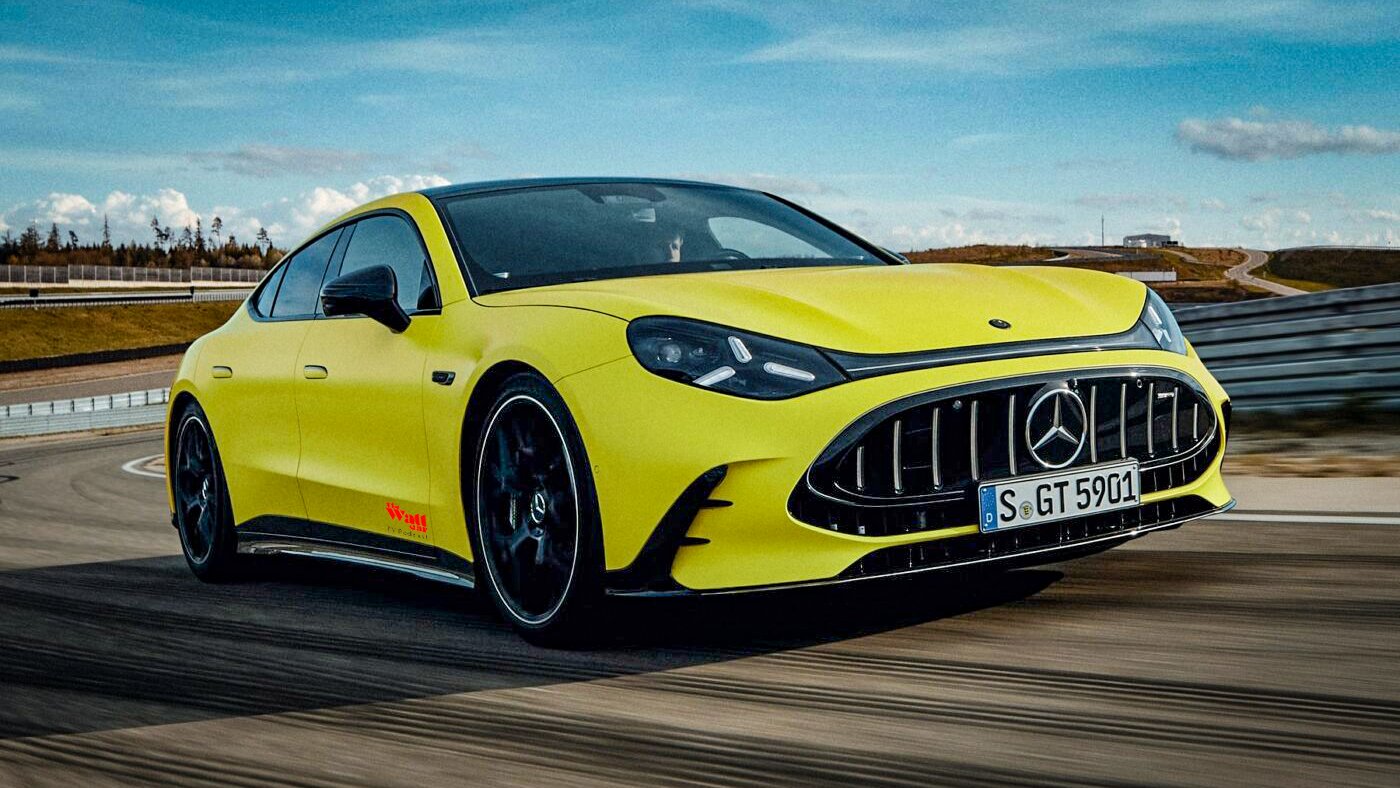
The Mercedes AMG GT.
Four door.
So we've been talking a lot about Mercedes grills lately.
Yeah.
And this is another one, not the one we've been discussing. This is kind of another variation on that.
This sits low. So this is like a Taycan, Taycan, Taycan that you'd think after all these years that I would know how to say that name.
I think it's competition for that. Is it not?
Kind of.
I mean, it's a low slung four door coupe.
Yeah. And so as with Mercedes is lineup of gas vehicles of their low slung coupes and and stands.
I mean, you say the coupe, it's four door. But as with all of those, the grills long, low.
This keeps to that tradition.
Yeah.
But then they do like a weird mono eyebrow over the top of it.
It makes me think of a Porsche.
So.
Yeah.
A lot of people like and the look of this like a fish mouth kind of.
Yeah.
I don't dislike it, but I would not have done that.
The unibrow across the top and the back, I would not have done the way they've done it.
The back is.
But we saw this before, I think.
Yeah.
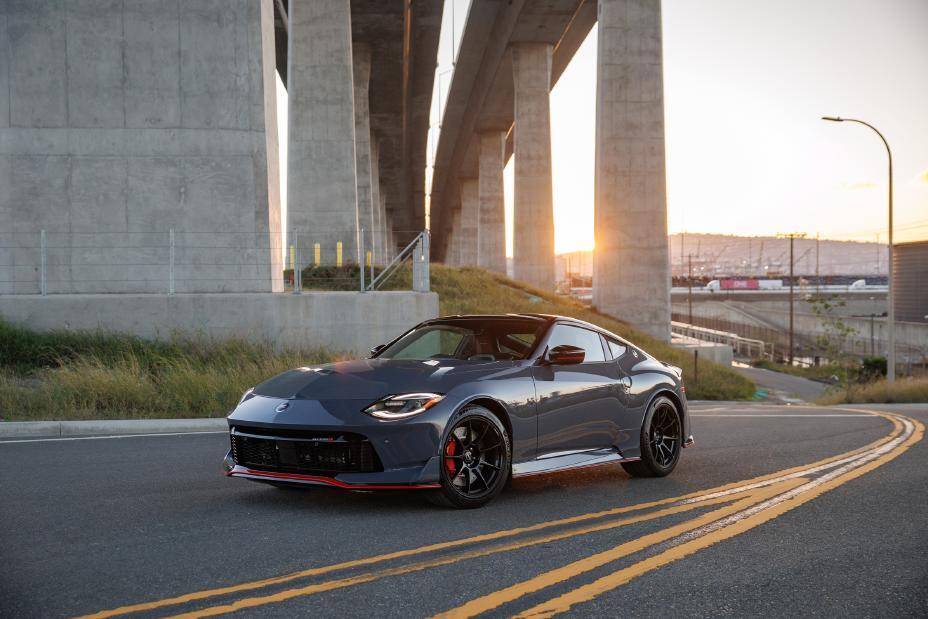
And I was saying, I think it reminded me of like the the new Z car or there's a number of them that kind of get to this.
Blackout back.
Okay, tell me a bit about the car.
$150,000 probably.
Oh, I'd say at least.
You're not winning me over with that.
I'd say starting up, if I would guess.
So there's two versions.
There's the GT 55 and the GT 63.
Again, totally arbitrary.
German.
Declared maths quit making sense a long time ago.
Anyway, GT 55 is 805 horsepower and 1328 pound-feet of torque.
Out of deal.
I'll take once.
Yeah.
So not too shabby.
GT 63, 1153 horsepower and 1475 pound-feet of torque.
So we've gotten past the point where four figures are like jaw dropping.
I think I think the plaid kind of.
Breach that.
Yeah.
That bar.
That's ridiculous.
Lots of power.
Intervaled architecture again.
No surprise.
106 kilowatt hour battery.
Pretty big.
Plains for the GT 55 zero to 16, 2.4 seconds.
They haven't released claims for the GT 63.
About to guess, I'd say sub two second.
It has to be.
It has to match the plaid.
Like it, it has to be kind of the bar now.
1.9 seconds production.
But it just like that was the proof of concept.
That was it was much like the Model S proved that you could make an exciting affordable ish EV.
It proved that you can do zero to 60 in two seconds flat.
That's your bar is an exciting EV that can hit two seconds if you're going for the supercar world.
Anything less is a failure on a super, super duper car.
It definitely doesn't have the bragging rights.
Yeah.
Yeah, I think I think the roles.
Spectre can get away with it because it's a role and it's like, yeah, there's things that they don't need to necessarily go faster.
But if you're a four door sedan EV with over a thousand horsepower, you've got to meet.
The what Tesla managed to do.
That's your minimum bar, especially when you're going to be charging.
50,000 plus more than what Tesla is charging for for theirs.
I don't know. I like it. I think it's fine.
I think it's yeah, I mean, way out of my budget.
So yeah, it quite cool.
I mean, it's fine.
I really like Mercedes.
I like their looks. I think this will grow on me.
I think this looks weird in pictures with the front, but I think I bet it looks pretty awesome in person.
Mercedes is really like they would they just like sport coops?
They've really been kicking it out of the park.
Is that what you do? Is that the expression kick it out of the park?
Kick it.
For the last like, well, what 15 years of the newer models, I think I definitely prefer Mercedes over BMW terms of styling.
I think BMW still, in my opinion, doing some weird stuff with their styling.
Yeah, they're is it that?
It's the AMG GT, isn't it?
Yeah, it's like that for the car stuff.
Like they've they've just been doing really, really good visually.
So thumbs up for me on that one.
Yeah, I don't like the pictures, but I'm going to say in real life.
I bet I love it.
Yeah, I bet love this in person.
Yeah.
So another German car making a comeback.
This one took a brief hiatus, but I guess it's back.
Don't don't call it a comeback.
It's been here for since like the 1960s.
So it hit the pause button for 2026 coming about for 27.
The big news is they're adding what they're calling a tour model.
I call it camper light.
So it basically the rear is designed to like full flat to like kind of a bed.
Or I think they might have a car table and I don't know if it has like swiveling
seats or whatever, but it's kind of, you know, back in the day, the micro bus
and the van again had a camper version.
So this doesn't have like a sink inside.
It doesn't have a stove, but, you know, so that's kind of the vibe with that.
One interesting thing they still have not gone to Naxx on this.
I was I was looking at your notes and I was trying to figure out if I was looking
at this backwards include CCS to Naxx adapter.
And I know that there's some vehicle that comes with Naxx, but includes the CCS.
So you can charge it on a CCS thing.
And I was like, am I looking at this wrong?
But are they truly CCS still on the vehicle?
That's my understanding.
I mean, you could be right.
It could be it has a native Naxx and it's, you know, because there's still quite
a few CCS fast chargers out there that they're giving it for that.
But it's kind of sounded to me like they're they're sticking with CCS.
So I think it's a little, little strange, but because I want to say
on the ID like the ID for, I think the newer ones are Naxx.
They'll all go to Naxx eventually.
Yeah, I know.
Adapter or no, it doesn't really matter.
Yeah.
Another interesting tidbit on this is at least for the US market, they are now
only offered with two-tone paint jobs, which I don't mind because I think that's
they look better that way.
Anyway, so that's the heart of this vehicle is the two-tone paint job.
Without it, they look like silly box vans.
Yeah.
Yeah, I've seen a few in like gray and they're like, yeah, the two tones with
like kind of the more kind of bright pastel colors like blue or orange or red with the
two tone, they look pretty sharp.
So yeah, so that's back.
We don't have official pricing on this, but if you have FOMO for missing out in 26 with
the ID buzz, it's coming back.
My guess is not a huge price decrease.
So probably still going to be in the 70,000 ish.
That's the problem with these vehicles.
There's a few that are in my neighborhood and they look great.
I love them, but they're just too expensive.
That said, why don't they make this even more expensive into a Westphalia version?
I feel like you could charge $75,000 for a Westphalia bus.
Probably a hundred.
Yeah.
I think those have such a cult following.
Now, I say that there's a Westphalia, like one of the last generation vanagans or whatever
they had.
You're a vanagant.
Yeah.
It was a vanagant.
It's down the street, around the corner from me, and it's a Westphalia.
My family was walking and my wife's like, oh, look at this, Westphalia.
And she's like, never heard of it.
I'm like, you've never heard of Westphalia?
Like the top pops up.
This is awesome.
I would love to have one of these.
She has never heard of it.
But I think in that community, a Westphalia edition with a pop top, I think then the
price, the crazy price can kind of be justified because you're getting that name, you're getting
the heritage.
But just for the vehicle itself, $65,000 or $70,000, like, no, thank you.
There's enough EVs now at this point that you can put many people in for less than $70,000.
Yeah.
It's just, I'm glad it's back.
I'm glad they didn't kill it because there was rumor that that was happening.
Wasn't it?
Didn't we just talk a couple of weeks ago?
Like they were pausing production.
Then Westphalia was like, oh, it's not just for now.
But yeah.
Yeah.
Whenever anybody pauses production just for now, it's a bad sign.
But not in this case, it's back.
Yeah.
I still think this should be around the 50-ish range.
Yeah.
I think it would sell a heck of a lot better.
But again, as far as I know, they're all still made in Germany, which is a very expensive
labor market.
So understandable.
At one point, there was some rumor they might make in Chattanooga.
But I think the volumes were so low, they were just like, it really doesn't make sense
to reconfigure Chattanooga with all the tooling and everything for this when sales are kind
of...
I think they'd be shocked.
I think if they could move this somewhere where they could sell this for $45 for a base
model.
Oh, for $45?
I think they'd be everywhere.
The market would be crazy.
Yeah.
That would be the vehicle.
Like right now, Rivian R1Ss are everywhere in my neighborhood.
Everybody, they hand them out.
When you leave school, you just get one.
When you're pulling out of the elementary school, here's your new R1S.
That's how it seems right now.
I think that that would suddenly turn to buzzes if they could sell these for $45 for
a base model for $45 or a well-equipped...
Well-equipped for like, yeah, if you could get well-equipped, decently equipped for
like $55, I think, I mean, it's just a box with some seats in it.
How hard is this?
Well, I mean, honestly, that's kind of where the minivan market is right now.
A decently equipped minivan is going to be around $50-ish.
Loaded Sienna, I mean, I know we're kind of throwing shade on the ID bus for being expensive.
Loaded Sienna is about $72.
I think really?
Yeah, I'm not kidding.
That is ridiculous.
Yeah, if you tick all the boxes for like a Sienna, a wheel drive platinum with like
the captain's chairs and the vacuum and like all that stuff.
And the vacuum.
Yeah, and the vacuum.
You're looking at about $70,000.
So anyway, one more Volkswagen, which we're probably not going to see in the US.
Yeah, kind of.
I mean, there's no surprise we're not going to see this.
No, we covered this.
I mean, they've been kind of doing a slow tease on this for, I think, the better part
of a year.
So not not a huge surprise.
Cool.
I mean, I think it would be cool if we got it here.
But the ID Polo GTI.
So cool.
Only thing, at least how it's priced in Europe, I think it's a little on the pricey side for
the specs, for the size.
Of course, you know, speaking from my, you know, entitled American perspective, we want
everything extra large for extra cheap.
Yeah.
Yeah.
Give me it all and don't charge me much.
Exactly.
Wal-Mart way, right?
Yeah.
So I don't know.
I mean, specs are cool.
19 inch wheels, which I mean, it's kind of mind blowing for a car this size.
I mean, I'm probably dating myself because I think the standard diameter and wheels and
tires now is probably like 17, even like your base Corolla, I think, 16 or 17.
Anyway, so 19 inch wheels, rear disc brakes, which is kind of interesting because like
the ID for ID buzz had rear drums for some reason.
So that's kind of kind of cool.
They went back to rear discs on this.
But even though this is a front, front motor, front wheel drive, so it's a little different
from those, but anyway, zero to 62 or a hundred kilometers an hour, six point
eight.
OK.
Not amazing.
Fifty to six point eight is still fast enough.
Yeah, it's quick enough.
3400 pounds, which for something this size is a little chunky, but
it starts at just under 39000 euros in Germany.
They're claiming that price is competitive for Europe.
That's a little stiff for I.
I think in the US, if this were like 3132 it would be a deal.
But again, like the ID buzz for this price in the US.
And I don't know if they'd have a lot of takers now.
No, no, I mean,
it's it's tough competition now.
Yeah, it is not like it used to be.
You would be able to get away with this a little while ago.
But now I don't know.
It will see what the future brings
because EVs seem to be on the way out right now.
They're in that cycle of their continuous ebb and flow.
And that right now, they're they're not the hotness.
So maybe
they're going to be fewer choices in the next few years.
And maybe they're not actually OK with fewer, but better.
I'm actually all right with that.
Because right now, I think there's a lot of like kind of OK.
EVs out there, but none of them
like shut up and take my money.
Yeah, that that set is small.
I think for most people.
Now, if you're willing to pay, I mean, like the AMG GT.
That's what I was just about to say.
I can't support Charisma.
It's like, you know, costs no object.
Those are awesome. Yeah, there's plenty of really cool ones.
Yeah, if you got the money.
Yeah, in terms of desirable EVs for a reasonable price,
that's a pretty small subset right now.
So yeah, the reason the price thing is killer.
Like I've been looking I've been car shopping a little bit.
Things are crazy.
Things are like when you're actually looking to spend your own money.
Things are insane.
If you're willing to consider use, though, there's a lot of good used ebb.
If you're willing to go that route.
Yeah. Speaking of a desirable price.
We finally have pricing for the Rivian R2.
And I wouldn't say they're cheap still,
but certainly cheaper than the R1S and R1T.
And still not the kind of unicorn $45,000 model they were promising.
So like like is typically the case, they're rolling out the high high spec
high trim models first, gradually going to introduce the cheaper ones.
So Rivian R2 performance, the first one that's going to
I think they're going to start rolling out within the next month or two.
57990
I'm not sure if that includes destination or not.
Strategically, slightly less in the model, why performance?
Which is 58, 880, so about 59
It's good pricing.
I mean, comparative pricing.
Yeah. 656 horsepower.
330 mile EPS made a range.
Nice. Zero to 63 point six.
Plenty fast. Plenty quick.
Yeah. So cool.
Still more than I want to pay.
Yeah. And how can they make that for less money than what Volkswagen wants for a bus?
Well, I mean, this is made in the U.S.
The buzz is made in Germany.
And like I said, Germany is one of the most expensive labor markets in the world.
Yeah. And I guess also Rivian's not probably making money on any of these either.
So I did better.
I mean, I was the whole premise of the R2 and R3 was.
But yes, the premise is get to profitability.
But like what was it with Lucid?
It was they they lose like 80,000 on every $80,000 car that they sell something like that.
Or they did. But yeah, who knows now.
Maybe they've narrowed that margin a little bit.
But yeah, for a long time, Lucid was losing money.
That Rivian's still at that point where they're pricing their target
where they see the price falling once they get to.
Scale, but that they're still probably losing money on this.
But they still they've they've done this math, obviously.
They're not a dumb company.
They're not. Wow, I was about to just say they're not like Tesla.
But I didn't mean that right onto the dumb part.
But like Tesla comes out and they said with the Cybertruck, OK,
he's going to be 40, 40 or 45,000, whatever it was.
They were never going to be that.
They were never, ever going to be that.
They were the number out of thin air and they spewed it into the ether
and created all this disruption that then caught Ford and GM panicking,
pricing theirs against Tesla, because they're like, well,
Tesla must have done some research and no, Tesla didn't do anything.
That was just somebody came up with a number.
Somebody being Elon probably came up with a number that was like,
this will get headlines and preorders.
And that's what we need because they don't advertise.
So they need the headlines and they need preorders to fund the actual thing.
Well, it's what's funny. I believe Rivian's done the work.
That I think this is a legitimate number.
Probably what I find kind of funny is they're just now rolling out
the $60,000 Cybertrucks, which is kind of the sweet spot.
I think a lot of people were waiting for.
But they've just now and not even close to 40, like they originally promised.
Yeah. Anyway.
No, the sweet spot was obviously 40, because that's when they got their,
like, million and a half preorders.
2000000 preorders, which never all of them cancel materialized,
like all but 50,000 of them cancel.
Yeah. I mean, I'm seeing a decent amount of Cybertrucks on the road now,
but not what I would consider an overwhelming amount.
I mean, you're still fairly rare.
But I mean, it's enough where I probably see a couple of week.
So I mean, there's tons in my city.
There's tons. They they sold plenty of them,
but they certainly didn't have 2000000 preorders that converted to sales.
To the actual sales.
After they got to, like, it was something like 15,000 or 20,000.
I forget the numbers because this is going back a few years now.
But they got to that point and then you could walk in to a service center
and purchase one. You could you could get one instantly.
There was no waiting list for five years or whatever it was
that they were that the was what the math was mathing at at the time.
They obviously couldn't convert any of those sales
because they put out a number that wasn't realistic.
And here I think 57, 990 for Rivian R2
sounds like a believable number for a performance edition.
Yeah. I think I'm waiting.
I'm still waiting on R3. So good luck news on that.
Good luck. I my theory is that's not going to happen.
Yeah. Well, that seems to cool of a car for that to happen.
They I think maybe eventually it happens down the road.
I think. Well, I think that's on the R3 or for the European market anyway.
I think it's going to be a niche product in the U.S.
But I think the volume play for that's going to be Europe anyway.
Yeah. So we're going to wrap this up
with the company that not long ago was pretty pretty bullish on the V's.
And now they're like not so much.
So yeah, they've stepped back quite a bit in the last month or so.
Yes. So a couple of years ago at CES,
they showed the zero Honda zero, you know, the wedgie,
like Kuntas look and stand and handy vac. Yep.
In fact, the SUV and they were all like, yeah,
we're going to go fully V by this time and blah, blah, blah, huge big plans
where all that's back. Yeah.
So now and they killed the Fila and a feel like died with it. Yeah.
Yeah. So now the Honda CEO is saying full electrification by 2040 is quote
not realistic. So in the interim, they're planning on increasing
their hybrid offerings and being quote net carbon neutral by 2050.
So for whatever that means, I would also say
this is also the CEO that said there's no way they can compete with the Chinese
on these. So they've already kind of thrown in the towel with that.
So I don't understand all these pledges that everybody made.
Remember back in the Biden administration, there must have been a lot of
incentives to make these pledges, a lot of pressure, maybe money, whatever it was.
Because everybody was like full EV by 2035.
Like GM was saying that like all these everybody was saying this and
everybody's walked it back. Everybody has walked it back.
And I don't know why it wasn't good enough to say we're going to move to full
EVs when it makes sense as the market wants more EVs, we will make more EVs.
If the market recoils from that, then we shall produce the vehicles
that the market wants that also fits within the EPA requirements.
So I don't know what's wrong with saying that I'm going to we're going to sell
what the what we're going to sell what the market wants
and we'll bring the products that people want to buy.
I think that would have been rational, but I think this was a period
a few years ago where the PR departments were trying to compete with each other.
Trying to outgreen wash each other.
I mean, we know Biden's administration was way gung-ho on EVs.
Yeah. So you had these different companies.
Oh, we're going to go full EV by 2030.
Yeah. Well, 2028 or why?
Where was the money?
Where were they getting why?
They were doing it because they were getting money.
You can guarantee it.
You can guarantee that they were saying they were making a pledge.
They were getting tax rebates.
They were getting something, something
because everybody did it and now everybody's backing away.
And Trump's done nothing but cancel everything that Biden did.
And they all made their pledges during Biden.
Now there's no reason for them to stick to these.
It's money. You can guarantee it.
And they should just follow the market and produce.
Now the EPA is going to push it a little bit, which now they're not pushing it.
Now they're pushing like bunker fuel in in commercial in passenger vehicles.
But I think generally speaking, the EPA always walks forward
with constricting emissions.
And what's interesting is this narrative is not yet a big one in the US,
but with the Iran War fuel prices.
So globally, EV interest and EV sales are trending upward pretty significantly.
US, they're still pretty flat.
I don't think we quite reach the inflection point where fuel prices
are big driver, except in commercial trucks.
We discussed this diesel is still.
I mean, where we are, it's.
I'd say on average, at least 750 a gallon.
Mm hmm. Yeah.
And so I think trucking companies, especially ones that do a lot of business
in California, I think they're taking a lot closer look at the Tesla Semi now
before they were like, OK, cool, I guess, you know, but now, especially the,
you know, the the finance finance department
is probably really crunching the numbers and like, yeah, it might be time.
And Tesla's not the only one making a Peterbilt has one.
I don't know how many are actually on the road, but there is.
I know Peterbilt for a couple years.
And then there was Magna.
Three liner. Remember Magna a few years ago had their E axle,
their E beam or whatever it was called, that you could retrofit into these
kinds of vehicles like you could start doing conversions when the truck goes down.
Like I think we're going to see there's going to be a lot of fallout from this
and that you posted a meme.
I don't know if you came up with it or if you found it on on the line
onto our Facebook page that was a picture of Trump that said
best salesman of the year. Yeah.
If he sells him at the year, that's the going to be the the long tail of this is.
Yeah. Where does this lead us with
with so here he's walked back everything with the EPA and said, you know,
you can everybody rip off the catalytic converters.
It's cool. I mean, not really.
But basically that then he goes and he jacks up the price of gas through the roof.
And now it's like, well, yeah, like maybe my next car will be an EV
because of the price of gas, not because.
This slow walking forward of EPA regulations
is driving us toward an eventual EV future.
And also these studies that, you know, we're in an age now where studies
you just throw away, but there's studies that are where they discover
that there's actually less, fewer health issues in areas with higher
EV adoption and measurable, measurable.
Yeah. And like, I mean, because if you don't want to believe that,
then you won't believe it.
It's as simple as that at this point.
So I don't come around.
They'll come around.
It's all the nebb and flow.
And right now it's just not cool to be in on EVs.
Yeah. Well, I mean, we'll see what happens in 2028.
I mean, a lot of car makers might be seeing a different tune by then.
If the price of gas is still up by the end of this year,
I think the car show season is going to change dramatically
for what the vehicles they roll out, what these manufacturers roll out.
Yeah. Well, I mean, so this is kind of a little side.
This is rabbit hole.
I've been going down the past couple of months is the lag time
between oil delivery and when it hits the market.
So I think as of a couple of weeks ago, the last tanker to leave
the Persian Gulf before the outbreak of the war just landed
in, I think, California or somewhere.
So up until effectively now,
what we saw that the rise in prices was just due to like market speculation.
Now we're going to start entering, assuming that even if the straight
were to open up tomorrow, would still see the long tail effect
of effectively shortages.
And I read somewhere they're expecting the U.S.
So we've depleted our reserves so much to try to at least somewhat
stabilize oil prices, they're saying by the 4th of July,
it could get to the point where our reserves are effectively depleted.
And I think starting then, it's the prices could go parabolic.
They could just.
Yeah. It's since that last tanker hit into California,
the price of gas, it kind of stabilized near me.
And it has gone up another 40 cents per gallon.
Since then. Oh, you ain't seen nothing yet this way.
Yeah. It's unbelievable.
What is just is.
Thanks for listening.
I mean, I can tell you this not to sound smug, but I've never been
more happy to have an EV right now.
Yeah, but that only saves you on your personal driving.
All the other costs of living goes up.
Oh, yeah, we would discuss.
I can't remember when we talked about diesel fuel prices and the knock
on effect of that. Yeah.
I mean, you can sit and be like, oh, I drive a Tesla.
All you want. Yeah.
But you're still paying like gallon of milk.
Now I was paying 350 a gallon.
I'm now paying 525 like ready for six or seven.
Hey, 67 it's insane.
And so, yeah, maybe this is what we need to get all those 18 wheelers
electrified or at least plug in or something.
I think where things are right now, I think potentially now, granted,
an overall volume, obviously the class eight market is a lot smaller
than the general private vehicle market.
But I think as a sector, you could, you know,
relatively speaking, see electrification happen a lot quicker
with commercial trucks than the overall market, just purely based on economics.
Yeah, I think the fleet operators, they're always looking at the bottom line.
And yes, EV commercial trucks have a significantly higher up front price.
But the TCO total cost of operation,
especially if you amortize that over like seven to 10 years,
significantly less than diesel and associated maintenance, all that.
The newer diesels, you know, DPFs, you know, SCR, all that,
all the EGR, clogging, all that.
I mean, the newer diesels, I candidly are kind of maintenance nightmares.
So if they could cut all of that out, I mean, that would be additional savings.
But anyway.
So let's get ready to bring this home.
Oh, I thought we were.
I thought that was it.
So yeah, we got 122 kind of like bonus items.
One's funny, one's more serious, which one you want to talk about?
I don't know.
California launches clean fuel reward program for commercial trucks.
Well, we just need more EVs.
Isn't this just what we're talking about?
Yeah, yeah, so they're just adding rebates.
The numbers are kind of what caught my attention.
So range from 7,500 to 120,000 on the high end.
Assuming that's for like full fledged, like class eight.
So that's, that's a chunk of change.
So that's a lot of money.
It's a lot of money.
Yeah.
So if nothing else convinces, yeah, leads to start adopting EVs, maybe this might.
So yeah, so 250 million available in the first year, more than a billion in total
funding expected through 2030.
I mean, I'm curious to see how all of this plays out with what we're going
through right now, like it'll be very interesting to see.
Because like you said, I mean, there are some companies that could just go,
boom, we're going to go all EV.
And then it's like, then if Tesla can suddenly get all these orders, Peterbilt
can get all these orders.
Like there's a lot more incentive to, to start producing these.
Potentially the transition could happen pretty quick in the class eight market.
Yeah.
I mean, obviously as they're replacing, I don't think that totally scrap existing
fleets and switch over price.
The gas goes up enough.
I think they could.
Well, maybe there's only so much price you can pass on to the consumer.
Yeah, eventually it's like we're going to stop buying things.
So I mean, I'll tell you worst case scenario.
If diesel approaches, I think $10 a gallon in the US, which is a real
possibility, I think, I think that will be the catalyst, especially in the
commercial market.
It certainly started conversations in those industries, undoubtedly.
And the last thing to talk about is cyber drug went on the beach, got stuck.
There's no big surprise because vehicles get stuck on the beach all the time.
But it got pulled out in this video of the drive.
I got pulled out by a Toyota Sienna.
Many vans for the win.
Yeah, there's a lot that goes into this.
There'll be links in the show notes.
And it's not, it's really good click bait.
It's not reality at all because.
Because you noted the Sienna had its front wheels on pavement.
Yeah, it's like sand covered pavement, but it's pavement.
And when it comes to getting stuck in the sand, there's a lot of.
It's all about flotation.
It's all about pounds per square inch of contact patch of the tire and the sand.
And so if that cyber track would have just aired down the tires a little bit
more, because those are probably, I haven't looked at the cyber truck tires,
but I bet those things are E range tires that are 50 to 80 PSI.
If they're anything like my truck.
And so you drive that and you've got this little pinpoint contact patch.
You air those things down to 15 PSI.
They may have been able to drive out.
Now, that one was pretty buried down to its belly.
It had dug itself pretty good.
My guess is it was some bro that was like flooring it and it was just digging
itself. Yeah. Yeah.
And at that point, they were kind of hosed.
But if they would have gotten stuck and then aired down their tires,
there's a really good chance.
One of the tricks that you could do that they did was you turn your tires left
and right with a cyber truck that turns the rears as well.
Yeah. So you can actually get a little bit more traction.
There's a lot of things they did wrong and it had nothing to do with cyber
truck had to do with the driver.
Cyber truck has a sand mode.
Maybe they didn't know about that.
I'm pretty sure it does.
And it like a lot of these, they would say, we should go.
I was, somebody drives a plaid at the middle school.
One of the parents drop it off and it was in full like recovery mode,
whatever for that.
So it had like, it had like a four or five inch gap in the fender.
Well, it looks so ridiculous.
Normally it's like slammed.
It's like nice looking.
Maybe they got tired of scraping the nose every time they come in and out of the
parking lot. I don't know.
But it was, I think it might have been yesterday.
The thing, it was like an off-roader.
It looked like a rider truck.
Yeah. It was really ridiculous looking.
The plaid pre-runner edition.
Yes.
Anyway.
Everything we talked about links in the show notes.
We're on social media as well, but don't like us or anything.
I mean, you can, but just share, yeah, share us on social media on your own social
media and then buy merch.
That's where it really helps us out.
You can also subscribe at youtube.com slash at or car or any podcast player
also has us out of ideas or things to say.
So I'm going to say goodbye.
I hope and we can get another special guest coming up.
We did make contact, but I know we're going to have to rekindle that.
All right.
Stay tuned.
Yep. I will stay tuned.
About this episode
Road funding and EV fees take center stage, with the hosts unpacking gas-tax vs mileage-tax ideas, federal fee proposals, and how fuel-tax revenue ties into the Federal Highway Trust Fund. They debate whether charges should reflect weight, contact patch, or mileage, and critique the proposed EV fee as “unnecessarily punitive.” The conversation then pivots to EV pricing, performance benchmarks for “supercar world,” and charging standards (CCS vs NACS), before ending with off-road traction tips for a stuck Cybertruck.
The Mercedes-AMG GT EV is unveiled, with some interesting styling choices. Does this car have what it takes to become a Porsche Taycan killer? That’s just one of the topics discussed on this week’s podcast. We also talk about federal EV fees, Rivian R2 pricing, Honda reversing course, and more.