271: A Super Duper Car
About this episode
Road funding and EV fees take center stage, with the hosts unpacking gas-tax vs mileage-tax ideas, federal fee proposals, and how fuel-tax revenue ties into the Federal Highway Trust Fund. They debate whether charges should reflect weight, contact patch, or mileage, and critique the proposed EV fee as “unnecessarily punitive.” The conversation then pivots to EV pricing, performance benchmarks for “supercar world,” and charging standards (CCS vs NACS), before ending with off-road traction tips for a stuck Cybertruck.
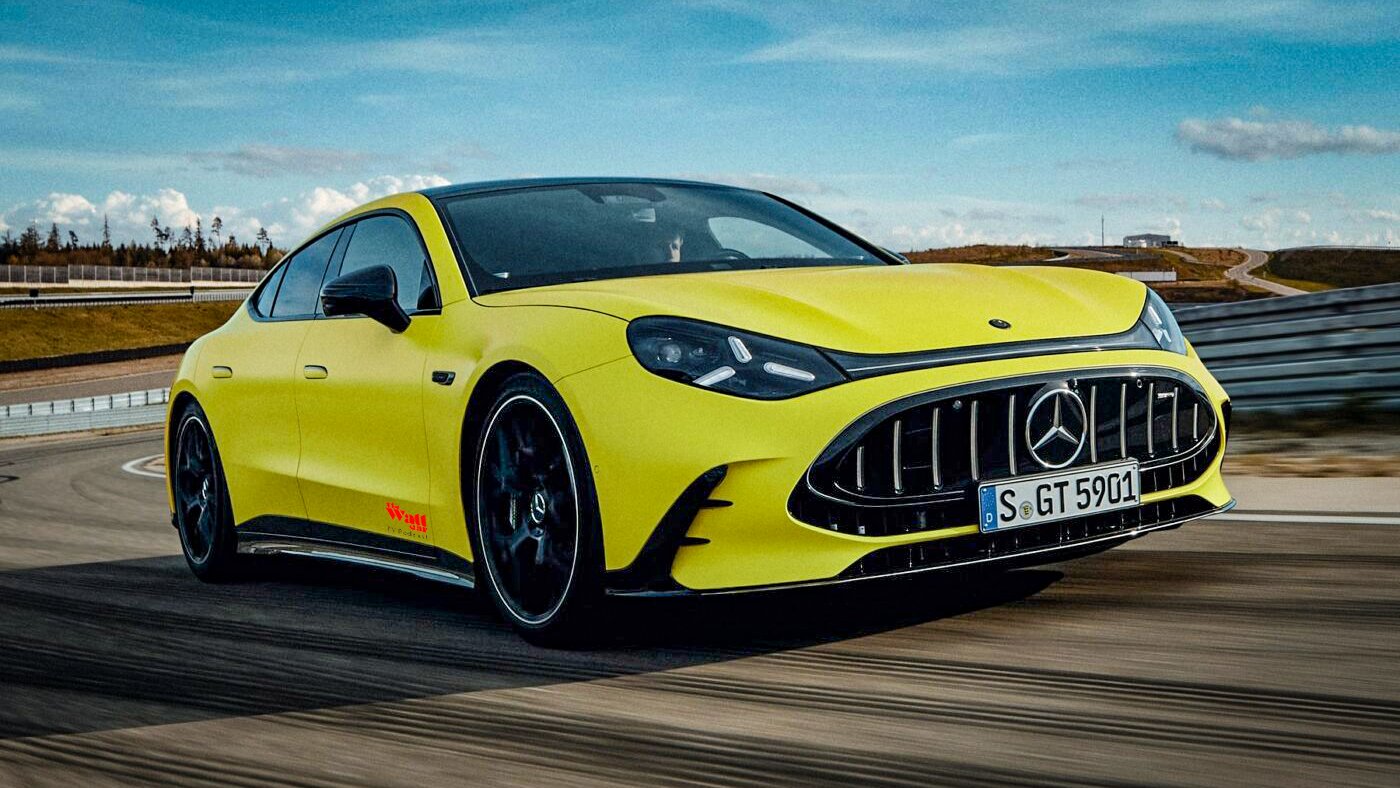
The Mercedes-AMG GT EV is unveiled, with some interesting styling choices. Does this car have what it takes to become a Porsche Taycan killer? That’s just one of the topics discussed on this week’s podcast. We also talk about federal EV fees, Rivian R2 pricing, Honda reversing course, and more.
Subscribe to the podcast on Apple Podcasts, Amazon Music, Audible, Spotify, PocketCasts, iHeartRadio, Podbean, and more! Or heck, use your favorite podcast application.
Perhaps you prefer to watch as well as listen. If so, we’ve got you covered.
SHOW NOTES
Bill in Congress proposing national fee for EVs/PHEVs: https://www.autoblog.com/news/ev-owners-lost-tax-credits-now-lawmakers-want-a-yearly-fee
Mercedes shows AMG GT EV: https://www.caranddriver.com/news/a71337669/2027-mercedes-amg-gt-4-door-ev-revealed/
ID.Buzz is back for ‘27, adds new trims: https://www.caranddriver.com/news/a71305922/2027-volkswagen-id-buzz-return-details/
Official specs drop on ID.Polo GTI: https://insideevs.com/news/796000/vw-id-polo-gti-reveal/
Rivian R2 configurator opens: https://electrek.co/2026/05/15/rivian-r2-configurator-live-pricing-options/
Honda retreats from all-EV by 2040 pledge: https://www.teslarati.com/honda-gives-up-on-all-ev-future-not-realistic/
California launches Clean Fuel Reward program for commercial trucks: https://ww2.arb.ca.gov/news/california-launching-1-billion-rebate-program-electric-trucks
Cybertruck stuck on beach yanked out of trouble by Toyota Sienna: https://www.thedrive.com/news/minivan-to-the-rescue-beached-cybertruck-extracted-by-a-rental-spec-sienna
This week’s hosts: Phil Royle and Edward A. Sanchez
Episode art courtesy Mercedes-AMG
Music courtesy Twisterium at Pixabay
Website: https://www.thewattcar.com
Buy merch: https://www.thewattcar.com/store
YouTube: https://www.youtube.com/@thewattcar
commercial vehicle registration fee
"So if you have a commercial vehicle, then it's once it gets into commercial vehicle, then it goes into weight and then based on the weight, then you've got to pay that. The consumer vehicle, regular cars, they don't have any kind of registration fee."
A commercial vehicle registration fee is a charge tied to vehicle use and classification, often with formulas that depend on factors like weight. The host contrasts this with “regular cars,” saying consumer vehicles don’t have the same kind of registration fee in their state’s system.
federal road tax fee
"The federal is when you Google it, the federal road tax fee is what 18 and a half cents a gallon and 24 to 25 cents on diesel."
It’s a tax the government charges when you buy fuel, and it’s meant to help pay for roads and transportation. The host is quoting the typical per-gallon amounts for gas and diesel.
The federal road tax fee is a per-gallon charge collected on fuel (gasoline and diesel) that’s intended to fund transportation infrastructure. In this segment, the host cites typical rates (about 18.5 cents per gallon for gasoline and 24–25 cents per gallon for diesel).
Federal Highway Trust Fund
"And that goes to the Federal Highway Trust Fund. So what's the Federal Highway Trust Fund?"
This is a federal fund that keeps track of money related to roads and transportation. The host is saying it’s more about tracking and funding than directly fixing every road problem.
The Federal Highway Trust Fund is the U.S. account that tracks revenue and spending for surface transportation, largely supported by fuel taxes. The host explains that it tracks where the money comes from and where it goes, and notes that it doesn’t directly “repair the roads” in the way listeners might expect.
surface transportation
"The Highway Trust Fund tracks federal spending and revenue for surface transportation."
It just means transportation that happens on the ground, like roads and highways. Here it’s describing what the federal transportation fund is responsible for.
Surface transportation refers to travel and infrastructure on land—mainly roads and highways—rather than air or sea. In this segment, it’s used to describe what the Highway Trust Fund covers in terms of spending and revenue.
solid state
"And it's going to keep getting smaller and smaller, especially if we ever get to solid state, then it's going to keep getting smaller and smaller and may get to parity."
Solid-state is a type of battery design that could make batteries lighter for the same energy. The host is saying that could eventually make EVs closer in weight to gas cars, affecting weight-based fees.
“Solid state” refers to solid-state battery technology, where the battery uses a solid electrolyte instead of a liquid one. The host argues that if solid-state batteries arrive and improve energy density, EVs could weigh less, which could reduce how much they pay under weight-based road-fee systems.

Ford F-250
"I mean, they are asking them to pay for EVs to pay what California says my 6000 pound F-250 needs to pay."
The Ford F-250 is a heavy pickup truck. In this discussion, they’re focusing on how much heavier trucks are and how that should affect road-fee calculations.
The Ford F-250 is a heavy-duty pickup, and its weight is central to debates about road wear and how vehicle fees should be assessed. The host compares its mass to the Tesla Model 3 to question whether EV-related road charges are being applied fairly.

Tesla Model 3
"And your Model 3 weighs what, 30? [706.7s] A little under, let's say a little under 4000 pounds."
The Tesla Model 3 is an electric car. Here, they’re using its weight as part of an argument about how much different vehicles should pay for road costs.
The Tesla Model 3 is an electric sedan whose curb weight is often used in discussions about how EVs affect roads and infrastructure. In this segment, the host compares its weight to a pickup truck to argue how road-impact fees should be calculated.
mileage
"A better way is based on mileage. [771.7s] It's based on use, which is kind of what gasoline tax does."
Here, mileage just means how far you drive. The point is whether road fees should be based on distance traveled instead of vehicle weight.
In this context, mileage refers to using how many miles a vehicle drives as a basis for road charges. The host contrasts mileage-based fees with weight- or use-based approaches, arguing that mileage can better reflect actual road wear.
fuel economy
"But my car gets way better fuel economy. [793.6s] And I guess maybe they go, OK, well, the weight, you know, the car is going to weigh less than the truck, whatever."
Fuel economy is how efficiently a vehicle converts fuel into distance, typically measured as miles per gallon (or equivalent for EVs). The host uses fuel economy to argue that a gas car and a truck can pay similar road fees per gallon of fuel even though they drive differently in terms of efficiency.
flat fees
"[971.4s] Flat fees don't work on a transportation basis. [976.8s] There's other ways to do it. [979.2s] The honor system is one of them and I think it would work for the majority."
A flat fee is a set price that stays the same no matter how much you use something. The host is saying that for transportation, a one-size-fits-all fee doesn’t match real driving/use as well as other approaches.
Flat fees are fixed charges that don’t change based on how much someone uses the service or how much damage they might cause. In transportation policy, the critique is that flat fees can miss the link between usage and cost, unlike usage-based taxes.
honor system
"[979.2s] The honor system is one of them and I think it would work for the majority. [983.7s] What about taxing really expensive EVs more? What do you think about that?"
An honor system relies on users to self-report or comply without direct enforcement at every step. In the context of EV or transportation taxation, it’s being proposed as a way to collect revenue with less bureaucracy, assuming most people will report accurately.
registration fees
"[983.7s] What about taxing really expensive EVs more? What do you think about that? [989.2s] I mean, I kind of already do that with registration fees. [993.2s] Well, I don't."
Registration fees are charges paid to legally register a vehicle, typically tied to factors like vehicle value, weight, or emissions. The host says they already “tax really expensive EVs more” through these fees, implying a value-based or higher-cost vehicle surcharge.

Porsche Taycan
"...riation on that. This sits low. So this is like a Taycan, Taycan, Taycan that you'd think after all these ..."
The Porsche Taycan is an electric car made for sporty driving. It sits low and is designed to feel more like a performance car than a typical family EV. In the podcast, it’s referenced to describe how a car looks and sits.
The Porsche Taycan is a performance-focused electric sedan from Porsche, known for its low, sporty stance and strong driving feel. It’s often mentioned when discussing EVs that still deliver a traditional “sports car” experience. In your excerpt, it’s used as a visual/stance reference point for another car’s design.
unibrow
"The unibrow across the top and the back, I would not have done the way they've done it. The back is."
“Unibrow” is a nickname for a design feature where the front lighting/trim looks like one continuous strip across the car. Here, they’re talking about that standout look.
“Unibrow” is an enthusiast nickname for a continuous, single lighting element or trim piece that spans across the front of a vehicle. In this context, it describes the distinctive “mono eyebrow” styling detail the host is reacting to.
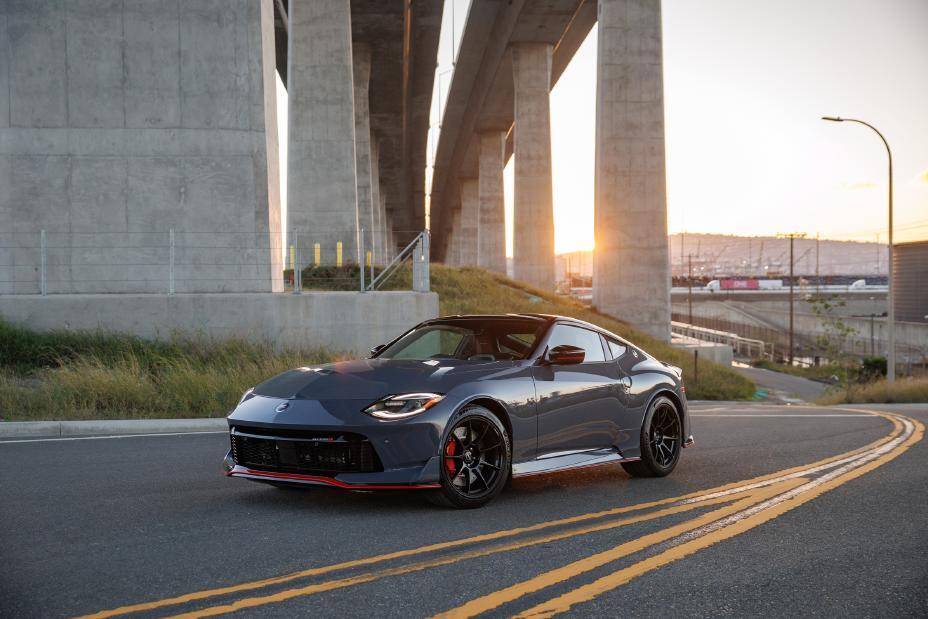
Z Car
"...aying, I think it reminded me of like the the new Z car or there's a number of them that kind of get to t..."
“Z” here is likely referring to a sports car model with a Z name. The speaker is using it to compare the look or feel of another car. Without the full model name, it’s best understood as a performance-style car reference.
“Z” in your excerpt sounds like it refers to a Z-badged sports car model, typically associated with a performance-focused, driver-oriented coupe. It’s being mentioned as a design or styling comparison—something that “reminded” the speaker of the new Z. In podcast talk, this kind of reference usually helps listeners picture the look or vibe of a car being discussed.
torque
"Anyway, GT 55 is 805 horsepower and 1328 pound-feet of torque. Out of deal."
Torque is the engine’s twisting force. Higher torque usually helps the car feel quicker when you accelerate, not just at high speeds.
Torque is the twisting force an engine produces, and it strongly influences how quickly a car accelerates, especially at lower speeds. The host cites “pound-feet of torque” as part of the GT 55’s performance figures.
106 kilowatt hour battery
"No surprise. 106 kilowatt hour battery. Pretty big."
That “106 kilowatt hour” number is how big the EV’s battery is—how much energy it can hold. A bigger battery often means more usable driving before you have to recharge.
A “106 kilowatt hour battery” refers to the battery capacity measured in kWh, which roughly indicates how much energy the EV can store. Larger capacity generally supports longer range and can help sustain high power for longer periods.

Tesla Model S
"...e proof of concept. That was it was much like the Model S proved that you could make an exciting affordable..."
The Tesla Model S is an all-electric car with a large battery and an electric motor. It’s important because it showed that an EV could feel fast and be a real daily driver. People bring it up when talking about how electric cars became more popular.
The Tesla Model S is a full-size electric sedan known for proving that EVs could be exciting and practical. It’s often discussed because it helped establish Tesla’s reputation for performance, software, and long-range capability. In podcast conversations, it commonly comes up as an early “proof” that EVs could compete in the mainstream.
zero to 60
"That was it was much like the Model S proved that you could make an exciting affordable ish EV. It proved that you can do zero to 60 in two seconds flat."
“Zero to 60” measures how fast the car can go from standing still to 60 mph. It’s a popular way to compare how quickly different cars feel like they launch.
“Zero to 60” is shorthand for how quickly a car accelerates from 0 mph to 60 mph. It’s a common performance metric because it captures real-world launch and power delivery.
two seconds
"That's your bar is an exciting EV that can hit two seconds if you're going for the supercar world. Anything less is a failure on a super, super duper car."
“Two seconds” is a way people talk about how fast a car accelerates from a stop. Here it’s being used as a benchmark for supercar-level speed.
“Two seconds” is shorthand for extremely rapid acceleration, usually referring to a 0–60 mph time in enthusiast talk. The host is using it as a benchmark for what qualifies as “supercar world” performance.

Rolls-Royce Spectre
"Yeah, I think I think the roles. Spectre can get away with it because it's a role and it's..."
The Rolls-Royce Spectre is a luxury electric car. It’s designed to feel special and high-end, like other Rolls-Royce vehicles, but it runs on electricity. The podcast is referencing it in a discussion about its style and how it stands out.
The Rolls-Royce Spectre is a luxury electric coupe, positioned as a high-end alternative to traditional gas-powered Rolls-Royce models. It’s discussed because it shows how ultra-luxury brands are approaching EVs while keeping the same emphasis on comfort and presence. In your excerpt, the speaker is also making a point about the car’s ability to “get away with it” stylistically.
over a thousand horsepower
"But if you're a four door sedan EV with over a thousand horsepower, you've got to meet. The what Tesla managed to do."
Horsepower is a way to describe how strong a car’s power is. Saying “over a thousand horsepower” means the EV is extremely powerful and should feel very fast.
“Horsepower” is a measure of engine (or motor) output, and “over a thousand horsepower” signals extremely high power. In EV discussions, it’s often used to set expectations for acceleration and overall performance capability.
charging
"That's your minimum bar, especially when you're going to be charging. 50,000 plus more than what Tesla is charging for for theirs."
For an EV, “charging” means plugging in to refill the battery. The point here is that EV performance expectations include how the car fits into charging life.
In EV context, “charging” refers to replenishing the battery using an external power source, typically at home or at public fast chargers. The host is framing performance expectations around the real-world experience of owning an EV, not just acceleration.
tour model
"The big news is they're adding what they're calling a tour model. [1362.2s] I call it camper light. [1365.8s] So it basically the rear is designed to like full flat to like kind of a bed."
They’re talking about a special version meant for trips—more like a mini-camper. The back is set up so it can turn into a sleeping area, and it may have extra comfort features.
A “tour model” here is being used like a camper-oriented trim that’s designed for road trips and sleeping. The host describes a layout where the rear can flatten into a bed and may include features like a table or swivel seating.
CCS to NACS adapter
"One interesting thing they still have not gone to Naxx on this. [1402.2s] I was I was looking at your notes and I was trying to figure out if I was looking at this backwards include CCS to Naxx adapter. [1408.2s] And I know that there's some vehicle that comes with Naxx, but includes the CCS."
EVs can use different charging plug types. An adapter helps you use one plug standard with a charger that normally uses the other one.
CCS and NACS are two different charging plug standards for EVs. A CCS to NACS adapter lets a vehicle that uses CCS charging connect to a NACS (Tesla-style) charging station, or vice versa depending on the adapter direction.
two-tone paint jobs
"Another interesting tidbit on this is at least for the US market, they are now only offered with two-tone paint jobs, which I don't mind because I think that's they look better that way."
A two-tone paint job means the car has two different colors on the outside. Usually one color is on the roof and another is on the rest of the body.
A two-tone paint job uses two different exterior colors on the same vehicle, typically separating the roof and body. On EV vans like the Volkswagen ID Buzz, it’s often used to visually break up the boxy shape and make the design look more “finished.”
Westphalia version
"That said, why don't they make this even more expensive into a Westphalia version? I feel like you could charge $75,000 for a Westphalia bus."
Westfalia (often said “Westphalia”) is a company that makes camper conversions for Volkswagen vans. A “Westphalia version” usually means it’s set up for camping, often with a pop-up roof.
“Westphalia” refers to the Westfalia camper conversion brand, best known for turning Volkswagen vans into pop-top campers. When someone says “Westphalia version,” they’re usually talking about a factory-style camper setup (often with a pop-top) rather than a standard van.
cult following
"Yeah. I think those have such a cult following."
“Cult following” just means a small group of fans who really love a particular car or version. Their enthusiasm can keep prices up because lots of people want the same setup.
A “cult following” in car culture means a dedicated group of enthusiasts who strongly value a specific model or configuration, often keeping demand high even when prices rise. For niche camper vans like Westfalia conversions, that community can make certain trims feel “worth it” to buyers.
pop top
"Like the top pops up. This is awesome."
A “pop top” is a roof on a camper van that can lift up when you’re stopped. It gives you more space inside for sleeping or standing up, but it stays lower for driving.
A “pop top” is a hinged or telescoping roof section on a camper van that lifts up to create extra headroom when parked. It’s a key feature on many Westfalia-style campers because it improves livability without permanently raising the vehicle’s height while driving.

Rivian R1S
"Like right now, Rivian R1Ss are everywhere in my neighborhood. Everybody, they hand them out. When you leave school, you just get one."
The Rivian R1S is an all-electric SUV. The hosts are joking that if it were cheap enough, you’d see them everywhere—like a common family vehicle.
The Rivian R1S is Rivian’s electric SUV built on the company’s skateboard-style EV platform. In this segment, the hosts use it as an example of how common a relatively expensive EV could become if the price dropped dramatically.
minivan market pricing
"Well, I mean, honestly, that's kind of where the minivan market is right now. A decently equipped minivan is going to be around $50-ish."
They’re comparing EV prices to what regular family minivans cost. The idea is: if an EV were priced like a typical minivan, more people would buy it.
The “minivan market” here refers to the typical pricing level for mainstream family minivans, used as a comparison point for EV affordability. The hosts argue that if an EV were priced similarly, it would likely become much more common.

Volkswagen Bus
"...an, I know we're kind of throwing shade on the ID bus for being expensive. Loaded Sienna is about $72."
The Volkswagen Bus is a classic van known for carrying people and having a roomy layout. In the podcast, it’s mentioned as a reference point while comparing costs to the electric ID. Buzz. The point is to show how expensive a fully equipped van can be.
The Volkswagen Bus is the classic, boxy van that many people associate with the brand’s heritage and a spacious, people-carrying layout. In your excerpt, it’s brought up to compare pricing against the ID. Buzz, with the speaker noting that a loaded alternative can cost similar money. That kind of comparison helps frame whether the electric Bus-style vehicle is “worth it” versus other options.

Volkswagen ID. Buzz
"Loaded Sienna, I mean, I know we're kind of throwing shade on the ID bus for being expensive."
The Volkswagen ID. Buzz is an electric van. They’re saying it’s pricey, and that higher EV prices are part of why you don’t see them as often.
The Volkswagen ID. Buzz is an all-electric version of the classic Buzz/van concept, positioned as a family-friendly EV. Here, the hosts mention it as an example of an EV that feels expensive compared with what they think it should cost to become mainstream.
captain's chairs
"Yeah, if you tick all the boxes for like a Sienna, a wheel drive platinum with like [1726.6s] the captain's chairs and the vacuum and like all that stuff."
Captain’s chairs are separate seats in the front row instead of one long bench. They usually feel more comfortable and can make it easier for passengers to get in and out.
Captain’s chairs are individual, separate front seats (often with armrests) used in some minivans instead of a single bench. They’re a comfort-and-convenience option that can make the cabin feel more like a lounge and can affect how the vehicle is configured.
wheel drive platinum
"Yeah, if you tick all the boxes for like a Sienna, a wheel drive platinum with like [1726.6s] the captain's chairs and the vacuum and like all that stuff."
“Platinum” means a higher-end version of the vehicle with more features. The “wheel drive” part is about how the car sends power to the wheels.
“Platinum” here refers to a higher trim level, and “wheel drive” is almost certainly shorthand for a drivetrain configuration (likely all-wheel drive) rather than a specific part. Trim levels bundle features and can significantly change pricing.

Toyota Corolla
"...ires now is probably like 17, even like your base Corolla, I think, 16 or 17. Anyway, so 19 inch wheels, re..."
The Toyota Corolla is a small, everyday car that many people buy because it’s practical. In the podcast context, it sounds like they’re talking about typical options like wheel size on lower-priced versions. That helps set expectations for what you get without paying for higher trims.
The Toyota Corolla is a compact, mainstream car that’s widely used and often used as a baseline for pricing and everyday practicality. In the context you shared, it’s mentioned alongside wheel size and typical “base” configurations, which matters for ride comfort and cost. It’s a common reference point in discussions about what buyers can expect at different price levels.
rear disc brakes
"Anyway, so 19 inch wheels, rear disc brakes, which is kind of interesting because like [1814.4s] the ID for ID buzz had rear drums for some reason. [1820.4s] So that's kind of kind of cool. [1823.0s] They went back to rear discs on this."
Rear disc brakes are the brake system at the back of the car that uses a spinning disc and pads to stop the vehicle. The host is pointing out that this EV uses discs instead of drums, which can change how the brakes feel and perform.
Rear disc brakes use a rotor and calipers to slow the vehicle, generally offering more consistent braking performance than drum brakes. The host calls out the change because brake hardware choice can affect feel and heat management, especially on heavier EVs.
rear drums
"Anyway, so 19 inch wheels, rear disc brakes, which is kind of interesting because like [1814.4s] the ID for ID buzz had rear drums for some reason. [1820.4s] So that's kind of kind of cool."
Rear drum brakes are an older-style brake design that uses a drum and pads inside it. The host mentions them because the vehicle changed away from drums to discs for the rear brakes.
Rear drum brakes use a drum and internal brake shoes instead of a rotor and pads. Compared with disc brakes, drums can be less consistent under repeated hard braking because they tend to shed heat differently, which is why enthusiasts often notice the switch to rear discs.
front motor, front wheel drive
"But even though this is a front, front motor, front wheel drive, so it's a little different [1829.4s] from those, but anyway, zero to 62 or a hundred kilometers an hour, six point [1835.2s] eight."
Front motor, front wheel drive means the electric motor powers the front wheels. That can change how the car accelerates and how it feels compared with cars where the power goes to the rear or all wheels.
Front motor, front wheel drive (FWD) means the electric motor is mounted up front and drives the front wheels. This layout affects traction and weight distribution, and it can change how braking and acceleration feel compared with rear-motor or all-wheel-drive setups.
zero to 62
"from those, but anyway, zero to 62 or a hundred kilometers an hour, six point [1835.2s] eight. [1835.6s] OK."
“Zero to 62” is a measure of how fast a car accelerates from a stop to 62 mph. It’s a quick way to compare how punchy different cars feel when you launch them.
“Zero to 62” is a common acceleration benchmark measuring how quickly a car goes from a standstill to 62 mph (or the metric equivalent). It’s used to compare real-world launch performance between vehicles, though it can vary with traction, tires, and test conditions.
fifty to six point eight
"[1837.1s] Not amazing. [1838.8s] Fifty to six point eight is still fast enough. [1842.6s] Yeah, it's quick enough."
This is a test of how quickly the car speeds up from a moderate speed, not from a dead stop. It’s meant to show how strong the car feels for things like passing.
This refers to a mid-range acceleration test (a “roll-on” style benchmark) that measures how quickly the car speeds up over a shorter interval than a full launch. It’s often used because it can reflect everyday passing power better than 0–60.
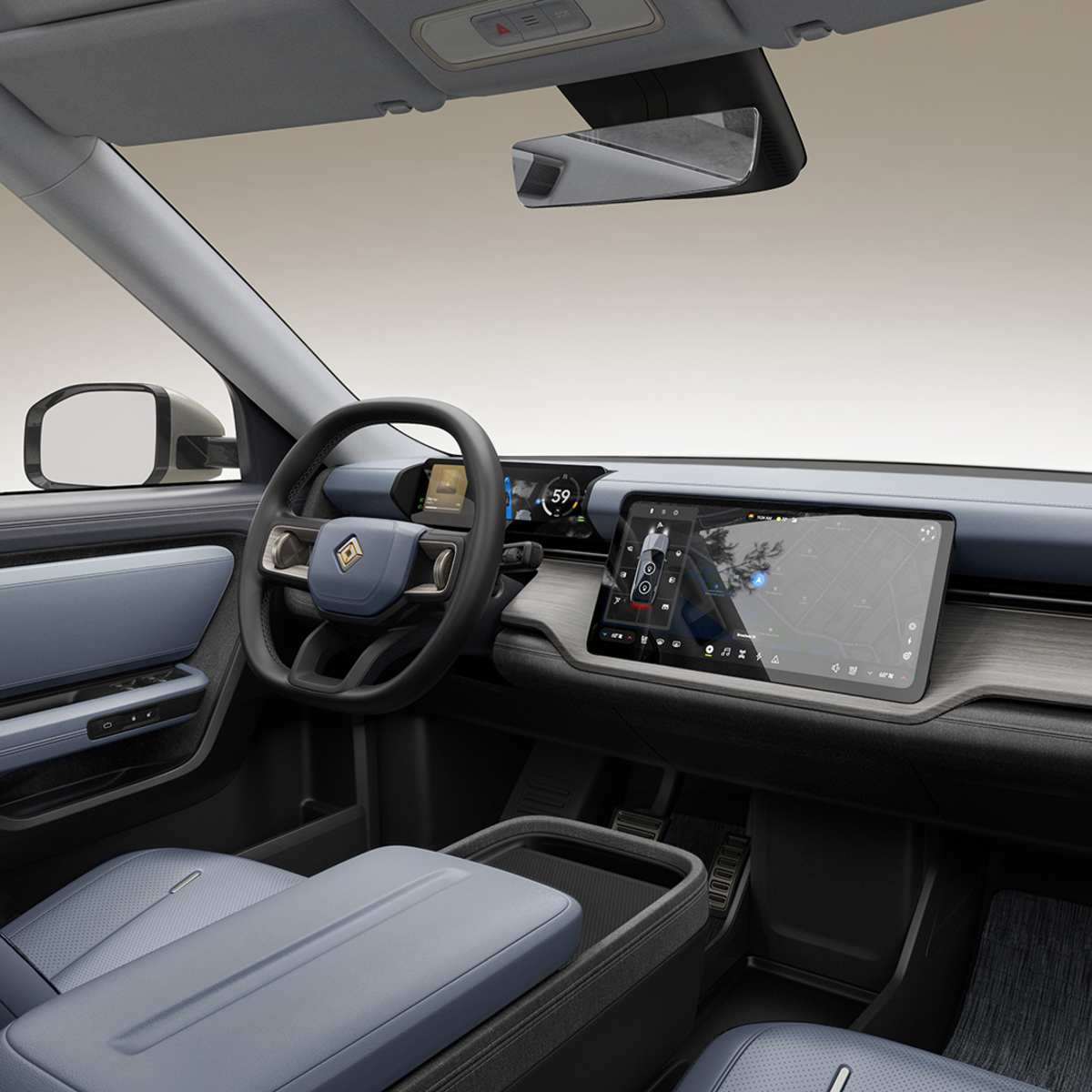
Rivian R2
"We finally have pricing for the Rivian R2. And I wouldn't say they're cheap still, but certainly cheaper than the R1S and R1T."
The Rivian R2 is an electric SUV that Rivian is planning to sell at a lower price than its bigger vehicles. Here, they’re talking about how much it costs and that the first versions will be the more expensive trims.
The Rivian R2 is an upcoming Rivian electric SUV positioned as a smaller, more affordable step below the R1S and R1T. In this segment, the hosts focus on its pricing and how Rivian is rolling out higher trims first before cheaper versions.

Rivian R1T
"but certainly cheaper than the R1S and R1T."
The Rivian R1T is Rivian’s electric truck. They bring it up to explain that the Rivian R2 should be priced lower than the R1T.
The Rivian R1T is Rivian’s electric pickup truck, and it’s referenced here as another higher-priced vehicle compared against the Rivian R2. The point is that the R2 is expected to be cheaper than the R1T.
high trim models
"So like like is typically the case, they're rolling out the high high spec high trim models first, gradually going to introduce the cheaper ones."
A “high trim” is the nicer, more expensive version of a car with more features. Companies often sell the top versions first, then later offer the cheaper versions once they’re producing enough.
“High trim” means the more expensive, more option-packed versions of a model (often with more features and sometimes different performance hardware). Automakers frequently launch these first because they’re easier to sell at higher margins while production ramps up.
range
"330 mile EPS made a range. Nice. Zero to 63 point six."
For an electric car, “range” means how many miles it can go on a full charge. They’re quoting a range number for the Rivian R2 performance version.
In EV talk, “range” is how far the vehicle can drive on a full battery charge under a specified test method. The segment mentions an EV range figure for the Rivian R2 performance version, which is what shoppers usually compare across models.
zero to 63 point six
"330 mile EPS made a range. Nice. Zero to 63 point six."
“Zero to 63” is a measure of how fast a car accelerates from a stop to 63 miles per hour. Lower time generally means the car feels quicker.
“Zero to 63” is shorthand for a 0-to-63 mph acceleration test, measuring how quickly a car reaches 63 mph from a standstill. It’s a common performance metric for comparing how responsive and fast different cars feel.
Rivian R2 and R3
"I mean, I was the whole premise of the R2 and R3 was. But yes, the premise is get to profitability."
The Rivian R2 and R3 are newer Rivian electric vehicles the host is talking about. They’re basically saying Rivian is trying to make them profitable by building them at larger volumes.
Rivian R2 and R3 are upcoming Rivian EV models the speaker discusses in the context of reaching profitability. The key idea is that these models are part of a strategy to lower costs and improve margins as production scales.
profitability
"But yes, the premise is get to profitability. But like what was it with Lucid?"
Here, profitability just means the company makes money instead of losing money. The host is saying Rivian’s plan is to get to a point where each car (and the whole business) stops costing more than it earns.
In this context, profitability means the company’s EV sales eventually make more money than they cost to produce and sell. The speaker ties it to pricing and production scale—selling enough units at the right cost so losses shrink and margins improve.
scale
"where they see the price falling once they get to. Scale, but that they're still probably losing money on this."
“Scale” means building a lot more cars. When a company makes more units, the cost per car can go down, which can help the business become profitable.
“Scale” refers to increasing production volume so fixed costs are spread out and unit costs drop. The speaker suggests Rivian expects prices to fall as it reaches higher production scale, even if it may still lose money initially.
pricing theirs against Tesla
"pricing theirs against Tesla, because they're like, well, Tesla must have done some research and no, Tesla didn't do anything."
“Pricing against” another brand means setting your prices so customers compare you more favorably. The idea is that Ford and GM adjusted their EV pricing because Tesla’s numbers were pulling attention.
“Pricing against” a competitor means adjusting your own prices to make your product look more attractive relative to that rival. Here, the hosts describe Ford and GM reacting to Tesla’s EV pricing narrative by changing their pricing to reduce the gap in customer perception.
preorders
"this will get headlines and preorders. And that's what we need because they don't advertise."
Preorders are when people reserve a product before it’s actually available to buy. In EVs, they can show how many customers want the car and can help companies plan and fund production.
Preorders are customer reservations placed before a product is delivered. For EVs, they’re often used to gauge demand and help fund early production, which is why the hosts connect them to Tesla’s marketing strategy and headline generation.

Cybertrucks
"Probably what I find kind of funny is they're just now rolling out the $60,000 Cybertrucks, which is kind of the sweet spot. I think a lot of people were waiting for."
The Tesla Cybertruck is an electric pickup truck made by Tesla. Here they’re talking about how much it costs and how many people reserved one before they were delivered.
The Tesla Cybertruck is Tesla’s distinctive, angular electric pickup. In this segment, the hosts discuss its pricing and preorder-driven rollout—how many reservations were made and how that translated into real vehicles on the road.
inflection point
"I don't think we quite reach the inflection point where fuel prices are big driver, except in commercial trucks."
An inflection point is when something starts changing faster or differently. Here, it’s the point where higher fuel prices start pushing more people to consider EVs, especially for certain vehicle types.
An inflection point is the moment where a trend changes direction or starts accelerating. In this context, it means fuel prices become a strong enough factor that they noticeably shift buyer behavior toward EVs.

Tesla Semi
"I think trucking companies, especially ones that do a lot of business in California, I think they're taking a lot closer look at the Tesla Semi now before they were like, OK, cool..."
The Tesla Semi is an electric big-rig truck made by Tesla. The discussion is about whether it makes financial sense for trucking companies when diesel fuel gets expensive.
The Tesla Semi is Tesla’s all-electric Class 8 semi-truck aimed at long-haul and freight operations. The key enthusiast angle is how EV trucking economics (energy cost, charging, and uptime) can compete with diesel when fuel prices rise.
Magna
"And then there was Magna. Three liner. Remember Magna a few years ago had their E axle, their E beam or whatever it was called, that you could retrofit into these kinds of vehicles..."
Magna is a company that supplies parts to automakers. In this episode, they’re mentioned as having technology that could help convert trucks to electric drivetrains.
Magna is an automotive supplier that has worked on electrification components and drivetrain-related technologies. Here, the host references Magna’s earlier “E axle/E beam” work as something that could be retrofitted into trucks when they’re being converted.
retrofit
"...that you could retrofit into these kinds of vehicles like you could start doing conversions when the truck goes down."
A retrofit means adding new parts to something that already exists. Here, it’s about converting trucks to electric using electrification hardware instead of building a brand-new truck from scratch.
A retrofit is modifying an existing vehicle or system with newer components. In this context, it refers to adding electrification hardware to trucks after the fact—so conversions can happen when a truck “goes down” or is otherwise ready for a drivetrain change.
TCO (total cost of operation)
"But the TCO total cost of operation, especially if you amortize that over like seven to 10 years, significantly less than diesel and associated maintenance, all that."
TCO means “what it really costs to run the vehicle” over time. It includes things like charging/fuel and maintenance, not just the sticker price. The hosts are using it to compare EV trucks to diesel trucks over many years.
TCO (total cost of operation) is the full cost of running a vehicle over time, not just the purchase price. It typically includes energy/fuel, maintenance, repairs, insurance, and sometimes financing or taxes. For EVs vs diesel, TCO is often where EVs can look cheaper over several years.
amortize
"especially if you amortize that over like seven to 10 years, significantly less than diesel and associated maintenance, all that."
Amortize here means spreading the upfront cost over several years instead of counting it all at once. That makes it easier to compare EVs to diesel when you look at costs over time. It’s a common way fleets do budgeting.
To amortize means spreading a one-time cost (like buying a truck) across multiple years. In fleet planning, amortizing the upfront EV cost helps compare it fairly against diesel costs year by year. The idea is that even if EVs cost more upfront, the cost can be “paid back” over time through lower operating expenses.
DPFs
"The newer diesels, you know, DPFs, you know, SCR, all that, all the EGR, clogging, all that."
DPFs are filters on diesel trucks that catch soot from the exhaust. Eventually they can get clogged, so the truck has to clean them out. The hosts are saying that this adds complexity and potential maintenance issues.
DPFs (diesel particulate filters) trap soot particles in diesel exhaust so they don’t go into the atmosphere. Over time, they require regeneration (burning off the trapped soot) to keep working properly. The hosts mention DPFs as part of why newer diesels can be maintenance-heavy.
SCR
"The newer diesels, you know, DPFs, you know, SCR, all that, all the EGR, clogging, all that."
SCR is a system that helps diesel trucks reduce harmful exhaust gases. It uses a special fluid (often called diesel exhaust fluid) that reacts in the exhaust to make emissions cleaner. The hosts are treating it as part of the “more stuff to maintain” on newer diesels.
SCR (selective catalytic reduction) is an emissions system used on many diesel vehicles to reduce nitrogen oxides (NOx). It injects a urea-based fluid into the exhaust, which helps convert NOx into less harmful gases. The hosts group SCR with other diesel emissions hardware as sources of added maintenance complexity.
EGR
"The newer diesels, you know, DPFs, you know, SCR, all that, all the EGR, clogging, all that."
EGR is a diesel emissions system that sends some exhaust back into the engine. That helps reduce certain pollution, but it can also lead to buildup inside the engine over time. The hosts are saying that buildup can cause maintenance problems.
EGR (exhaust gas recirculation) routes some exhaust gas back into the engine to lower combustion temperatures and reduce NOx emissions. While effective for emissions, it can contribute to soot buildup and deposits in the intake system over time. The hosts mention EGR alongside “clogging” to describe why newer diesels can be maintenance nightmares.
clean fuel reward program
"California launches clean fuel reward program for commercial trucks. Well, we just need more EVs. Isn't this just what we're talking about?"
A clean fuel reward program is a government or agency incentive that gives money back to encourage cleaner vehicles or fuels. Here, the hosts are talking about rebates to help EVs compete with diesel trucks. The key point is that incentives can speed up EV adoption in fleets.
A clean fuel reward program is an incentive that pays fleets or buyers for using lower-emission fuels or vehicles. In practice, these programs often work like rebates or credits tied to vehicle type and usage. The hosts connect it to EV adoption by saying “we just need more EVs” and discussing the rebate amounts.
class eight
"Assuming that's for like full fledged, like class eight. So that's, that's a chunk of change."
Class eight is the category for the biggest, heaviest commercial trucks. It’s the kind of truck used for long-haul work. The hosts are saying the rebate numbers they’re discussing likely target this heavy-duty class.
“Class eight” refers to the heaviest category of commercial trucks in the U.S. (typically heavy-duty long-haul vehicles). Fleet economics and regulations differ by class, which is why incentives and cost comparisons often specify the truck class. The hosts assume the rebate ranges apply to full-fledged class eight trucks.

Toyota Sienna
"I got pulled out by a Toyota Sienna. Many vans for the win."
A Toyota Sienna is a minivan. Here it’s mentioned because it helped pull a stuck vehicle out of the sand.
The Toyota Sienna is a minivan that can be used as a practical “recovery vehicle” because it has enough traction and a stable platform to help move a stuck vehicle. In this clip, it’s specifically mentioned as the vehicle that pulled the Cybertruck out.
flotation
"And when it comes to getting stuck in the sand, there's a lot of. It's all about flotation."
Flotation is how well a vehicle can stay on top of soft sand instead of sinking. Lower tire pressure can help the tire spread out and float better.
In off-road sand situations, flotation is the ability of a tire and vehicle to “ride” on top of the soft surface rather than sink in. It’s strongly influenced by tire pressure and how much area the tire contacts.
contact patch
"It's all about pounds per square inch of contact patch of the tire and the sand."
The contact patch is the part of the tire that touches the ground. In sand, you want more of the tire touching so it grips and doesn’t sink as easily.
The contact patch is the portion of the tire that actually touches the ground. In sand, a larger contact patch helps traction by distributing the vehicle’s weight and reducing how easily the tire digs in.
pounds per square inch
"It's all about pounds per square inch of contact patch of the tire and the sand."
PSI is how inflated the tires are. In sand, lowering tire pressure can help the tire spread out and get better grip.
Pounds per square inch (PSI) is a unit of pressure used to describe tire inflation. Lowering PSI increases tire compliance and contact patch area, which can improve traction in sand.
air those things down to 15 PSI
"And so you drive that and you've got this little pinpoint contact patch. You air those things down to 15 PSI."
“Air down” means letting air out of the tires to make them softer for off-road traction. The idea here is that softer, lower-pressure tires can spread out in sand and help you drive out.
“Air those things down” means reducing tire pressure from a higher road value to a lower off-road value. Dropping to around 15 PSI (as mentioned) can enlarge the contact patch in sand and reduce sinking—though you must reinflate for normal driving.

Lucid Air
"...ou've got this little pinpoint contact patch. You air those things down to 15 PSI. They may have been a..."
The Lucid Air is an all-electric luxury sedan. The podcast is talking about how tire pressure can change how the tire touches the road, which can affect how the car feels and how far it can go. That’s why it comes up in efficiency-focused discussions.
The Lucid Air is a luxury electric sedan known for efficiency and aerodynamic design. Your excerpt mentions tire pressure and a “contact patch,” which ties to how tires and efficiency can affect range and ride. It’s discussed because Lucid has emphasized maximizing real-world efficiency in addition to performance.
aired down their tires
"But if they would have gotten stuck and then aired down their tires, [3172.6s] there's a really good chance. One of the tricks that you could do that they did was you turn your tires left and right with a cyber truck that turns the rears as well."
“Airing down” means letting some air out of the tires. It helps the tire grip better on soft ground like sand because the tire can spread out more.
“Airing down” means reducing tire pressure. Lower pressure increases the tire’s contact patch and makes it more compliant over sand, mud, or uneven terrain, which can improve traction and ride over obstacles.
turns the rears as well
"One of the tricks that you could do that they did was you turn your tires left and right with a cyber truck that turns the rears as well. Yeah. So you can actually get a little bit more traction."
Turning the rear wheels too means the back wheels help steer. That can make the vehicle easier to control and maneuver, especially at low speeds.
Turning the rear wheels as well is a four-wheel steering behavior. It can improve low-speed maneuverability and help the vehicle rotate more easily, which can increase traction and control when navigating tricky terrain.
sand mode
"Cyber truck has a sand mode. Maybe they didn't know about that. I'm pretty sure it does."
Sand mode is a driving setting for loose, slippery ground like sand. It changes how the truck applies power so the wheels don’t just spin.
Sand mode is an off-road driving setting that adjusts vehicle traction control and throttle/torque behavior to help prevent wheel spin on loose surfaces. The goal is to keep the tires moving effectively in sand rather than digging in.
recovery mode
"I was, somebody drives a plaid at the middle school. One of the parents drop it off and it was in full like recovery mode, whatever for that."
Recovery mode refers to a vehicle’s special operating state intended to help it regain traction or stabilize after getting stuck. In EVs and off-road-capable vehicles, it often changes traction control behavior and power delivery to make it easier to move out of a difficult situation.
four or five inch gap in the fender
"So it had like, it had like a four or five inch gap in the fender. Well, it looks so ridiculous. Normally it's like slammed."
That “gap in the fender” means the truck looked lifted higher than usual. It can happen when the suspension is raised or when the vehicle is in a special protective state.
A large gap between the fender and the tire typically indicates the vehicle is sitting higher than normal. On off-road EVs, this can be related to suspension height changes or a protective/limp-style state after an impact or system intervention.
slammed
"Well, it looks so ridiculous. Normally it's like slammed. It's like nice looking."
“Slammed” means the car is lowered and sits closer to the ground than normal. That can make it easier to scrape the front when you pull in or out.
“Slammed” is enthusiast slang for a car that sits unusually low to the ground, usually due to suspension lowering. A slammed stance changes clearance and can increase the chance of scraping the front bumper or nose when entering driveways.
Request an Explanation
Heard something you'd like explained? We'll add it to this episode.
Sign in to request explanations for terms you heard.
Want to learn more?
Browse our glossary for plain-English explanations of automotive terms, jargon, and concepts.
Help improve this episode
See something that's not quite right? Our annotations are AI-generated and can sometimes miss the mark. Click the flag icon on any annotation to suggest a correction.