
Battery health is a crucial topic for electric vehicle owners, especially those considering second-hand purchases. This episode features Markus Berger, CEO of Avalu, a leader in EV battery diagnostics. The discussion delves into the importance of understanding battery health, how it differs from traditional vehicle assessments, and the various methods of battery testing. Berger shares insights on the evolution of Avalu, the significance of independent battery health calculations, and the impact of charging habits on battery longevity. The episode provides valuable information for anyone navigating the used EV market.
In this conversation, Gary interviews Marcus Berger, CEO of Aviloo, about the importance of battery health diagnostics in the electric vehicle market. They discuss the evolution of Aviloo, the significance of understanding battery health, and the various factors that affect it.
Marcus explains the differences between Aviloo's testing methods and those of competitors, emphasizing the need for independent assessments. The conversation also covers the mechanics of the Aviloo testing process, pricing models for B2B and B2C services, and the comprehensive nature of the Aviloo battery certificate.
They conclude with insights on the future of battery diagnostics and the importance of safety checks in the EV industry.
Takeaways:
Avilo is a market leader in EV battery diagnostics.
Battery health is crucial for determining the value of used EVs.
Different charging habits significantly impact battery health.
Independent testing provides more accurate battery health assessments.
The Avilo Flash Test allows quick battery health checks.
Consumers can access Avilo's testing services through a web shop.
Battery certificates include detailed health metrics and benchmarks.
Data from over half a million tests informs battery health insights.
Battery safety checks should be part of annual vehicle inspections.
Investing in battery health checks is essential for used EV buyers.
Guest Details:
I have been in leading positions of several highly reputable Real Estate companies for more than 20 years. Amongst others, I was MD of an institutional Real Estate Investment funds, COO of the worlds largest real estate services company. I succesfully restructured and built companies throught Central- and Eastern Europe. And then, at the age of 43 I decided to do something totally different and joined the Start Up company AVILOO as COO/CFO and shareholder. AVILOO developed a sophisticated Battery Data Platform to perform independent and objective state of health checks of second hand electric vehicles.
"When I recently swapped out my ID3 for a second-hand Polestar 2, I had my battery health checked by a company called Avalu, who were mentioned in that particular episode."
The Polestar 2 is an electric car made by Polestar, which is a brand that focuses on performance electric vehicles. It has a sleek design and offers modern technology features.
The Polestar 2 is an all-electric fastback produced by Polestar, a performance electric vehicle brand. It is known for its stylish design, advanced technology, and strong performance metrics.
"When I recently swapped out my ID3 for a second-hand Polestar 2, I had my battery health checked by a company called Avalu, who were mentioned in that particular episode."
The Volkswagen ID.3 is a small electric car made by Volkswagen. It's designed to be affordable and practical for everyday use, helping people switch to electric driving.
The Volkswagen ID.3 is an all-electric hatchback that is part of Volkswagen's ID family of electric vehicles. It features a compact design and is aimed at providing an affordable option for electric mobility.
"Well, today, I'm delighted to welcome Avalu to the show to talk in more depth about what they do."
Avalu is a company that checks the health of electric car batteries. They help people know if their battery is working well or needs attention.
Avalu is a company that specializes in battery health assessments for electric vehicles. They provide services that help owners understand the condition and performance of their vehicle's battery.
"less than a handful of EVs existing, maybe Tesla, maybe the Nissan Leaf, BMW i3, and that's probably it."
The Nissan Leaf is an electric car that is popular for being affordable and practical. It's one of the first electric cars that many people could buy.
The Nissan Leaf is one of the first mass-market electric vehicles, known for its practicality and affordability. It has been a popular choice for those looking to switch to electric mobility.
"less than a handful of EVs existing, maybe Tesla, maybe the Nissan Leaf, BMW i3, and that's probably it."
The BMW i3 is an electric car made by BMW. It has a unique design and is made with eco-friendly materials, making it different from regular cars.
The BMW i3 is an electric vehicle that combines sustainability with premium features. It was one of BMW's first forays into electric mobility, featuring a unique design and eco-friendly materials.
"one of the most obvious things was, well, a battery state of health tested, transparency into the health of the battery."
The battery state of health tells you how well a battery is working and how much charge it can still hold. It's important for electric cars to know if their batteries are still good.
The battery state of health refers to the overall condition and performance capability of a battery, particularly in electric vehicles. It indicates how much capacity the battery has lost over time and how well it can hold a charge.
"Looking at battery health testing generally, not just from the Avalo point of view specifically, why is it important to know the state of health of your battery?"
Battery health testing checks how well a battery is working. It's important for electric cars because a healthy battery means the car can go further on a single charge.
Battery health testing refers to the assessment of a battery's condition, including its ability to hold charge and deliver power. This is particularly important for electric vehicles, where battery performance directly affects range and efficiency.
"I mean, if I go back to the internal combustion engine age, we never did anything like that for those kinds of cars."
An internal combustion engine is what most cars have used for a long time. It works by burning fuel to create power that moves the car.
An internal combustion engine (ICE) is a type of engine that generates power by burning fuel, such as gasoline or diesel, inside the engine's cylinders. This technology has been the standard for vehicles for over a century.
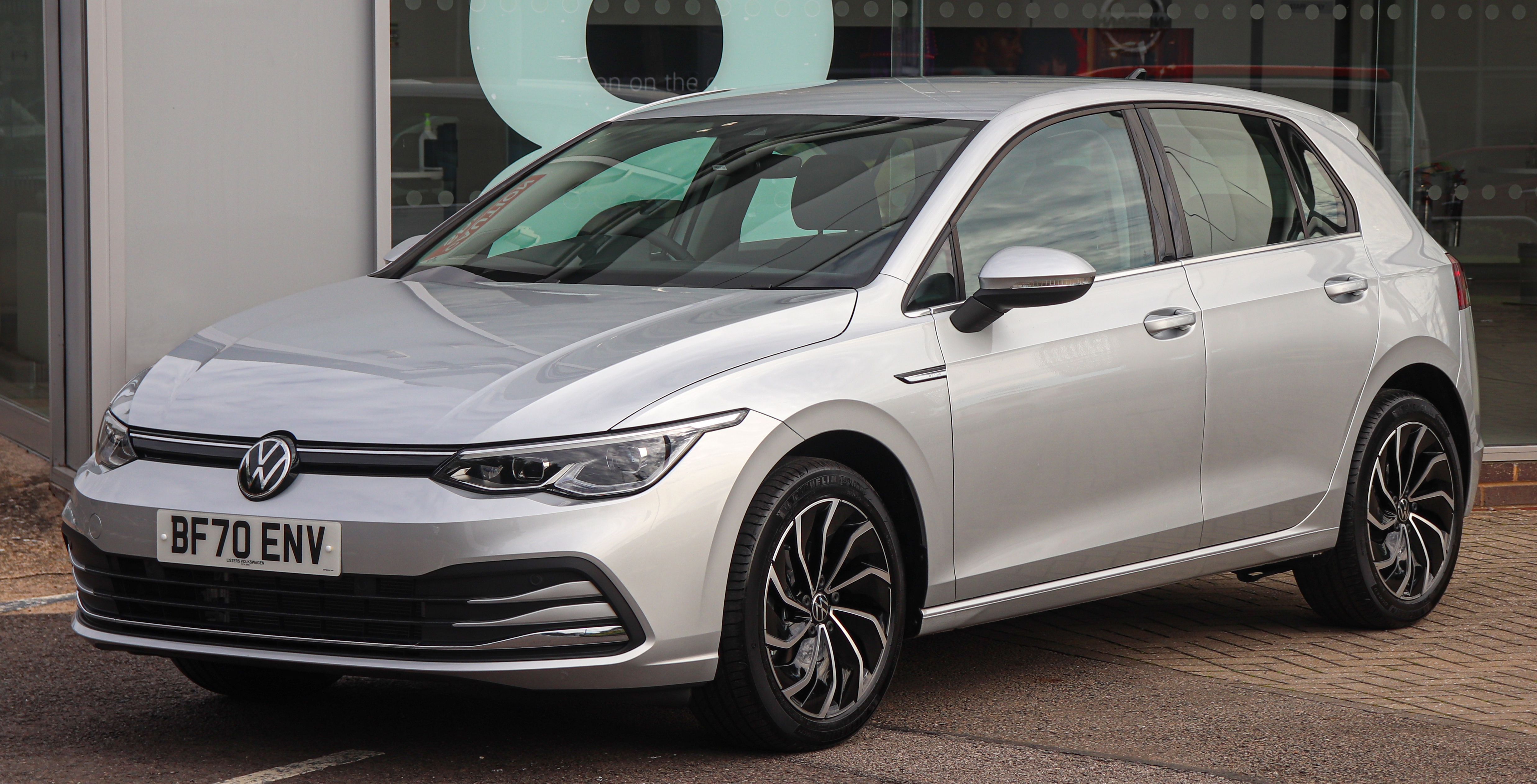
"...a Volkswagen Golf, for example, three years old, 30,000"
The Volkswagen Golf is a small car that many people like because it's easy to drive and has a lot of space inside. It comes in different versions with different engines.
The Volkswagen Golf is a compact car that has been popular for decades, known for its practicality and performance. It is available in various trims and engine options, including both gasoline and diesel variants.
"...the value of a used vehicle develops depending on age and mileage. That's probably the two main predictors for the residual value of an IC car."
Residual value is how much a car is expected to be worth after you’ve used it for a while. It helps people figure out how much they might get if they sell it later.
Residual value refers to the estimated worth of a vehicle at the end of a lease or ownership period. It's influenced by factors like age, mileage, and market demand, and is crucial for determining lease payments and resale value.
"...the two main predictors for the residual value of an IC car. Well, now we're all moving into electric mobility."
An IC car is a car that runs on gasoline or diesel, which are types of fuel. These are the most common types of cars before electric cars became popular.
IC car stands for Internal Combustion car, which refers to vehicles powered by gasoline or diesel engines. These cars have been the traditional choice for many years before the rise of electric vehicles.
"...now we're all moving into electric mobility. We don't know at which speed in the end..."
Electric mobility means using cars that run on electricity instead of gasoline. It's part of a trend to make transportation cleaner and better for the environment.
Electric mobility refers to the use of electric vehicles (EVs) and the infrastructure that supports them. This shift is part of a broader movement towards sustainable transportation and reducing reliance on fossil fuels.
"So and now we have that high voltage battery, you know, and we don't know a lot, to be honest. There is little data available, at least for the market in general, not for us."
A high voltage battery is a special type of battery that powers electric cars. It stores energy to help the car run, and it's different from regular batteries you might find in other devices.
A high voltage battery is a type of rechargeable battery that operates at a higher voltage than standard batteries, commonly used in electric vehicles (EVs) and hybrid vehicles. These batteries store energy for propulsion and are crucial for the performance and range of electric cars.
"...we were talking about vehicle to grid, the ability to be able to plug your car in and use the battery to feed back into the grid for balancing and that sort of thing."
Vehicle to grid means that electric cars can send electricity back to the power grid. This helps manage energy use, especially when there’s a lot of demand for electricity.
Vehicle to grid (V2G) is a technology that allows electric vehicles to return electricity to the power grid. This can help balance supply and demand, especially during peak usage times, by using the car's battery as a temporary storage solution for energy.
"...you are completely relying on the battery management system."
A battery management system is a technology that helps keep a car's battery safe and working well. It checks the battery's health and makes sure it doesn't get damaged.
A battery management system (BMS) is an electronic system that manages a rechargeable battery by monitoring its state, calculating its secondary data, and controlling its environment. It ensures the battery operates safely and efficiently, prolonging its lifespan.
"...because we typically still communicate via Canvas, and there are no standard as protocols. So we need to do some reverse engineering in order to be able to communicate via BMW with a Volkswagen..."
The CAN bus is a system that helps different parts of a car talk to each other. It's like a communication network for the car's electronics.
The CAN bus (Controller Area Network) is a robust vehicle bus standard that allows microcontrollers and devices to communicate with each other without a host computer. It is widely used in automotive applications for connecting various components and systems.
"...to communicate via BMW with a Volkswagen, with a Ford, with a BYD, and with a Tesla..."
BYD is a car company from China that focuses on making electric vehicles. They are becoming more popular around the world.
BYD is a Chinese automobile manufacturer known for producing electric vehicles and batteries. The company has grown rapidly and is a significant player in the global EV market.
"...to communicate via BMW with a Volkswagen, with a Ford, with a BYD, and with a Tesla..."
Ford is a major car company from the United States that makes a variety of vehicles, including trucks and cars like the Mustang.
Ford is an American multinational automaker known for its trucks, SUVs, and passenger cars. The brand has a long history and is recognized for models like the F-150 and Mustang.
"... tests performed that we meanwhile know four LHC Tesla Model 3 with that specific battery type and that speci..."
The Tesla Model Y is a type of electric car that looks like a small SUV. It's known for being able to drive long distances on a single charge and has lots of cool technology features. People talk about it because it's a popular choice for those wanting to go green and save on gas.
The Tesla Model Y is an all-electric compact SUV that shares many components with the Model 3 sedan. It is significant for its impressive range, advanced technology, and performance, making it a popular choice among electric vehicle enthusiasts. Discussions about the Model Y often focus on its battery efficiency and how it compares to other electric vehicles in the market.
"...we know four LHC Tesla Model 3 with that specific battery type and that specific H and mileage. The SOH should be on average here."
The Tesla Model 3 is a popular electric car that is known for being efficient and having advanced technology. It's a sedan that many people choose for its performance and eco-friendliness.
The Tesla Model 3 is an all-electric sedan known for its performance, safety, and technology features. It has become one of the best-selling electric vehicles worldwide, offering various battery options and range capabilities.
SOH means State of Health, and it tells you how well a battery is working compared to when it was new. It helps you know if the battery is still good or if it needs to be replaced.
SOH stands for State of Health, which is a measure of the condition of a battery compared to its ideal condition. It indicates how much capacity a battery has lost over time and is crucial for understanding battery performance and longevity.
"So we analyze every battery cell, which actually is also very important. Most of the competitors that you were talking before, they would just take the pack state of health from the entire battery pack and tell you..."
A battery cell is like a single container that holds energy. Many of these cells work together in a battery pack to power electric cars, and checking each one is important for knowing how well the battery works.
A battery cell is the basic unit of a battery that stores energy. In electric vehicles, multiple cells are combined to form a battery pack, and each cell's health is crucial for the overall performance of the battery.
"...they would just take the pack state of health from the entire battery pack and tell you, well, but that's only half of the truth..."
A battery pack is made up of many battery cells working together to store energy. It's what powers electric cars and other devices, and how well it works depends on each cell inside it.
A battery pack is a collection of multiple battery cells grouped together to provide a higher voltage and capacity for applications like electric vehicles. The performance and health of the entire pack depend on the individual cells.
"...because I know just for the listeners, when you buy a car, it will have a battery size and a usable battery size. So you might have a 100 kilowatt hour battery that has 96 kilowatt hours usable."
A kilowatt hour is a way to measure energy, similar to how we measure distance in miles. In electric cars, it tells you how much energy the battery can hold and how far you can drive before needing to recharge.
A kilowatt hour (kWh) is a unit of energy that measures how much power a battery can store and deliver over time. It's commonly used to describe the capacity of electric vehicle batteries, indicating how far a vehicle can travel on a full charge.
"...it will have a battery size and a usable battery size. So you might have a 100 kilowatt hour battery that has 96 kilowatt hours usable."
Usable battery size is how much energy you can actually use from a battery. Sometimes, not all the energy in a battery can be used because some is kept to help the battery last longer.
Usable battery size refers to the portion of a battery's total capacity that is available for use by the vehicle. This is often less than the total battery capacity due to factors like battery management systems that reserve some energy to prolong battery life.
"We have, by the way, a similar graphic for plug-in hybrid vehicles. And I can also show you that that shows an even more dramatic state of health spread."
Plug-in hybrid vehicles are cars that use both gas and electricity to run. You can charge them by plugging them in, and they can drive a little bit using just electricity before needing gas.
Plug-in hybrid vehicles (PHEVs) combine a traditional internal combustion engine with an electric motor and a rechargeable battery. They can be charged from an external power source and typically offer a limited electric-only driving range before switching to gasoline.
"Would you see a battery health diagnostic as being something that you would like to see included in an MOT, for example? Absolutely. So I think it has to."
MOT is a yearly check-up for cars in the UK to make sure they are safe to drive and not polluting too much. If a car fails the MOT, it can't be legally driven until it's fixed.
MOT stands for Ministry of Transport test, which is a mandatory annual test for vehicle safety, roadworthiness, and emissions in the UK. It ensures that vehicles meet specific safety standards before being allowed on the road.
"...as well as for battery electric vehicles, I mean, you just need to be sure the battery is in good conditions."
Battery electric vehicles are cars that run only on electricity stored in batteries, not on gas. You charge them like you would charge your phone.
Battery electric vehicles (BEVs) are cars that are powered entirely by electric batteries and do not use any gasoline or diesel fuel. They rely on electric motors for propulsion and require charging from an external power source.
"And so I'm very, very convinced that a battery safety check has to go into that annual inspections. And by the way, we are already working on a major project with the German company..."
A battery safety check is a way to make sure your car's battery is working properly. It's important because if the battery fails, it can cause the car to stop suddenly, which can be very dangerous.
A battery safety check is an inspection process that evaluates the condition and performance of a vehicle's battery. This is crucial for electric and hybrid vehicles, as battery failures can lead to serious safety issues, including loss of power while driving.
"...even if they do, they'll be within the general 100,000 mile warranty. So I don't want people to go away with the case of, oh..."
A 100,000 mile warranty means that if something goes wrong with the car, the company will fix it for free as long as you haven't driven more than 100,000 miles. This is often for the battery in electric cars.
A 100,000 mile warranty is a guarantee provided by manufacturers that covers certain repairs or replacements for up to 100,000 miles of use. This is particularly common for electric vehicle batteries, ensuring that they remain functional for a significant period.
"well to my driving patterns. I don't need that range anyway. But then you should get it for a fair price. And you should get it for a discount as compared to the same car with a 90% state of health. And that's actually our goal. Because, you know, you typically, as a consumer, you say,"
The Toyota Supra is a fast and sporty car that many people love for its speed and cool design. It's popular among car lovers because it drives really well and looks great. People often talk about it when discussing fun cars to drive or when looking for a good deal on a sporty vehicle.
The Toyota Supra is a sports car that has a long history and is known for its performance and styling. It has gained a cult following due to its powerful engines and agile handling, making it a favorite among driving enthusiasts. The Supra is often discussed in the context of its value retention and how it performs compared to other sports cars.
Select text to request an explanation
Hi, I'm Gary and this is episode 285 of EV Musings, a podcast about renewables, electric
vehicles and things that are interesting to electric vehicle owners.
All in the show today, we'll be looking at battery health.
The EV Musings podcast is sponsored by Zatmap, the go-to app for EV drivers, helping you
find and pay for public charging with confidence.
Our main topic of discussion today is battery health, but it's actually a little more than
that.
A couple of weeks back, we looked at battery recycling and what's the state of the markets
as far as that's concerned.
But this week, it's something a little more important to those who are using or buying
a second-hand electric car.
In episode 231, I discussed battery health and why it's important.
I also highlighted a number of ways in which you can check your battery health.
When I recently swapped out my ID3 for a second-hand Polestar 2, I had my battery health checked
by a company called Avalu, who were mentioned in that particular episode.
Well, today, I'm delighted to welcome Avalu to the show to talk in more depth about what
they do.
So, thank you very much, Gary, for having me on your podcast on your show.
So my name is Markus Berger.
I'm the CEO of a company called Avalu, which I hope most of you will meanwhile know.
We are the global market leader in the EV battery diagnostics.
What we are doing is we are providing battery certificates to our clients, which is predominantly
car dealers, auction houses, technical inspection companies, in order to allow them to sell
used EVs.
That's actually what we're doing.
We're bringing transparency into the USDP market.
Right.
So, now, as you've said, your companies are very much focused on battery health testing
and diagnostics, and I have a number of questions about that, which we'll cover over the course
of the discussion.
But just before we start, tell me quickly your story, how you came into the world of electric
vehicles and batteries.
That's actually a strange story, it's probably the wrong word, but it's actually coming from
real estate.
So, my background actually is business administration, is finance.
I started at the Vienna University of Business Administration, and I had a 20-year career
in real estate.
In 2018, my brother and a good friend of both of us, Nico, they had that idea to develop
an independent battery test for used EVs.
Back in those days, the breakthrough of electric mobility was far than certain, and was probably
less than a handful of EVs existing, maybe Tesla, maybe the Nissan Leaf, BMW i3, and
that's probably it.
And they had that idea and said, okay, if EVs would break through, which kind of services
would the market require?
And one of the most obvious things was, well, a battery state of health tested, transparency
into the health of the battery.
So, they started off in the garage, actually really in the garage of my parents' house,
with the BMW i3, trying to find out whether to get data out of it or not.
And at a certain point of time, they realized what this works.
And I'm living 200 meters away from my parents' house and always passing by on the weekends,
on the evenings.
I was just wondering what these two guys are doing there, nothing better to do with their
life.
And I was kind of laughing, but they succeeded and they established a company and they got
the first public funding here in Austria.
And then they approached me and asked me about Marcus, you know, you're a business guy,
we're both technicians, we probably need your support.
You know, we need financing, we need to build a company around that product idea and can
you help us?
And I was 45 years old at those days and I have my career in real estate and I said,
it's now or never, maybe my last chance to do something else and to try something out.
And, you know, I have five kids, the wife at home taking care of the kids.
So financially, it was a risky decision.
But I said, let's do it.
And since then, we built that company together really from scratch, just from a product idea.
And now we are almost 100 employees and the dominant player on the global market for use
TV.
So it's quite the story behind that.
Absolutely.
Looking at battery health testing generally, not just from the Avalo point of view specifically,
why is it important to know the state of health of your battery?
I mean, if I go back to the internal combustion engine age, we never did anything like that
for those kinds of cars.
We never said, oh, this is the state of health of the engine or the drive train or anything.
So why do we need this for batteries?
Well, because there's a huge difference between, you know, a traction battery, a high voltage
battery and, yeah, and a combustion engine.
There is a hundred years of history with combustion engines, whether it's diesel or fuel, you
know, pretty much that, I don't know, a Volkswagen Golf, for example, three years old, 30,000
kilometers mileage or 30,000 mileage mileage has a specific value.
I mean, millions of cars have been sold, have been transacted.
There is lists like EuroTux or others where you can just look, there is a clear market
price for those type of cars.
And for combustion engines, you know very well how the value of a used vehicle develops
depending on age and mileage.
That's probably the two main predictors for the residual value of an IC car.
Well, now we're all moving into electric mobility.
We don't know at which speed in the end and certain countries may develop faster and certain
countries may develop slower.
But in the end, we are all going to transition into a visa at a certain point of time.
So and now we have that high voltage battery, you know, and we don't know a lot, to be honest.
There is little data available, at least for the market in general, not for us.
And suddenly age and mileage doesn't tell you a lot about the value of the car.
And that's a major transition in understanding how to value used cars.
Age and mileage don't tell you a lot about the state of health of the battery.
In contrary to the condition of a combustion engine.
Why is that?
The case batteries or the state of health of batteries depend on different things.
To some extent, of course, also on age and mileage, but the far lesser extent than combustion
engine cut.
They more depend on, you know, how has this battery been treated?
Has this battery been slow charged or a lot of AC charging or a lot of DC charging, a
hundred, 250 kilowatts?
How has the battery been parked at which state of charge levels?
Do you park your EV typically with 80, 90, even 100 percent state of charge because you
constantly plug it in?
Or do you park it with 40, 30, 40, 60 percent state of charge, which actually would be much
better.
So how is your driving style?
Is it more like, you know, you go into cities with 30 miles an hour on average, or you just
drive over the highway with 140, 150, 160 kilometers or 120 miles an hour, as you would do in
Austria and Germany.
And that all impacts heavily the state of health.
And you don't see that the car doesn't tell you a car with the same mileage, same age,
totally different state of health.
We had a guest on a couple of weeks ago and we were talking about vehicle to grid, the
ability to be able to plug your car in and use the battery to feed back into the grid
for balancing and that sort of thing.
And we had a small discussion there about whether vehicle to grid is something that is
positive or negative in terms of battery health.
Do you have any thoughts or views on that?
So our view is quite clear that it will definitely put additional discharging cycles on the battery.
So it will negatively impact batteries, that's for sure.
However, how big that negative impact is going to be remains to be seen.
So this is hard to predict, but it's definitely additional cycles.
That's, I mean, I think, undisputable.
And I think it's also undisputable that every additional discharging cycle adds additional
stress to the battery.
So that's why we also think that certain car manufacturers will put some limits on the
amount of discharging, on the amount of energy that can be taken out.
But that all, I mean, it will remain to be seen, to be honest.
Can you talk a little bit about the different ways, because if I sort of rewind a bit, Avalo
is not the only company on the market that does battery health certifications and battery
diagnostics.
But some of your competitors do different ways.
I mean, I know there's one of them that, you know, he uses an app and you put some information
in the app and it tracks your distance and state of charge and things like that.
Some need special testing equipment.
Some need batteries to be completely emptied and then recharged to be able to understand
what the state of health is.
Talk to me a little bit about the pros and cons of each of these and why you've chosen
the solution that you've chosen, Avalo, please.
That's actually a very, very good question.
And I think it comes, first of all, we need to understand what battery diagnostics and
battery testing actually means.
And you see a lot of competitors of us do similar things like us.
And I would challenge that statement.
There are companies out there that provide battery certificates or at least they call
that battery certificate.
I mean, you can call any piece of paper certificate if you want to.
But what most of these companies do is they will plug in some, you know, low performing
cheap dongles that you can actually buy on Amazon if you want to for a couple of euros
or pounds.
And what these dongles do, they would just read out, eh, I'm not even saying that, but
eh, state of health that is being provided by the battery management system.
So from the car itself, and it would just take that value and print it on a piece of
paper.
And the question to us is what's the value of doing that?
You are completely relying on the battery management system.
You're completely relying on the car.
Battery management systems are not built to calculate state of health.
That's a complex task.
It requires quite some computing power.
I mean, it's not that easy and battery management systems are not designed to do that.
They are designed for different cooling, heating batteries, calculating state of
charges and even that is not even very reliable all the time.
So they're drawing out the value, which is completely unreliable.
And we have hundreds and hundreds of cases where the state of health that the
battery management system is providing differs substantially from our calculation.
So that brings me nearer to an answer to your question.
What's the difference between us and all these readout services companies?
How I would call those is that we are performing an independent calculation of
the state of health, our own calculation.
We do read out the state of health of the car, but just for information purposes.
But we do our own calculation.
We calculate an own independent Avalos state of health.
It can be close to the battery management system, SOH, and sometimes it is, but it
can differ.
Essentially, we have cases where the battery management system would always tell
you 100% state of health, regardless how old the car is, always 100%.
Or we have cases where our state of health is 40% because there's a huge cell defect,
but the battery management system doesn't detect it and the state of health is 80% or 90%.
So huge, huge differences and that makes us unique.
And maybe I can also explain where we are coming from.
You just mentioned there are companies out there who require complete discharge and this
kind of thing, but that's how we started as well.
We have that, we call it the Avalo premium test, which is more a B2C product,
which does exactly what you just said.
It requires our client to charge the car up to 100%, plug in our Avalo box and then
discharge the cars to driving below 10%.
And you have seven days time, you can do that while you're driving your typical driving
patterns going to work, going shopping, whatever it might be.
And this is obviously the most exact way of measuring a state of health.
You just measure the energy that you can take out of the car.
Well, and we're doing that and then you get a better certificate and that's the Avalo
premium test, as I just said.
However, obviously that procedure doesn't really fit well into the car dealers world
or the world of an auction house.
I mean, you cannot just drive, you cannot charge your car up to 100% and drive it down
to 10% and doing that thousands of times if you have a big compound.
It's just not possible to do that.
So that's why we developed the second product, which we call the Avalo flash test,
which is actually a battery test that can be performed within three minutes
without putting a charging or discharging on the car while performing the test.
And now you might say, well, but you have to have some dynamics on the battery,
shouldn't you, in order to perform a battery test?
And I would say, yes, to some extent, that's correct, you have to.
But we do because we have all that premium test data.
And we take the data that we collect out of the flash test,
we compare it with all that thousands of thousands of premium tests that we have with
the same car, same mileage, same age, same battery type.
And then we can combine these two data sets and deliver a reliable, accurate
and independent state of health.
And that's how the flash test works.
Okay, so talk to me about the actual mechanics of how the health check works.
Somebody will take a vehicle, so an auction house will take a vehicle.
Do they take it to a place or do they have the apparatus in the house?
What's the actual mechanics behind it?
So it depends on the view.
Let's say if you're a BCA, I mean, you have a lot of UK clients,
and I'm sure everyone knows about BCA or Cox or the likes.
They would use Avalo technology.
And they would get an Avalo box from us, which is a data logger, actually.
It has the size of a mobile phone.
And we developed this Avalo completely in-house.
So we designed the platinum boards.
We write all the firmware.
It works seamlessly with our Avalo battery data platform, where all the softwares and the magic
actually happens.
So that's also one big difference.
We control our hardware at all.
And this hardware has to communicate with the car.
That's the first challenge, because we typically still communicate via Canvas,
and there are no standard as protocols.
So we need to do some reverse engineering in order to be able to communicate via BMW
with a Volkswagen, with a Ford, with a BYD, and with a Tesla, and so on.
That's one of the big differentiators, because it requires quite some work to do that.
And then we write the firmware.
We put it over the air update and the Avalo box.
It's able to communicate with a specific car, a specific model.
Then what the guys we say, for example, do, at the big compounds, they will take the box,
plug it into the OBD interface, wait approximately three minutes.
There is an LED pattern on the box, which tells you when the test is finished.
Unplug it, go to the next car, plug it in.
And in the meantime, better certificate is automatically being produced.
Before that, all the data is obviously transmitted from the Avalo box to our Avalo
battery data platform, where all the data is being stored, all the premium test data,
all the algorithms, all the mathematical models, everything that kind of defines our company.
And so we are automatically creating our Avalo battery certificate,
and we will send it back to the client either in an PDF or just through an API.
So the person who does the test doesn't have to worry, and he just moves on from car to car
and he can perform a couple of hundred tests a day if he wants.
Good, I like the sound of that.
The first question that jumps out is, if this is a relatively small box
that is available to certain groups, is there a possibility for an individual to get this?
Or is this purely a B2B2C type of product?
So there's always got to be an auction house or a dealer or a repair shop as an intermediate.
So the Avalo, the flash test is currently offered exclusively to B2P clients.
So in the future, practically every car dealer will use our technology,
and if you go to a car, you will always get an Avalo certificate.
That's the goal that's where we are heading to.
In the meantime, there is a possibility for consumers to get our Avalo premium test,
which is a bit more sophisticated test.
It's the test that I described before.
You don't have to discharge your car from 100% down to 10%.
That's our consumer product.
And you can actually order that on our web shop at www.Avalo.com.
There is a web shop where you can order the Avalo premium test.
How does it work?
You just order the test.
It costs roughly, in the Euro world, 100 euros.
We will get the order.
We will just pack the box.
We get the respective cables, depending on the car that you need,
because some cars require different cables than others.
And we will just send it over to you.
And within, I would say, three to four days,
you get the box shipped to your door.
It is self-explanatory.
It's you get also a link on your email or on your mobile phone,
which is a link to a web app that we provided to guide you
through the entire testing process.
So it will tell you, charge your car to 100%.
First plug in the Avalo box into the OBD interface.
The OBD interface is typically always somewhere below the steering wheel.
90% of the case is just a few examples where it's somewhere else.
But we have videos that will show you where to find the OBD interface.
You can plug it in.
It's, I mean, anyone can do it, really anyone.
It's designed for private individuals, not experts.
Plug it in and then the app will tell you what to do.
Charge the car up to 100%.
And you have seven days to drive it down below 10%.
Once you reach below 10%, the test is automatically stopped.
You just pack the box.
You use our return shipment label.
You just bring it to the next, whatever it might be, UPS, DHL, send back and that's it.
Latest 48 hours you receive the battery certificate via email.
So I'm going to go out on a limb here and say that if you're charging,
you know, 100 pounds or 100 euros for that service for a consumer,
it's not going to be the same cost that you're charging for the guy at BCA
who's doing 100 of these in a day.
How does the model work for the B2B aspect of this for the British car auctions,
the Cox Automotive, that sort of thing?
Well, first of all, they receive a Diabeta flash test
and obviously in the B2B market, we have a different pricing model.
But I cannot.
Is that priced on a per vehicle or is it a package you can do?
It's a combination of, so typically, by the way, we never sell the Avila box.
It always remains ours.
So we would just provide it on the basis of a license agreement.
So there is an annual license.
You pay around 40 euros per box per month as a license fee,
which covers, you know, all the bi-weekly updates
and just making sure that the Avila box keeps up to technology.
And then you pay on a paper use component for every battery test that you perform.
You're paying a specific amount.
And of course, that depends on volume as always.
Okay, so moving on then, if I want to buy a second-hand car,
if I did this a couple of months ago, I bought a second-hand car
and it had a battery health certificate that came with it.
Now, I know what that saw, what was on that,
but what typically is provided on a certificate
when the Avalo process is being done?
It's not just a piece of paper that says,
this car is at 94% state of health.
What else goes on there?
No, it's far more intense.
Obviously, it will tell you everything you need to know about the car,
the mileage, the identification number, the date and all that thing
so that you make sure it's right.
There's also a QR code for protecting against fraud
so that you can always double-check that the certificate is also valid and correct.
And then we display the state of health in a percentage, 93%, for example,
which tells you that car still has 93% of energy available as compared to the new car.
So let's assume you have a 100 kWh battery
and then our algorithm tells us there's still 93 kWh available for you,
then it's 93% state of health.
But that's not all because you might say,
okay, is 93, is it good or bad?
Who's going to tell me?
And obviously it depends.
It depends.
Is this a car with 150,000 km mileage,
five years old, or is it rather new, 12 months old, 10,000 km?
So we put that into perspective.
We provide a benchmark because we have so many hundreds of thousands of battery tests performed
that we meanwhile know four LHC Tesla Model 3 with that specific battery type
and that specific H and mileage.
The SOH should be on average here.
And if it's higher, then if your specific car is a higher average,
then a higher state of health than average,
the benchmark would put you above average.
And if it's lower, then it would put you below average.
So we provide you also with that information whether the specific SOH in absolute terms
is also a good value in relative terms compared to other comparable cars,
which is also something consumers like a lot, of course,
because many of them just don't know if it's that good or bad.
And then we obviously perform additional checks.
We perform a specific sensor check.
So whether the data that we are receiving out of the car is correct,
whether the sensors were correct.
And then we provide, which is also one of the very important features.
We don't only do a performance check.
So we check the state of health, but we also do a safety check.
So we analyze every battery cell, which actually is also very important.
Most of the competitors that you were talking before,
they would just take the pack state of health from the entire battery pack and tell you,
well, but that's only half of the truth,
because actually you need to know the cell state of health.
So we are calculating the state of health of every single battery cell.
And because the weaker cell would determine the pack state of health.
So we're looking into every battery cell,
and we are also checking the voltage of every battery cell.
Meanwhile, because we have so much data,
we also know when a certain cell voltage spreads gets critical.
Typically you have 4 or 4.1 volts per battery cell in a fully charged state,
and probably 3 or a little bit higher if it's almost empty.
And if there is a spread between the cell with the highest voltage
and the cell with the lowest voltage gets too big,
could be 50 millivolts, could be 100 millivolts, could be 150 millivolts.
That also again depends on the car, on the age,
and on the state of charging, which you perform the test.
If that cell spread gets too high, then you start to get critical topics.
And we would put a red flag out and say, you need to look into that.
The cell spread is too high.
You can either, sometimes you can just sort it by
making it charging it up to 100 percent,
allow the cells to rebalance and the software can deal with it.
But sometimes that's not the case,
and then you just need to put the car through a workshop
and you need to check it and eventually change the module, the respective module.
So that's what the AvaloBattery Certificate does in addition to a state of health calculation.
Sounds fantastic, really, really detailed.
Can I just pick up on one thing that you talked about?
Because you get the example of a 100 kilowatt hour battery at 93 percent state of health.
Is that, because I know just for the listeners,
when you buy a car, it will have a battery size and a usable battery size.
So you might have a 100 kilowatt hour battery that has 96 kilowatt hours usable.
So how is the diagnostic dealing with that?
Is it working on the actual battery or the usable battery?
Both. So we compare gross, we compare usable, and we actually compare net.
How do we define it?
So gross is, as you said, most producers have a buffer.
You probably use that word as well or in English, a buffer on the upper end of the battery
and on the lower end of the battery, which is not accessible to you,
unless it's going to be opened up for usage in real software updates.
So they do this in order to protect the state of health for as long as they can.
And that's, by the way, also one thing you should look at when you buy even a new EV.
How big is the buffer?
Because some manufacturers put a very low buffer in, obviously,
because every kilowatt hour costs money.
And it does make a difference if you buy, let's say, a 75 kilowatt hour battery with,
you know, two kilowatt hours on top and two kilowatt hours on the end of buffer or
one kilowatt hour buffer, because the reserves are simply smaller.
So we would provide you with that information.
That's what we call the gross energy.
Then there is the usable energy, which we typically calculate.
How much energy can you get out of the car until the car just stops driving,
regardless what the state of charge tells you.
And we know that because we're doing all that tests.
If we just drive the car until it just stops, that would tell you the usable energy.
And then we compare also the net energy, which we define as state of charge display equals zero.
When the state of charge display equals zero, we know we just treat the car as empty.
And that is what we define as net energy.
So we provide you kind of three comparisons, always the new values for the new car as compared
to what we are measuring.
Given what you've just said, and we've talked about or you've talked about the vast amount of
data that you've got from prior checks that have been done.
Can we ask some statistics, please?
How many health checks have been carried out with the Avalo model?
More than half a million.
So do you have any data from those health checks that might give some sort of indication of
which vehicles are showing particularly high degradation or particularly low degradation?
Given over 50,000 kilometers or 100,000 kilometers?
Every blue spot, every blue dot on that diagram represents a state of health test that has been
performed by Avalo.
And you see on one axis the mileage, so 50,000, 100,000, and 50,000, that's all kilometers,
by the way.
It's not miles, it's kilometers.
And on the other axis, you see the state of health, 60%, 70%, 80%, 90%, 100%.
So as you would imagine, very low mileage, most of the state of health are up there,
but actually far too many are far too low.
Because if you check out 50,000 kilometers, still a relatively new car.
And you see many, many dots already in the area of even below 70%, but that's typically
cell defects.
But even within 70% and 80%, the state of health, or 80% to 90%, there are really many,
many EVs that already have a very low state of health.
And of course, then the higher the mileage, the more dots you would find in that area,
and the fewer dots you would find closer to 100%.
So and this shows you that state of health, what I said at the very beginning of that
discussion that we had, state of health does not depend on mileage.
You can have cars, you know, with 250 miles, you still see dots between 90% and 100% state of health.
But you see cars with less than 50,000 kilometers on mileage, which have a state of health lower
than 80%.
So mileage doesn't tell you, you need to know.
And the only way to know is to perform a battery test.
We have, by the way, a similar graphic for plug-in hybrid vehicles.
And I can also show you that that shows an even more dramatic state of health spread.
So you can see that is not plug-in hybrid vehicles.
So obviously, plug-in hybrid vehicles have a far smaller battery.
So if you really use it, you might have two full-charge and discharging cycles on one day.
If you can only go, well, it's 50 miles and you use that going to the office,
then you charge it up and you go home and you use the other 50 miles.
And then you have two full cycles per day.
So obviously, plug-in hybrids are degraded far, far quicker.
And you can see that here on that graphic.
So that state of health comes down far quicker for plug-in hybrids than for battery electric vehicles.
But anyway, in both cases, you can see that state of health is difficult to predict
or impossible to predict, to be honest, on the pure information on mileage and age.
And you just need to perform a real battery test and not just the read-out service
or reading out some BMS values, which might or might not be correct.
So if we go and if we're considering that first graph that you showed on the full battery
electric rather than the plug-ins, as you said, there were a couple of outliers that had
reasonably low mileage, but also a particularly low state of health.
And you said that in a couple of instances, that was cell failures or issues within the
battery itself, and that's fine. But do you have any data which would say,
well, for a couple of these, the reason that's particularly low is because, for example, it
might be an Uber or some sort of taxi that is doing a lot of very rapid charging every day.
And that's what's causing that degradation. Do you have that level of granularity?
We have. I don't have it now, but we do have graphics that show the difference between cars
that have predominantly slow charge and cars that are predominantly fast charge.
That difference exists and is substantial. Fast charging would typically not bring it
down to 60% state of health. I mean, unless you probably use that car for, I don't know,
80 years and it has 500,000 miles, but there are very few of those cars
available, so we don't know that yet. But if your state of health comes down to
levels that say below 60, that would most typically be some kind of cell defect.
Yeah, that makes sense. So moving on. So where do you see battery diagnostics and battery health
checks going in the future? Now, for example, here in the UK, we have what's called an MOT.
So every year, a vehicle that is over three years of age has to go in for an evaluation and
they check tires and brakes and lights and things like that.
Would you see a battery health diagnostic as being something that you would like to see included
in an MOT, for example? Absolutely. So I think it has to. I mean, the MOT is predominantly a
safety check and there are good reasons to perform those safety checks for combustion engine cars,
but as well as for battery electric vehicles, I mean, you just need to be sure the battery is
in good conditions. And as I said before, we find these cars far too often, to be honest,
that have a critically low state of health because they have a critically high, for example,
cell voltage deviation. And at a certain point of time, that becomes a real risk.
And I'm not only meaning a terminal overrun and a huge fire, which we can see from time to time
on YouTube, which, by the way, does happen. But if we find cars, you know, you go into a tunnel
and the car just stops driving, just stops driving because of a cell defect. Or we found
cars that you want to get because you want to overtake another car. So you move on to the lane
of the cars coming in your direction, you pull the throttle, nothing happens. That happens.
And that can cause, I mean, that can kill you and your family, which might be in the car.
And the other guy who is coming and hitting you. So those are real, those are examples from real
life. And I'm not saying that happens, you know, one out of 100 cars. No, but it happens too often.
And so I'm very, very convinced that a battery safety check has to go into that annual inspections.
And by the way, we are already working on a major project with the German company,
which is called by the FSD, who are providing exactly the technology for the German annual
inspection. And they're already investigated into that direction. And I think the European
law makers are already discussing how to include battery checks, battery safety checks into that
annual inspection, which I think is a must. Now, I think at this point, it is, I use a posh word,
it is behoven on me. It is something that I've got to do because obviously I've got listeners
here who are considering going or buying a used electric vehicle. And they're going to hear you
saying, well, hang on, there are problems, there are cars that have battery problems and they
could end up getting you killed when you're trying to overtake. And I think we need to make
clear that yes, that absolutely does happen. But that is an absolute exception. Yes, yes.
The general state of health of the vast majority of electric vehicle batteries
is really, really good. They're not going to need replacing. And even if they do, they'll be within
the general 100,000 mile warranty. So I don't want people to go away with the case of, oh,
well, Marcus told me that these things are going to, you know, once I've done a couple of
thousand miles, I'm going to have battery problems. That's not what you're saying. No, no, no, no.
That was just answering your question on why there should be an investigation on or an annual
battery check. Because even if it would happen once, we should avoid it. And so you don't have to
be afraid when you buy a new car that you get that type of car. That's very unlikely. What you
should be afraid though, is that you eventually overpay because, you know, every state of percentage
in state of health results in reduced range. And you should just make sure that you get a fair deal.
And you might say, a car with an 80% state of health is fine for me because it just fits very
well to my driving patterns. I don't need that range anyway. But then you should get it for a
fair price. And you should get it for a discount as compared to the same car with a 90% state of
health. And that's actually our goal. Because, you know, you typically, as a consumer, you say,
okay, when a car gets to something like 70% state of health, it's kind of, I don't want to say it's
not usable anymore. It is usable. But for most of the people, it might not be usable anymore.
So you have something like a 30% range, you know, from 100 down to 70%. And within this 30%,
every percentage counts. And you should just know it. You should make an educated decision
when you buy a used to be. That's all we want. That makes sense. That makes sense. So where do
you see Avalos as a company, and particularly the battery health diagnostics going medium to
long term? What's your five year plan for the product? So I think the test would of course
improve. The accuracy will improve the amount of additional quality we are going to provide to
our clients is going to improve. We will add more safety aspects, not only state of health,
but there will be more information coming. And of course, we are going to add additional services.
So for example, we are now talking with many insurance companies who would be very eager to
ensure or to provide insurance coverage for consumers against battery risk. But they don't
have the data, they don't have the know how. So they are unable to provide that information.
And we are going to add the insurance component to our products will we will provide insurance
coverage for for your listeners in case they want to buy a used to be any case that used to be has
an available battery certificate. That's not the case at the moment, but it will be the case in
the future. So we're going to add additional services around our battery certificate to make it
the industry standard, the global industry standard. And at a certain point of time,
you'll probably not be able to sell a used to be without our independent battery certificate
anymore. As we come to the end of our time together, is there anything that you would
like to tell the views and listeners that we haven't actually talked about over the course of
our discussion? Actually, I think we touched everything. I think what I would like to reiterate
is that under no circumstances do I want to create let's say fear buying used to be quite
the opposite is true. I think everyone can put their hard earned money into into a used to be
and sometimes it's you get really good deals, especially now when when prices for used to be
came down substantially. And I've been driving any we for 10 years now, I was an early adopter.
My first TV was a Nissan leave and then it was a BMW i3 and and I liked the technology.
Everything is quiet. You accelerate like you can never do with a with a with a combustion
engine car. So I think it's just the superior technology. And so I would really encourage
everyone to to take a step and just move into into into dv space and with a good feeling.
But of course, you want to spend 20 or 30,000 pounds on a on a used to be and you know,
the battery is the only thing that actually matters because the rest is a computer on wheels,
more or less. Then you should just invest these 30, 35 bucks or 100 bucks into into making sure
that the battery health is exactly as you expected. That's all I want to say.
Yeah, I'm going to say I have a Polestar two, I bought it four or five months ago, 55,000 miles
on the clock and I had a battery health check done and it came at about 94 percent state of
health, which I was quite happy with that. And that was a big factor in me going for that particular
vehicle versus any other out on the market. So it definitely helped me in my buying choice.
I think it does. I think it does. And it's a lot of money that you spent for for used to be.
So you have to work very hard to earn that everyone I think has to I have to at least.
And I just want to make sure I get the value for the price.
Absolutely. Dr. Marcus Bergen, thanks a lot for your time. I think he's been a fascinating
conversation. Thank you very much. Thank you, Gary. It was my pleasure. See you next time.
A couple of takeaways from this discussion. Firstly, there are numerous ways of doing battery
health checks. But if you want a reliable, detailed one, you can't rely on the card's internal BMS,
the battery management system, to give you an accurate reading. You need to do what Avalu were
doing and to go deep into the battery itself. Secondly, I want to repeat what Marcus said
here for clarity. Just because there is a possibility of a battery fire due to a faulty battery,
and we discussed this in detail in episode two, three, six, the EV Fire episode,
it doesn't mean that all second hand EVs have faulty batteries far from it. Marcus was referring
to the reasons we would want to put a battery health certificate into the MOT for an electric vehicle.
It's a great way of preemptively identifying any potential battery faults. Thirdly, battery health
is a complex combination of age, mileage and charging rate. Low mileage EVs that have been
charged often and at high charge speed could have a lower state of health than higher mileage EVs
that have done fewer charges at slower speeds. The graphs that Marcus showed, and I'll link them in
the show notes for those listening on the audio rather than watching on YouTube, they show just
what sort of a range the testing is showing. Now, if you want to perform a full EV battery health
check yourself, you can get one from the Avalu website, which is linked in the show notes.
I found this conversation really informative and I hope you did too. Did it raise any questions for
you? And if it did, let me know either by commenting below or by emailing at info at evmusing.com.
I hope you enjoyed listening to today's show. It was put together this week with the help of
Dr. Marcus Berger and Uwe Bleumel. The EV Musings podcast is sponsored by Zatmap, the go-to app for
EV drivers helping you find and pay for public charging with confidence. Zatmap is free to
download and use with subscription plans for enhanced features such as using Zatmap in car
on CarPlay or Android Auto and discounted charging across thousands of charge points.
If you have any thoughts, comments, criticisms or other general messages,
to pass on to me, I can be reached at info at evmusing.com. And on the socials, I'm on
BlueSky at evmusing.bsky.social. I'm also on Instagram at evmusing.com where I post short
videos and podcast extracts regularly. So why not follow me there? Thanks to everyone who supports
me through Patreon on a monthly basis and through coffee.com on an ad hoc one. If you enjoyed this
episode, why not buy me a coffee? Go to coffee.com slash evmusing.com and you can do just that.
ko-fi.com slash evmusing. Takes Apple Pay too. Now regular listeners will know about my two ebooks,
so you've gone electric and so you've gone renewable. First one of those has had a recent
update. You'll see it with a bright red image on the front just like I'm showing on the screen here.
Both of those are 99p each or equivalent and you can get them on the Amazon Kindle Store.
Check out the links in the show notes for more information, as well as a link to my regular
evmusing newsletter and associated articles. Now I know you're probably driving or walking or
jogging or in the shower or washing the car, but if you can remember and you enjoyed this episode,
proper review in iTunes, please. Really helps me out. I did go out and go in and have a look
recently as some of the most recent reviews. Thank you very much for those who took time
to do that for me. If you've reached this part of the podcast and are still listening,
thank you. Why not let me know you've got to this point by messaging me at musingsv.com.
Social with the words, healthy as a AAA. Hashtag if you know you know nothing else.
And thanks as always to my co-founder Simon. You know he's other hoppy's fishing,
naturally. He's taking his electric unicycle down to the local lake,
set up his gear and sleep for a couple of hours while pretending to catch something.
He's not the only one though. There's a line of them on Saturday,
all talking about the one that got away. We compare gross, we compare usable,
and we actually compare net. Thanks for listening. Bye bye now.
Request an explanation for:
8 cars
Scroll for more
8 cars featured
Request an Explanation
Heard something you'd like explained? We'll add it to this episode.
Sign in to request explanations for terms you heard.
Want to learn more?
Browse our glossary for plain-English explanations of automotive terms, jargon, and concepts.
See something that's not quite right? Our annotations are AI-generated and can sometimes miss the mark.
Click the flag icon on any annotation to suggest a correction.