

Acura Integra
The Acura Integra is a compact car made by Acura that’s designed to feel sporty to drive. The podcast mentions it because the speaker found it exciting, especially when it came to turbo power. It’s often remembered as a fun, driver-focused model.
Saab
Saab is a car brand from Sweden with a loyal fan base. This episode is mainly about Saab stories and what made the brand special.

Saab 9-3 wagon
A “wagon” is basically a car with extra cargo space behind the rear seats. The Saab 9-3 wagon is the version of Saab’s 9-3 that’s built for carrying more stuff, and in this story it’s noted for having a five-speed gearbox.
wagon practicality
A wagon is built to carry more than a typical sedan. In this story, the extra space in the back made it easy to transport big items for a campus event.
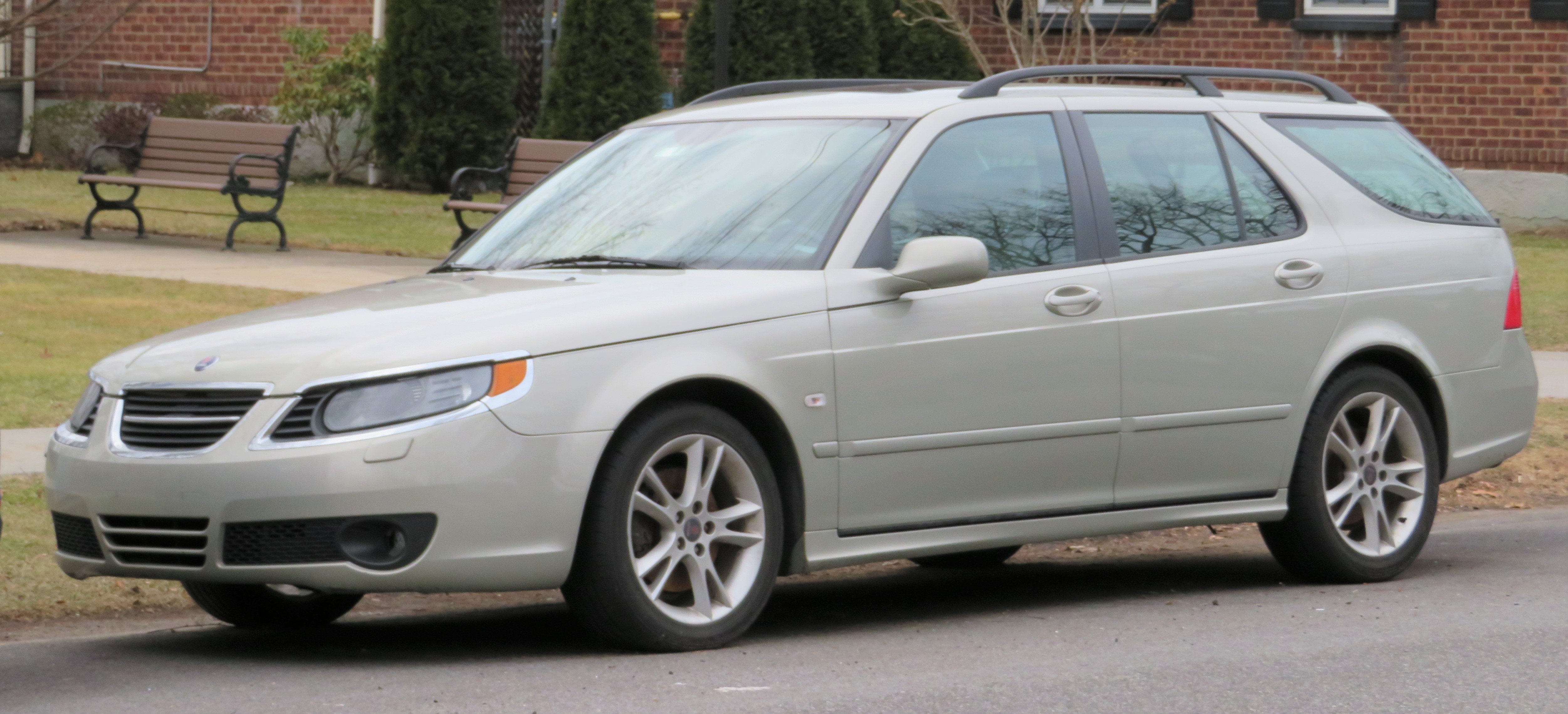
Saab 9-5 wagon
The Saab 9-5 wagon is a bigger, more comfortable wagon than the 9-3. In this episode, they’re highlighting that it can be equipped with a turbo, which helps explain why it feels exciting to drive.
five-speed
“Five-speed” means the car has a manual gearbox with five forward gears. More gears can help keep the engine in the right rev range, but a five-speed can still feel great and simple to drive.
production run ending in a specific model year
They’re talking about when a car model stops being made—like the last year it was sold. That matters because the final-year cars can include special versions, and they’re often easier to identify when shopping later. It’s basically a timeline clue for collectors and buyers.

Ford Mustang
The Ford Mustang is a sporty car made by Ford that’s been around for many decades. A “94” commemorative edition would be a special version from the mid-1990s. People talk about it because it’s a recognizable Mustang and can be interesting to collectors.
facelifted one where they went from the quad headlights to the single headlight
They’re talking about a styling update where the headlights were redesigned. It’s useful because it helps you tell which years of the car you’re looking at.
aerodynamic kind of design influence into everything
They’re saying Saab designed these cars with aerodynamics in mind, partly because the company had a background in aircraft. That’s why the car’s shape looks like it’s meant to slice through the air.
four cylinder turbo
A turbocharged four-cylinder is a small engine that uses a turbo to push extra air in. That helps it feel stronger without needing a bigger engine.
rally racing
Rally racing is a type of competition where cars are timed on special stages, often on rough roads. The hosts are saying Saab’s rally experience helped shape how these cars were engineered and tuned.
old school turbo
A “turbo” is an engine that uses exhaust gases to spin a turbine and force more air into the engine. “Old school” turbos often feel like they wait a moment, then suddenly pull hard when boost comes in.
turbo spooling
When you press the gas, the turbo doesn’t instantly make boost. It has to spin up first—so there’s a short delay before the car feels like it really takes off.
front wheel drive
Front-wheel drive means the front wheels do the work of moving the car. It can help the car grip better on wet or snowy roads, but it drives differently than cars where the rear wheels pull.
driver-focused cockpit design
A driver-focused cockpit is when the car’s interior is arranged so the driver feels in control—like the controls are easy to reach and the gauges are easy to see. It’s meant to make driving feel more connected and engaging.
race car-like ride quality
“Race car-like ride quality” usually refers to a setup that prioritizes handling response—often firmer suspension tuning, less body roll, and more immediate steering feel. It’s a tradeoff: comfort can be reduced compared with a typical commuter car.
manual
A manual is a car where you shift gears yourself using a clutch pedal and a stick. Some drivers like it more because it gives you more control over how the car drives.

Saab 9000
The Saab 9000 was Saab’s bigger, more “executive” sedan. It was known for feeling comfortable to drive and for handling that felt more confident than you’d expect from a family car.

Toyota A90
The Toyota Supra is a sports car from Toyota built for speed and driving fun. The “90” mentioned would be from a specific generation made around the late 1980s to the 1990s. People bring it up because it’s a well-known performance model from that time.
tri-spoke wheels
Tri-spoke wheels are wheels with three main spokes. They tend to look sporty and distinctive, which is why the host is calling them out as part of the car’s “glorious” style.
wide body stance
“Wide body stance” means the car looks wider, usually because the fenders or wheel setup make the tires sit farther out. It’s mostly a look, but it often goes along with a sportier vibe.
sob mechanic
They’re basically saying you can’t just take these cars to any random shop. You want a mechanic who knows Saabs well, because they have their own special quirks.

Saab 900
The Saab 900 is a classic Saab model. The hosts are saying it’s one of their favorites and that they’d love to find one that’s been driven less and kept in good shape.
survivor kind of condition
“Survivor” means the car is still pretty original and hasn’t been fully restored. People like these because they’re more authentic, and they can be harder to find.
turbo models
A turbo model has a turbocharger that helps the engine make more power. The hosts are saying these turbo versions tend to be especially valuable when they’re low-mile and well kept.
model year 2008
They’re talking about the car’s model year—basically the year it was built/sold as. That helps you know which version you’re dealing with, since cars can change from year to year.
all wheel drive
All-wheel drive means the car can send power to more than one set of wheels. That usually helps the car grip better when roads are slippery or uneven.
super rare (only 91 imported to the U.S.)
They’re saying this version is extremely uncommon in the U.S. When only a small number were imported, it usually means it’s harder to find and can be more expensive to maintain or repair.

Saab Turbo X
The Saab Turbo X is a rare, performance-focused Saab with a turbo engine. It also uses all-wheel drive, which helps the car put power to the road in more conditions. People talk about it because it’s uncommon and built for strong driving.

Volvo V70
The Volvo V70 is a wagon, meaning it has extra cargo space compared with a typical sedan. Some versions of the V70 were made to be quicker and more exciting to drive. The podcast mentions it because it’s part of a generation of faster Volvo wagons.
Haldex
Haldex refers to a clutch-based all-wheel-drive system used on many vehicles, where power is sent to the rear (or front) as traction demands. It’s designed to be efficient for everyday driving while still providing grip when conditions get slippery.
hood pivots forward (jet-fuselage style)
The hood on this Saab style opens in a special way—pivoting forward instead of lifting straight up. The hosts think it’s really cool because it looks and feels different from most cars.

Saab 9-7X
The Saab 9-7X is Saab’s SUV. It’s a bit unusual because it shares a lot with other GM vehicles, so it doesn’t drive or feel exactly like the older Saab sedans and coupes.

Saab 9-3X
The Saab 9-3X is a Saab model that, in this conversation, gets compared to Subaru. The point is that it was built in a way that feels similar to Subaru’s AWD performance cars.
Platform sharing / badge engineering
The hosts are talking about how some cars are built using the same underlying design as other brands. That’s why parts can be shared and why the cars can feel similar even though the badges are different.

Saab 9-2X
The Saab 9-2X is basically a Saab version of a Subaru WRX. Because of that, many parts are shared, so it’s easier to maintain or customize using Subaru components.

Subaru WRX STI
The Subaru WRX STI is a high-performance version of the WRX. In this story, they’re saying you can use STI performance parts on the Saab 9-2X because the cars are closely related.

Cadillac Srx
The Cadillac SRX is mentioned because the Saab 9-4X was built from it. When one car is based on another, they often share major parts, which can help with maintenance.

Saab 9-4X
The Saab 9-4X is a Saab SUV/crossover. It’s remembered as a rare model from the brand’s final years, so you don’t see many of them today.
Spiker cars
Spiker Cars is mentioned as the company that Saab’s car business was sold to. When a car brand gets sold like that, it often changes (or ends) production, which is why you don’t see many of those cars.
original window sticker
The original window sticker is the paper that shows what the car cost new and what options it had. If you still have it, it’s useful because it proves how the car was originally built and priced.

Chevy Corsica
They mention the Chevrolet Corsica as a cheaper alternative you could buy for much less money. The point is to show that the Saab 900 wasn’t a bargain—it cost more because it was more “upscale” for the time.
options were extremely limited
They’re saying Saab didn’t make you pick from a huge menu of options. Instead, many cars came with a lot of luxury features already included, so you didn’t have to hunt for the right combination.
heated seats
Heated seats are seats with built-in warming elements. You can turn them on to make cold weather driving more comfortable.
leather
Leather is a nicer-looking and more premium material used for seats. In this story, it’s mentioned because Saab cars often came with leather without needing to add lots of options.
rims
Rims are the wheels on the car. Different trims can have different rim designs, even if the rest of the car is pretty similar.
tracking down parts
“Tracking down parts” means hunting for the exact replacement pieces your car needs. For older or less common cars, that can take extra time because the parts aren’t always easy to find.
commitment to be sure
This is the idea that owning and maintaining a niche or discontinued car brand is a long-term commitment. It often involves learning the car’s quirks, budgeting for harder-to-find parts, and relying on specialists for repairs.
auction cars
Auction cars are vehicles sold at bidding events. They can be cheaper, but you have to be careful because you might not know the car’s real condition until you inspect it.
rusty (rust condition)
Rust is one of the biggest deal-breakers when buying older cars because it can mean structural damage and expensive repairs. When hosts say “as long as they aren’t rusty,” they’re signaling they’re filtering for cars worth restoring or keeping long-term.
Craigslist find
A “Craigslist find” just means they found a car listing on Craigslist. The fun part is figuring out if it’s a good deal or a potential project.
survivor car
A “survivor” car is basically a well-preserved older car that hasn’t been heavily changed. People like them because they still feel close to how they were when new.
garage stored
“Garage stored” means it was kept inside, not outside in the weather. That usually helps the car stay cleaner and helps prevent rust and deterioration.
two owner car
A “two owner car” means only two people have owned it. That can be a good sign because it often means the car was cared for and there’s a clearer history.
140,000 miles
They mention the car has 140,000 miles. High mileage doesn’t automatically mean it’s bad—if it was maintained well, it can still be a good buy.
factory sunroof
A “factory sunroof” means the car came with the sunroof from the factory. That usually means it’s installed cleanly and is less likely to have weird fit or leak problems than an add-on.
air conditioning
Air conditioning is the system that cools the cabin. On older cars, working A/C is a good sign the car has been cared for.
cloth seats
They’re pointing out the car has cloth seats. Some people like cloth because it can be comfortable and doesn’t get as hot or as expensive to maintain as leather.
repainted hood and trunk
They think the hood and trunk might have been repainted. That can be normal, but it can also mean the car was repaired or touched up—so it’s smart to look closely for signs of bodywork.
original 85 sob
The hosts emphasize that the Saab 9000 appears “original” and “not treated poorly,” meaning it likely hasn’t been heavily modified or cosmetically abused. For classic cars, originality often correlates with better long-term value and fewer hidden issues.
towed unsafe to drive
If a car is “unsafe to drive,” it often means something is seriously wrong. Getting it towed helps avoid making the damage worse while you figure out what the problem is.
limp mode
Limp mode is when the car “puts itself in a safe mode.” It reduces power so you can drive carefully to get it checked, usually because something important is wrong.
limited-edition rarity claims
They’re talking about a claim that only a very small number of these cars exist. Sometimes sellers exaggerate rarity, so it’s smart to double-check before assuming the price is justified.
six speed
“Six speed” means the car has six gears. That can help the engine run more smoothly and efficiently depending on how fast you’re going.
parts car
A “parts car” is a vehicle you buy mainly to take useful pieces from it. Even if the car itself isn’t great, the parts can still be worth the money.
salvage title
If a car is described as unsafe to drive and has to be towed, it usually means it’s not road-ready. Sometimes it’s also tied to paperwork like a salvage status, which can affect what you can do with the car.
Vice Grip Garage
Vice Grip Garage is a popular car-repair YouTube channel. They often take neglected or broken cars and figure out how to get them running again.
carburetor
A carburetor is part of older engines that helps mix fuel with air. If you pour gas into it, you’re basically trying to feed the engine directly so it can start.
GM era
“GM era” means the time when Saab was under General Motors ownership. People use it to describe how the cars changed during that ownership period.