
#36: 900 or 9000? Our Favorite Saab Stories
About this episode
Saab nostalgia takes the wheel as Ian and Brendan trade favorite stories, from a college roommate’s turbo 9-5 wagon and its “jet-like” hood design to growing up seeing 900/9000s everywhere. They break down why the 1980s 900 looks and feels so right, praise Saab’s rally-bred turbo character and quirky, driver-focused engineering, and discuss the 9000 as a refined executive pick. They also highlight rare late-era wagons like the 9-3 SportCombi Turbo X and oddball models (9-2X, 9-4X). The show closes with two Craigslist finds: a clean 1985 900 Turbo 5-speed and a cheap, tow-only 2007 9-3 SportCombi 6-speed 60th anniversary car.
Welcome back, Life Plus Cars Community!
For this week's episode, Brendan and Ian talk all about SAAB. Listen in as the hosts discuss:
-a brief history of Saab
-growing up with Saabs, particularly the wagons
-Brendan's ownership history of Saabs from the past
-some of their all time favorite Saabs over the years
-rare Saab models that were rebadged vehicles from other automakers
-two surprise Craigslist finds from the Saab brand
Plus, Ian shares a memory of experiencing a turbocharged car for the first time!
What do you think, listener? Do you have a Saab story of your own? Let us know and write to us at [email protected]
Or say hello over on Instagram @lifepluscars
Life Plus Cars: Curating Car Conversations!

Acura Integra
"...s the first time that I experienced a turbo or an Integra. That thing was so fun."
The Acura Integra is a compact car made by Acura that’s designed to feel sporty to drive. The podcast mentions it because the speaker found it exciting, especially when it came to turbo power. It’s often remembered as a fun, driver-focused model.
The Acura Integra is a compact performance car from Acura that became well known for its sporty driving feel and enthusiast appeal. In the podcast, it’s specifically tied to the first experience with a turbo and the speaker describing it as “so fun,” which points to why this model often comes up in driving stories. It’s a common reference for how Acura delivered a compact, performance-oriented package.
Saab
"Today on the Life Plus Cars podcast, we are talking about Saab, the Saab story. [51.3s] And it's a, yes, it's a good one."
Saab is a car brand from Sweden with a loyal fan base. This episode is mainly about Saab stories and what made the brand special.
Saab is a Swedish automaker known for distinctive design and engineering choices, including a strong enthusiast culture. This episode frames Saab as the main subject, so the brand itself is the anchor for the stories being told.

Saab 9-3 wagon
"...we just need to jump right into Ian for you and I, like the Saab wagon... They had the 9-3 wagon and because you can get these with a five-speed..."
A “wagon” is basically a car with extra cargo space behind the rear seats. The Saab 9-3 wagon is the version of Saab’s 9-3 that’s built for carrying more stuff, and in this story it’s noted for having a five-speed gearbox.
The Saab 9-3 wagon is a practical estate version of Saab’s 9-3 line, known for combining everyday usability with Saab’s distinctive driving feel. In this segment, it’s specifically mentioned as being available with a five-speed transmission, which affects how it drives and how it feels on the road.
wagon practicality
"...We were able, like we helped out with a campus event. We were putting those like big folding tables, like slid right in..."
A wagon is built to carry more than a typical sedan. In this story, the extra space in the back made it easy to transport big items for a campus event.
Wagons are designed to maximize cargo space while keeping the driving dynamics of a passenger car. The hosts’ story—sliding large folding tables into the back and stacking them—illustrates how wagon packaging can make everyday tasks dramatically easier.
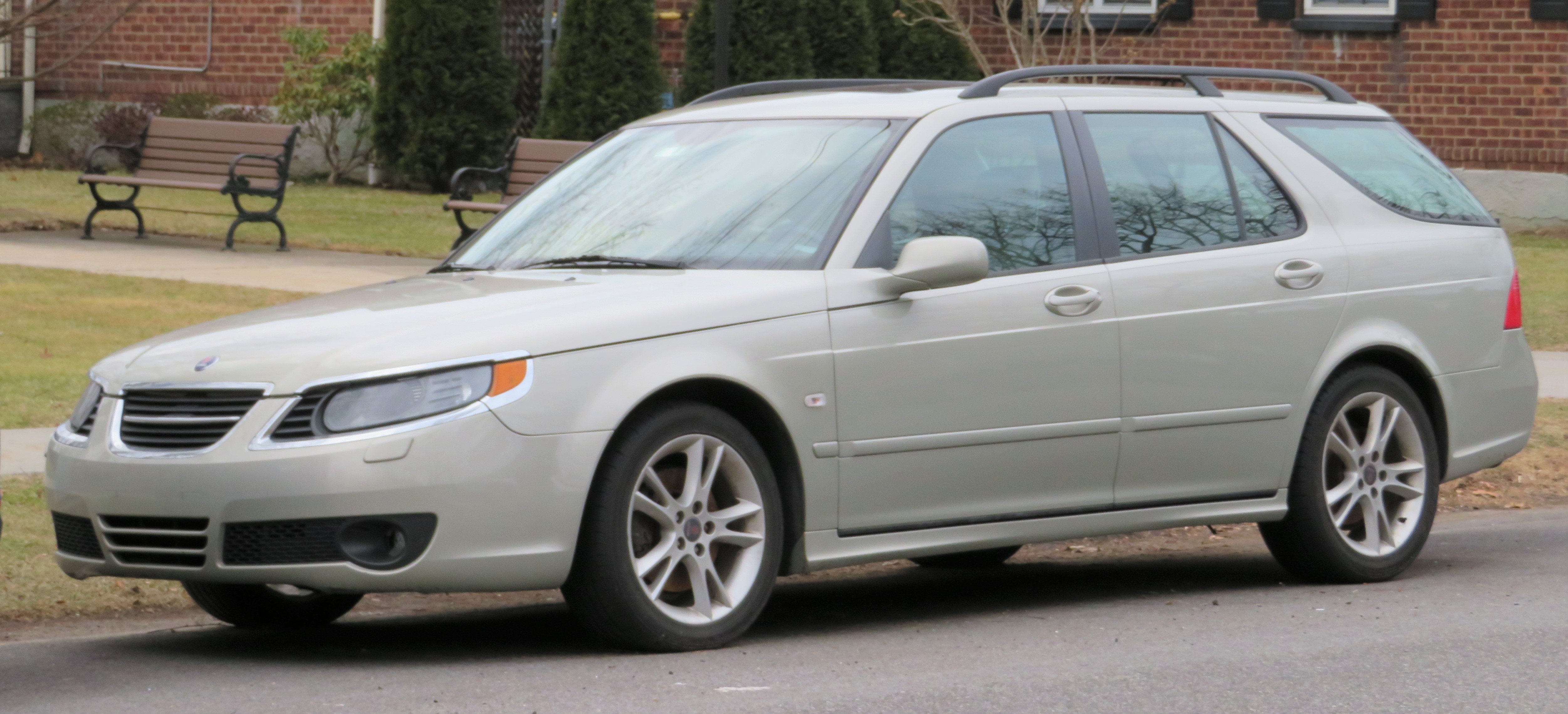
Saab 9-5 wagon
"...and then they had the 9-5 wagon that you could get, like, oh my God, beautiful, beautiful. They are so fun."
The Saab 9-5 wagon is a bigger, more comfortable wagon than the 9-3. In this episode, they’re highlighting that it can be equipped with a turbo, which helps explain why it feels exciting to drive.
The Saab 9-5 wagon is the larger wagon variant in Saab’s lineup, positioned above the 9-3 in size and comfort. The hosts call out that it could be had with a turbo setup, which is a big part of why they describe it as “so fun.”
five-speed
"...They had the 9-3 wagon and because you can get these with a five-speed..."
“Five-speed” means the car has a manual gearbox with five forward gears. More gears can help keep the engine in the right rev range, but a five-speed can still feel great and simple to drive.
A “five-speed” refers to a manual transmission with five forward gears. Gear count matters because it changes how the engine stays in its power band and how relaxed the car feels at highway speeds.
production run ending in a specific model year
"Yeah... So 94 was the last year for the 900. And I know this because one of the cars that is currently stored with the Mustang in that garage is a 94, like commemorative edition 900."
They’re talking about when a car model stops being made—like the last year it was sold. That matters because the final-year cars can include special versions, and they’re often easier to identify when shopping later. It’s basically a timeline clue for collectors and buyers.
The hosts discuss the Saab 900’s “last year” as a way to anchor the model’s timeline (they say 1994 was the final year). This is a useful concept for enthusiasts because model-year cutoffs can affect what you’ll find in the used market—especially special editions and last-of-production cars. It also helps explain why certain years become more memorable or collectible.

Ford Mustang
"...one of the cars that is currently stored with the Mustang in that garage is a 94, like commemorative editio..."
The Ford Mustang is a sporty car made by Ford that’s been around for many decades. A “94” commemorative edition would be a special version from the mid-1990s. People talk about it because it’s a recognizable Mustang and can be interesting to collectors.
The Ford Mustang is a long-running American sports coupe/convertible known for its performance-focused styling and strong enthusiast following. In a podcast context about a garage full of special or older cars, a “94” commemorative-style Mustang would be discussed as a specific, era-defining variant that collectors often seek out. It’s a common reference point for how Mustang generations evolved over time.
facelifted one where they went from the quad headlights to the single headlight
"Was 78 or whatever up until 94, but the facelifted one where they went from the quad headlights to the single headlight."
They’re talking about a styling update where the headlights were redesigned. It’s useful because it helps you tell which years of the car you’re looking at.
This describes a mid-cycle styling update: changing the front lighting layout from four “quad” headlights to a single headlight per side. Facelifts like this often help identify which production years you’re looking at and can affect how collectors value a specific look.
aerodynamic kind of design influence into everything
"well, as we started born from jets, they brought in that aerodynamic kind of design influence into everything and you look at the profile of that."
They’re saying Saab designed these cars with aerodynamics in mind, partly because the company had a background in aircraft. That’s why the car’s shape looks like it’s meant to slice through the air.
Saab’s design philosophy was heavily influenced by aircraft and its jet-era background, emphasizing aerodynamics and airflow shaping. In practice, that shows up in the way the body lines taper and how the car’s profile looks “wind-cut,” not just boxy for packaging.
four cylinder turbo
"And I mean, like they got their, the whole design right with that four cylinder turbo is, I mean, they did that with racing."
A turbocharged four-cylinder is a small engine that uses a turbo to push extra air in. That helps it feel stronger without needing a bigger engine.
A turbocharged four-cylinder uses a turbocharger to force more air into the engine, allowing it to make more power than a naturally aspirated engine of the same size. In Saab’s case, the turbo setup is closely tied to the brand’s performance identity and how they translated rally-style engineering into road cars.
rally racing
"sob is deep, deep roots in rally racing and the sob 900 with that motor"
Rally racing is a type of competition where cars are timed on special stages, often on rough roads. The hosts are saying Saab’s rally experience helped shape how these cars were engineered and tuned.
Rally racing is a motorsport where cars compete on timed stages over public roads and rough surfaces, often emphasizing durability, traction, and drivability. Saab’s rally heritage influenced how the brand approached turbo power and overall vehicle character, which the hosts connect to the Saab 900’s reputation.
old school turbo
"Truly, yeah, you're just in it and you're just spoiling old school turbo like spooling up, you don't know when that that light switch is going to go off."
A “turbo” is an engine that uses exhaust gases to spin a turbine and force more air into the engine. “Old school” turbos often feel like they wait a moment, then suddenly pull hard when boost comes in.
“Old school turbo” usually refers to a turbocharged setup that builds boost more abruptly, often with noticeable turbo spool-up. The driving feel can include a delay before boost arrives, then a sudden surge when it does.
turbo spooling
"Truly, yeah, you're just in it and you're just spoiling old school turbo like spooling up, you don't know when that that light switch is going to go off."
When you press the gas, the turbo doesn’t instantly make boost. It has to spin up first—so there’s a short delay before the car feels like it really takes off.
Turbo spooling is the time it takes for the turbocharger to spin up from low engine speed to the point where it can generate meaningful boost. Drivers often describe this as a “wait” before power arrives.
front wheel drive
"And like, did they really like, they pioneered some like front wheel drive cars and all wheel drive."
Front-wheel drive means the front wheels do the work of moving the car. It can help the car grip better on wet or snowy roads, but it drives differently than cars where the rear wheels pull.
Front-wheel drive (FWD) means the engine’s power is sent to the front wheels. It typically improves packaging and traction in slippery conditions, but it can change handling feel compared with rear-wheel drive.
driver-focused cockpit design
"Right. As we said, like in their design is very much like a cockpit. When you get in it, it's very driver focused."
A driver-focused cockpit is when the car’s interior is arranged so the driver feels in control—like the controls are easy to reach and the gauges are easy to see. It’s meant to make driving feel more connected and engaging.
A “driver-focused cockpit” means the layout and ergonomics are designed around the driver’s controls and sightlines, often with a more performance-oriented feel. This can include steering-wheel placement, instrument visibility, and how the cabin supports active driving.
race car-like ride quality
"And there was just huge emphasis on handling and power and just ride quality for having it basically be like a race car."
“Race car-like ride quality” usually refers to a setup that prioritizes handling response—often firmer suspension tuning, less body roll, and more immediate steering feel. It’s a tradeoff: comfort can be reduced compared with a typical commuter car.
manual
"like I want like a nine, five wagon or a nine, three sport combi with a manual."
A manual is a car where you shift gears yourself using a clutch pedal and a stick. Some drivers like it more because it gives you more control over how the car drives.
A manual transmission requires the driver to select gears using a clutch and gear lever. Enthusiasts often prefer manuals because they offer more direct control of engine speed and can make the car feel more engaging, especially in wagons that are otherwise practical.

Saab 9000
"They've heard the 9000, which was their executive car... Those were 84 to 98. And I had a 90."
The Saab 9000 was Saab’s bigger, more “executive” sedan. It was known for feeling comfortable to drive and for handling that felt more confident than you’d expect from a family car.
The Saab 9000 was Saab’s larger, more executive-oriented model, positioned above the smaller 900. In this segment, the hosts mention it as a “nice driving and nice handling” car and specifically call out production years from 1984 to 1998.

Toyota A90
"Those were 84 to 98. And I had a 90. I was going to say, thousand arrow that was really pretty"
The Toyota Supra is a sports car from Toyota built for speed and driving fun. The “90” mentioned would be from a specific generation made around the late 1980s to the 1990s. People bring it up because it’s a well-known performance model from that time.
The Toyota Supra is a performance sports car that’s especially famous in the 1980s and 1990s for its strong power and driver-focused design. The podcast’s mention of “84 to 98” and a “90” points to the fourth-generation era, which many enthusiasts consider a key period for the model. It’s often discussed because it has a dedicated fan base and a big aftermarket support scene.
tri-spoke wheels
"Yeah, that was a cool car. When, when, oh, the green, it was that you had those black sports seats too. And the, the tri-spoke wheels, just glorious."
Tri-spoke wheels are wheels with three main spokes. They tend to look sporty and distinctive, which is why the host is calling them out as part of the car’s “glorious” style.
Tri-spoke wheels are a wheel design where three main spokes connect the center to the rim. They’re often associated with a sporty, classic look, and in this segment the hosts treat them as a standout visual feature.
wide body stance
"Beautiful car. Yeah. But yes, love those, love those designs. Nice wide body stance. Yeah."
“Wide body stance” means the car looks wider, usually because the fenders or wheel setup make the tires sit farther out. It’s mostly a look, but it often goes along with a sportier vibe.
A “wide body stance” refers to a car visually appearing wider at the fenders, often due to bodywork, flares, or wheel/tire fitment that pushes the tires outward. It’s a styling cue that can also hint at a more performance-oriented setup.
sob mechanic
"And it's, yeah, it's one of these brands where it's just like, you need a sob mechanic. Like you need somebody who knows how to work on these things because they're so, so weird and, and have their own specific things going on, right?"
They’re basically saying you can’t just take these cars to any random shop. You want a mechanic who knows Saabs well, because they have their own special quirks.
The hosts are emphasizing that some Saab models are “weird” in the sense that they have unique systems and quirks, so you need a specialist mechanic who understands them. This is a practical concept for ownership: the right expertise can make maintenance and repairs far easier and less expensive.

Saab 900
"So anyway, those are really my two favorites, the 900 and the 9000. And I've owned both and I just, I really enjoy them."
The Saab 900 is a classic Saab model. The hosts are saying it’s one of their favorites and that they’d love to find one that’s been driven less and kept in good shape.
The Saab 900 is a classic compact from Saab, known for its distinctive styling and engineering quirks. In this episode, it’s discussed as one of the host’s favorite Saabs, with an emphasis on finding low-mile, good-condition examples.
survivor kind of condition
"But some of those ones bring some pretty big money. Yeah. They're, they're getting up there, particularly in low mileage or survivor kind of condition, like unrestored and particularly the turbo models."
“Survivor” means the car is still pretty original and hasn’t been fully restored. People like these because they’re more authentic, and they can be harder to find.
“Survivor” condition means the car is largely original and has not been heavily restored—so it retains its factory look, wear patterns, and components. Collectors often pay a premium for survivors because they’re rarer than cosmetically restored cars.
turbo models
"They're, they're getting up there, particularly in low mileage or survivor kind of condition, like unrestored and particularly the turbo models. I mean, those are the ones that are really"
A turbo model has a turbocharger that helps the engine make more power. The hosts are saying these turbo versions tend to be especially valuable when they’re low-mile and well kept.
“Turbo models” refers to Saab versions equipped with a turbocharger, which boosts engine output by forcing more air into the cylinders. In the used/classic market, turbo variants often command higher prices because they’re more desirable and usually more fun to drive.
model year 2008
"GM there towards the end of its life as a company. I think it's model year like 2008. They made a sport combi turbo X."
They’re talking about the car’s model year—basically the year it was built/sold as. That helps you know which version you’re dealing with, since cars can change from year to year.
“Model year 2008” is used to anchor when Saab produced this specific turbo X sport combi variant. Model-year context matters because production runs, available options, and even corporate/brand circumstances can change over time.
all wheel drive
"They made a sport combi turbo X. Oh yeah, the all wheel drive. The all wheel drive, six speed."
All-wheel drive means the car can send power to more than one set of wheels. That usually helps the car grip better when roads are slippery or uneven.
All-wheel drive (AWD) sends power to more than just the front or rear axle, improving traction—especially on wet, snowy, or uneven surfaces. In a rare performance Saab like the turbo X, AWD is a big part of why it feels confident and “usable” in real-world conditions.
super rare (only 91 imported to the U.S.)
"There's something like less than a hundred. I want to say only 91 that were imported to the U.S. for that year. They are super rare."
They’re saying this version is extremely uncommon in the U.S. When only a small number were imported, it usually means it’s harder to find and can be more expensive to maintain or repair.
The hosts are emphasizing rarity by citing a small number of U.S. imports for that model year. Low production/import numbers often affect pricing, parts availability, and how hard it is to find a specific configuration.

Saab Turbo X
"...re's still a handful, but very, very few of those turbo X and that was like the full all wheel drive system..."
The Saab Turbo X is a rare, performance-focused Saab with a turbo engine. It also uses all-wheel drive, which helps the car put power to the road in more conditions. People talk about it because it’s uncommon and built for strong driving.
The Saab Turbo X is a special, high-performance Saab model built around a turbocharged engine and an advanced all-wheel-drive system. The podcast emphasizes that it’s rare (“very, very few”) and notes that it uses a full all-wheel-drive setup, which is a big part of its character. It’s discussed because it’s an uncommon halo car that blends Saab’s distinctive engineering with serious performance capability.

Volvo V70
"That is just like one of those pinnacle fast wagons. I mean, that thing's up there with the V 70 R. I mean, it's the same era that those two cars came out."
The Volvo V70 is a wagon, meaning it has extra cargo space compared with a typical sedan. Some versions of the V70 were made to be quicker and more exciting to drive. The podcast mentions it because it’s part of a generation of faster Volvo wagons.
The Volvo V70 is a practical wagon from Volvo, known for combining everyday usability with a more performance-capable lineup in certain trims. The podcast calls it a “pinnacle fast wagon” and links it to the same era as the V70 R, highlighting how the V70 family could be tuned for stronger performance. It’s discussed because it represents a period when Volvo offered enthusiast-oriented wagons, not just commuter cars.
Haldex
"[649.8s] Oh yeah, same all wheel drive system. [651.7s] Yes. So yeah, Haldex. Yeah, that's right."
Haldex refers to a clutch-based all-wheel-drive system used on many vehicles, where power is sent to the rear (or front) as traction demands. It’s designed to be efficient for everyday driving while still providing grip when conditions get slippery.
hood pivots forward (jet-fuselage style)
"[672.3s] I mean, just that I love that the hood pivots forward. [676.6s] Oh, yeah, it's the best. [677.6s] That's that's one of my favorite features that I mean, again, [681.4s] another subcourt that they're like, oh, it's just like it literally [684.5s] like opens forward like a jet fuselage."
The hood on this Saab style opens in a special way—pivoting forward instead of lifting straight up. The hosts think it’s really cool because it looks and feels different from most cars.
Some Saab models use a hood design that pivots forward, giving the engine bay access a distinctive “front-hinged” look. The hosts compare it to a jet fuselage opening, emphasizing how unusual and visually satisfying the feature is.

Saab 9-7X
"like the nine seven X or nine seven nine seven X. Yes. Well, was it was the nine three X the Subaru knockoff? Oh, yeah. Oh, right. The the nine two X was a Subaru"
The Saab 9-7X is Saab’s SUV. It’s a bit unusual because it shares a lot with other GM vehicles, so it doesn’t drive or feel exactly like the older Saab sedans and coupes.
The Saab 9-7X is Saab’s SUV offering, and it’s notable for being built on General Motors platforms rather than being a purely “Saab-designed” vehicle. In this segment, the hosts connect it to GM engines and power output, which helps explain why it feels different from classic Saab cars.

Saab 9-3X
"Well, was it was the nine three X the Subaru knockoff? Oh, yeah. Oh, right. The the nine two X was a Subaru"
The Saab 9-3X is a Saab model that, in this conversation, gets compared to Subaru. The point is that it was built in a way that feels similar to Subaru’s AWD performance cars.
The Saab 9-3X is described here as a “Subaru knockoff,” which points to its shared design/packaging ideas with Subaru’s AWD performance segment. The key takeaway is that Saab’s niche models in this era were heavily influenced by partnerships and shared components rather than being standalone designs.
Platform sharing / badge engineering
"Well, was it was the nine three X the Subaru knockoff? Oh, yeah. Oh, right. The the nine two X was a Subaru WRX wearing a sob suit. ... And then even weirder is the sob nine four X, which was built off of the Cadillac SRX."
The hosts are talking about how some cars are built using the same underlying design as other brands. That’s why parts can be shared and why the cars can feel similar even though the badges are different.
Throughout this segment, the hosts describe Saab models as “Subaru knockoffs” and “built off” other GM vehicles, which is essentially platform sharing or badge engineering. This concept explains why parts interchangeability and driving characteristics can differ from classic, more uniquely engineered Saab models.

Saab 9-2X
"Oh, right. The the nine two X was a Subaru WRX wearing a sob suit. And those things are very cool little cars."
The Saab 9-2X is basically a Saab version of a Subaru WRX. Because of that, many parts are shared, so it’s easier to maintain or customize using Subaru components.
The Saab 9-2X is closely related to the Subaru WRX platform, which is why the hosts call it a “Subaru knockoff.” The segment emphasizes that you can use Subaru parts and interchange components, reflecting how Saab’s late-era models were built with Subaru engineering and parts commonality.

Subaru WRX STI
"And if you got the arrow that had WRX STI bits on it. So basically, for those of you who don't know, if you buy a sob nine two X, it's a Subaru WRX"
The Subaru WRX STI is a high-performance version of the WRX. In this story, they’re saying you can use STI performance parts on the Saab 9-2X because the cars are closely related.
The Subaru WRX STI is Subaru’s performance-focused WRX variant, known for rally-bred all-wheel-drive and stronger drivetrain components. Here, the hosts mention “WRX STI bits,” meaning you can fit STI-style performance parts onto the Saab 9-2X because of the shared Subaru underpinnings.

Cadillac Srx
"And then even weirder is the sob nine four X, which was built off of the Cadillac SRX."
The Cadillac SRX is mentioned because the Saab 9-4X was built from it. When one car is based on another, they often share major parts, which can help with maintenance.
The Cadillac SRX is referenced as the base for the Saab 9-4X, indicating platform and component sharing between the two brands. When a car is built off another model’s platform, it typically means shared suspension/structure and easier cross-referencing for parts.

Saab 9-4X
"If you look this thing up, it's a sob nine four X... It was like alongside the SRX and it is... It was February 2010."
The Saab 9-4X is a Saab SUV/crossover. It’s remembered as a rare model from the brand’s final years, so you don’t see many of them today.
The Saab 9-4X is a crossover SUV built by Saab, and it’s notable for being a rare, late-era model. In this segment, the hosts connect it to Saab’s shutdown timeline and limited production, which is why it’s so uncommon to see on the road.
Spiker cars
"GM sold sob automobile to Spiker cars. Oh, I forgot about that."
Spiker Cars is mentioned as the company that Saab’s car business was sold to. When a car brand gets sold like that, it often changes (or ends) production, which is why you don’t see many of those cars.
Spiker Cars is referenced as the buyer of Saab’s automobile business after GM’s shutdown. This kind of ownership transfer is important historically because it affects whether a brand can continue building cars and how quickly production ends.
original window sticker
"[876.1s] he had a nineteen ninety three sob nine hundred [881.2s] and it actually had the original window sticker in it. [884.2s] It was a turbo was a manual and it was a convertible"
The original window sticker is the paper that shows what the car cost new and what options it had. If you still have it, it’s useful because it proves how the car was originally built and priced.
An original window sticker (often called the Monroney label) is the manufacturer’s pricing and option sheet that was displayed on the car when it was new. Having it is valuable because it documents the car’s original MSRP and factory configuration, which helps verify authenticity and collectability.

Chevy Corsica
"[901.7s] Right. That was definitely not a cheap car back in the day. [906.1s] So I mean, you could go buy a Chevy Corsica for eighty two hundred dollars. [911.2s] So they got thrown it back to the Corsica"
They mention the Chevrolet Corsica as a cheaper alternative you could buy for much less money. The point is to show that the Saab 900 wasn’t a bargain—it cost more because it was more “upscale” for the time.
The Chevrolet Corsica is being used as a price comparison point—suggesting that, in that era, you could buy a much cheaper mainstream car for far less than a Saab 900. This highlights how the Saab 900 could be positioned as a more premium, optioned product even when it was still a compact.
options were extremely limited
"[929.2s] appreciated about sob was when you went and bought one of their cars, [934.5s] the options were extremely limited because they all came with leather [940.0s] heated seats"
They’re saying Saab didn’t make you pick from a huge menu of options. Instead, many cars came with a lot of luxury features already included, so you didn’t have to hunt for the right combination.
This refers to how some manufacturers offered fewer trim/option combinations, resulting in cars that were “ready to go” with a consistent baseline of features. In the Saab 900 story, the hosts emphasize that buyers often got leather, heated seats, and other luxury items without having to custom-order much.
heated seats
"[934.5s] the options were extremely limited because they all came with leather [940.0s] heated seats, you know, I mean, the options just"
Heated seats are seats with built-in warming elements. You can turn them on to make cold weather driving more comfortable.
Heated seats use electrical heating elements to warm the seat cushions and sometimes the backrests. In older luxury-oriented cars like these Saab stories, heated seats were a common “must-have” comfort feature that helped justify the car’s premium positioning.
leather
"[934.5s] the options were extremely limited because they all came with leather [940.0s] heated seats, you know, I mean, the options just"
Leather is a nicer-looking and more premium material used for seats. In this story, it’s mentioned because Saab cars often came with leather without needing to add lots of options.
Leather upholstery is a premium interior material that typically costs more than cloth and is often associated with higher trim levels. The hosts mention leather as part of Saab’s limited-option strategy—meaning many cars were “well appointed” from the factory.
rims
"[940.0s] heated seats, you know, I mean, the options just they were full dressers. [945.4s] Like, I mean, you might get a different stereo, you might get different rims, [948.8s] but they were just ready to go"
Rims are the wheels on the car. Different trims can have different rim designs, even if the rest of the car is pretty similar.
“Rims” refers to the wheel design (the wheel face and finish), which can vary by trim or option package. The hosts suggest that while Saab limited major options, buyers might still see differences like wheel choices.
tracking down parts
"because not everybody can work on a sob and you have to track down parts and everything like that. So it's a commitment to be sure."
“Tracking down parts” means hunting for the exact replacement pieces your car needs. For older or less common cars, that can take extra time because the parts aren’t always easy to find.
“Tracking down parts” refers to the process of locating specific replacement components for older or less-supported cars. With discontinued brands like Saab, parts may require searching specialty suppliers, used parts, or import channels, which increases ownership effort.
commitment to be sure
"So it's a commitment to be sure. And I always smile to know that there are some people out there still keeping these cars on the road and and still going."
This is the idea that owning and maintaining a niche or discontinued car brand is a long-term commitment. It often involves learning the car’s quirks, budgeting for harder-to-find parts, and relying on specialists for repairs.
auction cars
"Yeah, I see any go through the the auctions. I will always look at what they are and even bid on them most of the time because I know how to work on them. And as long as they aren't rusty, I mean, they're great little cars."
Auction cars are vehicles sold at bidding events. They can be cheaper, but you have to be careful because you might not know the car’s real condition until you inspect it.
Buying cars at auctions is a common route for enthusiasts because it can surface rare models and project cars at lower prices than retail. The tradeoff is that auction listings often don’t tell the full story, so condition checks (like rust) become critical.
rusty (rust condition)
"because I know how to work on them. And as long as they aren't rusty, I mean, they're great little cars. It just didn't take off or maybe they were too much money."
Rust is one of the biggest deal-breakers when buying older cars because it can mean structural damage and expensive repairs. When hosts say “as long as they aren’t rusty,” they’re signaling they’re filtering for cars worth restoring or keeping long-term.
Craigslist find
"Well, that makes for a good transition into the Craigslist find. Oh, there you go. And I do have a couple for us. All right."
A “Craigslist find” just means they found a car listing on Craigslist. The fun part is figuring out if it’s a good deal or a potential project.
A “Craigslist find” refers to a used-car discovery from Craigslist, often with an emphasis on hunting for value, unusual models, or projects. In enthusiast podcasts, these segments usually focus on what the seller listed, what the hosts checked, and whether the car is a good deal.
survivor car
"True survivor adult... Oh, 1985 sob 900 turbo five speed... it is only a two owner car does look to be very, very straight and in good condition overall."
A “survivor” car is basically a well-preserved older car that hasn’t been heavily changed. People like them because they still feel close to how they were when new.
A “survivor” car is one that has lived a relatively original life—typically with minimal modifications and good preservation of its factory condition. In enthusiast circles, survivor status often matters because it can make the car more historically authentic and potentially more valuable.
garage stored
"This one really drew me in because, yeah, it is according to the listing. Anyway, it's been garage stored."
“Garage stored” means it was kept inside, not outside in the weather. That usually helps the car stay cleaner and helps prevent rust and deterioration.
“Garage stored” means the car spent most of its life protected from weather exposure, which can reduce corrosion and wear compared with outdoor storage. For older cars, storage conditions can be a major clue about how well the body and interior have aged.
two owner car
"It is only a two owner car does look to be very, very straight and in good condition overall."
A “two owner car” means only two people have owned it. That can be a good sign because it often means the car was cared for and there’s a clearer history.
A “two owner car” indicates relatively limited ownership history, which can be a positive sign for documentation, maintenance continuity, and overall care. While not a guarantee, fewer owners often correlates with better preservation for enthusiast-targeted models.
140,000 miles
"So I love that 140,000 miles. Really, yeah, factory sunroof and air conditioning."
They mention the car has 140,000 miles. High mileage doesn’t automatically mean it’s bad—if it was maintained well, it can still be a good buy.
“140,000 miles” is the odometer reading, and the hosts treat it as a positive because the car still looks well kept. For older cars, mileage alone doesn’t determine condition—maintenance quality and originality matter more.
factory sunroof
"Really, yeah, factory sunroof and air conditioning. It's well equipped as we talked about sobs are."
A “factory sunroof” means the car came with the sunroof from the factory. That usually means it’s installed cleanly and is less likely to have weird fit or leak problems than an add-on.
“Factory sunroof” means the sunroof was installed by the manufacturer, not added later. Factory-installed options are generally better integrated (fit, wiring, seals) and can be more reliable than aftermarket conversions.
air conditioning
"Really, yeah, factory sunroof and air conditioning. It's well equipped as we talked about sobs are."
Air conditioning is the system that cools the cabin. On older cars, working A/C is a good sign the car has been cared for.
Air conditioning (A/C) is a major comfort feature, and on older cars it’s also a useful “condition check” item. If the A/C works properly, it often indicates the car has been maintained rather than neglected.
cloth seats
"Yeah, I like it's got the cloth seats. You don't see that very often. Yeah, you know, that drew me in as well."
They’re pointing out the car has cloth seats. Some people like cloth because it can be comfortable and doesn’t get as hot or as expensive to maintain as leather.
Cloth seats are a trim/material choice that can be less common on certain older models compared with leather. Enthusiasts may prefer cloth for comfort, wear characteristics, and lower cost to maintain or replace.
repainted hood and trunk
"Looks like it's definitely been waxed and stuff. I mean, maybe the hood and trunk have been repainted. I can't tell, but it does look good."
They think the hood and trunk might have been repainted. That can be normal, but it can also mean the car was repaired or touched up—so it’s smart to look closely for signs of bodywork.
The hosts speculate the hood and trunk may have been repainted, which can happen for cosmetic refreshes or after minor damage. Paintwork isn’t automatically bad, but mismatched panels can be a clue to past repairs, so it’s worth checking for overspray and panel alignment.
original 85 sob
"Looks like a very original 85 sob that has not been treated poorly in any way, shape or form. Not bad, not bad."
The hosts emphasize that the Saab 9000 appears “original” and “not treated poorly,” meaning it likely hasn’t been heavily modified or cosmetically abused. For classic cars, originality often correlates with better long-term value and fewer hidden issues.
towed unsafe to drive
"Two thousand seven sob nine three sport combi six speed manual must be towed unsafe to drive. Well, I you had me going for a bit. And then so I have to get this thing towed."
If a car is “unsafe to drive,” it often means something is seriously wrong. Getting it towed helps avoid making the damage worse while you figure out what the problem is.
When a listing says “must be towed” or “unsafe to drive,” it usually indicates a fault severe enough that driving could worsen the problem or create a safety risk. For buyers, this is a clue that the car may need diagnostics (often scan tools for fault codes) before attempting repairs or test drives.
limp mode
"Right. So this person says it's in limp mode because it's not running right."
Limp mode is when the car “puts itself in a safe mode.” It reduces power so you can drive carefully to get it checked, usually because something important is wrong.
“Limp mode” is a protective strategy where the car limits power and sometimes certain functions to prevent further damage when it detects a serious fault. It’s often triggered by issues in the engine management system, turbo/boost control, or sensors, and it can make the car feel like it’s not running right.
limited-edition rarity claims
"Only 15 of this color combination and model were imported to this country. Two thousand dollars firm. So I don't know if there's any validity to that, how rare this car is."
They’re talking about a claim that only a very small number of these cars exist. Sometimes sellers exaggerate rarity, so it’s smart to double-check before assuming the price is justified.
The hosts question a seller’s claim that only a tiny number of a specific color/trim combination were imported. In collector car buying, rarity claims can be true, but they’re often overstated—so it’s important to verify with records (build sheets, import docs, production data) before paying a premium.
six speed
"And here's a sob sport combi and it is of six speed."
“Six speed” means the car has six gears. That can help the engine run more smoothly and efficiently depending on how fast you’re going.
“Six speed” refers to a six-gear transmission, typically meaning the car has six forward ratios. More gears can help keep the engine in its best power/efficiency range depending on speed and driving style.
parts car
"Yeah, even if I had to put a motor in it, it'd still be worth it at two grand."
A “parts car” is a vehicle you buy mainly to take useful pieces from it. Even if the car itself isn’t great, the parts can still be worth the money.
The idea of paying for a damaged or incomplete car “even if I had to put a motor in it” is a common parts-car strategy. You buy it cheaply because you plan to harvest usable components (or use it as a donor) rather than restore it as-is.
salvage title
"As it says, must be towed unsafe to drive. Hey, you know, they were at least they're being upfront about it."
If a car is described as unsafe to drive and has to be towed, it usually means it’s not road-ready. Sometimes it’s also tied to paperwork like a salvage status, which can affect what you can do with the car.
When a listing says a car “must be towed” or is “unsafe to drive,” it often points to a salvage or non-roadworthy status. That usually means the vehicle has significant damage or a serious mechanical issue, and it may require repairs and inspections before it can be legally driven.
Vice Grip Garage
"That's why I always love whenever I see, you know, Derek Bieri there, vice grip garage. That's right. Something with no brakes or just dumping gas down the carburetor."
Vice Grip Garage is a popular car-repair YouTube channel. They often take neglected or broken cars and figure out how to get them running again.
Vice Grip Garage is a well-known YouTube channel focused on buying cheap, often broken vehicles and reviving them through hands-on repairs. The hosts reference it as an example of finding solutions for cars that look too far gone.
carburetor
"Something with no brakes or just dumping gas down the carburetor. That's right. Good man."
A carburetor is part of older engines that helps mix fuel with air. If you pour gas into it, you’re basically trying to feed the engine directly so it can start.
A carburetor mixes fuel and air before it enters the engine. When someone talks about “dumping gas down the carburetor,” they’re describing a quick way to get an engine to run (or at least attempt to run) by bypassing normal fuel delivery.
GM era
"[1465.4s] than the GM era of 07 [1468.9s] towards the tail end of sobs."
“GM era” means the time when Saab was under General Motors ownership. People use it to describe how the cars changed during that ownership period.
“GM era” refers to the period when Saab was owned by General Motors, which influenced engineering decisions, platforms, and parts sourcing. In enthusiast talk, it often comes up when comparing cars built before and after GM’s involvement.
Request an Explanation
Heard something you'd like explained? We'll add it to this episode.
Sign in to request explanations for terms you heard.
Want to learn more?
Browse our glossary for plain-English explanations of automotive terms, jargon, and concepts.
Help improve this episode
See something that's not quite right? Our annotations are AI-generated and can sometimes miss the mark. Click the flag icon on any annotation to suggest a correction.