The first Prius generation had a screen that showed what the car was doing with energy. As you speed up, slow down, or cruise, the display changes to show whether the battery is helping or being charged.
Term
battery wheels
It’s basically the Prius’ way of showing whether the battery is powering the wheels. When the display indicates the battery is doing the work, the car is using electricity to move you.
The Tesla Model S is an electric car that doesn’t use gasoline. It has a big screen inside that controls many functions. The podcast is pointing out that the earliest versions had the screen placed in the center, and later versions changed that layout.
Regenerative braking is how an electric car recovers energy when you slow down. It turns some of the car’s motion into electricity to recharge the battery instead of wasting it as heat.
Term
regen display
A regen display shows when the car is slowing down by turning motion back into electricity. It helps you see how strongly the car is “braking” and charging at the same time.
“Power walls” are Tesla home batteries. They store electricity from your solar panels so you can use it later, including for charging your electric car.
“Range estimates” are the predicted distance an EV can go on one charge. In real life, the actual distance can be more or less depending on how you drive and the weather.
A “nominal figure” is the official number someone quotes for battery size. Your car’s usable battery energy can be a bit different from that headline number.
“F 3000” sounds like the model number of the portable battery/solar kit the speaker purchased. It’s the specific unit they’re talking about when they mention the battery capacity and solar charging.
LFP batteries are a type of lithium battery that uses iron and phosphate. People like them because they tend to last a long time and are generally considered safer than some other lithium battery types.
A solar panel converts sunlight into electricity using photovoltaic cells. In this context, it’s used to recharge a portable battery during the day when it’s sunny.
An induction burner cooks by using magnetism to heat the pot or pan directly. It’s popular for camping because it can be powered from a battery setup and heats efficiently.
A “virtual power wall” is a way to use your home battery as part of the power grid. It can send stored electricity back to the utility when it’s needed.
Concept
kicking money back to the grid
This means your system can send extra electricity to the utility company, and you get paid or credited for it. It’s like selling your surplus power back to the grid.
The Porsche 928 is an older Porsche grand-touring car—basically a comfortable, long-distance coupe with a V8 engine. Here they’re talking about their specific 1984 928 and how they just had the air conditioning repaired so it’s nicer to drive again.
Air conditioning is the system that cools the car’s cabin and helps keep the windows from fogging. If it’s broken on an older car, getting it fixed can make the car much more pleasant to drive.
Deadheading means the car drives while nobody is inside. It’s basically repositioning to get to the next customer, and those miles cost money but don’t earn money.
Zero occupant miles are miles driven with nobody in the car. If a lot of miles are like that, the service may be less profitable because it’s spending time and energy without carrying customers.
Term
S1
“S1” here sounds like a particular version of the autonomous system or vehicle. The speaker is saying that once it’s released, we’ll be able to see how the business really works financially.
Concept
economics
Here “economics” means whether the autonomous service makes money. It’s not just about how many rides they claim—it’s about the real costs versus the real income.
An IPO is when a private company becomes publicly traded by selling shares to regular investors. The speaker thinks they might delay that until they have clearer numbers on costs.
“Level four” means the car can handle driving on its own in certain situations. “Safety metrics” are the numbers and tests used to prove how safe it is.
“Race to efficiency” means companies compete to spend less and get more output from their vehicles. The speaker compares it to airlines, where the big competition becomes cost and how well you run the operation.
Phoenix is a city in Arizona. The hosts mention it because Waymo has used its self-driving service there, so the cost and operations talk is grounded in a real location.
Profit margin is how much money is left over after you pay the costs to run something. The host is saying that after covering operating costs, there’s still some leftover profit.
A counterfactual is like asking “what if this hadn’t happened?” In safety debates, it’s tricky because you can’t directly observe the alternate outcome, so the argument can be used in different ways.
Autopilot is a car feature that can help drive for you, like keeping speed and steering. It’s helpful, but it still isn’t the same as a car that can drive by itself without you paying attention.
This “Elon” is Elon Musk. He’s been talking publicly about how to judge safety claims for advanced driver-assistance features, and whether you should count benefits or focus on how people use the system.
Waymo is a company that works on self-driving technology. The discussion here is about how people judge its safety claims and why that affects its reputation.
A computational model is basically a computer simulation or prediction tool. In this discussion, it’s about using software to argue that a self-driving system can do better than people, and whether those arguments could backfire.
The speaker is talking about how people’s fears can be out of proportion. Something can feel scary (like shark attacks) even if it’s not the biggest real danger.
AVs are cars that can drive themselves using cameras, sensors, and computers. The idea is that as more AVs are on the road, people may learn to judge their safety differently over time.
“Freeway rides” means the self-driving service is operating on a highway. Highways are harder for driverless cars because things move faster and there are more tricky situations like merges and construction.
Cones are the orange markers used in road construction to show drivers where lanes are closed. Self-driving cars have to understand those zones correctly, and if they’re unsure, they may act more cautiously or avoid the area.
Term
construction
“Construction” means the road is being worked on, so lanes and traffic flow can change. Driverless cars may find those zones harder, so the company might pull back to avoid problems.
An “envelope” here means the range of situations where the self-driving system is confident it can handle things well. If the conditions are outside that range, the company may pause service until it’s improved.
“Customer experience” means what the rider feels during the trip—like whether the ride is smooth and predictable. The host is saying Waymo might pause service until the ride consistently feels great to most people.
Uber CTO means Uber’s top technology executive. The speaker brings it up because that person posted a video showing what they consider an aggressive driving move, which is notable because Uber and Waymo are partners.
“Wrong lane” means the car is in a lane it shouldn’t be in for where it’s going. For self-driving cars, that’s a big deal because it can confuse other drivers and create unsafe situations.
Term
cruise vehicles
Cruise vehicles are self-driving cars from a company called Cruise. The speaker is saying that when these cars behaved a certain way, other drivers sometimes got annoyed and drove more aggressively around them.
Concept
balance between not holding up traffic and creating unsafe conditions
This describes a core challenge in autonomous driving: finding the right behavior that keeps traffic moving without triggering risky reactions from human drivers. If an autonomous vehicle is too conservative, people may pass aggressively; if it’s too assertive, it can directly increase risk—so the system has to avoid a “pendulum swing” in either direction.
A fully driverless vehicle is a car that drives itself without a person ready to take control. The speaker is reacting to how different it feels when you’ve never ridden in one at highway speeds.
Lucid is an electric-car company. The hosts mention it because there’s important news about people leaving the company, which can affect how the company builds and plans its cars.
An electric motor is the main power unit in an EV. It uses electricity from the battery to spin and move the car, and more efficient motors can help the car travel farther.
LiDAR is a sensor that uses lasers to measure how far away things are. It helps self-driving systems “see” the world in 3D so they can understand where cars, pedestrians, and obstacles are.
“L three” means Level 3 self-driving. The car can do a lot of the driving in specific situations, but the driver still has to be ready to take over when the system asks.
This means they’re testing the self-driving system as a whole, across different parts of the car’s computer system. Instead of checking one feature at a time, they verify that perception, decision-making, and driving control all work together.
Term
sensors were not like fully integrated
“Fully integrated” sensors means the hardware and software are tightly connected so the vehicle can fuse sensor data reliably and consistently. When sensors aren’t fully integrated, it often indicates a prototype stage where the system may not yet be optimized for real-world performance.
Self-driving vehicles are cars that can steer, accelerate, and brake using sensors and computer software. Some systems still need a human to supervise, while others aim to drive on their own.
Fully driverless rides are trips where there isn’t a person sitting in the driver’s seat. The car is expected to handle driving by itself, which is harder than just having driver-assist features.
Term
AV
AV means autonomous vehicle—basically a car that drives itself using sensors and software. The discussion is about whether that kind of driving will be available to the public soon.
Wave is a self-driving ride service the host has taken. They say you can change the route during the trip and that the ride feels very smooth, similar to what they associate with Tesla’s advanced driving software.
FSD stands for Full Self-Driving, Tesla’s software for helping the car drive more on its own. Here, the host is saying Wave’s ride experience felt similar to what they associate with Tesla’s advanced driving behavior.
A robotaxi is a taxi that drives itself. The discussion here is about when companies will start offering these rides and whether someone will still be in the car to watch and take over if needed.
Term
safety wheel
The “safety wheel” means a person is still in the driver’s seat with the ability to take control. The host is saying that companies may not fully remove humans yet.
Term
electrons
Electrons are the tiny charged particles that make electricity work. When the host says “electrons are moving,” they mean the electrical energy is actually flowing.
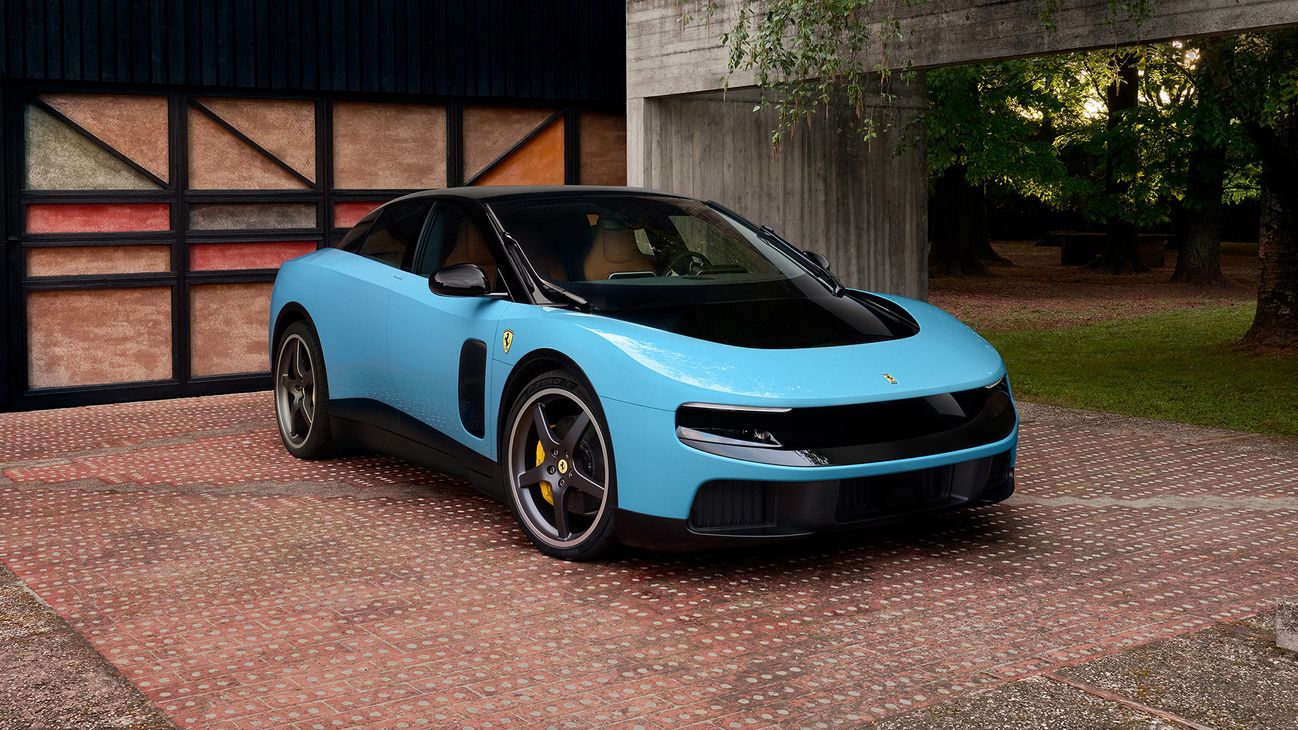
The Ferrari Luce is a Ferrari car, meaning it’s a high-performance vehicle made by Ferrari. The podcast is saying it’s expected to be very popular in parts of Asia and may sell out quickly. That usually means there aren’t many available cars for everyone who wants one.
LIVE
What could be more important than making Elon Musk's life easier?
Really? Yeah, yeah.
I love, well, he is improving the future of humanity, Edward.
You have the, you have such a dry sense of humor, Alex.
I love it. That's what I love about you.
I, I, I believe, I believe in Elon.
Hello, and welcome to the Atonicast.
I'm Kirsten Gorosek, transportation editor at TechCrunch.
And I'm Ed Niedermeyer.
I'm the author of Ludacris, the Unvarnished Story of Tesla Motors,
and Elon Take the Wheel, which is now available for pre-order out December 1st.
And I'm Alex Roy, the co-founder and general partner in New Industry Venture Capital
and the founder of the Human Driving Association,
which is making a huge comeback soon.
But more importantly, I have a question for you.
I'm excited for that.
You keep, you've, you've hyped that a couple of times now,
but you've told us absolutely nothing.
We'll know.
I still have my Human Driving Association t-shirt somewhere.
They still sell, Bob.
I get emails from people from time to time.
Like, wow, this is, this shirt's really changed my life.
Kind of like the three-wolf shirt.
Remember the three-wolf shirt back of the day?
Ah, yes.
Very much so.
It's like that.
It's like, it's like that for cars now.
But more important, Kirsten, I'm getting a sense that you might be less than high energy today.
Is it, is it hot in Tucson?
Well, you live in Arizona too, my friend.
So you tell me, it's hotter where you are than I am.
How is your energy level right now?
I'm in a post-SpaceX IPO energy level.
It's been a long, a long week if you've been, if you've been following the SpaceX IPO.
Oh, speak.
Well, because when I want to talk about energy, can you see that?
That's my Tesla Solar app display.
You see that beautiful.
Oh, yes, I do see it.
You see the animation.
You're generating, you're generating.
OK, so here's a question for you.
You got, you got the Tesla Solar.
Did you do those titles?
Do those titles exist?
I don't have the tiles.
OK, do the tiles actually exist anymore?
I don't know.
I don't know.
So no.
There is a house in my neighborhood that has the tiles.
Do they work?
I don't know.
I haven't, like, the owners have like a fence around it and like, they're not,
they're not the most neighborly of neighbors.
So I haven't had the chance to talk to them yet, but it does technically exist.
But OK.
So I've been thinking hard about your history of Ed's life and about how obsessed he is with Tesla.
And I was thinking, who was the first automaker to create a display
that one wanted to stare at while driving unnecessarily?
And it wasn't Tesla.
It was a Gen 1 Toyota Prius, which had the display which showed battery wheels
and, you know, engine.
And you can see the arrows change direction based on, you know,
acceleration, deceleration and cruising.
I was so obsessed with it and I love the car.
But that wasn't unnecessary.
I mean, that was it was and I mean, I don't know.
You're right, though.
You're right. I'm telling you, it was purely for entertainment
and internal monologue.
No, absolutely not.
No, no, no, no, no.
Alex, Alex, back then the idea of like a drivetrain that that that split
between electric and gas was very it was a jarring.
Like it it there was a genuine like consumer education challenge with that
and and that visual education while driving was not the safest way
to do it. And I and I really enjoyed it.
Now, let's fast forward to 20.
I think we should just blame Toyota for setting, you know, like I mean,
they're like, yeah, for a sudden distraction.
It was the the proto the proto Tesla.
If we know anything, we know that Elon Musk was greatly influenced
by Toyota and its choices.
I mean, do you guys remember you guys are both old enough to remember
the times when like when like Larry and Sergey drove around in Priuses?
Like that was like and like the Hollywood people drove.
Like that was like there was a brief moment there where like,
I don't know, a better world was possible.
Anyway, continue.
You know, you know, your your research would have been better
if you owned a Tesla all these years.
But let me tell you something.
You may have forgotten the first generation Model S had the center of the display
instead of its commuter was that regent was a regen display
with all kinds of metrics and what yada yada.
But if you get a Tesla now, all that's gone.
There's just a thin green bar that turns yellow.
And it's almost impossible to see at all at any point.
And so I was like, you know, I was thinking about, you know, this is this
makes sense because it's such a distraction.
Well, last week I got Tesla solar installed at home.
The whole thing, four power walls, maximum, you know, panels on the roof.
Integration with my charging system.
And I have this app and now I can't sleep because all I do is stare at it all night long.
How's my regen doing?
It is it.
I don't even know how I'm doing.
I don't even know if it's saving me money, but it is absolutely obsessive
to stare at the screen.
So basically, it sounds like you need a hobby, man.
Yeah, you want to like, do you want to get into like tennis?
Maybe you're like.
So now I'm going to share with you my like explosive insight into into Tesla.
So you remember how like how many years people, but mostly you.
We're trying to figure out exactly what the range is on a Tesla.
Because you know what the key, you know, the battery pack is, but like the range
estimates never, you know, really would never line up and all the.
You didn't even know what the battery pack was.
There was always like a nominal figure and the actual capacity was not the same as the nominal.
Anyway, continue.
All right.
So now I've got these four power walls.
OK, so actually three power walls and an expansion pack and it's installed.
And then it's the turn on and then it does some balancing for a few hours and then it's ready.
And so I'm trying to look at the app and nowhere in the app can I do I really see
actually how much capacity I have.
And so I go and chat to VT and Claude, actually, I go and Jen spark AI,
which is like an LLM aggregator.
And I'm like asking all the LLMs, please explain to me what I'm seeing in the app.
And you can't, you can't actually, there's no simple way.
There's a lot of data, but not a lot of clarity.
And I think I'm a pretty smart guy.
I'm going to get so much hate mail after this episode.
Anyway, I I'm pretty sure I'm at least breaking even on the system.
But mostly I'm just I can't sleep because I love looking at the animation.
I love what you don't know.
Moving around. I don't know.
It's the ultimate Elon Musk company experience.
Yes, it is the economics.
No, no, the vibe feels economically like sustainable, but like either way, it's fun.
I can tell you this, I did go into off grid mode
and for two days and it was great.
It was great.
And so this is I'm fully bought in.
I'm fully bought in solar.
Four power walls, my friend.
That is you are.
I don't know what your power I made a recent investment
in some in solar and batteries myself in a slightly different scale.
But I'm actually very happy with it so far.
Did you get a watch in a solar powered watch?
No, no, I've got a company called Pekron.
You can buy it. It's crazy.
The prices on batteries now.
So I got it's called the the F 3000 is not sponsored.
But it's incredible for 800 bucks.
You can get three kilowatt hours of LFP batteries, which is a lot.
It used to be about thousand bucks for for about one kilowatt hour.
Like, I know a lot of people bought a similar.
And as you get three kilowatt hours in like a portable thing
and I got a 300 watt solar panel.
So I could pretty much charge this three kilowatt hour battery
like during the day if it's if it's sunny.
So I have a little like induction burner.
Our buddy, Josh Hartman, former
longtime listeners of the show may remember Josh Hartman.
We've gone truck camping a bunch and he had a sort of somewhat
he had a battery and he had an induction cooker on the back of his
of his pickup when when we were we were camping.
And I was like, that's so cool. I need to do that.
So anyway, I've finally done it.
I've got I've got like a solar little portable.
So what are you using this for?
So it's a mix. So so one is for emergencies, you know, and again,
like we're not going to be able to run our whole house.
But like but like we do lose our power, you know, for for for some amount of time.
And this will keep, you know, the fridge going and and actually we can run the
our furnace is natural gas stove so we can run the blower for the furnace
and actually have central heat if we need it. Right.
But like my my investment in this is under $1,500, Alex, for solar and battery.
Edward, but does the Petron system come with a little animation over the energies going?
No, thank God. No, you don't need anything.
You just plug the solar panel in and it charges up like.
So this is this is where this is like classic, very smart, classic
Elon universe branding and how this it's the aesthetic, which is give people
a bunch of numbers and data and make it like cool graphics, which Tesla's great at.
And you feel like you're getting your money's worth.
You don't actually necessarily know I'm off grid right now.
OK, well, you also paid a lot of money for that system.
But I like to know what the ROI is on that.
Although, you know, in Phoenix with energy prices, you might actually be
in like five years, you'll be fine.
But trust I know.
So I have the virtual power wall set up there is on a power company.
So I'm kicking money back to the grid.
I've made I think I've made 300 dollars.
I don't know. I'm making that number up.
I have no idea. All right.
Let's get to transportation.
All right. Let's get to transportation.
So one other piece of news I want to say is that I've I'm I'm thinking about.
But probably won't.
But I'm thinking about selling the 928 us.
Oh, my goodness, stop the presses.
You're crazy.
I just got my air conditioning fixed in 928
When I pull up to a valet and the and the valet charges twenty dollars,
but forty dollars park up front.
They'll park it up front for me for twenty dollars because it's a nine to eight.
Are you crazy?
I'm just like I have so many old cars and I'm just like a fixing.
How much you want for how much you want for it?
How much you want for it?
I don't know. Like you're going to have to you're going to have to 920
eights, Alex. Yeah, absolutely.
What color is it? It's red.
Oh, my God, as you've seen it, I forgot.
What year? The air conditioning works at it's 84
Oh, my God. Is it? Oh, my God.
It's the. This is our most ADHD episode ever.
And we're just rambling about it.
Is it a manual or an automatic manual course?
How much do you want for it?
All right, we'll talk about this online.
No, no, no, no. How many miles?
How many miles?
Sixty.
OK, I think I have to buy it.
I have to buy it.
Let's talk at the after the episode.
We'll see. We'll see.
All right, let's talk about actual news.
And I want to talk about, yes, the SpaceX IPO happened.
Let's just very briefly mention the fact that
aside from Elon Musk being on paper, the first trillionaire
and the fact that SpaceX had a pretty actually chill IPO day.
Like it did go up, but it wasn't like crazy in that you don't want that, right?
Like, so all things being said, to me,
what was most interesting is that it is now valued more valuable than Tesla.
And there is every indication that Tesla and SpaceX are going to merge.
And this is why it's relevant to our audience.
So a couple of things that I want to mention is
and I wrote about it in my newsletter, which I will sit here and show for.
But last week, there was an amendment to the SpaceX S1 registration doc.
One of our reporters, Sean O'Kane, who's you guys know, saw it.
It was a one sentence change.
And basically it said, we may issue a significant amount of equity
and connection with future transactions.
That's an important sentence that basically is warning of future dilution.
That's not from some small M&A thing.
That is literally an indication that they're going to merge with Tesla.
And then yesterday on CNBC, you know, Gwynch Not Well said, you know,
yeah, it would probably make Elon's life a little easier.
So I think we can just expect that to happen.
So Kirsten, I think I totally agree with you.
Like I think I think it's it's only a matter of time before before Tesla gets
bought by SpaceX. But I think what what they may be referring to.
So Tesla's on the hook to either buy cursor, which is like a vibe coding.
Yeah, we know that thing.
So I think I think the acquisition is something like $60 billion.
And I want to say that the kill fee is something like $10 billion.
So and and considering half of they just raised $75 billion
with the IPO, but I think some of that is going out the door to pay off a loan.
And so that puts a $30 billion.
They may need to raise equity by the end of the year if they want to conclude that
that deal, I don't think they will have the cash on hand to to conclude that.
Now, they probably have the cash on hand to to pay the kill fee.
That alone will put a big dent in their in their cash file.
So like, yeah, I mean, dilution may be coming a lot sooner than
than a lot of space hold SpaceX shareholders think.
Yeah, for sure.
The other thing is, is that Gwynne Shotwell, the SpaceX president and COO
said yesterday, like before the bell, she thought, well, it would make Elon's life
a little easier, like I said.
So I just think it could be more important.
What could be more important than making Elon Musk's life easier?
Really? Yeah, I love.
Well, he is improving the future of humanity, Edward.
You have the you have such a dry sense of humor, Alex.
I love it. That's what I love about you.
I believe I believe in Elon.
Nice. That is why I think that it's like relevant for our audience, obviously.
And what that kind of company looks like will be really interesting.
And it does, you know, bring everything under one roof, which Elon's always wanted.
And, you know, I expect, you know, it'll be some space X, X,
something called because he's always wanted the company called out.
So that's kind of all I have to say about it.
I don't really want to spend too much time on it
because I've spent like the whole last week.
But if you guys have something to say about it, Alex,
give us your thoughts on the space X IPO.
I think it's great.
And I'm I'm happy that it's an American company.
And it will humanity will see a better future for its existence.
So do you think Tesla and SpaceX will be combined in some form or?
Probably. Yeah, probably. Yeah.
Do you think it'll be a merger of equals?
Do you think one will buy the other?
Don't know. Don't care.
I mean, take a hundred year view, take a hundred year view.
It doesn't matter. Well, well, I mean, you could say that about if you take.
No, if you take, if any of us take a hundred year view,
it doesn't matter because we'll be dead.
It does mean like to me, I'm taking an ultra long view as a dad.
OK, so if SpaceX was a Chinese company or a Russian company,
I would be very concerned.
And it's an American.
OK, what I'm trying to suss out here is is like,
which way do the real Elon like believers position themselves?
Right. Is it is it is Tesla?
Like because I think this is one of the interesting challenges that this IPO
creates is that Tesla has been this like Elon meme coin.
And now you have two Elon meme coins.
And like, I think the question of which which buys which if they're going to
ultimately combine is the answer to like which meme coin do you go for?
I think SpaceX is the big one and it's the new one and the shiny one.
So I think that's I think SpaceX buys Tesla versus the other way around.
Yeah, I agree with that.
I think that's correct.
And also, if you think about it, like technically speaking,
since SpaceX bought XAI and XAI bought X, so it's that's all housed under there.
I mean, right now, per the S one,
the biggest revenue generator is Starlink, right?
That's the SpaceX business and now I've got two of them essentially
becoming a data center infrastructure.
They're they're they're renting out to like that's very short term thinking, I think.
I mean, great for them.
They're making money, but that is not a long term play in my view.
You know, Starlink feel free to shout out if you disagree.
But I I think that that is a smart play for the existence of now.
But hopefully they're thinking beyond that.
I think the problem with SpaceX becoming another Tesla from a like sort
of stock perspective is, you know, Tesla didn't have competition
and and and not just in terms of when it was on the come up, like not
just on on the market in terms of its product, because like SpaceX
has some competition, but like not not really to the same level.
But I mean, as a stock, it didn't really have a competition.
There was no other.
There were subsequently, you know, Lucid and Rivian came along
and tried to be sort of Tesla's wannabes.
But like, you know, they they're seen as like as like serious competitors.
What's interesting about about SpaceX is that SpaceX is
now fundamentally an AI company.
All the future value according to the S1 comes out of AI and not
the launch business or Starlink in terms of the stock.
Well, this is what the company I know.
You need the launch business, though, to be able to have quote unquote data
orbital data centers, right?
So it's a piece of it.
They're right.
But with the money, the demand is going to come from AI.
The launch will grow along as a as a product of that.
They're not predicting is a massive increase in the and the launch.
And the reason they're doing that is because launch business has
what you call cops, comparable businesses that you can put them up against.
And, you know, Tesla's was able to to transcend this for a long time,
but be more valuable than that other car companies on the premise
that like they were first in a new technology and blah, blah, blah.
The point that I'm getting at, though, is that the XAI right now,
it's it's an AI company.
And and, you know, the the speculative value all comes out of the fact
that, you know, AI is going to be big wide open space.
Well, the problem is, is that is that others are hard on the on the heels
of of going public as AI companies, right?
So you have anthropic and open AI, both filed for, you know,
come confidential, have confidentially filed as ones.
Anthropics can have a problem, but that's a different story.
OK, well, I'm curious about that.
But but but the point that I just want to make is that is that you're having
like comparable businesses that are really legitimately competitors
at the same time, like that's that's it's a very different environment
than Tesla became Tesla as a stock in.
And I think it's to be really interesting because GROC is I mean,
you know, GROC is is not even on the basically on the charts of like,
you know, market share for for LLMs, you know, it's like open AI.
And then it's anthropic and then it's like, you know, character AI
and like these other, you know, sort of companies that GROC is like is
like not even on there.
And they're and they're so over provisioned with compute.
Like as you say, they're they're getting out.
So I think there's going to be it's not going to be as easy to make
SpaceX into a new Tesla.
No, the the the circumstances are materially quite different.
And and then, meanwhile, you have all these IPOs going, right?
So so, you know, and especially in the AI space, meanwhile,
Waymo has been looking at an IPO, I think, for for quite some time.
And there's been talk about it.
And I think they were your sources, Ed.
We just they've been all kinds of of of quickly go through your indicators,
but like do the NASDAQ Shorts Lovers Club.
I'm just imagining I'm not I'm not citing any sources here.
What I'm imagining is if you're your Waymo, you've been thinking
about an IPO for some time and with all of these IPOs coming out,
you kind of have to like get moving, I think.
And so we're seeing them do national ads for the first time,
which I think is something that hints at sort of where they're going.
And and then a subscription tier for $29.99 a month in select cities.
And apparently you get faster pickup with that tier.
So there's a whole bunch of things that you get with that.
And we wrote about that, actually, Sean O'Kane wrote about that.
And the equivalent to it is interesting.
It's like an Uber one membership, although more expensive.
But he was actually comparing it to like what the airlines have done.
So, you know, there's there's like you can get up to so many cancellations,
for instance, you get to be if you go into a city and it's there's a wait list,
you get, you know, up up front or you can take the ride.
So there's all sorts of perks.
The interesting thing will be and it's being just directed,
at least right now towards like their power users.
Well, anyway, I think all these things, right?
I think the Ohio coming out, there's they're focusing on their economics
very clearly, they're trying to get them to a point.
I think the subscription tier and the Ohio are both pieces of
on the supply and the demand side of getting to a more viable
unit economics, which is what you need to do.
Well, this is historically what you've needed to do to do a big IPO.
Clearly, you don't have to, as we've seen now from the from the biggest one.
But yeah, I mean, I think I think Waymo is going towards it.
And I think it's just it's just going to be interesting because,
you know, Waymo what Waymo is doing and how they're doing it is there is a real
contrast with with sort of some of the hype around the biggest names
in the sense that, right?
Like your anthropics and your open AIs and your ex-AIs all talk about
developing some sort of general intelligence and like some
potentially super super human general intelligence.
And that's a very and Waymo is, you know, again, they they use as much
advanced AI as anybody else, but they're still a robotics company.
They're automating jobs in defined domains.
And that is not the same, even though they like so.
So I don't know, it's just an interesting like twist on this whole AI
IPO sort of frenzy that we're and I think by the end of the year,
we'll have we'll have three really big ones.
And again, like like how Waymo aligns with all of that,
I think to me is a really fascinating question.
I would like Alex's opinion and I'm going to push.
I'm skeptical for one reason, which is I don't know if they want to open up
the books right now, which is what they would have to do.
Yeah, Waymo and they certainly want to scale.
But I do think that they want to figure out, and this is again,
just me kind of thinking through this.
I think that they want to very much show dominance over Uber,
which is lurking and looming in the in the background.
And I think that there is that it's going to be very interesting to see
how that plays out.
And then I think they have to figure out how what the usage of their
robotexies are, because I don't think we've ever seen any hard numbers.
But like the I forget the term.
What is it?
Is it deadheading or something like that when it's just like empty miles?
Zero occupant miles.
Yeah. And I that that would likely be revealed in an S1.
I think that they want to figure that out before they do that.
I could be wrong.
But just my senses is that as soon as that S1 comes out,
you get a real look at the economics and right now they don't have to do that.
They can just talk about five doing 500,000 rides per week.
They can talk about the millions of miles safe driven.
They can talk about scale and going to all these cities.
And it and it paints like a really, you know,
beautiful economic picture without actually seeing what's like how much money
they're losing.
So I'm just skeptical that they would do an IPO.
I could be totally wrong.
I think they'll raise they'll continue to raise money, though.
You know, I am most curious about just the costs of operations.
And I was recently talking to a company we should have on this show
that's working on unifying like operation everything around the cars during stops.
I mean, during operation stops, I forget the company's name.
I would like to learn more about this because I feel like once autonomy is baked
and there's multiple players that have, you know, level four safety metrics are
baked, people are cool with it, then it's like airlines.
It's a race to efficiency.
And when we know, I think we all know that no one, maybe Waymo has done it best,
has, you know, driven costs to as low as they could possibly go on operations
because otherwise they wouldn't use it like in Phoenix.
In Phoenix, they use move, move is the operational like they don't.
I mean, from my understanding, when I was trying out the Ohai,
like Waymo doesn't even have like a stood up operations
like Waymo employees doing that anymore.
Move is whatever moves cost is is passed on to Waymo.
Then there's some profit margin in there.
Sure. Sure. And there's many companies trying to figure it out.
I like I mean, we're not there yet.
But if anyone's trying to figure it out hardest, it's Waymo because of the
trying to scale. But I agree with you.
There's they may not want to open the books at this point.
They do have to IPO on some timeline.
They have to.
Sure. And they disagree.
But no, I'm not coming.
Cybercaps are coming.
Oh, I want to disagree about that.
Yeah. Yeah.
I want to bring up one other two other Waymo things that happened.
But one, I know one, you know, I'm going to talk about, but there's another one.
I'm not sure if you saw they promoted a new computer model.
And I thought that Alex, you might be really interested in this because
the idea behind it is meant to offer what they believe is a true benchmark.
So they already have this where they, if you remember when there was the incident
where the little girl was struck by a robot taxi and then they used a calculation,
a computer model, a computational model that said we can definitively say
that the way will perform better than a human, right?
Because it decelerated faster.
They now have a different computational model, which is meant to really say
offer a true comparison.
And it's interesting what they use.
They use this without getting super deep in the weeds.
They use this idea of this active inference, which is modeling human behavior
about humans thinking about the future and wanting the best outcome of the future.
And then that's what the computational model is based off of.
So then it's a more advanced way of understanding human driver behavior
and then being able to compare it to, let's say, an incident that happens
or a crash that happens with a Waymo.
So I was wondering if you've looked at that.
And I haven't heard much chatter in the industry at all about it.
Like we wrote about it, but I haven't really heard much about it since then.
And I thought for sure that there would be quite a bit of chatter about it.
Yeah, you know, follow that story.
I will say, I mean, for at least certain audiences, people like to hate on Waymo
for reasons that don't really seem we've discussed this, right?
I've said this, I feel like this is almost every episode that like their
their symbols of sort of big tech and and and so people like to hate on them.
But they they do so in not always.
I mean, there's obviously there's some there's some real real criticisms.
And I will say about this specifically, and I haven't read this all the way through.
So I'm not I don't want to.
But like in general at a high level, doing the counterfactual thing
is a risky game, I think, in this space.
So because like, right.
So like Elon's done a version of this, right, where where and like literally
Josh Brown, I mean, the weeks before he passed away, the first American
to pass away in autopilot involved crash.
Elon had retweeted his his his video of of autopilot saving him.
And Elon like has has sort of long had this made this argument that like,
oh, well, like there's no one's counting the lives saved.
Well, yeah, no one is counting.
You're right. No one is that's that's how this works.
And and the reality is is if you're saying don't rely on this on this stuff
for safety, then then you shouldn't be counting the lives saved because if they
really if it really saved the person's life, they were using it improperly.
Right. Just as if they if they died, they were using it improperly.
You can't have that both ways.
And what does this have to do with Waymo being getting a bad rap?
Well, the idea of using a computational model to show that, oh,
we achieve something better than a human could be you.
It is a risky game, he's saying, because it could be used against them in the future.
But my pushback on that and my question for Alex would be,
but isn't that what people want?
Don't people want to have quote unquote proof that an autonomous vehicle
is safer than a human driver before they will, you know,
potentially get into them or trust them?
Or, you know, isn't that what they're asking for?
I don't know that there's a, you know, humans are so bad at assessing risk.
Like, I mean, yes, I think on some of course, you know,
and I think what makes it easy with with with other people is right.
Like, like, you know, you assume that they also don't want to die.
You know what I mean?
And they may be less conscientious or skilled than, you know,
driving than you or your ideal chauffeur at a given moment,
but at least they don't want to die.
You know, they don't want to die.
And I think that's, you know, that's kind of where where, right?
Like, we don't we don't, you know, when you get into a taxi cab,
you're not reading the person's like driving record.
You assume they have to be licensed as a driver or as a taxi,
but as an Uber driver.
I mean, I guess, right, they pass a background check, you know,
they're not like they haven't murdered people.
Like, you know, that like there's not that much.
You don't always know it.
I don't know.
I mean, I think we're in interesting territory on this question.
And like I said, I just I think it's all difficult,
but that's part of the deal.
You want to do hard things like this is this is part of doing hard things.
And I just I just wants his opinion, though, we're no more than ten years
from all the safety metrics being not relevant at all,
because Coco and her friends all think Waymos are perfect and great.
Don't know why anyone gets in the front seat of a car ever.
And she wonders why I'm sitting in the front of my Tesla.
I'm like, because it's not as advanced as a Waymo yet.
So the kids already believe it.
And so she's seven, she'll be, you know, before she's 18,
she'll be riding in a Waymo to school solo and it's done.
After that, it's done.
And you're right, and her people are really bad.
They're really bad at measuring actual risk.
Perceived perceptions are crazy.
People are afraid of shark attacks, but not mosquitoes.
And so, you know, airplanes, but not cars.
Airplane crashes into the seventies were massive and horrific
with hundreds of casualties, had zero effect on plane tickets or at all, none.
And so we're on the way there much faster with AVs, much faster.
And as for the original question that Kirsten posed about what Waymo getting
a bad rep, like, when you're the biggest, first and best at something,
you will take the heat for everyone else in your vertical.
And that's what that's.
So I'm going to ask Alex, Alex, yeah.
So why do you think Waymo has backed off on freeway rides?
I don't know.
A few weeks ago, I have highway access and it was, you know,
14 minutes from my house to the airport.
And then I was surprised when once I ordered a Waymo from the airport,
it was like 40 minutes to my house.
And so I got caught up in that before it became a news story.
Probably there were, they had maybe a suboptimal number of, you know,
events in the vicinity of the cones.
And they just didn't want to have to deal with people complaining about it.
And actually, I could totally buy that if I was the ops guy and like
the people were getting some, say, uncomfortable, you know,
breaking incidents, the vicinity of construction a lot on a highway.
And we just released that product.
I'd pull it back too.
I'd rather not deal with the customer and it with customer service complaints.
I'd rather pull back to an envelope where, you know, close to 100%
of the customer experience is awesome.
And then re-release it later when it's baked.
So perfectly reasonable.
I mean, have either of you heard any chatter?
I mean, I've just, I've, it feels like I've heard it just in the last year
of a little bit more chatter about, about people just sort of reporting a little
more, I mean, certainly more aggressive behavior from Waymos.
And I think this is a, it's a tough thing that they're, that they're in
because right, you're either holding up traffic or you're, or you're driving
aggressively and it's hard to kind of get that, that balance.
Right.
I've certainly heard a few, a few comments like that, that the driving
seems to be a bit more aggressive and like, I don't know.
Well, I mean, we have some, I would say, yes, I've heard, I've heard that
anecdotally, we also have like the Uber CTO posting a video of, of what I, I
guess I could call an aggressive Waymo move, like driving in the wrong lane,
but then switching over.
And, you know, that's interesting for a number of reasons, not just because
of the driving behavior, but because it's the Uber CTO, which is supposed
to be a partner of Waymo, like posting that, which is a move.
But I do think that that is the difficult balance, which is back in the
day when I would be in the cruise vehicles, they, I would have cars getting
angry and like busting around on a right-hand turn to pass because they
were annoyed because the cruise at that time, I was, I was like in kind of
like a test vehicle or whatever.
It was like, it wasn't released yet to the public.
It was not taking a right-hand turn on a right traffic light, you know,
one way, which you are able to do.
Um, and so people will get upset and, you know, so there is, there is a balance
between not holding up traffic and creating actually more unsafe conditions
because people start driving more aggressively around you and pendulum
swinging to the other, the other end.
Um, I will say that when I was in the Ojai, that was really interesting
because it was driving pretty confidently.
And it was, you know, if, if we can give it a, a qualifier like that, but it did
kind of a couple of little stutter stops, which felt very old to me.
Um, that was something that I encountered many years ago.
Yeah.
And, and I will say too, I mean, like the, because I took the freeway ride
to the SFO and it wasn't, there was absolutely nothing wrong with it.
It was, it was a beautiful day.
It was quite open roads.
It was a morning.
It was like perfect conditions.
But it like, and, and having, you know, I've ridden in Waymo's forever and,
and obviously I have a lot of trust in, in, in the company to, to, to, you know,
whatever, like the, the performance would be great.
There was just something a little unsettling about it for me.
Like it was, it was mild, but it, and I think it was just, you know, another
barrier.
So another thing that I'd never been in, in a fully driverless vehicle going
at that speed before.
Right.
And the speed I think is, I think you're far more, the customer experience,
my guess is that anything that were to go around on a freeway, you're going to,
it's just going to escalate much quicker because of the speeds.
Yeah.
Anxiety.
Anxiety.
And again, I'm not, I'm not saying it's rational.
And I say like, if someone who's as experienced with Waymo's as I am,
felt a little bit of that anxiety and not a ton.
And again, there was, it did nothing wrong.
I, I, you know, Hey, it's just something to, something to think about.
I don't know.
Alex.
Um, I had, I've, you know, I've ridden in Waymo's on the highway many times and loved it,
but maybe I'm just first adopter mindset.
You know what did.
You also love driving cross country and in Morgan.
So your, your assessment of risk is, you know, you get comfortable fast.
Yeah.
Well, um, so what, uh, really alarmed me in the news this week is that, uh,
you see Lucid's Ima Diallo left the company.
Yeah.
Um, actually another shadow Kane story.
He had the scoop on that.
That was, he broke that story.
Yeah.
Congratulations.
Um, that's a big deal.
All three people realized what a big deal that is.
My sense is that the new CEO is absolutely making changes and I expect more to happen
if they haven't already happened and just not become public yet.
Yeah.
I don't know if that's a good change.
I mean Lucid has been, you know, electric, electric motors Lucid.
That's E mod and they're really good.
Yeah.
Really efficient, really small.
And like, if you'd asked me who's the one guy you would keep in all circumstances,
it'd be that guy.
Um, so yeah, we'll see what happens.
A little random local news segment.
I was surprised.
It's always weird in Portland when you see a vehicle with LiDAR because we don't tend
to be a, uh, an epicenter for, for any kind of automated vehicle development except
or, or embracing innovation.
In the last week, I've seen two vehicles from, I could, I would make you guess, but
we were running low on time here, uh, from General Motors, the, the big, uh, the L three
development system on the big, uh, SUVs, which will debut on the Cadillac IQ in
escalate IQ, I don't know, in a couple years, 27, 28, right?
They're going to start rolling out L three.
Anyway, uh, so I saw it once on the freeway and once in, in town.
So they are doing multi-domain development testing, maybe validation at this point.
I imagine they're still in development, but, um, yeah, and, and yeah, it was definitely
development because like the sensors were not like fully integrated or anything like that.
It was not, um, anyway, yeah, I'd kind of, obviously we knew that, that, that development
program was happening and, um, it was just kind of fascinating to see it out in the real world
twice again, you know, like in a, in a place where, you know, we don't, we're not used to
seeing that kind of work happen. You sound forlorn. I'm not forlorn. It's, it's cool.
As if, as if the bucolic life of Portland residents is being invaded little by little
and then all at once. You're so anxious to, to pay me with a certain brush, Alex. I really,
I'm, I'm probably the least bothered Portland. Yeah. And, and maybe that's the problem.
Yeah. He's, he's just one step away from moving to Phoenix.
Listen, I tell you, my neighbors, my elderly neighbors see one way most staging on a zero
traffic street and they want to call the police. I don't want to be ages, but I would say that
might fit the demographic. Um, well, I think that one other thing we should mention, you know,
speaking of lucid and sort of self-driving vehicles and things is we've got a couple of
2026 is going to be interesting the second half of the year. I mean, we're right pretty much at
the middle spot. Uh, we've got, well, they are to launching now. There's, you know, there, but
they are also supposedly going to be creating these robo taxes for Uber. You've got wave and Uber
launching imminently in London. You've got lucid supposedly working on this other EV
that's happening and for consumers, but then also adjacently working with Uber and neuro.
And that appears imminent. So I guess my question for you two is,
do you think any of this is going to happen for real in 2026, early 2027? Like,
what do you mean by happen for real? Like, like there will be fully driverless rides available
to the public. Correct. Alex, do you want to take, do you want to? Yeah, Alex gets the first one.
Okay. Well, let's just, when you define all of this and define happen.
Okay. So let's just focus on the AV perspective because, you know, the other stuff, by the end of
this year, so in six months, do you think that any other company besides Tesla and Waymo,
and I'll throw AV ride in there because they are actually doing stuff for him,
will legitimately be offering robo taxi rides with or without a partner,
but without a human behind the wheel? In six months? By the end of this year.
Yeah. A bunch of companies have 2026, 2027 in their timelines, like early 2027.
I have no way of knowing. I can't even predict. I thought you were former special ops or
and that meant I was going, surveilling the cars, riding the cars, like spending all my time
checking on that, but I'm not spending all my time on that. All right, I'll say it.
I like wave a lot. I can't possibly comment on their timeline to driverless,
but I've had three wave rides in different cities. Oh, they were open route rides,
meaning like I could change route on the ride and they're all terrific. I felt that that was
or very close to FSD parody for ride comfort, which is exceptional. So that's the only comment
I can make about wave and I like the business. What about emotional? They're supposed to be,
you know? I was last an emotional vehicle of a couple of years ago in Vegas and it was.
It's all different now. Ed and I were in more recently.
The emotional was pretty impressive. I'm going to say no. I don't think any other company is
going to be offering driverless rides by the end of this year. I think that there is going to be
a number of companies that are going to have robotaxi services launching with a partner like
Uber. And I believe that they're, but they will all have humans behind the safety wheel through
the end of this year. Yeah. And 2027 will be an interesting one to see which companies are able
to, you know, go get to the next step. That's right. Yep. I think by this time next year,
I think the odds get better. But I think this time next year, we could also still not say,
again, I think, you know, the amount of resources that Waymo has had and continues to pump into what
they do and everything. I mean, you just, when you look, and then the, you know, the fact that their
progress has been real, but also there have been set, they're continuing to be setbacks, right?
Coming off the freeways, right? After launching that. So I think I look at all of that and I look
at, you know, these companies that all have much fewer resources and in a lot of cases,
other things on their plate as well, right? This is just one of a number of things they're
doing, whereas Waymo, all they do is this. I think that, you know, there's clearly been a
lot of enthusiasm around the idea that Waymo is demonstrating something that others can catch up
to. We'll see. I think it'll be interesting. All right. So I want to close the show by asking
Alex a question. What, before you ask me the question, would you like to know how much power
I generated since we began recording? No, but go ahead. Well, I also don't know,
because I'm looking at the app and it's this animation is amazing. But my car is charged,
the sun is out, things are moving around. I have no idea what's happening.
Things are moving around, folks. Electrons are moving. It's moving around, but I remain off grid.
That's it. I remain off grid. There you go. That's impressive. I'd be great to be off grid.
That's awesome. What's the question? So you were really able to comment on a couple
of stories today in like deeply, because you're obviously focused on other things. And I just
want to know, what is it, end the show with the thing that has got your attention right now?
I've decided everything I said last week was wrong. The Ferrari Luce will sell out
in the Asian market. It'll be a success for Ferrari. As a business, a disaster for the brand
anywhere else in the world. And long term, we'll have no effect on Ferrari sales.
So this interesting gear seemed to be very focused on the human driving segment,
unless so on the autonomous. Is there a reason?
The future is a mountain with many tunnels. Well said.
And for anyone who doesn't get the reference, there's a wonderful French movie with Jean Vanneau,
where he plays a time traveling knight with his page. They go forward in time. And I'll leave it
at that. It's called Les Visiteurs. Highly recommend it. Nice. You always come up with the
most amazing movie and book references. It's almost as if you spend all of your time watching
movies and reading books, but I know that that's not the case. Listen, my daughter's in the next
room watching the latest Pokemon movie. I have work to do. Exactly. All right. Well, thanks for
recording today. It was good seeing you. And thanks to our audience for listening to another
episode of the Atonicast.
About this episode
SpaceX IPO buzz kicks off a wide-ranging chat that quickly turns into Alex Roy’s Tesla solar obsession—Powerwalls, off-grid mode, and the surprisingly addictive app animations that make him lose sleep. The hosts debate how much “data-as-distraction” is acceptable, comparing Tesla’s current minimal regen display to the more visually busy Prius era. They also touch on falling battery prices via a portable solar setup. From there, the conversation pivots to SpaceX’s valuation leap, potential Tesla/SpaceX convergence, and what that could mean for future mobility and autonomy.
Alex goes long SpaceX, Ed goes on even longer, and Kirsten brings the show down to earth to talk Waymo, Uber, Wayve, and Motional…until the boys drag it back to Tesla Solar, Porsche 928s, and much, much more.