
#367: SpaceX, Waymo, Lucid, and Alex’s Tesla Solar Obsession
About this episode
SpaceX IPO buzz kicks off a wide-ranging chat that quickly turns into Alex Roy’s Tesla solar obsession—Powerwalls, off-grid mode, and the surprisingly addictive app animations that make him lose sleep. The hosts debate how much “data-as-distraction” is acceptable, comparing Tesla’s current minimal regen display to the more visually busy Prius era. They also touch on falling battery prices via a portable solar setup. From there, the conversation pivots to SpaceX’s valuation leap, potential Tesla/SpaceX convergence, and what that could mean for future mobility and autonomy.
Alex goes long SpaceX, Ed goes on even longer, and Kirsten brings the show down to earth to talk Waymo, Uber, Wayve, and Motional…until the boys drag it back to Tesla Solar, Porsche 928s, and much, much more.

Gen 1 Toyota Prius
"It wasn't Tesla. It was a Gen 1 Toyota Prius, which had the display which showed battery wheels and, you know, engine. And you can see the arrows change direction based on, you know, acceleration, deceleration and cruising."
The first Prius generation had a screen that showed what the car was doing with energy. As you speed up, slow down, or cruise, the display changes to show whether the battery is helping or being charged.
The Gen 1 Toyota Prius is the first-generation hybrid Prius that became famous for its driver-facing energy display. It shows how the car is using energy—like battery charging vs. propulsion—and even visualizes changes during acceleration, deceleration, and steady cruising.
battery wheels
"It was a Gen 1 Toyota Prius, which had the display which showed battery wheels and, you know, engine."
It’s basically the Prius’ way of showing whether the battery is powering the wheels. When the display indicates the battery is doing the work, the car is using electricity to move you.
“Battery wheels” refers to the Prius’ energy-flow display conceptually linking wheel motion to the battery’s power. In other words, it’s a visual way to show when the electric side is driving the wheels versus when the engine is doing the work.
drivetrain
"Alex, Alex, back then the idea of like a drivetrain that that that split between electric and gas was very it was a jarring."
A drivetrain is the set of parts that gets power from the car’s power source to the wheels. Think of it as the power path that makes the car move.
A drivetrain is everything that takes power from the energy source (like an electric motor or engine) and delivers it to the wheels. It includes major components such as the motor/engine, transmission, driveshafts, and final drive.

Tesla Model S
"...hing. You may have forgotten the first generation Model S had the center of the display instead of its comm..."
The Tesla Model S is an electric car that doesn’t use gasoline. It has a big screen inside that controls many functions. The podcast is pointing out that the earliest versions had the screen placed in the center, and later versions changed that layout.
The Tesla Model S is an all-electric luxury sedan known for its large touchscreen interface and technology-focused design. In the podcast context, it’s specifically referencing early (first-generation) Model S layout details—like the center placement of the display—showing how the cabin design evolved over time. It may come up because those interface and packaging changes affect usability and owner experience.
regenerative braking
"But let me tell you something. You may have forgotten the first generation Model S had the center of the display instead of its commuter was that regent was a regen display with all kinds of metrics and what yada yada."
Regenerative braking is how an electric car recovers energy when you slow down. It turns some of the car’s motion into electricity to recharge the battery instead of wasting it as heat.
Regenerative braking is an EV feature where slowing down helps recharge the battery. Instead of wasting all braking energy as heat, the electric motor acts like a generator, and the car converts that energy back into electricity.
regen display
"But let me tell you something. You may have forgotten the first generation Model S had the center of the display instead of its commuter was that regent was a regen display with all kinds of metrics and what yada yada."
A regen display shows when the car is slowing down by turning motion back into electricity. It helps you see how strongly the car is “braking” and charging at the same time.
A regen display refers to the dashboard interface that shows regenerative braking activity. Regenerative braking converts some of the car’s motion back into electrical energy to recharge the battery, and the display typically visualizes how much is happening.
power walls
"The whole thing, four power walls, maximum, you know, panels on the roof. Integration with my charging system."
“Power walls” are Tesla home batteries. They store electricity from your solar panels so you can use it later, including for charging your electric car.
“Power walls” refers to Tesla’s home battery units (Powerwall) that store electricity generated by solar panels. They let you use stored energy later and can be integrated with your EV charging and home energy management.
range estimates
"We're trying to figure out exactly what the range is on a Tesla... the range estimates never, you know, really would never line up..."
“Range estimates” are the predicted distance an EV can go on one charge. In real life, the actual distance can be more or less depending on how you drive and the weather.
“Range estimates” are the projected miles/kilometers an EV should be able to drive on a full charge. They’re based on assumptions and testing conditions, so real-world range can differ—especially with speed, temperature, driving style, and battery state.
nominal figure
"There was always like a nominal figure and the actual capacity was not the same as the nominal."
A “nominal figure” is the official number someone quotes for battery size. Your car’s usable battery energy can be a bit different from that headline number.
A “nominal figure” is a stated or advertised battery capacity number that may not match the battery’s usable capacity in practice. EV manufacturers often quote a nominal capacity, while the effective capacity available for driving can vary due to calibration, reserves, and operating conditions.
Pekron
"No, no, I've got a company called Pekron. You can buy it. It's crazy."
Pekron is the brand/company the speaker says makes the portable solar battery setup they bought.
Pekron is the company name the speaker mentions as the source of the portable solar-and-battery product. In this segment, it’s presented as a consumer option you can buy.
F 3000
"So I got it's called the the F 3000 is not sponsored. But it's incredible for 800 bucks."
“F 3000” sounds like the model number of the portable battery/solar kit the speaker purchased. It’s the specific unit they’re talking about when they mention the battery capacity and solar charging.
“F 3000” appears to be the model name of the portable battery/solar power unit the speaker bought. The segment frames it as a compact system that can store a few kilowatt-hours and be recharged by a solar panel.
kilowatt hours
"You can get three kilowatt hours of LFP batteries, which is a lot."
Kilowatt-hours (kWh) tell you how much energy a battery can store. More kWh usually means the battery can power devices for longer.
A kilowatt-hour (kWh) is a unit of electrical energy capacity. When someone says a battery has “three kilowatt hours,” they mean it can store enough energy to run a 3 kW load for about one hour (or a smaller load for longer).
LFP batteries
"You can get three kilowatt hours of LFP batteries, which is a lot."
LFP batteries are a type of lithium battery that uses iron and phosphate. People like them because they tend to last a long time and are generally considered safer than some other lithium battery types.
LFP batteries are lithium iron phosphate cells. They’re known for being relatively safer and long-lived compared with some other lithium chemistries, which is why they’re common in home and portable energy storage.
solar panel
"and I got a 300 watt solar panel. So I could pretty much charge this three kilowatt hour battery like during the day if it's if it's sunny."
A solar panel converts sunlight into electricity using photovoltaic cells. In this context, it’s used to recharge a portable battery during the day when it’s sunny.
induction burner
"So I have a little like induction burner."
An induction burner cooks by using magnetism to heat the pot or pan directly. It’s popular for camping because it can be powered from a battery setup and heats efficiently.
An induction burner is a cooktop that heats cookware using an electromagnetic field rather than an open flame or exposed heating element. It’s efficient and common in portable camping setups because it can run from battery power (assuming the inverter/charger supports the load).
off grid
"You don't actually necessarily know I'm off grid right now."
“Off grid” means you’re not depending on the regular power company for electricity. You usually rely on solar and a battery to run your home.
Being “off grid” means your home can operate without relying on the utility power grid for electricity. In practice, most off-grid setups use solar and batteries to cover outages and daily energy needs.
ROI
"But I like to know what the ROI is on that."
ROI means “did this investment pay off?” It compares what you spent to what you save or earn back later.
ROI (return on investment) measures how much money you get back relative to what you spent. Here, they’re weighing the cost of the solar-plus-battery setup against savings and payouts over time.
virtual power wall
"So I have the virtual power wall set up there is on a power company. So I'm kicking money back to the grid."
A “virtual power wall” is a way to use your home battery as part of the power grid. It can send stored electricity back to the utility when it’s needed.
A “virtual power wall” is a software-and-inverter-based setup that aggregates stored energy (often from home batteries) and coordinates it with the electric grid. Instead of a single physical wall battery, it’s “virtual” because the system participates in grid services and energy trading.
kicking money back to the grid
"So I have the virtual power wall set up there is on a power company. So I'm kicking money back to the grid."
This means your system can send extra electricity to the utility company, and you get paid or credited for it. It’s like selling your surplus power back to the grid.
“Kicking money back to the grid” refers to exporting electricity to the utility and receiving compensation, typically through net metering or a utility buyback program. The key idea is that your system can earn credits or payments when it sends power back.

Porsche 928
"I just got my air conditioning fixed in 928 ... What year? The air conditioning works at it's 84"
The Porsche 928 is an older Porsche grand-touring car—basically a comfortable, long-distance coupe with a V8 engine. Here they’re talking about their specific 1984 928 and how they just had the air conditioning repaired so it’s nicer to drive again.
The Porsche 928 is a grand-touring (GT) coupe known for its front-engine layout and V8 power, built to be a more comfortable alternative to the 911. In this segment, the hosts talk about getting the air conditioning fixed on an 84 model, which highlights how these older GT cars can still be used day-to-day with proper maintenance.
air conditioning
"I just got my air conditioning fixed in 928"
Air conditioning is the system that cools the car’s cabin and helps keep the windows from fogging. If it’s broken on an older car, getting it fixed can make the car much more pleasant to drive.
Air conditioning (A/C) is the climate-control system that cools and dehumidifies the cabin. On older cars like a Porsche 928, A/C repairs can be a noticeable “quality of life” fix because the system may be aging and harder to keep working reliably.
deadheading
"What is it? Is it deadheading or something like that when it's just like empty miles? Zero occupant miles."
Deadheading means the car drives while nobody is inside. It’s basically repositioning to get to the next customer, and those miles cost money but don’t earn money.
Deadheading is when an autonomous vehicle (or any vehicle) travels without carrying a passenger—often to reposition to the next pickup. In ride-hailing economics, deadheading directly affects utilization and cost per ride because those miles don’t generate fare revenue.
zero occupant miles
"Is it deadheading or something like that when it's just like empty miles? Zero occupant miles."
Zero occupant miles are miles driven with nobody in the car. If a lot of miles are like that, the service may be less profitable because it’s spending time and energy without carrying customers.
Zero occupant miles are the distance traveled by a vehicle with no passengers onboard. For autonomous ride services, this is a key metric because it highlights how much of the fleet’s driving is “repositioning” versus revenue-generating trips.
S1
"Yeah. And I that that would likely be revealed in an S1. I think that they want to figure that out before they do that."
“S1” here sounds like a particular version of the autonomous system or vehicle. The speaker is saying that once it’s released, we’ll be able to see how the business really works financially.
In this context, “S1” refers to a specific autonomous vehicle model or system release the speaker expects to reveal operational economics. The key idea is that the vehicle’s real-world performance and cost structure become clearer once the product/system is publicly available.
economics
"you get a real look at the economics and right now they don't have to do that. ... paints like a really, you know, beautiful economic picture without actually seeing what's like how much money they're losing."
Here “economics” means whether the autonomous service makes money. It’s not just about how many rides they claim—it’s about the real costs versus the real income.
In autonomous ride-hailing, “economics” refers to the cost-to-operate versus revenue generated per mile or per ride. The speaker is contrasting marketing metrics (like total rides and miles driven) with the missing piece: how much money the operation loses or makes.
IPO
"So I'm just skeptical that they would do an IPO. I could be totally wrong. I think they'll raise they'll continue to raise money, though."
An IPO is when a private company becomes publicly traded by selling shares to regular investors. The speaker thinks they might delay that until they have clearer numbers on costs.
An IPO (Initial Public Offering) is when a company sells shares to the public for the first time. The speaker is suggesting that the company may avoid an IPO until it can better disclose or understand operational costs and profitability.
level four safety metrics
"I feel like once autonomy is baked and there's multiple players that have, you know, level four safety metrics are baked, people are cool with it, then it's like airlines."
“Level four” means the car can handle driving on its own in certain situations. “Safety metrics” are the numbers and tests used to prove how safe it is.
“Level four” refers to a high automation capability (often called SAE Level 4) where the system can drive without a human in certain conditions. “Safety metrics” are the measured indicators used to demonstrate how safe the system is—like incident rates and performance under defined scenarios.
race to efficiency
"then it's like airlines. It's a race to efficiency."
“Race to efficiency” means companies compete to spend less and get more output from their vehicles. The speaker compares it to airlines, where the big competition becomes cost and how well you run the operation.
A “race to efficiency” describes how competing autonomous-transport providers try to reduce costs and improve utilization as the market matures. The analogy to airlines suggests that once safety and capability are “good enough,” the competition shifts toward operating cheaper and running more effectively.
Phoenix
"because otherwise they wouldn't use it like in Phoenix. In Phoenix, they use move, move is the operational like they don't."
Phoenix is a city in Arizona. The hosts mention it because Waymo has used its self-driving service there, so the cost and operations talk is grounded in a real location.
Phoenix refers to the city in Arizona where Waymo has operated robotaxi services. The hosts mention it as an example of where Waymo’s operational approach makes sense for real-world deployment.
profit margin
"Move is whatever moves cost is is passed on to Waymo. Then there's some profit margin in there."
Profit margin is how much money is left over after you pay the costs to run something. The host is saying that after covering operating costs, there’s still some leftover profit.
Profit margin is the percentage of revenue that remains as profit after covering operating costs. Here, the host is describing how Waymo’s per-trip or per-operation costs could be passed through, leaving some margin.
counterfactual thing
"But like in general at a high level, doing the counterfactual thing is a risky game, I think, in this space."
A counterfactual is like asking “what if this hadn’t happened?” In safety debates, it’s tricky because you can’t directly observe the alternate outcome, so the argument can be used in different ways.
A “counterfactual” argument compares what happened to what would have happened under an alternate scenario (e.g., if the system hadn’t been used). The host argues that in safety-critical tech, these comparisons are risky because they can be framed to support different conclusions.
autopilot
"Josh Brown, I mean, the weeks before he passed away, the first American to pass away in autopilot involved crash."
Autopilot is a car feature that can help drive for you, like keeping speed and steering. It’s helpful, but it still isn’t the same as a car that can drive by itself without you paying attention.
“Autopilot” here refers to a driver-assistance system that can automate parts of driving (like steering and speed) but is not the same as fully autonomous driving. The segment discusses autopilot’s role in a crash and how safety claims are evaluated.
Elon
"Elon's done a version of this, right, where where and like literally Josh Brown... Elon had retweeted his his his video of of autopilot saving him."
This “Elon” is Elon Musk. He’s been talking publicly about how to judge safety claims for advanced driver-assistance features, and whether you should count benefits or focus on how people use the system.
Elon is referring to Elon Musk, who has publicly argued about how driver-assistance systems should be evaluated—especially the idea of counting “lives saved” versus focusing on misuse and responsibility. In this segment, his comments are used to frame the debate about safety and accountability.
Waymo
"And what does this have to do with Waymo being getting a bad rap?"
Waymo is a company that works on self-driving technology. The discussion here is about how people judge its safety claims and why that affects its reputation.
Waymo is an autonomous-driving company whose systems are often discussed in terms of safety record and public perception. In this segment, the host connects the debate about safety claims and counterfactual reasoning to why Waymo may be “getting a bad rap.”
computational model
"Well, the idea of using a computational model to show that, oh, we achieve something better than a human could be you."
A computational model is basically a computer simulation or prediction tool. In this discussion, it’s about using software to argue that a self-driving system can do better than people, and whether those arguments could backfire.
A “computational model” is a software-based representation used to predict or demonstrate how a system performs. Here, it’s discussed in the context of showing that an automated driving system can achieve better outcomes than a human—raising questions about how those claims can be challenged later.
perceived perceptions
"And you're right, and her people are really bad. [1823.8s] They're really bad at measuring actual risk. [1826.1s] Perceived perceptions are crazy. [1828.6s] People are afraid of shark attacks, but not mosquitoes."
The speaker is talking about how people’s fears can be out of proportion. Something can feel scary (like shark attacks) even if it’s not the biggest real danger.
“Perceived perceptions” here refers to how people’s beliefs about risk can be distorted by psychology—what feels dangerous may not match what actually is dangerous. The host uses the shark-attack vs. mosquito example to illustrate that public fear often doesn’t track real risk.
AVs
"And so, you know, airplanes, but not cars. [1833.9s] Airplane crashes into the seventies were massive and horrific [1838.2s] with hundreds of casualties, had zero effect on plane tickets or at all, none. [1844.9s] And so we're on the way there much faster with AVs, much faster."
AVs are cars that can drive themselves using cameras, sensors, and computers. The idea is that as more AVs are on the road, people may learn to judge their safety differently over time.
AVs stands for autonomous vehicles—cars that can drive themselves using sensors and software rather than a human doing all the driving. In the context of this discussion, the host is comparing how quickly public acceptance and real-world safety outcomes can change as AVs spread.
freeway rides
"So why do you think Waymo has backed off on freeway rides? ... once I ordered a Waymo from the airport, it was like 40 minutes to my house."
“Freeway rides” means the self-driving service is operating on a highway. Highways are harder for driverless cars because things move faster and there are more tricky situations like merges and construction.
“Freeway rides” refers to self-driving service on limited-access highways, where speeds are higher and traffic flow is more complex than in city streets. Robotaxi operators may pause or limit freeway operations if edge cases (construction zones, unusual driver behavior, lane merges) increase risk or customer complaints.
cones
"Probably there were, they had maybe a suboptimal number of, you know, events in the vicinity of the cones. And they just didn't want to have to deal with people complaining about it."
Cones are the orange markers used in road construction to show drivers where lanes are closed. Self-driving cars have to understand those zones correctly, and if they’re unsure, they may act more cautiously or avoid the area.
In highway work zones, cones are used to guide traffic around construction or lane closures. For autonomous driving systems, cones are part of the perception and planning problem—misinterpreting them or the surrounding layout can lead to conservative behavior or service pullbacks.
construction
"breaking incidents, the vicinity of construction a lot on a highway. And we just released that product. I'd pull it back too."
“Construction” means the road is being worked on, so lanes and traffic flow can change. Driverless cars may find those zones harder, so the company might pull back to avoid problems.
“Construction” here means active highway construction zones, which change lane geometry, signage, and traffic patterns. Autonomous systems often have to handle these as challenging edge cases, and operators may reduce service in areas where construction complexity increases the chance of uncomfortable or unsafe interactions.
envelope
"I'd rather pull back to an envelope where, you know, close to 100% of the customer experience is awesome. And then re-release it later when it's baked."
An “envelope” here means the range of situations where the self-driving system is confident it can handle things well. If the conditions are outside that range, the company may pause service until it’s improved.
In autonomy discussions, an “envelope” is the operational design domain (ODD)-style idea: the bounded set of conditions where the system is expected to work well. Pulling back to a smaller envelope reduces exposure to edge cases (like construction or unusual traffic behavior) that can degrade performance and rider trust.
customer experience
"I'd rather pull back to an envelope where, you know, close to 100% of the customer experience is awesome. And then re-release it later when it's baked."
“Customer experience” means what the rider feels during the trip—like whether the ride is smooth and predictable. The host is saying Waymo might pause service until the ride consistently feels great to most people.
“Customer experience” in robotaxi operations refers to how riders perceive the service—comfort, predictability, wait times, and whether the ride feels smooth and safe. The speaker frames it as a measurable target (close to 100% awesome) that can drive decisions to pull back and re-release after improvements.
Uber CTO
"we also have like the Uber CTO posting a video of, of what I, I guess I could call an aggressive Waymo move, like driving in the wrong lane, but then switching over."
Uber CTO means Uber’s top technology executive. The speaker brings it up because that person posted a video showing what they consider an aggressive driving move, which is notable because Uber and Waymo are partners.
“Uber CTO” means the Chief Technology Officer of Uber, the executive responsible for the company’s technology strategy. Here, the speaker mentions the Uber CTO posting a video of an “aggressive” autonomous-driving behavior involving Waymo, highlighting how even tech leaders publicly engage with real-world driving incidents.
wrong lane
"we also have like the Uber CTO posting a video of, of what I, I guess I could call an aggressive Waymo move, like driving in the wrong lane, but then switching over."
“Wrong lane” means the car is in a lane it shouldn’t be in for where it’s going. For self-driving cars, that’s a big deal because it can confuse other drivers and create unsafe situations.
“Wrong lane” is a traffic-safety term meaning a vehicle is traveling in a lane it’s not supposed to use for its direction of travel. In autonomous-driving discussions, lane choice is a key safety and compliance issue because it affects right-of-way and how other drivers react.
cruise vehicles
"But I do think that that is the difficult balance, which is back in the day when I would be in the cruise vehicles, they, I would have cars getting angry and like busting around on a right-hand turn to pass..."
Cruise vehicles are self-driving cars from a company called Cruise. The speaker is saying that when these cars behaved a certain way, other drivers sometimes got annoyed and drove more aggressively around them.
“Cruise vehicles” refers to self-driving cars operated by Cruise, a robotics company focused on autonomous driving. In this context, the speaker is describing how early autonomous behavior could frustrate human drivers, affecting traffic flow and safety.
balance between not holding up traffic and creating unsafe conditions
"Um, and so people will get upset and, you know, so there is, there is a balance between not holding up traffic and creating actually more unsafe conditions because people start driving more aggressively around you and pendulum swinging to the other, the other end."
This describes a core challenge in autonomous driving: finding the right behavior that keeps traffic moving without triggering risky reactions from human drivers. If an autonomous vehicle is too conservative, people may pass aggressively; if it’s too assertive, it can directly increase risk—so the system has to avoid a “pendulum swing” in either direction.
fully driverless vehicle
"So another thing that I'd never been in, in a fully driverless vehicle going [2096.4s] at that speed before."
A fully driverless vehicle is a car that drives itself without a person ready to take control. The speaker is reacting to how different it feels when you’ve never ridden in one at highway speeds.
A fully driverless vehicle is an autonomous car that operates without a human driver monitoring or taking over. The speaker finds it unsettling because they haven’t experienced that level of automation at freeway speeds before.
Lucid
"Well, um, so what, uh, really alarmed me in the news this week is that, uh, ... you see Lucid's Ima Diallo left the company."
Lucid is an electric-car company. The hosts mention it because there’s important news about people leaving the company, which can affect how the company builds and plans its cars.
Lucid is an EV automaker known for building electric vehicles and focusing heavily on efficiency and performance. In this segment, Lucid is mentioned in connection with leadership news, which matters because EV companies’ direction and execution often hinge on key executives.
Ima Diallo
"you see Lucid's Ima Diallo left the company. Yeah."
Ima Diallo is a person in leadership at Lucid. The discussion suggests her leaving is a big enough change that it could affect what Lucid does next.
Ima Diallo is a named executive at Lucid. The hosts treat her departure as notable, implying it could signal changes in leadership, strategy, or execution at the EV automaker.
electric motors
"I mean Lucid has been, you know, electric, electric motors Lucid. That's E mod and they're really good."
An electric motor is the main power unit in an EV. It uses electricity from the battery to spin and move the car, and more efficient motors can help the car travel farther.
Electric motors convert electrical energy from the battery into motion. Their efficiency and physical size are important because they influence vehicle range, performance, and how much space remains for the battery pack and other components.
LiDAR
"It's always weird in Portland when you see a vehicle with LiDAR because we don't tend to be a, uh, an epicenter for, for any kind of automated vehicle development"
LiDAR is a sensor that uses lasers to measure how far away things are. It helps self-driving systems “see” the world in 3D so they can understand where cars, pedestrians, and obstacles are.
LiDAR (Light Detection and Ranging) uses laser pulses to measure distances to surrounding objects and build a 3D map of the environment. It’s commonly used in advanced driver-assistance and autonomous-vehicle testing because it can detect obstacles and road geometry with high precision.
L three
"from General Motors, the, the big, uh, the L three development system on the big, uh, SUVs, which will debut on the Cadillac IQ"
“L three” means Level 3 self-driving. The car can do a lot of the driving in specific situations, but the driver still has to be ready to take over when the system asks.
“L three” refers to Level 3 autonomy (often written as L3), where the car can handle driving in certain conditions, but a human driver must be ready to take over when the system requests. It’s a step beyond Level 2 because the car can manage more of the driving task, but it’s not full “hands-off, eyes-off” autonomy.
multi-domain development testing
"So they are doing multi-domain development testing, maybe validation at this point. I imagine they're still in development, but, um, yeah"
This means they’re testing the self-driving system as a whole, across different parts of the car’s computer system. Instead of checking one feature at a time, they verify that perception, decision-making, and driving control all work together.
Multi-domain development testing means validating an autonomous system across multiple vehicle “domains” (typically perception, planning, control, and sometimes communications/HMI). The goal is to ensure the whole stack works together safely, not just individual sensors or software modules.
sensors were not like fully integrated
"it was definitely development because like the sensors were not like fully integrated or anything like that."
“Fully integrated” sensors means the hardware and software are tightly connected so the vehicle can fuse sensor data reliably and consistently. When sensors aren’t fully integrated, it often indicates a prototype stage where the system may not yet be optimized for real-world performance.
self-driving vehicles
"speaking of lucid and sort of self-driving vehicles and things is we've got a couple of 2026 is going to be interesting the second half of the year."
Self-driving vehicles are cars that can steer, accelerate, and brake using sensors and computer software. Some systems still need a human to supervise, while others aim to drive on their own.
“Self-driving vehicles” refers to cars or robotaxis that use sensors and software to drive with little or no human input. In the AV (autonomous vehicle) world, this usually ranges from driver-assist features to fully autonomous operation depending on the system and regulations.
fully driverless rides
"do you think any of this is going to happen for real in 2026, early 2027? Like, like there will be fully driverless rides available to the public."
Fully driverless rides are trips where there isn’t a person sitting in the driver’s seat. The car is expected to handle driving by itself, which is harder than just having driver-assist features.
“Fully driverless rides” means a public ride service where no human driver is required in the vehicle. That’s a key milestone for autonomous-vehicle companies because it depends on both technical performance and regulatory approval.
AV
"Okay. So let's just focus on the AV perspective because, you know, the other stuff, by the end of this year, so in six months, do you think that any other company besides Tesla and Waymo,"
AV means autonomous vehicle—basically a car that drives itself using sensors and software. The discussion is about whether that kind of driving will be available to the public soon.
“AV” stands for autonomous vehicle. In this context, it’s the lens the speakers use to evaluate whether robotaxi services can operate reliably and safely without a human driver.
Wave
"but I've had three wave rides in different cities. Oh, they were open route rides, [2478.5s] meaning like I could change route on the ride and they're all terrific. I felt that that was [2483.8s] or very close to FSD parody for ride comfort, which is exceptional."
Wave is a self-driving ride service the host has taken. They say you can change the route during the trip and that the ride feels very smooth, similar to what they associate with Tesla’s advanced driving software.
Wave refers to an autonomous-vehicle ride service the host has used, described here as offering “open route rides.” The host compares the ride experience to “FSD parody,” implying Wave’s autonomy feels close to Tesla’s Full Self-Driving behavior in terms of comfort and smoothness.
FSD
"I felt that that was [2483.8s] or very close to FSD parody for ride comfort, which is exceptional."
FSD stands for Full Self-Driving, Tesla’s software for helping the car drive more on its own. Here, the host is saying Wave’s ride experience felt similar to what they associate with Tesla’s advanced driving behavior.
FSD (Full Self-Driving) is Tesla’s driver-assistance software package marketed for enabling more autonomous driving features. In this segment, the host uses it as a reference point for how “autonomous” the ride feels in terms of comfort and behavior.
robotaxi
"I think that there is going to be [2519.5s] a number of companies that are going to have robotaxi services launching with a partner like [2526.5s] Uber."
A robotaxi is a taxi that drives itself. The discussion here is about when companies will start offering these rides and whether someone will still be in the car to watch and take over if needed.
A robotaxi is a self-driving taxi service where the vehicle performs the driving task without a human driver controlling it. This segment focuses on timelines for when robotaxi services may launch and whether a human safety driver will still be present.
safety wheel
"And I believe that they're, but they will all have humans behind the safety wheel through [2532.2s] the end of this year."
The “safety wheel” means a person is still in the driver’s seat with the ability to take control. The host is saying that companies may not fully remove humans yet.
“Safety wheel” here refers to a human safety driver’s controls in a robotaxi—someone positioned to take over steering if the autonomous system can’t handle a situation. The host is arguing that even if rides are mostly autonomous, humans may remain through the end of the year.
electrons
"Things are moving around, folks. Electrons are moving. It's moving around, but I remain off grid."
Electrons are the tiny charged particles that make electricity work. When the host says “electrons are moving,” they mean the electrical energy is actually flowing.
“Electrons” is a physics term for the charged particles that carry electrical current. The host uses it as a vivid way to describe electricity flowing during solar charging and energy movement in an EV/solar setup.
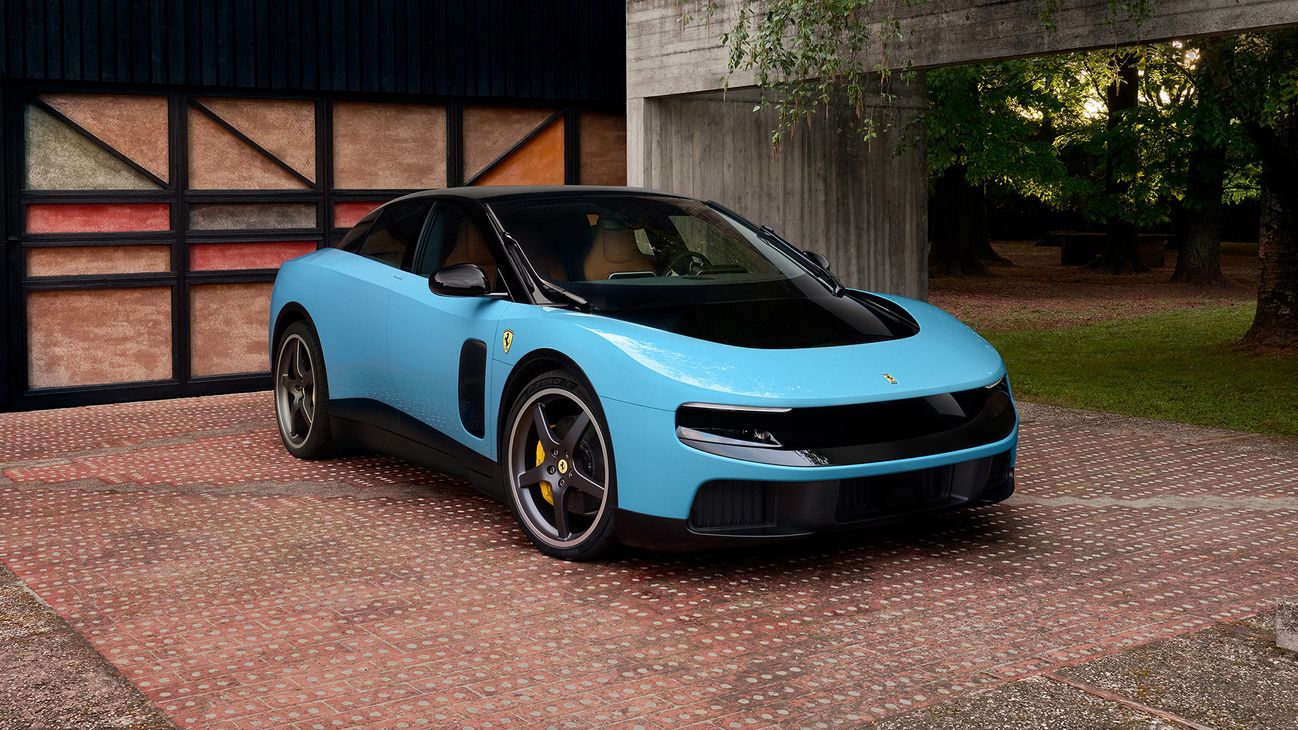
Ferrari Luce
"...verything I said last week was wrong. The Ferrari Luce will sell out in the Asian market. It'll be a suc..."
The Ferrari Luce is a Ferrari car, meaning it’s a high-performance vehicle made by Ferrari. The podcast is saying it’s expected to be very popular in parts of Asia and may sell out quickly. That usually means there aren’t many available cars for everyone who wants one.
The Ferrari Luce is a Ferrari model discussed in the context of strong demand and sell-through in the Asian market. The mention of it “selling out” suggests it’s a limited or highly sought-after vehicle where allocation and availability matter. It’s likely brought up because market demand can influence production timing, pricing expectations, and how quickly buyers can secure orders.
Request an Explanation
Heard something you'd like explained? We'll add it to this episode.
Sign in to request explanations for terms you heard.
Want to learn more?
Browse our glossary for plain-English explanations of automotive terms, jargon, and concepts.
Help improve this episode
See something that's not quite right? Our annotations are AI-generated and can sometimes miss the mark. Click the flag icon on any annotation to suggest a correction.