
About this episode
Riffing on “rage bait” cyber-truck energy, the hosts pivot to Ferrari’s rumored Luce EV and why it’s unlikely to win on autonomy alone. They argue Ferrari’s EV strategy is about economics, niche volume, and brand identity—who the buyer is, how the badge lands, and whether the car can stand on its own without looking like a generic EV. Along the way, they connect EV performance commoditization, licensing success stories like Rimac, and the growing maturity of autonomy rides.
Alex offends everyone with his POV on automotive design, Ed wants to talk Tesla, and Kirsten brings it back around to Waymo, Zoox, and actual analysis of the AV/EV business.
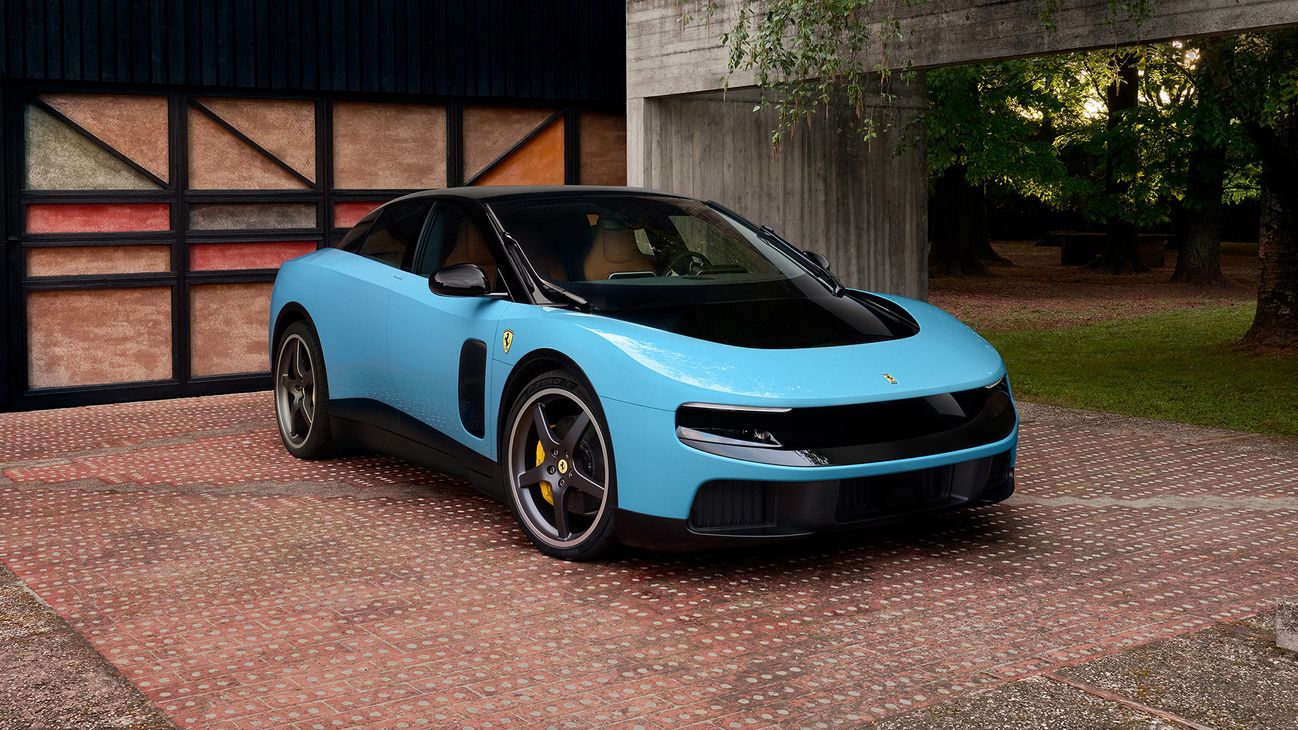
Ferrari Luce
"...t, it could be one topic. It could be the Ferrari Luce. Everyone's talked about it, so we might as well ..."
“Ferrari Luce” is mentioned as a topic people talk about, but the exact car being referred to isn’t clear from the snippet alone. It sounds like it’s connected to Ferrari and is notable enough to come up in conversation. If you share a bit more context, I can explain what it is more accurately.
“Ferrari Luce” appears to be a topic of discussion in the podcast, but it isn’t a widely established, clearly defined Ferrari model name in the way cars like the 308 GTS or other mainstream Ferrari lines are. Because the transcript context only frames it as something “everyone’s talked about,” the safest interpretation is that it’s being referenced as a notable or rumored/anticipated Ferrari subject rather than a specific, universally recognized production vehicle. If you can share more of the episode context, I can tailor the explanation to the exact vehicle being discussed.
human driven versus autonomous vehicle design
"[132.7s] Look, I think what's important about us talking about it is that 99% of comments have been [138.3s] about how it looks and whether or not, how that's not great for the Ferrari brand. [145.4s] I want to talk about it in the context of human driven versus autonomous vehicle design. [153.1s] Okay."
The hosts are comparing two ways of designing cars: one where a person does the driving, and one where the car drives itself. That affects things like where controls and screens go and how the car communicates what it’s doing to the people inside.
This is a comparison of how vehicle design goals change when a car is meant to be driven by a person versus when it’s designed to operate autonomously. The big differences are typically in packaging (where controls/displays go), driver interface priorities, and how the cabin communicates intent and safety to occupants.
profit margins
"They have massive profit margins on each vehicle they make. They do not need to..."
Profit margin is how much money a company keeps from each sale after paying its costs. The host is saying Ferrari makes a lot of profit on each car, which helps explain their strict sales approach.
Profit margin is the percentage of revenue a company keeps as profit after covering costs. In the segment, the host argues Ferrari has “massive profit margins” per vehicle, which supports the idea that Ferrari can afford to be selective about who buys new cars.
highly selective
"They're highly selective. They basically are like, you're not ready for the brand new one."
“Highly selective” means Ferrari doesn’t just sell new cars to anyone. They try to control who gets the newest models, often by prioritizing existing customers.
“Highly selective” here describes Ferrari’s customer-allocation and sales strategy: limiting who can buy the newest cars to protect brand status and manage demand. The segment ties this to the idea that owners may need to prove loyalty (often by buying a prior Ferrari) before being offered a new one.
entry one
"Why don't you try this entry one first? And so there's a lot of cashier around it, and my whole take was it really..."
“Entry one” is being used as a sales funnel concept: a lower-tier or earlier purchase that qualifies a buyer for access to the newest, more exclusive model. In this segment, it’s part of the argument that Ferrari’s economics and brand control matter more than whether people personally like the Luce.
economics of it
"My take is it really doesn't matter if people hate the Ferrari Luce because it will be successful anyway. That is my prediction. It has nothing to do with autonomy. It just has to do with the economics of it."
“Economics of it” means the money side—how the company makes profits and controls sales. The host is saying the Luce’s success is more about business strategy than self-driving technology.
“Economics of it” refers to the business rationale behind the Ferrari Luce—pricing, margins, and controlled distribution—rather than any consumer-facing tech feature. The host explicitly contrasts this with autonomy, saying the outcome is driven by business factors.

Tesla Cybertruck
"...h audience to put this down. So, I will say this, Cybertruck had to be successful. Also a hated, polarized des..."
The Cybertruck is an electric pickup truck made by Tesla. It looks very unusual compared with most trucks, which is why people either love it or dislike it. It’s discussed because it was a big, high-visibility EV release.
The Tesla Cybertruck is an all-electric pickup truck known for its distinctive angular design and stainless-steel body. It’s often discussed because it was a high-profile, polarizing launch that tested how mainstream buyers would react to a radically different EV format. In a podcast context, it comes up as an example of a product that had to succeed despite strong public debate.
polarized design
"Also a hated, polarized design had to sell multiples of a lot more to be successful. Ferrari Luce, at least it's not a fucking Cybertruck."
A “polarized design” is a look that really divides people. Some will think it’s awesome, and others will hate it—so the company may need to sell more to make the project work.
“Polarized design” means a vehicle’s styling is so distinctive that it splits opinion—some people love it while others strongly dislike it. The segment uses this as a sales challenge: if a design is polarizing, the vehicle often needs higher volume to overcome the portion of buyers who won’t be interested.
Silicon Valley
"and then a lot of new people in the Ferrari brand who are much more associated with Silicon Valley."
Silicon Valley is the famous tech hub in the U.S. The hosts are using it as shorthand for “tech people,” meaning a different kind of buyer than the classic Ferrari crowd.
Silicon Valley is a region strongly associated with tech startups and big technology companies, and it’s often shorthand for a “tech industry” culture. In this segment, it’s used to describe a different type of Ferrari buyer—someone more connected to tech than traditional luxury-car circles.

Tesla Plaid
"So, I mean, a few years ago, Alex, this is the buyer of the Ferrari Luce, someone who would have bought a Tesla Plaid, which is A, you can no longer buy and B has been Pass A for several years now and this is just a new and more like, this is a Tesla that brings"
Tesla Plaid is Tesla’s high-performance version of the Model S. Here, the hosts use it to describe the type of person who would have bought a fast, tech-focused Tesla before looking at the Ferrari Luce.
Tesla Plaid refers to Tesla’s top-performance Model S variant, known for very high acceleration and track-capable hardware. In this segment, it’s used as a shorthand for the kind of tech-forward buyer who might consider the Ferrari Luce.

Model Tesla Plaid
"...the Ferrari Luce, someone who would have bought a Tesla Plaid, which is A, you can no longer buy and B has been..."
The Model S is an electric sedan made by Tesla. It’s known as one of Tesla’s earlier, more performance-focused electric cars. The podcast brings it up when talking about what kinds of buyers might choose certain Tesla models.
The Tesla Model S is an all-electric sedan that helped establish Tesla’s reputation for high-performance EVs and long-range capability. It’s frequently referenced when discussing Tesla’s earlier, more performance-oriented lineup and how buyers might compare different Tesla models. In the podcast context, it’s mentioned alongside the idea of someone who might have bought a high-performance Tesla variant.
vice signaling
"I mean, remember years and ago, Alex, you talked about vice signaling and virtue signaling and you compared the only other brand that you could compare it to Tesla vice and virtue signaling was Ferrari owners."
“Vice signaling” means showing off something that’s seen as a little “bad” or controversial to prove a point about who you are. In this discussion, it’s about how people use car brands as a kind of social statement.
“Vice signaling” is a social-media/branding concept where people display behaviors or products associated with “bad” or controversial traits to communicate identity. In car culture, it’s often used to describe how certain brands can become symbols of a particular lifestyle or attitude.
virtue signaling
"I mean, remember years and ago, Alex, you talked about vice signaling and virtue signaling and you compared the only other brand that you could compare it to Tesla vice and virtue signaling was Ferrari owners."
“Virtue signaling” means showing off your values or beliefs so others know you’re “good” or “right.” Here, the hosts are using it to talk about how car choices can become a public identity statement.
“Virtue signaling” is the idea that people publicly display beliefs or values—often in a way meant to be seen—to signal moral or social approval. The hosts apply it to car brands, arguing that Tesla (and now Ferrari) can be used as a visible identity marker.
zero to 62 seconds
"I'm in an electric car that can go zero to 62 seconds."
“Zero to 62” means how fast a car accelerates from a stop to 62 mph. It’s one way people compare how quick different cars feel.
“Zero to 62” is shorthand for acceleration from 0 to 62 mph (about 100 km/h). It’s a common performance metric for comparing how quickly cars reach highway speed.

Tesla Model
"... electric, go back 10, 10, 12 years and you get a Tesla Model S. You could say, I'm in an electric car that can..."
The Model Y is an electric SUV made by Tesla. It’s designed to be a practical everyday car, with room for passengers and cargo. People mention it when discussing how Tesla’s electric cars became more common over time.
The Tesla Model Y is an all-electric compact SUV that helped expand Tesla’s mainstream lineup beyond sedans. It’s frequently referenced when talking about how Tesla’s early EV momentum evolved over the years, especially as more people moved toward practical, everyday electric vehicles. In the podcast context, it’s part of the conversation about Tesla’s long-running presence in the EV market.
Tesla Model S
"you get a Tesla Model S. You could say, I'm in an electric car that can go zero to 62 seconds."
The Tesla Model S is a popular fully electric car. The hosts are using it as an example of how EVs have become common and expected to be quick.
The Tesla Model S is an all-electric luxury sedan that helped define modern EV performance and tech expectations. In this segment, it’s used as a reference point for how “electric” has become mainstream over the last decade-plus.
commoditized
"because any electric performance is commoditized in electric cars."
“Commoditized” means lots of companies make products that feel basically the same. The host is saying EV speed is now common enough that buyers focus more on brand and price than on performance uniqueness.
“Commoditized” means a product category becomes so similar across competitors that it’s mostly judged by price rather than unique features. The host claims EV performance has become commoditized, reducing the impact of performance as a differentiator.
rage bait car
"It's cyber trucky and in that sense, it triggers impugn, it's a rage bait car... It is a rage bait car."
A “rage bait car” is a car that people love to argue about. The host is saying some cars are basically designed to spark strong online reactions, not just to be liked quietly.
A “rage bait car” is a vehicle marketed or designed to provoke strong reactions—often controversy or outrage—so it gets attention and discussion. The host frames it as a deliberate (or at least predictable) social-media effect where the car becomes a symbol rather than just transportation.

Rimac Concept One
"if you look at the sales of electric sports cars, but it's like hyper cars, like Rimac concept one, they, that was not a business."
The Rimac Concept One is a very high-end electric “hypercar.” The hosts are using it as an example of a car company that made great engineering, but the business side didn’t work out right away.
The Rimac Concept One is an electric hypercar built by Rimac, known for proving that an all-electric powertrain can deliver supercar-level performance. In this segment, it’s used as an example of an EV hypercar project that wasn’t initially a sustainable business, even though the underlying engineering was impressive.
Mati Rimac
"but the engineering was so great that Mati Rimac could, could, you know, parlay that into licensing and sales of his technology."
Mati Rimac is the founder of the company behind Rimac’s electric cars. The hosts are saying he used the company’s great engineering to build a real business, not just a cool prototype.
Mati Rimac is the founder of Rimac Automobili, credited with turning early electric hypercar engineering into a wider technology business. In this segment, he’s presented as the person who leveraged the engineering credibility into licensing and commercial deals.
licensing and sales of his technology
"but the engineering was so great that Mati Rimac could, could, you know, parlay that into licensing and sales of his technology."
Licensing is when a company lets others use its technology for money. It can help an EV startup earn revenue even if selling cars directly is hard.
Licensing means allowing other companies to use your technology in exchange for fees or royalties. For EV startups, this can be a way to monetize expensive engineering even if the original car business doesn’t scale profitably.
VW a group
"And then eventually, you know, selling the company to VW a group, but can we see what we got into a business?"
Volkswagen Group is a big car company that backed Rimac. The point here is that big automakers sometimes invest in smaller EV tech companies so the technology can reach the market.
Volkswagen Group (VW) is a major automaker that invested in and acquired a stake in Rimac as part of its EV strategy. The segment frames this as a path for EV startups: strong engineering first, then business scale via licensing and large-industry partnerships.
Bugatti
"He's from the Bugatti side, which is the ultimate expression of like human driving and the electric vehicle side, Rimac, but the, but he couldn't design"
Bugatti is a famous high-end car brand known for very fast, very special performance cars. Here it’s used as shorthand for the “best at driving” part of the market.
Bugatti is a luxury and hypercar brand associated with extreme performance and driver-focused engineering. In this segment, the host uses “Bugatti side” to represent the pinnacle of human-driving feel, contrasted with the EV side of the industry.
pure electric
"Okay. We also know that, um, you know, there is really no electric, you know, supercar, a hypercar that one can point to be like, well, that, that work... none of them sell a pure electric."
“Pure electric” means the car uses only electricity stored in a battery. The host is saying there isn’t a standout fully electric hypercar that clearly proves customers will buy them in big numbers.
“Pure electric” means a vehicle that runs entirely on electricity from a battery, without a gasoline engine or hybrid system. The host’s argument is that the hypercar market hasn’t produced a clear, widely proven example of a fully electric hypercar that works commercially.
Pagani
"And you can look in a Koenigsegg and Pagani, uh, they, they know, they know what the demand is and none of them sell a pure electric."
Pagani makes ultra-exclusive hypercars. The host is using Pagani as an example of a brand that understands demand but hasn’t gone all-in on pure electric hypercars.
Pagani is an Italian hypercar brand famous for bespoke, high-touch manufacturing and extreme performance. In this segment, it’s cited alongside Koenigsegg as a company that “knows demand,” yet still hasn’t sold a pure-electric hypercar.
Koenigsegg
"And you can look in a Koenigsegg and Pagani, uh, they, they know, they know what the demand is and none of them sell a pure electric."
Koenigsegg is a brand that makes very high-end, limited-run hypercars. The host is saying that even they haven’t committed to a fully electric hypercar because demand is uncertain.
Koenigsegg is a Swedish hypercar brand known for engineering-led, limited-production cars. The host uses it to argue that even brands that understand demand still haven’t produced a “pure electric” hypercar that clearly proves the market works.
Lamborghini
"And so Lamborghini looked at, you know, a pure electric and they decided to cancel it."
They mention Lamborghini as an example of a supercar brand that looked at making a fully electric car but decided to cancel it. It’s used to argue that the market for top-tier pure EVs is tricky.
Lamborghini is referenced in the context of deciding against a “pure electric” direction. The segment uses Lamborghini’s decision as an example of how difficult it is to find a market for high-end pure EVs when the brand’s identity is strongly tied to traditional performance expectations.
Lucha by Ferrari
"The problem was that Ferrari didn't start a new brand for this vehicle. If this, if this was the Lucha brand, if it was Lucha by Ferrari, and this was the start of a new, you know, probably small, but, but a distinct brand, right?"
“Lucha by Ferrari” is presented as a hypothetical sub-brand strategy: instead of putting the Ferrari name directly on the EV, Ferrari would create a distinct brand identity for the vehicle. The segment argues this could reduce the backlash of people who want a “real Ferrari” experience and feel an EV doesn’t fit the main brand.
Maserati
"The way Maserati, everyone knows that Maserati has Ferrari engines. It's, it's not a Ferrari, but it's sort of like the junior."
They use Maserati as an example of a brand that’s closely linked to Ferrari technology (like using Ferrari engines). The point is that Ferrari could have separated the EV branding the way Maserati is separated from Ferrari’s main identity.
Maserati is brought up as an example of a “junior” brand that uses Ferrari engines. The segment uses this to argue that Ferrari could have handled an EV differently by creating a separate brand identity while still leveraging Ferrari’s engineering credibility.
electric Ferrari
"Listen, so the other way to think about this is, is, okay, if you're in charge [765.1s] of making an electric Ferrari, how do you make it differently? ... [776.2s] to make an electric Ferrari than the Lucha."
They mean a Ferrari that runs on electricity instead of gasoline. The point they’re debating is how Ferrari would make it feel like a real Ferrari, not just a generic electric car.
“Electric Ferrari” refers to the challenge of translating Ferrari’s traditional performance identity into an all-electric powertrain and product package. In this segment, the hosts frame it as a brand/positioning problem: how to make the EV feel like a Ferrari rather than just an EV with a badge.
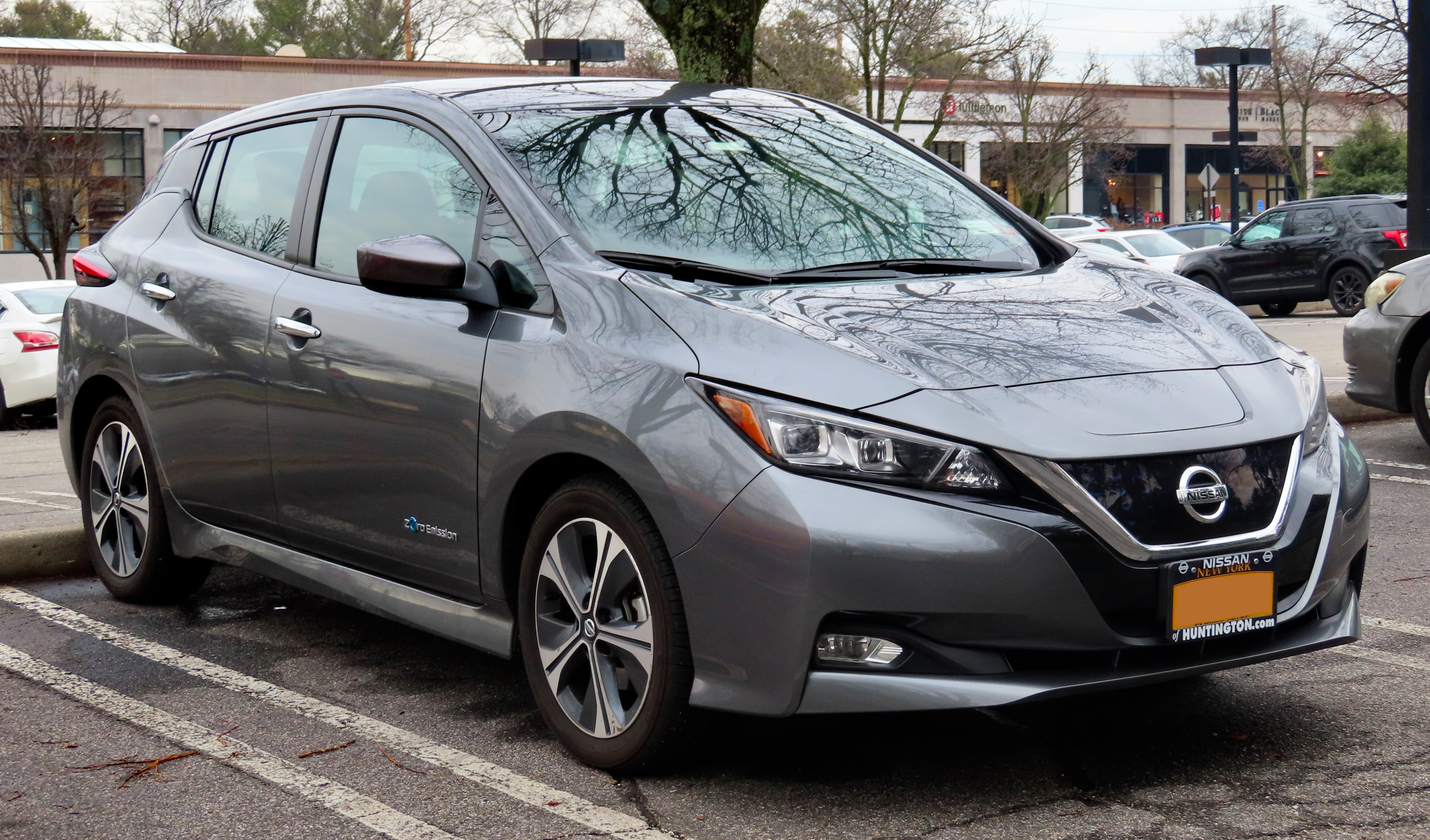
Nissan Leaf
"Okay, so 10 years ago I gave a presentation I probably couldn't give to, ... [792.5s] Why don't make it look like a Nissan Leaf? [795.5s] Okay, go ahead."
The Nissan Leaf is a very common electric car. They’re using it as an example of a look that would be too ordinary for a Ferrari.
The Nissan Leaf is a mainstream, mass-market electric hatchback known for being practical rather than “supercar” styled. In the segment, it’s used as a comparison point to argue against designing a Ferrari EV that looks too generic.
autonomous vehicles
"but you could actually conflate EV and [808.9s] autonomous because a lot of the same stupid suggestions been made about both,"
Autonomous vehicles are self-driving cars. They’re bringing it up because people often mix up EVs and self-driving ideas when making design or product suggestions.
Autonomous vehicles are cars that can drive with little or no human input using sensors, software, and control systems. The hosts mention that EV and autonomous tech get conflated in public discussion, leading to “suggestions” that may not be well thought out.
connected autonomous
"And, but we know that's not true, and that the case argument connected autonomous, shared, and electric for the future of cars and car ownership going away is like"
It means a car that can drive itself and also “talks” to other systems. That communication can help it make better decisions on the road.
“Connected autonomous” refers to cars that can drive themselves (autonomous) while also communicating with other vehicles, infrastructure, or cloud services (connected). The idea is that the car’s driving decisions can be improved by real-time data beyond what its sensors alone can see.
shared
"and that the case argument connected autonomous, shared, and electric for the future of cars and car ownership going away is like"
Here, “shared” means cars are used by different people instead of everyone owning their own. The host is saying people still want to feel connected to a car or brand.
In this context, “shared” means mobility-as-a-service: cars are used by multiple people rather than owned by a single household. The speaker is arguing that even if sharing grows, emotional attachment to specific cars/brands won’t disappear.
SUV form factor
"So eventually brands that were just have more sex brands, just made sports cars, are making SUVs, and they do that by tacking on the sports car front end to an SUV form factor."
An SUV form factor is the overall shape and layout of an SUV—taller, more upright, and built to feel versatile. The host is saying some brands keep the sporty look but switch to an SUV body style.
“SUV form factor” refers to the body/packaging design of sport-utility vehicles—typically a higher seating position, upright cabin, and a shape optimized for versatility. The speaker argues brands dilute their sports-car identity by putting a sports-car “front end” onto an SUV body.

Porsche Cayenne
"like this was a big thing because Porsche was just starting to dilute the brand with their SUVs, with Cayenne, right? And this was, this was sacrilege, and"
The Porsche Cayenne is Porsche’s SUV. In this conversation it’s an example of how some fans felt Porsche was changing its identity by moving into a different kind of vehicle.
The Porsche Cayenne is Porsche’s SUV, and it’s used in the discussion as an example of “brand dilution” when a performance brand expands into a different body style. The host references the Cayenne as a turning point that sparked controversy among enthusiasts.
brand dilution
"according to the brand dilution narrative, right, like making this would eventually erode the Porsche brand to the point where it didn't mean anything,"
“Brand dilution” means a brand might lose its special meaning if it starts selling too many different kinds of products. The hosts are arguing whether Porsche’s SUV push actually hurts the Porsche image—or if it’s just growing the business.
Brand dilution is the idea that expanding a brand into more products or categories can weaken what the brand originally stood for. In this segment, it’s debated using Porsche as the example: the claim is that SUVs could erode the 911/Boxster identity, but the counterpoint is that sales and profit appear to be strong.
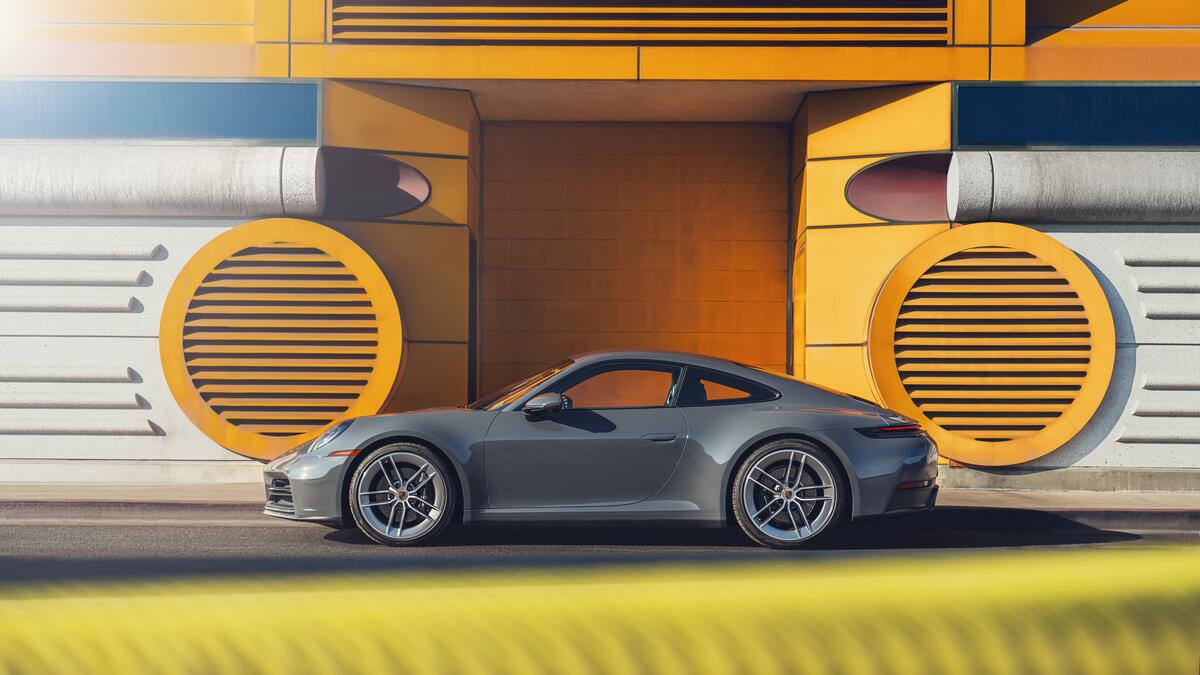
Porsche 911
"products like the Cayenne that were not true to its essence of the 911 and the Boxster,"
The Porsche 911 is Porsche’s most famous sports car. In this conversation, it’s treated like the standard that people compare everything else to.
The Porsche 911 is Porsche’s flagship sports car, and it’s used in this discussion as the “essence” that some people feel SUVs like the Cayenne stray from. The segment also frames the 911 as still central to Porsche’s identity even while SUVs drive sales.

Porsche Boxster
"essence of the 911 and the Boxster,"
The Porsche Boxster is a Porsche roadster. The host is using it as another example of the kind of “core” Porsche that some people think SUVs don’t match.
The Porsche Boxster is Porsche’s mid-engine roadster, and it’s referenced here alongside the 911 as part of what some fans consider the brand’s core identity. The argument is that SUV expansion may move Porsche away from that classic sports-car focus.

Porsche Macan
"Macan is number one, then Cayenne, then 911 in terms of sales. So, but Macan is aspirational."
The Porsche Macan is a compact SUV that’s positioned as a more “Porsche-like” entry in the SUV lineup. Here it’s described as “aspirational,” meaning it can attract buyers who want the Porsche badge and styling even if they’re not buying a 911.
hybrid Ferraris
"nobody wants the hybrid Ferraris that have been coming out in recent years, like their valuations"
This means Ferrari models that use both gasoline and electricity. The host is saying buyers don’t value them as highly, so they drop in price faster after purchase.
“Hybrid Ferraris” refers to Ferrari models that combine an internal-combustion engine with an electric motor. The segment claims that these cars have weak near-term resale/valuation performance compared with non-hybrid Ferraris.
valuations
"their valuations are like, they depreciate like 30, 50% like within a year or two."
Here, “valuations” basically means what the cars are worth—especially how their price changes after you buy them. The claim is that hybrid Ferraris drop in value faster than gas ones.
In this context, “valuations” means how much the cars are worth in the market, often reflected by resale prices and depreciation. The host uses it to argue that hybrid Ferraris lose value much faster than gas-only Ferraris.
depreciate
"their valuations are like, they depreciate like 30, 50% like within a year or two."
Depreciation means the car’s price goes down after you buy it. The host is claiming hybrid Ferraris lose value much faster than the gas-only ones.
Depreciation is the reduction in a car’s value over time, usually measured by how resale prices change. The segment uses depreciation rates (30–50% within a year or two) as evidence that hybrid Ferraris are less desirable to buyers than gas-only models.
future autonomy imagery (movies/concepts)
"Look up right now an image of the car in demolition, man. [1197.8s] I am going to look it up... [1222.9s] people had of like what the future of autonomy would like."
They talk about how movies and old concept cars influenced what people thought self-driving cars would look like. It’s more about the “image of the future” than the actual technology details.
This segment pivots into how popular culture and early concept cars shaped the public’s mental picture of self-driving technology. The hosts reference a specific “future autonomy” look and connect it to a 1990s-era expectation of what autonomy would be.
1992 GM Ultralight Concept
"Hang on a second car. Here we go. The 1992 GM ultra light concept. Is that [1209.0s] what you're talking about?"
They mention the 1992 GM Ultralight Concept as an example of a car that looked like what people thought self-driving tech would look like. It’s used as a reference for the “future car” image from movies and early concepts.
The 1992 GM Ultralight Concept is cited as a visual reference for what people expected “the future of autonomy” to look like. The host connects it to the movie-era idea of an autonomous vehicle that would both drive some tasks and look futuristic.
one to one replacement
"whole EV transition, right? It's the idea that an EV is a one to one replacement for a gas car."
They’re talking about the belief that an EV can stand in for a gas car like-for-like. But EVs and gas cars work differently, especially around charging and how you use the car day to day.
The phrase refers to the idea that an electric vehicle (EV) should replace a specific gas car in the same way—same role, same usage pattern, and same expectations. In practice, EVs and internal-combustion cars differ in range behavior, charging needs, and how power delivery feels, so the “replacement” isn’t always truly equivalent.
restomod
"They could have just, they could have taken, let's say the 308, 328 body and just released like electric Resto mod versions."
A restomod is an older car that’s kept for its classic style, but upgraded with modern parts. Here, they’re talking about doing that with an electric powertrain.
A restomod is a modified classic car that keeps the original look or platform but updates key components—often the engine, suspension, brakes, and electronics—to feel modern. In this segment, “electric restomod versions” means taking a classic Ferrari body and fitting EV technology while trying to preserve the heritage vibe.
battery pack
"The weirdness of the shape of the Lucha is because there's a big battery pack in there."
In an EV, the battery pack is the big set of batteries that stores the electricity. Because it takes up space, it can force the car’s shape and layout to be different from a gas car.
A battery pack is the large assembly of cells and modules that stores energy in an EV. The speaker emphasizes that the battery pack’s size and placement drive the “weirdness” of the EV’s shape and packaging, which can make an EV look and fit differently than a gasoline car.

Ferrari 308
"... that people, if they were selling million dollar Ferrari 308, electric 308 Resto mods, they couldn't, they, th..."
The 308 GTS is an older Ferrari sports car with a mid-mounted engine. It’s known for being a desirable classic model. People mention it when discussing expensive custom builds or upgrades for vintage Ferraris.
The Ferrari 308 GTS is a classic mid-engine V8 sports car from Ferrari’s 1970s/1980s era, known for its distinctive styling and driving character. It’s significant in collector circles and often used as a benchmark when people talk about classic Ferrari value and modification culture. In the podcast context, it’s mentioned in relation to the idea of high-end “resto-mod” style projects.

BMW i3
"...er Ferrari and it's totally based on owning a BMW i3, which I love to drive because it's an electric c..."
The BMW i3 is a small electric car made by BMW. It’s meant for everyday driving, especially in cities. The podcast mentions it because it’s fun to drive and it’s fully electric.
The BMW i3 is a compact electric car designed for city-friendly driving and efficient everyday use. It’s often discussed as a distinctive early EV from BMW, with a focus on being lightweight and easy to maneuver. In the podcast context, it’s brought up because the speaker loves driving it as an electric car.
performance is commodified
"as you said this right at the beginning of the show is that, is that performance is commodified. How do you be a Ferrari in a world where performance is commodified?"
It means “fast” is becoming common, so it’s not as special anymore. If everyone can make similar performance, car brands have to stand out in other ways.
“Commodified performance” means the things that used to feel special—quick acceleration, lap times, power—are becoming widely available and less differentiating. In that situation, a brand like Ferrari has to find other ways to stand out beyond raw drivetrain performance.
drive train
"If the performance of the drive train is commodified, where can you as a, as a performance, you know, brand like, like"
“Drivetrain” is the set of components that deliver power from the engine/motor to the wheels, including things like the transmission and final drive. In this discussion, the host uses it to talk about how EV power delivery could become less of a brand differentiator.
carbon fiber
"If they don't a carbon fiber, so Lotus would be the biggest company on earth."
Carbon fiber is a lightweight, high-strength composite material commonly used in performance cars to reduce mass. The segment implies that using carbon fiber (instead of heavier materials) is one way brands can stand out when drivetrain performance is less unique.
EV
"I'm saying this is the problem with, right? If the EV drive train is commodified, then you have to stand out somewhere else"
EV means electric vehicle. Instead of a gas engine, it uses an electric motor powered by a battery.
EV stands for “electric vehicle,” meaning the car’s propulsion comes from electric motors powered by a battery rather than an internal-combustion engine. The segment argues that if EV drivetrain performance becomes “commodified,” luxury performance brands must differentiate through other design choices.
rage baiting
"And then I will go back to this era that we're in also rage baiting. And it could be the opposite."
Rage baiting is when something is posted to make people really mad or upset so they keep watching or sharing. The host is saying car talk might be getting shaped by that.
“Rage baiting” refers to content designed to provoke strong emotional reactions (often anger or outrage) to drive clicks and engagement. Here, the host suggests the current conversation about modern cars could be influenced by that kind of attention-grabbing framing.
Zeekr
"I had a first ride in the Zeekr renamed the Ojai"
Zeekr is an electric-car brand. The host is talking about a ride in one of their vehicles as part of the discussion about self-driving and vehicle design.
Zeekr is the EV brand the host mentions as the car they rode in. The segment ties Zeekr’s vehicle to the broader theme of autonomous/driver-assist experiences and how these products are being positioned for public use.
Waymo
"the Zeekr renamed the Ojai that Waymo is now opening up to select members of the public in three cities."
Waymo is a company that builds self-driving technology. In this segment, they’re described as letting some regular people ride in their cars in a few cities.
Waymo is the autonomous-driving company opening access to its self-driving service. The host says it’s being offered to select members of the public in three cities, highlighting how autonomy is moving from pilots to broader real-world deployment.
select members of the public
"Waymo is now opening up to select members of the public in three cities."
It means the self-driving service isn’t open to everyone yet—only a limited group of normal people. That helps the company learn how it performs in everyday situations.
This phrase describes a staged rollout approach where autonomous vehicles are tested with limited public participation rather than immediately opening to everyone. It’s a common deployment strategy to gather real-world data and manage operational risk.
unprotected left
"[1685.2s] in general. Now the ride itself, they need, they've got some kinks. They got to smooth out a little [1690.3s] bit. It didn't do anything crazy, handled unprotected left just fine, but the suspension, it was like"
An unprotected left turn is when you turn left without a special arrow telling you it’s safe. The car has to find a safe opening in oncoming traffic and turn without causing a problem.
An “unprotected left” is a left turn made without a dedicated turn arrow or signal protection. In real traffic, that means the vehicle must judge oncoming gaps and execute the maneuver safely while other drivers may not expect the turn.
roundabouts
"[1698.9s] pretty nice. It was a fairly smooth ride. Entering into or exiting out of some of the roundabouts [1705.8s] did fine, but there were a couple of deceleration moments where it was, you know, through a big turn"
A roundabout is a circular intersection where cars go around in a loop. The car has to enter at the right time and keep a steady, safe speed while navigating the curve.
A roundabout is a circular intersection where traffic flows around a central island, typically with vehicles yielding when entering. Autonomous systems must handle speed control, gap selection, and lane positioning while coordinating with pedestrians and other vehicles.
deceleration moments
"[1705.8s] did fine, but there were a couple of deceleration moments where it was, you know, through a big turn [1711.3s] where it kind of did that little stutter break where, you know, it wasn't as smooth as let's say"
“Deceleration moments” are times when the car slows down. If the slowing happens a little abruptly, the ride can feel less smooth.
“Deceleration moments” refers to brief periods where the vehicle slows down, often while navigating turns or approaching traffic conditions. In autonomous driving, these can feel jerky if the control system doesn’t blend braking smoothly with steering and path planning.
stutter break
"[1705.8s] did fine, but there were a couple of deceleration moments where it was, you know, through a big turn [1711.3s] where it kind of did that little stutter break where, you know, it wasn't as smooth as let's say"
A “stutter brake” is when the car brakes in a jerky, pulsing way instead of smoothly. It can make the ride feel uncomfortable or less confident.
A “stutter break” (likely “stutter brake”) describes a braking pattern that pulses or hesitates rather than applying a smooth, continuous deceleration. For autonomous vehicles, it can happen when the system over-corrects or when traction/trajectory targets change quickly mid-turn.
magic problem
"[1803.0s] is an issue. And I kind of want to write about it. An issue in the robotoxy industry or autonomous [1808.8s] vehicles in general is like the magic problem, which is, you know, it just magically does all [1814.1s] these things and we don't have any idea that humans are involved in this."
The “magic problem” is when people assume the car just works perfectly by itself, like magic. The point here is that real autonomy still involves human work and real-world handling, and the vehicle felt more grounded than a gimmick.
The “magic problem” is the idea that autonomous vehicles are perceived as if they work flawlessly on their own, without showing the human effort behind engineering, supervision, data collection, and operations. The speaker argues this vehicle’s behavior feels more “mature” because it acknowledges real-world complexity rather than acting like a black box.
San Francisco
"And so I think the Ojai is like big advantage, you know, in somewhere like San Francisco for sure, where people are taking Waymo's"
They mention San Francisco as an example city. The idea is that in a busy city, being able to see well out of the car is especially helpful.
San Francisco is used as the example city where outward visibility matters for using autonomous/ride-hailing services. The host ties the city’s real-world usage patterns (like people riding Waymo) to vehicle ergonomics and sightlines.
serviceability
"the big thing, I think the serviceability, Ed, you and I talked about this, [2038.7s] the way that the sensors can clearly be like, there's fewer sensors actually, but the,"
Serviceability means how easy it is to get to parts of the car when something needs fixing. If a car is designed for serviceability, a mechanic can work on it faster and with less hassle.
In vehicle design, serviceability is how easily technicians can access components for inspection, repair, or replacement. Better serviceability can reduce labor time and make maintenance and repairs less painful for owners and fleets.
sensors
"the way that the sensors can clearly be like, there's fewer sensors actually, but the, [2042.7s] but they're the way they're positioned."
In autonomous vehicles, sensors are the hardware that “sees” and measures the world—commonly cameras, radar, and lidar. Their placement matters because it affects what the vehicle can detect and how consistently it can do so from different angles.
gondola doors
"These open like gondola doors, [2068.1s] and they kind of stagger step, and there's big ass buttons,"
Gondola doors are doors that open upward instead of swinging out. They can make getting in and out easier, especially when space is tight.
“Gondola doors” refers to a door style that opens upward like a cabin or gondola, rather than swinging outward like a conventional door. This can improve access in tight spaces and can be easier to use for passengers with limited mobility.
club style seating
"I wanted to ask you, Alex, I feel like, [2157.4s] I feel like you're, you're potentially like an advocate for club style seating because it's"
Club style seating means the seats are arranged so passengers face each other, like in a lounge. It’s meant to make the back seat feel more social and comfortable.
Club style seating is an interior layout where seats face inward toward each other (often with a central table or shared space), similar to seating in a lounge. It’s commonly used in premium or people-mover designs to encourage conversation and make the cabin feel more like a shared room.

Prius
"the Prius is definitely a competitor. I would say that the second generation Prius in particular is,"
The Toyota Prius is one of the first mass-market cars that used a hybrid system (gas + electric). The host is saying the early Prius generation was a big deal for how cars were designed and engineered in the 2000s.
The Toyota Prius is a landmark hybrid that helped make electrified driving mainstream. The host specifically calls out the second-generation Prius as a “classic” for both design and engineering, which is why it comes up in discussions about how the 21st century’s automotive direction formed.
electric vehicle revolution
"Do you believe the world is better for the electric vehicle revolution on any timeline?"
This phrase means the big change from gas cars to electric cars. The host is asking whether that change has been a net positive overall, and how much it depends on how fast it happened.
“Electric vehicle revolution” refers to the broad shift from internal-combustion cars to battery-electric vehicles across society—manufacturing, infrastructure, and consumer adoption. The host frames it as a timeline-dependent question: whether the world is “better” because of EVs depends on tradeoffs like cost, grid readiness, and how quickly adoption happens.
EV transition
"Listen, Alex, I am, I think electric cars are great. I think that the challenges that we're running into with adoption are largely derived from, you know, sort of the assumptions that we've made because that Tesla has really inculcated into our whole conception of, of an EV transition."
“EV transition” just means the shift from gas cars to electric cars. The host is saying some of the early plans assumed adoption would be easier than it turned out to be.
“EV transition” is the process of moving the vehicle market and supporting systems (charging, supply chains, regulations) from gas-powered cars toward electric ones. The host suggests adoption challenges come from assumptions that were built into early expectations about how quickly and smoothly that transition would occur.
Request an Explanation
Heard something you'd like explained? We'll add it to this episode.
Sign in to request explanations for terms you heard.
Want to learn more?
Browse our glossary for plain-English explanations of automotive terms, jargon, and concepts.
Help improve this episode
See something that's not quite right? Our annotations are AI-generated and can sometimes miss the mark. Click the flag icon on any annotation to suggest a correction.