
#363: Lucid Gravity Review, Nuro, Waymo, Tesla FSD, AV Policy Roundup
About this episode
Lucid Gravity ownership and usability get a reality check: the ride impresses with air suspension, but the third-row setup is “just like kind of dumb,” and the panoramic glass roof lacks an automatic interior shade. The hosts then connect those passenger details to robotaxi design—low floors, luggage space, and even automated doors. From there, the conversation pivots to AV operations and policy: Nuro/Uber testing with human safety drivers, California’s data-sharing rules, and how enforcement may rely on logged violations instead of fines.
Did Kirsten enjoy her Lucid Gravity? What’s the Citroen CX of EVs? How’s Waymo Ops doing? Do the CA AV reporting rules make sense? Did Alex enjoy his friend’s use of FSD on a HW 2.5 Model S? Ed & Alex keep it feisty, and Kirsten tries to keep them under control.
Lucid
"Yeah, so a little bit of bugginess, [197.8s] which I've actually reached out to Lucid about. [200.7s] I feel like every time you have a Lucid, [203.9s] there's something along those lines."
Lucid is a company that makes electric cars. Here, they’re talking about a Lucid car having some software glitches that affect how the car works.
Lucid is an EV brand known for building luxury electric cars with a strong focus on software and efficiency. In this segment, the host is discussing a Lucid vehicle experience and how software “bugs” can show up in day-to-day usability.

Tesla Model X
"It's shades of... I remember when the, was it the Model X came out and Tesla, you know, the glass was..."
The Tesla Model X is an electric SUV made by Tesla. It’s known for its unusual door design on the back, which helps with access in tight spaces. It may be mentioned when people talk about memorable Tesla features from earlier years.
The Tesla Model X is an electric SUV known for its distinctive design, including the signature falcon-wing-style rear doors. It’s often discussed because those door features and the overall layout make it stand out compared with more conventional SUVs. In a podcast, it can come up when people recall early Tesla design choices and how specific features were introduced.
hands-off
"I didn't have a hands-off version of it. So this is like hands-on wheel, but operationally, it does well."
“Hands-off” means the car can do some driving tasks by itself, like steering, without you gripping the wheel. It usually only works in specific situations, and you’re still expected to be ready to take over.
“Hands-off” refers to driver-assistance behavior where the car can steer and manage parts of driving without the driver actively holding the wheel. In practice, it’s usually limited to certain conditions (like highways) and may still require the driver to remain ready to take over.
nudge you over
"It has a feature, a setting feature where it will nudge you over a little bit. So as you're going down the highway and you're passing a big rig, it will actually nudge you over a little bit so it doesn't feel close."
A “nudge” is a small steering correction the car makes. Here, it sounds like it shifts you a bit away from a big vehicle while you’re passing so it doesn’t feel dangerously close.
A “nudge” is a small, automated steering adjustment used to keep the car from feeling too close to another vehicle. In this context, it sounds like the system shifts the car slightly within the lane while passing a large truck to maintain comfort and perceived clearance.
lane changes
"which is kind of nice and it has lane changes. So much better, much better improvement for sure."
“Lane changes” means the car can switch lanes on its own. It has to judge when it’s safe and then steer and control speed to make the move smoothly.
“Lane changes” here means the vehicle can move from one lane to another as part of its automated driving functions. That typically involves detecting nearby traffic, choosing a safe gap, and coordinating steering and speed so the maneuver feels smooth and predictable.
add-on
"I mean, it is like a $6,200 add-on. So not sure if it's worth that, but definitely much improved from what it was."
An “add-on” here means you pay extra to get extra features or better behavior from the car. Sometimes it’s just software that turns on capabilities you didn’t have before.
An “add-on” in this context likely means a paid upgrade (often software-enabled) that unlocks or improves driver-assistance features. The key point is that the capability change may be delivered without new hardware, depending on the vehicle and system.
Robotaxi service vehicles
"But the passenger piece I think is really interesting because these are gonna be the premium Robotaxi service vehicles that Neuro and Uber are gonna use. So that was interesting to like check it all out because this is gonna be what people experience"
“Robotaxi service vehicles” are self-driving cars that can take passengers like a taxi or rideshare. The idea is that you get the ride without a human driver in the front seat.
“Robotaxi service vehicles” are autonomous vehicles intended to provide ride-hailing service without a human driver. The speaker frames this as what passengers will experience, implying a shift from driver-assist to full service autonomy.
Nuro
"these are gonna be the premium Robotaxi service vehicles that Neuro and Uber are gonna use."
Nuro is a company working on self-driving vehicles for services like delivery and ride-style experiences. The speaker is saying passengers will experience the kind of vehicle Nuro plans to use.
Nuro is a robotics company focused on autonomous driving for delivery and robotaxi-style services. In the segment, the speaker connects Nuro’s use of “premium Robotaxi service vehicles” to what passengers will experience.
Uber
"these are gonna be the premium Robotaxi service vehicles that Neuro and Uber are gonna use."
Uber is a rides company that’s also been exploring self-driving vehicle services. In this quote, it’s grouped with Nuro as a company planning to use robotaxi vehicles.
Uber is a ride-hailing brand that has been investing in autonomous-vehicle partnerships and robotaxi concepts. Here, it’s mentioned alongside Nuro as a company that will use premium robotaxi service vehicles.
charging
"So question about the charging, [449.6s] did you charge it anywhere but home? [452.0s] Yeah, I charged it at a Tesla charger."
Here, “charging” means plugging an electric car in to refill its battery. They’re talking about whether they charged it at home or at a public charger, which changes how easy and how expensive it is.
In EV context, charging means replenishing the battery by plugging into a power source. The segment specifically contrasts charging at home versus charging at a public Tesla charger, which affects convenience and cost.
Tesla Supercharger
"How'd that go? [455.3s] Tesla super charger. [456.4s] Fine, except for I ended up having to pay"
Tesla Supercharger is Tesla’s fast-charging network. It’s meant to add a lot of charge quickly when you’re not at home.
Tesla Supercharger refers to Tesla’s high-power DC fast-charging network. It’s designed for quicker charging than typical home or Level 2 public chargers, which matters when you’re planning trips or charging a vehicle away from home.
press fleet vehicle
"Fine, except for I ended up having to pay [458.4s] because it's a press fleet vehicle, [460.9s] like the financial setup,"
A press fleet vehicle is a car provided to media outlets or reviewers for evaluation, typically under a fleet or program arrangement rather than a normal consumer ownership setup. Because it’s not tied to a typical owner account, charging can require different payment steps (like using an app) and can cost more than expected.

Porsche 928
"What's the range on a 928? ... I got premium and it was $5.20 a gallon. ... the car gets the display, if you trust the 1989 German OEM fuel range calculator."
The Porsche 928 is a classic Porsche grand-touring car with a big V8 engine. Here they’re discussing how far it can go on a tank and how the car’s range estimate compares to other vehicles.
The Porsche 928 is a grand-touring coupe from Porsche, best known for its front-engine layout and V8 power. In this segment, they’re talking about real-world fuel costs and the car’s fuel-range display, including a “German OEM” range-calculator reference from a 1989 example.
range estimate
"Honestly, probably more reliable than Tesla's range estimate. ... it says 367 miles."
A range estimate is the number your car shows for how far you can drive before you need to refuel or recharge. They’re comparing how believable that number is between cars.
A range estimate is the projected distance a vehicle thinks it can travel before running out of fuel or charge. This segment contrasts the Porsche 928’s fuel-range display (from a 1989 OEM calculator) with Tesla’s range estimate, implying the hosts find one more trustworthy than the other.
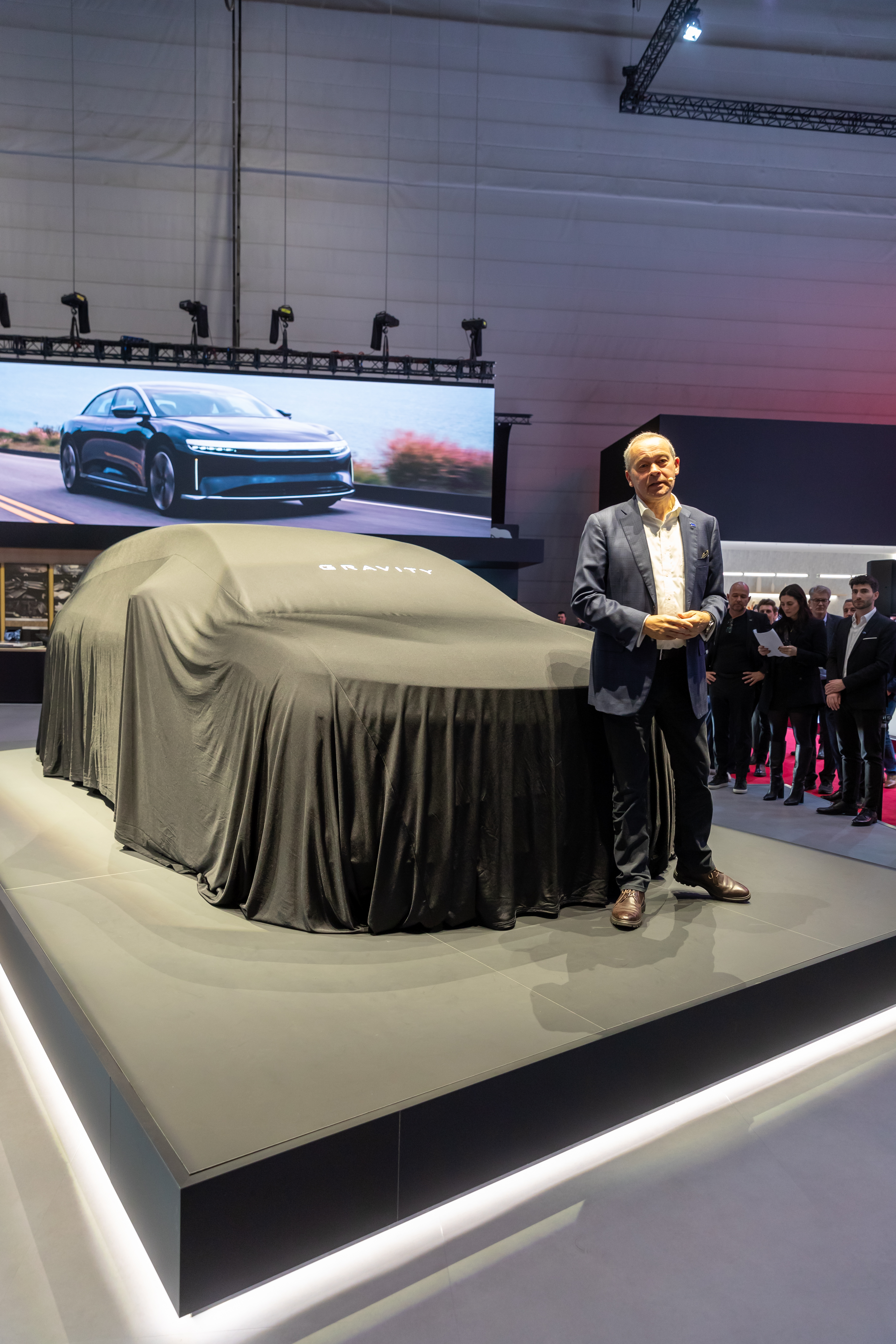
Lucid Gravity
"I've said on the show before, I really like the gravity, [575.5s] it's, I have a soft spot for it, they call it an SUV, [578.5s] but it's really a big, you know, people hauler."
Lucid Gravity is Lucid’s big electric family vehicle. The hosts are talking about how the car’s large doors might matter if it’s used by itself as a taxi.
Lucid Gravity is Lucid’s large, SUV-styled electric vehicle aimed at carrying multiple passengers. In this discussion, the key point is how its big, heavy doors and rear access could affect real-world use as a robot taxi.
robot taxi
"I do think that it has some really interesting potential [596.7s] as a, as a robot taxi. [598.7s] Like one of the things that, that immediately,"
A robot taxi is a self-driving car that acts like a taxi service. The idea is that it has to handle real passenger mistakes, like doors not being closed, without a human to fix it.
A robot taxi is a ride-hailing service where the vehicle drives itself without a human driver in the car. This segment connects robot-taxi requirements to physical usability details—like automated doors—because passenger behavior (e.g., not closing a door) can interfere with safe operation.
automated doors
"right, we know with, with Waymos, [610.4s] this is a big thing that they, they lack, [611.9s] the iPaces lack the automated doors. [613.6s] And so if someone doesn't close the door properly,"
Automated doors are doors that can open and close automatically. For self-driving taxis, that matters because the car can’t rely on passengers to always close the door correctly.
Automated doors are power-operated doors that can be controlled by the vehicle (or its system) rather than only by the passenger. In autonomous taxi use, automated doors can reduce failures caused by passengers not closing doors properly, which the hosts say is a known limitation in some current deployments.
Citroen
"who owns a Citroen and Morgan and a Tesla, you know, I look at the gravity."
Citroën is a French car brand. The host brings it up to explain their taste—why they feel the Lucid Gravity fits their preferences.
Citroën is a French automaker known for comfort-focused engineering and distinctive styling. In this segment, the host mentions owning a Citroën to set up why the Lucid Gravity’s “French” vibe and design language appeals to them.
Morgan
"who owns a Citroen and Morgan and a Tesla, you know, I look at the gravity."
Morgan is a British car brand. The host mentions it as part of their personal car lineup to explain what kind of cars they’re drawn to.
Morgan is a British automaker associated with traditional, handcrafted sports cars and a classic feel. Here it’s mentioned alongside Citroën and Tesla to describe the host’s personal garage tastes before reacting to the Lucid Gravity.
drivability
"like the one thing in terms of drivability. Now, if anyone from Lucid is listening, you should know that Ed kept trying to get me to drive really fast up the mountain roads."
“Drivability” means how pleasant and controllable a car feels to drive. They’re saying the Lucid Gravity’s behavior on twisty roads is part of what they’re judging.
“Drivability” is how easy and predictable a car feels in everyday driving—how smoothly it accelerates, brakes, and responds to steering and throttle inputs. The host uses it to describe how the Lucid Gravity behaved when they were encouraged to drive aggressively on mountain roads.
air suspension
"The air suspension is super nice. [750.9s] And like the roads in Tucson are- [754.7s] I think it's a nicer ride than the air a little bit. [758.1s] Because the air is way better than my Tesla S."
Air suspension is a suspension system that uses air-filled “springs” rather than traditional coil springs. It can make the ride smoother and help the car handle rough roads better.
Air suspension uses air-filled springs (instead of metal coils) to adjust ride height and spring stiffness. That lets the car smooth out bumps and potholes more effectively, which is why the host calls out its ride quality on Tucson roads.

Tesla S
"I think it's a nicer ride than the air a little bit. [758.1s] Because the air is way better than my Tesla S. [762.1s] Well, Alex."
Tesla’s Model S is an electric luxury sedan. In this conversation, it’s the speaker’s reference point for how smooth the ride feels compared to the other car’s suspension.
The Tesla Model S is an all-electric luxury sedan that’s often compared against other EVs on ride comfort and suspension tuning. Here, it’s used as the baseline for how the speaker feels about ride quality versus the air suspension they’re discussing.
independent suspension
"Independent suspension. Can you imagine what it was like back then to go cross-country? No interstate in those cars with those suspensions."
Independent suspension is a suspension setup where each wheel can react to bumps on its side. That generally makes the ride smoother and helps the car stay more stable when turning or hitting uneven roads.
Independent suspension means each wheel can move up and down somewhat separately, instead of both sides being tied together. That usually improves ride quality and handling because bumps on one wheel don’t directly force the other wheel to react.

Cadillac Fleetwood
"Okay. My dad's 77 Fleetwood was plush, but it was literally, it was an inverse correlation."
A 1977 Fleetwood is a big American luxury car that was built to feel smooth and comfortable. The host is using it to show that older cars often couldn’t be both super comfortable and super sporty at the same time.
The Cadillac Fleetwood (here referenced as a 1977 model) is a large American luxury car known for a softer, cushier ride. The speaker uses it as an example of how older suspension setups could feel plush but still involve compromises in handling.
inverse correlation
"My dad's 77 Fleetwood was plush, but it was literally, it was an inverse correlation. Okay. It was suspension. It was comfort or handling. Right. Never both."
They’re saying there used to be a trade-off: cars could feel comfortable, but then they wouldn’t handle as well. Or if you tuned them to handle better, they rode rougher.
An inverse correlation here is the idea that two qualities trade off against each other: when ride comfort improves, handling tends to worsen, and vice versa. The speaker is using it to describe how older American suspension tuning often couldn’t deliver both at the same time.
human safety operator behind the wheel
"And they've been, they're testing autonomously, but with like a human safety operator behind the wheel."
Even though the car is doing the driving, there’s still a person in the driver’s seat watching and ready to take control if something goes wrong. It’s usually used during early self-driving testing.
This describes a common early-stage autonomy setup: the vehicle drives autonomously, but a person remains ready to take over for safety. It’s a transitional approach used before full “driverless” operations are authorized.
driverless permit
"But I had like a little story based on some disclosures that they did just receive a driverless permit, but they haven't started doing that testing, but that should be coming like very soon."
A driverless permit is government approval to let self-driving cars operate without a person driving. The hosts say they got the approval, but the actual driverless testing hadn’t started yet.
A driverless permit is regulatory authorization to operate an autonomous vehicle without a human driver actively controlling the car. The segment suggests Nuro (and/or related testing) received such a permit, but had not started driverless testing yet—implying a near-term rollout.
testing mode
"So we'll likely see like driverless Lucid gravities around California in testing mode pretty soon."
“Testing mode” means the self-driving system is being run for evaluation under rules and supervision. It’s not the same as everyday consumer driving.
“Testing mode” refers to an operational state where autonomous vehicles are running under controlled conditions and monitoring, typically with restrictions and safety procedures. The hosts connect it to seeing driverless Lucid Gravity vehicles around California soon, implying limited, supervised public-road activity rather than normal consumer use.
sensor integration
"So the Uber Nuro ones, they've, they've, the sensor integration is very clean, very nice looking."
Sensor integration is how the different “eyes and ears” of a self-driving car are put together to work reliably. Good integration usually means the sensors are mounted and connected in a clean, organized way.
Sensor integration is how multiple perception sensors (like cameras, lidar, and radar) are packaged and coordinated so the vehicle can “see” and interpret the world. The host is praising the cleanliness of the integration, implying the hardware is well integrated into the vehicle design rather than bolted on awkwardly.
Waymo depot
"So I also, when I was in San Francisco, I got to visit the Waymo depot. So, you know, you could see there, among other things, the,"
A depot is like a garage for the self-driving cars. It’s where they’re kept and serviced, and it shows what’s hard about maintaining a fleet.
A depot is where autonomous vehicles are stored, inspected, and maintained between trips. The host’s visit is used to illustrate real-world fleet challenges—like service access and the practical consequences of retrofitting.
fleet of Jaguar I-paces
"well, you can see the challenges of operating a fleet of Jaguar I-paces, you know, it was really interesting seeing some of those Waymo's with the, with the panels off"
A fleet is just a lot of vehicles working together. With self-driving cars, it’s harder because you have to keep the modified parts working and easy to service across many cars.
Operating a fleet means running many autonomous vehicles at once, with consistent uptime, maintenance, and logistics. For robotaxis, fleet operations are especially challenging because the cars need frequent service access to sensors, wiring, and other retrofitted hardware.

Jaguar I-Pace
"you can see the challenges of operating a fleet of Jaguar I-paces, you know, it was really interesting seeing some of those Waymo's with the, with the panels off"
The Jaguar I-Pace is an electric SUV. In this story, Waymo takes that car and modifies it for self-driving, then keeps many of them running as a fleet.
The Jaguar I-Pace is an all-electric SUV from Jaguar, and it’s notable here because Waymo uses it as a base vehicle for its autonomous robotaxi fleet. In this segment, the hosts point out that the I-Pace units are retrofitted and serviced as part of an operating fleet.
retrofit
"you could tell that, you know, these are retrofitted vehicles and there's a lot of inefficiencies in like accessing the internals for service"
A retrofit means taking a normal car and adding self-driving equipment to it. The downside is that it can make repairs and maintenance more complicated.
A retrofit is when an existing production vehicle is modified after it’s built—here, to add or integrate autonomous-driving hardware. The segment highlights that retrofitting can create inefficiencies, like making it harder to access internal components for service.
creaky suspension
"I heard 11 a little bit of creaky suspension in one corner from one of my rides, but otherwise they're really doing a good job."
Creaky suspension refers to audible noises coming from the suspension system, often caused by worn bushings, ball joints, or other suspension components. In this segment it’s mentioned as a minor issue observed on one corner of a ride, suggesting the fleet vehicles are mostly in good condition.
sensor pods
"It's, it's, you know, the kind of sensor pods that, that stand off from the vehicle a little bit are, are in part like that because they're so much easier to, to access for maintenance and things like that."
Sensor pods are the “boxes” on an autonomous car that hold its vision/measurement equipment. Here, the speaker says they’re placed so technicians can reach them more easily for repairs and upkeep.
Sensor pods are external housings that carry the hardware an autonomous vehicle uses to perceive the world (like cameras, radar, or lidar). In this segment, the speaker notes they’re positioned to be easier to access for maintenance, which affects how exposed they are to damage.
fleet vehicle maintenance
"if that vehicle is really built for, for the kinds of, yeah, like, like a sensor axis and just general, like, like maintaining a fleet vehicle is not the same as maintaining a privately owned vehicle."
A fleet car is used by lots of different people and usually gets driven harder and more often. That means the upkeep has to be more standardized and frequent—especially for the sensors that autonomous driving relies on.
Fleet vehicle maintenance is the set of processes used to keep many shared vehicles operating reliably—often with higher utilization and faster turnaround than private ownership. For autonomous vehicles, this includes keeping sensor calibration, software state, and hardware health consistent across the fleet.
sensor axis
"like a sensor axis and just general, like, like maintaining a fleet vehicle is not the same as maintaining a privately owned vehicle."
Autonomous cars use sensors like cameras and radar. “Sensor axis” is basically how those sensors are aimed on the car—if the alignment changes, the car’s driving system can be less accurate.
A “sensor axis” refers to the fixed alignment and pointing direction of sensors (like cameras, radar, or lidar) relative to the vehicle. For autonomous driving, the system depends on that geometry staying consistent, so fleet use and maintenance practices can matter a lot.
autonomous-vehicle (AV) deployments
"it says Uber is like handling maintenance, but it's almost always a third party as well."
An AV deployment is when self-driving cars are actually running in the real world. The point here is that the company you hear about may not do everything—other companies often handle maintenance and operations.
An autonomous-vehicle deployment is when self-driving vehicles are operated in real-world locations under commercial or public programs. The hosts highlight that even when a company is named as the operator, maintenance and operations are frequently performed by third parties.
Hertz
"Hertz is providing the day-to-day vehicle asset management, including charging maintenance repairs, cleaning and depot staffing."
Hertz is known for renting cars, but here it’s being used to run the day-to-day logistics for a self-driving taxi fleet. That includes keeping the cars charged, repaired, cleaned, and staffed at the storage/depot locations.
Hertz is a rental-car company, but in this context it’s acting as an operations partner for robotaxi fleets. The hosts say Hertz provides day-to-day vehicle asset management, including charging, maintenance repairs, cleaning, and depot staffing—work that keeps autonomous vehicles available and serviceable.
robotoxy service
"This is specifically for the luxury Robotoxy service with Lucid and Neuro... So four companies are involved in this premium Robotoxy service."
A “robotoxy” service is a coined term for a premium robotaxi-style ride experience—self-driving vehicles used like taxis, but positioned as a higher-end product. The segment frames it as a multi-partner operation, combining ride-platform branding (Uber), autonomy providers (e.g., Waymo/Nuro), vehicle supply (Lucid), and fleet operations (Hertz).
Auro Mobility
"Hertz is going to handle, you know, all of this work through apparently like this newly established affiliate called Auro Mobility."
Auro Mobility is described as a newly established affiliate used to carry out Hertz’s robotaxi-fleet operations. The key point is that fleet management and support services may be organized through a dedicated corporate entity.
hardware issue
"You could have a hardware issue involved in that. You could have a software issue involved in that."
A “hardware issue” means a physical part of the car’s system isn’t working right. For self-driving, that could be sensors or computers, and it has to be handled safely.
A “hardware issue” refers to physical components failing or underperforming—such as sensors, compute units, or networking hardware. In AV safety discussions, hardware faults are one category of failure that must be mitigated alongside software faults.
software issue
"You could have a hardware issue involved in that. You could have a software issue involved in that."
A “software issue” means the car’s computer programs aren’t behaving correctly. The self-driving system has to be designed so it can still act safely when that happens.
A “software issue” is a problem in the AV’s code or algorithms—like a bug, incorrect behavior under edge cases, or a failure to respond properly to sensor inputs. AV developers plan for these failure modes through testing, monitoring, and safety fallbacks.
remote operations issue
"You can have maybe a remote operations issue involved in that."
“Remote operations” means people or systems helping the vehicle from off-board. If that help doesn’t work correctly, it can affect how safely the car handles a problem.
“Remote operations” in AV contexts refers to human or automated support that can monitor fleets and intervene when needed (for example, during degraded driving conditions). A “remote operations issue” means the support layer fails—delaying help or mishandling a situation—contributing to a safety event.
stack
"And so you kind of have to, just as when you're developing a stack, you have to go through and anticipate, you know, likely failure modes..."
A “stack” is the whole set of software and systems that work together to make the car drive. If one layer has a problem, the rest of the system needs to handle it safely.
A “stack” in autonomous driving is the layered set of technologies that work together—typically perception, prediction, planning, control, and supporting infrastructure. The speaker is comparing how engineers design the stack to handle faults, and how contracts must account for who’s responsible when different layers fail.
failure modes
"And so you kind of have to, just as when you're developing a stack, you have to go through and anticipate, you know, likely failure modes and engineer your system to, to be able to handle them, to be robust to them."
“Failure modes” means the different ways the system can fail. The goal is to plan for those problems ahead of time so the car can stay safe even when something goes wrong.
In autonomous-vehicle systems, “failure modes” are the specific ways the system can break down—like a sensor going offline, software misbehaving, or a communications link dropping. Teams design the stack and procedures to detect these issues and keep the vehicle safe or degrade gracefully.
robust
"And so you kind of have to, just as when you're developing a stack, you have to go through and anticipate, you know, likely failure modes and engineer your system to, to be able to handle them, to be robust to them."
Here, “robust” means the autonomous system can tolerate faults without losing safety-critical behavior. Instead of assuming everything works perfectly, the design accounts for hardware, software, maintenance, and operational issues.
apportion responsibility
"And so again, like it's like, how do you apportion responsibility in a scenario like that?"
“Apportion responsibility” means figuring out who is to blame when something goes wrong. With self-driving systems, multiple companies may share duties, so contracts have to decide who’s responsible for what.
“Apportion responsibility” is the legal/contracting process of assigning who’s accountable when an incident happens. In AV partnerships, responsibility can be split across parties handling hardware, software, maintenance, and operations—especially when multiple layers contribute to the outcome.
autonomous vehicle (AV) critics
"Again, AV critics. I've been seeing things for a lot for more and more for in recent months, which is if they're breaking the law, you should be able to ticket them."
“AV” means a self-driving car. “AV critics” are people who think self-driving cars aren’t always safe or follow the rules well enough.
“AV” stands for autonomous vehicle—cars that drive themselves using sensors, software, and control systems. “AV critics” refers to people who question whether these systems operate safely and legally, especially when they behave unexpectedly on public roads.
traffic violations logged to the manufacturer
"But yes, law enforcement now has a mechanism. It's stated the ability to issue, quote unquote, traffic violations. But as far as I can tell, and I've talked to a fair number of people, there's no fine attached to it. Instead, what it is, it's really a, it's a data mechanism in which these violations get logged to the manufacturer who has to then share them with the DMV..."
The speaker describes a regulatory mechanism where law enforcement can issue traffic violations to autonomous-vehicle operators, but instead of a driver fine, the violations are logged and sent to the vehicle manufacturer. The manufacturer then must report the data to the relevant DMV/regulator within a set window (e.g., ~72 hours), enabling oversight and enforcement based on patterns.
72 hours reporting window to the DMV
"...the regulatory agency involved here within a certain amount of time. [1851.6s] I forget, I think it's 72 hours or something. [1854.5s] And what I, the argument I've been told is that companies like FedEx..."
The speaker says the company has to report the violation information to the DMV pretty fast—around 3 days (72 hours). The idea is that regulators can react quickly if there’s a recurring problem.
The speaker claims the manufacturer must share logged violation data with the DMV within a specific timeframe, mentioned as roughly 72 hours. In autonomous-vehicle regulation, short reporting windows are used to ensure regulators can respond quickly to safety or compliance issues.
FedEx
"And what I, the argument I've been told is that companies like FedEx and others that do like a lot of big fleet stuff, they are big fleet management. They bake into their budgets like traffic violations is just a line item."
FedEx is used here as an example of a company that manages lots of vehicles at scale. The point is that for big fleet companies, the cost and handling of violations can work differently than for individual drivers.
FedEx is mentioned as an example of a large fleet operator. The speaker argues that companies running big fleets can treat traffic violations as a budgeted operational cost, which influences how they view the “no fine” reporting-based enforcement approach.
repetitive behavior triggers DMV action
"And that, that the argument for not having a fine is that really what's more important here is that the DMV now has data to take action if they see like repetitive behavior or something like that."
The idea is that regulators care more about repeated problems than one-off mistakes. If the same kind of violation keeps happening, the DMV can step in.
The speaker’s argument is that the regulatory goal is not just punishing a single incident, but using the logged data to identify repetitive or recurring unsafe/noncompliant behavior. That pattern-based approach is meant to let the DMV take action when the same issue keeps happening.
software running on these different vehicles
"I don't know if you intended to make it, but I didn't think of it before, which is that if there is different software running on these different vehicles, it's essentially like they're like all coming from the same model, but like potentially slightly different."
Even if two cars look the same, they can be running different software versions. If a bug is version-specific, that helps explain why some cars have the problem and others don’t.
In autonomous and advanced driver-assistance systems, different vehicles can run different software versions even if they’re the same model line. That matters for incident analysis because a bug may only appear in certain versions or configurations.
VIN number
"And then what the, you know, obviously with the VIN number was, and if it's like a repeat offender on that VIN or specifically that software, then that could help identify an issue, right?"
A VIN number is like a car’s unique ID card. It helps companies and regulators figure out exactly which specific cars are affected by a software issue or recall.
VIN stands for Vehicle Identification Number, a unique 17-character code assigned to a specific vehicle. It’s used to track a car’s build details and to target recalls or software updates to the right vehicles.
Tesla recalls
"And by the time it's figured out, it could be six months down the line. Like that's why Tesla recalls are like so ridiculous. Cause by the time the recall is declared, it's a news story. It software's been updated."
A recall is when the car maker says, “This problem needs fixing.” With modern cars, the fix might already be delivered through software updates, so the recall announcement can feel delayed.
A recall is an official action where a manufacturer notifies owners and fixes a safety-related defect or noncompliance. In software-heavy vehicles, the timing matters: by the time a recall is announced, the underlying issue may already have been addressed via an over-the-air update.
over-the-air (OTA) update
"Cause by the time the recall is declared, it's a news story. It software's been updated. This happens at all."
An over-the-air update is a software update that gets sent to the car wirelessly. That means the car can change or fix things without you going to a shop.
An over-the-air update is software delivered to a vehicle wirelessly, without visiting a service center. For autonomous-driving stacks and driver-assistance features, OTA updates can change behavior and fix bugs, which complicates how quickly issues get formally recognized and recalled.
rider support
"[2603.1s] Will Waymo's rider support stop the vehicle if you're having sex in the car? [2609.1s] That's a question for Waymo. [2610.4s] And what will they do? [2611.4s] Will they call me like, Hey, please stop."
Rider support is the help system for passengers in a self-driving taxi. The question here is whether that help can step in if something goes wrong or if someone is doing something inappropriate.
Rider support refers to the human or automated assistance layer that helps passengers during a ride in a robotaxi service. The hosts are specifically wondering whether rider support can intervene—such as stopping the vehicle or contacting the passenger—if it detects or receives reports of inappropriate behavior.
abuse fleets
"[2616.4s] I mean, I, I've heard stories of people using the restroom in Waymo's. [2620.6s] I mean, this is what I mean is, is the people do not understand how badly [2623.9s] abuse fleets get used. [2624.8s] And when you, when you hail a Waymo, the level of maintenance..."
“Abuse fleets” means a shared fleet of cars getting mistreated by riders. The point they’re making is that this kind of misuse can drive up cleaning and maintenance needs for the company running the cars.
“Abuse fleets” describes how shared autonomous-vehicle fleets can be treated poorly by some riders, increasing wear and operational costs. The hosts argue that because the fleet is used by many people, the maintenance and monitoring burden can be higher than outsiders expect.
Waymo interior camera
"Has anyone ever taped over the Waymo interior camera? I don't know."
Waymo uses cameras inside the car. The point of the question is whether people try to block or cover them, which could interfere with how the system checks what’s happening inside.
An interior camera in a Waymo vehicle is used to monitor the cabin and occupants, supporting safety, operations, and incident investigation. The discussion about taping it over highlights that these systems can be sensitive to tampering because they rely on continuous visibility.

Tesla Model
"...o I was in with a friend last week who has a 2017 Tesla Model S, which I believe is the last one that did not h..."
The Tesla Model Y is an all-electric SUV made by Tesla. It uses a battery instead of gasoline, and it’s built for regular driving like commuting and errands. It may be mentioned when people talk about how Tesla’s cars and features have changed over time.
The Tesla Model Y is a compact electric SUV built by Tesla, designed for everyday driving with an emphasis on battery-electric power and software-driven features. It’s commonly discussed alongside other Tesla models because it represents the brand’s more mainstream, high-volume approach to EV ownership. In a podcast context, it may come up when comparing Tesla generations and feature changes across models.

2017 Tesla Model S
"So I was in with a friend last week who has a 2017 Tesla Model S, which I believe is the last one that did not have a driver monitoring camera."
This is a Tesla Model S from 2017. The point here is that some versions didn’t have a camera watching the driver, and that affects how the car’s advanced driver-assist features work.
The Tesla Model S is Tesla’s flagship electric sedan, and this specific 2017 example is being discussed in the context of Tesla’s driver-assistance hardware. The host notes it as one of the last Model S versions without a driver monitoring camera, which matters because driver-monitoring changes how Tesla’s Autopilot/FSD features are allowed to operate.
driver monitoring camera
"So I was in with a friend last week who has a 2017 Tesla Model S, which I believe is the last one that did not have a driver monitoring camera."
A driver monitoring camera is a camera inside the car that watches you to make sure you’re paying attention. It helps the car decide whether it’s safe to keep using its driver-assist features.
A driver monitoring camera is an in-cabin camera used to watch the driver’s face/eyes and determine whether they’re paying attention. In Tesla’s system, it’s used to enforce safety rules for advanced driver-assistance features by requiring driver supervision.
hardware three
"Anyway, it's, it's hardware three in a model. Yeah, it has hard work."
“Hardware three” is Tesla’s name for a certain generation of the computer inside the car that runs the driving-assist features. Newer hardware can enable different capabilities and requirements.
“Hardware three” refers to Tesla’s internal compute hardware generation used for its driver-assistance and autonomous-driving stack. Different hardware revisions can change sensor processing capability and feature availability, which is why the host ties it to when driver monitoring cameras were added.
hardware 2.5
"hardware three, maybe two or three and 17. There would have been hardware 2.5 or whatever. Okay. So it's running FSD 12, um, which I ran FSD 12 with hardware"
“Hardware 2.5” is the car’s onboard computer version that powers the advanced driving features. Different hardware versions can handle the software differently, so the same feature may work better or worse depending on the car.
“Hardware 2.5” refers to Tesla’s onboard computer generation used to run its driver-assistance/autopilot stack. The speaker contrasts different hardware versions (e.g., hardware 2.5 vs other “hardware” numbers) because capability and software performance can vary depending on which compute platform the car has.
FSD 12
"So it's running FSD 12, um, which I ran FSD 12 with hardware for going cross country and it was not the best. I remember you saying it was, it was right around the corner."
FSD 12 is Tesla’s latest version of its advanced driving software. The host is saying that, even with a capable setup, it wasn’t able to drive an entire trip perfectly without issues.
FSD 12 refers to Tesla’s Full Self-Driving software release (version 12) that controls automated driving functions. The speaker says they ran FSD 12 on cross-country trips and found it “not the best” because it wasn’t “capable 100% cross country,” highlighting that real-world performance can fall short of expectations depending on route complexity and the car’s hardware.
100% cross country capability
"But when I say not the best, I mean, it wasn't capable 100% cross country. But, uh, so this car, no DMS and hardware 2.5 and FSD 12, something or other."
They mean the system could (or couldn’t) handle an entire long road trip by itself the whole way. In this case, they’re saying it still needed help rather than working perfectly the entire time.
“100% cross country” is shorthand for fully automated driving for an entire long-distance trip without needing the driver to take over. The speaker’s point is that, even with FSD 12, the system wasn’t reliably capable end-to-end on a real cross-country route.
DMS
"I'm going cross country in a 2015, 2014 Tesla Model S with no DMS."
DMS means a system that watches the driver—usually with a camera—to make sure you’re paying attention and can take control if needed.
DMS (driver monitoring system) uses cameras and sensors to watch the driver’s attention and hands/eyes on the road. It’s commonly used to ensure the driver is ready to take over when advanced driver-assistance or autonomous features are operating.
FSD 14
"but hardware for in my current Tesla running FSD 14, like 233 is it's incredible and one can use it."
FSD 14 is Tesla’s newer software version for its advanced driving features. The speaker is saying the latest version feels much more capable than earlier ones.
FSD 14 refers to a specific release of Tesla’s Full Self-Driving software version 14. In this context, the speaker argues that the newer FSD stack is capable enough to be used more extensively, even mentioning taking a nap—while also clarifying it’s not in the driver’s seat.
full self-driving
"What if, what if full self-driving was just the, the friends we made along the way, Alex, we all just for reference, I did go cross country, a hundred percent hands off just a few months ago."
“Full self-driving” means a car tries to do most of the driving by itself. Even when it’s doing a lot, the driver often still has to watch and be ready to step in.
“Full self-driving” is a marketing term for driver-assistance software that aims to handle most driving tasks. In practice, many systems still require the driver to monitor the road and be ready to take over, depending on the vehicle and software version.

cyber truck
"And on that note, I'll be going across again in a cyber truck and Ed can come along. And that would be great."
The Tesla Cybertruck is Tesla’s electric pickup truck. Here it’s mentioned as the vehicle for a future long drive.
Tesla Cybertruck is Tesla’s angular, stainless-steel-bodied electric pickup. The hosts mention it as the vehicle they’d use for another cross-country trip, tying it to the same autonomous-driving discussion.
backing into parking spots
"we had a very quick, very quickly, we had a debate about why people are back always backing into their parking spots now. ... Alex, do you back into your parking spaces? ... I do."
Backing into a parking spot means you reverse into the space instead of driving in forward. Some people do it because it can make it easier to drive out later.
Backing into a parking space is a driving habit where the vehicle reverses into the spot rather than pulling in forward. Enthusiasts often discuss it because it can improve forward visibility when leaving and may reduce the need for complex maneuvering out of tight spots.
superchargers
"But well, well, no, I think that, that for Tesla drivers, it's because they back into superchargers a lot. And so I've see them now applying it to all parking."
Superchargers are Tesla’s fast charging stations for electric cars. People use them when they need to charge quickly on a trip.
“Superchargers” refers to Tesla’s fast-charging network for electric vehicles. They’re designed for quicker charging than typical home or public chargers, which changes how drivers plan stops.

Ford Flex
"... then for truck drivers, I think it's just like a flex to show that they though like are good drivers."
The Ford Flex is a crossover-style vehicle made by Ford. It’s known for having a lot of interior space and a very noticeable, boxy shape. It may be mentioned because it’s an unusual-looking car that people remember.
The Ford Flex is a distinctive, boxy crossover-style vehicle from Ford that was built for roomy interior space and family-friendly practicality. It’s often brought up because of its unusual styling and how it stands out among more conventional crossovers. In a podcast, it may be referenced as an example of a vehicle that’s memorable or used to make a point about driving or vehicle choice.
Request an Explanation
Heard something you'd like explained? We'll add it to this episode.
Sign in to request explanations for terms you heard.
Want to learn more?
Browse our glossary for plain-English explanations of automotive terms, jargon, and concepts.
Help improve this episode
See something that's not quite right? Our annotations are AI-generated and can sometimes miss the mark. Click the flag icon on any annotation to suggest a correction.