The Hilton Head Concours showcases an impressive array of classic and collector cars, featuring unique insights from collectors like Dale Crites Jr. and Kevin McKay. Highlights include a rare 1972 BMW 3.0 CSL Batmobile and a 1969 Corvette racer with rich histories. The episode also delves into the craftsmanship behind these vehicles, including restoration stories and the significance of each car in racing history. Additionally, SCAD students present their innovative electric prototypes, aiming to reignite young people's passion for driving.
After a 19-hour travel day (and spending Halloween 30,000 feet above Manhattan), Greg and Jenni finally touched down in the Lowcountry for one of the most whispered-about events in the collector car world — the Hilton Head Island Concours d'Elegance.
In this episode, Greg recaps the weekend and shares interviews with some of the event's standout personalities and cars:
Dale Critz — on his collection of historic racecars and what it takes to keep them on track and authentic.
Kevin McKay — the Corvette restoration legend shares stories from his famous "autopsy parties", where the true history of a car is uncovered one weld and bolt at a time.
Rory Ingram — on high-performance Porsches and the one special car that couldn't quite make it to the show.
SCAD Automotive Design Students — shaping the future of car design with bold ideas and fresh creativity.
Greg also shares his favorite moments from the Car Club Showcase, the stunning 100 Years of Chrysler display, and the weekend's award winners — including the 1932 Rohr Streamliner Sedan F from Stahls Motors and Music Experience and the 1926 Bentley 3-Litre SuperSport Skiff Boattail from The REVs Institute.
And yes… there's even talk of she-crab soup — because no Hilton Head weekend is complete without it.
A special thank you to our new sponsor, Discover Once, curators of one-of-a-kind automotive adventures you'll never experience twice. Learn more at discoveronce.com/muscle.
And as always, huge thanks to RM Sotheby's for their continual support and for making so many of these automotive dreams possible.
Listen to the "Octane FM: Shift, Rev, Repeat" album on Spotify!
Stay connected with The Collector Car Podcast—find us on our Website, Instagram, Facebook, YouTube, or reach out to Greg directly via email.
Join RM Sotheby's Car Specialist Greg Stanley as he brings over 25 years of experience and keen market analysis to the world of collector cars. Each week, Greg dives into market trends, interviews industry experts, and shares insights—with a little fun along the way. New episodes drop every Thursday and are available on Apple Podcasts, Google Play, Spotify, or wherever you get your podcasts.
Learn more at www.TheCollectorCarPodcast.com or email Greg at [email protected]. Interested in consigning a car at an RM Sotheby's auction? Contact Greg directly at [email protected].
"...it's not the official car show. And we have this McLaren F1 GTR here."
The McLaren F1 GTR is a special version of a famous supercar made for racing. It's very light and has a strong engine, which helped it win many races.
The McLaren F1 GTR is a racing variant of the iconic McLaren F1 supercar, designed for endurance racing. It features a lightweight construction and a powerful BMW V12 engine, making it one of the most successful race cars of its time.
"So this is a 72 3.0 CSL Batmobile. It's one of the original 163 that were homologated for the class..."
The BMW 3.0 CSL is a special version of a BMW car made in 1972 that was built for racing. It's famous for its unique design and is often called the 'Batmobile' because of its look.
The BMW 3.0 CSL is a lightweight, high-performance version of the BMW E9 coupe, produced in the early 1970s. It was designed for racing and is known for its distinctive 'Batmobile' styling and success in motorsport.
"but it was not originally built as race car. It was a street car that was later built up as a race car in 2010."
A race car is a car built to go fast and compete in races. They are usually very different from regular cars because they are made to perform better on the track.
A race car is a vehicle specifically designed or modified for competitive racing. These cars often have enhanced performance features, including lightweight construction, powerful engines, and specialized aerodynamics.
Car
Frazier Nash 315
"But I am an automobile dealer. This is called the Willis Wonder. It started life as a 1935 Frazier Nash 315, which didn't look anything like this."
The Frazier Nash 315 is an old car model from 1935. It was made in Britain and is known for its interesting design and engineering features.
The Frazier Nash 315 is a vintage car model from the 1930s, known for its unique design and engineering. It represents a blend of British craftsmanship and automotive innovation during that era.
"he changed the engine out and put a two liter engine from a 328 with a Bristol head on it."
The BMW 328 is an old sports car made by BMW in the 1930s. It's famous for being fast and lightweight, making it popular in races.
The BMW 328 is a classic sports car produced in the 1930s, known for its lightweight design and performance. It was highly regarded in racing and is considered a significant model in BMW's history.
"when he raced it in 1951, it was probably the fastest Formula 2 car in Great Britain."
Formula 2 is a type of car racing that uses fast, single-seat cars. It's like a training ground for drivers who want to race in the more famous Formula 1.
Formula 2 is a class of open-wheel auto racing that serves as a stepping stone to Formula 1. It features single-seater cars that are less powerful than Formula 1 cars, providing a platform for drivers to develop their skills.
"This is 1908 Chalmers Detroit that raced in Savannah in 1908."
Chalmers Detroit is a car made by the Chalmers company back in 1908. It was part of early car racing history.
The Chalmers Detroit was an early automobile produced by the Chalmers Automobile Company, known for its innovative designs in the early 20th century. This particular model raced in the light car race in Savannah, Georgia in 1908.
"that were under 1,200, roughly 1,200 pounds and they weighed them."
1,200 pounds is the maximum weight a car could be to race in the light car race. Lighter cars are usually faster and easier to handle.
The weight limit of 1,200 pounds refers to the maximum allowable weight for vehicles participating in the light car race. This specification was crucial in determining the types of cars that could compete, emphasizing lightweight design for speed and agility.
"...is it has a 19, early 1900, probably 1910 engine. When it was found, there were three engines with it."
An engine is what makes a car go. It's like the car's motor that turns fuel into power. This one is from around 1910, which is very old and interesting.
The engine is the heart of a car, converting fuel into mechanical energy to power the vehicle. In this context, the mention of a 1910 engine highlights the historical significance and engineering of early automotive technology.
"Both two of them were boat anchors. The third one had never been run and so this engine was built to run."
'Boat anchors' is a slang term for engines that don't work anymore and can't be used in cars. It's like saying they are just heavy pieces of metal now.
In automotive terms, 'boat anchors' refers to engines that are no longer functional or useful, often used humorously to describe engines that are essentially scrap. They are typically too damaged or worn out to be repaired or used in a vehicle.
"And so when it was Restored, we call it. Restored, yeah. It took it apart, put it back together..."
Restoration is when a car is fixed up to look and work like it did when it was new. This can mean repairing or replacing parts to make it original again.
Restoration refers to the process of returning a vehicle to its original condition, often involving repairs, replacements, and refurbishments of various components. This can include the engine, bodywork, and interior, ensuring that the car reflects its original specifications and appearance.
"...the Grand Prize of America Cup, or excuse me, the Vanderbilt Cup in 1911. And EMF sent three cars to Savannah to race in that race."
The Vanderbilt Cup was a famous car race in the early 1900s that helped popularize cars in America. It was named after a wealthy man who supported the race.
The Vanderbilt Cup was an important automobile race held in the early 20th century, named after William Kissam Vanderbilt II. It was one of the first major automobile races in the United States and helped to promote the automotive industry.
"And the other two cars had non-skid tires on, and this one was the only one who didn't. Maybe that's why it came in third."
Non-skid tires help cars grip the road better, especially when it's wet or slippery. They have special patterns on the surface that make them safer to drive on in those conditions.
Non-skid tires are designed to provide better traction and grip on slippery surfaces, improving vehicle control and safety. They often feature specialized tread patterns that enhance performance in wet or icy conditions.
"It's a 1930 Dixie. And it's... Okay. And Dixie was the first cars that BMW built."
The BMW Dixie is significant because it was the first car made by BMW, a company that originally made airplane engines. It was based on a popular British car design called the Austin 7.
The BMW Dixie was the first car produced by BMW, introduced in 1929. It was based on the design of the Austin 7 and marked BMW's entry into the automotive market after previously manufacturing airplane engines.
"...they bought the design of the Austin 7 and turned it into the Dixie."
The Austin 7 was a small, affordable car made in the UK that inspired many other cars, including the BMW Dixie. It was popular for its simple design and low cost.
The Austin 7 was a small car produced by the Austin Motor Company in the 1920s and 1930s. Its design was influential and served as a basis for several other vehicles, including the BMW Dixie.
"BMW bought Gloss GLAS GMBH, which was another car manufacturer in Germany. And they bought the company"
GLAS GMBH was a car company in Germany that made cars in the past. BMW bought it to make more types of cars.
GLAS GMBH was a German automobile manufacturer known for producing unique vehicles in the mid-20th century. BMW acquired the company to expand its product offerings and capabilities.
"...by Frua, famous Italian designer Frua, and commissioned this body..."
Frua is an Italian company that designs car bodies. They are known for making beautiful and stylish designs for different car brands.
Frua was an Italian design firm known for creating elegant and stylish car bodies, often collaborating with various automotive manufacturers to produce unique designs.
"...so they put the 1600 running here in it and made it a BMW 1600 GT. It's a beautiful little car."
The BMW 1600 GT is a small sports car made by BMW in the 1960s. It has a stylish design and was built for performance, making it popular among car enthusiasts.
The BMW 1600 GT is a sports car that was produced in the 1960s, known for its sleek design and performance. It was based on the earlier BMW 1600 model and featured a body designed by the Italian coachbuilder Frua.
"...I thought it was an ASA. Right. Right, those little ASAs built by Ferrari. A lot, well, Italian design."
ASA is a brand of small sports cars made in Italy, which were designed with some help from Ferrari. They are not commonly found in the U.S. because not many were brought over.
ASA was an Italian car manufacturer known for producing small sports cars in the 1960s, often associated with Ferrari's design influence. They are rare, especially in the United States, due to limited importation.
"So anyway, I bought the GT. A friend of mine bought this car, also a friend in Savannah."
The Ford GT is a fast sports car made by Ford. It's known for being powerful and having a sleek design, making it popular among car enthusiasts.
The Ford GT is a high-performance sports car known for its powerful engine and advanced aerodynamics. It is a modern interpretation of the classic GT40, which famously won the 24 Hours of Le Mans in the 1960s.
"This one was Bauer built it. So they did very few of those, right?"
Bauer is a company that takes BMW cars and makes special versions of them, like convertibles. They don't make many of these cars, which makes them unique.
Bauer is a company known for modifying BMW vehicles, particularly converting them into unique convertible versions. They are recognized for their limited production runs and distinctive designs.
"You know the name of this color? This is called Recita Green and it's original BMW color."
Recita Green is a special color that BMW uses for some of its cars. It's a bright and eye-catching green that makes the car stand out.
Recita Green is a specific paint color offered by BMW, known for its vibrant hue. It is part of BMW's original color palette, showcasing the brand's commitment to unique and striking aesthetics.
"...with so many incredible Corvettes that you brought with us. So if you would, could you just give me kind of a little overview..."
The Chevrolet Corvette is a famous sports car from America. It's known for being fast and stylish, and it has a long history of racing, including in big events like Le Mans.
The Chevrolet Corvette is a classic American sports car known for its performance and distinctive design. It has a rich history in motorsports, including participation in prestigious races like Le Mans.
"...especially American cars, is the history. Cars that went to Le Mans."
Le Mans is a famous car race that lasts for 24 hours. Cars race around a track for a whole day to see which one can go the farthest, showing how strong and fast they are.
Le Mans refers to the 24 Hours of Le Mans, one of the most prestigious endurance races in the world, held annually in France. It tests the durability and performance of cars over a full day of racing.
Car
1969 factory LED8
"...this particular car is a 1969 factory LED8, BFG, Stars and Stripe, Greenwood racer. We got a complete chain of ownership on the car."
The 1969 factory LED8 is a special version of the Chevrolet Corvette made for racing. It has unique features that make it stand out from regular Corvettes.
The 1969 factory LED8 is a special variant of the Chevrolet Corvette, known for its racing pedigree and unique features. This model was part of a limited production aimed at competitive racing.
"that was one of the tire test cars for BFG tires actually. Big tire warped back in then."
BFG tires stands for BFGoodrich tires, a company that makes different types of tires for cars, trucks, and off-road vehicles. They are known for creating high-quality tires that perform well.
BFG tires, or BFGoodrich tires, is a well-known tire manufacturer that produces a variety of tires for different vehicles, including performance and off-road applications. They have a reputation for innovation in tire technology.
"You know, that reminds me of the Shelby Super Snake in 67, which was also a test bed, I think for good rich tires as well, right?"
The Shelby Super Snake is a special version of the Ford Mustang made in 1967 that was designed for high performance. It was used to test new tires and had a lot of power under the hood.
The Shelby Super Snake is a high-performance variant of the Ford Mustang, modified by Carroll Shelby in 1967. It was known for its powerful engine and was used as a test bed for performance innovations, including tire testing.
Term
427
"And they put a 427 in the car. So this sounds like similar, like let's see how much the tires can take, right?"
The '427' is a type of engine that is very powerful, often used in fast cars. It means the engine has a capacity of 427 cubic inches, which helps it produce a lot of horsepower.
The '427' refers to a 427 cubic inch engine, commonly associated with high-performance vehicles, particularly from the 1960s. It is known for its power and is often found in muscle cars like the Ford Cobra and Chevrolet Corvette.
"apparently like the Confederate flag that were sponsored by Goodyear tires. So it was a big tire war. Yeah, Goodyear."
Goodyear is a company that makes tires for cars and trucks. They are famous for making high-quality tires that help vehicles perform better on the road.
Goodyear is a well-known tire manufacturer that produces a wide range of tires for cars, trucks, and racing vehicles. They are recognized for their innovation and performance in the tire industry.
Car
LED8
"And it's an LED8 and it's red, white and blue. Yeah, and so you can get more American than this. All right, what else we got here? What we have here is a 1968 factory LED8."
The LED8 is a type of race car from 1968. It's known for its special design and was used in racing, making it an interesting part of car history.
The LED8 is a race car model from 1968, notable for its unique design and performance in racing events. It represents a specific era in automotive history, particularly in the context of American motorsports.
"but tell us what's behind you. So our 918 is behind us. It's Viola Metallic from the littl..."
The Porsche 918 Spyder is a super fast car that uses both a regular engine and electric power to go really fast while being more efficient. It was made in limited numbers, making it very special.
The Porsche 918 Spyder is a plug-in hybrid supercar that was produced from 2013 to 2015, combining high performance with hybrid technology. It is celebrated for its innovative engineering and limited production, making it a highly coveted vehicle among collectors.
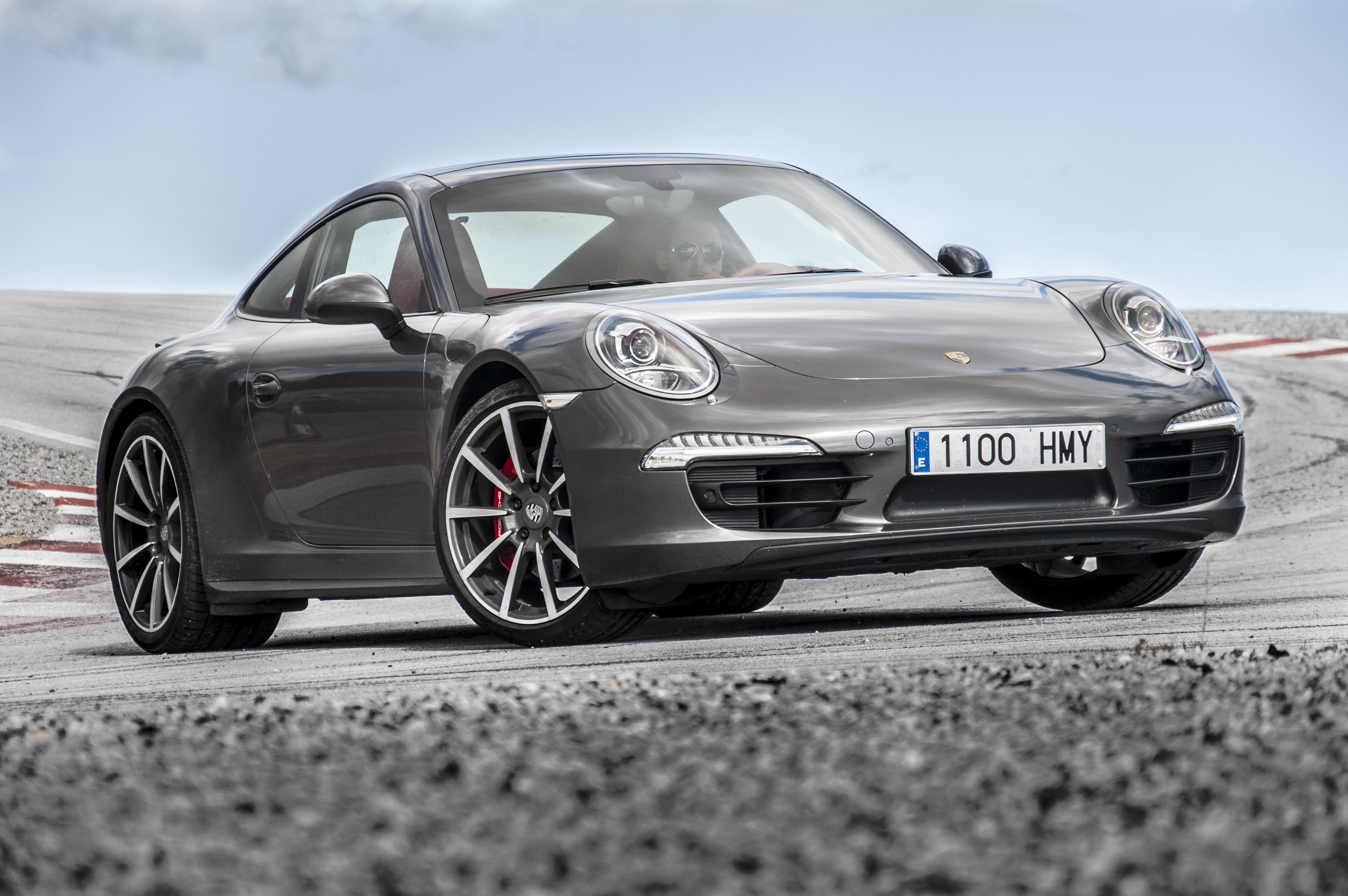
"We didn't have a plan B, but we have a 1997 993 Turbo S that's Viola Metallic. We've always liked that c..."
The Porsche 911 Turbo S is the most powerful version of the 911 sports car, with a turbo engine that makes it super fast. It's also packed with high-end features, making it a luxury car as well.
The Porsche 911 Turbo S is the top-tier version of the 911 lineup, featuring a turbocharged engine that delivers exceptional power and performance. It is known for its advanced technology and luxurious features, making it a standout in the sports car market.
"...ou can see it's a pretty straight. If we had the career GT on the other side, where the GT2 RS is, the 959S..."
The Porsche Carrera GT is a very fast and expensive sports car made between 2004 and 2007. It's famous for its powerful engine and is considered a dream car by many enthusiasts.
The Porsche Carrera GT is a high-performance supercar produced from 2004 to 2007, known for its exceptional engineering and powerful V10 engine. It is celebrated for its driving dynamics and exclusivity, making it a sought-after collector's item.
"...r GT on the other side, where the GT2 RS is, the 959S, the 918. So if you had the career GT, 959, 918,"
The Porsche 959 is a super fast car made in the late 1980s that was very advanced for its time. It's rare and special, which makes it highly sought after by collectors.
The Porsche 959 is a groundbreaking supercar produced in the late 1980s, recognized for its advanced technology and all-wheel-drive system. It was one of the fastest production cars of its time and has become a collector's item due to its rarity.
"... And, you know, I think it's the ultimate kind of 911. So tell us about the license tag there."
The Porsche 911 is a famous sports car that has been around for a long time. It's loved for its unique shape and fast performance, which makes it a popular choice for people who enjoy driving.
The Porsche 911 is an iconic sports car that has been in production since 1964, known for its distinctive design and rear-engine layout. It represents the pinnacle of performance and engineering in the sports car segment, making it a frequent topic of discussion among car enthusiasts.
"..., 918s, you know, they were the only between the LaFerrari, the P1 and the 918."
The Ferrari LaFerrari is a super fancy car that uses both a big engine and electric power to go really fast. It was made in limited numbers, making it very special and desirable.
The Ferrari LaFerrari is a hybrid supercar that was produced from 2013 to 2015, combining a powerful V12 engine with an electric motor for enhanced performance. It represents Ferrari's pinnacle of technology and design, making it a highly desirable vehicle among car enthusiasts.
"...he tag Oslo blue. Oslo blue, Oslo's a, I think a 356 color originally, but my father really enjoyed t..."
The Porsche 356 is an older model that was the first car made by Porsche, starting in 1948. It's known for its classic look and is still loved by many car fans today.
The Porsche 356 was the first production car by Porsche, introduced in 1948, and is highly regarded for its classic design and driving dynamics. It laid the foundation for the brand's future models, including the 911, and remains a beloved classic among collectors.
"...rybody wants exclusivity and so everybody wants a GT3 RS and then within that they want a PTS"
The Porsche 911 GT3 RS is a super sporty version of the 911 that is built for racing but can still be driven on the road. It's lighter and faster than regular models, making it very exciting to drive.
The Porsche 911 GT3 RS is a high-performance variant of the 911, designed for track use while still being street-legal. It features lightweight construction, enhanced aerodynamics, and a powerful naturally aspirated engine, making it a favorite among driving purists.
"I mean, it's a whole thing, so. That Cayenne was a little too profitable, right? Well, you kn..."
The Porsche Cayenne is a fancy SUV that started being sold in 2002. It mixes the sporty feel of a Porsche with the space and comfort of an SUV, which has made it very popular.
The Porsche Cayenne is a luxury SUV that debuted in 2002, marking Porsche's entry into the SUV market. It has been a significant success for the brand, combining sports car performance with the practicality of an SUV.
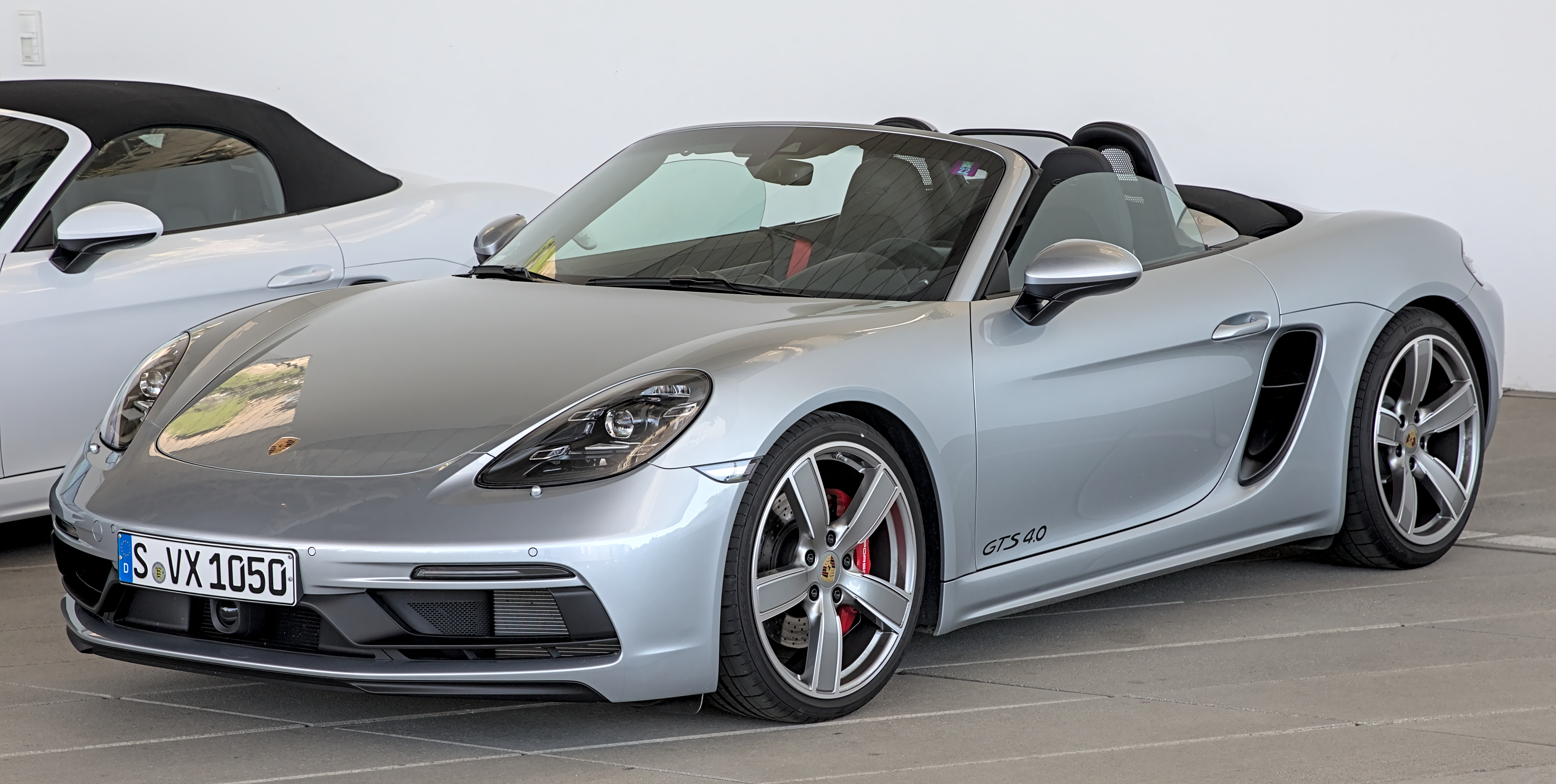
"Well, you know, the Cayenne, I mean, the Boxster, the Cayenne, if you're not, we have all those c..."
The Porsche Boxster is a two-seat convertible sports car that first came out in 1996. It's known for being fun to drive and is a great option for people who want a sporty car without going for the more expensive models.
The Porsche Boxster is a mid-engine roadster that was introduced in 1996 and is known for its balanced handling and enjoyable driving experience. It serves as an entry point into the Porsche lineup, appealing to those who want a sporty convertible.
"...big car we took inspiration from was the Porsche 917 with the very beautiful organic sculptural front..."
The Porsche 917 is a famous race car from the early 1970s that won many important races. It's known for being very fast and has a unique design that makes it stand out.
The Porsche 917 is a legendary race car that dominated endurance racing in the early 1970s, known for its innovative design and powerful flat-12 engine. Its success at events like the 24 Hours of Le Mans has made it an icon in automotive history.
"...is is one of my favorite cars at the Hilton Head Concorde Elegance 1961 Chrysler New Yorker Town and Count..."
The Chrysler Concorde is a big family car made between 1993 and 2004. It's known for having a lot of space inside and a unique look, making it a good choice for families.
The Chrysler Concorde is a full-size sedan produced from 1993 to 2004, known for its spacious interior and distinctive design. It was part of Chrysler's lineup aimed at providing a comfortable and affordable family car.
Select text to request an explanation
All right, for this week of the Collective Car Podcast,
we are in Hilton Head.
It took us a full 19 hours to get here yesterday.
Literally spent Halloween over Manhattan.
So it was quite a trek, but we made it here.
It's a beautiful day.
And I've never been here before.
I've heard wonderful things.
So really looking forward to experiencing it today.
And you can see today is Saturday morning.
It's not the official car show.
And we have this McLaren F1 GTR here.
It's just incredible to see today.
BMW Motorsports brought a bunch of really cool cars.
And there's a lot of cool stuff here.
So stay tuned.
I'll have some really cool stories from the Hilton Head
Concor.
Imagine a journey so rare it only happened once.
That's the spirit behind once.
Exclusive, one-time only adventures
that will never be repeated.
Our next experience, American Muscle Legends,
takes you trackside with the most iconic cars in history.
Complimented by luxury accommodations and behind
the scenes access you simply can't buy.
Spots are limited.
When it's gone, it's gone.
You can learn more at discoveronce.com forward slash muscle.
RM Sotheby's is the world's largest
collector car auction house by total sales.
They are the preeminent market maker
of high quality collector cars and collections
regardless of size or complexity.
By working in partnership with the Sotheby's team
and its network of 80 offices in 40 countries,
RM Sotheby's has established the largest client network
of any collector car auction house in the world.
Join the RM Sotheby's family by connecting with
one of their car specialists at RMSotheby's.com
or contact me directly at GStanley at RMSotheby's.com.
All right, so I have the featured collector here,
Dale Crites Jr. How you doing, Dale?
I'm doing great, how about you?
Good, we're here early Saturday morning.
Thankfully it's not too busy.
I know you will be swamped the rest of the weekend,
so I'm so thankful to have five minutes with you.
Well, we're happy to talk about the cars.
We'll be doing a lot of that, so maybe it's good
that we're doing it now when I have a voice.
Yeah, yeah, so I'm looking at your collection here.
So we've got seven vehicles.
I say vehicles because they're not all cars.
And I see a lot of BMWs, a lot of race cars.
So tell us a little bit about what we're looking at here.
So this is a 72 3.0 CSL Batmobile.
It's one of the original 163 that were homologated
for the class, but it was not originally built as race car.
It was a street car that was later built up
as a race car in 2010.
And I've had it for a couple of years,
and I bought it so that we can race it.
So continuing on the sort of race car theme,
this is an interesting car.
And in the BMW world, it's sort of famous.
It has a name.
Normally I don't name cars because
they're sort of inventory for me.
But I am an automobile dealer.
This is called the Willis Wonder.
It's named the Willis Wonder.
It started life as a 1935 Frazier Nash 315,
which didn't look anything like this.
There may be a 315 out here tomorrow,
though you can see what it would have looked like.
Yeah, there's the Willis Wonder.
Yeah, and so Ron Willis, who owned it,
after World War II, he raced it
and he would drive it to the racetrack,
but he kept wanting to make it faster.
And to do that, he needed to make it lighter.
So he started out by having some magnesium wheels made.
Then later, he actually had a magnesium body for it.
Really?
I still have the magnesium nose cone.
When it was restored, obviously they didn't build
a magnesium body, it's got aluminum.
But this is what the magnesium body looked like.
And later he changed the engine out
and put a two liter engine from a 328
with a Bristol head on it.
So when he raced it in 1951,
it was probably the fastest Formula 2 car in Great Britain.
He raced against Alberto Escarri and others of the...
How scary is it to drive?
Oh, it's a dream to drive.
It's easy to drive, right hand drive, obviously.
So you gotta shift with your left hand,
but it's fun to drive.
I mean, it's very light and got a lot of torque.
Right.
It's a lot of fun.
Now the next one has a ton of patina
and almost this thing's insane.
So these next two cars are unique
and because I'm from Savannah, Georgia
and they raced in Savannah, Georgia originally.
This is 1908 Chalmers Detroit
that raced in Savannah in 1908.
It raced in the light car race
that preceded the Grand Prize of America Cup
that was the no restriction race.
The light car race had to have cars
that were under 1,200, roughly 1,200 pounds
and they weighed them.
And so this is a car that raced
and it looked obviously not a whole lot different
than that when it raced.
Yeah, how much of this is Unrestored original?
Well, so the really unique thing about this car
is it has a 19, early 1900, probably 1910 engine.
When it was found, there were three engines with it.
Both two of them were boat anchors.
The third one had never been run
and so this engine was built to run
and it's not, it's an original engine.
Oh, it's just amazing.
And so when it was Restored, we call it.
Restored, yeah.
It took it apart, put it back together
and pretty much everything you see is original
the wheels are new, made to look old,
but other than that, what you're seeing
is the car from 1908.
And what you're seeing is the ground
because there's so floorboards there.
That's amazing.
That's really cool.
Now, next is an EMF.
Now, I've seen one of these in Cincinnati,
which we talked about earlier,
but this looks like this is a real deal.
So this is the car that started this obsession
if you would, or collection.
It raced in Savannah in 1911.
And it raced in a light car race also
that it called the Tiedemann Cup
that preceded the Grand Prize of America Cup,
or excuse me, the Vanderbilt Cup in 1911.
And EMF sent three cars to Savannah to race in that race.
They were livery 33, 34 and 35, they were identical.
They finished the race in reverse order of number.
35 was first, 34 second.
This car finished third.
It was driven by a guy named Jack Tower.
Interestingly, Barney Oldfield,
who had been banned at that point,
if you know anything about early racing from 1910
because of his match race with Jack Johnson,
he came to Savannah under the guise of a press pass
and he was working for Goodrich.
And the other two cars had non-skid tires on,
and this one was the only one who didn't.
Maybe that's why it came in third.
Are these fuel cutoff here, oil?
So on the other side, you've got your pump
because they're gravity-fed fuel systems,
it would have pressurized either the fuel tank
or the extra oil tank and these valves
to cut off which one the pump was gonna pressurize.
So it's straight four?
Yeah, it's a 233 cubic inch four-cylinder.
And what does EMF stand for?
Everett, Metzger and Flanders,
who were the three principals in the company.
Barney Everett had originally built bodies
for Ransom Oles and Walter Flanders was the real engineer.
He worked for Henry Ford and was Henry Ford's head engineer
prior to leaving and starting the EMF.
Okay, now I joke that not all were cars
but this could be a car here,
even though it looks like a delivery truck.
So, well, originally, so the research on the serial number
says that it was what they call limousine,
which is what this is.
So we're looking at what for my audio only?
It's a 1930 Dixie.
And it's...
Okay.
Okay, and Dixie was the first cars that BMW built.
They built airplane engines before that
and they bought the design of the Austin 7
and turned it into the Dixie.
And the unique thing about this Dixie
is it's the oldest BMW in the United States.
Wow, what year?
1930.
1930.
And it was restored as a limousine.
There's a car or there's a delivery van like this
in the BMW Museum in Munich.
And it was, this restoration was patterned after that.
And since few, not so many people can speak German over here,
we translated.
Parts in a hurry.
Right, well, that makes sense.
Thailand, Iowa.
Yeah, so it's not your traditional limousine.
No, it's got a 750cc four cylinder.
Runs great, it'll run 45 miles an hour.
Now, what was, I'm sorry, what was it called again?
A Dixie.
A Dixie.
So you've got the three leaves here in the logo?
Interesting.
And when did they change it?
You see that in the early logo.
I should know, but I don't.
Yeah, that's okay.
Yeah, man, this thing's cute.
It is, it runs great too.
Scary the driver, okay.
It's fine.
Yeah.
I have to bend my head over to get in it.
If you're a little shorter, you're fine.
Now these next two cars are 1600s.
This is a 1600 GT.
That thing's nice.
And then the other one is 1968.
The other one's a 1970, 1600 Cabriolet.
The GT is an interesting,
BMW bought Gloss GLAS GMBH,
which was another car manufacturer in Germany.
And they bought the company
and their plant was in Dingelfingen.
And this Gloss originally commissioned this body
by Frua, famous Italian designer Frua,
and commissioned this body
and they made Gloss GTs prior to BMW buying the company.
And when BMW bought them,
they had commitments for these bodies,
so they put the 1600 running here in it
and made it a BMW 1600 GT.
It's a beautiful little car.
When I first saw it from the back,
not realizing most of these had a BMW connection,
I thought it was an ASA.
Right.
Right, those little ASAs built by Ferrari.
A lot, well, Italian design.
Yeah.
And you don't see many of them in the United States
because they never brought it over here.
They were also famous for rusting quickly.
The best color camera on the world.
They only made 1300 of them and not anywhere near that many.
Still in red.
Still in existence.
Yeah.
Stunning little car.
So, yeah, this is a stunning little car.
Did you have it restored or was it this way you bought it?
Well, this was owned by a member of the BMW classic car club
named Elliot Schnackenberg.
He passed away and his son was selling his cars.
He had both of these cars.
And my friend who runs the BMW classic car club,
Dirk the grin called me and said,
Dale, you need to buy these cars.
And whenever you-
Those are good friends,
because if they're friends that know what they're talking about
and they give you a heads up.
Well, but the first question's always,
well, if it's so great, why haven't you bought it?
Exactly.
He says, well, I already have one.
So anyway, I bought the GT.
A friend of mine bought this car, also a friend in Savannah.
And I knew he would get tired of it after a while.
So I ended up with it.
And I've just driven this car 700 miles
through the mountains of North Carolina
and it runs fabulous and is really bulletproof.
Convertibles by BMW or-
This one was Bauer built it.
So they did very few of those, right?
Right.
Now the Bauer you usually think of is the one
that's sort of the target looking roof.
But-
Kind of ugly and awkward.
Right?
Well, maybe not.
You're BMW.
All depends.
Not to a BMW aficionado.
Well, this is stunning.
Yeah, great colors.
You know the name of this color?
This is called Recita Green
and it's original BMW color.
Wow.
Well, Dale, thanks so much.
Yep.
I appreciate your time today.
Great, great.
Thank you.
All right, so I am extremely excited
to have a previous podcast guest on.
Kevin McKay, how you doing buddy?
I'm doing well, my friend.
How you been?
Good, good.
I did not expect to see you here today
much less with so many incredible Corvettes
that you brought with us.
So if you would, could you just give me
kind of a little overview,
a little taste of this incredible line of cars here?
Absolutely.
This is really what I love about these kind of cars,
especially American cars, is the history.
Cars that went to Le Mans.
Daytona, Sebring.
It to me is where my interest is
and a lot of the other people's interest is.
So we bought six very, very special cars here
and this particular car is a 1969 factory LED8,
BFG, Stars and Stripe, Greenwood racer.
We got a complete chain of ownership on the car.
It's well documented.
It's restored back to its correct period of time
back in 1972, 1973.
This is one of the cars
that was one of the tire test cars for BFG tires actually.
Big tire warped back in then.
This was started the radial tires.
Wow.
So if they did well, they were on the map.
And if they did poorly, they were forgotten.
You know, that reminds me of the Shelby Super Snake in 67,
which was also a test bed,
I think for good rich tires as well, right?
And they put a 427 in the car.
So this sounds like similar,
like let's see how much the tires can take, right?
Absolutely.
There was another cars like this,
apparently like the Confederate flag
that were sponsored by Goodyear tires.
So it was a big tire war.
Yeah, Goodyear.
Going on between BFG and Goodyear in Good Rich.
So it's kind of cool that the cars have survived,
all three have survived car number 48, 49 and 50.
Wow.
So here's one example that we brought today.
And it's an LED8 and it's red, white and blue.
Yeah, and so you can get more American than this.
All right, what else we got here?
What we have here is a 1968 factory LED8.
This was Doug Bergen's first race car.
He was the original owner of the car.
He had two factory cars.
He had a 68 British green with black
and he had also a 69 Tuxedo black with saddle tan,
which was the winningest Corvette history.
So we were able to find this car.
We started back to Peer Correct
at the Waukes-Gland six-hour race in July of 1968.
Wow.
And the car is pretty much stock.
He just bought it,
put it right on the track right away, believe it or not.
Has a stock tank on it,
because back then you didn't have to have a fuel cell
back then in 1968.
And it was really cool about this car
is that the first person that actually drove the car
was his wife, Jeanne Bergen.
And she had a shirt made that she drove this car
first before he even got in the car, believe it or not.
Oh my gosh.
So she had the shirt, I drove it first.
And I even got, this car was called a Band-Aid Racer
because there were two Bob Johnson's,
Bob Johnson from Marietta and Bob Johnson from Columbus.
So they called it the Band-Aid Racer
because of Johnson and Johnson.
So I was able to get, believe it or not,
Marietta Bob Johnson's jacket from Doug Bergen
after he passed away a couple of years ago.
But yeah, the car is basically pretty much stock,
a little bit on the suspension.
And the car right away broke the track record
back in July of 1968, the six hours of Glenn.
And it's kind of a special car.
And I'm glad I'm fortunate to have on this car too,
which is really cool.
So this is a little nerdy here.
So is it a factory radio delete?
Oh, all factory LEDA cars were radio delete.
But not, I noticed all the AC controls are out.
They did that afterwards, right?
Well, there's no air condition.
They could get air condition with LEDAs.
Right.
They only made 80 in 1968.
They made 20 in 1967.
They made 116 in 1969.
994 speeds and 17 automatics, believe it or not.
But yeah, these are pretty rare.
And this has the original window sticker, actually.
So is that both blank plates factory
or the top one factory and the other one was custom?
This is the factory.
This is all aftermarket stuff that they raised.
So it still on the gauges the whole bit.
The Jones Tac.
Yeah, it's pretty much stock seats
that had on it back then in 1968.
And this is in your personal collection?
Yes, it is.
Oh, nice.
Yeah, one of them.
Yeah, I'm very fortunate to have it.
It's great.
And I fell just with Mr. Bergen, who's 94 years old.
He went out and he bought a brand new C8.
Believe it or not, he's still driving around.
94 year old guy, God bless him.
Wow.
That's what I look at.
The C8s are not bad either.
Another very, very special car.
This car is the only 62 Chevrolet Corvette
that went to the 24 hour at Le Mans.
And the car has been survived.
We were fortunate up to right to Le Mans
and get the serial numbers of all the Corvettes
that went to Le Mans.
And it was owned by a good friend of mine who passed away.
Now it's owned by a guy named Steve Lightstein.
Just a wonderful piece.
But knowing that these cars have survived all these years
and these cars, let's face it, they were beat to death.
They were trashed, you know?
They were converted back to some of them
were converted back to street cars.
This car was converted back to a street car.
It was red on red when the car was found.
Now aren't the, is this, am I correct?
The Rondell lights are off of a boat?
Oh yeah.
Yeah, yeah.
These are off of a boat, right?
Yeah, yeah, yeah.
Did I say that right, Rondell?
Yeah, yep.
Yes you did.
Yep.
Pretty amazing.
You know, kind of a stock body kind of thing here.
A little air defector, fuel injection, you know?
Heavy duty brakes.
Just a wonderful, wonderful piece.
Actually that's the owner of Steve Lightstein
that owns the car.
He's a clean freak.
Steve, thanks for bringing the car.
Hey, you learned something from me?
Right.
Oh my gosh.
It's not great.
You probably told me I just forgot.
Yeah.
And these are the look of the three fours they have here.
They're European.
So I noticed lightweight savings.
They took the all the ornamentation off.
They chromed it and the whole bit, so.
You know, you hear about Porsche.
If it's a race car, it's a decal.
Right.
If it's a street car, it's actual plow.
Right.
Well, Chevrolet has ripped them off.
Absolutely.
Absolutely.
Nice.
Very cool.
Thanks for bringing it.
No.
I appreciate it.
Yeah.
This is quite a lineup.
And actually this is the 1960 Cunningham Le Mans Corvette,
believe it or not.
19 year search.
We found this car actually in a warehouse in West Palm Beach,
Florida sitting there since 1976.
I owned the car for a little bit.
I was in a major lawsuit with it.
The judge decided I'd settle out of court.
And they sold it at a, actually, they sold it at your RM,
Sotheby's Auction House.
Went to the original family of Cunningham,
believe it or not, based Cunningham.
The grandson owns it, Jay Dewey owns it.
And here it is back in his original form of state,
a 1960 Le Mans.
So this is the car we met over?
That's correct.
Because I did not, this is embarrassing,
but I did not realize you were a part of ownership.
Yes.
So when I wanted to review the car for the RM,
Sotheby's Auction, I said who's the biggest Corvette expert
in the world, not knowing it was your car.
So that called you.
And during the interview is when you mentioned you
had part ownership of the car.
And it wasn't until that moment I realized,
boy, I really am interviewing the right guy,
not only because of the expertise,
but because of the ownership.
So it's just a great piece.
All three Cunningham cars have survived,
believe it or not.
And we put them all together at Emilia Island
a couple of years ago,
and I was just such a treat having together.
It was 63 years in the making,
having these cars together actually.
So it's just really, I'm very blessed.
And we went after these cars
because we got the show numbers from Le Mans.
Back then, I'm going back 1993.
You're quite the detective.
Yeah.
Well, I was single at the time.
And so my energy, we all went into finding
a lot of these cars that had a lot of great history.
Yeah. And we have mutual friend Dave Snyder,
the artist who has done a one-off painting
for one of the owners of all three cars in a row.
That is correct.
Yes.
It's cool to see number one, two and three
Cunningham cars at Le Mans.
Yeah.
This is just great.
Also, I don't know if you've met Mr. Briggs.
He's in the car right now.
Oh yeah.
Let's take a look at it.
You gotta take a picture of him.
He's just, he's very focused right now.
He's holding up pretty well.
Yeah.
Not bad for about 120 years old.
Yeah.
So.
Wow.
And B stands for Briggs actually.
Oh wow.
Yeah.
We got an unbelievable documentation of the car.
These cars were ordered out of Don Allen's Chevrolet
right in New York City, believe it or not.
Wow.
Incredible.
So I'll overlay some pictures of it.
The last time it was seen publicly,
not the last time, but at the auction.
This car, you know, I tell people,
what's the condition of the car?
The car was all there, but it was a train wreck.
Yeah.
It was severely custom.
It was this ugly, maroonish, brown, burgundy color.
Yeah.
But, you know, the basic heart of the car was still there.
Well, talk about some of the clues.
Like, wasn't it like the placement of the gas sink,
you know, the gas cap.
There was a lot of stuff.
Absolutely.
One of the, one of the real neat things on this,
is this bracket was still there.
That was there since 1960.
They had two coils, two remote starters.
Had a tool kit, had a shovel.
They took, you know, you decromed the whole car,
but this was still there.
That bracket was still there.
That's been there since 1960.
Right.
And only the Briggs Cunningham race cars had that.
And also, another thing they did,
they took the wiper hole, which was always on the outside.
You look at any other C1 Corvettes.
Yeah, on the outside.
They go like this.
Right.
Yeah.
But what they did was they felt that, you know,
doing 140 miles an hour down the straightaway,
they took the right side and they moved it into the middle
so they would go like this,
so they wouldn't clash anymore.
That hole was still there.
Right.
It was just incredible.
Yeah.
I can go on and on and on with other things that were there.
It was still with the car.
So I had the original blue interior in it.
And this car went to Lamar twice, actually.
It went over there at practice day in April of 1960.
And what happened was they drove around the track.
You've got to require to go 25 laps before you come in
and get any kind of fuel, you know, water, gas,
oil, whatever it might be, they couldn't make it.
So what they did was they extended the fuel tank
in the back of the car.
And the inspectors, when they looked at the car
in back in June now, they never caught the extension.
See, in racing, it's not called cheating until you get caught.
That's right.
It's called innovation.
There you go.
Innovation.
There you go.
So everything was decrombed, if you could see.
You know, the mirror and the wiper arms,
any kind of reflection, all the steering wheel,
all the gauges, all the trimmer on the gauges
were all blacked out.
So just really, you know, just took a tremendous amount
of hours and, you know, the last three cars
we restored at our shop.
And our shop is called QuibriPair
and Balachy and William Allen, New York.
Our website is quibri-pair.com.
And I'm just very blessed to have a great team
of people work behind me.
So it's all good.
Well, yeah, and you got the jacket.
All your stuff is top tier.
I love the history.
It's fun, it's fun.
This car, we also restored.
This is a 1957, car number three, Sebring,
second-hand class.
The gentleman owned this car.
It had the cost of 1964 down in Texas.
This car was a drag car after it raced.
Cowell Shelby raced this car, believe it or not.
Believe it or not.
You know, he's a Ford guy, but he also raced,
he was involved a little bit with Corvettes back in 57.
We got a picture of him with his overalls on,
you know, real country boy back in the day.
And went to a great home.
John Joseph owns it out of Rhode Island.
And we did like an autopsy party before the restoration.
An autopsy party, I love that.
Before the restoration,
we had a group of maybe a dozen or so people,
experts look at the car and what really caused our ride
because there were three cars that were actually
went to Sebring, car number three, car number four,
and the practice car, P3.
And I had a photograph of the car,
which was my smoking gun, one photograph, smoking gun.
So all these other experts out there,
were trying to decipher what that car really was.
They said, listen to me, I don't know within five seconds
of that's car is the three, the four or whatever.
Kevin, we know you're good, but you're not that good.
I said, okay.
So I'm trying to be a smart ass, right?
So they're walking around for a couple hours.
They don't know what it is.
They know it was a Sebring car
because it had the O dash number, leaf spring,
coil springs, shocks, which only went on the Sebring cars.
So I had a picture of a car
before the race, the car was actually spotless.
During the race, there was a big crack
underneath the front grill panel.
And how that crack got there,
because what they do when it went into the pits,
they check the brakes, right?
Maybe it had a flat tire.
Who knows what they did.
So the guy with the floor jack probably went too hard up.
Crack, the panel, you know, it's all about timing.
You don't want to be in, you want to get out.
So before the race, no crack.
During the race, there's a crack.
Cars stripped down of bare-fiber glass.
I walk over, the crack is still there.
Wow.
There's a repair that's still there.
And I said, I know what it is, guys.
I'm going to have a cup of coffee, I'm going to relax.
It's like a fingerprint.
And they, exactly, it's a fingerprint.
And they're looking at it and he goes,
where the hell's McKay, no.
Just say you're sorry, you give up,
and I'll tell you what it is.
All right, Kevin, we give up, we're sorry, what is it?
It's number three car.
Well, how do you know for sure?
Hold on, I take out the picture.
I see, you see that crack there?
Yeah.
It is before, here it is after.
Yeah.
There you go.
That was it, that was my smoking gun.
Plus there was other things that were,
but that was really the smoking gun.
Yeah, that's amazing.
It was really, really, really just an amazing car.
So.
Well, this has been an amazing run of cars here,
but I know we're ending on a really spectacular car, right?
This car is over the top.
One of two Hyphen SR2s, 1956.
So we got here basically a 56, 57, 60, 62, 68, and 69.
All in a row here.
Just different generations and years.
Wonderful car, this car went to Seaboring in 1958.
Car, it's purple.
What was really neat about this particular car here,
the guy, Paulie Earl, had a son who raced a Ferrari
back in the 50s.
Your dad's a big shot in GM.
So the upper brass got on the old man's case,
he says, hey, why's your son racing a Ferrari?
He should be racing a Corvette.
Let me talk to my son.
Jerome, you gotta race a Corvette.
You're embarrassing me at work, okay?
But dad, I really don't like the way to look of the Corvette.
I like the way to look at the Ferrari.
He goes, listen, I'll build you something,
it'll be so over the top, you're gonna love it.
So he built two Hyphen cars.
This is one of them.
This is the first one built actually.
And of course, when his son saw it,
he goes, oh, my dad, dad,
this is the coolest car I've ever seen.
And then he started racing a Corvette, okay?
And after a while of racing it, he got rid of it.
The car was drag racing for a little while.
It was sold on an open lot.
And the car was owned by a gentleman named Rich Mason
back in 1987.
I remember I was at Monterey looking at the car.
And we saw this car too as well,
put it back to period correct.
But when we stripped the car down,
we could see all the purple paint on the car.
So we saw this car was at Sebring,
car number three in purple, believe it or not.
Sponsored by Nicky Showlegs.
That was the colors purple.
Just great.
Just had the hell of grand wheels on it,
fuel injection, special leather interior,
custom interior of the car.
Now when they built this,
was it part of the styling exercises of the time?
We have so many documents of this particular car,
work orders, and engineering photographs.
It's just truly amazing on the car.
Yeah, it's just such a beautiful car.
Yeah, it really, really is.
And it's rare that you see the trunk open here.
It's got it open.
There's a trunk.
And there's the hell of grand cap.
And it's really good.
Just, you know, we got the non-DOT tires,
NOS tires we were able to collect for the car.
And we put it back to its period crack
back in the racing day.
And special hood and the latches.
I mean, this is all functional.
I love this part here.
It's just, what can I say?
They also extended the front end a little bit,
I think by like four inches.
Yeah, it's just a stunning car.
A large fuel tank.
Well documented.
And all these cars here,
were all NCRS American Heritage Award.
They went through an amazing,
extremely difficult path
to make sure all these cars were their cars back in the day.
And since I'm a really,
people were fanatic on this.
We had everything old, every DOT,
every T-Cross and a whole bit.
So it's just been a great ride here.
So there's no question that these cars
that we representing here
are the cars back in the day.
Yeah.
Really important.
What an amazing collection.
I was so fortunate to find you this morning.
I love it.
And thank you for the tour of this incredible cars.
Now tell us, what's your website?
Best way to reach you?
Yeah, real simple here.
The website of the best bet is just CorvetteRepair.com.
That means real simple.
Been there over 40 plus years.
I'm getting older, but I still love what I do.
You still have the energy.
Love the energy.
Thank you buddy.
Pleasure always.
Thank you very much.
Take care.
All right, so I have Rory Ingram,
Porsche Dynasty right here.
Happy to have you on the podcast.
Thanks for letting me talk to you a little bit.
Absolutely, Greg.
Now this is amazing.
So fun stories here.
You've got three cars at the Health Ahead Concord Elegance.
Slight change of plans at the last minute, right?
So why don't we talk about that in a minute,
but tell us what's behind you.
So our 918 is behind us.
It's Viola Metallic from the little bills
I've been hearing.
It's a popular color.
It's unique.
It looks black in the shade or any kind of shade.
In the sunlight, it's really dynamic.
When we were ordering the 918 originally,
we had some neutral colors in mind
that we thought it's such a big car
that when we saw them projected on there,
immediately we didn't like the neutral colors.
We didn't have a plan B,
but we have a 1997 993 Turbo S that's Viola Metallic.
We've always liked that color.
And as soon as we put it on there,
that was the decision, so yeah.
And it's hard to keep playing, isn't it?
Here especially, I don't know.
It's like everything has got some dust and stuff,
but it's a dark color, so it doesn't show dirt well.
Yeah, and now as I mentioned,
there was a change of plans here,
and you kind of show this a little bit.
What's with the little red die cast car on the back here?
My degenerate friends today brought that.
They stopped and brought me some banquet beer,
which is the only thing I drank and found that at the.
But we were good.
You can see it's a pretty straight.
If we had the career GT on the other side,
where the GT2 RS is, the 959S, the 918.
So if you had the career GT, 959, 918,
you have a very straightforward Porsche supercar.
It makes total sense.
Yeah, production kind of, you know,
supercar production from Porsche story.
So where's the career GT?
So when we got here, well, we haven't seen sun
for about 10 days because of the Hurricane with Carolina.
Thursday when I was moving cars,
unfortunately our CGT, the clutch crapped out
and it's going to be an expensive fix.
We're trying to figure that out,
but last minute I had to throw in the two RS.
It was, you know, easiest thing to put in.
But unfortunately, if you had the CGT here,
it's a pretty straight story of Porsche supercar.
And you know, Porsche has done an amazing job
with the three technically supercars that they've made.
The 959 and the 80s being such a, you know, icon.
It was a forbidden fruit here in the United States,
but just, this was space sex technology
at the time on the car.
I mean, and it carried over in generations afterwards.
So, yeah.
Yeah, so tell us about this.
This is the sport model, right?
Yeah, we had a comfort before
and we traded up to this sport.
They made about 29 of them.
They were lightweighted from the factory,
substantially more horsepower, about 515,
compared to 450 versus the comfort.
Has traditional coilover versus the ride height adjustable,
which is a weight savings thing.
And, but it's just, I came of age in the 80s.
I mean, this is just so 80s
and just such a badass supercar.
And, you know, I think it's the ultimate kind of 911.
So tell us about the license tag there.
Is it number four?
It is number four, yeah.
So the 959S is, so yeah.
What else is different now?
I see this as a factory roll bar.
It does, so that was the unique thing.
They were going to do a spec race series
with these cars to promote them.
And so the S's came with a roll bar from the factory.
Now is this the original unrestored interior?
All original, yeah.
Wow, so you got multi-colored fabric on the seats.
Yep, that's how the, that gradient was a 959 feature.
Wow.
Now, so differences on the inside,
differences with the engine as well,
differences with the suspension.
The engines had, so they had,
so they had sequential turbocharging
to try to mitigate the lag of the technology at the time.
So they were bigger turbochargers,
which is where the horsepower difference
between the comfort and this is,
but they lightweighted these as well and yeah.
So 29, how many of the comfort are there?
I mean, you know, it's 300-ish.
So they're everywhere from 290 to just over 300.
So you're talking 10%, less than 10% were the sport?
Yeah, and the 959, as iconic as it is,
it really was a precarious time for Porsche as a company
and they almost bankrupted them.
And, you know, Porsche has learned its lesson.
You know, they made too many career GTs.
And then, you know, 918s, you know,
they were the only between the LaFerrari,
the P1 and the 918.
I think they were the, you never make money on these,
but I don't think they may be lost as much
as the other ones, so.
Yeah, so.
All you need is one seat belt recall
and you've lost your whole profit margin on those cars, so.
Now, you and your family are historic Porsche folks.
You know your stuff.
So what went into finding this particular one?
Again, we had a comfort and we had the chance
to upgrade to this and.
So you knew the history of the car and.
Yeah, and I mean, just, you know, within the 959,
you have a 959, you have a 959S,
which is, you know, subtle, but kind of an upgrade.
And when we started out, we didn't,
my father got his first Porsche at the age of 50,
never with the goal when he got his first one
to be too simultaneously and a hobby turned into a sickness.
Obviously became a pretty, pretty well-known collector,
but early on we were hoarders, collectors,
and connoisseurs and we used to try to buy
the best we could afford and then we could sell that
and then upgrade and that's kind of what we did
with the comfort to the 959S.
Well, now we can pretend this is a Carrera GT,
but what you actually brought is very special.
It is, I mean, it's like the tag Oslo blue.
Oslo blue, Oslo's a, I think a 356 color originally,
but my father really enjoyed the process of speccing the cars.
So you guys ordered, specced it new?
We PTSD-ed this, but it's a very Saunders-Woosh inside.
It's got modern cars.
Explain Saunders-Woosh for our folks.
So it's the special wishes program that Porsche had
in the 70s, 80s that basically at the time,
increasing profitability on cars of taking them off the line,
which didn't cost them a dime and charging more
to put special wishes in them.
And nowadays, as much as Porsche charges,
as much as their production is,
they're more hesitant to do that as much as they make.
It's interesting though,
because the crazier stuff specced out nowadays,
it's, you know, the cars are worth more.
You know, when you can add.
Everybody wants exclusivity and so everybody wants a GT3 RS
and then within that they want a PTS
and then within that they like to do stuff.
And again, Porsche does that and it's profitable for them,
but it's, their production, back in the day,
they loved to do that because they were increasing,
they weren't as profitable as they were
and they loved to increase the profit of each car.
Today, it's a little dicey here,
but everybody wants to be special.
So you don't want just a GT3 RS, you want your GT3 RS.
But Porsche has that whole palette of approved colors.
And, you know, it's a different price.
PTS is a different price from model to model.
I mean, it's a profitability thing,
but to unlock more colors, you got to pay more.
I mean, it's a whole thing, so.
That Cayenne was a little too profitable, right?
Well, you know, the Cayenne,
I mean, the Boxster, the Cayenne, if you're not,
we have all those cars.
I mean, there's a lot of Porsche files
that kind of don't think those are Porsches,
but I think they definitely have DNA of the Porsche.
And I think those, I mean, the Boxster saved the company.
So, you know, yeah.
If you don't like it, you should be thankful for it.
Right, yeah.
Can you point out some of your dad's Sondra wishes?
The deviated stitching, the two-tone leather,
the Modricana seat inserts.
My dad loved the piping, the painted belt pass-throughs,
all the painted accents of the exterior color inside.
I mean, yeah.
Wow.
He enjoyed doing this,
and I think he did it, he excelled at it, I think, so.
Oh, absolutely.
Yeah.
Now, I noticed this still takes the key.
Yeah.
Is this the last year of the key?
No, the 991s took the keys.
We have some 992s, and they take keys,
but now they're getting into, you have to have a key,
but just a, there's a button inside.
It's a very opinionated thing in the Porsche world, so.
So I do a newsletter, and I do interesting topics.
So one of my future topics is the future anti-theft device
will be the ignition key, right?
The one thing you wanna feel.
If you have an ignition key and a manual.
Manual's already.
You can leave the door, you can leave the windows down,
nobody can drive it, yeah, yeah, so I don't know, yeah.
Well, you did a great job spec-ing this car out.
Yeah, it's a, I love the color,
and it's a collectible model,
and this is from Porsche, the factory.
This is the highest horsepower ice engine,
internal combustion, without any hybrid aids.
I think the new GT2RS, the speculation is,
with their new electrified turbochargers,
it'll be a twin turbo electrified turbocharger car,
so I think these will become even more collectible.
What's the horsepower?
Just a tick around 700.
Oh, wow, yeah.
Well, Rory, thanks for being on the Car to Car podcast,
man, I appreciate it.
All right, so I'm very excited.
We've got this incredible car here,
and I've got Andrew from SCAD, Andrew, how are you?
I'm good, how are you?
Good, good, well, tell me, what does SCAD stand for?
So SCAD stands for the Savannah College of Art and Design,
and as of last week, we just got ranked by Red Dot,
the number one design school in the Americas and Europe.
Wow, that's incredible, and I have a minor history
with SCAD, is I actually toured the campus
back when I was going to go to college,
and I just remember being like so super cool,
and I always had a great name,
and to see it decades later,
actually designing a car here is truly amazing.
So tell me, what are we looking at?
All right, this car you see here is called Ether.
It is one of two fully functional prototype cars
that we designed and built in only one year as students.
One year to build this thing?
Yep, one year.
Now, what were the goals of the car?
Obviously, as a designer, you just don't say,
hey, I'm gonna do something,
like what were the goals of this project?
So the goals of this project,
and the reason that both of these cars exist,
is to get the younger generations
excited about driving again.
So you're a younger guy, are you excited about driving?
I'm very excited.
You are, okay.
But as we know, a lot of younger kids
maybe don't want their driver's license immediately, right?
Yep, so we found that about, this is crazy,
but about 75% of 16-year-olds from Generation Z
don't wanna get their driver's license.
75%?
Yes, it's crazy.
Wow, okay.
And we really found that there's nothing out there
that excites a young kid to drive.
And there's a lot of other alternatives,
like your parents could drive you around,
you have Uber, Lyft,
or you even just have a friend with a car,
so there's no need.
Right, right, yeah.
And so, obviously this is an exciting looking car,
but tell us a little bit more specifics,
like what's it powered by?
What was the thought behind the center seat?
Okay, so I'll start by speaking to the design of the car.
What we did was we looked at what kids,
what is their first interaction with driving?
And we found that that's almost always in a video game.
So, the three seater setup mimics a racing simulator.
So in your simulator, you have your seat
and your steering wheel that's very much
like a gaming controller.
And then you have three monitors in front of you,
that would be your game display.
Oh, wow, okay.
But what we did here is these three screens
are actually for your cameras.
So instead of mirrors, we did,
there's the display for your rear view
and then your two side view cameras.
Wow, okay.
That's a great mindset to make it look
like a gamers console.
And then you have room for your two best buds behind you,
like the McLaren F1,
which is obviously one of the most famous
modern cars existing.
And then something great too about this setup,
so number one, there's no car under $3 million
with this setup.
Number two, even if you're in the back seats,
you get the front seat experience.
So in a four seater, you got two people blocking you.
Right, right, yes.
And it's the ideal seating position for driving.
Absolutely.
Now, I know you mentioned it doesn't have headlights,
but it does have some integrated lights here, right?
Yep, it's got the DRLs.
And these are very powerful.
They do light up the road at night.
And then what we would like to do
is add in the projector lights and the high beams.
And so you mentioned to get the attention of the young kids.
What about the exterior design that would,
the thought press was,
let this will grab their attention.
So a couple of big cues here.
Number one, you could see it's a very, very soft,
organic feeling car.
It feels very much hand sculpted,
like some of the older vintage race cars.
So a big car we took inspiration from
was the Porsche 917
with the very beautiful organic sculptural front.
Then if you look at the rear of the car,
it's all open, exposed.
We were talking about video games before
and we designed the rear to be very beautiful.
Here's our electric motor that sticks out back here
and very much like a gaming computer.
Okay, so it's an all electric motor.
Yes, it is.
And you got these crazy and incredible brake lights here.
Yep, so those are our tail lights.
And something really cool.
I don't know, you might be able to get on camera,
but if you squat down a bit,
you'll see they're in the shape of a Z.
Oh yeah.
That's because us, the designers of the car
are from generation Z.
But we also designed the car for generation Z.
Oh, that's super cool.
So it's a bit of a maker's mark impression on the car.
And then it's hard to see.
I'm trying to shine a light here.
We actually have this back lit.
So this panel, actually, I guess I didn't mention.
Oh, the panel lights up?
Yes, and so the exterior of the car,
as well as the interior is all 3D printed.
Oh wow.
So we 3D printed with large scale industrial printers
and then we reinforced the panels with carbon fiber.
We did this because I mentioned the car was done
in one year from sketch to functional prototype.
So the blue body printed in eight different sections
and it only took one week to print.
Oh wow, okay, great.
So on a very aggressive timeline,
this was a new method of manufacturing
that we wanted to pioneer and push and see what we can do.
So it's, but re-wheel drive?
Yes, re-wheel drive.
Okay, electric powered, approximate,
I can't say horsepower.
So it's got the car, some specs about the car.
It's 130 horsepower, 180 foot-pounds of torque,
but the car is only 1,900 pounds.
Yeah, that's what I'd say.
So the power of the rate, yeah,
it's very snappy, very responsive.
Now what does it take to get this street legal?
So.
Cause I want one.
Yes, this is the prototype.
This is not production.
A good bit would change if we were to push into production.
And what this needs is, it needs,
I believe right now it would need mirrors.
I don't think that the cameras are legal yet.
It doesn't have airbags too.
So there's a lot more development that we could do.
Now you mentioned this is a ever going project.
You mentioned adding headlights.
What are some other stuff that you think would be changed,
addressed, improved upon, added in the future?
Honestly, the more we drive it and test it,
the more we just little quality of life improvements.
Okay.
Tuning the motor too.
So right now it's capable of 120 miles an hour.
We do have it governed down just for showcase purposes.
But definitely, yeah.
Now is this the first car that SCAD has built?
No, so the first car SCAD built was done in 1999.
It was called the ExoSpider.
It actually was shown here in 2000
at the Hilton Head Concourse.
Oh wow, okay.
So yeah, it was a great full circle moment.
They've done other cars too since then.
They've also done boats, jet skis, they did a hovercraft.
SCAD's always looking to do big projects
and they just want to showcase number one,
whatever we're capable of as a design university.
And number two, giving the students the opportunity
to work on projects like this.
Ah, incredible opportunity.
Now, I'm absolutely in love with this.
I think it's gorgeous.
I think it's super special.
I would love to have one in my garage,
but this isn't the only car here or vehicle here.
So let's check out the other one.
All right.
So now this, is this a new build?
So this car is called Tier.
That car over there is Ether.
This is Tier.
So SCAD has two campuses in the US.
We have the Savannah campus where that car Ether was developed
and then the Atlanta campus where Tier was developed.
We also do abroad in Lacoste, France
and then we offer online classes.
But you might be asking how do these two cars
play into each other?
They look so different.
Well, if you think about designing for a teenager,
what are two things teenagers love?
They love freedom and power.
So this car is an off-roader, all-terrain vehicle.
That's your freedom.
You can go anywhere.
And then that's power, the powerful Roadster.
Yeah, this is really cool.
I'm trying to picture these doors.
Do they close up entirely or is there an open space?
Yes, they do.
So they close up entirely.
Oh, wow, look at that.
This one slides in here.
And then this one actually pivots.
Ah, that's where I'm going to do the math.
I was like, I don't see how this thing.
Oh, look at that.
So they actually designed and engineered
a full door mechanism here.
That's very cool.
But yeah, this one is very much like a,
almost like a social gathering piece.
So you can bring your friends with you.
The seats pivot around too.
It is electric as well.
I mean, look at the hinges on this.
What is these hinges made out of?
I believe that's aluminum.
Wow, look at this.
Wow.
And then so the ether car was 3D printed.
This car is fiberglass.
So C&C molds and then composite parts.
So same electric powertrain?
Not the same powertrain.
Believe it's a front-wheel drive electric motor.
OK.
Wow.
And then saw the axle in the rear.
And when was this this year as well?
Yes.
So these cars were built simultaneously.
Does this light up this dash area here?
Yes, it does.
So this is just to mimic like a heads-up display.
OK.
Wow, very cool.
So are you working on another car for next year?
We have some projects in mind.
I don't know how much I could speak about them.
You can tell me everything.
There will be future projects.
And when our professor swings around too,
I'd love to connect you with them as well
to speak more about those.
OK.
And how can folks see these online?
Is it on the SCAD website?
Yes.
So scad.edu.
Both cars are featured on the website.
We've also been featured in Forbes Magazine online article,
as well as Dazeen, which is a big design magazine,
and then some other big media outlets.
Awesome.
Yeah, if you just Google SCAD cars or SCAD ether,
SCAD tier, tier is spelled T-Y-R.
You can find more.
Yeah, more info.
Awesome.
Well, thanks so much for your time today.
Of course, thank you.
All right, this is one of my favorite cars
at the Hilton Head Concorde Elegance 1961 Chrysler New
Yorker Town and Country hardtop wagon.
Now, this thing is fully loaded and it's
a spectacular restoration.
What I love about this car, it's the colors, obviously.
But it has the big engine with the dual quads.
But the work on it is absolutely fantastic.
You can see some of the grease markings inside.
The quality of the restoration is amazing.
The owners had it for about 20 years, and it's a wagon.
It's a no-post wagon, which apparently was only
for about three years, but fully loaded with options,
including driver and passenger swivel seats.
It's got, he just had the record player plane.
Factory AC.
It has a limited slip rear end.
And yes, it does have the third row in the back.
But it's the big fin car here.
Look at this thing.
And I just love this rear end because you've
got the little bumpers when the tailgate's down.
You've got the handles here.
If you need those.
But it's funny, he's got the license tag fins.
Oh, look, he's getting a ribbon as we speak.
Blue ribbon, so there we go.
It's got all the options on it.
Very nice.
Got the blue ribbon.
Request an explanation for:
16 cars
Scroll for more
16 cars featured
Request an Explanation
Heard something you'd like explained? We'll add it to this episode.
Sign in to request explanations for terms you heard.
Want to learn more?
Browse our glossary for plain-English explanations of automotive terms, jargon, and concepts.
See something that's not quite right? Our annotations are AI-generated and can sometimes miss the mark.
Click the flag icon on any annotation to suggest a correction.