0:00 / 0:00
#399 - Inside Auto City: 67 Years of Dealer Wisdom

#399 - Inside Auto City: 67 Years of Dealer Wisdom

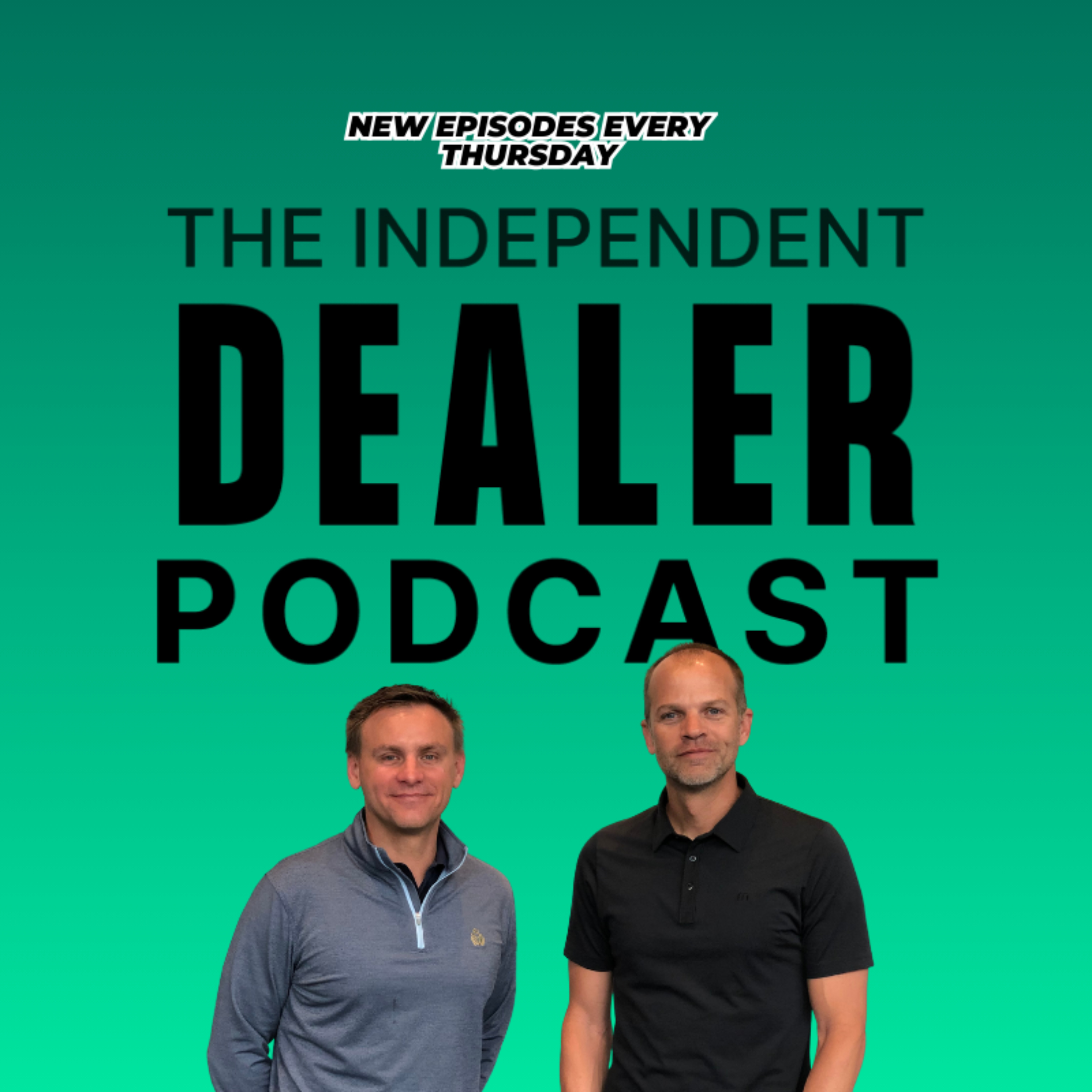
The Independent Dealer Podcast Oct 02, 2025 46 min
0:00
0:00

About this episode

Blake Ingram shares the rich history of Auto City, a dealership that's been in business for 67 years. He recounts his unexpected entry into the automotive world, taking over operations from his father and navigating the complexities of running multiple locations. The conversation delves into the challenges of managing growth, leveraging debt, and adapting to market changes, including the impact of the 2008 recession and the recent pandemic. Ingram reflects on the evolution of the industry, the importance of maintaining strong relationships, and his vision for the future of car sales amidst changing consumer behaviors.

Topics: dealership history family business dynamics growth strategies market challenges debt management customer relationships industry evolution future of car sales
Select text to request an explanation
So I show up, and I'm actually in this office, although it was much smaller at the time, and
I'm thinking, why am I here?
And it turned out it was this bookkeeper and his manager, and he had them come in, and he
actually told them what they'd found and fired them on the spot.
And I'm in the corner of this office thinking, why am I here, I'm like, you know, 20 years
old, I'm like, I don't know.
Hello, and welcome to this special edition of the Independent Dealer Podcast, coming to
you in person in the flesh from Auto City.
Luke, who do we have with us today?
I tell you, it's, I love this setup.
We got multiple cameras, and this is one of our biggest interviews ever, I think.
My friend, Blake Ingram from Auto City in Dallas.
Thank you for being here.
Oh, absolutely.
Glad to be here.
Yeah.
We're actually with him, so he's not here, but yeah, okay.
We are going to kind of talk about your history in the car business.
Auto City, 67 years in business.
Absolutely.
You're not 67.
I'm not 67.
So, so how did we get there?
Oh, well, I mean, you're familiar with this process.
Yeah, I am.
And it's a pop, I had a dealership, right?
Yeah, that's a PhD.
Yeah.
PhD.
Yeah.
Absolutely.
I was in 1958 and started just with one car.
I actually started curb stoning.
Yeah.
So, yeah, so he was actually a curb stoner when he started.
That, you know how many times that has come up?
Like, a lot of times we've interviewed the person, well, I was a curb stoner.
Yeah.
And people get all excited to you about curb stoning, I don't care about curb
stoning.
Yeah.
Yeah.
Yeah.
So, yeah, that's what he did.
And so, you know, he got successful with that and had a couple of different stores
and as I was growing up, and this store was probably one of his third or fourth stores that
he opened sequentially, not at the same time.
Never, never, he didn't have multiple at one time.
No, no, no.
Just this one store and this store opened in 1976.
76 right here.
This place is older than me.
It is.
Ambassador older than me.
It looks better than you do.
You're right about that.
It was much smaller.
So, at that time, it was a little portable building.
It was like just, I mean, like 500 square feet, just portable building.
You know, tire strips on the lot and just the old school.
So, I really had no intentions of doing this and so I was at Southern Methodist and had no
idea what I was going to do.
But dad called me and said, hey, I need a favor.
I need you to come help me out because I heard that there was some employees in
and dad was an old school wheeler dealer.
I mean, he could, he did not want to trade with my dad.
You were, you were going to lose.
Yeah.
Um, but you know, numbers were not his thing.
So, was he by here pay here or was he just retailing cards by your pay here from day
one?
Wow.
Yeah.
Yeah.
Back in the day when really, you know, he would tell customers, don't worry about
it.
I'll tell you when you're done.
That would be perfect.
Right.
Yeah.
So, you know, if you were to sell cards and your down payment would be your cost of
car.
Yeah.
Yeah.
Absolutely.
That's the way it was.
Yeah.
Um, and so that's what he did.
And so he asked me to come in and help him find that, um, in puzzling.
Did you, did you have, uh, I mean, were you working on an accounting
degree or how did he know that you were going to be able to find that
money?
I had some accounting at Southern Methodist.
And so I guess he just assumed that I could.
Um, so I came in, spent a couple of weeks working here and, uh,
found it fairly quickly.
Really?
Yeah.
And it was a substantial amount of money.
Wow.
And so, um, showed him and he said, Hey, I need you to show up in the
Monday morning here.
And I'm like, I can't, I got classes.
And my dad was like, no, you don't understand.
I need you here.
And so my dad, you're like, yes, sir, I will be here.
So I show up and I'm actually in this office, although it was much
smaller at the time.
And I'm thinking, why am I here?
And it turned out it was his bookkeeper and his manager.
And he had them come in and he actually, um, told them what they'd
found and fired them on the spot.
And I'm in the corner of this office thinking, why am I here?
I'm like, you know, 20 years old.
I'm like, I don't know why am I here?
And he told the manager that if you will show me how to do the
books over the next few weeks, that he won't prosecute him.
Show me as in you.
As in me.
I was like, I'm like, I'm in school, but he's like, well, I need
you to do this.
And so I did.
I had to start doing the accounting for the company.
Any idea how big the portfolio was at that point when the
money was being sold?
Yeah, absolutely.
At that time, there was 350 accounts and the portfolio
balance was right about $700,000.
Okay.
And what year was that?
That was 1984.
Okay.
Yeah.
Wow.
That's a great gig.
So, so from that point, you were, you were, I don't know,
forced it or thrusted the dealership.
Was it that moving forward or did you go back to school,
finish your education or did the bug bite you as well?
And you, you were like, okay, I really, it's in my DNA.
I like this.
This is more like a flea bite.
Not a, you know, getting into the, to the car business.
Not a bug bite.
Well, so I, I came in and did the books and then he hired a
bookkeeper and I trained that bookkeeper and I went back to
school.
That bookkeeper actually went nuts.
Seriously.
That makes sense for, for the buyer payer.
Yeah, absolutely.
And so I had to come back in again and kind of clean up
things and then hired another bookkeeper and this
happened another time.
This one didn't go nuts.
He just didn't pay anything.
Yeah.
So this time I was like, okay, I need to convert everything away
from all of this paper because that's part of the problem is
that everything is, you know, the old peg boards and the paper
and just wasn't a lot of control.
And so I came in and converted everything to computers.
And that was in 1986.
Were you using like Tandy 1000s?
I mean, what are we talking about in 86?
That's a, that's a long time ago.
Yeah, it was.
I mean, it was, I remember being very proud of the
computer because it had a one gig drive.
And it's like, it's like, it's nothing now, of course.
Right.
Yeah.
We used go Barnes had a system that was really, really good.
And so we used that system.
And then after school, I just, just kept working here.
And years later, I asked my father how I ended up here
because I did not make this decision consciously.
Yeah.
I did not make this decision.
I'm going to be a used car dealer.
Yeah.
I went to school, got my degree.
But yet I ended up selling used cars.
And he said, well, I bribed you.
And I'm like, I don't, I don't think that's true.
And he goes, no, no, no, I bribed you.
And I was like, I don't, you're going to have to explain that.
And he goes, no, I, when you got through converting
everything to computer, I gave you a bonus.
And I was like, that's right.
I was 21 years old and you gave me like a $50,000
bonus or anything.
I mean, at that point.
Wow.
That's a, that's a lot of money.
Yeah.
And so, I mean, he did.
He bribed me.
Yeah.
You saw the path to financially independent life at that point.
And when what you saw is maybe your dad slinging $500 cars
for cash and collecting payments.
Well, I was doing the books.
And you got to do the boat.
So you knew.
I saw.
Yeah.
Absolutely.
Yeah.
That's so interesting.
Yeah.
So anyway, I just started right after school.
I just picked up full-time here and just kept doing it.
Yeah.
Dealers wonder what the next step will be for themselves,
their dealership, you know, will their,
will their kids be interested?
Yeah.
And to a good point, you know,
sometimes it does take time.
They might not show interest in their teenage years
or in their early 20s or something,
but the opportunities come up.
And sometimes it's the best people that you wouldn't think
would be the best operators or have no interest
come in from a different genre.
I mean, it doesn't seem like you were a car guy.
Oh, no, I'm still not probably a car guy.
Yeah.
No, I'm probably, I love cars,
but I'm really not a car guy.
But you love the numbers.
Yeah, I love numbers and I love the art of the deal,
if you will.
So, I mean, I could be selling widgets and, you know,
the fun part of the business is how to make it all go faster
and quicker and do more.
That's the part that I enjoy.
Yeah, that's, and you did that.
At what point did you look at opening that second location?
Like, where did that, where did that come from?
Because it sounded like your dad was maybe content
with just right here.
He had a second store that he was a partner with
where he didn't run it, but he was just funding the person.
When that person wanted to retire,
that was my opportunity to go ahead
and pick up a second store and bop that guy out.
And then over time, just as opportunities come along,
then adding on stores here and there.
But it's always this challenge,
and it always feels like it's a step forward
to open up new stores.
But I'm sure you've talked to a lot of people
that don't really have good experiences with doing that.
You have to be on your P's and Q's
to open up multiple stores.
And we've seen disastrous consequences
and people over leveraging to open up stores
or spreading themselves too thin to open up multiple stores.
But it was different back if you go back to the 90s.
And at that time, and this is all pre-internet,
it was drive-by.
So it was like, okay, I need to be visible
so that people as I go by can see my stores.
Well, that's all gone now.
You don't need drive-by.
Yeah, you can have a warehouse.
That's right.
So having all of these stores is really
not a plus anymore in my opinion.
Yeah, and we're all in 35 or 45 interstate here.
There's hundreds of thousands of cars running by here.
But when you're looking back at that point,
acquiring these locations have probably done well
just in themselves in Dallas real estate, right?
They have, yeah.
So that's certainly been a plus
because if you can pick up the real estate,
that has been a huge plus.
Do you feel like that's the,
I guess I'd ask what was the catalyst
for you opening multiple stores?
Because you got up to five or six at one point.
The highest we had was seven stores.
Seven, yeah.
So were those all because I want to be in that community
and I want to sell more cars in that community?
Was it real estate play
because you saw great deals on property?
Was it to grow your, like,
what pushed those to seven?
Because that does sound like a lot.
That's an operation.
Yeah.
So unfortunately that answer is all the above
because, you know,
there are times when we opened up stores,
like the store in our Lancaster,
it was just a great opportunity.
I mean, it was one of those things where
I saw the facility.
It was really, in my opinion, too cheap.
Had to have it.
And so bought it and did really well.
Another store is similar.
But at one point,
we always carried a more expensive car.
That's one of the very first changes I did when I took over
was that I elevated the price of the cars
that we were selling.
My dad was selling, at that time,
cars that were, you know, a couple thousand dollars.
And so I pretty much doubled that.
Yeah.
That's been true all the way through my career.
And so I've always sold a more expensive car
and I knew I was leaving a lot of sales
on the table in the cheaper car.
But I didn't want to do it under this brand.
And so we created a second brand
and that created some of those additional stores
where we had a completely different brand,
a different car, a different model.
Same finance company, just a different brand.
So smart.
Well, I mean, you say it's smart.
It worked well for a number of years.
Ultimately, I did close them.
And I think that
where I made a mistake was that
you can't operate that lower ACD brand
the same way that you're operating the higher.
Yeah.
How so?
That makes sense.
Well, for these cars that we offer
to your warranty on all the cars,
we wanted to do that same thing
for those cheaper cars.
That worked.
That doesn't work.
That was a mistake.
Recon's different as well.
Recon's different.
Everything's just a little bit different
and I tried to run them a little bit too similar.
On these $15,000 to $20,000 ACV cars,
you've got to paint every bumper.
And if you carry that model to the $5,000,
it doesn't work.
It doesn't work.
It eats up margin so quickly.
Yeah.
So I did really well in the very first,
probably six, seven years with that.
And then as I start trying to maybe
make it too much like the other ones,
it kind of became less effective.
And then two, it's just a lot more work.
Yeah.
It is.
It's great margins.
Great margins.
A lot of work.
Yes.
It's a more needy customer.
The collections, the policy, it's a lot.
And we have my salesman talk about that a lot.
Like, oh, we need that cheaper car.
They can only afford this and you're like,
I don't really want that customer.
We moved away from that customer.
We don't want to go back.
But it's a good place to start.
I think that's where you need to begin as a dealer.
And it is more needy and it is more hands-on,
but eventually we graduate.
I call it hand-to-hand combat, honestly.
That's a good point.
And if you don't want to be in that every day,
you can't replicate it.
It gets hard, but it made sense back then.
Let's talk about, your dad wasn't leveraged at all.
No, he had a little debt.
A little debt.
A little debt.
I think that if I remember right,
it was a couple hundred thousand dollars.
I mean, very little.
Very little.
And to operate something to the size,
how many accounts did you have at your largest?
I think 5,000 accounts.
5,000 accounts.
That is a lot of accounts.
It's a lot of accounts.
A lot of accounts.
And you've got to have some type of leverage to get to that point.
How did you come to that?
How did you sell it to your dad?
Where did that...
Where did you realize you had to have that cash to get it done?
One of the big pluses is that my dad and I had a fantastic relationship.
So a lot of father-sons that are in business together struggle.
Yeah, I know these things.
I did not.
So I'm sorry.
But I actually had a fantastic working relationship.
And he really allowed me to make a lot of changes very quickly.
Wow.
And so he was really okay with that.
And as long as I guess we were successful,
he was willing to go along with that.
Two, my dad was older by the time I came.
I'm the youngest of three.
So my dad pretty much retired.
I started in 1980s, six full-time.
By 2000, he was out.
He was retired.
But yeah, we did take on a lot of debt.
It's a little scary.
When I look back on it now, I wouldn't want to be there now.
Right.
But I think at our peak, we were leveraged at about near 60 cents
on the dollar.
Wow.
Yeah.
So we were up there.
Anyway, we talk about the high interest rates that we currently,
the environment we're currently in.
It's really not that high.
It's not really not that high, right?
So compare and contrast, when you started,
what the interest rate was and how low maybe you paid
and where we are now in the market
and what that does to the economics, what we do?
Well, I remember he's not good enough to pull that number
out of my head.
I know better.
But it was high.
I mean, I mean, I want to say that back at the very beginning,
it was 10, 12% very high.
Yeah.
But we have some people out there listening.
They're probably paying 15% and saying,
what are you talking about?
That's not high.
But that's a different situation.
Yeah.
So yeah.
So it's just a matter of working it down over time.
And certainly that's part of the part of the goal
of adding the cheaper line was to work that debt down.
Right?
Because I mean, if you obviously if you,
we were taking a lot of vehicles that were being
repossessed and they didn't quite fit for this
higher model.
Yeah.
But so instead of just wholesaling them and taking that
loss or taking that hit, selling them on the cheaper
model actually helped us de-leverage.
Yeah.
Right.
Because we could take that.
You could retail out of those repos instead
of wholesaling them.
We talk about that a lot.
Yeah.
You know, we talk about recycling repos because
you need that cheap car, you know,
and it's cash you've already spent.
So now you're just spending a little bit more
to recon it.
And hopefully it's still a good product.
And if you start with a high ACV like you did,
it can still be a good product to sell.
Yeah.
You can make quite a few turns on it, right?
Yeah.
I mean.
And you lose so much money at wholesale.
Yeah.
So much money.
Yeah.
Nobody buys my repos.
No.
As they shouldn't.
Because they are no good.
Blake, what I want to ask you about is you and your
dad had a great relationship.
And we see this a lot with dealerships and the
transition of power, you know?
So from 86 to 2000, you guys had a transition
where he was still on the dealership day to
day, was still his baby.
You know, he built it, all this stuff.
I brought my son in.
What did you see was the, I mean, did you have a
hard time at some point taking the reins and
saying, yeah, dad, that's how you used to do it.
But this is how we're going to do it now.
Like, can you think of any arguments or
disagreements that came up and how did you
resolve those?
Because I know dealers that are listening.
And if they're second generation, that is a
real struggle.
Because obviously.
It can't be.
We have all the answers.
We know everything.
Our kids know nothing, right?
So as smart as my kid could be coming up into
the dealership, I'm going to fight every change
he wants to make because he's some young punk
that doesn't know nothing.
And I'm going to tell him how to do it.
Did you ever have those battles or how did
you get through those?
You know, I won't call them battles.
I can only remember one battle where I
literally just have to say, look, I don't
know if this is going to work.
And honestly, that freaked him out so bad
that it was just like, yeah, okay.
But, you know, it's just a give and take,
right?
I mean, because I have to listen to him,
because I mean, he's the one that has all
the experience.
His name's on the license.
Yeah, I mean, a lot of it was me listening
to him going, well, I get that.
And, you know, if I have to, if I think
I'm right, I need to prove the point,
right?
So I can't just say I want to do this.
I have to explain it and show it and
prove it.
But I have to say again, though, I mean,
he was very willing.
I mean, we didn't sell, we didn't have
any kind of warranty when I started.
I mean, that was one of the first things
I did.
And he went along with it just fine.
That's awesome.
Doubling the price of the car.
Again, he was nervous about it.
But he was totally fine with me trying
it.
Speaking, yeah, I mean, speaking of
the warranty situation, when did you
start a reinsurance company?
Oof.
I don't know.
So far back that I can't remember.
Wow.
Probably before anybody knew what
reinsurance was.
It was early on because of the 20
groups.
I mean, I'd go exposed to it at a
20 group meeting.
I'm going to say probably
maybe 20, 25 years ago.
Okay.
Yeah, long, long time.
Yeah.
And in terms of deleveraging, I mean,
it is slow, but it works to help
deleverage having the reinsurance
companies.
Using CPI to do that.
CPI in particular.
I mean, CPI, that over time can
generate a lot of money that will
help you deleverage.
Was that, was CPI something that you
did as soon as you started your
reinsurance company?
Was that, was that the reason you
started?
I mean, you talked about warranty, so
I assumed that's the reason you
started?
The very first one was for
warranty.
Okay.
Yeah.
And so that was basically
tax deferral.
Yeah.
I think that's the reason.
Everybody kind of starts that,
right?
Right, totally.
But then, you know, over time
when the CPI became
popular and when I was exposed to
it, I saw the potential there of
really generating a lot of extra
revenue.
Yeah.
It's just, it's such an amazing
way to generate that extra
revenue.
Yeah.
I mean, that's, I mean, think
about it.
You had 3,000 accounts?
5,000.
5,000 at one point.
Even if you had a 50%
penetration.
And it was much higher than
I'm sure.
And it was close to 50%.
Yeah.
We're higher now.
Yeah.
We're at 3,500 accounts now.
And now we're at 80%
penetration.
Jeez Louise.
So if I had 3,000 accounts,
paying me an extra $100 a month
in CPI.
It's a lot.
I don't do public math, but
it's a big number.
It's a big number.
But you have accidents,
of course, that you have to
repair and charge off.
But I mean, in Texas, I think
it's a no-brainer.
I mean, honestly.
Were there other things, Blake?
I mean, honestly, when we
talked to you about this, it
was like, I'm trying to think of
a misstep you might think you
have had.
Because it sounds like things
went pretty well with the
transition of power.
You came in, you were ahead
of your time on reinsurance
and warranty.
You saw the vision of CPI
and you took advantage of
that early.
Is there anything you would
say over those period of
growth that you maybe
shouldn't have done?
Or you would say, hey,
maybe I misstepped here
or I would maybe not repeat
this step and didn't go quite
the way I planned?
Well, I'm sure if I
thought about it long enough,
I'd come up probably with a
list.
There would probably be a lot
of things.
And one I already talked about
was if I would have run
that cheaper line a little
differently, I probably would
still be running that line
today.
And so I think that
I take the blame for messing
up that.
And that's truly treating it
like a separate dealership,
like separate management,
separate recon shops,
separate mentality.
And the RFC could be the
same because that was
just collection practices.
Yeah.
And maybe the way you
administer those because
your collections team needs
to know this one has this
warranty, this one has this
one.
So there's some nuances.
But what you're basically
saying is make it its own baby,
make it standard or sync
based on its own.
Yeah, don't try to run them
the same.
Yeah.
And that's where I
made a mistake.
And I think the other
thing is that when you
had the crash of O8
that their, you know,
O8 was horrible in terms of
collections.
When all of us took large
losses in O8 as people lost
their job in the Great
Recession.
But when you came out of
that and you were looking
at late 09 through about
2012, we had
an enormous influx of
customers coming to us that
were much better credit wise
than anything that I had ever
seen in my life.
And I think I get,
I think everybody's tens,
you kind of get into this
pattern of what you're
comfortable with.
And this is what I sell.
And I need to hit this
minimum per month.
And you kind of get into
that rut.
But there was a moment
there where several years
I could have accelerated
and done way more than I
did.
And I kind of got jaded
to the fact that this
is what the credit I had
coming in.
But really that credit was,
I would love to have
that credit debt.
Yeah, would we all?
I mean, like now,
I mean, I look at what I get
today and it's really
pretty, pretty rough.
But I wish I would have done
more there.
I wish I would have noticed
that this is a unique
opportunity that I didn't
really grab.
And that's interesting.
I mean, we all can look back
at that time.
You and I were talking about
this earlier.
I mean, you could buy as
many cars as you wanted to.
You could bring them back,
you'd recon them pretty
cheaply.
And you could sell them
like, I mean, almost
immediately because
everybody had pulled back
four grand, cost times two,
plus a thousand.
And a great margin.
And new car stores were not
selling cars with less,
with more than 60,000 miles.
So you were getting,
you were getting this
Primo inventory.
We're getting Primo customers.
And I'm with you.
I mean, if we had the capital
to just run during that time,
it would have been,
it would have been great.
Now, now let's compare that
to what we just went through,
where, you know,
we had an opportunity where
consumers had the cash
and they had the cash to buy
and they had the cash
to make their payments
for a couple of years.
But the inventory was so high.
I mean, where does that leave
us if they had to kind of
embers of that?
Well, it's,
it's been a struggle
when the inventory got
super tight.
We were forced to buy cars
that we didn't really want to
buy, that really did not
have as much life left in them.
We did benefit
from when there was a period
there of about four months
where the market just tanked.
We're talking like March,
March of 2020 through
June or July of 2020.
Yeah.
You could buy cars.
You could buy all you want.
All you want.
And this was, this was interesting.
How many, how many extra did you buy?
I bought an extra 500 cars.
500 cars,
which is double what you were
doing before.
It was double, it was double
my inventory.
Wow.
Quadruple.
If I know, I mean,
I remember stopping.
Yeah.
I remember thinking, oh my gosh,
I mean, I've already got
an extra 500 cars.
What if this doesn't?
Yeah, yeah, yeah.
What if this doesn't go well?
I mean,
because we didn't know.
We're talking $5 million
extras in cars at least,
right?
Oh, more.
More.
Yeah.
Wow.
And, you know,
I was uncertain,
you know, how is this
going to go, right?
And I pulled up.
I pulled back.
I thought, okay,
this is enough.
Yeah, yeah, you got it.
But I mean, in the hindsight,
I would have, you know,
I would have picked up another 500.
But nobody can blame you
for pulling back because
there were people that just
stopped buying.
Oh, absolutely.
And there were people who had
to stop buying because they
didn't have a credit line
or they didn't have a floor
plan.
And their auctions,
I mean, a lot of them were
shut down.
You couldn't even go inside
some of them.
And I mean,
Texas, you had a lot of
liberties, but other states,
they weren't going anywhere.
They weren't doing,
you know, we were doing this
remote delivery thing and
people weren't coming on the
road.
And I mean,
it was going to end and it
wasn't the end of the world.
I have a vision,
but hope,
certainly a lot of hope.
And I think the other thing
too that I did well during
that time period where
there was a lot of dealers
that were laying off people,
that were furloughing people
saying, you know,
we don't know.
I mean, I've got staff
that's been with me for
decades.
And so, I mean,
one of the first things
that we did is we set out
a notice to all the
employees saying,
we're not laying off
for decades.
And so,
I mean,
one of the first things
that we did is we set out
for decades.
We're not laying off anyone.
I mean,
whether we have to be closed
or not closed,
you have a job.
You have a job.
And I think that
paid dividends for us.
I'm sure it did.
Because it got really hard
to hire them at that time.
And if you,
how many employees do you
have working for you?
At that time,
we had 120 or 30.
Okay.
Wow.
Now we're,
we're down with,
with shutting down some
stores.
I want to talk about that,
but just real quick,
did you static pool
those cars out of
there?
Yeah.
Do you know that they,
like did that pan out?
Oh my gosh.
Yeah.
I mean,
it's,
it's fantastic.
Yeah.
That 20,
that 20,
21 notes.
I mean,
they barely charged off.
They barely charged off.
I mean,
it's,
you look at it now
and just go,
I mean,
I just,
I can't,
when you,
I've got static pools
going back to the 90s.
And yeah,
it's just this weird trough
that's,
you know,
you know,
you know,
and you had all that pride
of ownership too,
right?
Cause we were buying cars
that we didn't normally carry.
Yeah.
I mean,
we were buying,
you know,
one in two year old trucks.
I mean,
you,
you couldn't buy that
vehicle and still can,
but.
And what,
what was interesting too
is the book values shot up
so much in 22,
23 that these people saw
that they had equity.
Well,
they could trade them.
We had so many people trade.
That's what we had that
even my repos.
As far as more than,
you know,
yeah,
we might,
you're like,
oh, that's weird.
So,
so Blake,
let's transition to today
and maybe a little bit of the
future.
So when you say you went
from seven stores down to
two right now,
what was there a catalyst
for that?
Is it simplifying your life?
Is it market conditions?
Like,
why this transition currently?
Well,
we shut down three stores
in the last six months.
And
it was,
I don't have a third
generation coming.
So there is not
another generation.
I'm not sure that I'd want
a third generation.
Third generations don't
work out well.
So,
it's,
it's really just to a point
in my life where
for decades and
decades,
I worked 60,
70 hours a week
really poured everything
I had into this.
And I,
and I don't want to work
the hard.
And so now I'm
back to
a fraction of that.
And it's just not
possible to do with
a bunch of stores.
Much easier to do with
just two stores.
Really thought that I would
start to pull down the
portfolio quite a bit.
It hasn't been that long
since we shut those
stores down,
but it has been,
at this point now,
six months.
But the portfolio's
dropped very little
because actually
we ended up picking up
a lot of those sales.
Sales, yeah.
Anyway.
So it made it,
I mean,
it makes it easier
to run at that point.
Oh, much easier.
Yeah.
We have two less
service centers.
Yeah.
So we shut down
two service centers,
three stores,
shaved
a lot of employees.
And what's the expense?
I mean,
the difference in expenses
is it half
of what it was
or is it
not half,
but it's
a good solid third less.
Wow.
And because
those remote locations
are not
super costly to run,
but they add a lot
of complexity
to the operation.
And I mean,
that's just straight to the
bottom line at that point.
Yeah.
So I mean,
we've picked up
shutting down three stores.
We've only
cut ourselves
by about 30
a month.
Wow.
So sales?
30 a month.
Wow.
Yeah.
So what do you,
what do y'all sell
in the month down 150?
130.
130.
Okay.
Yeah.
So I mean,
in hindsight though,
I mean,
now I think,
that real estate now is,
is higher.
It is higher.
So one of those properties,
two of those properties
I've sold.
Yeah.
One of them I didn't know
and so I just returned it.
Yeah.
And you paid him,
I imagine that's a,
it's again,
it's almost like the reinsurance,
like owning the property
that's under your dealership
is a forced savings account
with appreciation,
you know?
And so if you,
we always talk about dealers
like,
please try to own the land
you're on top of.
Like that is a number one goal
of a dealership
because if nothing else,
you're building equity
in the land
and so a future,
made a borrow money
and deleveraged.
Yeah.
That's true.
They will lend on land
all day long.
They will not lend
on your receivables.
Whenever we got leverage,
it was on our property
and you know,
it was just cheap money.
Yeah.
It's interesting
when you say Blake,
like you were working
more than full time,
70, 80 hours a week,
right?
To operate seven stores
and you see
that that's not sustainable
to keep that up
and because
we argue this a lot
in the buy here,
but you know,
you know,
you have to keep your eyes
and hands on these
businesses
or they get out of whack
really quick
to your dad's point,
right?
He was running his place
and all of a sudden,
he's got his two top people
and bezeling from him,
you know,
and not saying
that hopefully none of us
have that going on
in our dealerships today.
But you hear a lot about it.
I mean,
it does happen.
And so you do have
to have your hands
in this thing.
We say it's not
an owner absentee business.
It's not like
buying a McDonald's
franchise.
I mean,
I'm sure at some point,
you've been approached
by private equity
to buy
to buy this company.
Why have you not sold?
And how about the companies
that have sold
in the situation there
and now?
Can you talk to that at all?
Well, let me back up
and say I have not
really been approached
to buy
the dealerships.
So, I mean,
you always get approached
by some random.
Right.
Somebody who really can't do it.
Yeah.
Yeah.
But in terms of like somebody
that really could
and wants it,
I have never been approached
by that.
I think that there's
a lot of dealers
that are doing it successfully,
though.
I mean,
there's certainly
in my 20 group.
I mean,
nearly half our 20 groups
sold out to
various players
in the market
where they've sold
the dealerships
and then they
collected out the portfolio.
So,
and it's worked
really well
for, I think,
that is one
valid exit strategy.
Collecting out their
old portfolio
but selling the
sell the nuts and bolts,
the cars,
the facilities.
The assembly line.
You know,
lease out the property
so you don't lose
the properties.
So,
certainly,
I think that's
a way that at some point
in my future
I may go.
Yeah.
Where,
you know,
you can't really just
stop.
No, you can.
It doesn't work.
Yeah.
Because if you stop
and I'm sure
you know,
is that people stop paying.
Yeah.
I mean,
if they can't
if they can't go to a store
that's actually open
and they can't get service
if they can't easily
make payments
and they're not going to keep
paying.
So,
it's not feasible
just to say,
okay,
I'm going to close down
the stores
and I'm going to collect
out the portfolio
and I'm going to call it a
day.
That doesn't work.
So,
that's kind of scary
when you're an owner
that there's
there's just not
a great exit strategy
for our industry.
Yeah.
No,
there's not.
And
certainly for me,
I think
at some point,
once I do that,
it'll be simpler for me
to do that
when I only have a couple
of stores.
Yeah.
I think it's a little
more complicated
when I have a bunch
of different stores
and
you know,
somebody might not
want to take on all that.
Yeah.
A lot of moving parts,
but it seems like that.
It seems like
the cycle of this
is what you have to
do in the long run.
So,
I think
when we got out in the
late teens,
you know,
2010 to 2012,
2014,
it ran up really great.
And then a lot of these
dealers we know got out
in the late teens.
Right.
When their portfolios
were super healthy,
interest rates were
pretty low.
There were people
that could afford to
take the debt
on to buy your place.
And so a lot
of those guys got out
in that
teen,
twenty teen area.
And it's almost
looks like now
we've kind of
now to lend more money
for someone to come in
and buy your dealership.
I don't know
if that's something
you've experienced,
just the cyclical nature
of our business.
Well, the cyclical part,
absolutely.
I mean,
if you look,
I mean,
we've never really sold
a very large number
of notes,
but there's been
different points
in my career
where
people were
paying,
in my opinion,
too much.
Eighty cents
on the dollar
and I think you have
to be cognizant of that.
And we certainly were.
And when we
saw that interest rates
were at that point
just near zero
and people were paying
a lot of money,
in my mind,
more money than they should have.
Yes.
I mean,
we took the opportunity
to sell some
and deleverage.
But in terms of,
you have an awful
lot of dealers
that are my age
that are getting
near the point of
wanting to step away.
You don't have as many
younger players coming in.
It just takes too much money.
That's a lot of capital.
The capital's
five times what it was.
Yeah, more?
Yeah.
I mean,
20 years ago.
So you do have
some bigger players
coming in now
and you're starting
to see some consolidation,
whether it be
Carmard
or some other players
that are
picking up stores.
And so I think
the opportunities are still there.
Yeah.
So.
For the right
operation.
Sure.
Yeah.
So I want to sell my dealership
but you don't have
a real operation.
Yeah.
And you're not building it
to sell.
Yeah.
You're running it still
as a tax haven or something
and maybe not running it
to be the most presentable
and then trying to find
a buyer that
can take it down.
I think you've found
that issue too.
Yeah.
As you've helped dealers
sell like,
okay,
I got to find you
a qualified buyer
and then people
will see in their life
work
not be worth
what other
industry
life's work
are worth.
Yeah.
People will.
Well, they're trying to sell it
for a multiple.
Yeah.
And it just doesn't work
in our industry
for some reason.
It doesn't.
No.
I've never seen
anybody get
any type of
significant blue sky
or
significant multiple.
Which,
I mean,
auto city is worth something.
You know,
it's kind of frustrating
the industry we're in
because of that.
Because
It's a long name.
It's been there a long time.
67 years, right?
You know,
why is it not worth
the same thing
that a blue oval,
if you stuck a blue oval
there would be worth, right?
We could go down
a whole other path
of this,
but it is frustrating
that your life
work is
relegated to
the operation
you built
and your portfolio.
Yeah.
I mean,
that's really what it's for.
Let's wrap this up
because we've taken so much of your time
and you've been so gracious
to give it to us.
But where do you see
the industry going?
Like if you could,
from just,
I mean, man,
you've seen it all.
The ups, the downs,
the time you've been in the industry.
You're making it sound
like I'm really old.
Man, I mean,
you were selling
buggies and horses
back before we had
the internal combustion engine.
No,
but you've just experienced
so much.
You've seen such a breath
from being
a small dirt lot dealership
to seven locations
and 5,000 accounts.
I mean,
not a lot of people
have experienced that
in my lifetime.
Where do you see this going?
Or do you have any,
kind of like,
if you looked into
your crystal ball
and gave us some advice,
what would it be
for like the young
up and coming dealer
or someone
who's starting
where you started?
Control your leverage.
I mean,
I think that's
the biggest thing
and certainly
that's might be rich
coming from me
that I, you know,
did get up to 60%.
But I didn't say
they're long
and it certainly
has been important
because I mean,
I've had a couple of credit
lines pulled
for no fault of my own
just because banks
just change their mind.
Yeah,
absolutely.
And when you have a lot of
debt, you don't have
any choices.
Yeah, I mean,
when you have,
you know,
tens of millions of dollars
owed and somebody
pulls your line,
that's a big one
to replace.
You don't sleep
very well.
That's a small list
of phone numbers
you can call
to get that
taken over, huh?
But, you know,
I think that
I'm not sure that
I would want,
truthfully,
my children
to be in this business
because I don't know
if it lasts
their entire
lifetime.
Oh, wow.
I don't disagree.
We've talked about this,
you know,
autonomous
driving platform
where you could
own a fleet of
autonomous cars.
I mean, do you see
something like that
taken by here,
pay here out?
I don't think
it's in my lifetime.
So I think
there's plenty of time
left to do this
and to make a lot of money.
But I do think
that
the newer customer
that's being born today
is going to do
just fine without a car.
Yeah.
I think there's going to be
an app on your phone
and you're going to say
I need a car
at 3 o'clock
to take me
from here to there
and it's going to be
autonomous
and it's going to take
you from point A
to point B
and it's just going to be
so much cheaper
than having
insurance and maintenance
and, you know,
the depreciation on a car.
It's just going to be
a lot cheaper
for those people to
do that.
Yeah, because it's getting
more expensive
than on a car.
Crazy expensive.
It's just
the cost
of repairs now.
Yeah.
I mean,
just since COVID
has just,
I mean,
exploded.
I mean,
that's one of the
hardest parts
of making all this
work now
is margins haven't
improved.
Yeah.
I mean,
maybe not any
better than it was,
but yet
we're getting
squeezed everywhere
in terms of interest
and repairs
and less leverage,
less interest expense
for sure.
Yeah.
But everything else
that I've never seen
our industry
folk
be strapped
by the margins
like it
currently is.
It is
a tough market.
It's a tough market
and then
you look at the
delinquencies right now
and the delinquencies
are super high
with us,
but I mean,
even with the majors.
Yeah.
I saw
a thing saying that
I think 5%.
6% every 60
years of light
after subprime.
I mean,
it's just insane.
It is, yeah.
Yeah.
And then
obviously the customers
are stressed
and we certainly
are doing everything
we can
to help the
customers
and we're
pushing harder
than we've ever
pushed
to try to avoid
some type of
repeat of that
absolutely.
I want to ask one more question.
Yeah.
For you personally,
what's the next
five, 10 years look like?
Yeah.
Next five years,
definitely doing
what I'm doing.
So
I would be bored
if I just stopped.
You're not here
80 hours a week.
No.
No,
you can ask some employees
and they'll tell you,
no, who?
Who's that guy?
Excuse me, sir.
You can't go back there.
Yeah.
Yeah, that's close to that.
So I think that
for the next five years,
I mean,
I just want to keep
doing what I'm doing.
I mean,
we're making money
and
is it still fun?
Mostly.
Mostly.
Mostly.
I enjoy,
I enjoy the
challenge of it.
I enjoy what I do.
It
the most challenging part
is
just a little bit bored
to be truthful.
And I
I felt that
I felt exactly
what you're talking about.
Yeah.
I mean,
I don't want to work
60, 70 hours again.
But then again,
working what I currently work,
I mean,
everything's set pretty well.
I don't have to do too much.
Man,
just go take some
collection calls or something.
I'm not that bored.
And no,
I completely understand
what you're saying.
And we see people in the
industry like that all the
time that
they still have
love the rush of the deal.
And you did that
as you were growing dealerships
and you were growing credit lines
and you were looking for
new credit lines and you were,
you know, changing all these
things.
That's the rush of a guy
like you, right?
The visionary.
You see it.
And so then to be able
to have to pull back the reins
and say,
oh, man, I'm used to
being a race car driver,
but I just got to put it
on cruise control
because I'm just a bus driver now.
You know,
that's a real struggle
that I think so many
in our industry have.
Yeah.
So to
offset,
I'm really searching
for what is the alternate
things that I can go do
and spend money on
and invest on.
Yeah.
I mean, we've fully
delivered at this point.
And so
this is just kind of
on autopilot.
Yeah.
And it brings off a lot
of cash.
That's a great place to be.
Yeah.
Well, honestly,
looking around your office
here, you've done a lot.
I mean, I see awards
from the state,
from NIA,
like you've done a lot
for the industry,
which is awesome
that you've given back to
because a lot of dealers
don't do that.
We know you're very involved
in helping the next generations
and even helping
the current generation
and the community.
Yeah.
Thank you, Tom.
Thank you, Luke.
Thank you for your time, Blake.
Appreciate it.
Absolutely.
Thank you.
Enjoy it.
Thank you so much.
Appreciate it.

Request an Explanation

Heard something you'd like explained? We'll add it to this episode.

Sign in to request explanations for terms you heard.

Want to learn more?

Browse our glossary for plain-English explanations of automotive terms, jargon, and concepts.

Explore Terms