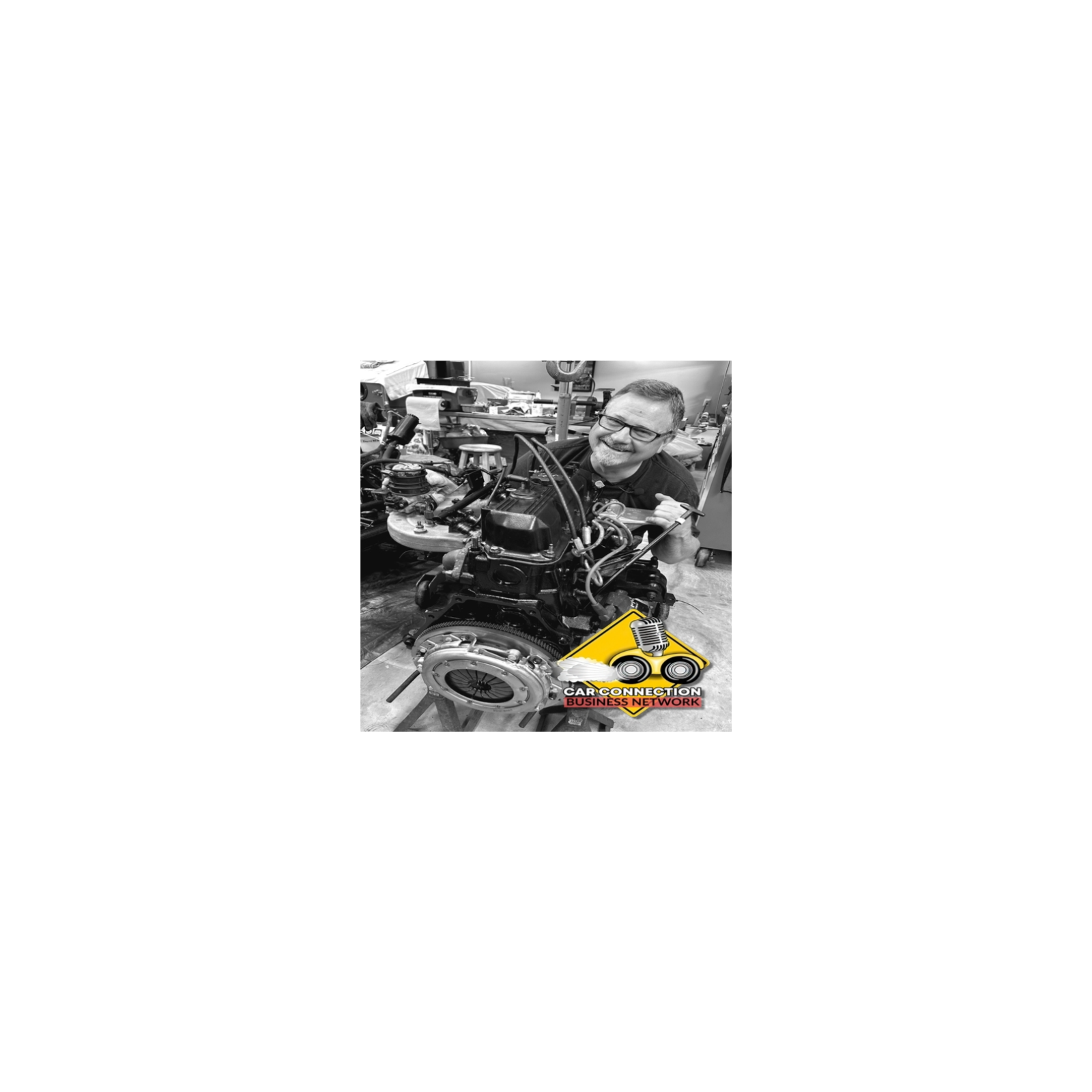
4 Cars Down Overnight?! The Reality of "Car Down" No One Talks About
About this episode
A busy Monday at the Car Connection Workshop turns into a real-world lesson on why “car down” situations spiral fast. After weather, fuel-saving tips, and local sponsor shoutouts, host Nile walks through a four-car cascade: a 1997 Jeep TJ won’t crank due to a failed starter relay, a Honda Civic gets disassembled and then a Hyundai Accent becomes a no-start mystery tied to an intermittent fuel-pump issue, and the Toyota FJ Cruiser later develops an alternator bearing failure. The episode focuses on troubleshooting discipline, avoiding the “parts cannon,” and managing customer emotions when problems won’t duplicate.
" Cars don't break when it's convenient....they break when it hurts."
This weekend was one for the books...and not in a good way.
Four vehicles. One after another. No warning. No pattern. Just real - life automotive chaos.
In today's episode, I break down exactly what happened when multiple vehicles in our household went "car Down" - from a failed starter relay in a jeep to an FJ Cruiser, to the worst kind of problem of all....an intermittent no - start that refuses to act up when you need it to.
This is the reality drivers don't hear enough about:
1) Cars don't wait for. the "right time" to break
2) Intermittent problems can't be diagnoses on demand
3) And sometimes ....everything fails at once
We also talk about:
1) Why "Concern, Cause, Correction, Confirmation" matters more than guessing
2) The truth about intermittent no-start diagnostics
3) Why throwing parts at a problem can backfire
4) How timing (and even taking apart your spare car) can make things worse
If you've ever had your vehicle leave you stranded - or wondered why your mechanic "couldn't find anything wrong" - this episode is for you.
Because sometimes....cars just happen.
#CarRepair. #AutoDiagnostics #CarProblems
Car Connection / Motormouth merch available in our online store at our web site ccbusnet.com. Thank You for grabbing some gear, joining our crew in helping those struggling with addiction get to a Total Freedom Addiction Campus Canada & USA where a New Life Awaits them there! You Guys Rock Tnx again! Skippy & Motormouth.
More episodes and ....Project Details & Links are available at Car Connection Business Network.com (ccbusnet.com) you'll find everything on our homepage if you'd like to follow the build & Repair work we do, connect with our program partners click their logo to meet them! Appreciate your support by giving them your business! Nile Motormouth Jenkins.
Thank You for doing these little things to help all that we do grow!
Like, share, follow, subscribe, leave your comment, ring the notification bell to miss nothing, join our online community. Tnx again Freinds we love y'all very much! Motormouth & Skippy.
diagnostics
"The Car Connection isn't just about nuts, bolts and diagnostics, it's about connection. [50.2s] Connection to our vehicles, to the people who drive them, and to the community that"
Diagnostics is how a mechanic figures out what’s wrong instead of just replacing parts randomly. They look for clues and use tools to find the real cause.
Diagnostics is the process of using observations and tools to identify what’s causing a problem. In modern shops, it often includes scanning for trouble codes, checking live data, and verifying mechanical causes rather than guessing.
strange rattle
"So whether you're a weekend wrencher, a daily commuter, or someone who just wants to understand what that strange rattle really means. [93.7s] Welcome aboard, we're Shift and Gears this morning, and thank you for joining us."
A strange rattle is an unusual noise that can mean something is loose or worn. The key is finding where it’s coming from so it doesn’t turn into a bigger problem.
A “strange rattle” is an abnormal noise that can come from many sources, such as heat shields, loose trim, worn suspension components, or internal engine/transmission noises. Proper diagnosis usually involves reproducing the sound and checking likely causes systematically.
miles to the gallon
"with a four liter v6 and getting almost 30 miles to the gallon? [742.1s] Not too many, not too many from what I see."
Miles per gallon (MPG) tells you how efficiently a car uses gas. Two cars can show different MPG even if they’re similar, depending on how and where you drive.
Miles per gallon (MPG) is a common measure of fuel efficiency, indicating how far a vehicle can travel per unit of fuel. MPG varies a lot with driving style, speed, temperature, and maintenance condition.
ambient air temperature
"then we have the ambient air temperature on our side to do the 30 day fuel savings challenge. [768.8s] All right, let's take a look at the weather this morning..."
Ambient air temperature is just the outside temperature. When it’s colder, cars often use more gas because they take longer to warm up.
Ambient air temperature is the temperature of the surrounding air, which can affect fuel economy. Colder weather often increases fuel consumption due to longer warm-up times and higher engine/air-conditioning loads.
in-house leasing and financing
"They have in-house leasing and financing. [791.8s] And one thing you're going to learn about them..."
They’re saying the dealership can arrange the lease or loan for you. That can make it easier to get approved, but you still want to understand the total cost and monthly payment details.
“In-house leasing and financing” means the dealership handles financing/lease arrangements directly (often through partner lenders). This can change approval speed, available terms, and how add-ons or payment structures are presented.
maintenance
"but get something that you can afford to make the payments, pay the insurance, gas and oil and maintenance. [819.8s] It won't be a maintenance free automobile that you purchase there."
Maintenance is ongoing service required to keep a vehicle reliable and efficient, including routine items like oil changes, filters, and brake/tires checks. The speaker emphasizes that the purchase won’t be “maintenance free,” highlighting that ownership costs extend beyond the monthly payment.
City Auto Sales and Leasing
"So you've got that right in the palm of your hands with City Auto Sales and Leasing. If you don't see the vehicle, they carry a pretty decent inventory under roof and on the lot."
They’re talking about a dealership they trust for used-car purchases. The point is that you can reduce the chance of getting a bad car by working with a place that communicates clearly and has vehicles available to inspect.
“City Auto Sales and Leasing” is referenced as the dealership the hosts recommend for buying a used vehicle. The segment emphasizes using their inventory and communication process (photos, email, Zoom) to reduce the risk of buying a problematic car.
skunk in a Mink coat
"Skunk in a Mink coat."
This phrase means something bad is hidden under something that looks fancy. With cars, it’s a reminder that appearance doesn’t always match condition.
“Skunk in a Mink coat” is another metaphor for something undesirable hidden under a more attractive appearance. In used-car terms, it suggests a vehicle may look good on the surface but has a serious issue underneath.

Toyota FJ Cruiser
"If you're like me on the FJ, Toyota FJ Cruiser, the Altenator, they just about put it on the ground."
The Toyota FJ Cruiser is a rugged, off-road-styled SUV known for having components that can be exposed to road splash when driving through rough conditions. In this segment, it’s used as an example of how low-mounted parts can be vulnerable to water and debris.
road splash
"It's open to all kinds of nasty road splash. And there's a story about that this morning."
Road splash is the dirty water and grime that gets thrown up from the road. It can reach parts under the hood and cause corrosion or electrical trouble.
Road splash refers to water mixed with dirt, debris, and road grime that can reach under-hood components. Repeated exposure can accelerate corrosion and increase the likelihood of electrical or sensor-related issues.
Niagara Block
"we have the amazing people at Niagara Block at 5,000, 5,000 Montrose Road, Niagara Falls. I was there on Saturday, spent almost the whole day with Dave Grimo, met his brother, Dan, and had a whole tour of the entire place."
This is a local business the host visited. The episode mentions them because they help support the program behind the scenes.
“Niagara Block” is referenced as a partner location the host toured. While it’s not an automotive company, it’s part of the episode’s discussion about how “car down” programs rely on local community partners for support.
wouldn't crank over
"Well, the 1997 Jeep TJ Wrangler Rescue wouldn't crank over. Nothing. Key forward."
“Wouldn’t crank over” means the engine wouldn’t even start turning when they tried. Usually that points to something like the battery, the starter, or the electrical connections.
“Crank over” means the engine turns over using the starter motor. If it won’t crank, the issue is often related to the battery, starter, wiring/grounds, or sometimes an immobilizer/security system.
not cranking over
"So now I've got the 97 Jeep is not cranking over. I, I head under the hood, look at the quick, simple things."
If the engine won’t “crank,” it means the car isn’t even trying to turn over when you turn the key or press start. That usually comes down to power getting to the starter or a starter-related issue.
“Not cranking over” means the engine is not turning when you try to start it. That points to the starter/solenoid, battery, wiring/grounds, or the ignition/start authorization path rather than a fuel or spark problem that would still allow cranking.
starter motor
"And so I right away because it has a brand new starter motor on it. So it can't be that, right? ... It's changed."
The starter motor is what “turns the engine over” when you hit the key or push-button start. If it’s bad—or if it isn’t getting power—the car won’t start properly.
The starter motor is the electric motor that cranks the engine to get it running. If it’s replaced or not getting power correctly, the car may click, crank slowly, or not crank at all.
constant power
"First, I test to make sure I've got constant power there. The answer was with my, my test light..."
Constant power means the wire has electricity even when you’re not turning the key. If it’s not constant, the problem could be upstream like a fuse, relay, or wiring issue.
Constant power means the circuit has voltage all the time, not just when the ignition is on. For starter-related diagnostics, confirming constant power helps narrow the fault to the relay/switching side versus the supply side.
relay
"So I pop open the relay in the relays junk. The points inside the relay, it's a mechanical, electrical, mechanical relay."
A relay is like an electrical helper switch. A small signal tells it to turn something bigger on or off, which helps protect the rest of the wiring.
A relay is an electrically controlled switch. It lets a low-power circuit control something higher-power (like ignition or fuel systems) without running heavy current through the dash switch.
front bumper cover
"The whole, I took the whole front bumper cover grill and everything out because it was annoying me because it's sunburned..."
The front bumper cover is the outer part you see at the front of the car. If you’re fixing the grille or doing cosmetic work, you may need to take it off.
The front bumper cover is the outer plastic (or composite) panel that protects the bumper assembly and improves aerodynamics and appearance. Removing it is often necessary for grille, cooling-related access, or cosmetic repairs.
summer tires
"...I put the summer tires on, I serviced all the brakes."
Summer tires are designed for warm-weather grip and handling, typically using rubber compounds that perform best above roughly 45°F/7°C. Swapping to summer tires is part of seasonal maintenance and can affect traction and braking feel.
muffler
"I got a muffler on that thing that's all full of corn flakes in the back. A muffler's coming, but I didn't take it off."
The muffler is the part of the exhaust that makes the car quieter. If it’s worn out, it can cause annoying noise and sometimes performance issues.
A muffler is part of the exhaust system that reduces noise and helps manage exhaust flow. If it’s clogged or failing, it can increase backpressure and change how the car sounds and runs.
corn flakes in the back
"I got a muffler on that thing that's all full of corn flakes in the back. A muffler's coming, but I didn't take it off."
“Corn flakes” is a colorful description for loose debris or internal breakdown inside the muffler (often baffle/packing material). When exhaust internals deteriorate, pieces can rattle and restrict flow, which may require muffler replacement.
fuel pump
"I had right for the fuel pump because I cranked a key. I couldn't hear the buzz. I couldn't hear buzz, buzz, buzz. I'm going, the pump's not running."
The fuel pump sends gas from the tank to the engine. If it doesn’t run, the car can crank but still won’t start.
The fuel pump is the component that pressurizes and delivers fuel from the tank to the engine. In a no-start scenario, a common diagnostic step is checking whether the pump runs when the ignition is turned on.
powers and grounds
"I get down to the pump. I check for powers and grounds. This is last July. Okay, you have to know this part of the story for it all to come together."
“Power and ground” checks are core electrical diagnostics. The speaker is verifying that the fuel pump circuit has the correct voltage (power) and a proper return path (ground), because either issue can prevent the pump from running.
corrosion
"I look at it. Everything's normal. Everything's clean. There's no corrosion anywhere. There's no chafe wiring."
Corrosion is rust-like buildup on electrical connections. It can stop electricity from flowing reliably, which can make a car fail to start.
Corrosion on connectors or wiring can increase resistance or break electrical contact, causing intermittent no-start problems. The speaker notes the wiring and plug look clean with no corrosion, which narrows the likely fault.
SWAG
"That's when you have to do a swag to try and get things to move forward. But we weren't in that position. And a swag is a scientific wild guess."
SWAG means you make a best-guess decision based on the clues you have. It’s not random—it’s used when you’re pretty sure, but not 100% sure.
SWAG stands for “scientific wild guess.” In diagnostics, it’s a calculated leap when evidence points strongly to one likely cause (the speaker mentions ~90%) but certainty isn’t possible yet.
duplicate the problem
"...If it's intermittent, that means you bring the car to the shop, and I can't get it to duplicate the same problem. So in this case, a no start..."
To “duplicate the problem” means to reproduce the fault under test conditions so the technician can verify the cause. Intermittent no-starts are especially difficult because the failure may not occur during the diagnostic visit.
no start
"...So in this case, a no start. You bring it to me, and I can't get it to no start. It won't duplicate the problem..."
No start means the car won’t run when you turn the key or press the start button. It can be caused by things like fuel not getting to the engine or the computer not seeing the right sensor signals.
A no-start condition means the engine won’t start even though the starter may crank. It’s a broad symptom that can come from fuel delivery, ignition, sensors (like crank position), or engine management faults.
parts cannon out
"...What do you want me to fix? Do you want me to get the parts cannon out? Because I won't do it..."
“Parts cannon” means just throwing parts at the problem without really proving what’s wrong. It can cost a lot and still not fix the car, especially with intermittent issues.
“Parts cannon” is a slang term for shotgun diagnostics—replacing multiple parts randomly to try to fix the issue. It’s risky because intermittent faults may not be solved, and it can waste money and create warranty/chargeback disputes.
corroded
"And you look at the alternator, you go, how old is that thing? Yeah, it looks like it's been living in the bottom of the ocean..."
Corrosion is rust and damage caused by moisture. They’re saying the alternator looks like it’s been exposed to a lot of water, which makes it fail.
Corrosion is the chemical breakdown of metal due to moisture and contaminants. Here, the speaker describes the alternator as heavily corroded, implying water intrusion and accelerated wear.
water gets inside it
"...the bottom of the sea. Yeah. And that's what happens to it. It just gets all corroded and the water gets inside it."
If water gets inside the alternator, it can ruin the moving parts and electrical parts. That can cause squealing and eventually the alternator stops working.
Water intrusion into an alternator can damage bearings and internal electrical components. Once water contaminates the bearing area, it can quickly lead to noise, overheating, and charging failures.
handbrake on
"The right rear brake was messed up because somebody drove it with the handbrake on. It wasn't me."
If you drive with the parking brake (handbrake) on, it can overheat the brakes. That can cause damage and may require the brakes to be taken apart and fixed.
Driving with the handbrake engaged can overheat and damage brake components, especially the rear brakes. The speaker says the right rear brake was messed up because someone drove it with the handbrake on, requiring disassembly and cleaning.
car down
"FJ is down. I'm not pulling the alternator off outside. It is a bugger mucking a half to get it out of there."
“Car down” just means the car isn’t working right now and can’t be used until it’s fixed. They’re describing how long repairs can take and how that affects what else they can do.
“Car down” is shop slang for a vehicle that’s out of service because it needs repair. In this segment, the speaker uses it to explain downtime caused by alternator failure and how that impacts scheduling and repair decisions.
lifetime warranty alternator
"And it's lifetime warranty. So I don't have to pay for it. I was smart enough the last two times to make sure I bought a lifetime warranty alternator."
They bought an alternator with a lifetime warranty. If it fails, the company replaces it without you paying full price again—usually after you return the old one.
A lifetime warranty alternator typically means the alternator is covered for the life of the purchaser/vehicle (depending on the warranty terms). In practice, it often involves returning the failed unit for a replacement, which can reduce out-of-pocket cost.
Hyundai
"Prepare for the new pump to arrive from Hyundai today. They're delivering it and get this thing back to life"
Hyundai is the brand the shop is getting the replacement part from. That usually means they’re using the correct part for that system.
Hyundai is the automaker supplying the pump part mentioned in the segment. When a shop says parts are “from” a manufacturer, it often implies OEM sourcing or at least manufacturer-specific availability.
Request an Explanation
Heard something you'd like explained? We'll add it to this episode.
Sign in to request explanations for terms you heard.
Want to learn more?
Browse our glossary for plain-English explanations of automotive terms, jargon, and concepts.
Help improve this episode
See something that's not quite right? Our annotations are AI-generated and can sometimes miss the mark. Click the flag icon on any annotation to suggest a correction.