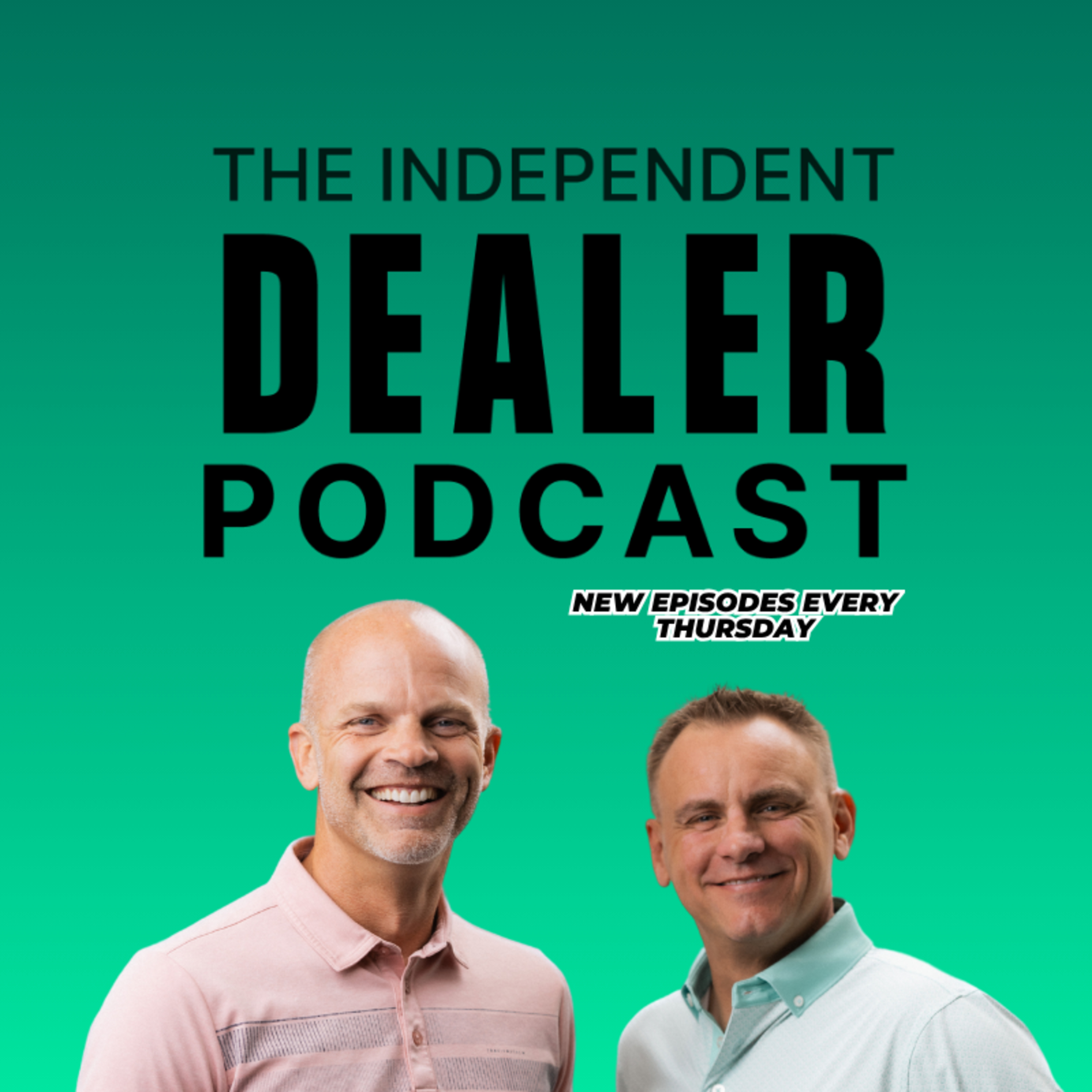
Navigating the current challenges in the buy here, pay here (BHPH) industry is the focus of this episode, featuring insights from dealers across the U.S. The discussion highlights the impact of recent financial struggles among major companies, particularly Tricolor, and its ripple effects on smaller dealers. The hosts share personal experiences from past economic downturns, emphasizing the importance of strategic decision-making, cash flow management, and the need for dealers to adapt quickly to survive. The episode also explores the potential for consolidation in the industry and the future outlook for BHPH operations.
Join us for an in-depth conversation about the current challenges facing the buy here pay here industry. Luke Godwin and Jeff Watson from the Independent Dealer Podcast sit down with Kaleb Bryan in Dallas, Texas to discuss market conditions, exit strategies, and what it takes to survive in today’s climate.Key Topics Covered: • The Tricolor collapse and its impact on the industry • Understanding securitization and why it’s failing • Current market valuations for portfolios (55-60% advances) • Exit strategies for dealers looking to wind down • The importance of deleveraging and cash flow management • Making tough decisions: cutting expenses and staff • Why institutional capital has dried up • The future of buy here pay here: consolidation and opportunity • Portfolio collection strategies and realistic timelines • Work-life balance as a dealer owner👇Don't forget to like, comment, and subscribe for more strategies from industry experts!Thank you for listening. We hope you learned something new. Let us know what you think. Leave us a review at www.theindependentdealer.com or @independentdealer.comSupport the businesses that support the podcast:🔹 Buckeye Risk Services – Education & reinsurance experts👉 www.buckeyerisk.com🔹 Blytzpay – Credit card processing & text communication (Get 3 FREE months when you mention IDP!)👉 www.blytzpay.com🔹 Taxmax – Flexibility with tax returns Use code VIP for 35% off! 👉 www.taxmax.comPlease subscribe, leave us a review, and share with a friend.Connect with us online:/ independentautogroup/ jlukegodwin/ sendtojeffw🎧 Listen to all episodes:@pendentdealer📲 Connect with us:@independentautogroup | @jlukegodwin | @sendtojeffw💬 [email protected]
"... let's say, 80 to 85 cents a month. Yeah, I built my model around an 80% advance rate on these things."
The Tesla Model Y is a type of electric car that looks like a small SUV. It runs on electricity instead of gas, which means you can charge it at home and it’s better for the environment. People like it because it has a lot of space inside and cool technology that helps with driving.
The Tesla Model Y is an all-electric compact SUV that combines the performance and technology of Tesla's electric vehicles with the practicality of an SUV. It has gained popularity for its impressive range, advanced autopilot features, and spacious interior, making it a significant player in the growing electric vehicle market.
The Dodge Challenger SRT Hellcat is a fast car that has a really powerful engine. It's designed for people who love speed and performance in a muscle car.
The Dodge Challenger SRT Hellcat is a high-performance variant of the Challenger, known for its powerful supercharged V8 engine and aggressive styling. It represents the pinnacle of muscle car performance with impressive horsepower and torque figures.
"that are now realizing they're completely upside down"
Being 'upside down' means you owe more money on your car than it's worth. If you tried to sell it, you wouldn't get enough money to pay off the loan.
In automotive finance, being 'upside down' refers to a situation where a car's loan balance exceeds its current market value. This often occurs when a vehicle depreciates faster than the owner pays down the loan.
'Flipped' means selling a car quickly, usually to get out of a loan or to make some money on it. It's a way to deal with financial issues related to the car.
In this context, 'flipped' refers to the act of selling a car for more than what is owed on it, often to recover equity or to avoid financial loss when the owner can no longer afford the payments.
Term
$1,200 payment
"and they can't make the $1,200 payment anymore."
A $1,200 payment is how much someone pays each month for their car loan. It's a lot of money and can be hard to keep up with if your finances change.
This refers to the monthly payment amount for a car loan. A $1,200 payment indicates a high loan balance, often associated with luxury or high-performance vehicles, which can strain a buyer's budget.
"and they're gonna be in a Kia Optima, for maybe the next couple of years, all at 2010."
The Kia Optima is a car that is comfortable and has a lot of features for its price. It's a good choice for people looking for a reliable sedan.
The Kia Optima is a mid-size sedan known for its value, reliability, and features. It has been popular in various markets for its comfortable ride and spacious interior.
"There's gonna be a ton of Tesla EV. Yeah, according to experience."
An EV, or electric vehicle, runs on electricity instead of gasoline. This means it doesn't produce exhaust emissions, making it better for the environment.
EV stands for electric vehicle, which is a type of vehicle that is powered entirely or partially by electricity instead of traditional gasoline or diesel fuel. EVs are known for being more environmentally friendly and often have lower operating costs compared to conventional vehicles.
"... our mom and pop business and start pushing those 600s back down to us. We haven't seen that."
The Fiat 600 is a small car that was made a long time ago, starting in the 1950s. It was designed to be affordable and easy to drive around cities, which made it very popular at the time. Today, it’s considered a classic and is loved by car enthusiasts.
The Fiat 600 is a classic city car produced by the Italian automaker Fiat from the 1950s to the 1960s. It is significant for its compact size and affordability, making it a popular choice for urban driving in post-war Europe, and it represents a nostalgic piece of automotive history.
Select text to request an explanation
The truth is today, with our industry, we're facing hard times.
So how do we get through it?
How do we make good choices?
We talked about this before the podcast.
When a dealer's up against the wall and their line gets cold,
we all know of a company that's facing a very hard time.
And there's a lot of dealers that are associated with this company
and are borrowing money with that company.
And what are the dealers going to be left to do?
That is scary.
Hello and welcome to the Independent Dealer Podcast.
Today, Luke, this is crazy, man.
We are in this beautiful, beautiful setting, a beautiful office,
a beautiful studio with a beautiful man.
Yeah.
Caleb Ryan.
Thanks, man.
Thank you.
Hey, I mean, really, this is an awesome setup.
I wish we had this.
This is how professionals do it.
He's got more cameras than I've ever seen.
Yeah, I feel like paparazzi in here.
Caleb, thank you for having us in here on your green couches.
These are famous green couches because you also host a podcast.
Yeah.
Yeah, we're doing it simultaneously right now.
Yeah, I like that.
We're double potting.
So whether you catch it on Caleb's feed
or whether you catch it on our feed,
you're going to see it somewhere.
Yep.
So we're in a wild season and buy, pay here.
Not just not just our business,
but we're kind of in a wild season as an industry.
We are.
We've got a lot of news to cover for dealers watching.
I think this is going to be a really interesting take
because you've got three individuals here kind of all
from throughout the United States.
You know, you've got Utah, you've got Texas,
you've got South Carolina.
We're all seeing different things.
These guys travel way more than I do.
So they get to talk to dealers all over the country
and hear what's actually going on.
And yeah, I mean, there's wild news with tricolor.
And some other just major companies kind of coming down.
It's almost unprecedented.
We could go back to 08.
Everybody talks about 08.
And we talked about that a good bit yesterday
in another podcast coming here.
And it's unprecedented that for one, in 08,
you didn't have the level of buy here, pay here
in the stratosphere of finance.
You didn't have that, right?
And with tricolor, that's a big freaking deal.
Like when a billion dollars of buy here, pay here assets
all of a sudden implodes, what does it do to the mom and pop
in Podunk, Alabama, trying to get a line
with their local bank?
The local banks are gonna run like crazy, right?
Well, I think Wall Street loses its appetite
for those ABS's on the market, right?
They're not gonna be as, so then that has the ripple effect
for all the other large lenders and subprime lenders
that might look at those that might package
those types of loans up.
All of a sudden, the subprime housing bubble burst
is this toxic phrase, right?
And now all of a sudden subprime auto loan,
asset-backed securities become a toxic phrase.
And is it subprimes or deep subprime that calls this?
There's a difference.
But I think, I don't know the Wall Street's
gonna differentiate between the two.
That's kind of what I was getting to.
Wall Street doesn't know the difference.
Yeah, it's-
I don't think it's okay.
What do you think?
I mean, do they look at tricolor as sub-subprime?
Because they were truly a buy here, pay here operation
that was tapping into Wall Street money.
They were less of a subprime,
like you might say a credit acceptance
or a Westlake or, you know,
did those guys have a hard time
securitizing their next?
I'm not sure how they get their funding,
but is that gonna have ripple?
Yeah, I don't know.
I mean, I don't know what the impact's gonna be
for the future, because there's a lot of big dogs
that this was their business plan,
their business model, which is scale institutional money,
right, and then turn it around
and get secretizations done
and pay off that institutional money
and have, you know, Wall Street backing
doing ABS and doing that whole model.
And the grading agencies are gonna now
be very skeptical on how they grade this type of paper.
So I don't know how they're gonna classify it,
but they're definitely gonna remember
what's going down with Tri-Color.
You know, can we explain to the dealer out there
that doesn't understand securitization
and how that works when you're building a portfolio
because we've seen it tried several times
and we actually interviewed Adonis
and that was kind of their business model
was to do what Tri-Color has done
and it's spectacularly bad.
Yeah, what is it?
I don't know if I'd be able to articulate it well
without just screwing it up.
And I mean, I've got a good concept.
Jeff, do you wanna take a run at it?
I mean, the best thing I would understand
is for the common dealer,
you're going to have an intermediary bank
that's gonna let you build this portfolio up, right?
Because you can't sell these loans
onesie twosies to Wall Street.
So you're gonna build up a 50 or $100 million
portfolio over the course of six months to a year,
whatever the case is,
then that package is gonna get graded
based on its performance over that time,
the seasoning timeframe, I assume.
And then, based on that grade,
you're gonna take that to the pension funds
and the Wall Street, whatever, VCs,
or I don't know who has the appetite for these things,
but they're in a lot of teachers, unions, pension funds,
I would say some of these.
BlackRock did, you know, Goldman probably does.
Who knows?
I mean, they may not have to get down there,
but there's definitely private equity firms that hold these
because they gotta get a good return.
And this was a way to get a good return.
And then at the end, once it's securitized,
once it's wrapped into a big bunch of notes,
then it's sold to that market.
And then-
It's put into an SPV.
Right.
It's put into an SPV, a specialty purpose vehicle
is where they put that package of notes
and then that package of notes via the SPV
is then serviced by an agreed upon servicer.
Yeah.
Which could be Westlaker, Venvit,
or is that the people doing it now?
Well, for Tricolor, yeah, yeah, for Tricolor,
but there's other companies that have been doing it
that have been securitizing,
and sometimes they can service it on their own,
and what they'll do is they'll get a fee for servicing,
and then there's an incentive,
like a waterfall incentive at the end of it
for them to see that benefit if it performs,
if the loans actually perform,
there'll be a waterfall incentive
for them to get paid at the end of it.
Hey, just to jump in real quick,
and make sure you guys know about Buckeye Risk Services,
still a great sponsor of the podcast
and a great partner to have at any dealership.
Yeah, sure, retail, buy, here, pay, here,
no matter what, tax planning is so important
and using a reinsurance company
not only helps you with your tax plan,
it also helps with generating wealth,
and when you get toward the end of your dealership,
you need something else to pull money out of,
and it's a great way to just force savings account,
right, Jeff?
Yeah, yeah, forced savings account.
So if you are a dealer, buy, here, pay, here, retail,
and you're doing 20 to 30 cars a month,
call the guys at Buckeye,
you will not regret getting a reinsurance company set up,
you can sell your service contracts,
you can sell your ancillary products,
you can reinsure for your post-sale inspections,
you can, of course, set up your CPI,
collateral protection insurance
if you're a buy, here, pay, here customer,
massive opportunities to build wealth,
and forced savings for rainy day funds.
Good, give the guys at Buckeye a call.
And so it blew up because those loans were performing
and they couldn't sell the next securitization,
is that how that happens?
I don't know, I'm wondering.
Yeah, there's a lot of speculation.
There's a lot of speculation, how far do you wanna go?
So let's hypothetically say if I were to,
if I were trying to wrap my brain
around how that collapses, is yes,
you have a previous portfolio
that did not perform the way it was supposed to,
you get graded harshly on your new package,
now all of a sudden you're not getting the dollar
per note that you thought.
We were getting paid, let's say, 80 to 85 cents a month.
Yeah, I built my model around an 80% advance rate
on these things.
And then the next one comes down a pike
and they go, I wanna pay you 55 cents a month.
And they go, whoa, I'm not,
I can't pay my bank back at this point, right?
Right.
That's probably what happens.
I imagine the main sponsor says, hey, this didn't work out.
And we've talked with some of these finance companies
in the past who did this same thing
and they moved out of the buy here, pay here space
and tried to swim upstream, right?
Because they realized that that package
was not attractive to Wall Street anymore.
Because they collect terrible.
Like, I mean, let's be honest.
In an institutional setting,
I think they collect terrible
because think about the beauty of the buy here,
pay here model.
It's the mom and pop.
It's mom and pop, it's hand to hand combat.
They see us, they hear us, they talk to us.
The third party servicers, that's a...
Yeah, this is the deal.
It's true.
And we're sitting not far from your collections staff.
Yeah, they're on the other side of the door.
Other side of the door, right?
They know your collection staff knows
that if a customer calls up, that's paid perfectly
and says, my engine blew up.
They know that they go, okay, no problem.
I'm gonna go talk to the service and get you helped.
Yeah, they can walk down the hallway.
That does not happen in the big-time servicing facilities.
Yeah, and it doesn't, man,
in even bankers that happen to watch this
because you know that they're out there.
It's not to say that securitizations are not bad, right?
Like, securitizing the model itself
is obviously a very successful model
when you're not doing fraud.
Like, let's just put it that way.
Let's just put it that way.
Things can work when the actors are good actors.
When you put bad actors in a situation,
and I'm not calling Tri-Color a bad actor, but...
Allegedly. Allegedly.
There's bad actors out there
and it really hurts the rest of the industry.
These business models can work.
And it's just, it's the same thing
when you take a Buy Here, Pay Here model
that committed fraud on an institution
or on their credit line.
Is the Buy Here, Pay Here dealer bad?
Is the Buy Here, Pay Here industry bad?
Is the model bad?
No, the answer is no, it's just a bad actor.
And why does it keep happening?
It happens in all industries.
There's bad actors in all industries.
We just so happen to see very tough times
in our industry right now.
And as a result, there are choices
that operators have to make.
And sometimes when these hard times hit,
operators are making choices that benefit themselves
and not their institutions,
not the people that they owe money to,
and there's misalignment.
When you have misalignment
between a borrower and a lender,
things are not gonna go well.
And that could cause storylines to say,
oh, this industry's a bad industry.
This model's a bad model.
That's not the truth.
The truth is today with our industry,
we're facing hard times.
So how do we get through it?
How do we make good choices?
We talked about this before the podcast.
When a dealer's up against the wall
and their line gets cold,
we all know of a company
that's facing a very hard time.
And there's a lot of dealers
that are associated with this company
and are borrowing money with that company.
And what are the dealers gonna be left to do?
That is scary.
Because let me talk about the mom and pop.
There's a lot of mom and pop
by here, pay your stores out there
that depend on this cash to make a living.
And they provide a lot of jobs
and they provide a lot of
unbankable people cars.
So when this waterfall that may happen,
it doesn't just affect the dealer.
It affects communities.
Oh, 100%.
And that's from a practical standpoint.
Let's discuss that
and what these dealers should do
if they find themselves in this situation
or if they are.
Because I've been in that situation in 08.
In 08, I had a loan backed by real estate
that was supplying my buy here, pay here capital.
And the bank went under the bank itself
because I dragged it down.
So what you did, what you're saying is you financed,
refinanced your real estate property
and you used the proceeds then.
Yeah, we took a line of credit
against some land that we had.
And that was what was funny.
My buy here, pay here operation.
And of course we're totally current.
Everything was great until the bank went under.
The bank went out of business.
And guess what happens?
When the bank goes under,
somebody gets that asset, right?
There's gonna be a servicer.
There's gonna be, in fact,
what happened was another regional bank came in
and bought out this hometown bank.
And through that process,
they decide what they wanna keep
and what they don't wanna keep.
And who they wanna do business with.
Let's do a round table right now.
We gotta hear opinions from all three of us.
What happens when your banker goes under?
As a dealer, what happens?
Well, I'll tell you what, I did.
The banker went under and you are in the shuffle.
You don't have, and I'm talking from a high level
standpoint, not what I physically did,
but from a high level standpoint,
I didn't have an option because my loan
is wrapped up in this bankruptcy of a bank,
which gets kicked off to a regional bank that bought it,
looked at it and said, wait a minute,
you're telling me your line of credit
is backed by this real estate?
Well, we think it's impaired now
because of land values had dropped, right?
We don't really wanna keep this.
We're gonna kick it out to the servicer.
So the new bank didn't have to assume my loan.
They decided that it was impaired
because the land values had dropped.
So I got kicked out to a servicer.
Now the servicer is like, okay,
my job is to turn this into cash.
So I need to get this land back and turn it into cash.
And I'm like, well, wait a minute,
I've been current forever.
Well, the loan's impaired.
Well, it's only impaired because you just fire sold
the property next to it for pennies on the dollar,
and now my comparables have dropped.
Give me two, three years,
and it'll be right back to where it was before,
but there's no long-term vision.
What did you do?
What did you do?
So we went through a sale,
and we basically bought the land back at our note
at a slight discount.
So it kinda worked out for us.
Holy cow.
Because they said, well, you own X amount
and the land's worth this.
Of course, they hit you for the forgiveness, right?
So that forgiveness got passed on.
Tax was.
Yeah.
And they say, well, you got a little bit of a discount
on the loan based off the face value
and what the land was worth.
When you say you bought it back,
you went to another bank and you said,
hey, I'd like to refind.
We were lucky enough to find another community bank
that was willing to buy this out, right?
Just based on luckily the situation
of the relationships we had.
And that's where I would say the lesson is learned here.
So many dealers are so stoked to get a lender,
and it was a lot of work to get that lender.
I understand.
Yeah, absolutely.
It was hard, but you gotta have some other relationships
because it may come to the point
where your lender goes under
or just decides they don't have the stomach
for you anymore, where are you gonna go?
Jeff, what was the timeframe?
Like, how long was this process of when the bank,
file bankruptcy and you were with the servicer?
How long did it take?
We were in the dark for probably six months,
like fully in the dark.
And in the dark, does that mean
are you still making payments
because who do you make them to?
We didn't have, that's what I'm saying,
we were in the dark.
But after that, once the servicer took over,
then we started making payments
to the servicing company.
So you were behind on payments?
Well, technically, but not really.
But the loan was called.
The loan was called due, right?
Because he didn't want it anymore.
So by the time it got through the servicing company,
Midland Servicing, they finally...
Shout out Midland.
Yeah, thanks guys.
They finally got around
to basically giving us attention, so to speak.
And that's when we said,
okay, what's the accrued interest?
What's the actual dollar amount owed?
We've been setting money aside.
And luckily we worked it out
without being completely hung up.
I'm glad you set the money aside
because let's just say,
let's just say somebody five bankruptcy
and you owe them money.
And it goes two or three months
where you didn't have to pay any interest.
Right.
You need to be, they didn't forget about it.
Yeah, yeah.
You need to put that in reserves.
You need to put that away
because that's gonna be trouble.
The only time we ever had this happen,
and honestly, we always use property
to fund either property
or reinsurance money to fund by here by air.
And back around the,
after that time, first community bank,
first citizens bank,
which is the bank actually that ended up
buying Silicon Valley Bank last year
when it went down, they're based in Columbia.
And we had a line of credit on a house
on my dad's beach house.
And I remember for a fact it was $273,000,
was the line of credit we had.
Now this was a while back.
The $273,000 was a lot of money back then.
Not now.
Back in the 70s.
This was probably around that 08 time period.
And you could do a lot of cars
with that kind of money, right?
And so we had $100,000 out
and the banker calls us one day and goes,
hey, how much of that line do you have pulled?
And because he didn't call from the,
he called from the cell phone.
Yeah, yeah.
And we said, we got 100,000 out.
He goes, I want you to go down to the bank
and pull the entire line down today.
And my dad said, we don't need the entire line.
He said, are you gonna need it?
He said, yeah, my dad said, yeah, we're gonna need it.
He said, go to the bank today and just pull it down.
Holy cow.
And deposit it into another bank.
And so we did.
And then three days later, they called the whole loan.
Holy cow.
They said, you need to pay this $273,000 back.
My dad said, we can't pay it back.
And well, I mean, you gotta do something.
He said, well, just put it on, I remember this,
just put it on a three-year note and we'll pay it off.
And I remember the payment, the payment was $10,326 a month.
I mean, I just still remember it to this day.
That $273,000 was life-changing for our buyer pay
your store because that injection of cash
let me be able to run and get over.
You know, we talk about those humps, right?
And I think we were at maybe the 400 account hump
at that time and it allowed us to get ahead of it.
And then we started cash flowing.
But it was because we had that influx of money.
Let's take a look at it.
Hey everyone, just a moment here to talk about BlitzPay.
BlitzPay is my payment process provider, PPP, PPPP,
whatever it is, but they're wonderful.
They get the money in the bank
and that's really what matters.
And it's simply used, Jeff, so simple
and it helps us with our collection process.
Yeah, you know what I've really liked
and I'm gonna fine-tune this even more
is their cash pay network, which is a crucial component
because we do have a lot of customers that wanna pay cash
but I don't wanna take cash in the office.
It's dangerous, it's scary, I gotta make deposits.
So we're pushing it more and more and more.
And there's always the few customers
that don't quite understand technology and push back
but we're educating them more frequently
and it's really making my anxiety go down
because I don't have large cash deposits
at the end of a Friday.
Yeah, I'd hate for you to lose any more here.
Yeah, yeah, it's stressful.
But the self-help options are really
what makes the difference.
You don't have to have customers calling you,
hey, run this card, run this card, run this card.
No, they can help themselves
because the portal is so easy, it's mobile-friendly,
it's all right there on their little phone
which everyone has and they can take care
of their payments themselves.
That's the most important part.
Yeah, everybody needs to call BlitzPay,
get them to hook you up.
And sometimes you can kind of straw more in banks
into doing something they don't wanna do
but makes sense for everybody.
Well, in a situation where they,
let's talk about the dealers like going through a situation
if their bank goes out of business
or if their lender goes out of business,
in this case it's a lender, what can they do?
If they don't have access to cash already, right?
So what do they need to do to prepare
or what should they do?
First of all, I think they need to cut every expense
they can and start building cash
and you need to pay down the debt while building cash.
Where do you start, what expense?
I think that if I had any personal expenses
that I could like sell like,
let's say I have extra cars, extra boats,
I'd probably sell those.
Extra boats?
Extra boats, how many extra boats
you got later on?
Any boats, any boats.
If you have boats, I mean, you're already.
Right, like I mean, just sell them.
Just sell them and use the cash in your business.
Unfortunately, you may have to,
let's say you're kind of small
and you have one salesman and one collector
and just had another, decide what's important, right?
Is it important for, am I a size operation
where I can do everything myself for a little bit?
Right, right.
And if you are, do it yourself
and use that cash just to plow into,
to get it paid down
because I think, you know, Caleb,
you've paid down a lot of debt, right?
And I think, the sooner you can get from,
let's just say this dealer is 60% leverage,
let's say they can get to 30% leverage,
well then you got something.
You do, yeah.
Because you could sell your assets and walk away.
That's right.
At 60% leverage?
Yeah, you hardly have anything.
You're gonna sell your assets
and probably not walk away with anything.
And not enough to weather the storm.
I think one thing we learned from our episode
with Adonis a couple of months ago
was that you have to take drastic measures.
And yes, drastic quick measures
that I don't think dealers appreciate.
When you're scaling up, it's very easy to say,
I'm gonna buy a new recon facility
and I'm gonna get that going in the next 30 days
and I need to add four salesmen
because I just got this line of credit
and I got all this money to spend
and deals to put on the books.
But when it reverses the other way,
it's very hard to say,
I need to shut that location on Friday.
I need to get out of that lease by Friday.
Sorry, tomorrow morning we're laying off five people
because I see what's gonna happen
and I'm gonna get out in front of it.
I'm not gonna pay these high salaries
for the next three, four, five, six months
because that's 100, 200, 300 grand
that I could have that I wouldn't.
And it's okay.
I'm gonna go from selling 100 cars to 20
until the dust settles.
That's a good point, man.
Yeah, it is.
Some dealers, they're really committed
and sometimes they're over committed to their staff.
That's right, that's right.
Well, let me add on that
because I was gonna make a very similar point
is that I'm a dealer that started really small.
We start from nothing, like probably a ton of people
and I had a $2 million portfolio, $4 million,
$10 million, $20 million portfolio.
So I went up, scaled up,
D leveraged, came back down.
Now we're stabilized around 13, 14.
And I'll tell you that when you get up to a bigger size
you're used to having these cushions.
You asked me earlier, what time did I come to work?
And you're used to having people on the salary
that are taking care of just the baseline stuff
and it gets very uncomfortable
when you have to remove those guys.
And there is a point.
So I even look at my portfolio, 13, 14 million,
I'm like, all right, how much cash flow do I have
coming in?
Are we turning profitability?
Are we positive cash flow?
Things like that, it's like,
all right, I may need to look at this higher salary
and knock it out.
It's very uncomfortable.
But being at the size that we are,
it's very important to, like you said,
make these hard decisions and pivot quick.
Because that's what's gonna make or break
and keep these survivors here.
The buyer payers, survivors that are still
in the industry today.
They're the guys that are making some major pivots
and they have to.
It's harder at that level
because you're again impacting long,
long-tenured employees.
And when you're a dealer that's five million or less,
it's actually a lot easier
because you're looking around and you're like,
well, I need a collector.
I need a sales guy.
And there's just certain things you absolutely need.
And you can make such large impacts to your business
because the smaller you are,
the larger of an impact you can make on your business.
When you're bigger, you're like, holy cow,
like it's a tough, slow process.
I mean, I make collection calls myself up until,
I mean, less than 10 years ago.
You know, and I just knew that I had every over 30 account.
That's what I worked.
And it's a lot of, our portfolio has a lot of my dad
and my sweat equity in it.
You know, and that's just what we did.
Customers calling in.
I talked to Luke.
He said I could do it.
He said, he said, he said that I had to stop
because my manager, my employees,
they started getting pissed off.
When we grew this, like you did,
just I was a one man show on a cell phone
up to 400 accounts on my cell phone.
Oh, wow.
Collecting.
Wow.
On one cell phone, just me.
And everybody was like, I talked to Caleb.
I talked to Caleb.
I talked to Caleb.
And I had to go through a year of just letting off.
And man, I felt like I was gonna,
I didn't know if that was right or not,
which is just give it to my team.
You know, you started,
you recognized early that deleveraging was so important.
Yeah, yeah.
And so many dealers don't,
and don't get wrong,
there's times where you need to grow with leverage
and then back off and pull back
and then settle in, pay it down and grow again.
But I mean, you probably had to make
some real hard decisions in 2023.
Yeah, oh yeah.
And there's a lot of dealers out there
that did not understand
that that was the time to make hard decisions,
not 2025.
Right.
Yeah, well, here's the thing is it's,
you dumb luck.
You know what I'm saying?
And some of these guys are just bad timing.
If you had just leveraged up the last two to three years
because you saw COVID and you saw the availability of cash
and then all of a sudden the economy turns
a different direction.
And you start taking heavier losses right now,
you just, you got unlucky, you know?
And you look at some of these other people
that geared up during the teens,
they were lucky to ride a good economy
for quite a few years, right?
And low rates, yeah.
So sometimes you just, you get lucky
and you hit the timing,
because I look at some of these operators
that might be going under or that have gone under,
it's not really their fault sometimes.
Like, I get it, you were leveraged up,
but guess what?
Had the economy taken a shit
while you were at max leverage?
Yo man, I know.
You could be a bad story too.
Had your lender pulled your line
when you were at max leverage?
Because they got crushed?
That's right.
You'd be SOL.
So man, you get to that max leverage,
you're trying to grow,
you just hold your breath that nothing crazy happens.
Yeah.
And how long can you stay there
and hold your breath, right?
It's like, how long can you stay underwater?
Yeah.
And the ones that can stay underwater
longest are the ones that win.
Do it properly, I guess, would be the right way.
Like, who has that luck for the longest period of time
or the ones that just shake out
and end up being the best?
Yeah.
I mean, let's drop some facts right now.
Dealers that are sitting at 55%,
60% leverage right now,
I'll tell you that getting institutional money,
getting that money at cost of capital at seven and a half,
eight and a half percent,
it is gonna be tough.
I mean, even the guys-
It's probably impossible.
I don't wanna say impossible,
we know some guys that are doing it.
I don't wanna say it, but you're right.
It is related, relatable to impossible.
I think it might be impossible within the next month.
It's gonna be hard.
And so what do they do?
You know, what do they do?
Guys that are leveraged,
they don't have anywhere to turn.
They're gonna be forced to stabilize.
I'll tell you, if you're growing,
you need to stabilize.
Oh yeah.
You need to stabilize.
You need to stop growing
because you're gonna run yourself out of business.
You're literally not gonna be able
to have enough cash to make payroll
because you would have to continue buying cars.
And if you're not gonna continue buying cars,
then your ship is gonna go like that, pow,
and it's gonna have to sit.
It's gonna be forced to stabilize.
Dealers that run out of this line of credit
and they're living off this extra line of credit,
they're gonna be forced to stabilize.
So is this a good time for the dealer
who's not leveraged to start growing?
If they have the capital,
if they have the capital and the cash flow,
sure, why not?
Why not?
I mean, you'd say market conditions,
what caused the collapse of these guys
to begin with, heavy repos, expensive cars.
So I would say not now
because I haven't seen prices reset to a point.
I haven't seen credit of our customers getting any better.
I'm not looking to double down on my current lending
even though I might have the cash.
But I'll tell you what, in the next six months,
if these lenders go under, repost, spike,
we see good people with bad credit,
we see a lot of more inventory hit the ground
and prices become more affordable for our customers
and we kind of reset the wholesale markets,
then yeah, I could see that being attractive.
But I think you gotta wait for the dust to settle.
Yeah, but the model works.
The model works if you've got a honey hole
and you're buying cars cheap
and you're able to, I mean, look at how we source cars,
for instance.
We're sourcing cars in-op
and we're using, we're putting motors in them
and keeping our ACVs so low
and that's able to keep our mileage low.
So in that model, it's profitable and it works.
You feel like you're getting qualified customers?
Yeah, that's the problem.
Then it comes to qualified customers.
Because I'm just getting gypsies.
You know, I don't have like 2010
we had good people with bad credit.
I'm not getting that right now.
Yeah, I mean, the performance on these notes
are not as good as-
The credit is gonna be worse in the next year
because we still have some of those 2022, 2023,
really high ACV cars that are out there
that are just worn completely out at this point.
You know what I mean by that?
And people still owe $12,000.
They're upside down, they're upside down
and then it's, they're giving up the car,
that's a repo on their credit.
So from a credit history standpoint,
we're seeing a lot worse credit.
But now we look at our income, job availability, how we're-
Jobs are still good.
Yeah, jobs are still good.
Are they making more money?
Do they have the ability to make more money
in our communities?
Look at that.
DFW is a growing community.
This is a place where-
St. George as well, Columbia, South Carolina.
Yep.
Yeah.
Oh, it's gangbusters out there.
Oh, really?
Yeah.
And in a different demographic,
and that's very niche to me is,
but it's not growing in the subprime.
Well, buy or pay here category.
But it should, if there's construction,
there should be some of that.
It attracts.
Yeah, those folks, and to your point,
we do have the people who got the $1,200 payment
on a Hellcat in 2022 from the new car store
that are now realizing they're completely upside down
and flipped beyond,
and they can't make the $1,200 payment anymore.
So they're gonna let that go back to the bank.
And we've talked about that for years, right?
That's kind of been trickling into the market.
And that pushes that customer
who can easily afford a $600 payment back to us.
And they're humbled a little bit,
and they're gonna be in a Kia Optima,
for maybe the next couple of years, all at 2010.
That's what we saw, was a lot of humbling
and a lot of saying, okay,
I gave up my boat, I gave up my jet skis,
I gave up my RV,
and I'm kind of consolidating and coming back to reality.
So we're talking about how hard it is, man.
Jesus, it's like so negative, poor buy here, pay here.
What's the future of buy here, pay here?
What do we have to look forward to?
Because with every hard win,
there's gonna be a soft landing, right?
Somewhere, what's that soft landing look like?
What do you think we're headed into
in the next three to five years?
What kind of upside do you think we'll see
for those that survive,
for those that hold their breath long enough?
I always rooted for consolidation of stores.
Yeah, and it's happening, I'm seeing it.
And so I think those who can last,
let's call it six months or a year,
I think they will see consolidation of stores,
and there's a lot of people closing
their buy here, pay here store,
I'm one of them, right?
We're winding up our portfolio,
and there's an age bracket of people ready
to exit our business.
The boomers?
My dad being number one of that, right?
And luckily it's drugged me kind of out of the market too.
And so I think there's definitely-
You're an influencer now, you're not out of it.
That's right, I'm definitely an influencer,
and I'm retired.
No, but I think that that is always good
to look forward to when the market,
and cars have to go down in price.
I know that we've been saying that,
but they have come down since their highs.
But I think there's gonna be another adjustment
because there gotta be a lot of repos coming.
There's gotta be.
And they sold new car sales this year,
or like at that 17 million mark.
And that's a key.
When you start to see them get to 14, 15 million,
which they've been at, I don't think they were there
in 23, but I think they were getting close.
24, they definitely sold 15, 16 million cars,
and this year they're gonna probably sell another 17 million.
You go to any airport,
there are rental cars everywhere.
There's no shortage of rental cars.
And so they're gonna be flushing through.
Lease turn-ins aren't exactly the same.
There's gonna be a ton of Tesla EV.
Yeah, according to experience.
Yeah, coming in, so.
That's what I see, Jeff.
I still don't see the rental cars companies
selling their cars at low mileage like they used to.
They seem to be running them up a higher.
70, 80, which is perfect by your pay or stuff.
But it's not like they have a glut.
To your point, in the next 12 to 24 months, yes.
Now, what really matters is when these lenders get out
and the ripple effect of the other lenders,
the subs, and these captives start tightening
their credit requirements,
and that's what buy, here, pay, here needs.
We need these Wall Street money guys
to get out of our mom and pop business
and start pushing those 600s back down to us.
We haven't seen that.
We keep predicting it.
But it takes a real kick in the pants.
And maybe other assets that are more attractive
to them are more stable.
And they start saying, hey, you know what?
No, I'm not gonna fund the next subprime bank
that wants to lend money to inner city white guys like me
that don't have any credit, right?
We just have to get those people out of it.
And that's gonna bring those credit scores
back down to us.
And that's what I'm waiting for.
That's the magic mark when I start seeing customers come in
to say, oh yeah, you know,
the new car store couldn't get me done.
I'm gonna go ding, ding, ding, time to double down.
Hey guys, real quick, just to break in
and make sure you know about
Tax Max's fourth quarter program.
It's rolling right now, Luke.
Yeah, it's going, Jeff, you do really well at this.
And I think every dealer out there,
you do it the right way,
could really take advantage of fourth quarter.
Absolutely.
And Tax Max has hooked us up with a great promo.
So if you use the code VIP,
you're gonna get 35% off the VIP package.
So I think that's exclusive to podcast listeners.
I'm not sure, but you wanna get signed up now
because you wanna start using this fourth quarter program.
If you're a buy here, pay here dealer,
this is a great opportunity to get a second down payment.
You get the down payment now when you roll the car
and you get another down payment when their taxes hit.
Yeah, yeah, make sure you're still doing the right deals
but do it actually getting more down payment later.
So it's a no-brainer, done right.
And your customers will love you for it
because it'll shorten their term
and they pay less money, right?
Absolutely.
Call the guys and girls over at Tax Max,
use the code VIP to get 35% off the VIP package,
get rolling right now.
And when that happens,
the new car dealers will not be buying the,
not be keeping the trade ends they're keeping now.
So that will flood more inventory too.
So it's kind of, it's a snowball I think
and that's taught to happen.
Yeah, I can see them giving up the cheaper category
that they're keeping now,
especially now that the availability of the new stuff.
The only caveat to all this is there's just no cheap new stuff.
No, not at all, good prices.
Like the prices of the new cars have gotten so insane
that they have to keep some of these
just to have a mid-level for the common person
that just wants an average car at an average price.
They become used car operations.
And buy here, pay here starts at acquisition.
So once costs come down and also combined with a customer
that is a good customer like you're talking about,
those customers when they start hitting
our buy here, pay here stores,
even the small mom and pops
are gonna start creating more profitability.
I think the hard part is a lot of these lenders
who have major deal fatigue,
institutional capital banks,
they have such a deal fatigue
from seeing all these dealers go bust
and other deals go bust that they need,
I mean, I was speaking to a banker the other day.
I asked him, I said, hey, when do you see yourself
or when do you see your bank moving back
into buy here, pay here?
You know what his answer was?
He said, it's a lot like oil.
He said, once I see a few success stories
and I start feeling more comfortable
and we see success stories happening,
we'll jump back in when the water is warm.
That was his answer, it was real, it was true.
It was true.
And so, you know, the mom and pop stores
if they can turn profitability.
Once our industry starts to stabilize
and we stop seeing these freaking headlines,
you know, and we start showing profitability
and we start hearing our peers are more profitable,
that's when capital is gonna jump back in
and there's gonna be an opportunity
for institutional capital at that time
but there'll be more opportunity today
for private capital.
Problem is there's not a lot of private capital
that wants to jump in right now.
It's a hard space to lend to.
Well, that's, I mean, so,
private capital is kind of what I'm leading to
and what I'm gonna do.
And somebody said, man, you know the car industry,
you should lend to them.
Yeah, that's the problem.
I know the car industry.
I was like, I don't think so.
I mean, seriously, like.
It's much easier on a piece of real estate
to go get it. Right.
Versus a note and a car
and all the chaos that happens.
That's right.
I mean, like, yeah, I know that our industry,
and I could go into a dealer and probably lend him money
and be successful to a point.
But if something doesn't go right
and I have to go in and run that thing,
that's not what I want to do.
Yeah, yeah.
And so, yeah, no, I'm not gonna be doing that.
I think, as buy here, pay here dealers,
we talk about we're gamblers, right?
And I think we need to keep that gambling mentality
of you gotta know when to hold them,
you gotta know when to fold them,
and you gotta know when to go all in.
Because this isn't a straight line business.
This isn't just, I'm gonna grow at 100 cards every month
for the next 20 years.
No, this is a season to pull back.
And so I know that right now I gotta be conservative.
It's not the time to double down.
It's not the time to go all in right now.
But there will be a time.
Yeah, and guys like us, we can cash flow,
we can stabilize, we can create profits.
But for the guys that are leveraged,
what would you say, this would be a good,
I'm really curious as to what your answer is gonna be
and what y'all are seeing.
Guys that are like, hey, I'm ready to fold them.
What does that look like?
What are their options right now?
What are portfolios trading for?
And I know there's a big difference.
If you keep your doors open, it's very different.
That even bulk buyers are giving you more dollars
if you keep your doors open.
But what kind of, I guess advances on their portfolio
are you seeing it trade for on the Fouldham situation?
Yeah, so I bought a portfolio two years ago
in a Fouldham type situation at 55 cents a dollar.
No recourse.
No recourse, 55, wow, okay.
I'd said, you know what, I won't pay you 55 cents.
I think that's fair for both of y'all.
I think it is too.
I think it's fair for a dealer and a buyer.
And I've made really good money.
I'll take any, I'll pretty much take any of them
in my area in South Carolina at that valuation
with no recourse.
He just said he wouldn't loan and get back into it.
Yeah, yeah, yeah.
No, he's buying different.
But I'll buy the portfolio
because I'm the one that's gonna collect the portfolio.
I'm okay with it, right?
And they need to be seasoned accounts.
But yeah, he knows.
Anyway, that's that.
Already cherry picking something that doesn't have.
I think if you go to market,
I think if you get in the 60s,
that's probably where you need to expect it.
Yeah, so you think of a dealer that said,
hey, I'm ready to fold them and they start shopping it.
You think that they could pull 60?
They probably could.
As a closing of their doors, walk away,
let them collect it out, let another company collect it out.
I think so.
I think it's gonna be in the 60s.
I think it's gonna be in the low 60s
depending on your ACV, depending on your collateral,
depending on the season of them.
But yes, I think you can expect in the 60s.
And it might be 58 and it might be 64
depending on different things.
I think if you decided now, right now,
you know what, I am going to collect out.
We are doing this right now.
And I do believe my CRR will be at around 100%.
Which includes what?
When you say CRR at 100% clarify?
Okay, so our principal collected.
And I'm gonna change the CRR I did just a bit.
What I actually get for the repo, okay?
I send it the wholesale, I'm gonna get this.
But if I keep it and then I retail it,
I'm gonna add some value in my CRR.
And when you say retail, cash sale?
Cash sale.
As is, no bank financing, right?
Just straight up.
It could be some of my inventory
may get bank financing, right?
So we've seen that we can capture usually $3,000 to $5,000
over wholesale, over what we would net wholesale.
So first.
Wow, add auction or just on street?
On the selling for retail.
Okay.
So I think we can capture extra money.
And so in the end, we've always been around
on 90% of CRR.
I do think we're gonna get around 100% of our principal.
I think we're gonna be over that.
I think mentally that's the only way to do it.
I just don't.
Really?
If you're in a situation and you can wind down
your own portfolio, that's the best way.
I mean, a note sale, I think.
A note sale, again, you're taking $0.50, $0.60 on the dollar
and they're kicking out 10 or 20% of the accounts
that you still have to click on anyways.
Cause if you have anything that's outdated
or that's, you know, you've made payment arrangements,
they're gonna kick out a bunch of stuff.
So let's do some math real quick.
As investors, 30% on 10 million.
Let's say we're all, we have a $10 million portfolio
and we're looking at to sell it for $6 million
at a 60% advance.
Or we say let's wind it down and collect it out
over a two year period, right?
Longer than that, but yeah.
Probably three years.
Let's say three years and we'll collect 100% of it, right?
So 10 million bucks.
Is $6 million cash on cash now worth more
than the $10 million over three years?
So yeah.
But also interest.
Yeah, also interest, which you're gonna collect.
You don't count that in your CRM.
Yes.
I do not count that in my CRM.
We're still collecting a lot of money in interest.
And CPI.
And CPI.
Would you still wind it down?
Absolutely.
I think that's the only way to get out of your paycheck.
So the $6 million today, time value of money, okay?
And let's just say you could earn 15%
on that money to win something.
Which is high.
Sure.
Let's call it 10%.
Which is 60, 600,000.
So yeah, 600,000.
600,000.
Over three years, 1.8 million.
1.8 million, right?
7.8.
So you're at 7.8.
I still think you're better if you can get 10 million.
Plus interest, plus CPI.
And you're running an operation and that sucks.
I get it.
Sometimes guys just can't do that.
Depends, yeah, it depends.
But with my footprint, I could go down to one store.
I could consolidate similar to what Luke is.
I look like I'm open.
I have cars on the front line.
Now I don't care if I sell any of them or not.
I just have to look open and I have to be able
to help my customers in a total loss claim.
I have to help dispose of a repo better.
I have to be able to handle maybe a blown engine
that I need to keep this thing on the books
and keep them paying all the way through.
When the lights turn off, everyone scatters, man.
They all scatter.
And if my portfolio doesn't think
they can give Jeff a call or Adrian a call
and get a payment figured out, they're walking away.
They're dumping the car.
They're walking away.
This is good insight.
I know that there's dealers out there.
I think so, yeah.
This is great insight.
So do what you can and negotiate with your lender
to say, hey, I've put cash away.
I can handle my overhead for the next three years.
Let me collect these notes out.
And I don't know how much leeway you have.
I get it.
When lender's going to bankruptcy, I was there.
It goes to some Yahoo in DC or New York
and they could care less about your situation.
But let me collect this portfolio out.
It's gonna save you money.
It's gonna save me money.
And let's talk about the people who are 65 or 75 years old
that need a good exit strategy.
There's not a good exit strategy in our business,
especially for operations that are,
let's call it less than 1,000 accounts.
Or it's just not a good exit.
You're not big enough.
Oh yeah, you're right.
You're just not big enough to do anything.
I was trying to help someone sell their business
and I thought I brought them a good exit strategy
because I found out real fast
that there was not a good sales market, right?
And he said, well, how about private equity?
I went, man, you're $6 million portfolio.
They're not taking your phone call.
They will laugh at either one of us.
Private equity doesn't, they want to invest $50 million
or $150 million, not $6 million.
It doesn't move the needle for them for this headache.
So let's wind it down, let's click it out.
What do you think average wind down looks like?
Is it two, in terms of a length of time?
Two years, three years?
So, and at what point do you call it?
Like you're down to 15 accounts, 25 accounts.
Like when the hell do you say, all right.
Come get your, come pick up your time.
At some point, look, everybody, here's my cell phone.
You're gonna be paying me on Venmo.
I'm showing you what it is.
I think, I project it, and you can do this.
It's easy for any dealer to do.
Go look and see what your run rate
on your accounts are every month.
So, mine was 24.
We lost 24 accounts a month.
And you're a high ACV and you had longer terms.
We had, so, now we're getting that, 47 month terms.
Okay.
Holy cow.
And our run rate is 24 accounts a month.
And that's repos, charge off repos, trades, total losses.
Okay, so by the time we ended,
we had to sell at least 24 by-year accounts
to grow a single one, right?
And so, I knew, I took that and I started doing the math.
And I think ours, at 47 month term, average term,
we were at 39 month run out, okay?
Just really long, because you had low repos.
Which is really long.
And we're one month behind that, so.
And I think you could accelerate that
if you were more proactive.
If you were really trying to cash out
as quick as possible, looks in a pseudo,
I'm cool if this stays open.
I'm cool if it closes, type of mentality.
But if I was trying to get cash back to my lender
or cash back, you could be very proactive with refis, right?
You could be very proactive with not re-riding loans.
And helping your customer say,
hey, let me graduate you to a new car
with a credit union, with a sub-prime.
I'm gonna throw all this paper
against credit acceptance and see what they'll give me.
So.
That's a good idea, I think.
Yeah, I could be proactive with winding this down
and cashing out of my portfolio faster
in a win-win situation for me and my customers.
I'll discount it $1,500 for you to go
and try to get a loan at the local credit union.
Absolutely.
I didn't even thought about it.
Yeah, and it plays like CAC may buy that seasoned loan
at a better deal, you know,
and you're willing to pitch in a little bit money
to make it look better.
So it's possible.
So now they gotta pay you up.
You're talking about getting 100% of the CRR.
They gotta pay you up.
They gotta pay 85, 90 cents on the dollar.
Yes, you're not getting 100, you're getting 85 or 90,
but you're winding it down a little bit faster
so you're getting better than the 60 you would've got.
And it comes back to my know when to fold them,
know when to hold them.
This is not the time to sell a note.
Remember five years ago and we're like,
you got what valuation on that portfolio you sold?
That was insane.
It wasn't that long ago.
2020, 2021, holy cow.
We had people exit then with some crazy,
there were people, oh, we buy notes at 85%, no recourse.
Sell, sell, sell.
Yeah, yeah, yeah.
And it's like, that would've been the time to get out.
Yeah.
Right?
And we'll get to that point again.
Yeah.
We'll get to that point.
It might be 2040, but we'll get to that point.
What cycle, what cycle we are at.
And typically the problem is the best time to get out
is the best time to be in.
Those always coincide.
That's interesting.
And so it's very hard for us to be like,
like when you were growing,
you weren't ever thinking about selling out that group.
You were like, no, this is great.
I'm cranking, I'm selling cars.
I'm making money.
We're growing.
And these guys have been around for a long time
and they're printing money.
We know a few.
Oh, man.
Yeah, I mean, from their reinsurance
to their profitability to what they're able
to just push towards real estate, all of that stuff.
And I've asked this particular person, I said,
you know, I asked him three years ago,
I asked him a year ago
and I always ask him the question,
why would you hire?
Would you ever sell?
And his answer is no.
And I get it when you've got it,
just almost automated it's not,
but when you've got it rolling smoothly
and you're bringing in half a million dollars
in reinsurance.
In CPI.
Yeah, just in reinsurance.
Why would you want to fold it?
No, you wouldn't.
And so there's got to be some crazy offer
that just makes you say no.
But there's something.
Or life change.
Yes, or life change.
There's something to say
that when you do get this model honed in
and it's steamrolling,
there is some good reward to this model
that makes people not walk away ever.
Do you think there are more success stories than failures?
No.
No, absolutely not.
That's interesting.
How interesting to think that the mortality rate
in a buy or pay here operation.
Mortality?
Yeah.
Is higher than 50%.
I bet it's 70%.
Really?
Oh man, yeah.
Do you think you are the exception to the rule?
Everybody's sitting in this office right now
is the exception to the rule.
We are fighting the odds right now.
And is it a matter of time
before the big enough wave comes in that knocks us out?
No, because I think we're all D-Levage enough
to get that way done.
We could weather the storm,
even if I walk away with zero.
It's all about leverage.
Yeah, impersonal choice.
I mean, if we decide to get out of business
because we decided to get out of business,
it's not because the business forced us out.
The house always wins.
I was so mad at my dad when he was like,
you know, it's time.
You don't need to buy it for me.
I remember.
Let's just, I was just, I was mad.
You're like, take my offer, let's go.
I'm, I'm still good.
Looking back, he may have just done me a real favor.
You gonna call your dad today and talk about them.
Guys, we'll let's wrap this up.
I'm ready for some South Dallas tacos.
Oh!
Oh, oh!
Oh, oh!
Oh, oh!
Oh, oh!
Oh, oh!
Oh, oh!
Oh, oh!
Oh, oh!
Oh, oh!
Oh, oh!
Oh, oh!
Oh, oh!
Oh, oh!
Oh, oh!
Oh, oh!
Oh, oh, oh!
Request an explanation for:
4 cars
4 cars featured
Request an Explanation
Heard something you'd like explained? We'll add it to this episode.
Sign in to request explanations for terms you heard.
Want to learn more?
Browse our glossary for plain-English explanations of automotive terms, jargon, and concepts.
See something that's not quite right? Our annotations are AI-generated and can sometimes miss the mark.
Click the flag icon on any annotation to suggest a correction.