
413: The Bachman Ferrari Effect with Chris Miele
About this episode
Chris Mealy (Prancing Horses) shares how he reconnected with the Bachman family and helped bring their historic Ferrari collection to market with Mecum, including behind-the-scenes authentication and the meticulous paperwork that made the cars so credible. He breaks down why the sale reshaped Ferrari pricing—especially the “center of gravity” effect and how color/options now drive results. They also discuss Ferrari production-number myths, manual vs paddle demand, standout auction surprises, and what today’s buyers want in an increasingly tech-and-hybrid world.
This week on The Collector Car Podcast, I sit down with Chris Miele of Prancing Horses of Nashville to break down the historic Bachman Ferrari sale at Mecum and what it signals for the broader Ferrari market. We dive into the significance of the collection, standout results, shifting buyer behavior, and where values may be heading next for both blue-chip classics and modern Ferraris. If you're watching the Ferrari market closely, this is one you don't want to miss.
#CollectorCarPodcast #FerrariMarket #Mecum #BachmanCollection #PrancingHorses #Ferrari #CarCollectors #ClassicCars #CarMarket #RM Sothebys
🙏 Thank You to Our Sponsors
A sincere thank you to the partners who help make The Collector Car Podcast possible:
NCM Insurance – Specialty insurance solutions designed specifically for collector vehicles.
👉 https://www.ncminsurance.com
Metro Garage – Secure, climate-controlled collector car storage built by enthusiasts, for enthusiasts.
👉 http://www.metrongarage.com/
Carport – Your free, 100% private digital garage. Document your cars, track service history, and organize your collection with confidence.
👉 https://www.carport.app
Please support the brands that support the collector car community.
Looking to Buy or Sell a Collector Car?
If you need help buying or selling your collector car, reach out to me directly:
[email protected]
Stay connected with The Collector Car Podcast on our website, Instagram, Facebook, and YouTube — or reach out to me directly via email.
Join Car Specialist Greg Stanley as he brings over 25 years of experience and market insight to the world of collector cars. Each week, Greg dives into trends, interviews industry leaders, and shares practical expertise — with a little fun along the way.
New episodes drop every Thursday and are available on Apple Podcasts, Google Play, Spotify, or wherever you get your podcasts.
Learn more at www.TheCollectorCarPodcast.com
Or email me directly at [email protected]
collector cars
"But anyways, it's a lot of stuff going on, especially as it relates to the release of the book, The Enthusiast Guide to Collector Cars. That is coming up quickly."
Collector cars are cars people keep and buy because they’re special—like rare, historic, or really desirable. The episode is about how those cars get talked about and valued.
“Collector cars” refers to vehicles that are kept, bought, and sold primarily for their historical value, rarity, condition, and desirability—not just everyday transportation. In this episode, the discussion is tied to how enthusiast knowledge and documentation (like photos and sales history) affect value.
Arm Sotheby's
"It's almost 400 pages because there's 140 photographs provided by Arm Sotheby's and others in the book."
Arm Sotheby’s is an auction company. When they provide photos or catalog info, it can help document a car’s history and make it easier to understand why it’s valuable.
Arm Sotheby’s is a major auction house brand associated with Sotheby’s and the ARM/auction ecosystem. In collector-car circles, auction photography and catalog material can become part of the historical record that helps establish provenance and market context.
Cavalino
"I distinctly remember when we first met because I was judging at Cavalino. I think you were representing an F40 if I'm not, if I'm correct."
Cavalino is a big Ferrari event where collectors and owners get together. People use it to connect, show cars, and talk shop.
Cavalino is shorthand for Cavalino Classic, a major Ferrari-focused gathering. It’s a key venue for Ferrari owners, dealers, and collectors to meet, show cars, and build relationships.
Scudoni
"And it was actually through Simone Scudoni. Everybody knows the Scudoni name because they do all the luggage for Ferrari and a bunch of other brands."
Scudoni is a company that makes Ferrari-branded luggage and accessories. Here it’s mentioned because it helped connect the people involved in servicing the cars.
Scudoni is a specialty company known for Ferrari-related luggage and accessories. The speaker uses it to explain how the reintroduction happened—through a shared connection with Simone Scudoni.

F-50
"Yeah. And I remember one time visiting you at your dealership and you had their F-50 in the back. And you're like, hey, that's a rare car right there."
The Ferrari F50 is an extremely rare Ferrari supercar. When one shows up with very low mileage, collectors pay a lot more because it’s basically “saved” from wear.
The Ferrari F50 is a rare, high-performance mid-engine supercar from Ferrari. In collector-car discussions, mileage and provenance (who owned it and how it was used) can heavily influence value, especially for low-mile examples.
low miles
"No, no, no, no. It had actually 250 miles. 250. I know it was crazy. Yeah. And it was low miles. I mean, it was actually the lowest one that I've ever sold..."
“Low miles” is a major value driver in collectible cars because it suggests less wear and often lower likelihood of deferred maintenance. The episode contrasts low-mile U.S. cars with the rest of the world, implying mileage expectations affect pricing.
optioned well
"And the cars were really optioned well. They were well maintained. You knew how well they took care of the cars."
“Optioned well” means the car has the good factory features. Collectors often want specific options, so those cars can be worth more.
“Optioned well” means the car was ordered with desirable factory options (trim, interior, performance-related equipment, etc.). For collectors, the right options can make a car more desirable and easier to value, sometimes outweighing small differences in mileage.
well maintained
"And the cars were really optioned well. They were well maintained. You knew how well they took care of the cars."
“Well maintained” means the car was cared for and serviced properly. Collectors trust that kind of history more than a car with unknown upkeep.
“Well maintained” highlights service history and care as a value factor. For rare exotics like the Ferrari F50, maintenance quality can reduce buyer risk and support higher prices.
mileage thing
"The cars were always driven and the U.S. buyers were always kind of hung up on this mileage thing. But the rest of the world would kind of look at us and give us that kind of smirk and that wink."
They’re talking about how people judge cars based on how many miles are on them. The speaker says U.S. buyers cared a lot, while other buyers sometimes assumed low-mile cars weren’t really used.
The “mileage thing” refers to how mileage expectations differ between markets and how that affects pricing. The speaker claims U.S. buyers were especially focused on low mileage, while other regions viewed U.S. cars with skepticism.
off-color car
"And then, you know, now you're starting to see, as time has passed on, color is really what is taking precedent in everything. If it's a quote, unquote, off-color car, it's not the normal red, you'll see that those cars are really getting the party."
An “off-color car” is one painted in a less common color instead of the usual red. Collectors sometimes pay more for these because they stand out.
An “off-color car” is a car finished in a non-standard or less common exterior color (contrasted with “normal red” in the transcript). In collector markets, unusual colors can boost demand because they’re more distinctive and can be harder to find in specific models.
drill down on each car
"But the flip side was they said, now everybody that has an Enzo, for instance, thinks that their cars worth $17 million. And, you know, then you had to really drill down on each car and say, OK, why did that car bring that number?"
“Drill down on each car” means you can’t just look at the model name and assume the price. You have to check the specific car’s history and condition to see why it sold for that amount.
“Drill down on each car” means evaluating the specific details that justify a price—such as condition, provenance/history, originality, mileage, and documentation. Even within the same model (like the Enzo), those factors can explain why one car sells for a certain number while another doesn’t.
last one that was produced for the US
"Was it the options? Was it because it was the last one that was produced for the US? These are the kind of things that, you know, when it doesn't always matter if it's a car, as you know,"
“Last one produced for the US” points to scarcity tied to production and market allocation. In collecting, end-of-run cars can command premiums because they’re the final examples of a specific configuration or import run.
last one produced
"And, you know, we worked closely and, you know, we drilled down, hey, look, this was the last one produced in this. This was the second to the last."
“The last one produced” means it’s at the end of the run, so it’s rarer. Rarity like that often makes collectors want it more.
Discussing “the last one produced” highlights how production order and scarcity drive collector pricing. When an item is near the end of a run, buyers may treat it as a milestone example, increasing competitive bidding.
keeps that stuff really close to the vest
"Because the truth of the matter is Ferrari keeps that stuff really close to the vest versus other manufacturers. You call a Porsche. How many Riviera blue Carrera GTs did you make?"
It means Ferrari doesn’t share everything publicly. When people don’t know the full story, they often get more curious—and that can affect auction prices.
“Close to the vest” means Ferrari withholds details rather than sharing them openly. In auctions and collecting, limited transparency can increase mystique and speculation, which can influence bidding behavior.
hot client
"So, you know, you're working at an auction and you have a hot client that's there. What do you think it's going to do? And in your best estimate, you kind of have an idea."
A “hot client” is a buyer who really wants the car and is ready to pay more. If that person is bidding, the final price can rise fast.
A “hot client” is an especially motivated buyer who is likely to bid aggressively. In auction strategy, identifying that kind of bidder early can help explain why a car can blow past an expected number.
authenticate these cars
"And that's when I got with the Bachman family. And I said, look, you're going to have to authenticate these cars."
To authenticate a car means to get it checked and verified by experts. It’s basically proof that the car really is what the seller says it is. This matters because it affects how much buyers trust the car and what they’ll pay.
To “authenticate” a collector car means to verify its identity and correctness using documentation, inspection, and specialist/factory processes. Authentication reduces buyer risk and can materially affect auction outcomes because it addresses concerns about originality and authenticity. The speaker frames it as a necessary step after questions from the market.
belly trays
"We did the full inspections, pulled off belly trays, you name it."
Belly trays are panels under the car that help protect important parts. Taking them off during an inspection lets you see what’s going on underneath.
Belly trays are underbody panels that cover and protect components beneath the car. In a deep inspection, removing or checking them helps reveal corrosion, leaks, damage, and condition of the undercarriage.
Pebble
"because you and I go to Pebble, we're there every single year."
Pebble Beach is a famous car show where wealthy collectors go to look at and buy rare cars. The speaker is using it as an example of how buyer tastes can vary.
Pebble Beach Concours d’Elegance is one of the most influential collector-car events in the U.S., where high-end buyers and sellers converge. The speaker uses it to explain how different crowds and preferences show up depending on the venue and day.
auctions
"But, you know, to answer your question, the market is there. These auctions are exposing it."
Auctions are where collectors bid on cars, and the final price shows what people are willing to pay. The point here is that auctions help reveal demand and pricing trends to more buyers.
Auctions are a key mechanism for setting collector-car prices because they reveal real-time demand. The speaker suggests that auction activity is “exposing” the market—meaning more buyers are seeing what’s available and what prices are being paid.
restored
"But I mean, their cars were the best that I've ever seen. And some of the cars were restored again to fill them and buy the car new."
“Restored” means the car has been brought back toward original condition—often involving bodywork, paint, mechanical refreshes, and interior work. In classic Ferrari collecting, restoration quality and how much was done versus what remains original can strongly affect value.
stood outside the box
"And that's why you see a lot of that. The guys that stood outside the box. I remember when we did a 16."
They mean people who didn’t choose the usual, predictable color combos. Those more unusual choices can make a car more interesting to collectors later.
This phrase refers to choosing less common specifications—like unusual colors or combinations—rather than the typical “safe” shades. In collector markets, standout factory specs can create stronger long-term demand.

Ferrari 365 GT4 BB
"You have the cars from the 70s, the 365 GT4 BBs, the 512 BB."
This is a classic Ferrari V12 grand tourer. People collect it because it’s rare and has a big reputation, so it can be worth a lot.
The Ferrari 365 GT4 BB is a late-1960s/early-1970s-era grand touring car known for its V12 and distinctive design. In collector circles, it’s often treated as a “trophy asset” because of its limited production and strong historical appeal.
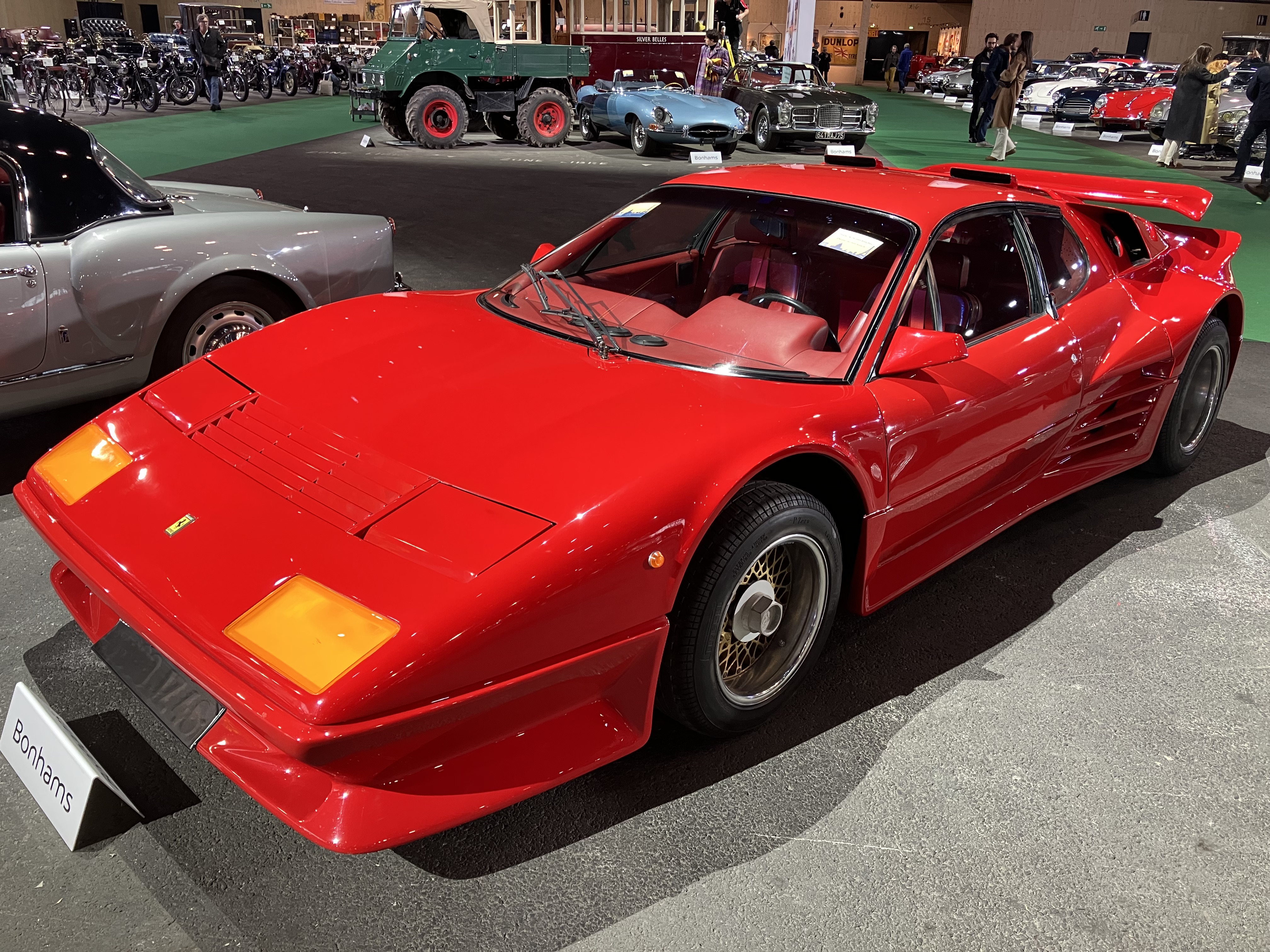
Ferrari 512 BB
"You have the cars from the 70s, the 365 GT4 BBs, the 512 BB."
This is another famous classic Ferrari. Collectors like it because it’s special, rare, and historically important.
The Ferrari 512 BB is another iconic Ferrari V12-era mid-engine grand tourer. Like the 365 GT4 BB, it’s valued for its rarity, desirability, and place in Ferrari’s performance history.

Ferrari 575 Maranello
"...a 550 Maranello and a 575 is an upgrade and everybody wanted the paddle shifts... Now, if you have a manual gearbox, 575 Maranello, it's worth a boatload of money more than just a paddle car..."
The 575 Maranello is a newer classic Ferrari V12 compared to the 550. In this market, a manual version is especially valuable because it’s rarer and more sought after.
The Ferrari 575 Maranello is the later V12 evolution of the Maranello line, and it’s often seen as a step up in performance and desirability. The episode emphasizes that a manual gearbox on a 575 Maranello can be worth significantly more than an F1-style paddle car.
Porsche
"And I would request the hell out of them because I had a lot of Porsche customers. And at the time, Porsche customers were, you know, they always wanted those manual gearboxes."
They mention Porsche because Porsche buyers (in their experience) often want manual transmissions. That preference can make manual cars more valuable or easier to sell.
Porsche is brought up as the speaker’s customer base that strongly preferred manual transmissions. This matters because it shows how brand culture and buyer preferences can influence which drivetrain options get ordered and valued.
chassis
"There was a small, small, small issue with the chassis on the car. It was at some point in time, it was in an accident."
The chassis is the car’s main structure. If it’s bent or slightly misaligned, it can affect how the car handles and how correct it is for collectors.
The chassis is the car’s structural frame, and issues there can be a big deal on classic cars. Even small alignment problems can affect safety, suspension geometry, and how accurately the car can be restored to its intended specifications.
hybrid cars
"Now, I know there's been a lot of talk about hybrid cars."
Hybrid cars use both gas and electricity. The discussion is about whether collectors will still want them as future classics, even though they feel different from older gas-only cars.
Hybrid cars combine an internal-combustion engine with an electric motor. In the collector context, the question is whether hybrids will be seen as “collectible” the way traditional high-performance cars are—despite differences in sound, feel, and long-term technology risk.
IPO
"And once they go public, I mean, look, the, the IPO is close to two trillion is what's projected."
An IPO is when a company first sells stock to the public. Big IPOs can create a lot of money and excitement, and that can influence what people are willing to spend on things like collectible cars.
An IPO (initial public offering) is when a private company sells shares to the public for the first time. In this discussion, the speaker ties large IPO valuations to broader wealth/market sentiment that can spill over into collectible markets like classic and enthusiast cars.
exercise them
"You got to maintain the cars. Got to ensure them. You got to exercise them."
“Exercise them” means not letting the cars sit forever. Taking them out and driving them occasionally helps prevent problems that happen when cars are parked too long.
“Exercise them” means periodically driving or running the cars to prevent issues caused by long storage. Regular use helps keep fluids circulating, tires from degrading, and mechanical components from seizing.
Request an Explanation
Heard something you'd like explained? We'll add it to this episode.
Sign in to request explanations for terms you heard.
Want to learn more?
Browse our glossary for plain-English explanations of automotive terms, jargon, and concepts.
Help improve this episode
See something that's not quite right? Our annotations are AI-generated and can sometimes miss the mark. Click the flag icon on any annotation to suggest a correction.