The Pontiac Fiero was a quirky, mid-engine sports car from Pontiac. The host is pointing out that in 1979, designers built a full-size clay model of it—basically a life-size design prototype.
The Tesla Model S is an electric car. The host mentions a 2016 crash where the driver was using the car’s automated driving features, and it resulted in a fatality.
This phrase means a deadly crash involving a car’s automated driving features. People talk about it because it shows how safety can be complicated when automation is involved.
The Chevelle is a classic muscle car from Chevrolet. It came in different versions, including more performance-oriented trims. Collectors talk about it a lot because it’s a well-known model from the muscle-car era.
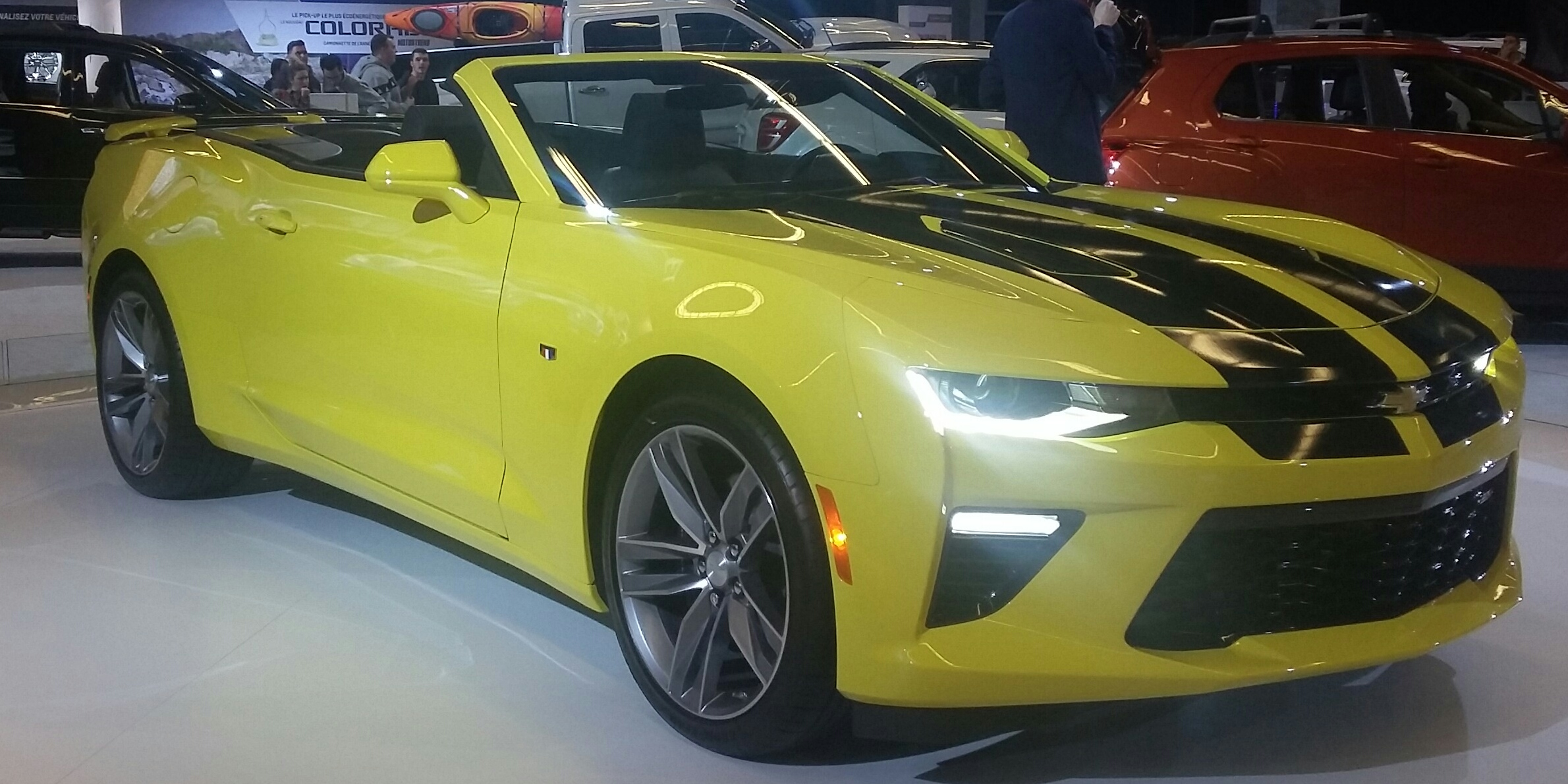
The Camaro is a sporty American car, usually a two-door coupe. People like it because it’s built for performance and there are lots of different versions over the years. It’s commonly talked about in collector circles because it’s a classic muscle-car choice.
Hagerty is a company that focuses on classic cars. Their price guides are like reference charts that collectors use to estimate what cars are worth, and the host is using it to check trends.
“Sticker” is the price printed on the car’s label when it was sold new. “Over sticker” means someone paid more than that printed price because the car was hard to get.
The idea here is that a car’s price isn’t just a number—it’s set by real buyers. If someone is willing to pay more for a certain version, that’s what the car becomes “worth.”
“Red interior” just means the car’s seats and cabin trim are red. Collectors often pay more for certain interior colors because they’re rarer and more desirable.
The Mazda Flair is a small Japanese car. The podcast is talking about how the convertible and the coupe versions can look different, especially around the back. Collectors notice those differences because they help identify the exact version.
A convertible is a car with a roof that can open up. In this conversation, they’re saying the convertible version has styling details that some collectors like more than the coupe.
Fender flares are the extensions around the wheel openings. They can change how the car looks, and here they’re part of why people prefer one body style over another.
The Bronco is a rugged SUV made by Ford. The Eddie Bauer version is a trim level that typically adds more comfort features. Collectors often care about the exact year and trim because it changes what the vehicle includes.
A VIN is like a car’s fingerprint number. Verifying it helps make sure the car matches the paperwork and that there aren’t hidden problems with the car’s identity.
A car title is the legal document that proves who owns the vehicle and what its legal status is. In collector-car dealing, title problems (like missing paperwork or mismatches) can be a major barrier to selling or registering the car.
A knock is a clunking or tapping sound from the back of the car. It can mean something is worn or loose, and the fact it shows up only in certain weather can hint at how the parts behave under different conditions.
The upper control arm is part of the suspension that helps hold the wheel in the right position. If it’s rusted or damaged, the car can handle poorly and it can become unsafe.
When you buy a car online, you can’t inspect it yourself in person. So the listing details and outside checks matter a lot so you feel confident buying from a distance.
A condition inspection is someone checking the car’s overall condition. It helps you understand what you’re really buying, especially if you can’t see the car in person.
The Volkswagen Rabbit is a small, compact car. People get interested in it because there are lots of different versions and ways to explore it. That’s why it can lead to “rabbit holes” in car collecting—lots of details to dig into.
A “rabbit hole” means you start looking into one thing and then end up going much deeper than you planned. With cars, it’s like researching a model and then learning a whole bunch of related stuff.
The Oldsmobile Silhouette is a minivan. The point being made is that some car people end up driving practical family vehicles, even when they’re into classics.
Ceramic brakes are brakes that use special ceramic rotors. They can work great, but when they need replacement, the parts can cost a lot more than normal brakes.
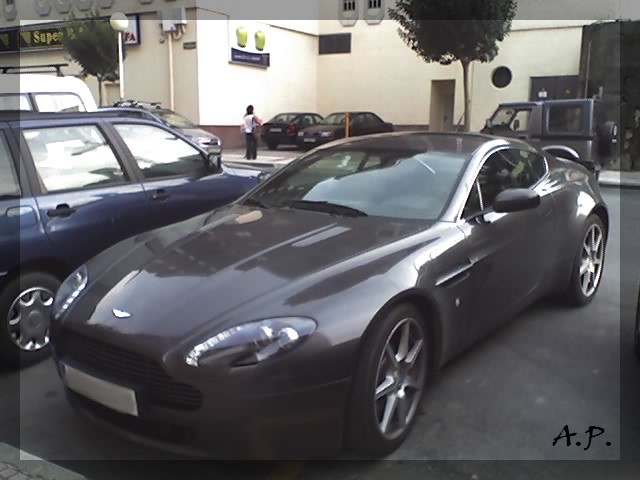
The Aston Martin V8 Vantage is a sporty Aston Martin with a V8 engine. The speaker is listing it as one of their cars and calling out the green paint style.
This is a classic Oldsmobile Cutlass convertible that’s built to look like the famous Hurst/Olds style. It’s not necessarily the original factory version, but it’s made to match the look.
Term
455
“455” is the engine size—455 cubic inches. Bigger engines like this are part of why these classic cars are so desirable.
Term
Hurstoles badge
The Hurst/Olds badge is a recognizable performance-style emblem from classic Oldsmobiles. Mentioning it here suggests the car is built to look like that special edition.
“Keep cash or crush” is a fun game where you’re given three cars and you must choose: one to keep, one to sell for money, and one to get rid of by crushing. It’s basically a test of what you’d really value most.
Term
number two cars
“Number two cars” refers to a secondary vehicle in someone’s lineup—typically not the primary daily driver. In collector-car conversations, this matters because the market and buyer behavior can differ for cars meant for occasional use versus cars intended as the main transportation.
The 1970 Ford Mustang Boss 302 is a special, performance-focused version of the Mustang from 1970. Because it’s a well-known collector favorite, its value can behave differently than other Mustangs.
The 1970 Plymouth AAR Cuda hardtop is a special, limited muscle car from 1970. People collect it because it’s uncommon and has a racing connection, so the exact version matters for value.
The 1967 Jaguar XKE Series 1 Roadster is a classic British sports car people love for its looks and driving feel. Collectors care about the “Series 1” version because early cars can be more sought-after.
The AC Cobra MkIII is a classic-style sports roadster. It’s known for being lightweight and built for strong performance. Collectors pay attention to it because Cobra models are highly sought after.
“Replicas” are cars made to look like a famous original. If there are lots of them, it can be harder to tell what’s truly authentic—and that affects what real cars are worth.
The Shelby Cobra is a classic sports car known for being very fast and exciting to drive. It has a strong racing reputation, which is why collectors pay a lot of attention to it. People often talk about Cobras because they’re iconic and highly sought after.
Trumpet exhaust means the tailpipes flare out like little trumpets. It’s a style choice that also tends to make the car sound more noticeable, which is why the speaker remembers it.
A Stinger hood is a Corvette hood style with a distinctive raised shape. The speaker is saying this 1966 Corvette has that later hood, even though it should have the earlier look.
Patina is the natural, worn-in look a car gets as it ages. The speaker likes it because it makes the car feel real and enjoyable to drive, not like it’s been kept too perfect.
Turbine wheels are wheels with lots of thin spokes that look like a turbine. The speaker brings them up because they help the car feel like it was modified in a specific time period.
This refers to a car that’s been customized with period-style parts, but not with fully correct, factory-accurate details. The speaker’s point is that “wrong” details don’t automatically ruin the car if the overall look and vibe capture the era and make the car fun to live with.
This is a Chevrolet Corvette from 1980. The host is saying people sometimes judge it too quickly because it doesn’t feel very powerful, but it still looks great.
“Malaise era” is a nickname for the late 1970s/early 1980s when many American cars felt slower than earlier muscle cars. The host is saying that reputation can make people ignore cars that still look good.
This is a Mercedes-Benz 300 D from 1975, a diesel luxury sedan. The host is saying it’s being sold for about $10,000 and seems like a great deal, especially given how long these cars can last.
The Ferrari F40 is a very famous supercar made by Ferrari. It’s known for being extremely performance-focused and for being a highly collectible classic. That’s why it shows up in conversations about the most desirable Ferraris.
The Ferrari F50 is a supercar made by Ferrari. It’s considered a top collectible because it’s a special, high-performance model. That’s why it’s commonly brought up when people list the most desirable Ferraris.
“Restomads” are classic muscle cars that have been restored and often updated. The host says some buyers expect them to feel exactly like a modern car, but they can still drive rough or feel old-school.
A “four-speed” means the car has four forward gears. The host is saying that with only four gears, you may have to shift more to keep the car feeling right.
LIVE
Okay, before I get to my interview with Stuart Halden of Classic Automall, I thought I would
throw out some fun facts for May the 7th. Now, when I looked these up, I tried to keep them all
automotive, but honestly, they were kind of depressing. So I threw in one or two positive ones.
So bear with me here. This is meant to be entertaining, fun trivia that you can impress your
friends with. And then right afterwards, I'll do a quick update on the book. In 1824, Beethoven released
his ninth and final symphony, which became one of his most famous symphonies. Even though he lost
his hearing years earlier, he was the conductor when it was debuted at Vienna's Theater. That's
pretty cool. In 1927, the first DKW production automobile was completed. Most of us don't know
who they are, but they're one of the founding ancestors of Audi. 1967, during the Monaco Grand Prix,
unfortunately, Lorenzo Bandini's Ferrari was involved in a tragic accident, and he passed away
about three days later. In 1979, Stylist completed the full-size clay model of the Pontiac Fiero.
Now again, some more sad news. In 1990, the final Lamborghini Cuntas
rolled off the line. It was a pro-red 25th anniversary edition. And then finally, again,
more sad news. In 2016, Florida had its first self-driving car fatality when the driver of a
Tesla S sports car using the vehicle's automated driving system died in a collision with the truck.
So that was not great histories for today, but I'll try to do that going forward.
Hopefully, we'll have some more positive car trivia, car history once we go forward. So
the book is doing really well. Actually, I had a chance to share that the Greenbrier
Concorde elegance this past weekend. That was a ton of fun. I only took one case of books,
but we sold out, which was pretty cool. So now let's get on to our sponsors, and then we'll
get on with the interview with Stuart, who is a really fun and entertaining guy.
If you're a collector, you already understand stewardship, preserving what matters,
planning ahead, and passing things on the right way. That's exactly how Paris style wealth approaches
financial planning. As the Ferrari Club of America's official wealth management partner,
they help avid collectors who value resilience and attention to detail. And the founder, John
Suarez, is active in the community. I've judged one of his cars before and I see him at events
all over the country. To learn more, go to Paris style wealth.com Paris style wealth advisory
services offered through new edge advisors LLC, a registered investment advisor.
Every garage is a mirror of the mind that builds it. The garage becomes a quiet dialogue between
who you are and what you craft. A garage is where work becomes meditation and solace,
where mechanical truth becomes mental clarity. Some people go to offices, some go to mountains,
others go to garages. At Metron garage, we build for people who do all three. Give us a call to
get started. If you own a collector car, you already know it deserves more than a standard
insurance policy. NCM insurance specializes in agreed value coverage designed specifically for
classic collector and enthusiast vehicles. From weekend drivers to serious collectors,
they understand how these cars are used stored and protected. To learn more about protecting
your collector car the right way, visit NCM insurance.com coverage built for the cars you care about.
Every car in your garage tells a story where it's been, how it's been maintained and what makes
it truly yours. Carport gives you a simple digital garage to document, organize and manage
your vehicles all in one place. Track service history, store important records and keep your
collection dialed in with confidence. From your daily driver to your dream car, Carport keeps
everything in order so you're always ready for the road. And best of all, it's free to use in
its 100% private. To learn more, go to carport.app. All right, welcome to the collector car podcast.
I'm excited about this interview today because Stuart is in charge of almost a thousand cars.
So Stuart Howden, how are you doing, buddy? I don't know. I've never known from day to day. It's
like, really? Do we have one of those in here? Somebody will say, you got any Thunderbirds?
And I go, I don't know, but I'm certain the odds are that we have a Thunderbird or two.
So now you are the purveyor of the classic automobile, but what about an hour outside of Philly?
Yeah, our west of Philly on the Turnpike exit 298. We're right here in an old outlet mall
that was built in 1985 by Kimmons Wilson, the founder of Holiday Inn. And we have a Holiday Inn
connected to it that my business partner owns as well, too. And so it was this whole property,
and he bought it because he had a barn find collection and filled it up and then realized
he had a lot of space left over. It's 336,000 square feet. So we tend to have plenty of room
to do just about anything we want. We could land a plane in here if it was more vertical.
Well, real quick on Holiday Inn, I have to say, I'm in Cincinnati. We have the American Sign Museum
and one of the most classic, incredible neon signs in the history of neon signs is the 70s
Holiday Inn or 60s Holiday Inn sign. Just wonderful. Yeah, absolutely. You know, when you saw that as
a kid when you were with your parents and you were looking for a hotel room and you saw that big
sign, you knew it was going to be cool. There was going to be good food. There was going to be an
indoor swimming pool. There was going to be a great vending machines. You know, everything that
didn't, you didn't have in hotels prior to that. Oh, it was fantastic. You know, rolling up,
I was just like, oh man, this is amazing. You know, so that is really, really cool. Now,
I can't even imagine, I only have three cars and I find that overwhelming. So I can't imagine
keeping the inventory that you guys keep in stock. So give us an overview. I know you do some consignments
or there's some buy outright. You know, how does the whole business model work? Most of it is
consignments, believe it or not. What we realized is that to fill a building of this size was going
to be very difficult to go out and buy a thousand cars, you know, of cars that are, you know, of
the right quality, of the right pedigree, of all the right stuff. We figure, you know what,
if we could get, if we do really good at marketing and really good at the building,
then the consignments ought to be the no brainer way for it to happen. And that's exactly what
happened. And we all of a sudden, when we first opened, we did the Philly Auto Show in January
of 2018 and it just, the floodgate happened. We just started getting cars in just like crazy. So
people bring them in on consignment. Usually it's about a three or four month agreement
and we come to a set price and of course it's their asset and they can pick the price that
they want and sometimes we agree don't agree. But then after a period of time,
we'll call them and say, hey, you know, we've had no activity. Here's the reason we think
it's not this or it's not that. And we think it's more in this line with this price than the
price you're asking. And, you know, listen, we've all paid too much for things. So I, you know,
you're preaching to the choir with me. I know I've been there. I bought a car that I was certain
we were going to double our money on. And I think I lost five grand on and, you know, my wife just
looking at me like, great, good job. I thought you were the car guy. Now I will say, I do like the
variety you have because obviously, I don't want to say obviously, but there are a lot of 50s,
60s American muscle and the type of stuff you would expect. But I do see quite a few British
cars and some odds and in stuff that I find very interesting. So it seems like there's
a little bit for everyone there. Well, I think that what we try to do is we try to have a variety
of things that we do here car wise. Most of it are bread and butters, Camaros, Mustangs, Chevelles,
that kind of thing. But, you know, we have plenty of, of oddball stuff that we get in as well too.
We get dragsters. I mean, this, this part of the world in Southeast Pennsylvania is so car country
as much as probably anywhere in the world. And people don't always realize that. And we didn't
truthfully know that until we moved here. But we certainly learned quickly that it's amazing how
many cars are in this, in this part of the world. Yeah, absolutely for sure. Yeah. So what are you
seeing from a trend perspective? Because I have a 65 K code Mustang convertible and I just happened
to look up on Hagerty price guides the other day and it was trending downward. Not that I'm selling
it because I'm a K code guy. But like, what are some of the trends you're seeing? Obviously,
Ferraris blew up recently because of the Bachman collection, which was an outlier. But what are
you seeing outside of, you know, the exotics more bread and butter kind of cars? Well, we're seeing,
like you just said, I mean, we're seeing the prices start to go down a little bit, especially in
fifties cars of 56 or seven tri-five Chevy. We're starting to see the value of those go down.
Of course, a couple of years ago, we started seeing the late thirties of a 39 Ford deluxe. We talked
about this convertible cabriolet that was perfectly restored used to be a 70 or $80,000 car. And now
they're lucky to bring 30. The baby birds obviously have continued there. And I don't think they're
coming back. They've gone down to a level that gosh, you can buy a really nice one for 25 grand
that used to be 40. And so, and then the square body trucks in the SUV seem to be cooling off a
little bit right now. I know you talked about, you have a chapter in your book of the square
bodies. They seem to be cooling off. We had a hot streak with those for about, I don't know,
probably about six months, about a year ago. And then they seem to have kind of slowed for whatever
reason. Maybe everybody that wanted one got one, right? So what is appreciating? Like, what are
some of the trends you're seeing out there? Is it 1980s cars, early 1990s? What are you seeing?
Yeah, we're seeing low mileage, late model stuff do pretty well. Even oddball stuff. A four-door
Oldsmobile Cutlass Sierra with 4,000 original miles on it. And all of a sudden, somebody's willing to
pay high teens on something like that and think, wow, I mean, you know, the best one in the world,
you'd think you'd be five grand, not 15. So we're seeing that trending up. And we see the
outlier stuff that we get. We get, you know, the new one-of-ones or one-of-fifty, or we just had an
M5 BMW Touring, a 2026, had 90 miles on it. That thing broke the bank. You know, it just,
it sold for more than we anticipated because it was a used car at that point. It wasn't brand new.
And it did well. So things that, and it's funny, I don't even always know that there was an M5
touring wagon on the market, you know, because I don't pay attention to that market quite as
much as I pay attention to the 50, 60 stuff. So when somebody brings that in, I'm like, oh,
I didn't even know that existed, you know, and I don't read car and driver and road and track
as much as I diligently used to. Right. But seeing stuff like that that just go, you know,
the newest, latest, greatest Shelby, whatever that may be. It's funny. We had a guy who paid $40,000
over sticker on a 2023 Shelby Mustang a couple of years ago. And I asked him, I said, you know,
you're paying way over sticker on this thing. And he said, I know, he said, but every time I try to
buy one, when I get there, it's already sold out from under me. And he goes, this is my one and
done car, and I'm going to pay whatever I have to pay. So how do you track that in price guides
and all that? Right. Yeah. No idea. No idea. Yeah. People say, what's my car worth? I go,
I don't have any idea. It's worth what somebody's willing to pay for.
Well, it's funny. I just pulled up, I just, just for fun, because I think, you know,
next gen stuff, you know, the 1990s, early 2000s, 2010s. And just for fun, I plugged in 1996. And
you have a car I would, I definitely have on my radar Corvette Grand Sport. Yeah. Interesting
about this car is the coupe, but it has the red interior, which I know the red interior is a
big deal on these cars. Yeah. And it might be, I can't remember, there's really limited, right,
with the number of red interior cars or mine. Yeah, that's the one that's the most desirable,
the one that everybody's looking for is the red interior cars. And it's funny how that just a
color of an interior has that much of an influence on pricing of a car, but it certainly does. It
certainly makes a difference. Yeah, it's interesting because that's a very interesting car,
because the convertibles had the flair rear haunches, whereas the coupe had the kind of tacked on
little fender flares, which everybody wants the convertible because of its actual flair. I don't
know why I guess it's just the way production worked at that time. But what is else is interesting
is when I pulled that car up right next to it, 1996 Ford Bronco Eddie Bauer. And I think
those 26.9 seems like a bargain, just when I look at where I think those cars will go in the
future. What are your thoughts on 90s Broncos? Absolutely. I mean, most people that are watching
or listening probably have no idea who Eddie Bauer is. And it was basically a clothing line that
they morphed into what a brilliant marketing thing that they did with Ford and those Broncos,
that the Eddie Bauer edition became like the upscale version of an SUV before we even really
had upscale SUVs. So I think those are very collectible. And I think the outlier ones are like,
we had one with a bent seat and a five-speed. Oh, wow. Yeah. And it was like, I think nobody's
going to want this, and everybody wanted it. It was one of those ones that had a following
that you never knew existed. Right. Yeah, for sure. Now, how did you get involved with the
automobile? I mean, I can't imagine you were sitting at home one day saying, I want to have
a thousand cars in inventory and be responsible for them. How did that all come about? Well,
originally, instead of doodling on a napkin, I was creating business plans of a place that I could
have that would be of this scope and size, not particularly this building would be a big warehouse
somewhere that would hold 500, 600 plus cars. And we would have the ability to market those and do
all the events that we wanted to do. We always knew that being at an event is the best place to
talk to people and get consignments and one-on-one with people. And so I had this plan, and I got
a call from a guy, my partner who owns this building in 400 barn finds, and he said, hey,
I heard you're the guy that wants to, that could come run this for me. And I said, well,
I don't really want to do that, but I'll sell you a business plan. And he said, great. And so we,
I got changed the name and the city and the state of where I was going to do this. Right.
Into his, into Morgantown PA and sent it to him. And about two weeks later, he called me and he said,
the family has voted. I go, uh, okay. What does that mean? He goes, we want you here.
So I told my wife that we were moving further away from Kansas City. We were in Lockhaven working
with Grant Miller, who had a, has a dealer, once a year collector car auction in an every week
dealer auction. And I told Kathy, my wife, I said, well, we're moving further away from Kansas
City where the kids and grandkids are, but we're close to an international airport. And that's
big selling point. So she was like, okay, I mean, let's do it. And of course, she works side by
side with me. She's my office manager. And without her, this would be a house of cards.
So, but it was, it was always my dream to have a place of this scope and size, a place that,
that I could do even this, the podcast, the show that we do, just like you do.
We just always saw it if we could ever get to that level and to, to go to the events that we get to
go to and be on the board of directors of museums and Concorde elegances and all those bucket list
things are happening because of this. And, you know, when we were 20 cars in a warehouse, nobody
cared. Right. Yeah, absolutely. Yeah. Now you're dealing in massive volume. Now what happens?
Like give us a little insight. Like, all right, I want to consign my car. I drop it off. What's
the process? Like how does it go from me being the owner to what do you do? Do you vet the cars?
Do you clean the cars? Do you give them some advice? Do you upgrade any of the cars?
Sure. So mostly what we do is we have an assembly line almost when they come in. The car comes in,
we do a walk around, a cursory glance, walk around in the car to make sure there's nothing crazy
that's obvious and glaring. We checked the title and the VIN number on the car because most people
never do that on their cars. And it's a huge mistake because there's so many problems and always,
we always have problems with titles and VINs. We check the mileage and we make sure that everything
is what it's supposed to be and how it's supposed to be. And then we put it in for a detail. Once
we detail it, we have a dedicated photo booth. We put it in there. Then we put it up on the lift,
take undercarriage pictures, put it on the showroom floor and offer it for sale. And the
consignor, the beauty for the consignors, all they have to do is wait for us to call them and say,
bring us the title. And we call them and tell them we got a deal or we call them with an offer
and we negotiate there. Most of the things that need fixing on a car are not worth fixing,
unfortunately. I can't, in good conscience, tell a client to spend $500 to fix a car that'll
give him $100 more. And it's good to be able to describe a car. You'll look at our descriptions.
We have stuff that no auction house would ever put in, like a knock in the rear end that only
happens when it's below 20 degrees outside. Or something like that or a rust hole in the
upper control arm or whatever. There's just so many things that we talk about that most places
would never do. Does it cost to sales? I'm absolutely certain it does. Does it allow me
to sleep at night? Absolutely. Right. Yeah. No, absolutely. And that's very, very important.
Yeah, for sure. And listen, we have an agreement with people. It's their car. If a guy calls me
and said, we had a guy as a funny story, a guy at a 1940 Chevrolet pickup truck and he brought it
to us to consign. And about two days later, my girl up front called and she said, he's back up here
and I'm not sure what he wants. So I came up and the owner of the truck said, I'm sorry. I can't
sleep. I can't eat. I'm pacing the floors. I don't know what to do. I just think I'm going to have
to get my truck back. It's just been part of the family for so long and I'm having all these issues
that I never had before and now it's gone and I'm just distraught. And I said, okay, it's cool.
It's your car. Don't worry about it. We'll tear up the contract. If you're ever ready to sell it
again, let me know. Two days later, he shows up again. I'm like, what the heck? So I come walking
up funny in front and he hands me the keys. He goes, here you go. And I go, what's up? He goes,
I took the truck home. I still can't sleep. eat. I'm still pacing the floor.
It wasn't the truck. But so many people are emotionally attached to their vehicles. It's
such an important part of their life and their family and the history of what they've done.
It's very hard to sell these cars and they like the fact that they can bring it to us.
It's not immediate. It's kind of, this is step A or B in a step C process. So they don't have to
say goodbye to it as it's leaving the driveway. They're just saying so long.
You know, that's so funny, because I relate that to when I tried to get rid of stuff for good
will. This is my favorite shirt, but I'll put it in a trash bag. Just all these stuff. If I don't
think about it for two weeks or three, it's kind of the same idea out of sight, out of mind. And
then I take it. Well, it's like the old, you're supposed to put car parts in a box and tape it
up and write a date on it. And if after three years, you've never reopened that box, you're
supposed to throw it away without looking in to see what was in there. Cause you never need,
there was obviously, you didn't need it for three years. And so you just go ahead and throw it away.
I'm the same way though. I have shirts. I got a shirt from the Bondurant school because I had
the fastest lap when I worked for eBay and it's got holes in it and everything. My wife's like,
why are you keeping that? It's a sentimental shirt. She goes, what are you stupid? Do you have a
sentimental shirt? So it was important. Bob Bondurant gave it to me. Yeah, that's right. Now,
what percent of your sales are online versus in person? 95% are online. We could literally close
the doors to this place and we would still sell as many cars as we sell. But the nice thing about
the building and the facility is for the consigner, for the guy leaving his car here. You know,
to ask somebody to bring a car to an auction is one thing. It's a long weekend. To ask somebody
to bring their car for three or four months, that's a different commitment from somebody. That's
a trust issue that are you sure you're not going to be joyriding in my car around the town? Are you
taking it out on a date? Are you taking care of it? So when they come here and they see our facility
and they see what we already have in here, they go, oh, my car will be just fine here. So building
is more for them than it is for the buyer. Most buyers have, we're at the warehouse in Jersey
for all they know. Right. No, no. Yeah, it is interesting because selling that many online
means that you've really done your homework because you've got to show all that stuff online,
right? You've got to show all the pictures, get the descriptions right where they have the confidence
to buy that car. Like an auction house, you know, they have the confidence to bid remotely,
but it's amazing that such a high percentage is strictly online. It just shows the world we're in
today, right? Yeah, it's a different world. And there's, you know, there's lots of ways to protect
yourself when you're buying a car online that they didn't use to exist. I mean, there's lots of
inspection companies, the guys that do appraisals also do a condition type inspections that we have
guys who do, you know, drive train inspections that will come out and charge $150 to a guy.
But I think that, you know, the honesty part of it is what you strive for. And we have a 4.7,
4.8 Google review and we fight for that every day because it's harder than heck to keep that,
even at that range. It's just, you just can't please it. You're selling old cars and not everybody's
going to be happy. And it's not as if we're somebody like Canapa or RM Restorations where
we're taking a car and we're making it perfect. We're selling the imperfect car. Of course,
the guy will say, well, you know, I'm, I'd like to buy that car, but there's leaks or it does this
and it's 20 grand. And I say, well, if you want one, the Dunne league is 40 grand. So you're buying
the 20 grand one because you're going to have a few little minor issues with it. So, but it's,
it's one of those things that we try our best to be as brutally honest as we can. And to a
fault. I mean, we've had consignors call us and say, you need to take that picture down. I go,
that ain't going to happen. We're, I'm sorry. It's, we're going to show what's wrong with the car
unless you want to go fix it. If you want to fix it, then we'll take a new set of pictures and
happy days here we come. But otherwise we're going to show it because, you know, I like to go to
public events and people know who I am. And I don't want to get punched in the nose.
Yeah, sure. But now tell us a little bit about your YouTube channel. And just before I move on
to some other questions, you know, a little bit more about it, how can they find you?
Sure. So it's classicautomall.com is our website, which you can link to our YouTube
and our Facebook and all of that. We're, we're doing, we're having fun with our YouTube channel.
You know, it's the one hour of the week that I get to turn my cell phone off and just kind of
talk cars and have fun just like we're doing here. And it's, it's an enjoyable thing. And
if it makes us some money someday, great. And if it doesn't great, but we've had some wonderful
guests, Ray Evernham and Bobby Ray Hall. And, you know, people that are, are famous in the car
world, Dave Kenny, who you alluded to or mentioned about wrote one of the beginning and ends of your
book. Guys that are Ken Gross, guys that are known in the hobby, but may not be known
like a Jay Leno or Jerry Seinfeld. But it's interesting because usually our best guests on
our show are authors, you know, Carl Ludvigson or, uh, you know, some of these guys who've written
these books, like, not unlike you've done, uh, are our best guests because there's just so much
to talk about. You know, there are so many things that so many kind of rabbit holes you can end up
going down. Yeah, absolutely. I mean, you know, I already had a PT cruiser rabbit hole. So
Hey, I had an Oldsmobile silhouette, which was the Cadillac of minivan. So, you know, there was
a lot of people I know in the car world actually drive minivans and which is really funny to me
because that seems the antithesis of classic cars and that world. Yet a lot of guys are like,
they're very practical. You know, you can put a lot of stuff in them and
like, okay. Well, that leads me to my next question. What is your daily driver?
My daily driver. Uh, now, well, I'm, I'm in the, I'm in the midst of doing a little changing.
So I just sold my S 65 V 12 twin turbo Mercedes coupe black on black. And I, as it was driving away,
I was like, what, how stupid are you? That's going to be a collectible car.
And you got a little wig down because you're worried about the ceramic brakes. And so
at a 100000 miles, you're going to have to pay five grand per wheel for the,
for the rotors. And I'm like, I sold that based on that, basically. My daily driver,
what I drive the most is a, is a 2,023 GLS 580 Mercedes. That's my, really my wife's car,
but we practically go everywhere together anyway. And then we've got an 06 or an 08 Aston Martin V8
Vantage and DBR nine racing green. And then I've got an 06 911 S six speed and a CL 55 AMG coupe.
And oh, I don't have a Denali truck anymore. I sold that. So that's, and it's a pain in the
I thought the coolest thing in the world is going to be owning more than one car. And you're
right. It's a pain. Where's the, where's the, where are my sunglasses? Where's the easy pass?
Where's the, you know, this one, the battery's dead. You can't get this one out because of that.
This one, we just detailed it and it's might rain and there's suede shoe thing. And it's like, God,
I just, I want to get my Yukon that's got 220,000 miles on it, where I can throw an open can of
paint in it. And I don't care. So yeah. So you just threw out all European cars, which surprised
me. And I'm looking on your website. So for Mercedes, you have quite a, you have like 24
Mercedes on your inventory right now. So any American cars in the garage right now, or is that
soon to be filled? It's soon to be filled. I just bought, and it's on its way coming up from North
Carolina, a 72 Oldsmobile Cutlass Hurstoles clone convertible triple white with the gold stripe and
the Hurstoles badge on the back and the rear spoiler and the his and hers shifter. And it's a 455.
It's, so it's a clone. It's, but it's really well done. And I was trying to buy it in an auction
only to realize that the auction was like on a two hour delay from what I was watching.
But I called my, I want to take my bid. It's like, I'm trying to bid on this thing. They go,
it's already sold, sir. Okay. Well, I know what I'm doing here. I'm, you know, so I bought that kind
that's my most recent one. We kind of had to sell the collection of cars that we had
prior to all this when we were putting kids through college and all that stuff. And it's the
practicality of that's when the Oldsmobile silhouette, the Cadillac of minivans came into play.
Kids are such a bummer. Okay. They really are, you know, I love them to death now, but they were
kind of a pain in the ass back in the day. Well, I want to close on something I did not give you
a heads up on like a fun guy. So you can handle it. Yes. I do a little game called keep cash or
crush. I give you three cars, you pick one to keep forever, one to cash in. Yeah. And one to
crush. Now I picked three cars that I picked it from your website, but these are not the cars.
I don't want you to have to crush a consigned car. I've been getting a phone call later today.
No, no, I don't want you. So we're not talking about these specific cars. It's just the inspiration.
Gotcha. So all right, I threw one European car in there. So the first car is a 1970.
Now let's make the assumption these are all number two cars. Fair enough.
I'm going to pick different colors because that could be a big deal. All right. Absolutely.
First one is going to be a 1970 Mustang Boss 302.
Hmm. Let's make this one. Grabber orange with white interior. Yeah.
Okay. The second is going to be the competitor 1970 Plymouth AAR CUDA hardtop. One of my favorites
of all. I'm a Mustang Shelby guys. So I love the AAR CUDA. Those things are so cool and sexy.
All right. But this is going to be Panther Pink. Oh, wow. And then the third car,
Enzo Ferrari, called it the sexiest car ever. 1967 Jaguar XKE Series 1 Roadster.
Let's put this one in, I think it's called Primrose Yellow, but it's a convertible.
Yellow. And that Primrose Yellow seems to be such a popular color on those cars for many,
many different reasons. Man, you made it tough. I thought you were going to throw out some
oddball crap and that was going to be easy. Yeah. So yeah. So I got to say that the crush,
this is starting off hard. I know the Boss 302. They don't seem to go up in price. They seem to
just kind of be stagnant there forever and they always bring way less money than I think.
That's a knife to my heart right now. I knew it would be. I'm sorry about that. Okay. So we got
crush. Keep fashion crush. So you're crushing the Boss 302. But I almost had the same opinion
about the AAR CUDA. They all kind of fall. They both kind of fall together in that same
category of collectible, but they've never like gotten out of their little trough of what they're
in. It's not all about the money. I'm sorry. Yeah. I know. I know. But it's one of those
things you got to look at, right? Yeah, you do. So I say keep the XK and cash out on the AAR CUDA.
Really? Yeah. And I think cash out because I don't think the AAR CUDA, if you're making it from
a value standpoint of something that you're going to keep and that it's going to make sense in the
long term. People ask us that all the time. And it's a very difficult question. I mean,
what's going to go up in value? I don't know. It's hard to say. I can certainly see trends.
I mean, why is an AC Cobra not worth $10 million today? A real 427 Cobra. Part of it. Somebody
had a good answer for this the other day on my show. And they said, because there's so many
replicas, the guy who owns the real one gets tired of saying, no, it's a real one. Yes,
it's a real one. No, it's not a clone. No, it's not an ERA or a Lone Star or a Excalibur or whatever
the heck it is. That may have held them back, that there's just so many clones out there.
It's like the wealthy got the billionaire. If I were a billionaire, I'd wear a fake Rolex,
because nobody would question that it was not a real billionaire. And then you say,
it's like 30 grand, right? So that's my keep cash or crush. I know I didn't mean to break.
That's great. Yeah. So to go back to the Cobras, I think you're right. It's funny,
because there's a guy, he's got 27 Shelby's, 65 to 70 in a row. And I'm like, you need a Cobra.
You know, he's like, people think it's fake. I'm like, well, that shouldn't matter. I mean,
if you're really a enthusiast, you want it, whether you can care less, right? Right, right.
I'm like, you should have a Cobra. Yeah, some people are like that though. I mean,
and then there's other guys like Drew Cerber, not like that. They love the Cobras and they,
you know, and so does Bruce Myers favorite car to drive is his Black Cobra, serial number 2001,
you know, CSX2001. And so, you know, and I, it's one of those guys that when he says something like
that, it makes you pay attention. You know, you think, oh, right. That makes sense. And so,
but I think you're right. I mean, like this 442 that I've, or this Hurst Olds that I bought,
it's a clone. I don't care if people don't like it, then so be it. I'm not, I'm not trying to,
I don't, I'm buying it because I want to be Bill McMillan. Bill McMillan was a guy who
dated Swan Brown and lived at the end of the street. He had a 72 Olds Cutlass, triple black
convertible, and those, those trumpet pipes coming out the back and he'd come driving by
on Friday night about nine o'clock with his arm around Swan Brown, smoking a cigarette,
hearing something coming from the eight track and those trumpet exhaust. I'm like,
I want that car and I want that girl and I want that cigarette. And so, and I've never satisfied
that, that part of the collections. And it, it's a 72 Cutlass. It's a little taken a little
liberty from what he had, but, but you get my point. It's what, what fueled me for many,
many years of, of being in the car world and, and what I wanted and what to me was cool.
And it may not be the, it won't be the most valuable car I've ever owned. And I don't care
about that. Yeah, it's funny cause I was out of cars and coffee the other day and
there was a Pagani there, you know, some big stuff there. And I like Pagani's. I think you're
gorgeous. No, but there was a 66 Corvette. It was the wrong color, the wrong wheels,
the wrong engine, the wrong hood, had the Stinger hood, which wasn't till 67.
Right. And I just loved it because everything that was done to it was done that way in like
75. You know, the turbine wheels, it had, right. The, the, the paint wasn't right,
but it had just the right amount of patina. You know, you could drive it and enjoy it,
you know? And I'm like, and the guy couldn't believe how much I liked this car. He's like,
man, you travel all over the place. You see all sorts of cool stuff. And this guy has a new 4GT.
Right. Rolling over is 66. I can't believe you like this thing. But because it's usable and
it's fun and it's captured a period in time when it was modified, you know, not correctly,
obviously, but it's cool. You know, it's just really, really cool. I love cars like that. And I'm,
you know, I'm like my, the guy who writes my descriptions, Steve, my, our producer writes
our descriptions and he'll write about a 1980 Corvette. And most of us in the car world would
never stop and take a second glance at a 1980 Corvette just because they weren't, they weren't
powered very well, blah, blah. If you take that aside, take all that out of your
head and step back and look at a 1980 Corvette. That's a damn good looking car. But, but we are so
what it's ingrained in us that we just walked past that car because it didn't have enough power.
And it was like a, you know, anything from that era was the malaise era and just don't care.
But if you take all that away, it really was a good looking car. And I think we tend to forget
that sometimes. And it's always nice when to get reminded when you read a description and somebody
has a, a more of an artistic appreciation of something. Well, I'm drilling over your 1975
Mercedes Benz 300 D sedan right now. Love those. Offered at $10,000. Seems like a bargain, right?
That sounds like quite a bargain. My dad repainted one back in the seventies. He worked at a community
college. Right. It was dark green and he did it in shop class and they bought the wrong color green.
So came out with green. But ever since that I've always wondered one of those. I know,
isn't it funny? Those ones that are, you know, if you could have the unlimited list of cars of
everything that you would have, there would be the obvious candidates, especially nowadays, the
F 50, F 40, Enzo, La Ferrari, blah, blah, blah, all the Pagani, all these things. But there'd be a
lot of oddball stuff in there that you either liked when you were growing up or had a fond memory
about or, you know, it was, I mean, it's like restomads. I didn't get them at first. I get them
now. I get people want restomads because they want the nostalgia, but they're so damn spoiled
because you get out of an Escalade and you get in a 69 Z 28 Z 302 with a four speed and you hate it
because it's rough riding and it's noisy and you need a fifth gear to get it. You know,
that fourth gear is just not enough. And so, you know, it's, uh, I understand restomads now more
than I maybe did even a couple of years ago. We get to have a whole separate podcast on the
rest of the market. There's no doubt. I find that pretty fascinating, especially in five years. So
I mean, crazy. Well, Stuart, thank you so much for being on the collected car podcast. I appreciate
you having me on your podcast and so glad you're on this one. Well, thanks for having me and doing
a back to back was cool. We did my podcast and then your podcast and that's, we've never done that.
So that's a first in the books and probably a last. I'm worn out. Well, I'll see you, uh, for
the Philadelphia Concord unless maybe try to do something while we're together, walk around your
shop. Absolutely. Just come anytime and we'd love to have you and we'll see you then. And just
not too terribly on a couple of months.
About this episode
Stewart Howden walks through how Classic Auto Mall works, from consignment intake and title checks to detailed online listings and third-party inspections. The conversation also digs into collector-car pricing, where rarity, mileage, trim details, and buyer demand can swing values in different directions. Along the way, the hosts swap stories about market trends, favorite classics, and a few personal cars, while also touching on the business side of growing a large inventory operation and meeting consignors at events.
What's really happening in today's collector car market? I sit down with Stewart Howden of Classic Auto Mall to break it all down—from shifting buyer behavior to which cars are gaining momentum (and which ones are quietly cooling off).
We also go behind the scenes of Classic Auto Mall's unique consignment model, how they're navigating today's market dynamics, and what it takes to move inventory in a changing landscape. Whether you're buying, selling, or just watching the trends, this is a candid, insider look at where the collector car world is headed.
The Collector Car Podcast features expert interviews, great collections, and market insights. With 25+ years of experience, Greg helps enthusiasts navigate the collector car world with confidence.