The Ford Model A is an early Ford car that came after the Model T. The podcast mentions it while talking about early ordering and delivery timing, which can make the story feel confusing. It matters because it’s part of Ford’s early shift to a newer design.
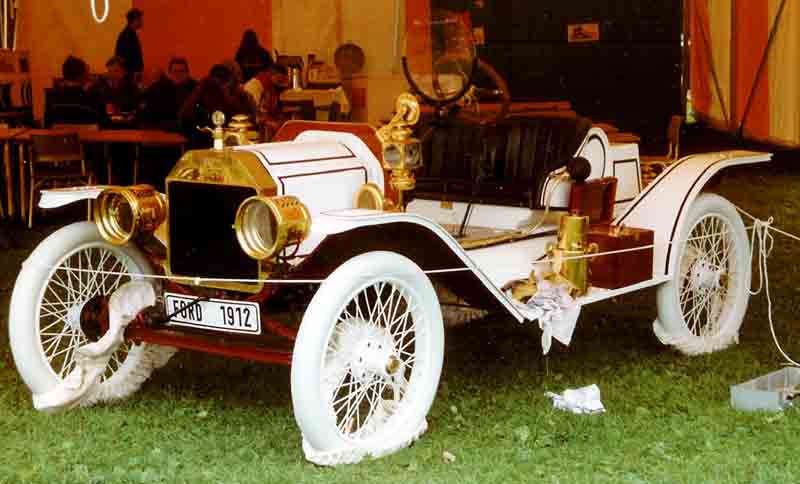
The Ford Model T is an early car made by Ford that started being sold in 1908. The podcast is mentioning the date to place it in the timeline of Ford’s early cars. It’s important because it was one of the first cars that many people could afford.
The Volkswagen Beetle is a small car made by Volkswagen that became very popular. The podcast is pointing out that it was developed after earlier KDF “wagon” ideas. People talk about it a lot because it has a long history and lots of parts and information available.
A prototype car is an early version of a car that’s built to test ideas. The goal is to learn what works (and what doesn’t) before making the final production version.
A test mule is a “practice” car used to test new parts and ideas on real roads. It helps engineers learn how the final car should be designed before production starts.
The restoration process is the work of bringing an old car back to how it originally was. This episode’s point is that rare prototype cars can take far longer than restoring a more common production model.
Sheet metal is the body’s outer metal panels. In a restoration, the shape and availability of those panels can make the job much easier or much harder.
The host says the car was found in Kraków, Poland. That kind of history helps explain why the car was damaged and why restoring it can require hunting down missing parts.
Concept
period-correct parts
“Period-correct parts” means using parts that fit the car’s original time period. Restorers do this so the car looks and is assembled the way it would have been back then.
A prototype hood is an early version of a car’s hood used before the final production design. The host is saying the early cars may need a specific hood shape or mounting points to match correctly.
NOS stands for “new old stock,” meaning old parts that were made back then but never got used. Collectors like them because they can be closer to what the car originally had.
A chassis number is like a car’s unique ID number. The host is saying that for this car, the ID doesn’t always tell you everything about how it was originally built.
Term
catalac
The host is talking about a reference document (like a catalog) that people might use to figure out what parts belong to a specific car. For this one, the host says you can’t just look it up and be done—you still have to confirm details.
Car
1944 KdF-Wagen Type 82e
This is a specific German car from World War II-era planning and production. It’s important because it’s part of the same family of ideas that eventually became the Volkswagen Beetle, but it was shaped by wartime needs.
In this context, “restored” refers to returning an old car to a historically accurate configuration. The speaker emphasizes that restorations done “10 years ago” may reflect the knowledge available then, while newer research can change what’s considered correct.
“Numbers matching” means the important parts on the car are the original ones that belong to that specific vehicle. Collectors care because it helps prove the car hasn’t been rebuilt with random replacement parts.
“Type 60” is an earlier version name tied to the original KdF-Wagen plan. It’s the pre-war concept before the car’s design got reshaped for wartime use.
The Kübelwagen was a World War II-era German utility vehicle. It used a similar basic chassis idea to the Beetle/KdF-Wagen, which is why it can look like a Volkswagen to modern eyes.
Reduction boxes are extra gearing placed near the wheels. They slow the wheels down while multiplying the torque, so the vehicle can pull better, especially at low speeds. In this story, they’re a key reason the car can handle heavier loads.
A differential is what lets the left and right wheels turn at different speeds, like when you’re cornering. A “slip” differential is designed to allow some controlled difference so the car can keep moving better when traction isn’t equal. Here, it’s mentioned as part of why the drivetrain is so specialized.
Lower gearing is when the car is set up to be stronger at slow speeds rather than faster at high speeds. It helps the vehicle pull and climb better because the engine’s effort is multiplied. The host connects it directly to the vehicle’s ability to tow or carry weight.
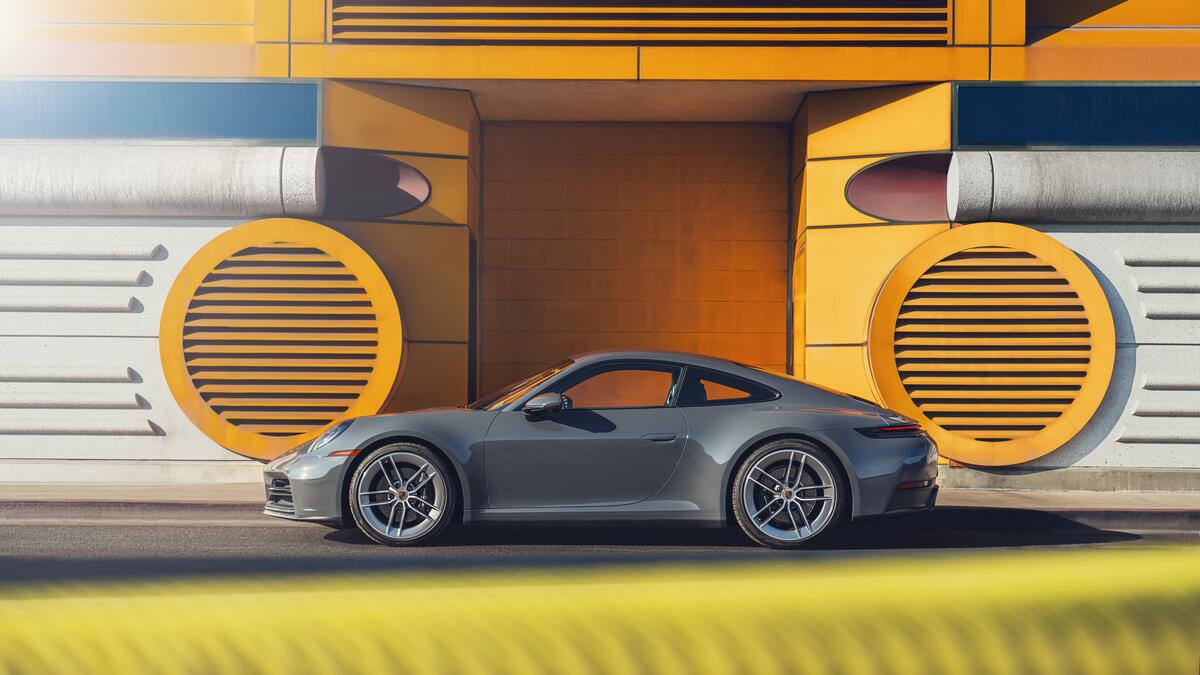
The Porsche 911 is a famous sports car model from Porsche. In this segment, the host uses it as a comparison to explain that the complicated parts on this Volkswagen-derived vehicle are similar to the kind of specialized parts Porsche 911 owners can find and install. It’s about how these unusual drivetrain pieces are sourced and understood.
The Volkswagen Bus is a van made by Volkswagen that was used to carry people or cargo. The podcast is talking about a specific part on some 1960s versions called “reduction boxes,” which help the drivetrain work the way the vehicle needs. This matters because it affects how the bus drives and what parts you might need to maintain it.
A “24 horsepower motor” is a small, low-power engine. With that little power, the vehicle can’t rely on raw speed or power alone—it needs extra gearing to make the wheels turn with more pulling force. That’s why the discussion focuses on reduction boxes and lower gearing.
The host is saying that only a tiny number of original seats are known to exist for this specific vehicle. Because there aren’t even matching pairs, restorations can’t just “swap in” parts from another car. That’s why they had to reproduce the seats and track down the right materials.
Seat frames are the metal structure underneath a seat. They control how the seat is built and how it fits into the car. Here, the host says the frames are different enough that you can’t just replace the cushions—you may need the correct frame and spring setup too.
The spring system is the set of springs inside the seat that supports you and controls how the seat feels. If it’s different, the seat may not sit right or the upholstery may not fit correctly. The host is pointing out that restoration needs the correct internal structure, not just the outer fabric.
Upholstery is the covering material on the seats—like fabric or canvas. In this story, different seats have different upholstery, so you can’t assume they’re interchangeable. Getting the right material is part of making the interior look and feel correct.
An original parts book is factory-issued documentation listing components by name and often by part number for a specific vehicle type. For restorations, it’s more reliable than generic catalogs because it reflects how the manufacturer built that exact variant. The host uses it to identify parts and even translate German terminology to source correct hardware.
Place
Cuba wagon
“Cuba wagon” here appears to be a nickname/descriptor for the Type 82e configuration rather than a literal geographic reference. In collector contexts, such nicknames often reflect the vehicle’s intended use, customer, or story, and they help distinguish variants when searching literature and parts. The episode uses it to clarify what Type 82e corresponds to.
Concept
manuals are made before the cars are made
This is a restoration/collector concept about how factory documentation is produced early, sometimes before final production details are locked. During wartime, changes in materials or engineering can force revisions, so the “official” manual may not perfectly match the final built car. The host notes that even when changes happen, the manual still preserves information that can help identify parts.
This refers to the host’s observation that the car used many different bolt types/sizes rather than a one-size-fits-all approach. For restorations, bolt variety matters because incorrect bolts can fit poorly, strip threads, or change how parts clamp together. The episode frames this as part of why the parts literature and measurements are so important.
“Threaded halfway” means the bolt only has threads on part of its length. That changes how it tightens and how much of it actually grips inside the mating part. The host is emphasizing they got bolts with the correct thread length.
The host is talking about a manual/handbook that was written in English (and also German). That’s important because it helps people understand the parts and procedures even if they don’t read German. In the story, it’s tied to the plant being taken over after the war.
A stub axle is a short axle piece that helps hold the wheel in place. It connects to other parts that let the wheel rotate and work with the suspension. The host is saying the book helped them figure out exactly what this part is called for their car.
Term
pre or post war
Collectors often group cars by time period, like before the war, during the war, or after the war. That affects which judging category a car can enter.
Term
production goes up to... february 42
This refers to a judging/production cutoff used to define categories—production is treated as ending around February 1942, then restarting in 1946. The point is that the car’s 1944 date doesn’t align cleanly with those category boundaries.
They point out a specific cutout/opening in the metal that relates to how the fuel tank is fitted. It’s the kind of detail restorers use to confirm the layout is correct.
Bumper brackets are the metal parts that hold the bumper to the car. The hosts are saying the early design wasn’t strong enough, so they changed how the brackets were attached to handle impacts better.
Tack welding is like a small “spot” weld that temporarily holds parts together. The point in this story is that joining the metal pieces with tack welds made the front end stronger.
Headlight covers are blackout devices used to reduce how much light a vehicle emits. The segment explains the wartime logic: from above, a bright bulb’s hotspot is easier for bombers to spot than the road beam, so covers let only limited light through and help hide the vehicle’s location.
Blackout compliance refers to following wartime rules that restrict vehicle lighting to avoid giving away positions to enemy aircraft. In this segment, the hosts connect blackout rules to the use of headlight covers and the idea that light is easier to detect from above than from the ground.
Glove boxes are the storage compartments mounted in the dashboard area. The segment notes a materials choice for the glove box liners—fiberboard—that later proved problematic because it would rip apart and fail to stay in place.
Fiberboard is an engineered wood product made from compressed wood fibers. In this episode, it’s mentioned as the planned material for glove box construction, but the maker reportedly abandoned it because it would rip apart and detach.
These are early turn-signal lights that move or show direction mechanically. Before modern blinking lights were common, some cars used these kind of semaphore-style indicators. The episode is about finding the right ones so the car looks and fits correctly for its era.
A one-off prototype is a custom experimental version—basically a unique car built to test an idea. The host is saying this semaphore setup wasn’t a normal production item, which is why it’s rare and took a long time to develop. It also explains why finding correct parts can be difficult.
“New old stock” means the part is old, but it was never used—like it was stored away and still new. The host looked for NOS semaphores so the car could be restored with authentic parts. It’s a common strategy for collectors who want the original look.
LIVE
All right I'd like to give a quick happy birthday to Ford. Back in 1903 the very first customer
order was placed and delivered. It was a 1903 Ford Model A. Now this is a little confusing it was
confusing for me as well because I'm like wait the Model A came out in 1928. Well apparently Ford
launched with the Model A. I don't quite know how long they built them and then they came out with
the Model T in 1908 October the 1st of 1908 and then when they came out with the 1928 Ford Model
A it was named after that original 1903 model. So Model A, Model T and then back to Model A. So
happy birthday to Ford. Back on July the 23rd 1903 just quite a long time ago. Now beyond that I
was fortunate to be quoted in the New York Times so I will put a link in the description of this
podcast where you can read that article. I'm at the very end it's a great article a lot of good
information and I'm kind of one of the closing quote folks at the very end. So special thanks to
Norman for including me in that. And then if you're on my newsletter you'll see that I'm trying to
catch up some from some previous car show stuff. I try to capture some of my travels and some of
the fun stuff I see. I did finally put the email out about the FCA Ferrari national meet from a couple
weeks ago. There's still a lot I haven't covered but I was able to do a nice speaking event up in
Philadelphia a couple weeks ago. I was out in LA for a book launch event at Arrow Books, I'm sorry
at Auto Books Arrow Books. Thanks to Tina for that and just been hopping all over to plays. I was in
Keeneland Concorde Allegiance this past weekend at least for the Friday Night Hanger Party. And
next up I believe is Monterey so I'll be out there for a week. I cannot remember if something's
happening before that but if you would like to know more about where I've been and what I've been
up to just shoot me a note Greg at the Click The Car podcast and I will add you to the newsletter.
Now this is a follow-up interview about this really cool German car. It's the precursor to the VW
Bug and it got so much interest when I did a little snippet from the Heritage Invitational a
couple months ago that I thought I would give it its own dedicated episode. I had over like 4,500
likes on one of the shorts. It was really nuts so here it is in its entirety. We will review this
historic vehicle with Alexander. As always thanks for listening, thanks for watching and now let's
get to our sponsors. If you're a collector you already understand stewardship. Preserving what
matters, planning ahead and passing things on the right way. That's exactly how Peristyle Wealth
approaches financial planning. As the Ferrari Club of America's Official Wealth Management
Partner they help avid collectors who value resilience and attention to detail. And the
founder John Suarez is active in the community. I've judged one of his cars before and I see him
at events all over the country. To learn more go to peristylewealth.com. Peristyle Wealth Advisory
Services offer through New Edge Advisors LLC a registered investment advisor. Every garage is
a mirror of the mind that builds it. The garage becomes a quiet dialogue between who you are and
what you craft. A garage is where work becomes meditation and solace, where mechanical truth
becomes mental clarity. Some people go to offices, some go to mountains, others go to garages.
At Metron Garage we build for people who do all three. Give us a call to get started.
If you own a collector car you already know it deserves more than a standard insurance policy.
NCM Insurance specializes in agreed value coverage designed specifically for classic
collector and enthusiast vehicles. From weekend drivers to serious collectors they understand
how these cars are used stored and protected. To learn more about protecting your collector
car the right way visit ncminsurance.com coverage built for the cars you care about.
Every car in your garage tells a story where it's been how it's been maintained and what makes it
truly yours. Carport gives you a simple digital garage to document organize and manage your
vehicles all in one place. Track service history, store important records and keep your collection
dialed in with confidence. From your daily driver to your dream car Carport keeps everything in order
so you're always ready for the road and best of all is free to use and is 100% private.
To learn more go to carport.app. Okay I've never done this before but this is the first follow-up
video because this first one just blew up and so I would like to welcome Alexander. How you doing
buddy? Great how you doing Greg? Good good now tell us what are you standing next to and we'll get
into some of the nuts and bolts literally here in a minute. Well this is a 1944 KDF wagon type 82E.
This is the beginning KDF wagons from 1938 to 1944 what called KDF wagons they're pre-vokes wagon
so Volkswagen is now celebrating its 75th anniversary this is a 83 year old Volkswagen.
Now I will put the link from our earlier interview into the description here I actually cut it up
and turned it into shorts and those blew up and for those of you who only like watching shorts and
complained or ask questions watch the whole video and you'll get the answers but there were a few
things we didn't address in the first video that we're going to talk about now but yeah just tell
from the explosion of all the comments and everything is there anything in particular you
wanted to get across to the audience members in this second version? Yeah well I you know I when
people see this they say it's a Volkswagen and I get it I mean it's a very misunderstood car this
one right the KDF wagons are very different from the Beetle like I said which was started later on
these are basically all limited production prototype cars that's something that some people
don't really understand I think a prototype is something that's got to come out at the auto
show as a one-off only but that's not really the case the prototypes can be they're trying things
and they're doing test mules and they're figuring out what the production vehicle is going to be
that's really what all these were from 1938 to 44 they they it's been said by the people that know
all these about these cars which around the world that if there was 10 of them put together right
next to each other when they were brand new two might be the same so that'll give you the because
they're trying different things to finalize the production of a car they don't want to have problems
so that was what they were doing yeah and and one of the things I said in the earlier video which
was immediately misconstrued and I did not get it out of my mouth in the correct ways is I mentioned
the restoration process if you were to look at this as a mass produced VW Beetle it would be a
much more simple restoration process than even the car next to us here you know a 50s late 40s
early 50s Cadillac just based on the material and the sheet metal but this was a 22 year process
to restore it correct and you said across multiple countries tell us 10 10 countries tell us the
complexities in you know restoring something which visually may seem like a very simple car to restore
again that's something that's great because that's really misunderstood as well so there was three
prior owners to this originally this car was found in Krakow Poland full of bullet holes and
shrapnel damage abandoned with the bad accident in the front we found a bullet hole right in the
front quarter rear quarter panel going into the driver's door something really bad happened so
eventually it got put together after like a Cuban car by a guy that that took it and hit it away
after the war and got put to use so that did more changes to the car because they're beetles and as
beetles came out newer parts were put on it to update it so now you got to find the original
stuff that they were running out of when they were making these cars so you know try to find that it's
like it's like taking a thousand piece puzzle it's spreading all the parts around the world and you
got to find it you don't speak no language you don't you don't know how to read German or anything
yeah and one I guess one bad example maybe or maybe accurate would be like all right well
we don't need a vw beetle hood we need a prototype hood one of a handful right right well in this
case the hood was missing yeah the car was about six inches too short in the front from the damage
that it got uh so I had to find a very early hood so this is a 50 hood 1950 hood that this is the
I tried using as many 40s parts as I could and I'm a real stickler about nos it's kind of like a
geek with that kind of stuff but we I got a 50 hood which was in mint condition and then we had to
do conversions to that to make it into a make everything underneath and inside and to handle
all that to make it towards a kdf style same thing with the badge underneath and the mounts here and
there's little details that are different so that's the other thing you got to find the details
where do you find that so you got to go searching around the world and take photos of cars that are
original so I did exactly that and I documented all the cars and I started a kdf registry and I
have those on the a website and I have a library that's 20 foot long wall of all documentation
all kinds of things studying this and blueprints on the walls and studying this subject for so long
and you know the weird part about it is nothing is really set in stone with these
so it's not like if you look for this car you could say from this chassis number this catalac
here if you need a certain part by this chassis number something changed and they did this and
they went to that with these it's it's always kind of a wishy washy thing when did they actually
start it well they might have been running out of something so they started something they put
something else on this one and it's it makes it very interesting so there's a lot of people
that are experts on these and there and that we have different opinions amongst them plus some of
the cars that were restored say 10 years ago they were done to what knowledge that was known
then right but new knowledge came up including myself so that I look at that as an advantage
taking 22 years to restore this was actually an advantage because I would have ended up
restoring some items on this car wrong like the like the curls inside under the fenders and stuff
we found out no that was changed in here so we made it you know we made it the right way so
you know it's a collaborated thing amongst people that are really into these cars and
been studying them for so many years around the world very few people are doing this here
this was the first one ever shown in the united states at a car show and we are pretty certain
that this was the first 1944 passenger car also ever shown in the united states because 43 and 44
worldwide there was no passenger cars built that just wasn't everybody worldwide was geared up to
making planes and tanks and everything else this model here is what they call a type 82e the original
intention of the type of the of the kdf wagon was to duplicate what henry ford did in the united
states making a car simple that everybody could afford to buy simple and
reliable and they wanted to cook cookie cut and copy exactly what henry ford with the model t for
germany so they made what's called the type 60 most of them were dark colored gray or dark dark blue
but as the war started to come on they took the the kdf wagon beetle framework and designed a
utilitarian body on it called the kubu wagon jeep maybe most people that look at old wartime
movies they see them they look like a Volkswagen thing so that's what they use so that those had
the chassis of this um then they made some starting around 41 42 because they call them
something different of 41 the type 82e model which is actually mistakenly called a kdf wagon beetle
on a kubu wagon chassis it's explained in that way because uh people can get the visual on they
understand the height right like a kubu wagon but it's actually a type 60 chassis that has kubu
wagon components on the front axle and the reduction boxes in the back like the kubu wagons had
which give it a lower gearing it also has a slip differential in the rear which is a
part of their Porsche design it's a very complicated thing it's amazing and it's not that different
from the Porsche 911 ones believe it or not the parts to find them the Porsche 911 guys got those
and put them in their Porsche 911 so um you know that's how they came up with this by the way those
reduction boxes on the Volkswagen buses from the 60s that's where they came from as well the lower
reduction boxes gearing for the buses to take that little 24 horsepower motor and and make it
actually pull something because you need that more torque now two things we didn't cover i think
at the last one was the interior a little bit so let's check that out i know you have a couple
books or something to show me and then we'll we'll look at underneath the hood here as well and i
want you to talk about the uh headlights here in a minute okay so the interior there's three known
seats in existence three known seats nobody has a pair no nobody has a pair right so
um these seat frames are completely different i got 1946 seats originally that i bought thinking
that i can change it then i found out that the spring system and everything is completely
different okay so i said okay we can't do that so i had the guy that has uh jasek krujewski in
poland he has an original seat that has no upholstery on it so he duplicated both seats for me
and the spring is exactly the way it's supposed to be that's to the extent to what we did this rear
seat is an original seat but didn't have upholstery on it the upholstery could have wait what do you
mean it didn't have upholstery oh when you got it the rear spring was uh set up it was in the back
but it didn't have i got you okay enemy material on it got it the two other seats that are in
existence have different upholstery on it oh okay one is the roof material canvas for a cuba
wagon top which is very bizarre and then the other one is like this okay so there's a rear
a rear seat that still has its original material in poland that a sample of that was sent to
germany and it was uh loomed for us uh so this is the the seat cover that you have material
specifically loomed that's right i've never said that in a podcast episode yeah and that was loomed
that took three years to get that done and it's the same exact stuff that's on the door panels
okay and um now what about the literature here so this literature this is an original
parts book this is the type 82e which is the cuba wagon and this type 82 and this is the type
82e which is this car this is an original one that i got from 1944 wow and then i had to find out
what was on this now just like with all manuals a lot of people don't realize manuals are made
before the cars are made oh right a lot of times they change things especially during the war when
they're running out of things yeah or they find out something was not going to work right we need
to change it but it's still written in the book so that's another thing that people don't quite
realize sometimes but um you know this is one of the things i went by to get all the parts uh
identify like certain parts and then be able to figure out what the name of it is sure german so
i can translate and make it write a letter to check oslovakia russia all kinds of things holy
guacamole even the bolts are all different on this car they're not like what you would want on a
Porsche there there's there's 21 different kinds of bolts that could have been used on this car
we found out which were the most common and we got every single bolt whether they were threaded
all the way threaded halfway we got all the right ones with the right sizes some were reproduced
not by me but by again by the gossip krujewski was incredibly helpful with this uh and knowledgeable
uh and so that was helpful that's crazy okay this is an interesting book this i had gotten this is
from 1945 why this is interesting is they still made more of these but they they were different
but they were called type 51s by then and if you look it's a handbook written in english and handbook
in german and this was done be when the british took the plant over they needed to be able to
do things this is german and this is what's this side written in english so the british could
wow 1945 care of it so i was able to utilize this looking for the parts by okay number one is a
stub axle you know and so and that's what you call it that so that was one of the ways i could call
find out what things were um and what's the last book yeah the book well oh when the when the car
got debuted it the day before it got debuted in 2025 at hershey the photo shoot was done by
richard lentinello for crankshaft magazine and it it went on the cover and uh there was a 14 page
article in here that was just very detailed about the 22 years of craziness we went through
and what we did and j leno loved it so much he called me three times and about it and invited us
to your drain he said i'll put a good word in for you yeah and uh he read he invited richard
lentinello as well the uh to or drain and that's where it got premiered at the first concord nice and
so uh interestingly enough it's a 1944 so where do you put a 1944 car if there is no 1944 car so
it's a little difficult to find classes that it will fit into a pre or post war or during the war
right i mean you know any judges like myself that we judge you know production goes up to uh like
february 42 some cars and then stops and then production starts again in 46 there is really
no place to put put this um many people consider these a Porsche and not a Volkswagen because it was
it was a engineered car by ferdinand Porsche and it's the beginning of all of Volkswagen
and Porsche this is where the DNA of them will start so you know what really is it it was built
at Volkswagen works yeah um oh yes look at the trunk i know that yeah so we were very proud of this
and uh at Hershey we ended up uh getting our first junior there and we got the we got awarded the
w ebert swiggered cup for outstanding restoration of rare and unusual vehicle at a national meat
roll of 2025 so that was amazing that was the first time out so it was a big hit at Hershey and
wow look at that tag yeah you know so you're saying a couple things uh i guess first off
tell us about the gas tank and how all this is situated in here so so like if people know
Volkswagen's the the gas tank is strapped down to the body on these cars the gas tank is connected
to the chassis there's this rectangular hole in the metal under here that if you were to lift the
body straight up that the gas tank would still be on the chassis oh wow same thing with the tire the
tire the tank stool here this section here is for uh holding the tire down and holding the gas tank
also it's a very complicated piece there's also complete open hole there straight down to the
ground which wasn't very strong so they eventually realized that that's one of the reason why when
car got hit it yeah it got so damaged they changed that and made it much more strong
structurally strong by metal you know it's the beginning they're trying things yeah trying
figuring out i mean simple things like like like uh the bumper brackets they're two pieces of metal
they're not tack welded together they're just separate pieces and they're closer to the body
they extended them out later started tack welding them together
now what's the reason for the headlight covers it looks like uh i don't even know well okay so 1944
there was an ordinance that said all vehicles motorcycles i think even trains believe it or
not had to have a cover on the headlights and the reason being is from an air because the
air raids were going on and from a from above you see the hot spot of a light bulb
much more than you see the beam of the light so you would see series of dots so that's basically
telling the bombers hey that's the city that's where we want to right they get air raids go off
there everybody has to shut their lights off me one of the cars are driving all around with lights
on so what the idea of this is to cover up most of the light let some of the light pass through
here and put a little cover so that they can't see even that from above hiding from the allies is
what it sounds like yeah absolutely so um you know we if you ever look at wartime movies you'll
notice that on other vehicles too but maybe not like this in 43 there was a special thing that
bolted on here and earlier that that was made for that 44 they said you know what no more special
things were running out of materials so up a thing and put it on and make it easy yeah and
that's how they did it wow truly amazing um very cool i'm glad we're able to revisit this
and like i said before if you missed the earlier one i'll have the description or the link in the
description and you could learn more about it there tell us what are are these the instrument
binocles here underneath those are the uh glove boxes yeah now an interesting thing on glove boxes
is the book shows they were as a fiberboard okay and they never made them they actually started
to make them and they realized they just fall off they rip apart they they're no good so there's
different versions of these all make up some are square they go what did somebody do with this thing
why are they got up like that but i think that's kind of cool because yeah had to do something it's
part of the history of the car so these are mine didn't have any glove boxes on them so we had these
made to the shape of the other ones uh that were made from that time but instead of being in a fiber
board did made out of metal which is what they ended up doing anyway now is there any other thing you
want to mention that maybe came from the earlier video or if you like or you think we got a pretty
covered at this point i mean one thing is the the the semaphores here oh yeah i wanted to see can you
pop one of those well i don't have the key with oh that's all right hold it oh yeah yeah there we go
so this is a one-off prototype this took about 10 years to figure out uh when i found the car
the boxes were covered over and the semaphores were missing so i'm sitting here well somebody
edited somebody you know because they don't make them here they had them over here normally
yeah and they were different semaphores but by 44 most cars didn't even have these they said you
know what delete them we don't eat them yeah uh why they decided to make one like this i have no
idea they were running out of material they were getting rid of hubcaps to save metal but meanwhile
they'll go out and yeah you know it's it's one of those odd things it doesn't make sense um the
semaphores are similar to a um a 550 Mercedes k semaphore that style um how i found semaphores is
an interesting story because how do i know what was in there right so what i did is i made a box
exactly the same put the holes in the same exact spot and i at a 10 and i used to take that to europe
and when i would find people that had all the semaphores there i would there and i test them
i found ones that were really close and could fit but they weren't period correct then i found one
that was period correct and fit like a glove right where the wires supposed to go into two bolts
it stuck to the right thing it was the right length i said okay this is what i gotta find
it was beat up and it wasn't good but i took it i bought it then i searched online and i searched
people to find new old stock ones that's what's in here oh that's awesome so is that what was there
i mean i can't do any better than that i mean it's period correct and it's a custom one off thing
another example of why it's like 22 years uh put this thing together yeah i mean the hinges
are different the pins are different these pins were made in fendland i mean you know it's everything
about this car is just different well thanks so much for sharing it oh you're very welcome thanks
About this episode
A 1944 KdF-Wagen Type 82e sits at the center of a deep-dive with Alexander Soultanis, framed by how early KdF wagons (1938–1944) were limited-run prototypes and test mules. Wartime damage and shifting priorities led to rebuilding with newer Beetle parts, while restoration demanded period-correct sourcing—down to a prototype hood, bolts, and even stub-axle details from original literature. The episode also covers blackout headlight covers, semaphore turn signals, and why judging categories don’t fit neatly.
What does it take to restore one of the rarest and most historically significant Volkswagens ever built?
In this episode of The Collector Car Podcast, Greg Stanley sits down with Alexander Soultanis to explore the remarkable story behind the restoration of a 1944 KdF-Wagen Type 82e—a fascinating vehicle that bridges the military Kübelwagen and the civilian Beetle during World War II.
Alexander shares the car's incredible history, the painstaking research required to authenticate its originality, the challenges of sourcing nearly impossible-to-find components, and the delicate balance between preservation and restoration. Along the way, you'll gain insight into the origins of what would eventually become one of the world's most recognizable automobiles and why surviving examples like this are so important to automotive history.
Whether you're a Volkswagen enthusiast, a restoration expert, or simply love uncovering the stories behind significant collector cars, this is an episode you won't want to miss.
In this episode:
The history of the 1944 KdF-Wagen Type 82e
How the Type 82e connects the Kübelwagen and the Volkswagen Beetle
The research behind an authentic restoration
Finding rare, period-correct components
Preserving history while bringing a vehicle back to life
Why these cars matter in today's collector car market
The Collector Car Podcast features expert interviews, great collections, and market insights. With 25+ years of experience, Greg helps enthusiasts navigate the collector car world with confidence.