Dave interviews Ian about local bike infrastructure changes in Denver, including the controversial addition of roundabouts in a historic district. Ian shares his experiences as a neighborhood board member advocating for progressive changes, such as improved bike lanes and traffic calming measures. The conversation touches on community opposition, the importance of incremental change, and Ian's recent appearance on local news to present the pro-side of the argument. The episode blends humor with serious discussions about urban planning and safety.

Our resident de-escalator gets a bit of publicity this week, advocating traffic calming measures in his own neighborhood. Join us as we talk about how to make streets safer for everyone. We love you!
"...a big Ford F-150 pickup truck was crashed into a tree at an intersection in our neighborhood."
The Ford F-150 is a popular large truck that many people use for work and everyday driving. It's known for being strong and reliable.
The Ford F-150 is a full-size pickup truck known for its durability and versatility. It's one of the best-selling vehicles in the United States, often used for both work and personal purposes.
"...we think that the truck had a blowout on the tire"
A blowout happens when a tire suddenly loses air and can pop, which can make it hard to control the vehicle. It's important to check your tires regularly to avoid this.
A blowout refers to a sudden loss of air pressure in a tire, often resulting in the tire bursting. This can lead to loss of control of the vehicle and is considered a serious safety hazard.
"...as far as autocross goes and stuff like that. So she I have a feeling she will be a menace behind what we."
Autocross is a type of car racing where you drive through a course marked by cones. It's usually done in parking lots and focuses on how well you can control your car rather than how fast you can go.
Autocross is a timed competition in which drivers navigate one at a time through a defined course on either a sealed or unsealed surface. It emphasizes precision and skill rather than speed, making it accessible for drivers of all levels.
"...he was finishing this this project, this long running project up of this BMW Bavaria, which I hadn't."
The BMW Bavaria is a classic car from the 1970s that combines luxury and sporty performance. It's based on another BMW model and is popular among car lovers for its design and driving experience.
The BMW Bavaria is a model produced by BMW in the 1970s, known for its blend of luxury and performance. It was based on the BMW E3 sedan and is appreciated by enthusiasts for its classic styling and driving dynamics.
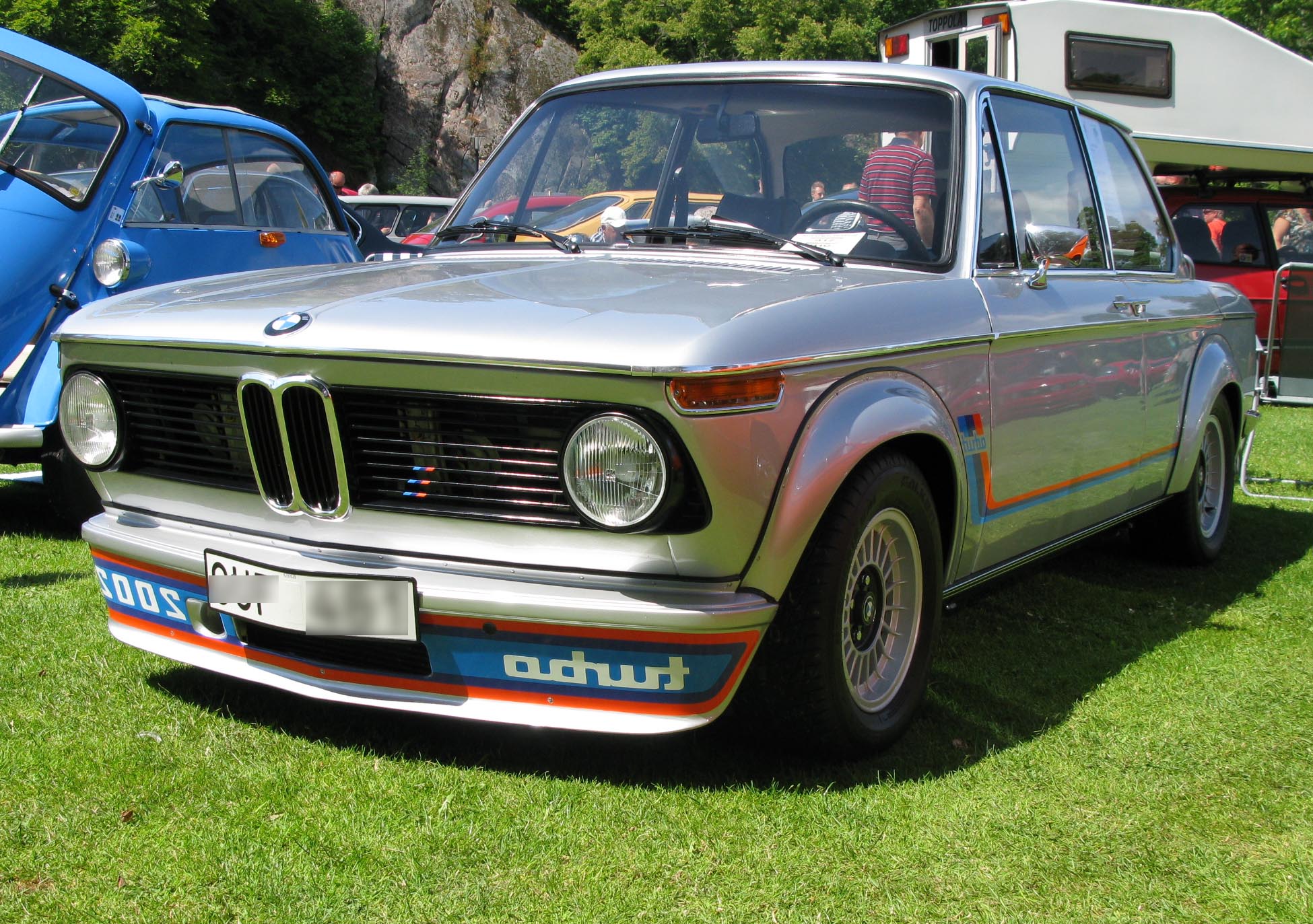
"like kind of in the era of like the 2002. So it was kind of like the if the 2002 is kind of the equivalent of like the three series..."
The BMW 2002 was a small, sporty car made by BMW from 1968 to 1976. It's known for being fun to drive and helped make BMW popular for making sporty vehicles.
The BMW 2002 is a compact sports sedan produced from 1968 to 1976. It is well-regarded for its performance and handling, and is often credited with helping to establish BMW's reputation for sporty cars.
"like the 2002 is kind of the equivalent of like the three series..."
The BMW 3 Series is a popular line of cars made by BMW since 1975. They are known for being a good mix of sporty and comfortable, making them great for everyday driving.
The BMW 3 Series is a line of compact executive cars produced by BMW since 1975. It is known for its balance of performance, luxury, and practicality, making it one of BMW's most popular models.
"like the various. Oh, OK. Equivalent of like the five series, right?"
The BMW 5 Series is a line of cars made by BMW since 1972. They are larger than the 3 Series and are known for being comfortable and packed with technology, making them great for business use.
The BMW 5 Series is a line of midsize luxury cars produced by BMW since 1972. It is known for its blend of performance, comfort, and advanced technology, appealing to both business and personal drivers.
"I love the rally lights. I complimented him on the rally lights. And he said they are functionally useless, but look cool."
Rally lights are special bright lights that help drivers see better when racing in the dark or on rough terrain. They look cool but might not always be useful for regular driving.
Rally lights are high-intensity lights used on vehicles to improve visibility during off-road or rally racing conditions. They are often mounted on the front of the car and are designed to illuminate the road ahead in low-light situations.
"But like it has like some old like 2002, some old six series kind of lineage like lines."
The BMW 6 Series is a stylish and luxurious car that has been around for many years. The 2002 version is part of a generation known for its sporty look and feel.
The BMW 6 Series is a luxury grand tourer that has been produced in various generations since the 1970s. The 2002 model would belong to the E63/E64 generation, known for its sporty design and performance.
"Like the multi spoke. I don't know the I'm sure BMW folks have have a name for those wheels."
Multi-spoke wheels are a design style for car wheels that have many thin bars connecting the center to the outer rim. They look good and can help the car perform better by being lighter.
Multi-spoke wheels are a type of wheel design that features multiple spokes radiating from the center hub. They are often chosen for their aesthetic appeal and can enhance the performance of a vehicle by reducing weight.
Alpina is a company that takes BMW cars and makes them even better by improving their performance and luxury features. They create special versions of BMWs that are unique and high-quality.
Alpina is a manufacturer that specializes in modifying BMW vehicles to enhance performance and luxury. They are known for their unique styling and high-performance upgrades.
"Well, I was going to say, I think they looked like HRE wheels."
HRE Wheels is a company that makes special wheels for cars. They are known for their high quality and unique styles, and many car lovers choose them for their vehicles.
HRE Wheels is a well-known manufacturer of high-performance custom wheels. They are popular among car enthusiasts for their quality and unique designs, often used in racing and luxury vehicles.
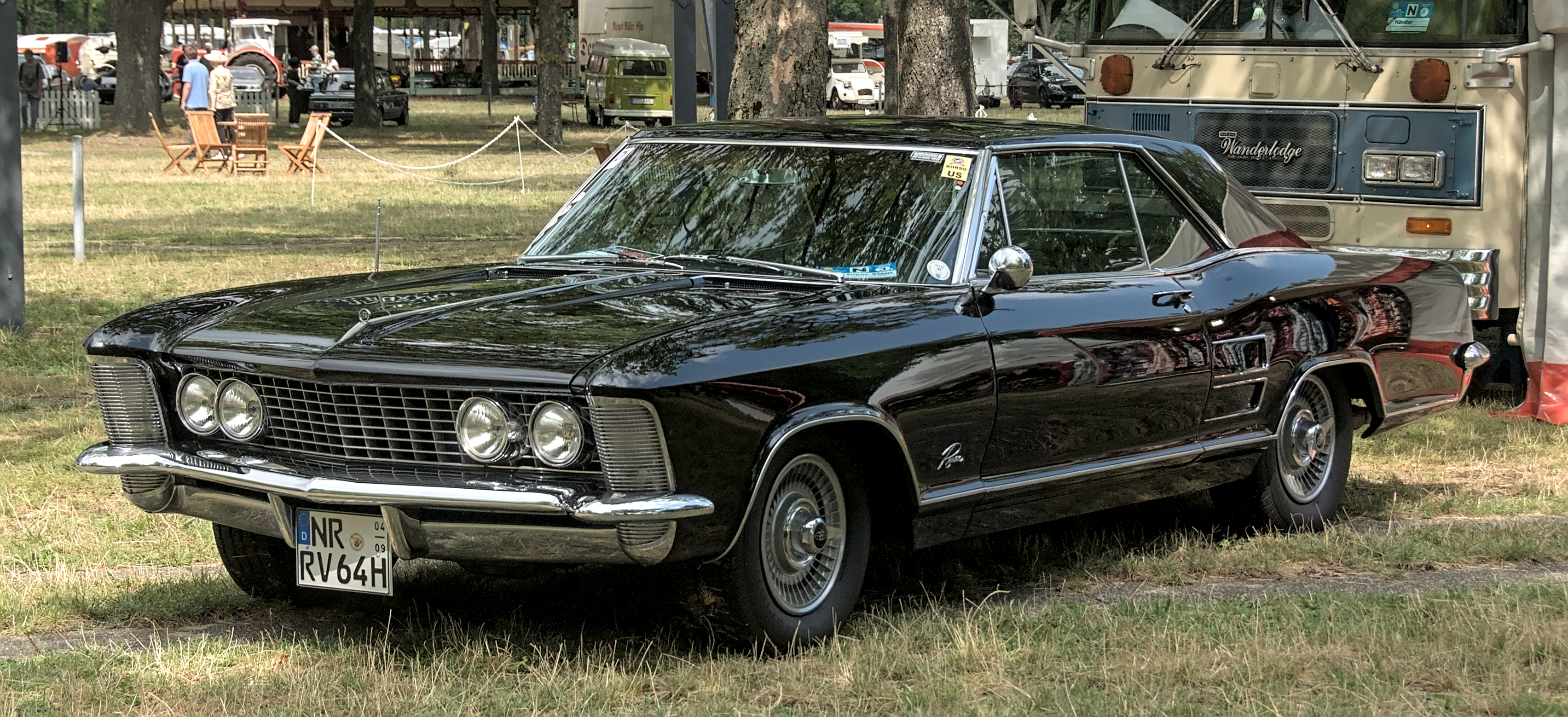
"like is like very Buick Riviera. Like it is a little bit."
The Buick Riviera is a fancy car made by Buick that was popular a long time ago. It has a unique look and is known for being comfortable and stylish.
The Buick Riviera is a luxury car produced by Buick, known for its distinctive styling and performance. It was popular in the mid-20th century and is often associated with American automotive design.
"Another Acura RSX, obviously ready to, you know, like Caged and everything already. But dude, so awesome, right?"
The Acura RSX is a small, sporty car made by Acura, which is Honda's luxury brand. It's known for being fun to drive and has a stylish look.
The Acura RSX is a compact car that was produced by Honda under the Acura brand from 2001 to 2006. It's known for its sporty design and performance-oriented features, making it popular among car enthusiasts.
"And the circle track stuff is so fascinating because they don't know which direction they're going to run when they show up for the race."
Circle track racing is a type of car racing that takes place on a circular or oval track. Cars go around the track in a loop, usually going left, and it's a popular form of motorsport.
Circle track racing involves racing on an oval or circular track, where cars compete in a counter-clockwise direction. This type of racing can vary in rules and vehicle specifications depending on the series.
"Like, yeah, remember that from when we were we had. Yeah, they do like the message geometries and stuff like that."
Tire geometry is about how the tires are set up on a car. It affects how well the car handles and grips the road, especially in racing situations.
Tire geometry refers to the alignment and positioning of tires on a vehicle, which can significantly affect handling, traction, and tire wear. Adjustments can be made to optimize performance for different racing conditions.
Select text to request an explanation
Yeah, Dave, breaking report, this just in, hi, I'm Dave Severnick with Apex Jason News, man
on the street, here to interview, is it Ian, Ian, Ian, Ian Patarsan, advocate for destroying
American families and neighborhoods.
Is that correct?
Is that correct?
Yes.
Revalues.
Yes.
Uglifier of neighborhoods.
Yes.
Yes, I'm getting from the studio, they would like you to explain yourself, sir.
Yes, so, yeah, I live in a historic district in Denver, and recently Denver has been
putting in a lot, like a lot of cities, has been trying to expand their bike infrastructure.
I'm being asked by the studio to ask you why you hate America.
Right, yeah, yeah, why are you a communist?
Yes.
Right.
Why are you letting Kim Jong-un control you?
Right, why are you anti-car?
Yes.
Okay.
Yeah, so they're putting in bike lanes and what they're calling neighborhood bike
ways, which is just like they paint it on the street and like do traffic calming on
that street or whatever.
So they don't actually give you a full bike lane.
Okay.
We were finally getting one of those in our historic district and part of that they, as
part of the traffic calming measure, they were putting in little roundabouts in just
like our little side street intersections.
Yes.
Now, back up, because five years ago they had sent out a survey, they were gonna close
down, they were gonna remove a whole lane of parking on some of the busy one way streets
that go through our neighborhood.
And when you say they, you're talking about like the city of Denver government?
Yeah.
Gubmit.
Yes.
Okay.
And I had responded like, yes, let's do this.
I know there was a bunch of neighbors who were pissed about it because they didn't want
to lose their parking spots on the street because a lot of people do street parking
here and so that got scrapped.
There was gonna be a protective bike lane that got scrapped and now the compromise
is like this like neighborhood bike way thing with the roundabouts.
Well, surprise, surprise, the same people are upset about the roundabouts because all
these like kind of like half thought out reasons and it turns out that like most of
it is like they don't think they look very nice and to be fair, yeah, the city's
like super underfunded, it's just like a concrete block.
It doesn't look great.
Yeah.
It's a concrete circle with a few signs that everyone's gonna see when they
look out their windows because like you could literally throw something to it.
Yes.
Yeah.
And so like there was a lot of opposition to it.
I also recently joined the neighborhood board.
Yes, we have a man on the inside.
And there's a couple of us on there that are kind of more in like the Yimbe camp,
like more progressive, like advocating for these sorts of things.
Real quick, for anyone who doesn't know, please tell people what Yimbe means.
It's the idea is that it's the opposite of no in my back, not in my backyard.
It's yes in my backyard, right?
You want we want to like build things and like to, you know, there's a lot of
that is the Yimbe thing has gotten a little fraught.
Of course.
The last couple of months, especially with all the like abundance nonsense
and those idiots.
But like the core of it is like basically we're not going to just
not build things because they're, you know, not the way we've been doing it.
Like we need to actually like build housing.
We need to build transportation.
We need to do these things.
Yeah, typically a stalling point with it and like a happy medium
that people would land on would be like, well, I'm in favor of it,
but not in my backyard, right?
Like not here, right?
So like, no, I'm totally in favor.
I'm voting for that measure.
Right.
I want affordable housing.
I just don't want the next door to me.
Right.
Exactly.
Right.
That's right.
Which is the same thing as basically voting it down, right?
Exactly.
Yes.
Because it has to go somewhere.
I'm just going to play out over and over and over again around every new round.
Right.
Right.
Yeah.
So Yimbi, like taking this approach that like, yeah, you'd like to see
the change directly in front of you in the area that directly impacts you.
You are for this change.
Exactly.
And so I, you know, I was surprised that there was opposition to it.
But it turns out it was like some of the older people on my board,
on the board that I'm also on, were against it.
And I think because of the aesthetic, you know, was the main thing,
but they had contacted local media and there's another guy on the board
who's younger than me and he's, he's very much like the engine of that board.
Like he does everything.
Oh, okay.
He kind of caught wind of it.
And I had spoken about it a little bit at one of the previous
meetings we had and he asked if, you know, he contacted the same reporter
that the people opposing it contacted and asked if like we could like share our side of it.
Right.
And yeah, because they were obviously going to present an argument
against these roundabouts, right?
Right.
And so she agreed that would be a good idea.
And so she interviewed a representative from DOTI, which is the in Denver,
the like the infrastructure and transportation organization for the city.
And so they're the ones that kind of like design the roundabouts
and sort of like work with the fire department to make sure the trucks
could get around them and all that stuff.
And then and then the lady who was in opposition
and then I got nominated to resent the pro side
because I had the concerned parent angle.
Right.
And not only did you get nominated, but you as you texted me earlier today,
your boy was on TV.
I was.
I was on television directly following the Broncos game last night.
And so they had some people kind of one guy that I used to work with
respond to an email I sent him in 2017.
I say, like, what?
Why are you on the news?
Literally eight years ago.
Yeah.
Uh-huh.
Yeah.
OK. OK.
All right.
So, yeah, it was it was it was cool.
And I mean, they I talked to her for like a half hour
and they used like 10 seconds, like literally 10 seconds.
That's how that happens.
Yeah.
And they use only like one of the thing, one of the arguments I had.
Sure. The article had a little bit more.
Um, but yeah, I don't know, try.
I'm trying, man.
Hey, no, I'm I'm super proud of you.
You presented a super clean argument, the snippet.
You like my boy on TV, right?
Like, yeah, you know, like, I don't know if you told them,
but there like there was a car that literally flipped over at that
intersection within the last six months, something like that.
Yeah, like, right.
Yeah, we've yeah.
There's there's a whole bunch of stuff happens in our neighborhood
because we're we're bordered by like really busy streets, right.
And those busy streets get congested and then people race
through our neighborhood to try to like get around the traffic.
Yes.
And they're really tight, little narrow streets
with tons of bike and pedestrian traffic.
So it's not like, you know, it's not like we have this wide
thoroughfare that goes through that with stop lights
or like controlled crossing.
Like and like the term used earlier, super appropriate traffic calming
because it is absolutely just, I mean, there there are no measures
that would slow a car down or prevent somebody from running a stop sign.
Yeah, totally.
So it's it's definitely good in these like older
more, you know, neighborhoods with like the narrower streets
to kind of come up with creative ways to like slow cars down
and just and also it also like prevent like we have these those busy
one ways that I was referring to earlier and like
people ride their bikes on those.
And I think that's it's fucking crazy.
Yeah, as someone who used to ride downtown a lot.
Like I would see somebody riding on like 17th
and I'm like, there's literally a bike lane on a less busy street.
One block south of you, dude. Right.
One block.
And right now.
So the way it is now, like there are no north
south bike lanes in and out of our neighborhood.
Yes, yeah, they were none.
The logistics of how to traverse the like that area on bike
has always been an issue.
East West traffic has always been easy.
Yes. Yeah.
Yeah, but getting nor between like going north and south.
And that's a common thing on the bike
because there's so much good stuff like up in Cap Hill.
Right. And all of our neighborhood schools
that kids are like assigned to are north of us.
And we can't get to them.
Right. Well, by bike lane.
And it's not like you're going to like pop out of the Cherry Creek Trail
and add like two miles like two miles to your journey would be.
Yeah, it wouldn't even help.
Like, yeah, yeah.
Because at that point, it doesn't even go north anymore.
So like, yeah.
Yeah, there's no way with bike lane
to get to either the elementary school or the middle school
that's attached to us, right, which is insane.
So that this would fix that.
And so my point on saying all that was like,
it would also incentivize the bike riders
to get off of the car centric street.
Right. Right.
So it's going to improve things for the motorists, too.
Exactly.
Because, you know, every once in a while,
you see like people riding three three wide down Washington,
which is just craziness. Right.
Anyway. Yeah. So yeah.
So I got I got interviewed.
That's awesome, man.
I'm super proud of you.
You did a great job.
Yeah. Yeah.
And I think like, if anybody has not made the connection,
the whole reason like you can't find your way in and out of a
neighborhood that's been built in the last 20 to 25 years
is because they make neighborhoods curvy now.
That it is to calm traffic
so that people cannot maintain a high rate of speed in a vehicle
which leads to pedestrian children.
Yeah. Injuries, death, like all of that stuff.
My my father's brother
was killed in a traffic accident when he was six years old.
I didn't know that.
That's crazy.
We don't talk about it much outside of my family.
But yeah, my dad was very, very young.
He was a little bit older than his brother.
And it like it's like New Jersey, right?
Like it's all just grid neighborhood streets.
Yeah. Right.
And so this problem has been in existence for a lot
like literally 80 years, right?
Seventy years ago, that happened, you know?
And so something like this is super important
because nobody's going to change this stuff just because.
Right. Right. Right.
Yeah. So so yeah, I and I actually had this conversation
with the reporter yesterday, too, of like, you know, I think part of it
this is classic problem, too, of like I'm
honestly disappointed that it's this, that we're not getting
into protected right lane.
Yeah, that would be better.
Right. But like I'm not going to let the only voice be no
because that's much more dramatic and much more
compelling as a thing to hear about is that somebody's against something.
Exactly. Then me being like, that'll do.
Right. For incremental change. Right.
You know, right.
So I thought it was I thought it was important to like
have that represented at least that at least something is happening
and we're happy about that.
You know, yes, yes.
And that that is a great point.
Yeah. Like that even though it is not exactly what you wanted,
it is compromise, but it is better.
It is going to make your neighborhood safer, right?
I a couple of things.
One, I do want to call out just like how easy it is
to have that built from the get go.
Like when you're a clean sheet of papering a neighborhood,
that kind of stuff is super easy, right?
But the hardest thing to upgrade to replace to fix is the stuff
is all the legacy stuff.
A hundred and twenty year old neighborhood like mine. Yeah.
Yeah, right.
There's a reason you still see telephone
poles with actual copper wire on them.
Like because the stuff is not easy to replace folks, right?
And so like, yeah, new neighborhoods, great.
You know, a lot of folks move to those kinds of places,
you know, because they have kind of these pieces that make
kind of that like that child safety
and like all of those kinds of things a little bit better, right?
It was easier to do, right?
We're thinking like we're not building houses with asbestos,
you know, as far as I know, I haven't been on the news in a while,
so who the fuck knows what's going on these days?
I wouldn't be surprised.
David, it's only asbestos.
I figure. God damn it.
OK, all right.
Yeah, well, we're not doing lead pipes anymore, which is good.
They are made of mercury now.
OK, OK. All right.
Well, I guess I'm OK.
As long as I still have my Tylenol, I'm perfectly fine.
So.
But I will say I think the thing that I take away from this,
just as being an observer, obviously, I have a very invested
interest in the safety of, you know, my friends, children,
you know, like a lot of folks are lucky that they do not have
something like that impacting their family lineage like I did.
But if you just have this high level view,
you look at how you presented yourself on the news
and you look at the the counter argument, the people against this
when the city came through to spray paint where the roundabouts would be
the people against it just took pink spray paint and wrote on the street.
No.
Like the construction workers going to be like this.
I painted this yesterday, but now it says, no, what do I do, boss?
Like, I know. Yeah.
Well, I mean, so that's the other thing.
It's like so the lady that was interviewed, I know her.
She's very nice.
And, you know, she has there are a range of different concerns
from some of the other neighbors, like one of the guys, one of the people
in the neighborhood has a like real legit thing.
He parking is pretty easy in our neighborhood for being such
a like a dense urban neighborhood.
We actually have pretty easy street parking.
Yeah, you have like a little secret spot.
I mean, not like it's not like that or anything,
but there's just like this weird little.
It's always pretty easy to find a spot on your street.
Yeah, but he's he's disabled and he's never gotten the placard.
He's never gotten the special because you can get from the city
like on the curb, you can get your own parking spot.
He's never even had to do that because it's so easy to.
Oh, he can just he's never.
Yeah, needed to do that. OK.
Right. But now like the parking is going to shift back
because there's going to be no parking further up the street.
So like on each side, you're going to lose maybe two spots.
Right. So like things like that.
Like, OK, well, but that's addressable.
You know, like that is a solvable problem.
Right.
So like there's been things like that that have come up.
And I think that
some people just aren't familiar with the idea of like
roundabouts being better for pedestrians than stop signs.
Right. And emergency vehicles and a whole bunch of stuff. Right.
Right. So like there's been a little bit of like education
and that sort of stuff going on, too.
And a lot of some of it's just like honest misunderstandings.
But some of it has been like downright hostile,
which has been really like surprising.
OK, I was not expecting that.
But yeah, some of the some of some people
that ever heard of like shouted at other people about it
and like shouted at people from the city about it.
And it's like, this is I don't know what to tell you, man.
Yeah, like the compromise position. Right. Yeah.
Yeah. Oh, that's that's unfortunate
that people go to that extreme to oppose something that.
Like, OK, so you're in opposition, you have your arguments for it.
Everybody is has their they truly feel that they're doing the right thing
by saying the things that they're saying they do. Right.
See something that's not quite right? Our annotations are AI-generated and can sometimes miss the mark.
Click the flag icon on any annotation to suggest a correction.