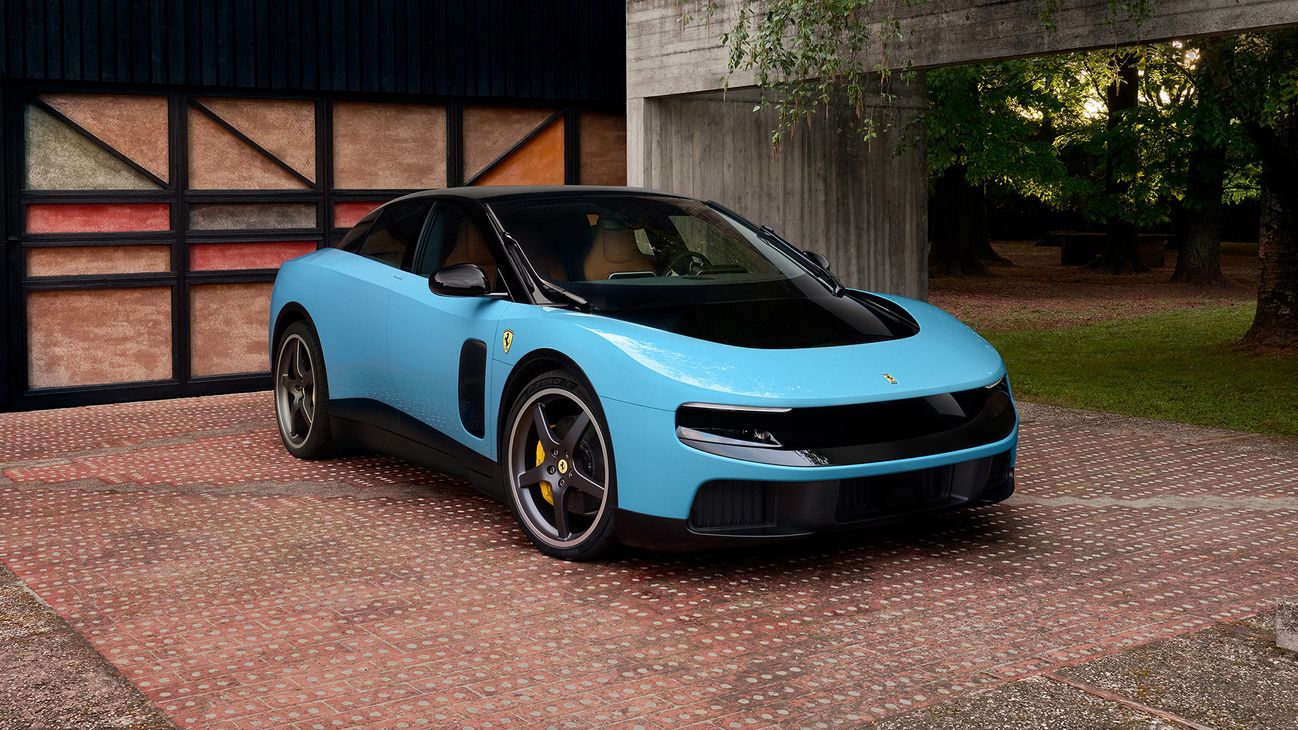
The Ferrari Luce is a new car model from Ferrari. It’s the kind of vehicle Ferrari builds to deliver high performance and a premium driving experience. The podcast is bringing it up as a recent release to discuss what it is and why it matters.
Kilowatt-hours (kWh) tell you how big the battery is in an electric car. Bigger battery capacity usually means the car can use more energy before it needs charging.
Zero to 100 km/h time is how fast the car goes from stopped to 100 km/h. Lower time usually means quicker acceleration.
Car
Audi Concept C
Audi Concept C is a show-car that Audi used to preview a new design style. The hosts are saying the production Audi they’re discussing later looks like it took styling cues from this concept.
Bauhaus is a design style that focuses on simple shapes and honest materials instead of lots of decoration. The hosts are saying Audi’s design direction is leaning toward that kind of clean, minimal look.
“Piano black” is that shiny, mirror-like black trim you often see inside cars. The host is saying they don’t want that look here, preferring more solid-feeling materials instead.
That’s the infotainment screen layout—tall like a phone rather than wide like a tablet. The host also says the car keeps real buttons for climate control, instead of relying only on touch.
Term
twin-top of V8 engine
They’re saying the car isn’t fully electric. It uses a V8 engine, but it also has an electric/hybrid system working alongside it.
A “halo car” is a special, attention-grabbing model a brand builds to make people think the company is cutting-edge. It’s usually not meant to be the most common car you see on the road.
“Electrical assistance” means the car’s engine is helped by an electric system. It’s not necessarily fully electric—more like extra push when you need it.
A “massive touch screen” refers to the modern dashboard approach where large, tablet-like displays handle most controls and infotainment. The host argues that simply adding lots of screen area isn’t what makes a car feel expensive—especially versus cheaper brands that can afford to “fill the cabin” with screens.
Lamborghini is mentioned as one of the Volkswagen group’s supercar brands. The host is using it to explain how the group already has a step-up in sportiness above regular performance cars.
Bugatti is mentioned as an even more extreme, top-tier supercar brand in the Volkswagen group. The point is that Audi is trying to compete at that very high end too.
Porsche is mentioned as another Volkswagen group brand known for sports cars. The hosts are using it to show the group already has experience in the performance/supercar world.
The “Volkswagen group” is the parent company that owns several car brands. The hosts are saying it’s allowed Audi to go after the very top luxury/supercar market.
Person
Nuvolari
Nuvolari is a reference to a famous Italian race driver. The host is explaining that the name comes from motorsport history.
Active aerodynamics means the car can adjust its aerodynamic parts while you drive. That helps it stay stable and manage cooling better depending on speed and driving conditions.
They mean the car is drawing inspiration from Formula 1. The idea is that racing experience can help the car’s design—especially how it manages airflow.
“Titanium” here is the launch paint color name, not the metal itself. The hosts are describing how that specific color interacts with the car’s aluminum structure and contrasts with black aero elements.
A space frame is a strong skeleton for the car made from many connected metal pieces. It helps the car handle loads safely while keeping weight down, especially when built with aluminum.
These are car body panels made from aluminum. Aluminum is lighter than steel, which can help the car’s efficiency, but repairs can be different than with steel panels.
Car
MG S6 EV
The MG S6 EV is MG’s new electric SUV. It’s meant to compete with cars like the Tesla Model Y, and the episode talks about different versions (rear-wheel drive vs all-wheel drive) and what features you get for the money.
The Audi S6 is a higher-performance version of a regular Audi 6-series car. It’s designed to feel quicker and more exciting to drive, while still being a comfortable, everyday sedan. It’s mentioned because it represents a “sport” trim level rather than a basic model.
The Tesla Model Y is a very popular electric SUV. The hosts mention it because it’s one of the main cars people compare against when judging whether a new EV like the MG S6 EV is good value.
The Galaxy EX5 is an electric SUV meant to compete with other popular electric crossovers. It’s in the same general “size and purpose” category as vehicles like the Tesla Model Y. The podcast brings it up because it’s designed to attract similar shoppers who want an EV SUV.
The Kia EV5 is another electric SUV that’s aimed at the same kind of buyers as the MG S6 EV. The hosts bring it up as a competitor when talking about what this segment is like.
The Toyota RAV4 is a compact SUV designed for everyday driving. It’s a common choice because it’s practical, with room for passengers and luggage. The podcast mentions it because it’s often compared to other SUVs in the same size class.
The Kia Sportage is a common SUV people recognize, and the hosts use it to describe the MG S6 EV’s size. It’s not the EV being discussed—it's just a comparison for how big it is.
Rear-wheel drive means the power goes to the back wheels. That can change how the car accelerates and grips compared with a version that powers all four wheels.
All-wheel drive means the car can send power to all four wheels. That usually helps it grip better and accelerate more strongly than a rear-wheel-drive version.
A panoramic sunroof is a big glass opening in the roof that lets in more light. The hosts say it’s one of the main upgrades you get on the higher-spec AWD version.
A 360-degree camera shows you a combined view around the car. It makes parking and tight maneuvers easier because you can see what’s around you.
Concept
Chinese car nowadays
The hosts are making a broad market observation: many newer Chinese EVs emphasize high feature content for the money. The point is that shoppers often see strong equipment lists at aggressive prices, even if the exact feature set varies by model and trim.
LFP is a different type of EV battery. In this discussion, it’s mainly about charging to 100% being more acceptable, versus trading that off for range with the other battery type.
NMC is one type of electric-car battery. The point they’re making is that it can help you go a bit farther on a charge, compared with another battery type they mention.
A digital instrument cluster is the screen behind the steering wheel that shows your speed and other driving info. They’re saying this car’s dashboard looks modern and complete.
One-pedal driving means you can slow down mostly by lifting your foot off the accelerator. It uses the car’s electric braking to help you control speed without constantly touching the brake.
“Slow to charge” means the battery doesn’t refill as quickly as some other EVs. The host says it probably won’t matter much if you mostly charge at home and don’t drive long distances often.
WLTP is a standardized test used to estimate how far a car can go on a charge. It’s not perfect—real-world range can be lower depending on how you drive.
Faux matte wood trim is fake wood-looking material inside the car. It’s meant to look classy and warm, but it’s usually more durable and less reflective than real wood or shiny finishes.
They mean the car is tuned to feel more “planted” and responsive when you turn, like many European cars. In this case, it’s described as less body sway in corners and a firmer ride.
Suspension is what helps the car ride over bumps and stay stable when turning. Here they’re saying a firmer suspension can feel better in corners but can be harsher on rough roads.
The audio system is the car’s sound setup—speakers and the electronics that drive them. They’re saying the 11-speaker system doesn’t impress reviewers and may sound thin rather than rich.
“On-roads” means the final price you pay to have the car legally registered and ready to drive. It’s the base price plus extra fees, so it can change which car is actually the better deal.
BYD is a major Chinese EV and battery manufacturer that competes heavily in global electric-car markets. Here, the host is asking whether MG’s new model can take market share from BYD and improve MG’s sales momentum.
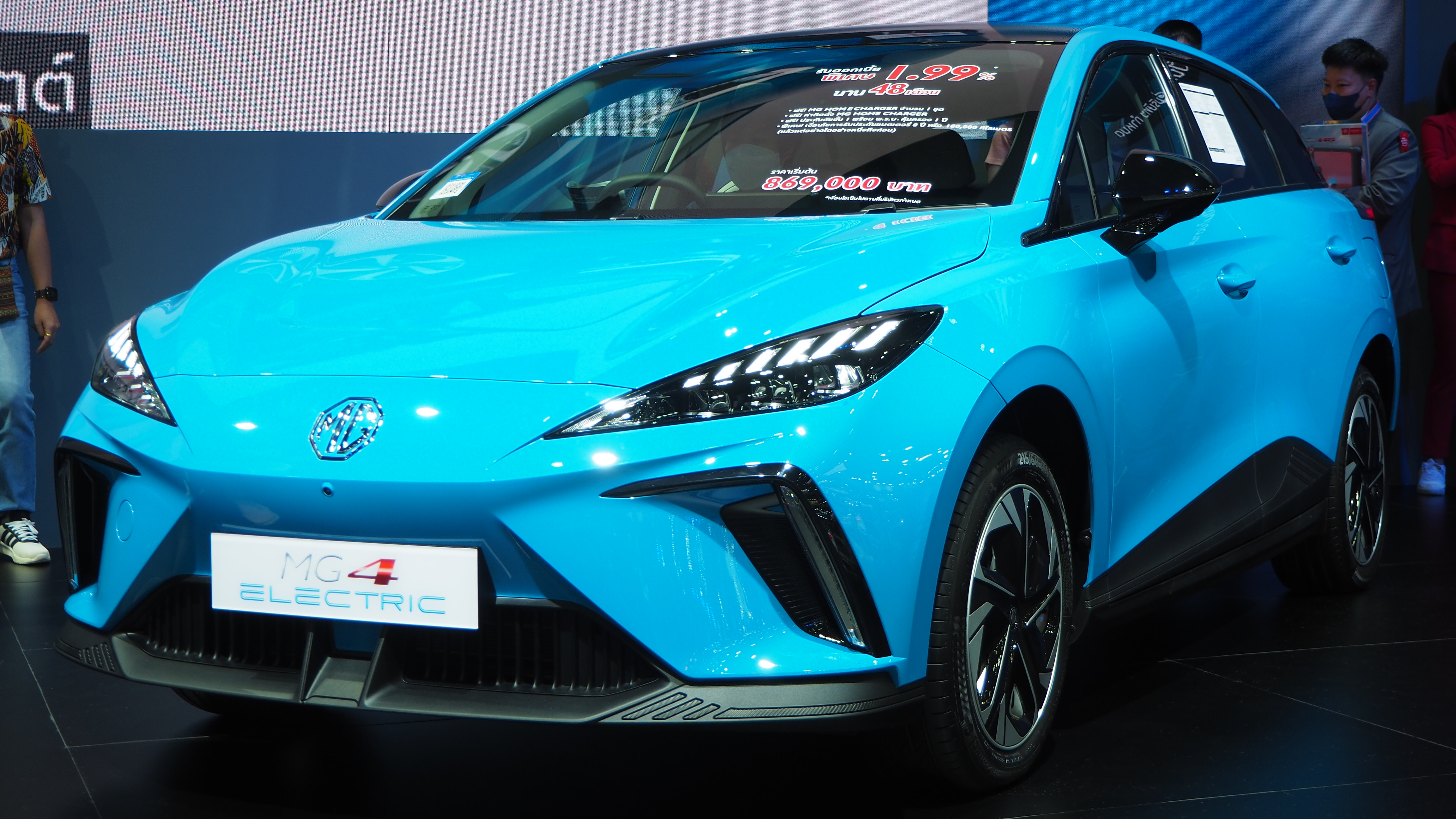
The MG4 is an electric car (a hatchback) made to be a more accessible way to drive an EV. The podcast also mentions different versions, like the MG4 Urban, and how the car has changed over time. It’s being brought up because it’s a common EV choice and people want to know what to expect.
Apple CarPlay is a feature that connects your iPhone to your car’s screen. It lets you use apps like maps and music while driving, and the hosts are about to talk about new updates Apple announced.
WWDC is Apple’s big yearly event for developers. It’s where Apple announces new software features, and the host is saying the CarPlay updates they’ll talk about came out of that event.
Infotainment is the car’s dashboard screen system—things like maps, music, and phone features. It’s the tech that can feel “outdated” if it doesn’t get updates.
Smartphone mirroring means your phone’s display can show up on the car’s screen. That way, you can use newer phone features even if the car’s built-in system is older.
Android Automotive is the software platform some cars use for their dashboard screens. It can let the car include apps directly, instead of only using your phone.
EX60 is a model name used for an electric vehicle. The podcast mentions it to talk about EVs that are aimed at similar kinds of buyers. It’s brought up as part of a comparison of current EV lineups and how they’re positioned.
Siri is Apple’s voice assistant. Here, the hosts are comparing it to other built-in AI systems and saying some of those can use the car’s cameras/sensors more effectively.
Google Gemini is an AI assistant. In this segment, it’s presented as better than some alternatives because it can use information from the car’s own cameras and sensors.
Car sensors are the devices that help the car “notice” what’s around it, like cameras and other detection hardware. The segment argues that some AI systems can use those inputs directly.
Term
Ford facing cameras
Facing cameras are cameras on the car that look ahead to help it see what’s going on. The hosts are saying an AI system can potentially use what those cameras see.
ADAS is the set of safety/driver-assist features in a car. It uses sensors to “see” what’s around you and can help with tasks like staying in the lane or controlling speed.
Onboard cameras are cameras mounted on the car. The idea here is that the car can “see” what you drive past, and an AI can use that to answer questions.
The Volvo EX60 is mentioned as an example of a car that has more built-in AI features. The key idea is that it can use the car’s own sensors, not just what your phone can provide.
Term
GROC AI integration
This refers to Tesla’s built-in AI feature that can talk with you inside the car. The host’s point is that it’s integrated into the vehicle, not just projected from a phone.
GPS accuracy is how precisely your car’s navigation knows where you are. Better accuracy usually means the map moves smoothly and directions are more reliable.
Audio scrubbing means you can quickly move backward or forward to a specific moment in what you’re listening to. Instead of restarting, you can jump to the part you want.
CarPlay Ultra is an upgraded version of Apple’s CarPlay system for cars. It’s meant to work with more of the car’s screen and controls, but only some newer cars support it so far.
Hyundai is a car brand. They’re mentioned because they’ve said they’ll support the upgraded CarPlay Ultra, but the hosts say Hyundai hasn’t put it into production cars yet.
LIVE
Hello, everyone, and welcome to another episode of the Hookturn podcast with my very good
friend, Saniv Ahmed. How was your long weekend, Saniv?
It was very good. Obviously, I quite enjoyed last week's discussion on both the new Ferrari
Luce as well as my recent purchase as well. Today, we're talking about two EVs again,
but actually, one is not similar to the Ferrari Luce, but still a very...
Well, it's not an EV, actually.
Yes, yes, yes. It's not an EV. In fact, that was one of the most amazing things about it
that it is an EV. It's only two out of one EV today, and one other very expensive car
that was surprisingly announced out of nowhere, I believe, and that has got the automotive
world talking this week.
Yes, and we're also... I think this is the first time in the podcast that we're talking
about something that is more on the tech side, but of course, very, very, very car related
as well. So that will be our final topic. So let's get started with... So we have our three
topics. Let's get started with our first one. So first off the list is the Audi Nouveau
Lari. So this is Audi's new supercar. I guess the best way to frame it is it's like a spiritual
successor to the R8, although it's definitely positioned above the R8 in both price and
performance. It's limited to 499 units, and I think the cost is going to be... I think
about 500,000 pounds. No idea if it's going to be coming to Australia, but if it did,
I would expect it... I would anticipate it to be at least like a million dollars.
But there's probably more, I would imagine, because even if you put the direct conversion
after tax, it'll be at least 1.3, I imagine.
Yeah, yeah, yeah. And then you have luxury car tax and yeah. So easily, I mean, yeah,
very likely to easily sort of break that seven figure mark, so to speak. So yeah. And I think
most like fundamentally, like what's really interesting is that yes, it borrows a lot from
its Lamborghini sibling. So it's basically a Lamborghini Temerario in sort of different
clothing, although there are some powertrain differences. There's a larger battery, I believe,
so it's seven kilowatt hours, which is a little bit larger than what's in the Temerario. And the
system output is 736 kilowatts with a zero to 100 kilometer an hour time of 2.6 seconds. So
definitely significantly, I think, not maybe not significantly, but a fair whack faster than the
Temerario and the fair whack more powerful as well. But apart from the performance,
because I think what's really interesting about this car is the design.
And I think, Sam, maybe it was in a previous episode where we were talking about the Audi
Concept C, if you remember, and that was sort of like a concept car and almost like a harbinger
of Audi's sort of new, very clean, very Bauhaus design philosophy. And that was all about,
you know, authentic materials, very smooth surfacing. There are no excessive character lines
like very sort of like a big focus on genuine materials, authentic sort of German Bauhaus
design, focusing on like the geometry of the shapes and the raw material and the innate
qualities of the raw materials and so on. And this is, I think, the first production model
that Audi has released. Yes, it's in very limited quantities, but the first
production model that sort of follows these design ethos from the Concept C. So
I think that's where we should really talk a little bit more about. So in terms of the
exterior design, there are, yes, Audi Concept C is a clear inspiration. So the front grille
and headlamps seem to be, you know, borrowed quite a bit from that concept car.
From the side profile, there's a lot of, they have that contrasting side blade, which was a hallmark
of the Audi R8. And then from the rear, there's no sort of rear windscreen or anything. There's some
sort of like side rear sort of slats on the, what you would call the rear windscreen. And that's
because the engine is positioned at the back. So that's sort of the air intake for that.
And then interior, again, this focus on authentic material. So we were also talking a lot about
this with the Ferrari Luce last week. And of course, this is a completely different design,
but I feel like there's a lot of similarities in the underlying philosophy with this focus on
physical controls, beautiful materials. Like you look at just the door handles have this
beautiful sort of milled aluminum, like design, physical, you know, gorgeous. It's not, there's
no sort of piano black or any fake plastic materials. Yes, there is a screen and there is
a type portrait oriented touch screen. But below that, I think there are physical buttons for the
climate controls as well. So Simon, do you want to talk a little bit more about the design and
sort of what has stuck out to you most about this car? I think similar to the Luce, I'm glad
that it's a bit non-traditional, you could say. It's like, you know, not what you're typically,
like the design isn't very typical, for example. Certainly, I think that it's going to be very
imposing on the road. I feel like it's almost got a completely different direction to the Luce in
terms of its design. This one is just very, I would imagine, would have just incredibly imposing
presence on the road, whereas the Luce was a bit more elegant, so to speak, in terms of its design.
So in that sense, obviously, from what I would imagine, this car would also be significantly
more expensive than even the Luce. Yeah, it's interesting to see how the pricing compares.
Like, I think they'll both be above seven figures in Australia if they're sold. I don't know
whether this is actually going to come to the Australian market. Yes, it's very interesting
that, obviously, like they were like, okay, it's not necessary for this to go full EV, and we see
it's a hybrid, loosely speaking, but it's still got a very traditional twin-top of V8 engine.
I think also that interesting thing is how much they lead into the F1
sort of connection. Obviously, they renamed Salvova to Audi F1 team, and apparently,
a significant amount of their marketing material and the car itself apparently has
significant, some technology basically inspired from their Formula One car, and obviously transferred
over to a production basically car. So yeah, I think the limited quantity of this car means that
Audi isn't looking for this to be any kind of seller or mainstream seller. It's sort of meant
to be a new halo car for the brand. Even the R8 was more mainstream. If I'm correct, I don't think
the R8 had any major production limitations of only 499 units. So in that sense, this car is way
more exclusive than the R8 ever was. And so it feels like it's something where the Audi is basically
like, okay, look at what we can do. This is like a new sort of sports car from us that is debuting
sort of new technologies, but also not going fully new. As I said, it still keeps some relatively
more traditional things like a very traditional motor with just some electrical assistance.
As you mentioned, it's very interesting that haven't gone full, let's chuck in a massive touch
screen and call it a day. Again, very refreshing like the Luce, they're sort of now realizing that
maybe slightly more understated screens is actually better for more expensive cars. Like
we've always said, you know, if you want screens everywhere, a Chinese car can give you screens
everywhere for, you know, very little money. So screens on their own are no longer a thing of
that this car's expensive, this car's luxurious, right? So in that sense, Audi's realized that
Ferrari is also obviously doing that as well. And looking at the design, while maybe not as
unique, so to speak, as Luce's interior design, it still at least looks like a very sophisticated
design. And as you already mentioned, the material quality and stuff would be absolutely amazing,
I'm sure. So yeah, like, you know, and it's cool to see that manufacturers are still basically
producing these kinds of cars, yes, in limited quantities, but still showing that, yes,
investing in these new sort of super cars, sports cars, or super cars really in this case,
is something that's still worth doing for them. Yeah. And yes, Audi does have pedigree with the
R8, but I think you wouldn't traditionally sort of perceive Audi as like a super car brand. And
within the Volkswagen group, they have, you know, they have Lamborghini that sort of takes that sport
and above Lamborghini, they have, you know, Bugatti and Porsche as well. So it's good to see sort of
Audi being able to extend its sort of brand width, so to speak, to go to really compete in that,
like, very, very high end segment. I think it's good that the broader Volkswagen group management
hasn't sort of artificially restricted Audi from, you know, you can only compete directly with BMW,
Mercedes, you can't go beyond the models that they sell. So I think that's good. And just for
context for our listeners, Nuvolari is named after an Italian F1 driver. So I believe
Nuvolari was named after the classic Italian F1 racer, Tazio Nuvolari. So there's a little bit,
to your point, Samuib, about the F1 connection. There's definitely that in the naming. And I
believe they used Audi, reached out to some F1 drivers to sort of hone some of the active aerodynamics
as well. So yes, they are going to be playing into the F1 connection. And given, you know,
Audi's current role in F1, I think that's really good as well to see that.
Yeah, I just got to say, the launch color, it's called titanium. I think it's a very beautiful
color. I really like it because it sort of brings out the natural qualities of the aluminum
space frame that Audi is using. So what they're doing is they have this space frame and they have
like these aluminum body panels that are sort of clouding the space frame. And this sort of natural
titanium color that they're calling it, it really gives some warmth to the car's exterior design.
And it creates a good contrast as well with some of the black panels, like the front
with the front radiator grills and the side blade as well. So yeah, I think that's a good design
feature as well. Samuib, anything else to add from your perspective? Would you buy this over the
Ferrari Luce if you had the chance to choose? That's a very good question. I think I'd buy
the Ferrari Luce over this. I think I'd buy it over this simply because I feel like it's even
more unique. It's a Ferrari which obviously has a bit more of a brand perception compared to the
Audi etc. Yeah. Okay, I think I'm just thinking, I reckon, I mean, I think I would go for the Audi
just because I love the exterior design much better than the Luce. I mean, I'll have to, I know
this is in last week's episode, I did say that, you know, there's been a lot of unnecessary
vitriol towards the Luce and it's probably a car that you have to see in person to understand the
proportions. But I think the Audi just looks really good, like even from the photos, just from the,
I mean, it looks like a, a very, you know, I love the authentic sort of warehouse
design and only two seats, but that's, that's okay. I think at this price point, that's not a,
that's not that much of a consideration. But yeah, I think I might have to pick the Audi just
because it seems, you know, that combination of the interior and exterior design, you know, really
sort of attracts me. So yeah. Okay, should we move on to our next topic? Yep, definitely.
Okay, so a second topic is the MG S6 EV. So this is a new electric SUV that MG has come out with.
It's essentially their sort of direct rival to vehicles like the Tesla Model Y and perhaps on
the Chinese side models like the BYDC Line 7, Geely, EX5 and so on. I think there's a whole
bunch of- Kia EV5 as well. Yep. Yes, the Kia EV5 as well. Yes, that's correct. Yes. So there's,
it's a very sort of hardly contested segment. Now, in terms of the pricing, I think it's quite
attractive given how much car, you know, you're getting. So this is sort of like a mid-size SUV.
So I think size-wise it's, yeah, I mean, as we said, Tesla Model Y, Toyota RAV4, Kia EV5,
Kia Sportage type size. But you have the, you have two specifications. You have the
rear wheel drive essence, which is 49,990 drive away. And the all-wheel drive essence, which is
56,990 drive away. And there's not a huge difference. I mean, apart from the all-drive being more
powerful and having a 0 to 100 kilometer of our time around four seconds, that's very,
that's very quick. I think we might double check whether that's actually the right
performance figures. But I think for the all-wheel drive, that's very, very,
that's very, very quick. But yeah, I think the dual-motor, sorry, it's not four seconds,
it's 5.1 seconds. So which is still, you know, that's a very, very solid acceleration time. But
the specifications fundamentally between the two grades are very similar. I think the main
difference is that the all-wheel drive model gives you a panoramic sunroof. I think that's sort of
the main difference. But you do get, in both grades, you get like real features that are
uncommon at this price point, like rear heated seats, front heated seats. You get all of the safety
features, all of the, you know, power seats as well. You get all of the, you know, convenience
features, 360-degree camera. Sandeep, have I missed anything from the features list?
The reality is with pretty much all Chinese car nowadays, in terms of features for the
price, they will all be pretty amazing. Like, there's never been an issue with offering of the
features. However, what I will say, this car, at least according to the review, seems to nail a
couple of other really important things. First, design is actually really nice. I think it's not
like anything like stunning or anything, but it's a very, very clean design. Like, it's a very clean
design. Yeah, that's all I'll say. It's just a very clean design. It's very inoffensive. Yeah,
yeah. Inoffensive, but it is still nice. It's No one will be like,
looking at it, be like, this is in any way anything other than a really nice looking car.
If you had it in your driveway, you'd be like, that's a nice looking car. Yeah. So, yeah, you're
and really the one interesting thing is, of course, is that it does have an NMC battery over an LFP
battery, depending on whether you prefer having the ability to charge 100% with LFP versus maybe
the slightly longer range of an NMC battery is your call. But yes, this car, like the price
is incredibly impressive, no question. Like, it pretty much doesn't miss anything, as you said.
It's got even in the base model, so to speak, it's got more than enough power. It's got a
from looking at what the reviews say it's got a very like quite, you know, nice interior quality.
It looks nice, even in the photo. It's like, even in the photo, just by looking at it,
like this would be a really nice interior. Yeah. You're, you know, unlike a Tesla,
it has Apple CarPlay and Android Auto. It's got a full digital instrument cluster.
You know, so like, you're not really missing out on too much. And critically,
from what I understand, the driving is actually pretty good as well. On top of that,
it's got full one pedal driving, which a lot of other Chinese brands do not have.
So that's a huge addition. So the BYDC Line 7, which will be another similar competitor,
does not have full one pedal driving. So your, yeah, it's an extremely competitive car. It
apparently is a bit slow to charge, but the reality is anyone buying this car is not really
going to be regularly doing a lot of distance driving. So if you're not regularly doing long
distance driving and just driving here to here, I'm sure if you just plug it in once in a few
days at a war box at home, the slow to charge won't really matter. It's only obviously reviewers
pick up on it because they're doing like, when they reviewed these cars, they do longer drives,
but in reality, it won't really be a significant problem. And just in terms of the range, just
for our listeners, I'm just having a look at the specifications. So on the WLTP cycle, which is,
you know, optimistic, but the railroad drive version is, they're quoting 530 kilometers.
And on the, the oil drive version, they're quoting 485 kilometers. So that's not, I mean,
it's not incredible or anything, but it's not for the price. I think it's very, very good.
But yes, I think it's important to note there's a proviso there, and that's because it has an
NMC battery. The recommendation there would be that, you know, for your daily driving duties,
you would probably only want to charge to a limit of 80% or 85% just to preserve the longevity of
the battery. And that's where the benefit with an LFP battery comes in, which is where you can
charge to 100% every day. So you can make full use of the, of the battery's range
with an LFP battery on a regular basis. So competitors like the Tesla Model Y,
especially the railroad drive version, they use, and the BYD, they use LFP batteries. So the usable
range might be a little bit better because you can charge the battery to 100%. But this is,
you know, maybe the range is good if you're going on a long road trip or you want to
do the occasional long drive, then yes, short charge to 100% no issues, but don't charge it to
that level every day, because then it might start affecting the durability of the battery.
But yeah, I think, I mean, this has a frunk as well. It has, it has every sort of feature
under the Sunlight. It's got ventilated front seats, I mean, I don't just, yeah.
Exactly, ventilated front seats. And I, as a fan of beige interiors, I have to
say that I really like the fact that this is available in a beige interior. And it just like,
yes, you can get the dark black interior as well, which I suspect is what is what most people would
buy. But, you know, the beige interior just lightens things up a little bit, it just makes it look
a little bit more luxurious. And yes, neither of us have sat in this car, but it does look good
with that sort of faux matte wood trim. It just has that little sort of warm touch. There's no
piano black or any sort of doesn't look like there's any scratchy plastics
in any way or sort of in the interior. So that's for this price point again, very, very good.
Now, I have been reading a few of the reviews and what they've been saying is that yes, the
driving is quite, they've tried to put in a little bit more of a European driving style,
so that's less sort of rolly-poly in corners and the suspension is a little bit firmer. But
the con of that is that, again, you might find the suspension to be a little bit firm over
some of those potholes and rougher sort of roads that are very common, especially in like, you know,
suburban Melbourne, for example. And the other cons surprisingly is that apparently the audio
system is not very good. So both cars have a have an unbranded 11 speaker audio system. And
I think the drive, the review from drive.com that you were saying it sounds a bit tinny, but
you know, I think overall, that's probably a little bit more of a minor consideration. So
as long as you can live with that, I think it's, you know, MG has a good after sales package as
well, good warranty, they have so many dealers as well. So it's definitely worth looking at if
you're after, you know, you have a strict price limit and you're really sort of after, you know,
an affordable Chinese EV SUV that is from a reasonably established brand. So yeah.
I mean, I don't think you'd get much more established than MG really, like apart from BYD
and GW and MG is probably one of the biggest, it's not like an X paying on DPAL or something.
Yes, that's true. Yeah. Yeah. And it's, I mean, it's more established than Zika as well,
I'd have to say that. So yeah. So Sandeep, are you having regrets about buying your BYD
before, before looking into this one? Look, I will say that had this been released when I was
looking at my BYD, I would have been very tempted. Now, I got my BYD under like an offer where BYD
basically did, or on-road cost covered. So I only paid the $54,990 for the car itself, didn't have
to pay any extra on-roads. So in that sense, I only paid $5,000 more than what I would have to pay
for this MG. However, right now, now that the offer is long gone, now BYDC Line 7 after
on-roads is now about $60,000. So now there's a $10,000 price difference between this MG S6
and a BYDC Line 7. With a $10,000 price difference, I absolutely would have been looking at this car
much more closely with a $5,000 difference with, as in what I paid for, because I didn't pay for
on-roads, then I was like, no, I'd still go for the C Line 7. But with a $10,000 price difference,
I would absolutely have been looking at this car. And this is like, you know, just for context,
that would be, even like this is at the top of the range model with the all-wheel drive would be
a $56,000. And that's, you would be comparing it to where you have, which is the base C Line 7
as well. So there's like, you get the, I guess you get the extra performance with the MG, but
you know, for whatever it's worth. So that's something to, yeah, very, very sharply priced.
I'm interested to see this on the road. You know, I know Sam Beaver MG has not been doing so well
lately with some of its electric vehicles. Do you think this model is sort of good enough to take on
BYD and maybe reverse its fortunes? Because you look at models like the MG4, MG4 Urban, and I
believe like the MG4 when it first sort of came out, yeah, it was doing really well. But then I
think the sales have sort of like nose dived right over the last year. When the MG4 first came
out, it was actually one of the better EVs on the market then, but unfortunately, at least for a period
of time, MG wasn't updating it for behind the competition. However, now with MG4 Urban, now
that is actually quite competitive again as well. So now another very good option. And so, yeah, you're
I'll guess, well, like how this does in its sales. But I want to understand deliveries don't start
till next month, I believe. So there'll still be a bit of time before you see this on the roads,
but it'll be an MG have to advertise the hell out of this. The reality is that they've got a great
product at a great price, but people won't know about it. Yeah. Okay. Look, I think we might leave
it there. Is there anything else we wanted to talk about with this MG? Like, I think it's,
you know, overall seems to be a good car. Let's see, you know, let's see what the reaction is with
the wider public. And maybe, you know, time will tell whether it lights up the sales charts. So,
yeah. Okay. Look, I think we might move on to our final topic, which is iOS 27 Apple CarPlay. So,
or let's, or to put it a little bit shortly, more concisely, Apple CarPlay. So
we had the Apple Hazard annual WWDC or Worldwide Developers Conference. And this is the sort of
the conference happens sort of in the first or second week of June every year. And what they
usually do is they announce the latest versions of their software. So all of their software platforms,
iOS, iPad, OS, Mac OS, Vision OS, WatchOS, TV OS, I think, I think those are the key ones.
And they announced the latest versions of those. What are, what are the new features,
so on and so forth. And they will generally release a beta version. And after the conference
concludes, and then for public release, they usually release this for download towards the end of the
year. So for, for our context, they also on the in the iOS space, they
announced some interesting updates with Apple CarPlay. So the main updates are, there's essentially
two key main updates from my perspective. And that is, there is Siri AI now in Apple CarPlay. So
Siri AI is a new form of Siri that sort of, you know, they're trying to compete a little bit more
directly with chat GPT and Google Gemini. And it's now more of a, almost like a chatbot type thing.
But within Apple CarPlay, you can talk to it and it uses, it can, it can give you sort of more
contextual information. And you can talk to it in natural language and as you would to an ordinary
person. So that's a significant development. And I think, Sam, the second, the second biggest
development is that you can watch, you can potentially watch videos in the, in via Apple
CarPlay through the, through AirPlay, when the, when your car is parked. So that's, I think that's,
that's, that's pretty, you know, that's, I guess that's a bit of a quality of life improvement.
So, you know, if you're, if you have an electric vehicle and you're charging, you know, you're a
rapid charger or a public charger and you want to watch YouTube, you can sort of use your phone to
choose a YouTube video and then it will actually play on the main infotainment display via,
via Apple CarPlay. So I think that's, you know, that's a welcome improvement. And I'm sure eventually
there'll be apps like Netflix, Disney Plus, you know, and so on, a lot of these streaming video apps
that will support this video CarPlay feature. So, Sam, if I know you're an Android Auto fan, but
what are your thoughts? Do you think Siri AI Siri has, has enough chops to compete with Google
Gemini and chat GPT in the, in the car? Well, in general, it's great that smartphone mirroring
has basically really meant you really need to change your car to get a lot of the latest tech
in the car as far as the infotainment goes. So it's really made it that anyone like you're
in any car that supports smartphone mirroring can like get updates through their phone. I mean,
and also we see they have to keep, I guess I have to upgrade their phone every so often to make sure
we're getting the latest, but that's still a lot cheaper than, you know, buying a new car.
It's good to see that they're still investing heavily into Apple CarPlay. Again, the idea here is
of the fact that, you know, like a feature that Tesla has had. Yeah, you can watch videos.
I think it's definitely, yeah, interesting because cars like the Tesla Model Y have had,
you know, you can watch streaming videos, you know, been able to watch that for a while now.
And now there's also a lot of vehicles with Android automotive. So that's models like,
you know, the latest Volvo models like the EX60 models from Renault and so on. They're also
getting access to some of those streaming apps inbuilt. So I think that's definitely,
it's good that you can now, like with Apple CarPlay, that's sort of coming to a lot of
older models as well, you know, models that don't necessarily, or never necessarily designed with
this in mind. So I think, yes, from an upgradeability perspective that you can get a lot of these
features through your phone. That's very cool. I think the one problem, and I guess the one
shortfall that I see with AI Siri compared to some of the other native integrations like
Google Gemini with the Volvo EX60, for example. And, you know, same with Google Gemini with
some of the models from Renault and Chad GPT integration with some of the models from
Volkswagen is that, especially with Google Gemini, they can make, with inbuilt Google Gemini,
they can make use of all of the car sensors. So that's sort of like a key point of differentiation.
And we saw this in an earlier tech demo when Google was showing off some of the potential
capabilities that having inbuilt Gemini and the Volvo would have. So Gemini could sort of
look at what was being seen through, you know, the car's own camera. So you'll have the Ford
facing cameras in the car and you can, you'll have cameras at the back and all sorts of other
sensors that are used for the advanced driving assistance system. And Gemini can take advantage
of that and, you know, and tell you about your surrounding environment. So say, you know, you've
driven under a bridge or you've driven past a bridge, you can ask Gemini hypothetically,
oh, what was that bridge? Or what's the name of that restaurant that I've just passed? Or what's
the name of that hotel that or landmark that I've just passed? And it can tell you based on what
it observed using the in-car, using the onboard cameras within on the car. But because Siri AI
is still phone based, it doesn't have, it can't tap into a lot of those sensors and those,
you know, that sort of the car's hardware. So that's, and that's, you know, by the very nature
of the fact that it's running, it's like a phone projection, it's still running off the phone,
the phone is still powering you, it's just being displayed, you know, within the car's
infotainment system. So that's like a fundamental limitation of Siri AI within Apple CarPlay that
you can't really overcome compared to having some of these inbuilt AI features
in the, in like the Volvo EX60, for example. So yeah, Samu, did you have any other thoughts
with some of these with this Siri AI? Do you think it's good that, do you think Apple has finally
sort of caught up to, you know, Google and, and chat GPT in a sense?
Look, I only use even the Google Gemini on Android Auto to play music, like just say,
for one thing, I just say, hey, Google, play X from Spotify. That's basically all I really do
with it. I can't imagine too many people are interested in having a conversation with the
robot in their car. We already know Tesla has done it through GROC AI integration in their cars.
You can have a conversation with GROC AI if you're in a Tesla that basically supports it.
But I have to imagine that, you know, if you're talking with the AI in the car, like, you know,
the amount of people who are really going to be interested in that is probably very minimal.
That most might be like, you can use it for a Google search, basically, some idea pops in your
head. You might like, hey, Siri, can you Google this for me? That kind of makes sense. Otherwise,
yeah, it's like I said, it's great to see that lots of features like, yeah, watching videos
natively through Apple CarPlay, that would be awesome. And I don't like, and if Android Auto
copies some of these features, that would be great as well. And also, there's apparently some
smaller tweaks like apparently they're proving the GPS and stuff, even more, which is great to see
because those are again, those small quality of life updates to features that people actually
use are really, really going to be appreciated by many people, I suspect. So, yeah, like I said,
yeah, smartphone mirroring, it's amazing. Like, you know, even in my car, you know, I've got like,
like, why these infotainments on a sophisticated Tesla is still pretty good, yet I never see it
because, you know, I'm on Android Auto instantly, like, so nothing can really beat
smartphone mirroring just for access to absolutely everything.
And yeah, it's just been amazing that doesn't matter in torrental car, you don't need to worry
about the infotainment hookup Android Auto Apple CarPlay and, you know, your golden.
Yeah. Yeah, definitely. I mean, I think smartphone mirroring, you know, it has become a bit of a
lifesaver for everyone almost. And yeah, talking of quality of life improvements, I think just
another minor one, I know you mentioned the improved GPS accuracy, but you can also have
audio scrubbing now within CarPlay, within CarPlay. So if you want to, you know, if you're
looking at a listening to a podcast or, you know, a particular song and you want to just,
like, rewind 10 seconds, you can just, you can do that directly via your car's infotainment
touchscreen through CarPlay. And I think you couldn't do that before you had to either restart the
entire song or the podcast, or you could only rewind or fast forward by set increments,
like 10 seconds or 15 seconds or so on. So yeah, I think that's a good, you know,
quality of life improvement. I think the other point to just touch on briefly with CarPlay is
CarPlay Ultra. So how does this compare to CarPlay Ultra? So CarPlay Ultra was,
is another sort of version of CarPlay that is a more sort of, what's the best way to describe it,
more expanded version of CarPlay that takes over your car's entire infotainment system. So that,
by infotainment in this context, I mean, everything from the digital instrument cluster to,
you know, other screens, like changing the air conditioning controls, like all of that stuff.
But unfortunately, it only has very limited support. So I think currently in production cars only
Aston Martin has CarPlay Ultra support, and there's been some other brands that have announced it. So
I think most notably Hyundai and Kia have announced support for CarPlay Ultra, but they haven't,
as far as I know, they haven't released any production vehicles that have CarPlay Ultra
support. So maybe in the future, they might come out with some models. But I guess the thing to
note there is that, you know, I don't think we have direct confirmation, but I would expect that
some of these Siri AI features will be coming to CarPlay Ultra as well, not just CarPlay. So,
yeah, something to look out for there too. Okay, Samuel, did you have anything else to talk about
with these latest iOS 27 based updates to Apple CarPlay?
No, not really, just there. Let's see what Android Auto does in terms of sort of basically copying
this. Yeah, they're very sort of, you know, neck and neck. One comes out with a feature,
the other one, and the other one copies it, or is inspired, very heavily inspired by its own speed.
So, yeah. Okay, look, we might end this week's episode here. So once again, thank you very
much for listening to us. We really appreciate your, you know, consistently listening to every
episode. And please remember to like and subscribe. We're on all of the major platforms. And we'll
see you next week. Thanks very much. Bye.
About this episode
Audi’s new limited-run halo supercar gets framed as a spiritual successor to the R8—borrowing from a Lamborghini sibling—while the hosts dig into its hybrid V8 direction, F1-inspired tech, and Bauhaus-leaning design cues. Then the show pivots to MG’s S6 EV: pricing versus Tesla and BYD, AWD vs RWD differences, and battery chemistry tradeoffs (NMC vs LFP). The final stretch covers Apple CarPlay updates, including CarPlay Ultra, and how phone-based AI compares with in-car sensor-driven systems.
In this week's episode of The Hook Turn Podcast, we discuss Audi's new supercar which ushers in an entirely new bauhaus design philosophy in a production car for the first time.
We also discuss the value-packed MG S6 EV, its direct rival to the BYD Sealion 7 and Tesla Model Y, amongst many other entrants in the midsize electric SUV segment.
Finally, hot off the press from Apple's annual WWDC, we cover the latest updates to Apple CarPlay in iOS 27.
Show notes:
- Audi Nuvolari: https://www.audiusa.com/en/models/nuvolari/intro/