
Battery electric vehicles are cars that run on electricity stored in a battery. Instead of using gasoline to move the car, you charge the battery and the electric motor does the work.
This is a BMW concept car that’s meant to preview a future electric performance model. The hosts think it’s pointing toward the next electric BMW M3, so it’s basically BMW showing where its fast EVs are headed.
The BMW M Coupe (E36) is a sporty BMW coupe made by BMW’s performance team. It’s a specific model from the E36 generation that enthusiasts remember for its driving feel. It may be mentioned when comparing what people liked about older M cars versus newer ideas.
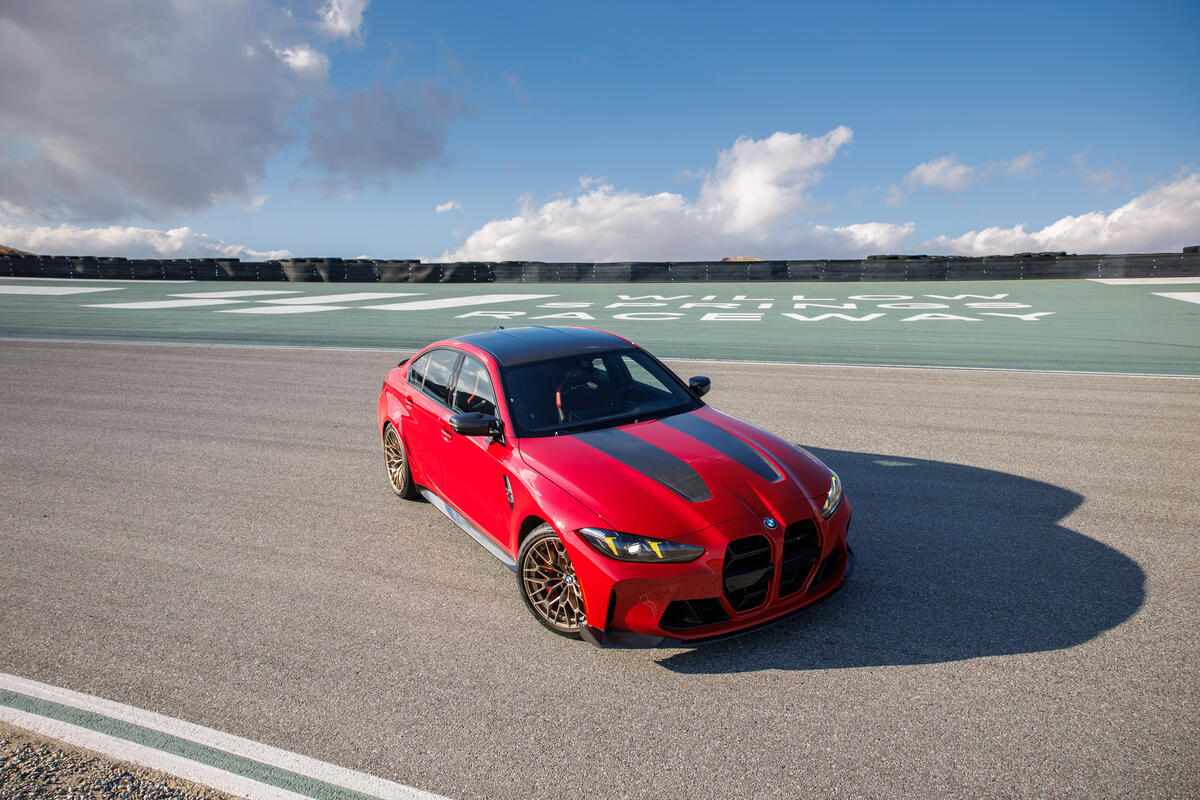
The BMW M3 is one of BMW’s most famous performance cars. Here they’re talking about an electric version, which is a big deal because it would be BMW M’s “fast car” formula using batteries instead of a traditional engine.
This means the EV has four electric motors—usually one for each wheel. Because each wheel can get its own power, the car can react faster and grip better. It’s one reason some EVs feel very “tunable” in how they drive.
The car can adjust how much twisting force (torque) each wheel gets, separately. That helps the wheels stay gripping the road instead of spinning. It also helps the car feel more responsive when turning or accelerating.
This is how fast the battery can take in power and send it out. For a fast, hard-driving EV, the battery has to handle big bursts of energy repeatedly. Otherwise the car may feel less powerful after a while.
Kilowatt-hours (kWh) tell you how big the battery is—how much energy it can store. A number above 100 kWh usually means more energy for longer driving and repeated hard use. But the car’s power delivery also depends on the battery’s design.
A split front bumper means the front bumper design is broken into sections, often with a noticeable center piece. It’s mostly about styling and how the car’s front end looks. Here, they’re pointing out that the design looks more motorsport-like.
DRLs are the lights that turn on during the day to make the car more visible. “Yellow DRLs” means those daytime lights have a yellow look instead of white. In this segment, it’s treated as a recognizable M-model styling signature.
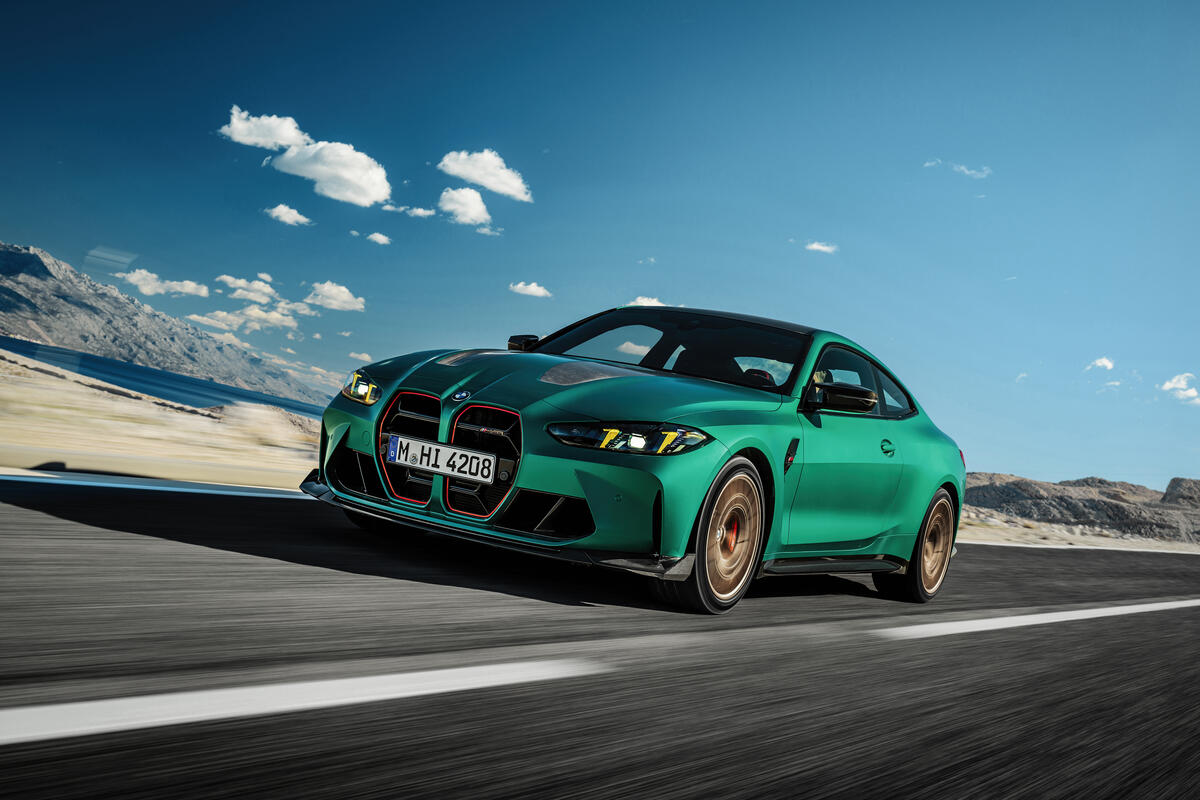
The BMW M4 CSL is a special, more performance-focused version of the M4. The hosts mention it because it’s known for a particular look—especially the yellow daytime running lights. They’re saying the new car is borrowing that visual identity.
A body kit is a set of exterior parts that change how a car looks—things like bumpers and side skirts. Sometimes it also affects airflow, but mostly it’s visual. Here, they’re saying the body kit makes the car look much better than the original i3.
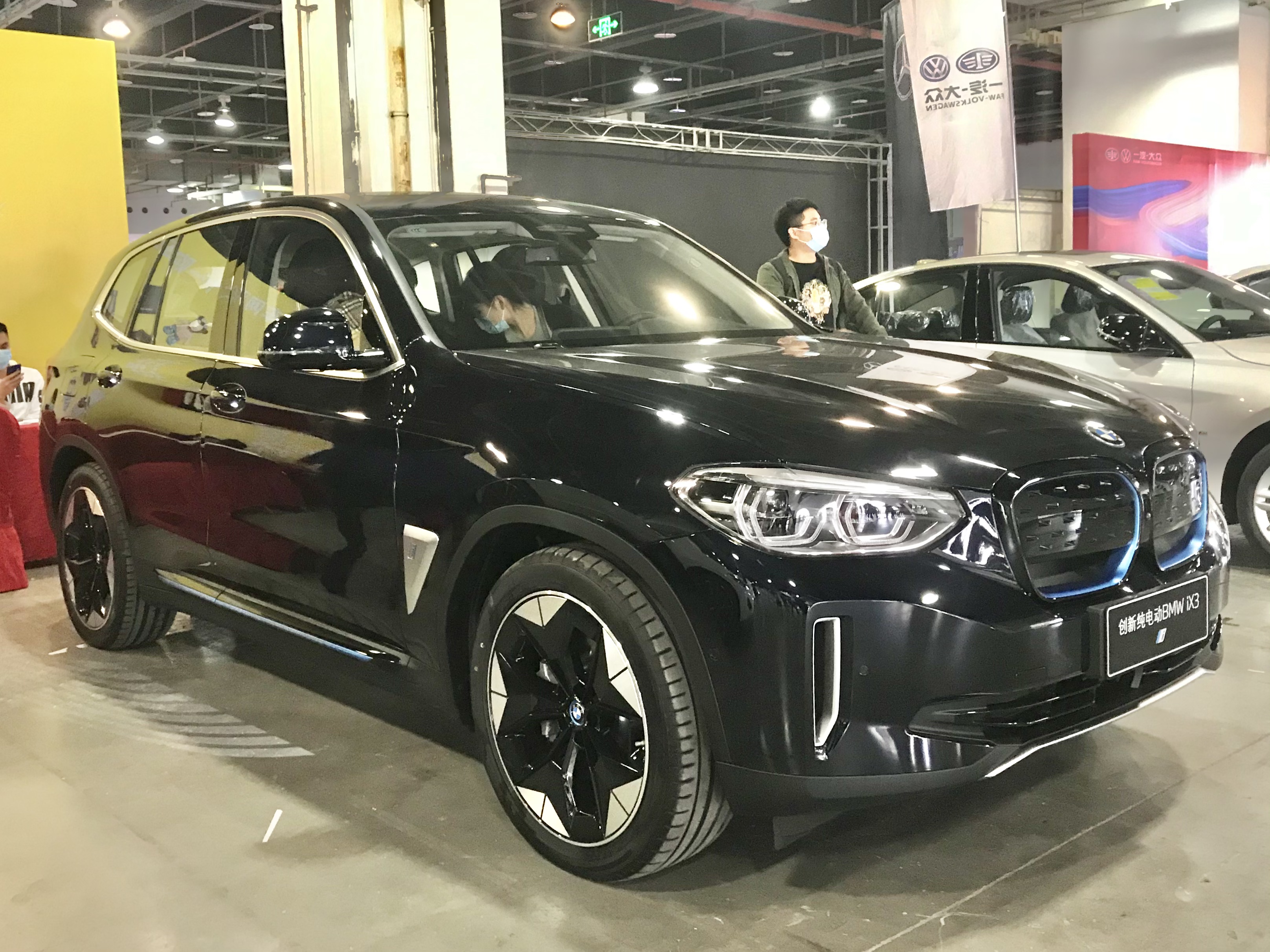
The BMW iX3 is an electric SUV that’s similar in size and purpose to the regular X3. It’s made for people who want the space of an SUV but with an electric powertrain. It may be mentioned because of its interior and day-to-day practicality.
“Kidney grills” are BMW’s signature front grille openings, named for their distinctive shape. In this segment, the host compares how the current BMW M3/M4 use oversized kidney grills versus how the concept keeps them closer to the i3’s proportions.
The BMW M4 is a sporty BMW that’s built for faster, more exciting driving than a regular 4 Series. People compare it to other M models to see what’s different in how it looks and drives. It comes up when discussing updates or changes to the current lineup.
A manual transmission is a car where you shift gears yourself with a clutch and a stick. The host is saying some buyers still specifically want that kind of driving.
“Driver engagement” means the car feels fun and interactive to drive, not just fast. Here, the host is saying a gas M3 with a manual could be more engaging for enthusiasts.
Term
ductile spoiler
A spoiler is a part on the back of a car that helps it cut through the air. The host is saying this new BMW has a big, noticeable rear spoiler.
BMW’s “Neue Klasse” is BMW’s plan for a new generation of cars. It’s important because it’s supposed to change how future BMWs are built, especially electric ones. It comes up when people talk about new electric concepts and what they could become.
The Porsche Taycan is Porsche’s electric performance car. The host is using it as a benchmark to guess how an electric BMW M3 might feel and how much it might cost.
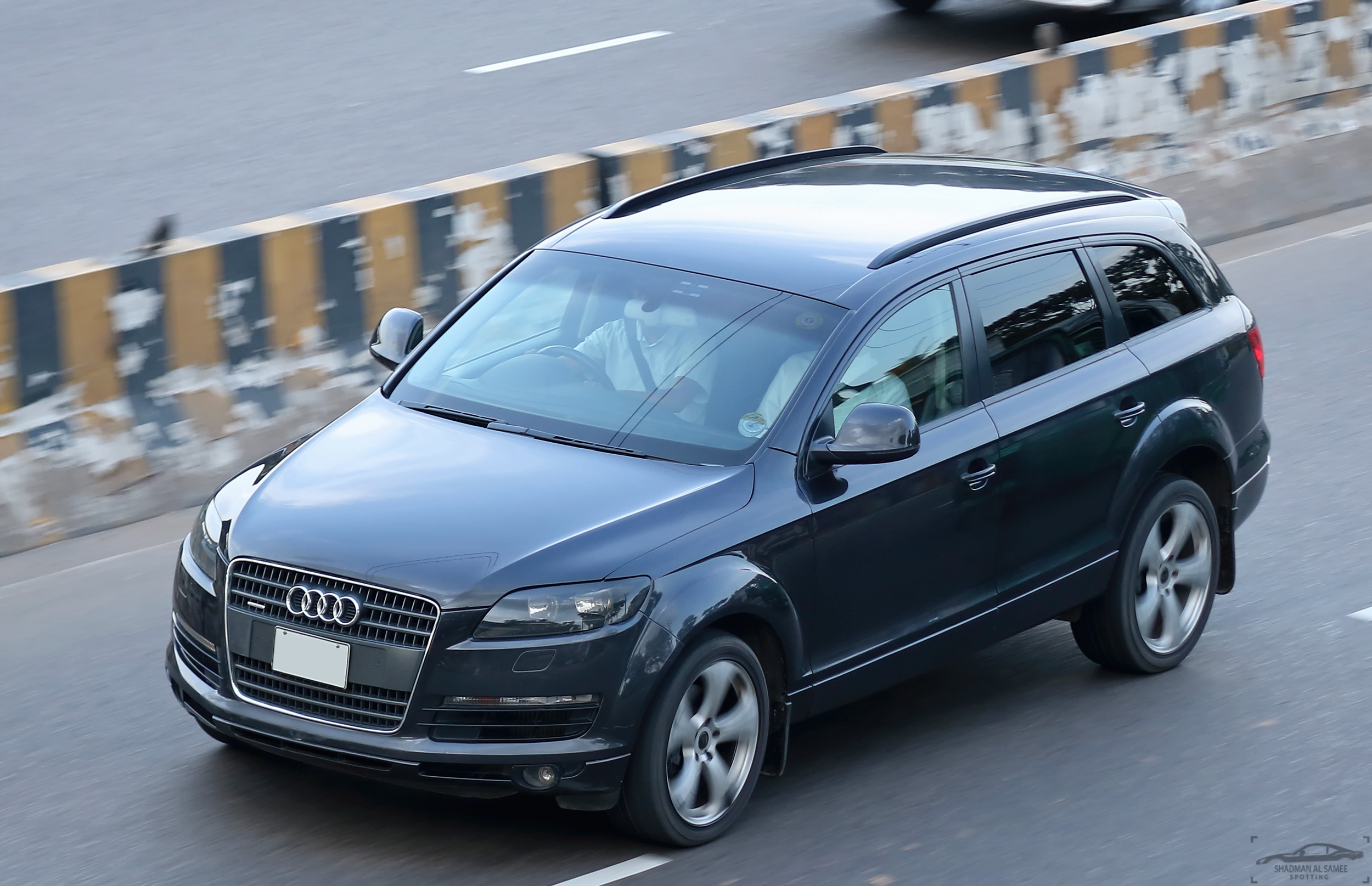
The Audi Q7 is a big Audi SUV meant for families, with room for more than two rows. The host is talking about the new version and how its engine options are being updated.
The Mercedes-Benz GLE is a luxury SUV that’s meant for families and daily driving. It’s often compared with other premium SUVs because people want similar space and comfort. It comes up in discussions when listing the main luxury SUV options in the market.
Genesis is Hyundai’s luxury car brand. It makes higher-end cars and SUVs aimed at buyers who want more premium features. It’s mentioned when people are comparing luxury options from different brands.
The Genesis GV80 is a luxury SUV made by Genesis. It’s meant to be comfortable and feature-rich for everyday driving and family use. It’s mentioned when people compare premium SUV choices from different brands.
The Lexus GX is a luxury SUV that’s built to handle rougher roads better than many typical luxury cars. It still focuses on comfort, but it’s designed with off-road ability in mind. It comes up when people list luxury SUV alternatives.
The Lexus LX is a large luxury SUV designed for comfort and space. It’s meant for buyers who want a big premium vehicle with strong capability. It’s mentioned when comparing different luxury SUV models.
A “V6 TDI” is an engine with six cylinders arranged in a V shape, running on diesel fuel and using turbocharging. The host is saying the Q7’s main engine in Europe will be this kind of diesel, plus extra hybrid help.
A mild hybrid is a “light” version of hybrid tech: it uses a small battery and motor to help the gas/diesel engine. It’s meant to save fuel, but it usually isn’t meant to replace the engine completely.
The Audi SQ7 is a sportier, more powerful Q7 SUV. The host is saying it’s expected to have a 4.4-liter V8 engine, which usually means stronger acceleration and a more muscular driving feel.
Captain’s chairs are separate seats with space between them, not one long bench. Here, they’re describing the six-seat version of the SUV, where the middle row is more comfortable and easier to get through.
Term
split tail-amp approach
A split tail-amp approach refers to separating the rear lighting elements so the light bar or signature portion is visually distinct from the rest of the tail lamp assembly. The host connects this to Audi’s newer design language on models like the Q5 and Q3, emphasizing how it changes the rear-end look and signature.
The Audi A6 is a comfortable luxury car, usually a sedan, meant for everyday driving and longer trips. It’s important because it’s one of Audi’s main “big comfort” models. It may be mentioned when discussing new styling details, like updated lights.
A light bar is a strip of lights across the back of the car. It’s used to make the car easier to recognize and sometimes easier for other drivers to see.
OLED lighting uses a special kind of light technology that can make very thin, stylish light shapes. Here, the host says Audi is using it in the rear lights to create a distinctive look.
Digital matrix LED headlights are advanced headlights where lots of tiny LED lights can be controlled separately. That lets the car adjust the light pattern more intelligently than older headlights.
That number refers to how many tiny LED light points are inside the headlight. More tiny lights usually means the car can control the beam more precisely.
This means the car can shine the turn-signal direction onto the road. The idea is that it’s easier for people around the car to understand where you’re turning.
Piano black is that shiny black trim you often see inside cars. It looks great at first, but it tends to show smudges and scratches more than matte finishes.
Matte wood trim is a wood-style interior panel that isn’t shiny. It usually looks more natural and doesn’t show scratches and fingerprints as easily as glossy trim.
A diesel engine is a type of engine that runs on diesel fuel instead of gasoline. The host is asking whether people will keep choosing diesel if fuel prices and buyer preferences keep changing.
A powertrain option is the car’s method of getting power to move—like gas, hybrid, or electric. They’re saying diesel doesn’t get talked about as much anymore.
EVs are electric cars that run on electricity stored in a battery. The host is comparing how EVs handle long highway trips versus diesel or petrol cars. The point is to see what people will still want as more cars go electric.
Term
AI
AI means the car uses smart computer software to understand what you ask and respond. In this segment, the host is saying the car will have AI features that can interact with you more like a conversation. It’s part of the tech-focused discussion.
“ChatGPT” is an AI system that can talk like a chatbot and answer questions. The host is saying some cars may use something like that so you can talk to the car and get responses. It’s about voice/AI features inside the vehicle.
A diesel powertrain means the car uses a diesel engine to move the wheels. People often like diesel for long highway trips because it can be efficient and feel strong at steady speeds. The hosts are comparing it to petrol and electric cars to see what buyers will choose next.
A plug-in hybrid is part gas car and part electric car. You can charge it by plugging it in, and it can run on electricity for a while before the gas engine takes over.
Here, hydrogen means a car that uses hydrogen fuel to make electricity inside the vehicle. Instead of burning fuel like a gas car, it uses the hydrogen to power an electric drivetrain.
The Toyota Mirai is a hydrogen-powered car. It’s one of the most famous hydrogen vehicles you can buy, which is why it comes up when people talk about how rare hydrogen cars are.
Car
Genesis Magma GT Concept
The Genesis Magma GT Concept is a show car from Genesis. It’s not necessarily something you can buy yet—it’s mainly there to show what the brand’s future design and interior ideas could look like.
“Touchscreen overload” means the car uses screens for too many controls. Instead of buttons or knobs you can feel, you have to tap and look at the screen more often.
Car
Genesis Magma GT
Genesis Magma GT is a car they’re talking about for its interior design. Instead of lots of touchscreens, it’s described as having nicer-looking materials (like quilted leather), physical dials, and a normal gear shifter so it feels more “real” to use.
OLED screens are a type of display that can look especially sharp and have strong contrast. In cars, they’re often used for the digital gauges or screen-based controls.
An analog needle is the moving pointer on a gauge, like the needle on an old-school speedometer. It can be easier to read at a glance than numbers on a screen.
A “regular gear selector” means the car has a normal gear shifter you can grab and move. It’s usually more familiar and easier to operate than touch or button-based gear controls.
Quilted leather is leather seats or panels with stitching that makes a padded, patterned look. It’s a styling detail that usually signals a more upscale interior.
Ambient lighting is the soft, indirect light inside the car that makes the cabin look nicer. It’s usually meant to create a mood rather than light up the road.
Rotary controls are physical knobs used to operate functions like climate temperature. They’re often preferred by enthusiasts because they can be quicker and more tactile than touchscreen-only controls.
A concept car is basically a preview vehicle—often shown at events—to show what a brand might build next. Production versions usually change details from the concept.
Wing mirrors are the side mirrors mounted on the doors or fenders. The hosts use mirror size as a practical visual clue for whether a concept is likely to be production-ready, since production cars typically need mirrors that meet real-world visibility and packaging constraints.
The Audi RS e-tron GT is a fast electric car made for performance and long-distance comfort. It’s in Audi’s top performance family, and it’s meant to go up against other high-end electric performance cars. It comes up when people talk about the main electric performance options.
The Genesis Magma GV60 is mentioned as the first car under Genesis’s Magma performance line. It’s being used as the starting point for the brand’s plan to blend performance with a luxury cabin.
A “halo model” is the coolest, most impressive car a brand makes—meant to show off what the company can do. It’s usually not the cheapest or most common model, but it helps define the brand’s reputation.
A V8 engine is a gas engine with eight cylinders arranged in a V shape. The hosts are saying this new Genesis performance car might use a V8, not be fully electric.
“Sticking screens everywhere” refers to the modern trend of using multiple digital displays throughout the cabin for infotainment, navigation, and vehicle controls. The hosts connect it to how some brands are redefining “luxury” around tech-forward interiors rather than traditional physical controls.
Term
understated minimumism
Understated minimalism is a design approach that aims for a clean, uncluttered look with fewer visual elements and less ornamentation. In automotive terms, it’s often used to describe how a cabin or exterior can feel more “luxury” by relying on proportion, materials, and subtle details rather than lots of screens or flashy styling.
LIVE
Hello, everyone, and welcome to another episode of the Hookturn podcast with my very good friend,
Sandvib Ahmed. How are you doing this week, Sandvib?
I'm doing very, very well. We thankfully have actually some big news from BMW that came out
that we're both very excited to talk about, plus two other smaller bits of news that,
while not as exciting, are still great new developers basically within the car industry.
Yeah, and actually, this week, we only have one electric vehicle, surprisingly, to talk about
normally in a lot of our episodes, just because there's so much innovation and so much happening
around battery electric vehicles. We're often talking about multiple EVs and there's a new EV
coming from a Chinese brand almost every year.
Funnily enough, I just saw that Fording, the Fording was announced, I don't know how to pronounce it.
It's a brand new one that was announced. Maybe that's for a future episode, I barely...
I honestly don't think, I had a look, I don't think there's much to say there, it's just another
or not of this Chinese brand that's coming out. So, it's interesting. So, this is one of the
few episodes where there's no Chinese vehicles being talked about at all. But we do have one EV
and this is an EV that we've talked about in a sense, we've talked about it quite a lot,
but we haven't talked about this version at all. And this is probably the most exciting
version of this EV. So, that is the BMW M Concept Neuer Classe. So, this is the concept version of
what we think will be the next electric M3. We're also going to talk about the new Audi Q7,
which is obviously a hugely significant car for Audi. And then lastly, we're going to talk about
the Genesis Magma GT Concept. So, this is potentially, like we're not 100% sure yet,
but it's potentially very close to an all-new Genesis supercar. And the interior is something
to really, like, you know, something very unique. So, we're really excited to talk about
really all three of these models. But let's get started on the BMW M Concept Neuer Classe as,
you know, they are sort of awkwardly calling it at the moment. Now, this is a preview of the next
electric M3. Having said that, we don't know a huge amount. We don't know the finalized, you know,
technical specifications in terms of the, you know, production power and torque figures and
the acceleration figures. What we do know is that it'll have a quad motor set up. So, it'll have
one sort of motor driving each wheel, which is really cool. And I suppose, you know,
four motors for four wheels, that's the ultimate in terms of, like, you know, dynamic flexibility.
And, you know, you can individually control the power and torque output at each wheel very, very
precisely. And I think the battery will be around above 100 kilowatt hours, but it'll be
specially designed for high charge and discharge rates and to keep up with sort of the
high performance nature of the new M3. So, I think what we can focus a little bit on is the design.
So, Samib, I think we can clearly see, like, you know, this is like a beefed up version of the
BMW i3, that the production version of which was revealed maybe, what, a few months ago. And you
can see it has, like, those really wide wheel arches, really wide hips. The front, if let's
maybe we will start talking in more detail, the front, it has, like, that inspiration from
BMW's Le Mans vehicles with that front bumper. It has, like, that's almost like a split front
bumper with that middle, middle aspect, sort of splitting the, splitting the rest of the front
bumper. And even those headlights, like, it has these yellow DRLs. And I feel like they're almost
inspired from some of the most iconic recent M models. So, you look at the M4 CSL, especially,
some of the, and the CS models, they've, they're known for the sort of yellow
DRLs at the absolute peak of the M lineup. And this is sort of taking inspiration from that,
as well as from BMW's Motorsport pedigree. So, Samib, do you have any thoughts, any further
thoughts on the design? So, it's, I find it interesting that your, like, the base i3, the
new one, it's obviously got a bit more of a controversial look. Obviously, you know,
maybe in the flesh, it might look better. But it's funny how, while this car's obviously based
on that car, it looks almost like a different car. Like, the body kit sort of style has made
much more appealing to look at. And, like, you'd be like, no, this is actually a properly good
looking car. But you don't need to put any hasters decided to be like, you know, that or maybe it
might look better. In person, even in photos, it looks like a really aggressive and really
nice car. So, hopefully, the production version of this car does not be too much away from this
concept. The interior is obviously going to be amazing as well. And based on what we already
know is a great interior in that kind of ix3, same technology. It will be interesting to see,
though, your, again, as we've constantly said, that your, what's the customer base for a car like
this will more look like? Because we obviously know that, like, basically, while we know that
there's going to be the EV version, there's also going to be a petrol version. So we're very, very
curious to see that whether they have any design differences or whether the EV version and the
petrol version will look identical. If that's the case, I have to imagine the vast majority of people
go for the petrol version. Even if the EV version has more power, I think most customers, assuming
that they've got the same design, same tech, which they all more or less should, I would
imagine the vast majority of customers would go for the petrol version. But yeah, so that's why
I'm hopeful about this car, basically, because if it was EV only, it would go back to that same
question that how many people are actually in the market for an EV or a supercar. But I think,
obviously, BMW has realized that that market is not necessarily that big. So offering a petrol
version of the next gen M3 is going to be important. And because there's going to be a petrol
version, we're actually more likely to see these on the roads. Other than that, not much more to
say, I think, as I said, the design builds off the current i3. But somehow, like, usually,
I mean, to be fair, it doesn't even the current M3 and M4, like the current generation one,
it appears a bit from the standard regular three series. Yeah, I mean, especially the world with
current M3 and current M4, the main differences at the front where they have this huge, you know,
there's like really oversized kidney grills. So I think it's good that BMW hasn't with this concept,
like they've kept the design of the kidney grille the same as the i3. Like, of course, it's a little
bit more aggressive, but they haven't like dramatically changed it to look like out of
proportion with the rest of the car. So I think that's a step in the right direction. And yes,
I think to your point about the petrol M3, I think it's a very smart strategy from BMW to keep the
petrol M3 around. So it'll be interesting to see how they differ performance wise, because I would
assume the EV electric M3 would be much faster, like in terms of acceleration and even like around
a track. And so it'll be a lot more powerful, it'll be heavier as well. But I think the power
difference would more than offset the increased weight between the electric and the petrol M3.
But like I think in markets like America, for example, where like BMW have said even like,
you know, there's still a demand for manual transmissions, for example. I think that's where
the petrol M3 will come into play. Like I would anticipate that with the petrol M3,
they'll also offer a manual version of that. And that's like for ultimate sort of driver engagement,
and especially in the American market where there's like a very enthusiast sort of minded
campaign for, you know, to save the manuals and for manuals to have like some level of
popularity, I think having the petrol M3 will be will be really critical to that market as well.
So yeah, and the design, rest of the design, I think from the rare, it's again similar to the
electric i3, although the M3, all this electric BMW M concept Neue Klasse, very awkward name,
has this huge ductile spoiler, which makes it look very sort of sporty and, you know, aggressive.
I guess my question, Sam, babe, is how do you think this will compare to the Porsche
Taycan in terms of performance and pricing? I would not be surprised if, because the Taycan is,
it's good, but it's kind of old news. I would not be surprised if this is not too
dissimilar from Taycan pricing. The reality is, if it's more expensive than a Taycan or a Porsche,
the market for it was slimmed down even more. So they have to be careful with the pricey.
So yeah, in terms of driving, I'll have to wait for the reviews, but I will not be surprised as
well if this car drives better than even the Taycan does. Like I said, the Taycan, it's been
improved, but it's still fundamentally a car from 2020. It's still fundamentally a six-year-old car.
Yes, it's got a facelift, I think, you know, three years ago or something, but
all design is still there. Yeah, yeah. Yeah, and it would be interesting to see how the performance
and pricing compares. Like I would anticipate this car would be like, shouldn't be too much more than
$150,000, $160,000 starting? Like if it's more than that, then that's, you know, maybe it's
I think if it's more than like $200,000 for an M3, like even if it's an electric M3 with all
of this power, that's pretty serious territory pricing. So yeah, I'll be interested to see
you know, how BMW positions this car and have that in the future direct comparison
between the Taycan and this electric M3. I suspect this will be more sophisticated than
the Taycan, but we'll see. Okay, is there anything else or should we move on to the next topic?
I think let's move on. Okay, cool. So second topic, let's talk about the all-new Audi Q7. So
this is obviously quite a bit different from our last topic and the Audi Q7 is basically
Audi's sort of full-size, so to speak, SUV designed to compete with models like the BMW X5,
the Volvo XC90, on the non sort of Mercedes GLE, on the non-German side
and the non-European side. You also have models like the Genesis GV80, Lexus, I would say maybe
the Lexus GX, Lexus LX as well to some degree. So those are sort of its direct rivals and you
know, Audi, like the first, I think the first generation of Q7 was really quite significant
for the brand. Like it really, they were really sort of able to demonstrate, you know, that they
could compete with models like the X5, take them head on, it was very well regarded. You had like
some insane, I think you had like a V12 or V12 TDI or V10 options as well. So they had
some insane powertrain options. Second generation slimmed down the powertrain lineup quite a bit
and I think they've slimmed it down even more with the with this latest iteration. So in terms of the
engine, your engine lineup right now, you only have two diesel offerings that they've announced.
They have announced an SQ7, which is, we might talk about separately, but the standard Q7 is
diesel only. So in Europe, so you'll get a three liter V6 TDI engine and that's paired with a,
there'll be a mild hybrid system. So the three liter diesel mild hybrid and it'll come in two
states of tune. So you'll, at the entry level, you'll get 180 kilowatts of power, 500 unit meters
of torque, and then you have a higher state of tune, which is 220 kilowatts of power and 630
unit meters of torque. So there is some difference, but not, I would say not a huge, huge difference.
And then the SQ7 is expected to come with, I believe it's a 4.4 liter V8 engine and that's,
I suppose, more catered towards the American market, although I suspect it'll be available
in Australia and in Europe as well. I think, like, we look at the design of this car and
it's interesting, like, they've followed this similar approach with the, you know, with the Q5
and the Q3. So the same sort of fundamental design language at the, it's more upright and it looks
more, they've taken a very boxy approach and that's just to enhance that sort of practicality.
It'll come with five seats, seven seats, and I believe standard is a six-seat layout as well.
I'm not sure, I'm not entirely sure, but yes, it can come with 56 or seven seats. So
six seats will have the two sort of captain's chairs in the middle row that are very similar to
the front driver and front passenger seats, and then you'll have the two seats in the third row.
So that walkthrough, you can walk through from the middle to right to the third row. So
that's, I think, the six-seat option is probably the most luxurious and then you'll have
five seats if you want to maximise your boot space and then seven seats
if you want to maximise practicality. They have, in terms of the design, yeah, very upright design,
the rear is sort of like, they've taken that split tail-amp approach that they've put in with the
new Q5, the new Q3, and even like models like the Audi A6 as well. So you'll have this light bar
that is separate from the rest of the tail light unit, which is, you know, like an interesting
approach. I think it works better on some of their models compared to others. And then,
at the front, they have their new OLED lighting technology, no, sorry, at the tail lamps have
their OLED lighting technology. And at the front, they have these all new digital matrix LED
headlights, which have 25,600 micro LEDs. And they can even project the indicator on the ground.
So it's like, you know, the, if you're indicating, you can, that sort of, the direction that you're
indicating will be projected on the ground. So it's easier for like pedestrians and other
road users to see. So that's, they're marketing that as a bit of a, bit of a safety feature as well.
I think if we look at the interior, I think that's probably where I want to talk about a little
bit more, because I think that the fundamental design is still the same. So you, as some of
their latest models, so you still have this, what they call the digital stage, you have
the three screens. So you have a wraparound digital instrument cluster and
infotainment system that are angled towards the driver. And then you have a separate third screen
for the passenger. But I think what's interesting, especially compared to the A5, is that they've
gotten rid of a lot of the piano black, and they've replaced it with this beautiful matte wood trim.
So they've, they, I think they are slowly listening to a lot of the negative feedback that
we're saying that, you know, we don't like piano black. We don't like the shiny, scratchy
plastics. And they've gotten rid of that. And they've sorted out this beautiful, natural, matte
wood trim. So, Sam, I might ask, you know, what are your thoughts on this card? Do you think it
will be successful compared to some of its rivals? And, or do you think it's just too average?
It's interesting, because now the Q7 is no longer the top of Audi's SUV line up,
as long as you look at the Q9 that isn't out yet, but we don't know that's going to be.
And the Q8 as well. Yeah, yeah, yeah. So, and the Q8. So this car's meant to be
not quite your average luxury European SUV, because I guess the Q5, I don't know if it holds
that role. But it is still meant to be a SUV that's relatively attainable. It's interesting,
I guess, that like obviously, as you mentioned, they, you know, recognize that they're speaking
with diesel, right? So that would be, that's interesting in a different way, because obviously,
recently, while the fuel prices actually has impacted diesel prices a lot more than it impacted
petrol prices, diesel prices, sort even faster. So be curious to see whether people are still
willing to pay a price for a diesel engine, because I feel like diesel is one of the,
is one of the powertrain options that sort of left out of the conversation. We always talk
about just hybrids, petrol, and just four EVs and fifths. Diesel's that powertrain that
kind of we don't talk about as much anymore. Yes, we know that, especially for cars like this,
that are designed to do long highway miles, diesel is still more or less your best option. It
obviously provides the most smoothest drive. And diesel also works very nicely on long
distance drives at high speeds, much better than petrol does. That's only much better than EVs do.
So, but it's curious in a different way, just like I always say how you switch to full EVs,
what people think about, you know, the same with the areas like do people still want to
spend a lot of money on a diesel engine car. So we'll be curious to see how we sort of, I mean,
to be fair, I'm thinking about this in the Australian context, I don't know, maybe in
Europe, it's more popular, I'm not quite sure. But yeah, that would be the interesting thing.
Other than that, it feels, I mean, there isn't much more to say that here, you're more or less
covered at all. It's got what we already thought it would have, which is an increased increase like
power and obviously the technology, it's fitted with Audi's latest technology. It's very screen
heavy in contrast to the car we're going to talk about next. And we basically, or and also even
in contrast to the BMW that we just spoke about, I feel like Audi and Mercedes are very much like,
wow, look at the screens in this car and to wow customers. So it's interesting to see that they're
still going to stick with that for just stick, you know, the two massive screens plus obviously
now the new thing with the passenger screen. The design wise, it looks fine. It doesn't look amazing,
but it looks fine. Like it looks in offensive, basically. I don't think anyone's going to be
looking at this car and being like it, it's going to be like something that's a showstopper,
as far as looks go. But yeah, otherwise, and also apparently, like everything will have AI,
apparently will have chat GBT versus assistant, you know, so you can talk with the car, I guess,
if you want to. And yeah, that's about it. Yeah. Yeah, like I think the styling overall is
in offensive. I guess one point I just wanted to talk about is we've been hearing actually over
the last couple of days some news about what the next BMW X5 will have. And I find it interesting
because this like Audi and its standard guys has just a diesel powertrain. And then you look at the
upcoming BMW X5, which will have everything from I think it will have it'll have a petrol engine,
it will come with plug-in hybrid, it will come with EV like full battery electric vehicle,
and it will come with hydrogen as well. So it's like BMW is sort of going in the complete opposite
direction with the X5 where they're trying to offer as many different powertrain options as
possible, everything from like a combustion engine, you know, like combustion engine petrol
options to hydrogen, so like to complete opposite. And you don't see very many hydrogen, you know,
cars on sale. Like I think that what the Mirai, the Toyota Mirai and the, or is it the Hyundai,
I forgot the name, the Hyundai had an hydrogen option available as well. But BMW with the X5
really going all out with, you know, having this insane diversity of powertrain choices. And then
Audi with its direct competitor, really just sticking to diesel. So I find that contrast
quite, quite fascinating. Yeah, the, like again, I know Audi sort of trying to improve with its
latest interior design, but you like, and they've like, it's just not up to scratch with the,
with what they had before, like just in terms of physical controls, still have too much piano,
black, like I know they've, I know I just mentioned that they've tried to replace with the matte wood,
but that is, if you look at the surroundings for the infotainment display and the digital
instrument cluster and the front passenger display, the third screen, it's still, the borders are all
like piano, this crappy cheap piano black plastic, like it's just, it just looks ugly, in my opinion.
The matte wood does help a little bit, and I'm sure it'll come with other trim options, but
the upper dashboard just, yeah, it's just, just doesn't feel very, very premium, in my opinion.
So, yeah, look, it's not a bad option, I suppose, but it's nothing, I'm not, I'm just not sure whether
Audi have done enough to move the game forward with the latest Q7, I have to say. Okay, look,
I think, Sam, we might move on to our final topic, which is the Genesis Magma GT Concept. So,
Sam, did you want to talk a little bit more about this car? I think the exterior has been,
was revealed previously to some extent, but I think the interior, you in particular, are very,
very excited. What are your thoughts on this, on the design of the interior and the exterior? Like,
I think it looks absolutely sick, but do you agree with that? No, I totally agree. I believe we've
also talked about the exterior in a previous, a very long time ago now, but I believe when the
exterior initial shots came out, we spoke about it. So, we've already given our thoughts on the
exterior, but we've been talking about this with the Luce, we'll spend an entire, nearly an entire
episode talking about the Luce, but nowadays it feels like it's actually the cars who are trying to
move away from this screen heavy, you know, everything on the touchscreen, let's have three
massive touchscreen dominates. It's actually those car interiors that are actually getting more
traction. Again, not to say that, you know, touchscreens are not meant to have any
place in a modern-day car interior. Of course, they're meant to be in a modern-day car interior,
but, you know, as we're just saying that Audi Q7 is just touchscreen overload. I appreciate that,
at least if they stick with the concept sort of interior, that this car, that the Genesis
Magma GT, it's trying to go for a completely different sort of thing, similar to the Luce,
a very small touchscreen relative to the competition, and certainly relative given
to the price. And just, with the Luce, it's hard to tell what the material quality is like, and
since we can only take, you know, the video, the people who actually have seen it in real life,
we can only take their word for it. But with this Genesis, you don't even need to,
like, you can just pretty much look at the interior photos and see, like, it's covered in
quilted leather, all center console stack, like, I can't imagine what it would be like to sit in it,
to, like, have every single, like, to basically be able to, yeah,
feel what the material quality is like. Similar to the Luce as well, it's got dials,
that I don't know if it's as fancy as the dials in the Luce, where obviously I've got the fancy,
you know, the 3D sort of dials with the analog needle and the OLED screens, but it certainly
looks incredible. And yes, it's an interior, even the fact that it's got a regular gear selector,
like, even that's interesting. So not like something on the, you know,
on the steering wheel, basically, it's got, like, one way you'd always expect it to. So,
yeah, in that sense, it's quite interesting. And we've already spoken about the exterior, the exterior
looks quite nice. But I think with this kind of interior, it's definitely something that would
feel quite special. Yeah, it's a gorgeous interior. And just for our listeners, just to describe it
a little bit more, you basically have this wrap around interior where the driver and the front
passenger are sitting quite separately. So you have this rising sort of center console, and
it's all sort of like slathered in what appears to be this beautiful quilted leather, like,
and that quilted leather wraps around right from the door cards all the way to the,
you know, instrument panel around like the front sort of dashboard all the way down to the center
console. And it just looks absolutely gorgeous. You also have quite a bit of ambient lighting,
like a two tiered ambient lighting. So there's ambient lighting strips just across the upper
dashboard and the lower dashboard. And in terms of the, like the infotainment screen and the
gauge cluster, so yes, as Sam was saying, the infotainment display is quite small. It appears
to have physical, like those rotary controls to change the temperature and so on. And then
in the middle, you have these three gauges that can, I believe are probably customizable to display
various information. So everything from like, you know, your sat nav and your car status and,
you know, maybe a clock or other engine data or so on. And then in front of the driver, you have
just one sort of circular gauge cluster that has a, I believe, is it a digital, it looks like a
digital speedo, but, you know, it's a concept. So that's sort of like TBC, but yeah, it really
gorgeous interior. And yeah, I hope they can bring this to production to the same level of quality
as the concept seems to have. I'm sure there'll be some changes as there always is between
concept and production, but it seems like fairly production ready. Like, I feel like this is maybe
80% of the way there. So, and as I've said a few times, I always judge how production ready a
concept car is from the size of its wing mirrors. Because, and if you look at the exterior of this
car, we have talked about it a little bit, I think before, but they have released more pictures.
And the wing mirrors look fairly production ready, like they seem fairly large, which is always the
case with the production ready cars. So I think this is, I don't think Genesis would be revealing
this concept just as a design study, as some concepts are. This is going towards a real
production intent car. And yeah, definitely like they're trying to, at a broader level,
Genesis is trying to increase the profile of its Magma sub-brand. So this is a new
sub-brand that they've introduced to try and compete directly with BMW M and Mercedes AMG
and Audi RS. So they have the, what is the same? Is it the Magma GV60? Is that their first Magma
car? I believe so, yeah. Yeah. So they're trying to sort of combine that real high performance,
but with, still retain that luxury focus on the inside as well. So this will be sort of like the,
I think the flag bearer for the, not so much the flag bearer, because I guess arguably the GV60 Magma
is the flag bearer, but this is going to be the ultimate sort of statement of intent for the,
or like a halo model for the Magma brand. And then I guess the Genesis brand as a whole from a
performance perspective. So yeah, really excited to see this come to production. I suspect it'll
still be a few years, but, and I think the other thing to note is that I don't think this is going
to be an EV. Like I believe they've almost confirmed that it's going to be a V8 powered by
a V8 engine. Not 100% sure on that and they haven't revealed the final production specifications or
anything, but I don't think it's going to be an EV. It might, maybe it'll be a hybrid or a plug-in
hybrid, but don't think it will be an EV at the end of the day. So that's interesting as well.
And I think it just goes to show that at the top end of, at the performance level, just EVs,
just haven't had the impact that manufacturers thought they would. So yeah,
Sam, any further thoughts on this one? Similar to what I said about the Luce,
we're never going to be able to afford these cars, but hopefully other brands copy this sort of
start copying. Not the, obviously they're going to have the same interior quality as far as the,
you know, leather, that would be unrealistic to expect. But I hope some manufacturers look at
cars like this and the Luce and be like, maybe, you know, sticking screens everywhere and calling
that luxury is like, I mean, the other things that's going to change that is the fact that when
you see $20,000 Chinese cars start doing the same thing, then luxury manufacturers have to be like,
okay, if our interiors look exactly the same as a $20,000 Chinese car, then obviously we have to be
doing something different to distinguish ourselves. So right now, I mean, we're almost there already,
like every, even the cheapest Chinese cars come with massive screens. So,
some like massive screens on their own have that much appeal anymore. But certainly at some point,
these brands have to be like, okay, if like, we need to differentiate ourselves from regular
brands, because they're not there sticking in three touch screens as well. And then maybe they'll
look at brands like this in the Luce and be like, maybe going back to the understated minimumism
might be actually the way to go in terms of getting that sort of, of luxury sort of
feeling. Yeah. And I think, I mean, I think from the outside, it definitely looks way better than
the Luce, like I have to admit that. And I think the other thing to note is, Genesis has had this
consistent sort of design philosophy of those two parallel lines. And it's always fascinating to see
how they've put that through in different sort of contexts. And this continues that approach. So
at the rear, you have that two like light bar design. And then that continues through the side.
And then through the front as well, you have that two parallel lines. So it's a cool design feature.
And it's I really like the fact that Genesis have kept that they've tried to build that iconic
design sort of language into or across all of them. They're not sort of copy pasting and like
doing like a Russian doll approach, like Mercedes did previously, but they are keeping some of their
iconic design aspects across different models in their lineup. So I think that's really cool as
well. Okay, look, I think we might end it there for this week's episode of the Hooktun podcast.
Thank you so much for keeping on listening to us. Please remember to like and subscribe,
give us five stars. We're on Spotify, Apple podcasts, all of the major platforms. And we'll
talk to you next week. Thanks so much. Bye.
About this episode
BMW’s electric M Concept Neuer Klasse is framed as a preview of the next electric M3, with talk of a quad-motor setup, precise wheel control, and a battery “around above 100 kilowatt hours.” The hosts also weigh whether BMW should keep a petrol M3 option (and even manual demand), benchmarking against the Porsche Taycan and debating pricing. Audi’s refreshed Q7 gets covered for Europe’s V6 TDI mild-hybrid setup and its screen-heavy interior. Genesis closes things out with the Magma GT Concept’s quilted, ambient-lit cabin and a likely V8 halo strategy.
In this week's episode of The Hook Turn Podcast, we discuss the BMW M Concept Neue Klasse, and what this might mean for the next M3. We also cover the inoffensive new Audi Q7, the brand's large family SUV, and the sexy Genesis Magma GT - with what appears to be an absolutely gorgeous interior.
Show notes:
- BMW M Concept Neue Klasse: https://www.drive.com.au/news/2027-bmw-m3-ev-breaks-cover-as-near-production-concept/
- Audi Q7: https://www.carexpert.com.au/car-news/all-new-2027-audi-q7-targets-class-leading-premium-practicality
- Genesis Magma GT: https://www.carexpert.com.au/car-news/genesis-reveals-more-of-its-v8-powered-magma-gt-supercar