
707: Botches Offroad Podcast (Takeover)
About this episode
Hosts and guests from Snail Trail 4x4 Offroad Podcast kick off with a Botches Off-Road takeover vibe, then jump into practical wheeling-and-overlanding talk. The conversation covers suspension choices and parts sourcing (including moving a Toyota to a link suspension kit), plus daily-driver realities like quick swaps, interior comfort, and carrying spares. They also get into trip logistics—trailering vs driving, bypass decisions, and Michigan/UP terrain—while sharing real repair stories (like a U-joint fix) and recovery gear setups.
Alex, Mark, and Gavin from Botches offroad Podcast take over the SnailTril4x4 Podcast. This is the final takeover before the Snailboys are back from their trip. They Botches Boys start off like all their normal podcasts with no real directions, but they quickly get to their topic of wheeling your daily driver.
We have a massive discount this month with Rusoh Fire Extinguishers. You can get 25% off this month only with the discount code Rusohcrawlers. Go grab yours today!
SnailTrail4x4 Discord: https://discord.gg/yFyFFkQbuy
Come hang out with us on the SnailTrail4x4 Discord — it’s the easiest way to connect with Tyler and Jimmy directly, chat with fellow offroad enthusiasts, and get first access to Group Buys and Treasure Hunt token drops.
MORRFlate Giveaway at 900 Reviews on Apple Podcast. But our next giveaway is when we reach 800 reviews; we are giving away an OnX Elite Membership. We will also give away an OnX Elite membership when we get to 850. However, when we reach 900 Reviews, we are teaming up with MORRFlate for a $1000 MF Product Giveaway. Go over to Apple Podcasts to leave your review now and become eligible to win. Congratulations to A13XMONT, who won a set of tires from Yokohama Tire!
Call us and leave us a VOICEMAIL!!!We want to hear from you even more!!! You can call and say whatever you like! Ask a question, leave feedback, correct some information about welding, say how much you hate your Jeep, and wish you had a Toyota! We will air them all, live, on the podcast! +01-916-345-4744. If you have any negative feedback, you can call our negative feedback hotline, 408-800-5169.
4Wheel Underground has all the suspension parts you need to take your off-road rig from leaf springs to a performance suspension system. We just ordered our kits for Kermit and Samantha and are looking forward to getting them. The ordering process was quite simple, and after answering the questionnaire, we ensured we got the correct and best-fitting kits for our vehicles. If you want to level up your suspension game, check out 4Wheel Underground.
SnailTrail4x4 Podcast is brought to you by all of our peeps over at irate4x4! Make sure to stop by and see all of the great perks you get for supporting SnailTrail4x4! Discount Codes, Monthly Give-Always, Gift Boxes, the SnailTrail4x4 Community, and the ST4x4 Treasure Hunt! Thank you to all of those who support us! We couldn’t do it without you guys (and gals!)!
SnailSquad Monthly GiveawayMassive thanks to this month’s giveaway with Rusoh Fire Extinguishers. We have one of their 2.5-pound extinguishers to give away to a lucky winner. This extinguisher has an 18-year shelf life and is the best fire extinguisher for any off-road vehicle. To learn more, check out Rusoh.com. If you want a chance to win, sign up for the Giveaway Tier on Irate4x4
For the Month of April, we are giving away Gift Boxes. Its Gift Box month and two luck indiviuals will win a one of our gift boxs. These are jam packed with goodies from tools to whiskey smokers. They are always different and always random. If you want a chance to win, sign up for the Giveaway Tier on Irate4x4
Listener Discount Codes:SnailTrail4x4 –SnailTrail15 for 15% off SnailTrail4x4 Merch
MORRFlate – snailtraill4x4 to get 10% off MORRFlate Multi Tire Inflation Deflation™ Kits
4WheelUnderground – snailtrail 10% off
Ironman 4×4 – snailtrail20 to get 20% off all Ironman 4×4 branded equipment!
Sidetracked Offroad – snailtrail4x4 (lowercase) to get 15% off lights and recovery gear
Spartan Rope – snailtrail4x4 to get 10% off sitewide
Shock Surplus – SNAILTRAIL4x4 to get $25 off any order!
Mob Armor – SNAILTRAIL4X4 for 15% off
SummerShine Supply – ST4x4 for 10% off
Backpacker’s Pantry – Affiliate Link
Laminx Protective Films – Use the Link to get 20% off all products (Affiliate Link)
Show Music:
- Outroll Music – Meizong Kumbang
- Midroll Music – ComaStudio
4Wheel Underground
"Four wheel underground is making some big changes... check out 4Wheel Underground."
4Wheel Underground is a company that makes and sells off-road suspension parts. They’re saying you can buy specific pieces (like brackets and joints) separately now, not just whole suspension kits.
4Wheel Underground is an off-road parts brand/company that sells suspension components and kits for 4x4s. In this segment, they’re described as changing how customers buy parts—like ordering individual brackets and joints instead of only full kits.
upper frame bracket
"So if you want the upper frame bracket, you can just buy that."
A frame bracket is a strong metal mount that bolts to the truck’s frame. The upper one holds the suspension parts in the right position so the wheels can move properly off-road.
An upper frame bracket is a mounting point that connects a suspension component to the vehicle’s frame. In off-road link suspensions, these brackets locate and support the upper control/link geometry, which affects ride height and how the suspension articulates over uneven terrain.
lower link bracket
"If you want the lower link bracket because it has the integrated bump stop and it's super stout..."
The lower link bracket is where the bottom suspension arm/link attaches to the frame. If it includes an integrated bump stop, it also helps limit how far the suspension can move so things don’t hit each other.
A lower link bracket is a mounting component for the lower suspension link/control arm. The mention of an integrated bump stop matters because it provides a built-in limit for suspension travel, helping prevent metal-to-metal contact during large impacts.
integrated bump stop
"If you want the lower link bracket because it has the integrated bump stop..."
A bump stop is like a safety cushion that limits how far the suspension can compress. If it’s integrated into the bracket, it’s built in so the truck protects itself when you hit big bumps.
A bump stop is a rubber or polyurethane (or sometimes hydraulic) contact surface that limits suspension travel. An integrated bump stop is built into the bracket/component, so the suspension hits a designed “stop” during bottoming-out instead of damaging parts.
cartridge joints
"So now you can buy those all a cart from cartridge joints, rebuildable Johnny joints, hymes, offsets..."
Cartridge joints are sealed “hinge” parts inside the suspension. They help the suspension move smoothly while keeping mud and water out so they last longer.
Cartridge joints are sealed suspension joint assemblies (often used in off-road link suspensions) that allow controlled movement while protecting internal wear surfaces from dirt and water. They’re typically chosen for durability and consistent feel compared with more exposed designs.
rebuildable Johnny joints
"cartridge joints, rebuildable Johnny joints, hymes, offsets..."
Johnny joints are spherical-style suspension joints designed to handle misalignment and articulation in link suspensions. “Rebuildable” means the joint can be serviced (re-greased or have wear parts replaced) instead of being replaced as a whole, which can reduce long-term cost for off-road use.
hymes
"cartridge joints, rebuildable Johnny joints, hymes, offsets, all sorts of different ones."
Heim joints (often called “hymes”) are strong spherical joints used in suspension links. They let parts move smoothly through different angles, which helps off-road articulation.
“Hymes” here refers to Heim joints (often spelled “Heim” in automotive contexts), which are spherical rod-end joints used in performance and off-road suspension links. They provide low-friction movement and can be packaged for high articulation, but they’re typically chosen with attention to sealing and maintenance intervals.
offsets
"cartridge joints, rebuildable Johnny joints, hymes, offsets, all sorts of different ones."
Offsets are parts that shift the mounting point a little. That lets you fine-tune the suspension geometry so the truck sits and moves the way you want.
In suspension hardware, “offsets” usually means offset joint/link components that change where the link attaches relative to the bracket. That adjustment can fine-tune geometry—like ride height, caster/camber behavior, or how the suspension clears and articulates.
Aluminum links
"Aluminum links... He found a way to source aluminum links so that there's no extra charge on the suspension kits."
Aluminum links are the suspension “arms” made from aluminum. They can be lighter and resist rust better than steel, which can help off-road setups.
Aluminum links are suspension link arms made from aluminum instead of steel. Aluminum can reduce unsprung/rotational mass and resist corrosion, which can be beneficial for off-road durability and response, though it still needs to be engineered for strength and fatigue.
Alucard system
"And thanks to the Alucard system, you can also order aluminum links if that's all you want."
The Alucard system sounds like a way to order specific suspension parts—here, aluminum links. The point is you can get the aluminum links you want without paying extra.
The “Alucard system” is referenced as a way to order aluminum links. In this context, it’s a product ordering/support system tied to their suspension offerings, allowing customers to choose aluminum links without extra cost.
link suspension kit
"So if you want to move your Toyota from Lee Springs to a link suspension kit, check out 4Wheel Underground."
A link suspension kit is an upgrade that changes how the wheels are connected to the truck. It uses link arms and joints so the suspension can move more and handle rough terrain better.
A link suspension kit is an aftermarket suspension conversion that uses links (often with joints and brackets) to control wheel movement and geometry. Compared with simpler lift kits, link suspensions are designed for greater articulation and more precise control over how the axle moves off-road.
Lee Springs
"So if you want to move your Toyota from Lee Springs to a link suspension kit..."
Lee Springs is the name of the spring setup currently on the Toyota. Springs affect ride height and how the truck handles bumps, so switching them changes the suspension feel.
Lee Springs is referenced as the current spring setup on the Toyota before switching to a link suspension kit. In off-road circles, “springs” brands typically indicate a specific spring rate/geometry and intended ride height for a lift or conversion.

Wrangler Rubicon
"...e a part of and use to do some maintenance on the Rubicon Trail too. They have an elite partnership."
The Wrangler is a 4x4 SUV made for off-road driving. The podcast mentions doing maintenance related to the Rubicon Trail, which is a well-known off-road route. That means the Wrangler is being talked about as a vehicle people use and maintain for serious trail trips.
The Jeep Wrangler is a 4x4 off-road SUV known for its trail capability and strong aftermarket support. The podcast mentions maintenance on the Rubicon Trail and references an “elite partnership,” which suggests a connection to off-road events, support, or community involvement. That’s why it’s discussed: it’s a common platform for serious trail use and people often maintain them specifically for that kind of driving.
Solid Axel
"Why haven't we made Solid Axel Toyotas straight out of the factory in 2026? ... The American market doesn't have any Solid Axel Toyotas."
A solid axle means the two front wheels are connected by a single axle. Off-roaders like it because it’s tough and can keep the wheels working well when you hit ruts or uneven ground.
“Solid Axel” here refers to a solid axle front suspension (often called a live axle). In a solid-axle setup, the left and right wheels are mechanically linked, which can be very strong for off-road use and can keep wheel alignment more consistent under load.
IFS
"Is it was a choice to go from Solid Axel to IFS because it makes a more comfortable ride? ... The American market doesn't have any Solid Axel Toyotas."
IFS means the front suspension is set up so each front wheel can move more on its own. That usually helps the truck feel smoother and grip better when the road or trail is bumpy.
IFS stands for independent front suspension. Instead of both front wheels being tied together, each wheel can move somewhat independently, which can improve ride comfort and handling over uneven terrain.
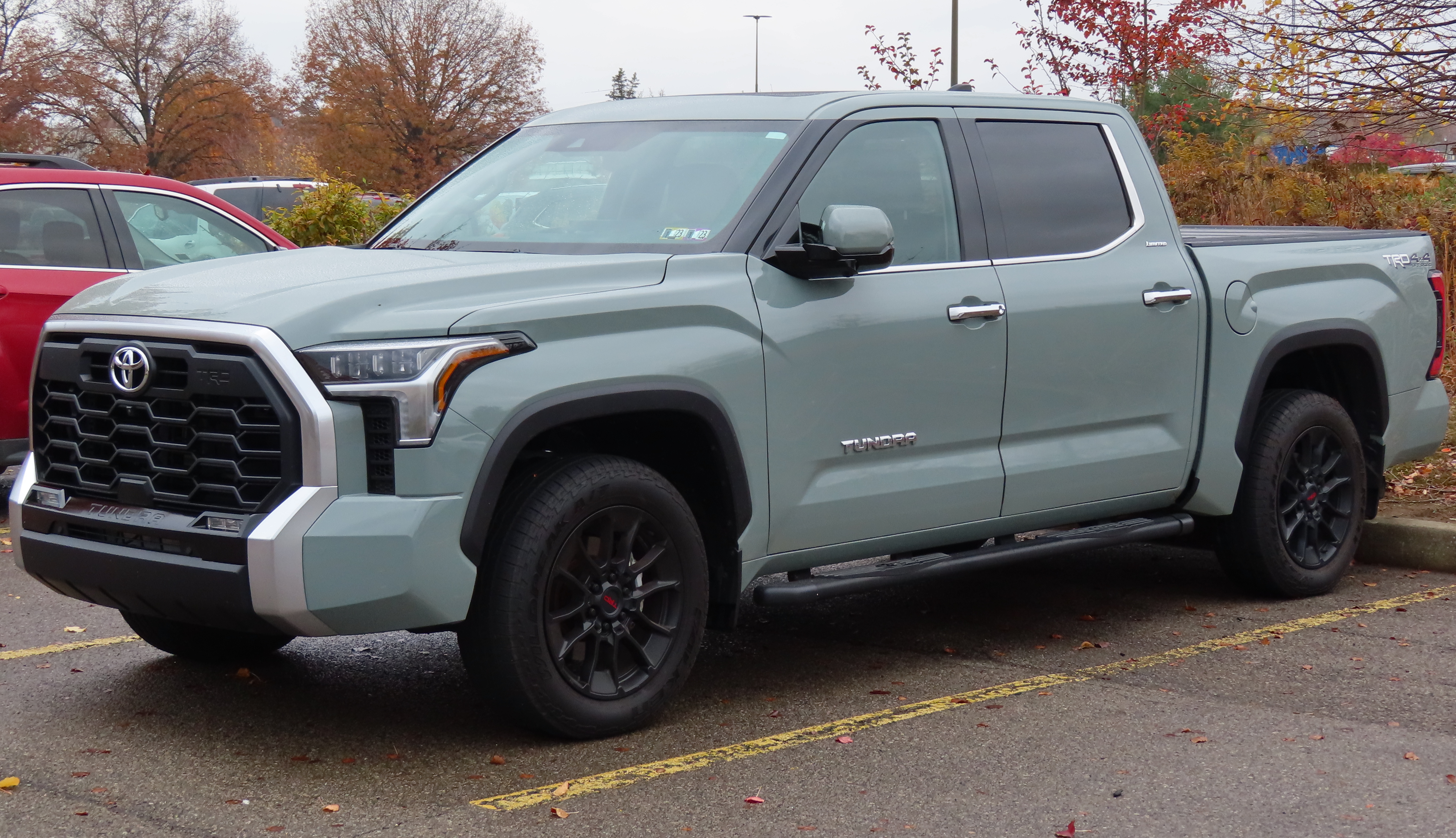
Toyota Tundra
"...east for the American market, would have been the Tundra. But I'm pretty sure those are IFS as well."
The Toyota Tundra is a large pickup truck meant for work and towing, and it can also handle rough roads. The podcast is mentioning its suspension setup, which affects how it rides and how it performs off-road. It’s often discussed because it’s a common choice in the U.S.
The Toyota Tundra is a full-size pickup truck built for towing, hauling, and everyday driving, with off-road capability depending on the trim and setup. It comes up in discussions about what’s popular for the American market, and the mention of IFS points to its front suspension design. That makes it relevant when people talk about how these trucks handle on-road versus rough trails.

Ford F350
"And it's way too big to imagine that. Like, OK, I wheeled an OBS F 350 and that was fine. But this thing is wider and taller"
The Ford F-350 is a big, heavy-duty pickup truck built for towing and hauling. The podcast is saying it’s even larger than another F-350 they’ve used, and that width and height matter when driving off-road. Bigger trucks can be harder to fit through tight spots and over obstacles.
The Ford F-350 is a heavy-duty pickup designed for serious towing and hauling, and it’s physically larger than many other trucks. In the podcast, the speaker contrasts wheeling an older “OBS” F-350 with a newer one, noting that the newer truck is wider and taller—important details for trail clearance and maneuvering. That’s why it comes up in off-road talk: size affects how it fits on obstacles and how it handles on tight trails.
long travel
"You're right. [609.0s] We should probably tell them what we drive. [611.5s] That is a good point. So I have. [614.5s] I wheel a 98 forerunner on long travel. [619.1s] It's a pretty nice truck when the timing is right."
“Long travel” means the suspension is built to let the wheels move farther. That helps the truck stay planted on bumpy trails instead of losing traction.
“Long travel” is an off-road suspension setup designed to increase how far the suspension can move. More wheel travel helps the tires maintain contact over uneven terrain, improving traction and ride control on trails.

2014 F 250 power stroke
"And, you know, water pump is working and stuff. [625.1s] And then I just bought a 2014 F 250 power stroke."
This is a 2014 Ford F-250 with a diesel engine called “Power Stroke.” Diesel trucks like this are popular for off-roading because they pull strongly at low speeds.
A 2014 Ford F-250 with the “Power Stroke” diesel is a heavy-duty pickup known for strong low-end torque and towing capability. In off-road circles, people often choose it because the diesel makes it easier to crawl over obstacles at low speeds.
U-joint
"Sometimes, like the other day, Alex helped me determine that I had a U-joint gone bad and we fixed a U-joint in a couple hours and had it all back in and together and the truck was driving great."
A U-joint is a small connector in the drivetrain that helps the driveshaft keep turning smoothly even when the truck’s suspension moves. If it goes bad, the truck may shake or make knocking noises.
A U-joint (universal joint) is a driveline coupling that lets the driveshaft transfer torque while the angle changes—like when the suspension moves. When a U-joint wears out, you can get vibration, clunks, or driveline noise, and it can eventually fail if ignored.
two and a half, three inch lift
"I have a 2007 Toyota FJ Cruiser [924.3s] on two and a half, three inch lift, [926.6s] Bill Steen's and Wild Peaks. [929.9s] And that's suspension wise, tire wise."
A “lift” means raising the truck higher off the ground. Going up about 2.5 to 3 inches helps it clear obstacles and fit bigger tires for off-road trails.
A suspension “lift” raises the vehicle’s ride height by increasing suspension travel and/or changing suspension components. A 2.5–3 inch lift is a common off-road range that helps with ground clearance and allows larger tires while still being manageable for trail driving and street use.
Wild Peaks
"I have a 2007 Toyota FJ Cruiser [924.3s] on two and a half, three inch lift, [926.6s] Bill Steen's and Wild Peaks. [929.9s] And that's suspension wise, tire wise."
“Wild Peaks” is a brand/model of off-road tire. It’s made to grip better on rough surfaces like dirt, mud, and snow.
“Wild Peaks” refers to Falken’s off-road tire line (Falken WildPeak). These tires are designed for traction on dirt, mud, and snow, and their tread pattern is meant to stay effective in mixed off-road conditions.
winch
"No fancies. Yeah, a winch. [937.5s] That's important. [938.9s] I got one of the. Oh, wait, I don't have one of those right now."
A winch is a motorized cable that can pull your vehicle out if you get stuck. It’s one of the most important tools for off-road recoveries.
A winch is a powered cable system used to pull a vehicle out of mud, sand, or other stuck situations. It’s a key recovery tool because it can apply steady pulling force when another vehicle or tow strap isn’t enough.
front bumper
"No toast. I don't even have a front bumper. [947.3s] No. [948.5s] Alex and I do recoveries around here every once in a while in the winter."
The front bumper is the part at the front that helps protect the vehicle. If it’s missing, it can also affect how you attach recovery gear when you’re stuck.
A front bumper is the vehicle’s front impact protection and a common mounting location for recovery gear like tow points and winch hardware. Off-road, a missing or damaged front bumper can reduce protection and make recoveries harder or riskier.
recoveries
"Alex and I do recoveries around here every once in a while in the winter. [952.8s] Yeah, to help people out. [955.2s] And he might have broken his bumper on a recovery."
“Recoveries” means helping someone get their off-road vehicle unstuck. It usually involves tools and careful pulling so nobody breaks the car further.
In off-roading, “recoveries” are the actions used to get a stuck vehicle moving again using tools like winches, tow straps, traction boards, and proper pulling angles. The goal is to restore mobility while minimizing the risk of damaging driveline components or causing a secondary stuck.
Michigan rust
"Yeah. So, yeah, Michigan rust. [973.1s] And he was pulling a vehicle at a weird angle."
“Michigan rust” means rust problems that are common in cars from snowy, salted-road states. Salt speeds up corrosion, especially underneath the vehicle.
“Michigan rust” is shorthand for the heavy corrosion issues common in vehicles from Michigan due to road salt and harsh winter conditions. Salt accelerates rust on underbody components, frame sections, and suspension hardware—important for off-roaders who see lots of exposure.
trail gear bracket
"I now have a nice new trail gear bracket. And soon there will be a trail gear bumper to go with said bracket."
A trail gear bracket is a metal mount that helps bolt off-road accessories onto the truck. It’s important because it keeps the gear solid when the vehicle hits bumps and twists on trails.
A trail gear bracket is an off-road mounting piece used to attach aftermarket “trail gear” (like recovery or protection accessories) to the vehicle’s frame or body. Brackets matter because they determine how securely the gear is positioned and how well it survives impacts and flex on rough trails.
trail gear bumper
"And soon there will be a trail gear bumper to go with said bracket. I bought 11 time and then I ended up on another truck."
A trail gear bumper is a sturdier, off-road-focused bumper. It’s meant to protect the front of the truck and usually helps with clearance when you’re driving over rocks and ruts.
A trail gear bumper is an aftermarket off-road bumper designed for clearance and durability compared with stock bumpers. It’s often paired with recovery points and skid-protection features, and it can be built to better handle trail impacts.
stinger
"He's getting the stinger. So we're happy about that. It looks better. The other one just looked kind of bare."
In off-road truck setups, a “stinger” is typically a front-end accessory (often a grille/bumper-mounted guard or extended protection piece) that adds protection and a distinctive look. It’s commonly associated with aftermarket front bumpers and recovery-oriented builds, and it can change how the front end visually “fills out” the truck.

Kia Stinger
"...And maybe that's because we were used to seeing a stinger on the front of it. It looks so good on the black..."
The Kia Stinger is a sporty-looking sedan made for more exciting driving than a basic family car. The podcast is talking about how the car’s front design and badge are easy to spot, especially in black. It’s mentioned because it’s visually distinctive.
The Kia Stinger is a performance-oriented sedan that stands out for its sporty styling and driving feel compared with typical sedans. The podcast mentions seeing a “stinger” on the front of something and says it “looks so good on the black,” which points to how recognizable and visually distinctive it is. It’s brought up as a car people notice, even in a conversation that’s otherwise focused on off-road vehicles.
daily driver
"But as a daily driver goes, though, it's still very hard for me to do anything else other than that. So that is the downside to my setup is that I've purposely built it to do this."
A “daily driver” is the car you use every day. The host is saying their setup is great for their camping routine, but it’s harder to use for random errands that require different cargo space.
“Daily driver” means a vehicle you use for everyday errands and commuting, not just for weekend off-roading. The host is pointing out a tradeoff: their build is optimized for quick cooking/storage access, which makes it less flexible for hauling odd items like an office chair or a dolly.
rooftop basket
"that was that was part of why I put the rooftop basket up. Because, like, I was so sick and tired of I'd go to the store and I couldn't get anything like I couldn't get lumber."
A rooftop basket is a rack on top of the vehicle for extra storage. The host added one so they could haul bulky stuff without cluttering the inside of the car.
A rooftop basket is an external cargo rack mounted on the roof that increases storage capacity without taking up interior space. In this segment, it’s used to carry bulky items (like lumber/boxes), which helps the host keep the inside usable for daily-driver tasks.
gazelle tent
"So I have a whole right side that I use to put on my gazelle tent. [1646.4s] But otherwise, when I'm not camping, I have that rooftop space. [1667.7s] So I tried to like, yeah, yeah."
A Gazelle tent refers to a specific brand/model of pop-up or quick-deploy camping tent used for overlanding and off-road trips. In this segment, it’s being secured to a rooftop tent setup, so the speaker is focused on how to keep it from shifting.
rooftop tent
"But otherwise, when I'm not camping, I have that rooftop space. [1650.0s] And I just don't have straps, man. [1652.0s] I got a I had like a bunch of straps in the car"
A rooftop tent is a tent that sits on top of your vehicle. It’s used for camping so you sleep above the ground instead of directly on the dirt.
A rooftop tent is a tent mounted on the roof of a vehicle, typically on a roof rack or platform. Off-road campers use them to keep sleeping gear off the ground, which can help with uneven terrain and wet or bug-prone campsites.
ratchet
"And I'm like, didn't want to like ratchet. [1677.8s] And I'm like, OK, I'm getting auto tensioning ratchets. [1681.1s] Just going to get two of them."
A ratchet is a tool that tightens a strap in small clicks and then holds it tight. People use it to keep gear from moving around—like a tent on a roof rack.
A ratchet is a strap-tightening mechanism that uses a toothed wheel to let you tighten webbing in small steps and then lock it in place. On off-road rigs, ratchets are commonly used to secure cargo or tents to roof racks so they don’t shift while driving.
tailgate
"Most daily, besides I don't have a tailgate [1702.5s] and I have two spare tires to take up most of my bed."
A tailgate is the back door on a pickup truck bed that can swing down. If you don’t have it, loading and unloading can be different.
A tailgate is the hinged door at the back of a pickup truck that swings down to help load and unload cargo. Removing or not having one changes how you access the bed and can affect how you carry bulky gear.
50 pound dogs in a life
"I mean, you've got to stay close. I've had me and two 50 pound dogs in a life. I forgot I was a terrible experience."
They’re talking about how the vehicle has to fit their dogs and still work day-to-day. When people build off-road rigs, the inside layout often changes, so space and weight matter.
This phrase is describing a real-world cargo/fitment constraint—how much bulky weight and space the vehicle interior can accommodate. In off-road setups, interior packaging matters because seats and storage often get modified for gear.
60 percent split
"I've also taken out the 60 percent split and my rear seat and have that flat now."
A split rear seat means the back seat is in two pieces. You can fold one side down to make more room for cargo while leaving the other side up.
A “60/40 split” (or similar) rear seat means the back seat is divided into two sections that can fold independently. That lets you create a flat cargo area while still keeping part of the seating usable.
convert back to stock
"So ironically, yours is the hardest to convert back into a daily, but it's the only one that can get converted back to stock. Yeah. Yeah, it's close enough to stock."
They mean taking the vehicle back to its original, factory setup. It’s about being able to undo the changes so it can be used normally again.
“Convert back to stock” refers to reversing modifications so the vehicle returns to its original factory configuration. In off-road and dog/cargo use cases, this often means removing interior changes (like seat removal or cargo setups) so the vehicle can function like a normal daily driver.
rear seats
"And I love that Toyota made it really easy to take out the the rear seats. It's like two bolts, which is kind of scary, but at the same time, it's cool."
Rear seats are the back-row seats. People remove or fold them to make more room for gear or to create a flat space for sleeping/cargo.
Rear seats are the back-row seating, and in many vehicles they can be removed or folded to create more cargo space. For off-road/dog/camping use, seat removal is a common way to improve storage and make a flat load floor.

FJ
"I love that about the FJ, but it's a very customizable. It's just expensive to customize."
“FJ” is short for the Toyota FJ Cruiser. It’s a rugged off-road Toyota that a lot of people modify, and that can get pricey.
“FJ” here refers to the Toyota FJ Cruiser, a body-on-frame 4x4 known for its rugged, off-road-friendly design and huge aftermarket support. In this segment, the hosts talk about modifying it—especially how easy it is to customize and how expensive that customization can get.
stock shocks
"You could like honestly, if you bought stock shocks and stock wheels and tires, you could go back pretty quick."
“Shocks” are the parts that help smooth out bumps. “Stock shocks” means the original ones that came from the factory.
“Stock shocks” are the factory shock absorbers that come on the vehicle. Off-road builders often swap them for different shocks to better control body movement over bumps and improve traction, then can revert to stock if they want to undo changes quickly.
stock wheels and tires
"You could like honestly, if you bought stock shocks and stock wheels and tires, you could go back pretty quick."
Wheels and tires can be changed for off-roading. “Stock” here means the factory setup, and swapping back is a quick way to undo upgrades.
“Stock wheels and tires” means returning to the factory wheel and tire sizes. Wheel/tire choices strongly affect ride quality, steering feel, and off-road capability, so swapping back to stock is a common way to quickly reverse modifications.
frame snaps in half
"But I plan to wheel this until the frame snaps in half from Michigan winners. And then we'll weld it back together and you'll do it for another two years."
They’re talking about the vehicle’s main metal structure (the frame) breaking from hard use. It’s the kind of problem that can happen when a truck is pushed hard off-road for a long time.
The hosts are describing severe structural failure of a vehicle’s frame—specifically, the frame cracking and eventually “snapping” under repeated off-road stress. This matters because many off-road rigs are modified and driven hard enough that fatigue and weak points can show up over time.
weld it back together
"And then we'll weld it back together and you'll do it for another two years. Yep. So in Michigan, that'll be at about four years."
They mean repairing the broken frame by welding it. That’s a big repair on a truck’s main structure and needs to be done correctly to be safe.
“Weld it back together” refers to repairing a cracked or broken frame by welding the metal back. Frame welding is serious work: it can restore strength, but it also requires correct materials, welding procedure, and inspection to ensure the repair is structurally sound.

Dodge Ram
"...ow to explain this. But anyway, he would take his Dodge Ram after work. There is a car wash, an automatic car..."
The Dodge Ram is a large pickup truck used for everyday driving and for work tasks like towing or hauling. The podcast mentions using an automatic car wash, which is something many owners do because these trucks are used regularly. It’s being brought up as a personal, daily-use vehicle.
The Dodge Ram is a full-size pickup truck, and the podcast references someone taking their Ram after work and using an automatic car wash. That kind of detail usually comes up because owners live with these trucks daily and rely on them for routine use, not just off-road trips. It’s relevant to the conversation because it highlights how a big truck fits into everyday life.
spares strategy for a daily wheeling rig
"So if you're going to daily your wheeling rig, [2118.7s] just buy a second copy of your wheeling rig. [2121.4s] So you have all the spares you could ever need."
They’re talking about how off-roaders plan for breakdowns. If you drive your wheeling truck a lot, you either keep a second rig for parts or carry the most failure-prone parts so you can fix things quickly.
The hosts are describing an off-road spares strategy: if you daily your wheeling rig, you either keep a second complete vehicle for parts or stock spares of the components that commonly fail. The goal is minimizing downtime when trail repairs are needed.
CVs
"So I have a spare set of calipers, CVs, a wheel bearing. [2140.5s] CV is on the list, but I don't have one yet. [2143.4s] Alternator."
CVs are parts that help send power from the drivetrain to the wheels while the suspension moves. When the rubber boots get damaged or water gets in, they wear out faster—so people keep spares for off-roading.
CVs usually refers to constant-velocity joints (and often the CV axles) that let the drivetrain transfer power smoothly while the suspension moves. Off-road impacts, boot tears, and water intrusion can accelerate wear, which is why they’re common “spares” items for wheeling rigs.
wheel bearing
"So I have a spare set of calipers, CVs, a wheel bearing. [2140.5s] CV is on the list, but I don't have one yet. [2143.4s] Alternator."
A wheel bearing helps the wheel rotate smoothly. Rough trails and water can contaminate or damage it, so it can wear out and fail—especially on off-road rigs.
A wheel bearing is the component that allows the wheel to spin with low friction while supporting the vehicle’s weight. Off-road driving can overload bearings through rough terrain, water, and grit, so they’re a frequent failure item and a common candidate for carrying spares.
calipers
"So I have a spare set of calipers, CVs, a wheel bearing. [2140.5s] CV is on the list, but I don't have one yet."
Brake calipers are the parts that squeeze the brake pads against the brake rotors to slow the vehicle down. If they fail or get damaged, having a spare can help you get back on the trail faster.
Calipers are the brake components that clamp brake pads onto a rotor to create stopping force. In off-road use, repeated hard braking and heat cycles can contribute to wear, and some owners keep spares to reduce downtime after failures.
alternator
"CV is on the list, but I don't have one yet. [2143.4s] CVs, a wheel bearing. [2143.4s] Alternator. [2144.9s] Alternator for a Toyota for sure, especially in Michigan. [2148.1s] We're always going through some water."
The alternator is what keeps your car’s battery charged and powers the electronics while the engine is running. Off-roading (bumps, heat, and water) can make it fail more often, so having a spare can prevent getting stranded.
An alternator is the engine-driven generator that powers a vehicle’s electrical system and recharges the battery while you drive. In off-road use—especially with lots of water crossings—alternators can be stressed by moisture, vibration, and heat, which is why some owners keep a spare.
sand-contaminated water
"I did have to replace my pulleys, though, because I went through a bunch of water that had sand in it. We got into my pulleys and so I had to replace a bunch of pulleys."
If water has sand in it, it can act like sandpaper. That grit can get into mechanical parts and cause them to wear out faster.
Sand-contaminated water is a common off-road hazard because abrasive particles can get into moving parts and wear them quickly. Even if the vehicle survives the crossing, components like belt-drive pulleys can develop noise or fail sooner due to the grit.
pulleys
"So you got actual Toyota bearing or pulleys or is it from AutoZone? His rock auto."
Pulleys are wheels that help guide the belt that runs accessories on the engine. If a pulley is worn or not lined up right, the belt can squeal or chirp.
In an engine accessory system, pulleys are wheels that route and guide belts (like the serpentine belt) around different components. If a pulley is worn or misaligned, it can cause noise such as chirping and can accelerate belt wear.
spacer within the gap
"Yeah, even cheaper ones from Riley's and they had a spacer within the gap. So mine just chirps because of it having a weird space."
A spacer is a small piece that sets the right spacing between parts. If the spacing is wrong, the belt can run awkwardly and start making noise.
A spacer within the gap is used to set the correct distance or alignment between parts. In belt-and-pulley setups, incorrect spacing can lead to belt mis-tracking and noise (like chirping), while proper spacing helps the belt run smoothly.
belt
"I still have the old pulleys that still technically work sitting in the truck, same with the belt, just in case."
The belt is the rubber strap that drives important engine accessories. If something about the belt path is off, it can make squealing/chirping noises.
A belt in this context is the engine accessory belt that transfers rotational power to items like the alternator and other accessories. Belts can chirp or slip when components like pulleys have a bad fit, wear, or incorrect spacing.
overlanding trips
"So like I have I have parts in for that because usually when we do our like overlanding trips and stuff, well, we're at a minimum of an hour away."
Overlanding means taking longer trips where you’re more on your own. If something breaks far from town, having spare parts can keep you moving.
Overlanding trips are longer, self-reliant journeys where you may be far from parts and repair shops. That’s why people carry spare wear items (like belts and pulleys) to reduce the chance of being stranded.
rock crawling
"But if you're specifically going somewhere to do [2384.8s] rock crawling or harder trails, trailering makes sense."
Rock crawling is off-roading over rocks and obstacles at low speed. You’re trying to carefully place the tires so you don’t lose traction or get stuck.
Rock crawling is a slow, technical style of off-roading where the goal is to navigate obstacles like rocks, ledges, and uneven terrain with minimal wheel spin. It stresses traction, suspension articulation, and drivetrain durability more than typical trail driving.
harder trails
"But if you're specifically going somewhere to do [2384.8s] rock crawling or harder trails, trailering makes sense. [2388.7s] Yeah. Yeah. [2393.2s] you're very likely going to Moab, very likely break your rig"
“Harder trails” are tougher off-road routes—more rocks, ruts, and steep sections. They’re more likely to cause problems or require recovery help.
“Harder trails” in off-roading usually means routes with steep climbs/descents, deep ruts, rock obstacles, or tight lines that demand more traction and vehicle control. These conditions increase the chance of mechanical issues or getting stuck, which is why people plan around recovery and transport.
trailering
"But if you're specifically going somewhere to do [2384.8s] rock crawling or harder trails, trailering makes sense."
Trailering is when you load your 4x4 onto a trailer and tow it to the trailhead. It’s useful when the trip is long or the trails are so rough you don’t want to risk breaking something on the way.
Trailering means transporting your off-road vehicle on a trailer instead of driving it all the way to the trail. In remote or very difficult areas, it can reduce wear and tear and help you avoid getting stranded after damage.
Moab
"[2393.2s] you're very likely going to Moab, very likely break your rig [2397.1s] out of Moab or something like that for some odd reason. [2401.2s] That's just because it's harder."
Moab is a well-known off-roading area in Utah. A lot of the trails there are tough, so it’s common to plan for possible damage or getting stuck.
Moab refers to the off-road destination in eastern Utah, famous for technical desert trails and rock obstacles. Because many routes are challenging, people often plan for breakage, recovery, and sometimes trailering.
bypass
"[2450.8s] I just don't usually like I will definitely take the bypass seven times out of 10. [2456.9s] If it's like crazy, like usually I could follow behind these guys. [2461.4s] Unless the bypass goes off trail, in which case he does not take the bypass"
In off-roading, a bypass is an alternate route around a difficult obstacle or section of trail. It’s used to keep the group moving when conditions are too risky or when a vehicle can’t safely attempt the main line.
wheeling in the U.P.
"I was watching someone that was wheeling in the U.P. [2602.3s] And stuff that we just drive by, like it's nothing. [2605.4s] They're like, oh, my God, look at this."
“Wheeling” means going off-road and tackling rough ground. “U.P.” is short for Michigan’s Upper Peninsula, which has a lot of rocky, rugged areas.
“Wheeling” is off-road slang for driving a vehicle over rough terrain, typically where traction and obstacle clearance matter more than on-road speed. The “U.P.” refers to Michigan’s Upper Peninsula, which is known for rocky trails and dramatic roadside terrain.
U.P.
"I was watching someone that was wheeling in the U.P. [2602.3s] And stuff that we just drive by, like it's nothing. [2605.4s] They're like, oh, my God, look at this. [2608.1s] Yeah. [2609.0s] So you know, it gets annoyed with me because she's a reader."
“U.P.” stands for Michigan’s Upper Peninsula. People mention it in off-roading because it’s a more rugged, rockier part of Michigan.
“U.P.” is an abbreviation for Michigan’s Upper Peninsula. In off-road conversations, it often comes up because the region has lots of rocky terrain, steep grades, and rugged roads/trails compared with many other parts of the state.
fenders
"until I did some trails that already did it. And now I'm just like, maybe I'll just cut the fenders."
Fenders are the panels around the wheel area. Off-roading can hit them or cause tire rubbing, so people sometimes modify them to avoid damage.
Fenders are the body panels over the wheel openings. On off-road trucks and SUVs, fenders are especially vulnerable to contact with rocks, ruts, or tires—so people often trim or cut them to prevent rubbing and to protect the paint and sheet metal.
viper cut
"Maybe I'll do a viper cut on the bumpers. Like now I don't really care because to me it's they're almost like marks"
A “viper cut” is a common off-road body-trimming style where the bumper or fender is cut to create clearance for tires and suspension travel. It’s named after the distinctive shape associated with that cut style, and it’s used to reduce snagging and rubbing during wheeling.
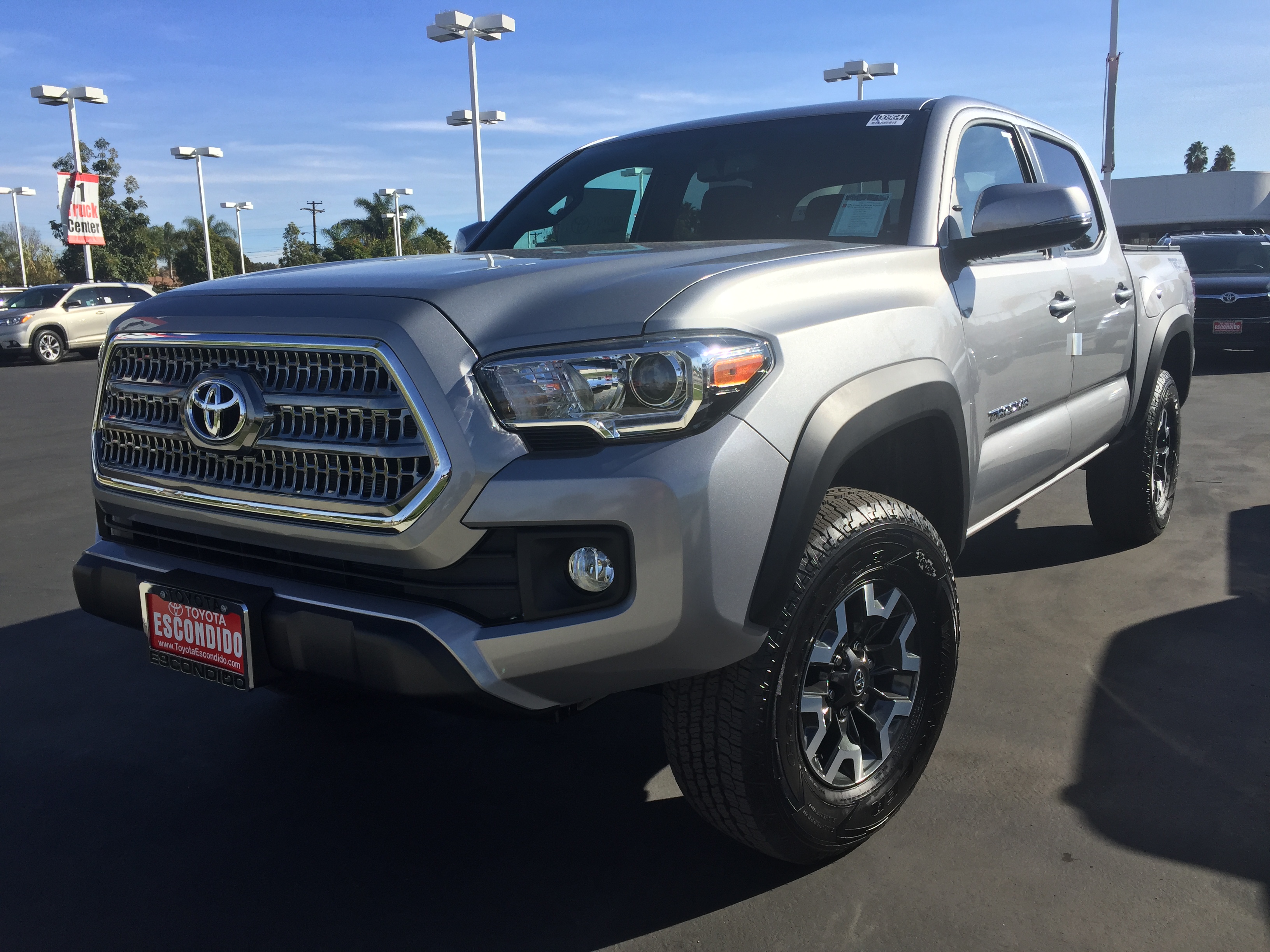
Toyota Tacoma
"Mark, so how long was it after you bought the Tacoma that you crushed that fender on Mike's Little Off-Road? That was a good couple of months."
The Toyota Tacoma is a popular off-road pickup. The speaker is saying they crushed a fender pretty soon after buying it, which is common when you start wheeling.
The Toyota Tacoma is a midsize pickup truck that’s popular in off-road circles because it’s easy to lift, fit with tires, and build for trail use. Here, the speaker references how quickly they damaged a Tacoma fender after buying it, which highlights the reality of trail driving versus “keeping it clean.”
wheel separation
"But that that fourth gen that Tyler just bought, he rolled that whole axle rolled under the truck. Did you see the more broke all the legs completely separated?"
Wheel separation means one wheel can lift off the ground while the other stays down. That can happen when the suspension twists over bumps, especially on solid-axle setups.
Wheel separation is when one wheel loses contact with the ground (or lifts) while the other stays planted. On a solid-axle truck, uneven terrain can cause the axle to twist, increasing the chance of one side unloading and reducing traction.
solid axle
"April Fool's because it's solid axle. No, no, I didn't. Yeah, so more fleets."
A solid axle connects both wheels with one sturdy bar. When you hit uneven ground, the axle moves as a unit, so the truck can feel like it twists and shifts more than independent suspension.
A solid axle is a suspension design where the left and right wheels are connected by a single rigid beam. When one wheel hits a bump, the axle can twist and transfer that motion to the truck, which can make axle “roll” and wheel separation more noticeable off-road.
negative PSI
"It's it's inflation for tracks. The whole negative PSI so that you can. Yeah, negative five PSI to suck you closer to the to the your terrain."
They’re talking about tire pressure being set extremely low—so low that it can behave differently than normal. The idea is to make the tire flatten and grip the ground better on rough terrain.
“Negative PSI” here refers to running tire pressure below atmospheric pressure, which is an unusual setup used to change how the tire deforms. The goal is typically to increase the tire’s contact patch and “suck” the tire down onto soft terrain for better traction.
air bladder
"And it's got a it's got an air bladder in the track inside the tracks. The track itself, but in the components that helps you with traction."
An air bladder is like an internal inflatable cushion. By changing how much air it has, the track/tire can conform to the ground for more grip.
An air bladder is a flexible air chamber inside a tire or track system that can be inflated/deflated to change the tire/track’s shape and compliance. In off-road track setups, that adjustability helps improve traction by letting the system conform to uneven ground.
Request an Explanation
Heard something you'd like explained? We'll add it to this episode.
Sign in to request explanations for terms you heard.
Want to learn more?
Browse our glossary for plain-English explanations of automotive terms, jargon, and concepts.
Help improve this episode
See something that's not quite right? Our annotations are AI-generated and can sometimes miss the mark. Click the flag icon on any annotation to suggest a correction.