
SnailMail: Tinkerer’s Adventure
About this episode
Voicemail Q&A kicks things off with a locker question—air vs Ethan E vs Detroit—plus a quick explanation of how lockers work and what forces they create. The conversation then drifts into real-world trail life: fuel stops, food, and why they wait until dusk to unpack in the Delta heat. Later, the show gets technical on heat management—alternators, heat shields, ceramic coating vs wraps, and prototype testing—before pivoting to Toyota vs Jeep build tradeoffs and even some highway-driving and autonomous-vehicle banter.
- Text 1: Zac from SoCal gives the link for the Air Lockers vs E-Lockers
- Tinkerer’s Adventure: https://youtu.be/A8O6YWIuS-U?si=zwSR1ZnJWP3Ynp4S
- Josh from SoCal loves Zing Zangs Mix
- Zac from SoCal talks about strider bikes for baby Reid
- Richard from Atlanta talks about his dad’s built
- Richard from Atlanta asks about a heat shield
- Nick from MT says how to power merge
- Clint from Chico says Jeeps are like Mustangs
- Richard from Atlanta has invented a new word SICS
Join Our Discord: https://discord.gg/yFyFFkQbuy
Come hang out with us on the SnailTrail4x4 Discord — it’s the easiest way to connect with Tyler and Jimmy directly, chat with fellow offroad enthusiasts, and get first access to Group Buys and Treasure Hunt token drops.
CALL US AND LEAVE US A VOICEMAIL!!!! We want to hear from you even more!!! You can call and say whatever you like! Ask a question, leave feedback, correct some information about welding, say how much you hate your Jeep, and wish you had a Toyota! We will air them all, live, on the podcast! +01-916-345-4744.
An alternative method would be sending us an email at [email protected] or at [email protected]. You can also find us on Instagram at SnailTrail4x4 or 4x4ToyotaTyler
Listener Discount Codes:
SnailTrail4x4 –SnailTrail15 for 15% off SnailTrail4x4 Merch
MORRFlate – snailtraill4x4 to get 10% off MORRFlate Multi Tire Inflation Deflation™ Kits
4WheelUnderground – snailtrail 10% off
Iceco – SnailTrail 12% off
RUSOH Fire Extinguishers – RusohCrawlers discount code gets you 12% off
Ironman 4×4 – snailtrail20 to get 20% off all Ironman 4×4 branded equipment!
Sidetracked Offroad – snailtrail4x4 (lowercase) to get 15% off lights and recovery gear
Spartan Rope – snailtrail4x4 to get 10% off sitewide
Shock Surplus – SNAILTRAIL4x4 to get $25 off any order!
Mob Armor – SNAILTRAIL4X4 for 15% off
SummerShine Supply – ST4x4 for 10%
Backpacker’s Pantry – Affiliate
Laminx Protective Films – Use the Link to get 20% off all products (Affiliate Link)
locker
"here is a link. It's an extremely well done video explaining the difference in lockers, which I pulled it up here. I need lockers, but should I get the air lockers or the Ethan E lockers?"
A locker is a traction device that helps both wheels on the same axle work together. When one wheel starts slipping, the locker helps the other wheel keep pulling. Different locker types behave differently on and off-road.
In off-roading, lockers are drivetrain devices that mechanically “lock” the differential so both wheels on an axle can turn together. That improves traction when one wheel loses grip, but it can change handling on pavement and in tight turns. The episode is specifically comparing different locker brands/types.
oxocker
"So this is the video that everybody's been sending us that explains the difference between the air lockers, E lockers and Detroit lockers or an oxocker or two and kind of the forces behind"
An oxocker is another named locking-differential option people compare when choosing a locker. Different locker designs lock the axle in different ways, which can affect traction and how the truck feels while driving. The point here is that it’s one of several competing locker types.
“Oxocker” appears to be a specific locker product/type being compared in the same conversation as air lockers, E lockers, and Detroit lockers. The important takeaway is that it’s another named locker option with its own engagement behavior and design. The episode implies the video covers how these locker designs differ.
differentials
"And if anybody's interested in learning about different types [180.3s] of lockers, how they work, the forces that play in them. It's a great video."
A differential is what lets the two wheels on the same axle spin at different speeds, like when you turn. Lockers change that behavior to help the truck get traction when a wheel starts slipping.
A differential is the gearbox inside an axle that allows the left and right wheels to rotate at different speeds, especially while turning. Lockers modify or replace that behavior so traction is prioritized over free turning.

Wrangler Rubicon
"...uel station before the Highway 50 trails. Barrett Rubicon is really the only two. So you can go up Strawber..."
The Wrangler is a Jeep SUV designed for off-road trails. People often talk about it in the context of choosing routes and getting through difficult terrain. It’s a common starting point for upgrades that make it better on trails.
“Wrangler” here refers to the Jeep Wrangler, a trail-capable 4x4 SUV that’s widely used as a base for off-road builds. The podcast context mentions trail driving and route planning, which is exactly where the Wrangler’s popularity comes from—its ability to be configured for challenging terrain. It’s also tied to discussions about specific off-road trims and readiness for obstacles.
heat shields
"But anyway, topic first, snail mail, heat shields, heat shields. Just got through working on a vehicle that's been in our family for a very long time."
Heat shields are like protective barriers that help stop heat from spreading to nearby parts. Here, the idea is to keep the alternator from getting cooked by hot engine/exhaust areas.
Heat shields are barriers (often metal or ceramic-coated) used to reduce radiant and conductive heat transfer in the engine bay. In this case, the host is considering placing one between the engine block/cylinder head area and the back of the alternator to protect it from heat soak.
big block Ford
"It's got a big block Ford in it. It's my race and buddy built the motor, so it's totally streetable."
A “big block” is a larger, higher-displacement V8 engine. Larger engines can run hotter and create more heat around the engine bay, so shielding and cooling details matter.
A “big block” Ford refers to Ford’s larger-displacement V8 engine family (as opposed to smaller “small block” V8s). Bigger engines typically make more heat and can be more sensitive to cooling and exhaust heat management, which is why heat shielding and airflow spacing come up.
third generation alternator
"Anyway, got all the good parts and stuff. My question is heat shields. I just had to replace the alternator on it. It's got a 3G or the third generation alternator on it."
They’re talking about a specific version of the alternator. The alternator is getting too much heat from nearby exhaust/header parts, and they’re trying to figure out how to protect it.
“Third generation alternator” refers to a specific revision/generation of an alternator design, which can differ in cooling, mounting, and internal components. The speaker is concerned because the alternator sits very close to the headers, so heat soak may reduce reliability even if the engine itself isn’t overheating.
headers
"But man, the headers that me and a buddy built on it, it's got like inch and 78 headers and all that are awful close to the back of the alternator."
Headers are the exhaust parts bolted to the engine that collect exhaust gases. Because they get very hot, they can heat up nearby components like the alternator.
Headers are exhaust manifolds with individual tubes that route exhaust gases from the engine to the rest of the exhaust system. They can create extreme localized heat near the engine bay, and in this case the headers are described as being very close to the alternator, driving the need for heat shielding and airflow spacing.
aluminum spacer
"And the alternator is bolted obviously to the block and has like a little aluminum spacer."
An aluminum spacer is a small piece that adds spacing between parts. That spacing can change how much heat gets transferred into the alternator area.
An aluminum spacer is a mounting distance piece used to position a component (here, the alternator) away from another surface. Spacers can affect heat transfer by changing how much contact and conduction occurs, and the speaker is weighing how shielding and air gaps might help.
heat soaked
"But man, that Joker gets hot. Like, I mean, just, you know, the whole engine bay gets heat soaked, right?"
Heat soak means heat builds up and stays in the area. Even if the engine isn’t overheating, the alternator can still get too hot after repeated heat exposure.
Heat soak is when a component absorbs and retains heat over time, raising its temperature even if the main system (like engine coolant temperature) isn’t showing an overheat condition. Here, the speaker says the whole engine bay gets heat soaked, which can shorten alternator life.
aluminum radiator
"The vehicle does not run hot. It has a grip and aluminum radiator, dual electric fans, all this stuff."
An aluminum radiator is part of the cooling system that helps move heat out of the engine. They’re saying the engine cooling is fine, but the alternator is still getting too much heat from nearby sources.
An aluminum radiator is a cooling system heat exchanger made primarily from aluminum, which is widely used because it transfers heat efficiently. The speaker notes the engine isn’t running hot thanks to cooling hardware, but the alternator still experiences heat soak from the engine bay.
dual electric fans
"The vehicle does not run hot. It has a grip and aluminum radiator, dual electric fans, all this stuff."
Dual electric fans are two electric cooling fans that help pull air through the radiator. They help keep the engine from overheating, but they don’t necessarily stop heat from cooking the alternator in the engine bay.
Dual electric fans are two electrically driven cooling fans that can improve airflow through the radiator, especially at low speeds or during heat-soak conditions. The speaker uses this to argue the engine temperature is controlled, even though the alternator is still being heated by the engine bay.
air gap
"if I were to put a heat shield between the block and the cylinder head and the back of the alternator, what air gap do I need to have and how effective would that be at removing heat?"
An air gap is the space between the heat shield and the hot parts. More (or properly placed) space can help keep heat from transferring into the alternator area.
An air gap is the space between a heat shield and the nearby hot surfaces/components. Air gaps matter because they reduce direct radiant/convective heat transfer and help define how effectively the shield blocks heat reaching sensitive parts like the alternator.
heat wrap
"There is also the heat wraps. I don't like those. Yeah. I had issues with them. And there's heat wraps on Fiona. And I think I want to take all of them off."
A heat wrap is like a fabric/insulating band you wrap around the exhaust. It’s meant to keep heat from spreading, but if it stays wet it can cause rust on the exhaust.
A heat wrap is an insulating wrap applied around exhaust components (like headers) to reduce heat transfer to surrounding parts. The tradeoff is that wraps can trap moisture, which may promote corrosion on the exhaust tubing if they stay wet.
corrosion on whatever exhaust pipe
"And but your issue was they were getting wet. Yeah. I mean, I think any, any heat exhaust wrap is going to get wet eventually. And just, it just holds that moisture as soon as they get wet, they just hold that moisture and start creating a corrosion on whatever exhaust pipe you have in there."
Corrosion is rusting or metal breakdown. If a heat wrap holds onto moisture, it can make the exhaust pipe rust faster.
Corrosion is the deterioration of metal caused by chemical reactions, often accelerated by moisture. With heat wraps, trapped moisture can increase the likelihood of corrosion on the exhaust pipe underneath the wrap.
clearance
"I would probably leave at least, I'm guessing, a half inch of clearance and then shield it."
Clearance just means leaving a little space between the hot exhaust area and the shield. That gap helps the shield do its job and reduces heat transfer.
Clearance is the intentional space between the heat source (like exhaust/header) and the heat shield. The speaker emphasizes leaving a small air gap so the shield can work without being overheated or touching moving/hot parts.
header configurations
"So the 34 the Toyota three, four, the 5VZ engine, it came in two header configurations."
Headers are the exhaust-manifold parts that collect exhaust gases from the engine. Different “configurations” means Toyota used different header designs over time.
Header configurations are different exhaust-manifold designs used on an engine. Here, the speaker says the 5VZ engine came with two header styles, and later versions used sheet-metal headers with an integrated heat shield.
cast iron configuration
"One was a cast iron configuration that was the earlier style blocks."
This means the exhaust manifold was made from cast iron. It’s a heat-tough material, and its heat behavior can be different from newer thin sheet-metal parts.
A cast iron exhaust-manifold/header design uses cast iron for the exhaust part. Cast iron tends to handle heat well and can have different thermal behavior than later sheet-metal designs, which matters when you’re planning heat shielding.
heat shield on them
"so 2002, 2003, they went to the the sheet metal headers and the sheet metal headers have a heat shield on them."
They’re saying the newer headers already include a heat shield. That built-in shield helps keep heat from spreading as much.
This refers to an integrated heat shield attached to the sheet-metal headers. The speaker uses it to explain typical gap sizes and how the shield reduces heat after the shield surface warms up.
voltage regulator
"Because you've got an external slash infernal voltage regulator that has like, you know, a little Celtic site wire on it. And then obviously your output studs that charges your battery."
A voltage regulator makes sure the alternator charges the battery at the right level. Without it, the battery and other electrical parts can get damaged.
A voltage regulator controls how much charging voltage the alternator outputs so the battery and electronics aren’t over- or under-charged. The speaker mentions an external voltage regulator, implying it’s mounted separately and may be affected by heat shielding and airflow.
output studs
"And then obviously your output studs that charges your battery. But if I were to take up, if there's an inch there..."
Output studs are the heavy-duty electrical connection points on the alternator. They’re where the charging power gets sent to the rest of the electrical system.
Output studs are the threaded terminals on an alternator where high-current electrical output is connected to the vehicle’s wiring and battery charging circuit. They’re mentioned here as part of the alternator assembly that the speaker is trying to protect from heat.
heat tests
"I think it's worth trying. Yeah. I mean, even just mocking up some shitty little quick template that you can throw on and then run some heat tests with it."
“Heat tests” here means measuring how hot something gets while you’re using the vehicle. People do this to see if their idea actually helps with heat problems, not just looks good on paper.
In this context, “heat tests” means checking how hot a component or setup gets under real driving conditions. Off-road and engine-bay tinkering often uses controlled heat testing to see whether a modification actually reduces heat soak or improves thermal performance.
exhaust side
"If you have an inch, you could split the difference or run it just a little bit closer to the exhaust side is what I would suggest. Try to leave as much of an air gap as you can on the cooler side that you have."
“Exhaust side” just means the part of the engine bay near the exhaust. That area gets hotter, so people plan modifications around it to manage heat.
“Exhaust side” refers to the side of the engine bay or component layout that’s closest to the exhaust system. Heat management strategies often target the exhaust side because exhaust components radiate and conduct significant heat.
supercharger
"To which I say you just need a faster car. With enough horsepower, you can do what's called a power merge. And if you hear that, that's supercharger sounds and it makes things go fast."
A “supercharger” is a device that forces extra air into the engine. More air helps the engine make more power, which is why it’s associated with faster acceleration.
A “supercharger” is a forced-induction device that uses engine power to compress incoming air, allowing more oxygen into the engine. More oxygen generally means more fuel can be burned for more power, which is why the host links it to making the car faster and enabling a “power merge.”
power merge
"To which I say you just need a faster car. With enough horsepower, you can do what's called a power merge."
A “power merge” is basically merging into traffic by accelerating hard so you can get up to speed quickly. It’s a casual way of saying “go for it” when you need to merge.
A “power merge” is a slang term for accelerating aggressively to merge into traffic by using strong power and traction. It’s not a formal driving technique name, but it describes using rapid throttle response and acceleration to complete the merge quickly.
JDM transplants
"I was talking to you on Thursday's episode about how the assistance engine is having problems. So I did look up engine replacements from JDM transplants. [1656.8s] And it's like $1,200 for an engine change."
JDM transplants mean using engines from Japanese-market cars for a swap. People do it to get a different engine option without paying for a brand-new replacement.
JDM transplants are engine swaps using parts from Japan Domestic Market vehicles. Enthusiasts often look for JDM engines because they may be cheaper, more available, or have different performance specs than what’s common locally.
VTEC version
"And it's like $1,200 for an engine change. And I was like, that's not bad. Or we could start looking at the VTEC version. Yeah. Put the VTEC version in your car."
VTEC is a system that changes how the engine’s valves work. It helps the engine feel stronger at certain speeds while still being efficient at others.
VTEC (Variable Valve Timing and Lift Electronic Control) is Honda’s system for changing camshaft timing and valve lift to improve performance and efficiency. When someone says “VTEC version,” they mean an engine variant that uses this variable-valve technology.

Ford F350
"Good luck. But no, the Ford, the F350, fuck, I'll pass everybody in that thing. Even if it's loaded, I pass a ton of people."
The Ford F-350 is a big, heavy-duty pickup truck. Here it’s being used as an example of a truck that can merge and pass other cars without feeling slow.
The Ford F-350 is a heavy-duty pickup known for strong towing/hauling capability and highway power. In this segment, it’s used as an example of a truck that can accelerate and pass easily even when loaded.
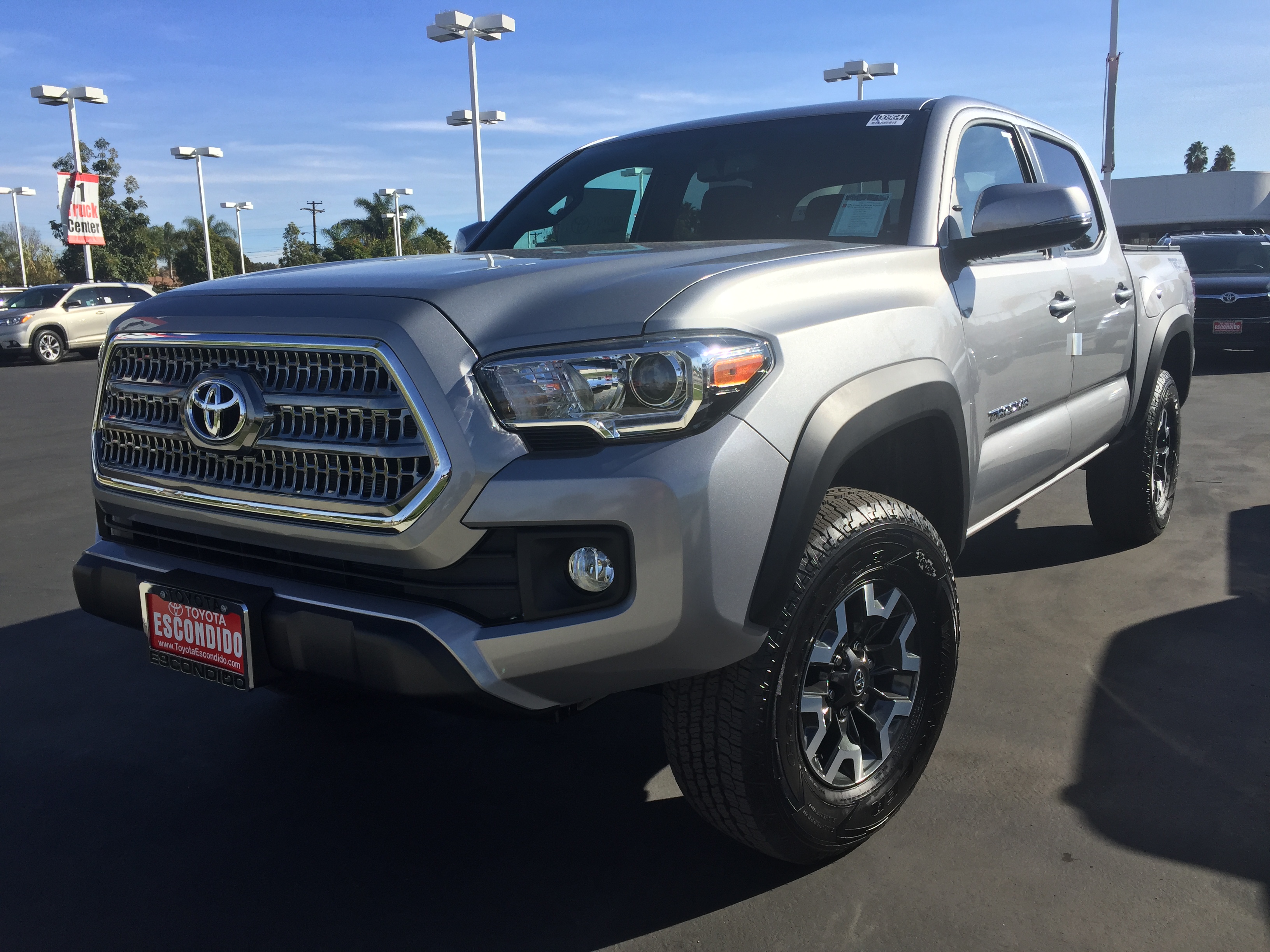
Tacoma
"Even if it's loaded, I pass a ton of people. Yeah. The Tacoma is pretty quick for merging. It's fun."
The Toyota Tacoma is a popular midsize truck. The speaker is saying it’s quick enough to merge into traffic without struggling.
The Toyota Tacoma is a midsize pickup that’s popular for off-road trims and everyday drivability. In this segment, it’s singled out as “pretty quick for merging,” meaning it has enough acceleration to keep up with traffic.
four-wheel drive version of Mustangs
"I've been saying this for a long time, and I've kind of equated it to their four-wheel drive version of Mustangs. They're, I just think they're a dime a dozen. Easy to upgrade, all looking the same,"
They’re comparing Toyota’s 4x4 trucks to Mustangs—meaning they think they’re common and look/feel similar, and they’re easy to upgrade with mods.
This is a comparison framing: the speaker is saying Toyota’s 4x4 lineup feels like the “Mustang” of the off-road world—common, recognizable, and easy to modify. It’s not a technical term, but it’s a specific analogy about how similar the vehicles feel and how mod-friendly they are.
lower center of gravity
"I have the same problems Jimmy does with the lower center of gravity, I guess you should say, than Tyler, and so I agree with him that the higher"
It means the car’s weight sits lower to the ground. A lower weight position usually makes the vehicle feel more stable and less likely to tip over.
“Lower center of gravity” means the vehicle’s mass is positioned closer to the ground. That generally helps stability by reducing how easily the vehicle tips or rolls during cornering, braking, or uneven terrain.
ditch lights
"wolf walks, I keep mine up top, the ditch lights are in my way, so I've got to figure out a way to get those down low."
Ditch lights are extra lights mounted low on the front of an off-road vehicle. They help you see the edges of the trail and obstacles that regular headlights might miss.
Ditch lights are auxiliary off-road driving lights mounted low on the vehicle, often near the grille or bumper corners. They’re aimed to illuminate the sides of the trail and help visibility when navigating ruts, rocks, or uneven ground.
fourth gen
"I'm just keeping things a little bit different. I've got the fourth gen also, love it. Everybody's doing first gen, third gen, all that kind of stuff, but the fourth gen I think is kind of a sleeper."
“Fourth gen” means the fourth version of a vehicle model. Different generations can have different shapes and mounting points, so off-road upgrades may fit differently.
“Fourth gen” refers to the fourth generation of a model line, meaning a specific redesign era with its own body/chassis and engineering changes. In off-road discussions, generation matters because fitment for mods and how the vehicle behaves can differ between generations.

Ford Mustang
"Don't know where to start. That's There's a lot of there like Mustangs. Sure. Yeah. Sure. I agree. Yeah. Sure. Mustangs in the autocross or track world."
They’re talking about Mustangs as a car that’s popular for racing events like autocross. The idea is that it’s easy to start and improve because there are lots of parts and experienced people around it.
The speaker uses Mustangs as an example of a platform that’s easy to get into and succeed with in autocross and track settings. The point is that the Mustang has a large enthusiast base and support ecosystem, making it a common “starter” performance car.
JLs
"like the later year JKs and the JLs, they're having a lot more electronics and engine problems than most of what Toyota puts out nowadays."
“JLs” refers to another Jeep Wrangler generation. The speaker is grouping it with JKs and saying those later Wranglers tend to have more electronics and engine trouble than many Toyotas.
“JLs” is shorthand for the Jeep Wrangler JL generation. Here it’s mentioned alongside JKs as part of the host’s claim that later Wrangler models have more electronics and engine problems than most Toyotas.
JK's
"I think that there's some of the, especially in the later models, like the later year JKs and the JLs, they're having a lot more electronics and engine problems..."
“JKs” is just a nickname for a certain Jeep Wrangler generation. The speaker is saying that those later Wranglers had more issues with electronics and engines compared to many Toyotas.
“JKs” is shorthand for the Jeep Wrangler JK generation. In this segment, the host claims later JK (and JL) Wranglers have more electronics and engine problems than most Toyotas.
3VZ engine
"Barring, except for the 3.0, the 3VZ engine that Toyota did, pretty much any engine and drivetrain setup you get in a Toyota is going to work really well."
The “3VZ engine” is a specific Toyota V6 engine family. The speaker is saying that, unlike many other Toyota engines they’re talking about, this one is an exception that tends to be more dependable.
The “3VZ engine” refers to Toyota’s 3.0-liter V6 (the 3VZ-E family) that the host treats as an exception—suggesting it’s reliable compared with other Toyota engines/drivetrains they’re contrasting against. They’re using it to qualify their broader point about Toyota powertrain reliability.
suspension travel
"You just need to get a little bit more gearing and a little bit more suspension travel out of them. And unfortunately, in order to get the suspension travel out of Toyotas, there's some pretty heavy modifications..."
Suspension travel is how much the suspension can move up and down before it runs out of range. More travel generally helps an off-road vehicle keep tires in contact over bumps and ruts, which is why the host repeatedly compares Toyota vs Jeep setups in terms of how much travel they can achieve.
Panhard brackets
"and very reliable suspension travel and except for their Panhard brackets and the sector shaft on the steering boxes."
Panhard brackets are metal parts that help keep a solid front or rear axle from shifting sideways. The speaker is saying those brackets are one of the few Jeep areas that can be problematic.
Panhard brackets are part of a solid-axle suspension’s lateral location system, helping control side-to-side movement. The host calls out that Jeeps have issues “except for” their Panhard brackets, implying they’re a known weak point compared with other aspects of the setup.
sector shaft
"except for their Panhard brackets and the sector shaft on the steering boxes."
The sector shaft is a steering part inside the steering box that helps turn the wheels. The speaker is pointing to it as another spot that can cause trouble on Jeeps.
The sector shaft is a steering component used in many steering box designs, converting rotational motion into the steering linkage’s movement. The host mentions it alongside Panhard brackets as a Jeep-specific exception/known issue area.
transfer cases
"and they come with pretty good gearing for 4.0 in the transfer cases and lockers already front and rear setup solid axle."
A transfer case is the part that sends engine power to both the front and rear axles on a 4x4. It also provides low-range gearing for slow, tough trail driving.
Transfer cases split power to the front and rear axles on 4x4 vehicles and often provide low-range gearing for crawling. The host credits Jeeps with “good gearing” in the transfer cases for 4.0 (likely referring to a crawl gear ratio/4.0-related gearing context).
solid axle
"lockers already front and rear setup solid axle."
A solid axle is a heavy-duty axle design where the wheels are connected by a rigid bar. Off-roaders like it because it can flex and keep tires planted over rough ground.
A solid axle is an axle assembly where the wheels are connected by a rigid beam, allowing both sides to move together in a way that’s often favored for off-road durability and articulation. The host notes Jeeps have a solid axle setup, tying it to good suspension travel and tire contact.
Jeep Wrangler Rubicon
"So you have good travel, you've got good articulation with the Rubicon version, correct? ... And so if you want to make them better, and you're going to put in the time and effort to make something more capable than a stock Wrangler Rubicon..."
The Jeep Wrangler Rubicon is a factory off-road trim known for trail-focused hardware like locking differentials and crawl-friendly gearing. In this segment, the host uses it as the benchmark for articulation and overall capability when comparing to Toyota builds.
articulation
"So you have good travel, you've got good articulation with the Rubicon version, correct?"
Articulation is how well the suspension lets the wheels move over bumps without lifting off the ground. More articulation usually means better traction on uneven trails.
Articulation is how well a vehicle’s suspension allows the wheels to move independently over uneven terrain, keeping tires on the ground. The host specifically ties articulation to the Jeep Wrangler Rubicon’s off-road capability.
lift
"You just, you need to add a little bit of a lift, like a two and a half, three inch lift is all you really need for a Jeep to get 40s."
A lift is a modification that raises the truck or Jeep higher off the ground. The speaker is saying you don’t necessarily need a huge lift—just a few inches—to fit bigger tires.
A lift is an off-road suspension modification that raises ride height, typically using lift kits like taller springs or spacers. The host says a Jeep only needs a “two and a half, three inch lift” to run 40s, emphasizing how lift height and tire size work together for clearance.
40s
"like a two and a half, three inch lift is all you really need for a Jeep to get 40s."
“40s” means very large tires—about 40 inches tall. Bigger tires usually require a lift and other setup changes to fit safely and clear the suspension.
“40s” is off-road shorthand for 40-inch class tires, a common way enthusiasts describe very large tire sizes. The host connects the ability to run 40s to lift height and overall build effort when comparing Jeep vs Toyota trail builds.
Dana 44 axle
"For sure. Carl Myers Jeep was on 44 Dana 44 axles. Yeah. And all the years he had it and he did some pretty rough wheeling in that Jeep."
Dana 44 is the name of a type of heavy-duty axle used on off-road trucks. It’s popular because it can handle rough trail abuse better than weaker axle setups.
Dana 44 is a specific axle model used in many 4x4s, known for being a common upgrade target in off-road builds. The “axle shaft” and axle strength matter a lot for rock crawling because impacts and torque can break weaker shafts.
axle shaft
"And I think he only ever broke one axle shaft. Yeah. So I would assume most people are going to go to 60s though."
An axle shaft is the part that actually spins the wheels when the truck is driving. If it’s not strong enough for the trail, it can break under hard use.
An axle shaft is the rotating part inside the axle that transfers drive torque from the differential out to the wheels. In off-roading, axle shafts can snap if the tires bind, traction is lost, or the axle setup isn’t strong enough for the abuse.
60s
"So I would assume most people are going to go to 60s though. Yeah. Most people, I think. Yeah. Yeah. And with the Toyota, you're going to go to 60s."
In this conversation, “60s” means going to a stronger axle setup than a Dana 44. People do it when they’re breaking parts or want more strength for tougher trails.
“60s” here is shorthand for upgrading to Dana 60 axles (or similar “60-series” axle strength). Off-road builders often move from a Dana 44 to a Dana 60 when they want more durability for rock crawling and harder wheeling.
independent suspension
"The problem is with the Toyota, you've got to rip out the independent suspension and fabricate your own. And there's not many, I don't know, even know if there's a kit out there for linking the front end of a Tacoma."
Independent suspension is a setup where each wheel moves more on its own. For serious off-roading, some builders swap it out because a solid axle can be stronger and easier to upgrade for crawling.
Independent suspension means each wheel can move somewhat separately, rather than being tied together by a solid axle. For rock crawling builds, many people remove it (or replace it) because solid axles can offer better articulation and simpler strength upgrades.
fabricate your own
"The problem is with the Toyota, you've got to rip out the independent suspension and fabricate your own. And there's not many, I don't know, even know if there's a kit out there"
“Fabricate your own” means building custom parts rather than buying a bolt-on kit. In this segment, the host says the Toyota conversion may require custom fabrication to replace the independent suspension and achieve the desired axle/link setup.
Align the front end
"And there's not many, I don't know, even know if there's a kit out there for linking the front end of a Tacoma. Whereas Jeeps, you're going to rip out two axles and you just have to swap in two more axles"
“Linking the front end” refers to converting the front suspension/axle setup to use link-style control arms (common in rock-crawling builds) rather than the stock independent suspension geometry. The goal is usually to improve articulation and control at low speeds over obstacles.
IFS setup
"or you could do RCLT or portals. Yeah. On a Toyota, on an IFS setup. So yeah, but is that as good?"
IFS means the front wheels are mounted so they can move independently. The discussion is about how converting an IFS truck to a more hardcore off-road axle setup takes more work than on some Jeep solid-axle platforms.
IFS stands for independent front suspension, a common Toyota truck layout where the front wheels are not connected by a solid axle. The speaker is contrasting how much fabrication is needed to convert an IFS Toyota to a linked/solid-axle style front end.
RCLT
"or you could do RCLT or portals. Yeah. On a Toyota, on an IFS setup. So yeah, but is that as good? I think it's pretty decent."
RCLT is a suspension modification mentioned for improving how much the wheels can move on rough terrain. In this discussion, they’re saying it helps wheel travel, but it may not be as strong as a full Dana 60 axle setup.
RCLT is an off-road suspension modification acronym the speaker uses in the context of wheel travel and rock crawling. The key takeaway from this segment is that it’s a way to improve articulation/wheel movement on a Toyota IFS setup, though the host compares its strength to a Dana 60.
portals
"or you could do RCLT or portals. Yeah. On a Toyota, on an IFS setup. So yeah, but is that as good?"
Portal axles (often shortened to “portals”) use gear reduction at the wheel ends, raising ground clearance while still allowing the axle to drive the wheels. The speaker groups portals with other modifications for Toyota IFS setups, implying they’re used to gain clearance and crawling capability.
Dana 60
"I think RCLT has a pretty decent amount of wheel travel. I don't think it's quite as strong as a Dana 60 for an axle for sure, for rock crawling purposes, but it's easier to do."
Dana 60 refers to a heavier-duty axle model commonly used in serious off-road builds. In this segment, the host treats Dana 60 as a benchmark for axle strength for rock crawling, even if other approaches (like RCLT) can be easier to install.
wheel travel
"I think RCLT has a pretty decent amount of wheel travel. I don't think it's quite as strong as a Dana 60 for an axle for sure, but it's easier to do."
Wheel travel is how far a suspension component can move up and down (or through its range) while keeping the tire in contact with the ground. More wheel travel generally helps off-road vehicles maintain traction over uneven rocks and ruts.
Jeep Wrangler cab
"I agree. And I just, I think that still to me, it still comes down to the comfort of the cab and space in the cab. I would still rather have a Toyota cab over a Jeep Wrangler cab."
The Jeep Wrangler has a distinct, boxy cabin and a very “open” off-road vibe. The host is saying they personally prefer the Toyota cab feel over the Wrangler’s cab layout.
The Jeep Wrangler is known for its boxy, open-air style and removable top/doors, which strongly affects how the cab feels and how much interior space you have. Here, the host is comparing cab comfort/space between a Toyota and a Wrangler.

Jeep Gladiator
"...p Wrangler cab. Pretty much any day. What about a Gladiator? I'd still probably prefer like a third gen Tacom..."
The Jeep Gladiator is a pickup truck that’s built for off-road driving. It’s related to the Wrangler, but it has a truck bed instead of an SUV body. In the podcast, it’s compared to other off-road trucks based on what people want to do on trails.
The Jeep Gladiator is a pickup truck version of the Wrangler platform, combining open-air off-road capability with a truck bed. It’s discussed as an alternative to other trail-focused pickups, with the episode context suggesting a preference for a third-gen Tacoma for certain needs. The Gladiator’s significance is that it brings Wrangler-style 4x4 hardware to a more utility-oriented body.
speed differential
"But it's when idiots get on there and have a very large speed differential either high or low that and, and are just being inconsiderate pricks on the freeway."
Speed differential is the difference in speed between vehicles on the same road. On highways, a small speed differential is safer because cars are moving more predictably relative to each other; a large differential increases the risk of crashes during lane changes and merges.
AI Drive
"So I really like your idea of letting AI drive all the cars. I was literally going to say that let AI have control of all the cars so that every car is like six inches away from each bumper and all the cars are interconnected."
“AI drive” means using computer intelligence to control the car instead of a person. The idea is that computers could keep cars spaced and behaving more consistently than human drivers.
“AI drive” here refers to using artificial intelligence to control vehicles automatically. The host’s point is that if AI manages spacing and driving behavior consistently, it could reduce human error like aggressive weaving and unsafe speed changes.
interconnected
"I was literally going to say that let AI have control of all the cars so that every car is like six inches away from each bumper and all the cars are interconnected."
“Interconnected” here means cars can share information with each other. The goal is for them to coordinate so they don’t act unpredictably around each other.
In this context, “interconnected” means vehicles communicate with each other so they can coordinate actions like speed and spacing. That kind of vehicle-to-vehicle communication is a key ingredient in advanced driver-assistance and automated driving concepts.

1973 BMW 2002
"I like that idea, but I'm going to be that one dude with a carbureted 1973 BMW 2002 that it can't be controlled."
A 1973 BMW 2002 is a classic small BMW that many car fans love for being simple and fun to drive. The host brings it up to make a joke that an old, carbureted car wouldn’t fit neatly into an AI-controlled traffic system.
The BMW 2002 (here, a 1973) is a classic compact “Neue Klasse” that’s famous for its simple, driver-focused feel and strong enthusiast following. In this segment, it’s mentioned as a carbureted older BMW, which highlights how older engine setups can be less compatible with modern driver-assist or AI-style control systems.
carbureted
"I like that idea, but I'm going to be that one dude with a carbureted 1973 BMW 2002 that it can't be controlled."
“Carbureted” means the engine uses a carburetor to mix fuel and air. It’s an older style of fueling, and it can be less “smart” than modern fuel-injected setups.
A carbureted engine uses a carburetor to mix fuel and air before it enters the engine. Compared with modern fuel injection, carburetion is generally less precise and can be harder to integrate with today’s electronic control systems.
autonomous vehicles
"once AI starts driving everybody's vehicle, fucktards like that aren't going to be able to do it. And you're going to have to plan your life around it"
Autonomous vehicles are self-driving cars. They use sensors and computers to make driving decisions so you don’t have to steer or control the car the whole time.
Autonomous vehicles are cars that can drive themselves using sensors (like cameras and radar) and onboard computing. The idea is that the vehicle handles steering, speed control, and decision-making without a human actively driving.
stop sign
"There won't be stop signs or won't, there may be roundabouts, but there probably doesn't even need to be."
Stop signs are signs at intersections that tell drivers to fully stop. The speaker is saying self-driving cars might coordinate so they don’t need to stop the same way.
Stop signs are traffic control devices that require vehicles to come to a complete stop at an intersection. In the speaker’s imagined autonomous future, the car-to-car coordination would reduce or eliminate the need for human-style full stops.
roundabouts
"there may be roundabouts, but there probably doesn't even need to be."
A roundabout is a circular intersection where cars keep moving around in a loop. The speaker is imagining self-driving cars coordinating so traffic can flow without as many traditional intersection rules.
Roundabouts are circular intersections where traffic flows continuously around a loop, typically yielding to vehicles already in the roundabout. The speaker suggests autonomous control could make even these less necessary in some scenarios.
vehicle-to-vehicle coordination
"Like there's no stopping. They're all moving at a very high rate of speed. And if one needs to merge in and get in and out of traffic or something like the others around it, kind of slow down and make space"
Vehicle-to-vehicle coordination is when cars communicate or otherwise coordinate their driving actions so they can merge, pass, and adjust speed smoothly. The speaker’s point is that this would reduce stopping and keep traffic flowing efficiently.

Cordoba Cordova
"...ere's a massive data center getting put in Rancho Cordova. Rancho Cordova opened up a property to a data ce..."
In the podcast, “Cordoba” seems to be a place name (Rancho Cordova) connected to a data center. It doesn’t sound like a specific car model is being discussed. If you meant a particular vehicle called Cordoba, share the full name and I’ll explain that car.
“Cordoba” in the podcast context appears to refer to Rancho Cordova, a location mentioned alongside a data center project. Since the conversation is about infrastructure development rather than a vehicle, the term doesn’t clearly identify a specific car model. It’s likely included due to the place name rather than an automotive reference.
Request an Explanation
Heard something you'd like explained? We'll add it to this episode.
Sign in to request explanations for terms you heard.
Want to learn more?
Browse our glossary for plain-English explanations of automotive terms, jargon, and concepts.
Help improve this episode
See something that's not quite right? Our annotations are AI-generated and can sometimes miss the mark. Click the flag icon on any annotation to suggest a correction.