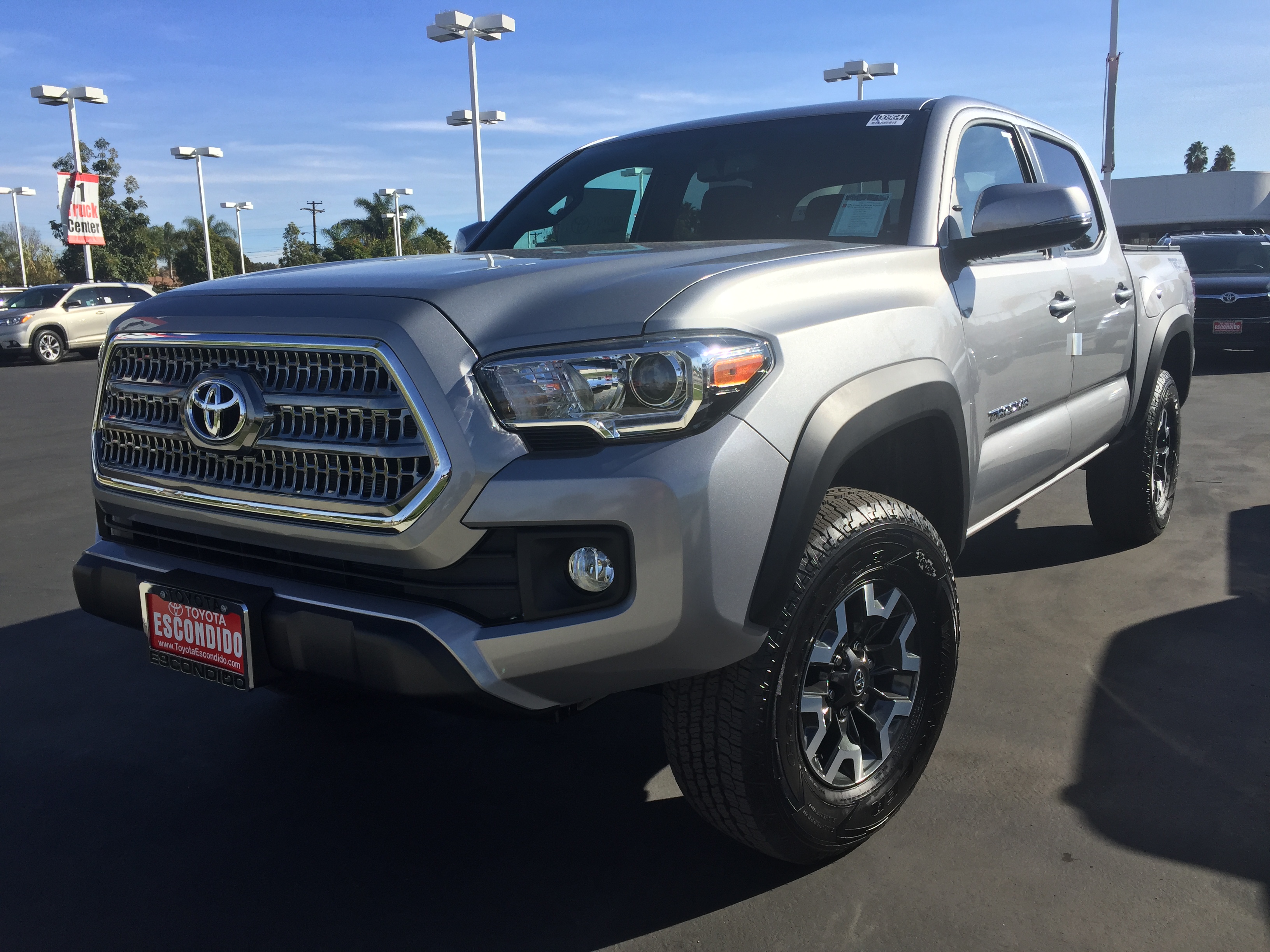
A locker is a traction device that helps both wheels on the same axle work together. When one wheel starts slipping, the locker helps the other wheel keep pulling. Different locker types behave differently on and off-road.
Term
oxocker
An oxocker is another named locking-differential option people compare when choosing a locker. Different locker designs lock the axle in different ways, which can affect traction and how the truck feels while driving. The point here is that it’s one of several competing locker types.
A differential is what lets the two wheels on the same axle spin at different speeds, like when you turn. Lockers change that behavior to help the truck get traction when a wheel starts slipping.
The Wrangler is a Jeep SUV designed for off-road trails. People often talk about it in the context of choosing routes and getting through difficult terrain. It’s a common starting point for upgrades that make it better on trails.
Heat shields are like protective barriers that help stop heat from spreading to nearby parts. Here, the idea is to keep the alternator from getting cooked by hot engine/exhaust areas.
A “big block” is a larger, higher-displacement V8 engine. Larger engines can run hotter and create more heat around the engine bay, so shielding and cooling details matter.
They’re talking about a specific version of the alternator. The alternator is getting too much heat from nearby exhaust/header parts, and they’re trying to figure out how to protect it.
Headers are the exhaust parts bolted to the engine that collect exhaust gases. Because they get very hot, they can heat up nearby components like the alternator.
Heat soak means heat builds up and stays in the area. Even if the engine isn’t overheating, the alternator can still get too hot after repeated heat exposure.
An aluminum radiator is part of the cooling system that helps move heat out of the engine. They’re saying the engine cooling is fine, but the alternator is still getting too much heat from nearby sources.
Dual electric fans are two electric cooling fans that help pull air through the radiator. They help keep the engine from overheating, but they don’t necessarily stop heat from cooking the alternator in the engine bay.
An air gap is the space between the heat shield and the hot parts. More (or properly placed) space can help keep heat from transferring into the alternator area.
A heat wrap is like a fabric/insulating band you wrap around the exhaust. It’s meant to keep heat from spreading, but if it stays wet it can cause rust on the exhaust.
Clearance just means leaving a little space between the hot exhaust area and the shield. That gap helps the shield do its job and reduces heat transfer.
Headers are the exhaust-manifold parts that collect exhaust gases from the engine. Different “configurations” means Toyota used different header designs over time.
This means the exhaust manifold was made from cast iron. It’s a heat-tough material, and its heat behavior can be different from newer thin sheet-metal parts.
Term
heat shield on them
They’re saying the newer headers already include a heat shield. That built-in shield helps keep heat from spreading as much.
A voltage regulator makes sure the alternator charges the battery at the right level. Without it, the battery and other electrical parts can get damaged.
Output studs are the heavy-duty electrical connection points on the alternator. They’re where the charging power gets sent to the rest of the electrical system.
“Heat tests” here means measuring how hot something gets while you’re using the vehicle. People do this to see if their idea actually helps with heat problems, not just looks good on paper.
A “supercharger” is a device that forces extra air into the engine. More air helps the engine make more power, which is why it’s associated with faster acceleration.
A “power merge” is basically merging into traffic by accelerating hard so you can get up to speed quickly. It’s a casual way of saying “go for it” when you need to merge.
JDM transplants mean using engines from Japanese-market cars for a swap. People do it to get a different engine option without paying for a brand-new replacement.
The Ford F-350 is a big, heavy-duty pickup truck. Here it’s being used as an example of a truck that can merge and pass other cars without feeling slow.
Ditch lights are extra lights mounted low on the front of an off-road vehicle. They help you see the edges of the trail and obstacles that regular headlights might miss.
“Fourth gen” means the fourth version of a vehicle model. Different generations can have different shapes and mounting points, so off-road upgrades may fit differently.
They’re talking about Mustangs as a car that’s popular for racing events like autocross. The idea is that it’s easy to start and improve because there are lots of parts and experienced people around it.
“JLs” refers to another Jeep Wrangler generation. The speaker is grouping it with JKs and saying those later Wranglers tend to have more electronics and engine trouble than many Toyotas.
“JKs” is just a nickname for a certain Jeep Wrangler generation. The speaker is saying that those later Wranglers had more issues with electronics and engines compared to many Toyotas.
The “3VZ engine” is a specific Toyota V6 engine family. The speaker is saying that, unlike many other Toyota engines they’re talking about, this one is an exception that tends to be more dependable.
Suspension travel is how much the suspension can move up and down before it runs out of range. More travel generally helps an off-road vehicle keep tires in contact over bumps and ruts, which is why the host repeatedly compares Toyota vs Jeep setups in terms of how much travel they can achieve.
Panhard brackets are metal parts that help keep a solid front or rear axle from shifting sideways. The speaker is saying those brackets are one of the few Jeep areas that can be problematic.
The sector shaft is a steering part inside the steering box that helps turn the wheels. The speaker is pointing to it as another spot that can cause trouble on Jeeps.
A transfer case is the part that sends engine power to both the front and rear axles on a 4x4. It also provides low-range gearing for slow, tough trail driving.
A solid axle is a heavy-duty axle design where the wheels are connected by a rigid bar. Off-roaders like it because it can flex and keep tires planted over rough ground.
The Jeep Wrangler Rubicon is a factory off-road trim known for trail-focused hardware like locking differentials and crawl-friendly gearing. In this segment, the host uses it as the benchmark for articulation and overall capability when comparing to Toyota builds.
Articulation is how well the suspension lets the wheels move over bumps without lifting off the ground. More articulation usually means better traction on uneven trails.
A lift is a modification that raises the truck or Jeep higher off the ground. The speaker is saying you don’t necessarily need a huge lift—just a few inches—to fit bigger tires.
Dana 44 is the name of a type of heavy-duty axle used on off-road trucks. It’s popular because it can handle rough trail abuse better than weaker axle setups.
An axle shaft is the part that actually spins the wheels when the truck is driving. If it’s not strong enough for the trail, it can break under hard use.
In this conversation, “60s” means going to a stronger axle setup than a Dana 44. People do it when they’re breaking parts or want more strength for tougher trails.
Independent suspension is a setup where each wheel moves more on its own. For serious off-roading, some builders swap it out because a solid axle can be stronger and easier to upgrade for crawling.
Term
fabricate your own
“Fabricate your own” means building custom parts rather than buying a bolt-on kit. In this segment, the host says the Toyota conversion may require custom fabrication to replace the independent suspension and achieve the desired axle/link setup.
“Linking the front end” refers to converting the front suspension/axle setup to use link-style control arms (common in rock-crawling builds) rather than the stock independent suspension geometry. The goal is usually to improve articulation and control at low speeds over obstacles.
IFS means the front wheels are mounted so they can move independently. The discussion is about how converting an IFS truck to a more hardcore off-road axle setup takes more work than on some Jeep solid-axle platforms.
Term
RCLT
RCLT is a suspension modification mentioned for improving how much the wheels can move on rough terrain. In this discussion, they’re saying it helps wheel travel, but it may not be as strong as a full Dana 60 axle setup.
Portal axles (often shortened to “portals”) use gear reduction at the wheel ends, raising ground clearance while still allowing the axle to drive the wheels. The speaker groups portals with other modifications for Toyota IFS setups, implying they’re used to gain clearance and crawling capability.
Dana 60 refers to a heavier-duty axle model commonly used in serious off-road builds. In this segment, the host treats Dana 60 as a benchmark for axle strength for rock crawling, even if other approaches (like RCLT) can be easier to install.
Wheel travel is how far a suspension component can move up and down (or through its range) while keeping the tire in contact with the ground. More wheel travel generally helps off-road vehicles maintain traction over uneven rocks and ruts.
The Jeep Wrangler has a distinct, boxy cabin and a very “open” off-road vibe. The host is saying they personally prefer the Toyota cab feel over the Wrangler’s cab layout.
The Jeep Gladiator is a pickup truck that’s built for off-road driving. It’s related to the Wrangler, but it has a truck bed instead of an SUV body. In the podcast, it’s compared to other off-road trucks based on what people want to do on trails.
Speed differential is the difference in speed between vehicles on the same road. On highways, a small speed differential is safer because cars are moving more predictably relative to each other; a large differential increases the risk of crashes during lane changes and merges.
“AI drive” means using computer intelligence to control the car instead of a person. The idea is that computers could keep cars spaced and behaving more consistently than human drivers.
“Interconnected” here means cars can share information with each other. The goal is for them to coordinate so they don’t act unpredictably around each other.
A 1973 BMW 2002 is a classic small BMW that many car fans love for being simple and fun to drive. The host brings it up to make a joke that an old, carbureted car wouldn’t fit neatly into an AI-controlled traffic system.
“Carbureted” means the engine uses a carburetor to mix fuel and air. It’s an older style of fueling, and it can be less “smart” than modern fuel-injected setups.
Autonomous vehicles are self-driving cars. They use sensors and computers to make driving decisions so you don’t have to steer or control the car the whole time.
Stop signs are signs at intersections that tell drivers to fully stop. The speaker is saying self-driving cars might coordinate so they don’t need to stop the same way.
A roundabout is a circular intersection where cars keep moving around in a loop. The speaker is imagining self-driving cars coordinating so traffic can flow without as many traditional intersection rules.
Vehicle-to-vehicle coordination is when cars communicate or otherwise coordinate their driving actions so they can merge, pass, and adjust speed smoothly. The speaker’s point is that this would reduce stopping and keep traffic flowing efficiently.
In the podcast, “Cordoba” seems to be a place name (Rancho Cordova) connected to a data center. It doesn’t sound like a specific car model is being discussed. If you meant a particular vehicle called Cordoba, share the full name and I’ll explain that car.
LIVE
You have reached the snail trail 4x4 podcast voicemail.
If you want to leave some feedback about Toyotas, have questions about Toyotas, maybe poke some
fun at Toyotas, or let us know how your JL came with a Starbucks membership, then leave
it all on the line and we'll get to it on the podcast.
Keep crawling.
What's up, everybody? Welcome to Snail Mail. Snail Mail. This is the part of the podcast
where we go and listen to voicemails from you guys. You can give us a call at 916-345-4744
and leave us your feedback, leave us comments, leave us your life stories. Tell us about
camping versus glamping. It's all good, all fun stuff that we get to listen to you guys
and have another kind of interaction point with you guys. We go and listen to those voicemails
and we don't screen them. We don't listen to them first. That way you guys kind of get
our genuine reactions. If it's a really, really bad voicemail, we just never play it.
That's happened once.
I think it's only happened once. It wasn't that it was really a bad voicemail. It was
just like five of them in a row. It was getting a little repetitive. We're like, we don't
need to play the fifth one. Yeah. So, all right. Let's see where we're at here. We
have 54 voicemails. Wow. And seven text messages. All right. So we are ready for a text message.
All right. We ended with 46 last time. Jesus Christ. All right. Well, keep calling in guys.
We'll get to him eventually. It's this voicemail. I think it's from Zach from SoCal. Oh, okay.
Cause he called in last time and he said, sorry, I left a partially incoherent voicemail
where I recommended a YouTube video. I think I messed up the name of the channel. So here
is a link. It's an extremely well done video explaining the difference in lockers, which
I pulled it up here. I need lockers, but should I get the air lockers or the Ethan E lockers? So
this is the video that everybody's been sending us that explains the difference between the air
lockers, E lockers and Detroit lockers or an oxocker or two and kind of the forces behind
them to force them to actuate and how they function. So got it. Okay. Great video. Awesome
little video that this guy does is the channel is called tinkerers adventurer. Tinkerers adventures
adventure singular. So great video. It has over almost 400,000 views now. Wow. So he did a really
good job with it and explaining. And if anybody's interested in learning about different types
of lockers, how they work, the forces that play in them. It's a great video. Yes. Now is a text
from Zach SoCal. Cool. All right. Back into some voicemails. Yeah. Oh, this is Sophia
looking for dedicated video editors. So nice. Another one from Sophia delete both those.
All right. Josh from SoCal. Here we go.
Hey guys, Josh from SoCal again, responding to Jimmy's last conversation about Bloody Mary's
and camp bar. I've done bloodies while camping. I usually use slim gyms and like cheddar cheese
sticks and pickle spears because they're long and you don't have to set them up and they're
packaged. So that's something I would use. You also mentioned zinc tanks. That is by far my
favorite bloody mix and is usually the staple of Bloody Mary's. So absolutely. Maybe some
olives. Those are also easy to pack in a can. But yeah, those are just some of the items I use
for bloodies. Obviously salt, pepper, if you have it. Moving on to the next question that I got
for you guys. What are some things that you guys do post camp or off road trip? Kind of like a
tradition you go to and in and out when you're done. Do you have a drink at the end of the day? Do
you start up packing immediately and then relax or do you relax first then unpack? I know myself
and a few buddies we tend to we like to stop at certain points where we've been going for a while
and I'm not going to say I don't want to ruin it. But yeah, do you guys have any like road trip
traditions kind of that hurt? Do you stop on the way out to somewhere depending on where you go?
Just curious to hear your thoughts. Should we not say ours because we don't want to ruin it?
Yeah, I don't want to ruin it. So yes, we do. No, I'm a big fan of making sure that the
mountain local amenities gets a lot of foot traffic and support from the offered community
if they're supporting the offered communities. So my big things are I don't really have traditions
anymore coming home because it seems like I'm coming home a lot with a wife and a kid that just
wants to get home. But going out there, I really enjoy stopping at the Whartons in Georgetown.
If I'm heading up through Georgetown or from heading up through 80,
I don't really stop anywhere on 80. Maybe the Cisco Grove subway.
Yeah, maybe that's that's like on a day trip though kind of thing.
And if I'm going up 50, I almost always stop at the Fresh Pond Chevron. It's kind of the last
fuel station before the Highway 50 trails. Barrett Rubicon is really the only two.
So you can go up Strawberry, I guess, or the Silver Fork up that way to Long Canyon too. So
yeah, I will all stop at the Chevron Fresh Pond. There is a Shell station further up in I think
Strawberry up near Strawberry that has a decent fuel stop, but they don't have the food amenities
that the Chevron Fresh Pond has. That's really only if you're going to Barrett. It's up past
the Ice House turn off if you're trying to go up to Rubicon. So, right,
Chevron Fresh Pond or the Whartons in Georgetown. I love those two spots. They're big supporters
of off-roaders. And so I try and stop in there and spend money every time I go by. Right.
On the way home, I used to love stopping at the Placerville Taphouse, I think it's called,
which is right on the corner of the Shell station turn in Placerville as you're coming down 50.
People need to start calling in with their six. Yeah. What is your six?
Yeah. I think we've already talked about mine. Yeah. Few times. Yep. Every, every podcast seems
like. Go fuck yourself. Six.
So, um, yeah, that'd be fun. Yeah. People call in with what is shit you can't stand.
And we'll, we'll air it and we'll get to talk about it and
wallow in your pity and agony with you. So, but I agree. People that are doing
like, I don't necessarily mind 95 to 100 miles an hour on a freeway. If everybody else is doing
95 to 100 miles an hour, right? Yeah. Yeah. But if everybody else is doing 70 to 80 on average
and you're doing 95 to 100 fuck off, you're going to cause an accident. You're going to be a pain
in the ass for everybody else around you. It's super inconsiderate. Like the whole point of
freeways is to get people from point A to point B faster, safer. And if everybody drives about the
same speed, roughly has a very small speed differential, it's a very safe way to travel.
But it's when idiots get on there and have a very large speed differential either high or low
that and, and are just being inconsiderate pricks on the freeway. That's when shit gets
dangerous and goes bad very quickly. So I really like your idea of letting AI drive all the cars.
I was literally going to say that let AI have control of all the cars so that every car is
like six inches away from each bumper and all the cars are interconnected. They all know what
they're going to do and take the human element out of driving on the freeway. So you get rid
of fucking idiots that are doing 100 miles an hour weaving in through traffic. I like that idea,
but I'm going to be that one dude with a carbureted 1973 BMW 2002 that it can't be controlled.
And every electric car, every smart car around me is going to give me this wide burst. Yeah,
it's going to have a red flag on you in there. They're programming this one vehicle we cannot
communicate with, give it a wide burst. And I'll just be trying to pass them all. But yeah,
I mean, once AI starts driving everybody's car, and I know this is a controversial topic,
but once AI starts driving everybody's vehicle, fucktards like that aren't going to be able to
do it. And you're going to have to plan your life around it and you're going to get in your car and
it's going to get, take us 27 minutes to get to your destination. You're like,
I'm 25 minutes late already. I need to get there now. Well, it doesn't give a crap. Too bad. Too
bad you planned it wrong. And it's going to drive out and drive the entire way. And I'm pretty
sure I've talked about it before, but there's not going to be, that vehicle won't stop. It won't
have to stop. The traffic will slow down or speed up or you can merge on fluidly. There won't be
stop signs or won't, there may be roundabouts, but there probably doesn't even need to be.
They're going to be just straight crosses where you're going to pass between everybody within
inches and you're not going to stop because it's all going to be controlled. And
have you seen, you've seen the movie minority report, right? It's been a long time. Yeah, I did.
There's a couple of scenes in minority report where he's like jumping around between cars
and all the cars quote unquote are all autonomous vehicles. Yeah. And they all do exactly that.
Like there's no stopping. They're all moving at a very high rate of speed. And if one needs to
merge in and get in and out of traffic or something like the others around it, kind of
slow down and make space and it gets in and nothing stops. Everything runs very efficiently.
That's how I envision the future of vehicles at some point. Yeah. So it's like you're on
an hour road trip. All right. You're going to the fast lane because you're not going to need
to move from that lane for a long time. You know, somebody that's going 30 minutes down the road,
you know, then they're going to get in the middle lane. The ones that are going to be
off and on within the first 10 minutes, they're going to be in the slow lane, you know, and
then they're all going to merge in between after that. Yeah. I really look forward to it.
I kind of do too. Yeah. I think it'll be nice to just sit back and watch a movie
while you're going from point A to point B or work do whatever and we could podcast on
the way doing stuff. So like the we can do that without it though, apparently. All right. We did
it already. Yeah. One of the cool things about that though is once everything is controlled
and everybody, every, all the systems know what all the systems are doing,
you can increase the rate of travel. Oh, 100% by a lot. So travel will be way more efficient
and you're getting get from point A to point B way quicker. Yes. So and the efficiency of everything
will be way higher. Yeah. Like the number one thing that kills my gas mileage, stopping, stopping
and having to restart for sure, having to reaccelerate. And if I, and granted, we're probably
not going to be on gases back then, but I'm just relaying it, right? I'm going to have gas. I have
gas mileage and it goes way down every single time I have to stop. If I don't have to stop,
my gas mileage is pretty good, right? If I could draft, my gas mileage gets even better.
But I freak the person out when I start drafting off of them, unless they're a semi and they don't
see me in their mirrors because I'm so damn close to them. But once you start drafting,
fuel efficiency or you're just overall efficiency gets up there, right? So you're going to put
people like 100 miles an hour on the freeway with one inch between them. The efficiency for that
electric vehicle is going to be way higher and you're going to be able to travel from point A
to point B faster. Yeah. So it, there's way, in my opinion, there's way more positives. Yeah,
benefits to the thing is that we just were afraid of it because we, it's not, I'm afraid of it.
It's not a draft. It's, it's out of our control, you know? Yeah. So
I think it's really cool in theory, but I'm like, man, I want to be dead enough this planet before
that goes into reality. Yeah. You might be, right? I don't, told my daughter,
speaking of that, I wanted to know, Richard, why, you said something about calling him your son or
your stepson and you changed your mind and kind of in the middle of that, or you said,
you tried not to call him one of those things. I was kind of curious what that was,
but I call my, technically I call my stepdaughter, my daughter. So that's how I do it. But anyway,
so my daughter, the mini assistant, I told her she's living in an interesting time where AI and
this autonomous, like driving, she like, she's going to need to learn how to drive,
but it's going to be taken away from her in our lifetime. I think so. And it might get taken away
from us in our lifetime, but it's going to be in like, I'm guessing 20 years. I could see a time
where in order to kind of test, putting the masses on autonomous vehicles would start with older
people that still want to drive and get from point A to point B, right? That need it. And it's
the benefit of having them on an autonomous vehicle is way higher and way less risky than
letting them drive and control a vehicle. And I envision myself getting to that age
where I could be forced into an autonomous vehicle if I still want to drive around and get
around from point A to point B on my own. As soon as we get to that point, and I think we've talked
about this and I think I've said it on the podcast, vehicles are going to be run by the city.
It's going to be a taxi. And it's just going to be so many of them around that you're just
going to rent one, like an Uber or a taxi or a house and you're going to drive you away.
And you're not going to own it. I don't think you're going to own the vehicles. It's just going
to be part of the everything around you because we can't get to that place in society without
pretty much 100% adoption. And I only see the 100% adoption happening if it's going to be like
a government round thing because people aren't going to want to give up their cars or anything.
And so I, the way I see it first happening is something like San Francisco locking down
all the personal automobiles in the city from coming in the city, huge parking lots outside
the city that you can, so you can drive to San Francisco, but you drive to this parking lot
and then you get in an autonomous vehicle and the autonomous vehicle drives you into San Francisco
and then you can spend your time renting and moving and driving around town. And it's sort of
public transportation. You just pay, I'm going from point A to point B and you just pay a little
bit for it. And then you leave the city, it takes you back out to your car and then you drive out
of the city. So the question is, then, do you pay with your social credits? Yeah, my bitcoin.
But I don't want to be the person who's writing some of those codes and I don't want to be,
you know, I want to still, I like driving. And I think Richard from Atlanta likes driving too.
So especially when he has to drive all the way back from Tennessee in the night to pick up his
wife's suitcase to drive it back to Tennessee. Yes. So we're all in an interesting time with that,
but you know, some of these things like autonomous vehicles are going to stop some of this
bullshit from happening on the freeways. Like you were been talking about, Richard.
Yeah. And you know what Zach from Oklahoma is saying?
No more AI data centers. We just need more data centers. That's the answer to life.
Just kidding. Kidding, Zach. I heard so long story long.
We've been looking into new roofs for our house. Yay, wonderful joy of a roof and solar. So we've
been talking about to some solar companies. Okay. We've had a few solar companies tell us
that PG&E is going to be selling power at a discounted rate to data centers because they're
going to buy so much power and there's going to be a new line item on other customers bills
saying like data power storage and we're going to get billed the extra amount of money for it.
Wow. Fuck PG&E. I just had a solar company come around to sell us stuff and SMUD is doing
like upwards of a $10,000 rebates right now for solar and Tesla walls. So you get a free Tesla
wall pretty much you get to it's like two of them for 7500 bucks. So you pretty much get like
two Tesla walls and a chunk off your solar for doing a full solar and Tesla wall setup right
and the reason being supposedly is that there's a massive data center getting put in Rancho
Cordova. Rancho Cordova opened up a property to a data center acquisition and SMUD is going to
be supplying power to it and it's supposed to like be pulling something like 1.3 million homes
worth of power. Oh my gosh. Which is asinine to think about. That's bigger than Sacramento.
And so one of SMUD's things that they're trying to do is to push more people in Sacramento to put
solar up on their housing so that they can create the power within Sacramento rather than having
to buy the power out of state to power this data center in Rancho Cordova. So they're offering
pretty massive rebates right now to Sacramento homeowners. Read your contract because in your
contract it states that they can pull your battery power at any point to power the grid
and then you would end up with no power in that battery. Yeah. We'll have to pay close attention
to that now now that you may say that. So yeah. There was one of the contracts that was worded
that was they said that and it was one of those power purchasing agreements and it was like
yeah at any point we can pull your power if we need it. Yeah. I was like okay not going with that
plan. So I'm going to be hiding a power cutoff switch. Yeah. I could turn myself off from the
grid even though those are illegal. So my house in Mexico. I'll be doing that. Yeah. Yeah. Exactly.
All right. Richard. Thanks for the one more voicemail is going to be quick. Go ahead. Another
ten minutes. All right. Thanks everybody for calling in. We love hearing from you guys. We
love chatting with you guys interacting with everybody. Please give us a call. Let us know
what's going on with your lives. 916-345-4744. That number is also down in the show notes.
You can also reach us through Instagram and the Discord. A lot of really cool conversations
going on over at Discord and some of these voicemails are carrying over to the Discord too
and carrying on the conversation from after they air here on the show. Absolutely. It's been a
lot of fun. So yeah, man. Anything else? No, that's it. Cool. Have a great weekend. We'll see you guys
Monday. Bye bye. The number you have called has been disconnected.
About this episode
Voicemail Q&A kicks things off with a locker question—air vs Ethan E vs Detroit—plus a quick explanation of how lockers work and what forces they create. The conversation then drifts into real-world trail life: fuel stops, food, and why they wait until dusk to unpack in the Delta heat. Later, the show gets technical on heat management—alternators, heat shields, ceramic coating vs wraps, and prototype testing—before pivoting to Toyota vs Jeep build tradeoffs and even some highway-driving and autonomous-vehicle banter.
Zac from SoCal talks about strider bikes for baby Reid
Richard from Atlanta talks about his dad’s built
Richard from Atlanta asks about a heat shield
Nick from MT says how to power merge
Clint from Chico says Jeeps are like Mustangs
Richard from Atlanta has invented a new word SICS
Join Our Discord: https://discord.gg/yFyFFkQbuy Come hang out with us on the SnailTrail4x4 Discord — it’s the easiest way to connect with Tyler and Jimmy directly, chat with fellow offroad enthusiasts, and get first access to Group Buys and Treasure Hunt token drops.
CALL US AND LEAVE US A VOICEMAIL!!!! We want to hear from you even more!!! You can call and say whatever you like! Ask a question, leave feedback, correct some information about welding, say how much you hate your Jeep, and wish you had a Toyota! We will air them all, live, on the podcast! +01-916-345-4744.
SnailTrail4x4 –SnailTrail15 for 15% off SnailTrail4x4 Merch MORRFlate – snailtraill4x4 to get 10% off MORRFlate Multi Tire Inflation Deflation™ Kits 4WheelUnderground – snailtrail 10% off Iceco – SnailTrail 12% off RUSOH Fire Extinguishers – RusohCrawlers discount code gets you 12% off Ironman 4×4 – snailtrail20 to get 20% off all Ironman 4×4 branded equipment! Sidetracked Offroad – snailtrail4x4 (lowercase) to get 15% off lights and recovery gear Spartan Rope – snailtrail4x4 to get 10% off sitewide Shock Surplus – SNAILTRAIL4x4 to get $25 off any order! Mob Armor – SNAILTRAIL4X4 for 15% off SummerShine Supply – ST4x4 for 10% Backpacker’s Pantry – Affiliate Laminx Protective Films – Use the Link to get 20% off all products (Affiliate Link)