
SnailMail: Gas Station Pizza For The Win
About this episode
Voicemails drive the bilingual “snail mail” segment, mixing off-road banter with surprisingly deep rabbit holes. Listeners trade stories about the infamous “great emu war” in Australia—complete with artillery and crop-destruction context—then compare it to a “squirrel war” campaign in California. The crew also riffs on metric vs imperial, where base-60 time/angle math may trace back to ancient knuckle counting. Between jokes about fanny packs/bumbags and wildlife road chaos, it’s equal parts history lesson and roadside humor.
- Caller 1: Charles Loch talks about the Emu War
- Caller 2: Nick from MT talks about Metric and Imperial
- Caller 3: 5th Gen Zac says who gets to drink
- Caller 4: Boondock Brian says there are generic Toyotas out there
- Caller 5/6: FU Bob talks about merging
- Caller 7: FU Bob says he loves Pizza
- Caller 8: Justin from TX talks about camp food
- Caller 9: Richard from Atlanta can’t believe Tyler hasn’t seen Days of Thunder
Join Our Discord: https://discord.gg/yFyFFkQbuy
Come hang out with us on the SnailTrail4x4 Discord — it’s the easiest way to connect with Tyler and Jimmy directly, chat with fellow offroad enthusiasts, and get first access to Group Buys and Treasure Hunt token drops.
CALL US AND LEAVE US A VOICEMAIL!!!! We want to hear from you even more!!! You can call and say whatever you like! Ask a question, leave feedback, correct some information about welding, say how much you hate your Jeep, and wish you had a Toyota! We will air them all, live, on the podcast! +01-916-345-4744.
An alternative method would be sending us an email at [email protected] or at [email protected]. You can also find us on Instagram at SnailTrail4x4 or 4x4ToyotaTyler
Listener Discount Codes:
SnailTrail4x4 –SnailTrail15 for 15% off SnailTrail4x4 Merch
MORRFlate – snailtraill4x4 to get 10% off MORRFlate Multi Tire Inflation Deflation™ Kits
4WheelUnderground – snailtrail 10% off
Iceco – SnailTrail 12% off
RUSOH Fire Extinguishers – RusohCrawlers discount code gets you 12% off
Ironman 4×4 – snailtrail20 to get 20% off all Ironman 4×4 branded equipment!
Sidetracked Offroad – snailtrail4x4 (lowercase) to get 15% off lights and recovery gear
Spartan Rope – snailtrail4x4 to get 10% off sitewide
Shock Surplus – SNAILTRAIL4x4 to get $25 off any order!
Mob Armor – SNAILTRAIL4X4 for 15% off
SummerShine Supply – ST4x4 for 10%
Backpacker’s Pantry – Affiliate
Laminx Protective Films – Use the Link to get 20% off all products (Affiliate Link)
E-lockers
"He did a fantastic video breaking down a couple different E-lockers versus an ARB."
An E-locker is a device that helps a truck or SUV get traction when one wheel starts slipping. It locks the two wheels together on the same axle so both can push instead of one just spinning.
An E-locker is an electronically controlled locking differential used to improve traction. When engaged, it helps keep power going to both wheels on an axle instead of letting one wheel spin freely.
ARB
"He did a fantastic video breaking down a couple different E-lockers versus an ARB."
ARB is a company that makes off-road traction parts. Here, they’re being compared to other locking-differential systems to see how they differ for off-roading.
ARB is an Australian off-road parts brand best known for traction upgrades like locking differentials. In this context, the host is comparing ARB’s locking-differential approach against other E-locker systems.
locking differential
"He did a fantastic video breaking down a couple different E-lockers versus an ARB."
A locking differential is a traction device that stops one wheel from spinning faster than the other on the same axle. It helps the vehicle keep moving when one side loses traction.
A locking differential is a drivetrain component that prevents the left and right wheels on an axle from rotating at different speeds. That “lock” helps maintain traction when one wheel loses grip, which is common in mud, snow, or rocks.
IFS
"And in the rock-crawling world, I would agree with that because IFS. So anything that has the IFS, it's a lot harder to build."
IFS means the front suspension is designed so each front wheel can move more independently. That can make some off-road builds harder because the suspension parts are more complex and take more work to strengthen for rough trails.
IFS stands for independent front suspension. Instead of the front wheels being tied together by a solid axle, each wheel moves somewhat independently, which changes how the suspension is packaged and how it’s reinforced for off-road use.
rock-crawler build
"So you're not going to see a generic rock-crawler build [1215.4s] like you do in the chief world where you freaking throw some springs on it, some 37s or 40s."
A “rock-crawler build” is a truck or SUV set up to crawl over rocks slowly. It usually includes extra clearance and protection so the vehicle can survive bumps and scrapes.
A “rock-crawler build” is an off-road vehicle setup aimed at slow, technical driving over rocks and obstacles. It typically focuses on traction, ground clearance, and protection for the undercarriage and bumpers.
37s or 40s
"like you do in the chief world where you freaking throw some springs on it, some 37s or 40s. [1220.9s] And hey, it's a rock-crawler."
“37s or 40s” means very large off-road tires, around 37 inches or 40 inches tall. Bigger tires can help the truck climb over obstacles, but they’re heavier and more expensive.
“37s or 40s” refers to tire sizes commonly used on off-road builds—typically 37-inch or 40-inch diameter tires. Bigger tires help with obstacle clearance and traction, but they also increase cost and can require suspension and drivetrain changes.

4Runner Forerunners
"...r your third gen, fourth gen, fifth and sixth gen forerunners, your second and third gen Tundras, your second, ..."
The Toyota 4Runner is an SUV made for rough roads and off-road trails. It’s built to handle long trips and tough conditions, and people often modify them for camping and driving on dirt. The podcast mentions different generations because the 4Runner has changed over time.
The Toyota 4Runner is a body-on-frame SUV designed for rugged driving, with a reputation for trail capability and long-term ownership. The podcast references multiple generations (third through sixth, plus earlier forerunners), which matters because generation-to-generation changes can affect electronics, ride/handling, and what parts are easiest to source. It’s a frequent topic in off-road circles because many owners build them for camping, overlanding, and technical trails.
front-wench bumper
"Front-wench bumper, rear bumper, sometimes a high clearance, [1262.5s] gliders, and you get your skid plates and you get about a two to three inch lift"
A winch bumper is a stronger front bumper built to hold a winch. The winch helps you pull yourself (or others) out if you get stuck off-road.
A “front-wench bumper” (winch bumper) is a reinforced front bumper designed to mount a winch for self-recovery or pulling out stuck vehicles. It’s a common rock-crawling/overlanding upgrade because it adds both protection and a recovery tool.
skid plates
"gliders, and you get your skid plates and you get about a two to three inch lift [1268.1s] and 33 to 35 inch tires everywhere."
Skid plates are protective covers on the bottom of the truck. They help prevent damage when you hit rocks or drive over rough ground.
“Skid plates” are protective metal or composite panels mounted under the vehicle to shield vulnerable components like the oil pan, transfer case, and fuel lines. They’re especially important for rock crawling because underbody impacts are common.
33 to 35 inch tires
"and you get about a two to three inch lift [1268.1s] and 33 to 35 inch tires everywhere."
“33 to 35 inch tires” are big off-road tires. The bigger size helps the truck clear obstacles, and it’s part of the common build formula the host is criticizing.
“33 to 35 inch tires” refers to tire diameter sizes commonly used for off-road builds that balance clearance and drivability. The host is describing a repeatable “generic” recipe: lift plus mid-to-large tires for consistent ground clearance.
bolt-on market
"And I think Jimmy and Tyler are right when they say it really kind of happened with the [1278.2s] bolt-on market. [1279.8s] You've got to do something to have yours stand apart from everybody."
The “bolt-on market” means aftermarket parts you can install without major custom fabrication. The host is saying that makes lots of builds look similar unless you choose different components.
The “bolt-on market” is the ecosystem of aftermarket off-road parts designed to install with minimal fabrication—often using brackets, adapters, and standardized mounting points. The host argues that this makes it easier to copy the same look/build, so owners need other choices to stand out.
two to three inch lift
"So I have a two to three inch lift. I have 33s."
A lift raises your truck higher off the ground. That extra clearance can help you drive over obstacles without scraping the underside.
A lift is an aftermarket suspension change that raises a truck’s ride height. More height usually increases ground clearance, which helps the tires clear rocks and ruts on trails.
33s
"So I have a two to three inch lift. I have 33s."
“33s” means the truck is running about 33-inch-tall tires. Larger tires can grip better and clear bumps, but they can change how the truck drives.
"33s" is off-road slang for 33-inch tires. Bigger tires can improve obstacle clearance and traction, but they can also affect gearing, ride quality, and steering feel.
rock sliders
"I have 33s. I have rock sliders. I don't have bumpers, front or rear or a winch."
Rock sliders are metal rails under the sides of a truck. They’re there to protect the body when you scrape or hit rocks on the trail.
Rock sliders are side underbody protection panels/rails designed to take impacts when a vehicle tips or drags along rocks. They help prevent damage to doors, rocker panels, and the frame area during off-road contact.
winch
"I don't have bumpers, front or rear or a winch. So I don't fully meet it."
A winch is a motorized cable that can pull a vehicle out of trouble. Off-roaders use it for recovery when they get stuck.
A winch is a powered cable device mounted to the front or rear of a vehicle for self-recovery or pulling others out. In off-roading, it’s used when traction is lost and the vehicle needs mechanical help to get free.
Bilstein 5100 lift
"But I also want to... My only argument is that it's... I have a two to two and a half inch Bilstein 5100 lift."
Bilstein 5100 is a well-known suspension upgrade brand/model used to raise a truck a little. It usually means better shocks/struts set up for a higher ride height so the truck still drives reasonably well.
Bilstein 5100 is a popular suspension upgrade line from Bilstein, commonly used to achieve a modest lift on many trucks/SUVs. It typically involves replacement shocks/struts tuned for a higher ride height, aiming to keep handling more controlled than a basic spacer-only setup.
long travel
"Maybe more long travel or something or... Yeah, I don't..."
Long travel means the suspension is set up to move farther up and down than normal. That helps the tires stay on the ground when you hit rough terrain.
Long travel refers to suspension setups designed with more wheel travel than stock. More travel helps the tires maintain contact over bigger bumps and obstacles, which is especially useful in off-road conditions.
swing out
"And the swing out, it is a custom made, completely different."
A “swing out” is a rear-mounted piece that opens like a door on hinges. Off-road rigs use it so you can reach the back of the truck more easily, often for a spare tire or gear.
A “swing out” is an off-road accessory that pivots outward on hinges, commonly used for rear-mounted spare tires, jerry can carriers, or tail-mounted equipment. It’s popular because it improves access to the rear of the vehicle without needing to remove parts.
fifth gen forerunners
"Because that's the world of third gen Tacomas or fifth gen forerunners is it's all cookie cutter."
That phrase is talking about a specific generation of the Toyota 4Runner. Builders mention the generation because the truck’s body and mounting points change, so the same off-road parts don’t always fit the same way.
“Fifth gen forerunners” means the Toyota 4Runner in its fifth generation. Like the Tacoma, generation-to-generation changes matter for off-road builds because aftermarket bumpers, swing-out setups, and body panel clearances are often designed around specific years/generations.
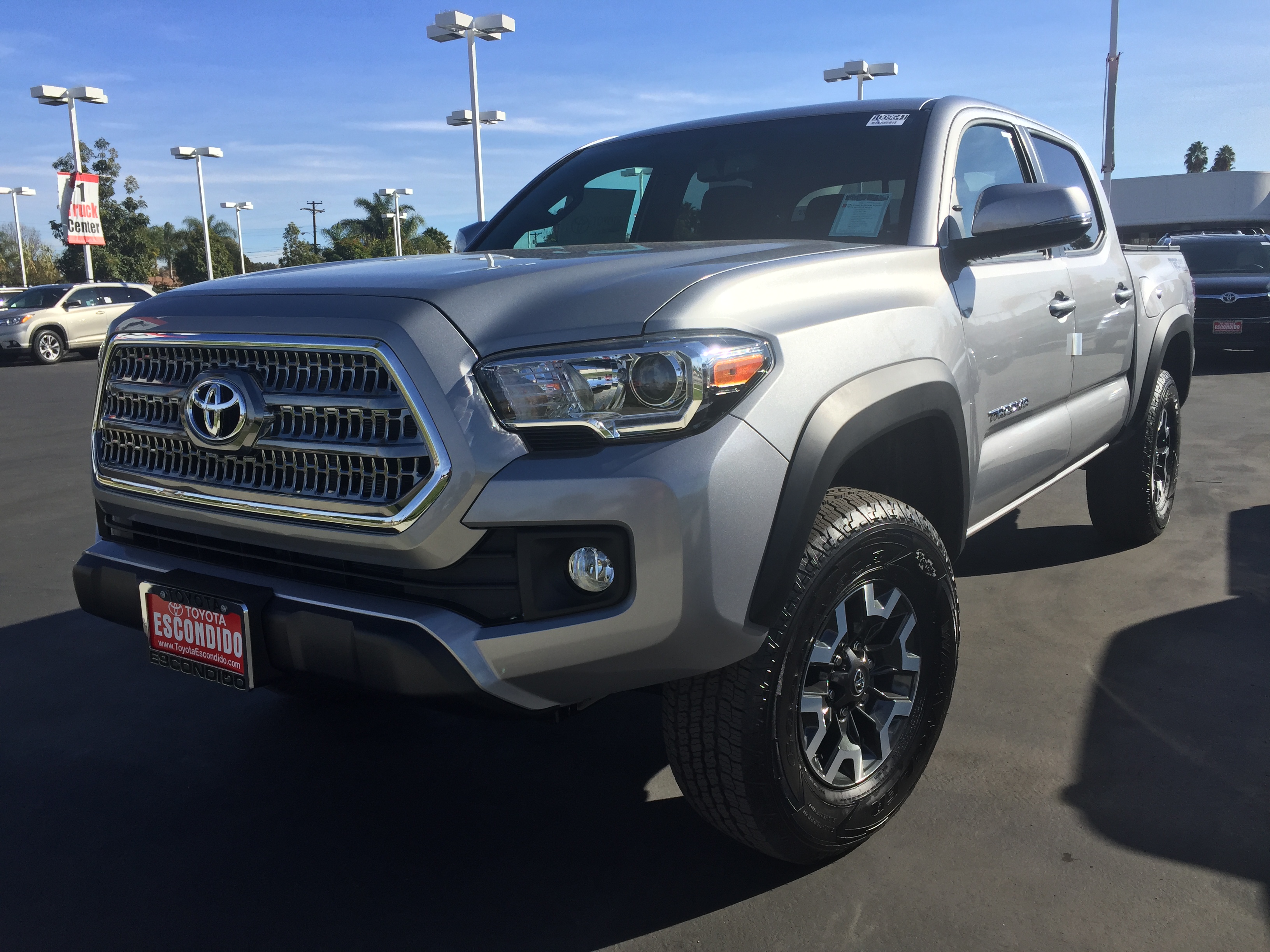
third gen Tacomas
"Because that's the world of third gen Tacomas or fifth gen forerunners is it's all cookie cutter."
That phrase means a specific generation of the Toyota Tacoma pickup. Off-road builders talk about generations because the truck’s shape and mounting points change over time, which affects what mods will fit.
“Third gen Tacomas” refers to the Toyota Tacoma generation that came after the first two generations. In off-road circles, people often refer to these by generation because suspension, bodywork, and aftermarket fitment can differ a lot between generations.

Wrangler Rubicon
"... keep telling, I think every time I go out on the Rubicon, there's some comment made about, oh, look at tha..."
The Jeep Wrangler is an off-road SUV made for driving on trails. People often talk about it when they go on famous off-road routes like the Rubicon. In the podcast, they’re mentioning the kinds of comments that come up during those trips.
The Jeep Wrangler is a rugged off-road SUV built around open-air driving and trail-focused capability. The podcast specifically mentions going out on the Rubicon and the comments people make, which highlights how the Wrangler is strongly associated with serious off-road routes and community culture. It’s discussed often because it’s a common platform for upgrades and because its design makes it well-suited to trail use.
Rubicon Trail
"That's, I keep telling, I think every time I go out on the Rubicon, there's some comment made about, oh, look at that vehicle."
The Rubicon Trail is a well-known off-road trail in California. It’s famous for being challenging, and when you go there, people pay attention to how different trucks are built.
The Rubicon Trail is a famous off-road route in California known for technical obstacles and steep, rocky sections. Because it’s so well-known in the 4x4 community, people often comment on what rigs look like and how they’re built when they’re out there.
shock towers
"And I'm looking under there and I'm like, okay, I'm in the middle of a build. I'm building shock towers. How did they do shock towers?"
Shock towers are the strong mounting points where the suspension shocks bolt to the vehicle. Off-road builders sometimes redesign them so the shocks can move more without hitting other parts.
Shock towers are the structural mounting points (often reinforced sheet metal or fabricated brackets) where the suspension shocks attach. In off-road builds, changing shock tower design affects suspension geometry, clearance, and how much suspension travel you can package.
12s
"I swear they only have 12s in the front of that thing. I don't think it's very large and the whole packaging, because it's 12s, it's not as high up as mine is."
“12s” here likely means 12-inch shocks (bigger shocks). Bigger shocks can give more suspension movement, but they can also be harder to fit without hitting other parts.
In off-road suspension talk, “12s” is almost certainly shorthand for 12-inch shocks (or shock travel/length), meaning the shock’s size or available movement. The speaker is comparing how shock size affects clearance and how much travel can be achieved.
up travel
"And they're still were able to mount on top of the axle. And it's not interfering with anything because it's not going up as much as mine does. And they're still getting about three inches of up travel."
Up travel is how far the suspension can move upward when the wheel hits a bump. More up travel can help the tire stay on the ground, but it has to fit without rubbing or blocking other parts.
Up travel is the amount of suspension movement available as the wheel travels upward into the chassis. More up travel generally helps the tire maintain contact over bumps, but it must be balanced with packaging constraints like shock length and interference with the axle or body.
full widths
"Oh, that was just another third gen forerunner on full widths and forties."
In off-road slang, “full widths” usually means wider tire coverage—like fenders or flares that cover the tires more completely. It helps keep the truck cleaner and protects the body when you run bigger tires.
“Full widths” in off-road builds usually means full-width wheel coverage—often wider fenders or full-length fender/flare setups that cover the tires across the whole width of the vehicle. The goal is to keep mud, rocks, and debris from getting thrown into the body while allowing wider tires.
forties
"Oh, that was just another third gen forerunner on full widths and forties."
“Forties” usually means 40-inch tires. Bigger tires help off-road traction, but they often require lift and trimming so they fit without rubbing.
“Forties” is common off-road shorthand for 40-inch tires. Running 40s typically requires suspension lift, trimming/clearancing, and careful attention to steering and wheel fitment to avoid rubbing.
frame rails
"Winch cradle that's in between the frame rails, but it's set so far back that they cut out the profile…"
“Frame rails” are the main strong beams running along the truck’s length. If you mount a winch to the frame rails, the truck can handle the pulling force much better than if it were mounted only to the bumper.
“Frame rails” are the main longitudinal structural members of a body-on-frame vehicle. Mounting heavy recovery gear like a winch cradle to the frame rails helps ensure the loads go into the strongest part of the chassis rather than just the bumper skin.
chrome bumper
"…the winch perfectly in the chrome bumper. Oh. So the chrome bumper and everything is still there."
A “chrome bumper” is the shiny bumper finish you often see on older or classic-looking builds. They’re saying the build kept the chrome bumper looking intact even with the winch installed.
A “chrome bumper” refers to the factory-style or aftermarket bumper finished in chrome. In off-road builds, keeping the chrome bumper “and everything” can be a fitment challenge when you add a winch cradle, because the winch and cradle often need clearance.
interstate
"I only had two exits, very short exits till I had to get off the interstate. So I'd turn on my blinker,"
An interstate is a big highway where cars enter and exit using ramps. It’s usually faster and busier than regular roads, so merging takes more care.
An interstate is a major controlled-access highway designed for higher-speed travel with on-ramps and off-ramps. The segment is about managing merges and exits on this kind of road, where spacing and signaling matter a lot.
blinker
"So I'd turn on my blinker, give it about three blinks. Then I'd put a tire to the center line,"
A blinker is your turn signal. It tells other drivers which way you plan to go so they can react safely.
A blinker is the vehicle’s turn signal, used to communicate your intended direction to other drivers. The speaker describes using it in a specific rhythm (“three blinks”) before moving, which is about signaling and timing on busy on/off ramps.
blind spot
"And so yeah, I just changing lanes into somebody's blind spot. [1838.4s] I'm like, that's a big no, no for me. ... [1905.9s] If that's the case, but I had no idea where this guy came from."
A blind spot is a part of the road you can’t see from the driver’s seat. That’s why cars can “show up” when you change lanes, and why it’s important to check mirrors and be patient.
A blind spot is an area around your vehicle that you can’t see directly from the driver’s seat, even with mirrors. During lane changes, other vehicles can appear suddenly in that zone, which is why the host emphasizes checking mirrors and waiting for a safer gap.
slow lane
"I looked in my mirror and I started merging into the, [1857.7s] in this case, number three lane, the slow lane. [1860.5s] And I started, I was probably halfway in the lane..."
The “slow lane” is the lane where cars usually go slower on a multi-lane highway. The host is saying the other truck was in that lane, which made it harder to notice in time.
“Slow lane” is a common road term for the lane on a multi-lane freeway where traffic typically moves slower than the adjacent lanes. The host uses it to describe where the other vehicle was positioned, which helps explain how it could have been missed during merging.
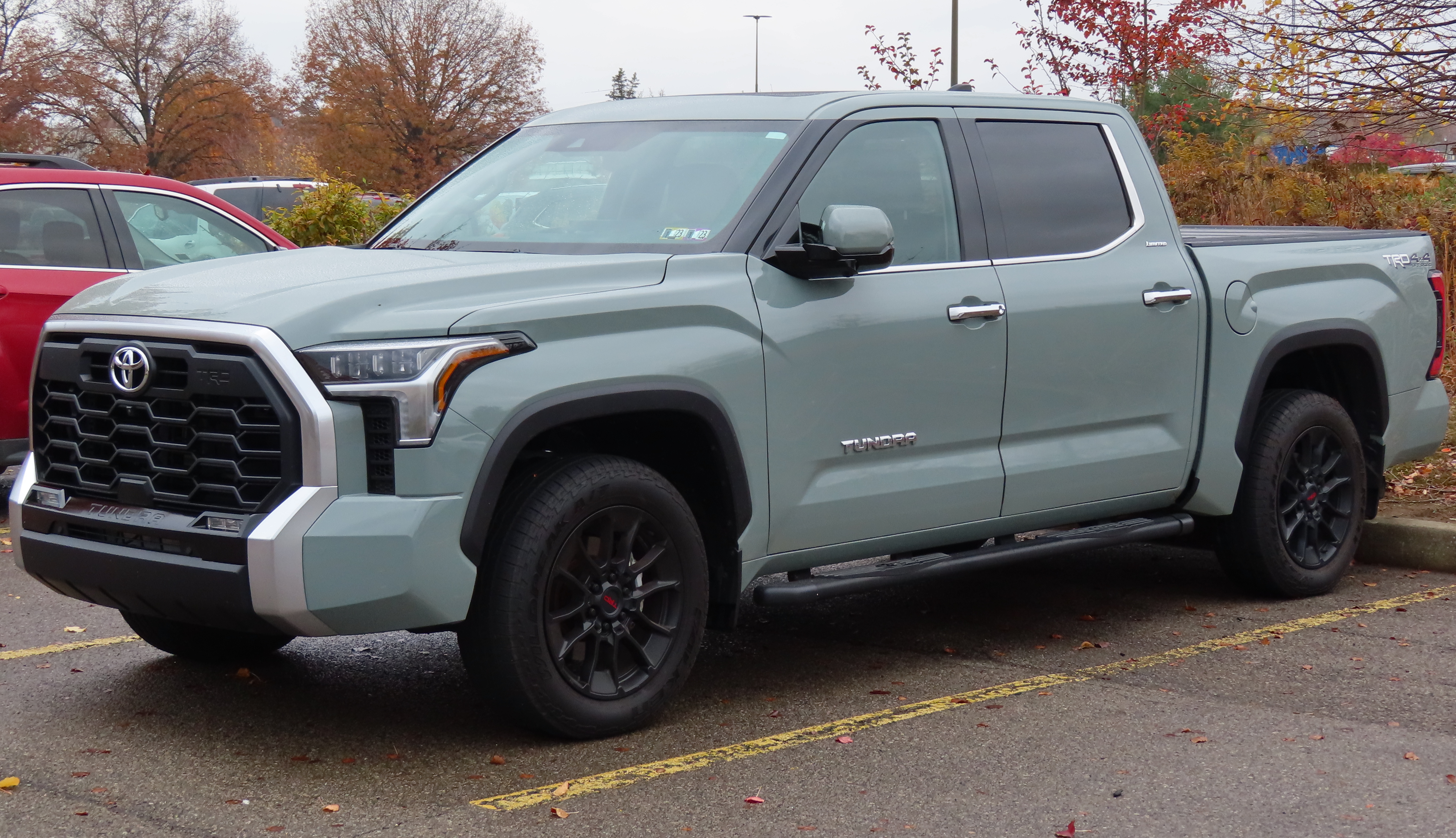
Toyota Tundra
"and I looked back in my mirror again [1865.2s] and there's a big ass white tundra there. [1867.2s] I'm like, where'd you come from? ... [1894.6s] And I mean, maybe it was a blind spot thing and I just, but it was like a gen two tundra, [1900.4s] big SF, you know, V8 5.7 version."
A Toyota Tundra is a big pickup truck. The host is talking about a second-generation Tundra with a V8 engine, and using it as an example of a car that can appear in your blind spot during lane changes.
The Toyota Tundra is a full-size pickup truck known for its V8 options and traditional body-on-frame truck layout. In this segment, the host specifically calls out a “gen two” Tundra with a 5.7-liter V8, which is a common enthusiast reference point for that generation’s engine choice.
V8 5.7
"but it was like a gen two tundra, [1900.4s] big SF, you know, V8 5.7 version. [1903.9s] I'm like, that's a big blind spot."
“V8 5.7” means the truck has an 8-cylinder engine that’s about 5.7 liters in total size. The host is using it to identify which kind of Tundra it was.
“V8 5.7” refers to a V8 engine with a 5.7-liter displacement, meaning the engine has eight cylinders arranged in a V shape and each cylinder’s combined size totals about 5.7 liters. In the context of the second-generation Toyota Tundra, this points to the common 5.7L V8 configuration.

Jeep Cherokee
"... attention in the past few years and a big Philly Cherokee I'm building now. But I wanted to piggyback off o..."
The Jeep Cherokee is an SUV, not a pickup truck. People use it for everyday driving, and some also modify it for off-road trails. In the podcast, they’re talking about a specific Cherokee that’s being built for that purpose.
The Jeep Cherokee is a compact SUV that’s been used both as a daily driver and as a base for off-road builds. The podcast mentions a “Philly Cherokee” that the host is building, which suggests it’s being discussed as a project vehicle—likely for trail use and customization. That kind of build talk often centers on how the platform handles upgrades and what it takes to make it capable off-road.
Request an Explanation
Heard something you'd like explained? We'll add it to this episode.
Sign in to request explanations for terms you heard.
Want to learn more?
Browse our glossary for plain-English explanations of automotive terms, jargon, and concepts.
Help improve this episode
See something that's not quite right? Our annotations are AI-generated and can sometimes miss the mark. Click the flag icon on any annotation to suggest a correction.