The Volvo EX60 is Volvo’s next fully electric SUV. It matters because Volvo is moving more of its lineup to EVs. The hosts also mention that earlier Volvo EVs had problems, like charging and production disruptions, which helps explain why people are watching the EX60 closely.
The Volvo EX30 is Volvo’s smaller electric SUV. In this segment, the hosts say it launched with some early problems and that where it was built kept changing because of tariffs. They bring it up to show the challenges Volvo has faced rolling out EVs.
Tariffs are extra taxes a government puts on imported products. The hosts say tariffs played a role in changing where Volvo’s EX30 was supposed to be made. That can affect whether cars are available and how quickly they show up in the market.
Place
Dent in Belgium
This is a place in Belgium where Volvo shifted production for an electric vehicle. The point is that car production isn’t always fixed—it can move depending on costs and rules. That can affect when and where you can buy the car.
The Volvo EX90 is Volvo’s bigger electric vehicle. The hosts say it ran into problems related to software, including cases where people couldn’t charge it. They mention it to explain why Volvo’s EV rollout has been complicated so far.
The hosts mention a Volvo factory near Charleston, South Carolina as the future place they want to build these EVs in the U.S. Building locally can help with supply and timing. It’s part of the bigger story of how Volvo is ramping up EV production.
Car
EXC60
The EXC60 is mentioned as the gas-powered version of the same general model idea. It’s basically being used to explain how the new EX60 fits into Volvo’s lineup.
SPA3 is Volvo’s new shared “car design base” for upcoming electric models. Using one platform helps Volvo build different cars that share the same basic structure, which can improve space and reduce complexity.
A modular platform is a shared car “skeleton” built from interchangeable parts. That makes it easier for the company to create different models while keeping costs and engineering effort under control.
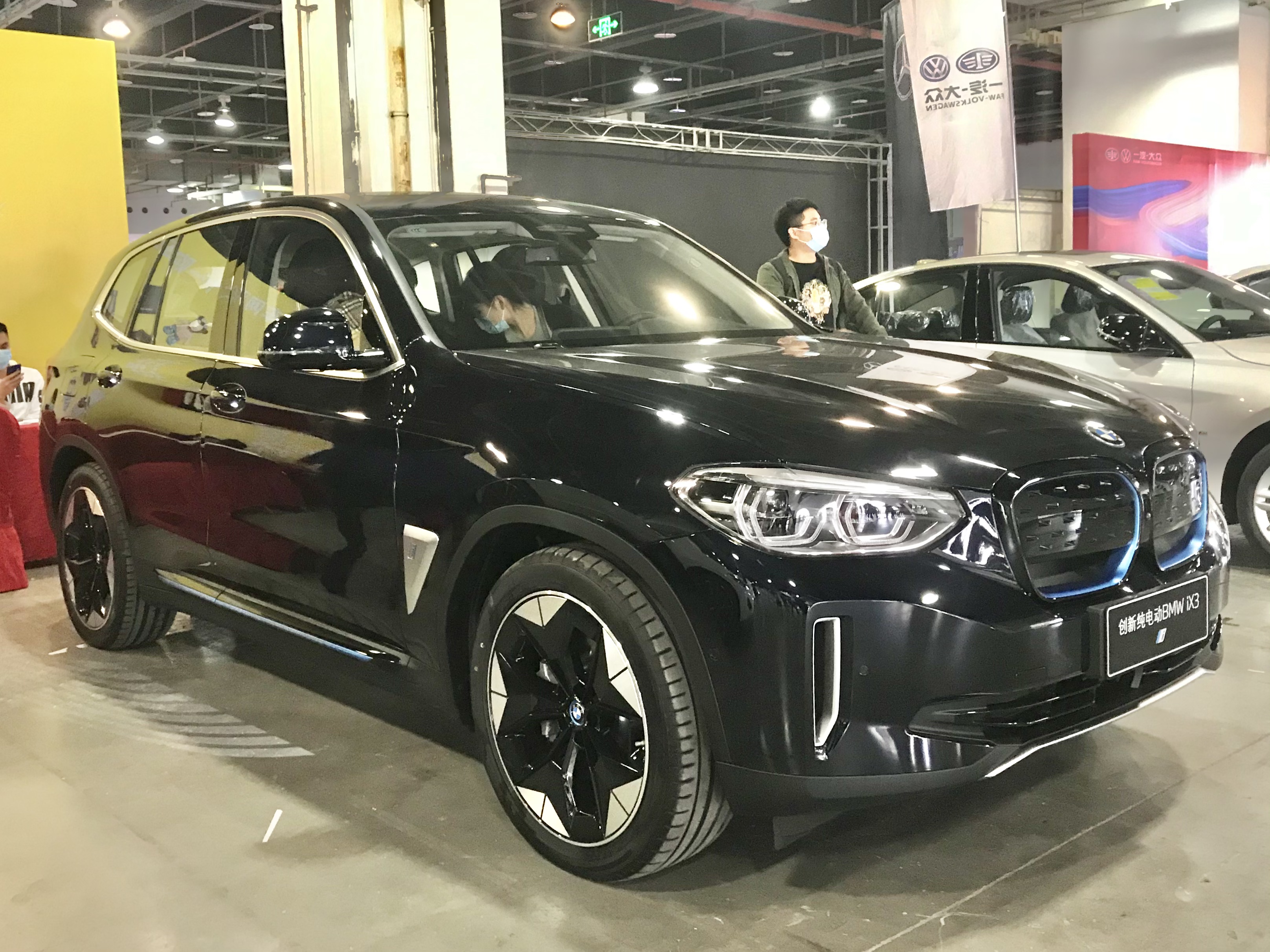
The iX3 (G08) is an electric SUV from BMW. The podcast is mentioning the newer version, so it’s part of a discussion about what’s updated or improved in the EV lineup. It’s mainly being used to talk about current electric SUV options.
This describes an EV “structural battery” approach, where the battery pack is integrated into the car’s chassis/frame rather than mounted only as a removable component. Integrating the battery can lower the center of gravity (better handling) and improve crash structure rigidity.
Vehicle dynamics is basically how the car feels and behaves while driving—how stable it is and how well it handles. Putting heavy parts like the battery low can help the car stay balanced.
Term
P6
P6 is Volvo’s label for one version of the EX60’s electric drivetrain. Here it means a single electric motor mounted at the rear.
Term
P12
P12 is Volvo’s label for a drivetrain option on the EX60. In this part of the conversation, it’s mentioned as one of the named choices.
Term
P10
P10 is Volvo’s name for another version of the EX60’s electric drivetrain. This clip mainly mentions it as one of the options available.
This is a standard way EV makers quote charging speed: how long it takes to go from 10% battery to 80%. Charging is typically faster in that range than when you push toward 100%.
Recouped energy means the car “gets some energy back” while slowing down. Regenerative braking turns some of that slowing motion into electricity to recharge the battery.
NACS is the plug type Tesla uses for charging. If your EV supports it, you can use Tesla fast chargers more easily.
Car
Volvo P10
The Volvo P10 is one version of Volvo’s EV lineup. It uses two electric motors, which usually helps it drive all four wheels for better traction and stronger acceleration.
A dual-motor EV uses two electric motors instead of one, often allowing power to be distributed front-to-rear. That can improve traction and enable all-wheel drive behavior without a traditional driveshaft layout.
The Volvo P12 is a higher version of Volvo’s EV lineup that’s expected later. It also uses two motors for all-wheel drive, and it’s described as having more range and power than the lower trims.
Kilowatt-hour (kWh) tells you how big the EV’s battery is. A bigger kWh number usually means more potential range, because there’s more energy stored.
Concept
EV ditch
This sounds like the host is talking about a sudden surge of interest in EVs. The idea is that people are buying sooner because the situation right now makes EVs feel more attractive.
An instrument cluster is the main screen or gauge panel behind the steering wheel. It’s where you normally see things like speed and key vehicle status at a glance.
A head-up display shows important info on the windshield, like speed or navigation cues. That way you don’t have to take your eyes off the road to check the dashboard.
“In-house” means Volvo is building its own tech for the car, instead of buying everything from other companies. That can help the system work more smoothly and get improvements later.
AI tools are computer features that can “learn” patterns and help the car understand what you want—like voice commands or smarter suggestions. Whether it’s actually helpful depends on how well it works in real driving tests.
Gemini is Google’s AI system. The host is saying Volvo is putting that AI into the car, so you may be able to use it for smarter conversations or help through the screen.
A station wagon is like a car with extra cargo space behind the seats, but with a roof that extends farther back. The host likes wagons because the trunk area can be lower and easier to load, without giving up visibility.
The Renault Wind is a small car model from Renault. It’s not a typical SUV; it’s more of a compact, distinctive style vehicle. The podcast mentions it with a pun because the name “Wind” fits the idea of something light and airy.
The Jeep Cherokee is a popular SUV model. They’re saying the new one uses an engine that comes from Stellantis, which is a company that supplies parts and technology to multiple car brands.
“1.6-liter” is a way of describing the engine’s size. Smaller engines often use less fuel, and here they’re saying this particular engine is supplied by Stellantis.
Stellantis is a big car company. “Stellantis Europe” here means the company’s European side, and they’re saying the engine used in this Jeep comes from that shared corporate supply.
A plug-in hybrid is a car that can run on electricity, but it also has a gas engine for longer trips. You can charge it like a regular EV, and that’s why it can be more efficient for daily driving.
A range extender is like a backup power source for an electric car. Instead of using the gas engine to drive the wheels directly, it generates electricity to help the car go farther.
They’re about to talk about government rules and fees that affect electric cars. These policies can change how expensive it is to buy or register an EV.
An electric vehicle is a car that runs on electricity from a battery. Since it doesn’t use gasoline, it doesn’t pay the usual gas-tax that helps pay for roads.
The federal fuel tax is a tax added to each gallon of gas you buy. Since EVs don’t buy gas, lawmakers are trying to replace that money with EV-related fees.
A flat tax means everyone pays the same amount. The host is saying that might be less fair than a gas tax, which naturally changes based on how much gas you use.
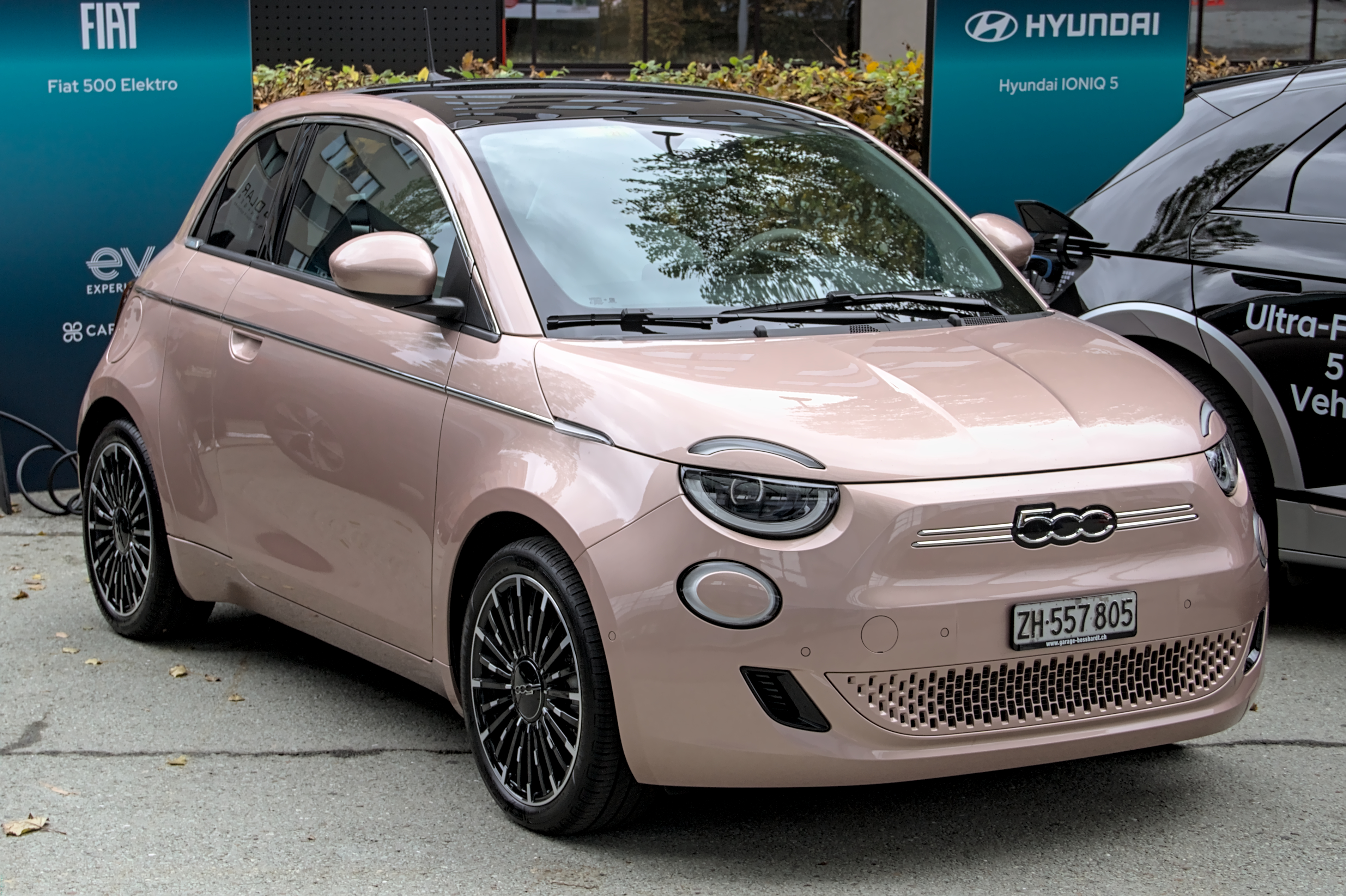
The Fiat 500e is a small electric car. The host brings it up to argue that a tiny EV might not be the best candidate for a fee that doesn’t scale with impact.
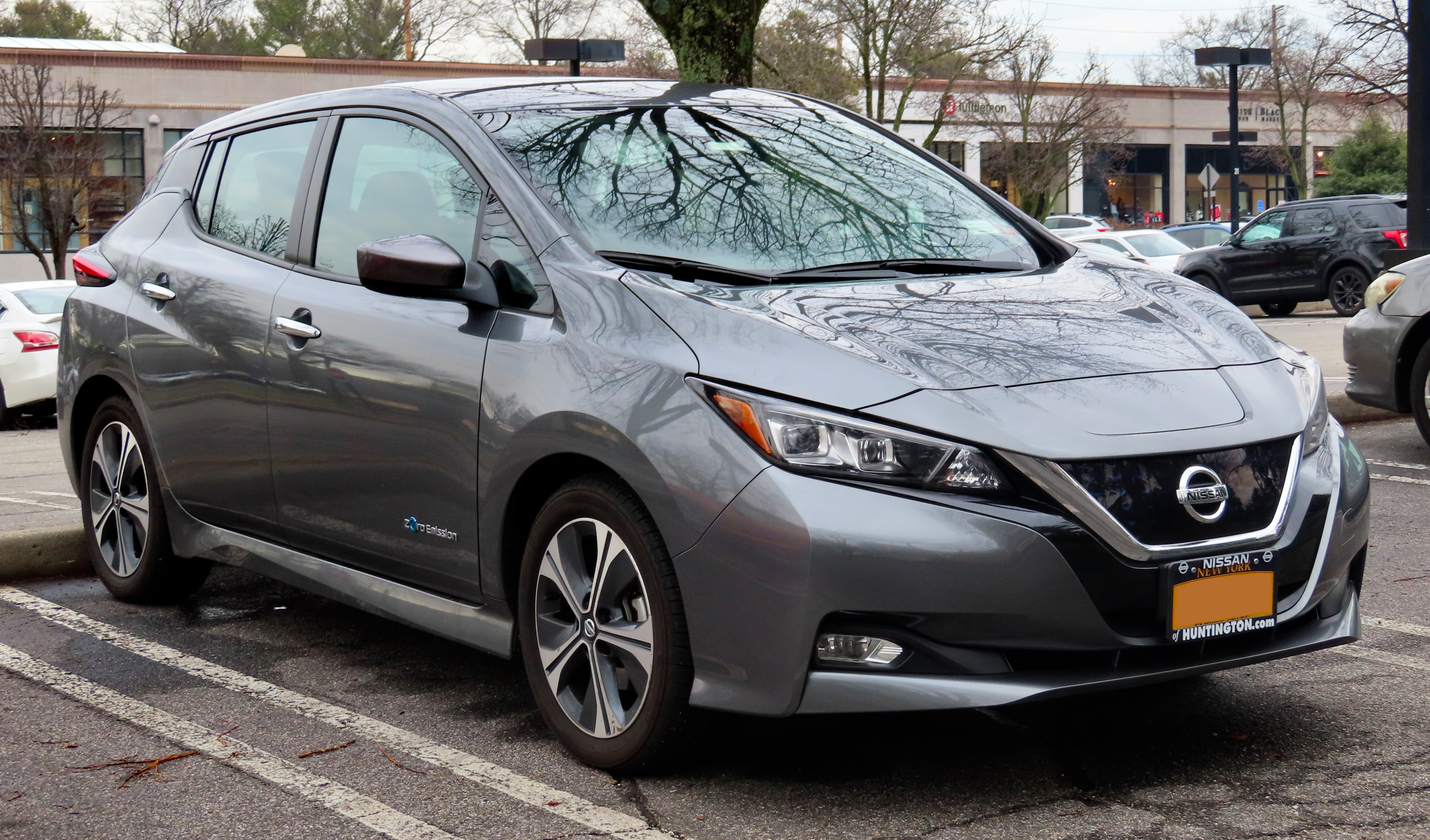
The Nissan Leaf is a common electric car. The host uses it as an example of a smaller EV that might pay more than it “should” under a one-size-fee approach.
A “use tax” means you pay based on how much you use something. Here, they’re talking about charging drivers based on how much they drive, instead of a one-time or fixed amount.
“One size fit all” means the same rule for everyone. The speaker is saying that approach may ignore important differences between people and also raises concerns about privacy.
A “general fund” is a government’s broad pool of money used for many different expenses. The speaker’s point is that even if a tax is collected for roads, it may be routed into the general fund and not necessarily spent on the intended transportation purpose.
The “federal highway fund” is money the government sets aside specifically for roads. The speaker is saying this proposal might actually go to road projects instead of being mixed into other spending.
This is a GM testing site in Michigan where they drive cars on special roads to see how they hold up. The idea is to recreate rough real-world pavement so they can find problems early.
A “torture road” is a rough test stretch where they beat up a car on purpose. It helps engineers see how well the suspension and other parts survive bad roads.
They’re saying the test road is based on a specific real road in Michigan. That way, the car is tested on something that matches real pavement conditions.
The Monroney label is the official sticker on a new car’s window. It shows the important info and pricing, including fees like the destination charge before the dealer adds anything else.
A destination fee is money added to a new car price to pay for getting the car from the factory to the dealer. It’s basically a shipping/transport charge that shows up on the window sticker.
MSRP is the price number the carmaker puts on the window sticker as a starting point. The dealer can still add extra charges, so the final price you pay can be higher. That’s why shoppers should look past just the MSRP.
Doc fees are extra charges a dealer adds for handling the paperwork of buying the car. They can be different from dealer to dealer, and sometimes states limit them. It’s a line item you can often negotiate or at least challenge.
“Non-negotiable” is what a dealer says when they claim a fee can’t be reduced or removed. The host’s point is that dealers sometimes use this to keep extra charges in the deal. If you’re shopping, it’s worth pushing back and comparing offers.
Porsche is brought up as an example of a brand that may offer a direct pickup option near where the car is built. The host is using it to illustrate that the “where you live” shipping logic doesn’t always change the price you pay. It’s part of the broader discussion about fees.
BMW is mentioned as another brand that may offer a pickup option near the factory. The host is using it to argue that shipping-related charges don’t always reflect distance the way you’d expect. It’s tied to the destination fee topic.
Mercedes is mentioned as another car brand that may let buyers pick up the car closer to where it’s built. The host uses it to show that even with different pickup options, the final price can still include shipping-related fees. It’s part of the fee discussion.
It’s when you order a car in the U.S., then go to Europe to pick it up from the factory. You drive it on your vacation and then have it shipped back home.
Concept
undercut the market
This means a company sells cars for less than competitors to attract buyers. The hosts are saying that when that happens, it can push the whole market to adjust prices.
Concept
cycle of capitalism
They’re using a general economic idea: markets tend to repeat patterns over time. Here, they’re applying it to car pricing and competition between different regions and brands.
The Lexus ES is a Lexus sedan that’s built to feel smooth and refined rather than sporty. In this episode, they’re talking about the newest ES and how it traces back to the original ES 250 when Lexus first started.
The Lexus LS is Lexus’s big, high-end sedan. The hosts mention it because Lexus launched both the LS and the ES 250 at the same time, showing they were aiming at different levels of luxury from day one.
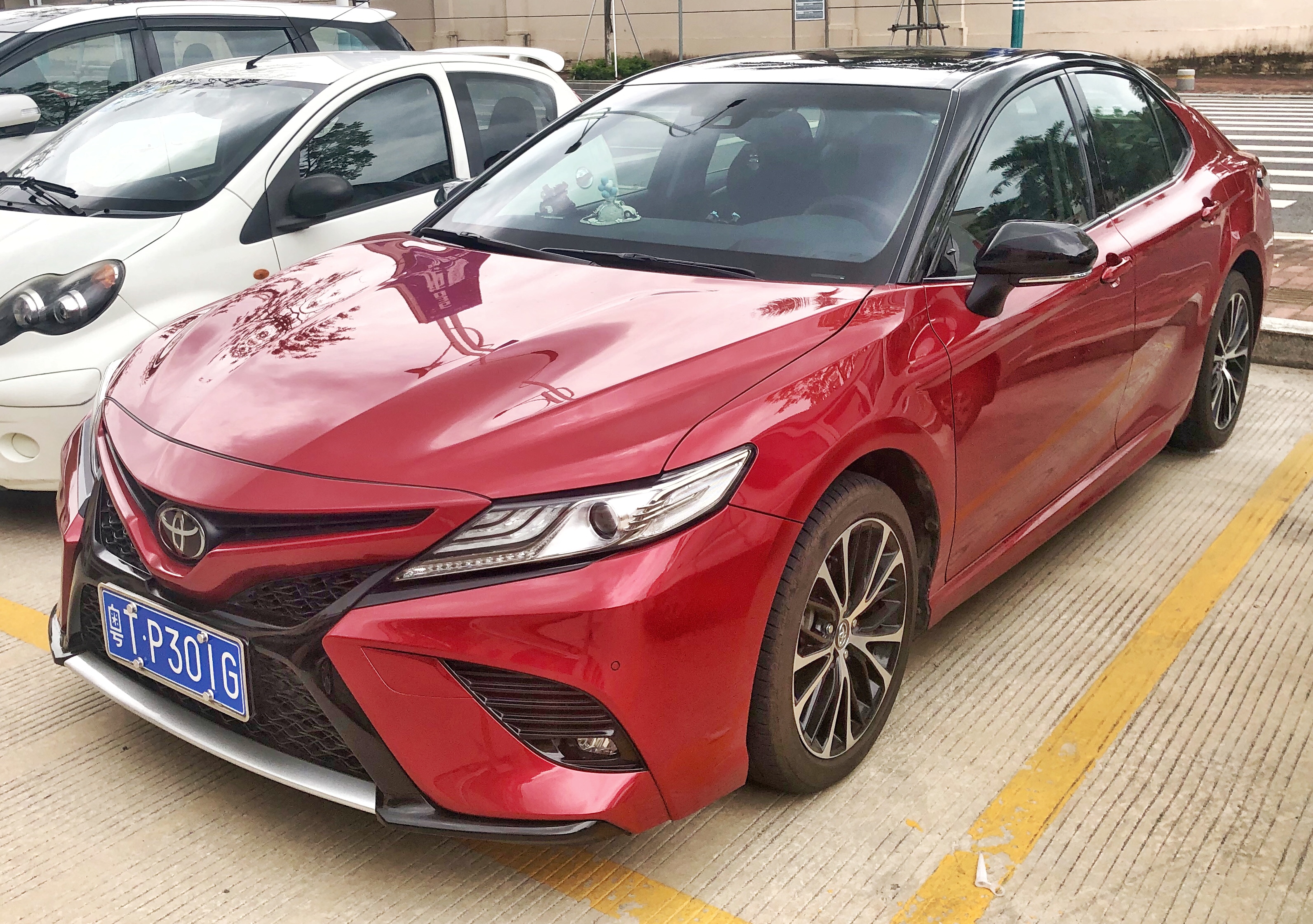
The Toyota Camry is a regular, everyday car in the mid-size sedan category. It’s known for being dependable and comfortable for daily driving. The podcast is basically using it as a reference point for what people compare other cars to.
The Toyota Crown is a nicer, more upscale Toyota sedan than the basic models. In the podcast, it’s described as an upgraded version of a more common Toyota sedan concept. The point is that it aims to feel more premium while still being a practical car.
A powertrain is the “moving system” of the car—how it makes power and sends it to the wheels. They’re saying the ES’s powertrain is changing a lot in this new generation.
Wheel size can change how efficiently an EV uses energy. They say the 19-inch wheels help the car achieve the range numbers they quoted, instead of using bigger wheels.
Car
Lexus 350E
The Lexus 350E is an electric version of the ES. The host is saying it feels quick because electric motors deliver power right away, not after the engine revs up.
Car
Lexus 500E
The Lexus 500E is the stronger electric ES option. The host’s point is that the “smaller” electric version can still feel plenty fast because electric power comes instantly.
Torque is the twisting force that makes the car move. With an electric car, that force shows up almost right away when you hit the pedal, so it feels quick.
Forward visibility means how clearly you can see what’s in front of you while driving. The host is saying the Lexus ES makes it easier to see the road because the dashboard/hood area doesn’t get in the way.
The Ford Edge is a mid-size SUV that’s built for normal daily driving. It’s meant to feel a little more stylish or sporty than the most basic family SUVs. The podcast is describing it as having “more of an edge” in how it’s positioned.
When the host says “rigid,” they mean the car feels firm and doesn’t twist or wobble much. That can make handling feel more precise, especially on twisty roads.
Naturally aspirated just means the engine doesn’t use a turbo or supercharger to push air in. It relies on normal airflow, which affects how the power feels as you accelerate.
In a hybrid, the gas engine and electric motor work together. “Total system output” is the combined power rating for both, not just the gas engine by itself.
Front-wheel drive (FWD) means the engine’s drive power is sent to the front wheels. In hybrids, FWD setups often pair well with packaging efficiency and can help keep fuel economy strong.
A platform is the car’s basic “bones,” like the shared structure underneath. Using the same platform for different versions (hybrid and EV) makes it easier for the factory to build different powertrains without redesigning everything.
The Dodge Charger is a car that’s built to feel more powerful than a typical family sedan. It’s known for performance and for being a long-running model. The podcast is bringing it up because it has been a big deal in recent discussions about what it can do.
“Alternative drive train” just means the car could use a different kind of power system than the one it’s currently set up for. In this context, they’re talking about making room so a platform can support electric components and potentially other propulsion options too. That’s hard because the parts don’t fit the same way.
“Rolly” means the car leans more in corners. When the car’s weight balance is higher, it can tip/lean more, so it feels less steady. That’s what they’re describing with the ride feel.
“Center gravity” is basically where the car’s weight balances. If that point is higher, the car can feel less planted and more likely to lean or roll when you drive. That’s why the hosts connect it to how the car feels on the road.
“Acoustic” here means the glass is made to block sound. The goal is a quieter cabin by reducing outside noise and vibrations. That’s why they mention it alongside sound deadening.
A touch pad here is a small control panel for the rear passengers. Instead of reaching to the front, passengers can use it to control things like temperature and seat comfort. It’s basically a remote control built into the back seat area.
HVAC is the car’s heating and air-conditioning system. It controls how warm or cool the cabin feels and how air moves around. Rear passengers can adjust it from their own controls.
Heated and cooled seats can either warm you up or blow air to cool you down. It’s like having climate control built into the seat. That helps a lot when the weather changes quickly.
Massaging functions are built-in seat features that vibrate or move to feel like a massage. They’re usually controlled from the passenger side or rear controls. It’s a luxury comfort add-on.
A sunshade is a cover for the window that blocks the sun. In this car, it’s controlled from the rear, and the car can automatically move it when you go into reverse. That helps you see out the back window more easily.
Reverse is the gear you use to back up. Some cars also use reverse to trigger helpful features—like adjusting the window shade—so the driver can see better while backing up.
The camera is the rear-view camera that shows what’s behind the car. It helps when backing up or parking. Even if the rear window is clearer, the camera is still useful.
The operating system is the software that runs the car’s main screen and controls. It determines how the menus work and how responsive the system feels. Think of it like the “brain” behind the infotainment screen.
Infotainment is the car’s main screen system. It’s what you use for music, maps, and connecting your phone, plus lots of car settings. It’s basically the dashboard’s “control center.”
Haptics are touch controls that give you a physical-feeling response. Instead of just tapping a flat screen, the car can vibrate or resist slightly so it feels more like real buttons. It’s meant to be easier and safer to use while driving.
“Regen” means the car can slow down and also recharge its battery at the same time. Instead of wasting speed as heat, the motor helps slow you and sends energy back to the battery.
Paddle shifters are little levers on the steering wheel. On many electric cars, they’re used to change how strongly the car slows down when you lift your foot off the pedal.
LIVE
Welcome to the podcast of Motor Week, television's original automotive magazine.
Motor Week is made possible by AutoValue and Bumper2Bumper and TireRack.com.
Here's your Motor Week podcast host, John Davis.
And let me add my welcome to Motor Week's podcast, and this is podcast number 378.
For us, I am indeed your host, John Davis.
And on today's podcast, we're going to talk about vehicles from two luxury brands with lots
new to talk about, starting with the all-new Volvo EX60, followed by the latest generation of the
Lexus ES. And joining me today are digital producer, Jessica Ray. Hello, everyone.
And staff writer, Alex Kellum. Howdy.
So, Jessica, let's start with you. The Volvo EX60, Volvo's new all-electric SUV. Volvo says
it will evolve with you. It's a pretty bold claim. What can you tell us about it?
Yeah, I mean, this is a pretty big deal for Volvo who has been increasingly moving toward all
electrics. We've seen them really slim up their offerings here in the U.S.
And so, you know, they initially launched with the EX30, which was their smallest
all-electric offering, and then they launched. The on-again, off-again EX30.
On-again, off-again EX30, which had, unfortunately, some issues just initially
was supposed to be made in China, and then tariffs. So then they initially moved them
the production over to Dent in Belgium. And now it's stopped again.
Which is really a shame. It's a nice little vehicle. It is a big bummer. But that also kind
of moves us into the EX90, which they made, I think, some outside of the U.S., but ideally,
in the future, this vehicle is supposed to be made here in America. Correct.
In the plant outside of Charleston, South Carolina.
Yes. The woes with that vehicle, unfortunately, came with some software difficulties with...
People weren't able to charge it.
Yes. And they put a lot of...
Kind of important.
There were certain chargers that just didn't weren't happy with it.
So they put a lot of technology in that car. Obviously, it's going to be their flagship.
But probably the most important is the vehicle that kind of comes between those two cars.
The core of the market.
The core of the market. And that is where this EX60, not to be confused with the EXC60,
which still exists and is gas-powered.
It's basically the all-electric version of it.
Yes. It's a little bit bigger. But the big deal here is that this is going to be the first
vehicle to launch on their SPA3 platform, which is sort of the future of their electric vehicles.
So this is sort of a shift in...
So this is a modular platform. This is a mid-size vehicle by, quote unquote,
mid-size. Because I'm not sure anybody knows what that means anymore.
But it's the core of the market. It's the heart of the market.
And the heart of not only the SUV and SUV market, but also the luxury market.
Yes, absolutely. And there's a lot of competition in this market,
specifically on the all-electric side. I think we've seen the new IX3.
Is that what it's called? Sorry, the BMW.
Oh, the IX3.
Yes, the IX3 from BMW, which is sort of like their next generation all-electric vehicle
that has these crazy good statistics and specifications. So there's a benchmark in
this segment, and they're trying to meet it with this sort of next generation.
What's really interesting is that a lot of the battery tech has been improved,
but also the platform is interesting because the battery is actually directly integrated
into the vehicle's frame. So it sits nice and low. And by doing so,
it frees up room inside so you get more interior space.
But is it, to your knowledge, is it actually part of the structure? Because that's pretty much,
I think, what Lexus has gone to. And a lot of manufacturers have looked at it
with the idea that it saves a lot of parts.
I think so.
I'm not 100% sure.
It is the trend. trend where everybody's going to make the battery
integral with the chassis.
And part of that, obviously, is like vehicle dynamics. It keeps the weight nice and low.
But also they've improved the battery cells in this. This isn't just carryover from the
EX30 and the EX90. Everything is improving a little bit. So
there's going to be three different powertrain offerings for this model. And in typical
Volvo fashion, they have names. There's the P6, the P10, and the P12. So first off,
it's going to start off with a rear-mounted motor, a single motor P6 unit. And that's going to see
up to 307 miles of range. But this is what's actually really interesting about it.
16 minutes to charge, 10 to 80%.
How much power for the charger? 350?
Over 350. So we're talking all of the architecture of this is an 800-volt architecture.
And I think, depending upon configuration, it's somewhere between 370 and 350 kilowatts
of charging. So basically, the fastest speeds you can find in the industry.
And they're saying that within 10 minutes, you can see up to 155 miles of recouped energy.
I have to say, assuming you can find a charger that will power that much, and the fact that it's
got the NACS, the Tesla charger, that's probably a good bet.
Yeah. I mean, the NACS obviously depends upon what Tesla supercharger you might find yourself.
And how many vehicles are there? How many vehicles are there? Also,
we haven't tested this quite yet. It's not a perfect translation. We know, right? The Hyundai
is certainly that we've tested, haven't met our expectations of what we would want.
But it's all relative. But the fact that it does have some of the industry-leading
charging is important. 354 horsepower, that's in that base configuration. So pretty respectable.
It seems like Volvo does like to do that. They love to give you a lot of power in their EVs,
because as we move up, we go to the P10, which has a dual motor. It's a twin-motor setup, so
obviously, with all-wheel drive. 322 miles of range, 503 horsepower.
Gosh. And that's in the mid-grade.
I mean, these numbers, we used to basically, I mean, these were muscle cars not that many
years ago. And then, of course, you move up to the P12, which I believe is coming later down the
pipeline. It's, again, the same twin-motor configuration with all-wheel drive. 400 miles of
range. This one takes 19 minutes to charge, the 10 to 80 percent, and 670 horsepower.
So, 400 miles of range puts them up there with Lucid, puts them up there with Tesla,
with BMWs, and they're going to be 400. I mean, now we're really talking serious
long-distance travel range, one stop to refuel instead of three.
And obviously, none of this comes cheap. I mean, part of it is there's pretty big batteries in
these vehicles. I didn't see very specifically which vehicle gets which battery. I think there's
a couple different configurations, somewhere between 87 kilowatts to 112 kilowatts, if I'm not
mistaken. Alex might know better than me. You would think that, because I just wrote the article,
but I got to hold up. I have to reference my work here. But like I said, while he's looking that
up, they don't come cheap. The starting price for this is $58,795 for the P6.
So, we're assuming a 12 is probably going to be 80 or something in that range.
They did not really explain anything for that. Yeah, no pricing on the P12. Both P6s, because
there are like two grades to it, they get an 83 kilowatt-hour battery, and then for the P10s,
you get a 95 kilowatt-hour battery. Yeah, the P12 gets like over 100 kilowatts.
I don't know if they disclosed it, maybe they have.
Yeah, this is a pretty big vehicle. So, I mean, it really is aimed at the North American market.
It really wouldn't find that much acceptance if they exported any from here to Europe.
And right now, we're sort of in an artificial situation with gas prices
rising because of what's going on in the Middle East. And all of a sudden, the EV
ditch has started up the upper side with more demand because of reactionary buying.
It's coming into the market at a really weird time. I mean, it actually might do better now
than it would have done four months ago. Potentially. I mean, I think styling-wise,
they've kind of nailed it. It looks like a larger EX30, which in my mind was already a pretty
stylish car. Yeah. I mean, it actually has no grill, but it has a badge. So,
you kind of know what's coming down the road. Yeah. I mean, I think it looks a little blocky,
like a lot of people's visions of Volvo still are. Well, yeah. And I think it kind of like
translates well from Volvo, you know, ICE designs of their cars. I mean, I feel like oftentimes,
we describe them as inoffensive, right? And you could also say that they're there and
my vernacular are handsome because they are. You don't look at them and say, why did they do that?
Right. Correct. And I think you get that same feeling here in the EX60. Although you move in
the inside, and the inside is that very tech forward situation that they have been kind of
moving toward, I will say, I'm happy to see there is a, it's pretty slim, but there is an instrument
cluster in the 60, which if you remember the EX30, there was no instrument cluster at all.
There's just a head up display that I think could be option that wasn't even standard.
So, at least you have an instrument cluster and there's a large,
it's not portrait style, sorry, it's horizontal. So, that's a change. 15 inches. Yeah. So, the one
in the EX30 is portrait style. This one is not. It's very traditional.
Did you have a chance to play with it at all? Is it a little more intuitive than in the past?
We haven't been able to actually sit in it quite yet, but it just seems like that whole streamlined
interior that Volvo is kind of working on. Well, they're sticking to their guns, and of course,
they're owned by Geely, correct? Yes. So, they've tapped into some of the latest
the technology coming out of China. It's true. And even though it's not going to be a Chinese
built vehicle, it'll be an American built vehicle, it will have the tech. Yes. I mean,
there's new in-house software and hardware from Volvo. And I do know that they are integrating
like AI tools. Again, they want this to be very tech-forward. So, there's Gemini,
Google's Gemini in it. How well it works, I'm not 100% sure. But once we get it in here for
our typical two weeks of testing, we'll have a better idea of how a lot of these tools can.
So, Alex, you were talking about, you wrote about it. So, any comments?
Man, I was really hoping you forgot about me there for a minute.
Not a ton. How could I? Yes, that's a question many ask. Yeah, no, I mean, it's...
So, I saw a headline the other day, I think actually might have just been yesterday, where
someone high up at Volvo thought, they speculated that wagons might be making a comeback within
the next decade or so, which is when I think Volvo, I always think of their wagons. Of course.
If this is the direction that they want to go, I would love to see this in more of a wagon style,
which probably doesn't answer anything that you may be asking me, but it's just my thought.
I don't disagree with you, because the idea, the concept of a station wagon,
something that's a little lower to the ground, so that folks that, frankly, get up in years,
have a little easier time getting into, has a lower load deck in the back. I'm appreciative.
And I miss, I was a Volvo wagon owner, and I miss those attributes. And you still had
enough tall enough roof because of the boxy designs to have good visibility. It really was,
like, you didn't lose anything by not being, you know, shaped and with a stance of a pure SUV,
but I think we're talking to the wind here. Well, I have a question for you, Ron. You know,
we're in some potentially unprecedented economic times, and potentially that could mean a downturn,
a recession maybe. Well, not to get on my economic course, but we haven't had a
real recession in this country in a very long time, and that's usually not a good sign. That's
down times in the economics. People aren't buying cars, because that's disposable income that they
don't have. How does that change what automakers prioritize, and does that have a significant
impact on the product cycle? Does that mean that maybe something like a wagon that is a little bit
more rational could potentially make a comeback? The problem with reacting is development time.
I don't care what you do, you can't just turn a switch and say, oh, that model's out of favor,
so tomorrow we start producing this model. Now, it's true that 30 years ago, and they used to say
that it took seven years for a new model to gestate that that's not true anymore,
you can do some pretty major things, but it still takes like 33 and a half years.
A car company has to be able to bet that they can do something rather quickly,
and then it will have a shelf life of maybe seven years after that where it will be accepted,
so it's tough. That's why what's the first thing they do, they lower prices, because in the auto
business, the cure for almost all financial ills is to sell more vehicles, because they're trying
to cover their enormous overhead of factories and often unionized workforce, so their first
reaction is going to be to lower the MSRP with all sorts of factory incentives and lower the
interest rates, and meanwhile they'll be, I'm sure there's a team in the back room looking for
ways they can take money out of existing vehicles to make them more affordable, but I just don't
think, unless you've got every recession that I've lived through where the automakers tried to adjust
their lineup to fit lower disposable income, they've been left with vehicles that nobody
wanted when the economy rebounded, so it's a very, very tough thing. Now, global players
have the option of bringing in smaller, less expensive vehicles from other countries. I mean,
we all travel in Europe and sometimes in Asia, and we see this wide swath of vehicles that we
don't have access to, and many of them are smaller and less expensive, and so that kind of gives them,
rather than develop something new, they can pull from their portfolio, and as we, the future looks
like we'll probably even have fewer parent automakers than we have today, just more brands,
and that kind of being able to pull from portfolios for somebody like Stellantis
could be what will allow them to navigate any kind of bad economic times.
That's a great example, considering that they've taken, for the new Cherokee, that engine,
that 1.6-liter comes directly from Stellantis Europe.
Correct, and I think you're going to see more of that, and it doesn't necessarily even have to be
your company. You can buy it from somebody else. I mean, I think we all wish that GM would do more
of that, right? Like with them, they've got plug-in hybrids in the range extenders in the other parts
of the world. They do, and the good thing about that is they have continued to develop, the
develop that technology in China with vehicles they sell there.
And we're missing out on it.
And we're missing out on it when basically, you know, they practically,
they made the first real practical plug-in hybrid, and they're still making some
terrific ones, but just not here. Well, thanks.
Well, we got a little off the track, but it was kind of interesting.
I appreciate that insight, you know.
Okay, before we move on, I want to give us some insight into the folks that actually make
everything we do here at Motor Week possible, and that's our advertisers,
auto value and bumper to bumper. Thank you very, very much for all your support.
And for the folks at tireact.com, just a terrific group of individuals.
We know all of our viewers and listeners appreciate what all of you do and your dedication
to all things Motor Week. And coming up, we'll be talking about that new Lexus ES.
But first, we're going to have a lightning round where panelists have 30 seconds to give
their take on a trending automotive topic. We'll hit the ceremonial bell,
even though we don't really use that anymore or have a stopwatch.
Okay, here we go. Some states already charge extra fees when registering an all-electric
vehicle or a plug-in hybrid, including our home state here of Maryland,
to help cover road repair costs. And this is basically because they're no longer paying gas tax.
But U.S. House lawmakers in Washington have proposed legislation, and it has bipartisan
support that would require electric vehicles to pay a $130 annual federal fee and $35 for
some plug-in hybrids to make up for the lack of federal gas tax revenue. What do we think about
all of these new fees? As an EV owner, my first reaction is, it's terrible. But then you realize
you're not, somebody's got to pay your way and pay for the roads. We're not buying gas, so maybe
this is an option. So after my initial rage, I've kind of said, well, it probably was inevitable.
I just want to make sure it's fair. I don't know what the number is that an average gas vehicle
pays, but my feeling with some of these fees is they're asking EVs to pay more than their share.
That was what I was going to bring up, because Congress has not raised the federal
fuel tax for three decades. It has been about a little over 18 cents since before I was on this
earth. So that is something to consider in this situation. I think my problem with this is like
a flat tax doesn't necessarily make as much sense in my book compared to, I mean, it's quite clear.
On a federal fuel tax, if you have a gas guzzler, you pay more, and that's just how it works.
But I think it's a little silly for somebody like John, who owns a Fiat 500E,
which is a tiny little thing, or even somebody who owns a Leaf. Part of this is paying for
road repairs. And don't get me wrong, we certainly test quite a few EVs that are
incredibly heavy and probably do make much more of an impact to roads than the typical
gas vehicle would. But a Fiat 500E paying probably more or just the same amount in a federal amount
of taxes for road repairs. As somebody who drives a suburban, I don't know, that might
bother me a little bit. Well, that suburban driver, let's say that suburban on a good day,
got 25 miles per gallon. That's on the best day with John. And let's say that they drive at 10,000
miles a year. That's roughly 400 gallons of gasoline. Okay, so at 18 cents, you're somewhere
less than 80 bucks that they're paying in federal tax. To now turn around and say every EV needs
130, I don't think that's fair, although it's more fair than some of the state taxes that I've
heard of. I think it was 125 in Maryland, I think. Here's the alternative that they've been talking,
I haven't gotten Alex's take yet. Alex hadn't had his 30 seconds. But the alternative to this
is what they've been talking about for a couple of decades was a use tax,
charging people for how much they drive. Right, yes. Where the MVA or the DMV would
track your driving usage and then you'd get a bill for it. Right. And the problem that's always
brought up about that is privacy. Yes. You're now invading my privacy. You're now keeping track of me.
So in a way, that outcry has led to this one size fit all approach. Alex, any comments?
Yeah, I believe in a podcast number 377, I opened my response with a long drawn out sigh
followed by the words, I'm tired. And I would like to reuse that response because
I understand it's more nuanced, but every time I see stuff like this, I just think I'm tired of
being nickel and dime. And then you just brought it up like, well, it goes to repairing the roads.
Okay, clearly someone missed that memo because the roads I drive every day are awful. And
if that's the reason, fine. But then again, I know I'm looking at a microcosm of a much
broader issue. I do understand why they want to do things like this, but you brought up the gas
tax already and things like that. And I see Congress wants to charge you more. And then
immediately my response is, please don't. Now it doesn't matter to me because I don't drive an EV
and I am the gas guzzler. But what you've put your finger on is what happens was so much of this
type of legislation is the money is being raised ostensibly for one purpose, but it goes into
a general fund and may or may not actually make it to the purpose it was being raised for.
And that's something I don't think that we hold our elected officials accountable enough for.
Although in this case, it probably would go into the federal highway fund.
There is something to be said about rising costs of repairs for roads. I mean,
that much is true. We probably have more people driving than ever. And heavier vehicles, as you
pointed out. So yes, they do degrade our roads much faster. But I feel like we had a conversation
before, John, where we were talking. I asked you about why we use asphalt versus concrete.
Because sometimes I see concrete. I-97 has a lot of concrete. And I'm like, that's been there a
long time. But it's harder to repair. A long time ago, and it may not be true anymore.
We're on a tangent, sorry.
Yeah, along to another tangent. This is a podcast for tangents. A long time ago,
a highway engineer told me that over a road is expected to go be in good shape for 10 years.
Okay, I think in this country, which is not a long time. But over the course of that 10 years,
it cost about the same to put down initially and maintain an asphalt road versus a concrete road.
Now, if oil prices remain high, that could shift things back towards concrete. The problem with
concrete is when it does need repair, it's often more extensive and far more expensive.
And I think it's actually, it can be a little bit more expensive to put down in the first place.
Well, it's probably also takes longer to just do overall.
You just can't, you don't patch it as easily.
We're on the other hand, they can almost resurface some sections of asphalt. I'm not
an highway engineer, but my understanding is there is a, when these bids go out, it's not
how much it costs today, but it's also how much it's going to cost to maintain it.
And that's why you still see a variety of asphalt versus a concrete. And you often see
concrete that when it becomes poor, they take asphalt and put over it.
Yes, I have seen that.
Asphalt is definitely quicker. No question about it.
Certainly goes into the complications of maintaining and the cost of all of our highways
and roads across the country.
I agree with you. Especially on the East Coast where we have real winters,
the state of our roads are pretty terrible. And I used to always ask the auto PR people,
why don't we always do new car previews in California? And the answer was because their
roads are better. Well, that's not necessarily true anymore. A lot of their roads are kind of
getting, they're not, I won't say they're like the Midwest, but they're certainly not like the
pure Sun Belt either. Yeah, but at least they can repair their roads all year long.
That's true. Because when you go to Detroit, this is the time of a year where lots of construction
is going on in Detroit as we speak. And in the middle of the General Motors
Proving Ground in Milford, Michigan, is a torture road section that is modeled almost
exactly after a real road in Michigan called the 10-mile road.
Okay, well, it's just full of potholes and big joints and unevenness and for a reliability
testing. I didn't realize I drove that. There you go. No, you want the roads to last longer,
make it hard for people to get their license, get more people off the road.
Well, there you go. I will say Alex's commute is unfortunately just one big giant construction
zone right now. You could have stopped right there and said, my commute is unfortunate.
Like that's, yep, that describes it. All he does is see those cones.
They're everywhere. It does seem like the whole world's under construction as far as highways
right now. Yeah. Okay, I think we, I hope we pretty much blew that one away. So the end result is,
I think we all agree that nobody likes to pay more, especially when you bought the EV to help
save the planet in many cases. But we all recognize that somebody's got to pay for the roads if you
use it. Just make the fee fair. Yeah. Make it fair. Okay, moving right along, we have a question
from Mike. It was actually an email. I love this one. This is a great question. Everybody that buys
a new car knows that the bottom of the Monroney label, one of the last things on it before the
dealer adds anything extra on is something called destination fee. And this extensively is a fee
that basically the manufacturer's charging you to get the vehicle from the plant or the import area
to the dealership. What is the point of a destination fee? Mike asked. I got this one.
Alex has got this one. Mike, it's because they want to charge you more money. There you go.
There you go. That's it. I mean, yes, like we just said, in theory, it covers the cost it takes to
ship that car from the plant on whatever boat or train to whatever port or rail yard, then it goes
to the dealership. What I have noticed in recent times, or maybe it's always been this way,
I've noticed that a new model year comes out and they'll say, we didn't raise the MSRP, but
then when you dig into it, they have raised the destination fee. You hit your finger on the bull
side. It used to be a couple hundred bucks. I can remember it wasn't that long ago, it was $175.
And now they use it as a way to raise the price on the vehicle without raising the MSRP.
It used to be something that you could much easier or you'd have a much easier time of
negotiating when you sat down to do financing. You could get that off. That ain't happening now.
That is much rarer now. Remember what I said about... Like document fees.
Document fees. Doc fees. Crazy work. I would say even worse. At least the manufacturer
sets destination fee and that's what it is. Doc fee could be anything. A dealer could do any,
it could be a few hundred dollars, it could be a thousand dollars. Many of them are set by state
laws now. Really? Oh yes. Some doc fees are at least, some doc fees like a minimum. Okay. Or a
maximum. I think in... I can't say, I don't want to talk out of turn. I paid like 800.
800 is the number that I'm hearing now more often. Five to 800 Last time I went
into a dealership to look at a car, I was quoted an $800 doc fee to which I said it was a car that
was not selling very well and I said, I'd only buy this if you took the doc fee off. They said
it was non-negotiable and I said buy and I walked out. I don't need it. Yeah. And chances are that
car might be still sitting there. Yeah. I drive by that lot very frequently. Everything is negotiable
when you buy a car. But the point of the destination fee, let's bring it back to that. Get back to the
topic that Mike wanted to raise. It is quite literally that doesn't matter how far you live.
No. So you could live... Next to the plant. If you could live next to the plant in Detroit
and you're still paying the same as somebody who lives across the country.
And aren't there programs like I know like Porsche has one and various ones where you can go pick the
car up at like the plant. Yeah. And like the Mercedes. BMW. I think that is like zero. Well,
John explain how those... Well, you know, the European manufacturers for decades and decades have
allowed European delivery. It would be a US spec vehicle. You would buy it here. You would make
the deal through the dealer here. And then say you're going to go vacation around Europe for a
month. You could go to Stuttgart or wherever the car is being made or vehicle. Pick it up
directly from the plant. A US spec vehicle. Drive it on your vacation. Enjoy yourself. And then
they will arrange to have it shipped back to the US for you for a fee that I'm sure is a lot more
than a dock fee. But it has something to do with like the shipping. It's something to do with,
isn't it cheaper? Or is it maybe it evens out like shipping it over here paying
tariff or the shipping fees or the import fees that they have to pay? You're talking about tariff
fees? Well, no. They'll still be made in, you know, in a country that has tariff funds. Well,
it wasn't like a huge economic hit. No, it's not. It's not. I mean, it's not a huge. Well,
in one way, it saves the buyer from renting a rental car in Europe for whatever time they're
there. And rental cars in Europe can be even more expensive than they are in the US. So it saves them
some money there. And then of course, if they're not paying any destination fee because they pick
up at the factory when they get hit with a shipping fee to get it back to the US, it's probably not
that much more. Or maybe it's double, but it's not a huge number, especially if someone's buying
an expensive vehicle to start with percentage-wise is small. So yeah, I mean, I know a lot of people
that have bought especially Porsches overseas and then spend, you know, they can afford to spend
a month or two driving around showing off their car. And then they get it back here and they're
very happy about it. But I'm not sure how that exactly plays into Mike's answer. The answer
simply, Mike, is Alex said it perfectly. It's just an excuse to make more money.
I saw that viewer question. I had the answer just like that.
Well, you don't think it's so that they make it fair as in no matter how far you live from
where the car is made?
Well, that's the other thing. I've often heard people that my sticker feels right there.
Well, maybe John was talking about $170 is a little different.
Well, it was $175, not that many years ago.
You say that, John, but how long is not that many years ago?
I don't know. I date myself every time I open my mouth.
I'll tell you, the biggest one I've seen so far is $2,000.
Oh, yeah.
The sky is the limit on destination fees now, especially when they figure,
well, the dealers like them because they tell you it's non-negotiable.
That money doesn't all flow back to the manufacturer, folks.
There is some piece of it that probably ends up in the local dealer's pockets.
I'm not saying people shouldn't make money on vehicles, but to use it as a camouflage
for raising the actual price of the vehicle, yeah, that's kind of...
Not great.
Not great.
I'm starting to think car manufacturers and dealerships are just in it for the money.
What?
Well, we lose track of the fact that it is enormously...
The capital investment to build a car, to sell service car, it's huge.
Yes, absolutely.
Your average dealership that you see on a corner, that's probably a $10 million investment,
and I'm probably being conservative, and manufacturers spending billions to develop
new chassis and so forth.
When you look at that, they've got to get the money back somewhere, and we're in a market
in this country where pickup trucks, because of their popularity, have been paying far more
than their share, probably, of those costs, but it's expensive to build cars.
Expensive.
We're adding all these new electronic features mostly for safety to vehicles,
that's very expensive too.
Yeah, for sure.
But we could get on to a topic and do a whole show about our cars too expensive.
This period right now does remind me of the 80s when the Japanese companies,
Lexus and Nissan and Honda, decided to launch their premium luxury divisions,
because many of the luxury cars, i.e. Mercedes and BMWs, have gotten so expensive.
I think we've entered that period again.
We've got the Korean manufacturers, Hyundai and Kia, keeping a lid on things,
but we are setting ourselves up for the Chinese who will be able to seriously undercut the
market. So, you know, it's deja vu all over again, as Casey Stingle would say, headset.
Well, it's a cycle, right?
Yeah, it's a cycle.
I mean, the cycle of capitalism, right?
Somebody has to come in and undercut everybody else to even out the market.
And I won't be surprised if in the next five years or so we see something like that happen.
Okay, I think we've still got another car to talk about.
Sure do.
Okay, we're going to turn now to the new Lexus ES Sedan, a model that goes back to the 80s,
like I was talking about. It was actually introduced as the ES 250 alongside the LS
when Lexus debuted in 1989. At the time, most everybody looked at it as a gussied up Camry.
It became actually a stalwart vehicle that supported their dealerships for many, many years.
Alex, new ES, is it a standout? Tell us about it.
More than a gussied up Camry.
Eighth generation, right?
I would say it's a gussied up Toyota Crown, in a way. And I say that partially joking.
But when you look at it, to me, there's a lot of the same, not the same,
but there's few of those motifs and some of the character lines and whatnot.
But now I'm already getting off track.
Sort of has a different mission, too.
Yeah?
Sorry, I thought that would lead into something.
Well, it kind of does, in a way, yeah. So, as we've mentioned, this is the eighth generation
of the ES. There's been a lot of changes here. The big one being the powertrain.
So, there are two ways you can go. Use this as the same platform. I'll get to that in a minute.
But you can either go with a hybrid powertrain or you can go full battery electric.
So, this is the first time the ES has gone battery electric. Again, it's an option.
That's the 350E and the 500E. There's also the 350H. But starting with those electric ones.
So, 350E and the 500E, they both use the same battery pack.
It's about a 75 kilowatt-hour pack. And on the 350E, you're looking at about 307 miles of range.
That's with 19-inch wheels. And on the 500E, which is the all-wheel-drive one,
should have mentioned that the 350E is the front-wheel-drive version.
The 500E is all-wheel-drive. That one has 276 miles of range with the 19-inch wheels.
And I got to say, first of all, I'm glad that even on this higher grade,
they stuck with some 19-inch wheels instead of saying 22s with baloney skin tires.
And it kills your range, gives you comfort. They went with something pretty smart here.
So, I drove the 350E first, and then I drove the 350H, and then I drove the 500E.
So, I did get a chance to drive every single powertrain that was available.
The 350E has got 221 horsepower up front. The 500E, just sticking with these real quick,
that one has 338 horsepower. It's all-wheel-drive. And now, granted, I'm driving in San Diego,
and the weather was perfect, so drive. Everything feels good.
Yeah. Roads felt like tax dollars were really going towards them.
But my point being is, I wasn't putting them through really extensive...
But it's an ES. It's a Lexus CX. Most owners are not going to. They're going to be looking for
comfort and reliability and power when they need it.
Well, that's kind of what I wanted to say with the powertrain really quick,
is that, honestly, compared between the 500E and the 350E, I don't think you need the 500E
when it comes to the power, because the way that, by now, everyone knows with the battery electric,
even if it doesn't have a ton of power, that power comes on very quickly.
You have that instantaneous torque. And while this isn't hyper-lethal in its power delivery,
it's got the get-up-and-go that you would expect, and obviously, very quiet and very smooth.
But actually, the first thing I noticed getting into the 350E, which transcends that and goes to
every ES, is the forward visibility, which is something I don't think we always talk about.
I mean, for the most part, it's not... I think most manufacturers do a decent enough job at
it now. It's not. But the ES really stood out to me. You have a very low dash. The gauge cluster
doesn't have a hood over top, which I never thought about. But without that hood, it just
doesn't obstruct any of your view. You do sit up a little bit higher. The vehicle's also taller
in of itself. And that just gives you a really good view of the road. Actually, driving the vehicle,
taking it on twistier roads and whatnot, the thing that stands out to me is, while it is comfortable,
I'm not going to say it's a sports sedan, because it's not. But it has a little bit more of an edge
to it. The word I use to describe it, which I'll use now, and I can't wait for the internet to
roast me on, is rigid. And not in a bad way. And I assume this is because of the platform.
Well, we've been talking about rigid being the friend of handling since the show went on the air.
I think the E and the 500E for that matter both felt maybe a little bit more than the H. The H felt
a little floatier at times. But there was just a little bit of an edge to it. And the steering,
in particular, I mean, it was... I was expecting something that was going to be comfort soft.
And I, personally, I don't like vehicles that have too easy of a time to steer.
This one actually felt more engaging, which was surprising to me. Now, the 350H, I should
bring that one up, because they actually expect this one to be the high seller.
Yeah. I think upwards of close to 80%...
Well, everybody wants a hybrid right now, right? And that fits in with their philosophy.
And with how well that the camera is selling as just being a hybrid model, yeah, it makes a lot
of sense. So the 350H, that powertrain is a 2.5-liter naturally aspirated four-cylinder. Of course,
you then have hybrid assistance with that. Your total system output is rated at 244 horsepower.
And that's whether you get front-wheel drive or if you go with all-wheel drive. So you can
equip the H with either, the 350, yeah. Because usually it delineates a little bit. All-wheel
drive adds like an extra motor, it gives it a little more power. Yeah. So their all-wheel drive
in their hybrid is an electric motor. Yeah, it should be... Yeah, it's not mechanical.
It's not mechanical. It follows what they've been doing with everything else. Right.
When you go with the front-wheel drive, since I brought up Range on the EVs, I should probably
talk about fuel economy on this one. They're projecting combined on the front-wheel drive,
46mpg, and then on the all-wheel drive, 44. For a vehicle that big is pretty good.
Which is not bad. I think that's almost very, very similar to the Camry.
Not surprising. Higher trims on the Camry, yeah.
Are they doing the EVs and the hybrids on the same chassis?
Yeah. So it's actually using the TNGAK platform. Both of those...
That platform gets used, I should say, for both powertrains. So a modular platform.
Again, that's a trend we're seeing, but that's really significant because it makes the ease of
changing your mix of models in the factories. Much easier, I would think.
I mean, I can't think of another model where Toyota is doing this.
Well, no. I mean, only a year ago, we were talking about the Dodge Charger being so
significant because they were able to go between an EV and a pure gas.
BMW, I think, has got one of the models. The i, the 4, the 4 is doing that.
So it's the trend, but when you think about it, not leaving space for...
You have to leave the ability to put in some form of alternative drive train to an EV,
and that's got to be a piece of engineering that's way beyond my pay grade.
So you were overall very impressed. I was. I do want to bring up, then,
obviously, this is all about comfort and luxury. I want to get into that really quick mention,
the dimensions, because this has actually grown pretty substantially. It's now over 200 inches
long. Just barely. It's about 202, which is a little over six inches longer than before.
The wheelbase is about three inches longer, and I assume because of the battery electric
platform that they've used here, it's gotten a lot taller. It's almost five inches taller
and it's in its stance, which is kind of interesting. That kind of goes back to your comment about it
being similar to the Crown, which I think is buyer, want something a little higher up.
And also, people have shied away from cars because they don't sit high enough. So now you can sit
high. And I think that height is also maybe why I felt like the H was just a little floatier on
the road, a little more rolly, just because now you don't have your center gravity is higher.
Exactly. That does lead to a little bit of extra legroom in the back and headroom and
hip room and all that stuff. It's not a ton, growths of about an inch here, there, whatever.
They've done a lot with the materials inside, though, to not just look fancy, like you can get
treated bamboo on the doors and stuff. It looks really nice. But a lot of these materials,
they went through to make sure that they weren't going to create any extra noise,
vibrations, things like that. The glass front and rear is acoustic. So that, along with extra
sound deadening and whatnot, makes it very quiet. If you go with any of the ease, they're incredibly
quiet. There is something really neat that they've done with this. It's only available,
and I'm not entirely sure why they did it this way, on the 350E luxury grade. So specifically,
that model, you can equip the executive package, which is all about being in that second row.
Oh, well, that's because they've got so many markets, including China and some in Europe,
where people would buy this as a chauffeur vehicle. And I could see this fitting that very well.
So the main thing here is in the back, you've got this center console that comes down. It's got
this little touch pad in there. You can control all the typical things. You can do your own HVAC
and whatnot. But then you can also, oh, the seats, the outboard seats are heated and cooled.
They have massaging functions on the passenger side, because they didn't want to do it on the
driver side just for, I guess, safety, and you don't want to adjust the driver seat.
You can have the passengers, the front passenger seat go all the way forward and fold,
and then an ottoman comes out, so you can pick your feet up. There's also a sunshade that you
can control on the back window. And what I really liked about that wasn't so much the shade itself,
but when the driver puts the vehicle in reverse, it automatically goes down so they can see out
the rear window. I mean, you're probably going to use your camera anyway. But anyway, it's pretty
sweet. Upfront, you're not left out, though. The new ES is rocking their new infotainment system,
or their operating system. That's on a standard 14-inch display. The gauge cluster, it's 12.3.
It's very similar to what we've seen in other Toyota Lexus products, which is to say it's fine.
But basically, this is where their interior design language is moving towards.
Yeah. And it's a really neat layout here, just to talk physically about it. You have this screen,
and then underneath you have a row of what looks like haptics. And when I got in, I'll admit,
I griped. I was like, you've got to be kidding me, more haptics. But then I went to go use them,
and they felt like physical buttons. And I asked one of the engineers or designers,
like, are they haptic or are they not? And they said, no, it's the best of both worlds,
so to speak, where they got that clean look that the haptics typically do.
But it actually has something your fingernail feels.
Your fingers.
You are pressing in. And my only comment was there were no ridges or bumps between the functions,
so you still have to look down to use them. But actually being able to press something in
is really nice. And then down there on the center console, you have the little paddle flipper kind
of. The shifter. Yeah, the shifter for your gear selection, which is, it's really nice. It works.
It saves room. It's a win. Battery electric has paddle shifters. No one pedal drive,
but it changes your regen. No frunk on the electric, though. A little bit of a bummer.
Not surprising. But that operating system, though, is really neat. Very, very modular in how you
can set it up. We're seeing this more and more with different brands where this, and they kept
talking about it in the tech demo, that we wanted to focus on the home screen. Okay, what does that
mean? Well, you can customize it with, like, do you want your nav in your music? Do you want
your phone list? Do you want this, that? And I'm like, okay, we've seen this before. This is cool.
They take in another layer. Oh, on your nav, if you go with the battery electric one, obviously,
this doesn't apply to the hybrid, but we'll show you a range map. Here's how far you can theoretically
go. And you want this amount of charge left at your destination. Here are the chargers that you
can hit to reach that goal. Okay, we've seen some stuff like that. Very cool. My favorite part was
you go all the way to the bottom, you go into your settings, and you have all these different,
how many times do you get a press kit now? I know you know what I'm talking about at the bottom,
where it says, here are all the safety features, and it lists all these things, and you're like,
I don't know what any of this actually means. You go into the driver setting here, and under,
it's either driver convenience or safety or whatever, it'll show you everything that's there.
You can then click on a little gear icon. It will explain to you what that thing is, what
PDA is, what lane, I know some of these are obvious, like lane keep assist.
Not to everybody. It'll show you an animation of in action, and then for certain features,
you can go to the bottom, and you can actually adjust how much it'll intervene. So one of them
is a new drive recorder thing. It's basically built in dash cams. And it says like, it'll record
up to like four clips or save four clips, but you can expand the storage with like USB or whatever.
What I noticed when I was driving it, and this probably says something about how I like to
drive these cars, i.e., hoon them a little bit, it kept going off every time that I would like
accelerate from a light. And I'm like, all right, well, that's not a good look for me.
Well, during the tech demo, which I did after the 350E drive, the engineer, she was like,
oh, no, it's, you can adjust the sensitivity. So that one had been adjusted to be super
sensitive that it would just pick up on like every little thing. But you can even adjust
that sensitivity. So in other words, the harder you accelerated triggered the camera to record?
Yeah, it'll record the last, or it'll save, I should say, the last like 30 seconds.
But it's not running and recording all the time. So it is running and recording. If it
notices an incident or you tell it to save, it'll say, all right, I'm going to save the last 30
seconds. If you want to expand that storage to save more than like four clips or whatever,
you can throw in a thumb stick. So it's basically is a, it's a totally active dash cam.
Basically, like what Tesla does to my understanding, if you have the like 360 view and all that
equipped, it'll have all the different angles and everything as well. I actually think that's
a trend we're going to see a lot more of. Yeah, people do want that. Yeah. Well, because they
want it, if they do have an accident, they want something, you know, my word against somebody
else's. So. Pricing wise, the 350E actually kicks things off at about $50,000. But the
H is not far behind with destination, yeah, destination charges. We're talking low 50,
again, starting, not with the executive package and all that, like 52 or so, and then the 500 is
just a little above that, like 53, 54. What kind of volume they do? I mean, it's not the volume
leader that used to be. They did not talk volume during the presentation. So I'm not quite sure.
But I'll say that like driving these, I think it looks great. I think they both drive really well.
I'm partial to the hybrid myself just because I really, I like what they're doing with their
hybrid system, you know, their whole portfolio really. And this is just a good use of it.
To reiterate, the 500 is cool. But unless you really need all wheel drive, I really don't think
you need to buy me up for it. I think the 350E will satisfy plenty. I can share sales volume
with you, John. Last year and probably for the last 10-ish, no, 67 years. They've been
doing about 40 to 45,000. It used to be, I think, a lot more than that. You give me that in decimals.
You say that, but like, I mean, even in 2007, they were doing 82,000 units a year and the
recession hit, and then they were kind of doing 50,000. But basically, just like every other
sedan-ish vehicle, you know, but I applaud the fact that they still offer it.
I mean, I think from what Alex is saying that they've really, they know their buyer. They know
their buyer of this vehicle. They're offering two different powertrains, and we probably sell
40,000. And so we, at least they probably aren't offering that. Remember, you used to get behind
a Camry or an ES, and it would have that kind of gold paint. I miss that. And it was like,
you brought that up a couple months ago. It used to be a trademark. Anyway.
The gold on the badges? Oh, no, no, no. I'm thinking the body color. No, the rose gold
on the badges. Oh, yes, that goes back a long way. I love the gold on the badges, but I will say
browns and tans are coming back into style. So those were sort of early 90s or 90s color.
Whatever. Never my favorite. We have more ground to cover before we wrap up. I do want to just
remind everybody, if you probably have, we talk about it all the time, I knew it's not so new
anymore, but our free Motor Week app, it works on your phones, your tablets, even your smart TVs.
You can keep up with everything we do here at Motor Week, all of our recent episodes. It also has
a special tab on it now that allows you, it's called Power and allows you to access the details
on any clean fuel vehicle, both new or used that might come into your mind, including EVs and E85.
It's a one stop shop for all your alternative fuel statistics. So we invite you all to download
the Motor Week app today and take it with you and you'll never miss a mile of Motor Week.
We have a rant and rave time on this particular podcast. Anybody got something that Alex has
sort of been ranting and raving the whole podcast? Go ahead. No, I had a rant, but I'm going to save
that one. Instead, I want to kind of tease us like that. It's bad, but I want to propose a question
that could lead to that. So recently, I've been seeing a lot of automakers coming out and saying,
oh, we're going to start a heritage parts division, and we're going to remake parts for
old enthusiast cars and whatnot, which is, I think, also fed this conversation. And I read the
comments every now and then. Porsche started it, so. Hey, it doesn't matter who started the fire.
The fact is something the world's been burning, whatever. It starts this conversation, though,
that people have been having. I've been reading these comments a lot where they're like,
oh, they should just remake the cars from the 80s. Bring back the square body trucks,
bring back this, bring back that. A, it wouldn't be legal. I love them. I love those old styles,
but I just had to throw it out to you guys. Would that be a good thing? Would that take
things away? Like John said, you can't even consider it. Not really. I mean, when you just
look at the requirements for crash worthiness, that's going to change the look of the vehicles,
just trying to stay legal with what is required now. Go ahead. I know what a great example is,
and I remember when I did the Easter Jeep Safari the year before this one,
they brought out, it was like a Cherokee model. Probably an XJ or something. No, no, no, sorry.
It was a wagon-ier model. Sorry. And so, when we think of that traditional wagon-ier nose,
right? Right. It's very like, you know, extremely square. That you cannot make a car
like that in, in 2026 because if someone, if you hit someone with that, they will go right
underneath. That's exactly what I was getting to, the pedestrian aspect. And also, you know,
crumple zones and, you know, vehicles are engineered the way they are, and sometimes we
don't like the way that they look. Granted, certainly designers have some, have some leeway,
but a lot of it is just the, the physics of it. That's just how it has to be.
And a lot of it is mandated safety issues or the fact that organizations like the
Insurance Institute for Highway Safety compare vehicles and when a vehicle doesn't do well,
the manufacturer wants to make it do well. That often means adding even voluntary, you know,
redesign to make vehicles safer. And the fact that even though we still have a substantial
highway fatality rate in this country, it would be much, much higher if it wasn't for all of the
safety features, both physical and electronic that we put in vehicles. So no, the, the closest thing
I can think of to something that looks old-fashioned, if you will, is probably the, the pickup truck
that Slate is trying to build, the EV maker. And also the, help me on the Volkswagen.
The ID bus. ID bus, you know, that. And even, and even there, but I'm also thinking of, come on.
I was going to say the Ineos Granadier also, like that looks very old land road to me, like Defender.
They managed to. Oh, we're still talking about Volkswagen.
Well, no, not generally. I mean, there are attempts at recapturing that retro look,
but most, most go, you know, Bronco, basically, you could very well say this.
Then a lot of it does become like those square, like take a square body, like you use that as a
great example. I was thinking of also Scout looks. Scout. Yeah. Yeah. Their engineers are, are now
designing things, obviously, with computers. And I know that they were doing that in the past,
but everything is, is designed in a computer and it's put in a wind tunnel and they are trying to
squeeze out the most efficiency from these, especially the larger vehicles. How can I,
you know, we still want to put a V8 in a suburban. How can I tweak the body style of this car to
also make it get potentially over 20 miles per gallon on the highway? There's so many factors
to it. Nostalgia Stells, don't get me wrong, bringing back something. It sells to a point.
But it does sell to a point because, I mean, I don't see everyone and their mom going out
and buying like a grenadier. I think if they can afford it, they do, but. We just can't go
totally backwards. We can't go back to instrument panels that have no screens anymore. I mean,
it's just not practical. People want too many features on their vehicles. And the few people
that don't want all that, you're, I'm sorry, but you're in the minority. It's true. Yeah.
Anyway, that's, we've gotten a lot off the track on various. Well, let's put that
question that we sort of just destroyed. Next, next podcast, I'll bring a terrible
rant with me. Promise that you did just fine. Thanks very much. Thank you, everybody out there
for listening to our podcast today. Thanks to Jessica Ray and Alex Kellum for being so forthcoming.
We had a good time today. Thank you for listening. Hey, if you're wondering what time Motor Week can
be seen on your local public television station, please go to our website MotorWeek.org. Click
on the Watch Motor Week and then enter your zip code for the times and days in your location.
You can also watch current episodes of Motor Week, not only on our app, but also other
fine PBS programming on the free PBS app. And we're happy to note that we're in the archives
section of most of the free streaming services out there today, including Tubi, Roku, Plex, Pluto,
and Zumo. Also, you can see almost everything we've ever done visually at our YouTube channel,
youtube.com slash Motor Week. If you've got a screen, there is no excuse for you not watching
Motor Week. Our podcast producer today, Jessica Ray, as always, audio engineer, Nicole Phillips-Naylor,
podcast creator, Bob Mixter. One more reminder, the fastest way to find new car reviews, be sure to
include Motor Week and your search engine. I'm John Davis and thank you for being a part of Motor Week.
Week on your local PBS station or the Motor Week app.
About this episode
Volvo’s EX60 is revealed as the next all-electric SUV, built to launch on Volvo’s SPA3 EV platform with a frame-integrated battery and an 800-volt charging plan that includes NACS. The hosts break down Volvo’s P6/P10/P12 lineup, charging and range claims, and compare the EX60’s interior to the EX30. They then shift to the eighth-gen Lexus ES, highlighting its first battery-electric ES variants (350E/500E) plus the 350H hybrid, and wrap with a debate over federal EV fees and road-charging privacy concerns.
In Podcast #378, John Davis and the MotorWeek crew dive into two vehicles that are a big deal for their respective brands. First, we start off with some experience driving the all-new 8th-gen Lexus ES which is available as both a hybrid and all-electric. Then we explore the details of the recently revealed Volvo EX60, which previews some big updates to their EVs. Our Lightning Round takes a look at a potential federal tax on EVs and PHEVs while a viewer has a question about what on earth destination fees are for?