
8th-Gen Lexus ES First Drive, Volvo EX60 is Revealed, & a Federal EV Tax?
About this episode
Volvo’s EX60 is revealed as the next all-electric SUV, built to launch on Volvo’s SPA3 EV platform with a frame-integrated battery and an 800-volt charging plan that includes NACS. The hosts break down Volvo’s P6/P10/P12 lineup, charging and range claims, and compare the EX60’s interior to the EX30. They then shift to the eighth-gen Lexus ES, highlighting its first battery-electric ES variants (350E/500E) plus the 350H hybrid, and wrap with a debate over federal EV fees and road-charging privacy concerns.

Volvo EX60
"So, Jessica, let's start with you. The Volvo EX60, Volvo's new all-electric SUV. Volvo says it will evolve with you. It's a pretty bold claim. What can you tell us about it?"
The Volvo EX60 is Volvo’s next fully electric SUV. It matters because Volvo is moving more of its lineup to EVs. The hosts also mention that earlier Volvo EVs had problems, like charging and production disruptions, which helps explain why people are watching the EX60 closely.
The Volvo EX60 is Volvo’s upcoming all-electric SUV, positioned as a key step in the brand’s shift toward battery-electric vehicles. In this segment, the hosts frame it as a “big deal” because Volvo is tightening its lineup and moving more aggressively into EVs. They also discuss how production plans and charging-related issues have affected earlier Volvo EVs, setting context for expectations around the EX60.

Volvo EX30
"And so, you know, they initially launched with the EX30, which was their smallest all-electric offering, and then they launched. The on-again, off-again EX30."
The Volvo EX30 is Volvo’s smaller electric SUV. In this segment, the hosts say it launched with some early problems and that where it was built kept changing because of tariffs. They bring it up to show the challenges Volvo has faced rolling out EVs.
The Volvo EX30 is Volvo’s smaller all-electric model mentioned here as the brand’s initial EV entry point. The hosts say it had early issues and that its production location changed due to tariffs, illustrating how EV supply chains can be disrupted. That context is used to explain why Volvo’s EV rollout has been “on-again, off-again.”
tariffs
"was supposed to be made in China, and then tariffs. So then they initially moved them the production over to Dent in Belgium."
Tariffs are extra taxes a government puts on imported products. The hosts say tariffs played a role in changing where Volvo’s EX30 was supposed to be made. That can affect whether cars are available and how quickly they show up in the market.
Tariffs are taxes imposed by governments on imported goods. In the segment, tariffs are cited as a reason Volvo shifted production plans for the EX30, showing how trade policy can directly affect where cars are built and when they reach customers. For EVs, these shifts can also ripple into availability and pricing.
Dent in Belgium
"So then they initially moved them the production over to Dent in Belgium. And now it's stopped again."
This is a place in Belgium where Volvo shifted production for an electric vehicle. The point is that car production isn’t always fixed—it can move depending on costs and rules. That can affect when and where you can buy the car.
“Dent in Belgium” refers to a specific manufacturing location in Belgium that Volvo used for EV production after earlier plans changed. The segment uses this to illustrate how EV production can move across countries due to policy and logistics. For listeners, it’s a concrete example of the supply-chain geography behind EV availability.

Volvo EX90
"But that also kind of moves us into the EX90, which they made, I think, some outside of the U.S., but ideally, in the future, this vehicle is supposed to be made here in America. Correct. [125.2s] Yes. The woes with that vehicle, unfortunately, came with some software difficulties with... [130.8s] People weren't able to charge it."
The Volvo EX90 is Volvo’s bigger electric vehicle. The hosts say it ran into problems related to software, including cases where people couldn’t charge it. They mention it to explain why Volvo’s EV rollout has been complicated so far.
The Volvo EX90 is Volvo’s larger all-electric vehicle referenced as part of the brand’s broader EV push. The hosts connect it to earlier “woes,” specifically software difficulties that prevented people from charging. That makes the EX90 relevant here as a cautionary example for EV buyers and for expectations around the EX60’s launch.
the plant outside of Charleston, South Carolina
"in the future, this vehicle is supposed to be made here in America. Correct. [121.1s] In the plant outside of Charleston, South Carolina."
The hosts mention a Volvo factory near Charleston, South Carolina as the future place they want to build these EVs in the U.S. Building locally can help with supply and timing. It’s part of the bigger story of how Volvo is ramping up EV production.
The plant outside of Charleston, South Carolina is referenced as the intended U.S. production site for a future Volvo EV. The hosts frame it as part of Volvo’s goal to make the EX60/EVs in America rather than relying on overseas production. This matters because manufacturing location can influence supply timing, pricing, and how quickly software/quality fixes can roll out.
EXC60
"And that is where this EX60, not to be confused with the EXC60, [159.4s] which still exists and is gas-powered."
The EXC60 is mentioned as the gas-powered version of the same general model idea. It’s basically being used to explain how the new EX60 fits into Volvo’s lineup.
The Volvo EXC60 is referenced as the gas-powered counterpart to the all-electric EX60. The distinction matters because it frames Volvo’s lineup strategy: using a shared naming/positioning while offering different powertrains.
SPA3 platform
"But probably the most important is the vehicle that kind of comes between those two cars. [151.5s] The core of the market. [152.3s] The core of the market. And that is where this EX60, not to be confused with the EXC60, [159.4s] which still exists and is gas-powered. [161.7s] It's basically the all-electric version of it. [164.0s] Yes. It's a little bit bigger. But the big deal here is that this is going to be the first [167.8s] vehicle to launch on their SPA3 platform, which is sort of the future of their electric vehicles."
SPA3 is Volvo’s new shared “car design base” for upcoming electric models. Using one platform helps Volvo build different cars that share the same basic structure, which can improve space and reduce complexity.
SPA3 is Volvo’s modular vehicle platform strategy for future electric vehicles. A “platform” is the shared engineering foundation (structure, mounting points, and design architecture) that helps a manufacturer build multiple models efficiently and with consistent packaging.
modular platform
"[176.7s] So this is a shift in... [179.3s] So this is a modular platform. This is a mid-size vehicle by, quote unquote, [184.9s] mid-size. Because I'm not sure anybody knows what that means anymore."
A modular platform is a shared car “skeleton” built from interchangeable parts. That makes it easier for the company to create different models while keeping costs and engineering effort under control.
A modular platform means the vehicle’s underlying architecture is designed from repeatable sections that can be adapted for different body styles and powertrains. For EVs, modularity often helps with packaging (like battery placement) and allows faster development of new models.
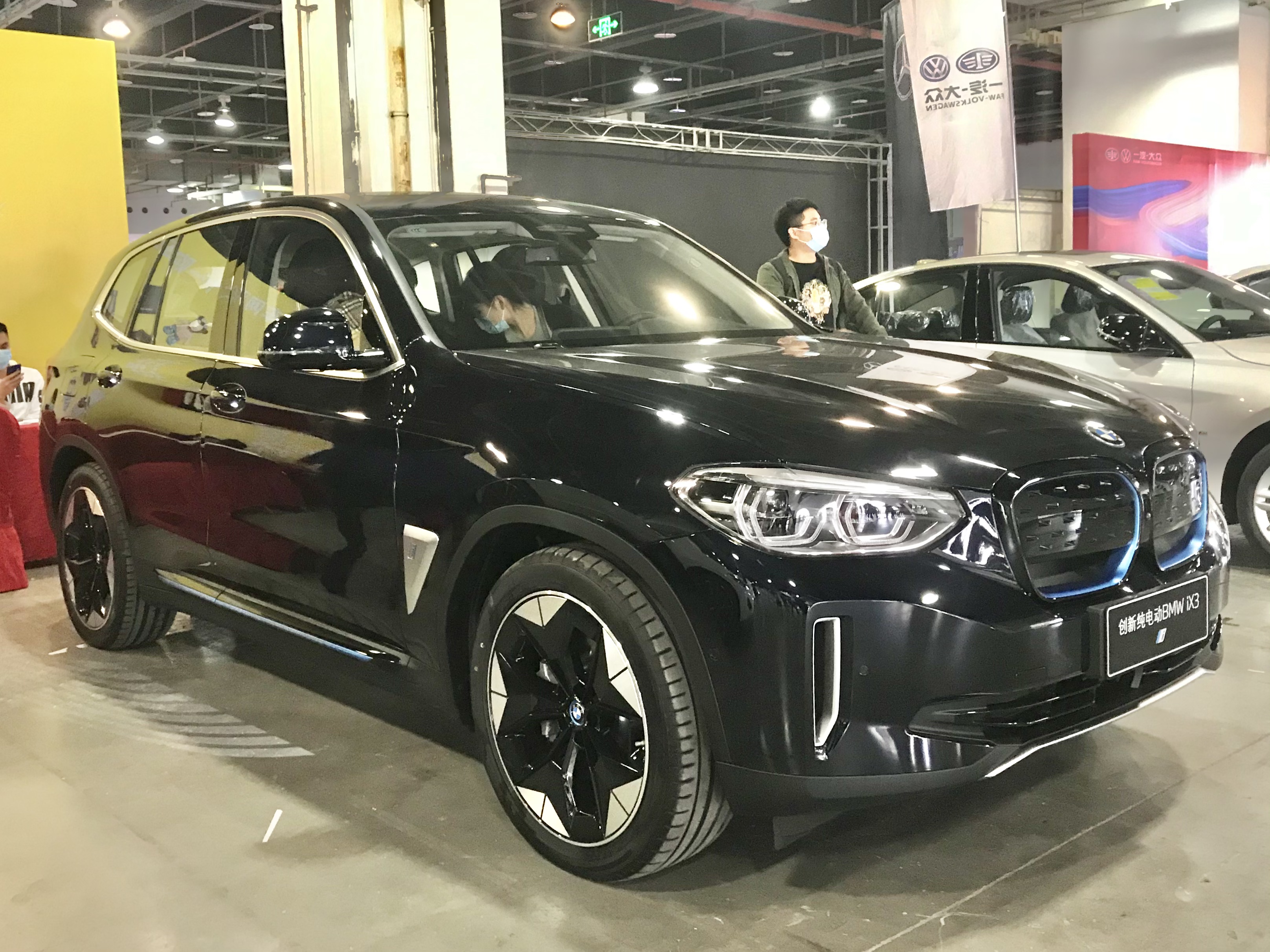
iX3 (G08)
"...the all-electric side. I think we've seen the new IX3. Is that what it's called? Sorry, the BMW."
The iX3 (G08) is an electric SUV from BMW. The podcast is mentioning the newer version, so it’s part of a discussion about what’s updated or improved in the EV lineup. It’s mainly being used to talk about current electric SUV options.
The iX3 (G08) is referenced in the podcast as the “new iX3,” tied to the all-electric side of the conversation. It’s brought up as a current-generation update, meaning the discussion is likely about how BMW’s EV lineup is evolving. That makes it a relevant topic when comparing what’s new in electric SUVs.
battery is actually directly integrated into the vehicle's frame
"[232.6s] What's really interesting is that a lot of the battery tech has been improved, [236.6s] but also the platform is interesting because the battery is actually directly integrated [242.5s] into the vehicle's frame. So it sits nice and low. And by doing so,"
This describes an EV “structural battery” approach, where the battery pack is integrated into the car’s chassis/frame rather than mounted only as a removable component. Integrating the battery can lower the center of gravity (better handling) and improve crash structure rigidity.
battery integral with the chassis
"It is the trend. trend where everybody's going to make the battery integral with the chassis. And part of that, obviously, is like vehicle dynamics. It keeps the weight nice and low."
Some EVs put the battery in a “frame” that also helps the car’s structure. That can make the car lighter and create more usable space inside.
This describes an EV design where the battery pack is built into the vehicle’s structure rather than being a separate, bolted-on component. Integrating the battery this way can free up interior packaging space and lower overall weight by reducing redundant structural parts.
vehicle dynamics
"And part of that, obviously, is like vehicle dynamics. It keeps the weight nice and low."
Vehicle dynamics is basically how the car feels and behaves while driving—how stable it is and how well it handles. Putting heavy parts like the battery low can help the car stay balanced.
Vehicle dynamics is the study of how a car behaves as it moves—things like stability, handling, and how weight affects grip and control. In EV design, keeping battery weight low and centered can improve these dynamic behaviors.
P6
"There's the P6, the P10, and the P12. So first off, it's going to start off with a rear-mounted motor, a single motor P6 unit."
P6 is Volvo’s label for one version of the EX60’s electric drivetrain. Here it means a single electric motor mounted at the rear.
P6 is Volvo’s internal naming for one of the EX60’s powertrain configurations. In this segment, P6 refers to a rear-mounted single-motor setup.
P12
"And in typical Volvo fashion, they have names. There's the P6, the P10, and the P12."
P12 is Volvo’s label for a drivetrain option on the EX60. In this part of the conversation, it’s mentioned as one of the named choices.
P12 is Volvo’s named powertrain variant for the EX60 lineup. Like P10, it’s referenced as one of multiple drivetrain options, but this excerpt doesn’t yet spell out its specific configuration.
P10
"And in typical Volvo fashion, they have names. There's the P6, the P10, and the P12."
P10 is Volvo’s name for another version of the EX60’s electric drivetrain. This clip mainly mentions it as one of the options available.
P10 is one of Volvo’s named powertrain variants for the EX60 lineup. In this excerpt it’s listed as part of a set (along with P6 and P12), but the detailed motor layout isn’t described yet.
10 to 80%
"16 minutes to charge, 10 to 80%. How much power for the charger? 350?"
This is a standard way EV makers quote charging speed: how long it takes to go from 10% battery to 80%. Charging is typically faster in that range than when you push toward 100%.
“10 to 80%” is a common EV charging test window that measures how long it takes to charge from 10% battery state-of-charge to 80%. It’s used because charging is usually fastest in the middle of the battery’s range, while the last part of charging slows down to protect the battery.
800-volt architecture
"So we're talking all of the architecture of this is an 800-volt architecture."
This is the EV’s electrical “system voltage.” Higher voltage can let the car accept more charging power, which helps it charge faster.
An 800-volt architecture means the EV’s electrical system is designed around a higher voltage than the more common ~400-volt setups. Higher voltage lets chargers deliver more power with lower current, which can enable faster charging and reduce heat in cables and components.
recouped energy
"And they're saying that within 10 minutes, you can see up to 155 miles of recouped energy."
Recouped energy means the car “gets some energy back” while slowing down. Regenerative braking turns some of that slowing motion into electricity to recharge the battery.
Recouped energy refers to energy recovered by the car, typically through regenerative braking. Instead of wasting speed as heat, the drivetrain converts some motion back into electrical energy to recharge the battery.
NACS
"And the fact that it's got the NACS, the Tesla charger, that's probably a good bet."
NACS is the plug type Tesla uses for charging. If your EV supports it, you can use Tesla fast chargers more easily.
NACS is Tesla’s charging connector standard. When an EV supports NACS, it can use Tesla’s charging network (often with an adapter depending on the car and station), which can make finding compatible fast chargers easier.
Volvo P10
"because as we move up, we go to the P10, which has a dual motor. It's a twin-motor setup, so obviously, with all-wheel drive. 322 miles of range, 503 horsepower."
The Volvo P10 is one version of Volvo’s EV lineup. It uses two electric motors, which usually helps it drive all four wheels for better traction and stronger acceleration.
Volvo’s P10 is an EV trim that uses a dual-motor (twin-motor) layout, which typically means power is split between the front and rear axles. In this segment it’s described as having all-wheel drive, plus a mid-grade range and a high output figure.
dual motor
"we go to the P10, which has a dual motor. It's a twin-motor setup, so obviously, with all-wheel drive."
A dual-motor EV uses two electric motors instead of one, often allowing power to be distributed front-to-rear. That can improve traction and enable all-wheel drive behavior without a traditional driveshaft layout.
all-wheel drive
"It's a twin-motor setup, so obviously, with all-wheel drive. 322 miles of range, 503 horsepower."
All-wheel drive means power can go to all four wheels. It helps the car stay planted on slippery roads and can improve acceleration.
All-wheel drive (AWD) means the vehicle can send power to both the front and rear axles. On EVs with dual motors, AWD is often achieved by controlling each motor independently for better grip in low-traction conditions.

Volvo P12
"of course, you move up to the P12, which I believe is coming later down the pipeline. It's, again, the same twin-motor configuration with all-wheel drive. 400 miles of range. This one takes 19 minutes to charge, the 10 to 80 percent, and 670 horsepower."
The Volvo P12 is a higher version of Volvo’s EV lineup that’s expected later. It also uses two motors for all-wheel drive, and it’s described as having more range and power than the lower trims.
Volvo’s P12 is positioned as a higher trim coming later, and it’s also described as using the same twin-motor, all-wheel-drive setup. The segment ties it to longer range and faster charging performance, plus even higher horsepower than the P10.
kilowatt-hour
"Both P6s, because there are like two grades to it, they get an 83 kilowatt-hour battery, and then for the P10s, you get a 95 kilowatt-hour battery."
Kilowatt-hour (kWh) tells you how big the EV’s battery is. A bigger kWh number usually means more potential range, because there’s more energy stored.
Kilowatt-hour (kWh) is a measure of battery capacity—how much electrical energy the EV can store. In this segment, different trims are tied to different kWh battery sizes, which helps explain differences in range and pricing.
EV ditch
"And all of a sudden, the EV ditch has started up the upper side with more demand because of reactionary buying."
This sounds like the host is talking about a sudden surge of interest in EVs. The idea is that people are buying sooner because the situation right now makes EVs feel more attractive.
“EV ditch” appears to be a mis-transcription of “EV ditch”/“EV ditch has started up” meaning a sudden shift toward electric vehicles. The host’s point is that demand is being pulled forward by current conditions, not necessarily by long-term consumer planning.
instrument cluster
"I'm happy to see there is a, it's pretty slim, but there is an instrument cluster in the 60, which if you remember the EX30, there was no instrument cluster at all."
An instrument cluster is the main screen or gauge panel behind the steering wheel. It’s where you normally see things like speed and key vehicle status at a glance.
An instrument cluster is the driver-facing display behind the steering wheel that shows core vehicle information like speed, battery status, and driving modes. Here, the host highlights that the EX60 has one, while the EX30 reportedly does not.
head up display
"There's just a head up display that I think could be option that wasn't even standard. So, at least you have an instrument cluster and there's a large, it's not portrait style, sorry, it's horizontal."
A head-up display shows important info on the windshield, like speed or navigation cues. That way you don’t have to take your eyes off the road to check the dashboard.
A head-up display (HUD) projects key driving information onto the windshield so you can see it without looking down at the instrument panel. In this segment, the host contrasts the EX30’s HUD-centric approach with the EX60’s inclusion of a conventional instrument cluster.
Geely
"[695.9s] they're owned by Geely, correct? Yes. So, they've tapped into some of the latest"
Geely is the company that owns Volvo. Because of that, Volvo can use some of Geely’s technology and connections, including newer software ideas.
Geely is the Chinese automaker that owns Volvo. That ownership matters because it influences Volvo’s access to platforms, suppliers, and software/AI partnerships coming out of China.
in-house software and hardware
"[715.6s] I mean, there's new in-house software and hardware from Volvo. And I do know that they are integrating"
“In-house” means Volvo is building its own tech for the car, instead of buying everything from other companies. That can help the system work more smoothly and get improvements later.
“In-house” means Volvo is developing its own software and hardware stack rather than relying entirely on third-party systems. For listeners, that’s a clue the car’s infotainment, controls, and AI features may be more tightly integrated and updated over time.
AI tools
"[723.8s] like AI tools. Again, they want this to be very tech-forward. So, there's Gemini,"
AI tools are computer features that can “learn” patterns and help the car understand what you want—like voice commands or smarter suggestions. Whether it’s actually helpful depends on how well it works in real driving tests.
AI tools in a vehicle typically refer to software that uses machine learning to interpret voice commands, assist with navigation/infotainment, or personalize the user experience. The host’s point is that Volvo is integrating these tools to be “tech-forward,” but real-world usefulness depends on how well they perform in testing.
Gemini
"[729.5s] Google's Gemini in it. How well it works, I'm not 100% sure. But once we get it in here"
Gemini is Google’s AI system. The host is saying Volvo is putting that AI into the car, so you may be able to use it for smarter conversations or help through the screen.
Gemini is Google’s AI assistant platform mentioned here as being integrated into Volvo’s vehicle tech. In practice, that suggests Volvo is using Google’s AI capabilities for conversational features or assistance inside the infotainment system.
station wagon
"[791.4s] I don't disagree with you, because the idea, the concept of a station wagon,"
A station wagon is like a car with extra cargo space behind the seats, but with a roof that extends farther back. The host likes wagons because the trunk area can be lower and easier to load, without giving up visibility.
A station wagon (often shortened to “wagon”) is a body style with a longer roofline and a rear cargo area that’s integrated with the passenger cabin. The host argues wagons can be easier to get into due to a lower load deck, while still offering good visibility thanks to a boxier shape compared with many tall SUVs.
load deck
"[799.0s] so that folks that, frankly, get up in years, have a little easier time getting into, has a lower load deck in the back."
The load deck is basically the “floor” level of the trunk/cargo area. If it’s lower, it’s easier to lift bags or groceries in and out.
The load deck is the floor/threshold height of the cargo area you lift items onto. A lower load deck generally makes loading and unloading easier, especially for people who may have mobility limitations.

Renault Wind
"...e of a pure SUV, but I think we're talking to the wind here. Well, I have a question for you, Ron. You k..."
The Renault Wind is a small car model from Renault. It’s not a typical SUV; it’s more of a compact, distinctive style vehicle. The podcast mentions it with a pun because the name “Wind” fits the idea of something light and airy.
The Renault Wind is a small, two-seat-oriented car concept that’s often described as a compact “crossover-like” or open-top style vehicle rather than a traditional SUV. In the podcast, it’s referenced with wordplay around “talking to the wind,” which fits its name and its light, airy character. That makes it a memorable model when the episode is discussing unusual or niche vehicle types.

Jeep Cherokee
"That's a great example, considering that they've taken, for the new Cherokee, that engine, [1046.7s] that 1.6-liter comes directly from Stellantis Europe."
The Jeep Cherokee is a popular SUV model. They’re saying the new one uses an engine that comes from Stellantis, which is a company that supplies parts and technology to multiple car brands.
The Jeep Cherokee is a compact SUV line from Jeep. In this segment, the hosts mention a new Cherokee using a 1.6-liter engine sourced from Stellantis Europe, highlighting how automakers share powertrains across brands and regions.
1.6-liter
"That's a great example, considering that they've taken, for the new Cherokee, that engine, [1046.7s] that 1.6-liter comes directly from Stellantis Europe."
“1.6-liter” is a way of describing the engine’s size. Smaller engines often use less fuel, and here they’re saying this particular engine is supplied by Stellantis.
“1.6-liter” refers to engine displacement, meaning the total volume of all cylinders combined. A smaller displacement like 1.6 liters is often used to improve efficiency, and in this case it’s tied to a shared powertrain from Stellantis Europe.
Stellantis Europe
"That's a great example, considering that they've taken, for the new Cherokee, that engine, [1046.7s] that 1.6-liter comes directly from Stellantis Europe."
Stellantis is a big car company. “Stellantis Europe” here means the company’s European side, and they’re saying the engine used in this Jeep comes from that shared corporate supply.
Stellantis Europe refers to the European operations of Stellantis, the automaker formed from the merger of Fiat Chrysler and PSA. The hosts use it to explain how powertrains can be sourced and shared across brands and regions, such as a 1.6-liter engine used in a Jeep.
plug-in hybrid
"Like with them, they've got plug-in hybrids in the range extenders in the other parts [1063.2s] of the world."
A plug-in hybrid is a car that can run on electricity, but it also has a gas engine for longer trips. You can charge it like a regular EV, and that’s why it can be more efficient for daily driving.
A plug-in hybrid (PHEV) is a hybrid car that can be charged from an external power source (like a wall outlet) in addition to using its engine. The segment contrasts plug-in hybrids and “range extenders,” arguing that some brands develop this tech in other markets but don’t offer it in the U.S.
range extenders
"Like with them, they've got plug-in hybrids in the range extenders in the other parts [1063.2s] of the world."
A range extender is like a backup power source for an electric car. Instead of using the gas engine to drive the wheels directly, it generates electricity to help the car go farther.
A range extender is a small engine/generator used to produce electricity and extend the driving range of an electric drivetrain. In practice, it’s a way to reduce “range anxiety” without relying on a full-size gas engine for propulsion all the time.
Federal EV Tax
"Okay, here we go. Some states already charge extra fees when registering an all-electric"
They’re about to talk about government rules and fees that affect electric cars. These policies can change how expensive it is to buy or register an EV.
The segment is setting up a discussion about how federal policy affects electric vehicles, specifically mentioning extra fees tied to registering all-electric cars in some states. This is the kind of policy topic that can influence EV adoption and pricing.
electric vehicles
"it has bipartisan support that would require electric vehicles to pay a $130 annual federal fee and $35 for some plug-in hybrids"
An electric vehicle is a car that runs on electricity from a battery. Since it doesn’t use gasoline, it doesn’t pay the usual gas-tax that helps pay for roads.
Electric vehicles (EVs) are cars that primarily use electricity stored in a battery to power an electric motor. Because they don’t burn gasoline, they don’t contribute to the federal gas tax that’s commonly used to fund road spending.
federal fuel tax
"because Congress has not raised the federal fuel tax for three decades. It has been about a little over 18 cents"
The federal fuel tax is a tax added to each gallon of gas you buy. Since EVs don’t buy gas, lawmakers are trying to replace that money with EV-related fees.
The federal fuel tax is a per-gallon tax on gasoline (and often diesel) that helps fund transportation programs, including road maintenance. The hosts note it hasn’t been raised in decades, which is why lawmakers are considering EV fees to replace revenue as EV adoption grows.
flat tax
"I think my problem with this is like a flat tax doesn't necessarily make as much sense in my book compared to, I mean, it's quite clear."
A flat tax means everyone pays the same amount. The host is saying that might be less fair than a gas tax, which naturally changes based on how much gas you use.
A flat tax charges the same amount regardless of how much someone uses or how much impact they have. In this context, the host argues a flat EV fee may not match the logic of a fuel tax, which scales with how much gasoline a vehicle consumes.
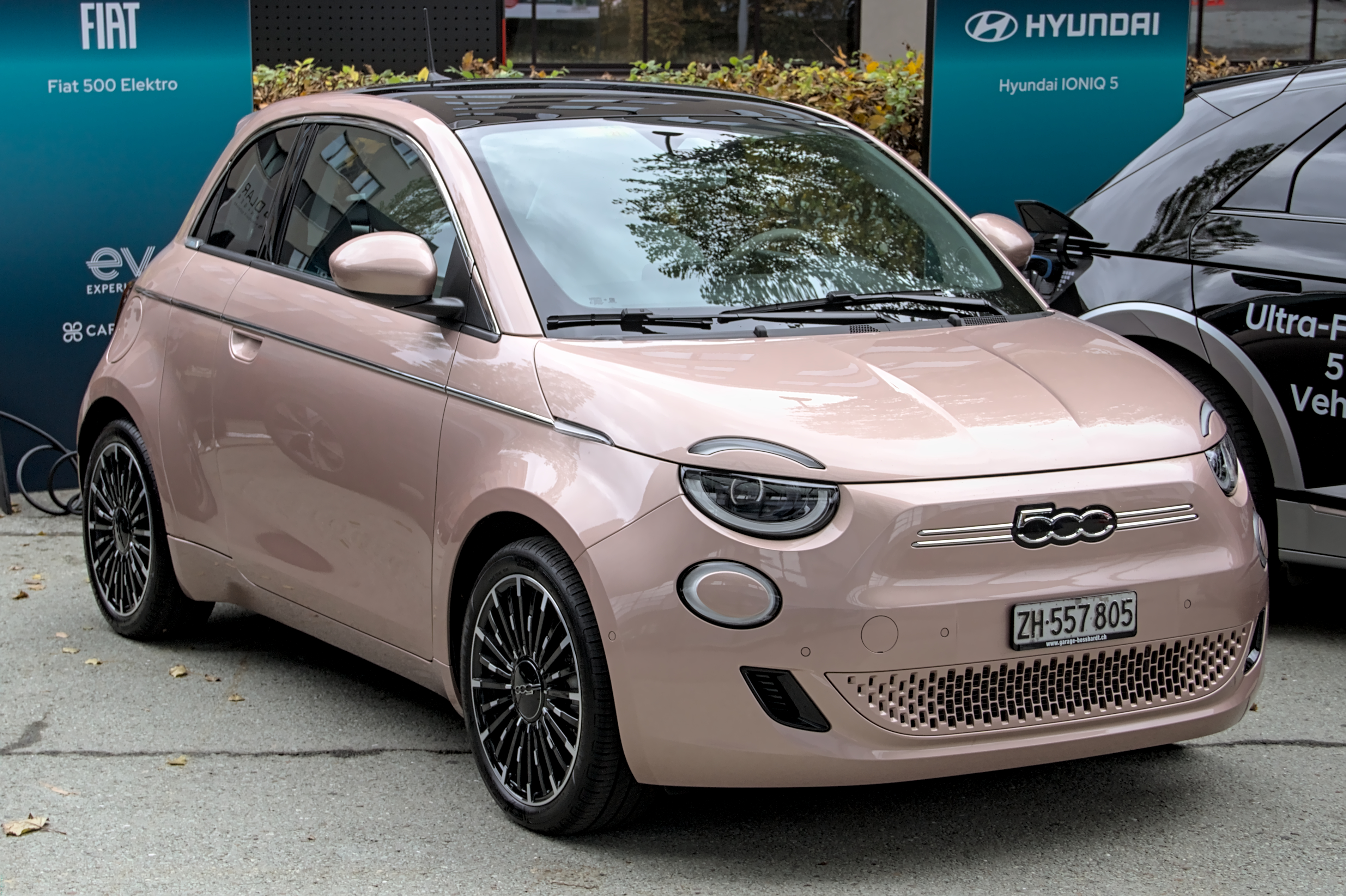
Fiat 500e
"for somebody like John, who owns a Fiat 500E, which is a tiny little thing, or even somebody who owns a Leaf."
The Fiat 500e is a small electric car. The host brings it up to argue that a tiny EV might not be the best candidate for a fee that doesn’t scale with impact.
The Fiat 500e is an all-electric version of Fiat’s small 500 city car. In the segment, it’s used as an example of a relatively small, lighter EV that the host thinks could end up paying more than its “share” under a flat annual EV fee.
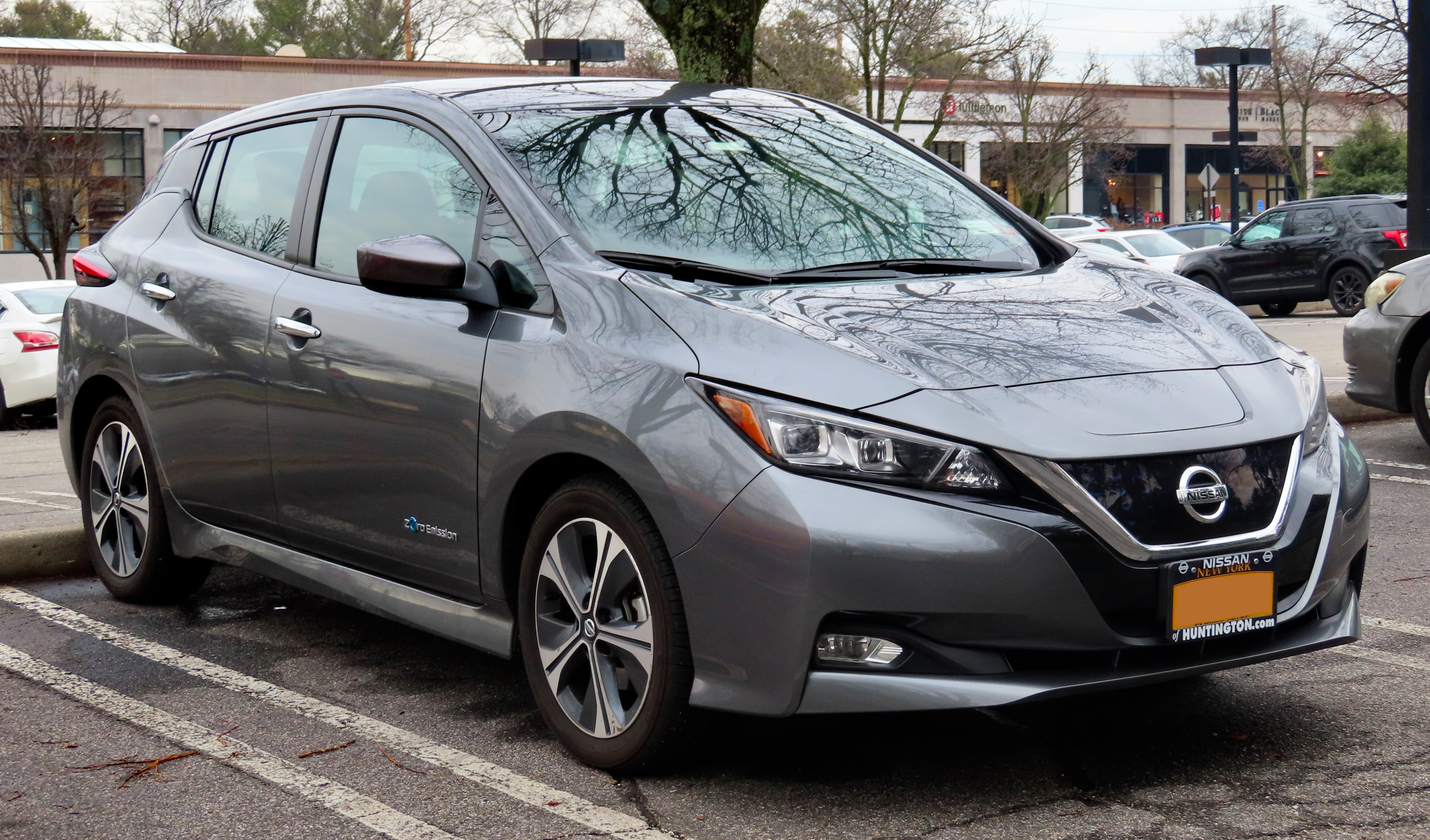
Leaf
"or even somebody who owns a Leaf. Part of this is paying for road repairs."
The Nissan Leaf is a common electric car. The host uses it as an example of a smaller EV that might pay more than it “should” under a one-size-fee approach.
The Nissan Leaf is a mainstream, battery-electric compact car. Here it’s mentioned as another example of a smaller EV that the host believes could be overcharged by a flat annual fee compared with how a per-gallon fuel tax would scale with vehicle use.
use tax
"Here's the alternative that they've been talking, [1348.4s] I haven't gotten Alex's take yet. Alex hadn't had his 30 seconds. But the alternative to this [1355.3s] is what they've been talking about for a couple of decades was a use tax, [1361.4s] charging people for how much they drive."
A “use tax” means you pay based on how much you use something. Here, they’re talking about charging drivers based on how much they drive, instead of a one-time or fixed amount.
A “use tax” is a tax tied to how much you use something rather than a flat fee. In this context, it’s being discussed as a road-charging system where the government would bill drivers based on driving activity tracked by the state.
one size fit all approach
"So in a way, that outcry has led to this one size fit all approach. Alex, any comments?"
“One size fit all” means the same rule for everyone. The speaker is saying that approach may ignore important differences between people and also raises concerns about privacy.
A “one size fit all” approach means applying the same rule or policy to everyone, regardless of differences in circumstances. Here, it’s used to criticize a standardized road-charging/tax method that may not account for privacy concerns or varying driver behavior.
general fund
"But what you've put your finger on is what happens was so much of this [1451.9s] type of legislation is the money is being raised ostensibly for one purpose, but it goes into [1458.4s] a general fund and may or may not actually make it to the purpose it was being raised for."
A “general fund” is a government’s broad pool of money used for many different expenses. The speaker’s point is that even if a tax is collected for roads, it may be routed into the general fund and not necessarily spent on the intended transportation purpose.
federal highway fund
"Although in this case, it probably would go into the federal highway fund. [1473.5s] There is something to be said about rising costs of repairs for roads."
The “federal highway fund” is money the government sets aside specifically for roads. The speaker is saying this proposal might actually go to road projects instead of being mixed into other spending.
The “federal highway fund” refers to a dedicated pool of federal money intended for road and highway spending. The speaker contrasts it with the general fund, suggesting this particular tax might be earmarked for transportation rather than diverted elsewhere.
General Motors Proving Ground in Milford, Michigan
"Because when you go to Detroit, this is the time of a year where lots of construction is going on in Detroit as we speak. And in the middle of the General Motors Proving Ground in Milford, Michigan, is a torture road section..."
This is a GM testing site in Michigan where they drive cars on special roads to see how they hold up. The idea is to recreate rough real-world pavement so they can find problems early.
This is a test facility run by General Motors in Milford, Michigan, where engineers evaluate cars and components under controlled conditions. The hosts mention a specific “torture road” section there, designed to mimic real-world pavement damage so durability and reliability can be measured.
torture road section
"And in the middle of the General Motors Proving Ground in Milford, Michigan, is a torture road section that is modeled almost exactly after a real road in Michigan called the 10-mile road."
A “torture road” is a rough test stretch where they beat up a car on purpose. It helps engineers see how well the suspension and other parts survive bad roads.
A “torture road section” is a deliberately harsh test track segment used to stress a vehicle’s suspension, tires, and chassis. It’s built to reproduce common pavement problems—like potholes, unevenness, and expansion joints—so engineers can evaluate durability and ride robustness.
10-mile road
"And in the middle of the General Motors Proving Ground in Milford, Michigan, is a torture road section that is modeled almost exactly after a real road in Michigan called the 10-mile road."
They’re saying the test road is based on a specific real road in Michigan. That way, the car is tested on something that matches real pavement conditions.
The “10-mile road” is referenced as a real Michigan road that the test facility’s torture section is modeled after. Using a specific real-world road pattern helps make the durability test more representative of what drivers actually experience.
Monroney label
"Everybody that buys a new car knows that the bottom of the Monroney label, one of the last things on it before the dealer adds anything extra on is something called destination fee."
The Monroney label is the official sticker on a new car’s window. It shows the important info and pricing, including fees like the destination charge before the dealer adds anything else.
The Monroney label is the official window sticker in the U.S. that lists a car’s key pricing details and specifications. The hosts point out that destination fee appears near the bottom of this label, before dealers add their own extra charges.
destination fee
"Everybody that buys a new car knows that the bottom of the Monroney label... is something called destination fee. And this extensively is a fee that basically the manufacturer's charging you to get the vehicle from the plant or the import area to the dealership."
A destination fee is money added to a new car price to pay for getting the car from the factory to the dealer. It’s basically a shipping/transport charge that shows up on the window sticker.
A destination fee is a charge added to a new car’s price to cover shipping it from the manufacturer’s plant (or an import location) to the dealership. In the segment, the hosts describe it as a manufacturer-set fee that can feel like extra cost to buyers, even though it’s meant to reflect logistics.
MSRP
"I've noticed that a new model year comes out and they'll say, we didn't raise the MSRP, but then when you dig into it, they have raised the destination fee."
MSRP is the price number the carmaker puts on the window sticker as a starting point. The dealer can still add extra charges, so the final price you pay can be higher. That’s why shoppers should look past just the MSRP.
MSRP (Manufacturer’s Suggested Retail Price) is the printed baseline price a carmaker recommends for a new vehicle. Dealers can still add other charges on top, like destination fees and dealer add-ons, so the final price may be higher than what the MSRP suggests. In the segment, the host is contrasting MSRP with other fees that can quietly increase the real cost.
doc fees
"Remember what I said about... Like document fees. Document fees. Doc fees. Crazy work. ... Doc fee could be anything. A dealer could do any, it could be a few hundred dollars, it could be a thousand dollars."
Doc fees are extra charges a dealer adds for handling the paperwork of buying the car. They can be different from dealer to dealer, and sometimes states limit them. It’s a line item you can often negotiate or at least challenge.
Doc fees (documentation fees) are charges dealers add for paperwork and administrative processing when you buy a car. Unlike destination fees, doc fees can vary widely by dealer and may be influenced by state rules (including minimums or maximums). The host argues doc fees have become a bigger way to raise the transaction price while keeping MSRP the same.
non-negotiable
"They said it was non-negotiable and I said buy and I walked out. I don't need it."
“Non-negotiable” is what a dealer says when they claim a fee can’t be reduced or removed. The host’s point is that dealers sometimes use this to keep extra charges in the deal. If you’re shopping, it’s worth pushing back and comparing offers.
In car buying, “non-negotiable” is a dealer claim that a specific charge (often a doc fee or similar add-on) cannot be removed from the deal. The host contrasts that with their experience that many items are still negotiable in practice. This matters because fees can be used to increase the final price even when the MSRP is unchanged.
Porsche
"And aren't there programs like I know like Porsche has one and various ones where you can go pick the car up at like the plant."
Porsche is brought up as an example of a brand that may offer a direct pickup option near where the car is built. The host is using it to illustrate that the “where you live” shipping logic doesn’t always change the price you pay. It’s part of the broader discussion about fees.
Porsche is mentioned in the context of a program where buyers can pick up a car directly at or near the plant. That kind of delivery/pickup program can change how shipping and logistics are handled compared with a traditional dealer delivery flow. The host uses it as an example while discussing destination fees and who pays them.
BMW
"Yeah. And like the Mercedes. BMW. I think that is like zero. Well,"
BMW is mentioned as another brand that may offer a pickup option near the factory. The host is using it to argue that shipping-related charges don’t always reflect distance the way you’d expect. It’s tied to the destination fee topic.
BMW is referenced as part of a list of brands that may have programs allowing buyers to pick up cars near the plant. This is relevant to the segment because it challenges the idea that destination charges should vary based on how far you live. It’s a supporting example in the broader destination-fee conversation.
Mercedes
"And aren't there programs like I know like Porsche has one and various ones where you can go pick the car up at like the plant. Yeah. And like the Mercedes."
Mercedes is mentioned as another car brand that may let buyers pick up the car closer to where it’s built. The host uses it to show that even with different pickup options, the final price can still include shipping-related fees. It’s part of the fee discussion.
Mercedes is mentioned as another brand that may offer a pickup program near the manufacturing plant. The point in the segment is that some logistics arrangements exist beyond the standard “ship to dealer” model, yet buyers can still face similar destination-style charges. It’s used to support the host’s argument about pricing consistency.
European delivery
"John explain how those... Well, you know, the European manufacturers for decades and decades have allowed European delivery. It would be a US spec vehicle."
It’s when you order a car in the U.S., then go to Europe to pick it up from the factory. You drive it on your vacation and then have it shipped back home.
European delivery is a program where you buy a car in the U.S. but pick it up directly at the manufacturer’s plant in Europe. The car is then driven on your trip and shipped back to the U.S., often for a separate fee.
undercut the market
"but we are setting ourselves up for the Chinese who will be able to seriously undercut the market. So, you know, it's deja vu all over again, as Casey Stingle would say, headset."
This means a company sells cars for less than competitors to attract buyers. The hosts are saying that when that happens, it can push the whole market to adjust prices.
“Undercut the market” refers to a strategy where a manufacturer prices vehicles below prevailing competitors to win share. The hosts connect it to how new entrants (they mention China) can force pricing pressure and trigger a broader industry “cycle.”
cycle of capitalism
"And I won't be surprised if in the next five years or so we see something like that happen. [2268.8s] Okay, I think we've still got another car to talk about. [2272.7s] Sure do."
They’re using a general economic idea: markets tend to repeat patterns over time. Here, they’re applying it to car pricing and competition between different regions and brands.
“Cycle of capitalism” is a broad idea that markets go through repeating phases—competition, pricing pressure, and shifts in who has the advantage. In this segment, it’s used to frame why automakers’ pricing and feature strategies can feel like they’re repeating past eras.

new Lexus ES Sedan
"Okay, we're going to turn now to the new Lexus ES Sedan, a model that goes back to the 80s, like I was talking about. It was actually introduced as the ES 250 alongside the LS when Lexus debuted in 1989."
The Lexus ES is a Lexus sedan that’s built to feel smooth and refined rather than sporty. In this episode, they’re talking about the newest ES and how it traces back to the original ES 250 when Lexus first started.
The Lexus ES is Lexus’s midsize “comfort-first” sedan line, and this segment is about the new-generation ES. The hosts connect it to its roots as the ES 250, introduced when Lexus launched in 1989, and they frame it as more than just a dressed-up Toyota Camry.

LS
"It was actually introduced as the ES 250 alongside the LS when Lexus debuted in 1989. At the time, most everybody looked at it as a gussied up Camry."
The Lexus LS is Lexus’s big, high-end sedan. The hosts mention it because Lexus launched both the LS and the ES 250 at the same time, showing they were aiming at different levels of luxury from day one.
The Lexus LS is Lexus’s flagship luxury sedan, and it’s referenced here as launching alongside the ES 250 in 1989. Mentioning the LS helps set context for how Lexus positioned itself immediately with both a top-tier flagship and a more accessible luxury sedan.
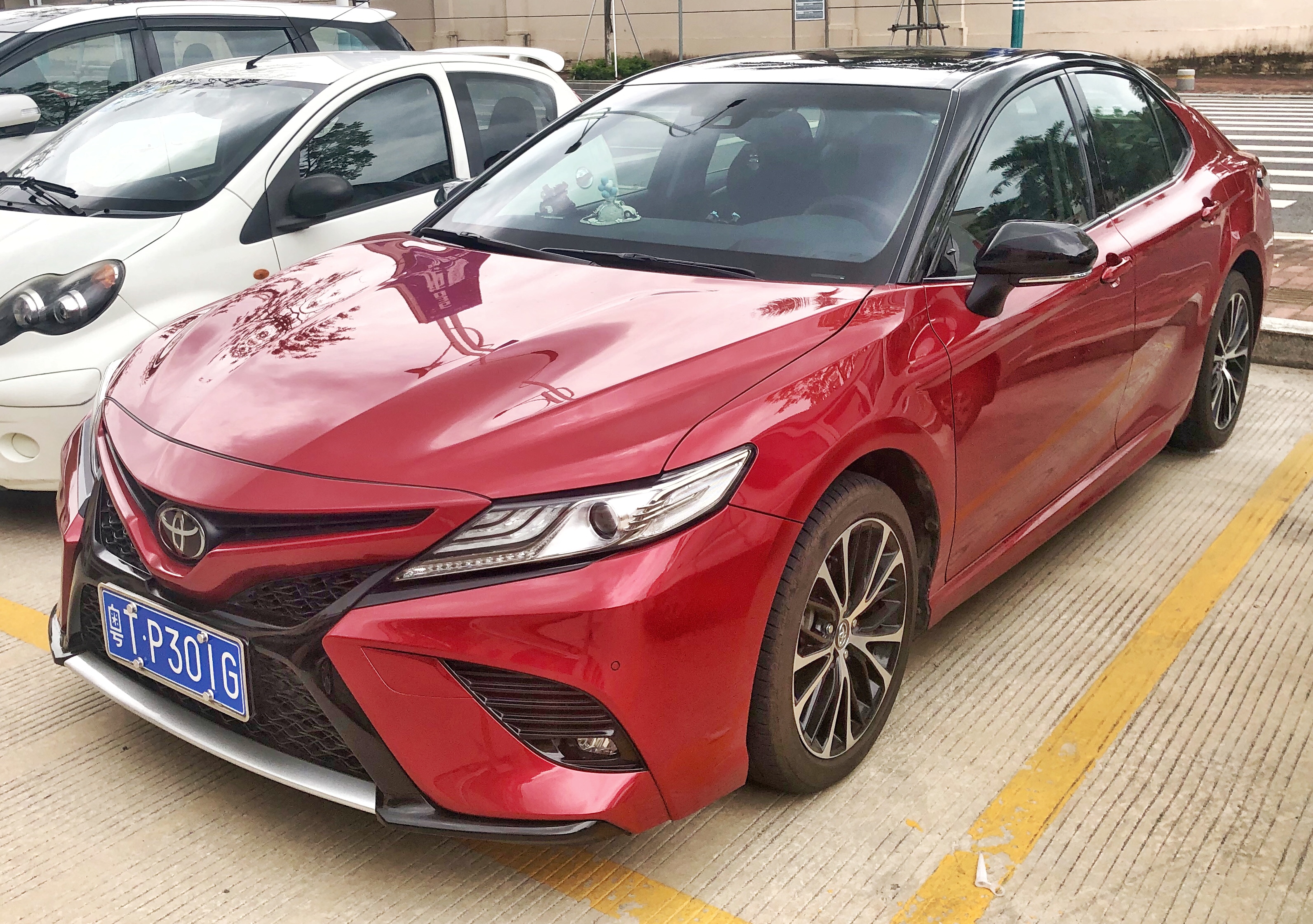
Toyota Camry
"...time, most everybody looked at it as a gussied up Camry. It became actually a stalwart vehicle that suppo..."
The Toyota Camry is a regular, everyday car in the mid-size sedan category. It’s known for being dependable and comfortable for daily driving. The podcast is basically using it as a reference point for what people compare other cars to.
The Toyota Camry is a mid-size sedan known for being a dependable, everyday car with broad appeal. In the podcast context, it’s referenced as a baseline that others were compared to—described as something that became a “stalwart vehicle.” That kind of mention usually points to its long-running role as a practical standard in the segment.

Toyota Crown
"...tion, right? I would say it's a gussied up Toyota Crown, in a way. And I say that partially joking. But w..."
The Toyota Crown is a nicer, more upscale Toyota sedan than the basic models. In the podcast, it’s described as an upgraded version of a more common Toyota sedan concept. The point is that it aims to feel more premium while still being a practical car.
The Toyota Crown is a premium sedan nameplate that’s positioned above many typical mainstream sedans. In the podcast, it’s referenced as something like a “gussied up” version of a Camry-style idea, with the speaker jokingly comparing it to an upgraded Crown. That kind of comment usually points to how the Crown blends comfort and status with familiar Toyota fundamentals.
powertrain
"There's been a lot of changes here. The big one being the powertrain. So, there are two ways you can go."
A powertrain is the “moving system” of the car—how it makes power and sends it to the wheels. They’re saying the ES’s powertrain is changing a lot in this new generation.
A powertrain is the set of components that generate and deliver power to move the vehicle. Here, the hosts emphasize that the ES’s powertrain changes are the main update, with choices including hybrid and fully battery-electric setups.
battery electric
"But you can either go with a hybrid powertrain or you can go full battery electric. So, this is the first time the ES has gone battery electric."
“Battery electric” means the car runs on electricity stored in a battery. Instead of a gas engine, it uses electric motors to move the car.
“Battery electric” means the car is powered primarily by an electric motor drawing energy from a high-voltage battery, rather than using a gasoline engine. In this ES context, it’s the first time the ES line is offered as a full EV option.
19-inch wheels
"That's with 19-inch wheels. And on the 500E... That one has 276 miles of range with the 19-inch wheels."
Wheel size can change how efficiently an EV uses energy. They say the 19-inch wheels help the car achieve the range numbers they quoted, instead of using bigger wheels.
Wheel size can affect EV efficiency because larger wheels and tires can increase rolling resistance and aerodynamic drag. The hosts specifically connect 19-inch wheels to the stated range figures and contrast them with the idea of going to larger 22-inch wheels.

Lexus 350E
"compared between the 500E and the 350E, I don't think you need the 500E [2464.7s] when it comes to the power, because the way that, by now, everyone knows with the battery electric, [2469.7s] even if it doesn't have a ton of power, that power comes on very quickly."
The Lexus 350E is an electric version of the ES. The host is saying it feels quick because electric motors deliver power right away, not after the engine revs up.
The Lexus 350E is discussed as a battery-electric ES variant where the host emphasizes how quickly power arrives. The key point is that even without “a ton of power,” electric drivetrains can feel responsive because torque is available immediately.

Lexus 500E
"compared between the 500E and the 350E, I don't think you need the 500E [2464.7s] when it comes to the power, because the way that, by now, everyone knows with the battery electric, [2469.7s] even if it doesn't have a ton of power, that power comes on very quickly."
The Lexus 500E is the stronger electric ES option. The host’s point is that the “smaller” electric version can still feel plenty fast because electric power comes instantly.
The Lexus 500E is positioned as the higher-power electric ES option, but the host argues you may not need it for everyday driving. The comparison highlights how electric vehicles can still feel energetic due to immediate torque, even if peak horsepower isn’t the highest.
instantaneous torque
"even if it doesn't have a ton of power, that power comes on very quickly. [2473.1s] You have that instantaneous torque."
Torque is the twisting force that makes the car move. With an electric car, that force shows up almost right away when you hit the pedal, so it feels quick.
Instantaneous torque is the electric-motor trait of delivering twisting force immediately when you press the accelerator. That’s why an EV can feel responsive even if its peak horsepower number isn’t huge.
forward visibility
"But actually, the first thing I noticed getting into the 350E, which transcends that and goes to [2490.2s] every ES, is the forward visibility, which is something I don't think we always talk about."
Forward visibility means how clearly you can see what’s in front of you while driving. The host is saying the Lexus ES makes it easier to see the road because the dashboard/hood area doesn’t get in the way.
Forward visibility is how well a driver can see the road ahead, influenced by factors like hood height, dashboard shape, and windshield placement. The host notes the ES stands out because the dash/cluster design doesn’t block the view the way some cars do.

Ford Edge
"...ause it's not. But it has a little bit more of an edge to it. The word I use to describe it, which I'll ..."
The Ford Edge is a mid-size SUV that’s built for normal daily driving. It’s meant to feel a little more stylish or sporty than the most basic family SUVs. The podcast is describing it as having “more of an edge” in how it’s positioned.
The Ford Edge is a mid-size crossover SUV focused on everyday comfort with a more assertive styling and driving feel than some simpler family crossovers. The podcast uses the word “edge” to describe its character, implying it’s meant to feel a bit more distinctive or sporty. That’s why it often comes up in discussions about mainstream SUVs that try to stand out.
rigid
"The word I use to describe it, which I'll use now, and I can't wait for the internet to [2538.9s] roast me on, is rigid. And not in a bad way. And I assume this is because of the platform."
When the host says “rigid,” they mean the car feels firm and doesn’t twist or wobble much. That can make handling feel more precise, especially on twisty roads.
In chassis feel, “rigid” refers to how stiff the platform feels under load—less flex when you corner, brake, or change direction. The host connects that stiffness to handling confidence, suggesting the ES platform contributes to a more controlled, composed ride.
naturally aspirated
"So the 350H, that powertrain is a 2.5-liter naturally aspirated four-cylinder. Of course, [2603.4s] you then have hybrid assistance with that."
Naturally aspirated just means the engine doesn’t use a turbo or supercharger to push air in. It relies on normal airflow, which affects how the power feels as you accelerate.
“Naturally aspirated” means the engine draws air in without a turbocharger or supercharger. That typically changes how the engine makes power—often with smoother response and a different torque curve than forced-induction engines.
total system output
"you then have hybrid assistance with that. Your total system output is rated at 244 horsepower. [2609.0s] And that's whether you get front-wheel drive or if you go with all-wheel drive."
In a hybrid, the gas engine and electric motor work together. “Total system output” is the combined power rating for both, not just the gas engine by itself.
“Total system output” is the combined power rating of the gas engine plus the electric motor(s) in a hybrid system. It’s how manufacturers compare hybrids fairly, since the electric assist can contribute to the car’s peak power.
front-wheel drive
"And that's whether you get front-wheel drive or if you go with all-wheel drive. So you can [2614.2s] equip the H with either, the 350, yeah."
Front-wheel drive (FWD) means the engine’s drive power is sent to the front wheels. In hybrids, FWD setups often pair well with packaging efficiency and can help keep fuel economy strong.
not mechanical
"Yeah. So their all-wheel drive [2624.3s] in their hybrid is an electric motor. Yeah, it should be... Yeah, it's not mechanical. [2630.3s] It's not mechanical."
They’re saying the extra AWD capability isn’t done with the usual mechanical parts. Instead, an electric motor provides the extra drive.
When the host says the AWD is “not mechanical,” they mean the additional drive capability isn’t coming from a traditional mechanical transfer case and driveshaft layout. Instead, the system uses an electric motor to provide the extra traction/power.
combined
"I should probably [2640.1s] talk about fuel economy on this one. They're projecting combined on the front-wheel drive, [2644.6s] 46mpg, and then on the all-wheel drive, 44."
“Combined” is an overall fuel economy estimate that mixes city and highway driving. It’s meant to be a fair one-number comparison between cars.
“Combined” fuel economy is a single rating that blends city and highway driving into one number. It’s commonly used for EPA-style comparisons so shoppers can judge efficiency without guessing your typical route.
TNGAK platform
"Are they doing the EVs and the hybrids on the same chassis? [2663.9s] Yeah. So it's actually using the TNGAK platform. Both of those... [2669.0s] That platform gets used, I should say, for both powertrains."
A platform is the car’s basic “bones,” like the shared structure underneath. Using the same platform for different versions (hybrid and EV) makes it easier for the factory to build different powertrains without redesigning everything.
A “platform” is the shared underlying vehicle architecture—things like the floorpan, mounting points, and major structural components. The host says the ES hybrid and EVs use the same TNGAK platform, which is a modular approach that makes it easier for factories to switch between different powertrains.

Dodge Charger
"... only a year ago, we were talking about the Dodge Charger being so significant because they were able to go..."
The Dodge Charger is a car that’s built to feel more powerful than a typical family sedan. It’s known for performance and for being a long-running model. The podcast is bringing it up because it has been a big deal in recent discussions about what it can do.
The Dodge Charger is a performance-oriented sedan that’s been a significant nameplate for decades. The podcast highlights its importance by noting how, “only a year ago,” it was discussed for its ability to do something notable—suggesting strong performance or capability. That makes it a frequent topic when the conversation turns to modern muscle-car relevance.
alternative drive train
"You have to leave the ability to put in some form of alternative drive train to an EV,"
“Alternative drive train” just means the car could use a different kind of power system than the one it’s currently set up for. In this context, they’re talking about making room so a platform can support electric components and potentially other propulsion options too. That’s hard because the parts don’t fit the same way.
An “alternative drive train” means using a different type of powertrain than the current default—here, specifically the ability to add or switch between EV hardware and other propulsion types. Designing for that flexibility requires major engineering work because the battery, motors, cooling, and mounting points change the car’s structure and packaging.
rolly
"a little more rolly, just because now you don't have your center gravity is higher."
“Rolly” means the car leans more in corners. When the car’s weight balance is higher, it can tip/lean more, so it feels less steady. That’s what they’re describing with the ride feel.
“Rolly” here is a casual way to describe increased body roll—how much the car leans to the outside of a turn. It’s linked to suspension and weight distribution, and the hosts attribute it to the higher center of gravity from the EV packaging.
center gravity
"just because now you don't have your center gravity is higher."
“Center gravity” is basically where the car’s weight balances. If that point is higher, the car can feel less planted and more likely to lean or roll when you drive. That’s why the hosts connect it to how the car feels on the road.
“Center gravity” is the point where a car’s weight effectively balances. Raising it can make the car feel more “floaty” or prone to body roll because the vehicle has more leverage to tilt when cornering or changing direction.
acoustic
"The glass front and rear is acoustic. So that, along with extra sound deadening and whatnot, makes it very quiet."
“Acoustic” here means the glass is made to block sound. The goal is a quieter cabin by reducing outside noise and vibrations. That’s why they mention it alongside sound deadening.
In this context, “acoustic” glass is designed to reduce noise transmission into the cabin. Combined with sound deadening, it helps lower perceived vibration and road/engine noise, which is a major part of how luxury EVs try to feel “quiet.”
touch pad
"“...in the back, you've got this center console that comes down. It's got this little touch pad in there. You can control all the typical things.”"
A touch pad here is a small control panel for the rear passengers. Instead of reaching to the front, passengers can use it to control things like temperature and seat comfort. It’s basically a remote control built into the back seat area.
A touch pad in this context is a dedicated rear-seat control surface used to operate passenger functions like climate settings, seat comfort features, and window controls. It’s part of the “executive package” approach to making the rear cabin feel like a separate lounge.
HVAC
"“...this little touch pad in there. You can control all the typical things. You can do your own HVAC and whatnot.”"
HVAC is the car’s heating and air-conditioning system. It controls how warm or cool the cabin feels and how air moves around. Rear passengers can adjust it from their own controls.
HVAC stands for Heating, Ventilation, and Air Conditioning. In a rear-seat control context, HVAC lets passengers adjust temperature and airflow without reaching for the front climate controls.
heated and cooled
"“...the seats, the outboard seats are heated and cooled. They have massaging functions on the passenger side...”"
Heated and cooled seats can either warm you up or blow air to cool you down. It’s like having climate control built into the seat. That helps a lot when the weather changes quickly.
Heated and cooled seats use embedded heating elements and a ventilation system (usually fans and ducts) to warm or actively remove heat from the seat. This is a comfort feature that can be especially valuable in chauffeur-style or rear-seat-focused trims.
massaging functions
"“They have massaging functions on the passenger side, because they didn't want to do it on the driver side...”"
Massaging functions are built-in seat features that vibrate or move to feel like a massage. They’re usually controlled from the passenger side or rear controls. It’s a luxury comfort add-on.
Massaging functions are seat features that move or vibrate sections of the seat to provide a massage effect. They’re typically controlled through rear-seat controls in luxury trims aimed at comfort for passengers, not the driver.
sunshade
"“There's also a sunshade that you can control on the back window. And what I really liked about that wasn't so much the shade itself, but when the driver puts the vehicle in reverse, it automatically goes down...”"
A sunshade is a cover for the window that blocks the sun. In this car, it’s controlled from the rear, and the car can automatically move it when you go into reverse. That helps you see out the back window more easily.
A sunshade is a window covering used to block sunlight and reduce glare and cabin heat. Here, the host highlights that the rear window sunshade is controllable, and that it’s integrated with reverse gear behavior for better rear visibility.
reverse
"“...when the driver puts the vehicle in reverse, it automatically goes down so they can see out the rear window. I mean, you're probably going to use your camera anyway.”"
Reverse is the gear you use to back up. Some cars also use reverse to trigger helpful features—like adjusting the window shade—so the driver can see better while backing up.
Reverse is the gear used to move the vehicle backward, but in modern cars it also triggers automated behaviors tied to visibility and driver assistance. The host describes a feature where the sunshade automatically lowers when reverse is selected to improve the driver’s view of the rear window.
camera
"“...so they can see out the rear window. I mean, you're probably going to use your camera anyway.”"
The camera is the rear-view camera that shows what’s behind the car. It helps when backing up or parking. Even if the rear window is clearer, the camera is still useful.
The “camera” here refers to the rear-view camera used for backing up and parking. The host suggests it’s likely to be used even with improved rear-window visibility, implying the car pairs visibility aids with driver-assist tech.
operating system
"“The new ES is rocking their new infotainment system, or their operating system. That's on a standard 14-inch display.”"
The operating system is the software that runs the car’s main screen and controls. It determines how the menus work and how responsive the system feels. Think of it like the “brain” behind the infotainment screen.
In a car, the operating system is the software platform that runs the infotainment UI and coordinates features like menus, connectivity, and how quickly the screen responds. When hosts say “operating system,” they’re usually pointing to the underlying software architecture, not just the apps on the screen.
infotainment system
"“Upfront, you're not left out, though. The new ES is rocking their new infotainment system, or their operating system.”"
Infotainment is the car’s main screen system. It’s what you use for music, maps, and connecting your phone, plus lots of car settings. It’s basically the dashboard’s “control center.”
An infotainment system is the car’s combined interface for media (audio/video), navigation, phone connectivity, and many vehicle settings. In modern Lexus/Toyota products, it’s effectively the main “computer” you interact with through touchscreens and menus.
haptics
"“...underneath you have a row of what looks like haptics. And when I got in, I'll admit, I griped... But then I went to go use them, and they felt like physical buttons.”"
Haptics are touch controls that give you a physical-feeling response. Instead of just tapping a flat screen, the car can vibrate or resist slightly so it feels more like real buttons. It’s meant to be easier and safer to use while driving.
Haptics are touch controls that provide physical-like feedback—often through vibration or resistance—so you feel a “button press” even though the surface is a screen or touch panel. The host notes these haptic controls feel like physical buttons, aiming to combine a clean look with tactile usability.
regen
"Battery electric has paddle shifters. No one pedal drive, but it changes your regen."
“Regen” means the car can slow down and also recharge its battery at the same time. Instead of wasting speed as heat, the motor helps slow you and sends energy back to the battery.
“Regen” is short for regenerative braking. In a battery-electric car, the electric motor slows the car and turns some of that motion back into electricity to recharge the battery.
paddle shifters
"Battery electric has paddle shifters. No one pedal drive, but it changes your regen."
Paddle shifters are little levers on the steering wheel. On many electric cars, they’re used to change how strongly the car slows down when you lift your foot off the pedal.
Paddle shifters are controls on the steering wheel that let you manually command changes—on many EVs, that means adjusting how strongly the car regenerates when you lift off the accelerator. They mimic the feel of shifting in a traditional car, even though an EV doesn’t use a conventional gearbox.
Request an Explanation
Heard something you'd like explained? We'll add it to this episode.
Sign in to request explanations for terms you heard.
Want to learn more?
Browse our glossary for plain-English explanations of automotive terms, jargon, and concepts.
Help improve this episode
See something that's not quite right? Our annotations are AI-generated and can sometimes miss the mark. Click the flag icon on any annotation to suggest a correction.
2 community members have helped improve this episode.